Guernica — Pablo Picasso
Guernica — Pablo Picasso — an illustrated arts story, set in Global. 10 illustrated pages, free to read on Wonder Arts.
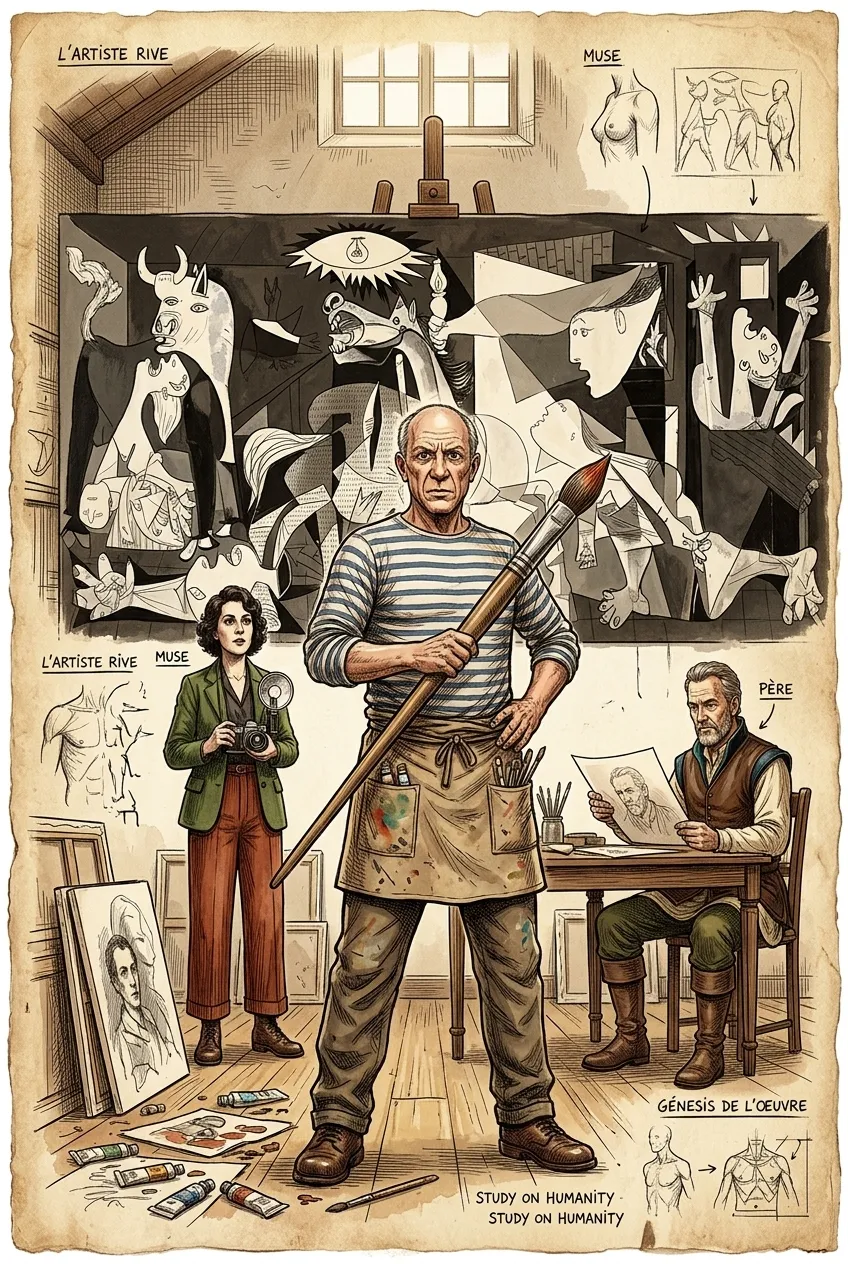
Page 1
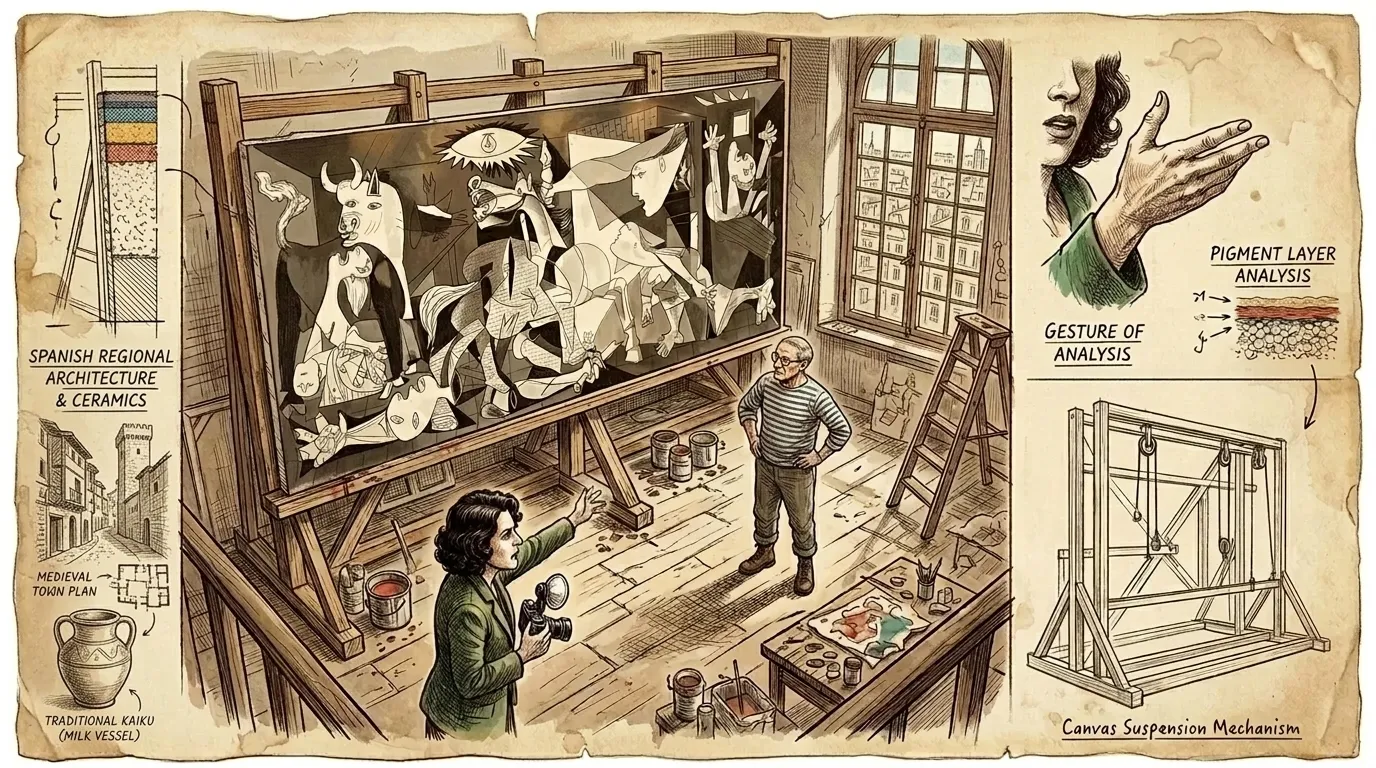
Here, in the Museo Reina Sofía in Madrid, hangs Guernica. Painted by Pablo Picasso in 1937, this monumental canvas stretches nearly 12 feet tall and 25 feet wide. It's more than just a painting; it's a scream against the horrors of war. The painting was commissioned for the Spanish Republic's pavilion at the 1937 Paris International Exposition. Its stark monochrome palette amplifies the tragedy, making it a timeless symbol of peace.
Art Fact: Guernica was Picasso's response to the bombing of Guernica, a Basque Country town, by Nazi Germany's Luftwaffe during the Spanish Civil War.
Page 2
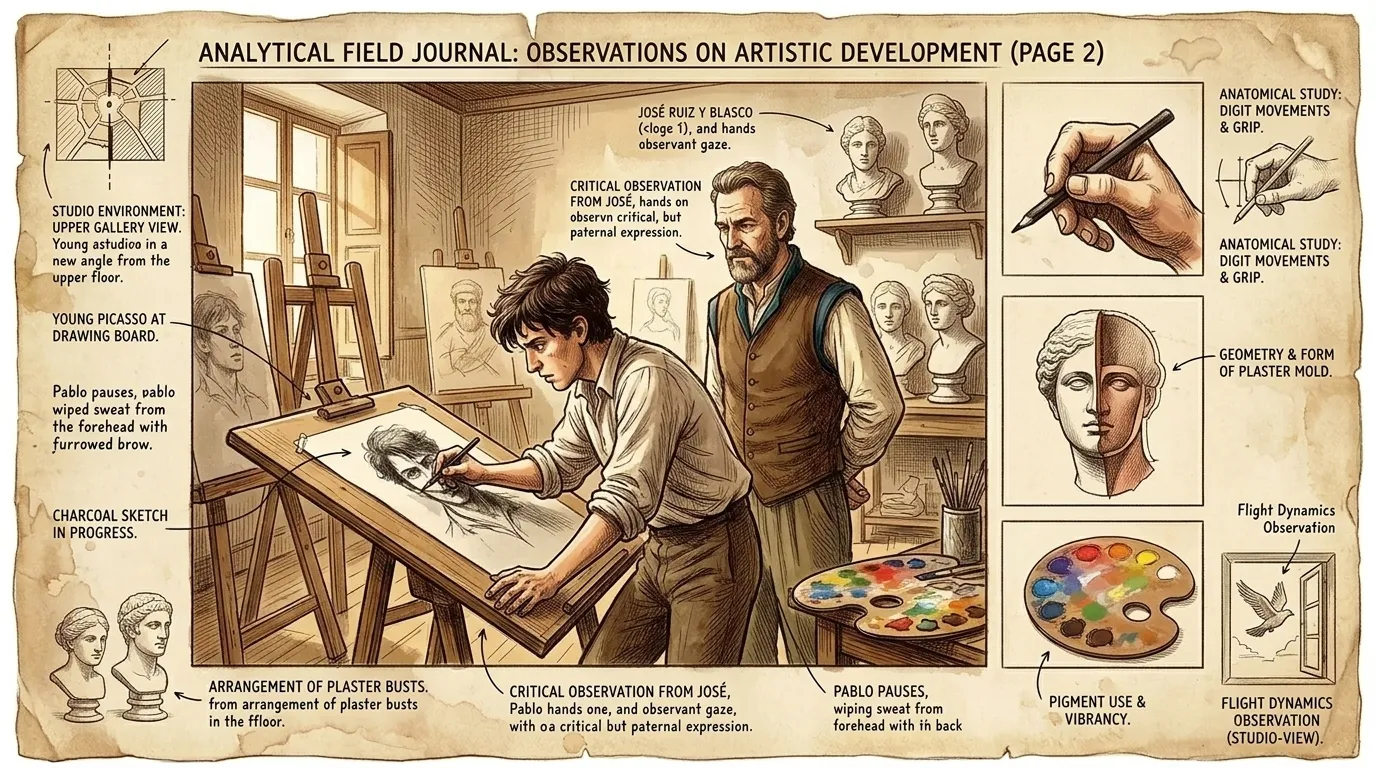
Málaga, Spain, 1895. A young Pablo Picasso, barely a teenager, sketches furiously in his father's studio. His father, José Ruiz y Blasco, an art teacher, watches with a critical eye. Even at this age, Picasso's talent was undeniable, a restless energy that yearned to break free from traditional forms. 'Remember, Pablo,' his father often said, 'the first step is to know how to draw like the masters, then you can do as you please.'
"Picasso pauses, wiping sweat from his brow. 'But Papa, why must everything be so... precise? Life is messy, full of emotion!' José sighs. 'Precision, Pablo, is the foundation. Emotion comes later.'"
Art Fact: Picasso's father was a painter and art professor who provided his son with a formal artistic education from a young age.
Page 3
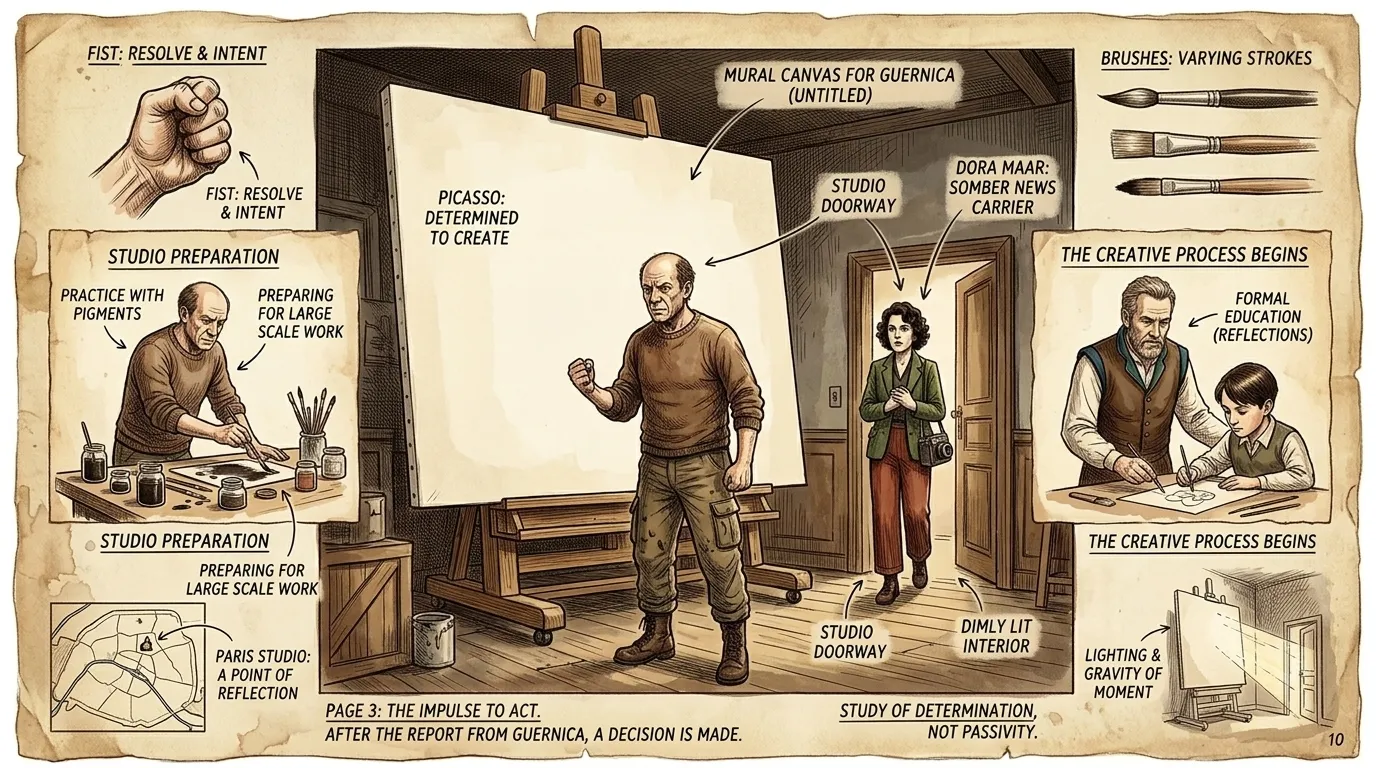
Paris, 1937. Picasso is commissioned to create a mural for the Spanish Republic's pavilion at the Paris International Exposition. News of the bombing of Guernica reaches him, a wave of horror washing over the artist. 'Painting is not made to decorate apartments. It is an instrument of offensive and defensive war against the enemy,' he declared, echoing his own sentiment. He knew then that his mural could no longer be a simple celebration, but a testament to the brutal reality of the conflict.
"His lover, Dora Maar, a striking photographer, enters the studio, her face grim. 'Pablo, have you heard? Guernica... destroyed. The innocent... slaughtered.' Picasso clenches his fist. 'It cannot be ignored, Dora. This must be remembered.'"
Art Fact: Dora Maar, a Surrealist photographer, documented the creation of Guernica.
Page 4
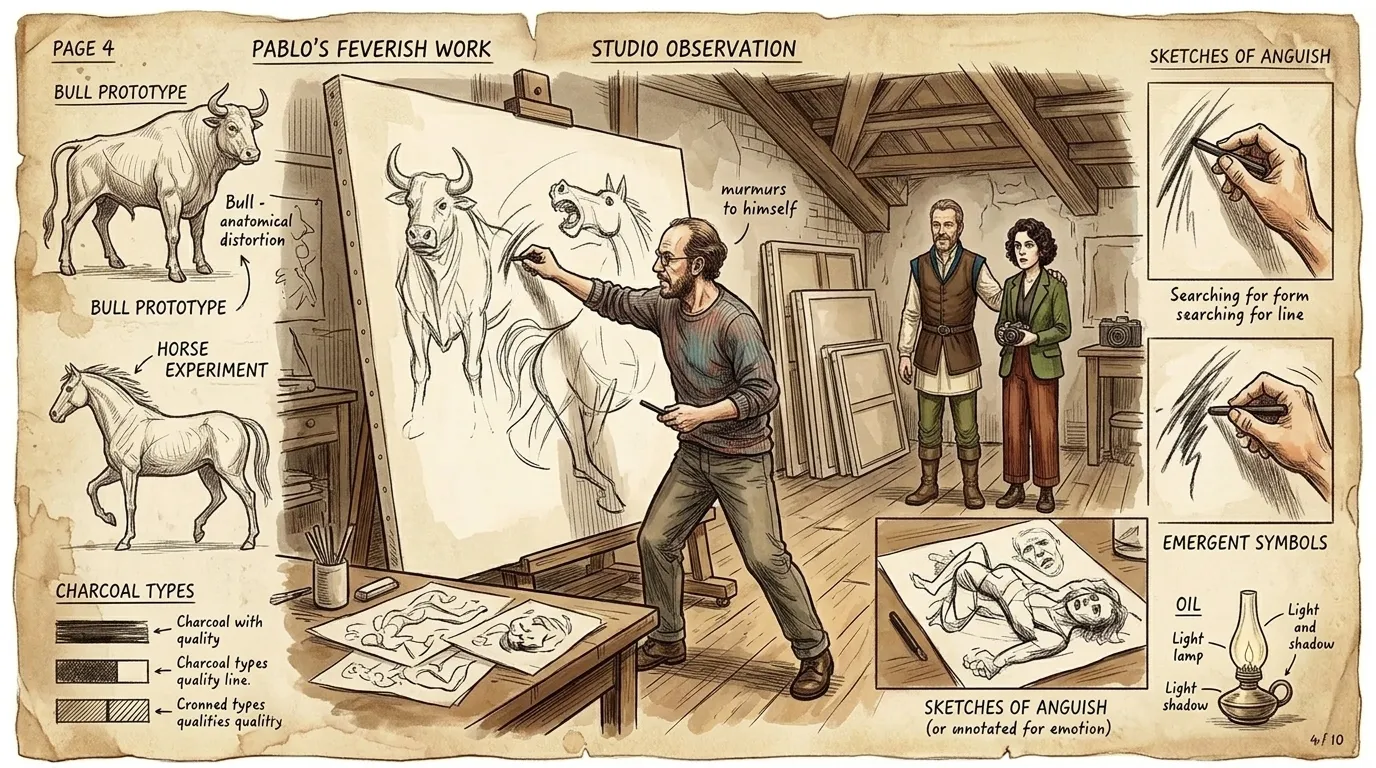
Picasso begins with a flurry of sketches, searching for the right composition to convey the chaos and suffering. He experiments with different figures, their bodies distorted and fragmented. The bull, a recurring motif in his work, begins to take shape, representing both the brutality and the resilience of the Spanish people. He works feverishly, driven by a need to give voice to the voiceless. The dimensions of the canvas are immense, almost overwhelming.
"He murmurs to himself, 'The bull... the horse... the mother... each must tell their story of pain.' He circles the canvas, charcoal in hand, adding lines, erasing, refining."
Art Fact: Picasso created numerous preliminary sketches for Guernica, exploring different compositional arrangements and figures.
Page 5
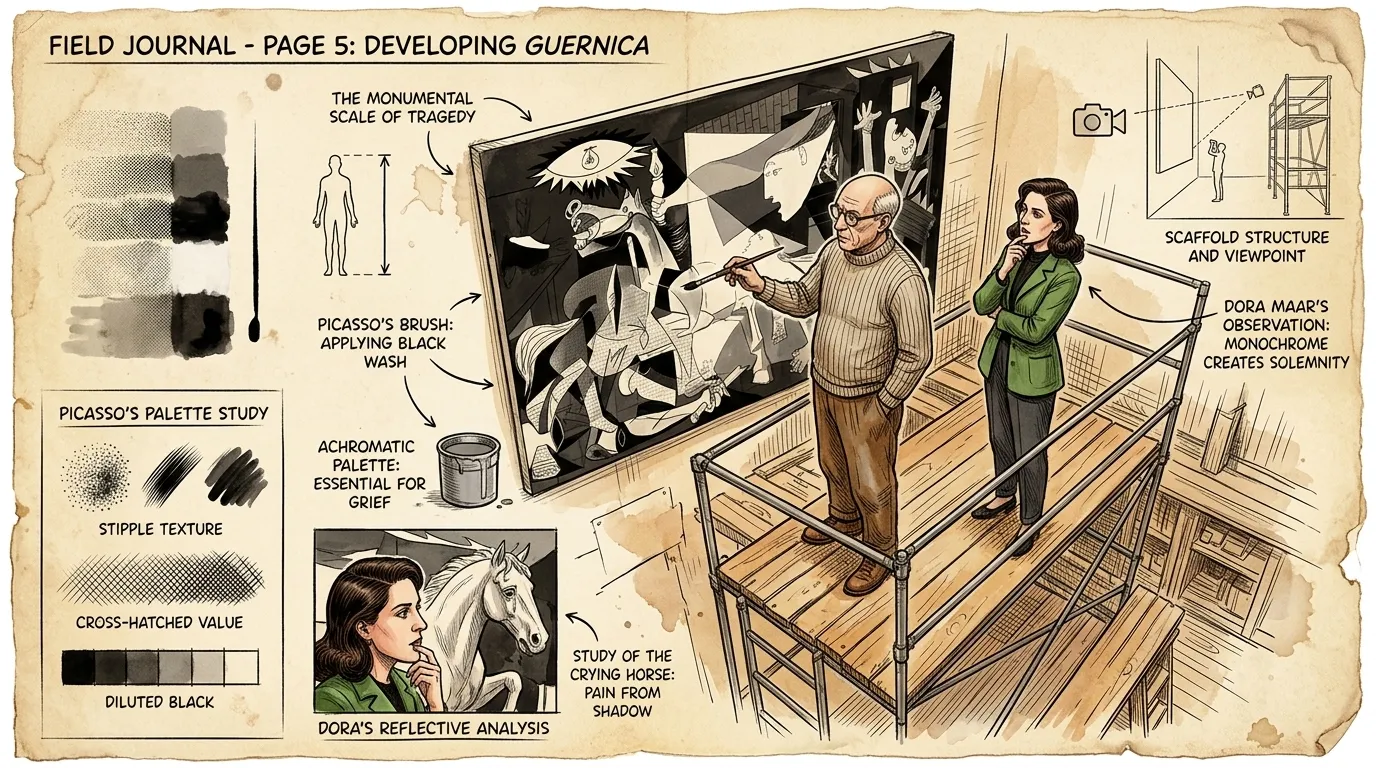
Initially, Picasso considers using vibrant colors, but then decides on a monochrome palette of black, white, and gray. These stark tones amplify the sense of tragedy and loss, evoking the atmosphere of newsreels and documentary photographs from the time. He sees Guernica not as a colorful spectacle, but as a somber memorial. The limited palette forces viewers to confront the raw emotion of the scene.
"Dora observes, 'The absence of color is itself a statement, Pablo. It speaks of death, of emptiness.' Picasso nods. 'It is the color of mourning, Dora. The color of truth.'"
Art Fact: The monochrome palette of Guernica was a deliberate choice by Picasso to convey the stark reality of war.
Page 6
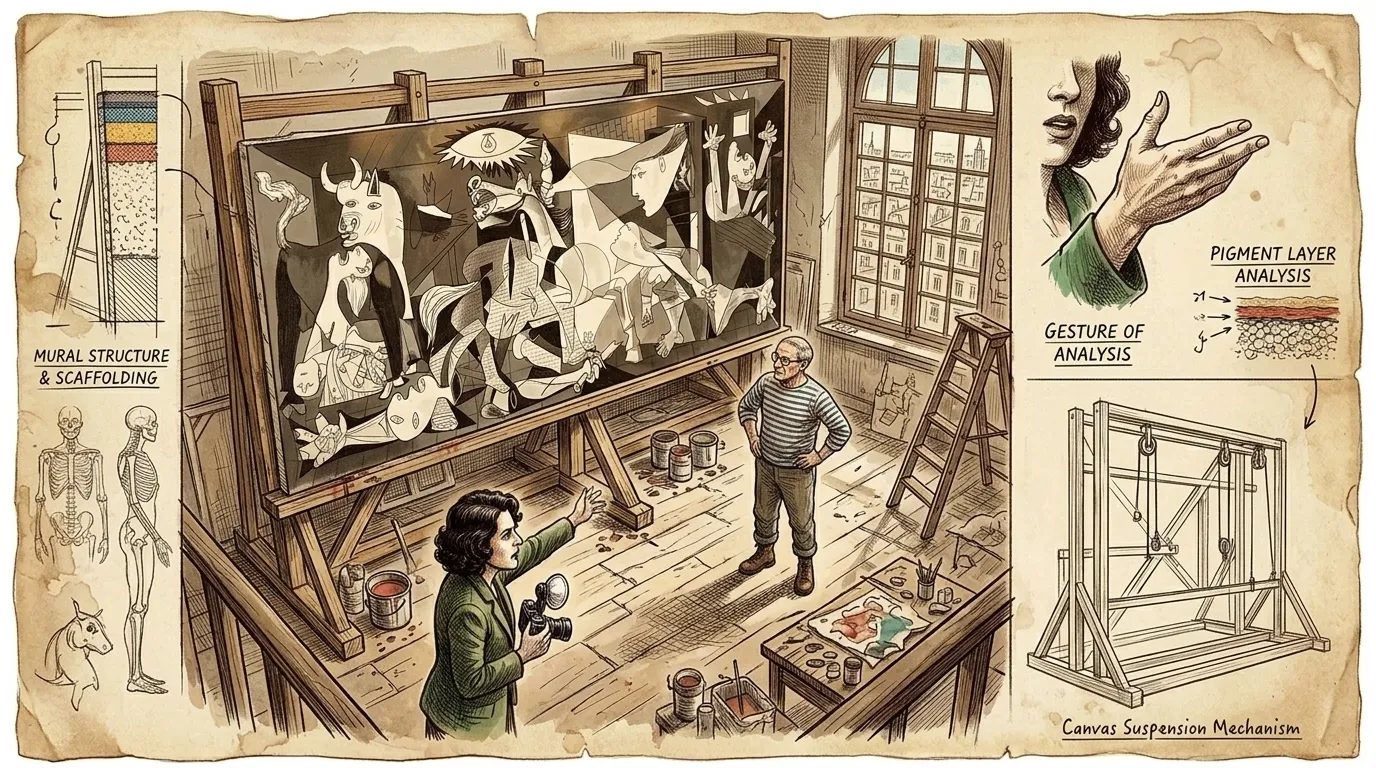
The figures begin to take on their final forms: the screaming mother holding her dead child, the wounded horse, the bull, the fallen soldier. Each element is rendered in Picasso's unique Cubist style, fragmented and distorted to convey the brutality of the event. He uses sharp angles and jagged lines to create a sense of chaos and unease. The composition is deliberately unsettling, mirroring the disrupted lives of the victims.
"Picasso steps back, surveying his work. 'It must be disorienting. It must reflect the shattering of reality.' Dora adds, 'It is not a photograph, Pablo. It is a feeling, a scream.'"
Art Fact: Picasso's use of Cubism in Guernica reflects the fragmented and chaotic nature of war.
Page 7
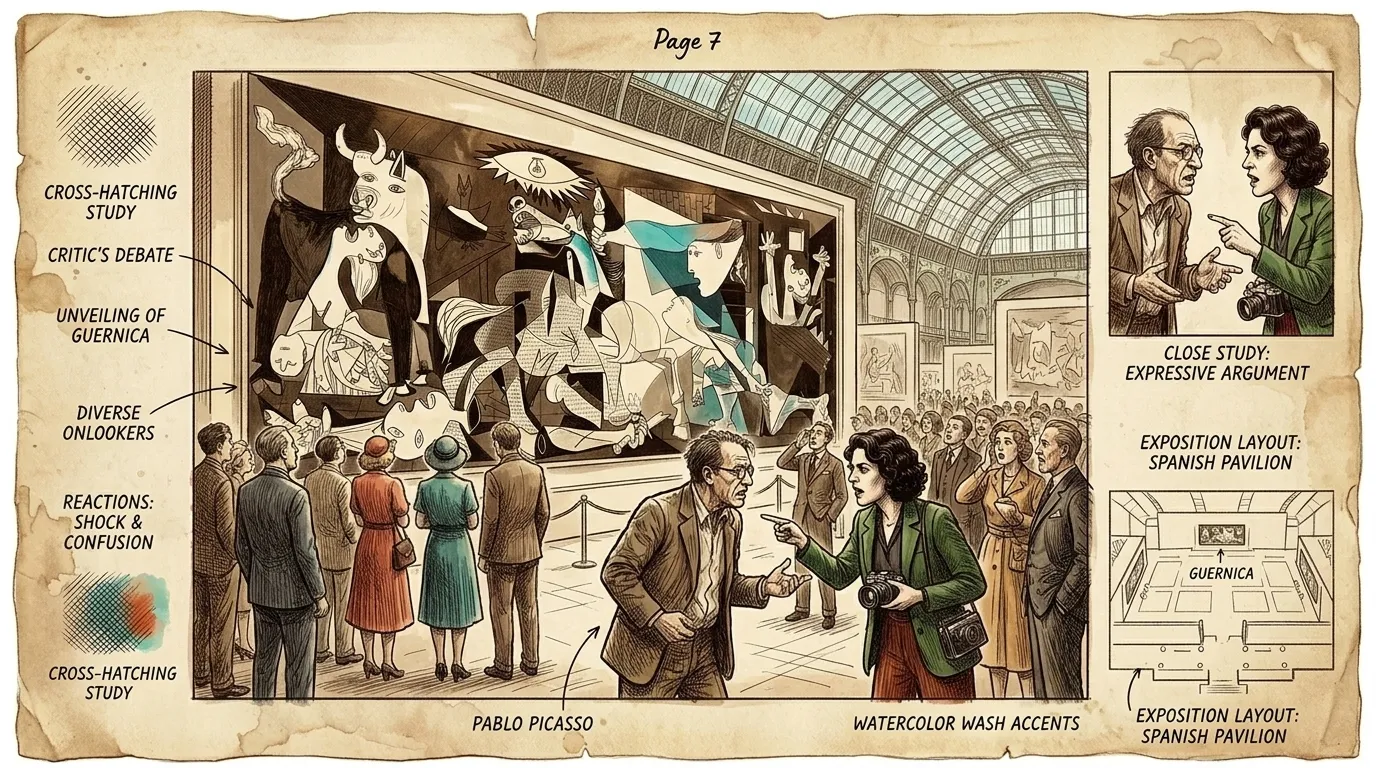
The Guernica mural is unveiled at the Paris International Exposition. The initial reaction is mixed. Some critics praise its powerful message and innovative style, while others dismiss it as chaotic and incomprehensible. However, the mural quickly becomes a focal point of the exhibition, drawing crowds and sparking debate. Despite the controversy, its message of anti-war resonates with many.
"A critic remarks, 'It is certainly... unconventional. But does it truly capture the tragedy, or merely revel in chaos?' Another counters, 'It is precisely in the chaos that the truth lies. It is a reflection of a world torn apart.'"
Art Fact: The Paris International Exposition provided Guernica with its first international audience, sparking both praise and controversy.
Page 8
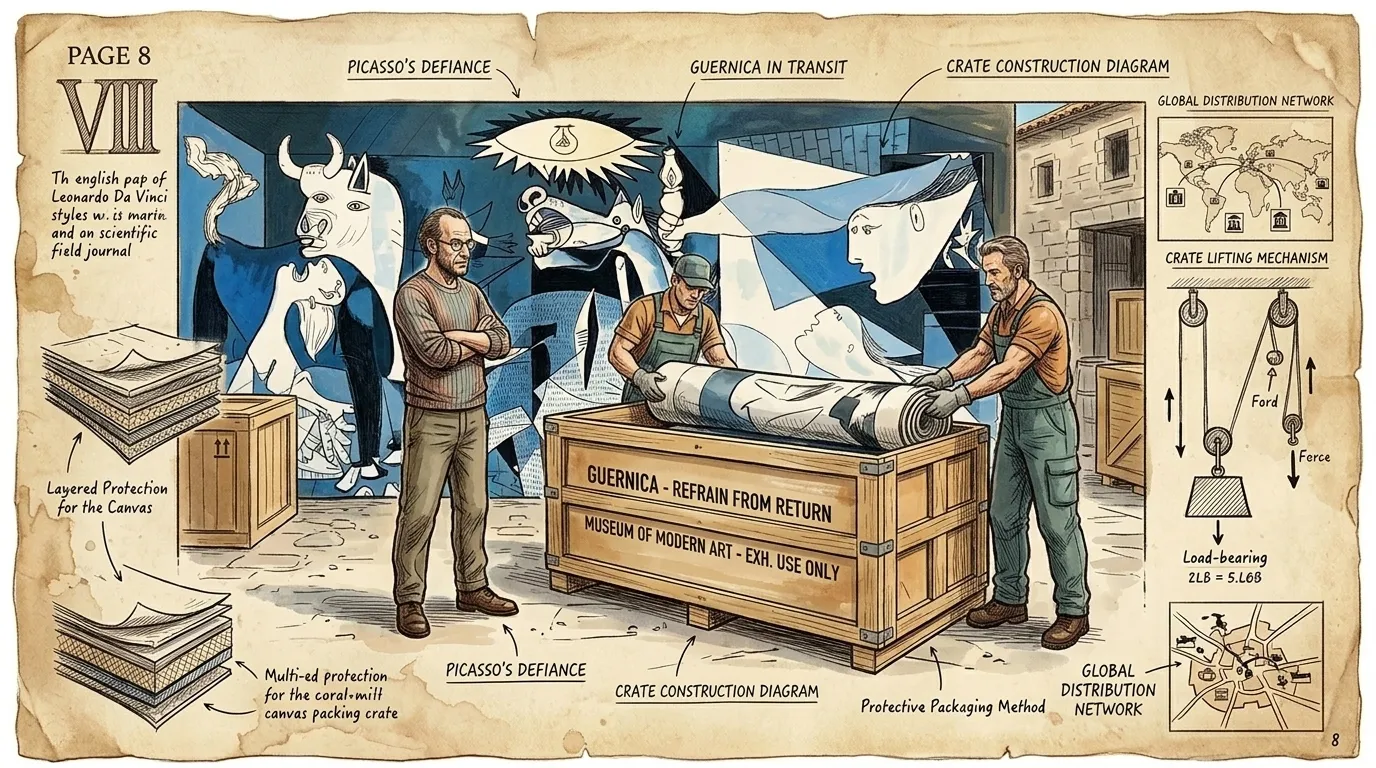
As Europe plunges into World War II, Guernica travels from country to country, seeking refuge from the conflict. It is displayed in various museums and galleries, raising awareness of the Spanish Civil War and the threat of fascism. Picasso refuses to allow the painting to return to Spain until democracy is restored. He believed it belongs to the people, a symbol of hope for a better future.
"Picasso declares, 'This painting is not mine to command. It belongs to the Spanish people, and it will return only when they are free.' He watches as the mural is carefully packed for its next journey."
Art Fact: Guernica embarked on a world tour during World War II, raising funds for Spanish war relief.
Page 9
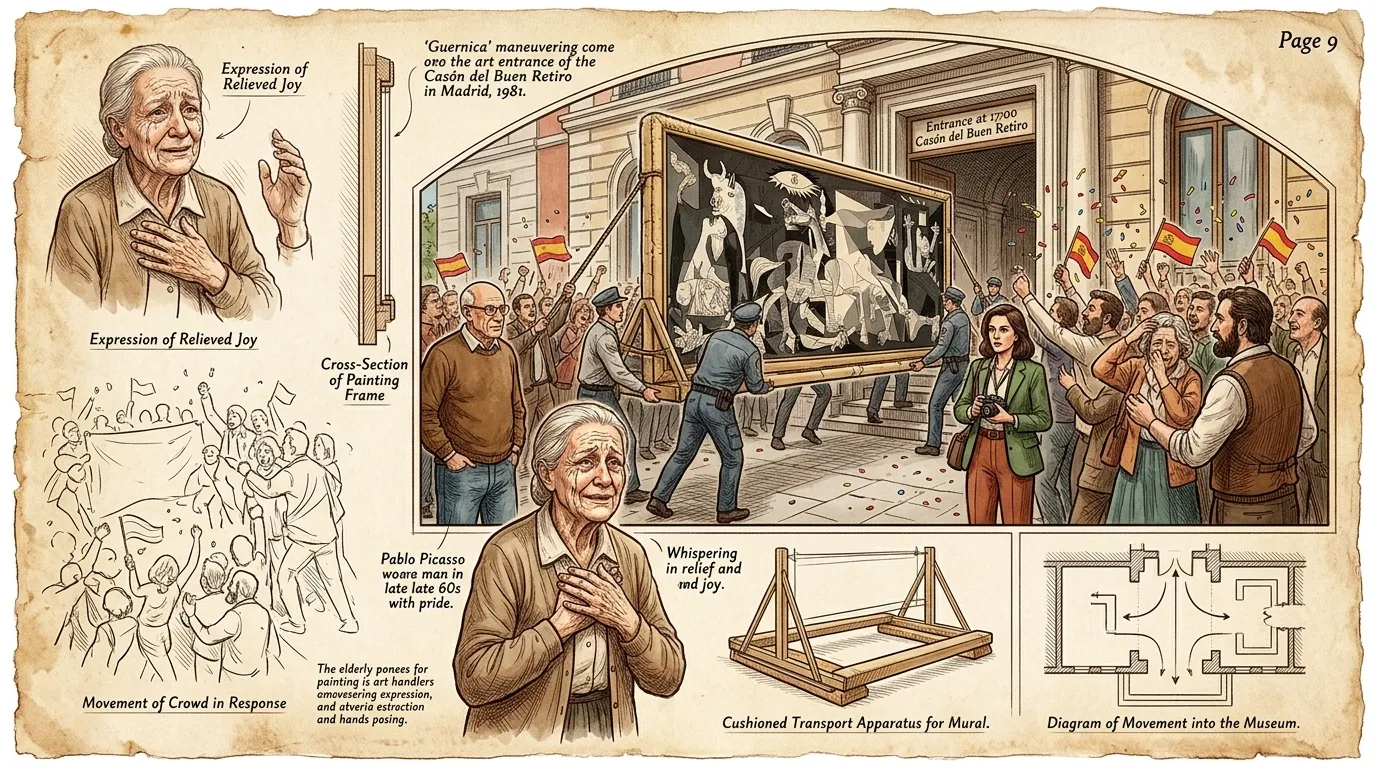
After decades in exile, Guernica finally returns to Spain in 1981, following the restoration of democracy. It is initially displayed at the Casón del Buen Retiro before being moved to its permanent home at the Museo Reina Sofía. Its arrival is met with celebration and tears, a symbol of reconciliation and hope for the future. It is a day that will be etched in the memory of Spain for generations.
"An elderly woman, witnessing the painting's arrival, whispers, 'It is home... finally home.'"
Art Fact: Guernica's return to Spain in 1981 marked a significant moment in the country's transition to democracy.
Page 10
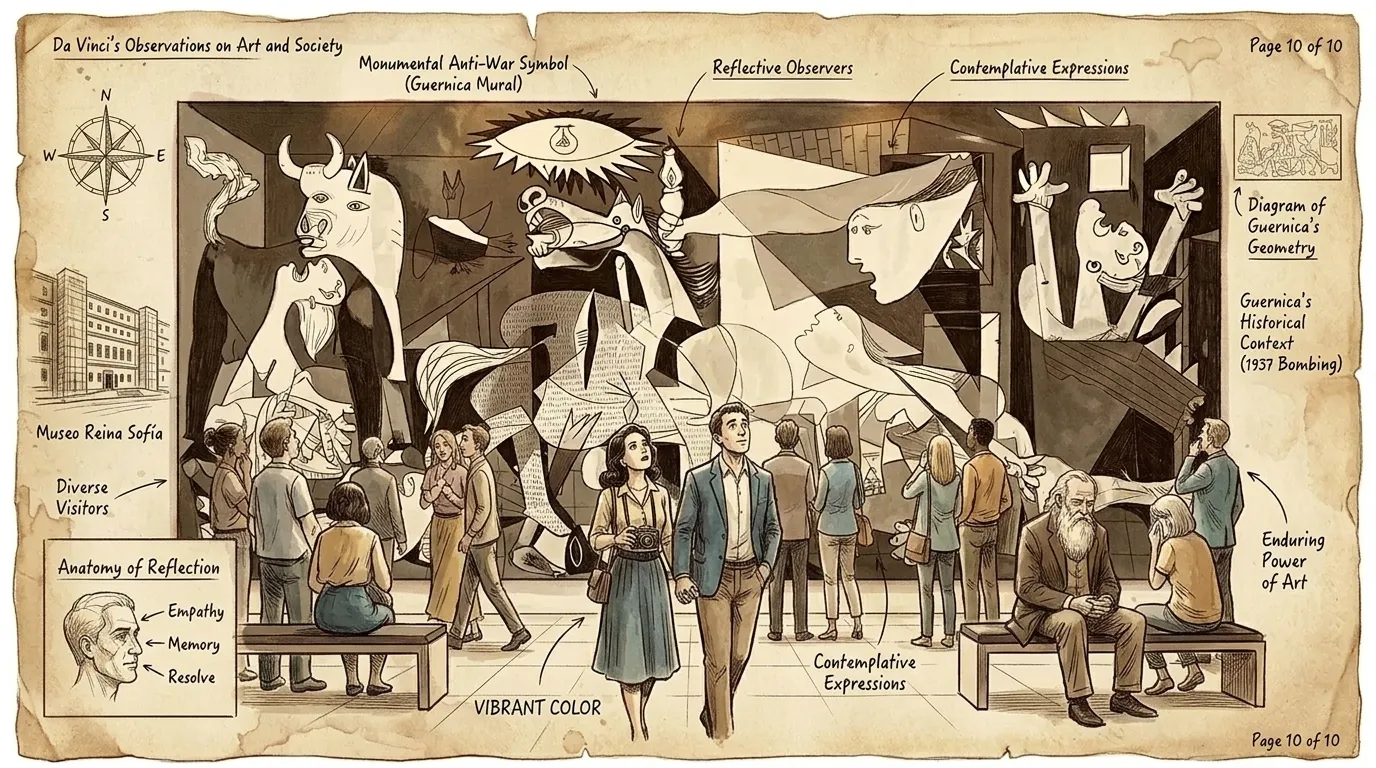
Today, Guernica remains a powerful symbol of anti-war sentiment, attracting visitors from around the world. Its stark imagery and raw emotion continue to resonate with audiences, reminding us of the human cost of conflict. As the philosopher George Santayana said, 'Those who cannot remember the past are condemned to repeat it.' Guernica stands as a testament to this truth, a timeless scream against the horrors of war.
Art Fact: Guernica remains a potent anti-war symbol, inspiring artists and activists around the world.
About this story
- Location: Global
- Audience: general readers
Questions and answers
Read Wonder Arts on your phone
Wonder Arts is available on Android. Get Wonder Arts on Google Play.
More Wonder Arts stories
- Hagia Sophia (Istanbul, Turkey — 537 AD)
- Haystacks Series by Claude Monet (France — 1891)
- Heart of the Andes by Frederic Edwin Church (USA — 1859)
- Hermes and the Infant Dionysus by Praxiteles (Greece — c. 340 BC)
- Hermitage Museum (St. Petersburg, Russia — 1764)
- Honjō Masamune Sword by Gorō Nyūdō Masamune (Japan — 13th Century)