Potala Palace (Lhasa, Tibet — 1649)
Potala Palace (Lhasa, Tibet — 1649) — an illustrated arts story, set in United States. 10 illustrated pages, free to read on Wonder Arts.
Page 1
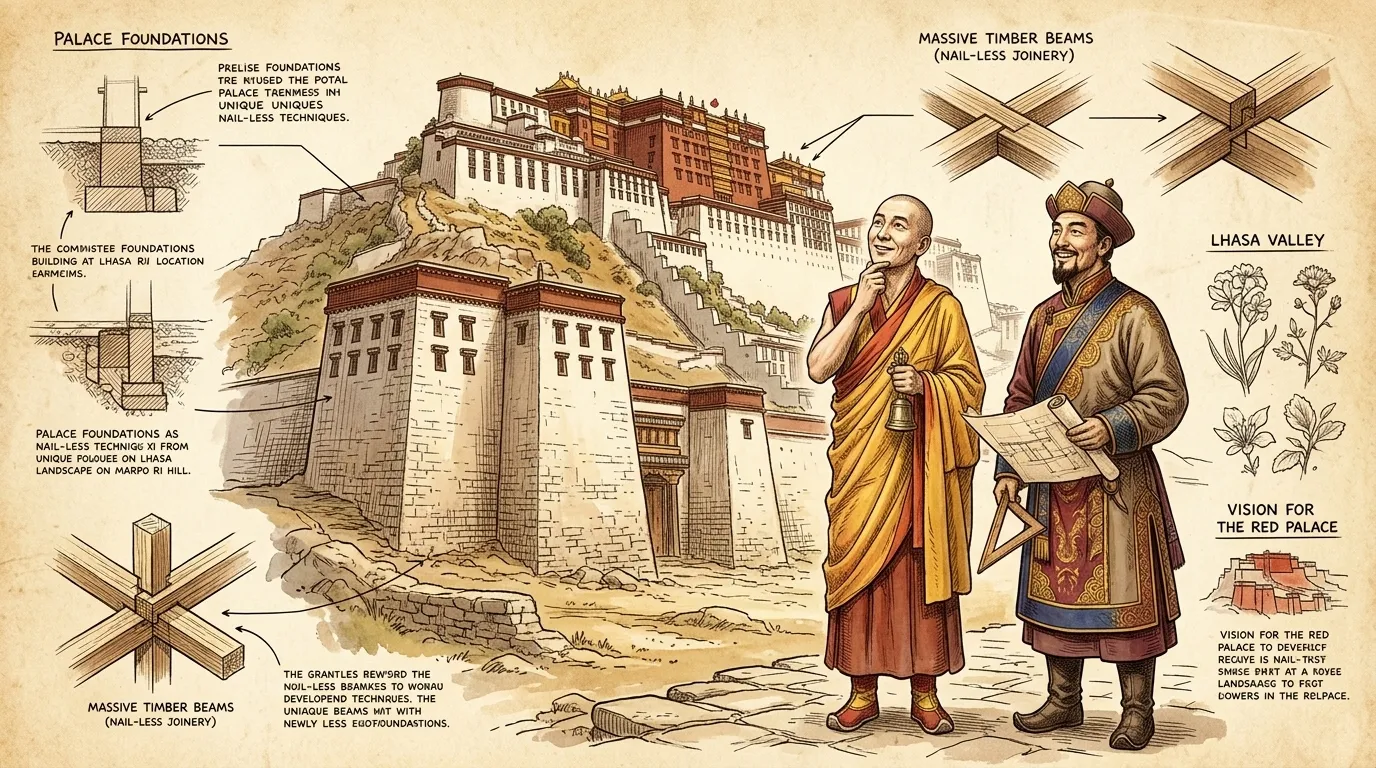
Ngawang Lobsang Gyatso, the 5th Dalai Lama, stands before the majestic Potala Palace in Lhasa, Tibet, circa 1649. The palace, a towering testament to Tibetan Buddhist architecture, dominates the landscape. It measures over 1,300 feet in width and 400 feet in height and contains over 1,000 rooms. An extraordinary fact: the palace was constructed without the use of any nails or screws – a marvel of engineering of its time.
""This palace," Ngawang Lobsang Gyatso murmured, gazing up at the newly begun structure, "will be a beacon of spiritual and political power for centuries to come.""
Art Fact: The Potala Palace served as the winter residence of the Dalai Lamas from the 7th century until 1959. Today, it is a UNESCO World Heritage Site and a museum, preserving Tibetan art, culture, and history.
Page 2
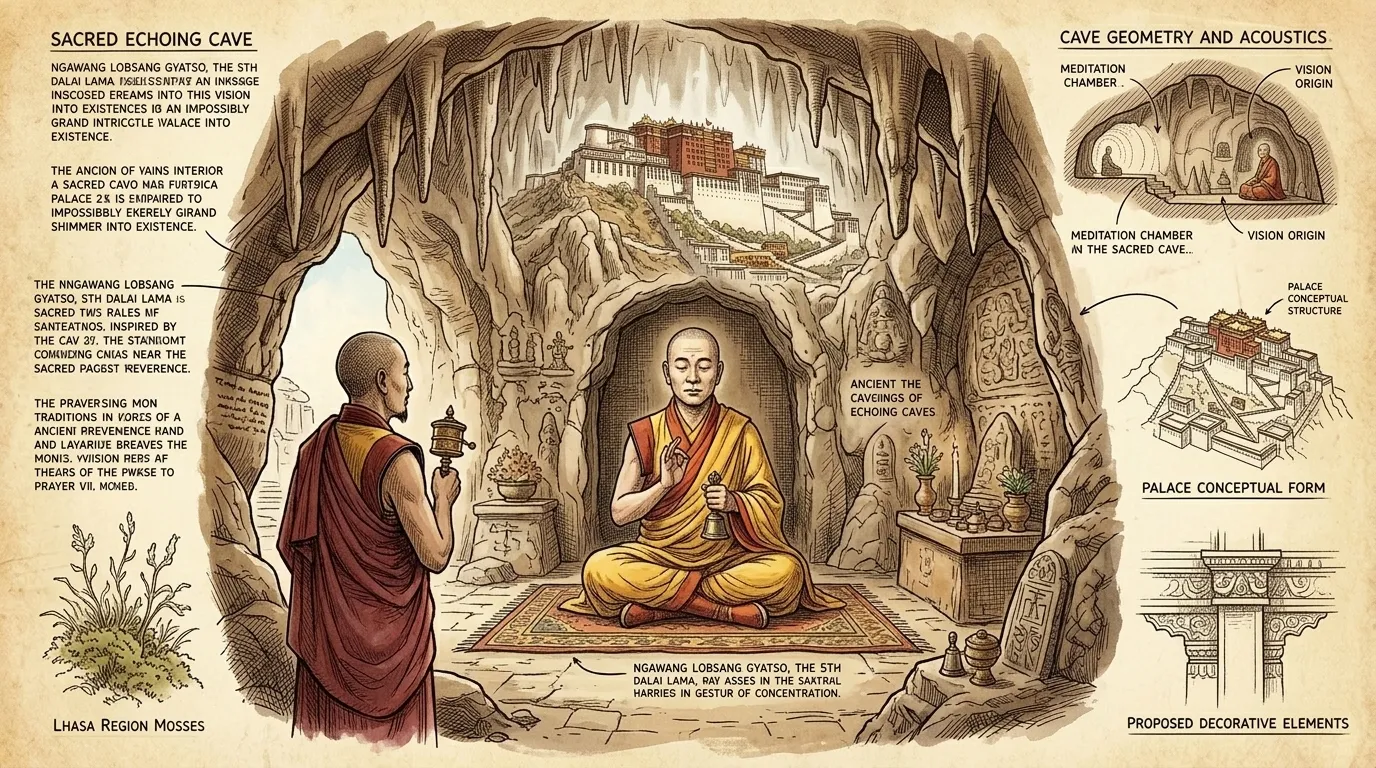
Before assuming his full spiritual role, the young Ngawang Lobsang Gyatso retreated to a sacred cave near Lhasa. Here, amidst the echoing silence, he meditated deeply, seeking guidance. One day, while in deep contemplation, he saw a vision of a palace not of this earth. He later told his advisors, "The great master Nagarjuna said, 'Wisdom is the supreme treasure, and it is the secure foundation for all accomplishments'. Therefore, let us build a palace that reflects the wisdom of our forefathers".
"A monk asked, "What did you see, Holy One?" Ngawang replied, "I saw a palace of unparalleled grandeur. It should inspire awe and devotion!""
Art Fact: The meditation cave was located near the site where the Potala Palace would eventually be built. It served as a place of retreat and spiritual preparation for Ngawang Lobsang Gyatso.
Page 3

A pivotal moment occurred when Ngawang Lobsang Gyatso met Konchog Chophel, a skilled administrator and architect. Konchog was drawn to Ngawang's vision and agreed to help bring it to life. The Dalai Lama said, "Konchog, you are the builder of my dreams. Let us together create a palace that will stand the test of time". Konchog responded, "I'll devote myself to this task. I promise to see it through!"
"Konchog said, "Holy One, your vision inspires me!" Ngawang replied, "Then let us begin!""
Art Fact: Konchog Chophel served as the chief administrator for the construction of the Potala Palace. He played a crucial role in organizing the workforce and securing the necessary resources.
Page 4

The Dalai Lama chose Red Mountain as the site for the Potala. According to legend, it was the location of a palace built by Songtsen Gampo, an early Tibetan king. The Dalai Lama stated, "This mountain is auspicious. It is rooted in our ancient history. As Confucius said, 'Study the past if you would define the future'. It's the perfect place for our spiritual home."
"Ngawang declared, "Here, on this mountain, we will build a palace that will touch the heavens!" Konchog replied, "The mountain will be our foundation. I'll oversee the digging.""
Art Fact: Red Mountain, also known as Marpo Ri, held spiritual significance in Tibetan Buddhism. The choice of the site reflected a desire to connect the new palace with Tibet's rich cultural heritage.
Page 5

Thousands of laborers, artisans, and monks worked tirelessly on the Potala Palace. The construction was a massive undertaking that involved quarrying stone, transporting materials, and carving intricate details. Ngawang Lobsang Gyatso often visited the site, encouraging the workers. He would remind them, "This is more than just a building. It is a symbol of our faith. Do everything with devotion!"
"One worker said, "This work is arduous. I am grateful to serve!" Ngawang replied, "Your devotion will never be forgotten!""
Art Fact: The construction of the Potala Palace relied on the dedication and hard work of thousands of laborers. Their contributions were essential to realizing the Dalai Lama's vision.
Page 6

The Potala Palace is divided into two main sections: the White Palace, which served as the Dalai Lama's living quarters and administrative offices, and the Red Palace, which housed religious shrines and assembly halls. "The white," Ngawang Lobsang Gyatso explained, "represents our earthly duties. And the red, our spiritual essence."
"A monk asked, "Why two colors?" Ngawang answered, "For the balance of our world!""
Art Fact: The contrasting colors of the White and Red Palaces symbolize the dual roles of the Dalai Lama as both spiritual leader and political ruler of Tibet.
Page 7
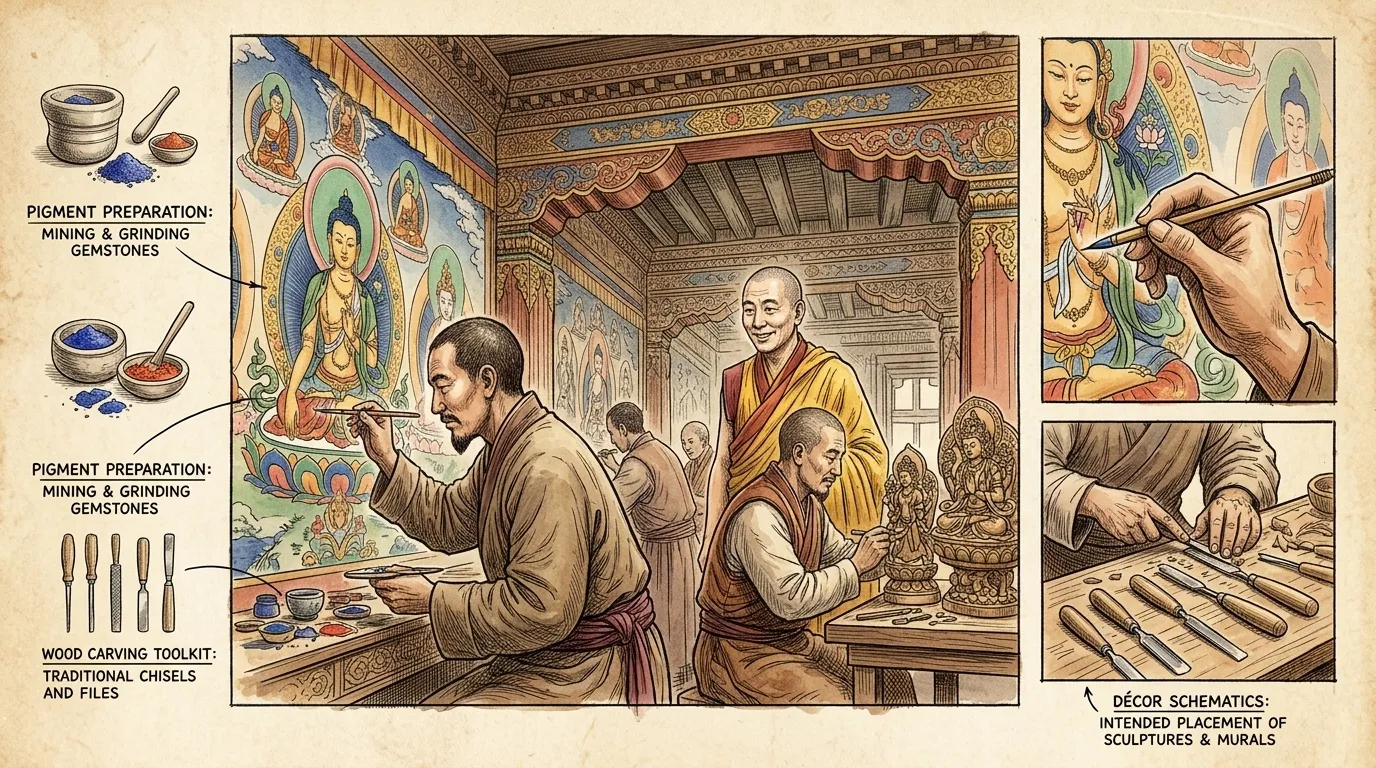
The interior of the Potala Palace is adorned with countless works of art, including murals, sculptures, and thangkas (religious paintings). These works depict Buddhist deities, historical events, and scenes from Tibetan mythology. The Dalai Lama told the artists, "Let your art inspire devotion. Let it elevate the soul!".
"Ngawang Lobsang Gyatso said, "The brushstrokes and colors must reflect our sacred stories!" An artist added, "And our faith!""
Art Fact: The Potala Palace houses a vast collection of Tibetan art, showcasing the skill and artistry of generations of Tibetan painters, sculptors, and craftsmen.
Page 8
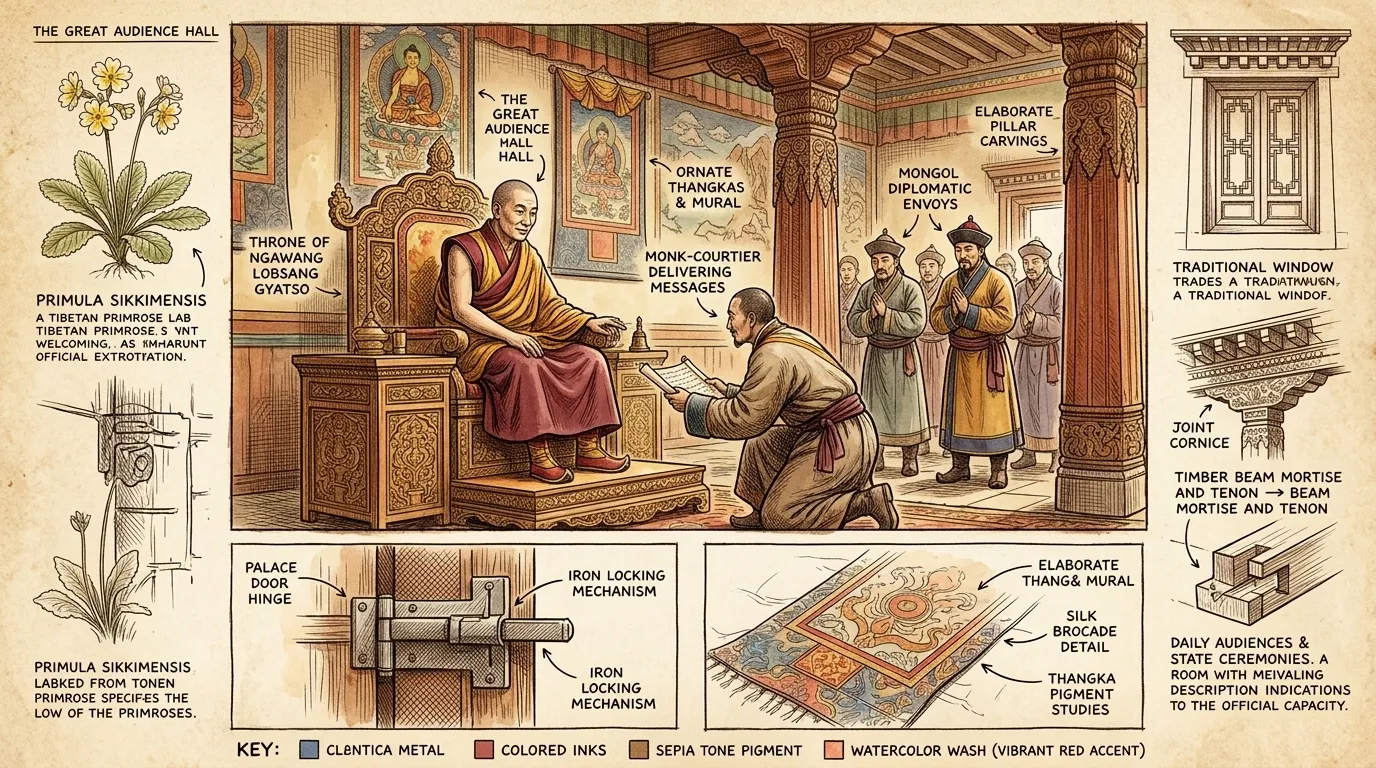
As the Potala Palace neared completion, it became the center of Tibetan political and religious life. The Dalai Lama received dignitaries, held religious ceremonies, and governed the region from within its walls. He declared, "This palace is more than just a building. It is the heart of Tibet!" The great philosopher Plato said, 'The direction in which education starts a man will determine his future life.' The Potala palace will stand for our vision.
"A courtier announced, "The Mongol delegation has arrived!" Ngawang answered, "Bring them to me!""
Art Fact: The Potala Palace served as the seat of the Tibetan government for centuries. It was a place where important decisions were made and where Tibet's relationship with the outside world was managed.
Page 9
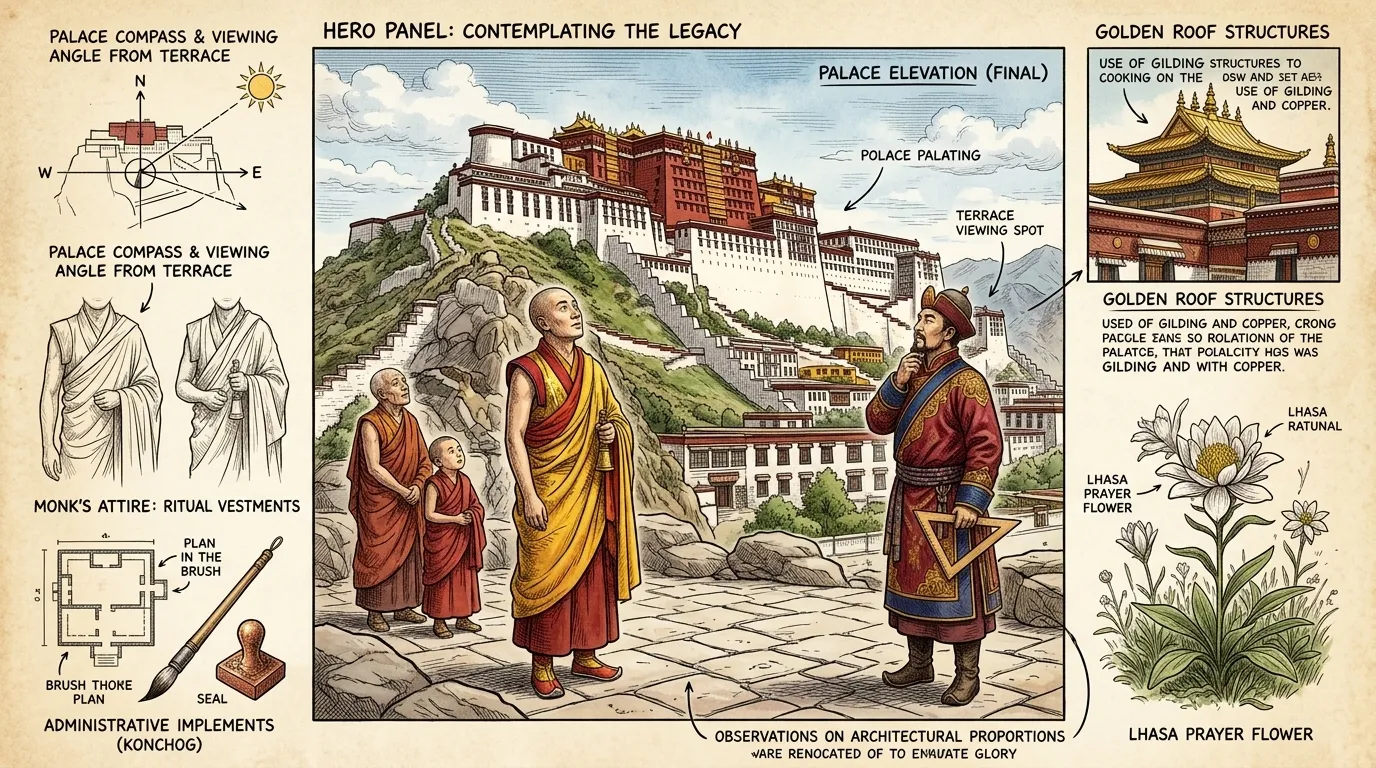
Ngawang Lobsang Gyatso died in 1682, but his legacy lived on through the Potala Palace. The palace continued to serve as the winter residence of the Dalai Lamas for centuries to come. Even after the Dalai Lamas were gone, the Potala stands proud in Tibet, a testament to the strength and culture of its people.
"The news broke, "His Holiness has passed!" A monk replied, "His vision will live on!""
Art Fact: Ngawang Lobsang Gyatso is revered as one of the greatest Dalai Lamas in Tibetan history. His leadership and vision transformed Tibet into a powerful and unified nation.
Page 10
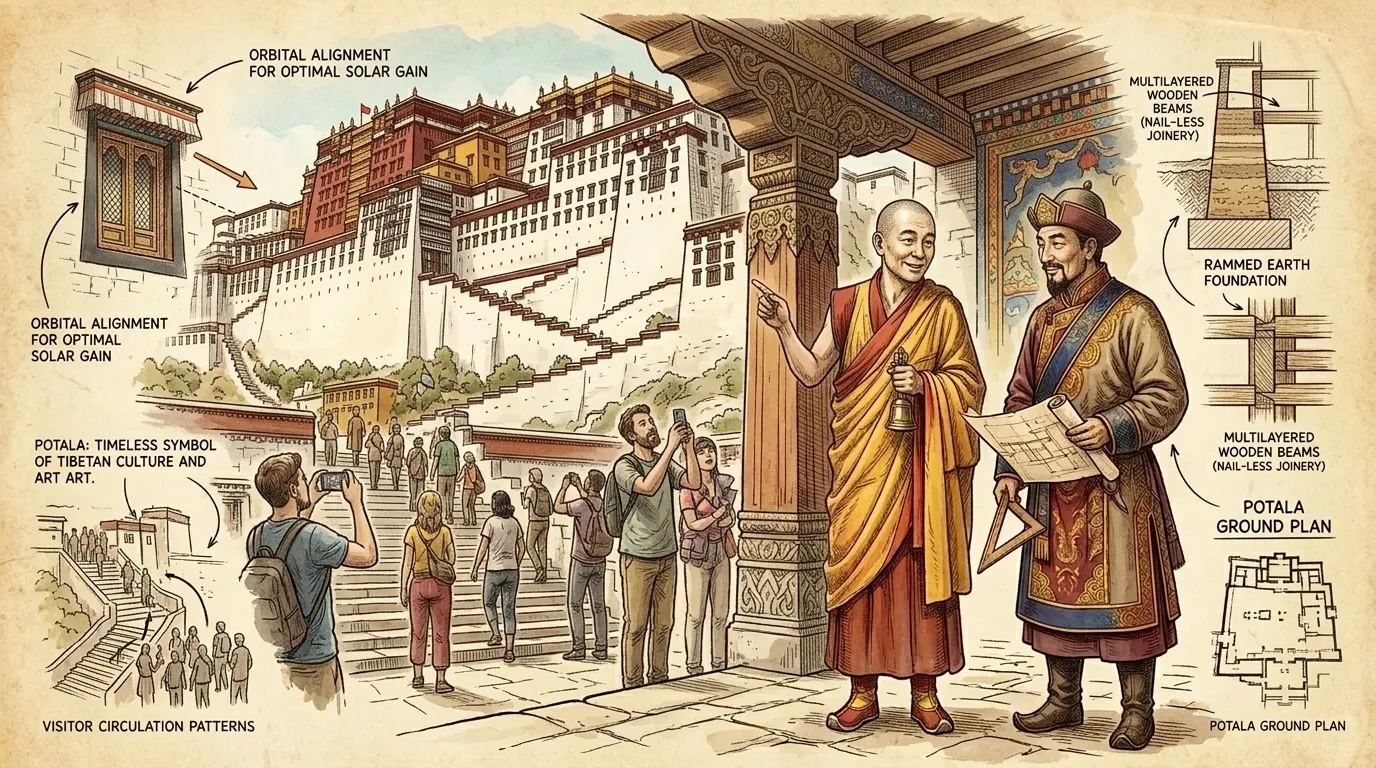
Today, the Potala Palace stands as a UNESCO World Heritage Site, attracting visitors from around the globe. It is a symbol of Tibetan culture, art, and spirituality, and a reminder of the vision of Ngawang Lobsang Gyatso. The Potala Palace, for the world, stands as a beacon of culture and heritage.
"A scholar noted, "The Potala Palace is a testament to Tibetan genius!" Another replied, "Ngawang Lobsang Gyatso's vision remains timeless.""
Art Fact: The Potala Palace continues to inspire awe and wonder. It ensures that the light of the 5th Dalai Lama's legacy will never fade.
About this story
- Location: United States
- Audience: general readers
Questions and answers
Questions and answers about Potala Palace (Lhasa, Tibet — 1649)
Read Wonder Arts on your phone
Wonder Arts is available on Android and iPhone and iPad. Get Wonder Arts on Google Play · Get Wonder Arts on the App Store.
More Wonder Arts stories
- Prado Museum (Madrid, Spain — 1819)
- Printing Press by Johannes Gutenberg (Mainz, Germany — c. 1440)
- Proserpine by Dante Gabriel Rossetti (London, UK — 1874)
- Rain, Steam and Speed by J.M.W. Turner (London, UK — 1844)
- Realism Emerges by Courbet (Paris, France — c. 1850)
- Rebellious Slave by Michelangelo (Paris, France — 1513)