Prado Museum (Madrid, Spain — 1819)
Prado Museum (Madrid, Spain — 1819) — an illustrated arts story, set in Spain. 10 illustrated pages, free to read on Wonder Arts.

Page 1
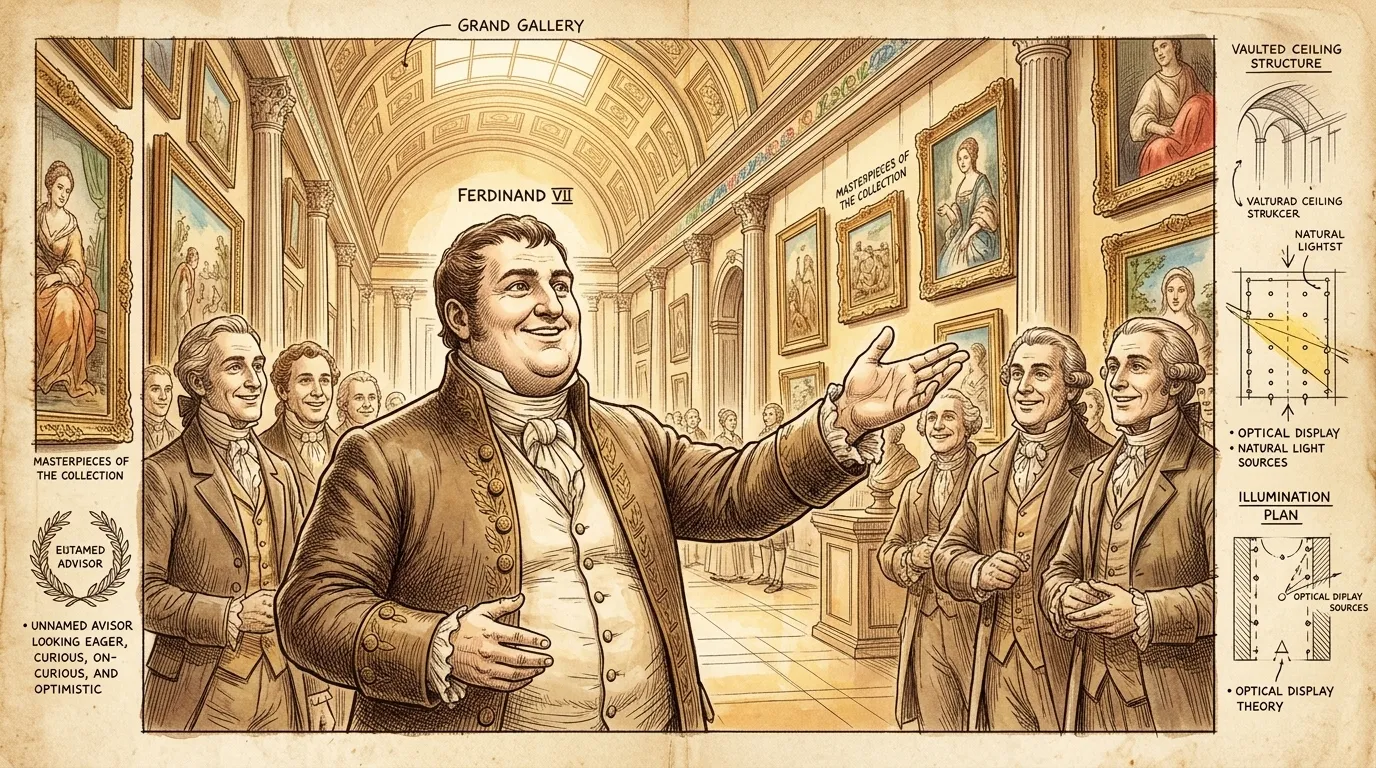
Madrid, 1819. King Ferdinand VII surveys the newly completed Royal Museum, later to be known as the Prado. Its halls are filled with masterpieces collected by generations of Spanish monarchs. The scale is immense: over 7,000 paintings, sculptures, and other works.
""This museum," Ferdinand declares to his advisors, "shall be a testament to the glory of Spain and the enlightenment of its people!""
Art Fact: The Museo Nacional del Prado officially opened on November 19, 1819. Its initial collection was based on the Spanish Royal Collection. The building was designed by architect Juan de Villanueva. Dimensions: The museum houses over 7,000 paintings. One extraordinary fact is that during the Spanish Civil War, many paintings were moved to Geneva for safekeeping.
Page 2
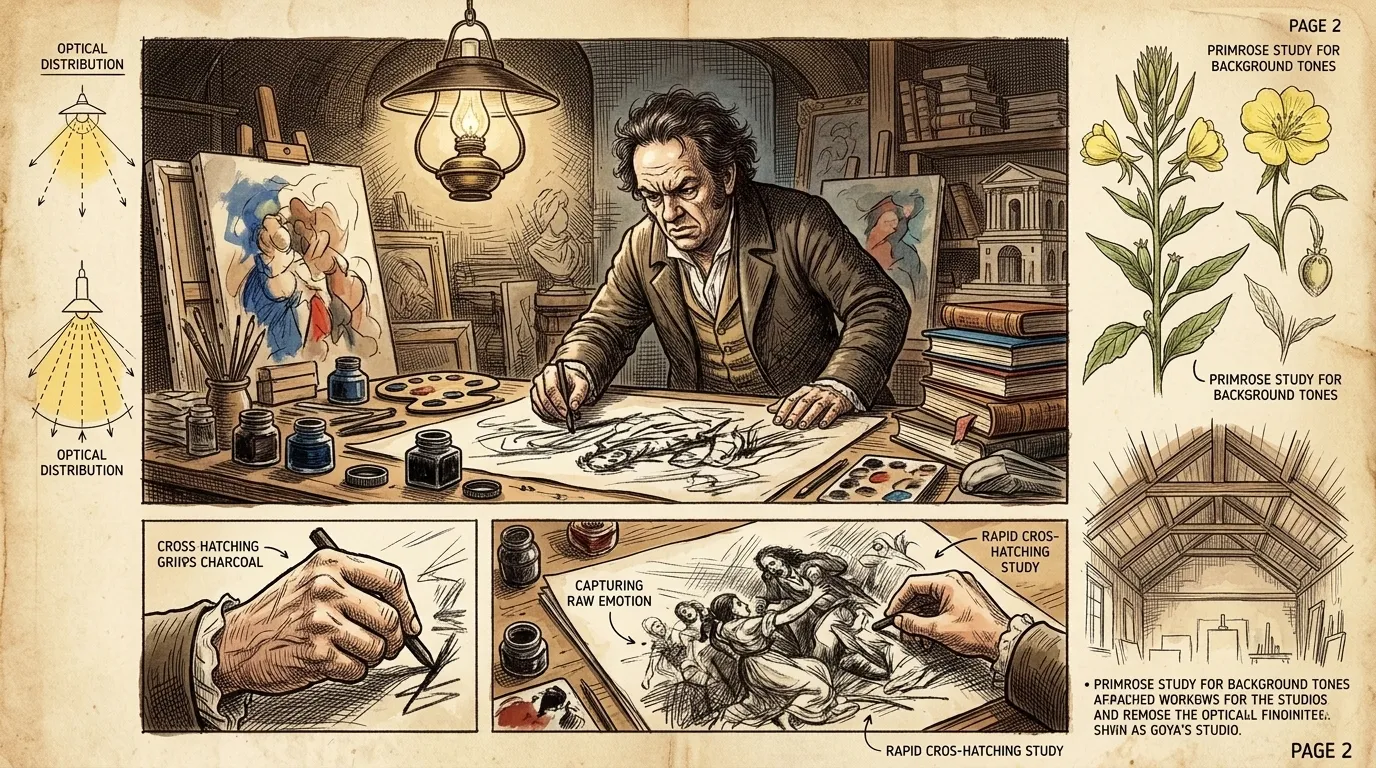
Years before, in his studio, Francisco Goya toils late into the night. His health is failing, his hearing almost gone, but his artistic fire burns brighter than ever. He sketches furiously, capturing the raw emotion of the Spanish people.
""I must show the world what I see," Goya mutters, his brow furrowed in concentration. "The suffering, the injustice... it cannot be ignored!""
Art Fact: Francisco Goya (1746-1828) was a pivotal figure in Spanish art. His work evolved from Rococo to Romanticism, and he is considered both the last of the Old Masters and the first of the moderns.
Page 3
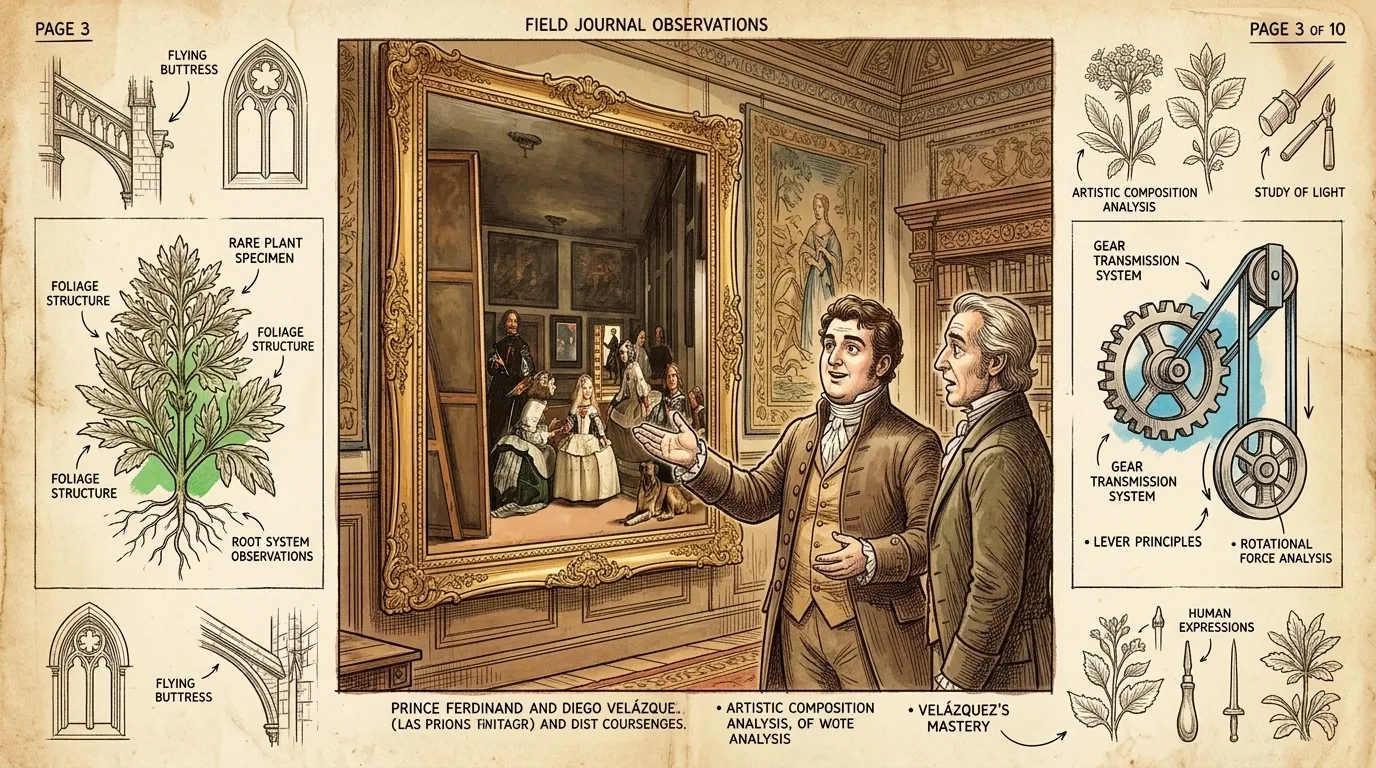
Young Ferdinand, still a prince, gazes in awe at 'Las Meninas,' painted by Diego Velázquez over a century before. He recognizes the genius in Velázquez's ability to capture light and shadow, a technique he hopes will inspire future generations of Spanish artists.
""Look how Velázquez uses the light," Ferdinand exclaims to his tutor. "It is not merely illumination; it is the very essence of life!""
Art Fact: Diego Velázquez (1599-1660) was the leading artist in the court of King Philip IV. 'Las Meninas' (1656) is considered one of the most important paintings in Western art, renowned for its complex composition and use of perspective.
Page 4

Ferdinand's advisors, Solana, the palace librarian, and Diego, the chief curator, pore over inventories of the royal collection. They discuss which works will form the core of the new museum's holdings. They know that the selection will define the museum's identity.
""We must showcase the breadth of Spanish art," Solana insists. "From El Greco's spiritual intensity to Murillo's gentle grace.""
Art Fact: The Spanish Royal Collection began in the 16th century under Charles V and expanded under subsequent monarchs. It included works by Spanish masters as well as Italian, Flemish, and other European artists.
Page 5
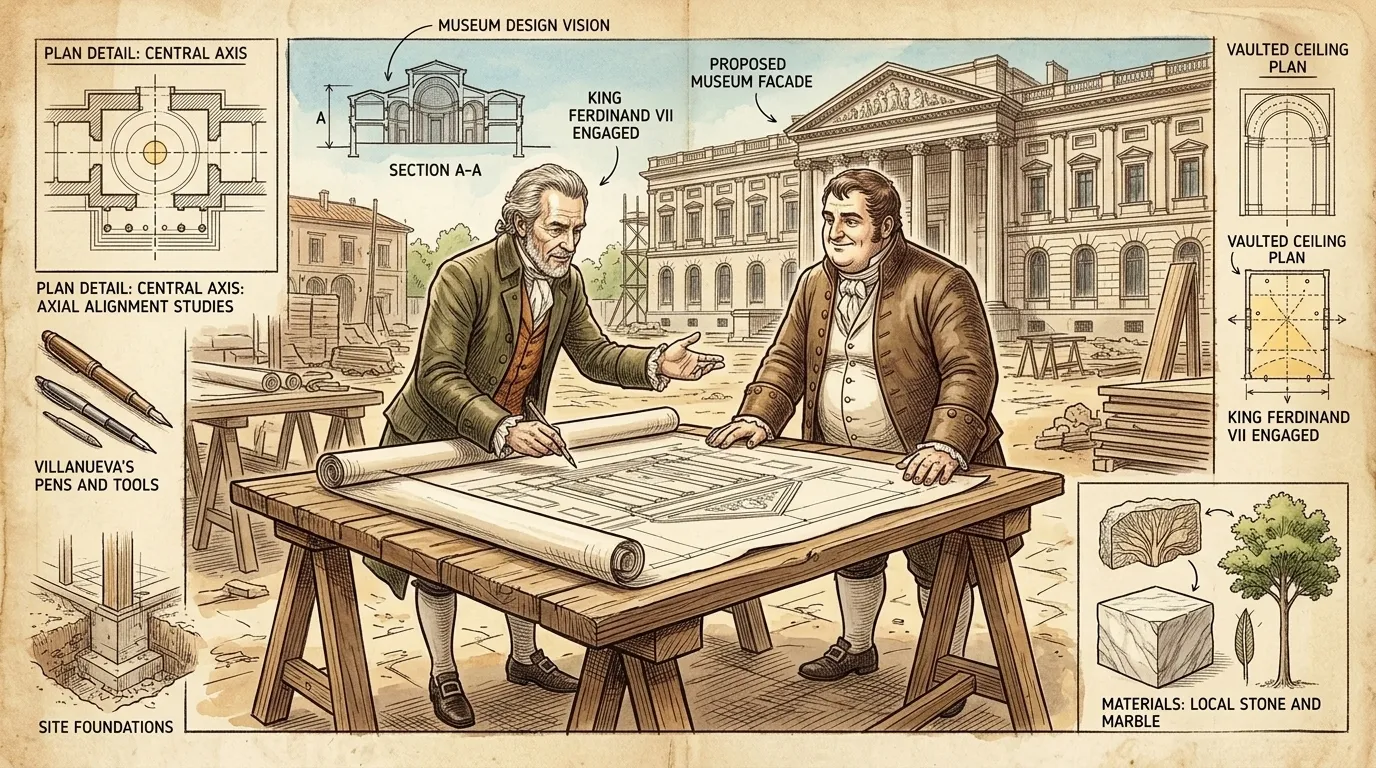
Juan de Villanueva, the architect, presents his plans for the museum to Ferdinand. He envisions a neoclassical building that will inspire awe and reverence, a temple dedicated to the arts.
""Sire," Villanueva explains, unrolling a large architectural drawing, "the building will be a beacon of culture, its design reflecting the harmony and order of the Enlightenment.""
Art Fact: Juan de Villanueva (1739-1811) was one of Spain's leading architects. He designed several important buildings in Madrid, including the Botanical Garden and the Plaza Mayor. The Prado Museum was initially intended to be a natural history museum.
Page 6
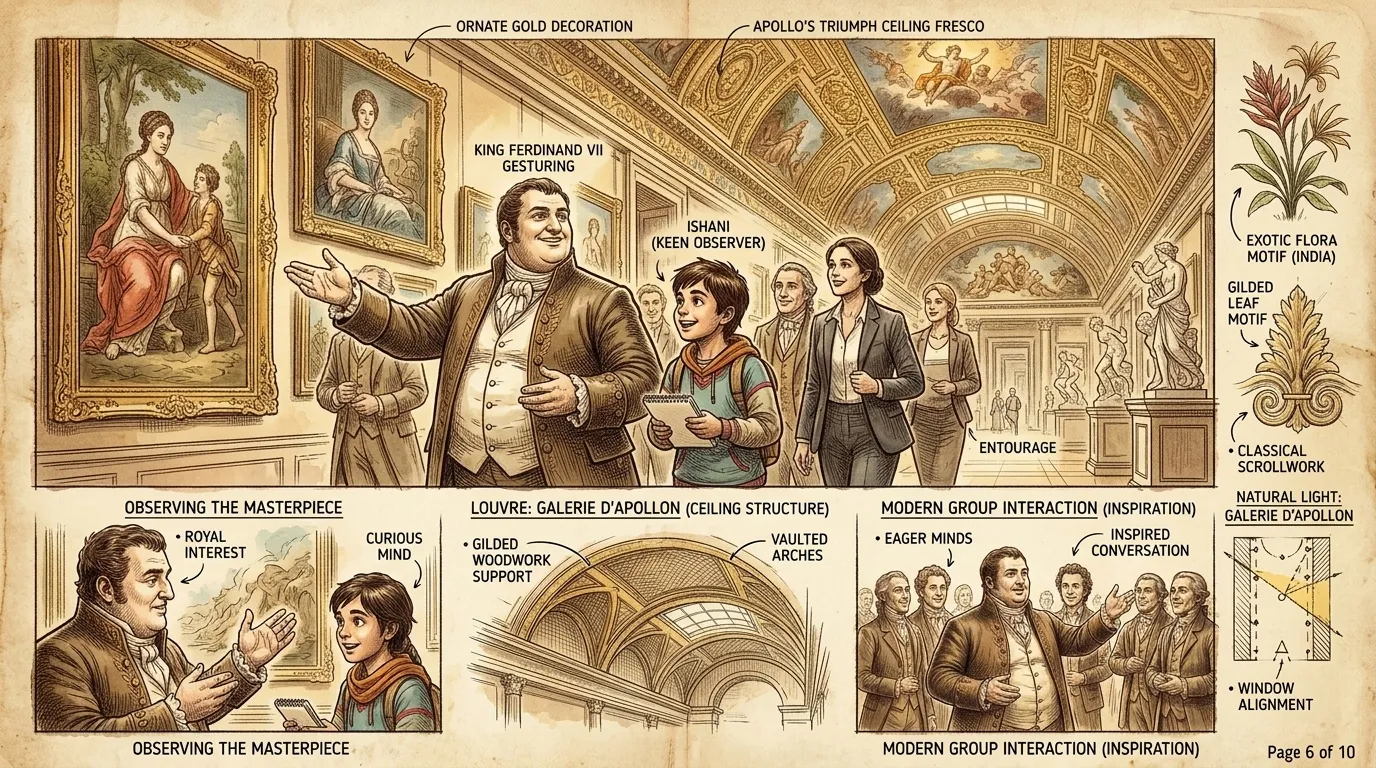
Before finalizing his plans, Ferdinand embarks on a tour of Europe's great museums, seeking inspiration and guidance. He visits the Louvre in Paris and the Uffizi in Florence, studying their architecture, organization, and display techniques.
""We must learn from the best," Ferdinand remarks to his entourage as he stands in the Louvre. "The goal is to create a museum that rivals the greatest in Europe!""
Art Fact: The Louvre Museum in Paris and the Uffizi Gallery in Florence served as models for the Prado. Ferdinand sought to create a museum that would showcase the artistic achievements of Spain and promote national pride.
Page 7
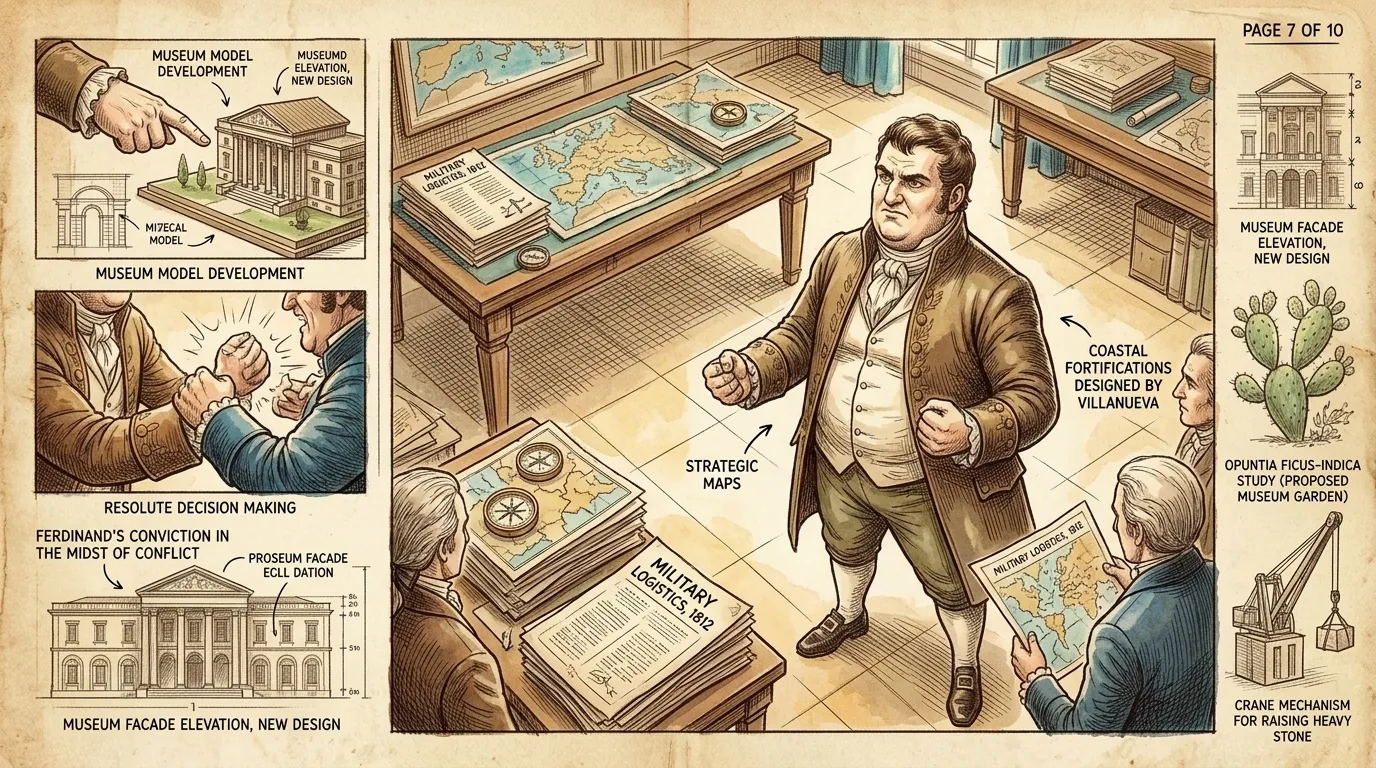
The Peninsular War casts a long shadow over Spain. Resources are scarce, and the museum project faces numerous delays. Ferdinand, however, remains determined to see his vision realized. But it takes more than that to succeed, as Picasso said, 'Inspiration exists, but it has to find you working.'
""We cannot allow war to extinguish the flame of art," Ferdinand declares to his ministers. "The museum is needed now more than ever, as a symbol of hope and resilience.""
Art Fact: The Peninsular War (1808-1814) disrupted the museum's construction and delayed its opening. Despite the challenges, Ferdinand remained committed to the project.
Page 8
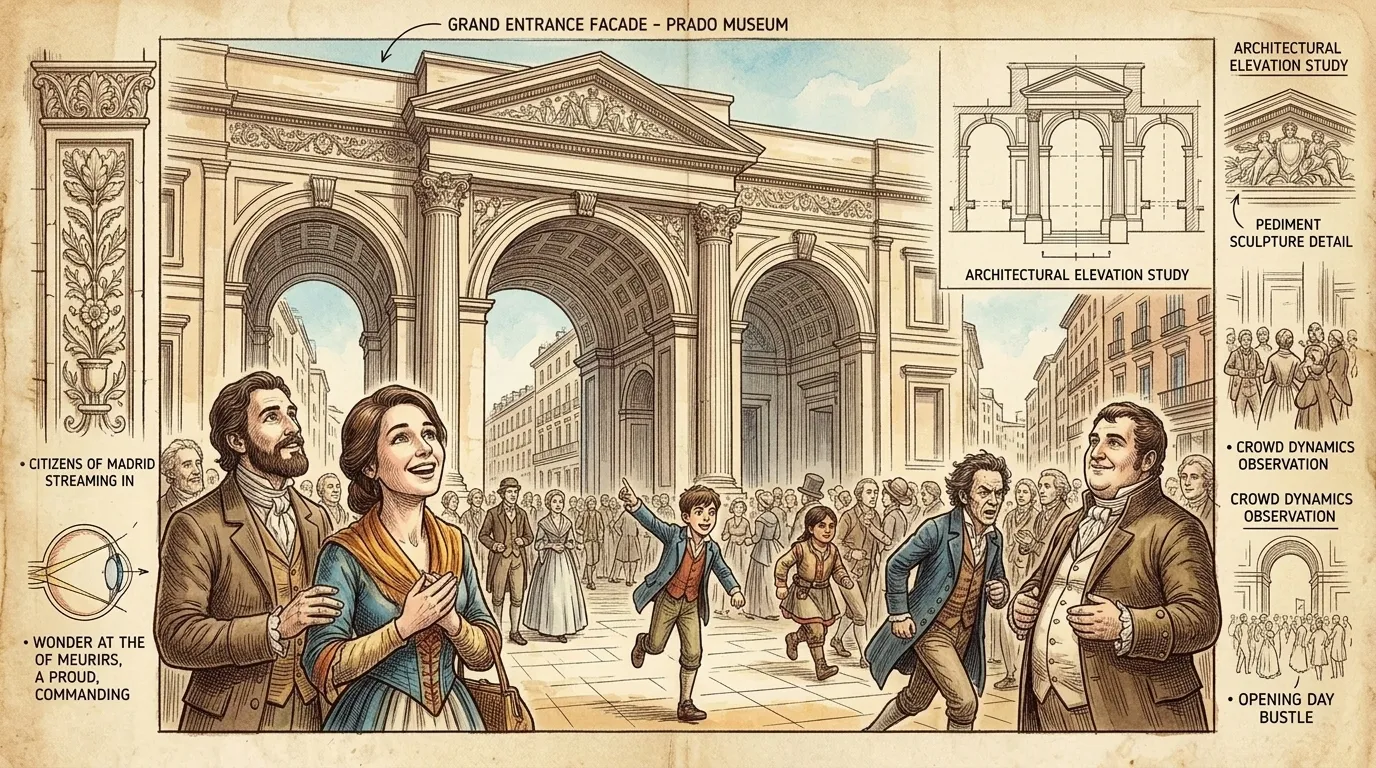
November 19, 1819. The Prado Museum officially opens its doors to the public. The citizens of Madrid stream into the building, eager to experience the art that had been hidden away in royal palaces for centuries.
""It is like a dream come true," a woman exclaims to her companion as they enter the museum. "I never imagined that such beauty could exist!""
Art Fact: The opening of the Prado Museum was a major cultural event in Spain. It marked the first time that the royal art collection was made accessible to the public.
Page 9
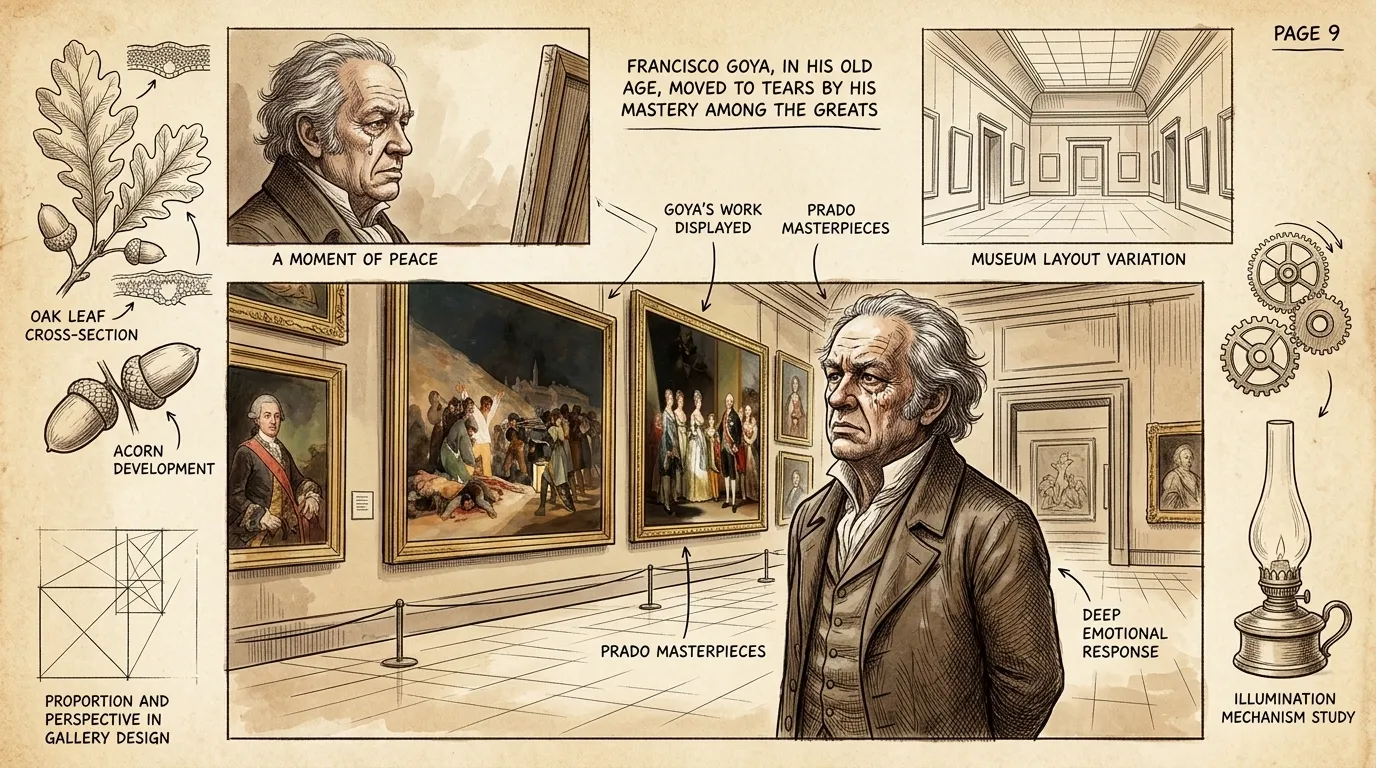
Goya, now an old man, visits the Prado. He is moved to see his own works alongside those of the great masters. His art, once controversial, is now celebrated as a testament to the human spirit.
""To see my work here," Goya whispers, his eyes filled with tears, "it is more than I could have ever hoped for.""
Art Fact: Goya's presence at the Prado solidified his legacy as one of Spain's greatest artists. His work continues to inspire and challenge viewers today.
Page 10

Today, the Prado Museum stands as a testament to Ferdinand VII's vision and the enduring power of art. Millions of visitors from around the world come to admire its masterpieces, each painting holding a story waiting to be discovered. As the saying goes: 'The aim of art is not to represent the outward appearance of things, but their inward significance,' said Aristotle. The Prado continues to illuminate the soul.
Art Fact: The Prado Museum remains one of the world's leading art museums, housing a vast collection of Spanish and European art. It is a symbol of Spain's cultural heritage and a source of inspiration for generations.
About this story
- Location: Spain
- Audience: kids (ages 6–12)
Questions and answers
Questions and answers about Prado Museum (Madrid, Spain — 1819)
Read Wonder Arts on your phone
Wonder Arts is available on Android. Get Wonder Arts on Google Play.
More Wonder Arts stories
- Printing Press by Johannes Gutenberg (Mainz, Germany — c. 1440)
- Proserpine by Dante Gabriel Rossetti (London, UK — 1874)
- Rain, Steam and Speed by J.M.W. Turner (London, UK — 1844)
- Realism Emerges by Courbet (Paris, France — c. 1850)
- Rebellious Slave by Michelangelo (Paris, France — 1513)
- Requiem by Wolfgang Amadeus Mozart (Vienna, Austria — 1791)