Realism Emerges by Courbet (Paris, France — c. 1850)
Realism Emerges by Courbet (Paris, France — c. 1850) — an illustrated arts story, set in France. 10 illustrated pages, free to read on Wonder Arts.
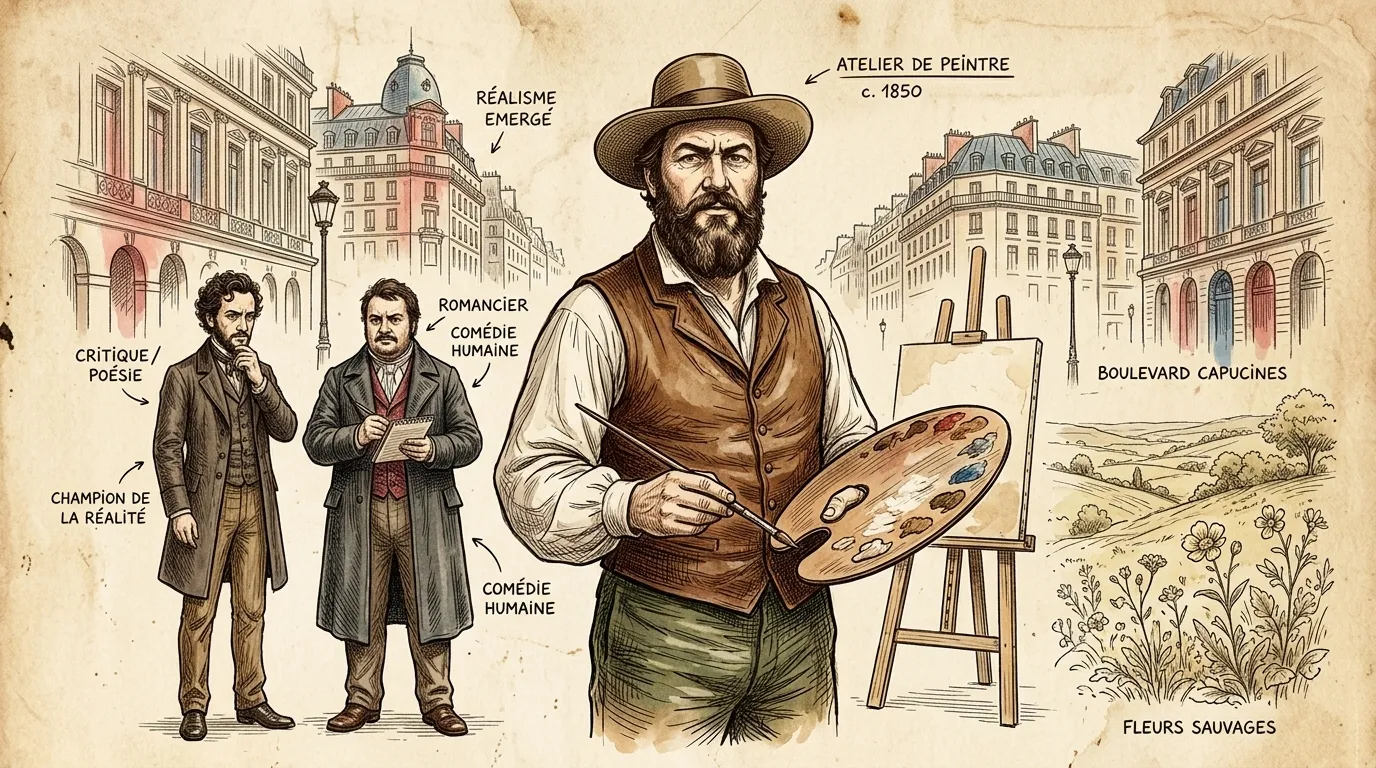
Page 1
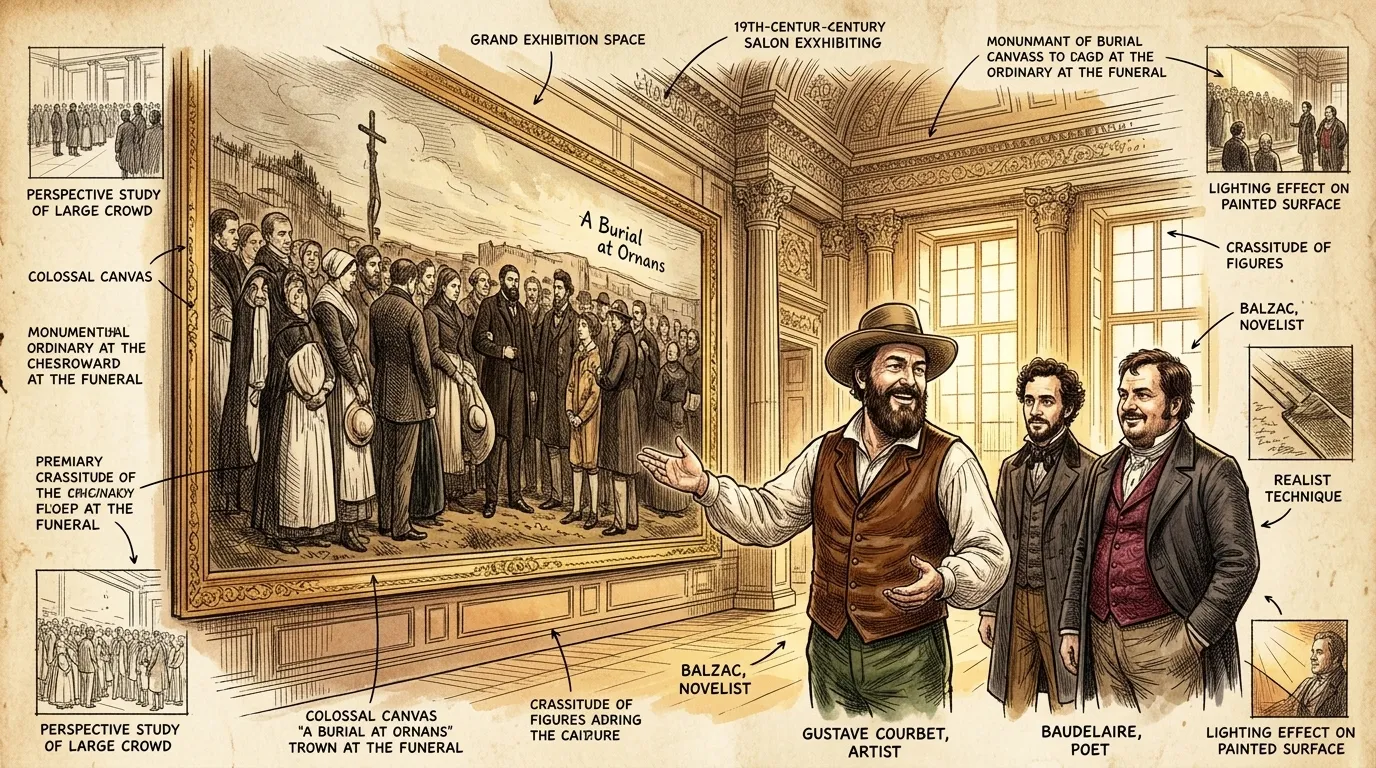
Gustave Courbet, standing before his colossal canvas A Burial at Ornans, felt a defiant pride. Completed in 1850, this painting, measuring a staggering 10 feet by 22 feet, shattered artistic conventions. The Salon critics were scandalized, not by its scale, but by its subject – ordinary people depicted with the grandeur typically reserved for historical or religious figures.
"Critic (dramatized): This is not art, Courbet! It's a glorification of the mundane!
Courbet: Perhaps, Monsieur. Or perhaps it's a recognition of the dignity in everyday life."
Art Fact: A Burial at Ornans, Musée d'Orsay, Paris. Value: Priceless. This painting marked a turning point in art history, rejecting Romanticism and idealization in favor of Realism.
Page 2
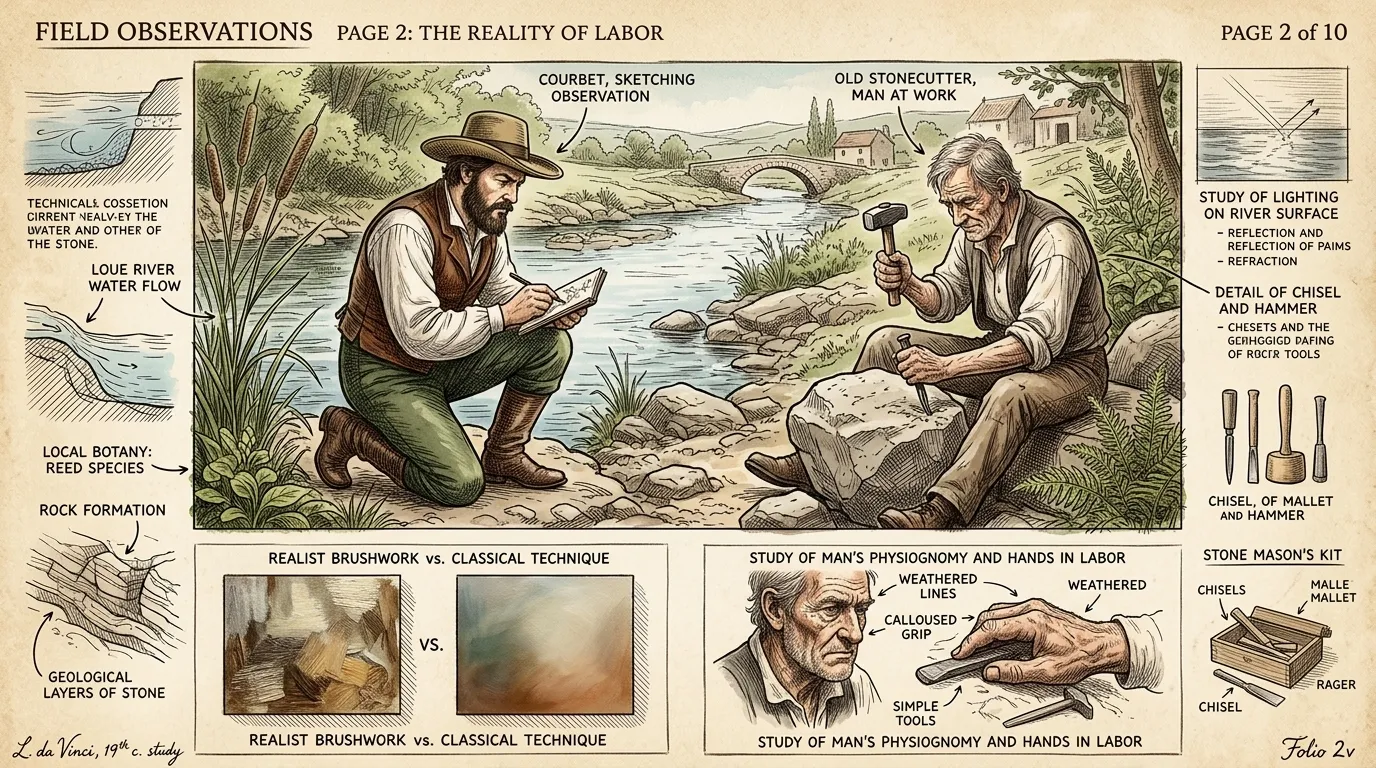
Young Courbet, sketching by the Loue River near his hometown of Ornans, encountered an old stonecutter, his face etched with years of labor. The man's honest features, weathered hands, and simple dignity stirred something within the artist. 'The artist,' Balzac wrote, 'should be a historian.' I must paint what I see, not what I imagine.
"Courbet: Tell me, old man, what is it like to work with stone, to shape the earth with your own hands?
Stonecutter: It is honest work, young man. It is the work that sustains us."
Art Fact: Courbet's early exposure to the harsh realities of rural life profoundly influenced his artistic vision.
Page 3
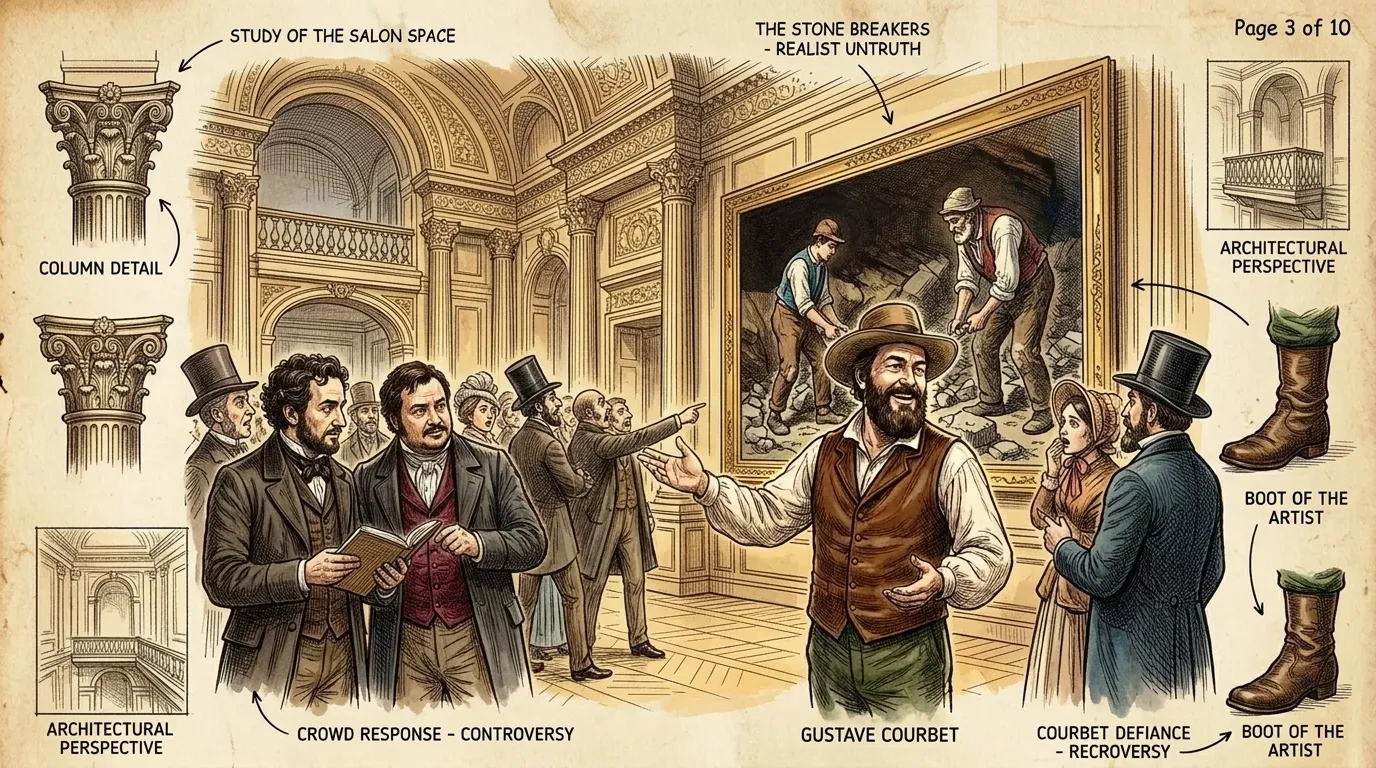
At the Paris Salon, Courbet's The Stone Breakers was met with derision. Critics deemed it vulgar, unrefined. But Courbet, fueled by a fierce independence, refused to compromise. As Charles Baudelaire said, 'The glory of some men is to have labored so hard that they compel all posterity to labor in understanding them.' I will not paint to please them. I will paint the truth.
"Critic (dramatized): This is an insult to art! These are not subjects worthy of the Salon!
Courbet: And who decides what is worthy, Monsieur? The aristocracy? The Academy? I paint the people who build this nation!"
Art Fact: The Stone Breakers (destroyed in WWII) solidified Courbet's commitment to depicting the lives of the working class.
Page 4
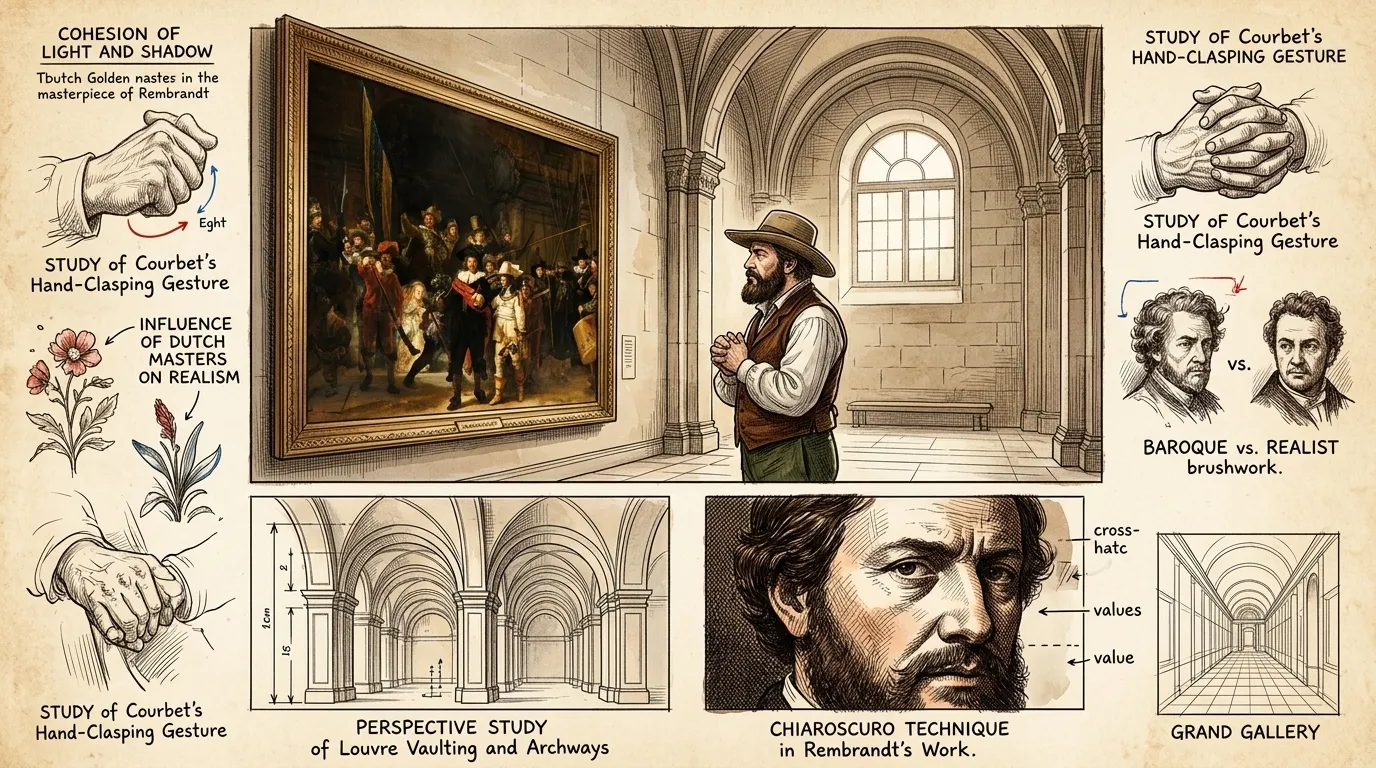
During a visit to the Louvre, Courbet was captivated by the works of Rembrandt and Hals. Their mastery of light and shadow, their unflinching portrayal of human nature, resonated deeply. He spent hours studying their techniques, seeking to emulate their realism in his own work. I must learn from the masters, but forge my own path.
"Courbet: (to himself) Look at the way Rembrandt uses light to reveal character. It is breathtaking. I must study this. I must apply this to my own work."
Art Fact: Rembrandt's use of chiaroscuro profoundly influenced Courbet's approach to light and shadow.
Page 5
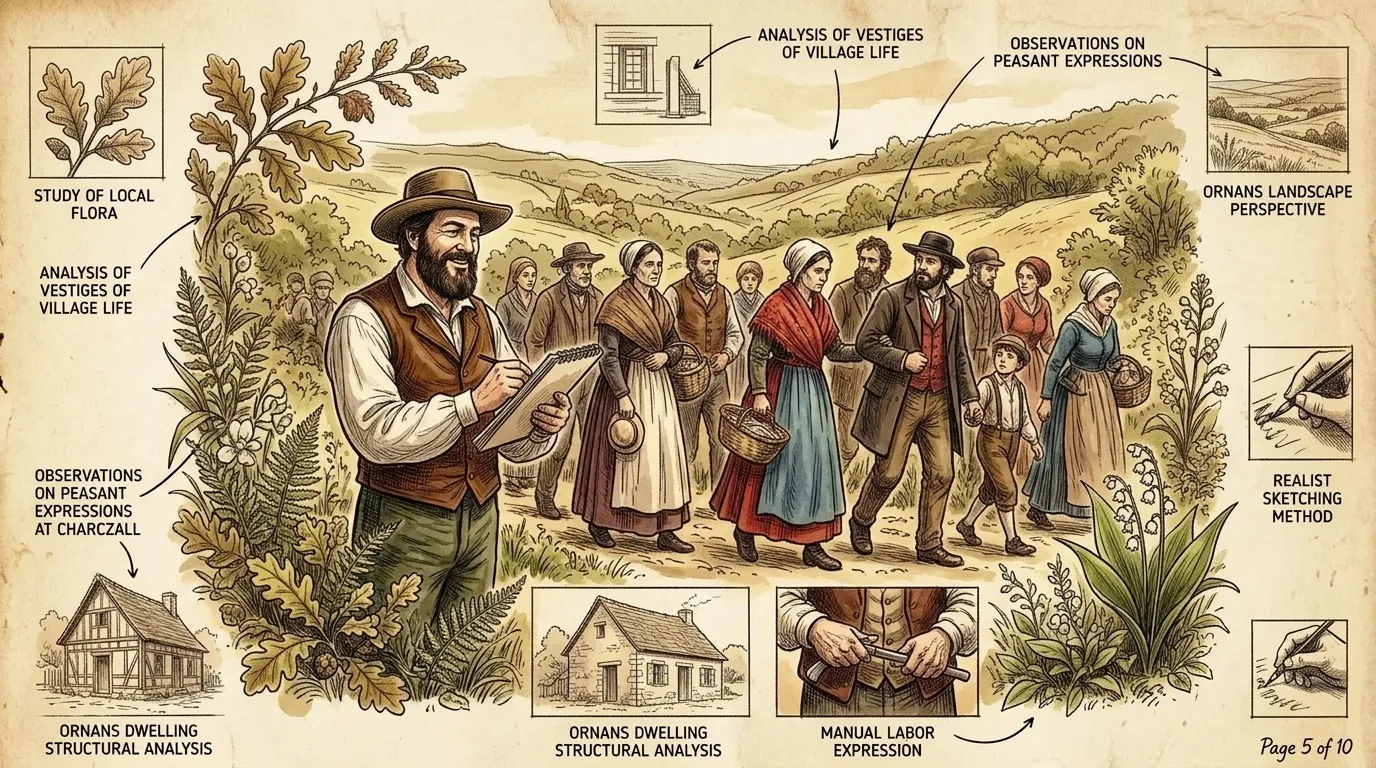
Inspired by a funeral in his hometown, Courbet conceived A Burial at Ornans. He wanted to capture the faces of the ordinary people, their grief, their stoicism, their shared humanity. He painted them life-size, with no attempt at idealization. It is a true depiction of life and death.
"Courbet: I want to paint them as they are, not as they should be. Their grief is real, their faces tell a story. I must capture that truth."
Art Fact: A Burial at Ornans was revolutionary in its depiction of ordinary people on a grand scale.
Page 6
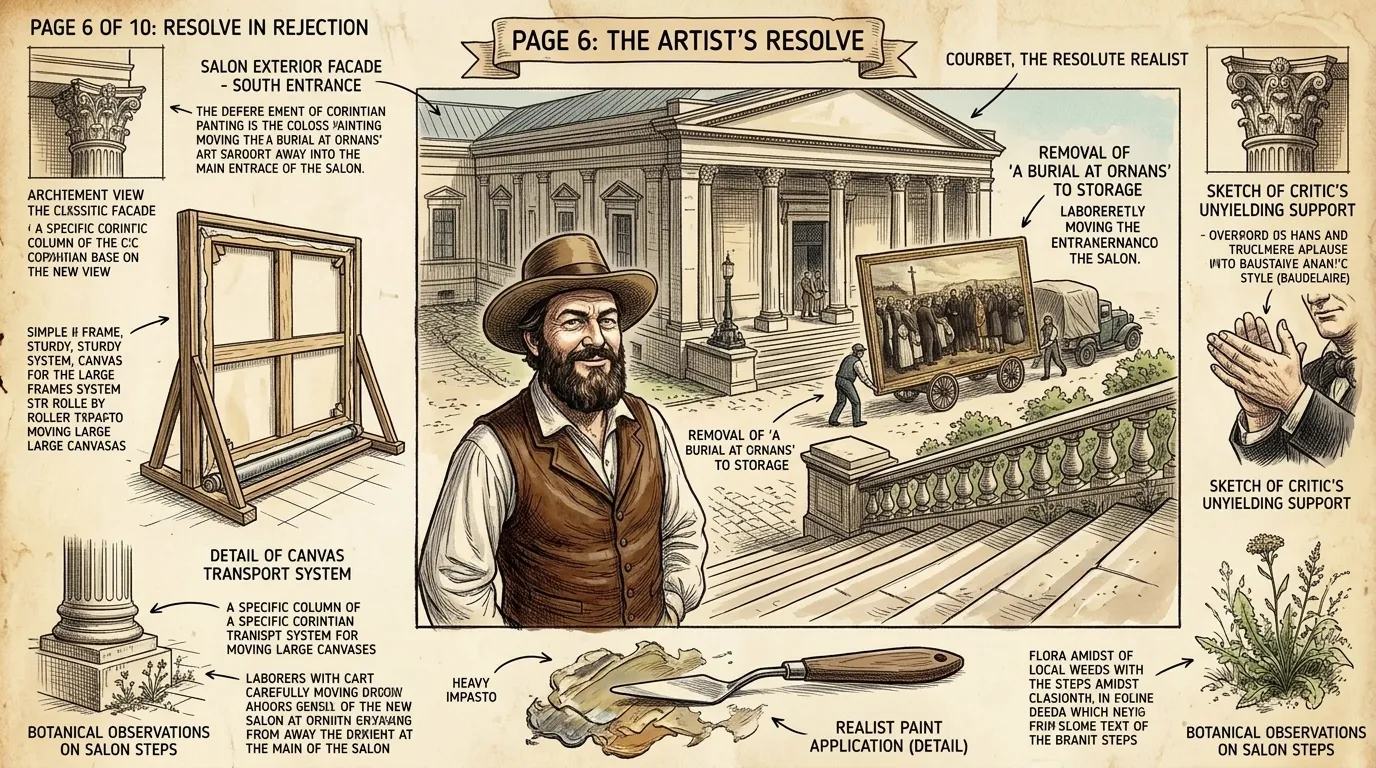
When Courbet submitted A Burial at Ornans to the 1850 Salon, it was rejected. The judges, accustomed to idealized portraits and historical scenes, found the painting too common, too ugly. Courbet, undeterred, vowed to show the world his vision. 'To be great,' Honore de Balzac once wrote, 'is to be misunderstood.'
"Salon Judge: This is not the kind of art we want to display here. It is too crude and unrefined.
Courbet: It is a reflection of reality, and if you cannot see the beauty in that, then you are blind."
Art Fact: The Salon's rejection of A Burial at Ornans further solidified Courbet's status as a rebel artist.
Page 7
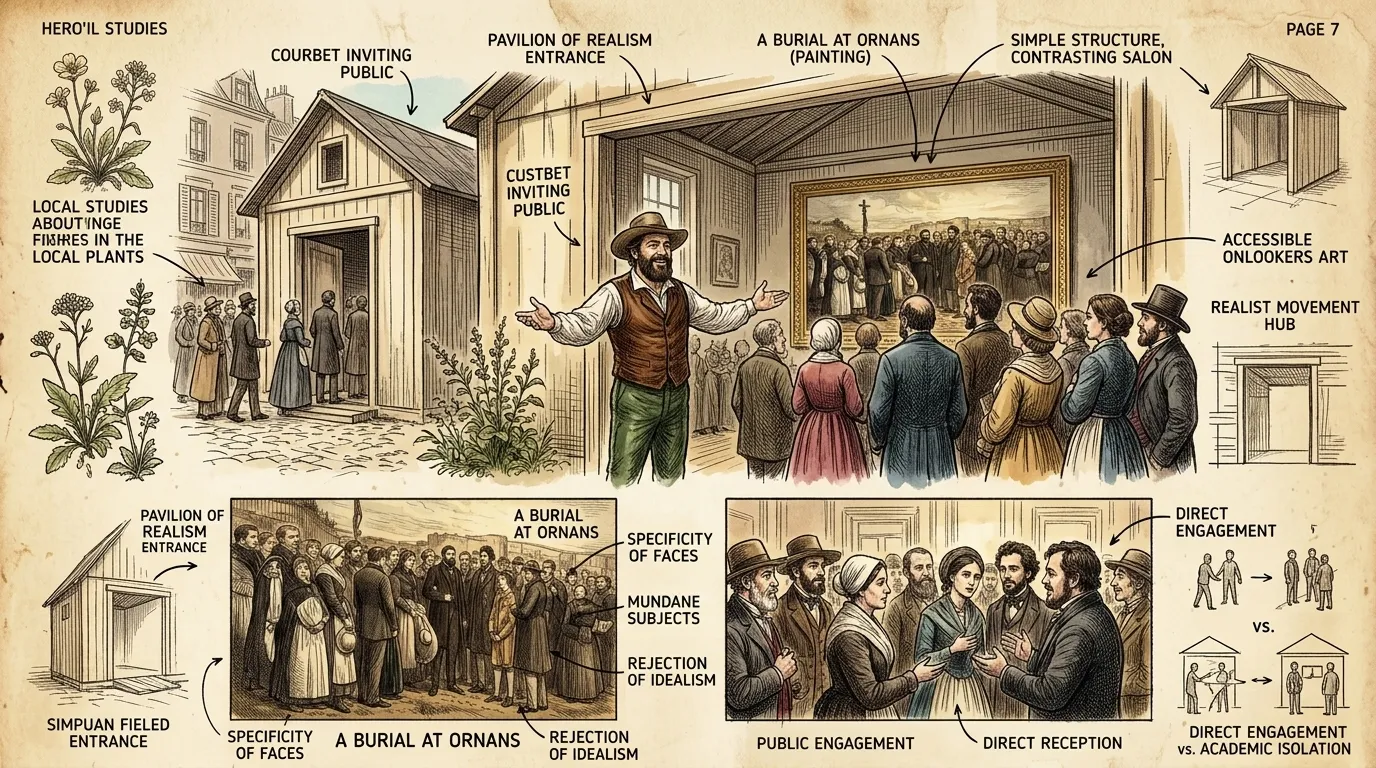
In response to the Salon's rejection, Courbet erected his own exhibition, the 'Pavilion of Realism.' Here, he displayed his works, including A Burial at Ornans, directly to the public. The public's reaction was mixed, but the exhibition sparked a debate about the nature of art and its role in society. I will show my work, and let the people decide.
"Courbet: I am opening this exhibition so that the people can see my work for themselves. They are the true judges of art."
Art Fact: The 'Pavilion of Realism' marked a bold step in Courbet's career and the rise of the Realist movement.
Page 8
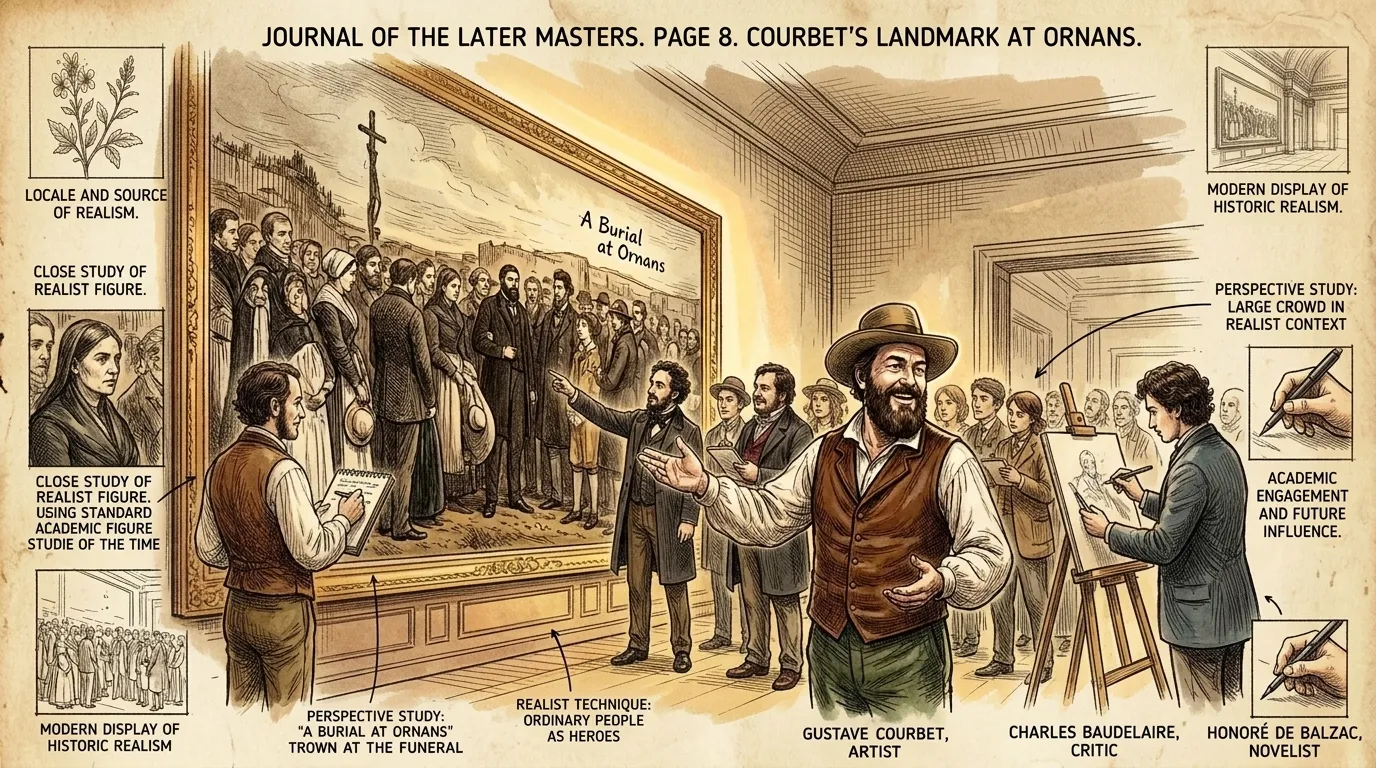
Despite the controversy, A Burial at Ornans became a landmark work, paving the way for future generations of Realist artists. Its unflinching portrayal of everyday life, its rejection of idealization, its sheer scale, all challenged the established norms of the art world. 'Show me an angel,' Courbet famously said, 'and I'll paint one.'
"Art Critic: Courbet's work has inspired so many! It's changed the way we look at art forever. Ordinary lives can be extraordinary subjects."
Art Fact: A Burial at Ornans remains a powerful symbol of Realism and a testament to the dignity of ordinary life.
Page 9
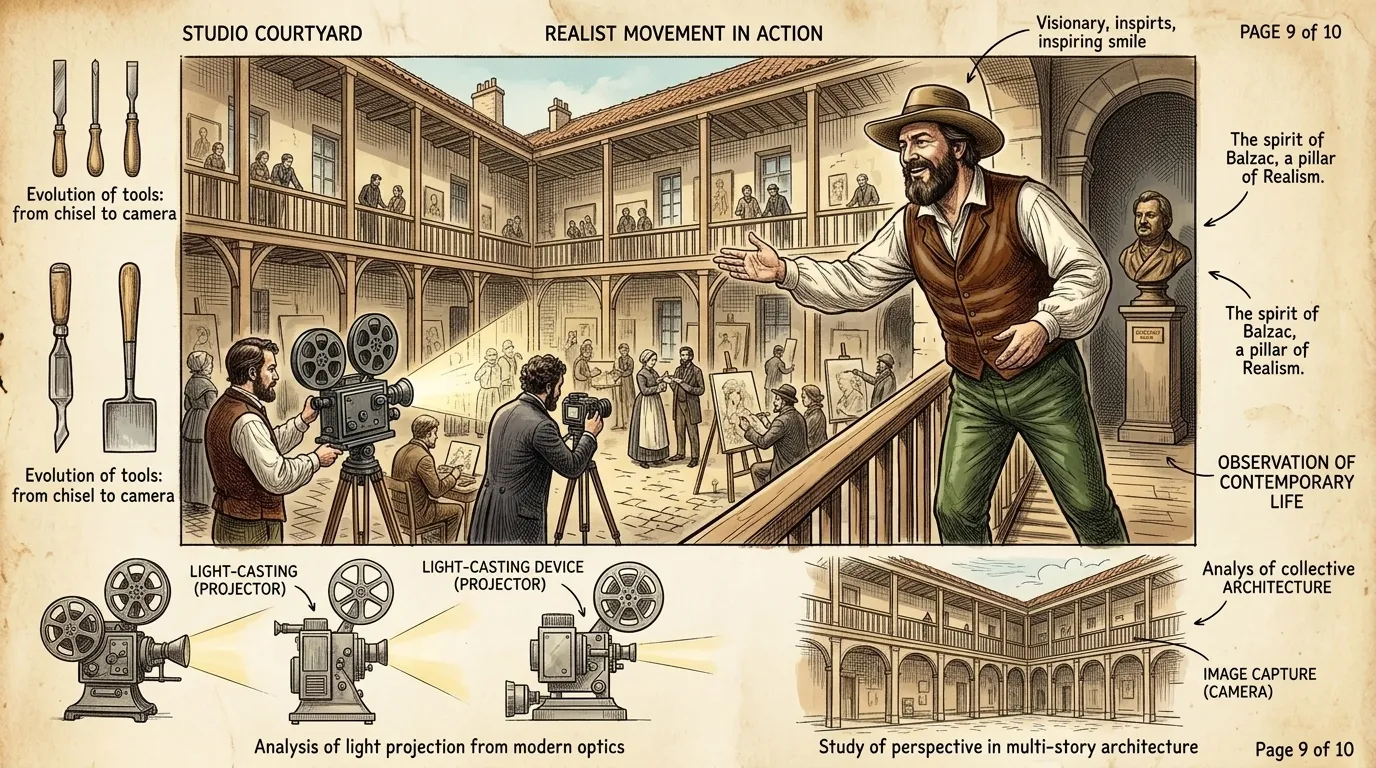
Courbet's commitment to Realism, his defiance of the Academy, his dedication to portraying the lives of ordinary people – these principles continue to inspire artists today. His influence can be seen in the works of painters, photographers, and filmmakers who strive to capture the truth of human experience. His spirit lives on.
"Historian: Courbet's realism changed the art world. Now, new artists are inspired to show the truth of their own lives."
Art Fact: Courbet's legacy extends beyond the art world, influencing social and political movements that champion the rights of ordinary people.
Page 10
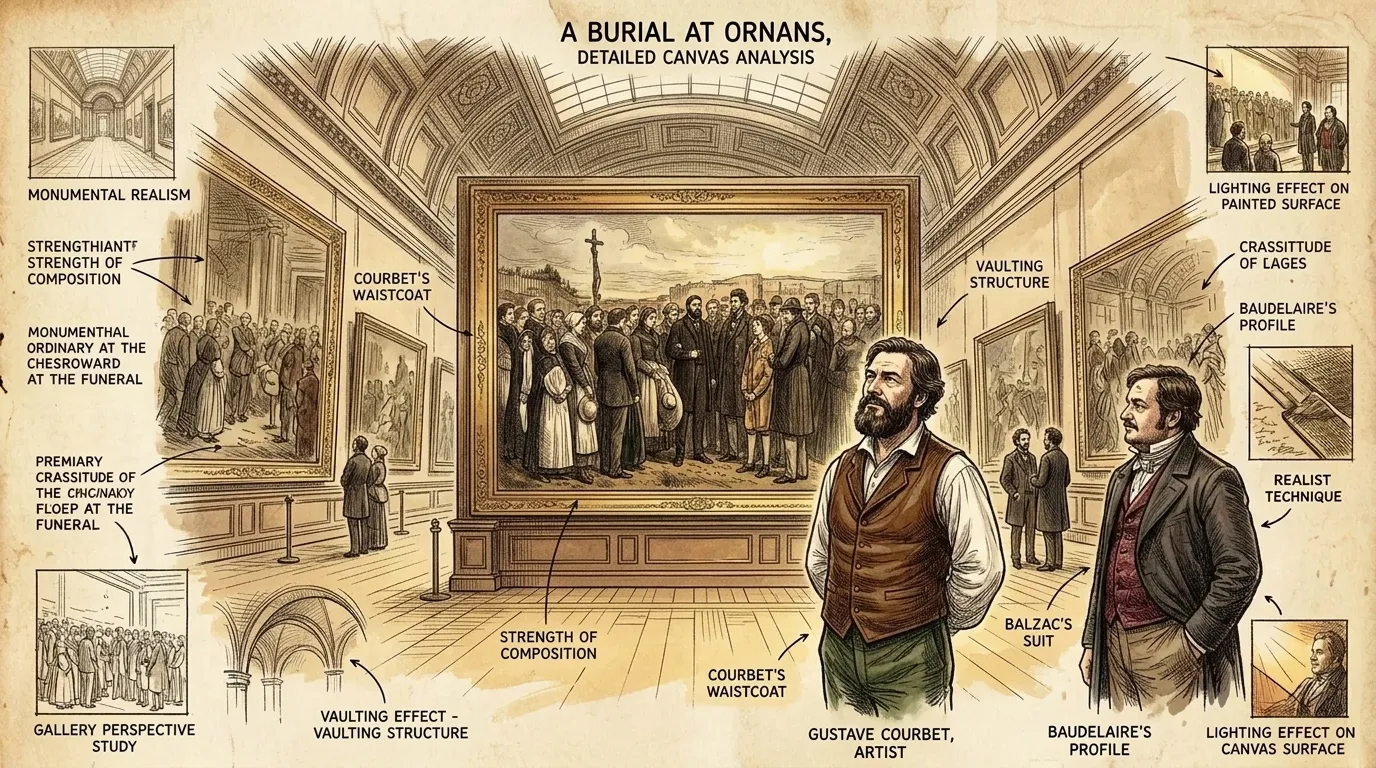
Gustave Courbet's A Burial at Ornans stands as a monument to the power of realism. It captures a moment in time, a community in mourning, and the enduring human spirit. His determination to paint the world as he saw it, without idealization or artifice, forever changed the course of art history. Courbet's dedication lives on.
"Art Historian: It's like Leonardo da Vinci said 'Art is never finished, only abandoned.' Courbet's vision lives on!"
Art Fact: Why does Courbet's work survive forever? Because he dared to paint the truth, no matter how uncomfortable or unconventional.
About this story
- Location: France
- Audience: general readers
Questions and answers
Questions and answers about Realism Emerges by Courbet (Paris, France — c. 1850)
Read Wonder Arts on your phone
Wonder Arts is available on Android. Get Wonder Arts on Google Play.
More Wonder Arts stories
- Rebellious Slave by Michelangelo (Paris, France — 1513)
- Requiem by Wolfgang Amadeus Mozart (Vienna, Austria — 1791)
- Rijksmuseum (Amsterdam, Netherlands — 1800)
- Romanticism Rises by Goya (Europe — c. 1800)
- Rouen Cathedral Series by Claude Monet (Rouen, France — 1894)
- Roundhay Garden Scene by Louis Le Prince (Leeds, UK — 1888)