Requiem by Wolfgang Amadeus Mozart (Vienna, Austria — 1791)
Requiem by Wolfgang Amadeus Mozart (Vienna, Austria — 1791) — an illustrated arts story. 10 illustrated pages, free to read on Wonder Arts.
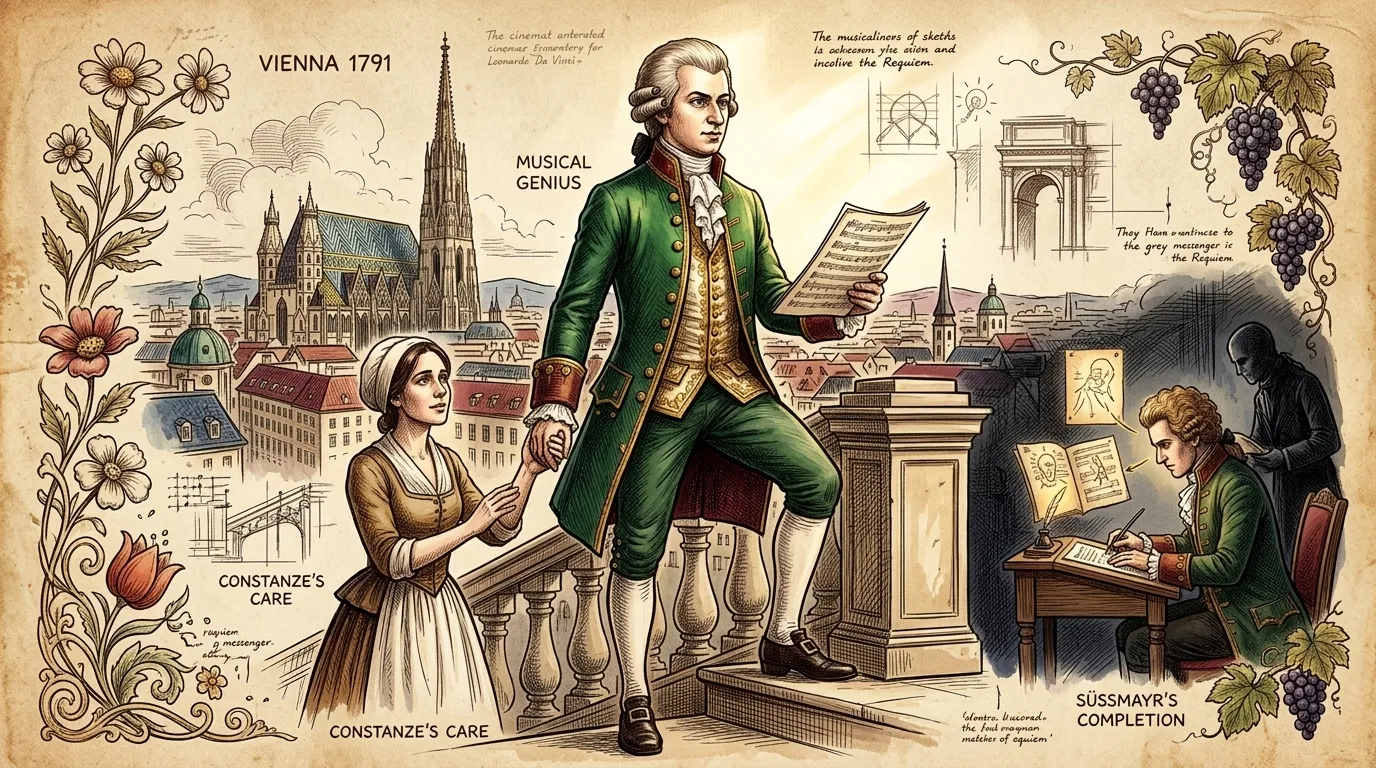
Page 1
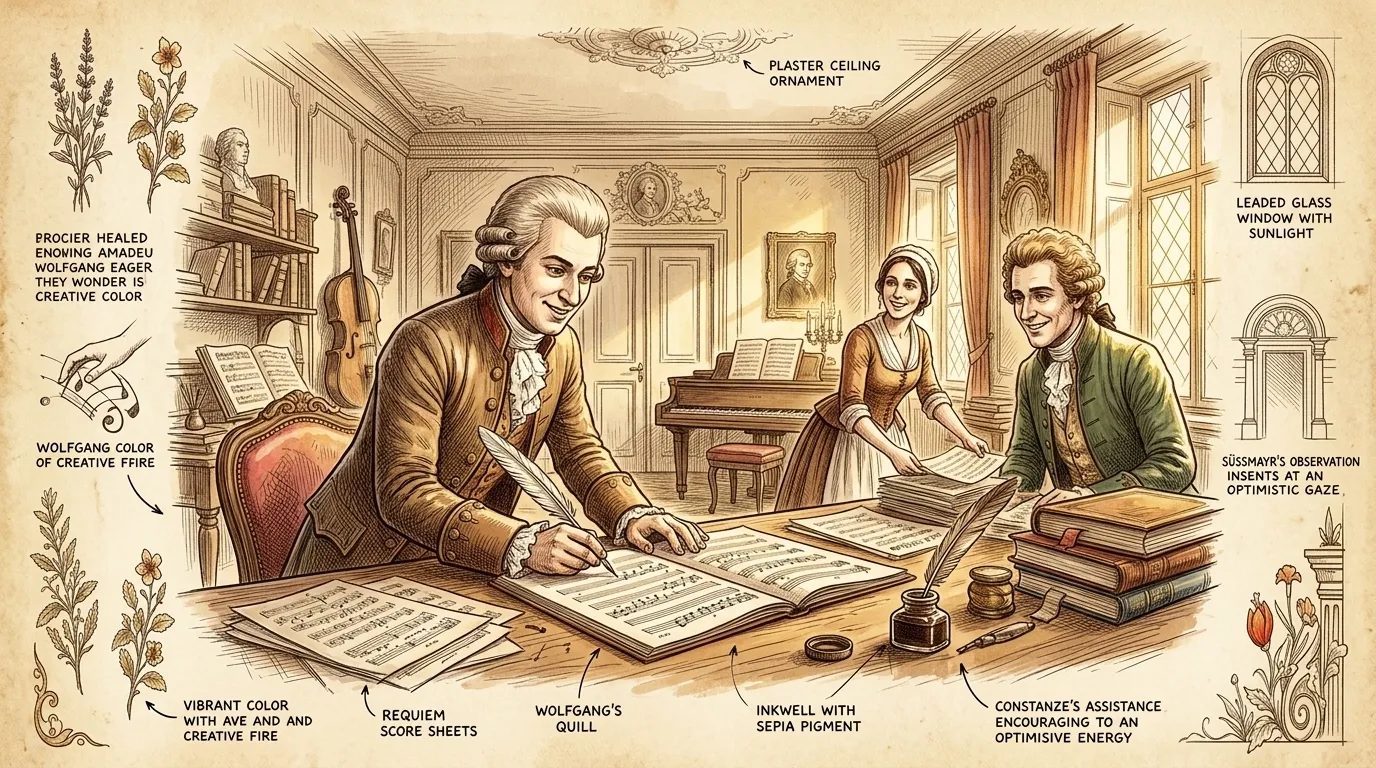
Wolfgang Amadeus Mozart, a man consumed by both genius and illness, stands before the partially completed score of his Requiem in D minor, K. 626. The year is 1791, Vienna. The work, commissioned under mysterious circumstances, would become his last. Its incomplete state adds to the mystique, valued today at tens of millions and a testament to a life cut short.
""I feel the end approaching," Mozart whispers, his face pale. "This Requiem...it must be finished. It is my soul's farewell.""
Art Fact: The Requiem remains shrouded in mystery, fueling endless speculation about its origins and Mozart's premature death.
Page 2
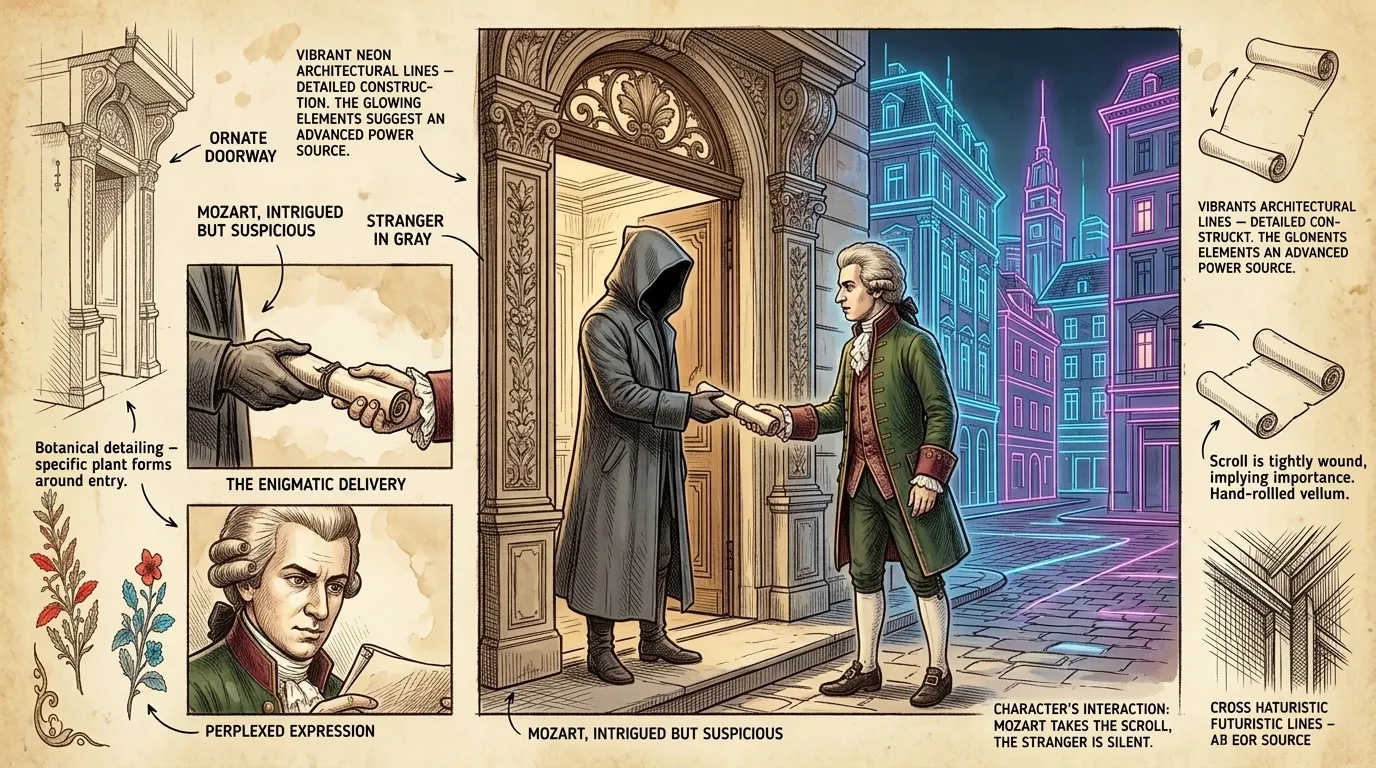
A stranger in a gray coat arrives at Mozart's doorstep, delivering an anonymous commission for a Requiem Mass. The fee is substantial, an irresistible temptation for the financially struggling composer. It is an event that would change Mozart's destiny. This neon futuristic Vienna makes the stranger look even more unsettling.
""Who is this masked man? What is going on here?" Mozart exclaims, perplexed. "I cannot deny such a generous offer, but still... why?""
Art Fact: Count Franz von Walsegg commissioned the Requiem anonymously, intending to pass it off as his own work.
Page 3
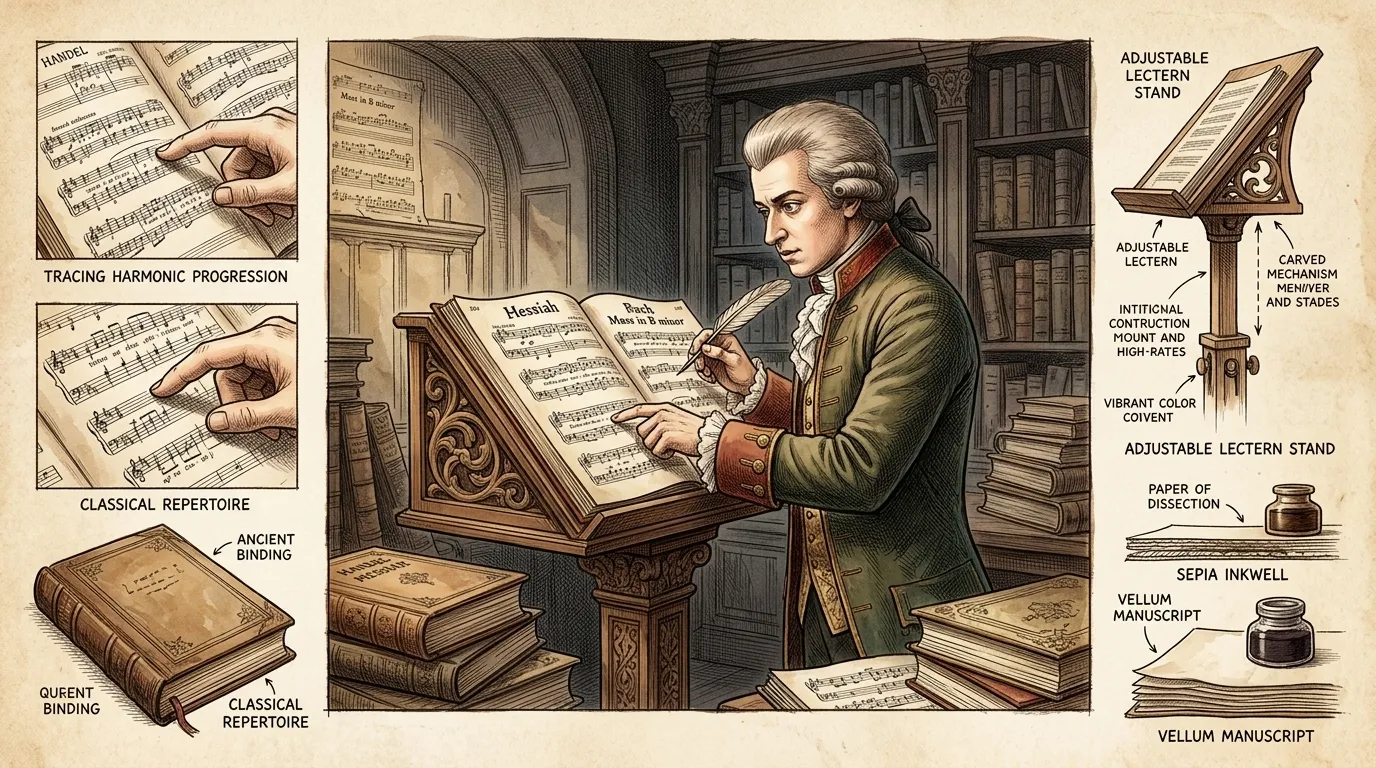
Mozart pores over the scores of Handel's Messiah and Bach's Mass in B minor, seeking inspiration for his Requiem. He admires their masterful use of counterpoint and their ability to evoke profound spiritual emotions. It's a heavy burden, knowing who came before.
""Bach, Handel... giants!" Mozart exclaims, a mix of awe and frustration in his voice. "How can I ever hope to reach such heights? Their devotion is clear in the music.""
Art Fact: Mozart drew inspiration from the works of his predecessors, but his Requiem ultimately transcended mere imitation.
Page 4
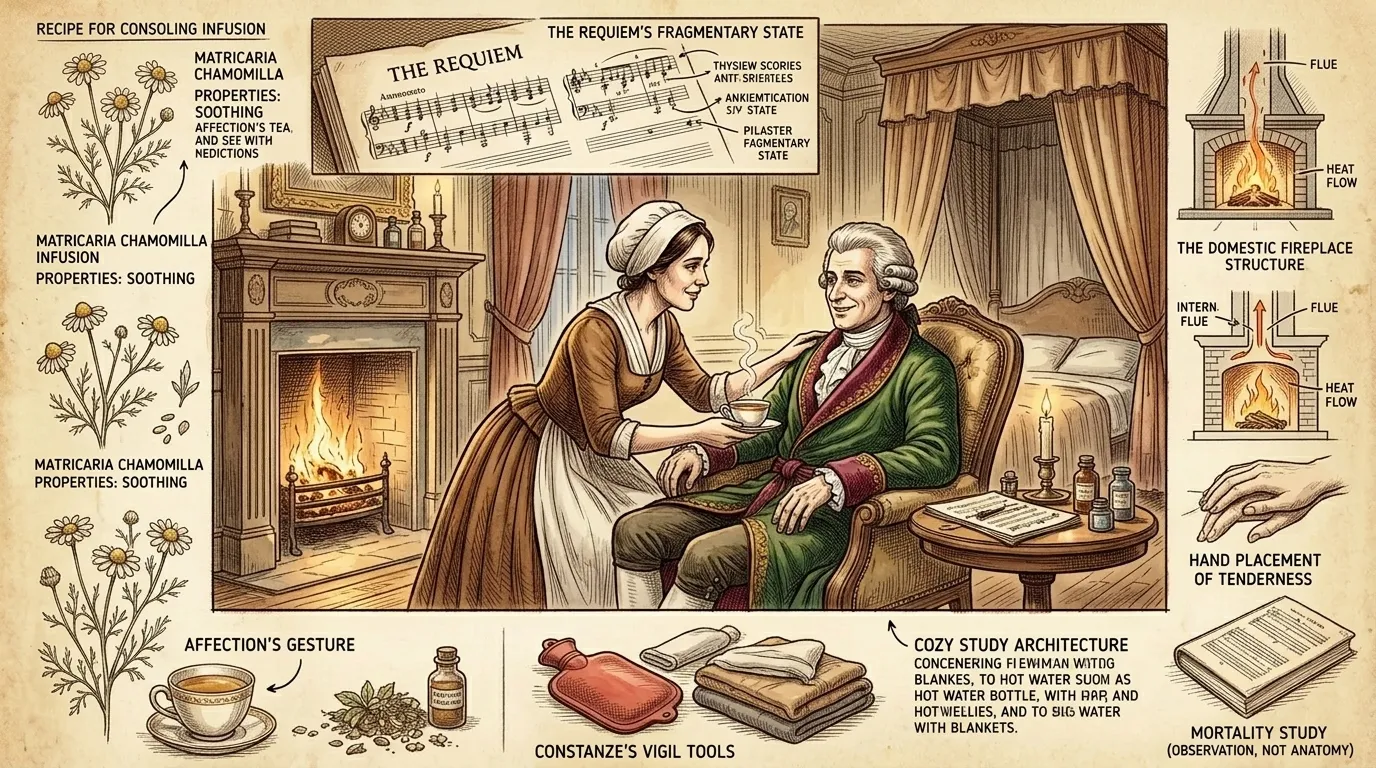
As Mozart's health declines, his wife, Constanze, tirelessly cares for him. She brings him tea, reads to him, and does her best to alleviate his pain. Her devotion is a source of comfort and strength. Constanze keeps Mozart motivated to finish his work.
""Rest, Wolfgang, rest," Constanze pleads softly, her voice filled with concern. "Your health is more important than any composition. Please, for me.""
Art Fact: Constanze Mozart played a crucial role in preserving and promoting her husband's legacy after his death.
Page 5
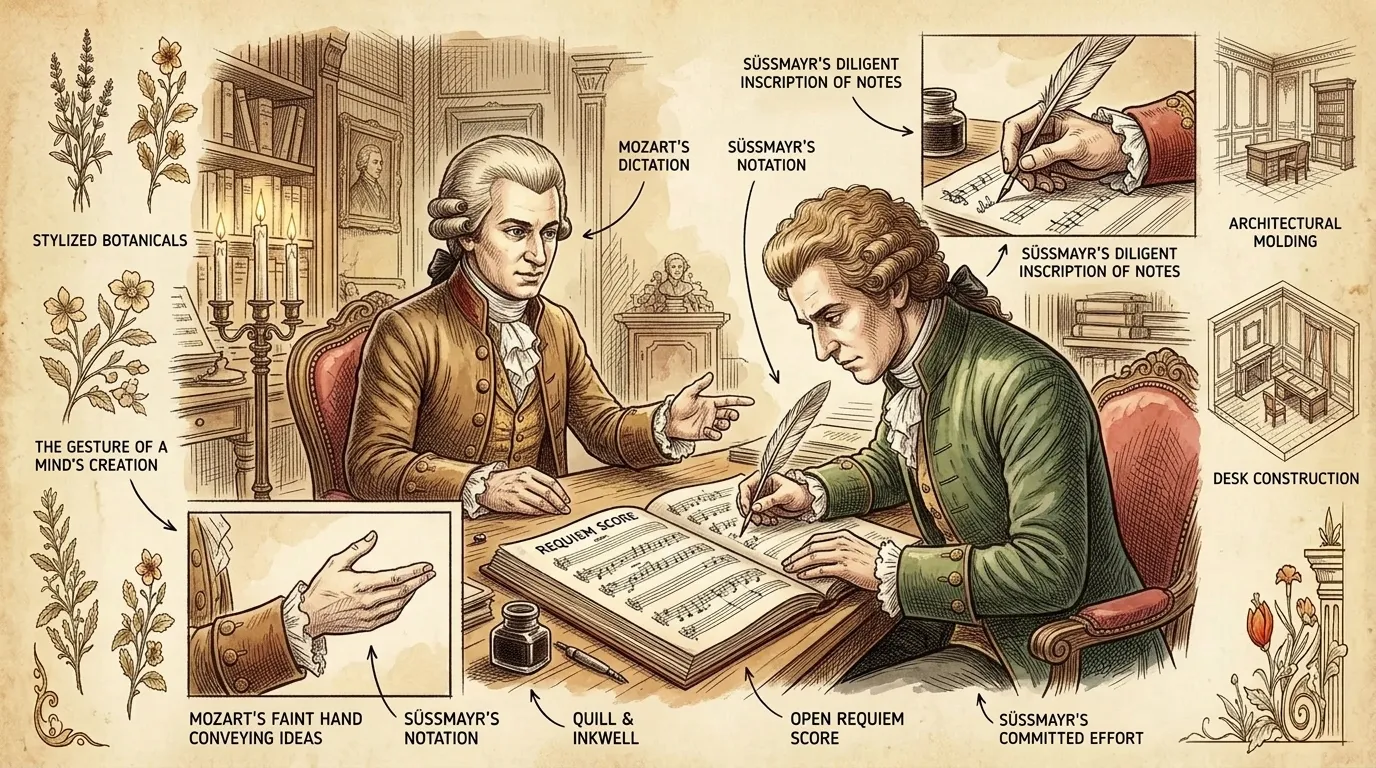
Mozart's student, Franz Xaver Süssmayr, visits him, offering assistance with the Requiem. Mozart dictates his ideas, entrusting Süssmayr with the task of completing the orchestration after his death. This student's role is vital to history.
""Süssmayr, you must promise me," Mozart implores, his voice weak. "You must finish the Requiem as I have envisioned it. Do you swear?""
Art Fact: Franz Xaver Süssmayr's completion of the Requiem has been the subject of much debate, with scholars questioning the extent of his contribution.
Page 6
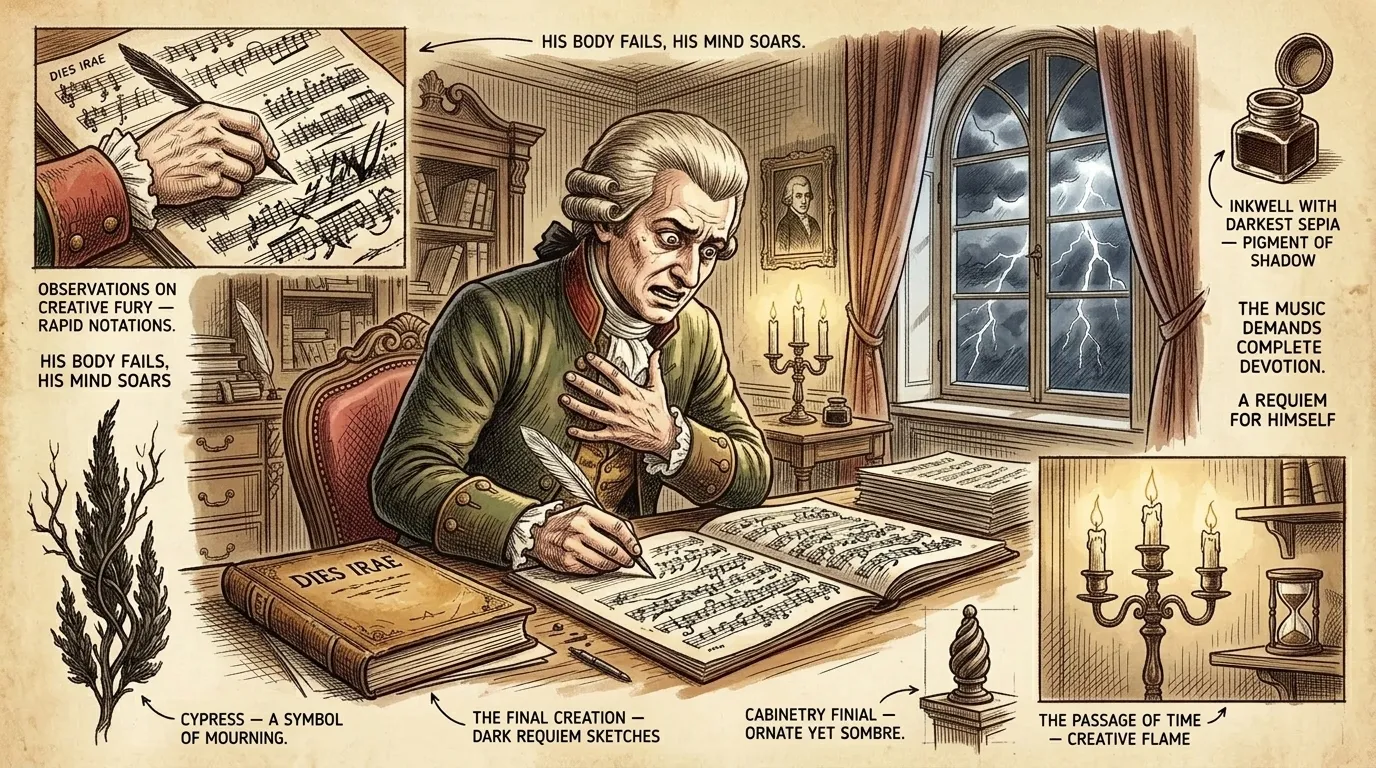
Mozart composes the terrifying 'Dies Irae' sequence, a vivid depiction of the Day of Judgment. The music is intense and dramatic, reflecting Mozart's own anxieties about death and mortality. Mozart is deeply shaken by this song.
""The terror... the judgment!" Mozart cries out, clutching his chest. "I hear the trumpets of the apocalypse! This Requiem is haunting me!""
Art Fact: The 'Dies Irae' is one of the most powerful and dramatic sections of the Requiem, showcasing Mozart's mastery of orchestration and dramatic effect.
Page 7
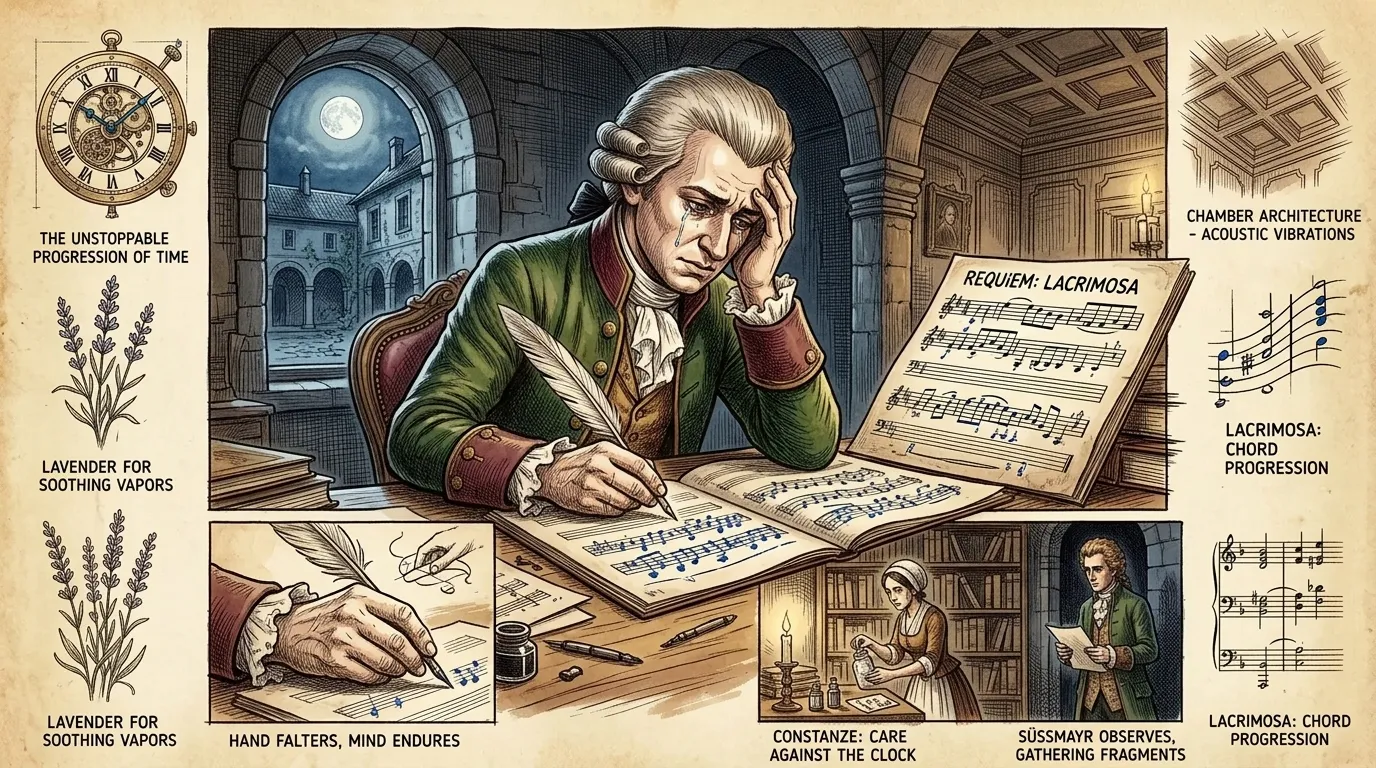
With failing health, Mozart begins writing 'Lacrimosa', a poignant lament filled with sorrow and resignation. He knows his time is near, and he pours all his remaining strength into this moving farewell. His health is failing quickly.
""Such sadness... such profound grief," Mozart murmurs, tears streaming down his face. "This is my swan song, my final offering to the world. Süssmayr, complete my Requiem!""
Art Fact: The 'Lacrimosa' is considered by many to be the emotional heart of the Requiem, a testament to Mozart's ability to express profound human emotions through music.
Page 8
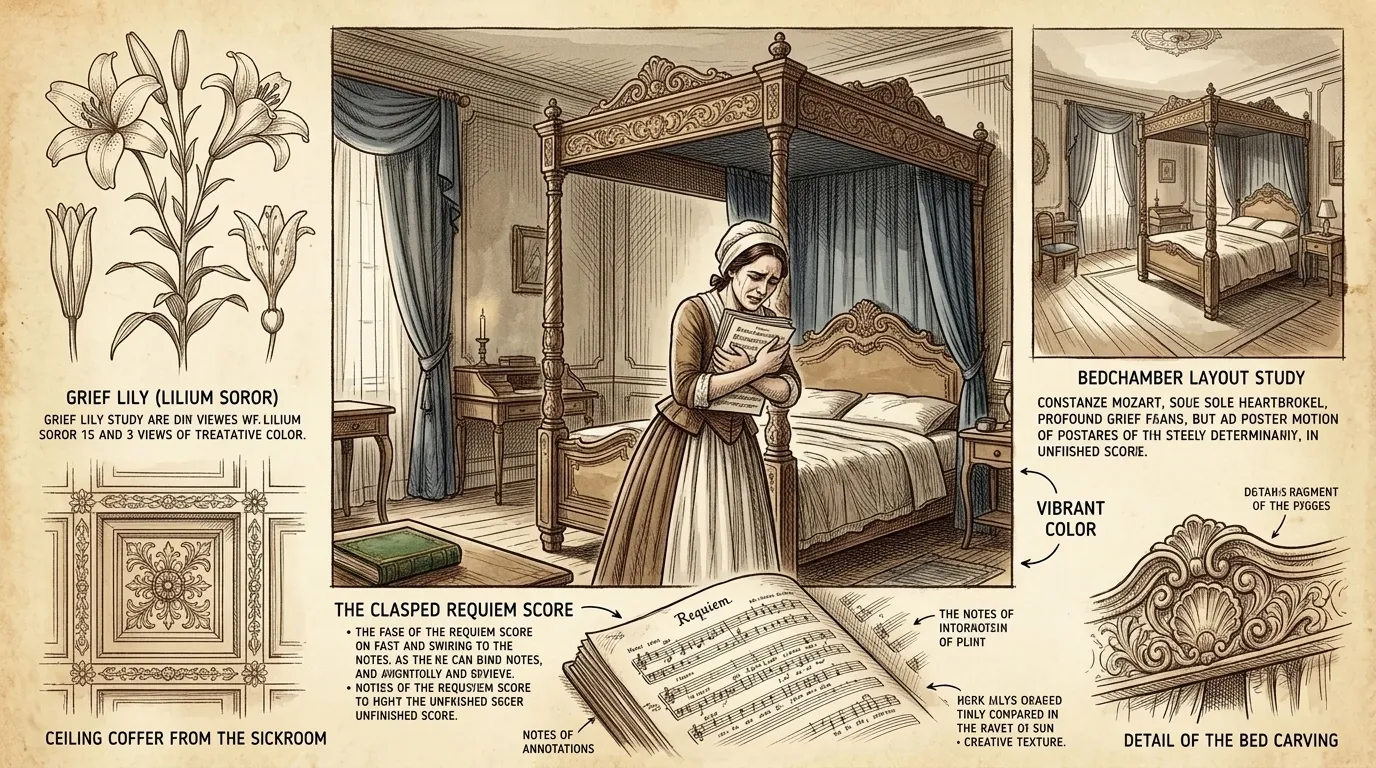
On December 5, 1791, Wolfgang Amadeus Mozart dies, leaving the Requiem unfinished. Constanze is heartbroken, but determined to ensure that her husband's final masterpiece is completed and presented to the world.
""He is gone... my beloved Wolfgang is gone!" Constanze sobs, clutching the unfinished score to her chest. "But his music will live on forever!""
Art Fact: Mozart's death at the age of 35 remains one of music history's greatest tragedies, leaving the world to wonder what other masterpieces he might have created.
Page 9
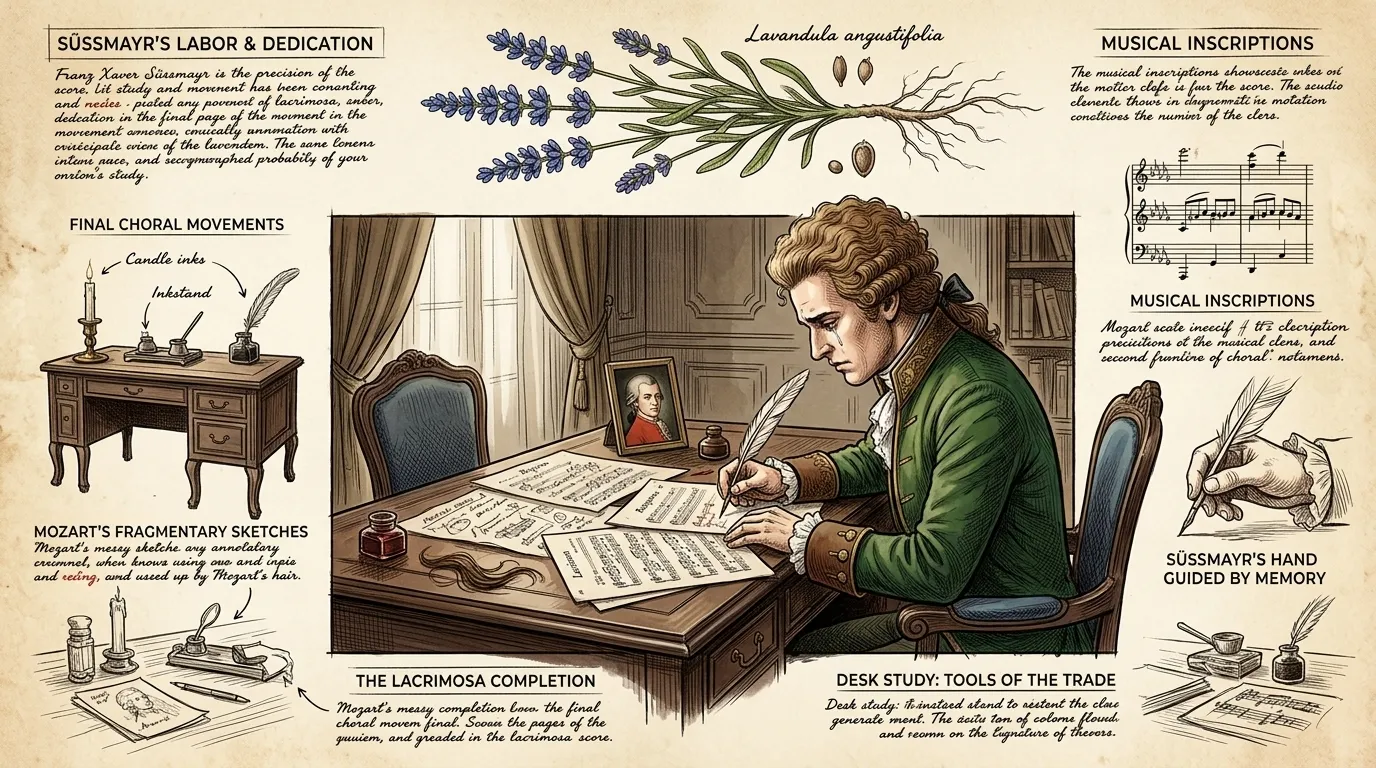
Franz Xaver Süssmayr, guided by Mozart's sketches and instructions, completes the Requiem. The work is performed for the first time, fulfilling Mozart's dying wish. The world is in awe with the final product.
""For Mozart!" Süssmayr says. "I will finish his work. For his legacy, for the future, it must be done. I owe him that, as a student.""
Art Fact: Süssmayr's completion of the Requiem ensured that Mozart's final masterpiece would be heard by the world, even though the extent of his contribution remains a subject of debate.
Page 10
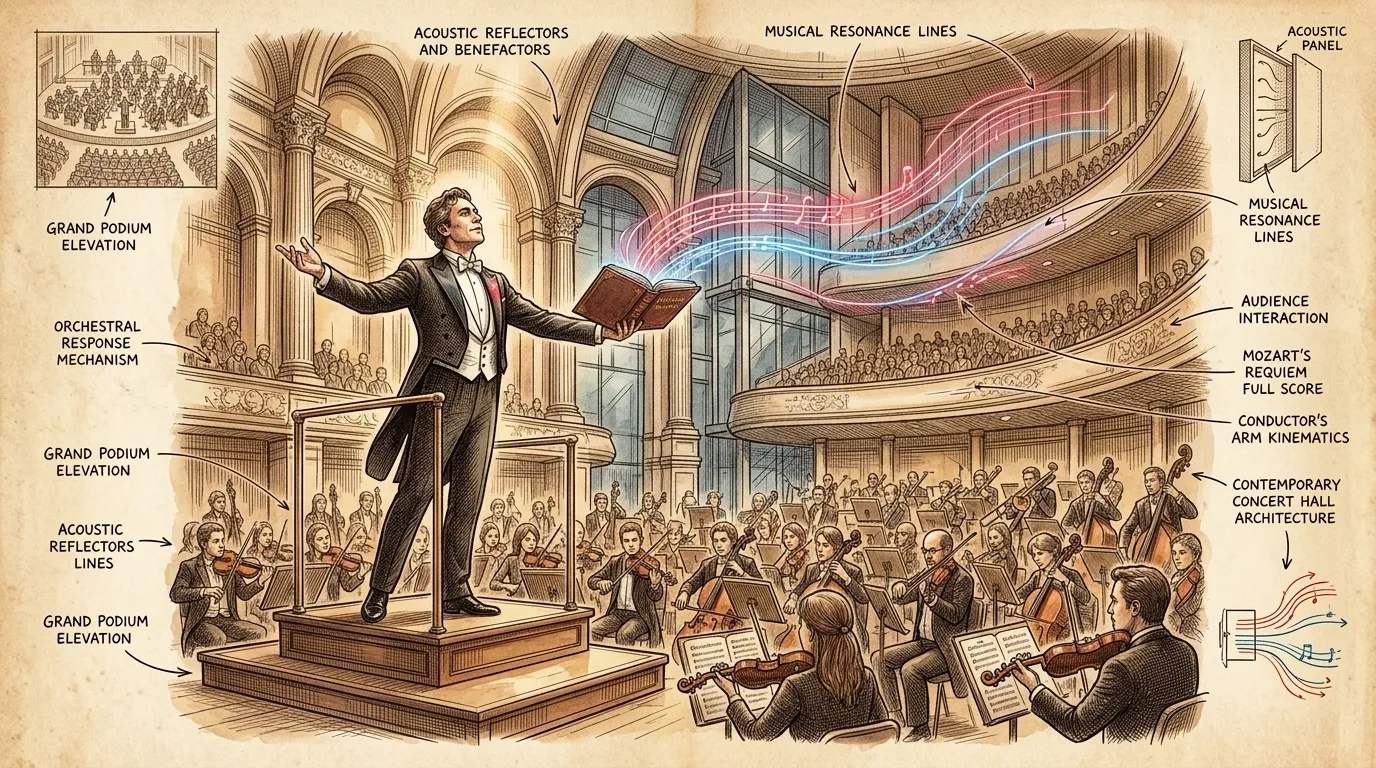
Centuries later, Mozart's Requiem continues to resonate with audiences around the world, its profound beauty and emotional power undiminished by time. The music is as powerful today as the day it was written. Mozart's Requiem shows the power of art. As Nelson Mandela said, 'Education is the most powerful weapon which you can use to change the world.' Mozart changes the world with this piece.
"A modern day conductor: "Mozart's music speaks to the soul, a testament to his genius and humanity.""
Art Fact: Mozart's Requiem endures as a timeless masterpiece, a testament to the power of music to transcend time and connect with the deepest emotions of the human heart.
About this story
- Audience: general readers
Questions and answers
Questions and answers about Requiem by Wolfgang Amadeus Mozart (Vienna, Austria — 1791)
Read Wonder Arts on your phone
Wonder Arts is available on Android. Get Wonder Arts on Google Play.
More Wonder Arts stories
- Rijksmuseum (Amsterdam, Netherlands — 1800)
- Romanticism Rises by Goya (Europe — c. 1800)
- Rouen Cathedral Series by Claude Monet (Rouen, France — 1894)
- Roundhay Garden Scene by Louis Le Prince (Leeds, UK — 1888)
- Saint George by Donatello (Florence, Italy — 1417)
- Saint Longinus by Gian Lorenzo Bernini (Vatican City — 1638)