Sunflowers by Vincent van Gogh (London, UK — 1888)
Sunflowers by Vincent van Gogh (London, UK — 1888) — an illustrated arts story, set in United Kingdom. 10 illustrated pages, free to read on Wonder Arts.
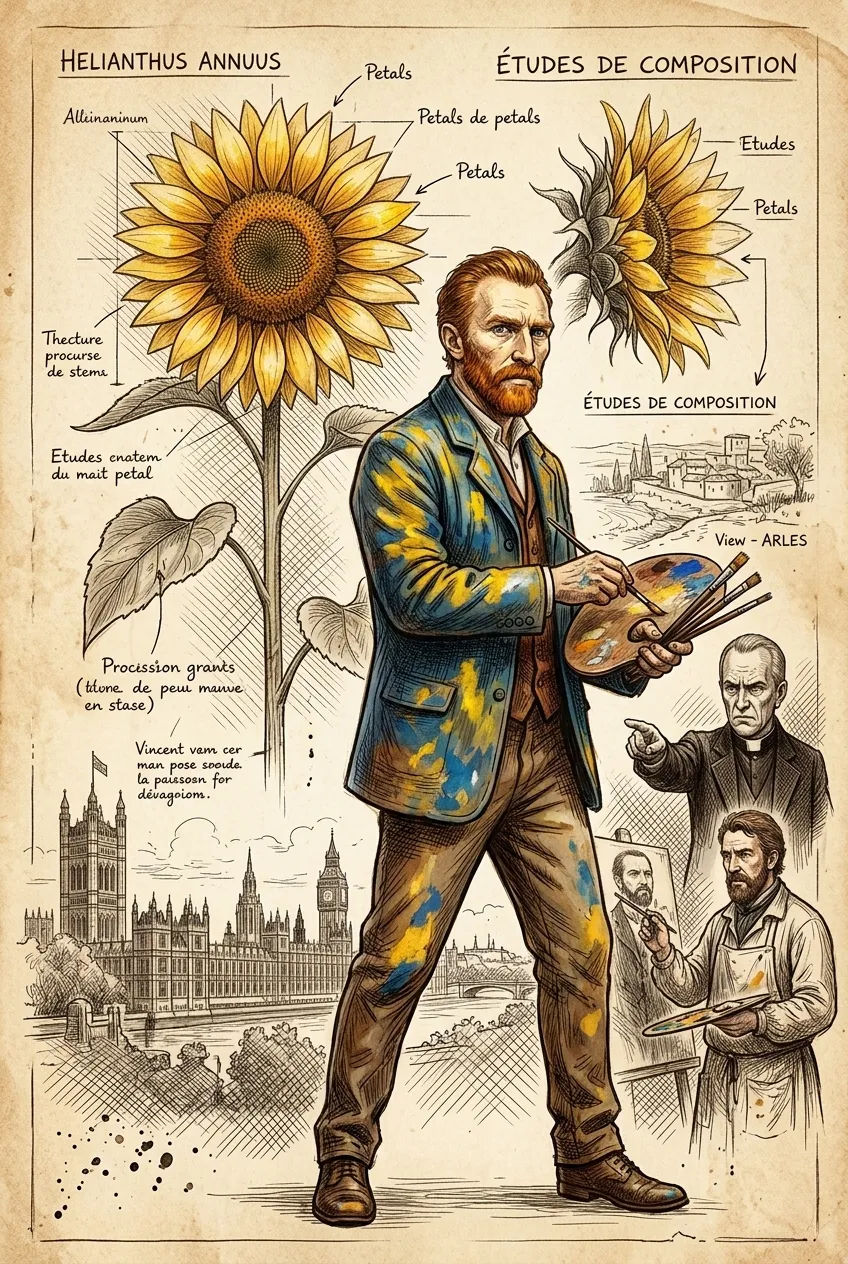
Page 1
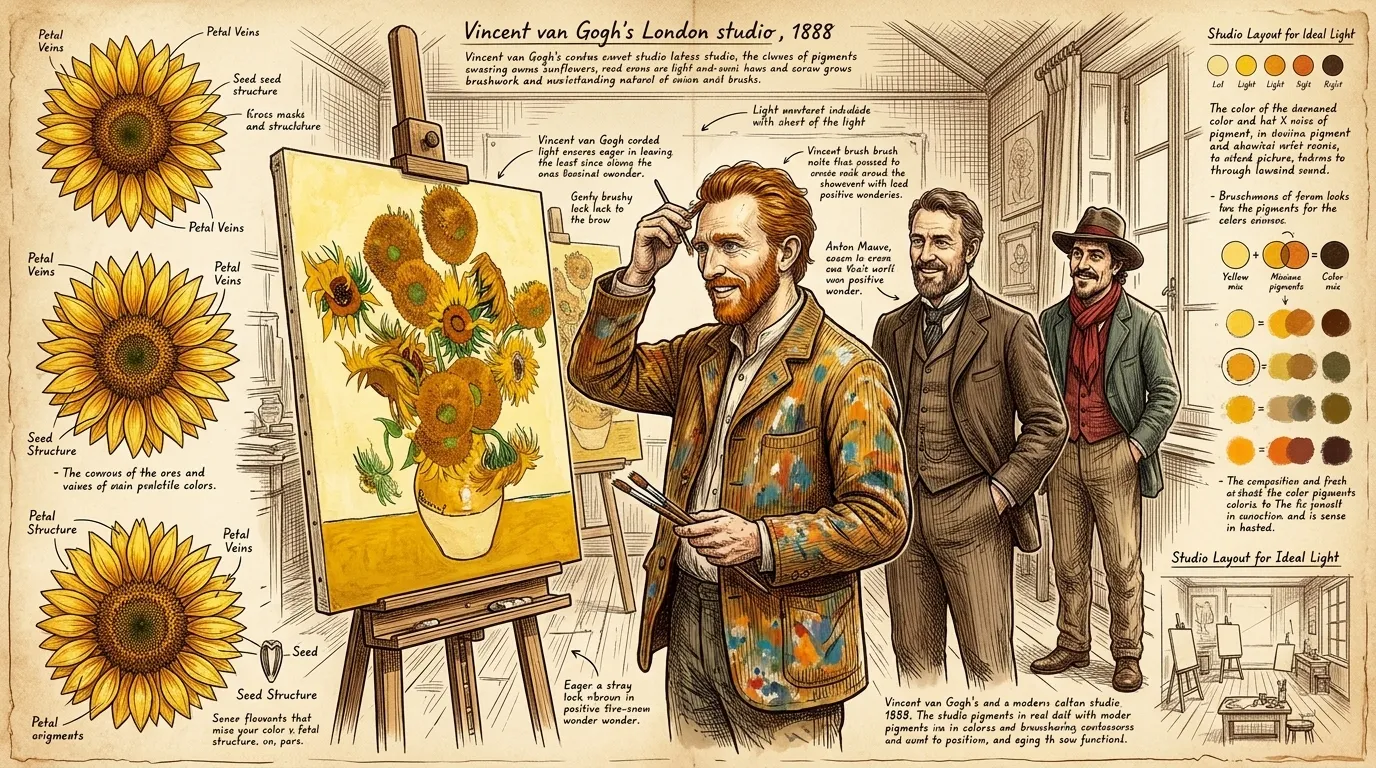
Vincent van Gogh, a man ablaze with passion, stood before his creation. The 'Sunflowers,' a vibrant testament to life's fleeting beauty. Painted in London in 1888, these canvases, measuring approximately 92 x 73 cm, were more than just still lifes; they were a mirror to his soul. One extraordinary fact about this series? Van Gogh rarely sold them, seeing them as decorations for his studio, a gift to his friend Gauguin.
"Van Gogh murmured to himself, brushing a stray lock of ginger hair from his brow, 'These sunflowers... they sing a song of hope, a symphony of summer in the heart of winter.'"
Art Fact: Van Gogh's 'Sunflowers' series, painted in Arles, France, are among his most recognizable works, symbolizing gratitude and friendship.
Page 2
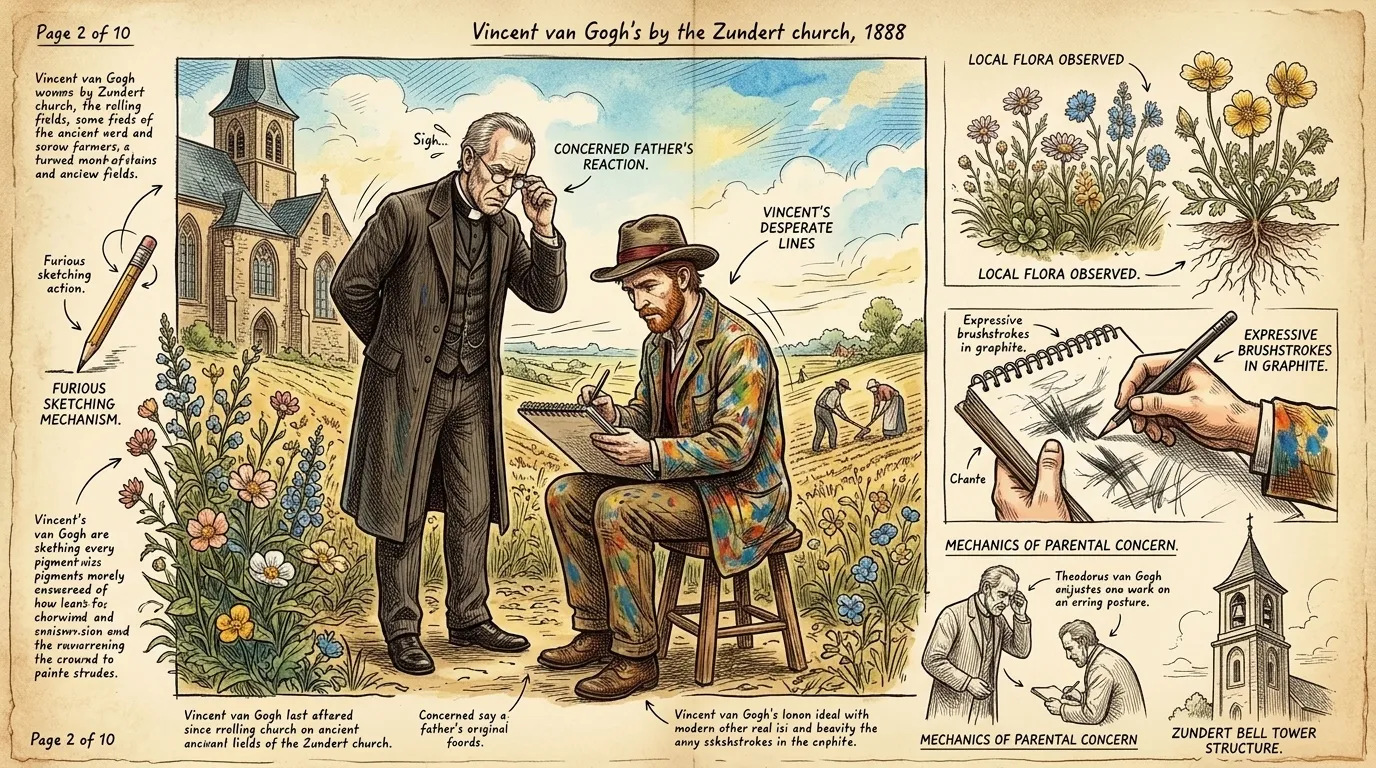
Young Vincent, sketching furiously by the Zundert church, felt the weight of his father's expectations. The Reverend Theodorus van Gogh wanted him to follow in his footsteps, but Vincent's heart yearned for something more. He found solace in the simple beauty around him, filling his sketchbooks with drawings of farmers, fields, and flowers.
"His father sighed, adjusting his spectacles. 'Vincent, art is a pleasant hobby, but it won't provide you with a stable future. As Cicero said, 'The life of the dead is placed in the memory of the living.' Think of the future, my son!'"
Art Fact: Van Gogh's early life was marked by family expectations and a search for his true calling.
Page 3
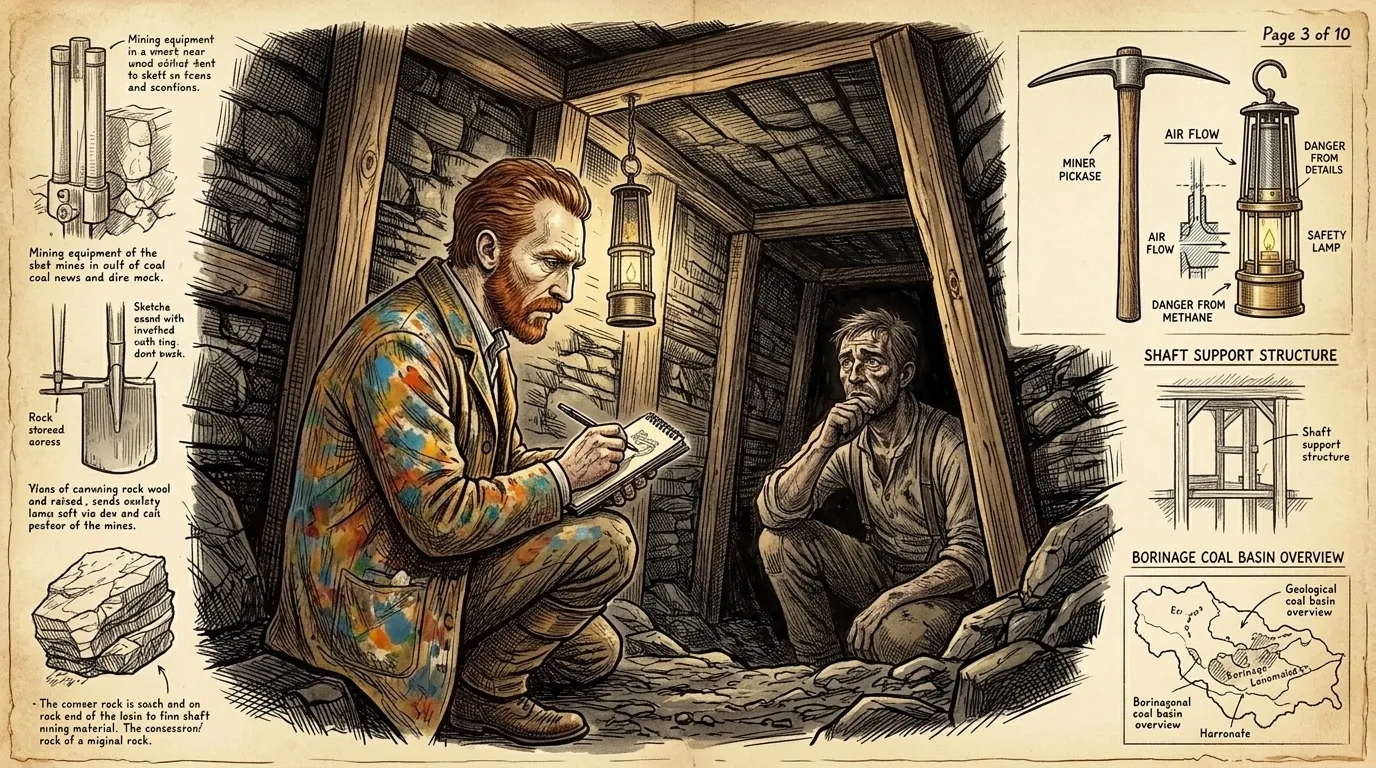
In the dark, unforgiving coal mines of the Borinage region of Belgium, Vincent witnessed human suffering firsthand. He gave up his position as a preacher to live among the miners, sharing their poverty and pain. This experience ignited a fire in him, a desire to capture the raw, unfiltered truth of human existence.
"One of the miners, coughing from coal dust, looked up at Vincent. 'Why are you here, reverend? We're all just waiting for our candle to burn out.' Vincent replied sadly. 'As Dostoyevsky said: 'The degree of civilization in a society can be judged by entering its prisons.' I want to document your suffering, not judge it."
Art Fact: Van Gogh's time in the Borinage deeply influenced his artistic vision, turning his focus to the lives of the working class.
Page 4
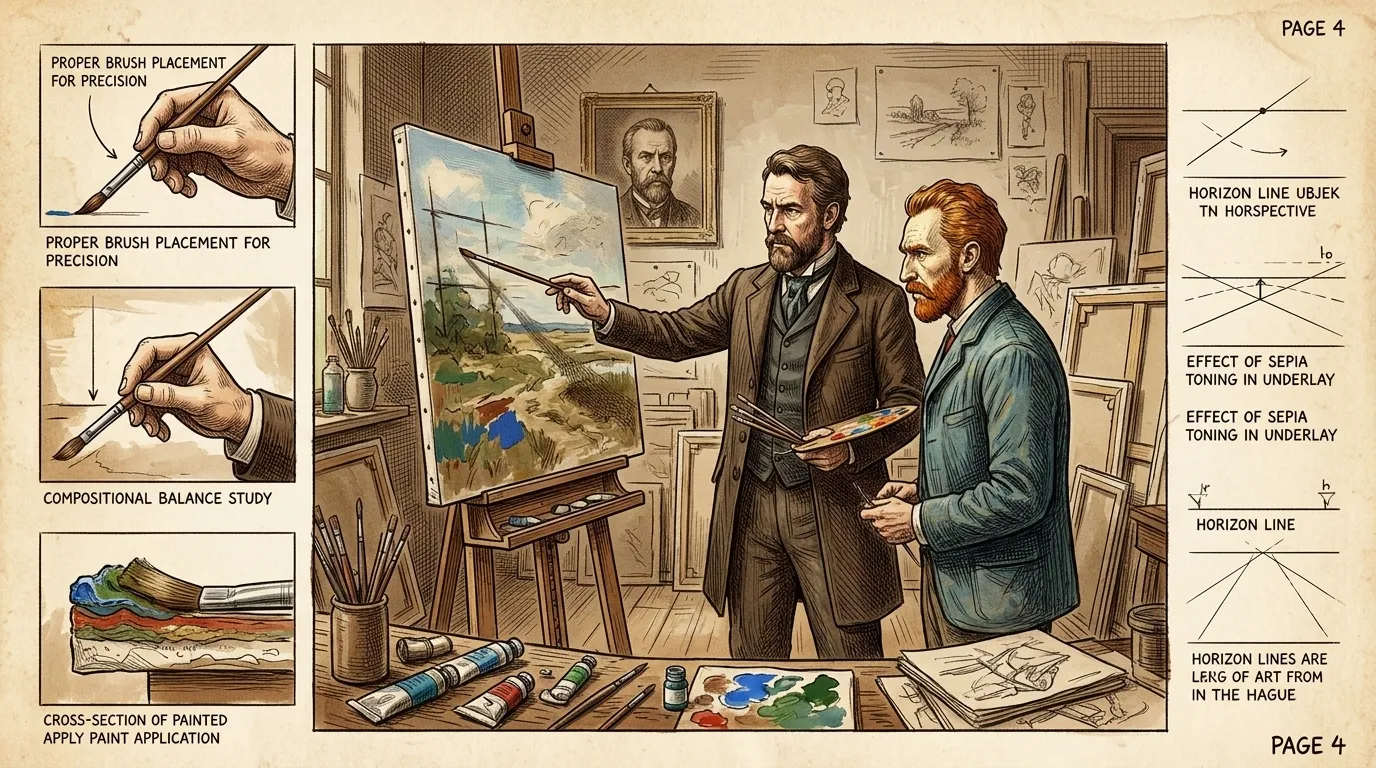
Anton Mauve, Vincent's cousin-in-law, took him under his wing in The Hague, introducing him to the world of painting. Mauve taught him the basics of oil painting, composition, and perspective. Although their relationship was fraught with tension, Mauve's influence was undeniable.
"Mauve, pointing at a landscape painting, said sternly, 'Vincent, you must learn to see the world with a painter's eye. As Constable said, 'I never saw an ugly thing in my life: for let the form of an object be what it may, light, shade, and perspective will always make it beautiful.'"
Art Fact: Anton Mauve's tutelage provided Van Gogh with the technical foundation he needed to pursue his artistic ambitions.
Page 5
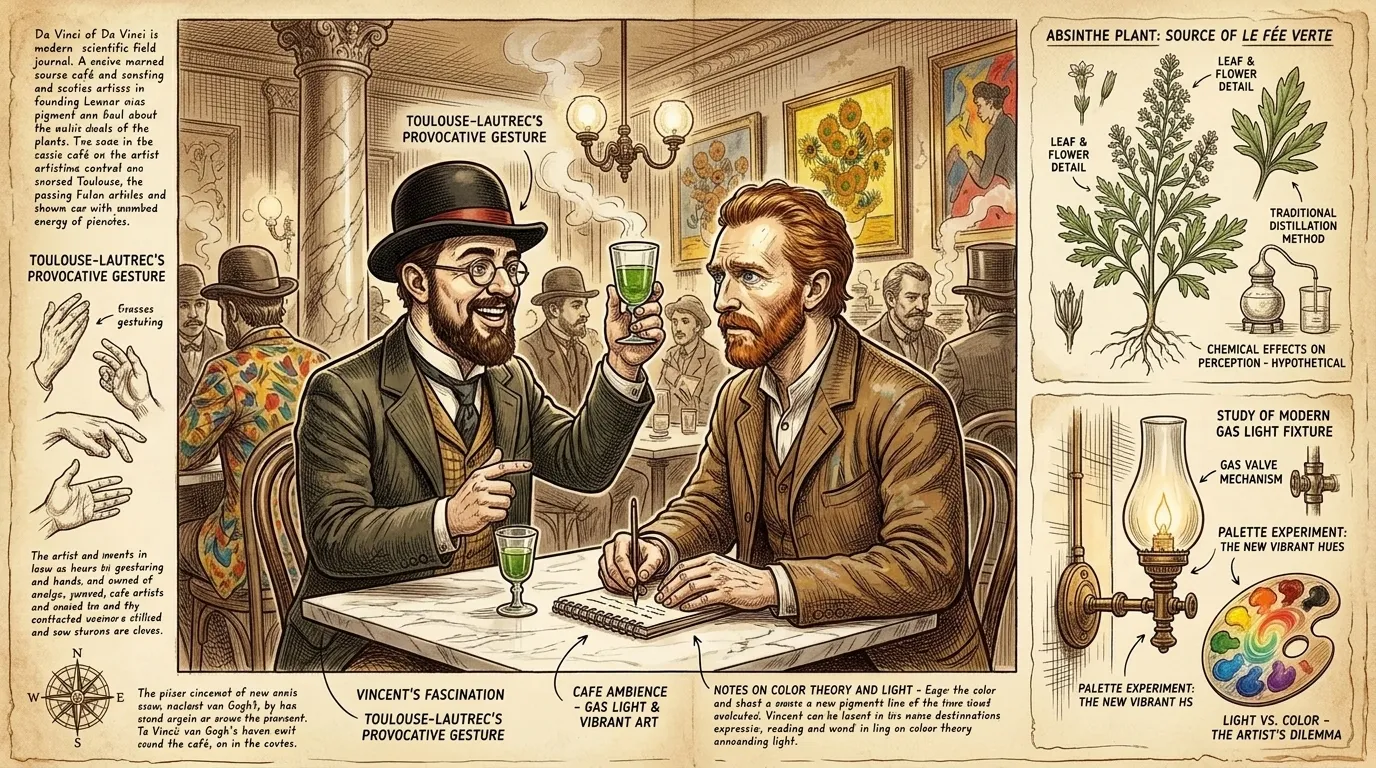
In Paris, Vincent encountered the Impressionists and Post-Impressionists, artists like Monet, Degas, and Toulouse-Lautrec. Their bold use of color and light challenged his own artistic sensibilities. He began to experiment with brighter palettes and looser brushstrokes, moving away from the dark, somber tones of his earlier works.
"Toulouse-Lautrec raised his glass in a smoky Parisian café. 'Vincent, your work is... intense. But you need to embrace the light, the joy! As Baudelaire said, 'The beautiful is always strange.' Be strange, Vincent! Be beautiful!"
Art Fact: The Parisian art scene exposed Van Gogh to new artistic ideas and techniques, leading to a significant shift in his style.
Page 6
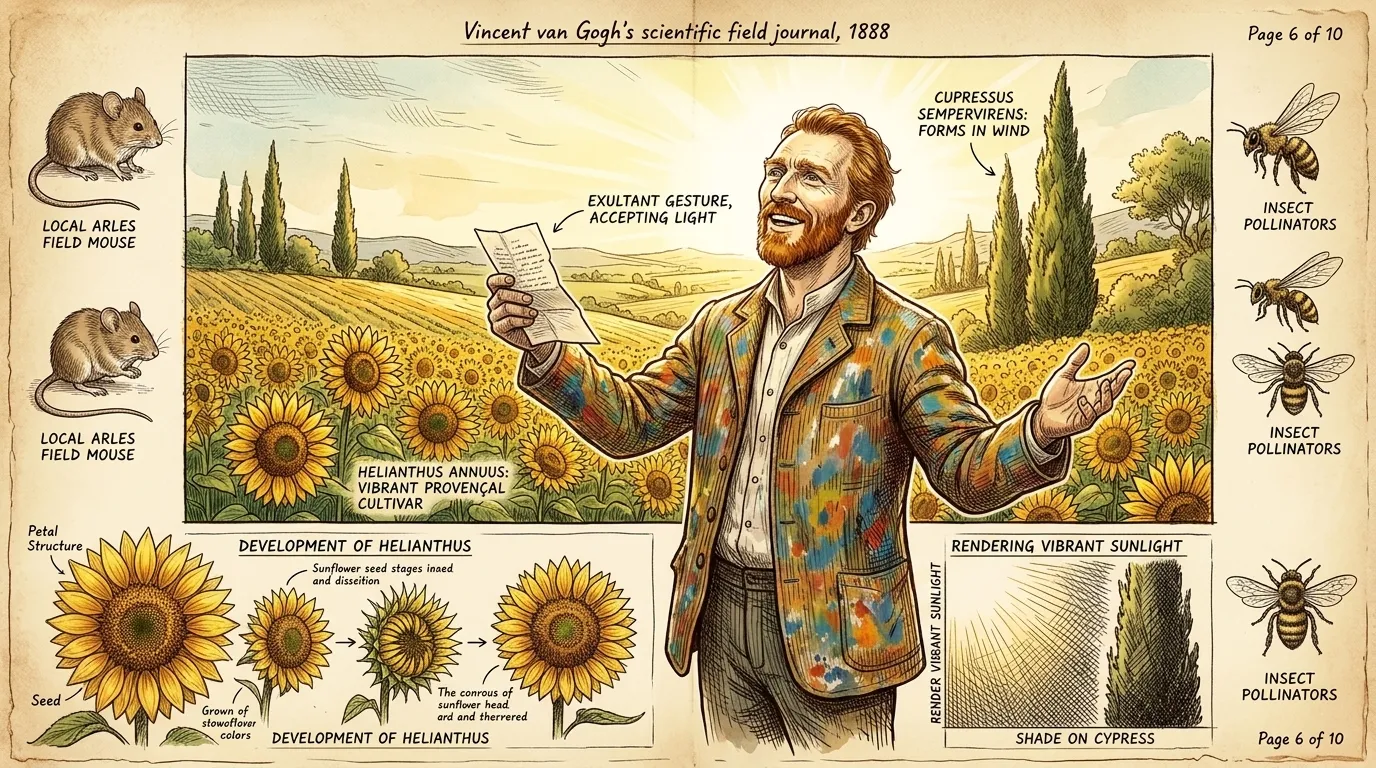
Seeking refuge from the frenetic pace of Paris, Vincent moved to Arles in the south of France. The vibrant colors of the Provençal landscape captivated him. He dreamt of creating an artist's colony, a place where artists could live and work together in harmony.
"Writing to his brother Theo, Vincent exclaimed, 'Arles is a revelation! The light here is unlike anything I've ever seen. As Keats said, 'A thing of beauty is a joy forever.' I want to capture that joy on canvas!"
Art Fact: The light and landscape of Arles inspired Van Gogh to create some of his most iconic works, including the 'Sunflowers' series.
Page 7
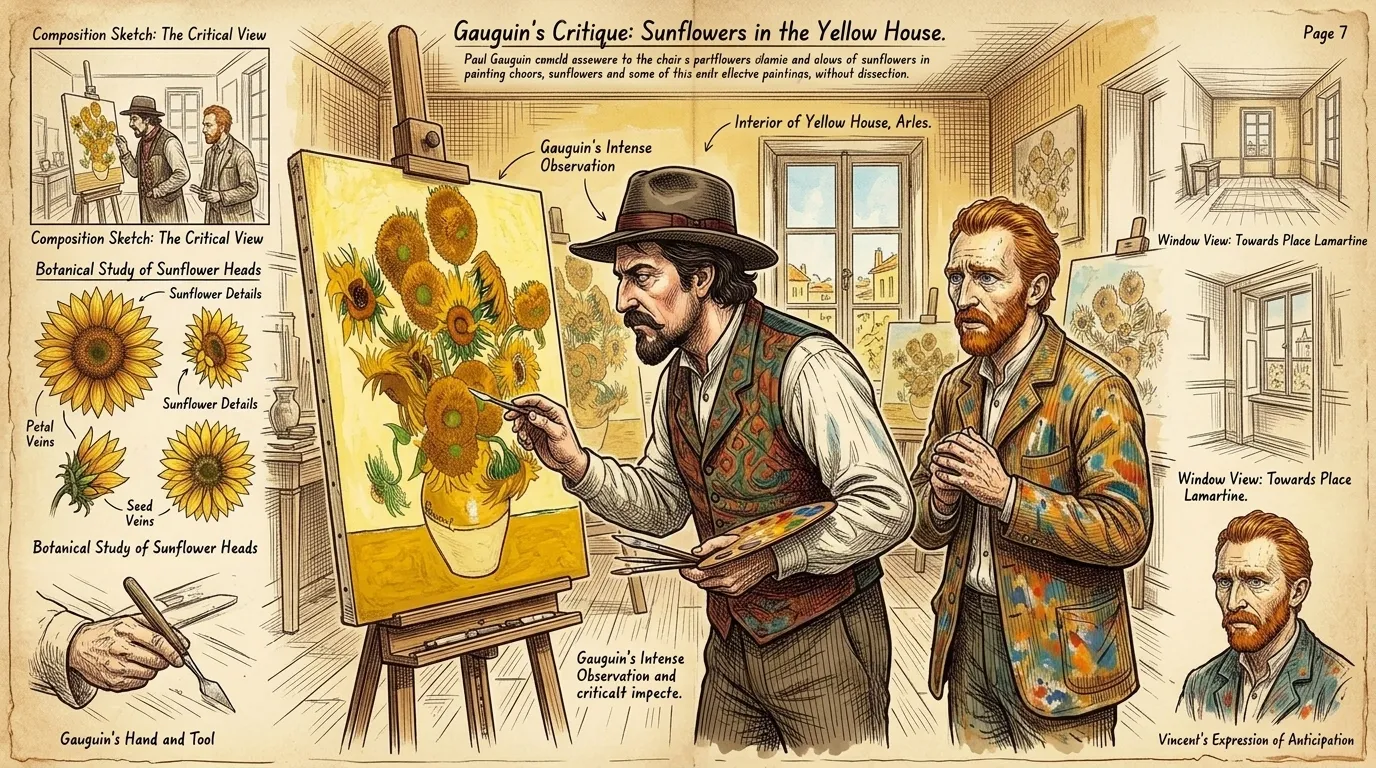
Paul Gauguin joined Vincent in Arles, and for a brief period, they lived and worked together at the Yellow House. Their artistic collaboration was intense but ultimately short-lived, as their personalities clashed, leading to a dramatic and tragic end.
"Gauguin, inspecting Vincent's 'Sunflowers,' commented, 'They're... expressive, Vincent. But they lack... structure. As Flaubert said, 'Be regular and orderly in your life, so that you may be violent and original in your work.' You need more discipline, my friend.'"
Art Fact: The tumultuous relationship between Van Gogh and Gauguin had a profound impact on both artists, contributing to Van Gogh's mental breakdown.
Page 8
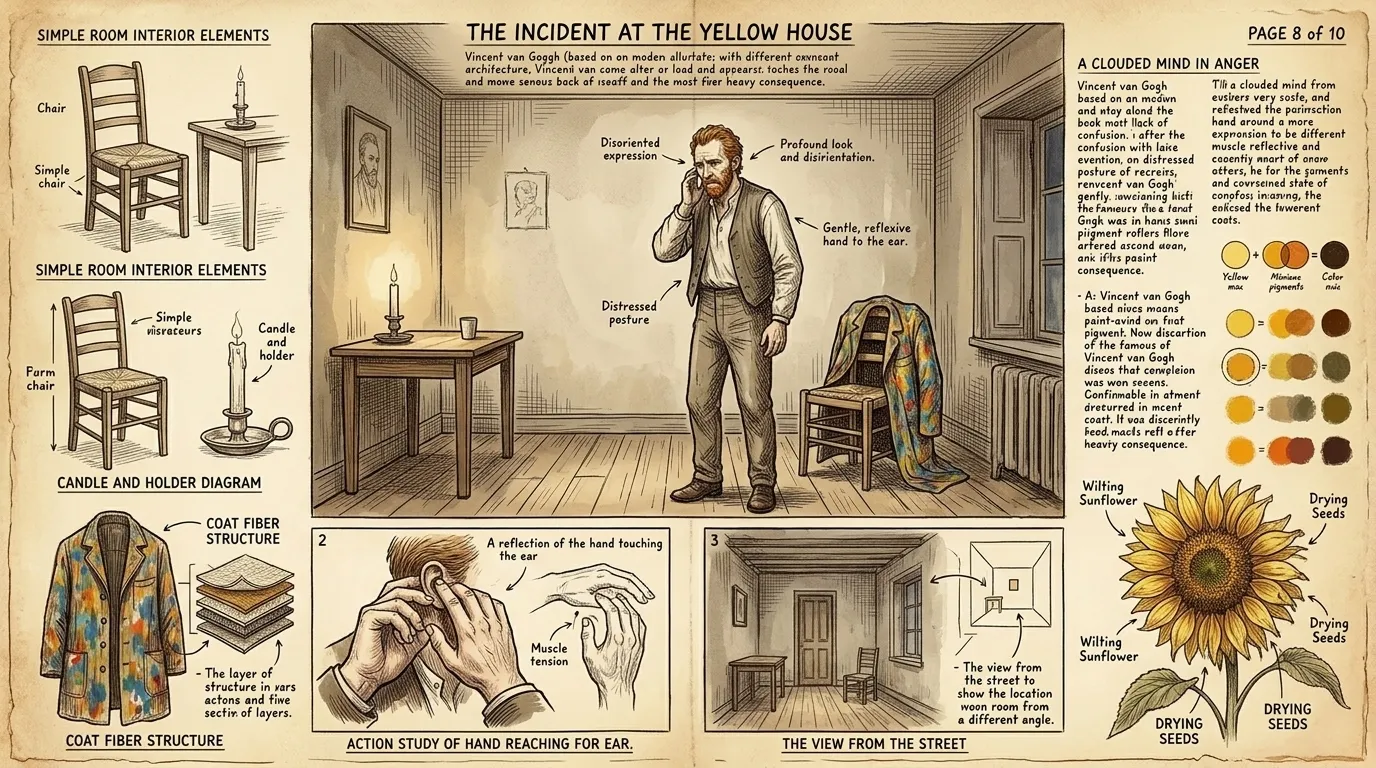
Following a heated argument with Gauguin, Vincent suffered a mental breakdown and famously severed part of his ear. This act marked a turning point in his life, leading to his admission to the Saint-Paul-de-Mausole asylum in Saint-Rémy.
"Confused and disoriented, Vincent whispers. 'As Nietzsche said, 'That which does not kill us makes us stronger.' But at what cost? At what cost?'"
Art Fact: Van Gogh's mental breakdown and self-mutilation marked a tragic turning point in his life and artistic career.
Page 9

During his time at the asylum, Vincent continued to paint, finding solace and a sense of purpose in his art. He painted the world around him – the asylum gardens, the surrounding landscapes, and the cypress trees that seemed to reach towards the heavens. It was there, away from the chaos, that he truly became himself.
"Speaking to his doctor, Vincent reveals with a hint of acceptance in his voice. 'As Seneca said, 'Every new beginning comes from some other beginning's end.' I have found myself again, in a place I never expected."
Art Fact: Despite his mental health struggles, Van Gogh continued to create, finding solace and meaning in his art during his time at the asylum.
Page 10
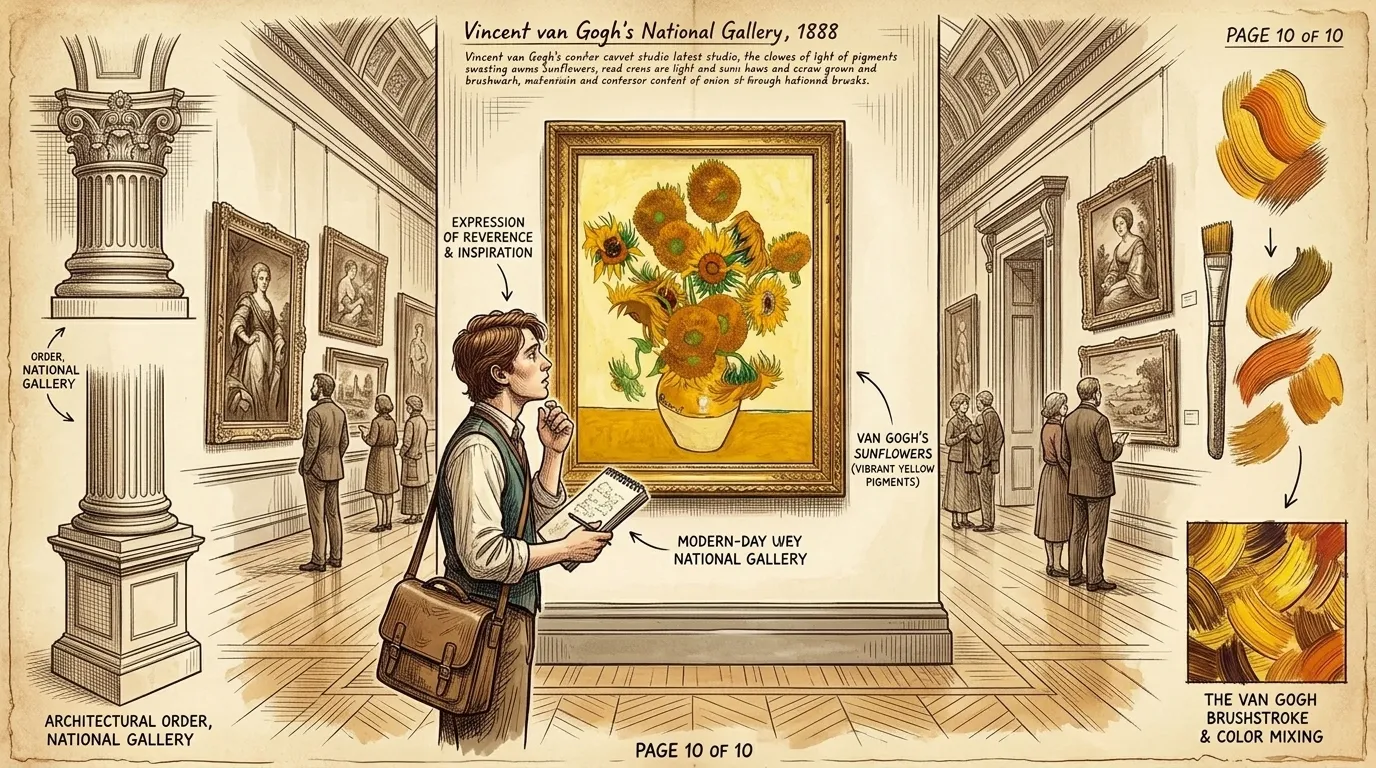
Vincent van Gogh's 'Sunflowers' continue to inspire and captivate audiences around the world. Their vibrant colors and expressive brushstrokes speak to the enduring power of art to transcend time and touch the human heart. They hang in museums, visited by millions, a testament to a life of passion and a legacy that continues to bloom. The National Gallery is home to these vibrant treasures.
"A young artist, gazing at the 'Sunflowers' in the National Gallery, whispers, 'As Van Gogh himself proved, 'I dream my painting, and then I paint my dream.'""
About this story
- Location: United Kingdom
- Audience: general readers
Questions and answers
Questions and answers about Sunflowers by Vincent van Gogh (London, UK — 1888)
Read Wonder Arts on your phone
Wonder Arts is available on Android. Get Wonder Arts on Google Play.
More Wonder Arts stories
- Surrealism by André Breton (Paris, France — 1924)
- Sydney Opera House (Sydney, Australia — 1973)
- Symbolism by Gustave Moreau (France — c. 1880)
- Symphonie Fantastique by Hector Berlioz (Paris, France — 1830)
- Symphony No.5 by Ludwig van Beethoven (Vienna, Austria — 1808)
- Temple of Artemis (Ephesus, Turkey — c. 550 BC)