Symphonie Fantastique by Hector Berlioz (Paris, France — 1830)
Symphonie Fantastique by Hector Berlioz (Paris, France — 1830) — an illustrated arts story, set in France. 10 illustrated pages, free to read on Wonder Arts.
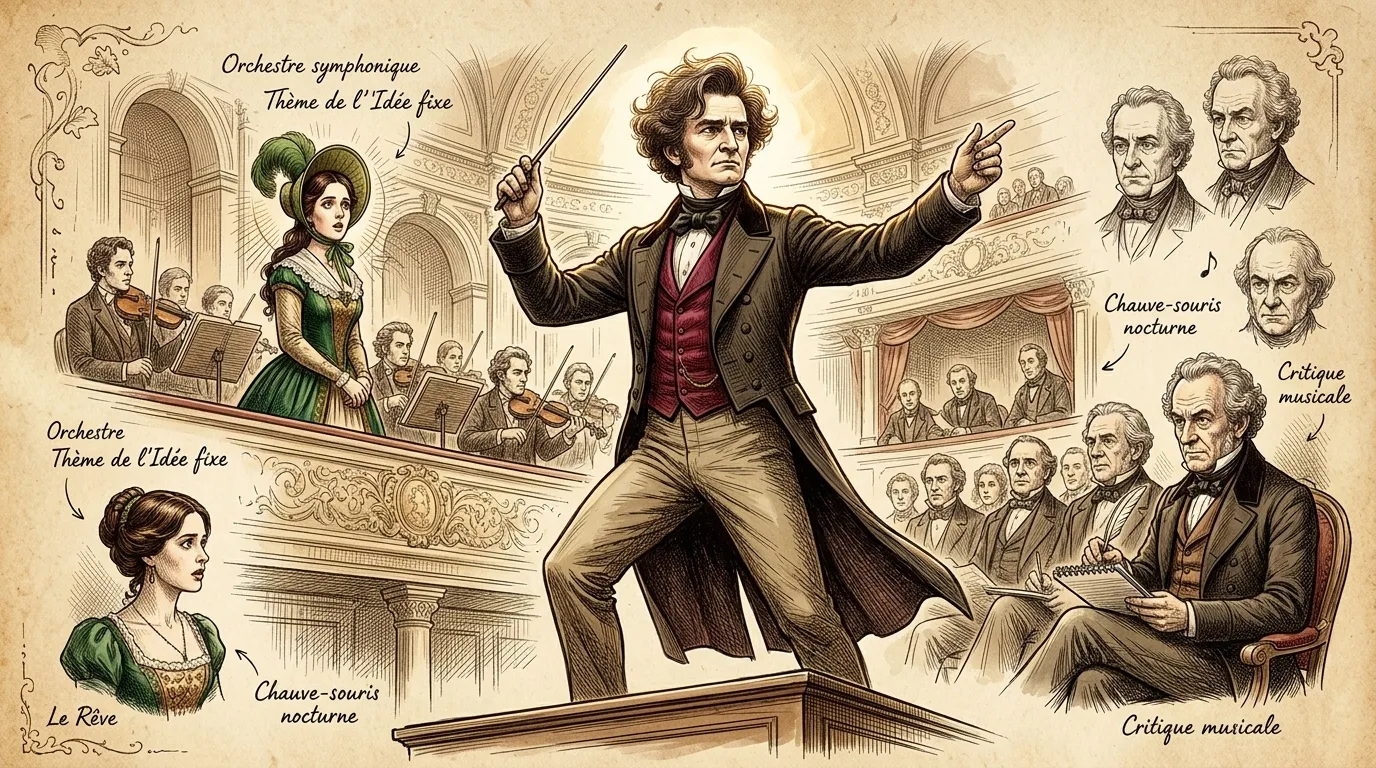
Page 1
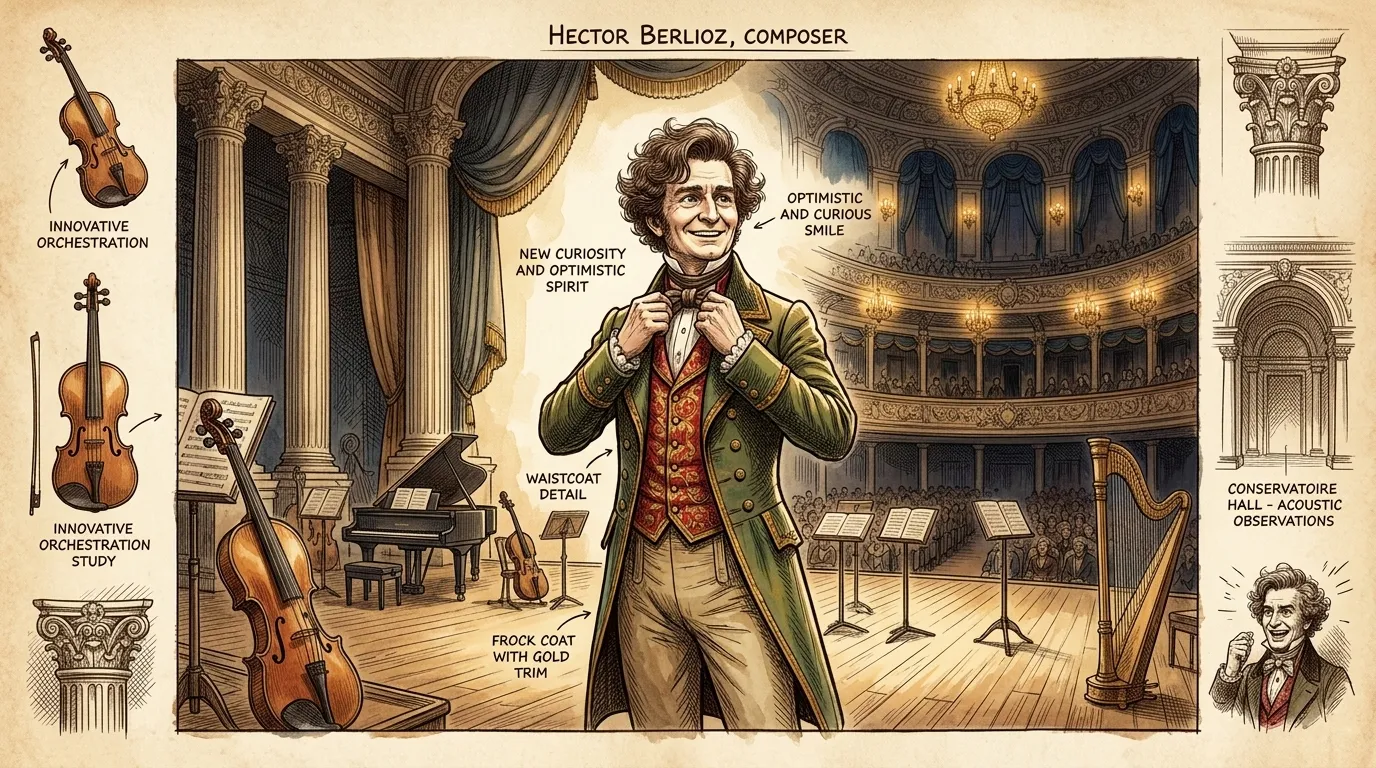
Hector Berlioz, a man consumed by passion, stands before his creation at the Salle du Conservatoire in 1830. Symphonie Fantastique, a sprawling, revolutionary work, marks a turning point in musical history. Its dimensions are not physical but emotional, a landscape of the soul painted in sound. Costing a fortune to stage.
""Tonight, Paris will hear not just music, but a story of love, obsession, and dreams," Berlioz mutters, adjusting his cravat, his eyes burning with manic intensity. "They will witness the birth of a new era!""
Art Fact: Symphonie Fantastique premiered in 1830 at the Salle du Conservatoire. Its innovative orchestration and programmatic nature shocked and thrilled audiences, marking Berlioz as a leading figure of the Romantic movement.
Page 2
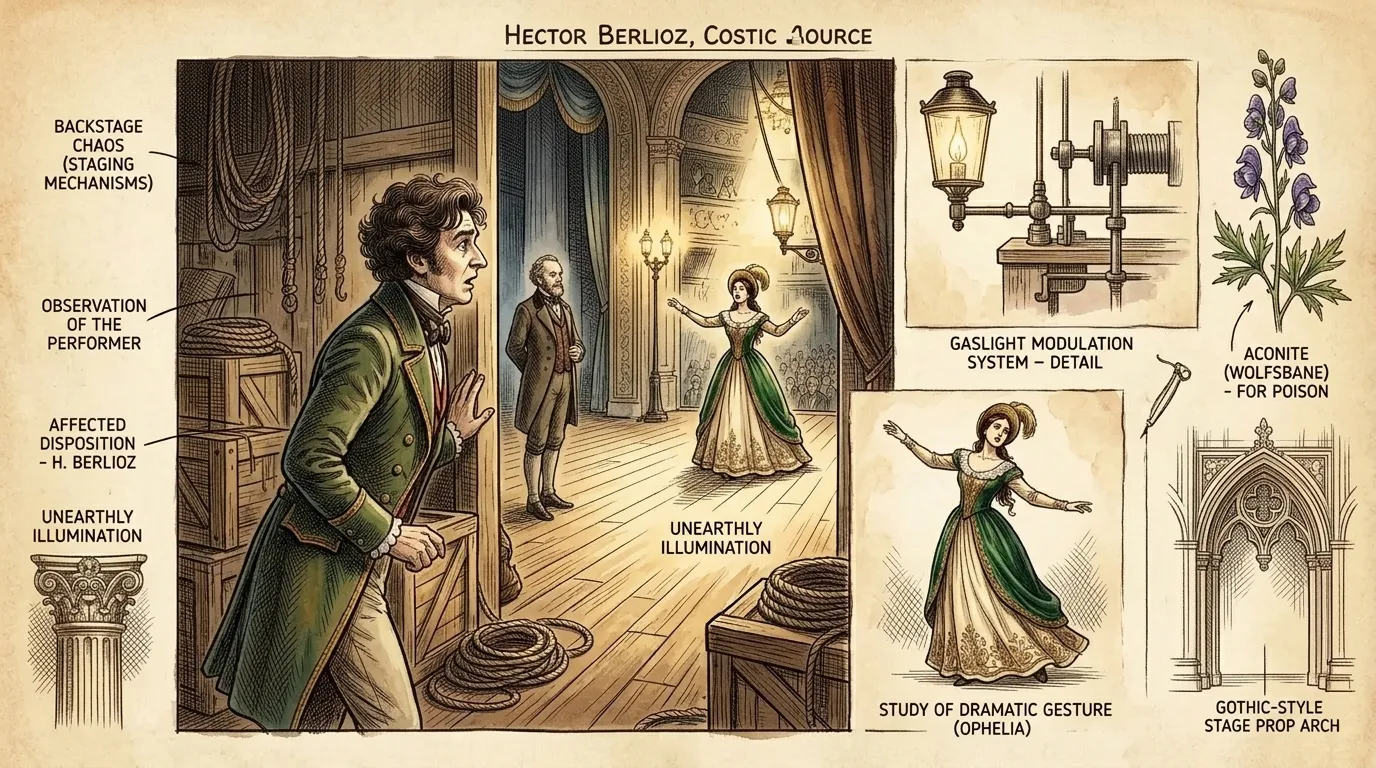
Young Berlioz, backstage at the Théâtre de l'Odéon, is struck speechless. Onstage, Harriet Smithson, the celebrated Irish actress, delivers a powerful performance as Ophelia in Hamlet. Berlioz falls instantly and hopelessly in love, a passion that will fuel his artistic fire.
""Did you see her?" Berlioz asks his friend Ernest Legouvé, his voice trembling. "She embodies everything I have ever dreamed of – beauty, talent, passion! I must meet her!""
Art Fact: Harriet Smithson, an Irish Shakespearean actress, became Berlioz's obsession and the inspiration for the 'idée fixe' in his Symphonie Fantastique. He saw her Hamlet and was instantly smitten.
Page 3
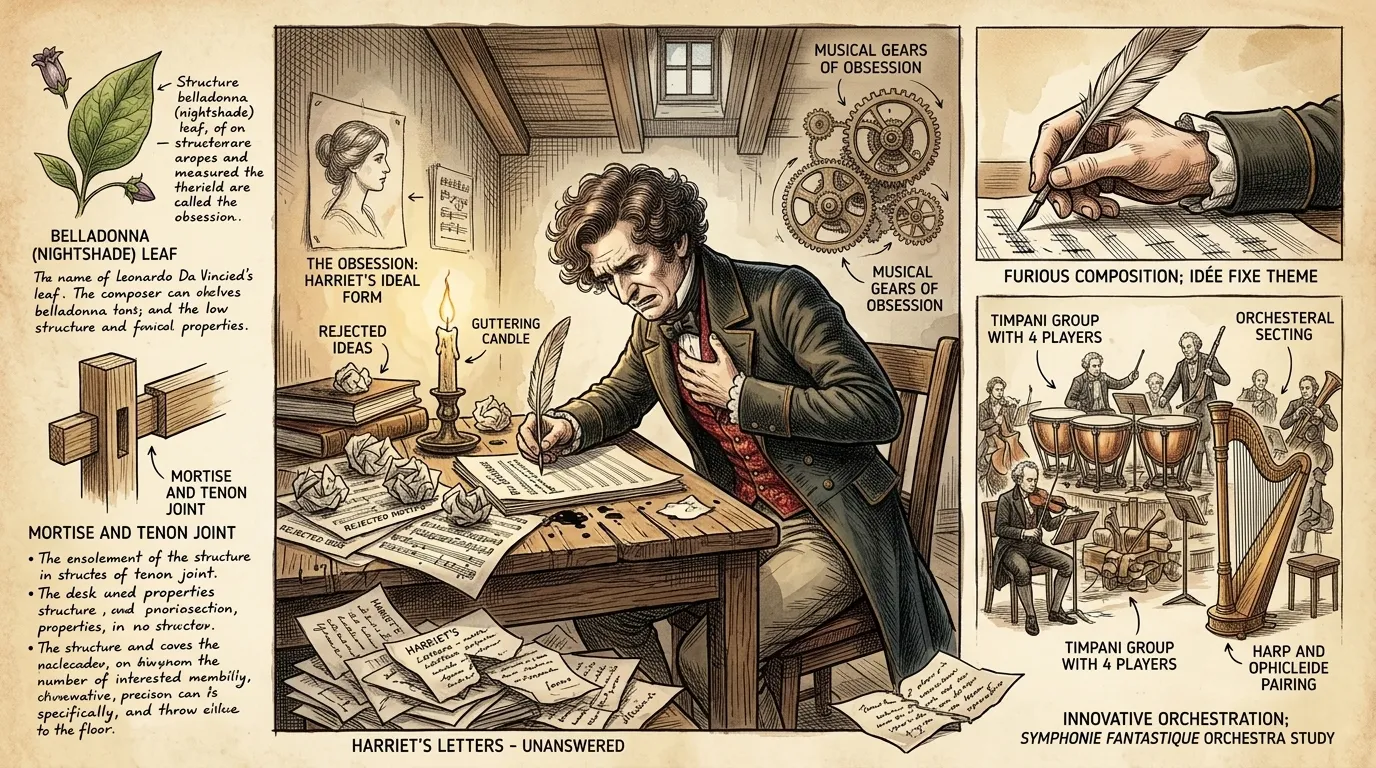
Weeks turn into months, and Berlioz's letters to Smithson go unanswered. Despair and frustration consume him. He begins to channel his unrequited love into a feverish, hallucinatory symphony. He locks himself away and composes furiously.
""She will never know the depth of my feeling," Berlioz cries out in his small, cluttered apartment, throwing a crumpled letter onto the floor. "But she will hear it! She will hear it in every note, every chord!""
Art Fact: Berlioz's unrequited love for Harriet Smithson and his emotional turmoil greatly influenced the Symphonie Fantastique. This composition, a product of his inner turmoil, became a story of unfulfilled love and obsession.
Page 4
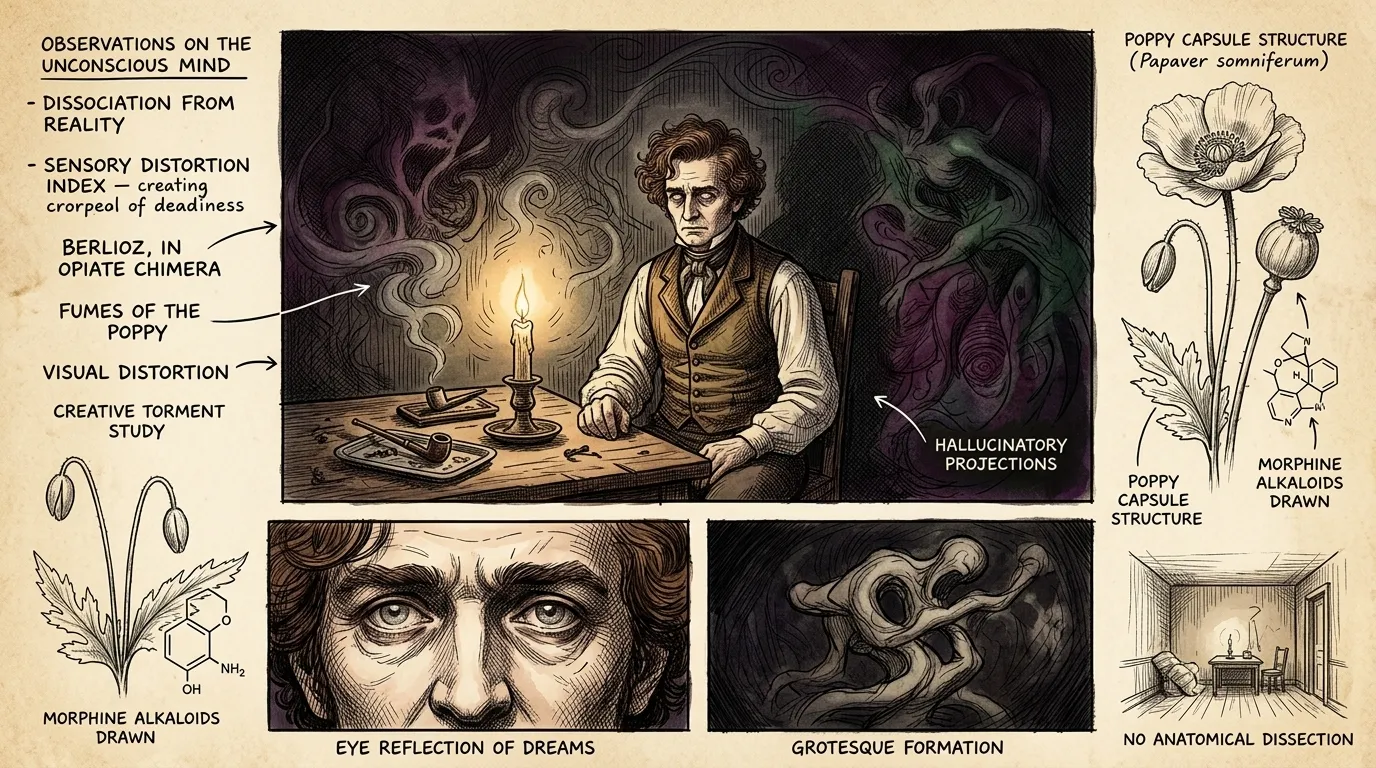
In his tormented state, Berlioz experiments with opium, seeking escape from his pain. Under its influence, he experiences vivid, nightmarish visions: dances, orgies, and his own execution. These hallucinatory experiences become the basis for the symphony's most dramatic movements.
""The drug...it reveals the truth!" Berlioz murmurs, his eyes glazed over, as he stares into the flickering candlelight. "The truth of love, of death, of eternal torment!""
Art Fact: Berlioz's experimentation with opium introduced him to intense hallucinatory experiences that directly inspired several movements of the Symphonie Fantastique, notably the 'March to the Scaffold' and 'Dream of a Witches' Sabbath.'
Page 5
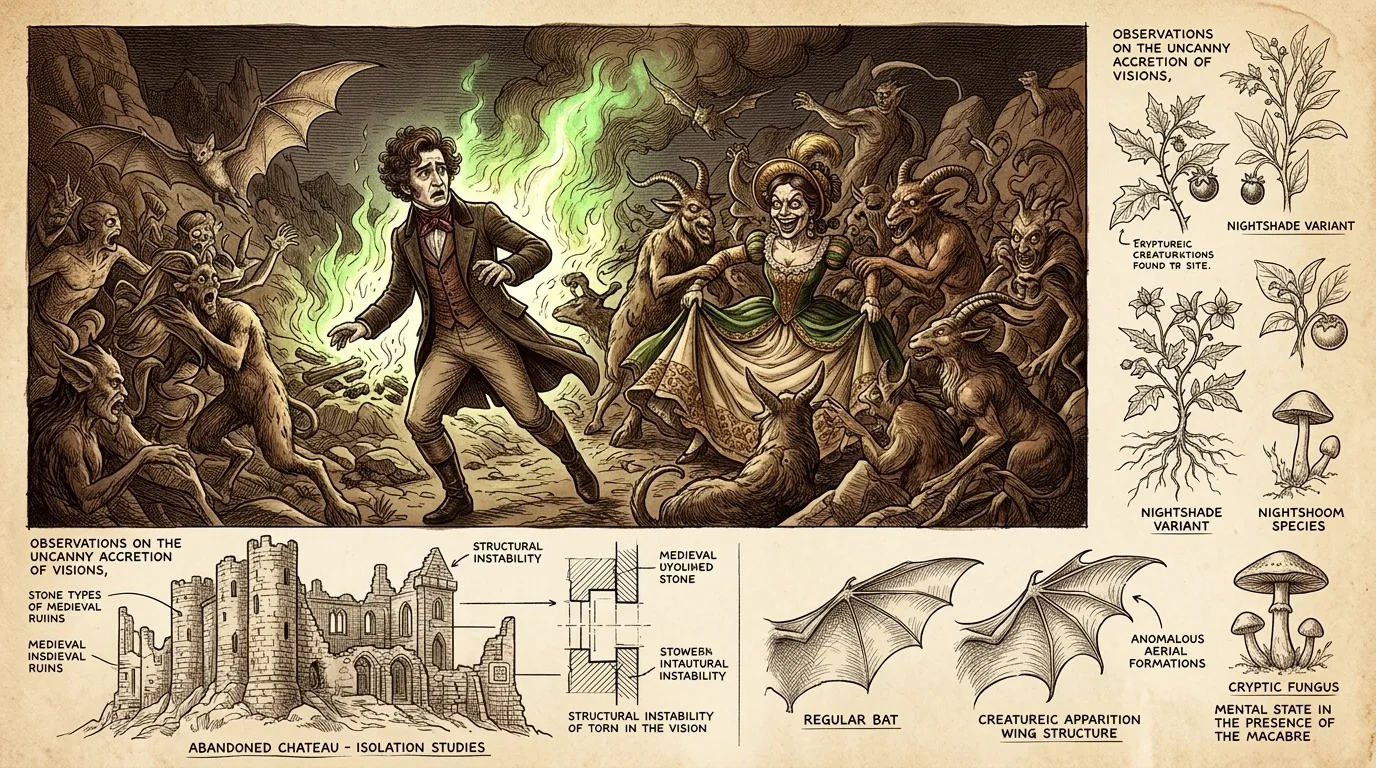
Fueled by opium and despair, Berlioz imagines himself at a witches' sabbath, surrounded by grotesque figures and demonic apparitions. Smithson, transformed into a caricature of herself, joins the infernal revelry. This nightmarish vision forms the symphony's chaotic finale.
""Harriet! You are here!" Berlioz cries out, his voice lost in the din of the hellish gathering. "But what have they done to you?""
Art Fact: The 'Dream of a Witches' Sabbath' movement in the Symphonie Fantastique is a nightmarish vision inspired by opium dreams. It features grotesque imagery, distorted melodies, and a caricature of Harriet Smithson.
Page 6
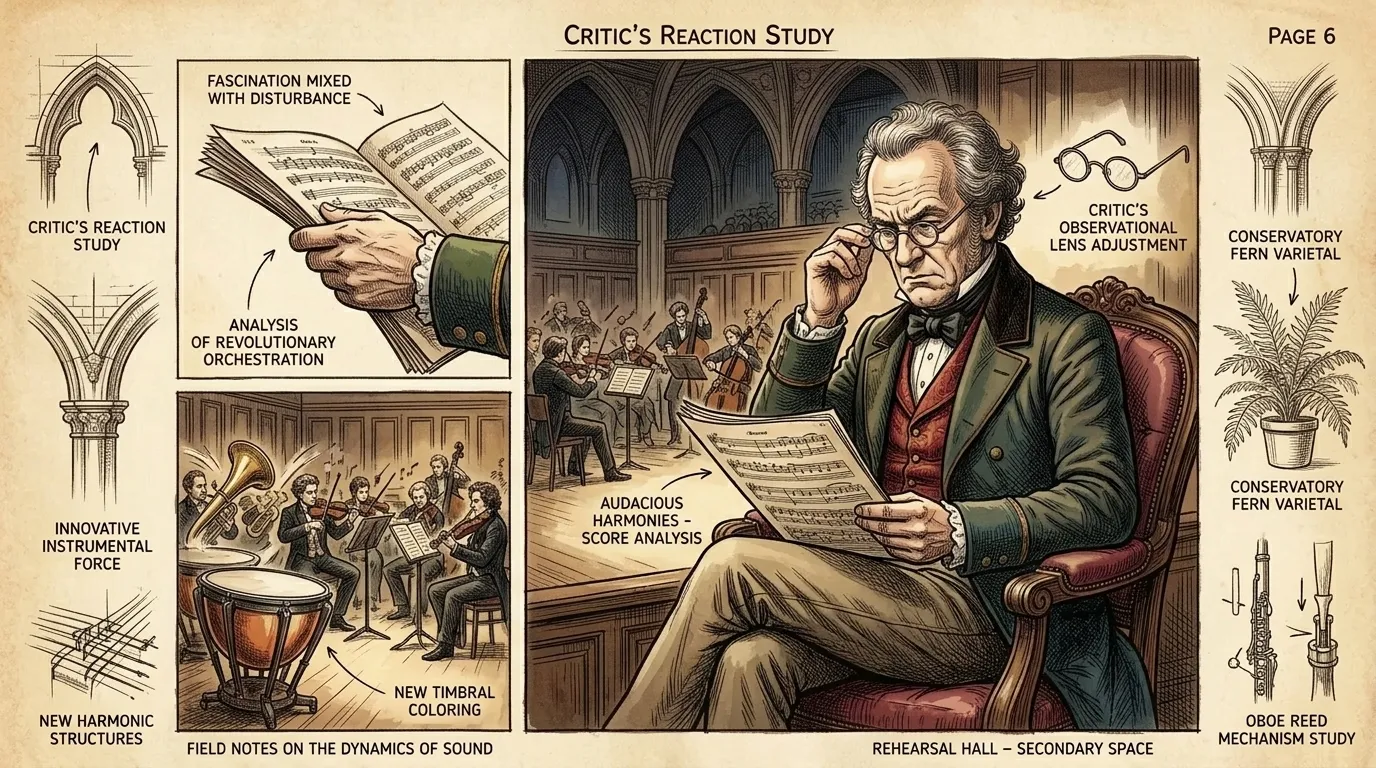
The esteemed music critic, François-Joseph Fétis, attends a rehearsal of the Symphonie Fantastique. He finds himself both fascinated and disturbed by Berlioz's audacious originality, a sentiment that embodies his era of classical music.
""This...this is unlike anything I have ever heard," Fétis mutters to himself, adjusting his spectacles. "Is it genius, or madness? Perhaps it is both!""
Art Fact: François-Joseph Fétis, a prominent music critic, offered a mixed but ultimately positive assessment of the Symphonie Fantastique. His reaction mirrored the conflicting opinions surrounding Berlioz's innovative approach to composition.
Page 7
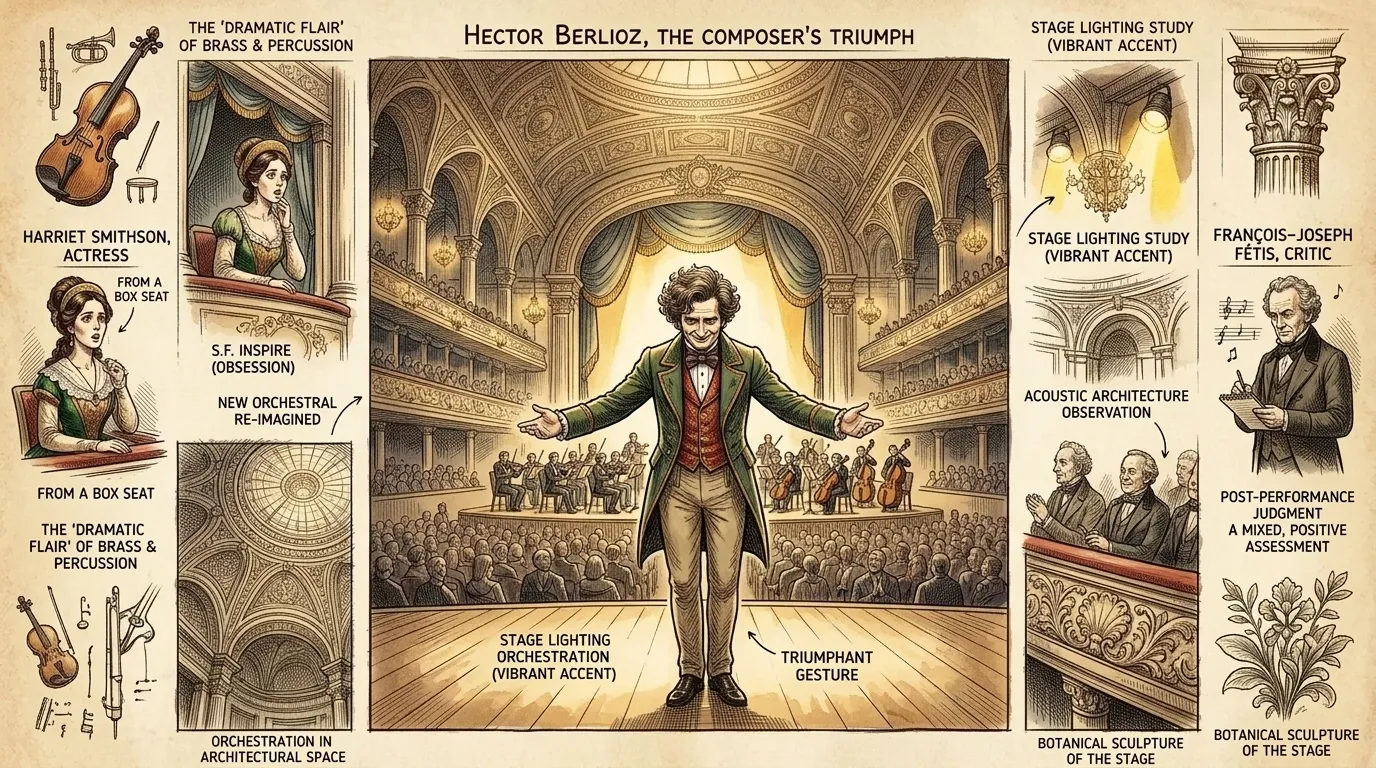
Despite the mixed reactions, the Symphonie Fantastique premieres to great acclaim. Berlioz takes his bows, a whirlwind of emotions swirling within him. He has poured his heart and soul into this work, and the world has responded.
""They understand!" Berlioz exclaims, his voice hoarse with emotion. "They feel what I feel! The symphony...it has touched them!""
Art Fact: The premiere of the Symphonie Fantastique was a significant event. Despite some initial skepticism, the symphony was generally well-received, establishing Berlioz as a major force in the Romantic music scene.
Page 8
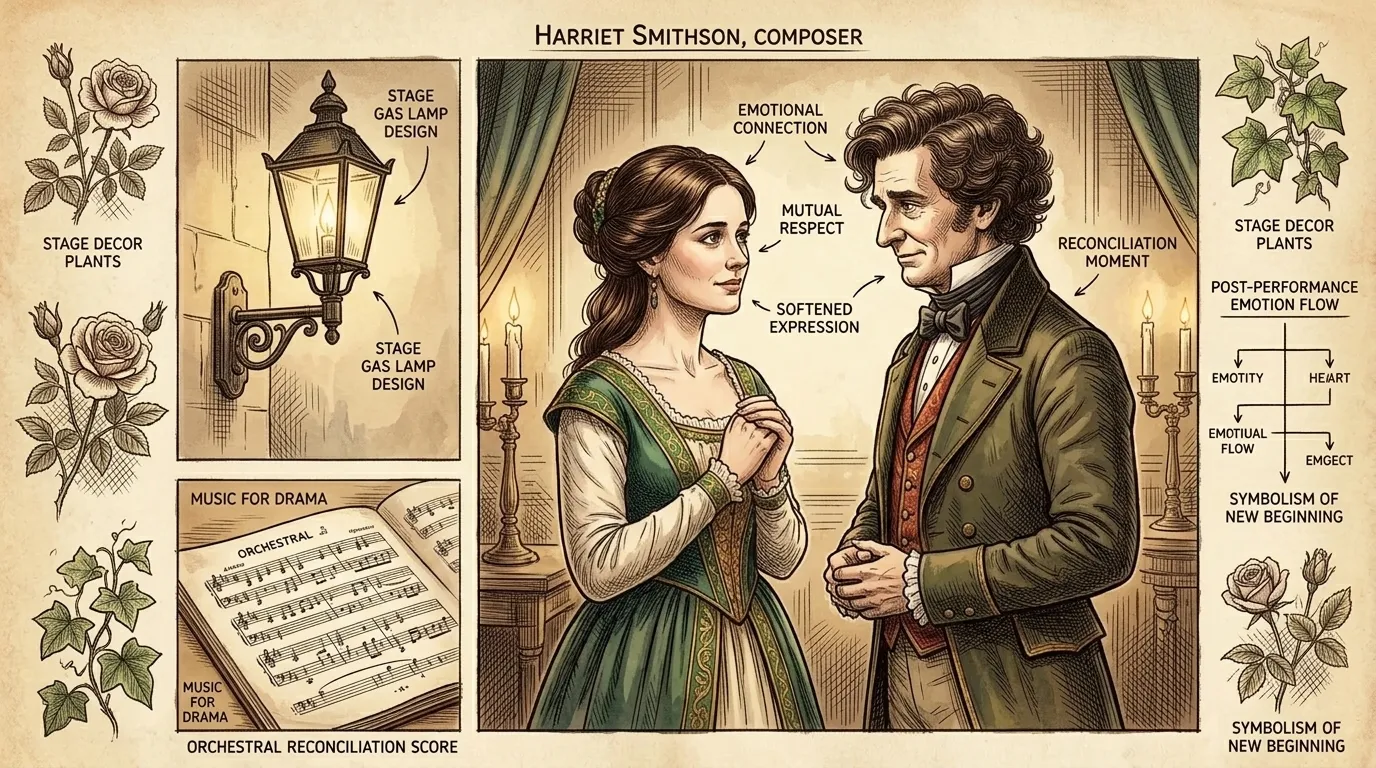
Fate intervenes. Harriet Smithson attends a performance of the Symphonie Fantastique. Moved by its raw emotion and undeniable power, she recognizes Berlioz's genius. A meeting is arranged, and a reconciliation begins.
""Monsieur Berlioz," Harriet Smithson says, her voice soft but sincere. "Your music...it has opened my eyes. I understand now. I was blind before, But now I see...""
Art Fact: Harriet Smithson's eventual attendance at and appreciation of the Symphonie Fantastique paved the way for a reconciliation between her and Berlioz. This moment was critical to the story.
Page 9

Berlioz and Smithson marry. But the reality of marriage proves more challenging than the idealized vision. Financial struggles and artistic differences strain their relationship. The passion that fueled the symphony cannot sustain their daily life.
""Hector, we must be practical," Harriet Smithson says, her voice weary. "We cannot live on dreams alone. There are bills to pay, and...""
Art Fact: The marriage of Berlioz and Smithson, though born of passion, was ultimately strained by practical difficulties. It underscores that the real-world complications often diverge from artistic ideals.
Page 10
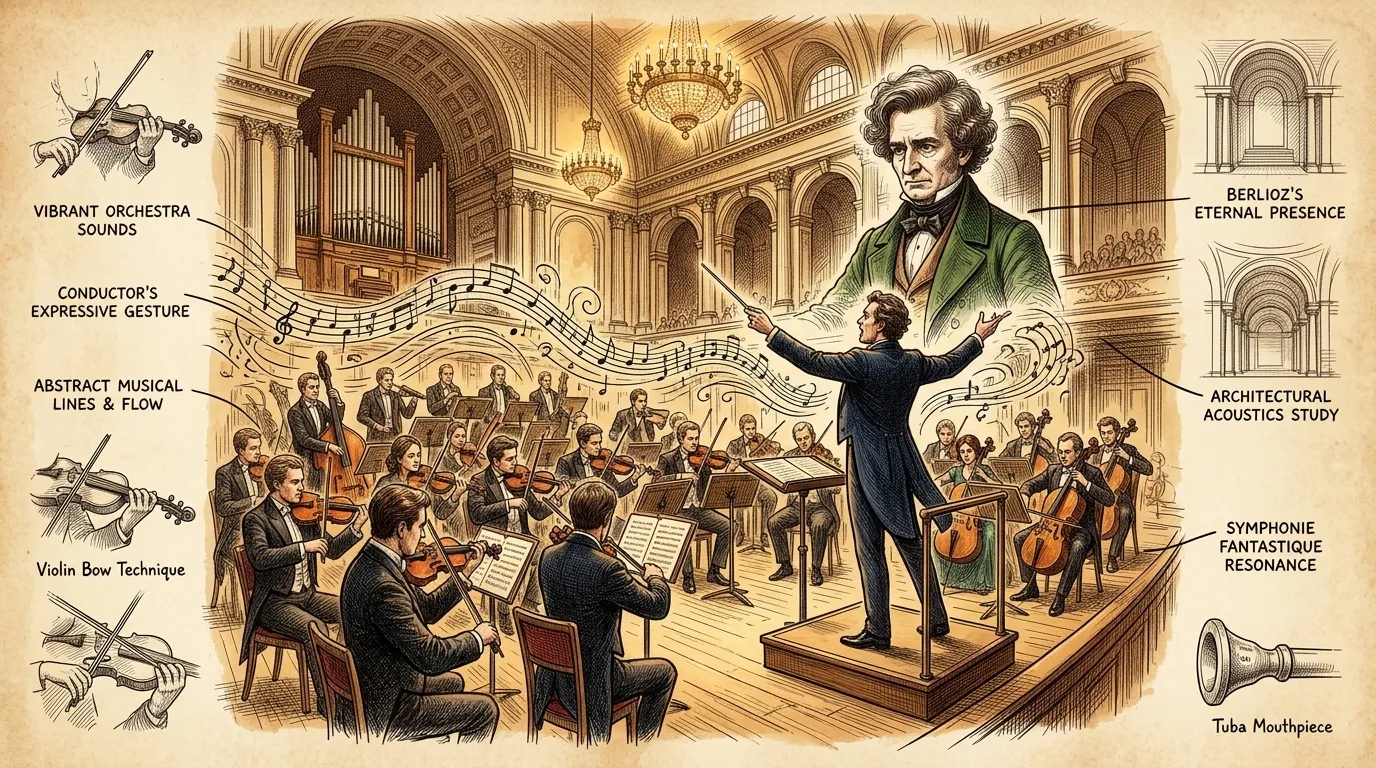
Centuries later, the Symphonie Fantastique continues to inspire and captivate audiences. As Maya Angelou said, 'You can't use up creativity. The more you use, the more you have.' Berlioz's bold vision endures, a testament to the power of music to express the deepest human emotions. His artistic vision thrives.
"A modern conductor says, "Berlioz dared to break the rules. The music continues to resonate. His passion is immortal, don't you agree?""
Art Fact: Symphonie Fantastique's legacy lies in its groundbreaking orchestration, programmatic structure, and emotional intensity. It has influenced generations of composers and continues to captivate audiences today.
About this story
- Location: France
- Audience: general readers
Questions and answers
Questions and answers about Symphonie Fantastique by Hector Berlioz (Paris, France — 1830)
Read Wonder Arts on your phone
Wonder Arts is available on Android. Get Wonder Arts on Google Play.
More Wonder Arts stories
- Symphony No.5 by Ludwig van Beethoven (Vienna, Austria — 1808)
- Temple of Artemis (Ephesus, Turkey — c. 550 BC)
- Temple of Karnak (Luxor, Egypt — c. 2000 BC)
- The Alhambra (Granada, Spain — 13th Century)
- The Angelus by Jean-François Millet (France — 1859)
- The Apotheosis of Homer by Jean-Auguste-Dominique Ingres (France — 1827)