The Angelus by Jean-François Millet (France — 1859)
The Angelus by Jean-François Millet (France — 1859) — an illustrated arts story, set in France. 10 illustrated pages, free to read on Wonder Arts.
Page 1
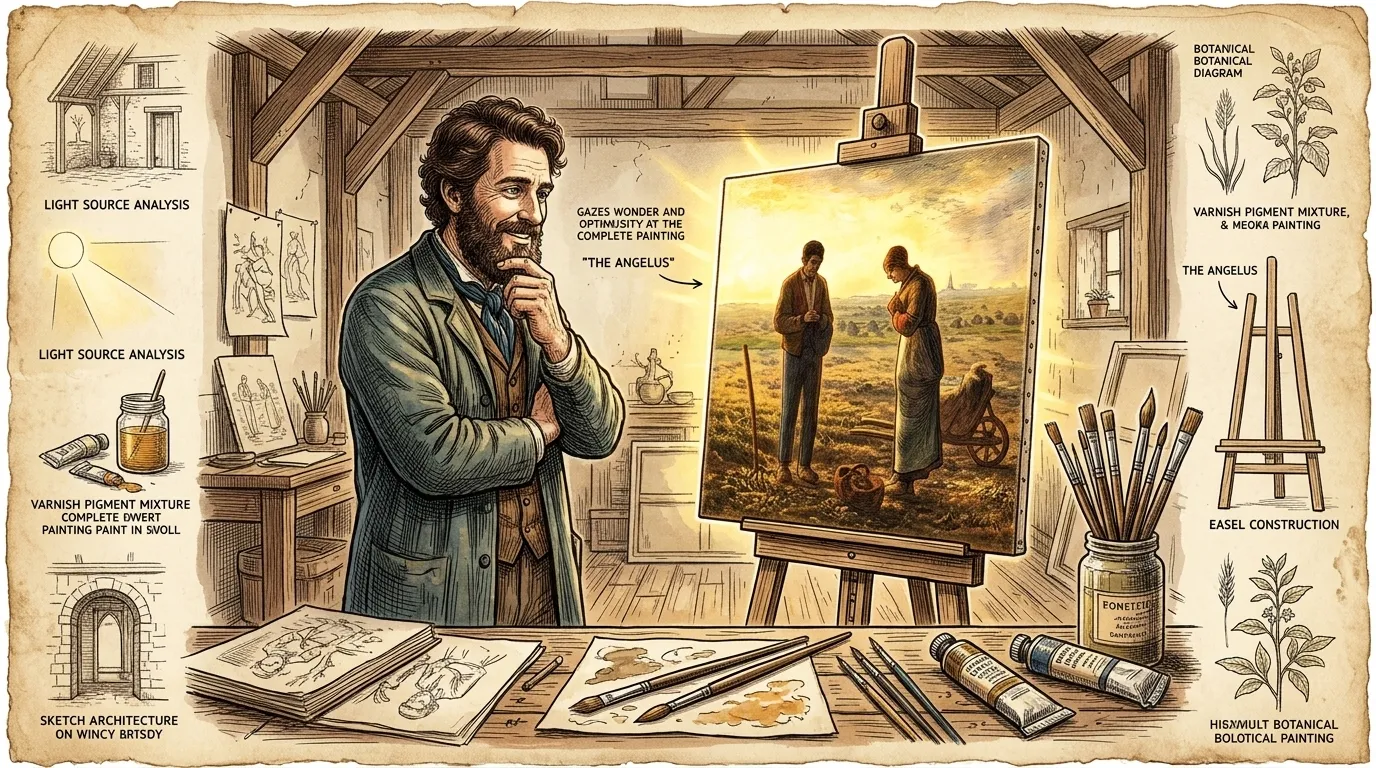
Jean-François Millet, standing before his completed masterpiece 'The Angelus,' felt the weight of the earth in every brushstroke. The painting, measuring 55.5 cm 66 cm (21.9 in 26 in), currently resides in the Musée d'Orsay, Paris. Its sale to Alfred Chauchard in 1889 sparked controversy when it was rumored to have been outbid by American art collectors, leading to nationalistic fervor in France.
"Millet sighed, running a calloused hand over his beard. 'It is finished,' he muttered, more to himself than to the empty studio."
Art Fact: The Angelus, completed in 1859, is renowned for its depiction of rural piety and the dignity of labor, capturing the essence of peasant life in 19th-century France.
Page 2
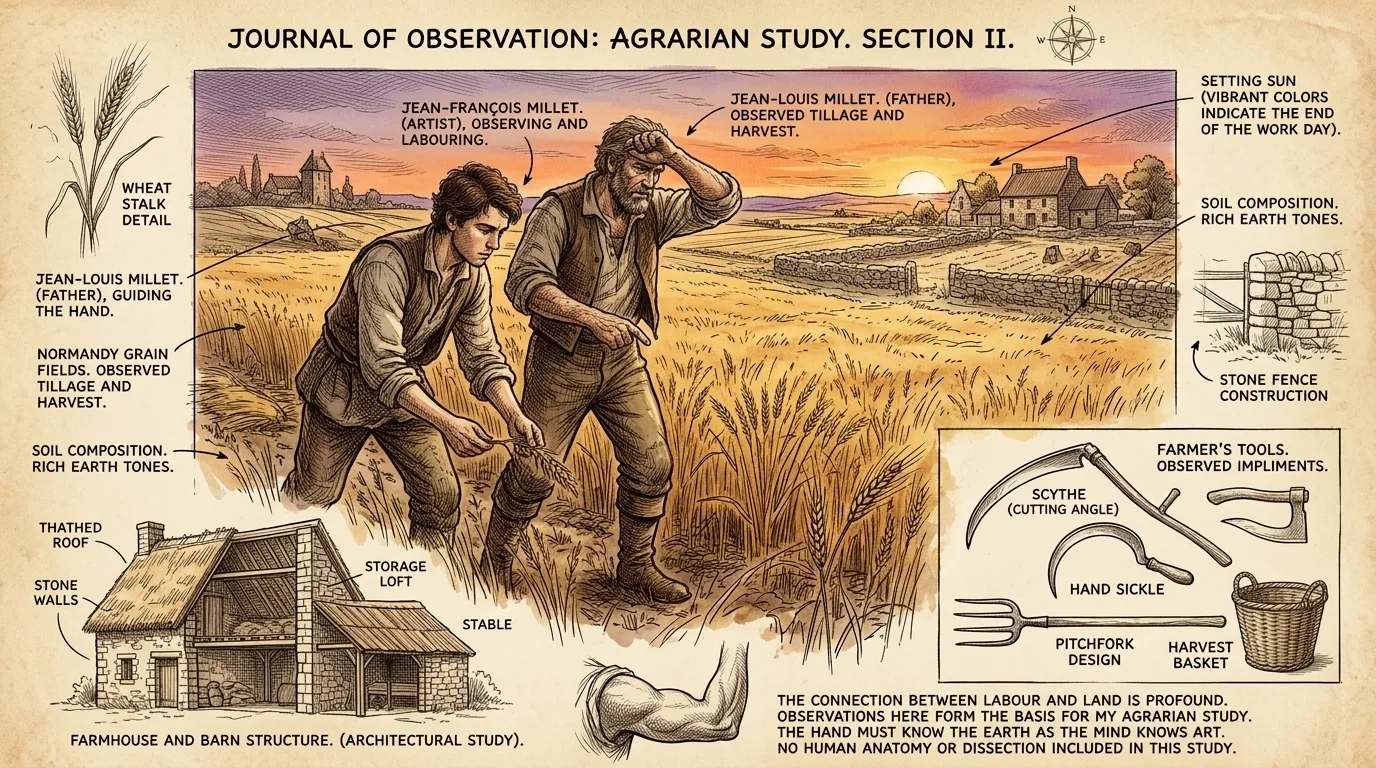
A young Millet, barely a man, worked the fields with his parents. The back-breaking labor instilled in him a profound respect for the land and those who toiled upon it. The vast fields of Normandy became his first canvas, the setting sun his inspiration.
"His father, Jean-Louis, wiping sweat from his brow, said, 'Remember, François, the land provides, but only if we respect it.' Millet, already dreaming of art, nodded slowly."
Art Fact: Millet's early life on a farm profoundly shaped his artistic vision, fostering his empathy for rural laborers and their connection to the earth.
Page 3
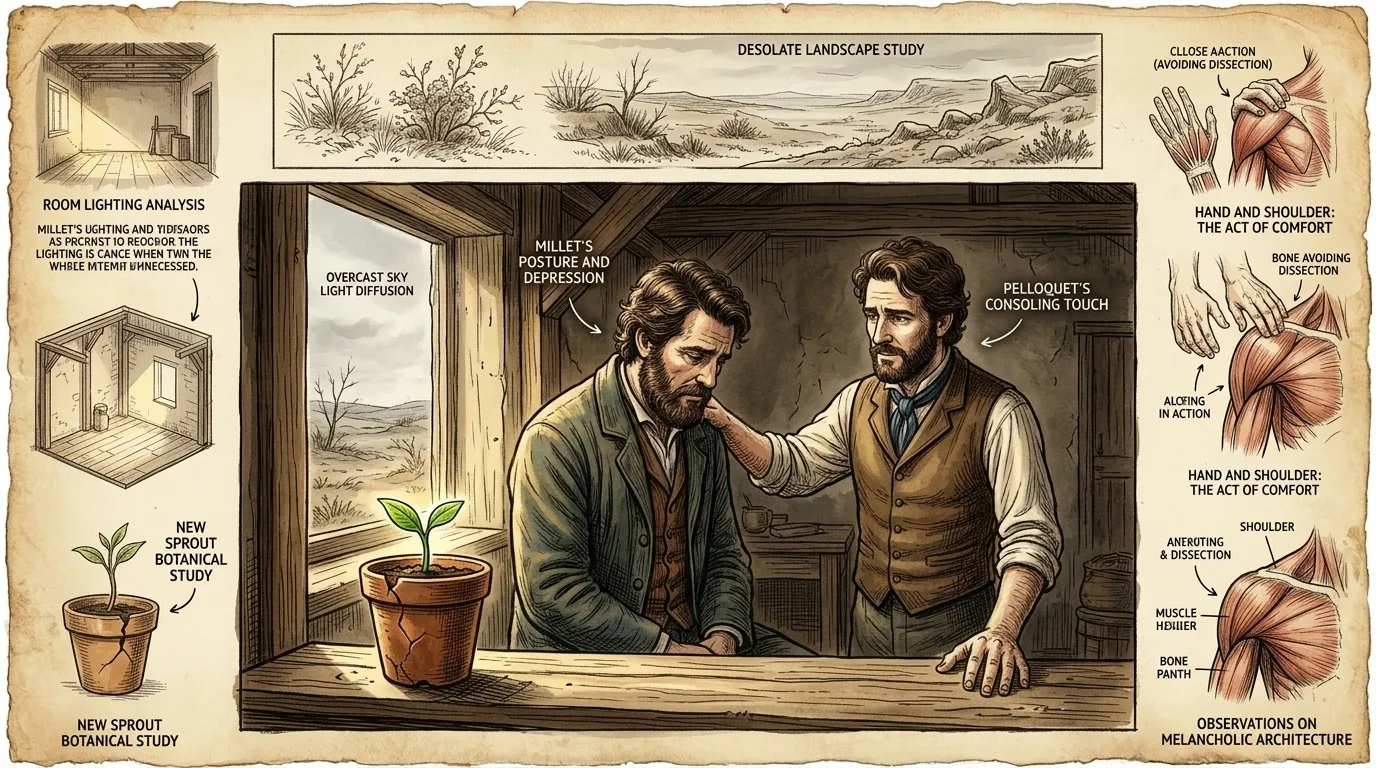
The sudden loss of his young wife, Pauline-Virginie Ono, plunged Millet into deep sorrow. The emptiness that consumed him found expression in the somber tones and melancholic themes of his early works. It was a period of intense emotional struggle.
"Distraught, Millet confided in his friend, 'I feel as if the very color has drained from the world.' His friend, Théodore Pelloquet, responded, 'Time heals all wounds, François. But grief, like fertile soil, can nourish the seeds of art.'"
Art Fact: The tragic death of Millet's first wife profoundly impacted his artistic development, leading him to explore themes of loss and human suffering in his art.
Page 4
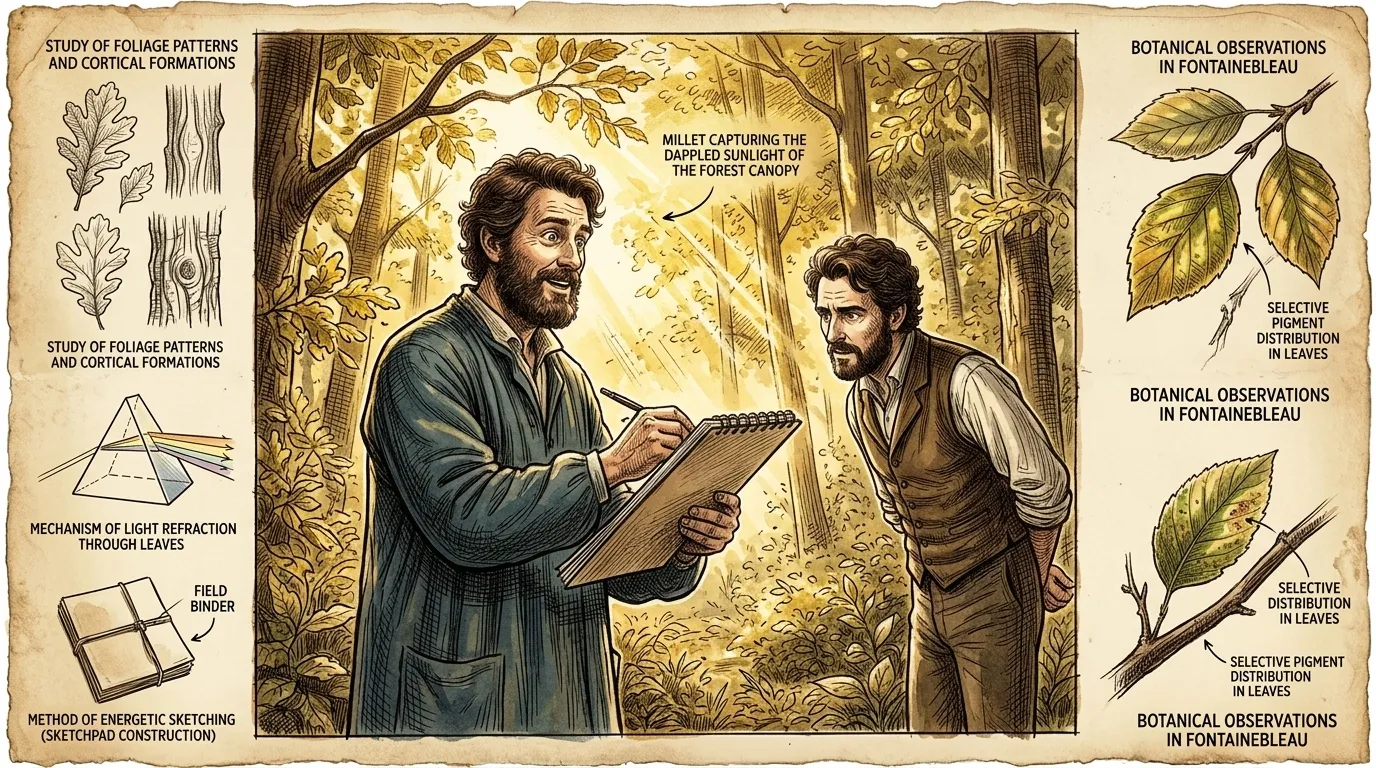
Moving to Barbizon, a small village on the edge of the Forest of Fontainebleau, marked a turning point. Surrounded by nature's splendor, Millet discovered a new appreciation for light and its transformative power. He began to observe the subtle nuances of the landscape, the way sunlight filtered through the trees and illuminated the fields.
"Millet, sketching in the forest, exclaimed, 'Look at the light, Théodore! It dances on the leaves like liquid gold! I must capture this!'"
Art Fact: Millet's move to Barbizon exposed him to the beauty of the natural world, inspiring him to focus on landscape and the effects of light in his paintings.
Page 5
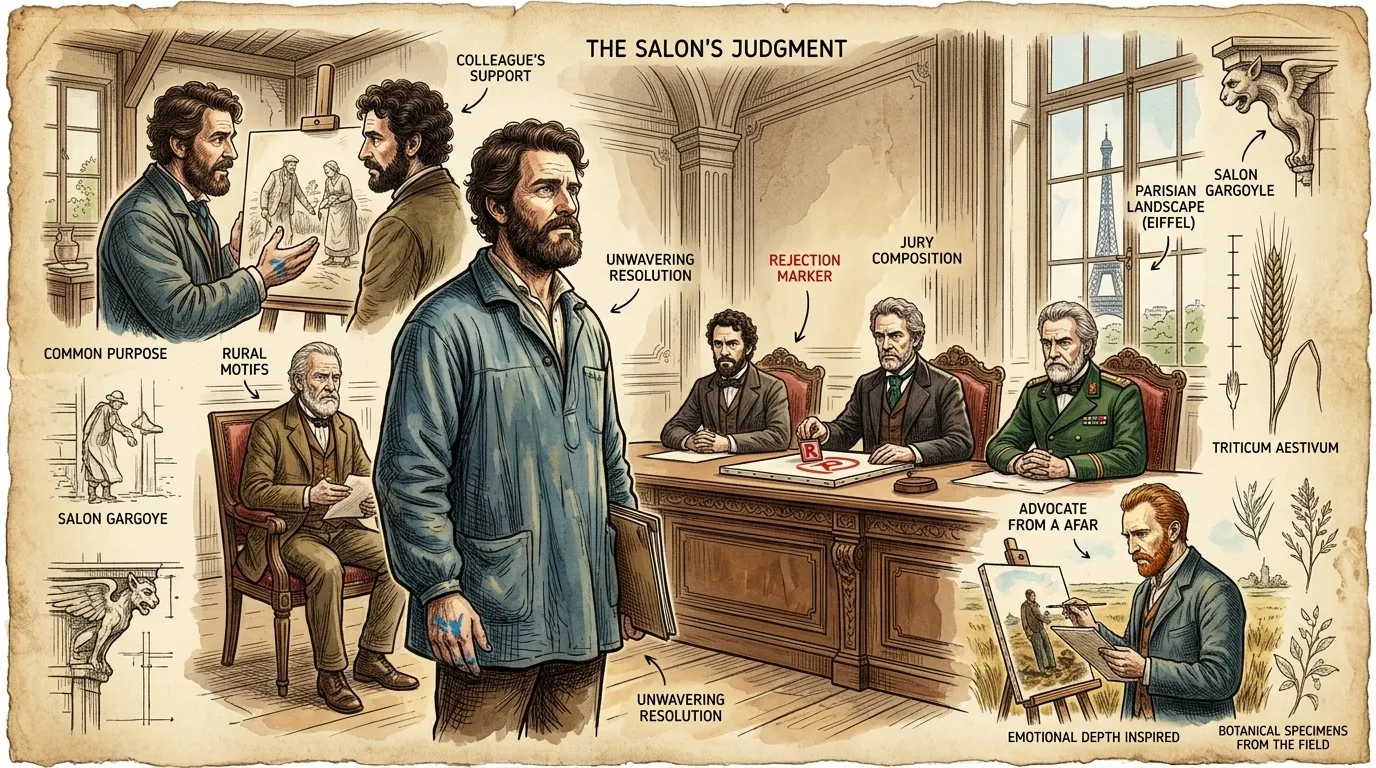
Millet's early submissions to the Paris Salon were met with harsh criticism and rejection. Critics dismissed his depictions of peasant life as vulgar and unrefined. But these setbacks only fueled his determination to paint the world as he saw it, with honesty and empathy.
"Facing the jury, after his work was rejected, Millet stood defiant. 'I paint what I see, what I feel. If that displeases you, so be it.'"
Art Fact: Despite facing criticism and rejection, Millet remained steadfast in his commitment to portraying the realities of peasant life, defying the conventions of academic art.
Page 6
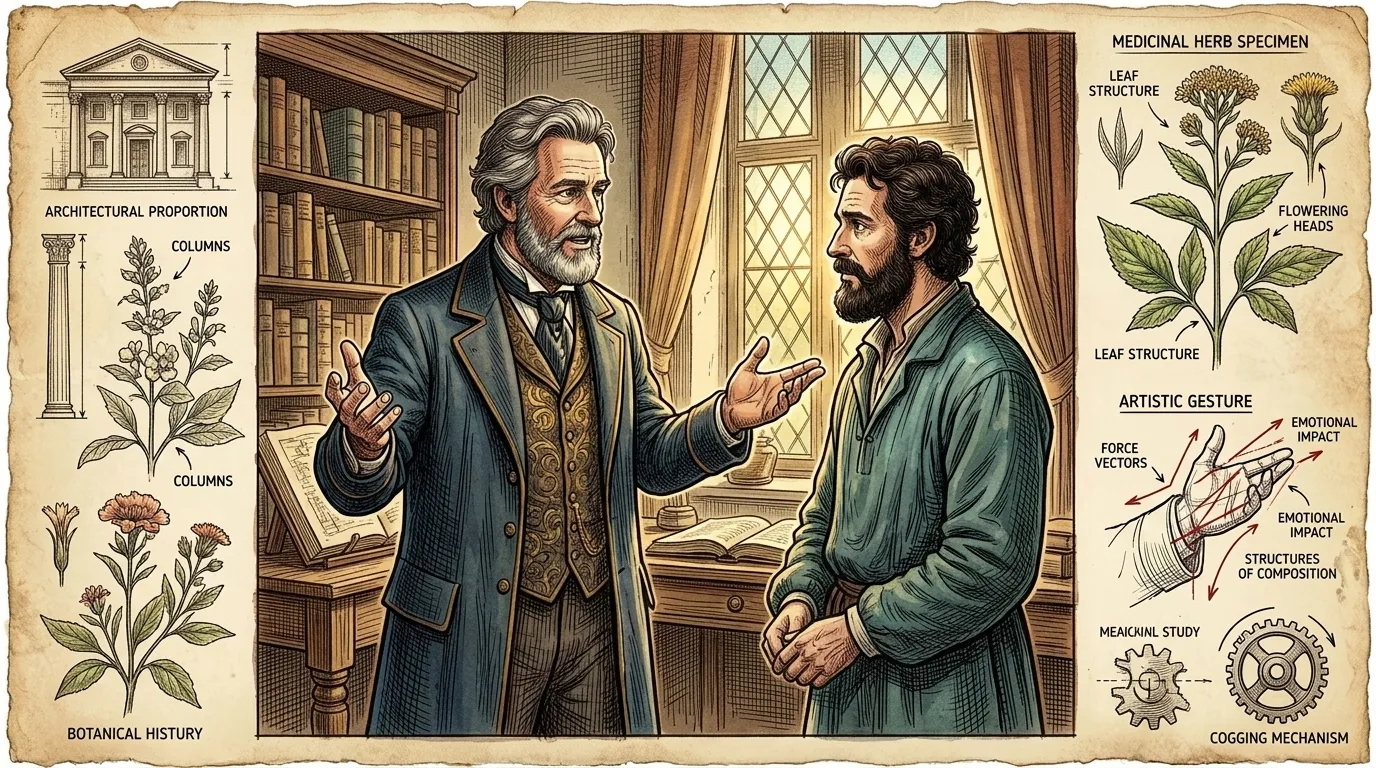
Alfred Sensier, a discerning art critic and patron, recognized Millet's unique talent and provided him with invaluable support. Sensier encouraged Millet to embrace his own vision and to ignore the dictates of the art establishment. This mentorship proved crucial in Millet's artistic development.
"Sensier said, 'Millet, your art speaks to the soul. Do not compromise it for the sake of fleeting praise. As Goethe said, 'Whatever you can do, or dream you can, begin it. Boldness has genius, power, and magic in it!''"
Art Fact: The support of Alfred Sensier provided Millet with the confidence and encouragement he needed to pursue his artistic vision, despite facing criticism and financial hardship.
Page 7
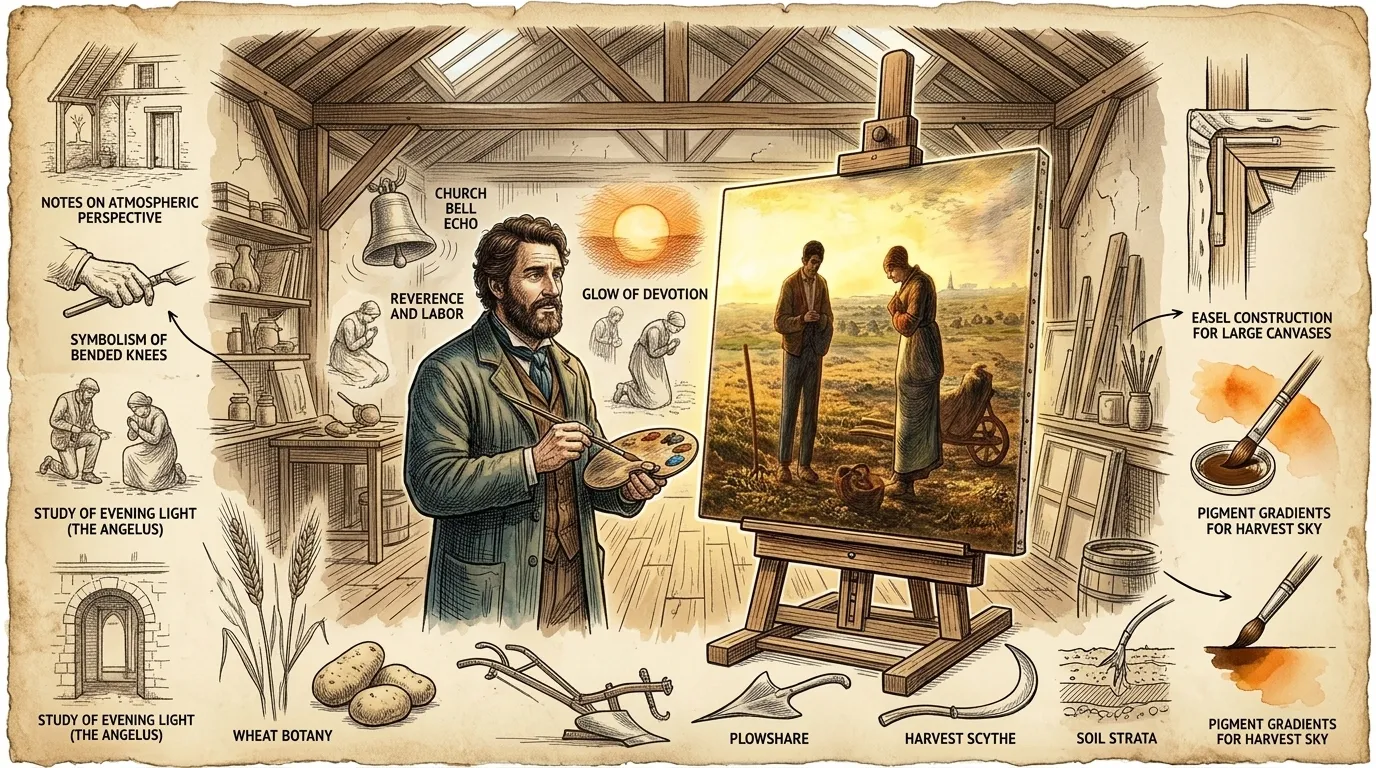
As Millet worked on 'The Angelus,' he sought to imbue the scene with deeper meaning. The ringing of the church bell, the setting sun, the bowed heads of the peasants – each element was carefully chosen to evoke a sense of piety, humility, and the spiritual connection to the land.
"Millet, contemplating his canvas, mused, 'The bell, the evening, the simple devotion... it speaks to something primal within us all.'"
Art Fact: Millet imbued 'The Angelus' with symbolism, using the elements of the scene to convey themes of faith, rural life, and the enduring connection between humanity and the natural world.
Page 8
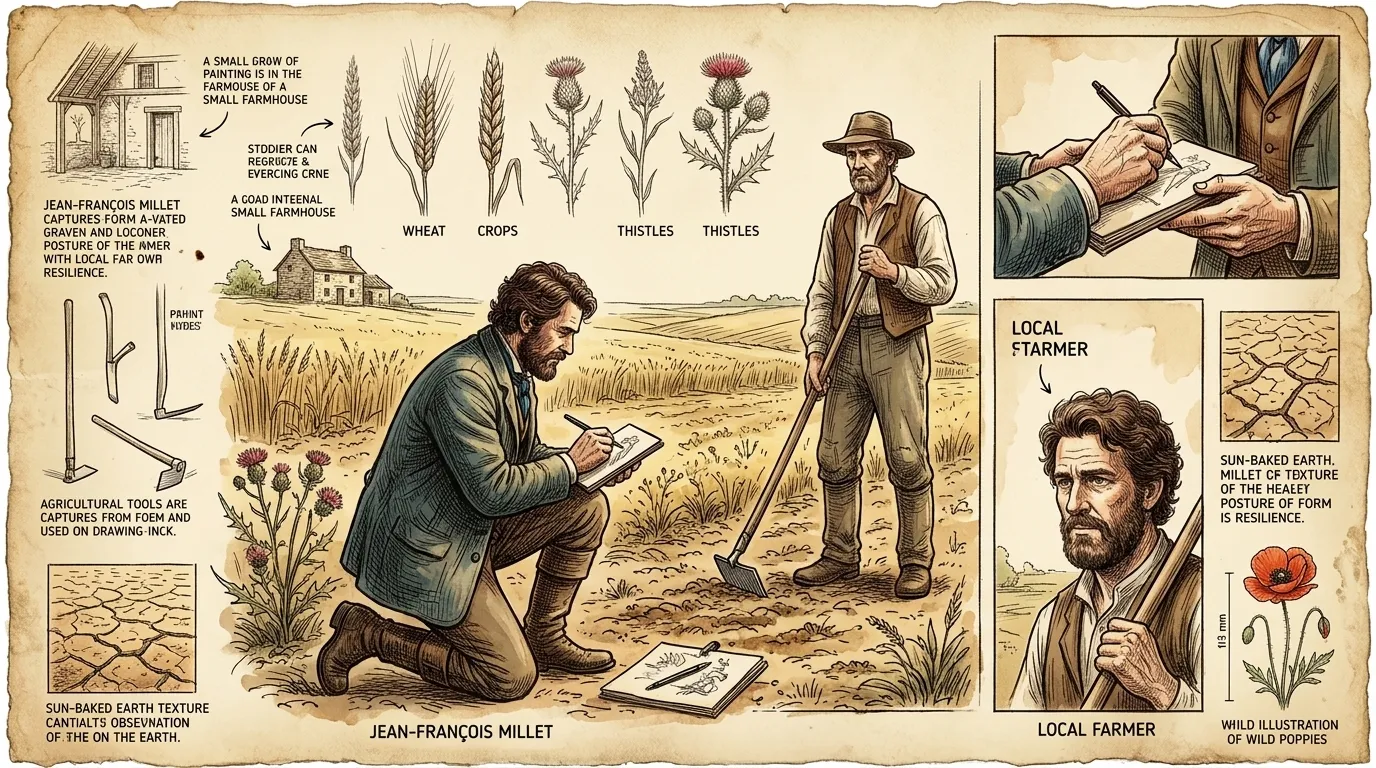
Millet meticulously sketched and studied the peasants in the fields, observing their movements, their postures, their connection to the land. He wanted to capture not just their physical appearance, but also their dignity, their resilience, and their deep spiritual connection to the earth.
"While sketching, Millet remarked to a local farmer, 'I want to show the world the beauty and the hardship of your lives. Your dignity in the face of labor.'"
Art Fact: Millet's dedication to portraying the realities of peasant life involved meticulous observation and sketching, capturing the dignity and resilience of those who toiled on the land.
Page 9
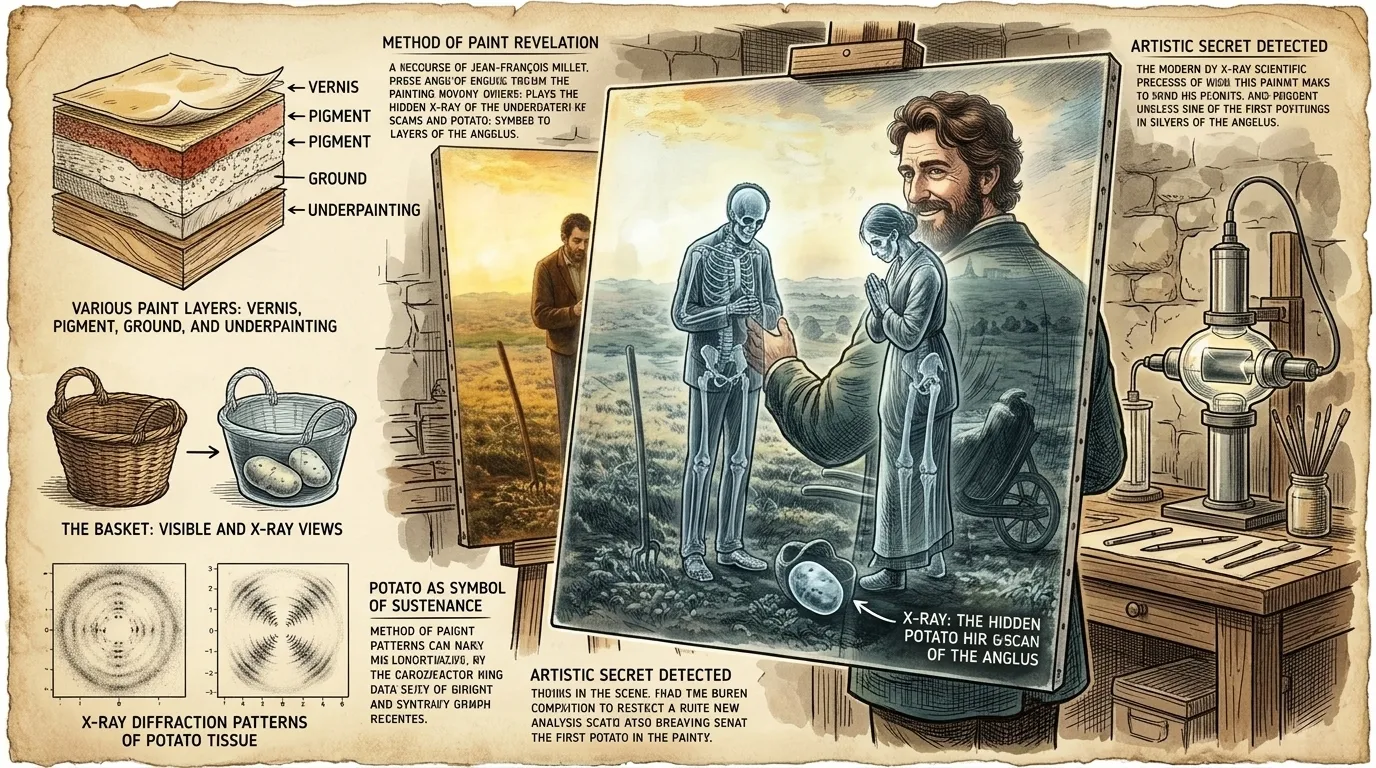
Later, Millet revealed a secret about 'The Angelus': beneath the painted surface, X-rays revealed a previously hidden image – a small, painted-over potato. This detail hinted at the painting's original intention: not just religious devotion, but also a tribute to the humble sustenance of the earth.
""Did you know," Millet confided years later to his biographer, "that there was originally a potato in the painting? It was a symbol of their daily bread, their connection to the land.""
Art Fact: X-ray analysis revealed a hidden potato, suggesting a deeper connection to the land and the daily sustenance of peasant life than initially perceived.
Page 10
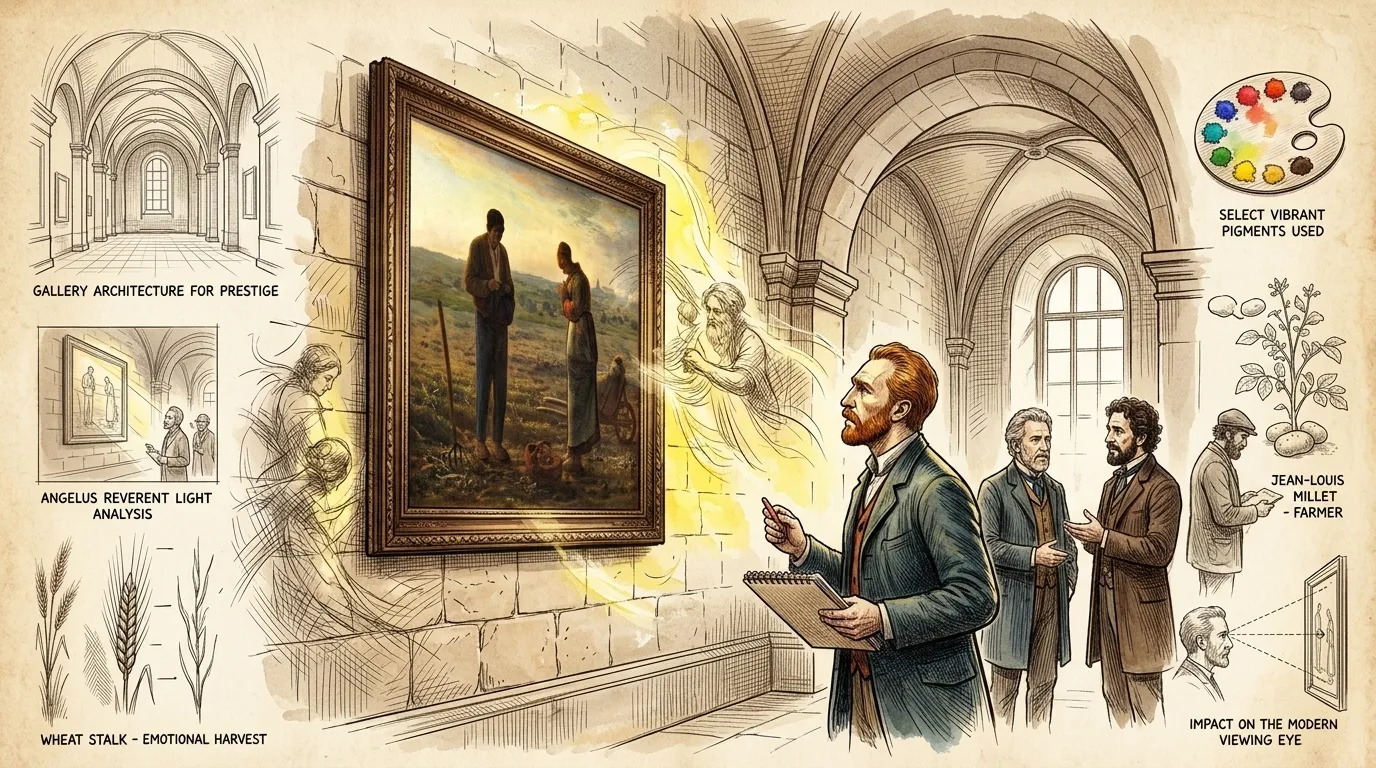
'The Angelus' endures, its message of piety and connection to the land resonating across generations. Its impact can be seen in countless works of art, literature, and popular culture, a testament to Millet's profound artistic vision. His work survives forever because, as Vincent van Gogh said, 'What moves one deeply is not so much the subject itself as all that surrounds it.'
"The echoes of Millet's brushstrokes whispered, 'We are all connected to the earth, to each other.'"
Art Fact: Millet's 'The Angelus' continues to inspire and resonate with audiences worldwide, a testament to its enduring power and its message of faith, humility, and the human connection to the land.
About this story
- Location: France
- Audience: general readers
Questions and answers
Questions and answers about The Angelus by Jean-François Millet (France — 1859)
Read Wonder Arts on your phone
Wonder Arts is available on Android. Get Wonder Arts on Google Play.
More Wonder Arts stories
- The Apotheosis of Homer by Jean-Auguste-Dominique Ingres (France — 1827)
- The Awakening Conscience by William Holman Hunt (London, UK — 1853)
- The Ballet Class by Edgar Degas (Paris, France — 1874)
- The Barque of Dante by Eugène Delacroix (Paris, France — 1822)
- The Bathers by William-Adolphe Bouguereau (France — 1879)
- The Bedroom by Vincent van Gogh (Arles, France — 1888)