The Barque of Dante by Eugène Delacroix (Paris, France — 1822)
The Barque of Dante by Eugène Delacroix (Paris, France — 1822) — an illustrated arts story, set in France. 10 illustrated pages, free to read on Wonder Arts.
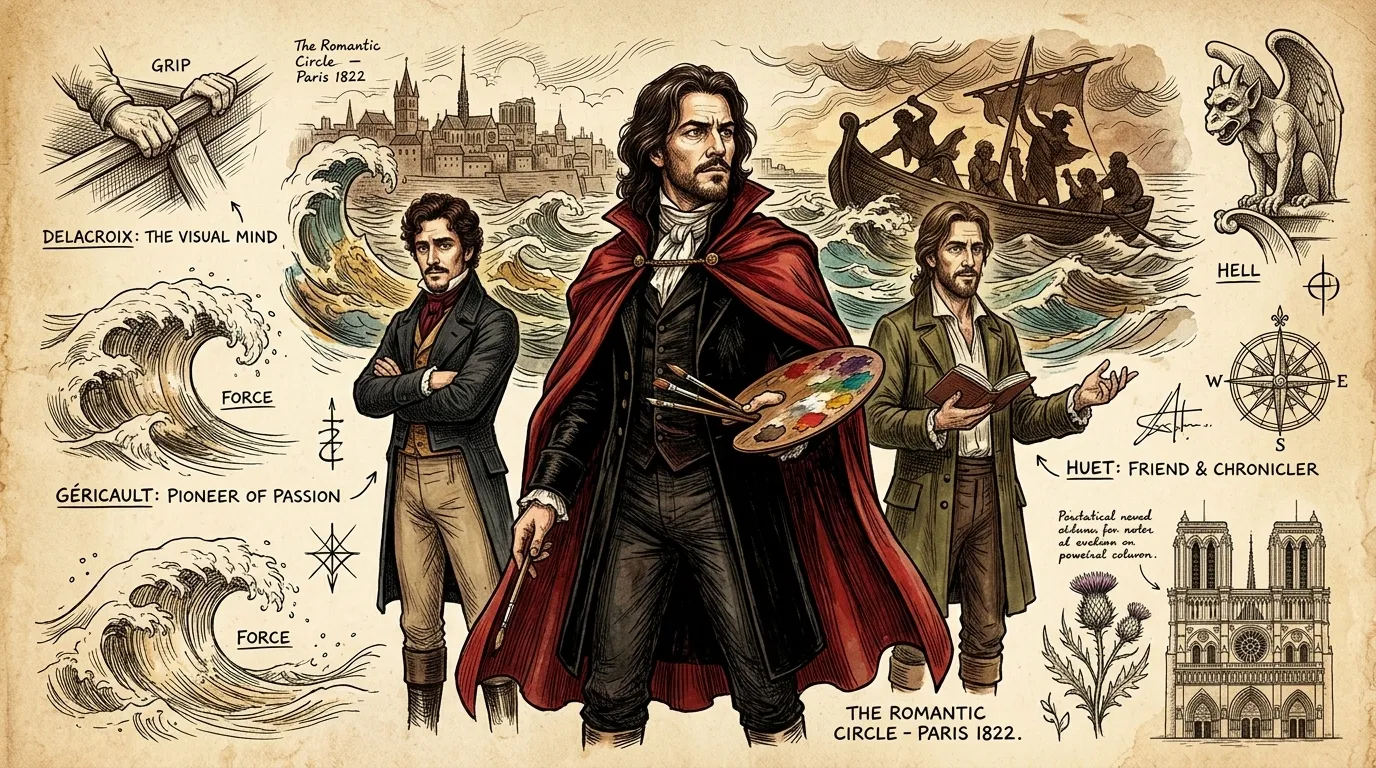
Page 1
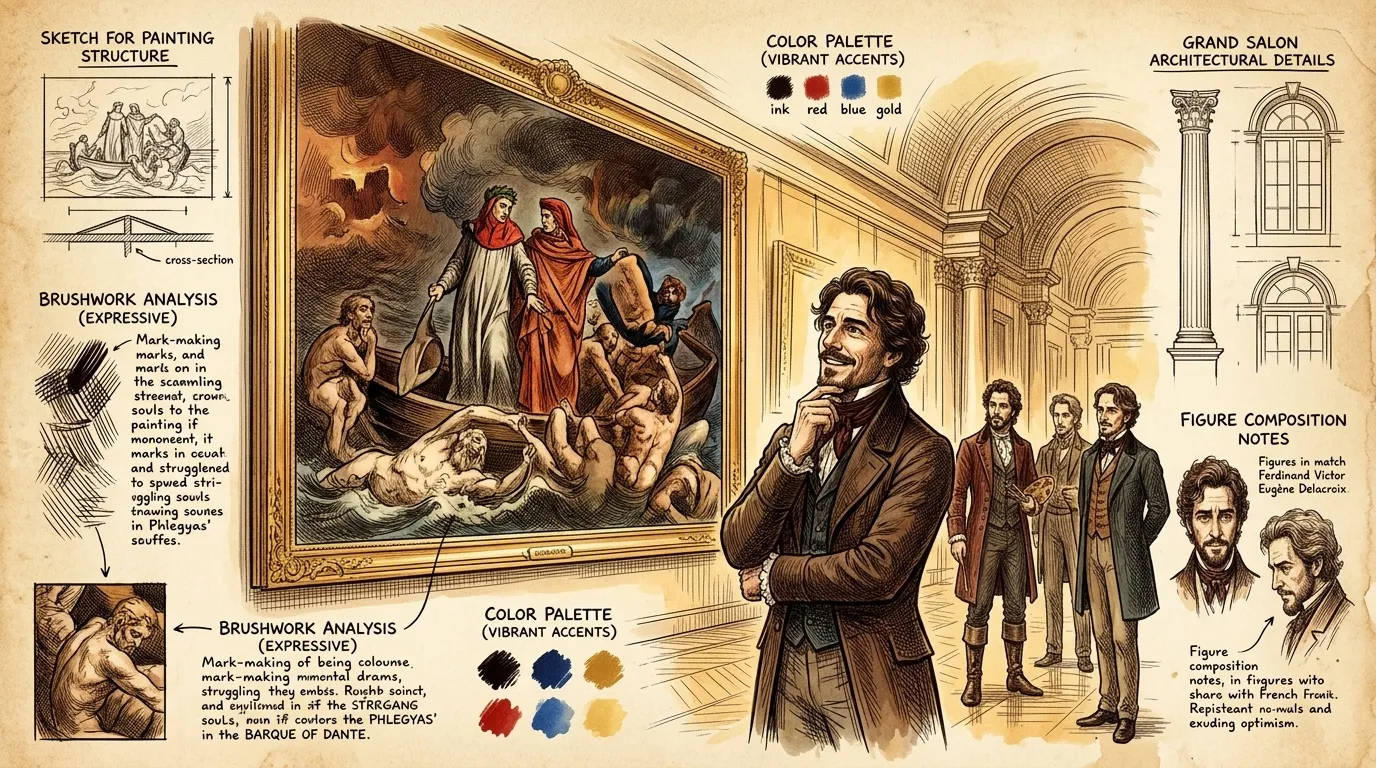
Eugène Delacroix, standing before his monumental "The Barque of Dante," completed in 1822, felt the weight of the Salon's gaze. The painting, measuring 189 x 246 cm and now residing in the Louvre Museum, was a bold departure from Neoclassical restraint, a descent into the turbulent depths of Dante's Inferno. Its raw emotion and dramatic intensity would either ignite passion or incite scorn. The whispers of controversy about its supposed lack of finish had already begun, but Delacroix knew he had captured something primal, something profound.
""This canvas, this vision, it is a testament to the power of feeling," Delacroix muttered, his breath misting in the cold Parisian air. "Let them judge, let them whisper. Art must disturb.""
Art Fact: Completed in 1822, Delacroix's 'The Barque of Dante' marked a dramatic shift from Neoclassical composure to Romantic fervor, setting the stage for his future explorations of human emotion and historical drama.
Page 2
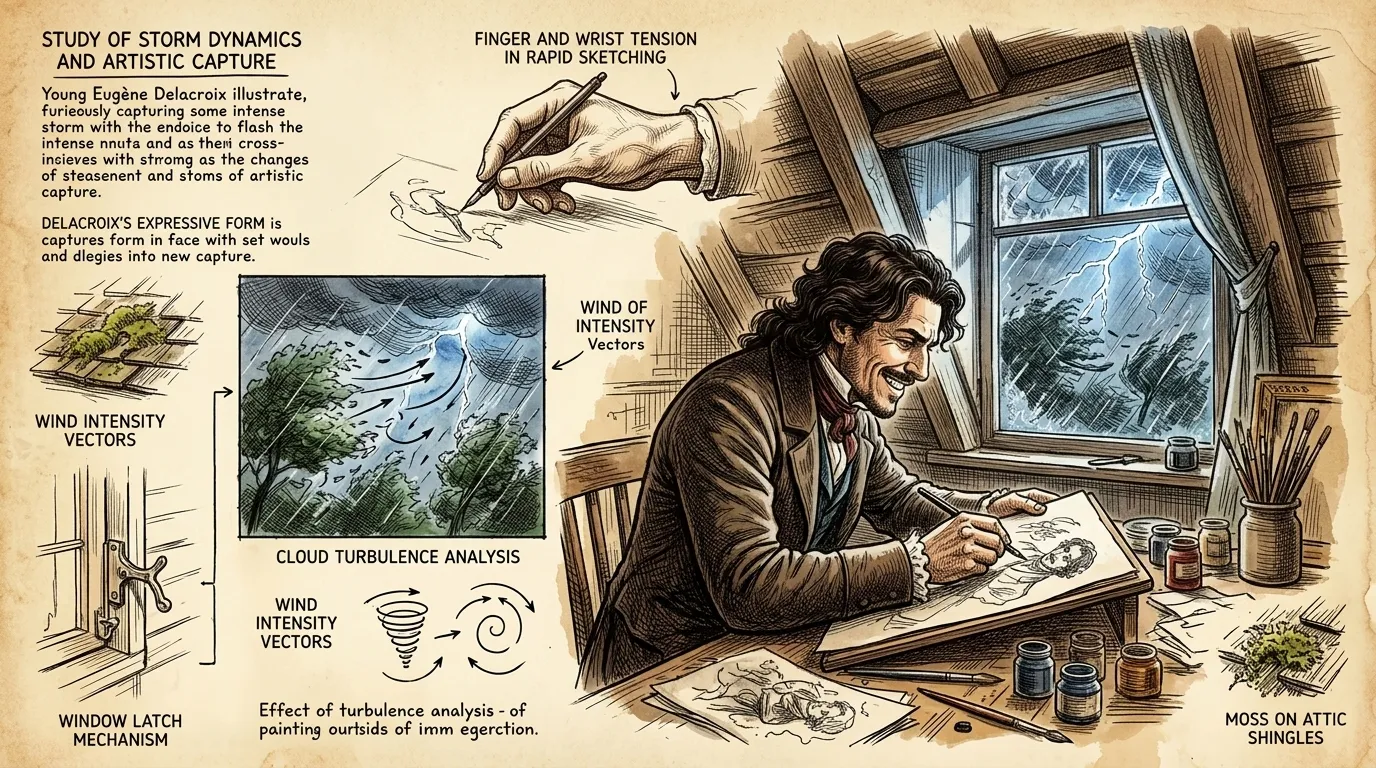
A storm raged outside as young Eugène sketched furiously in his small attic room. The wind howled like the damned souls he envisioned for his painting. He remembered the words of Dante, whose Inferno had ignited his imagination: 'The hottest places in hell are reserved for those who in time of moral crisis preserve their neutrality.' It was a sentiment that resonated deeply with the young artist.
""I must capture this fury, this tempest within," Eugène exclaimed, his voice barely audible above the storm. "Art must reflect the true chaos of the world.""
Art Fact: Delacroix's early exposure to the works of Dante fueled his imagination and laid the groundwork for 'The Barque of Dante,' a painting born from a fascination with human suffering and dramatic intensity.
Page 3
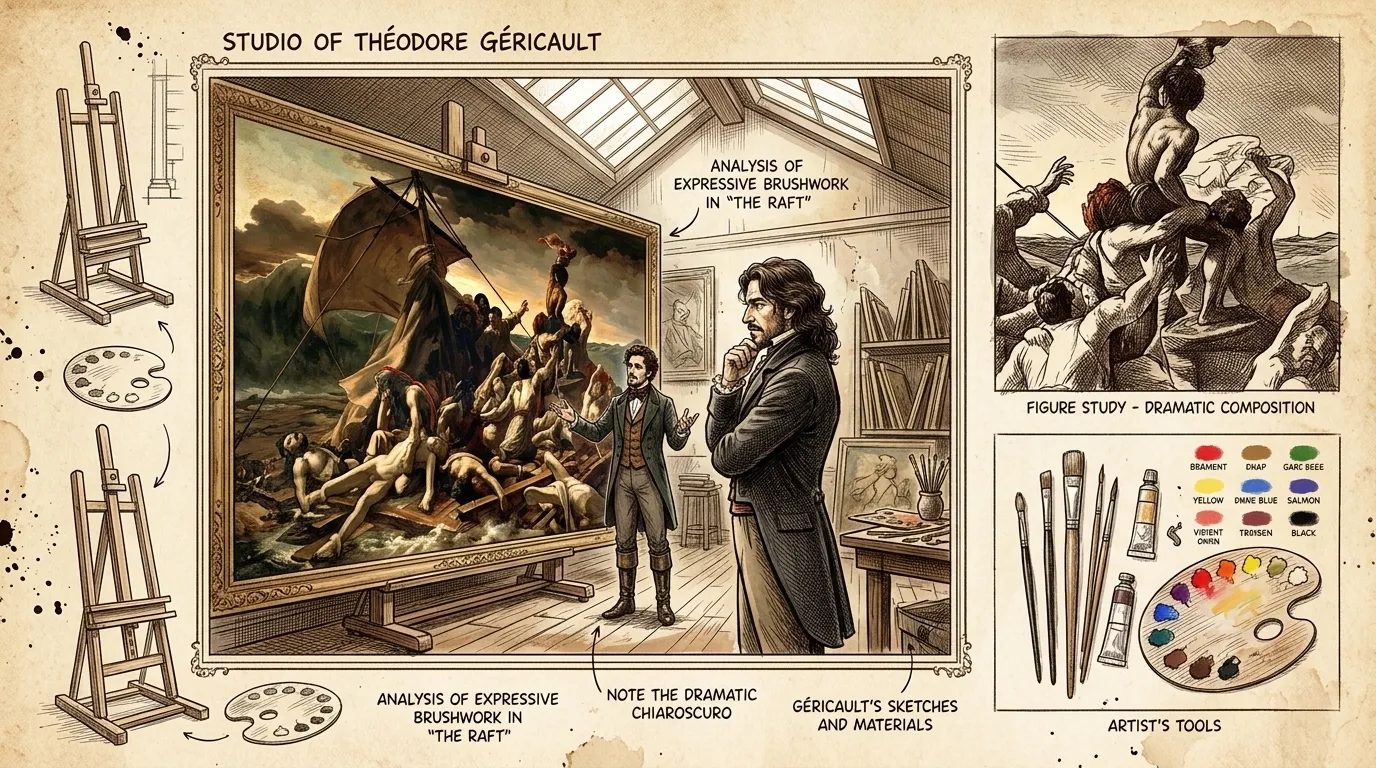
A visit to Théodore Géricault's studio left a lasting impression on Delacroix. Géricault's "The Raft of the Medusa," with its unflinching depiction of human suffering, showed Eugène the power of art to confront uncomfortable truths. He knew then that his painting would not shy away from the grotesque or the despairing. The realism was a shocking contrast to the idealized forms of classicism. He was determined to make his painting an emotional experience.
""Géricault has shown us the way," Delacroix whispered to himself. "Art must not be merely beautiful; it must be true, even if that truth is ugly.""
Art Fact: Théodore Géricault's 'The Raft of the Medusa' served as a powerful inspiration for Delacroix, demonstrating the potential of art to depict the harsh realities of human existence and influence social consciousness.
Page 4
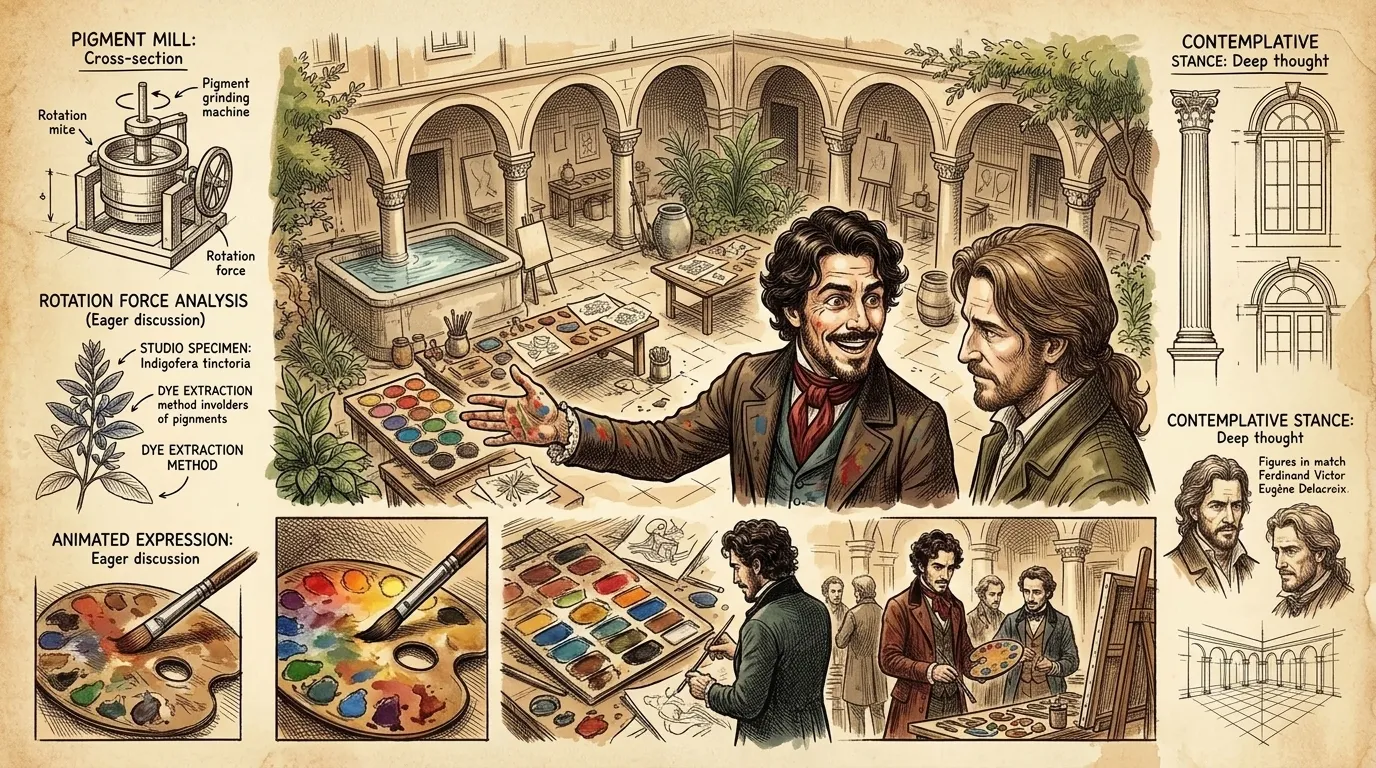
Delacroix experimented endlessly with color, seeking to capture the emotional intensity he felt. He studied the Old Masters, particularly Rubens and Titian, learning how to use color to create drama and evoke feeling. He realized that color was more than just decoration; it was a powerful tool for expressing the inner turmoil of the human soul.
""Color is the very soul of painting," Delacroix declared to his friend, the painter Paul Huet, "It is through color that we can convey the deepest emotions.""
Art Fact: Delacroix's deep understanding and masterful use of color, influenced by the Old Masters, became a hallmark of his style and allowed him to convey the profound emotions within his paintings.
Page 5
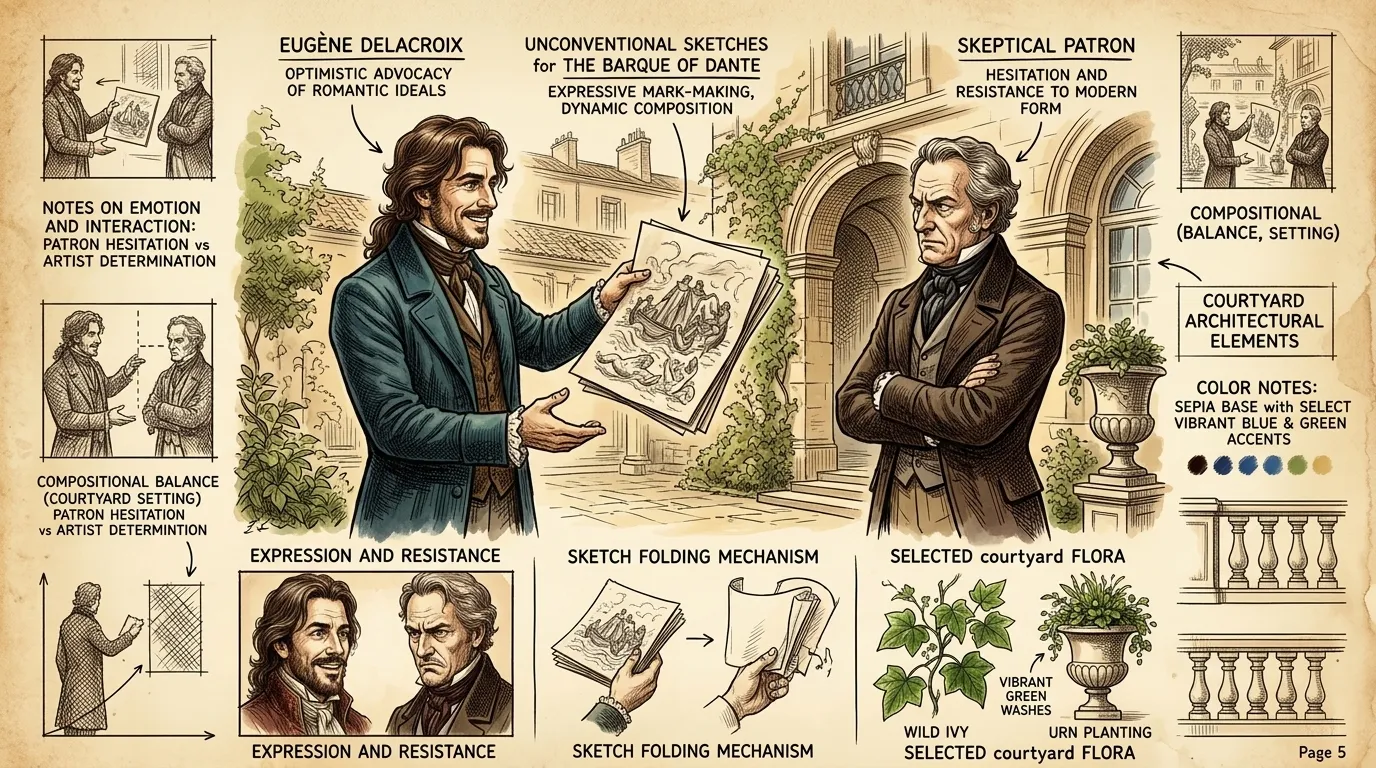
When he showed his initial sketches, the patron for the piece gave the artist a look of skepticism. He did not understand this painting of Hell. The patron did not feel that this would be something the people wanted to see. However, Delacroix was undeterred. He felt this was his masterpiece, and he continued to push forward.
""I am not sure people will understand this vision," the patron said to Delacroix. Delacroix responded, "I feel this piece, and I must pursue my vision.""
Art Fact: Despite initial skepticism from patrons, Delacroix remained steadfast in his artistic vision, driven by an unwavering commitment to express the full spectrum of human experience, regardless of popular opinion.
Page 6
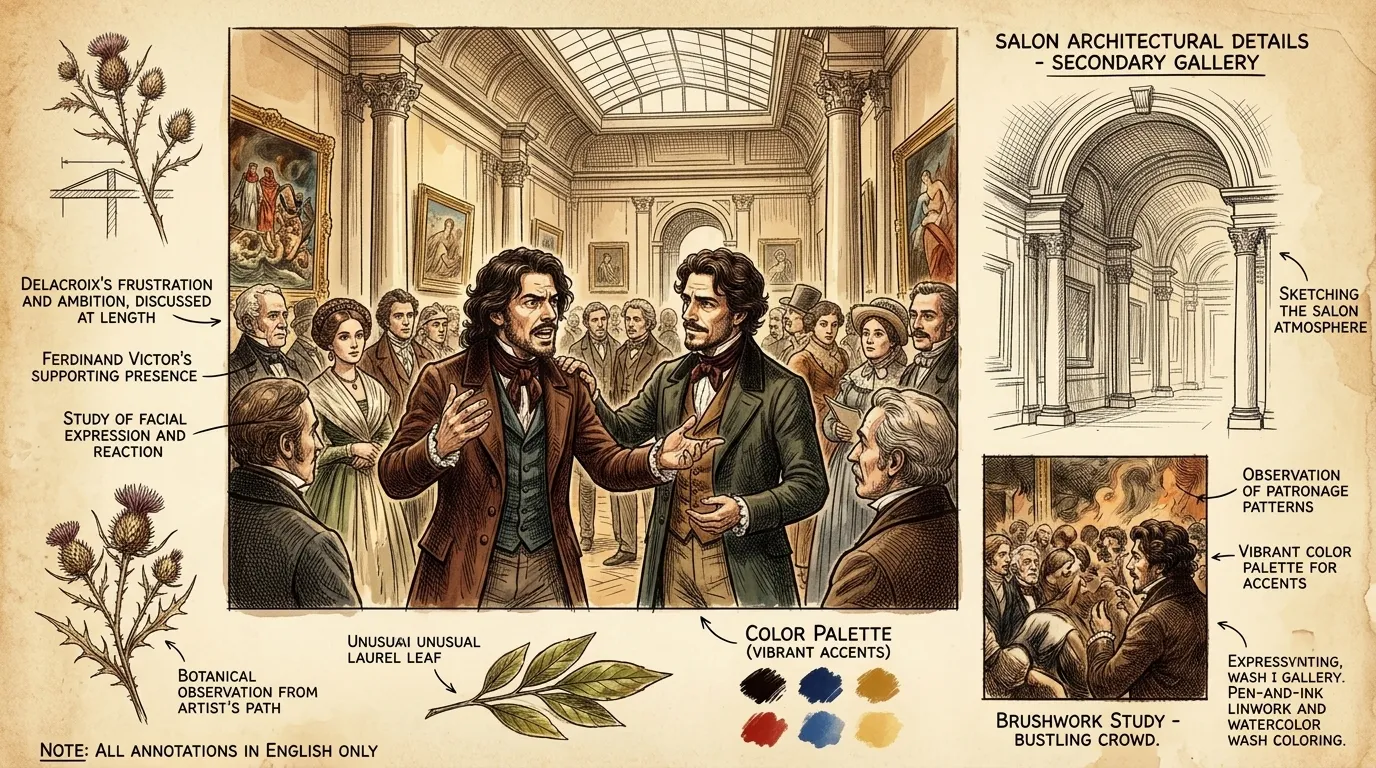
The Salon of 1822 was a battlefield of artistic opinions. Delacroix's "The Barque of Dante" was met with both admiration and scorn. Some critics praised its raw emotion and dramatic intensity, while others condemned its perceived lack of finish and its departure from Neoclassical ideals. The controversy fueled his ambition, but also wounded him deeply. The rejection felt like the ultimate failure, but he learned from it.
""They call it unfinished, barbaric!" Delacroix exclaimed to his fellow artist, Ferdinand Victor Eugène Delacroix. "But I have captured the essence of human suffering, something they cannot understand!""
Art Fact: The mixed reception of 'The Barque of Dante' at the Salon of 1822, while controversial, solidified Delacroix's reputation as a bold and innovative artist, challenging the prevailing artistic conventions of the time.
Page 7
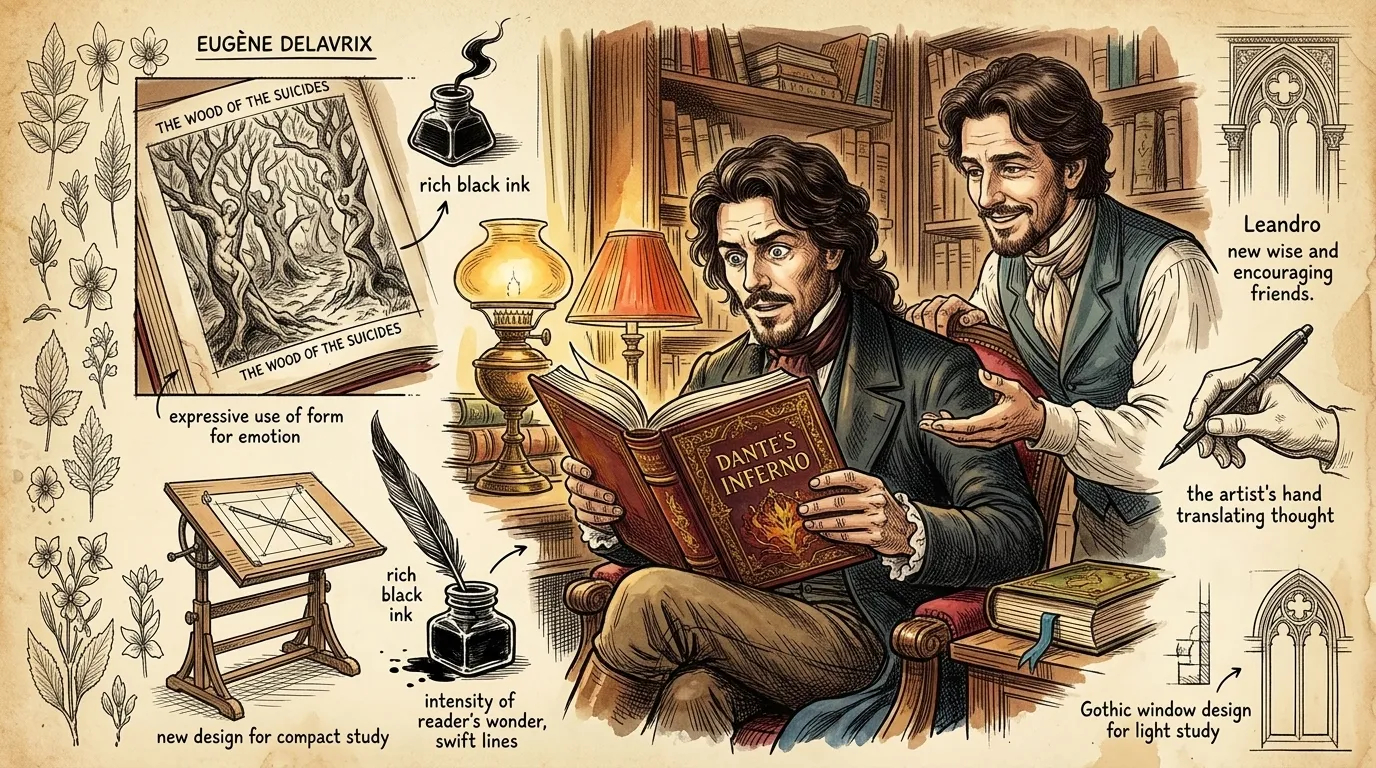
As Delacroix finished reading Dante's Inferno he was immediately pulled into the story. This was to be more than just another painting. In Dante's epic poem, Dante is guided through the underworld. He felt the despair, and he knew that he wanted to take the audience along with Dante.
"Leandro said, 'Remember what Dante wrote, 'The secret to moving mountains is believing that you can do it.' You can paint this hell, Eugène, you just need to have confidence."
Art Fact: Inspired by classic literature, Eugène drew upon its pages to draw his own inspiration. Dante's Inferno provided an in-depth look at human suffering which he intended to put on display in his work.
Page 8
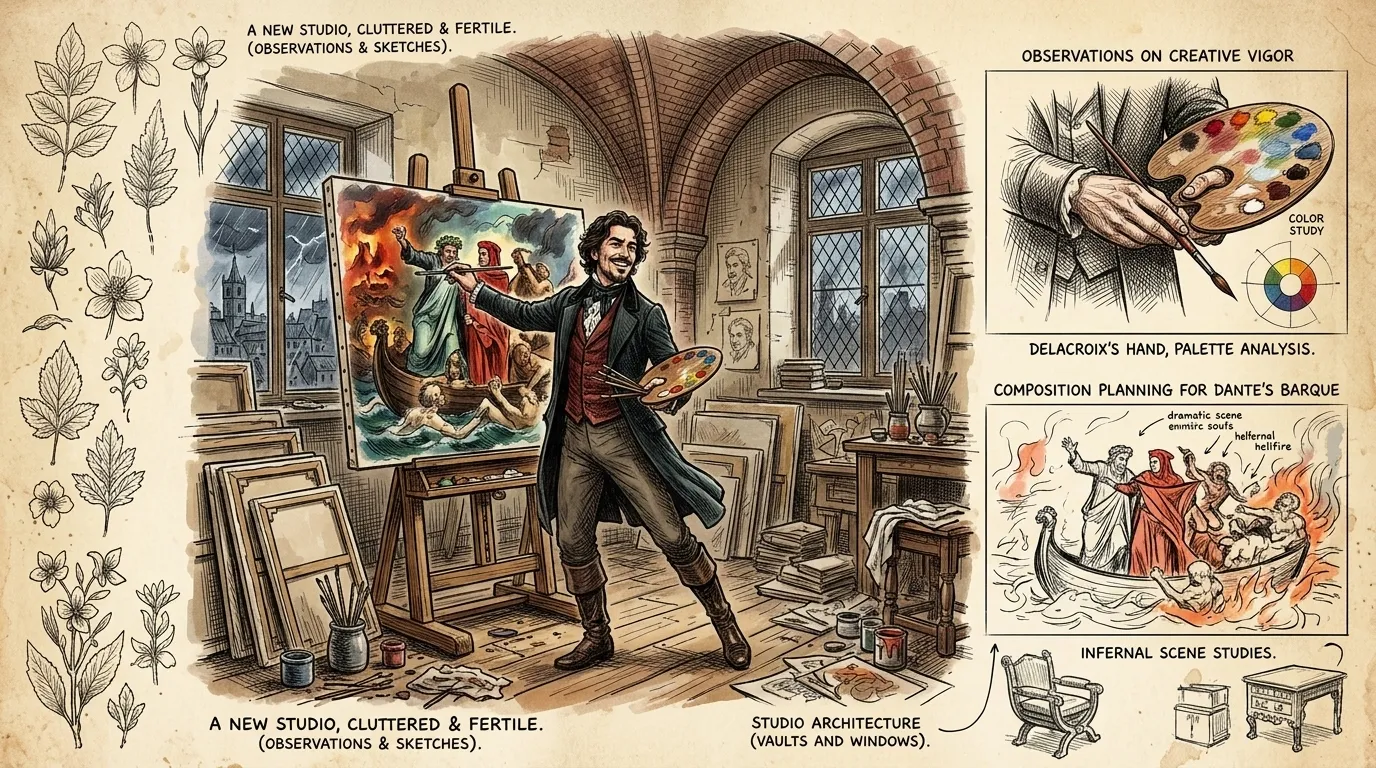
Eugène begins the painting. Stroke by stroke, hell is formed before his eyes. He draws upon what he has learned from other artists. This isn't an exact copy, but is his own interpretation. He hopes to find an audience that will enjoy his painting, but he paints for himself first and foremost.
""Here it is," Eugène proudly proclaims as he pauses from painting. "A masterpiece for the ages!""
Art Fact: Although inspired by others, this interpretation is all Eugène. From colors to tone, it all comes together into his vision.
Page 9
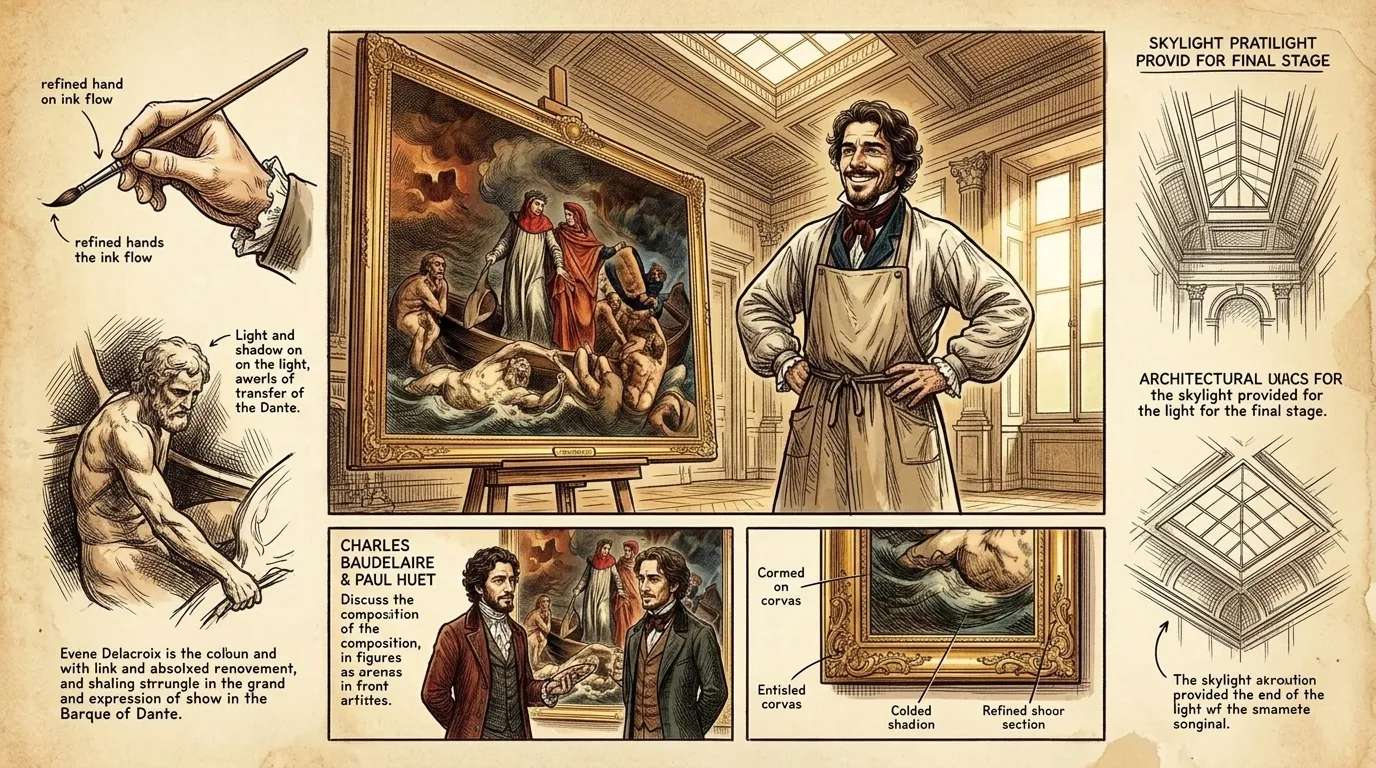
As the last stroke of paint is applied, Eugène takes a step back. All the long days, and nights, have come to fruition. With the work complete, he hopes to move on to greater and better works. He feels a great sense of accomplishment.
""This is it. My masterpiece. I have nothing else I could've done to improve it." Eugène proclaims with great joy."
Art Fact: After many weeks of hard work, Eugène feels a great sense of joy with his work. It is not only a piece that he can show the world, but a piece that he has learned a lot from.
Page 10
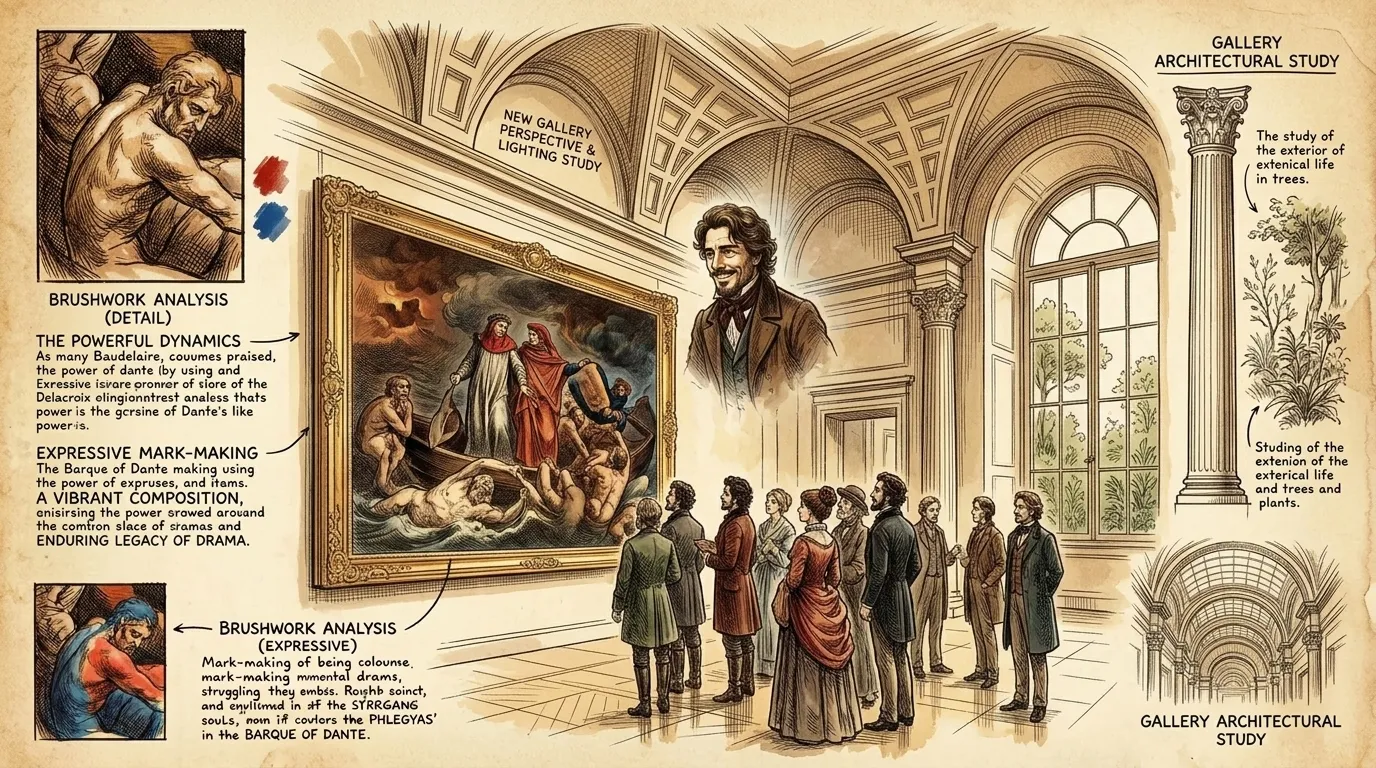
Today, "The Barque of Dante" hangs proudly in the Louvre Museum, a testament to Delacroix's enduring vision. It continues to inspire artists and captivate audiences with its raw emotion and dramatic intensity. Delacroix's legacy lives on through his art, a reminder that true art transcends time and speaks to the universal human experience. The artist's spirit hovers nearby.
""Delacroix's 'The Barque of Dante' is not just a painting; it is an experience," wrote the art critic, Charles Baudelaire, a contemporary of Delacroix. "It is a descent into the depths of the human soul, a confrontation with our own mortality.""
Art Fact: Delacroix's "The Barque of Dante" continues to captivate audiences around the world, cementing his place as a master of the Romantic movement and a visionary artist who dared to explore the darkest corners of the human experience.
About this story
- Location: France
- Audience: general readers
Questions and answers
Questions and answers about The Barque of Dante by Eugène Delacroix (Paris, France — 1822)
Read Wonder Arts on your phone
Wonder Arts is available on Android. Get Wonder Arts on Google Play.
More Wonder Arts stories
- The Bathers by William-Adolphe Bouguereau (France — 1879)
- The Bedroom by Vincent van Gogh (Arles, France — 1888)
- The Birth of the Renaissance by Florentine artists (Florence, Italy — c. 1400)
- The Birth of Tragedy by Anselm Feuerbach (Germany — 1870)
- The Execution of Lady Jane Grey by Paul Delaroche (London, UK — 1833)
- The Fighting Temeraire by J.M.W. Turner (London, UK — 1839)