The Bedroom by Vincent van Gogh (Arles, France — 1888)
The Bedroom by Vincent van Gogh (Arles, France — 1888) — an illustrated arts story, set in France. 10 illustrated pages, free to read on Wonder Arts.
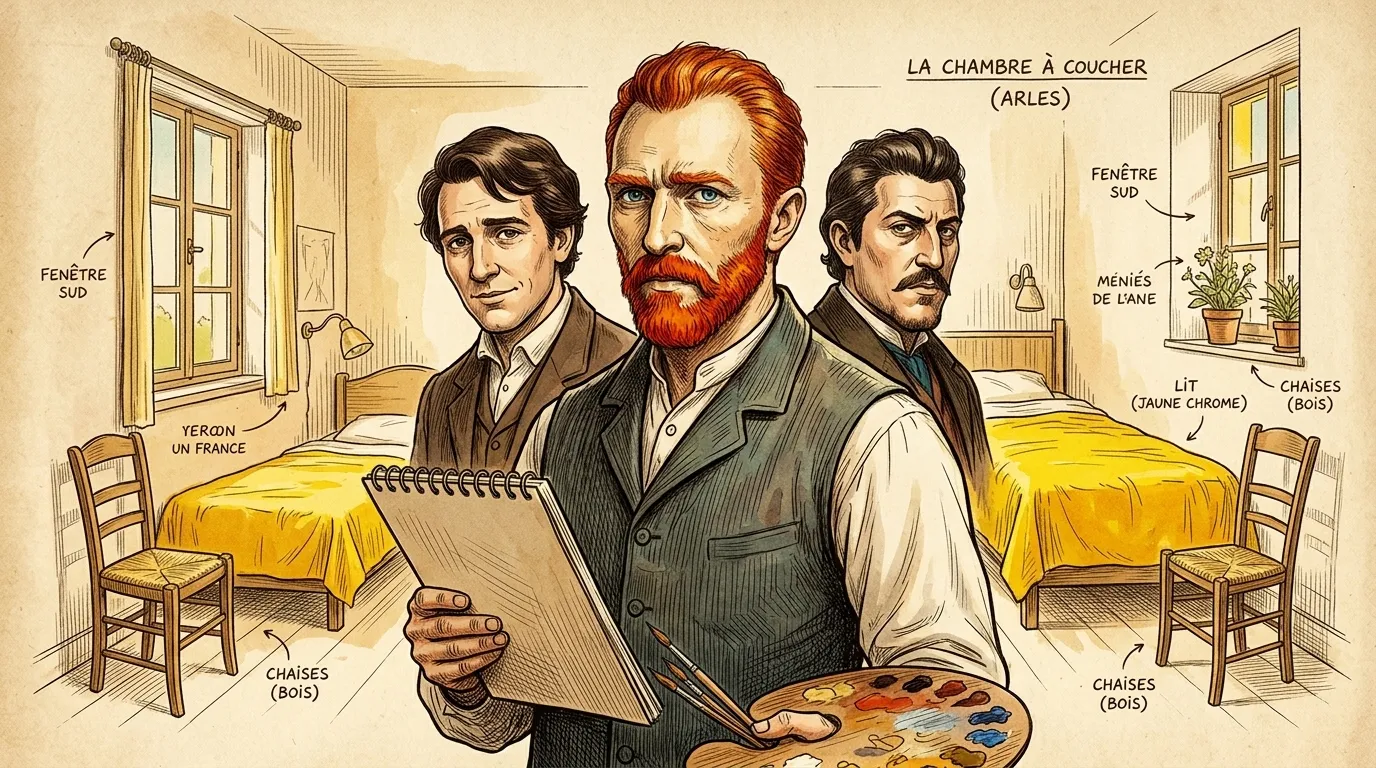
Page 1
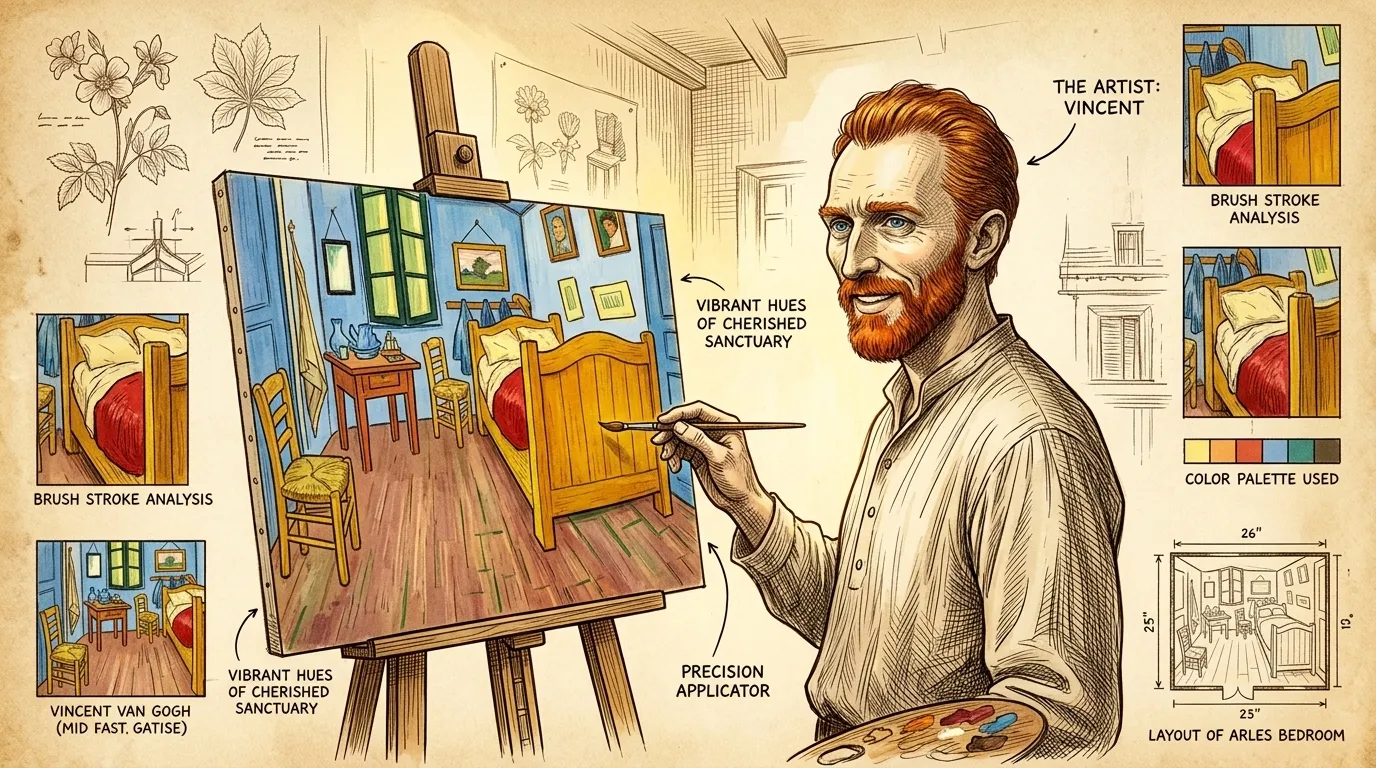
Vincent van Gogh stands before his painting, 'The Bedroom,' completed in Arles, France, in 1888. The painting, measuring 72 cm x 90 cm, is one of three versions, each reflecting his state of mind. It is currently housed at the Musée d'Orsay in Paris. The simplicity of the room belies the emotional complexity Van Gogh poured into every brushstroke.
"Van Gogh mutters to himself, 'A refuge, a sanctuary... a portrait of my very soul, laid bare on canvas.'"
Art Fact: The painting captures the artist's personal space, offering a glimpse into his psychological state. Van Gogh created three versions of the painting, each with subtle differences in color and detail.
Page 2
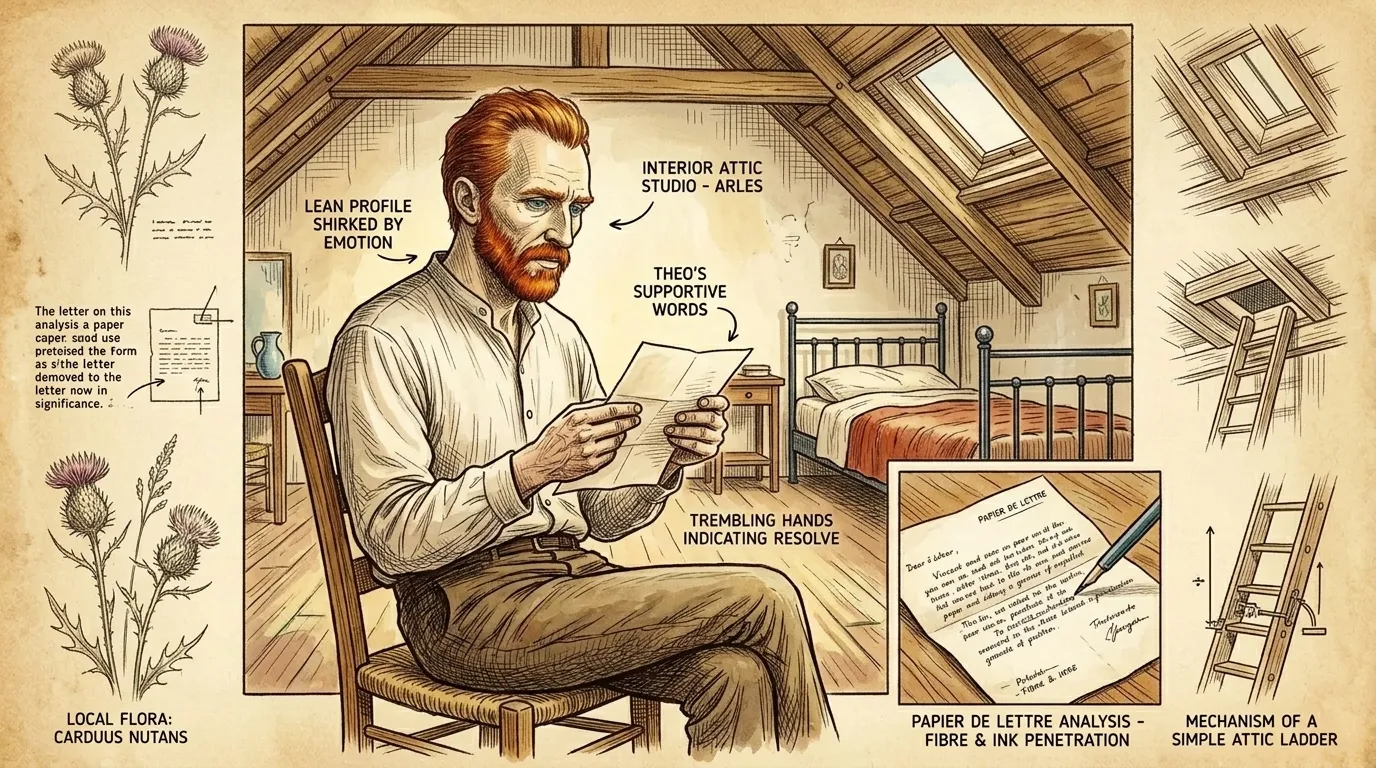
Vincent receives a letter from his brother Theo, his constant supporter and confidant. Theo's words offer encouragement and financial assistance, vital for Vincent's survival and artistic pursuits. He rereads the letter, finding new resolve in his brother's unwavering belief in him.
"Vincent reads aloud from the letter, his voice thick with emotion. 'Hold fast, brother. As Victor Hugo said, 'Even the darkest night will end and the sun will rise.''"
Art Fact: Theo van Gogh provided Vincent with financial and emotional support throughout his life. Their correspondence offers valuable insights into Vincent's thoughts, struggles, and artistic development.
Page 3
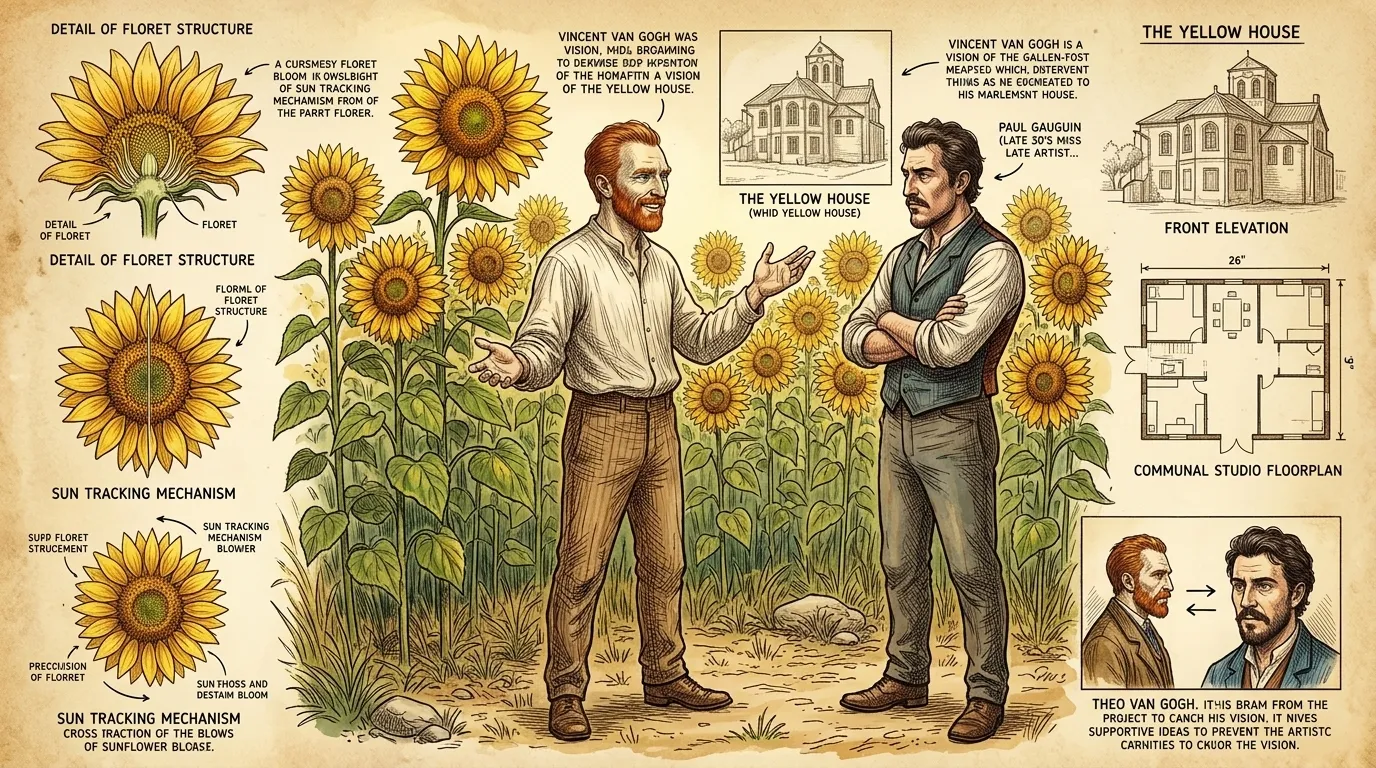
Van Gogh envisions 'The Yellow House' as an artist's haven, a communal space where he and other artists could live and work together. He excitedly shares his vision with fellow artist Paul Gauguin, hoping to create a vibrant artistic community. He believes this house will be a sanctuary, a place of collaboration and inspiration.
"Van Gogh passionately tells Gauguin, 'Imagine, Paul, a space where we can create without the distractions of the city! A place where the sunflowers bloom eternally, inspiring our work!'"
Art Fact: Van Gogh's dream of creating an artist's community in 'The Yellow House' was short-lived. His tumultuous relationship with Gauguin led to the dissolution of the project.
Page 4
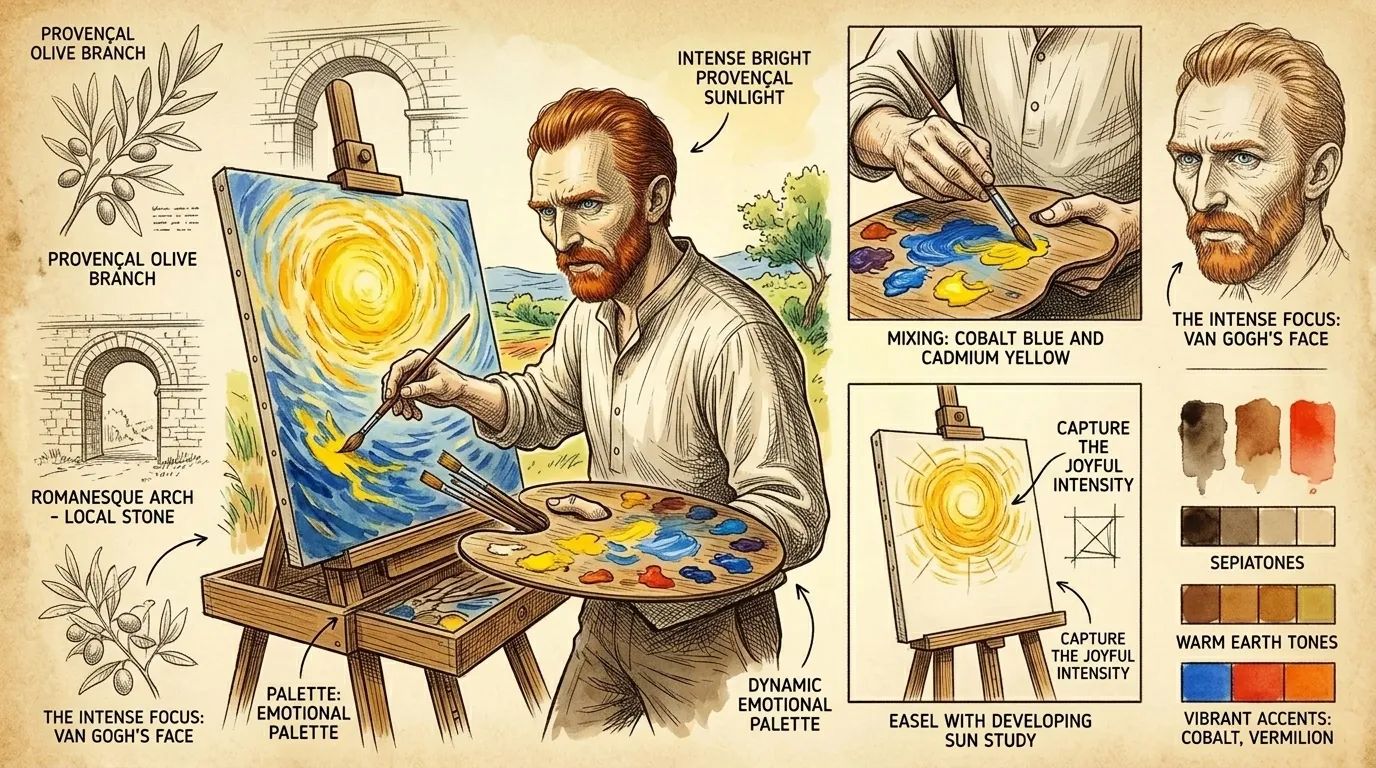
Inspired by the intense light of Arles, Van Gogh experiments with vibrant colors and bold brushstrokes. He seeks to capture the essence of the Provençal landscape, translating his emotional response to nature onto the canvas. The colors are meant to mimic the overwhelming feelings of the sun on his skin.
"Van Gogh exclaims, mixing paints on his palette, 'The sun here is unlike anything I've ever seen! It demands to be captured, to be felt, to be understood!'"
Art Fact: Van Gogh's use of color was deeply influenced by his emotional state. He believed that colors could convey emotions and psychological states.
Page 5
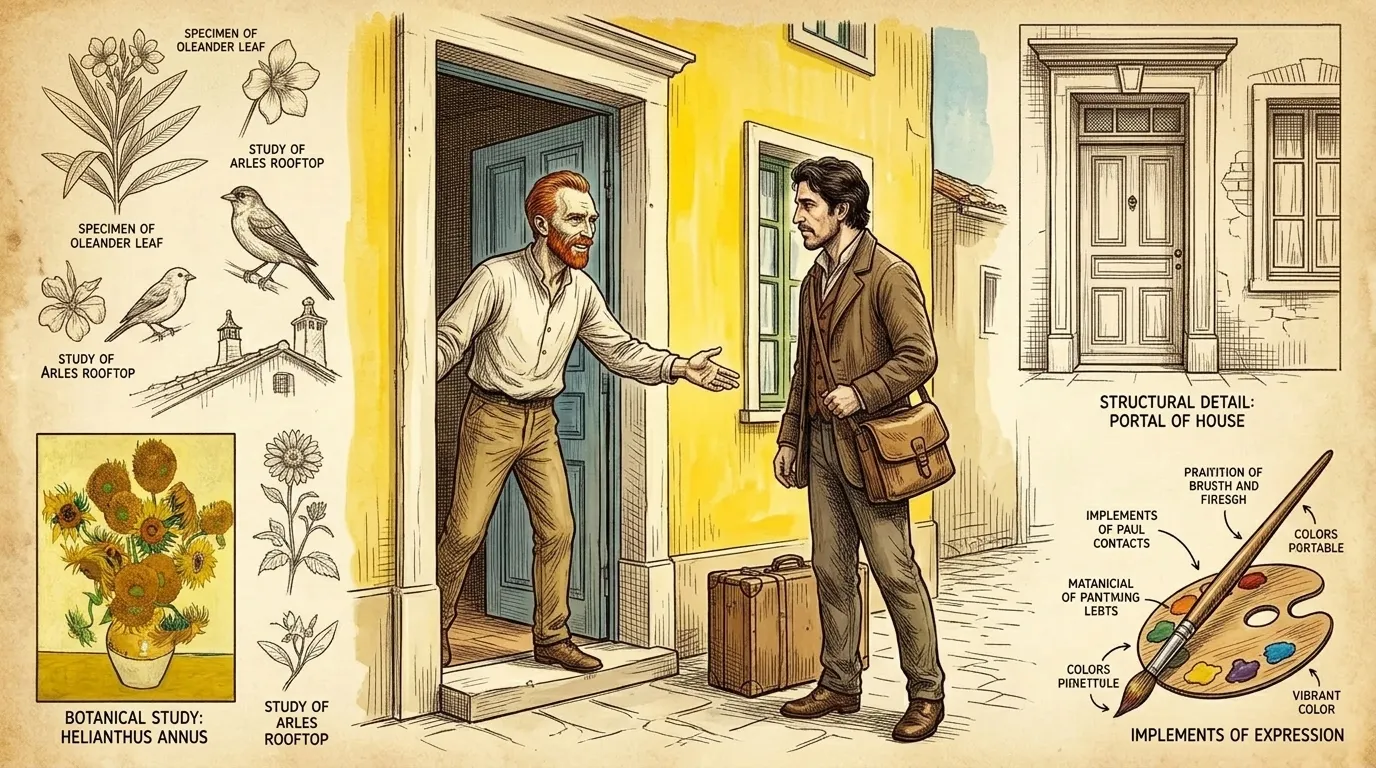
Paul Gauguin arrives in Arles, and Van Gogh eagerly anticipates their artistic collaboration. He hopes that Gauguin's presence will bring new perspectives and inspire his work. The two artists initially find common ground but quickly clash over artistic philosophies and personal habits. There is a great sense of apprehension and anticipation in the air.
"Van Gogh greets Gauguin warmly, saying, 'Welcome, Paul! I've prepared the guest room. I hope you'll find it simple yet comforting.'"
Art Fact: Gauguin's stay in Arles lasted only a few months, but it had a profound impact on both artists. Their relationship was marked by both collaboration and conflict.
Page 6
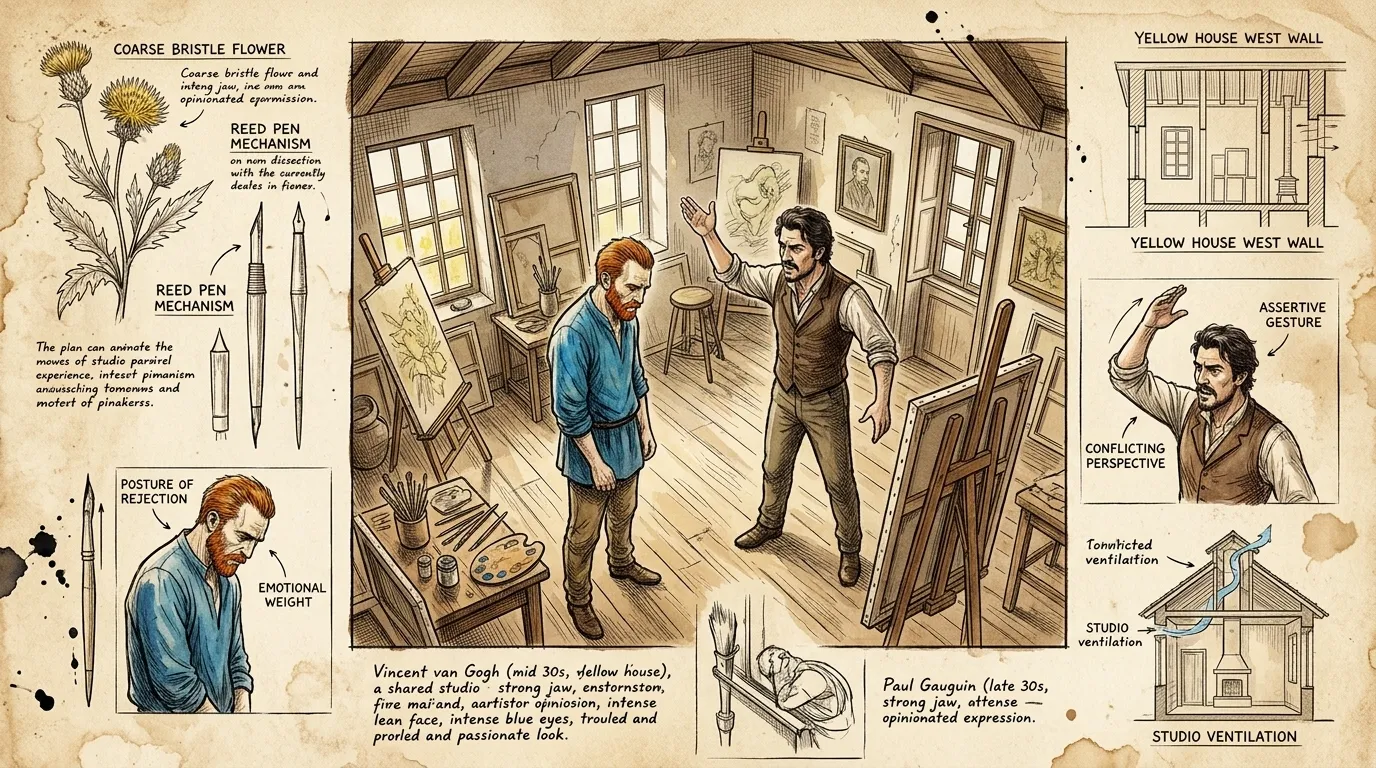
Tensions rise between Van Gogh and Gauguin, leading to heated arguments and a growing sense of unease. Their artistic differences and conflicting personalities create a strained atmosphere in 'The Yellow House.' Vincent feels the weight of Gauguin's disapproval, and his mental state deteriorates.
"Gauguin retorts to Van Gogh, his voice sharp, 'Your style is too impulsive, too emotional! Art requires discipline, structure! As Leonardo da Vinci said, 'Art is never finished, only abandoned.''"
Art Fact: The clash between Van Gogh and Gauguin's artistic philosophies and personalities ultimately led to the dissolution of their artist's community.
Page 7
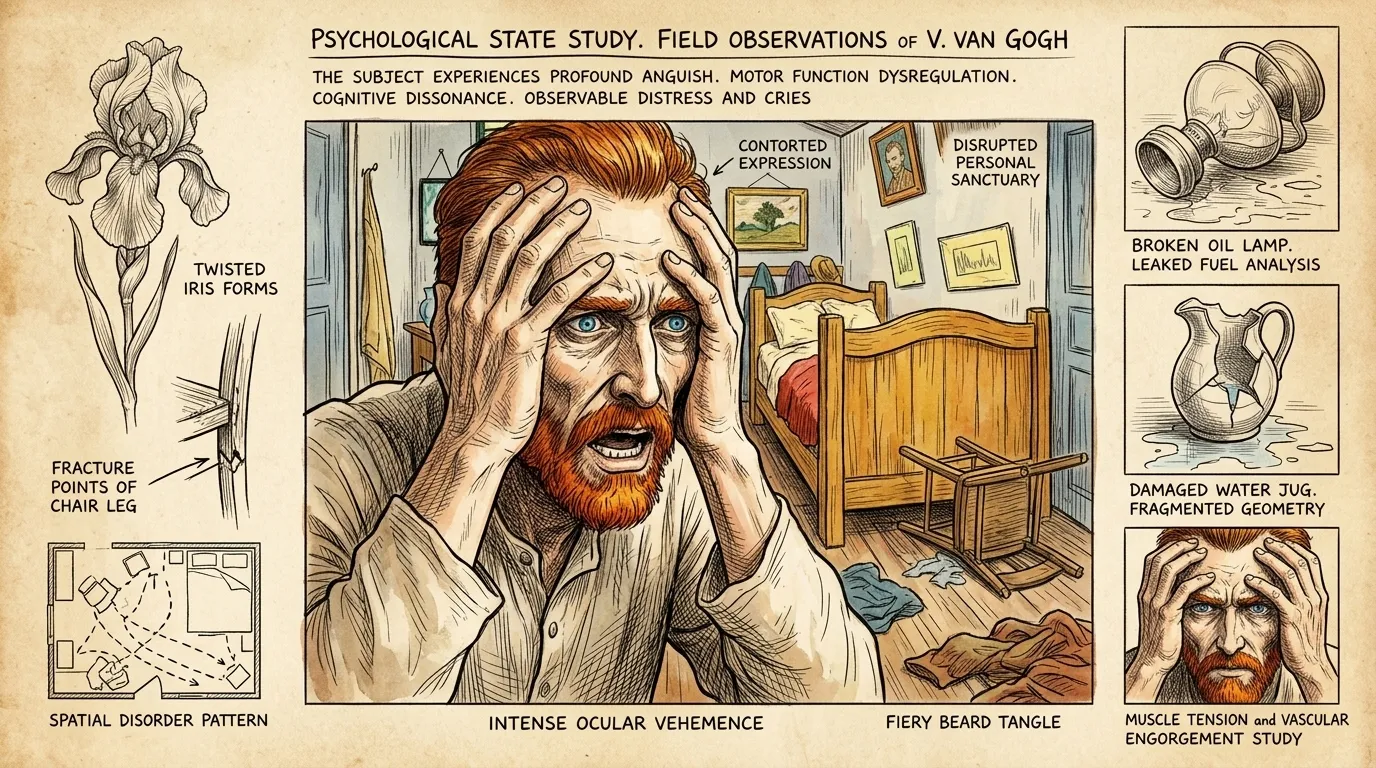
In a fit of despair and mental anguish, Van Gogh inflicts a self-harm. The incident marks a turning point in his life, leading to his admission to an asylum. The peace of the bedroom has been disrupted. The silence is deafening.
"Vincent cries out, 'I can't... I can't bear it anymore!'"
Art Fact: The aftermath of the ear-cutting incident marks a significant crisis in Van Gogh's life and artistic career.
Page 8
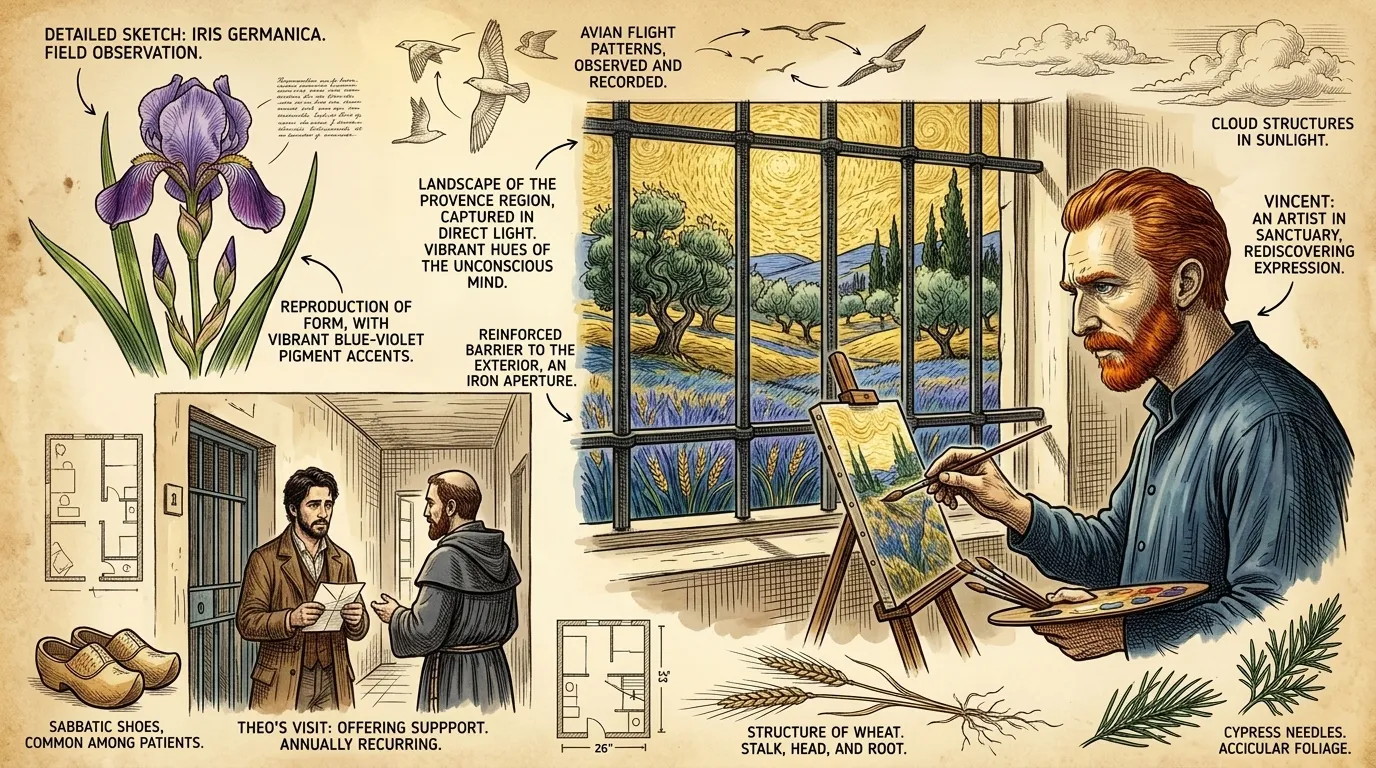
Confined to the asylum at Saint-Paul-de-Mausole, Van Gogh seeks solace in painting. He finds inspiration in the surrounding landscape, capturing the beauty and tranquility of nature despite his inner turmoil. He creates some of his most iconic works during this period.
"Van Gogh sighs, looking out the asylum window, 'Even in this place, there is beauty to be found. As Dostoyevsky once wrote, 'Beauty will save the world.''"
Art Fact: Despite his mental illness, Van Gogh continued to produce a prodigious amount of work during his time in the asylum.
Page 9
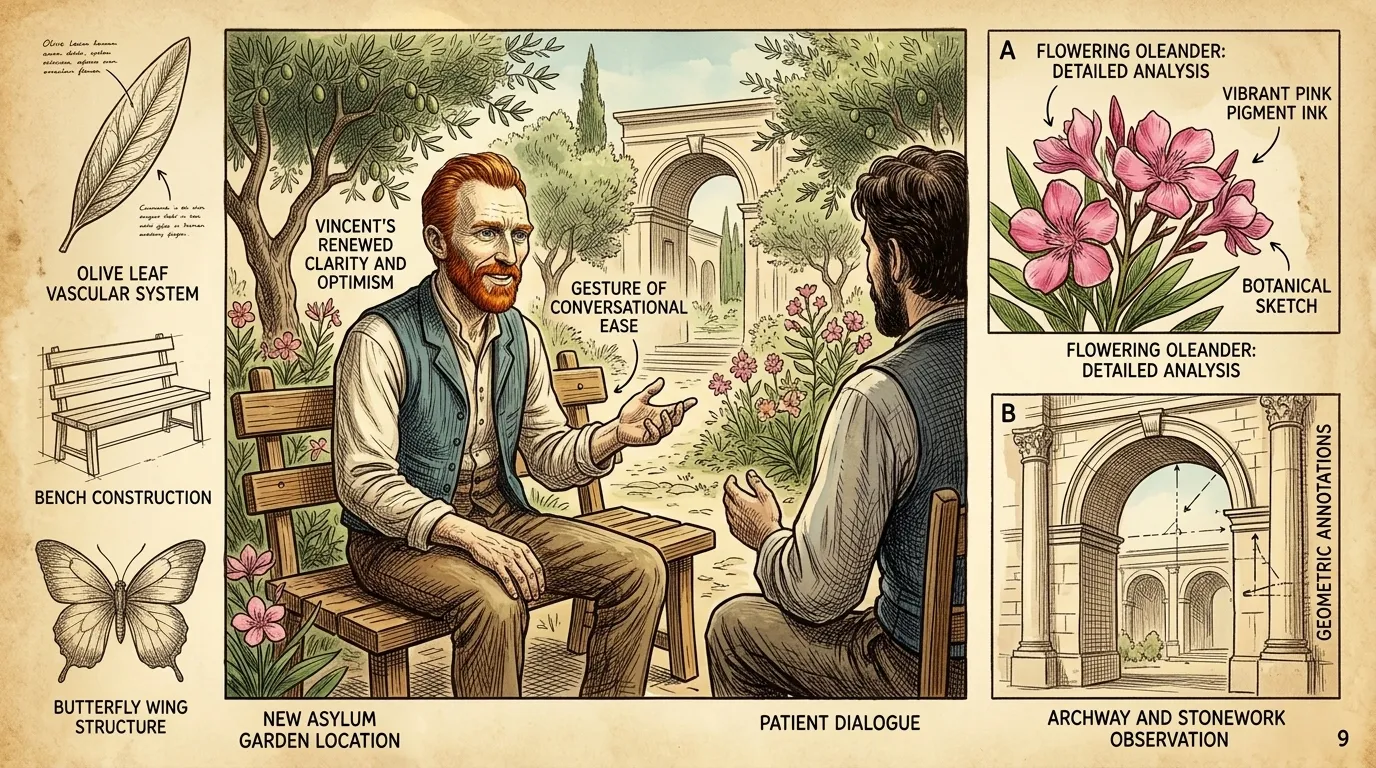
Though Van Gogh spends much of his time within the walls of the asylum, he begins to feel a return to sanity. He writes letters detailing the changes he feels occurring inside his mind and looks forward to a time when he can rejoin Theo and his friends.
"Van Gogh comments to his fellow patient, 'I feel like I'm getting better every day. Soon, I'll be able to rejoin my brother and paint to my heart's content."
Art Fact: Van Gogh's time at the asylum was spent partially in reflection and meditation, allowing him to come to terms with his emotional turmoil and express himself with his work.
Page 10
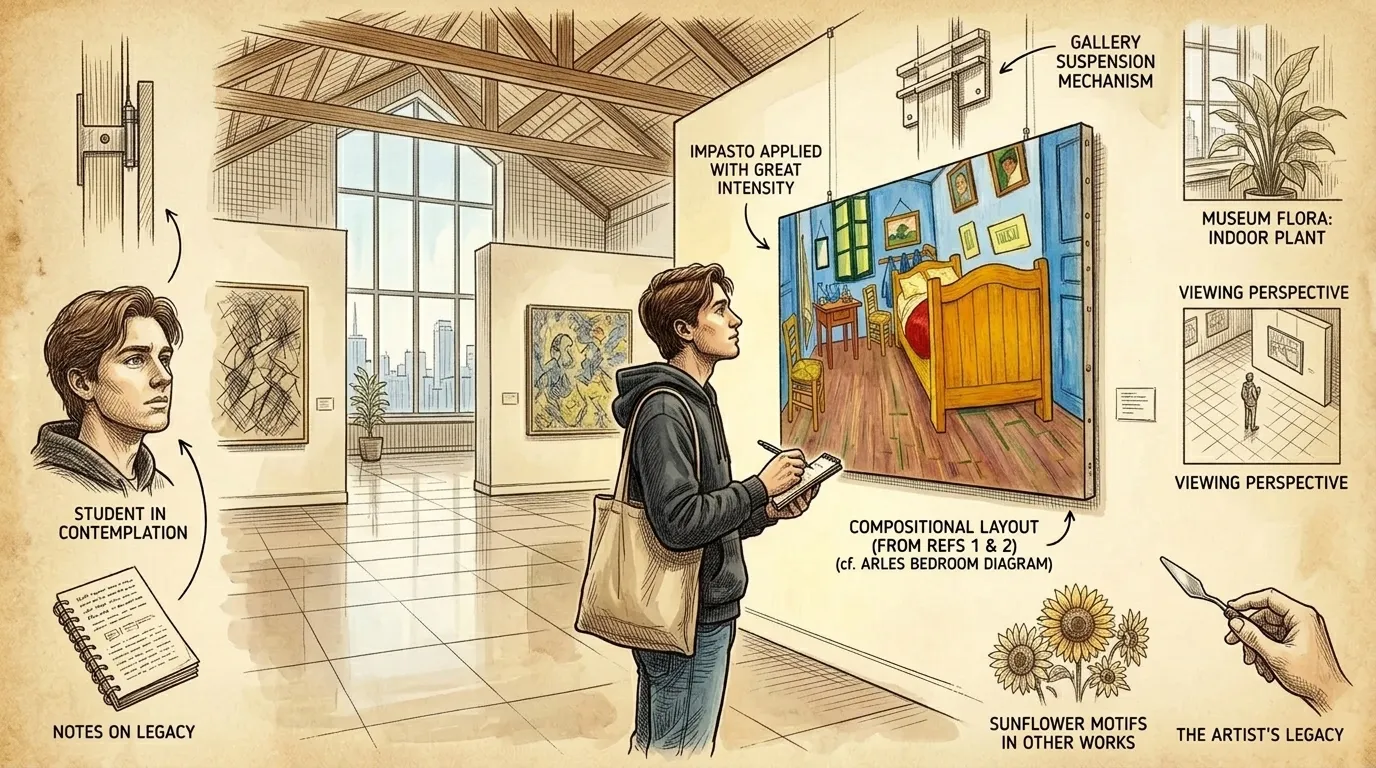
Van Gogh's 'The Bedroom' endures as an iconic image, a testament to the artist's vision and emotional depth. His influence extends to countless artists and art lovers, inspiring generations to see the world with fresh eyes. His legacy is a testament to the power of art to transcend personal struggles and connect with the human spirit. Van Gogh's art survives because it expresses the inexpressible. It is an image of the human condition.
"An art student says, 'Van Gogh showed us that even the simplest things can hold profound beauty and emotional weight.'"
Art Fact: Van Gogh's 'The Bedroom' is now one of the most recognizable and beloved paintings in the world, housed in the Musée d'Orsay in Paris.
About this story
- Location: France
- Audience: general readers
Questions and answers
Questions and answers about The Bedroom by Vincent van Gogh (Arles, France — 1888)
Read Wonder Arts on your phone
Wonder Arts is available on Android. Get Wonder Arts on Google Play.
More Wonder Arts stories
- The Birth of the Renaissance by Florentine artists (Florence, Italy — c. 1400)
- The Birth of Tragedy by Anselm Feuerbach (Germany — 1870)
- The Birth of Venus by William-Adolphe Bouguereau (France — 1879)
- The Burghers of Calais by Auguste Rodin (Calais, France — 1889)
- The Card Players by Paul Cézanne (France — 1895)
- The Colosseum (Rome, Italy — 80 AD)