The Card Players by Paul Cézanne (France — 1895)
The Card Players by Paul Cézanne (France — 1895) — an illustrated arts story, set in France. 10 illustrated pages, free to read on Wonder Arts.
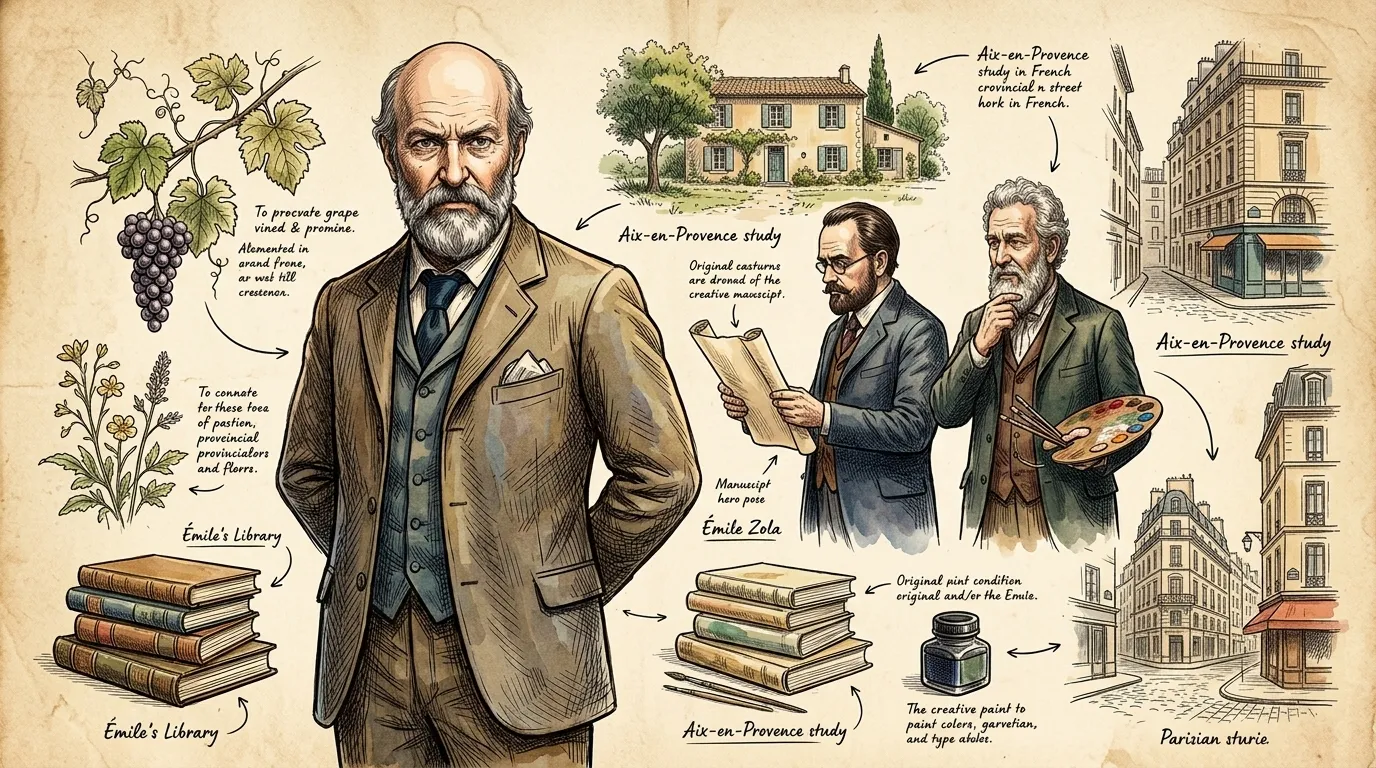
Page 1
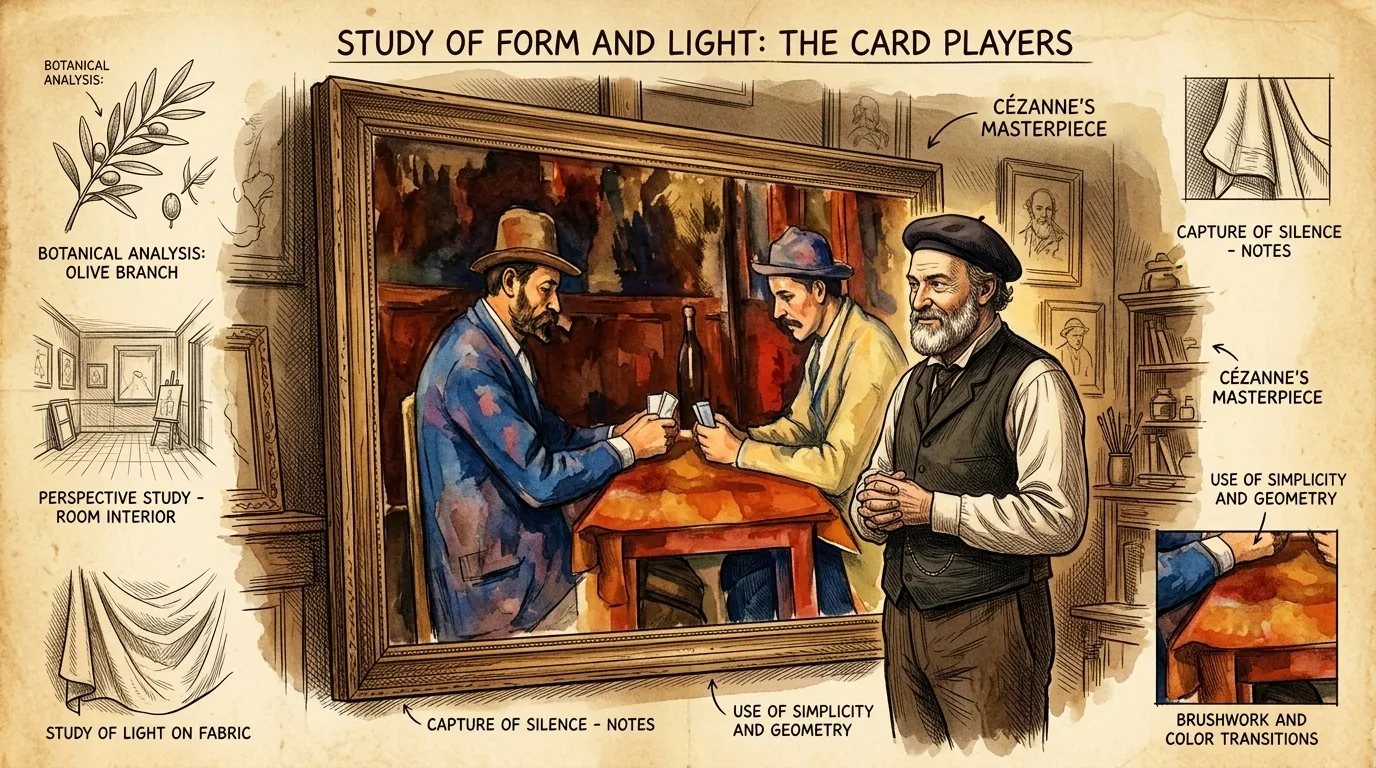
In Aix-en-Provence, 1895, Paul Cézanne stood before 'The Card Players,' a culmination of years refining form and color. Measuring roughly 47 x 56 inches, this painting is one of five in the series, each exploring the quiet intensity of men absorbed in their game. The stark simplicity belies its immense value; one version was sold privately in 2011 for over 250 million, making it one of the most expensive paintings ever.
"Cézanne murmured, regarding the canvas, 'Is this truly the silence I've sought to capture?'"
Art Fact: The Card Players series explores the relationship between figures and objects, pushing the boundaries of perspective.
Page 2
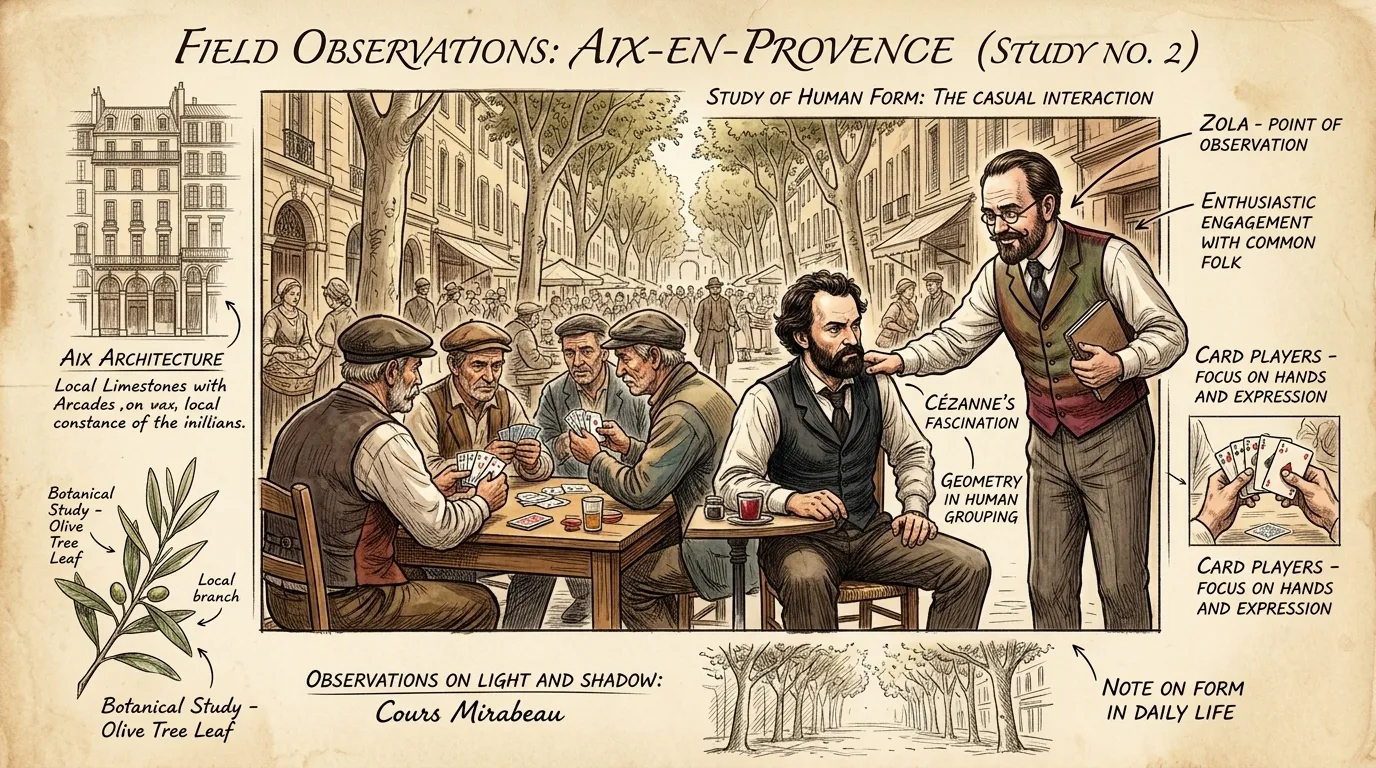
Young Paul often wandered the Cours Mirabeau in Aix-en-Provence, observing the locals, their posture, and the light on their faces. His childhood friend, Émile Zola, remarked, pointing to the card players at a café, 'There you have your subjects, Paul! The common man, the silent narratives of everyday life.' The seed was planted.
"Zola nudged Cézanne, 'Look at them, Paul, lost in their world. There's a story in every face.' Cézanne squinted, 'It's more than a story, Émile. It's the geometry of existence.'"
Art Fact: Cézanne's hometown provided endless inspiration for his art, grounding him in the realities of provincial life.
Page 3
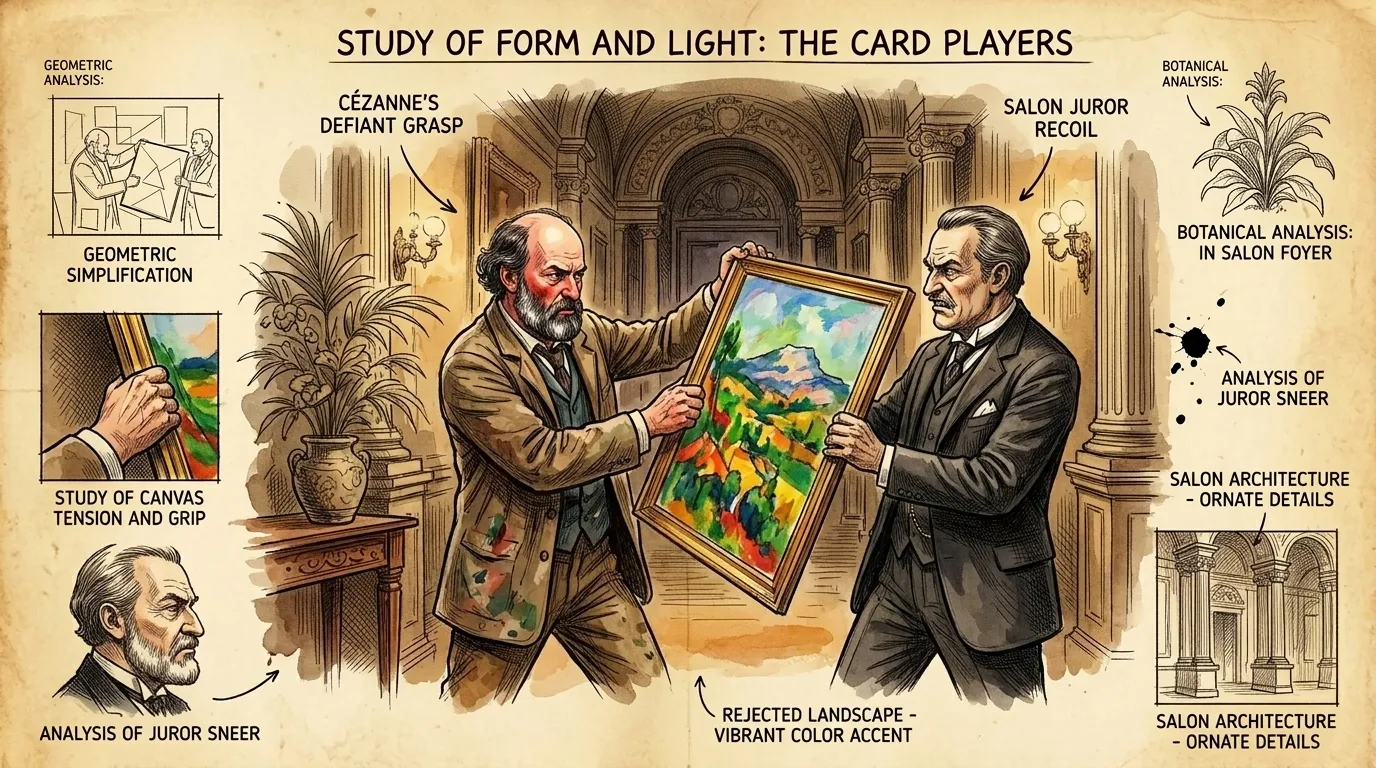
Cézanne's early submissions to the Paris Salon were consistently rejected. Humiliated, he raged, 'They want pretty pictures, not truth! They refuse to see the world as it is!' He almost abandoned painting, but his determination, fueled by this rejection, pushed him to forge his own path. 'As Nietzsche said, 'That which does not kill us makes us stronger,'' Cézanne muttered, resolving to persevere. 'I will paint my truth, no matter the cost.'
"The Salon juror scoffed, handing back Cézanne's canvas. 'This is an insult to art! We want beauty, not these crude daubs.' Cézanne grabbed the canvas, face flushed. 'You call this beauty? It's lies! I show the real!'"
Art Fact: Rejection fueled Cézanne's resolve to break from academic conventions and pursue his unique artistic vision.
Page 4
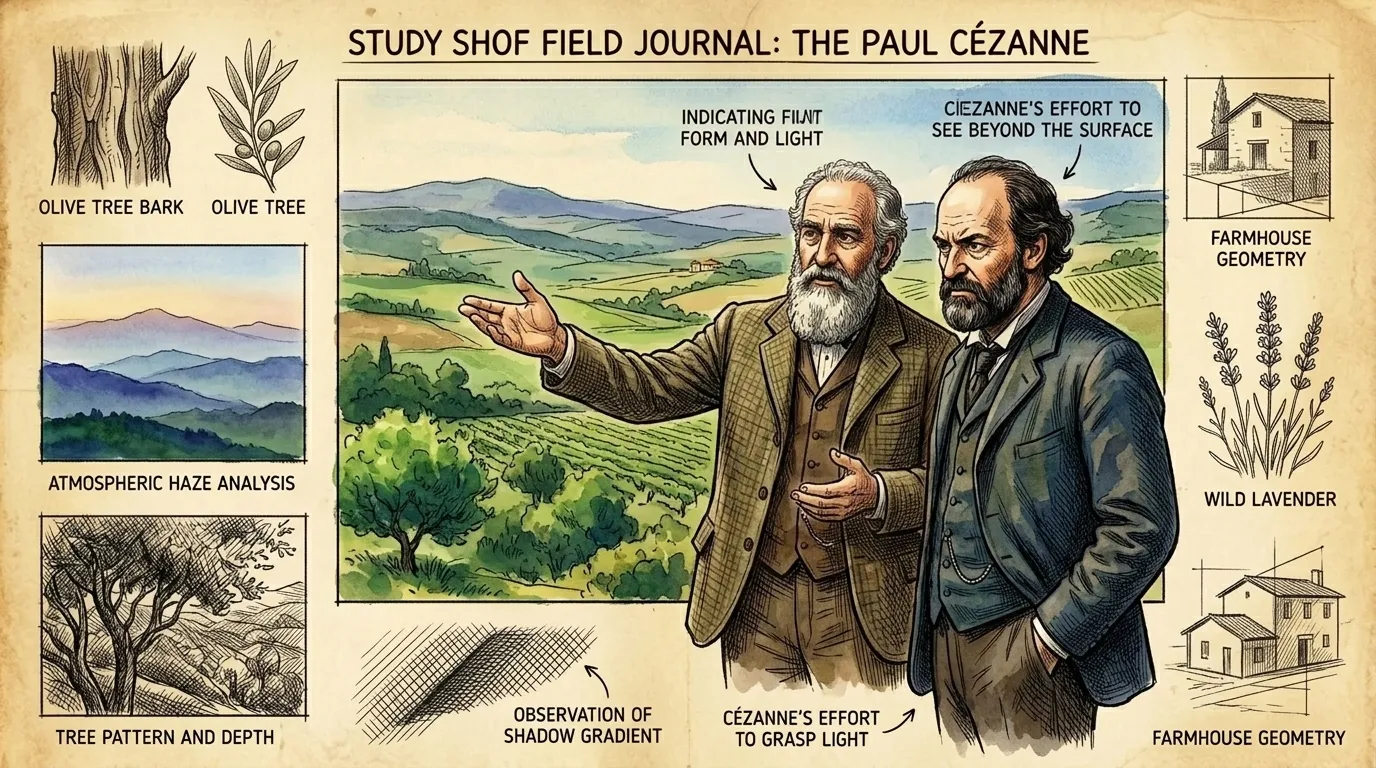
Camille Pissarro, an established Impressionist painter, became Cézanne's mentor, teaching him the importance of observation and the nuances of light. 'Nature must be consulted,' Pissarro advised, 'but consulted with respect. It is not about copying; it's about finding the underlying harmony.' This guidance liberated Cézanne, allowing him to explore form and color with newfound confidence.
"Pissarro pointed to the landscape, 'Look, Paul, not at what you think you see, but at the interplay of light and shadow. Feel the shapes.' Cézanne furrowed his brow, 'It's a struggle, Camille. To see beyond the surface.'"
Art Fact: Pissarro's mentorship was crucial in Cézanne's artistic development, guiding him towards a deeper understanding of light, form, and color.
Page 5
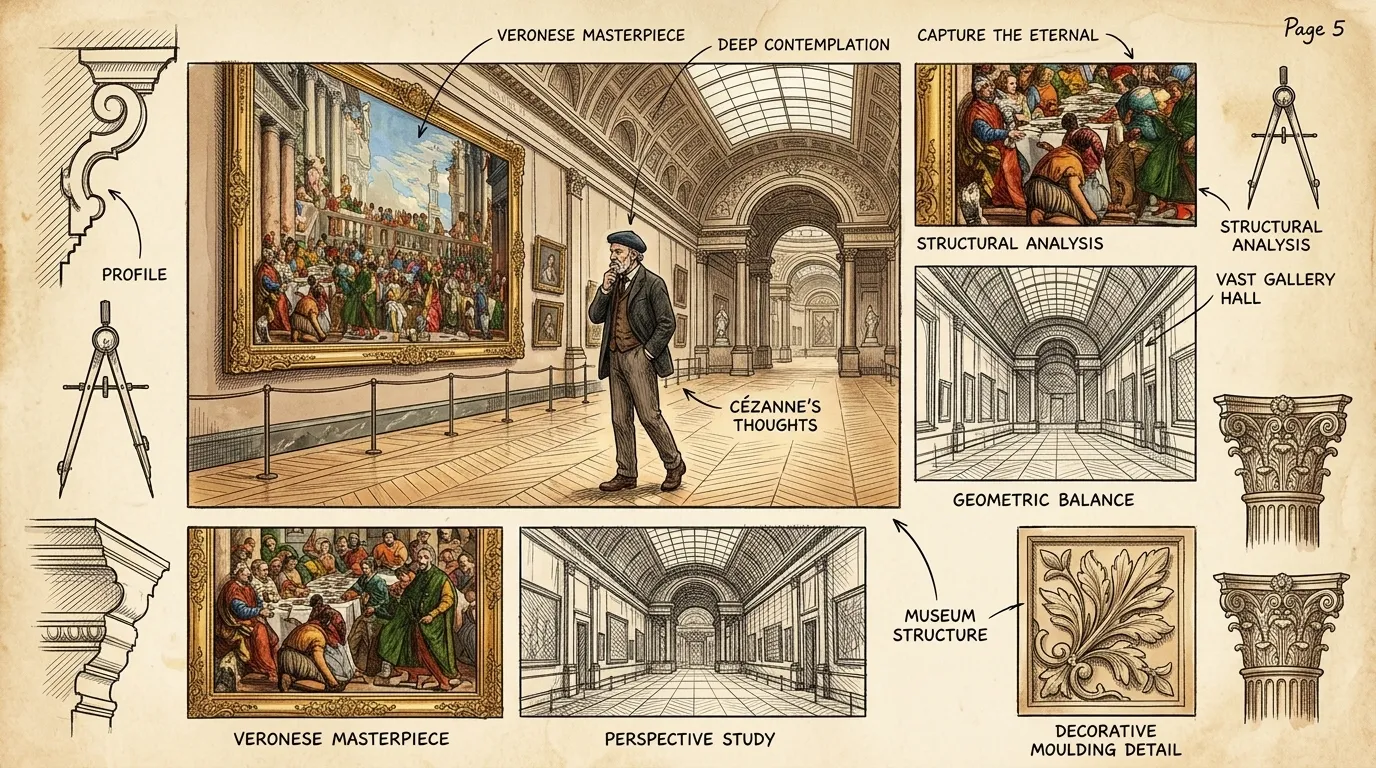
Cézanne meticulously studied the Old Masters, particularly the Venetians, in the Louvre. He sought to combine their classical structure with his modern sensibilities. Delacroix's vibrant colors and powerful compositions captivated him. He said to himself, 'I want to make of Impressionism something solid and durable like the art in the museums, but from nature!'
"Cézanne paced before a painting by Veronese. 'The structure...the balance! How did they achieve such solidity?' He paused thoughtfully, 'It's not enough to just capture the moment. One must capture the eternal within it.'"
Art Fact: Cézanne found inspiration in the Old Masters, seeking to synthesize their classical structure with the spontaneity of Impressionism.
Page 6
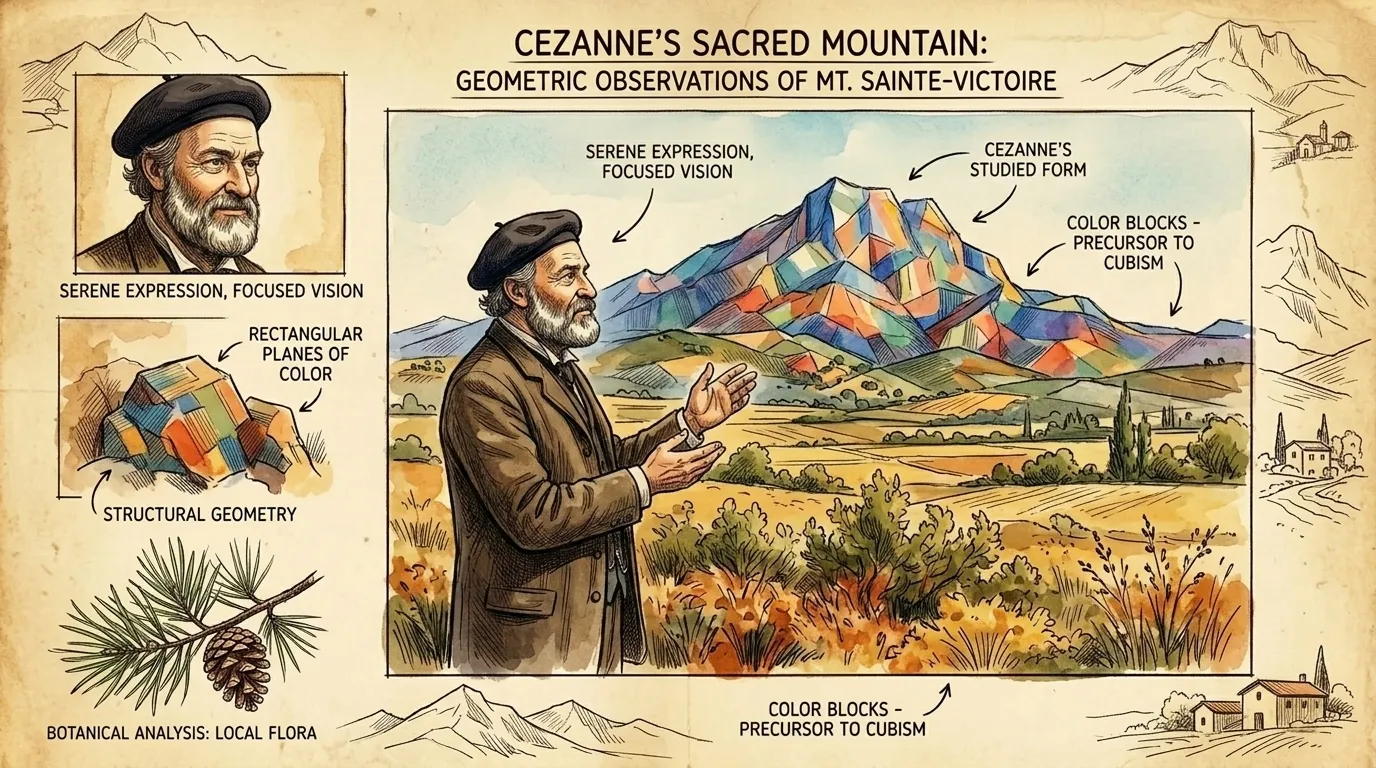
Increasingly, Cézanne retreated to his family estate near Aix-en-Provence, finding solace and inspiration in the landscape, especially Mont Sainte-Victoire. Here, he developed his distinctive style, simplifying forms and emphasizing geometric shapes. He once remarked, 'When color has its richness, form has its fullness.' The mountain became his muse, his constant companion, always present at the edges of his vision.
"Looking at Mont Sainte-Victoire, Cézanne said to himself, 'There you are, my steadfast friend. Your angles, your colors...they never betray me.'"
Art Fact: Mont Sainte-Victoire became Cézanne's iconic subject, a source of endless artistic exploration and personal reflection.
Page 7
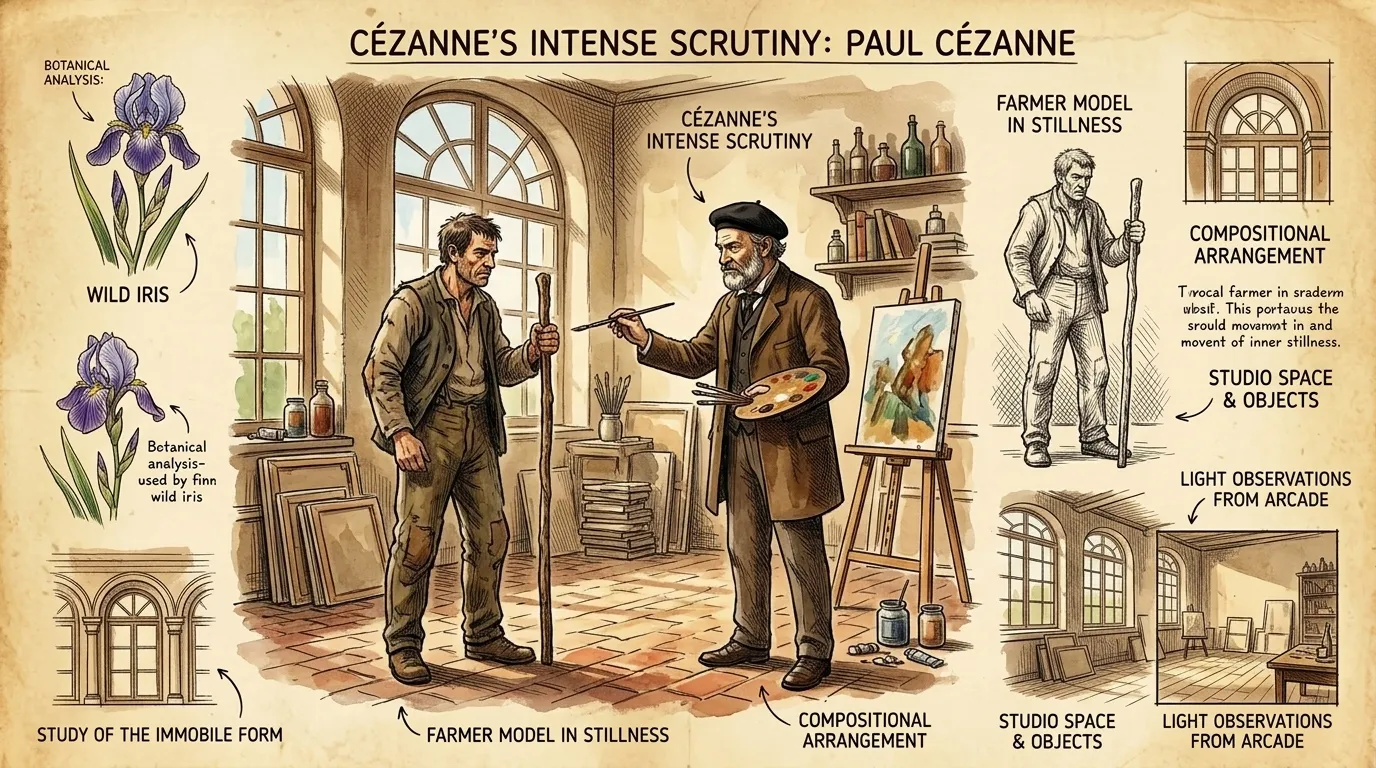
The models posed for days, weeks, with very rare small breaks so that Cézanne could capture the essence of their being. Cézanne demanded absolute stillness, seeking to capture not just their likeness but their inner stillness. One model, a local farmer, confided, 'He sees right through you, like you're made of glass.'
"Cézanne, staring intently, 'Hold still, my friend. It is like Franklin once said, 'Lost time is never found again''. You hold still. Can't you hold your pose?'"
Art Fact: The models posed for days, weeks, with very rare small breaks so that Cézanne could capture the essence of their being
Page 8
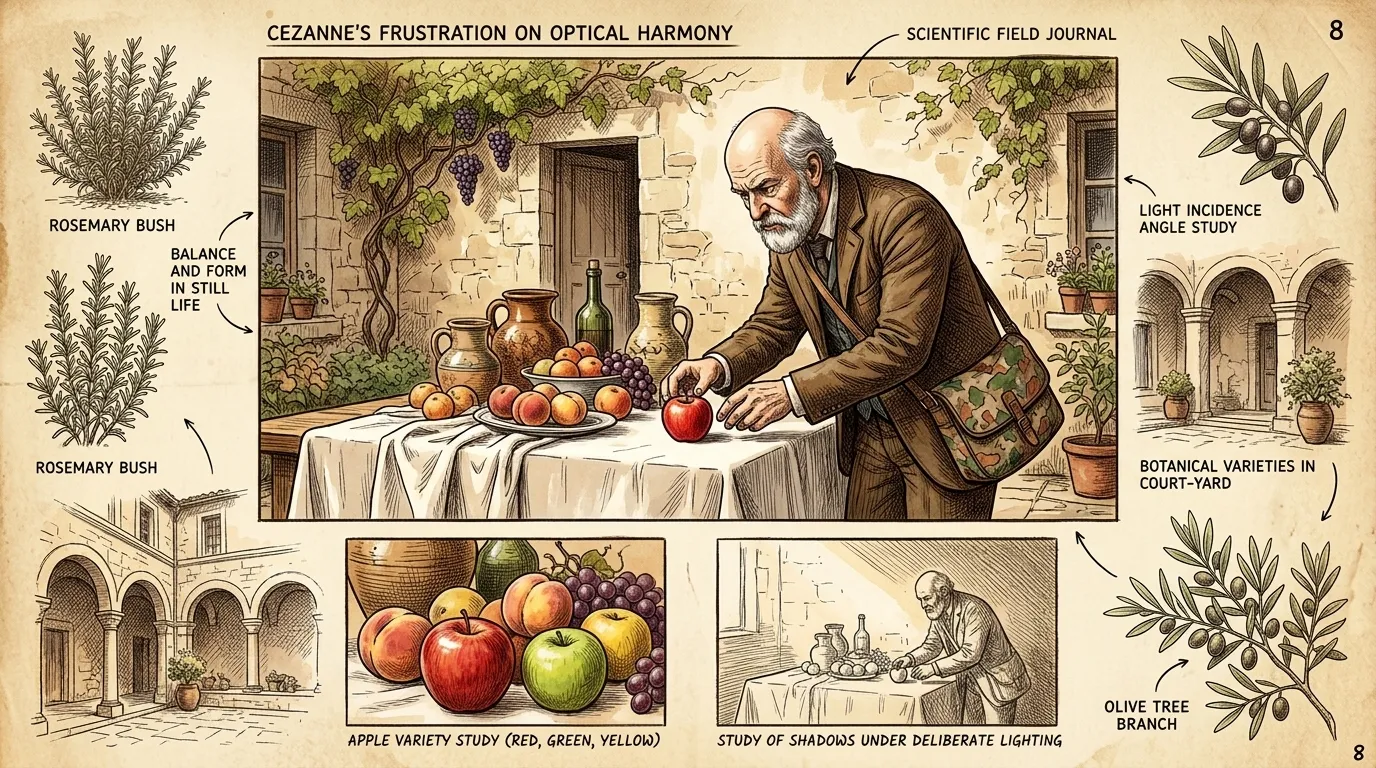
Cézanne would spend hours adjusting the arrangement of objects in his still life, searching for perfect balance and harmony. The apples, the oranges, the tablecloth, each element carefully considered. He once said, 'Painting from nature is not copying the object; it is realizing one's sensations.' This constant refinement was key to his unique approach.
"Cézanne mutters, adjusting an apple, 'No, not quite. The angle...the light...it must be perfect.'"
Art Fact: Cézanne's dedication to refining the composition and color harmonies in his still lifes led to groundbreaking innovations in modern art.
Page 9
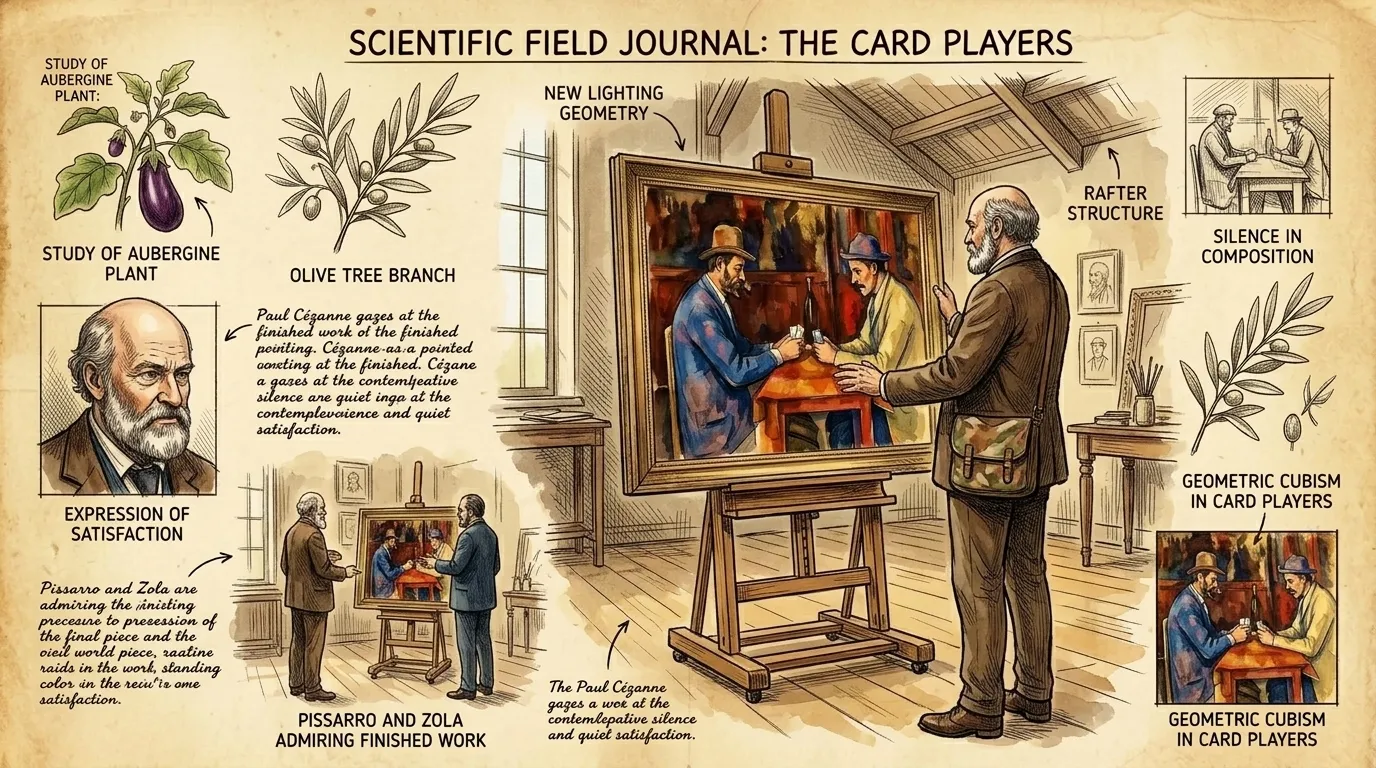
In 'The Card Players', Cézanne distilled years of artistic exploration into a single, powerful image. The men are rendered with a monumental simplicity, their faces masks of concentration. The limited palette and geometric forms create a sense of timelessness. It's not just a card game; it's a meditation on human nature.
"Cézanne said, finishing the painting, 'Finished. Is this silence, distilled.'"
Art Fact: The Card Players series is considered a high point in Cézanne's career, demonstrating his mastery of form, color, and composition.
Page 10
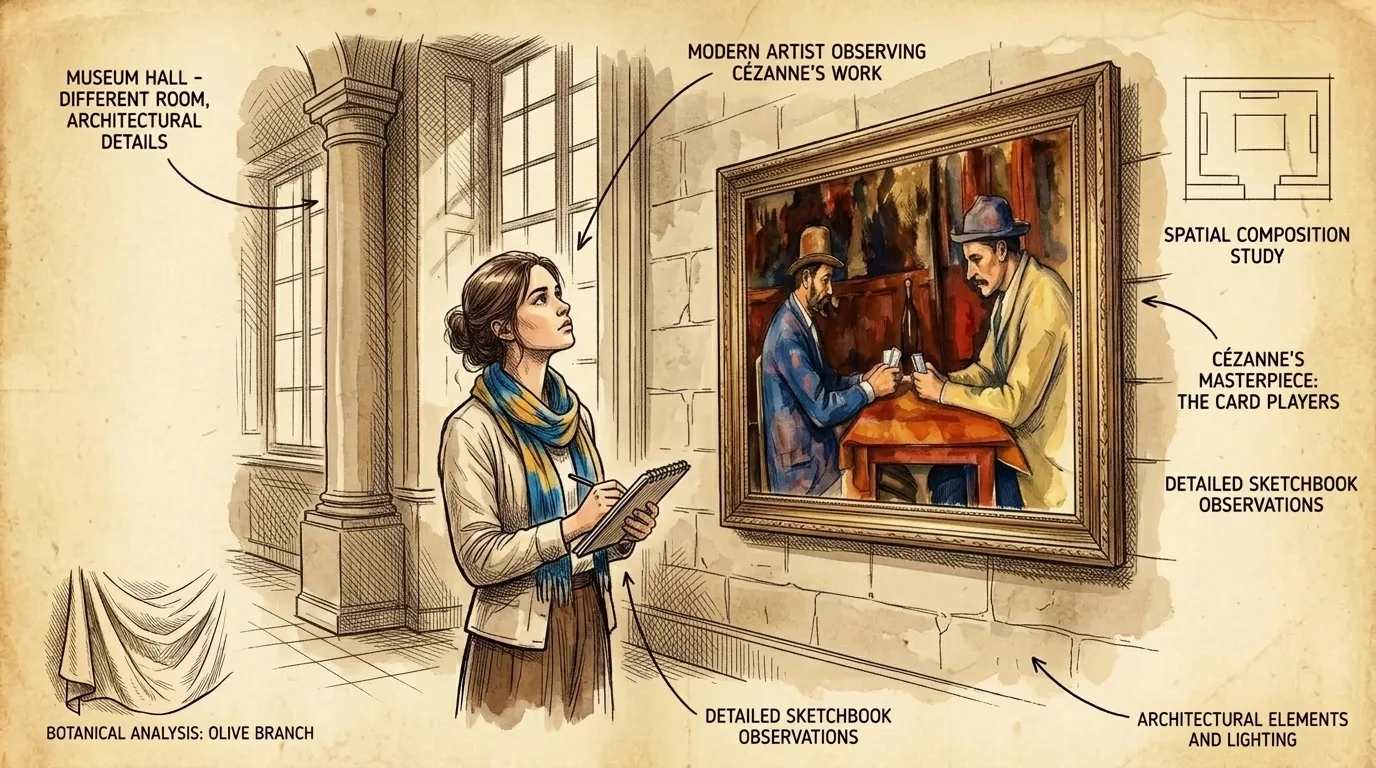
Today, 'The Card Players' hangs in the Musée d'Orsay, a testament to Cézanne's lasting influence. His rigorous approach to form and color paved the way for modern art. His vision of simplifying nature into its fundamental elements continues to inspire artists. The card players still play, the mountain still stands, and Cézanne's quest for 'truth in painting' remains forever.
"A modern artist said, 'Cézanne taught us to see the world anew, to find the underlying structure in everything.'"
Art Fact: Cézanne's radical approach to form and color had a profound influence on the development of modern art, inspiring generations of artists.
About this story
- Location: France
- Audience: general readers
Questions and answers
Questions and answers about The Card Players by Paul Cézanne (France — 1895)
Read Wonder Arts on your phone
Wonder Arts is available on Android. Get Wonder Arts on Google Play.
More Wonder Arts stories
- The Colosseum (Rome, Italy — 80 AD)
- The Concert by Johannes Vermeer (Boston, USA — 1664)
- The Course of Empire by Thomas Cole (USA — 1836)
- The Creation of Adam by Michelangelo (Vatican City, Rome — 1512)
- The Dance Class by Edgar Degas (Paris, France — 1874)
- The Death of Sardanapalus by Eugène Delacroix (Paris, France — 1827)