The Concert by Johannes Vermeer (Boston, USA — 1664)
The Concert by Johannes Vermeer (Boston, USA — 1664) — an illustrated arts story, set in United States. 10 illustrated pages, free to read on Wonder Arts.
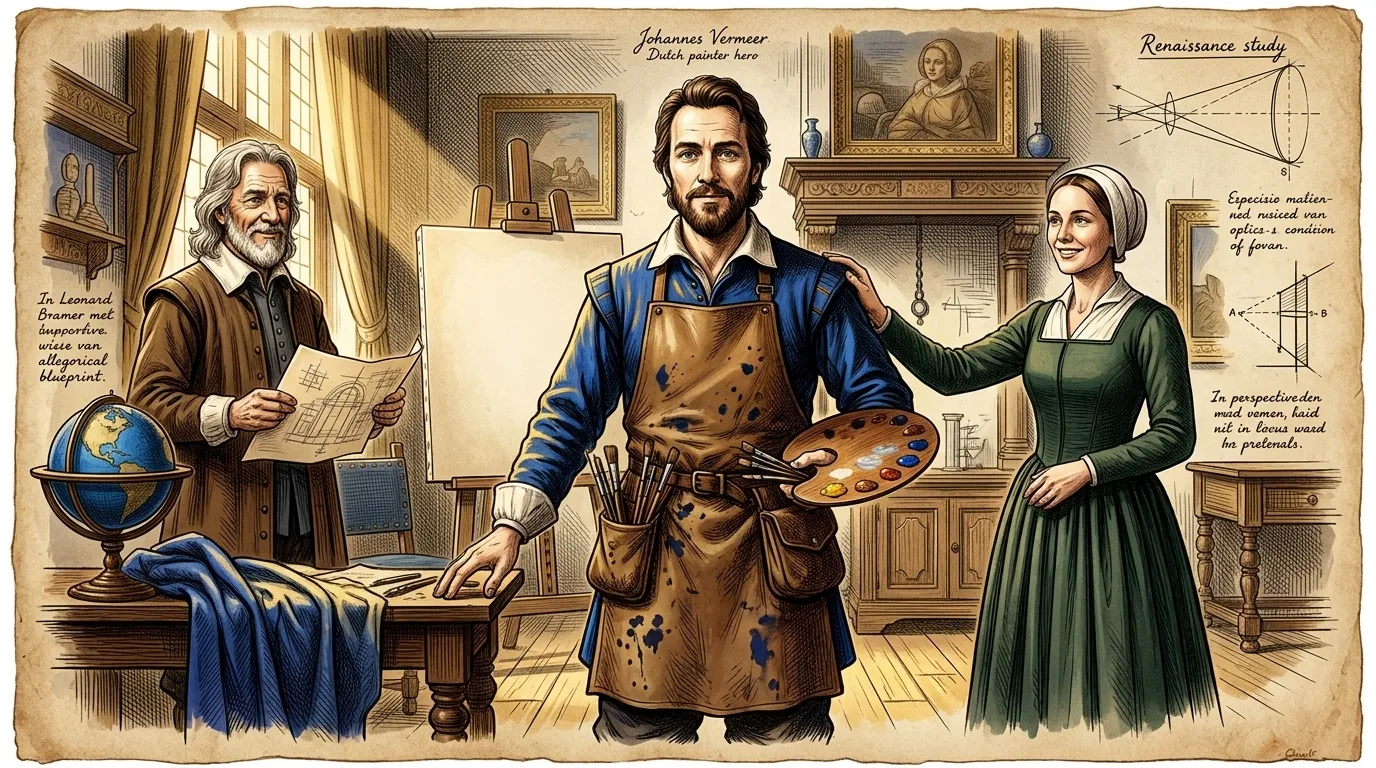
Page 1
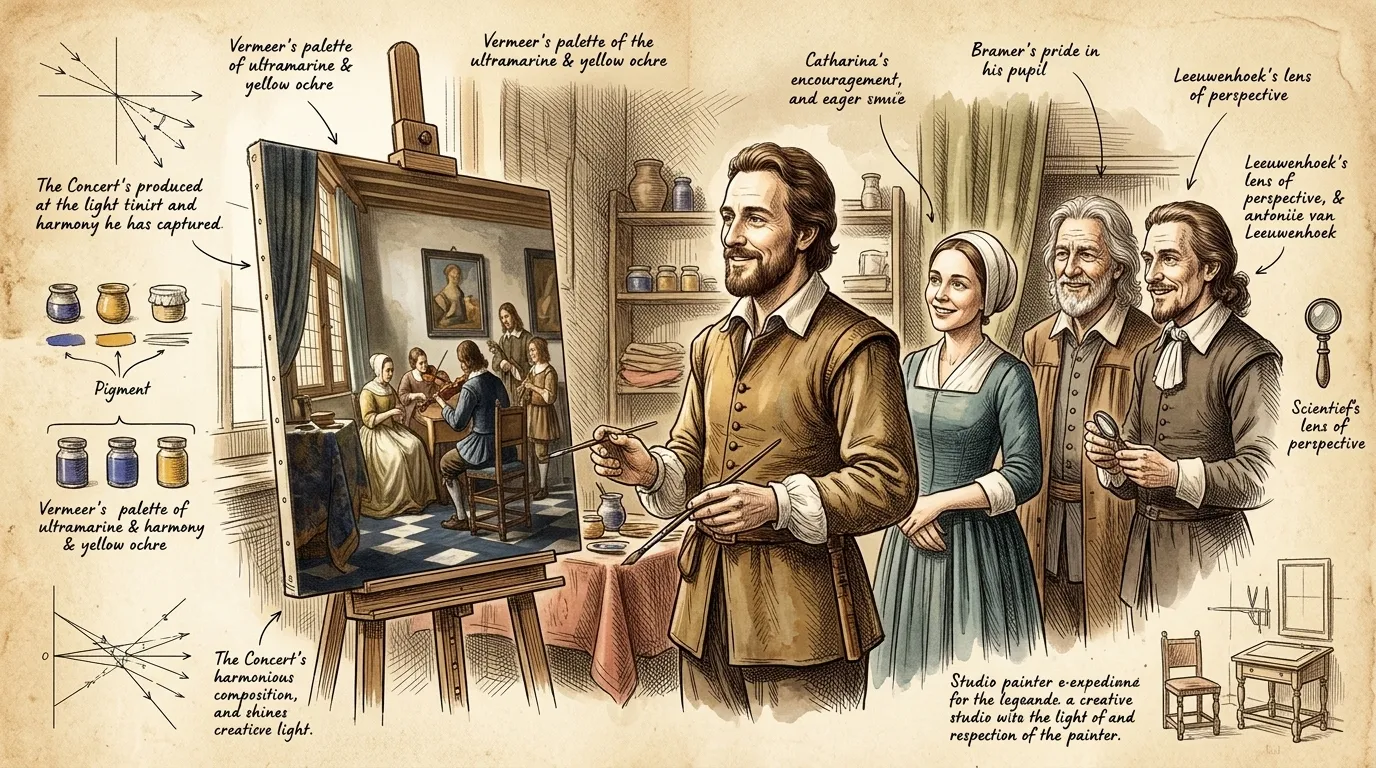
Johannes Vermeer stands before his completed masterpiece, 'The Concert,' painted around 1664. The painting, a serene interior scene, now resides at the Isabella Stewart Gardner Museum in Boston. Its dimensions are a modest 72.5 by 64.7 centimeters, yet its impact is immeasurable. What remains most haunting is its absence—stolen in 1990, it remains one of the most valuable and still-missing artworks in the world.
"Vermeer whispers, his voice barely audible, 'Perfection is achieved, not when there is nothing more to add, but when there is nothing left to take away.' I believe Antoine de Saint-Exupéry would be proud."
Art Fact: The Concert, painted circa 1664, is valued at over 200 million and remains the most valuable stolen painting in the world.
Page 2

Young Johannes, barely a teenager, explores the hidden passages beneath Delft. Legend had it, a network of tunnels lay forgotten, remnants of ancient fortifications. He believed every shadow held a secret, every stone a story.
"A voice echoed through the chambers. 'The only true wisdom is in knowing you know nothing,' a gruff voice echoed. It was his teacher, Leonard Bramer. 'Socrates knew the truth, kiddo, and you gotta know it too!'"
Art Fact: Delft, a city of canals and artists, held many secrets beneath its cobbled streets.
Page 3
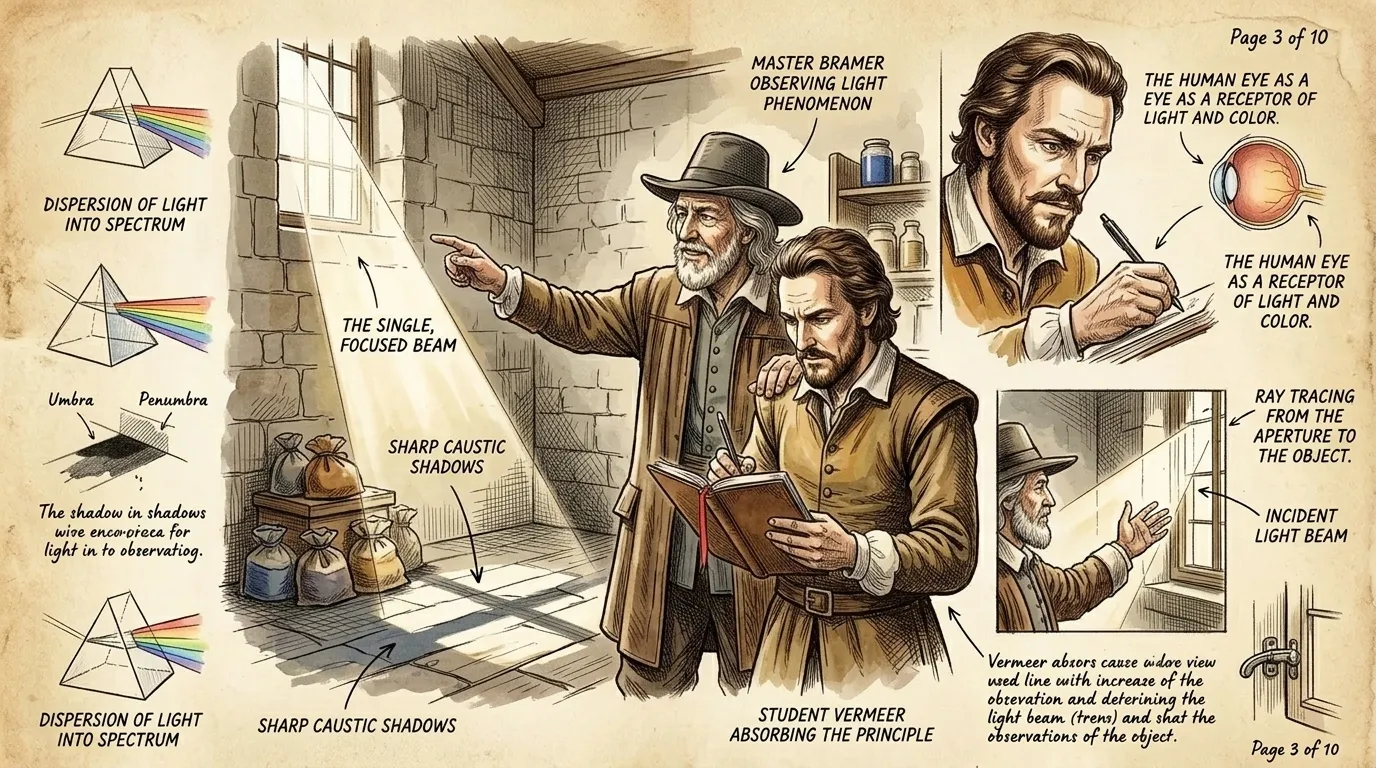
Leonard Bramer, a painter of historical allegories, recognized Vermeer's potential. He introduced him to the dramatic use of light and shadow, a technique that would become a cornerstone of Vermeer's art.
"'Imitation is suicide,' Bramer boomed. 'As Ralph Waldo Emerson said, you must find your own voice, your own light, Jan.' Vermeer listened, absorbing every word."
Art Fact: Leonard Bramer's influence on Vermeer's early artistic development is significant, though often overlooked.
Page 4
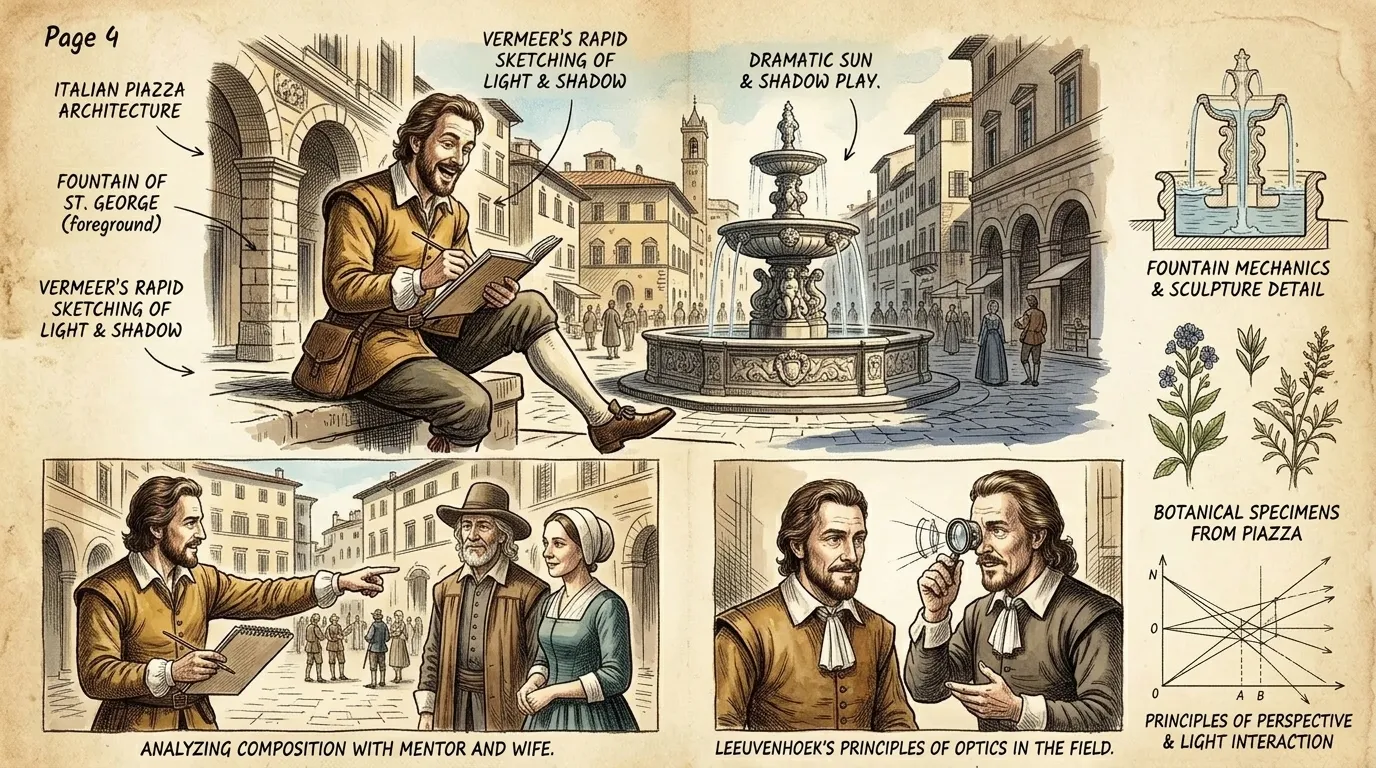
Travel to Italy broadened Vermeer's artistic horizons. He saw the works of Caravaggio and other Italian masters, inspiring him to use light more dramatically. The play of sun and shadow in Italy left an indelible mark.
"'Light is the language of the gods,' Vermeer exclaimed, sketching in his notebook. 'Just like Michelangelo, I have to embrace the light!'"
Art Fact: Vermeer's trip to Italy, though not extensively documented, is believed to have heavily influenced his style.
Page 5
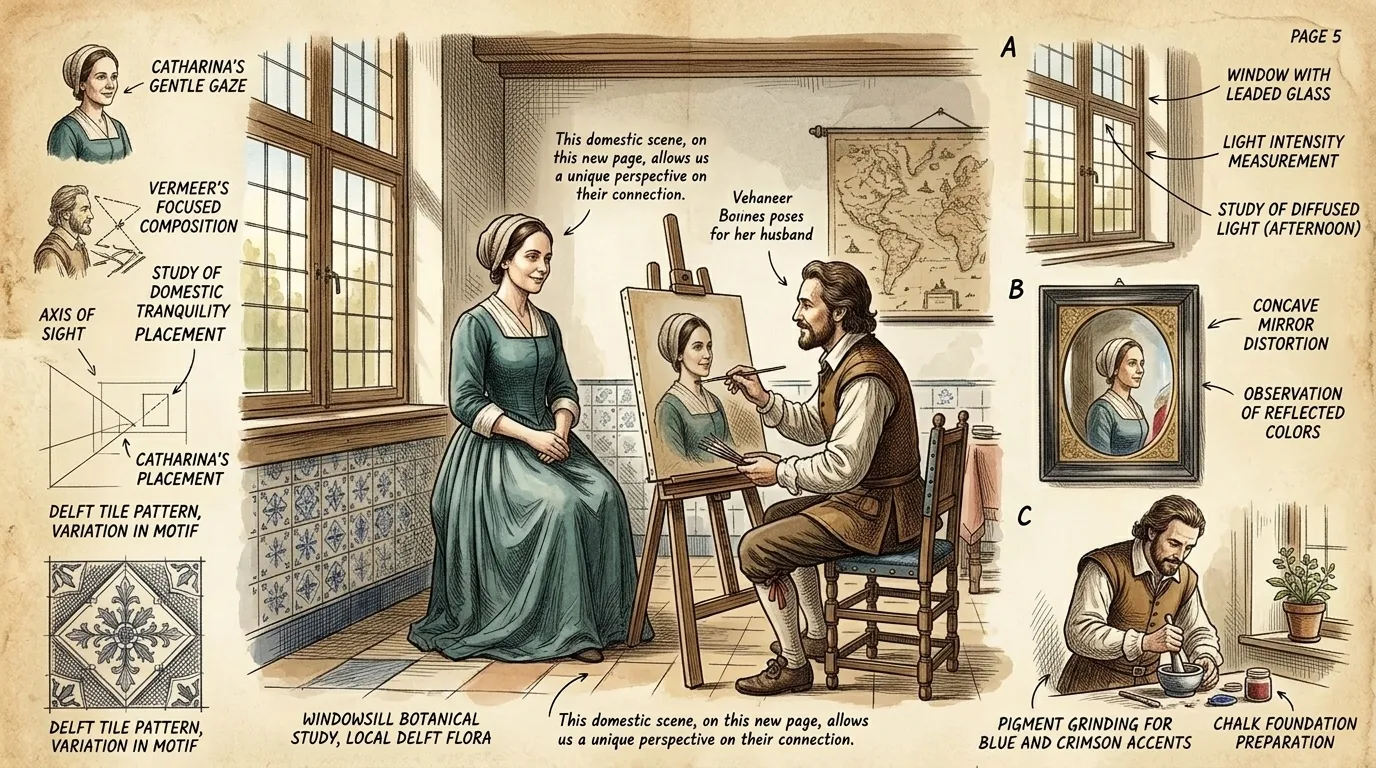
His marriage to Catharina Bolnes brought stability and love into Vermeer's life. She became his muse, his model, and the mother of his many children. Her presence infused his paintings with a sense of domestic tranquility.
"'Beauty is not in the face; beauty is a light in the heart,' Catharina whispered, posing for Johannes in their Delft home. 'That is what Kahlil Gibran said, my love.'"
Art Fact: Catharina Bolnes's presence brought stability and inspiration to Vermeer's life and art.
Page 6
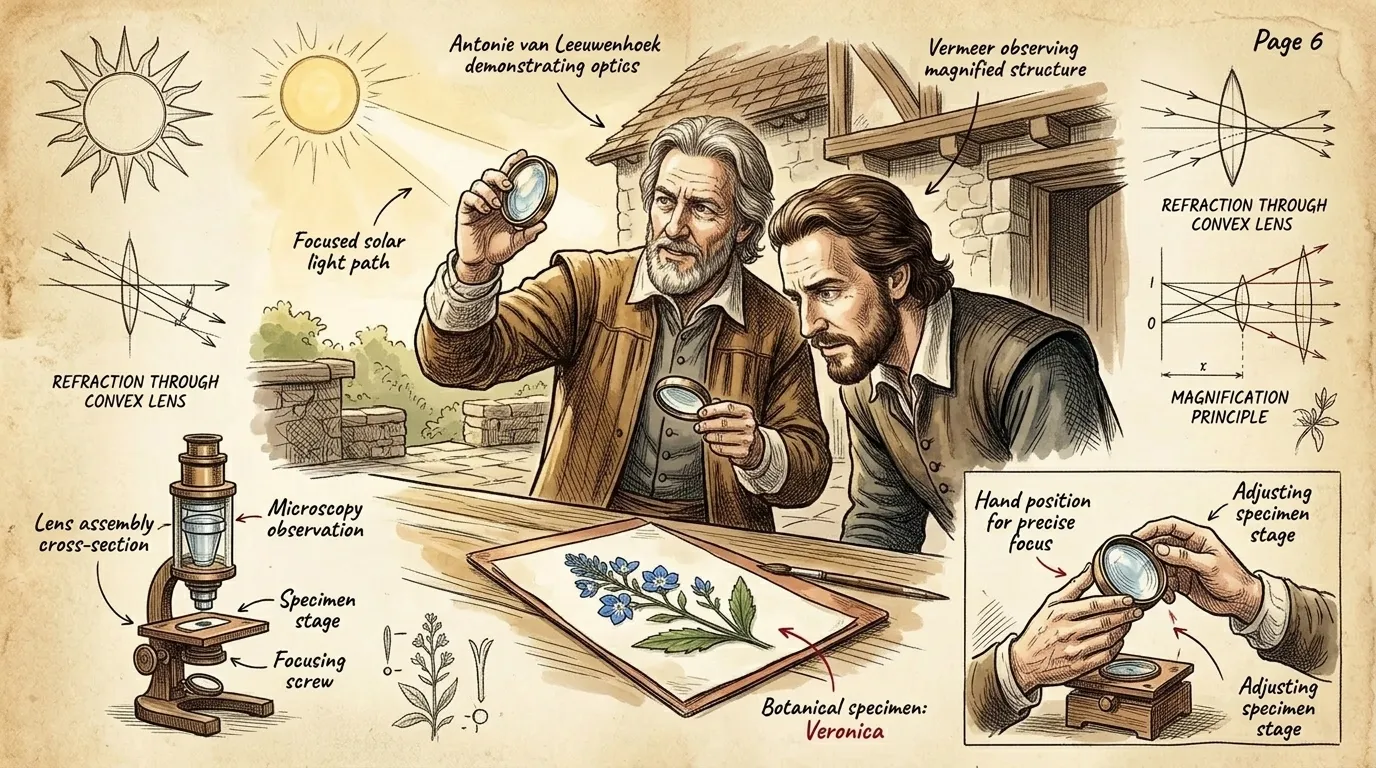
Vermeer befriended Antonie van Leeuwenhoek, a scientist and lens maker. From Leeuwenhoek, he learned about optics and perspective, knowledge he used to create realistic and detailed paintings.
"'The pursuit of knowledge is the essence of life,' van Leeuwenhoek said, showing Vermeer a lens. 'As Plato taught.' Vermeer gazed at the magnified world."
Art Fact: Antonie van Leeuwenhoek's knowledge of optics and perspective greatly influenced Vermeer's painting technique.
Page 7
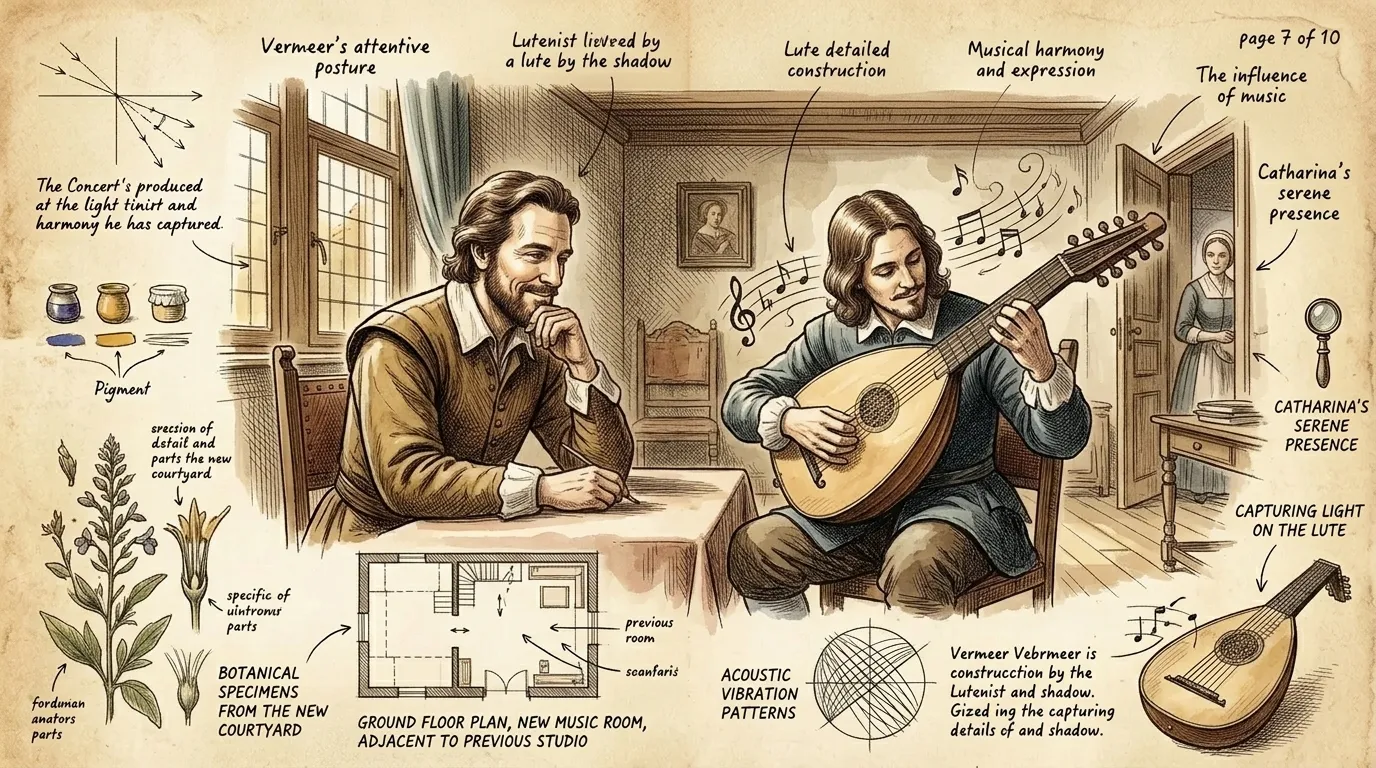
Vermeer was fascinated by music and often depicted musicians and musical instruments in his paintings. Music, like painting, was a form of expression and harmony. 'The Concert' is a prime example of his appreciation.
"'Music is the universal language of mankind,' Vermeer mused, listening to the lute player. 'As Henry Wadsworth Longfellow said, It transcends words.'"
Art Fact: Music was a recurring theme in Vermeer's paintings, reflecting his deep appreciation for harmony and expression.
Page 8
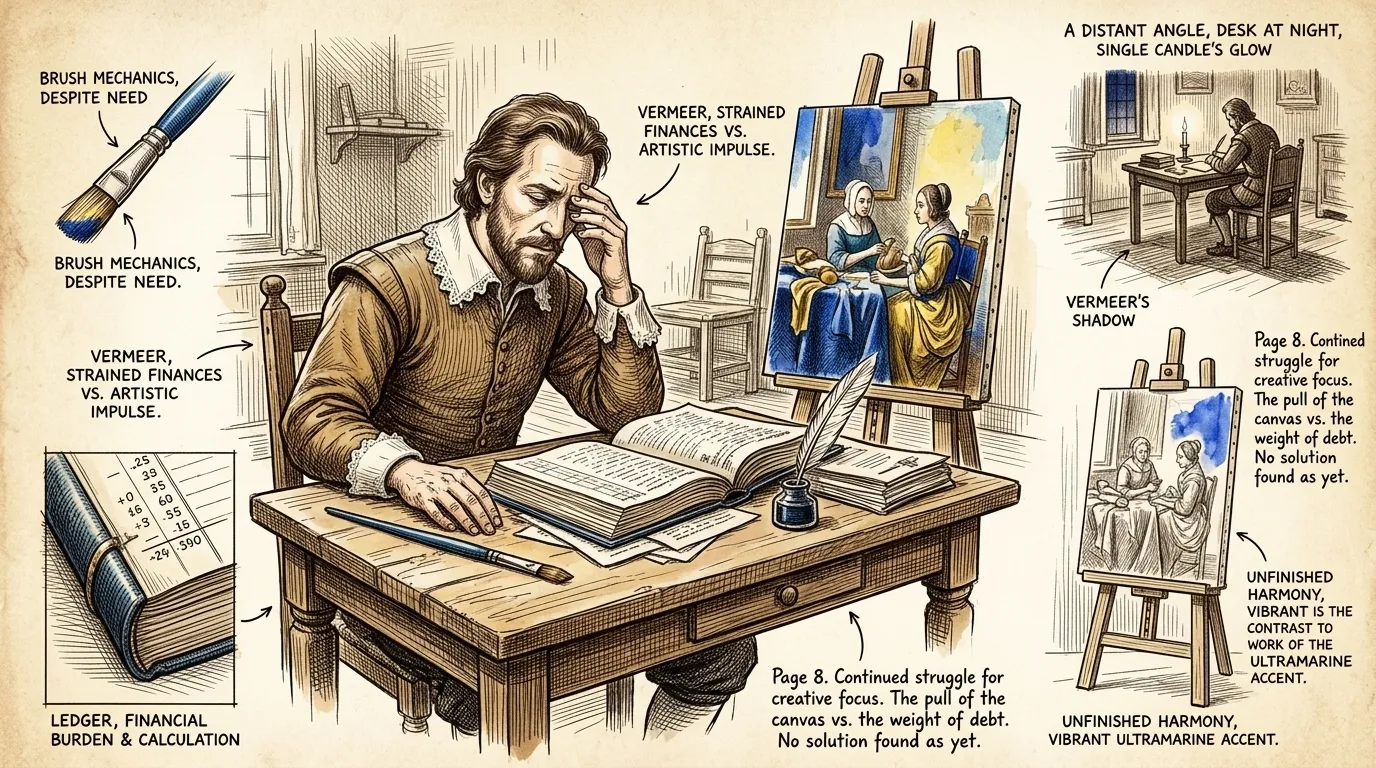
Despite his talent, Vermeer struggled financially. He supplemented his income by dealing in art. The financial strain added stress to his life, but he never stopped painting.
"'Adversity introduces a man to himself,' Vermeer sighed, contemplating his debts. 'I must keep painting, no matter what, thanks to Albert Einstein's quote.'"
Art Fact: Financial hardship plagued Vermeer throughout his life, adding stress to his artistic pursuits.
Page 9
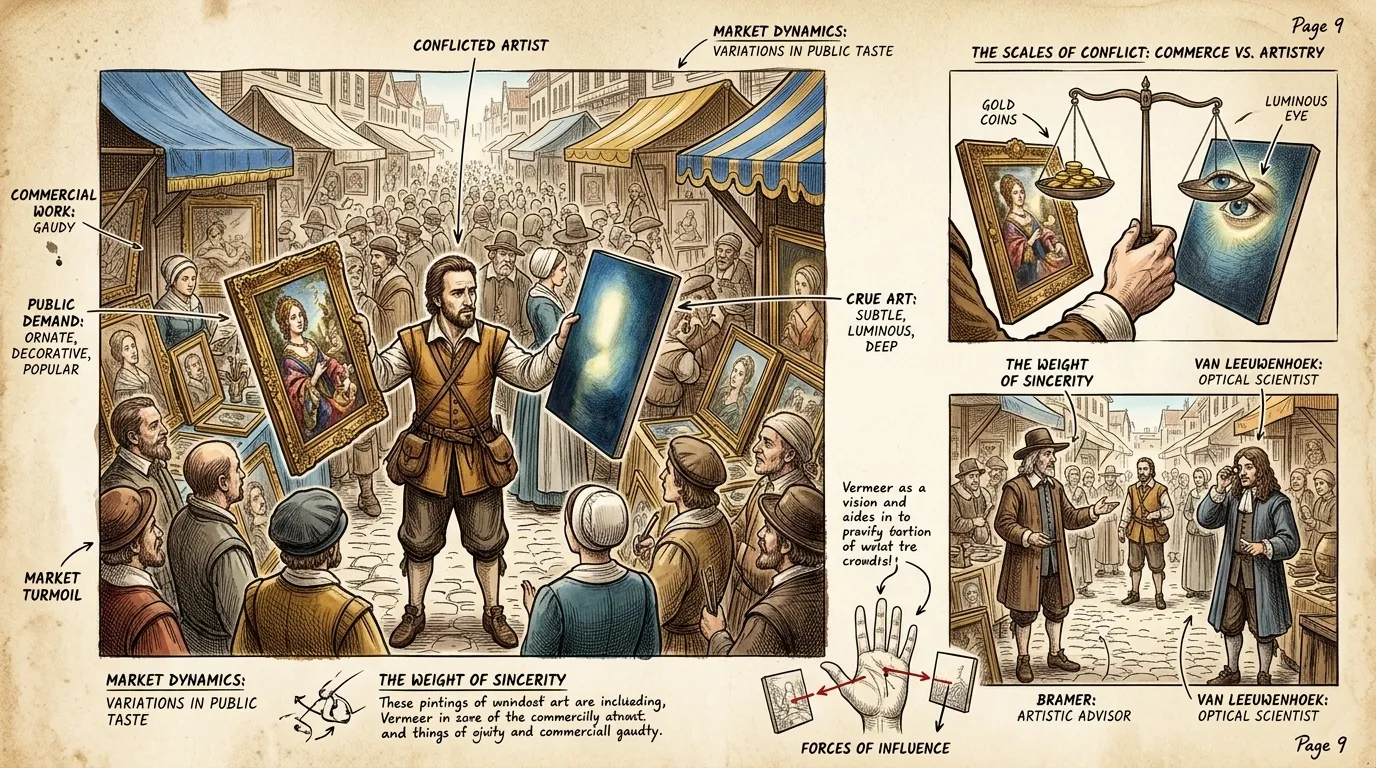
Vermeer's role as an art dealer brought him into contact with other artists and patrons, but it also consumed his time and energy. The demands of the art market clashed with his artistic sensibilities.
"'To be or not to be, that is the question,' Vermeer pondered, weighing his options. 'William Shakespeare understood the human condition.'"
Art Fact: Vermeer's dual role as an artist and art dealer created a conflict between his creative aspirations and the demands of the art market.
Page 10
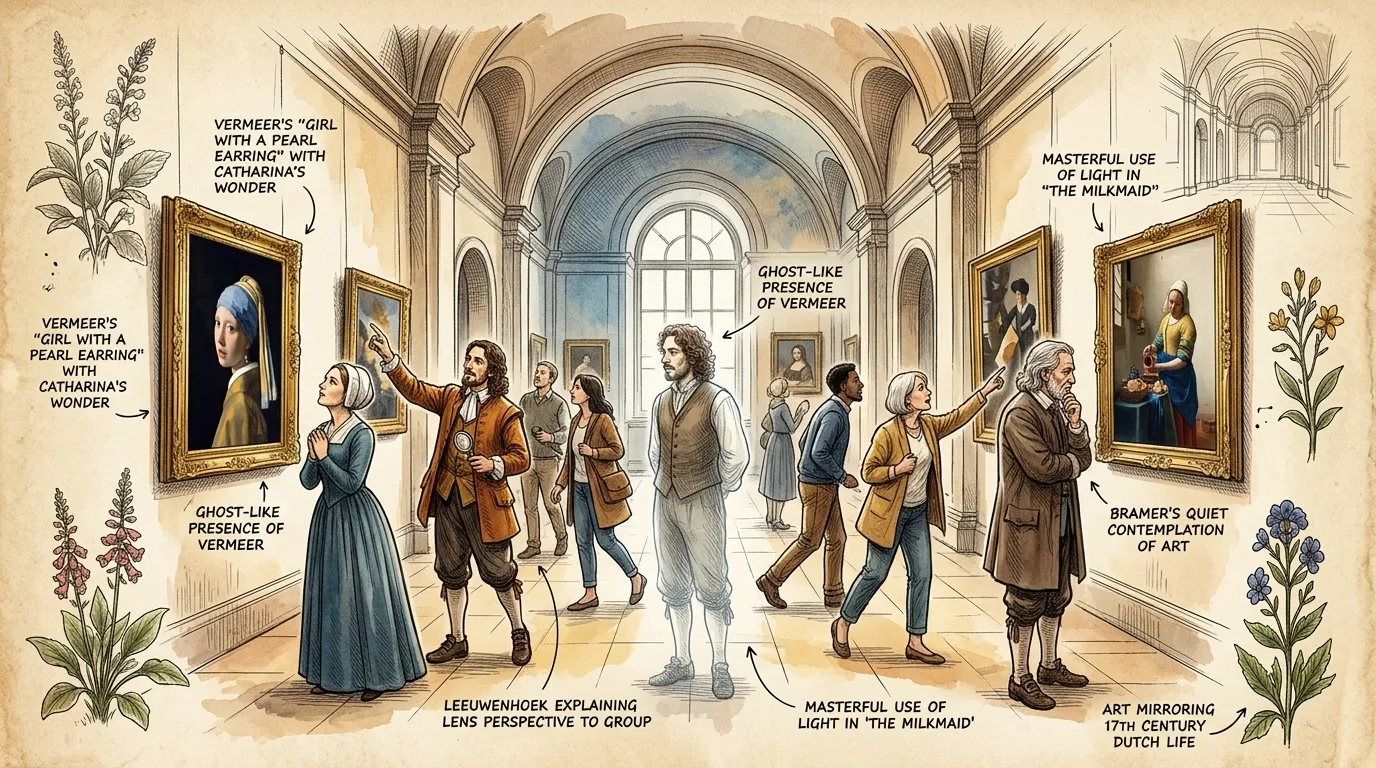
Vermeer's paintings, though few in number, continue to captivate audiences with their masterful use of light, serene compositions, and intimate glimpses into 17th-century Dutch life. His legacy lives on, inspiring generations of artists and art lovers.
"'The best and most beautiful things in the world cannot be seen or even touched - they must be felt with the heart,' Vermeer's voice echoed softly through the galleries. Inspired by Helen Keller, Vermeer's eternal masterpiece survives."
Art Fact: Vermeer's legacy endures because he captured the essence of human experience through light, serenity, and intimacy.
About this story
- Location: United States
- Audience: general readers
Questions and answers
Questions and answers about The Concert by Johannes Vermeer (Boston, USA — 1664)
Read Wonder Arts on your phone
Wonder Arts is available on Android. Get Wonder Arts on Google Play.
More Wonder Arts stories
- The Course of Empire by Thomas Cole (USA — 1836)
- The Creation of Adam by Michelangelo (Vatican City, Rome — 1512)
- The Dance Class by Edgar Degas (Paris, France — 1874)
- The Death of Sardanapalus by Eugène Delacroix (Paris, France — 1827)
- The Dying Gaul by Epigonus (Rome, Italy — c. 230 BC)
- The Execution of Lady Jane Grey by Paul Delaroche (London, UK — 1833)