Temple of Karnak (Luxor, Egypt — c. 2000 BC)
Temple of Karnak (Luxor, Egypt — c. 2000 BC) — an illustrated arts story, set in Egypt. 10 illustrated pages, free to read on Wonder Arts.

Page 1
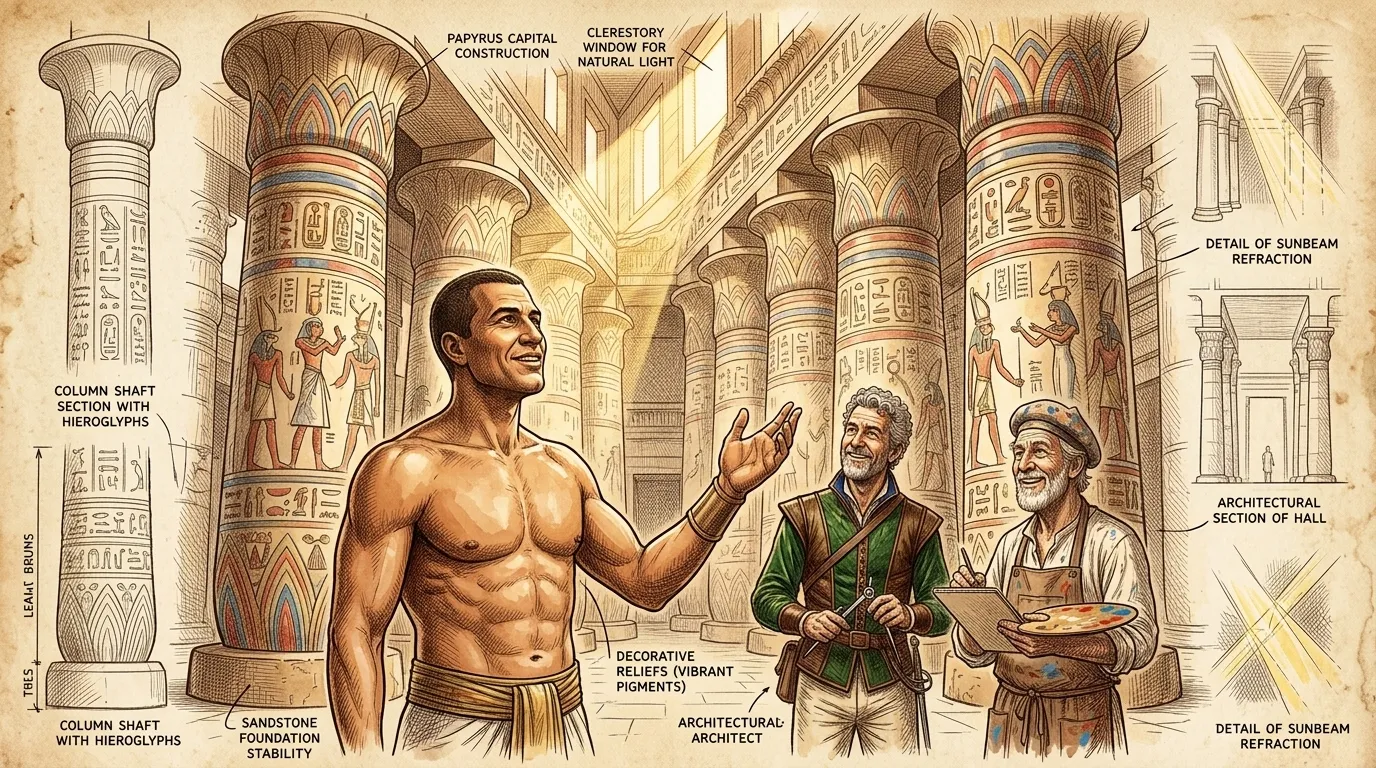
Karnak Temple, a colossal testament to ancient Egyptian ambition, gleams under the desert sun circa 2000 BC. Its most celebrated feature, the Great Hypostyle Hall, stands as a forest of 134 massive columns. Each column, some reaching 80 feet, is adorned with intricate hieroglyphs and vibrant painted reliefs, chronicling the reigns of pharaohs and their devotion to the gods. The temple, located in Luxor, spans an area larger than some entire cathedrals. One extraordinary fact about this enduring monument is that it was constructed, added to, dismantled, restored, and enlarged over a period of 2000 years.
"I have built this temple for you, Amun-Ra, so that your name will last forever! May these columns reach to the heavens and sing your praises for eternity."
Art Fact: Great Hypostyle Hall, Karnak Temple (Luxor, Egypt) - begun c. 1929–1224 BC
Page 2

Years before, a young Seti, barely a teenager, was visiting the Gebel el-Silsila sandstone quarries when he overheard a conversation between two stonemasons grumbling about transporting the massive stone blocks. The head stonemason said, 'They want us to move mountains! How will we ever get enough men to pull these massive blocks?' Young Seti listened intently, his mind already seeking a solution. Later that day, Seti sketches a design of the rollers that would be used to move the stones.
"'The solution lies not in brute strength, but in ingenuity,' Seti declares to his tutor, 'We must find a way to move these stones with the least amount of effort'."
Art Fact: Gebel el-Silsila sandstone quarries
Page 3
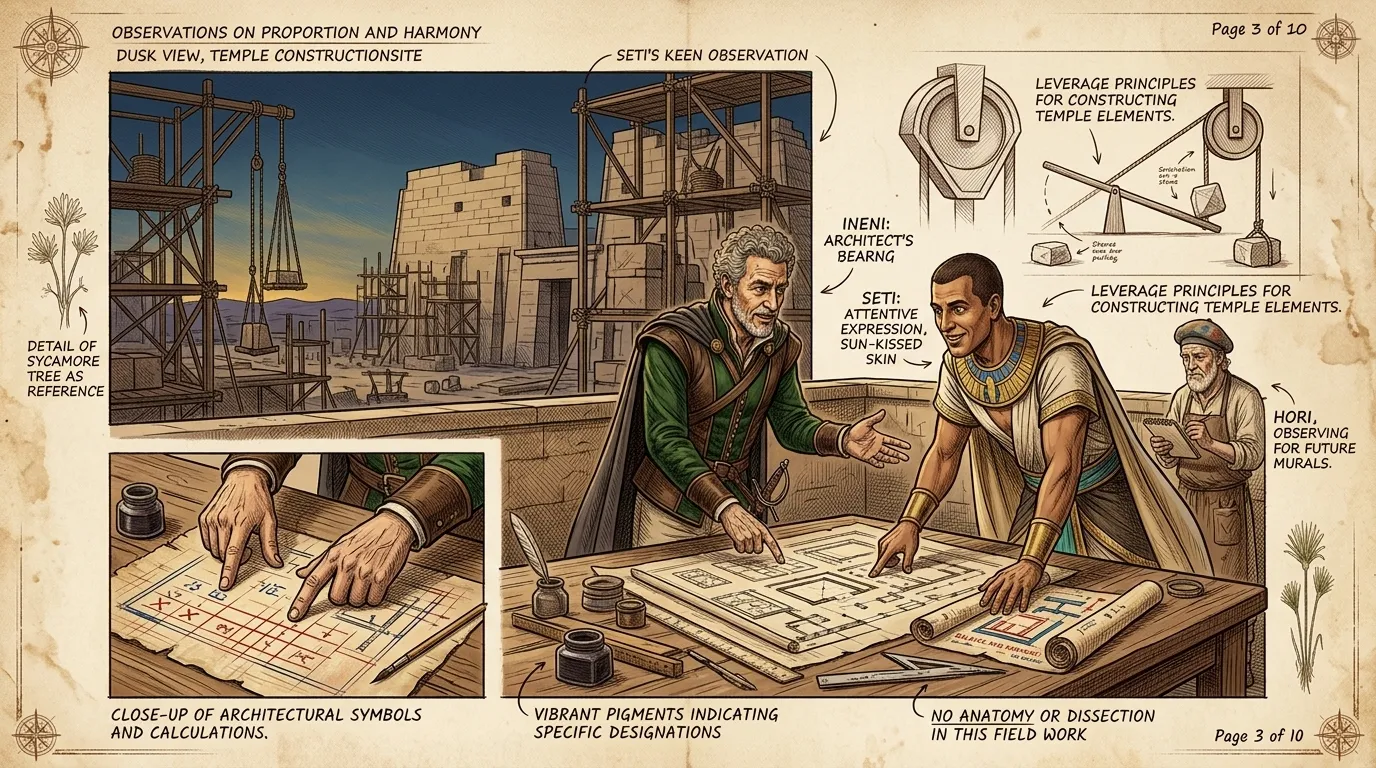
When he was a young man, Seti met a renowned architect named Ineni. During a conversation over papyrus and ink, Ineni shared his approach to design. 'Balance and harmony,' Ineni declared, 'are the foundations of enduring architecture. As Aristotle said, 'The whole is greater than the sum of its parts.' Never forget this, young Seti. All must fit together into a greater plan.
"'Teach me,' begged Seti, 'show me how to combine strength and beauty in a way that the Gods will admire!'"
Art Fact: Architect Ineni shares his approach to design
Page 4
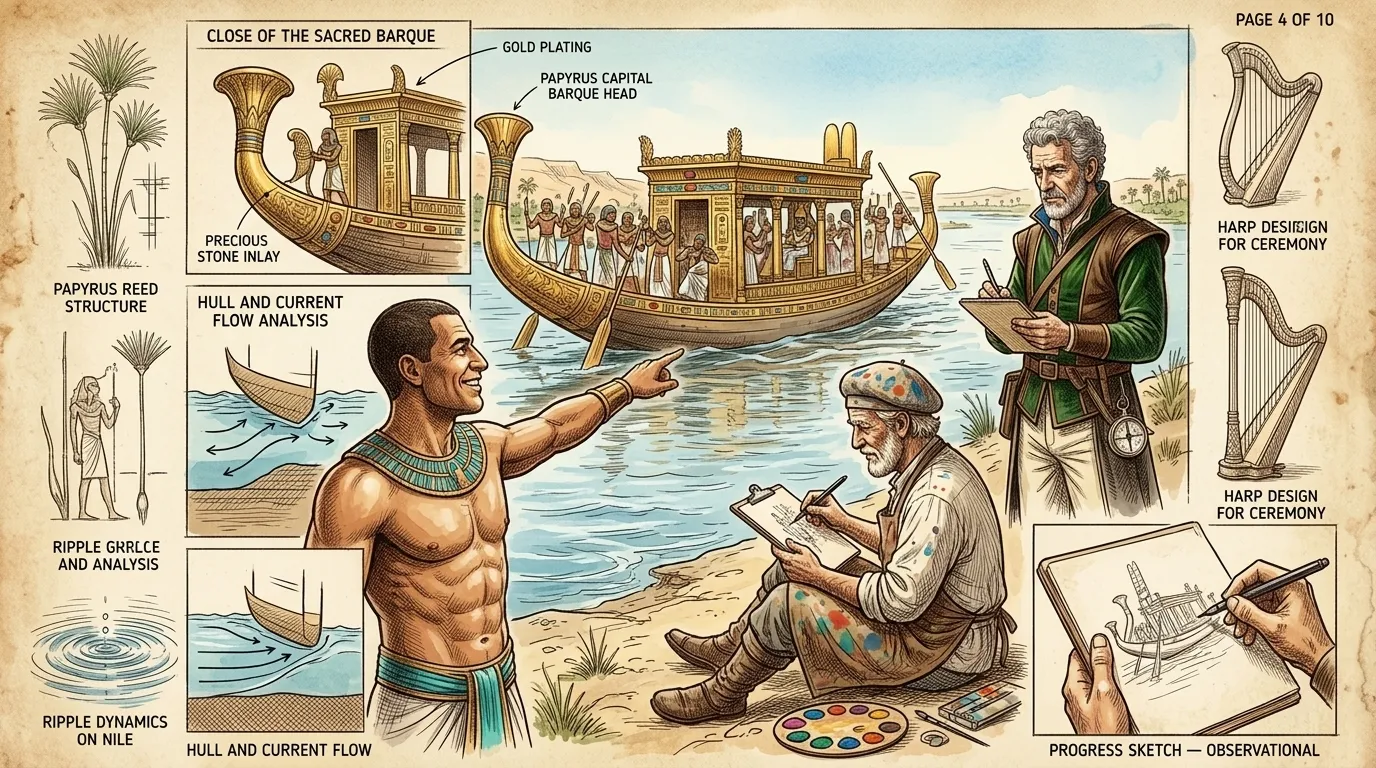
One day, Seti watched the sacred barque of Amun-Ra as it glided along the Nile during the Opet Festival. The pharaoh, attended by priests and musicians, presented offerings. The barque, adorned with gold and precious stones, symbolized the god's journey through the heavens. The sight was spectacular.
"The majesty of Amun-Ra shines upon us! This temple will be a testament to the power of the Gods."
Art Fact: The Opet Festival on the Nile River
Page 5
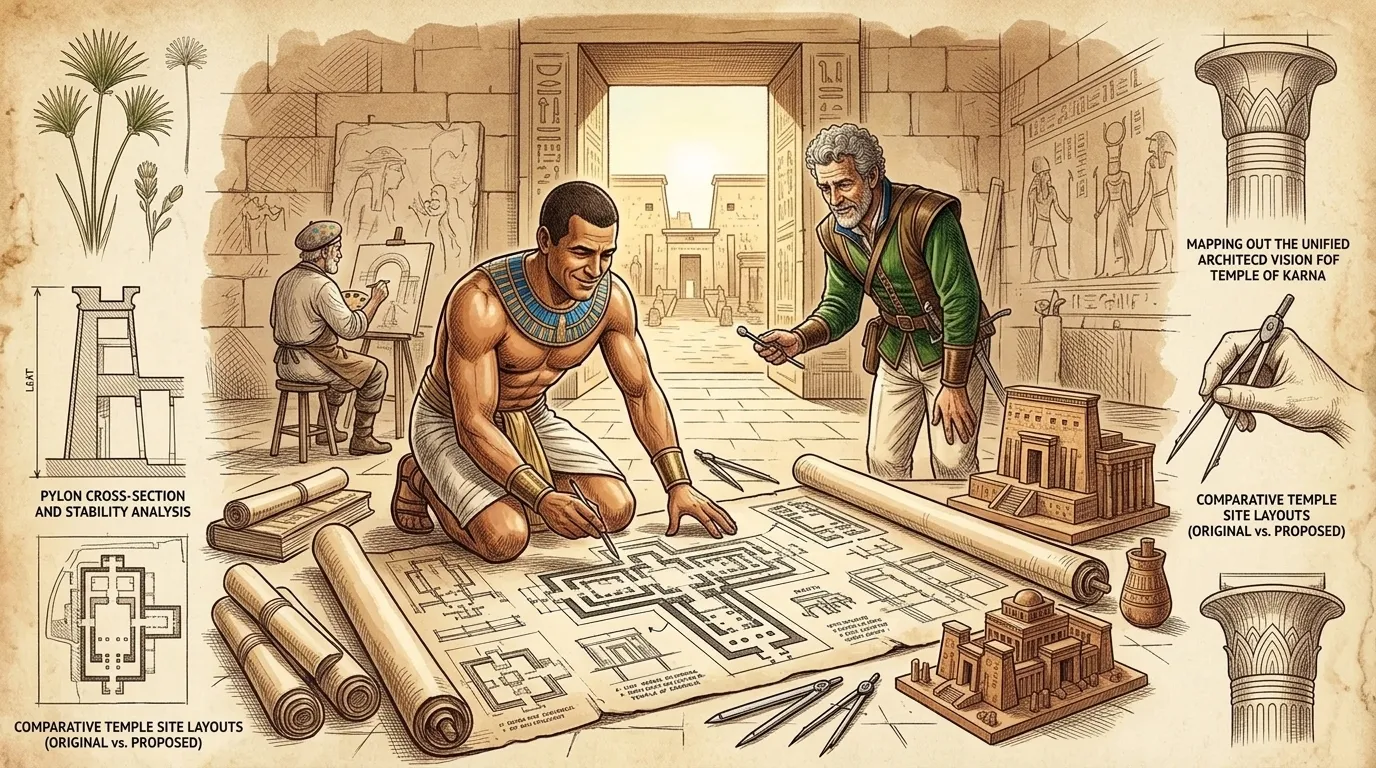
The initial temple layout was nothing more than a collection of scattered ideas until Seti's visit to Heliopolis. There he viewed temples from the Old Kingdom and spoke to priests about the design of the earlier complexes. He then spent weeks mapping out a unified vision of the Temple of Karnak, integrating the existing structures into a cohesive design. This ensured that each hall, court, and sanctuary flowed into the next. He focused on balancing the divine and earthly realms.
"Here, the god will reside amongst us, and from this sacred place, his influence will reach across the land."
Art Fact: Planning the layout of Karnak Temple
Page 6
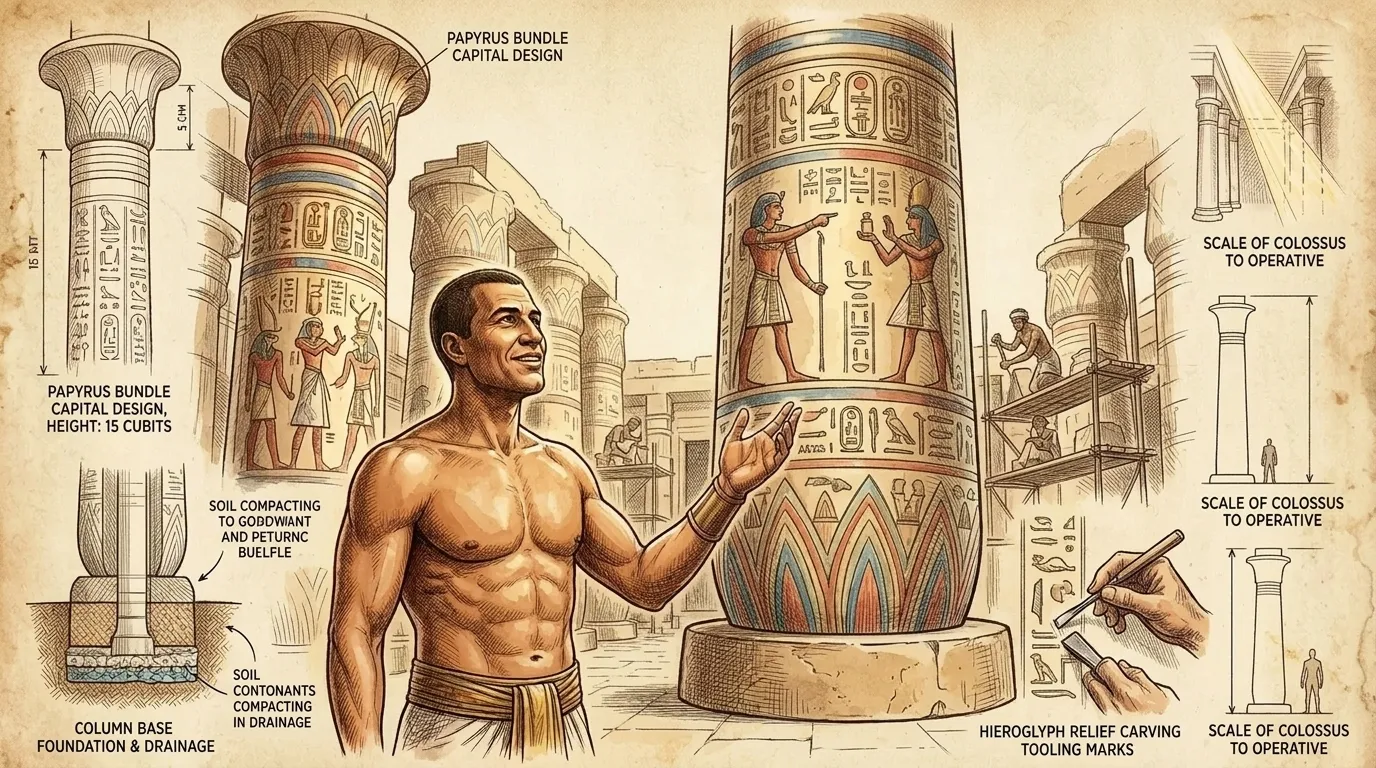
Seti ordered the construction of colossal columns, each carved with images and stories celebrating the Gods and his reign. He had read the writings of Imhotep: 'To make the temple immortal, make the columns speak.' Seti decided to have each decorated with scenes of his military victories and offerings to Amun-Ra. The columns towered toward the heavens, embodying power and faith.
"Let these columns stand as a testament to our strength, and our devotion! May they inspire awe in all who behold them for generations to come."
Art Fact: Construction of the colossal columns
Page 7

A master painter, Hori, convinces Seti to add vivid colors to the carved reliefs. Hori, explained, 'Great pharaoh, the stone tells the story. The color gives it life.' Seti approved the use of vibrant blues, greens, reds, and yellows. The colors brought the scenes to life, giving the figures a sense of movement and vitality. The painted reliefs transformed the columns into vibrant tapestries.
"Let the colors speak to the heavens. With color, we bring the stories of the Gods to life!"
Art Fact: Adding vivid colours to the carved reliefs
Page 8

One day, while inspecting the Hall, Seti realized the need for more light. He designed clerestory windows to illuminate the interior space without compromising the integrity of the roof. As Horemheb said, 'Light is the shadow of God.' The clerestory windows, placed high above the columns, filled the hall with a soft, diffused light. The sunlight filtered through the openings, creating a play of light and shadow that enhanced the grandeur of the space.
"Light must fill this temple so that all those within may praise the Gods!"
Art Fact: Designing the clerestory windows
Page 9
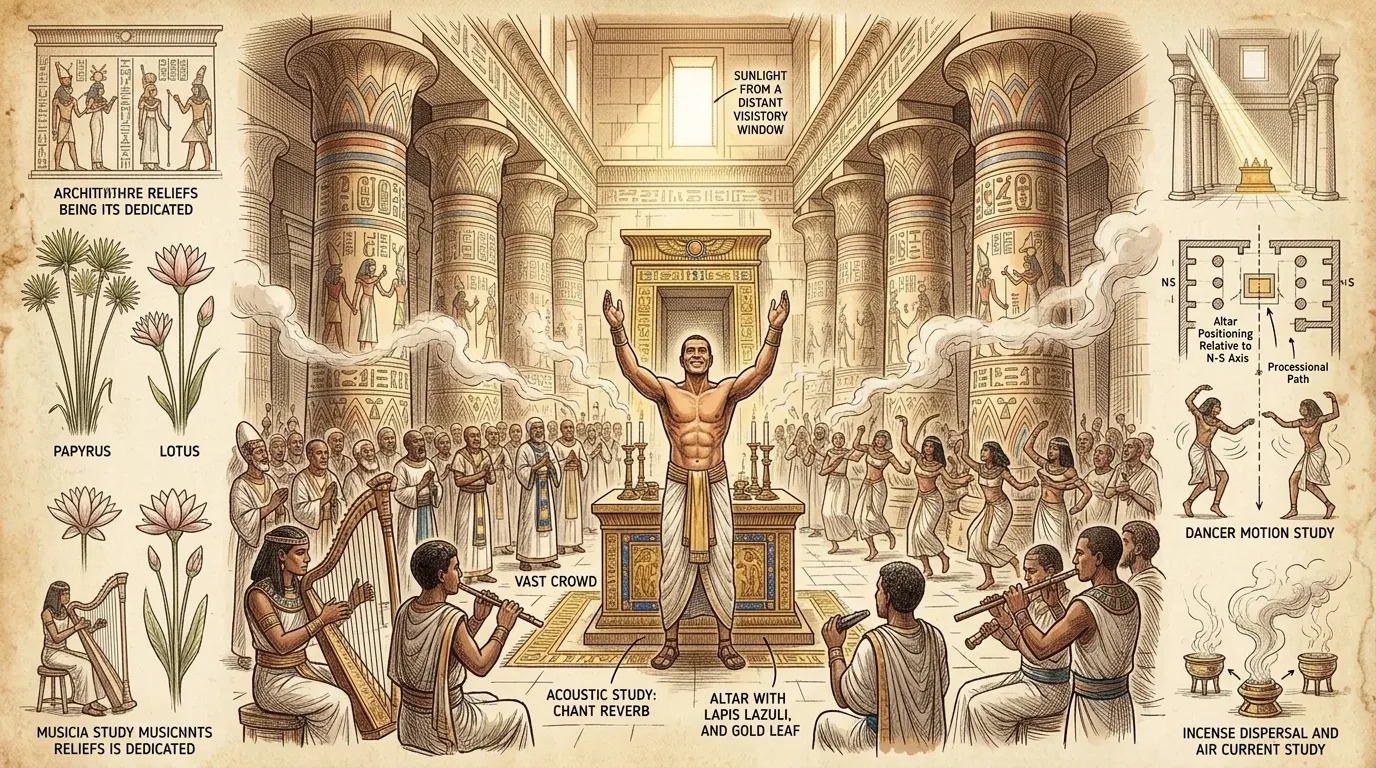
Finally, the Hypostyle Hall was complete. Seti dedicated it to Amun-Ra in a grand ceremony. The hall teemed with priests, musicians, dancers, and worshippers. Incense filled the air, and the sounds of chanting and music echoed through the colossal space. Pharaoh Seti stood before the altar, raising his arms in prayer. The completed hall shimmered with gold, lapis lazuli, and carnelian.
"Great Amun-Ra, accept this humble offering. May your name be praised for all time!"
Art Fact: The dedication ceremony for the completed Hypostyle Hall
Page 10
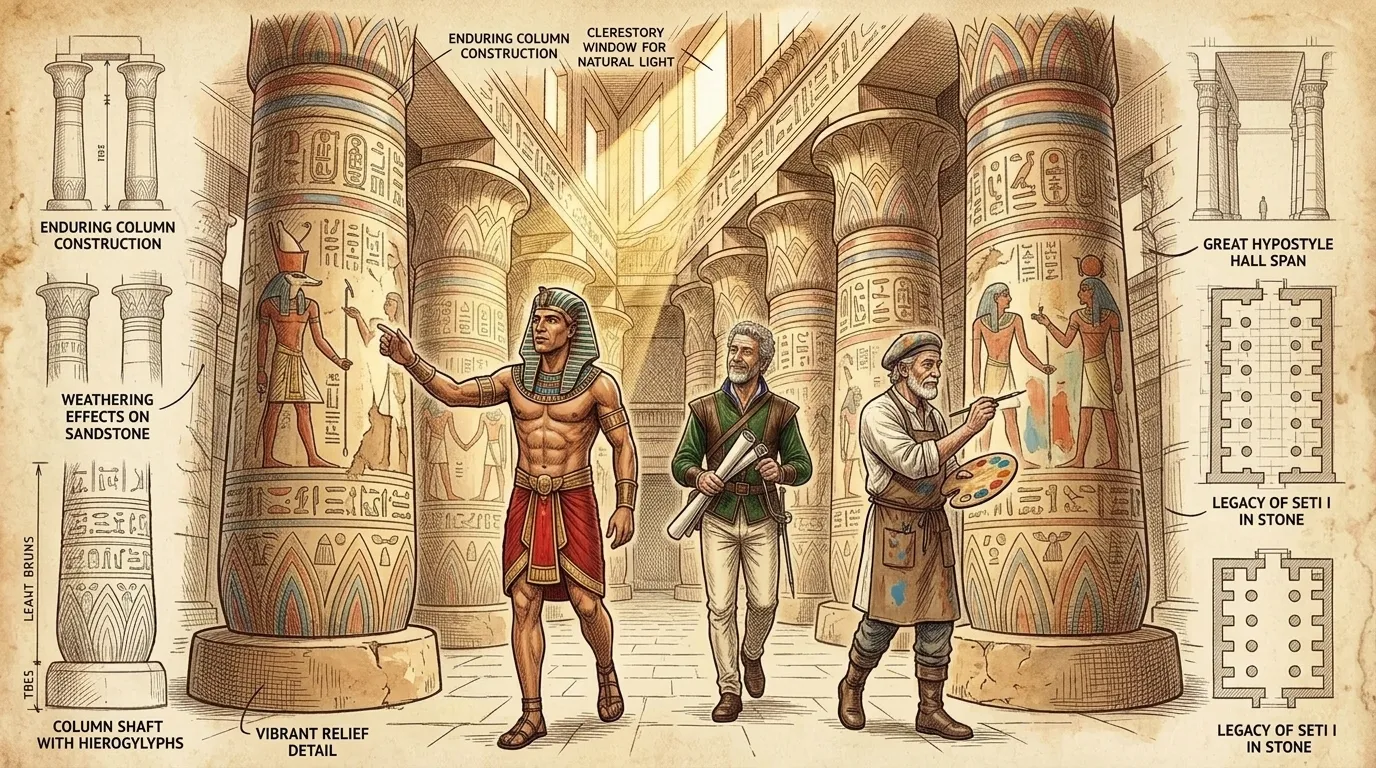
Centuries later, the Great Hypostyle Hall remains. Though time and the elements have taken their toll, its grandeur endures. Seti's vision and ambition live on in the colossal columns and painted reliefs. In every standing stone, in every line of carved text, his legacy echoes. Like a whispered prayer across the millennia, the Temple of Karnak endures because it carries Seti's devotion. It reminds us what can be built with vision and faith.
"Great Amun-Ra, accept this humble offering. May your name be praised for all time!"
Art Fact: The enduring legacy of Seti I and the Great Hypostyle Hall
About this story
- Location: Egypt
- Audience: general readers
Questions and answers
Questions and answers about Temple of Karnak (Luxor, Egypt — c. 2000 BC)
Read Wonder Arts on your phone
Wonder Arts is available on Android. Get Wonder Arts on Google Play.
More Wonder Arts stories
- The Alhambra (Granada, Spain — 13th Century)
- The Angelus by Jean-François Millet (France — 1859)
- The Apotheosis of Homer by Jean-Auguste-Dominique Ingres (France — 1827)
- The Awakening Conscience by William Holman Hunt (London, UK — 1853)
- The Ballet Class by Edgar Degas (Paris, France — 1874)
- The Barque of Dante by Eugène Delacroix (Paris, France — 1822)