The Kiss by Auguste Rodin (Paris, France — 1882)
The Kiss by Auguste Rodin (Paris, France — 1882) — an illustrated arts story, set in France. 10 illustrated pages, free to read on Wonder Arts.
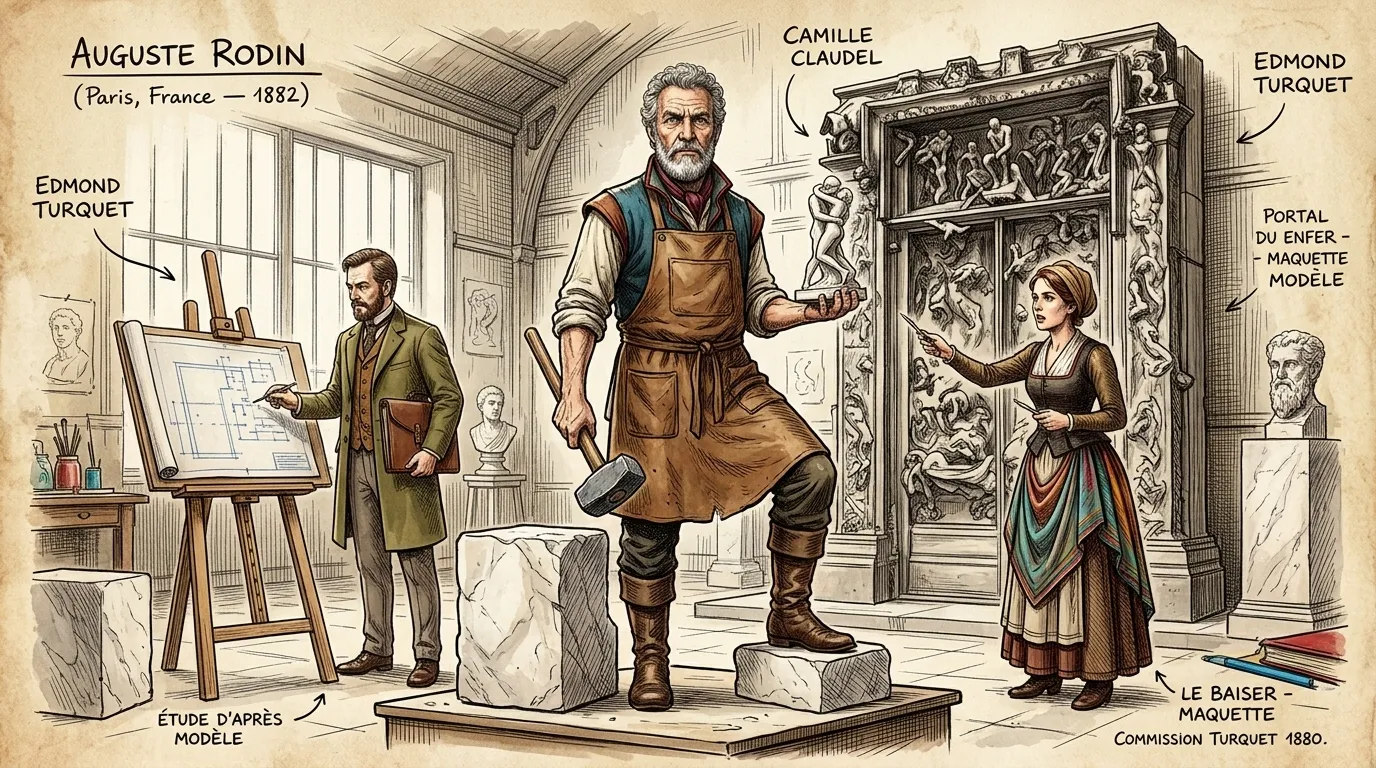
Page 1
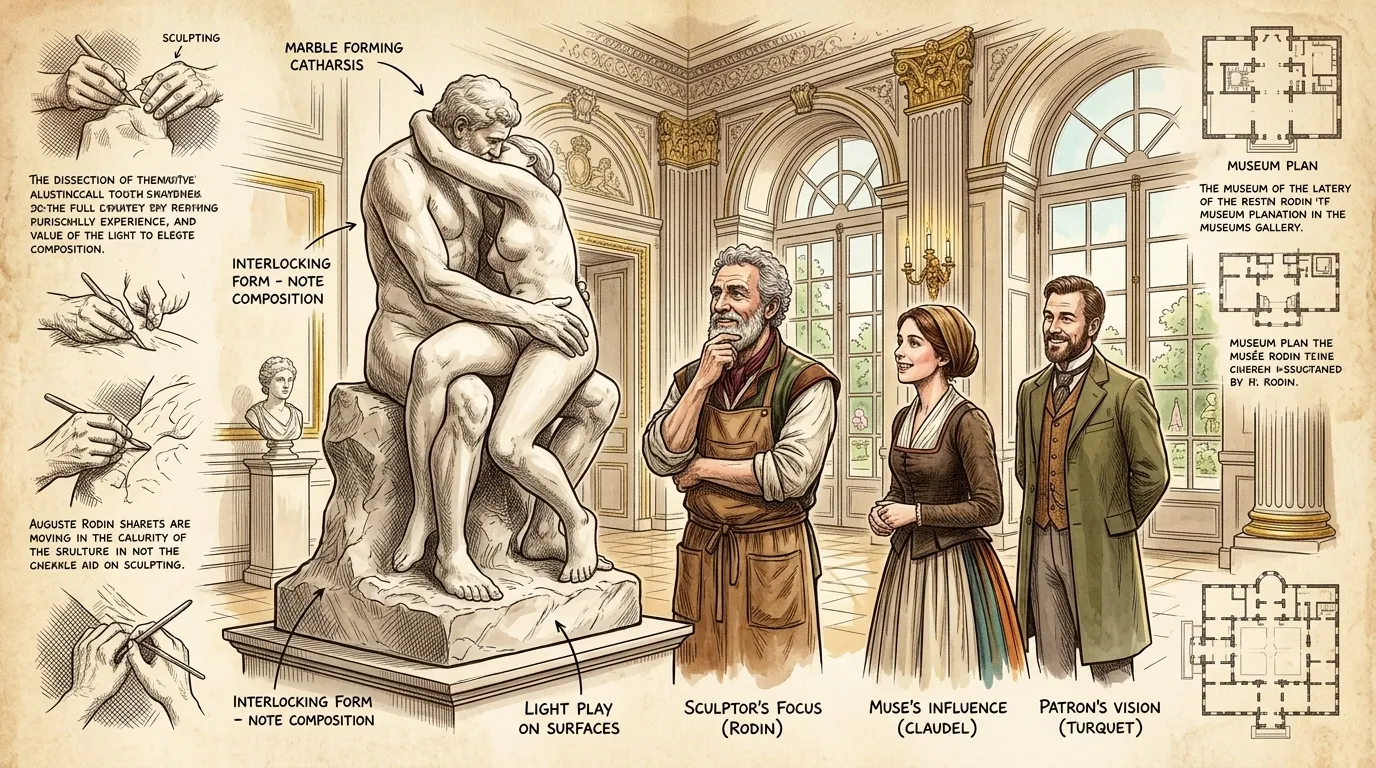
Auguste Rodin, standing before his marble masterpiece 'The Kiss,' felt a wave of emotion wash over him. Completed in 1889, the sculpture captured a raw intimacy that both shocked and captivated the Parisian art world. Currently housed at the Musée Rodin in Paris, the sculpture is one of the most reproduced and celebrated images of romantic love in the world.
"Rodin murmured to himself, 'As Victor Hugo said, 'You think you can describe a love story better than me, eh Rodin? That is why I am here, always here. Art is another kind of truth – one that speaks without words.'"
Art Fact: The Kiss' stands 182.8 cm high. It was initially intended to be part of a larger commission, 'The Gates of Hell,' but Rodin later exhibited it as an independent work.
Page 2
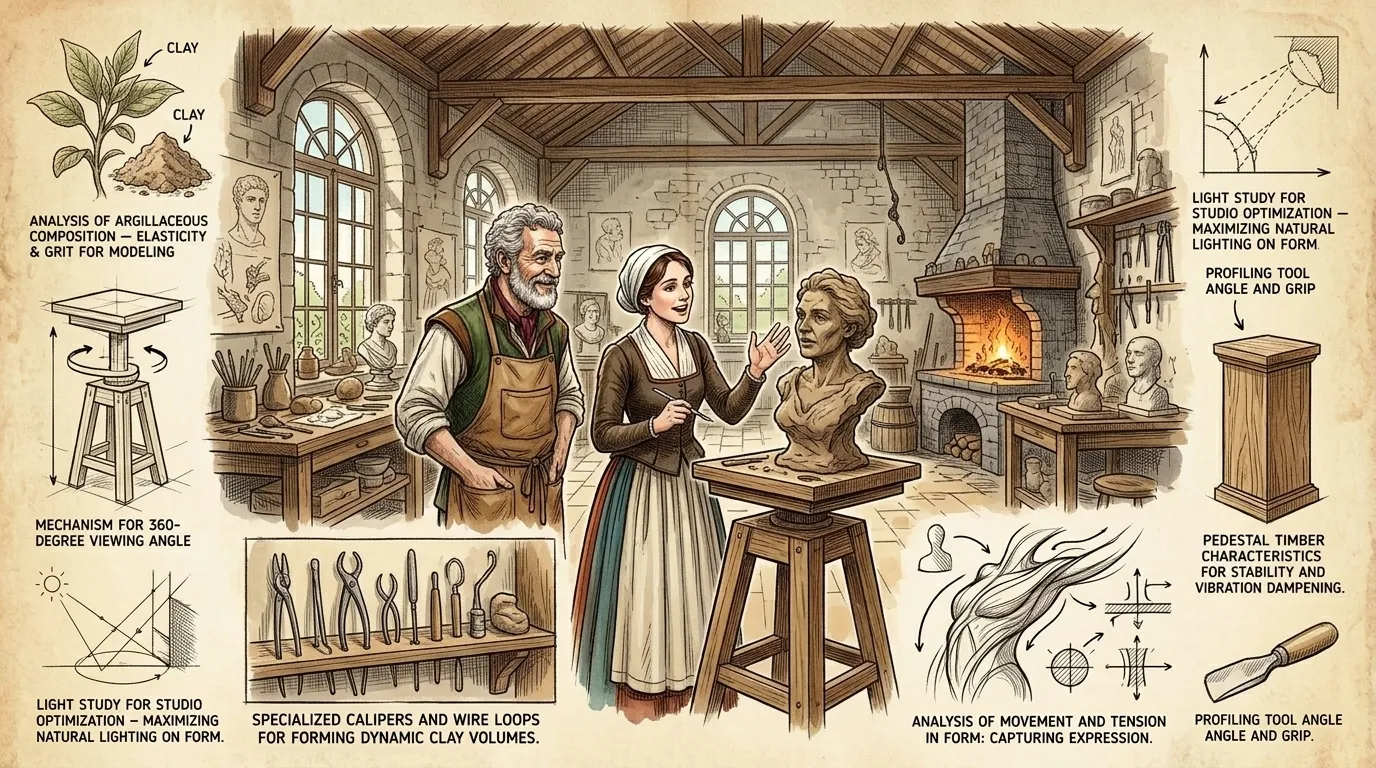
Rodin, already a respected sculptor, encountered the young and talented Camille Claudel in 1883. Their partnership quickly evolved beyond a student-teacher relationship, deeply influencing Rodin's work. Camille's own artistic genius would leave an indelible mark on his creations, a creative symbiosis that made his work better.
"Rodin spoke, 'Camille, your passion for form and light is unparalleled. The way you feel about the shape is different from my own and that is the thing that I like most about working with you!' Camille, ever bold, replied, 'My sculptures reflect my soul. I see them more as humanistic, and so my feelings are drawn into them more than anything.'"
Art Fact: Camille Claudel's contribution to Rodin's work is often debated, but her influence is undeniable. She later became a sculptor in her own right.
Page 3
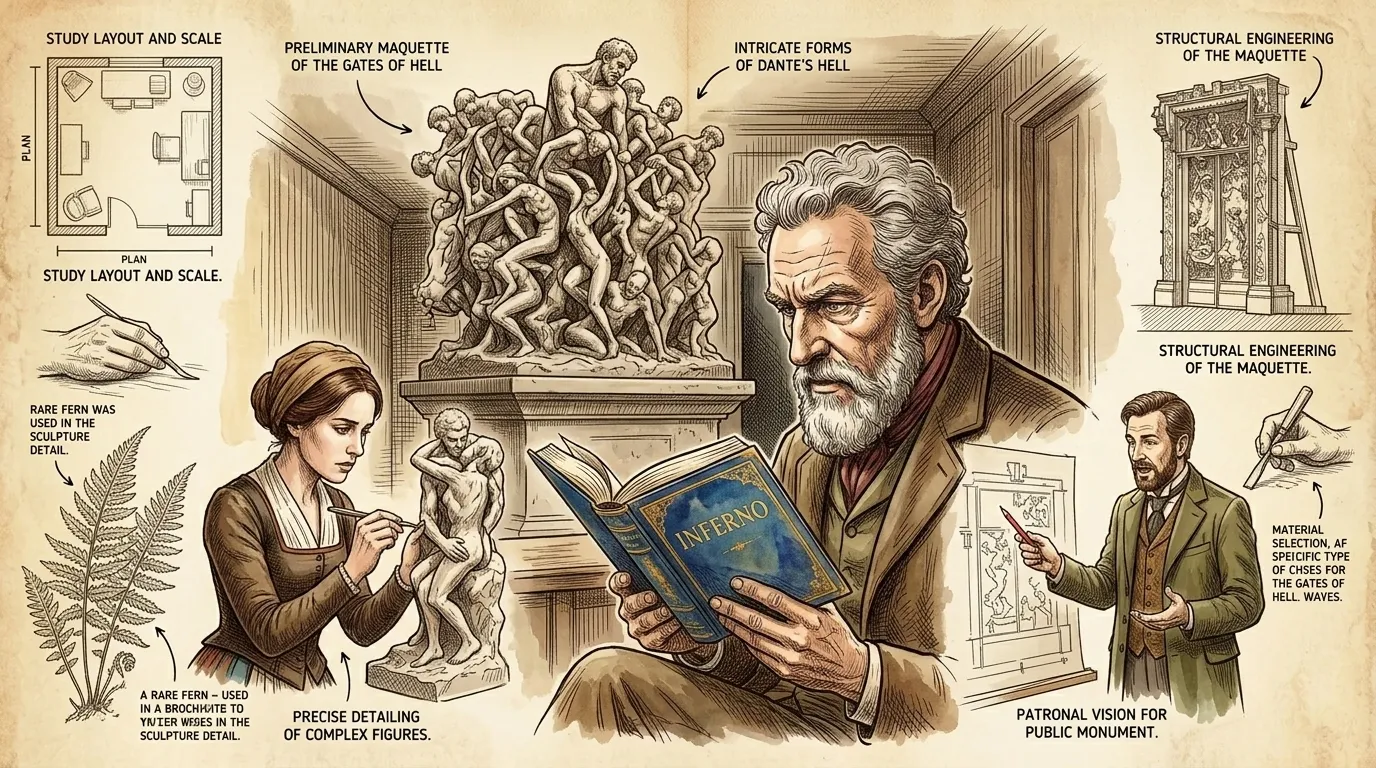
Rodin, grappling with his monumental commission 'The Gates of Hell,' found inspiration in Dante Alighieri's 'Inferno.' The themes of love, damnation, and redemption permeated his work, foreshadowing the passion he would later capture in 'The Kiss.' Dante, with the vividness of his words, served as a guide through the darkest corners of human emotion.
"Rodin read aloud, 'Abandon all hope, ye who enter here...' This is what he shouted, but in his head, he could only think that it was the passion, the hope of love, that had brought these doomed characters down!"
Art Fact: 'The Gates of Hell' consumed Rodin for decades and remained unfinished at the time of his death. 'The Kiss' was originally conceived as part of this larger work.
Page 4
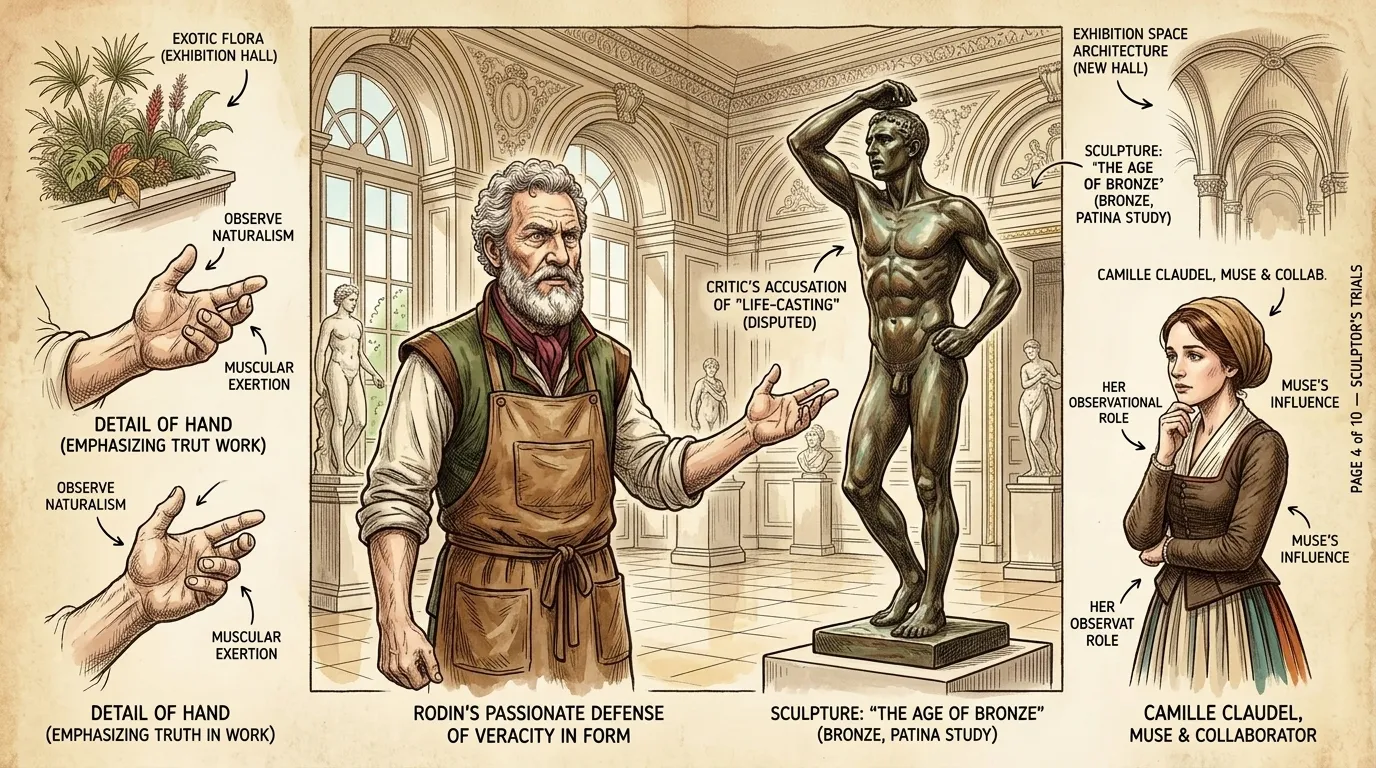
In 1877, Rodin submitted 'The Age of Bronze' to the Paris Salon, only to face accusations of lifecasting. The controversy fueled Rodin's determination to prove his artistic skill and create works of unparalleled realism. This setback became the fire that forged his future masterpieces.
"A critic scoffed, 'Rodin, this is nothing more than a cast! It lacks the artistry, the interpretation! You've merely copied nature!' Rodin retorted, 'Nature is my inspiration, my guide. I seek to capture the truth within the form!'"
Art Fact: The lifecasting scandal plagued Rodin early in his career but ultimately solidified his commitment to his artistic vision.
Page 5
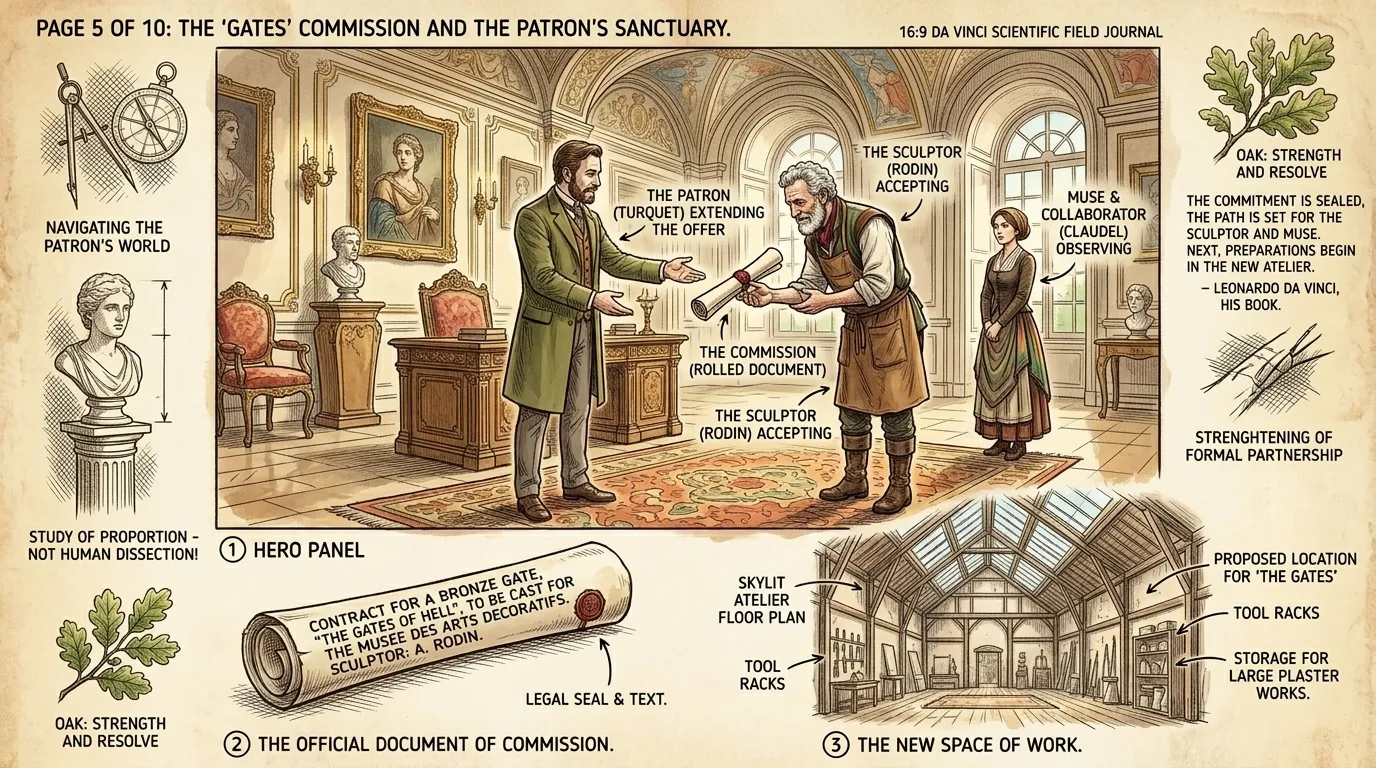
Edmond Turquet, Undersecretary of State for Fine Arts, recognized Rodin's talent and gave him the commission for 'The Gates of Hell.' This pivotal moment granted Rodin the financial stability and artistic freedom to explore his vision on a grand scale. Turquet's patronage was an invitation to create something truly monumental.
"Turquet said, 'Rodin, I see a vision in you, a power to create something truly extraordinary. I give you the commission for 'The Gates of Hell.' Show Paris what you can do.' Rodin, bowing slightly, responded, 'I shall not disappoint you, Monsieur Turquet. This will be my life's work.'"
Art Fact: Edmond Turquet's patronage was crucial for Rodin's career, providing him with resources and recognition.
Page 6
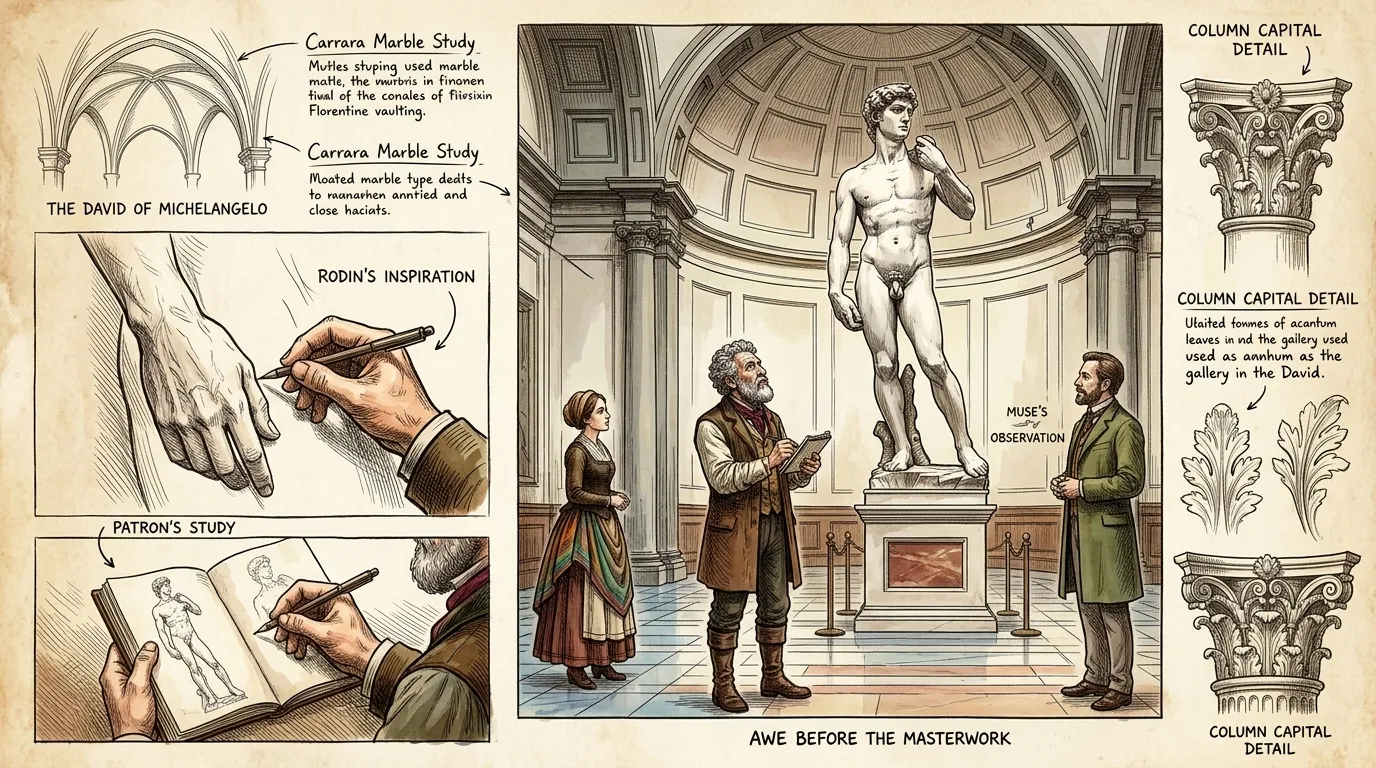
A trip to Italy, specifically Florence, exposed Rodin to the masterpieces of Michelangelo. The power and passion of Michelangelo's sculptures inspired Rodin to strive for greater emotional depth in his own work. Florence became a cathedral of inspiration for the young sculptor.
"Rodin, marveling at Michelangelo's David, whispered, 'Michelangelo captured the human form with such raw power. His David is a testament to passion and love, and that is what I am striving to represent!'"
Art Fact: Michelangelo's influence on Rodin is evident in his emphasis on the human form and emotional expression.
Page 7
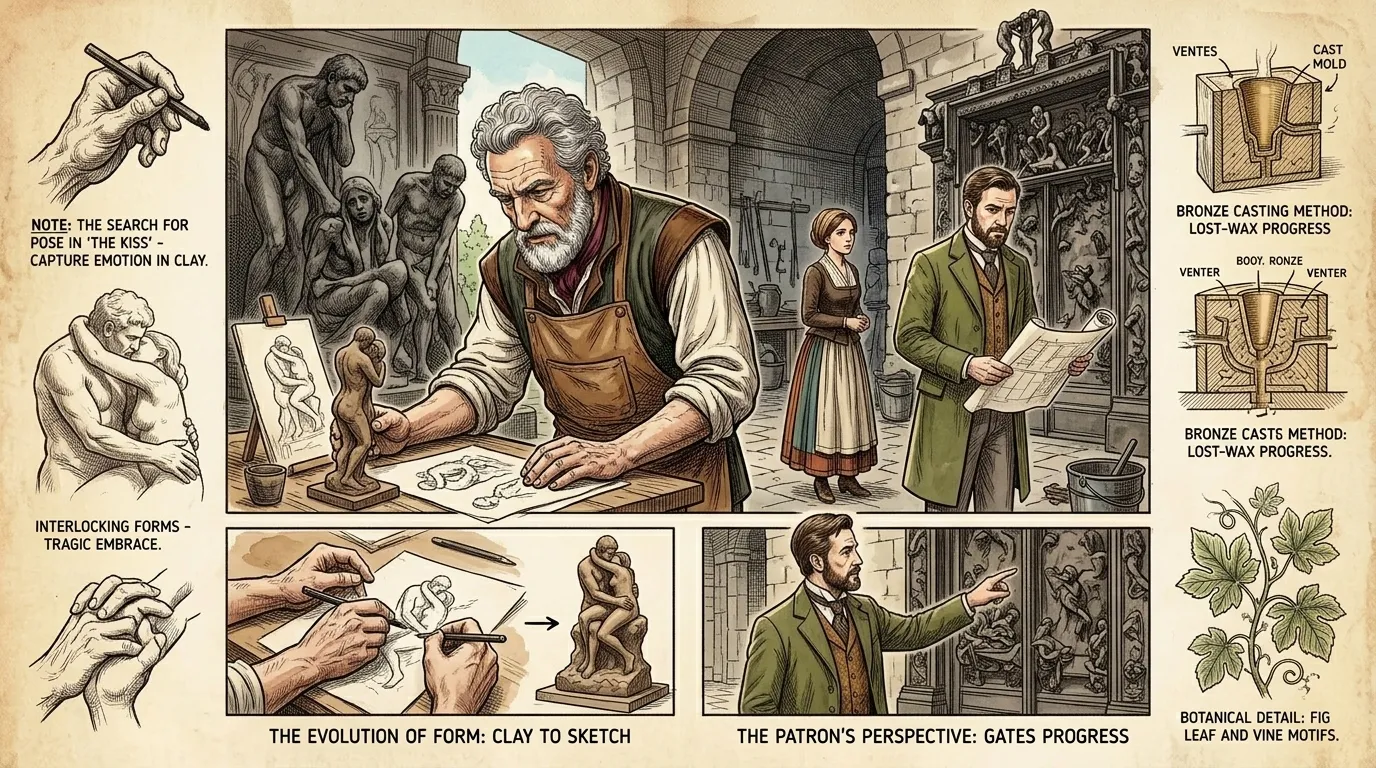
Within 'The Gates of Hell,' Rodin initially conceived of 'The Kiss' as representing Paolo and Francesca, two lovers from Dante's 'Inferno' condemned to eternal damnation for their forbidden love. This tragic story fueled the sculpture's raw emotional power. Their love was the genesis of Rodin's later triumph.
"Rodin stated, 'Their embrace is one of tragedy and passion, eternally entwined. A love that damns them both!'"
Art Fact: Paolo and Francesca's story provided the initial inspiration for 'The Kiss,' but Rodin later removed the sculpture from 'The Gates of Hell.'
Page 8
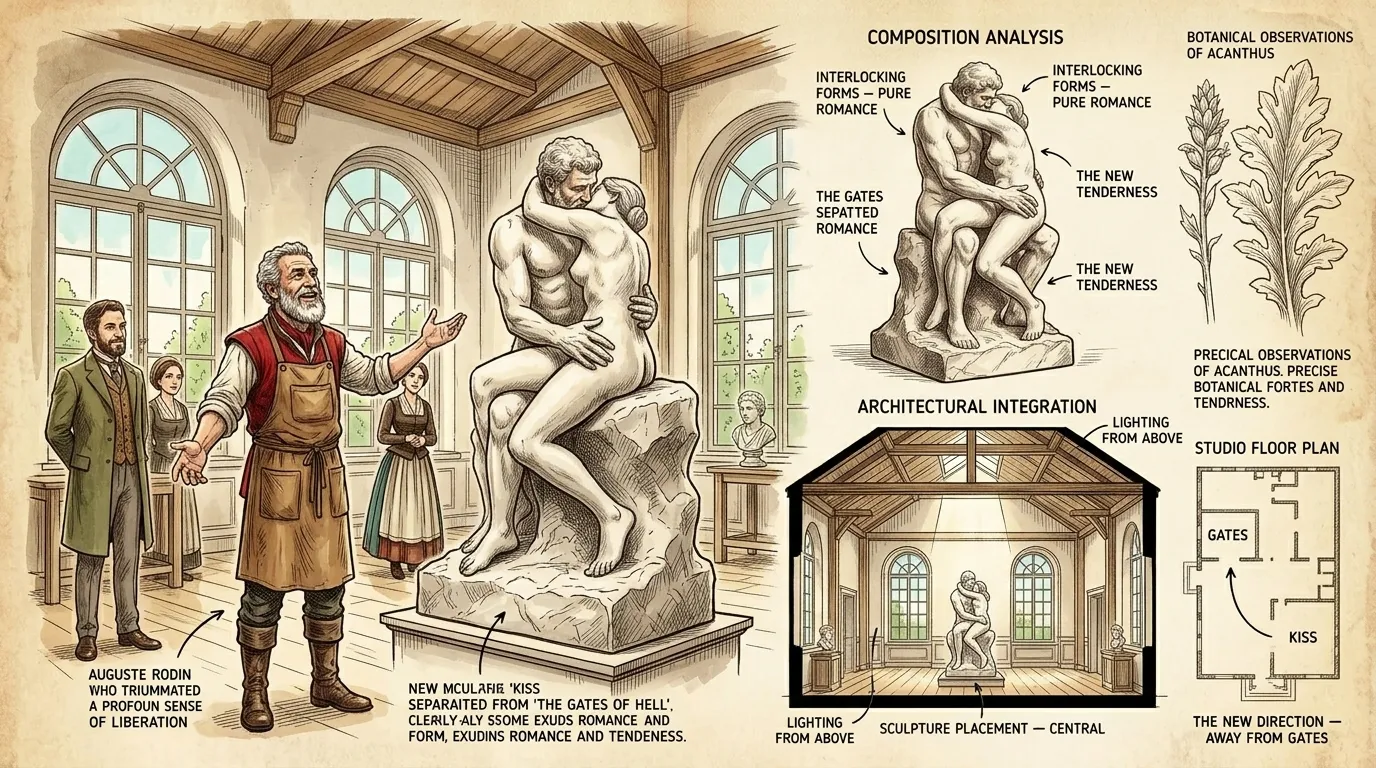
Rodin decided to separate 'The Kiss' from 'The Gates of Hell,' transforming it from a symbol of damnation into a celebration of pure, unadulterated love. This shift in focus elevated the sculpture to a universal symbol of romance. The decision to shift from damnation to romance was a stroke of genius.
"Rodin declared, 'This sculpture is no longer about damnation, it is about love! The beauty of the moment, the tenderness of the touch, and the hope that is to be had from feeling. I have not felt like this in ages!'"
Art Fact: The transformation of 'The Kiss' into an independent work cemented its status as a symbol of romantic love.
Page 9
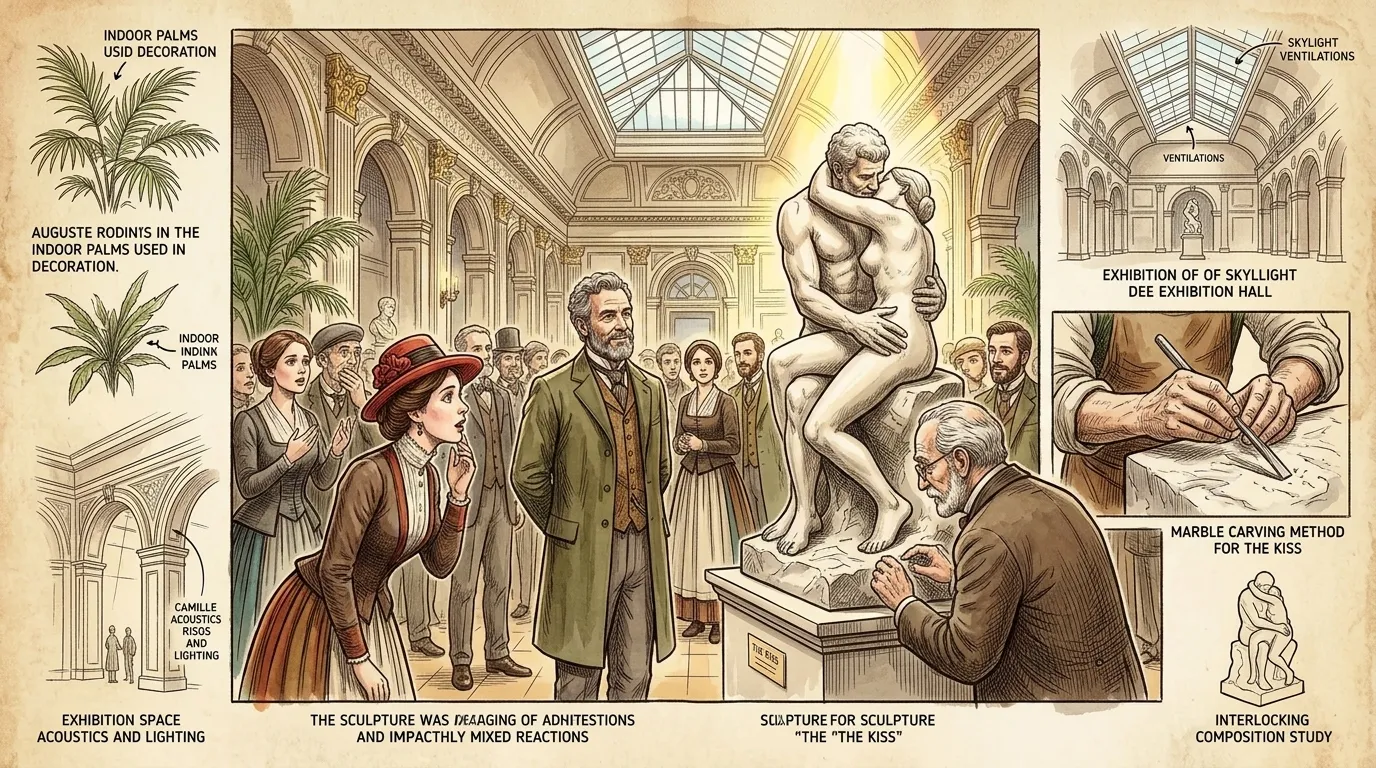
In 1898, Rodin exhibited 'The Kiss' at the Salon de la Société Nationale des Beaux-Arts, where it was met with immediate acclaim and some controversy. The sculpture's overt sensuality both shocked and captivated audiences, ensuring its place in art history. This was its first moment of true impact.
"A visitor exclaimed, 'The passion! The emotion! It's breathtaking!' Another whispered, 'Is it appropriate for public display? It's far too intimate!'"
Art Fact: The exhibition at the Salon solidified 'The Kiss' as one of Rodin's most celebrated works, despite its controversial subject matter.
Page 10
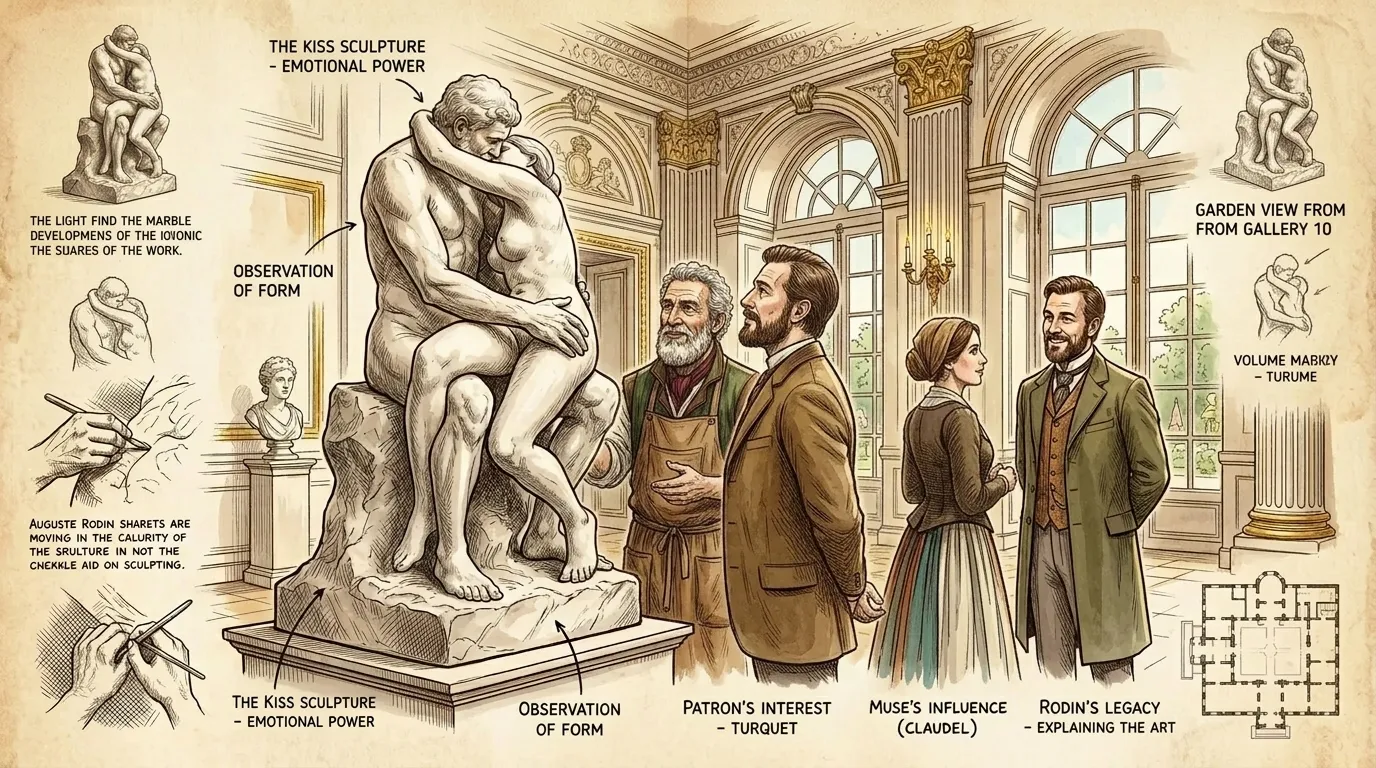
Today, 'The Kiss' continues to inspire awe and admiration at the Musée Rodin, a testament to the enduring power of love and art. Rodin's vision lives on, whispering to generations the beauty of human connection. Rodin's art, in the words of Leonardo da Vinci, 'Art is never finished, only abandoned.'
"The tour guide spoke with reverence, 'Rodin has captured the essence of love, and this is what we come here for. The heart is what connects us all, and he wanted that to be apparent in every piece that he crafted, no matter how it appeared to the public.'"
Art Fact: The Kiss' remains a powerful symbol of romantic love, displayed in museums around the world, ensuring Rodin's legacy for generations to come.
About this story
- Location: France
- Audience: general readers
Read Wonder Arts on your phone
Wonder Arts is available on Android. Get Wonder Arts on Google Play.