The Last of the Mohicans by Thomas Cole (USA — 1826)
The Last of the Mohicans by Thomas Cole (USA — 1826) — an illustrated arts story, set in United States. 10 illustrated pages, free to read on Wonder Arts.
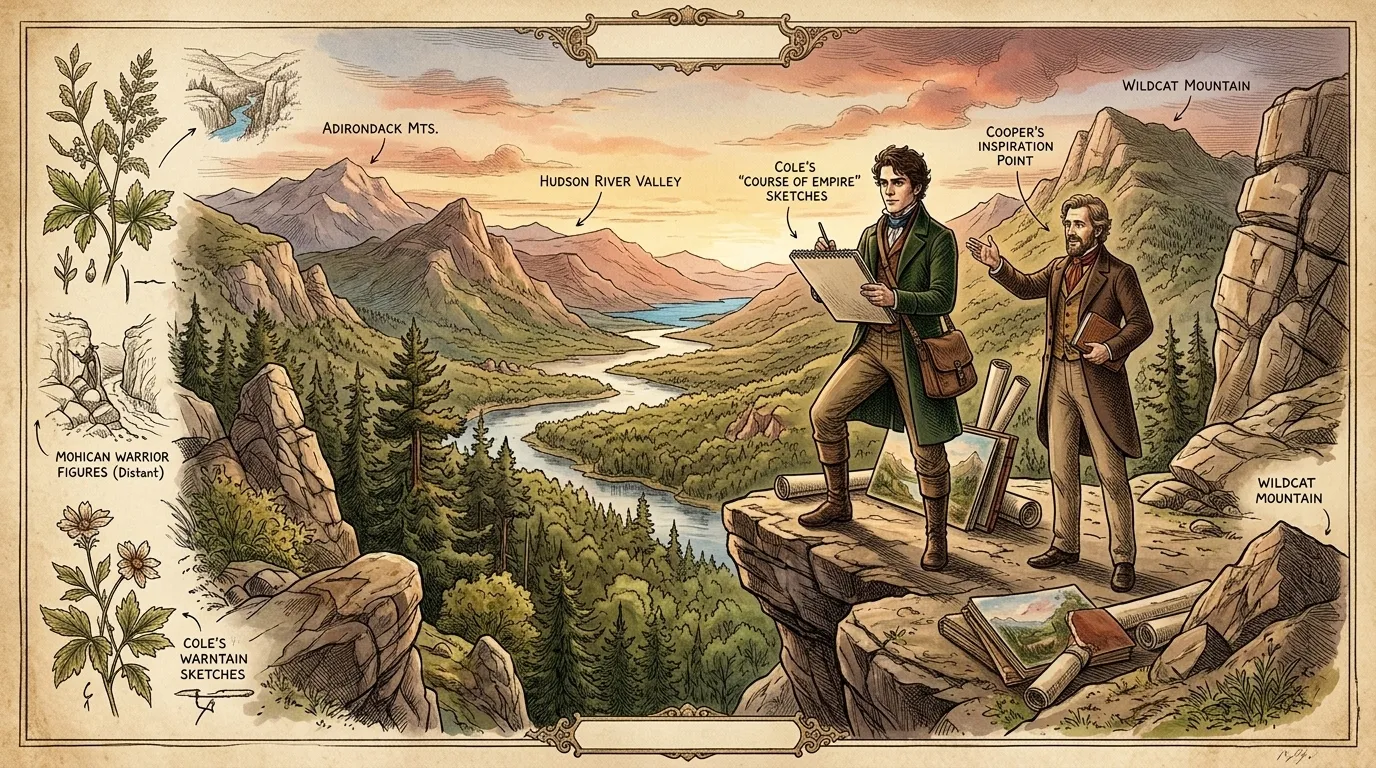
Page 1
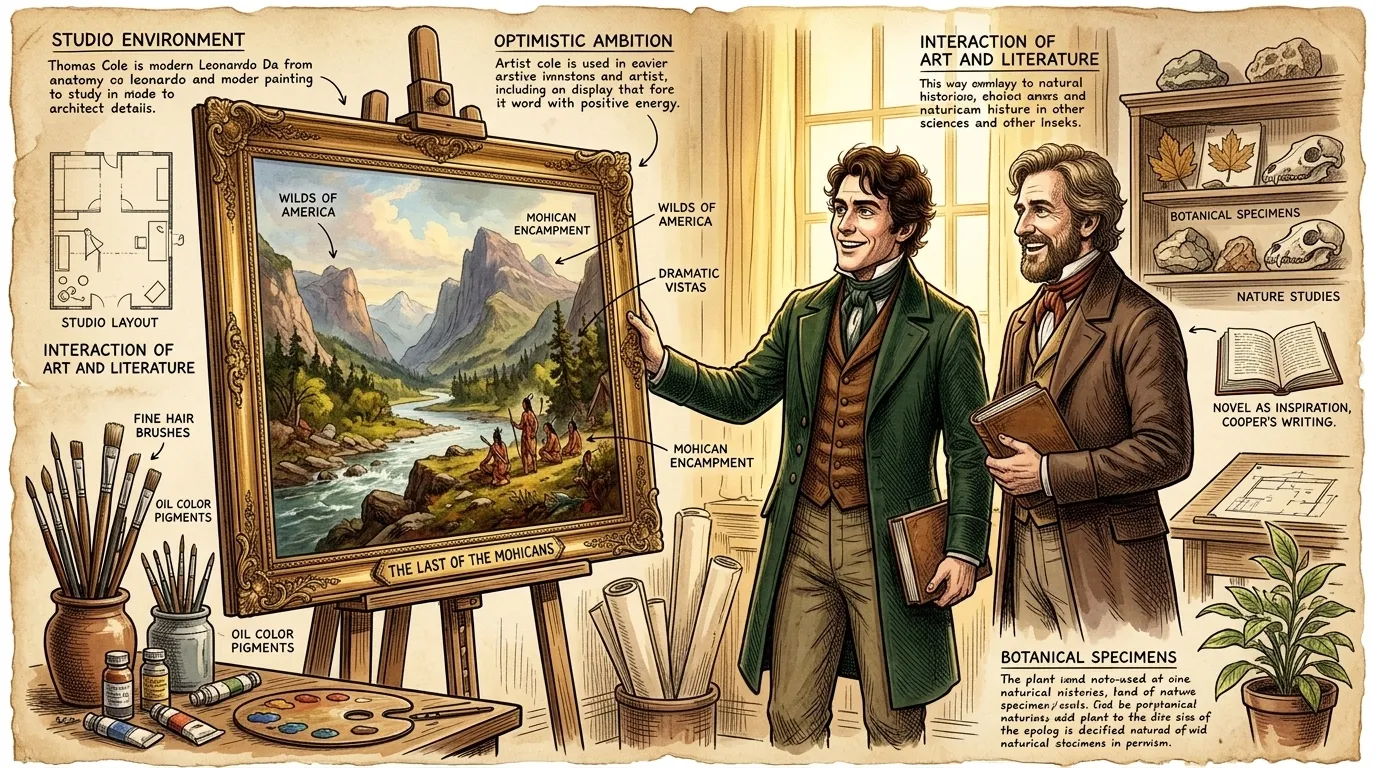
Thomas Cole, at 25, stands before his finished canvas, 'The Last of the Mohicans,' completed in 1826. The Hudson River School style is evident in his meticulous detail and dramatic landscape. This painting, measuring 25 x 34 inches, now resides at the Fenimore Art Museum in Cooperstown, New York. Its profound impact lies in its portrayal of a changing America, and a lament for what was being lost.
""It is not merely a scene, but a history," Cole murmurs, his gaze fixed on the landscape. "A testament to the lives intertwined with this very land.""
Art Fact: The painting captures a pivotal moment from James Fenimore Cooper's novel, depicting the clash of cultures and the vanishing wilderness.
Page 2
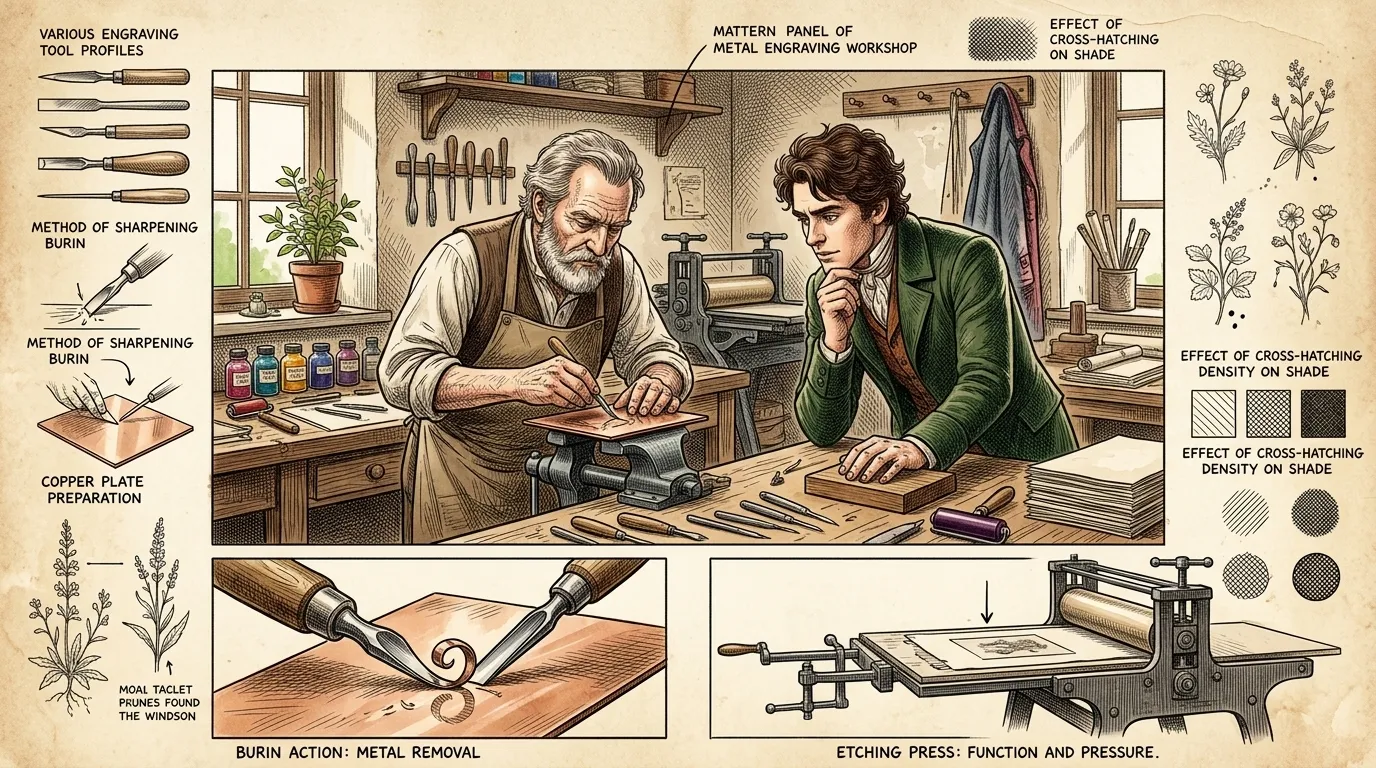
Cole, a young apprentice, observes an older engraver meticulously crafting lines on a copper plate. The engraver, a Mr. Stein, explains the importance of capturing detail and conveying emotion through precise execution. This lesson would profoundly influence Cole's approach to painting, grounding his romantic visions in tangible reality.
""Remember, Thomas," Stein says, his voice raspy, "an artist must be a craftsman first. Only then can he truly capture the soul of a scene.""
Art Fact: Cole's early training in engraving instilled in him a lifelong appreciation for detail and precision.
Page 3
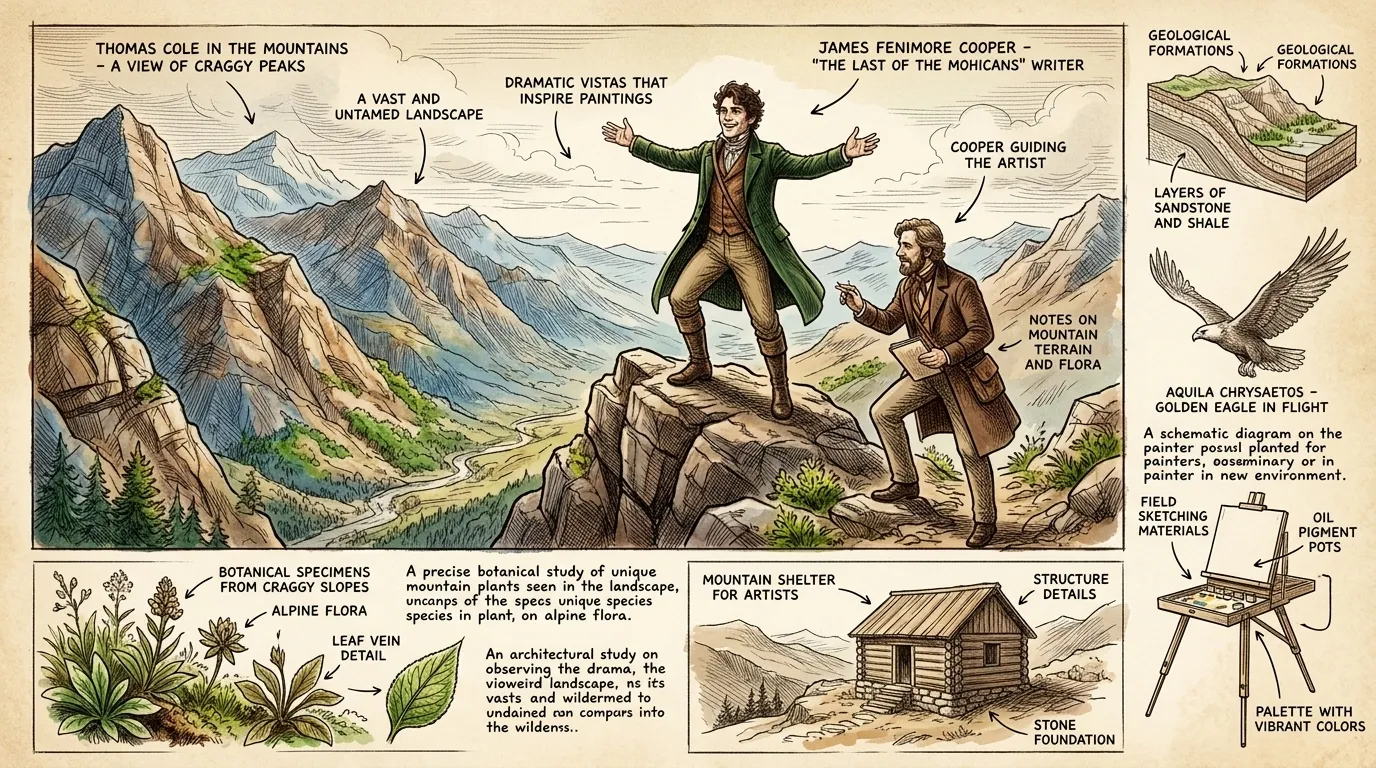
Cole, newly arrived in America, stands atop a craggy peak in the Catskill Mountains. The vast, untamed wilderness stretches before him, a stark contrast to the industrializing landscapes of Europe. This vista ignites a passion within him to capture the sublime beauty and untamed spirit of the American landscape. Santiago, looks at Cole and smiles.
""It's... overwhelming," Cole says, breathlessly. "I never imagined anything could be so vast and... untamed.""
Art Fact: The Catskill Mountains became Cole's primary source of inspiration, shaping his artistic vision and fueling his romantic depictions of the American landscape.
Page 4
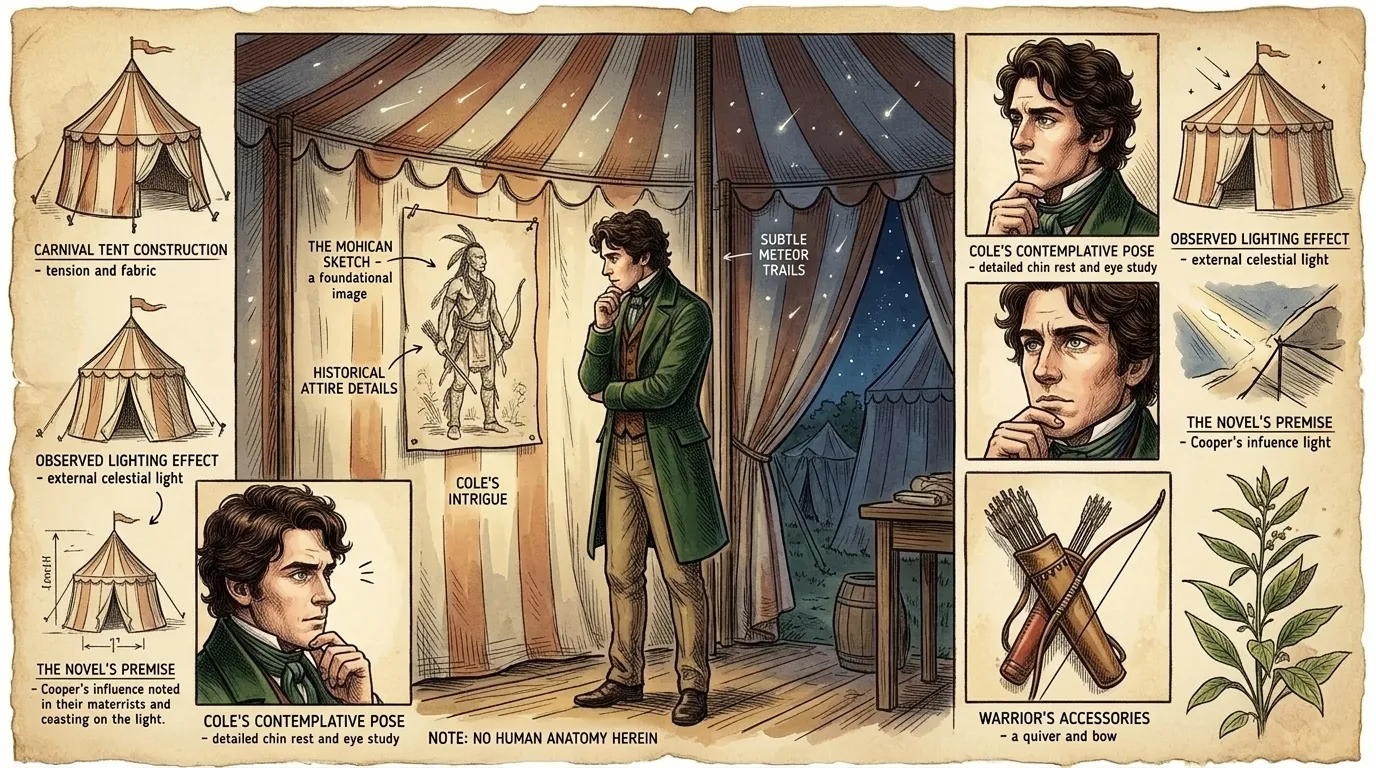
Cole visits a traveling carnival that only appears during meteor showers, viewing historical sketches of Native Americans. A barker calls to the audience to enter and learn, not only for the show, but to remember that our history will repeat if we do not listen. Cole pauses, absorbing the details of the sketches, intrigued by the portrayal of a culture he knows is rapidly disappearing.
""These people... their way of life... it's slipping away," Cole says, studying a sketch of a Mohican warrior. "We must preserve their memory, even if just on canvas.""
Art Fact: Cole's encounter with these sketches deepened his interest in depicting the Native American experience and the tragic consequences of westward expansion.
Page 5
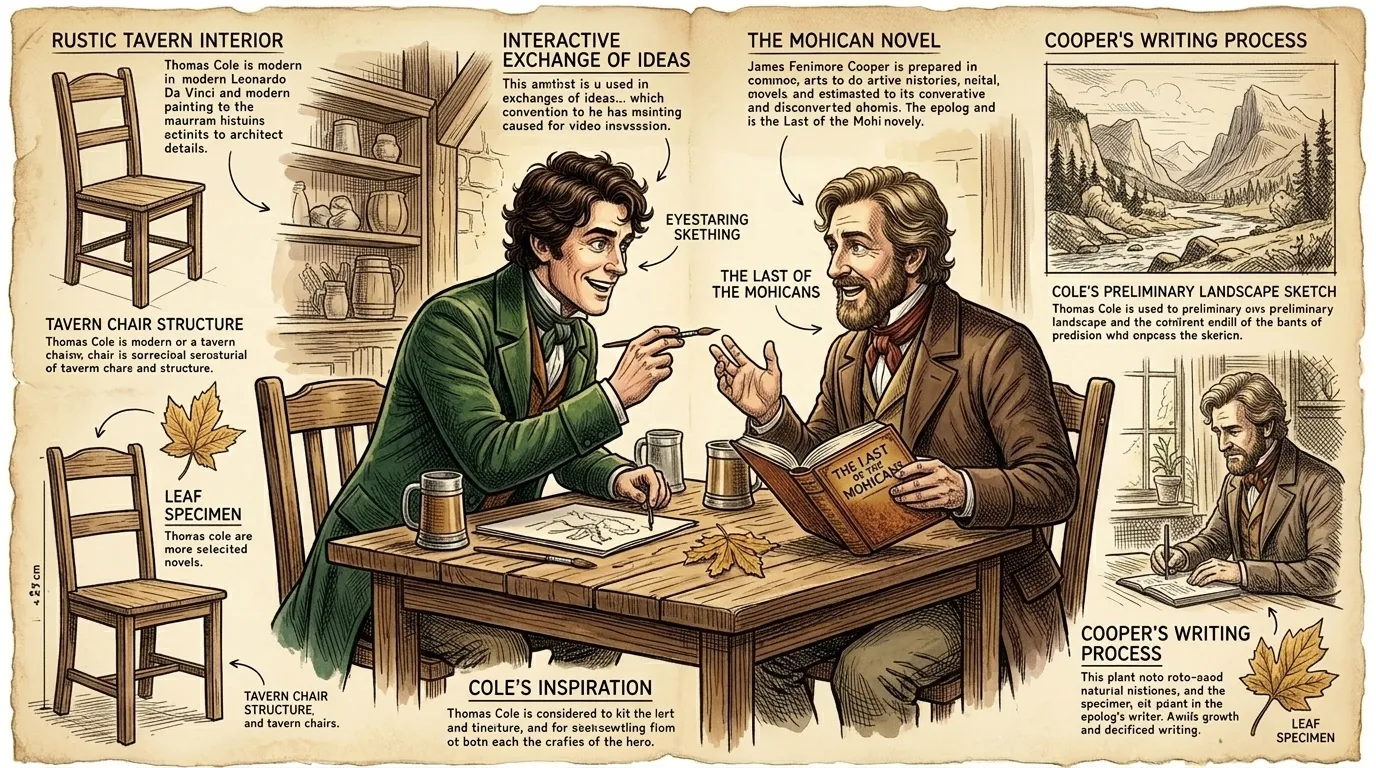
Cole meets James Fenimore Cooper in a tavern, discussing Cooper's novel 'The Last of the Mohicans'. Cooper's passionate portrayal of the wilderness and the plight of the Native Americans resonates deeply with Cole. This encounter plants the seed for his own artistic interpretation of the story.
""Your words, Mr. Cooper, they paint a vivid picture of a world on the brink of change," Cole says, his eyes gleaming with inspiration. "I feel compelled to capture that on canvas.""
Art Fact: James Fenimore Cooper's novel provided Cole with a compelling narrative framework for exploring themes of cultural conflict, loss, and the vanishing wilderness.
Page 6
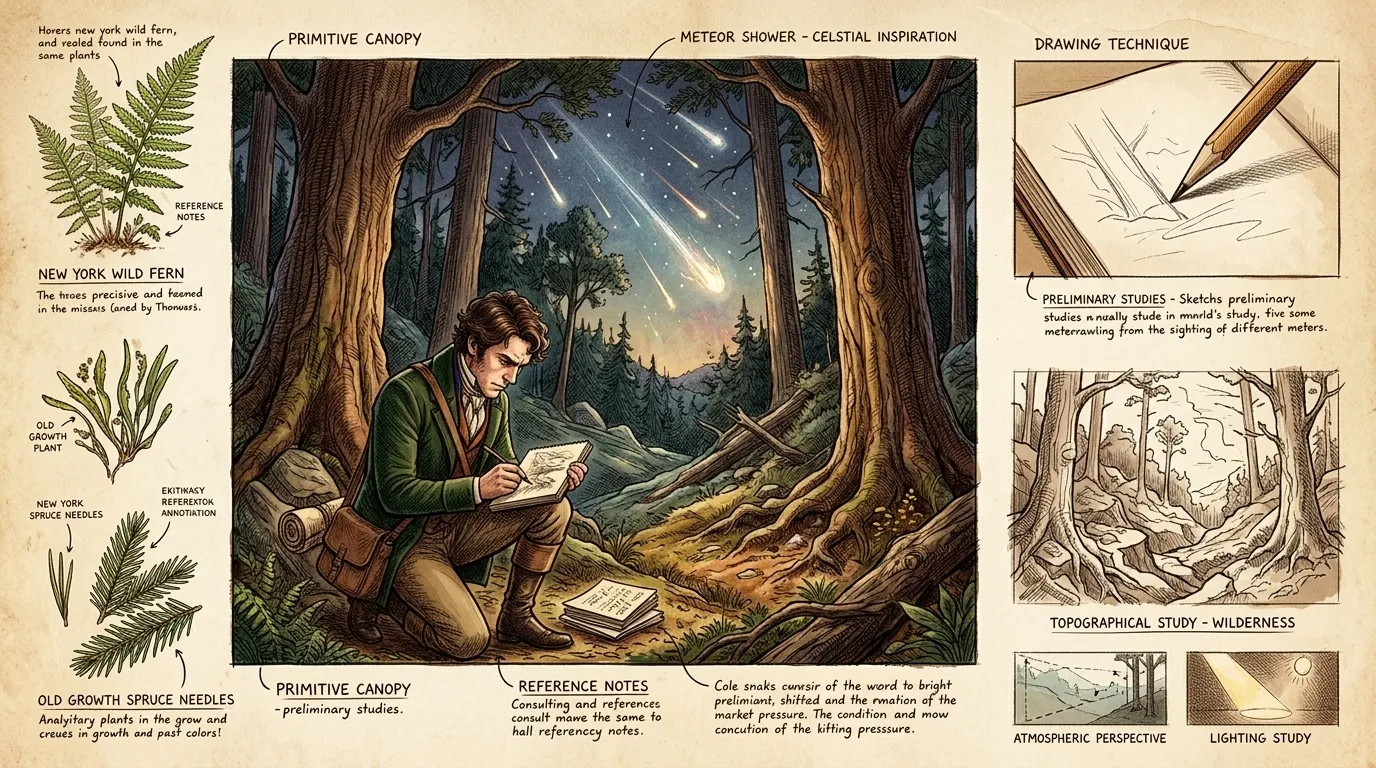
Cole, deep in the forest, sketches preliminary studies for his painting. He meticulously captures the rugged terrain, the dramatic lighting, and the poses of the figures, ensuring historical accuracy and emotional depth. He consults his reference materials and notes. The meteor showers are visible through the trees, illuminating the surroundings.
""Every line, every shadow, must tell a story," Cole murmurs, his brow furrowed in concentration as he studies the landscape. "It is like Helen Keller once said, '"The best and most beautiful things in the world cannot be seen or even touched - they must be felt with the heart.'""
Art Fact: Cole's meticulous sketching process allowed him to translate his observations of nature into compelling and emotionally resonant compositions.
Page 7
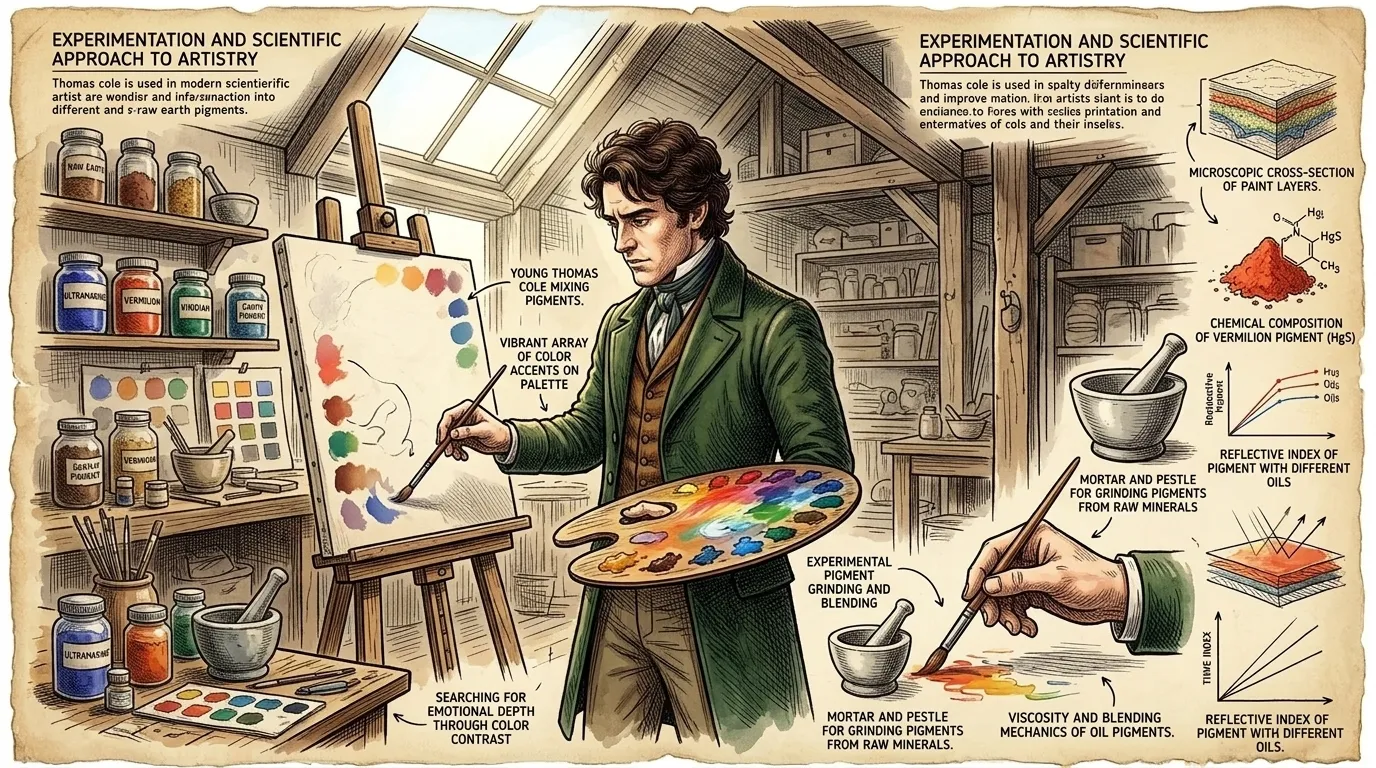
Back in his studio, Cole experiments with color palettes, seeking to capture the dramatic contrast between the vibrant wilderness and the somber realities of cultural conflict. He carefully mixes pigments, striving to evoke the mood and atmosphere of the story.
""The colors must speak," Cole declares, mixing pigments on his palette. "They must convey the hope, the loss, the struggle... everything.""
Art Fact: Cole's masterful use of color played a crucial role in conveying the emotional depth and narrative power of his paintings.
Page 8
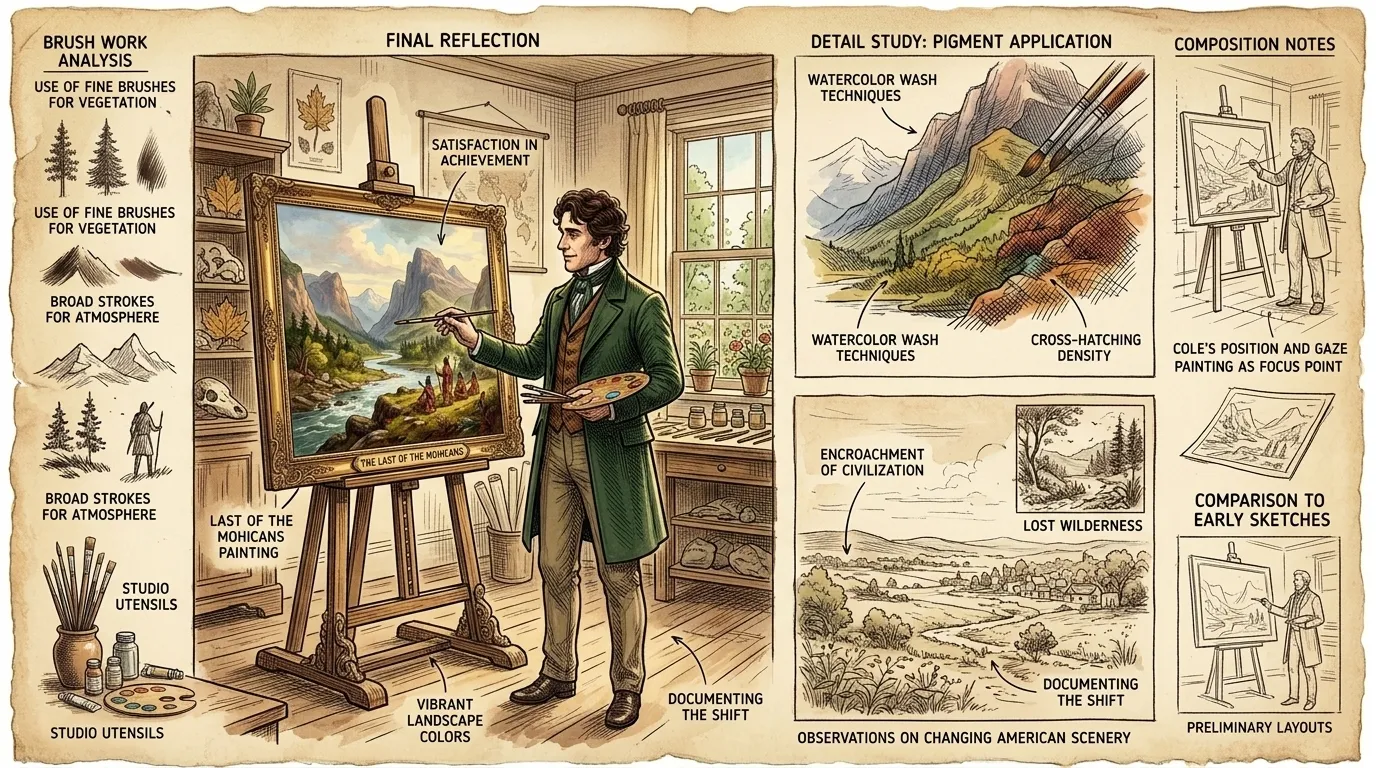
Cole, after months of meticulous work, applies the final brushstroke to 'The Last of the Mohicans'. He steps back, admiring his creation, knowing that he has captured a fleeting moment of history and a poignant reflection on the changing American landscape.
""It is finished," Cole whispers, his voice filled with both satisfaction and a hint of melancholy. "A testament to a world that is fading, but not forgotten.""
Art Fact: The completion of 'The Last of the Mohicans' marked a significant achievement in Cole's career, solidifying his reputation as a leading figure in the Hudson River School.
Page 9
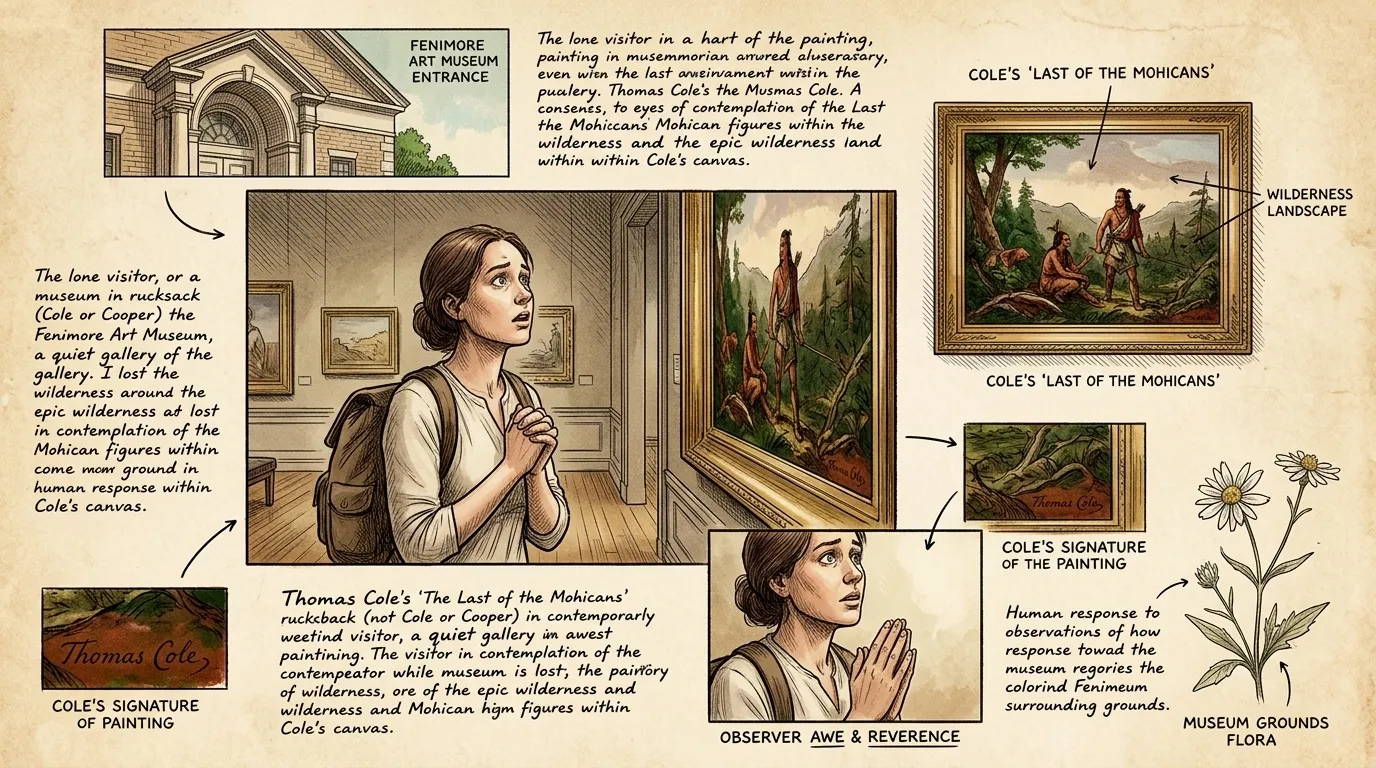
Years later, at the Fenimore Art Museum, a visitor stands before 'The Last of the Mohicans,' captivated by its beauty and its powerful message. The painting continues to resonate with audiences, reminding them of the importance of preserving history and honoring the cultures that shaped the American landscape.
""It's breathtaking," the visitor whispers, her eyes filled with awe. "It makes you think about what we've lost, and what we must protect.""
Art Fact: 'The Last of the Mohicans' continues to inspire and provoke, serving as a powerful reminder of the complex and often tragic history of the American frontier.
Page 10
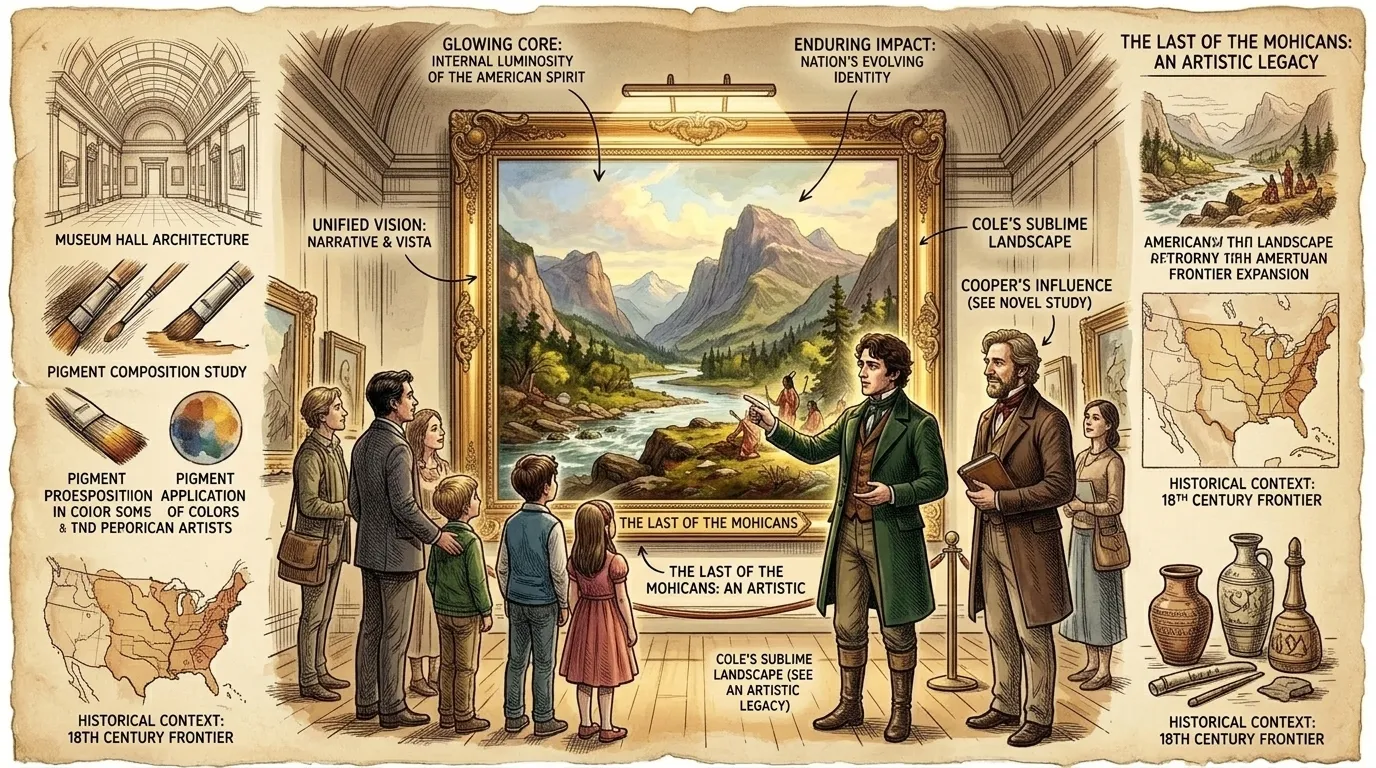
Thomas Cole's 'The Last of the Mohicans' endures, not just as a painting, but as a symbol of a nation's evolving identity and the enduring power of art to capture the spirit of a time. His vision continues to inspire artists and shape the way we see the American landscape, remembering that, 'Every artist dips his brush in his own soul, and paints his own nature into his pictures.'
Art Fact: Thomas Cole's art serves as a testament to the enduring power of the human spirit and the importance of preserving our natural and cultural heritage.
About this story
- Location: United States
- Audience: general readers
Read Wonder Arts on your phone
Wonder Arts is available on Android. Get Wonder Arts on Google Play.