The Mona Lisa by Leonardo da Vinci (Paris, France — 1503–1519)
The Mona Lisa by Leonardo da Vinci (Paris, France — 1503–1519) — an illustrated arts story, set in France. 10 illustrated pages, free to read on Wonder Arts.
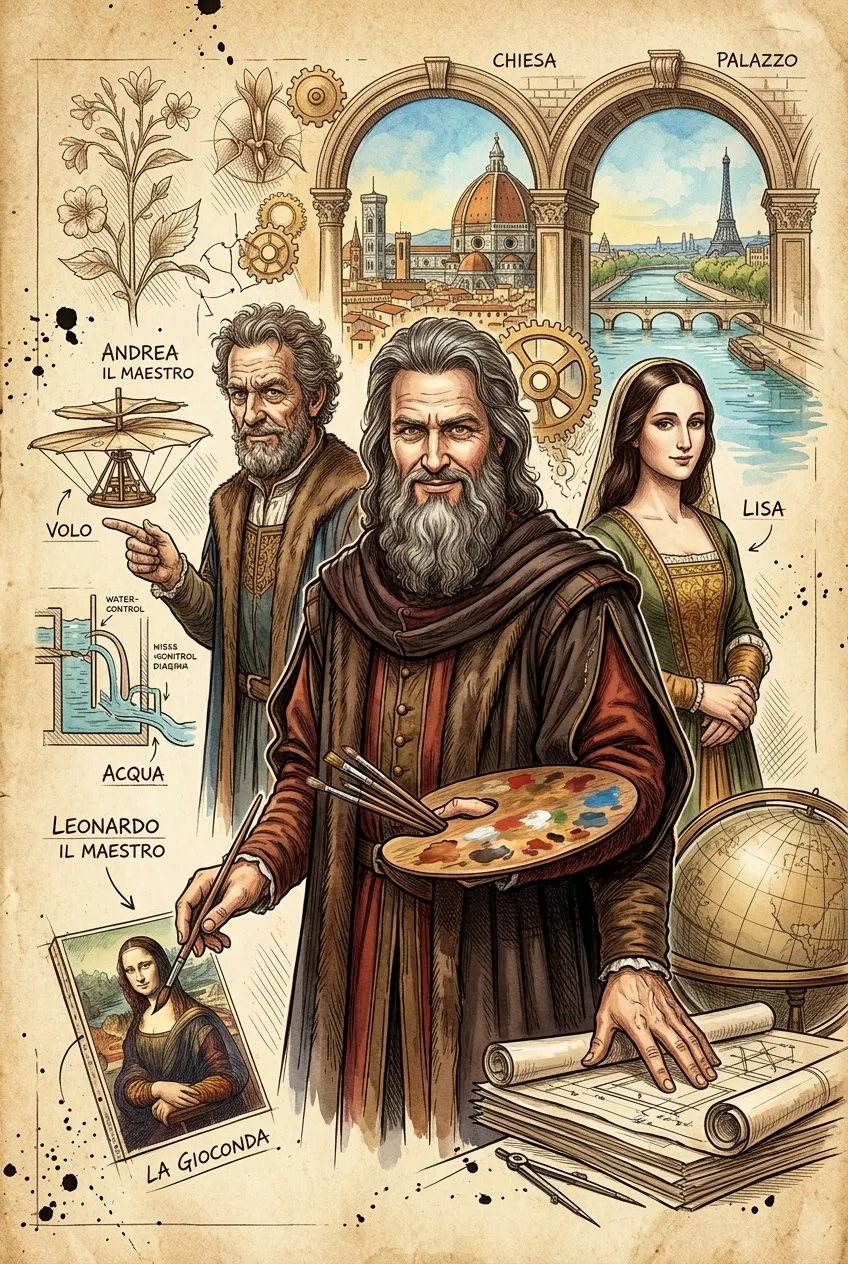
Page 1
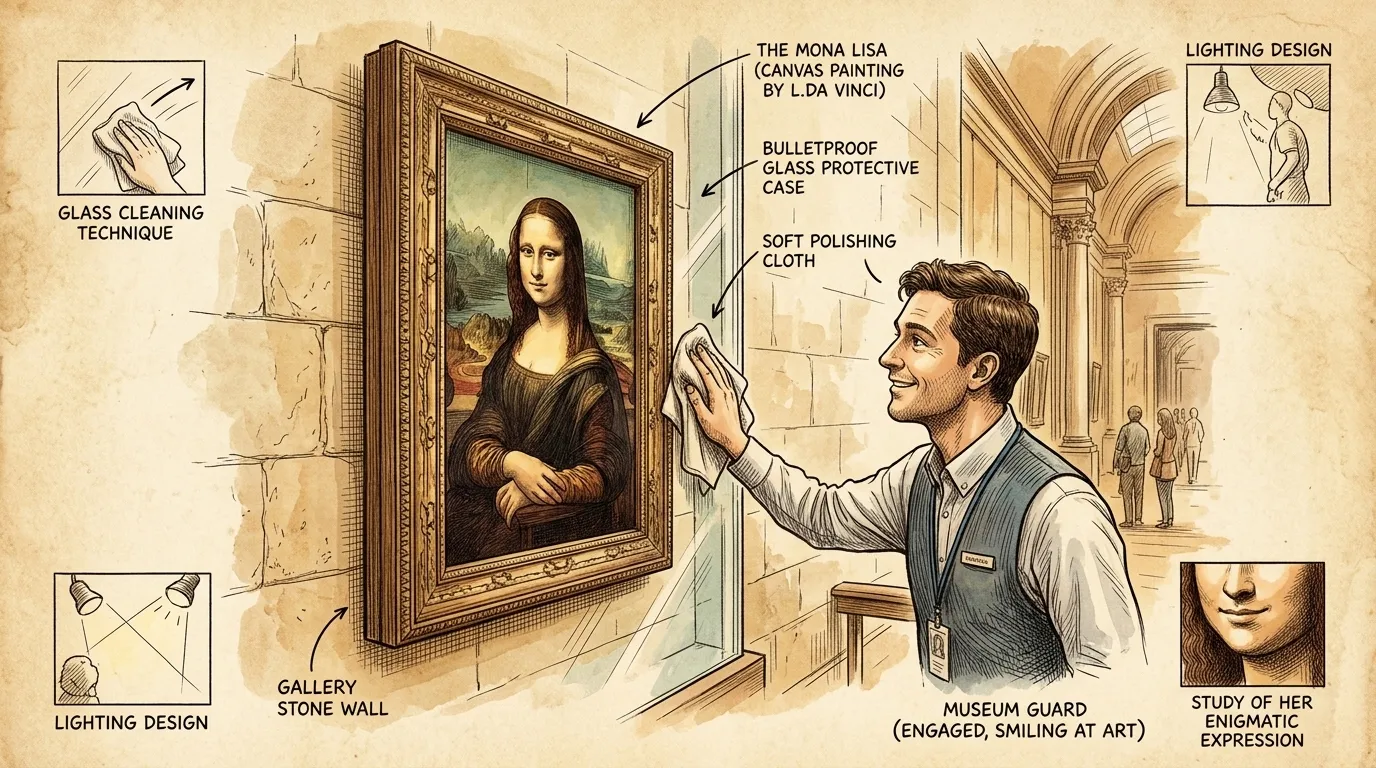
The Mona Lisa, painted by Leonardo da Vinci between 1503 and 1517, hangs in the Louvre Museum, Paris. This iconic portrait, measuring 77 cm x 53 cm, is arguably the most famous painting in the world. Its value is inestimable, and its fame unparalleled. But what is it about this woman's expression that has captivated viewers for centuries?
""They say a picture is worth a thousand words, but this one whispers untold secrets," observed a guard, polishing the glass case."
Art Fact: The Mona Lisa's fame exploded in the 20th century, but it was already a highly regarded work during da Vinci's lifetime. Its sfumato technique and innovative composition set it apart.
Page 2

Beneath the bustling streets of Florence, where Leonardo spent his early years, flowed a hidden river, its waters reflecting the flickering candlelight. The young Leonardo, a slim youth with a thirst for knowledge, often ventured into these subterranean realms. He found inspiration in the glistening gemstone caverns.
""Nature is the source of all true knowing," Leonardo mused, sketching furiously in his notebook. "As Aristotle said, 'The more you know, the more you realize you don't know.' I feel that truth in every gemstone's facet.""
Art Fact: Leonardo's early life in Florence was marked by a deep curiosity about the natural world, a trait that would influence his art and inventions.
Page 3
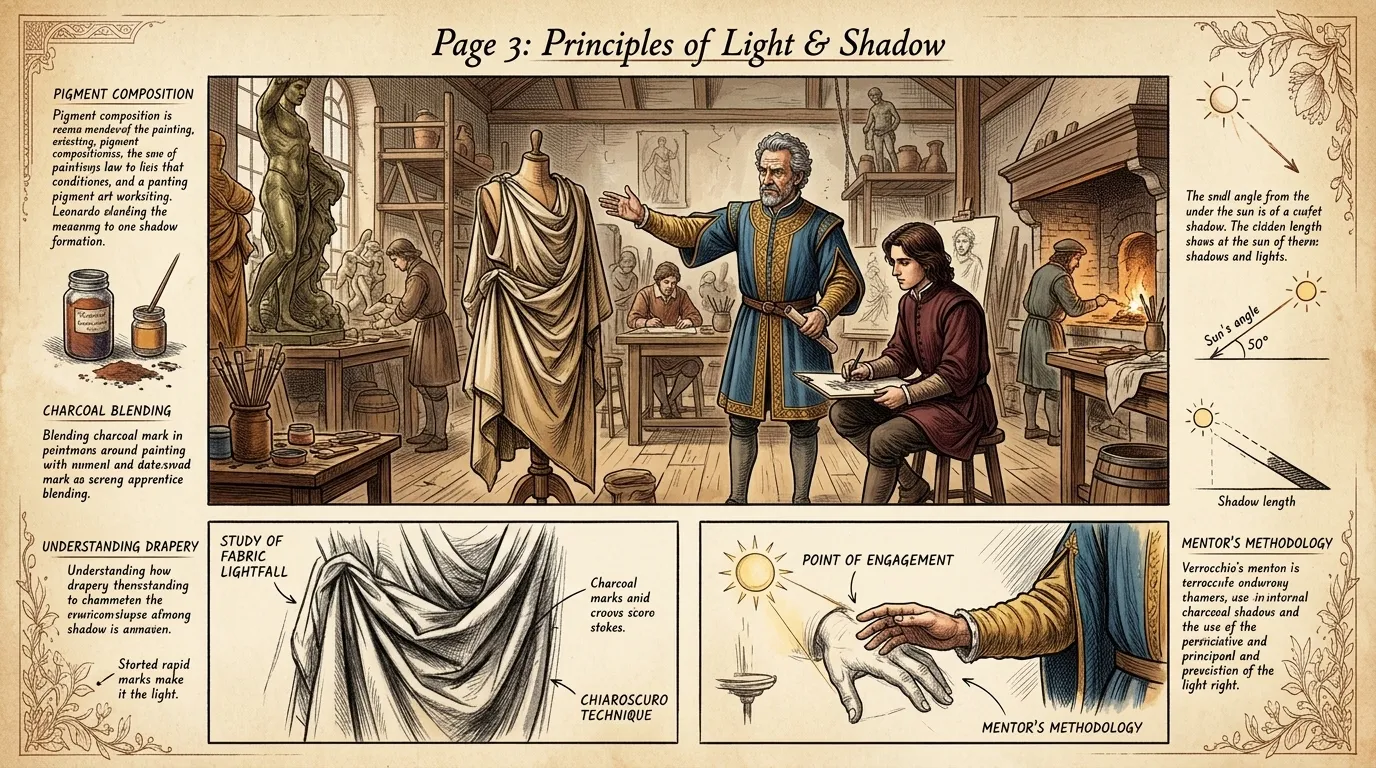
Leonardo apprenticed in the workshop of Andrea del Verrocchio, a renowned Florentine artist. Here, amidst the smell of pigments and linseed oil, Leonardo honed his skills. Verrocchio, a stern taskmaster, pushed his students to perfection.
""Leonardo, your anatomy is improving, but your understanding of light is still lacking!" Verrocchio boomed, his voice echoing through the workshop. "Observe how light falls on the folds of the drapery; it is not merely shading, it defines form!""
Art Fact: Verrocchio's workshop was a hub of artistic innovation, and Leonardo's time there provided him with a solid foundation in painting, sculpture, and drawing.
Page 4
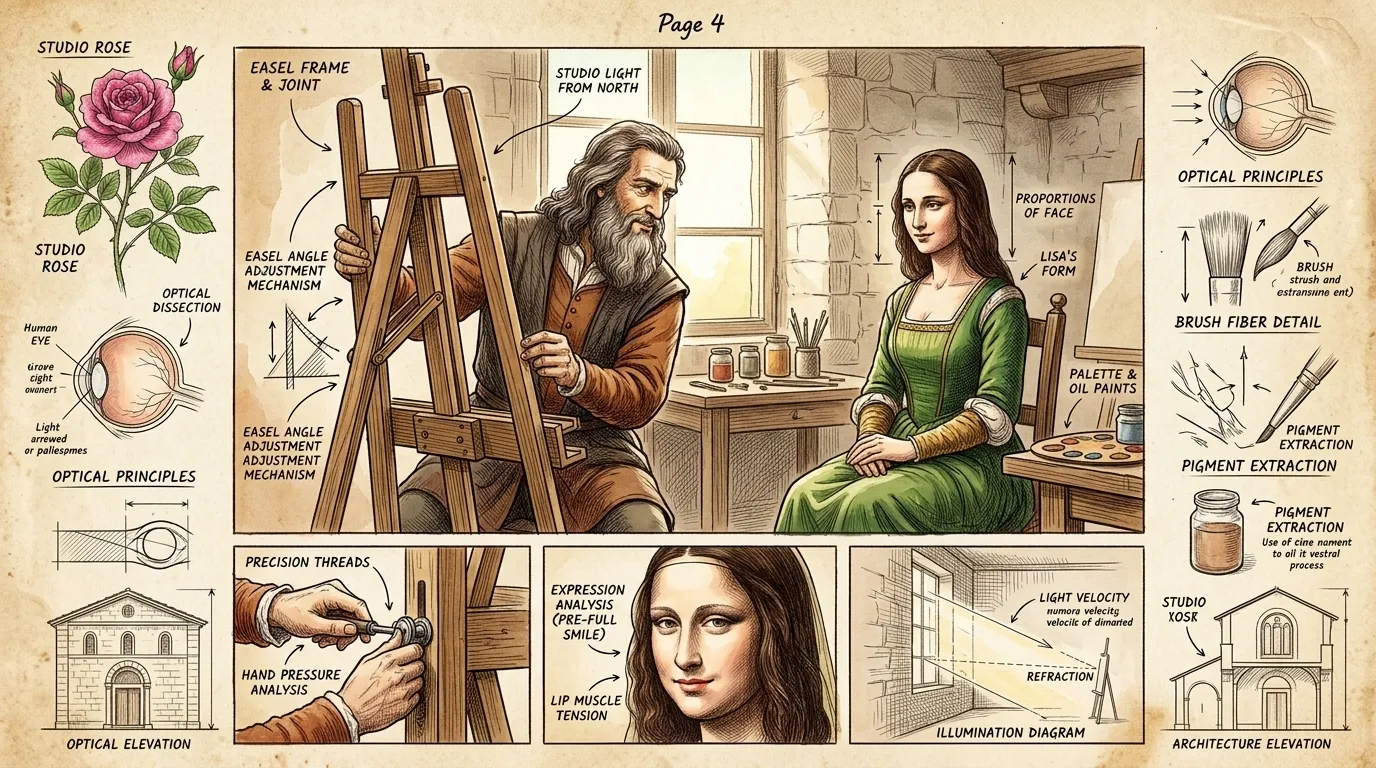
Around 1503, Leonardo began painting Lisa del Giocondo, the wife of a wealthy Florentine silk merchant, Francesco del Giocondo. Lisa, a woman of enigmatic beauty, possessed a quiet strength that captivated the artist. The commission was likely intended to commemorate the family's new home and the birth of their second son.
""Madonna Lisa, your presence fills the room with grace," Leonardo remarked, adjusting his easel. "Relax, and simply be. Let your inner self shine through.""
Art Fact: The identity of the Mona Lisa was long debated, but historical evidence now strongly supports that she was Lisa del Giocondo, a member of the Florentine gentry.
Page 5

Leonardo employed his signature technique, sfumato, to create the Mona Lisa's ethereal quality. Sfumato, derived from the Italian word for 'smoke,' involves layering thin glazes of paint to create subtle gradations of tone and color. The result is a soft, almost dreamlike effect.
""The true artist must lose himself in the work," Leonardo explained to a visiting artist, dabbing at the canvas with a fine brush. "Blend and soften, let no harsh lines betray the illusion of reality.""
Art Fact: Sfumato is a hallmark of Leonardo's style, used to create a sense of mystery and depth in his portraits.
Page 6
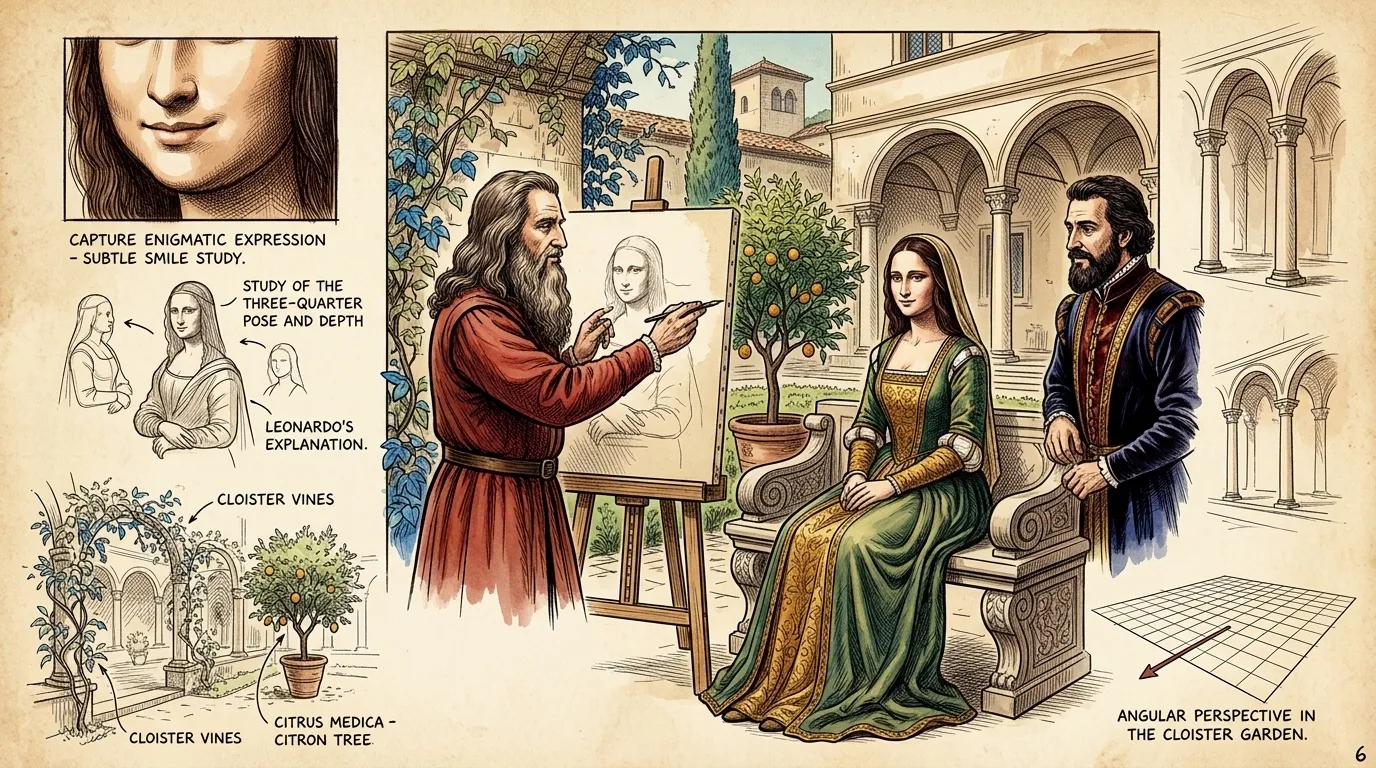
Unlike typical portraits of the time, which often depicted sitters in profile, Leonardo posed Lisa del Giocondo in a three-quarter view. This allowed him to capture her personality more fully, revealing her subtle expression and graceful posture. The landscape background added another layer of depth.
""This angle allows the soul to speak through the eyes," Leonardo explained to Francesco del Giocondo during a break. "The spirit is not confined to a flat plane, but inhabits a three-dimensional world.""
Art Fact: The Mona Lisa's three-quarter pose was a departure from traditional portraiture and contributed to the painting's enduring appeal.
Page 7
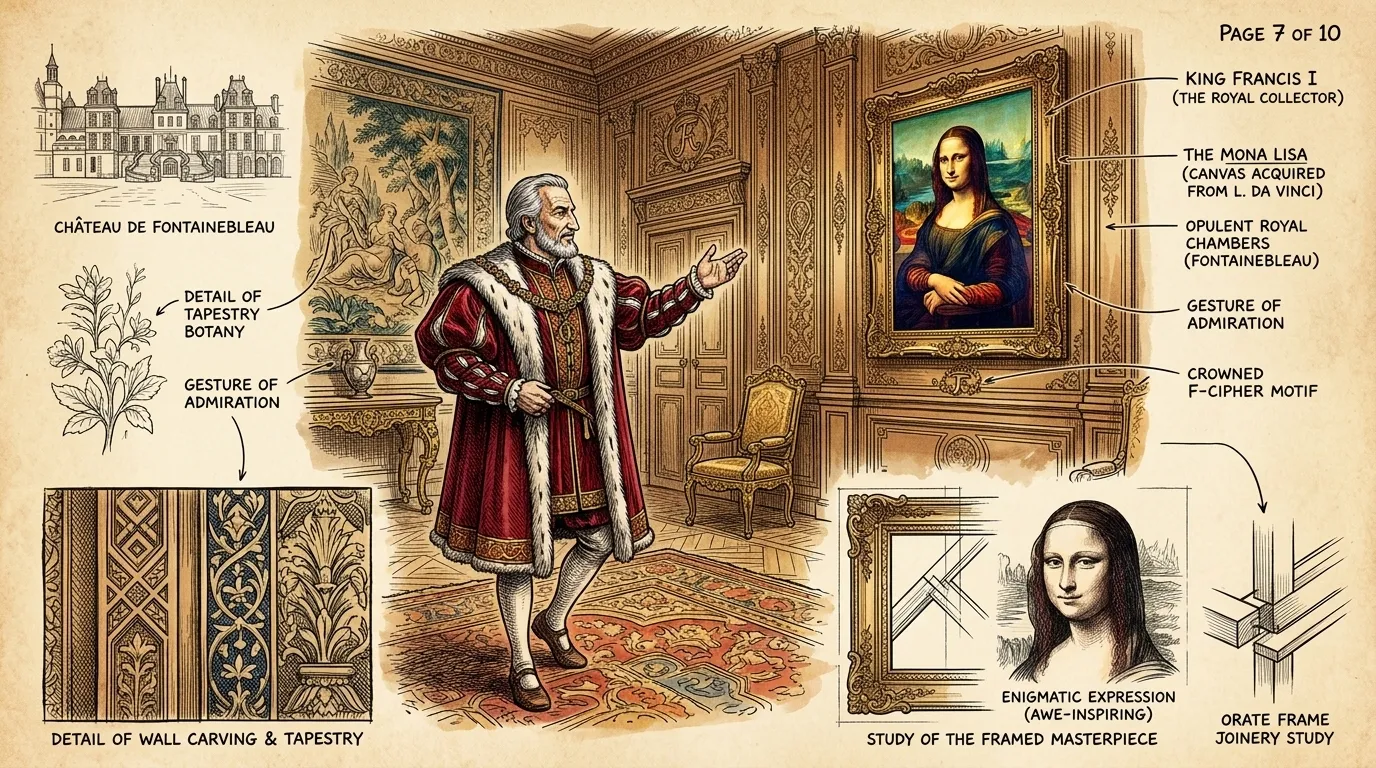
Leonardo never delivered the Mona Lisa to Francesco del Giocondo. He kept the painting with him, constantly refining it, until his death in France in 1519. The painting then entered the collection of King Francis I of France.
""This painting is a testament to the power of human observation and artistic skill," King Francis I declared, examining the Mona Lisa in his chambers. "It shall be a treasure of the French Crown.""
Art Fact: Leonardo's decision to keep the Mona Lisa with him suggests that it held a special significance for him, perhaps as a symbol of his artistic ideals.
Page 8
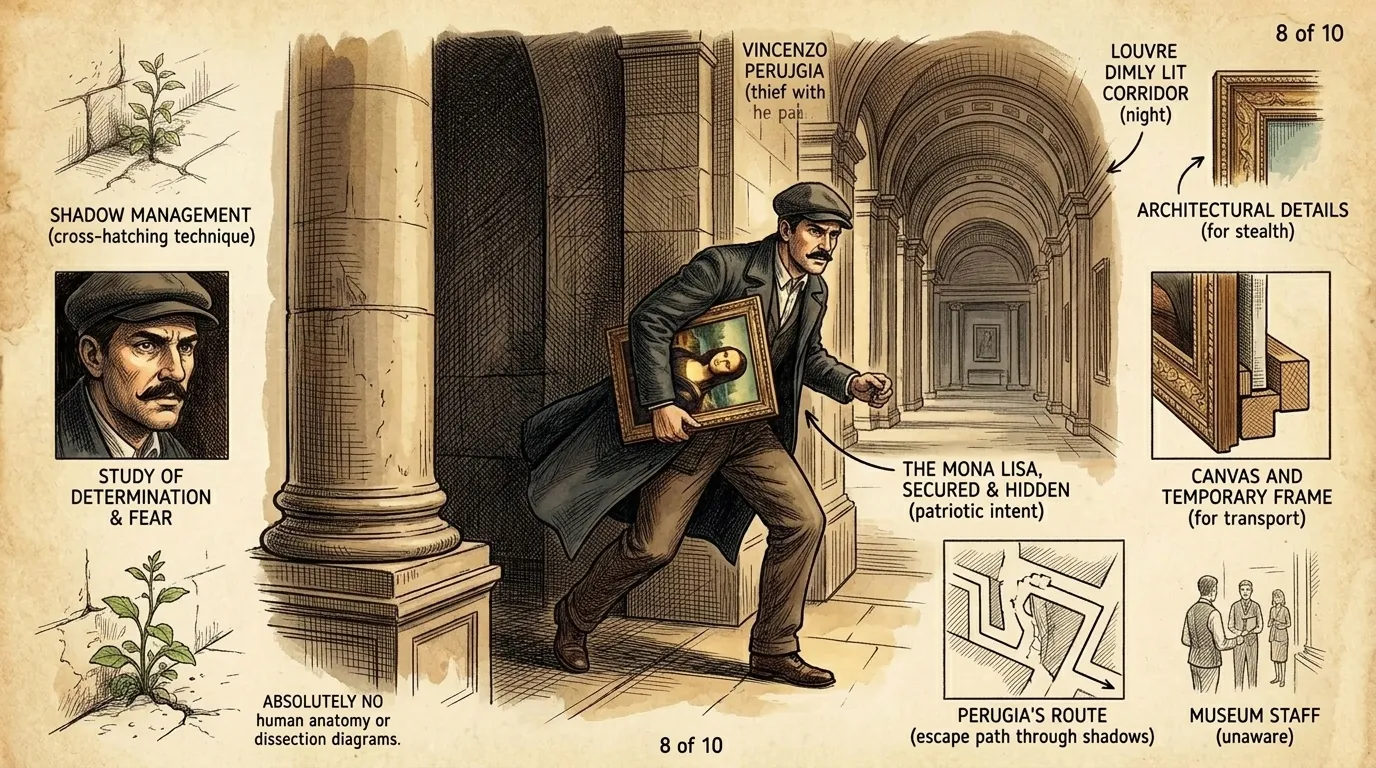
The Mona Lisa survived wars, revolutions, and even a daring theft in 1911. Vincenzo Perugia, an Italian patriot, stole the painting from the Louvre, believing it should be returned to Italy. The painting was recovered two years later.
""La Gioconda belongs to Italy!" Vincenzo Perugia exclaimed, as he hid the Mona Lisa under his coat. "It is a national treasure!""
Art Fact: The theft of the Mona Lisa in 1911 brought the painting unprecedented global attention and solidified its status as a cultural icon.
Page 9
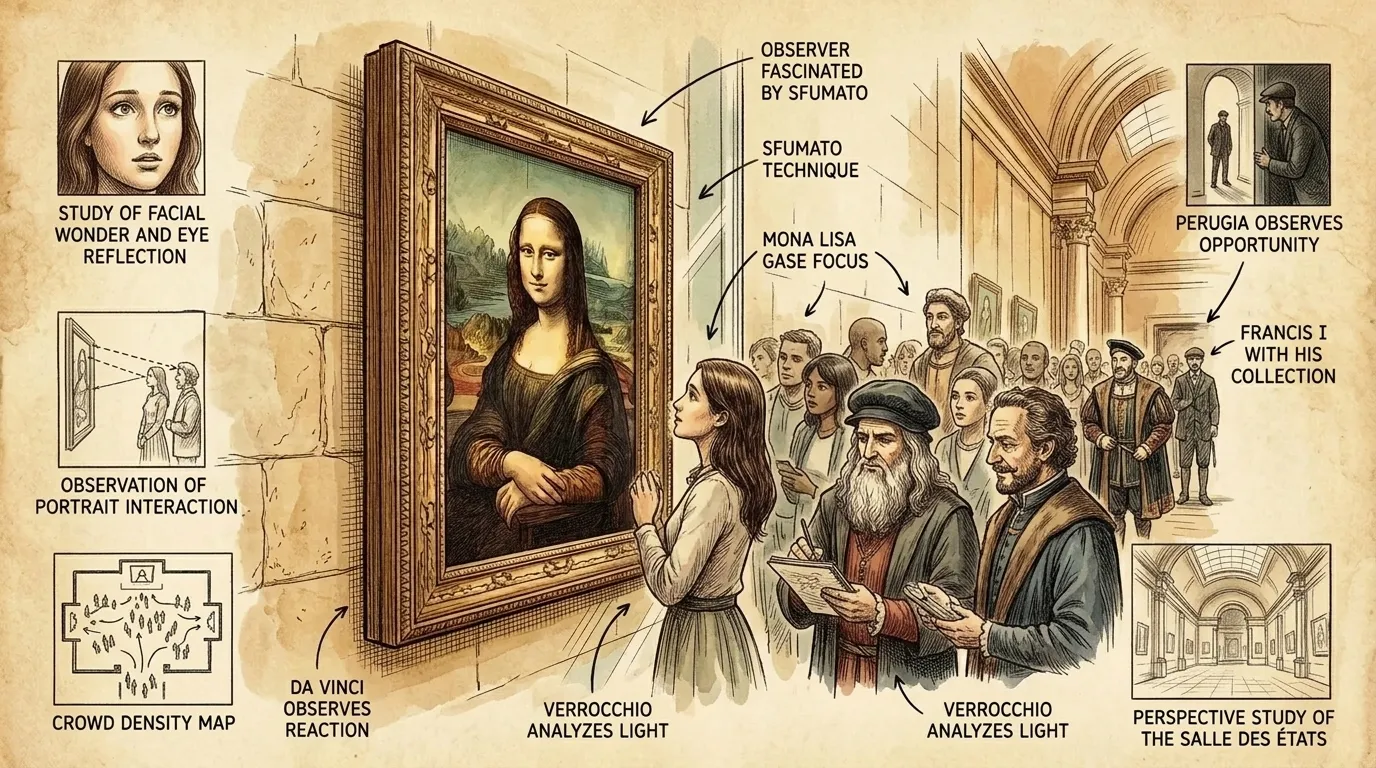
Despite the centuries that have passed, the Mona Lisa continues to inspire awe and wonder. Her enigmatic smile remains a subject of endless interpretation. Art historians, psychologists, and casual observers alike are drawn to her mysterious allure.
""What is she thinking?" wondered a young woman, gazing at the Mona Lisa. "Her eyes seem to follow me wherever I go...""
Art Fact: The Mona Lisa's enduring appeal lies in its ability to evoke a sense of mystery and invite viewers to project their own interpretations onto the painting.
Page 10
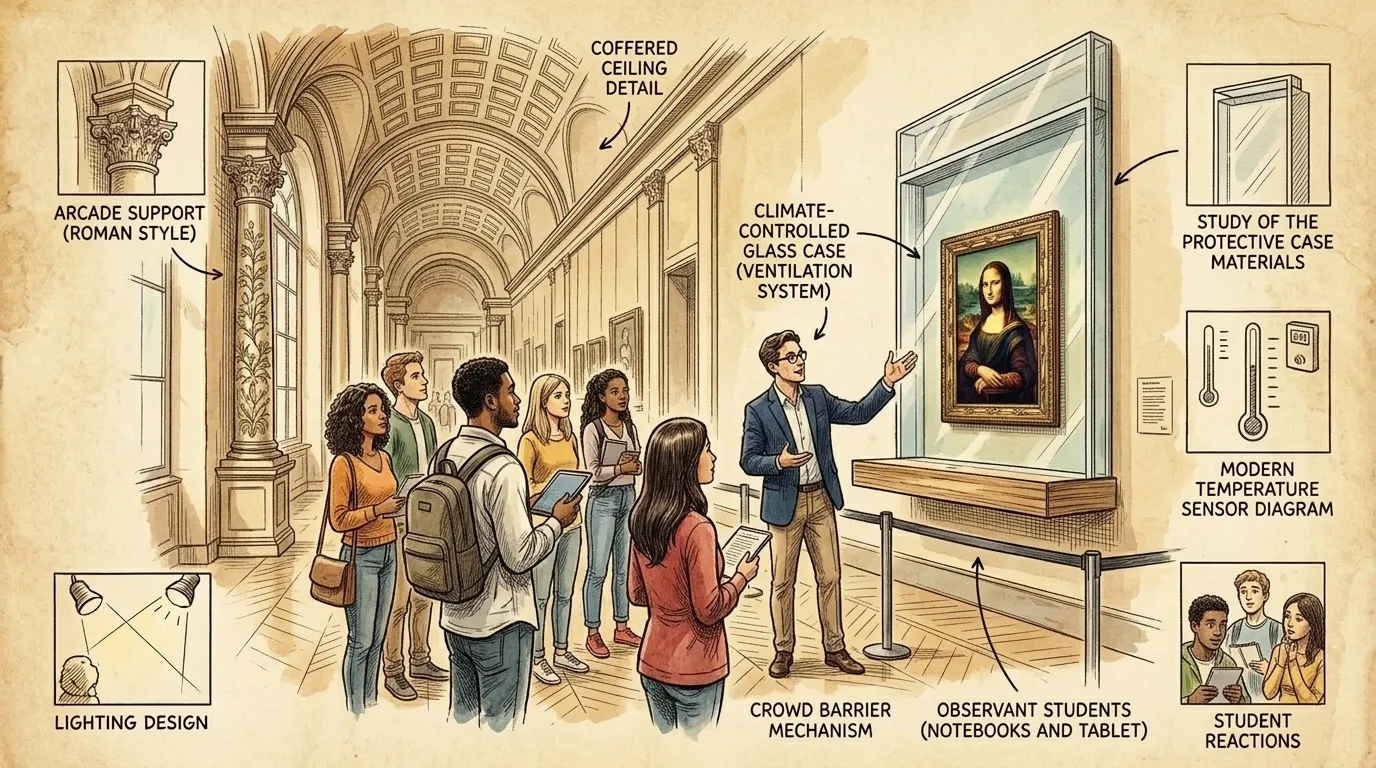
Today, the Mona Lisa resides in a climate-controlled room in the Louvre, protected by bulletproof glass. She is a global icon, a testament to the power of art to transcend time and culture. Leonardo's masterpiece continues to inspire and intrigue, reminding us of the enduring beauty and mystery of the human spirit.
""She is a silent witness to history, a timeless symbol of human creativity," remarked an art historian, leading a group of students through the Louvre."
Art Fact: The Mona Lisa's legacy extends far beyond the art world, influencing literature, music, and popular culture.
About this story
- Location: France
- Audience: general readers
Read Wonder Arts on your phone
Wonder Arts is available on Android. Get Wonder Arts on Google Play.
More Wonder Arts stories
- The Mona Lisa — Paris, France — 1503–1519
- The Monk by the Sea by Caspar David Friedrich (Germany — 1810)
- The Night Café by Vincent van Gogh (Arles, France — 1888)
- The Night Watch — Amsterdam, Netherlands — 1642
- The Night Watch by Rembrandt van Rijn (Amsterdam, Netherlands — 1642)
- The Nightmare by Henry Fuseli (London, UK — 1781)