The Turkish Bath by Jean-Auguste-Dominique Ingres (France — 1862)
The Turkish Bath by Jean-Auguste-Dominique Ingres (France — 1862) — an illustrated arts story, set in France. 10 illustrated pages, free to read on Wonder Arts.
Page 1
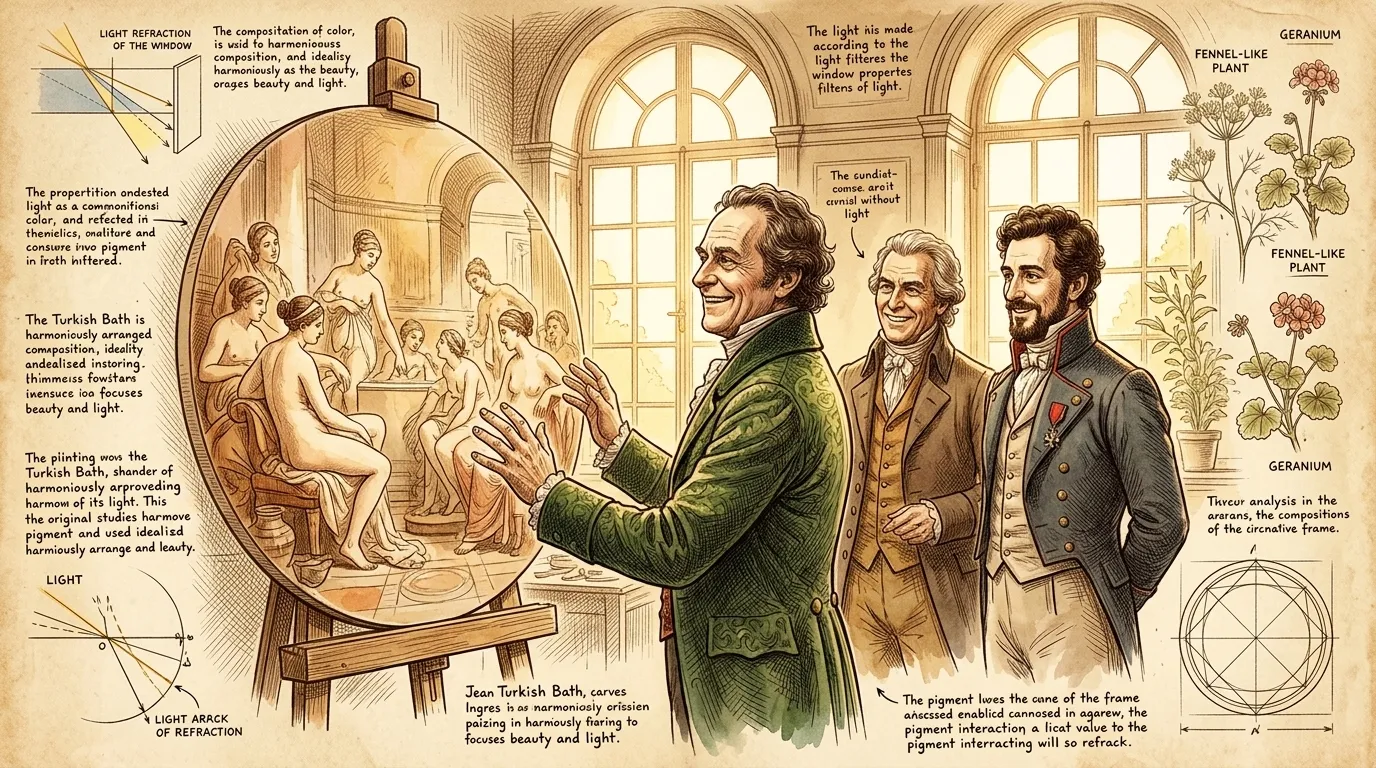
Jean-Auguste-Dominique Ingres gazes upon his finished masterpiece, 'The Turkish Bath,' completed in 1862. This painting, an oil on canvas measuring 108 cm in diameter, resides today in the Louvre Museum. Its initial rejection from the public salon made its eventual acclaim all the more remarkable. It is a kingdom of women, revealed in art.
""After so many years, it is complete," Ingres murmurs, his voice echoing in the vast studio. "A culmination of a lifetime's study of the female form, a symphony of curves and light.""
Art Fact: The painting's circular format was a deliberate choice by Ingres, inspired by ancient Roman mosaics and cameos.
Page 2
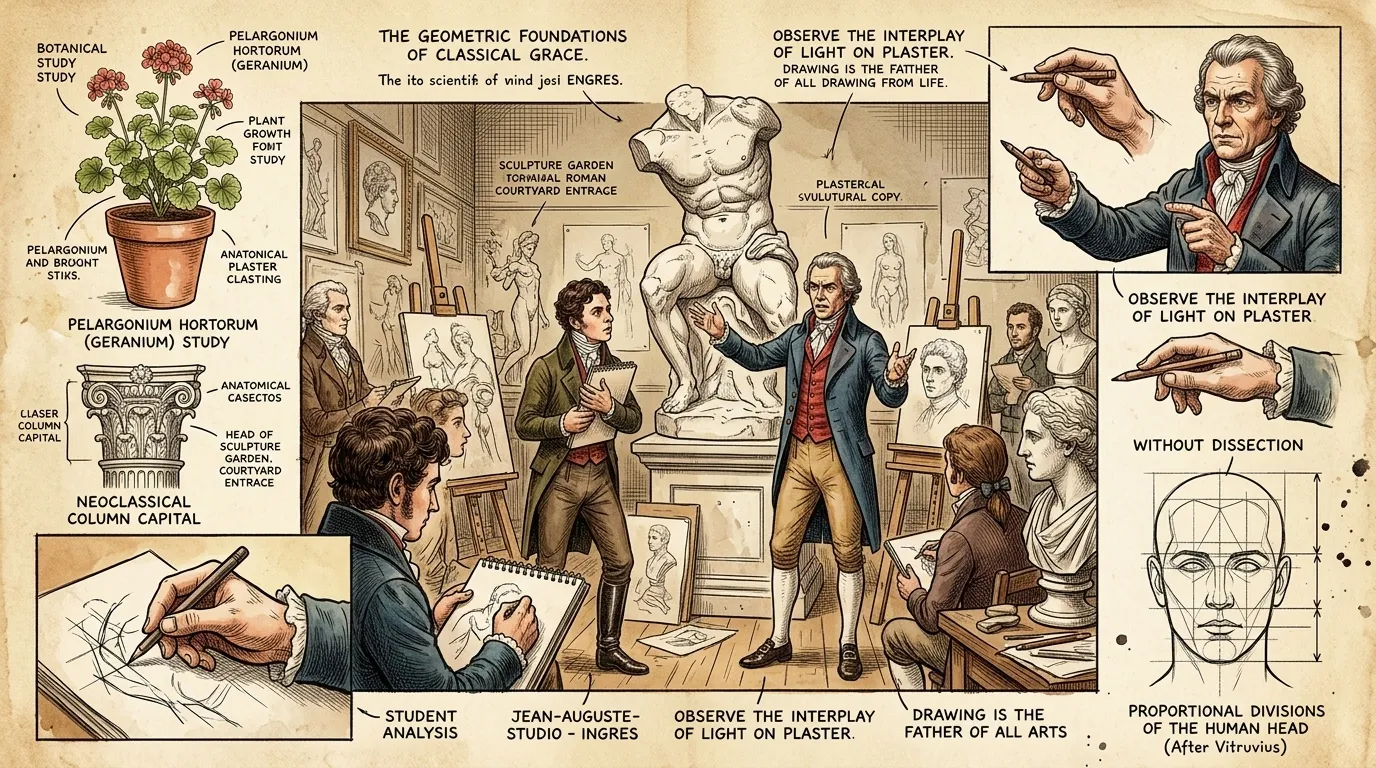
Young Ingres, barely a teenager, attends Jacques-Louis David's studio, a hub of Neoclassical fervor. Here, he witnesses David instructing his students, preaching the virtues of classical art and the importance of drawing from life. This world is so very cold.
"David, gesturing emphatically, tells his students, "Remember, gentlemen, as Aristotle said: 'The aim of art is to represent not the outward appearance of things, but their inward significance.' Let us strive for truth and beauty!""
Art Fact: Jacques-Louis David was a leading figure in the Neoclassical movement and a major influence on Ingres' early artistic development.
Page 3
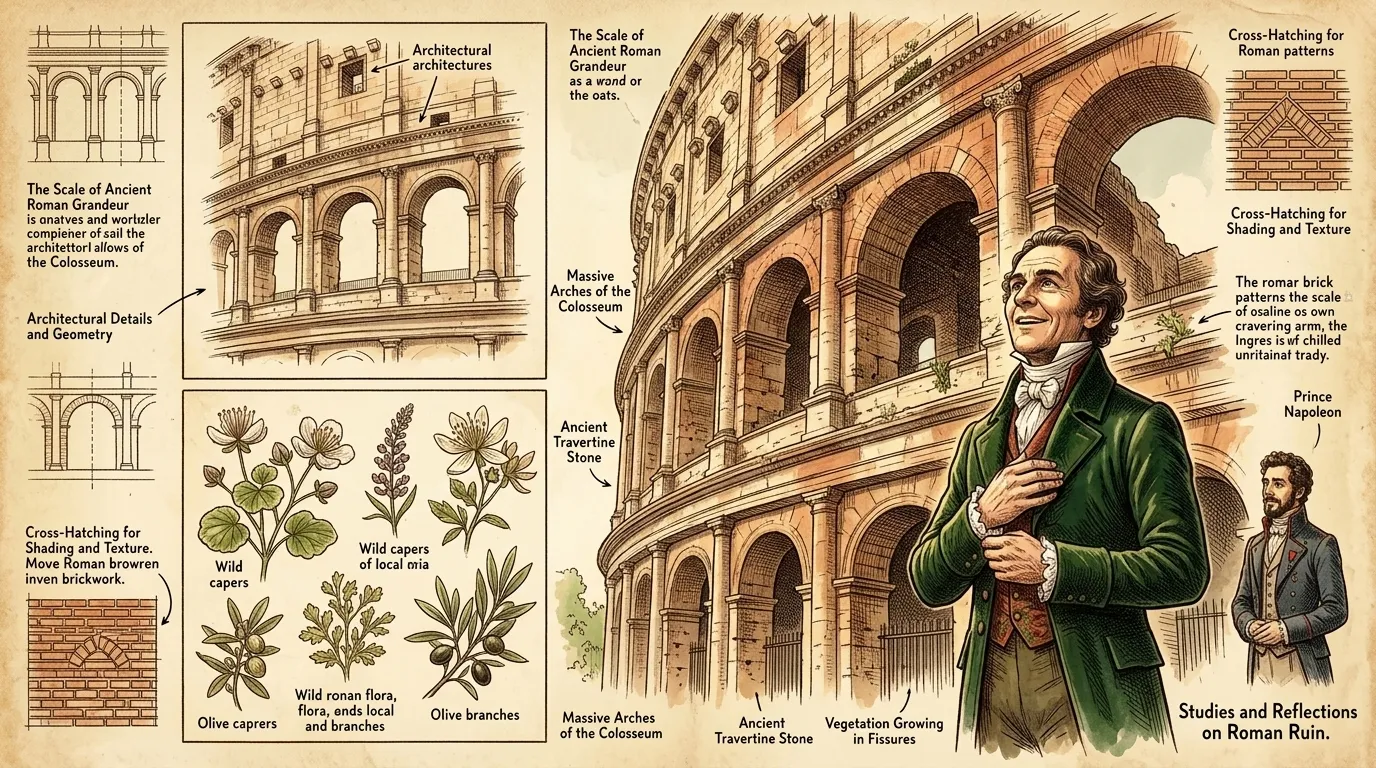
Ingres travels to Rome as a young man, eager to immerse himself in the art and architecture of antiquity. The sheer scale and beauty of the ancient ruins overwhelm him, sparking a lifelong fascination with classical forms. His hands are freezing.
"Standing before the Colosseum, Ingres exclaims to his companion, "This...this is breathtaking! Such grandeur, such mastery! It is as Michelangelo said, 'I live and love in God's peculiar light.'""
Art Fact: Ingres spent many years in Rome, studying classical art and developing his own unique style.
Page 4
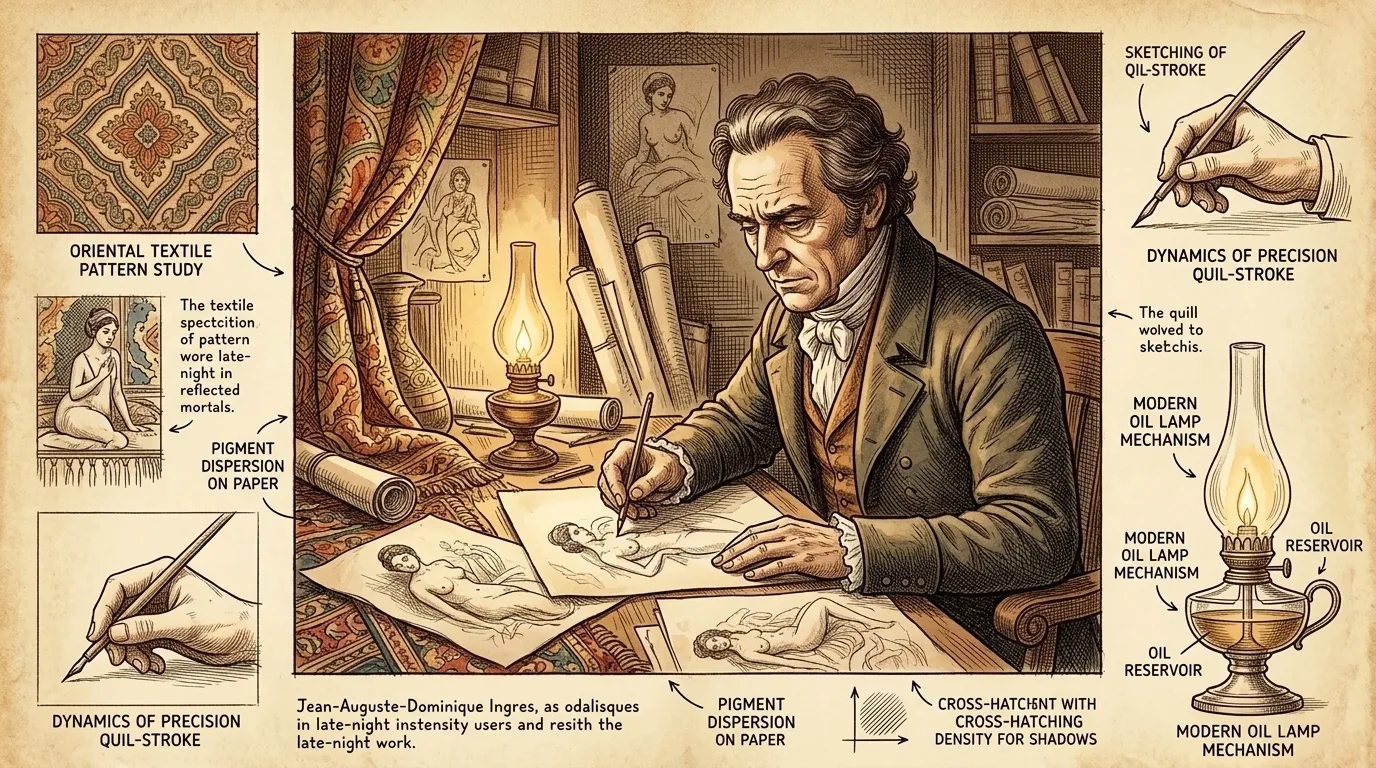
Ingres becomes fascinated with the exoticism of the East, inspired by travelogues and accounts of harems. He begins sketching odalisques, figures that will populate his later works, including 'The Turkish Bath.' He must find water to drink soon.
"Working late into the night, Ingres says to himself, "These forms, these curves... they must be captured. As Leonardo da Vinci said, 'Painting embraces all the ten functions of the eye; that is to say, darkness, light, body and colour, substance and form, motion and rest.'""
Art Fact: Ingres's fascination with the Orient was a reflection of the broader Orientalist movement in 19th-century European art.
Page 5
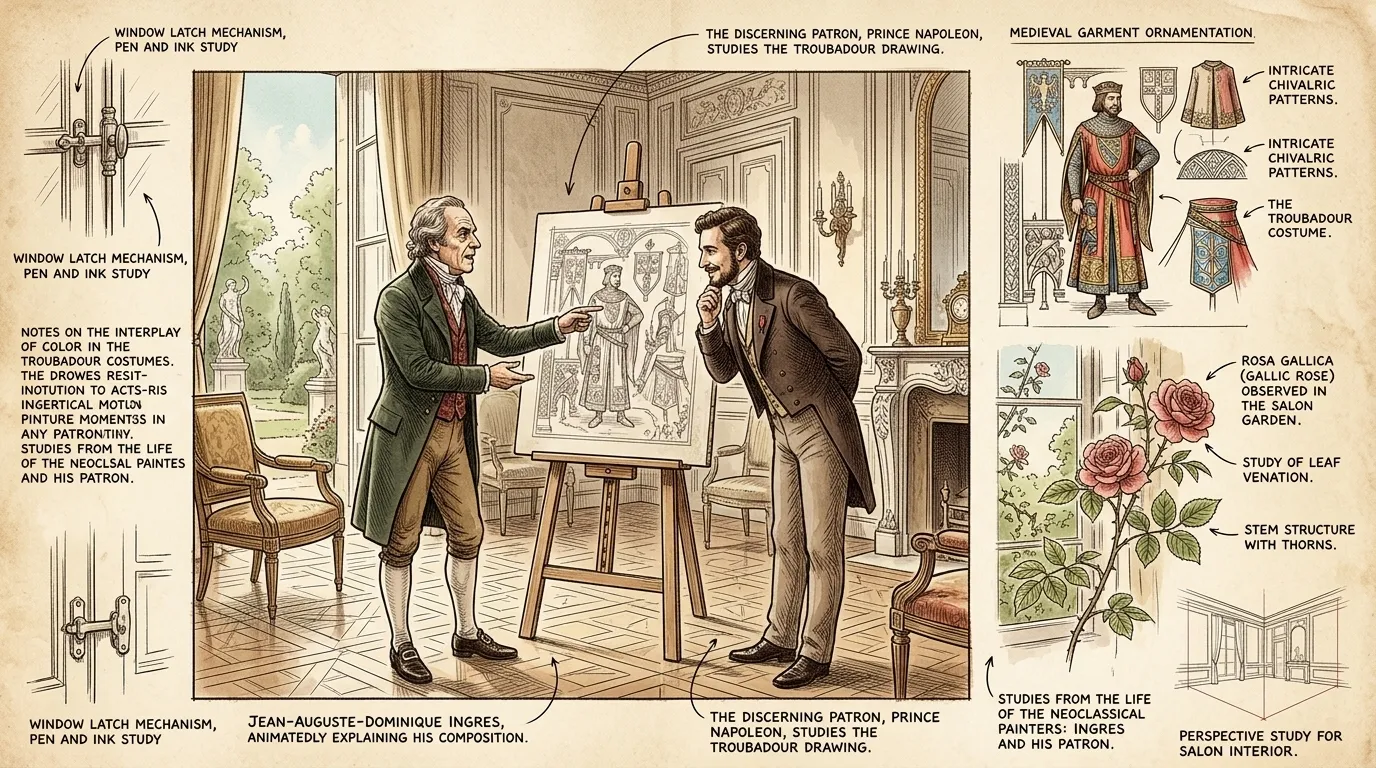
During the Napoleonic era, Ingres embraces the Troubadour style, depicting historical scenes with meticulous detail. This meticulous approach will inform his later paintings, including the precise rendering of textures and fabrics in 'The Turkish Bath'.
"Discussing his latest commission with a patron, Ingres says, "Every detail must be accurate, every garment, every ornament. As Gustave Flaubert said, 'God is in the details.'""
Art Fact: The Troubadour style was a popular movement in early 19th-century France, celebrating the medieval past.
Page 6
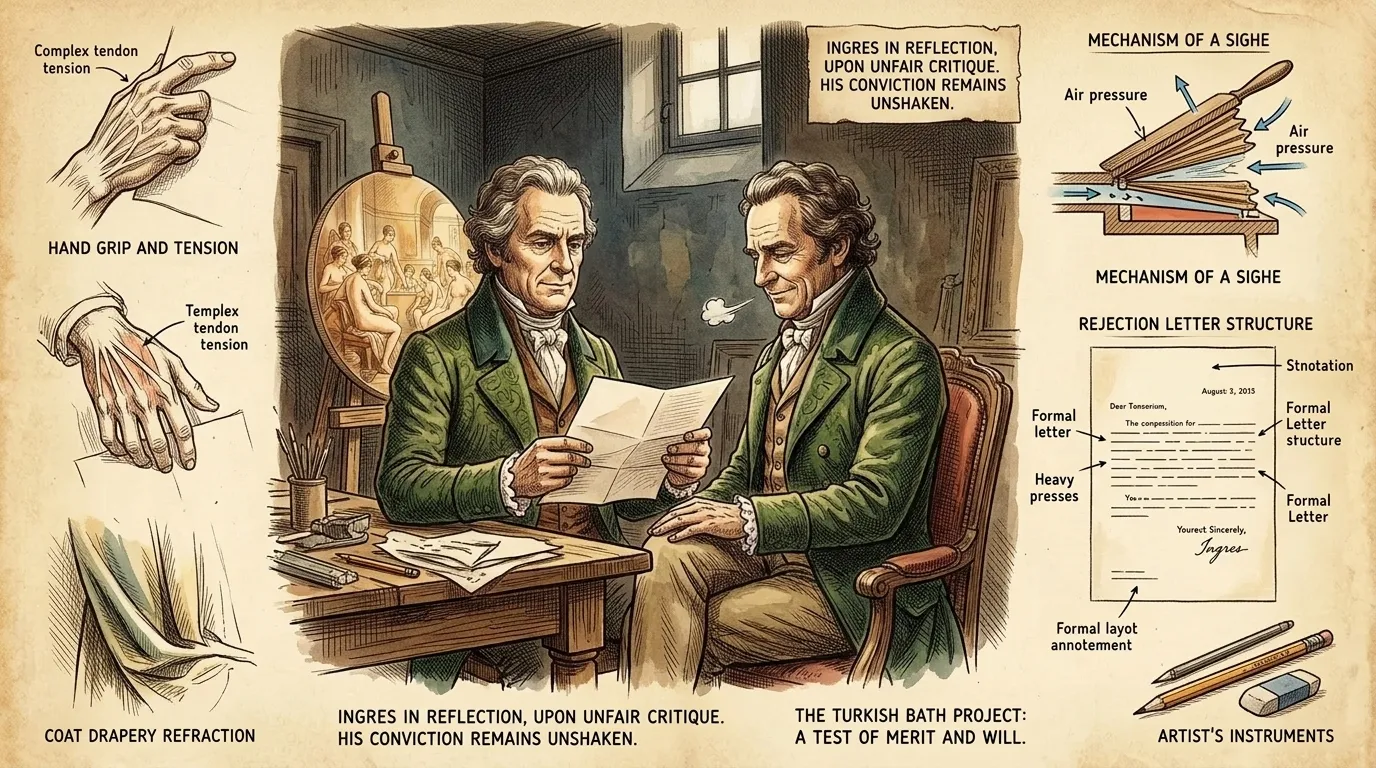
Ingres submits 'The Turkish Bath' to the Salon, but it is rejected for its unconventional composition and perceived eroticism. The rejection stings, but Ingres remains convinced of the painting's artistic merit. What use is art in a frozen prison?
"Upon hearing the news, Ingres sighs, "So, it is not to be. As Shakespeare said in Hamlet, 'To be, or not to be, that is the question.' But I cannot give up on myself.""
Art Fact: The initial rejection of 'The Turkish Bath' highlights the conservative tastes of the French art establishment in the mid-19th century.
Page 7
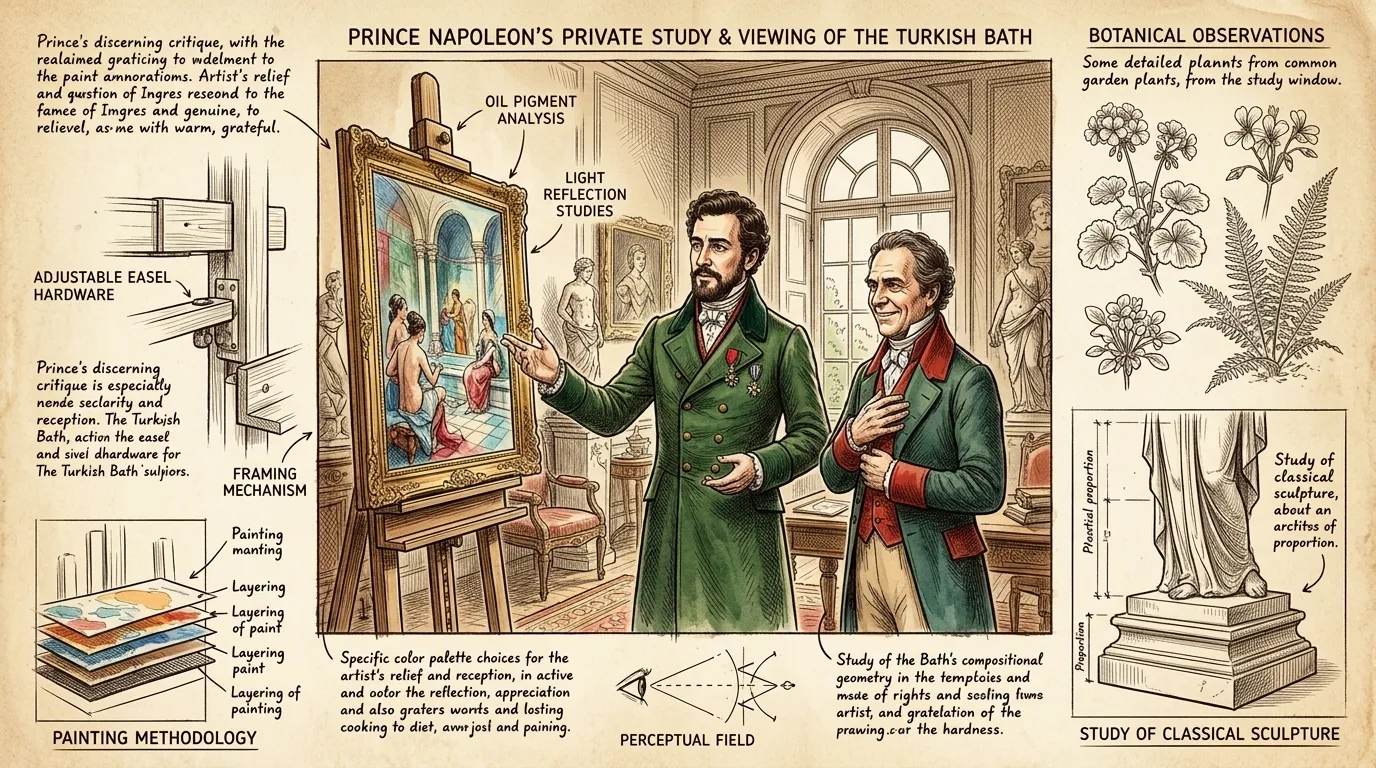
Prince Napoleon acquires 'The Turkish Bath' for his private collection, recognizing its artistic value. Ingres is relieved and grateful, knowing his work will be appreciated, even if not by the general public. The warmth of their bodies is the only thing keeping them from freezing.
"Prince Napoleon, admiring the painting in his study, tells Ingres, "This is a masterpiece, Ingres. The critics may not understand it, but I do. I shall lock it away, where no one may see it."
Art Fact: Prince Napoleon's patronage was crucial to Ingres's career, providing him with financial support and artistic recognition.
Page 8
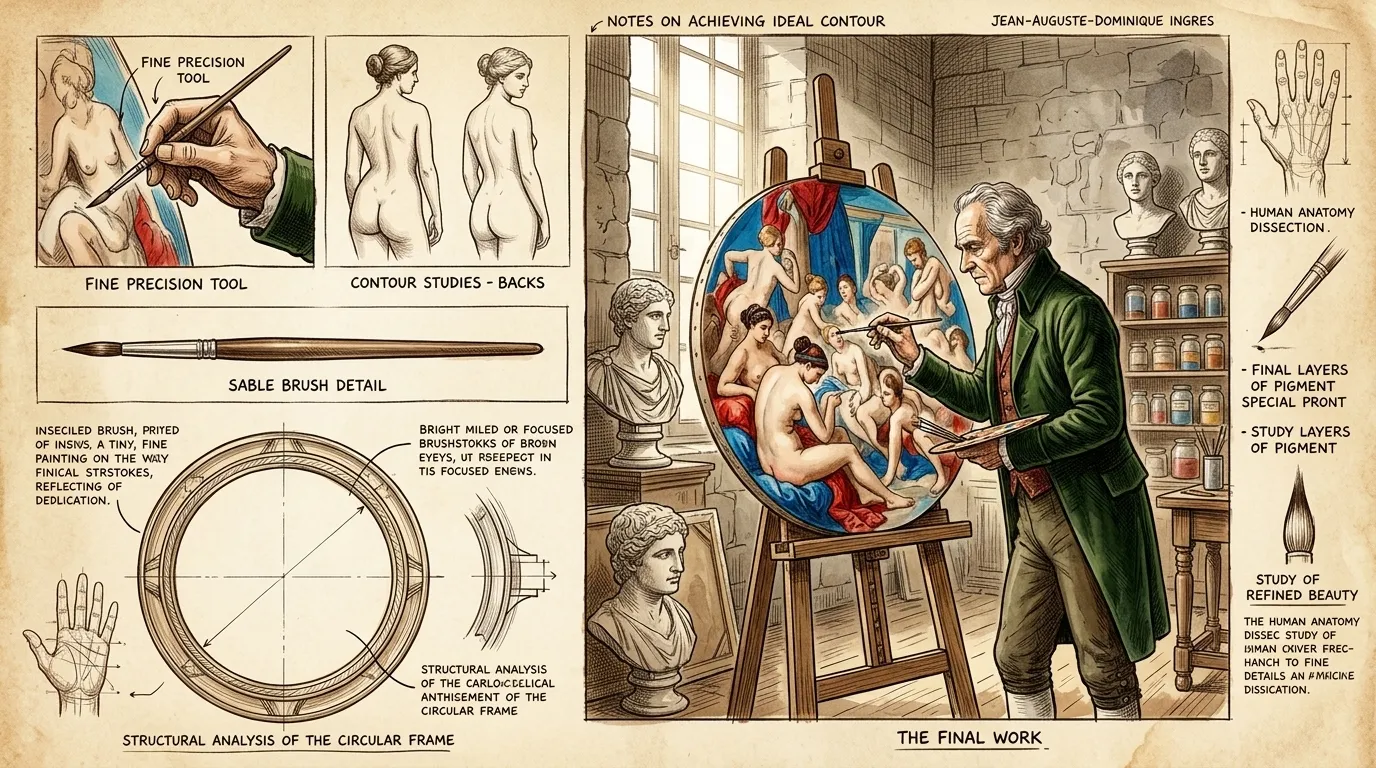
Years later, as his fame grows, Ingres revisits 'The Turkish Bath,' adding finishing touches and refining details. He knows this painting will be his legacy, a testament to his lifelong pursuit of beauty. They are trapped, frozen, forever.
"Working on the painting, Ingres remarks, "This painting is more than just a depiction of women; it is a reflection of my soul. As Vincent van Gogh said, 'I dream my painting, and then I paint my dream'.""
Art Fact: Ingres continued to work on 'The Turkish Bath' throughout his life, refining and perfecting its details.
Page 9
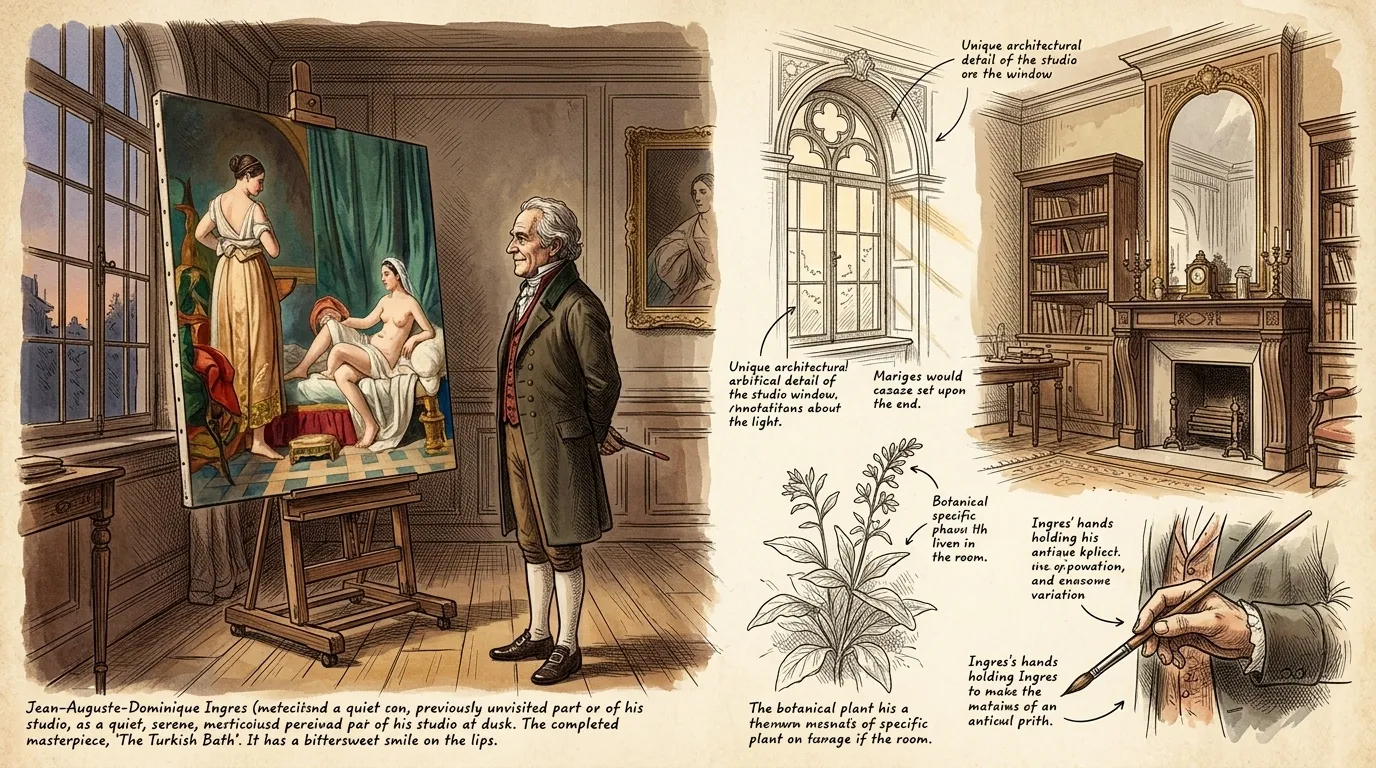
Ingres looks upon his finished masterpiece, a bittersweet smile upon his face. He has captured a world within a world, beauty in art. The glass is all they have left.
""It is done. It is finished. All this beauty... now, perhaps it is time to rest." Ingres says. "'The unexamined life is not worth living' as Socrates said.""
Art Fact: Ingres poured his heart and soul into the creation of 'The Turkish Bath,' creating a vision of timeless beauty and sensuality.
Page 10
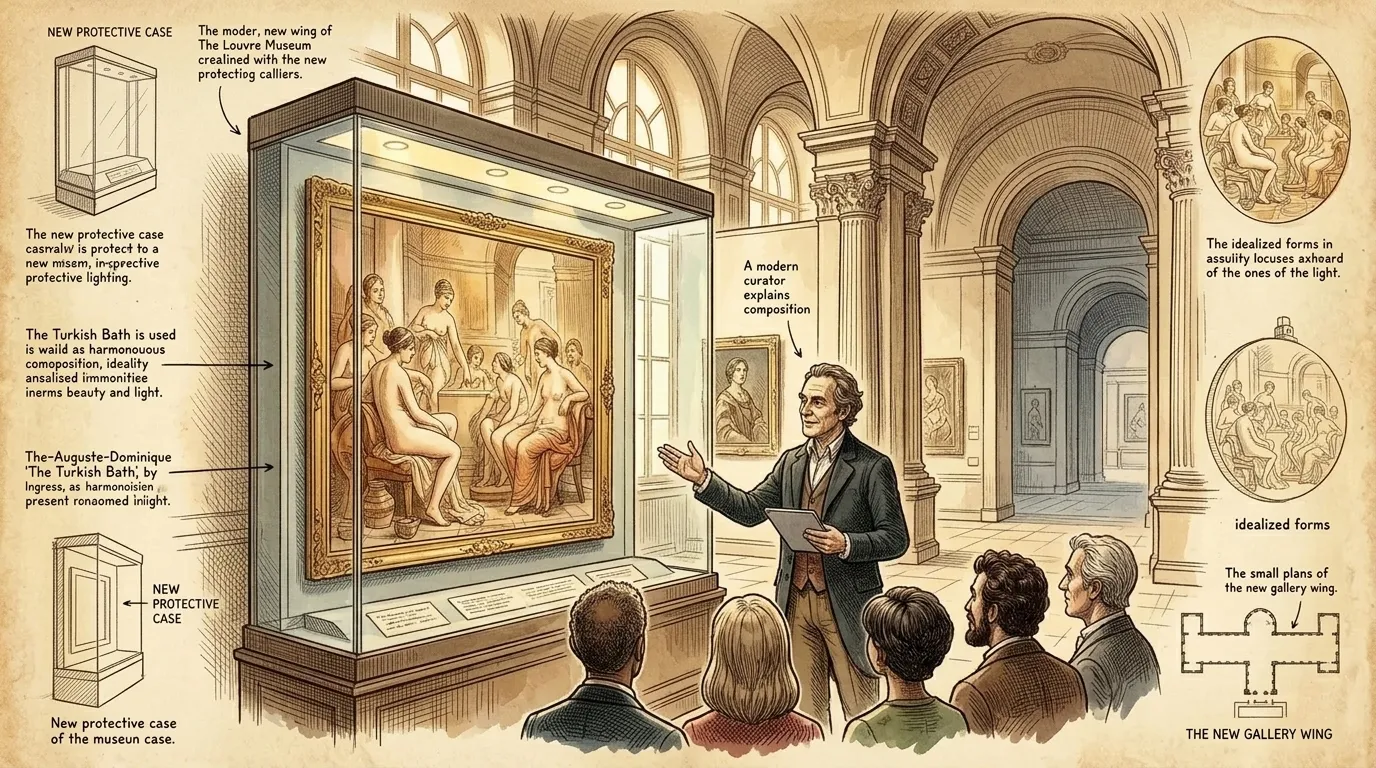
The Turkish Bath by Jean-Auguste-Dominique Ingres remains on display at The Louvre Museum. Inside its glass case, the painting is forever frozen within the snow globe. Generations admire his vision of female beauty, a testament to Ingres's enduring legacy. He is inside the painting, and he is also always outside, looking into the glass.
"A modern museum curator remarks, "Ingres's 'Turkish Bath' continues to inspire and challenge viewers. As Maya Angelou said, 'People will forget what you said, people will forget what you did, but people will never forget how you made them feel.' Ingres made the world feel, and his art lasts forever.""
Art Fact: The Turkish Bath stands in the Louvre Museum as a enduring legacy to Ingres's artistic brilliance.
About this story
- Location: France
- Audience: kids (ages 6–12)
Questions and answers
Questions and answers about The Turkish Bath by Jean-Auguste-Dominique Ingres (France — 1862)
Read Wonder Arts on your phone
Wonder Arts is available on Android and iPhone and iPad. Get Wonder Arts on Google Play · Get Wonder Arts on the App Store.
More Wonder Arts stories
- The Veiled Christ by Giuseppe Sanmartino (Naples, Italy — 1753)
- Tonalism by George Inness (USA — c. 1880)
- Topkapi Palace (Istanbul, Turkey — 1478)
- Uffizi Gallery (Florence, Italy — 1581)
- Venus de Milo by Alexandros of Antioch (Paris, France — c. 130 BC)
- View of Auvers-sur-Oise by Paul Cézanne (Oxford, UK — 1879)