Topkapi Palace (Istanbul, Turkey — 1478)
Topkapi Palace (Istanbul, Turkey — 1478) — an illustrated arts story, set in Turkey. 10 illustrated pages, free to read on Wonder Arts.
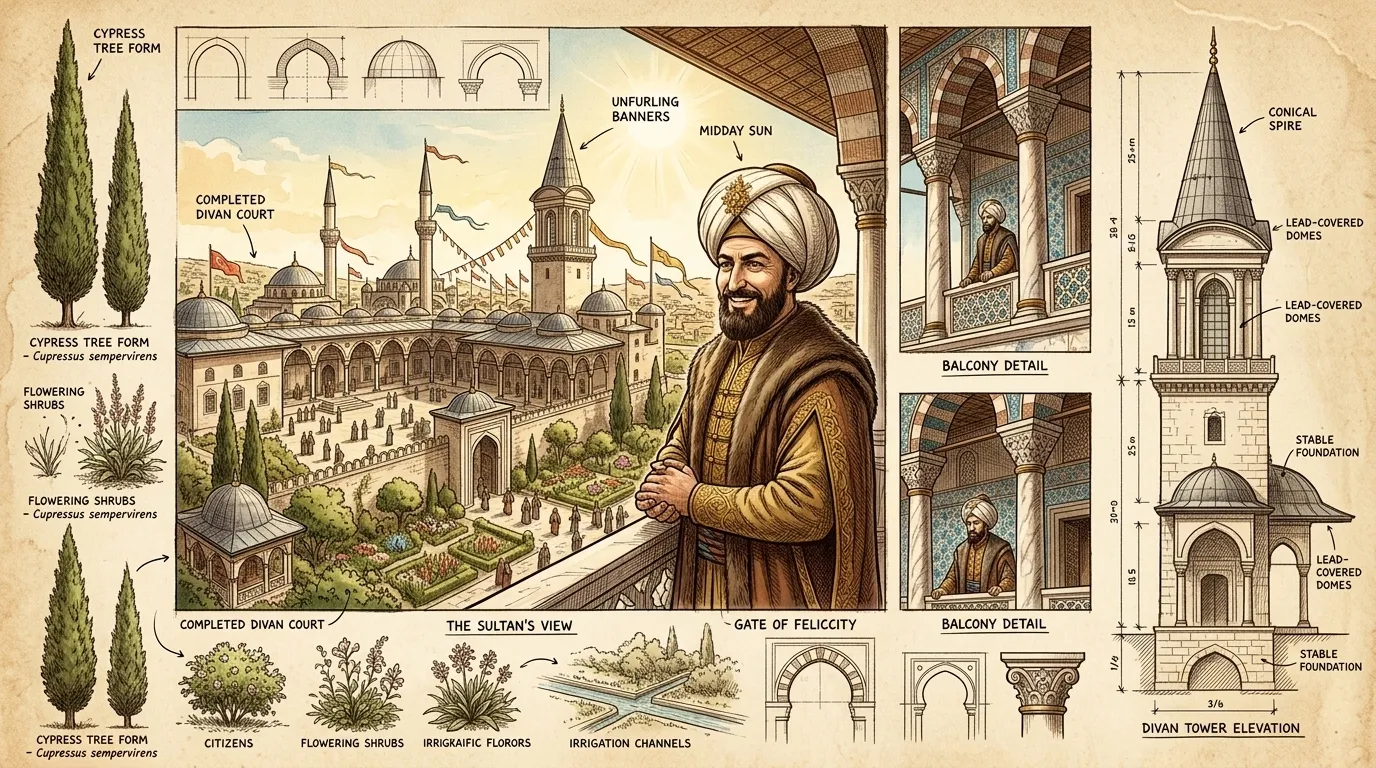
Page 1
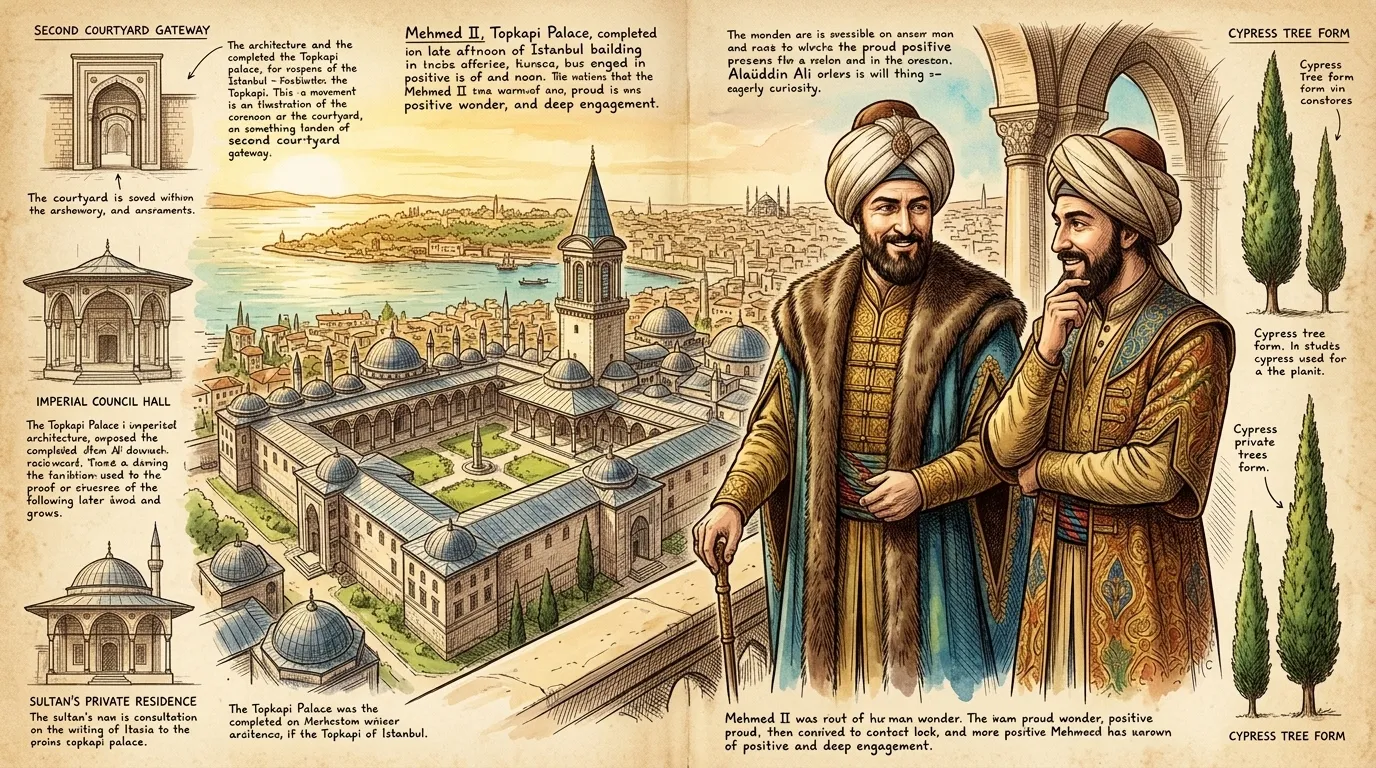
In the heart of Istanbul, 1478, Sultan Mehmed II, also known as Mehmed the Conqueror, gazes upon the newly completed Topkapi Palace. This magnificent structure, a testament to his power and vision, will serve as the Ottoman Empire's administrative, educational, and artistic center for centuries. The palace, sprawling over 700,000 square meters, initially served more as a functional hub rather than a purely residential one.
"Mehmed, turning to his architect, said, 'As Aristotle said, 'The ultimate value of life depends upon awareness and the power of contemplation rather than upon mere survival.' This palace, my friend, shall be a place for both, power and contemplation.'"
Art Fact: Topkapi Palace was not conceived as a single architectural project. Its construction and expansion spanned centuries, each sultan leaving his mark on its design.
Page 2
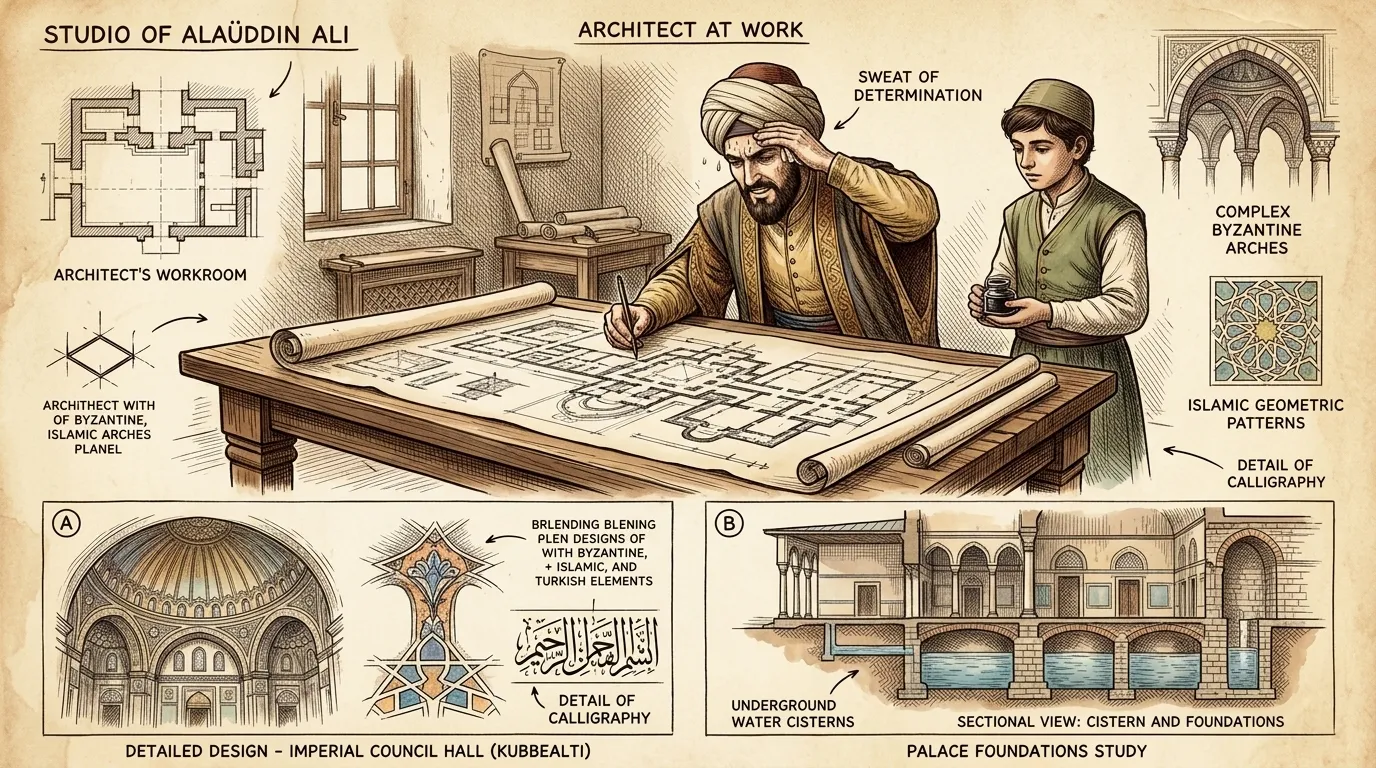
Architect Alaüddin Ali sketched feverishly, translating Mehmed's grand vision onto parchment. The Sultan envisioned not just a residence, but a symbol of the Ottoman dynasty's might, a place where every brick and tile would tell a story of conquest and cultural fusion. The architect noted Mehmed's instructions to create a space that was both awe-inspiring and functional, designed to impress foreign dignitaries and facilitate the efficient governance of a vast empire.
"Alaüddin Ali, wiping sweat from his brow, says to a nearby assistant, 'His Majesty desires a palace unlike any other, one that reflects the glory of our empire and provides for its continued success. We must blend practicality with grandeur, and show his architectural prowess to the world!'"
Art Fact: Alaüddin Ali, the chief architect, faced the challenge of blending diverse architectural styles, incorporating elements of Byzantine, Islamic, and Turkish traditions into a harmonious whole.
Page 3
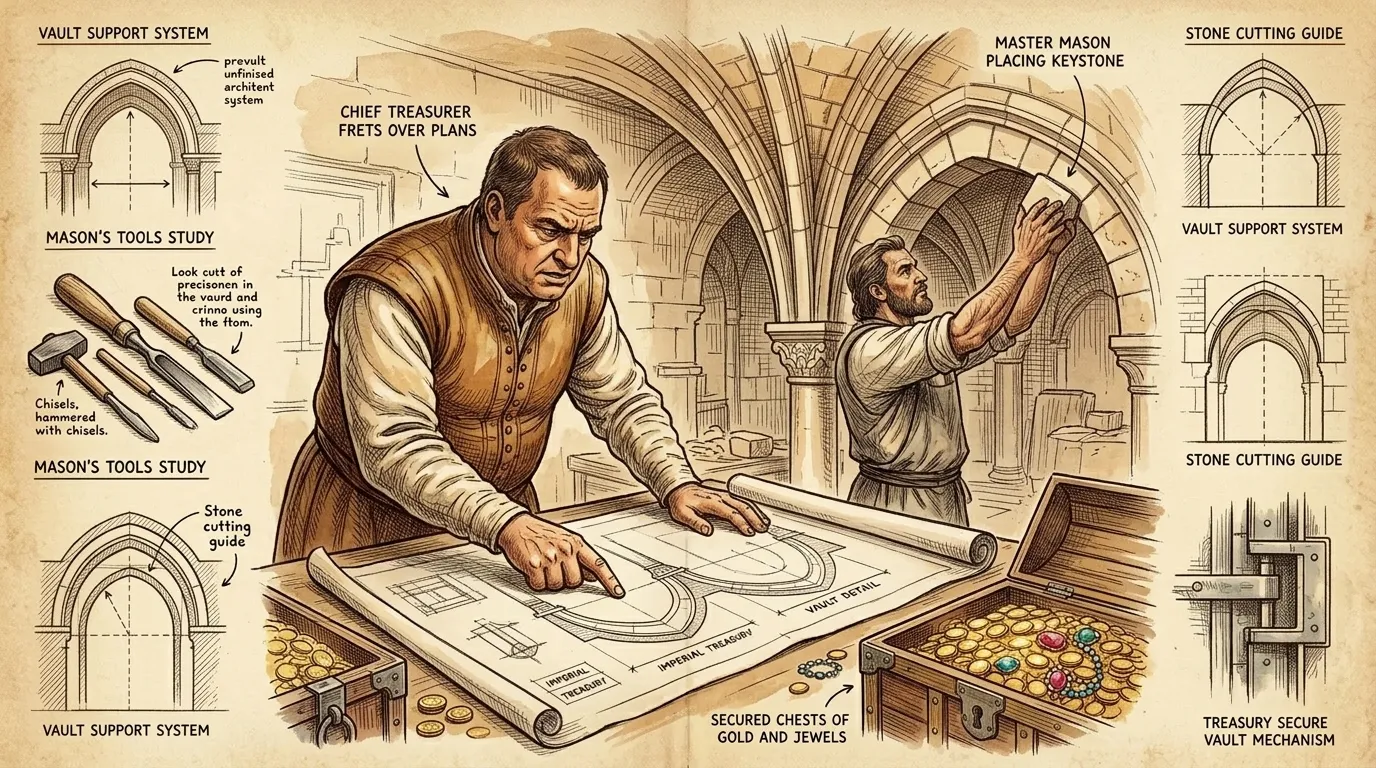
The construction of the Imperial Treasury began, envisioned as a secure repository for the empire's vast wealth. Gold, jewels, and precious artifacts flowed in from conquered lands, fueling the palace's opulence and solidifying Mehmed's economic power. The chief treasurer oversaw the intricate vaulting, ensuring that every stone was laid with precision to protect the treasures within. Security was paramount, with layers of protection to deter any potential thieves.
"The Chief Treasurer, a stout man in his late 50s with tanned skin, fretting over the plans, says to a master mason, 'Remember, every stone must be flawless, every lock impenetrable! As Benjamin Franklin once said, 'A place for everything, everything in its place.' Ensure our gold is safe!'"
Art Fact: The Imperial Treasury housed not only gold and jewels but also sacred relics, historical documents, and diplomatic gifts from foreign dignitaries.
Page 4
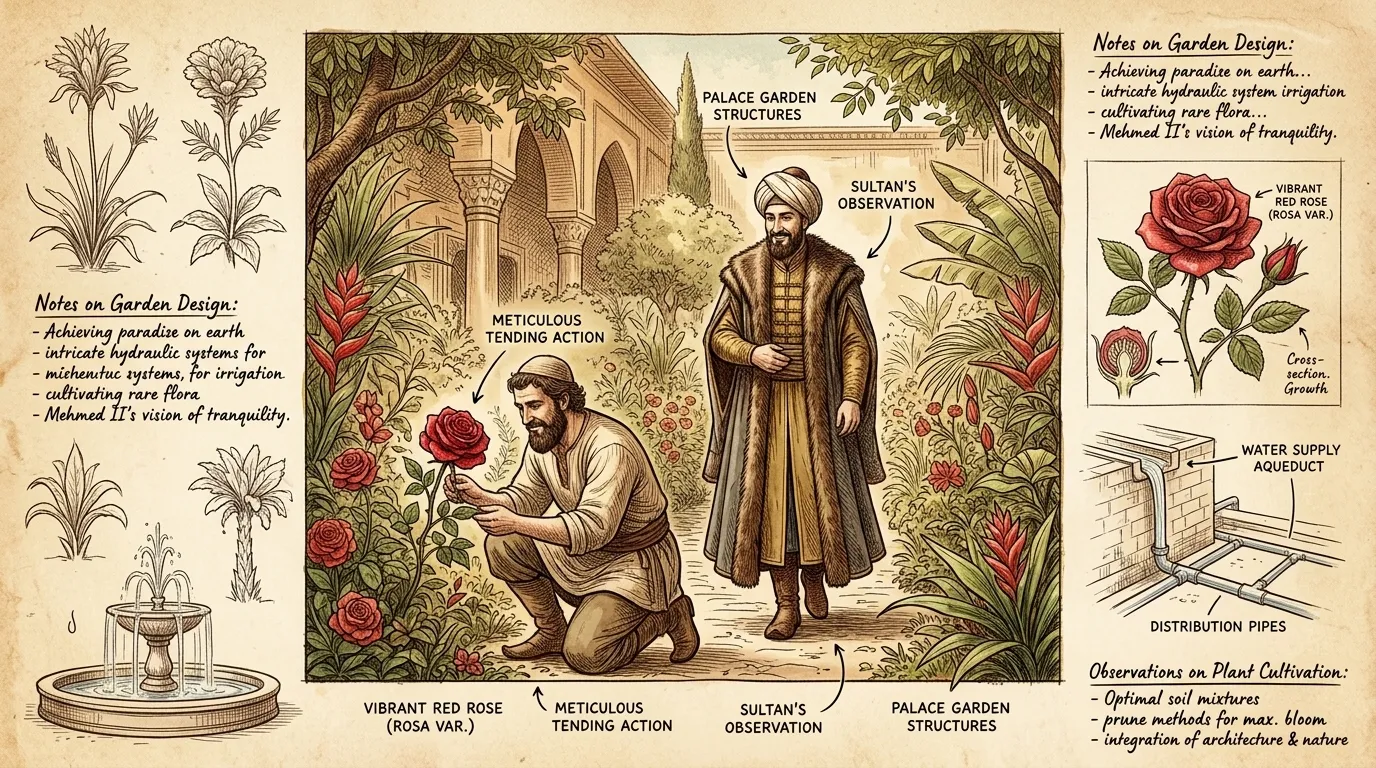
Mehmed wandered through the palace gardens, seeking inspiration from the carefully cultivated flora. The serene atmosphere and vibrant colors calmed his mind, allowing him to contemplate the empire's future and the delicate balance of power. Skilled gardeners tended to exotic plants from distant lands, transforming the landscape into a paradise on earth. The gardens became a sanctuary where the Sultan could escape the pressures of his rule.
"Mehmed, observing a gardener tending to a rare rose, muses, 'Even in matters of state, one must find solace and beauty. This garden reminds me, as Leonardo da Vinci said, that 'simplicity is the ultimate sophistication.''"
Art Fact: The gardens of Topkapi Palace were more than just aesthetic additions. They served as spaces for relaxation, contemplation, and diplomatic receptions.
Page 5
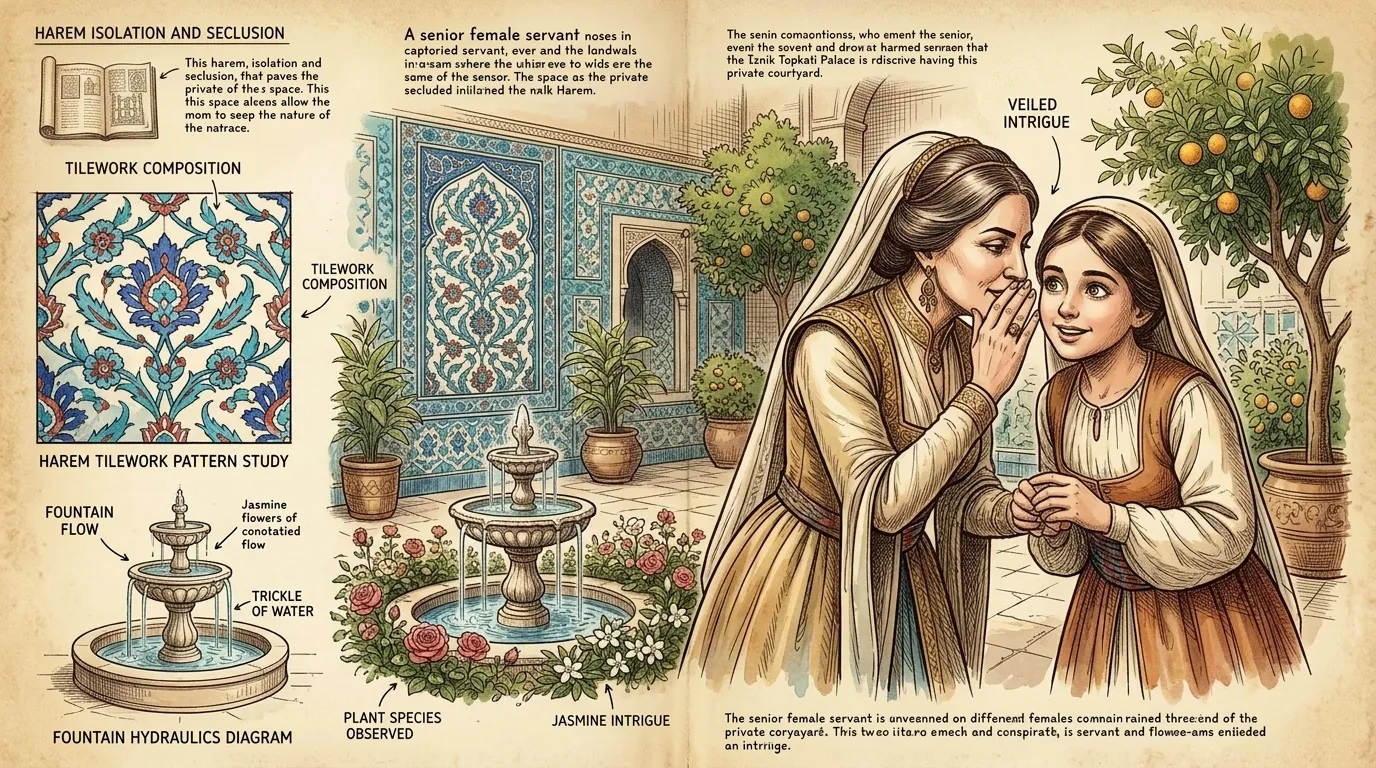
Within the palace walls, the Harem took shape, a world of its own where the Sultan's consorts, female relatives, and servants resided. The sounds of music, laughter, and whispered secrets filled the air, creating an atmosphere of both tranquility and intrigue. Intricate tilework, ornate fountains, and private courtyards adorned this secluded sanctuary. The Harem's design reflected the complexities of palace life, with its hidden rivalries and unwavering loyalty.
"A senior female servant whispers to a younger one, 'Remember, silence is your shield and loyalty your weapon. Here, as Sun Tzu said, 'the supreme art of war is to subdue the enemy without fighting.''"
Art Fact: The Harem was not merely a place of pleasure; it was a complex social structure where women wielded significant influence and participated in palace intrigues.
Page 6
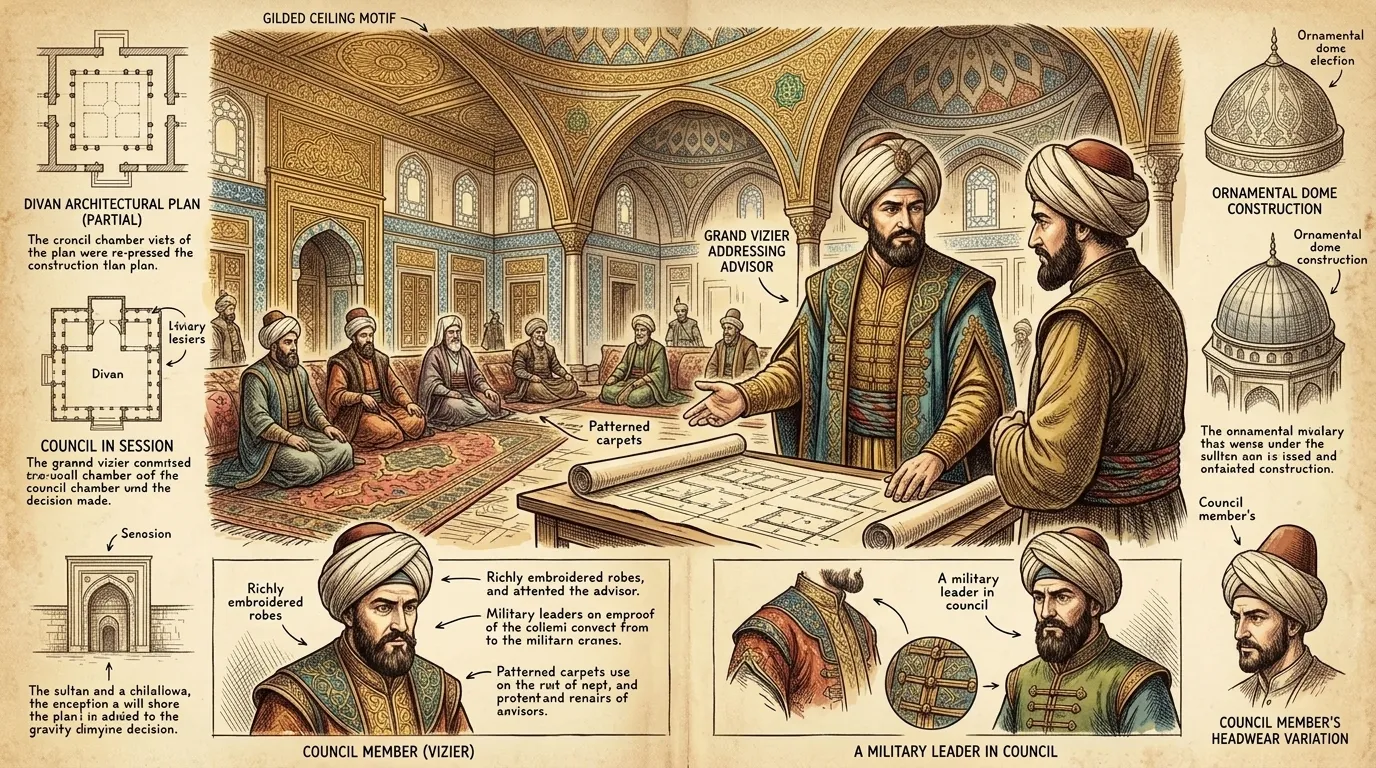
As the palace neared completion, the Council Chamber, or Divan, became the focal point of Ottoman governance. Here, viziers, military leaders, and religious scholars gathered to advise the Sultan on matters of state, shaping the empire's destiny. The chamber's opulent décor reflected the seriousness of its purpose, with rich carpets, gilded walls, and symbolic motifs conveying authority and power. Decisions made within its walls resonated throughout the vast Ottoman realm.
"A Grand Vizier says to his advisor, 'Here, we determine the fate of nations. Let our wisdom and counsel be guided by foresight, because as Machiavelli wrote, 'it is better to be feared than loved, if you cannot be both.''"
Art Fact: The Council Chamber was not just a space for political deliberations; it was a carefully designed environment intended to inspire respect and awe.
Page 7
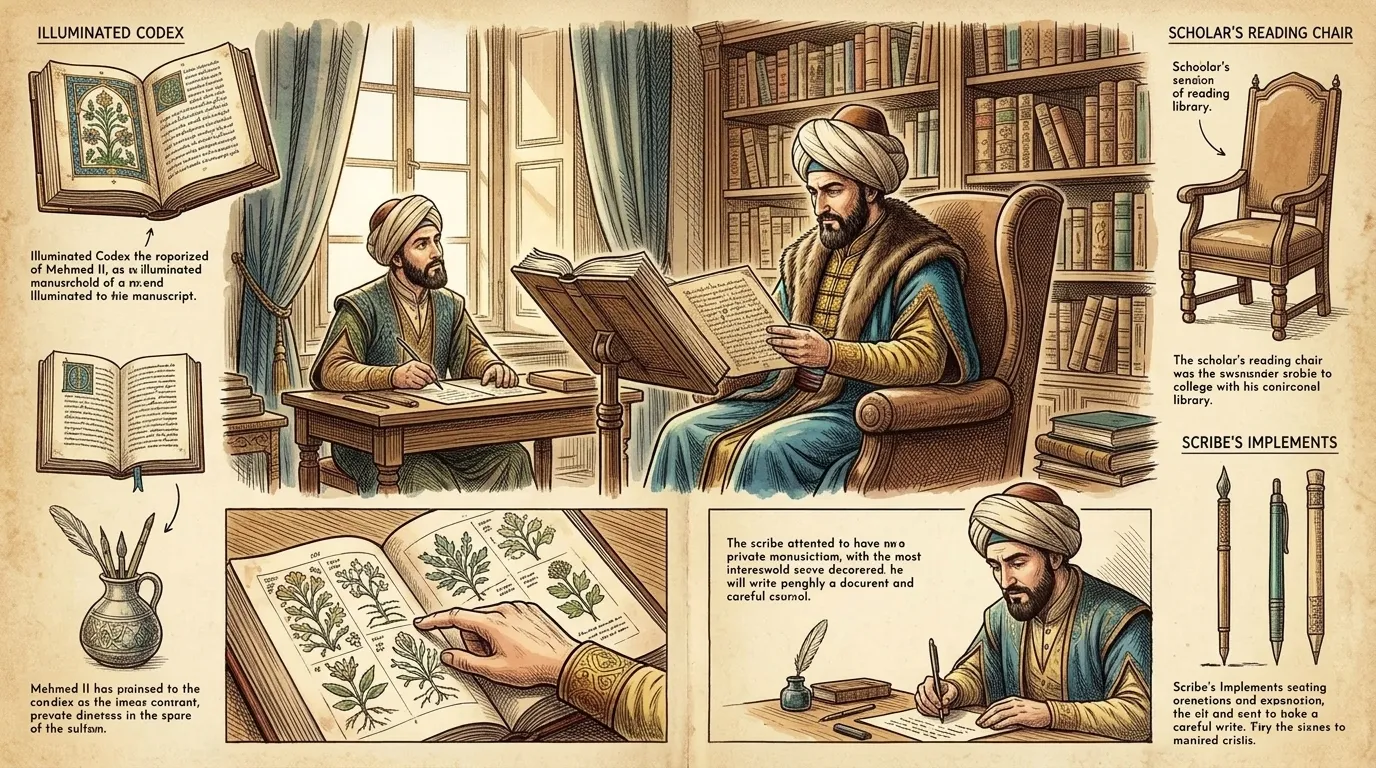
Mehmed's private chambers reflected his personal tastes and intellectual pursuits. Bookshelves lined the walls, filled with works of philosophy, science, and literature in multiple languages. Comfortable seating and tranquil lighting created a space for contemplation and reflection. The Sultan sought refuge in these chambers, escaping the pressures of his public life and nurturing his inner self. Here, the conqueror transformed into a scholar and a patron of the arts.
"Mehmed, reading a book, says to his personal scribe, 'The mind needs nourishment as much as the body. It reminds me of what Cicero said: 'A room without books is like a body without a soul.''"
Art Fact: Mehmed II was a polymath with a passion for knowledge. He commissioned translations of classical works and fostered intellectual exchange between scholars from diverse backgrounds.
Page 8
Years of labor culminated in the completion of Topkapi Palace, a sprawling complex that embodied the Ottoman Empire's power, wealth, and cultural sophistication. The palace became a stage for grand ceremonies, diplomatic receptions, and lavish celebrations, showcasing the dynasty's glory to the world. Mehmed's vision had been realized, creating a lasting legacy that would endure for centuries to come. The clockwork city now had its heart.
"Mehmed surveys the completed palace, smiling, and declares, 'At last, a worthy symbol of our empire! This palace will stand as a testament to our achievements for generations. It makes me think of what Shakespeare wrote, 'We know what we are, but know not what we may be.''"
Art Fact: Topkapi Palace served as the primary residence of the Ottoman Sultans for nearly four centuries, witnessing countless historical events and shaping the course of the empire.
Page 9
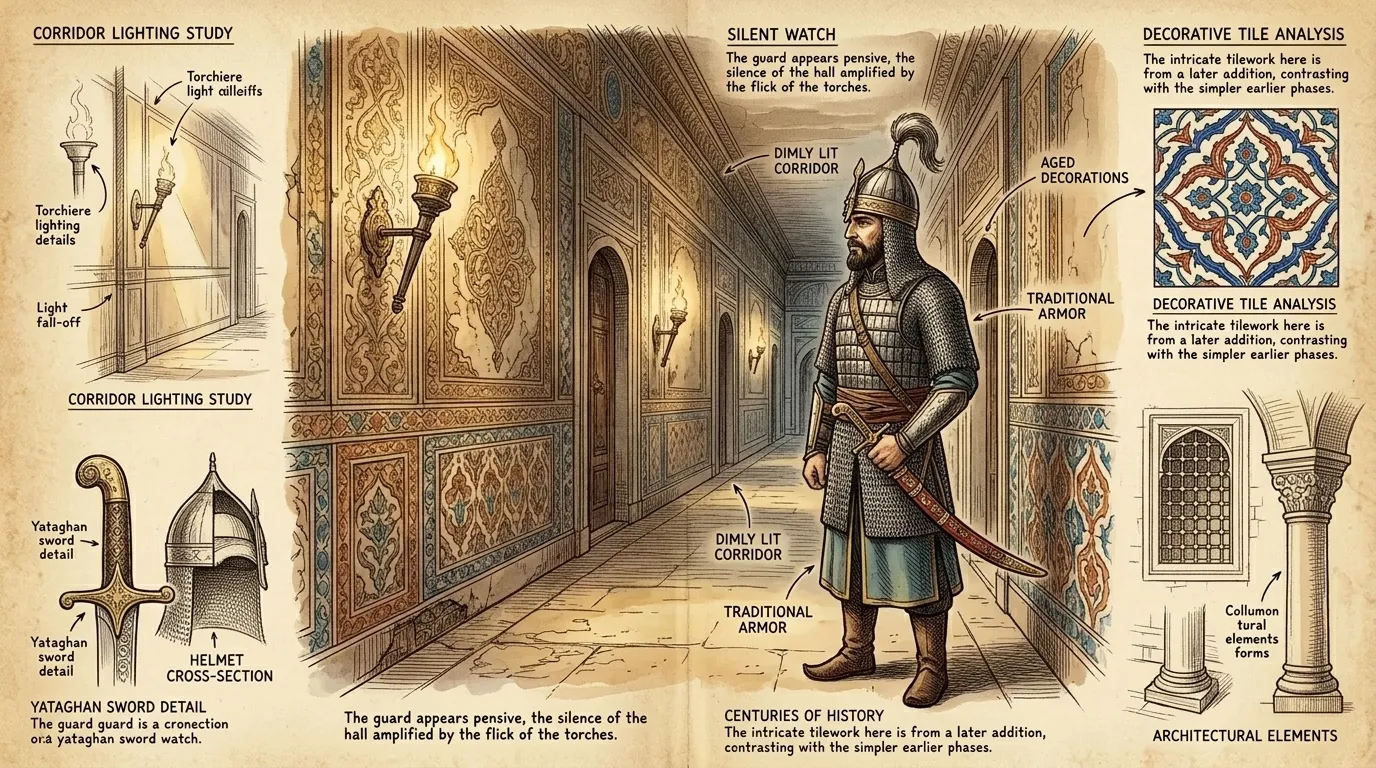
Centuries passed, and Topkapi Palace continued to serve as the heart of the Ottoman Empire, witnessing triumphs and tragedies, innovations and intrigues. Each successive sultan left their mark on the palace, adding new structures and embellishments to reflect their personal tastes and the changing times. From lavish feasts to clandestine meetings, Topkapi Palace was a silent witness to the ebb and flow of history.
"A palace guard, standing watch over the chambers, whispers to himself, 'So much has happened within these walls. As Victor Hugo said, 'There is nothing so powerful as an idea whose time has come.' The legacy of this place will endure.'"
Art Fact: Topkapi Palace ceased to be a royal residence in the mid-19th century, but it remained a symbol of Ottoman power and cultural heritage.
Page 10
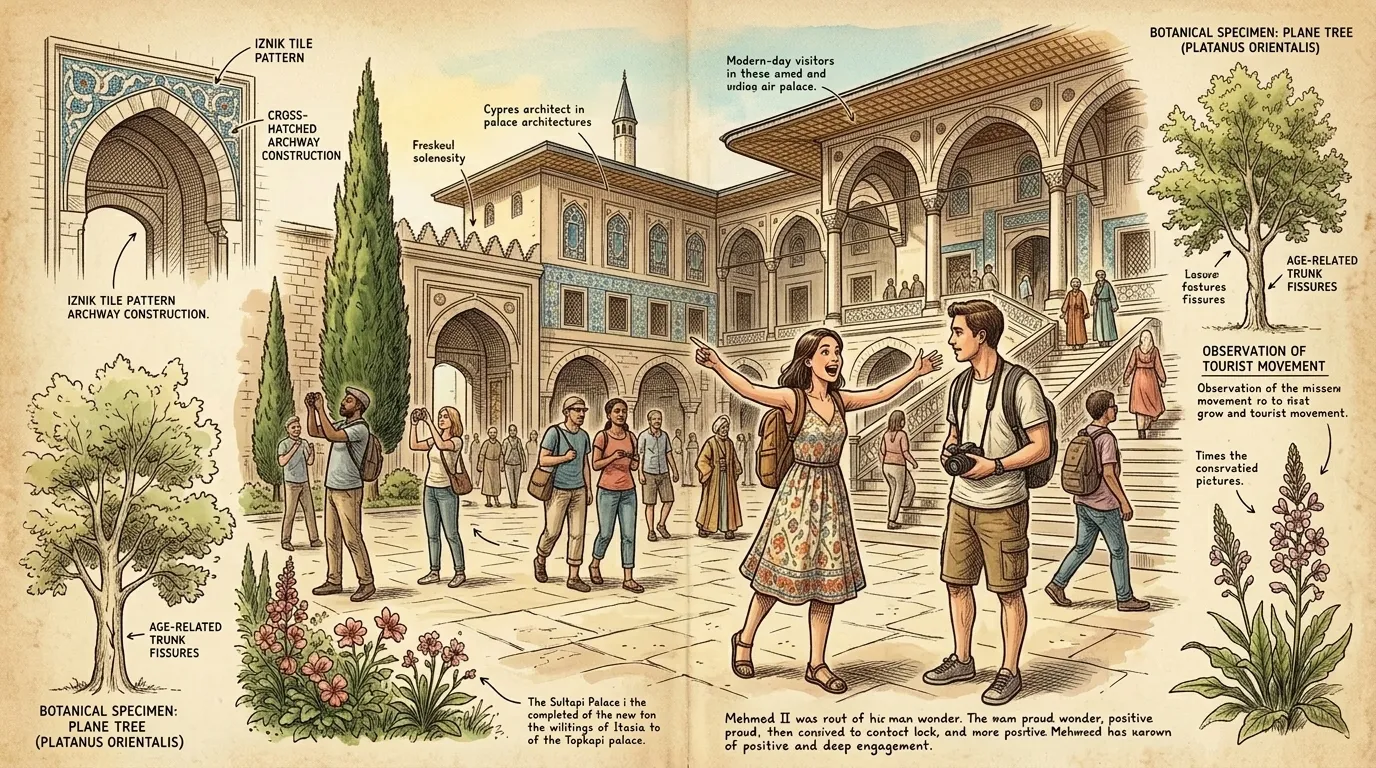
Today, Topkapi Palace stands as a museum, open to the public, inviting visitors to explore its rich history and marvel at its architectural splendor. Millions flock to its courtyards, chambers, and treasury, eager to glimpse the lives of the Ottoman sultans and experience the magic of a bygone era. The palace's enduring legacy is a testament to Mehmed the Conqueror's vision and the countless artisans who brought it to life. It is the soul of the clockwork city.
"A modern-day visitor exclaims to their companion, 'Imagine the stories these walls could tell! This place is like a living history book. It makes me think of what Maya Angelou said: 'History, despite its wrenching pain, cannot be unlived, but if faced with courage, need not be lived again.''"
Art Fact: Topkapi Palace continues to inspire awe and wonder, reminding us of the enduring power of art, architecture, and human ambition. Its design has influenced countless structures, and its legacy lives on in every clockwork city around the world.
About this story
- Location: Turkey
- Audience: general readers
Questions and answers
Questions and answers about Topkapi Palace (Istanbul, Turkey — 1478)
Read Wonder Arts on your phone
Wonder Arts is available on Android and iPhone and iPad. Get Wonder Arts on Google Play · Get Wonder Arts on the App Store.
More Wonder Arts stories
- Uffizi Gallery (Florence, Italy — 1581)
- Venus de Milo by Alexandros of Antioch (Paris, France — c. 130 BC)
- View of Auvers-sur-Oise by Paul Cézanne (Oxford, UK — 1879)
- Wanderer Above the Sea of Fog by Caspar David Friedrich (Hamburg, Germany — 1818)
- Water Lilies by Claude Monet (Giverny, France — 1899)
- Whistler’s Mother by James McNeill Whistler (Paris, France — 1871)