Tonalism by George Inness (USA — c. 1880)
Tonalism by George Inness (USA — c. 1880) — an illustrated arts story, set in United States. 10 illustrated pages, free to read on Wonder Arts.
Page 1
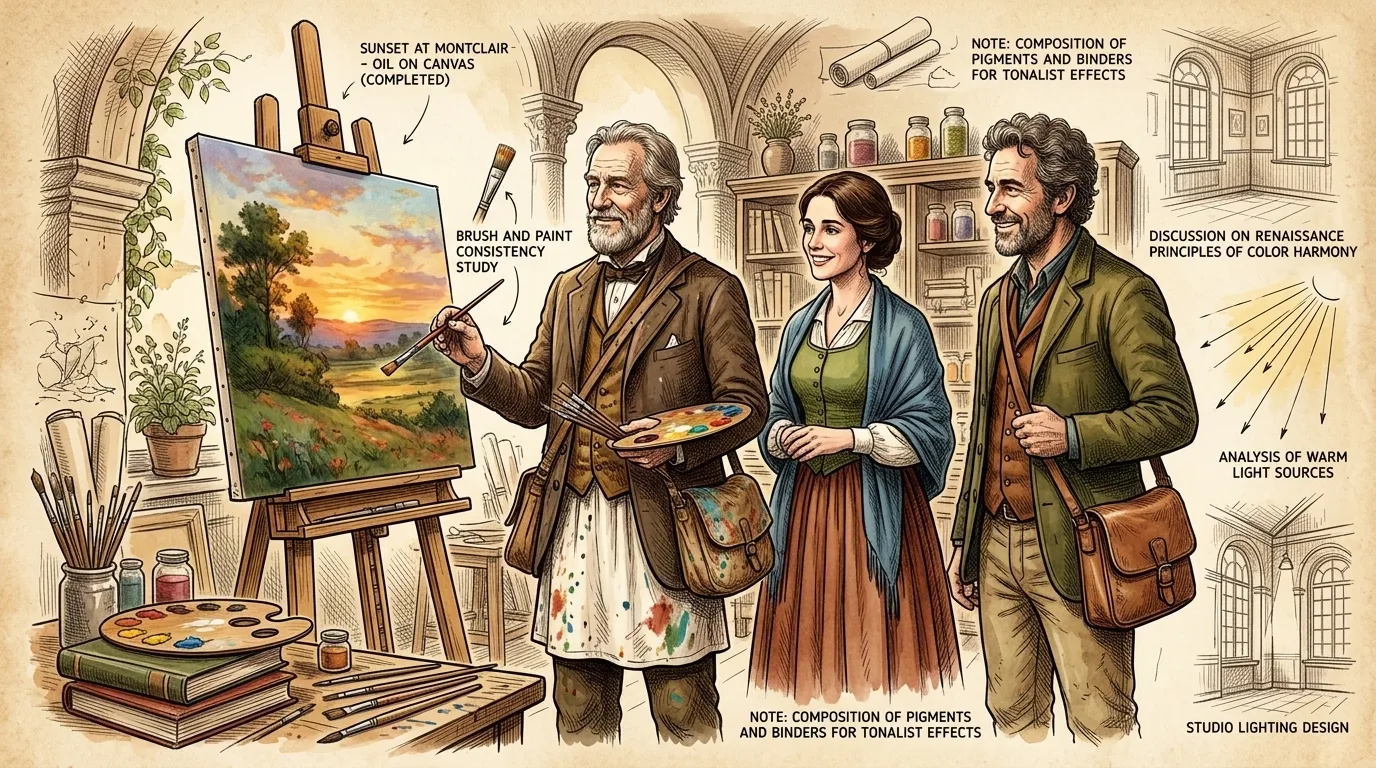
George Inness, a man deeply moved by the spiritual power of nature, stands before his canvas. Completed around 1884, 'Sunset at Montclair' captures the serene beauty of the New Jersey landscape he so loved. The painting, measuring 30 x 45 inches, now resides in the Montclair Art Museum, a testament to Inness's enduring legacy. It is said that Inness considered this painting one of his most successful attempts to capture the elusive quality of 'the soul of things.'
""I strive to represent not the scene, but my impression of it," Inness murmurs, his eyes reflecting the fading light of the painted sunset. "To evoke a feeling, a sense of peace...that is the true aim of art.""
Art Fact: Sunset at Montclair (c. 1884) Montclair Art Museum, New Jersey. Dimensions: 30 x 45 inches. Inness aimed to capture the 'soul of things' rather than a literal depiction.
Page 2
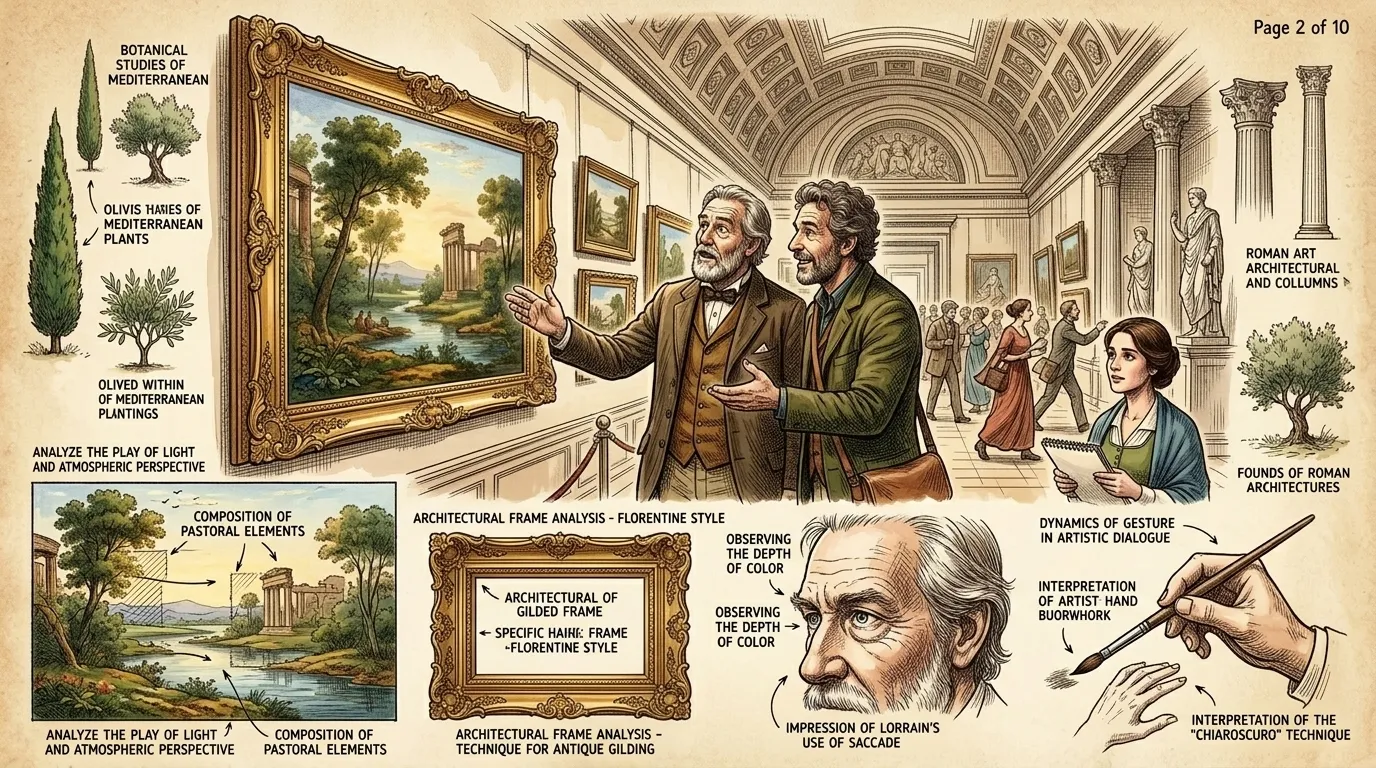
Inness, during his travels through Europe, finds himself in Rome, surrounded by the masterpieces of the Old Masters. The sheer scale and depth of emotion in the works of Claude Lorrain and the Barbizon School painters ignite a new passion within him. The young artist feels inspired to seek a more profound connection with nature and imbue his own landscapes with a similar sense of timeless grandeur.
"Anselm, a fellow artist visiting from Germany, exclaims, "Did you see that light? In Claude's 'Pastoral Landscape' — the way the sun filters through the trees, it's divine!" Inness responds, eyes wide with awe, "It's more than just light, Anselm. It's the feeling he conveys, a sense of the eternal within the earthly.""
Art Fact: Inness's travels to Europe, particularly his time in Rome, exposed him to the works of Claude Lorrain and the Barbizon School, profoundly influencing his artistic direction.
Page 3
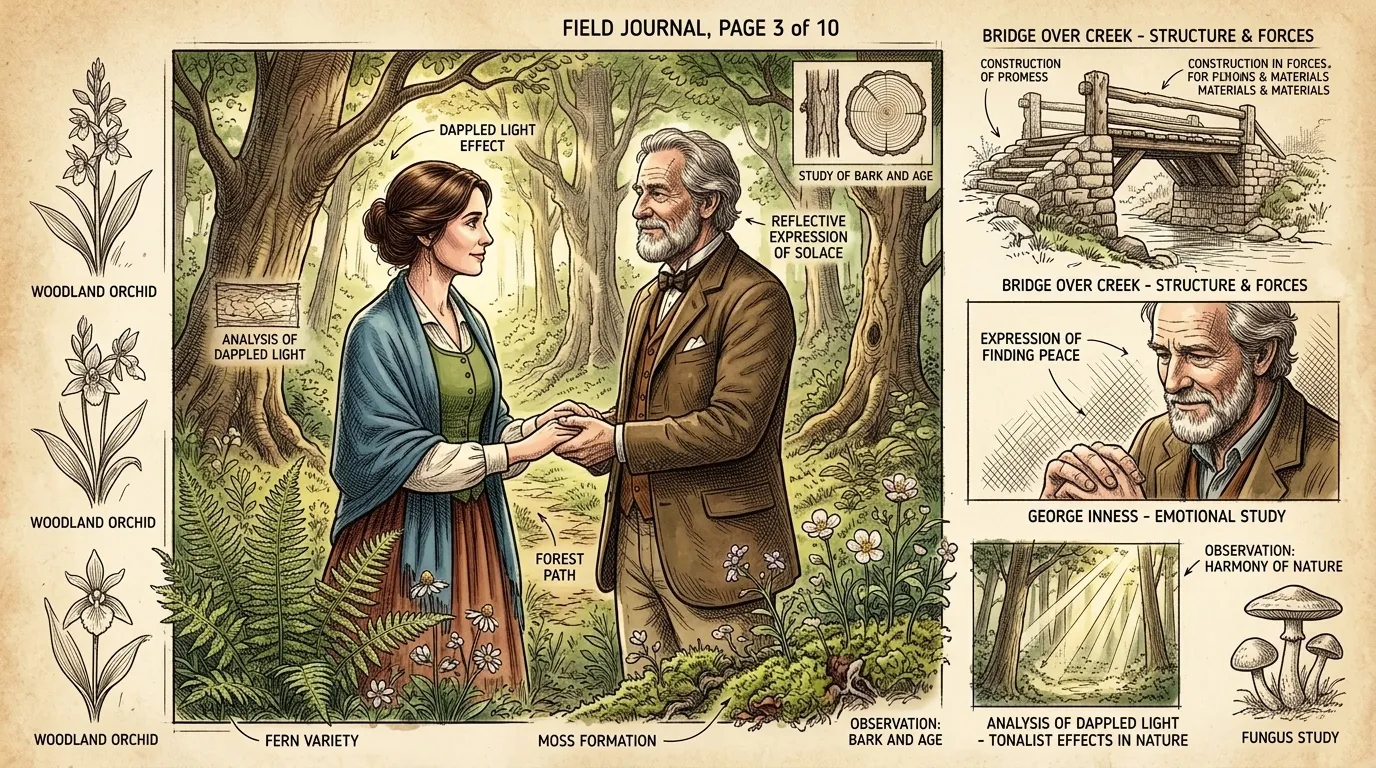
A profound grief casts a shadow over Inness's life with the death of his young son. In his sorrow, he finds solace in the natural world, seeking to express the ephemeral beauty of life and the inevitability of loss through his art. This personal tragedy becomes a wellspring of emotional depth in his later paintings, adding a layer of melancholy and introspection.
"His wife, Elizabeth, whispers, "'The best and most beautiful things in the world cannot be seen or even touched - they must be felt with the heart,' Helen Keller said that, George. Perhaps painting can help you express what words cannot.""
Art Fact: The personal tragedy of losing his young son deeply impacted Inness, infusing his later works with a sense of melancholy and introspection.
Page 4
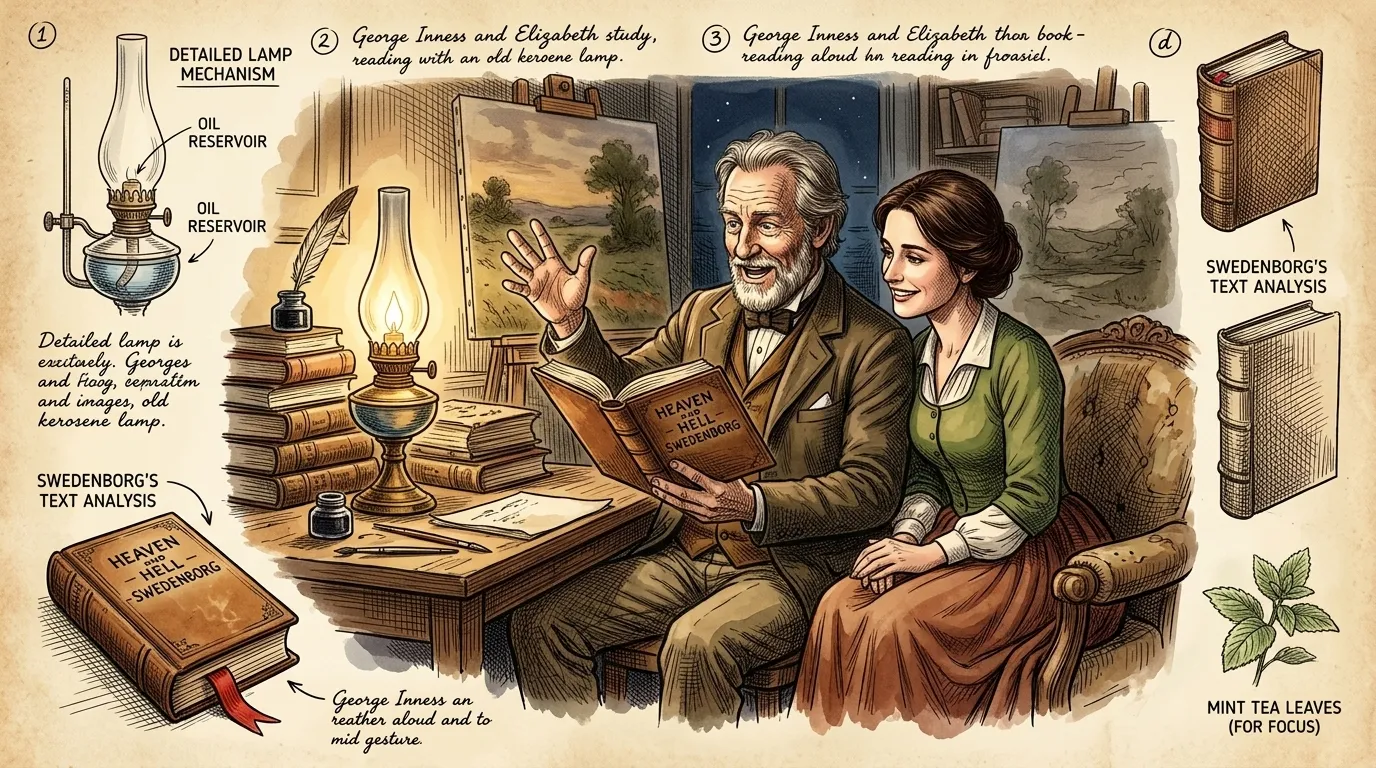
A spiritual transformation occurs when Inness discovers the writings of Emanuel Swedenborg, a Swedish theologian and mystic. Swedenborg's ideas about the interconnectedness of the spiritual and material realms resonate deeply with Inness, shaping his understanding of nature as a manifestation of divine presence. This newfound spiritual lens influences his artistic approach, leading him to seek a deeper, more symbolic representation of the landscape.
"Reading aloud from Swedenborg's 'Heaven and Hell,' Inness declares, "'All things in the universe correspond to things in man, and all things in man to things in heaven.' This is it, Elizabeth! The key to understanding the true meaning of art – to see the divine connection in all things.""
Art Fact: Inness's embrace of Swedenborgianism profoundly influenced his artistic philosophy, leading him to view nature as a manifestation of the divine.
Page 5
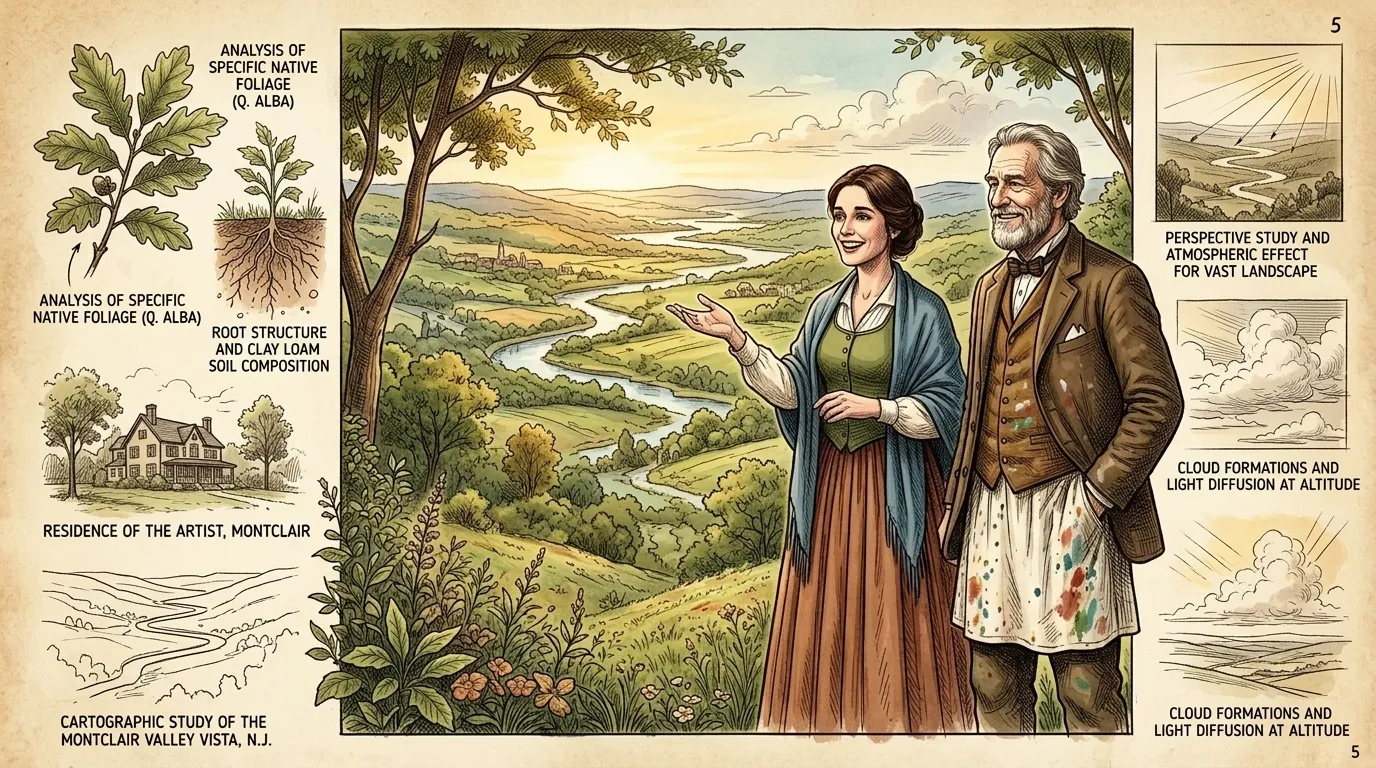
Inness moves his family to Montclair, New Jersey, drawn by the area's tranquil landscapes and proximity to New York City's art scene. Montclair becomes his sanctuary, a place where he can fully immerse himself in nature and dedicate himself to his art. The rolling hills, verdant fields, and luminous skies of Montclair inspire some of his most iconic Tonalist paintings.
"Elizabeth, looking out over the vista, exclaims, "George, look at that light! The way it dances on the hills...it's breathtaking. This place...this will be our home. You will flourish here." Inness smiles, adding, "Yes, this is the right place. This place feels like home.""
Art Fact: Montclair, New Jersey, provided Inness with the tranquil environment and inspiring landscapes that fueled his Tonalist masterpieces.
Page 6
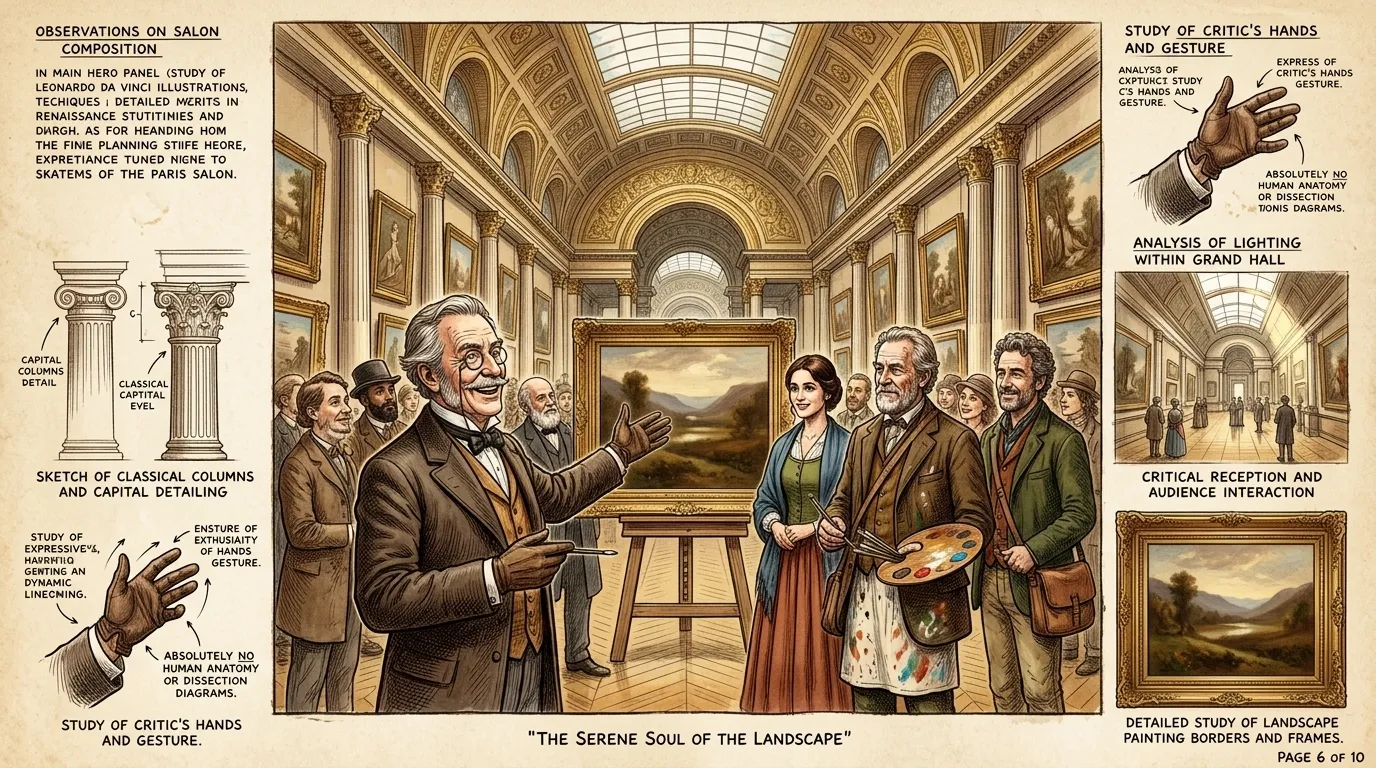
Inness risks sending paintings to the Paris Salon, the most prestigious art exhibition in the world. The painting receives warm reviews and introduces his work to a larger international audience. This exposure validates his artistic vision and solidifies his reputation as a leading American landscape painter, bolstering his confidence to pursue his unique style.
"A Parisian critic in the crowd declares, "Inness! Un Americain! C'est magnifique! He captures the soul of the landscape with such delicacy and depth! It's unlike anything I've seen before.""
Art Fact: Inness's successful exhibition at the Paris Salon marked a significant milestone in his career, gaining him international recognition and validation.
Page 7
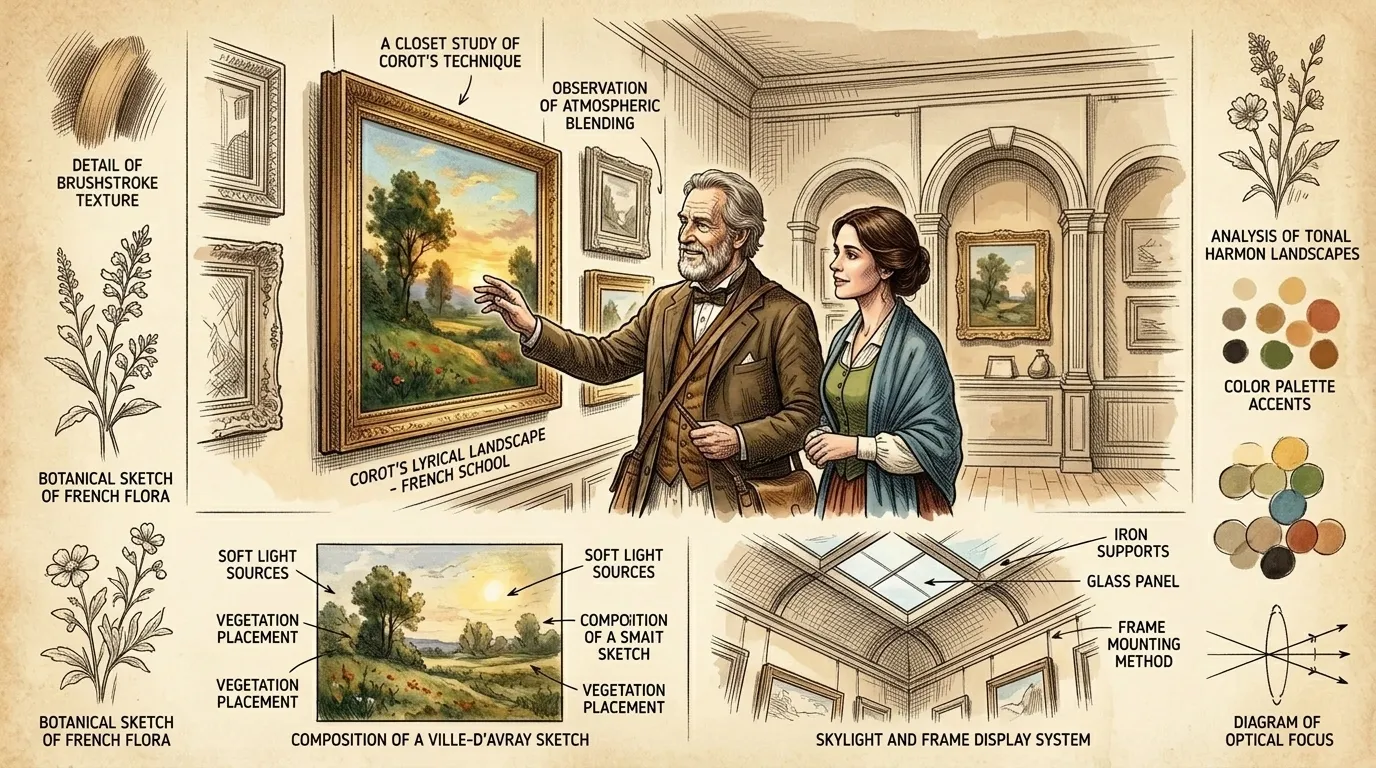
During a stay in France, Inness studies the work of Camille Corot, another important influence. Corot's lyrical landscapes and emphasis on tonal harmonies inspire Inness to further refine his own style. He learns to simplify his compositions, focusing on the essential elements of light, color, and atmosphere to convey a sense of mood and emotion.
"Inness observes, with enthusiasm, "Corot! I admire his restraint, his ability to suggest so much with so little. See how he uses light and shadow to create depth and atmosphere? It's masterful! I will apply it!""
Art Fact: The work of Camille Corot, particularly his emphasis on tonal harmonies and atmospheric effects, had a lasting influence on Inness's artistic style.
Page 8
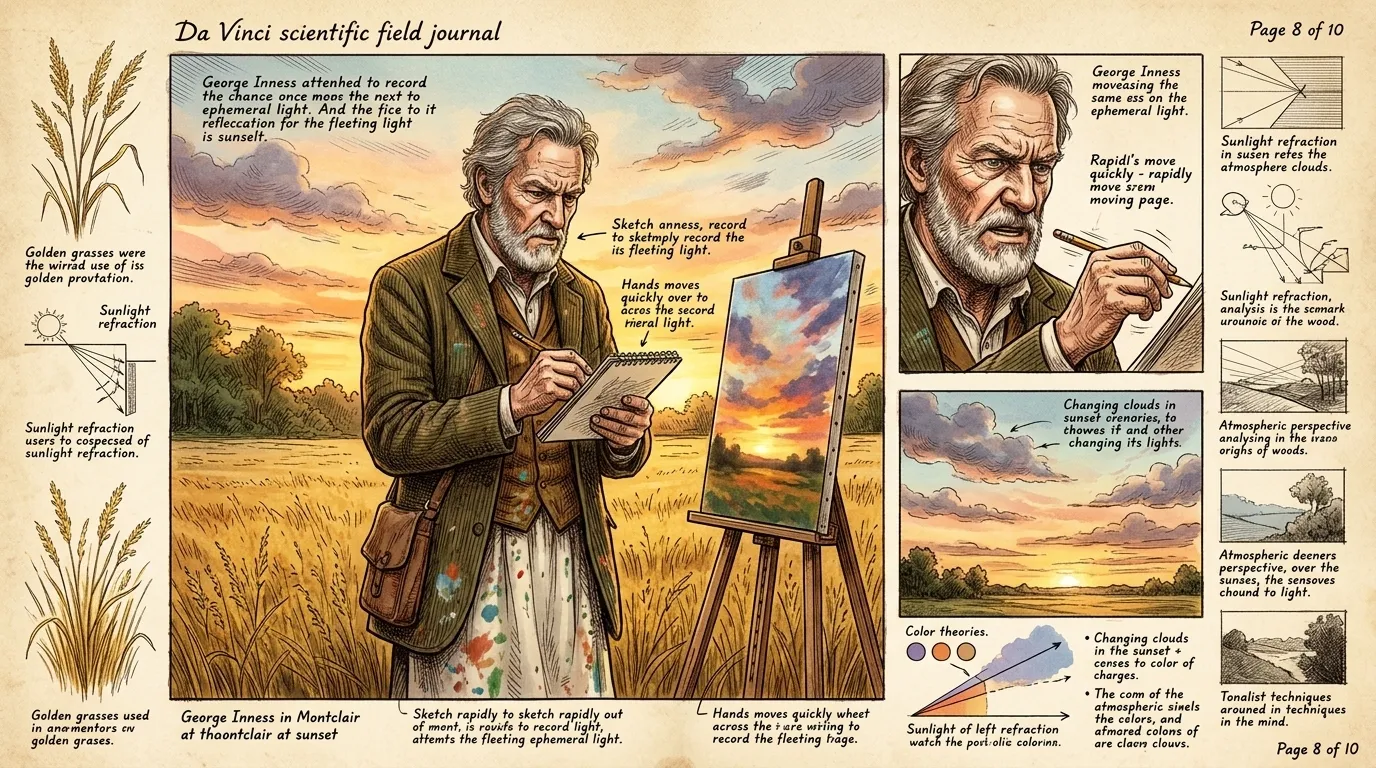
In the fields of Montclair, Inness faces the challenge of capturing the fleeting beauty of a sunset. He struggles to convey the feeling he experiences as the light transforms the landscape. Through relentless experimentation, he develops techniques to suggest the ephemeral quality of light and atmosphere, creating paintings that evoke a sense of reverie and contemplation.
"Frustrated, Inness exclaims, "It's not enough to simply paint what I see! I must capture what I feel! The light...it's always changing, always elusive. How do I capture that?""
Art Fact: Inness's relentless experimentation with techniques to capture the fleeting beauty of sunsets led to the development of his signature Tonalist style.
Page 9
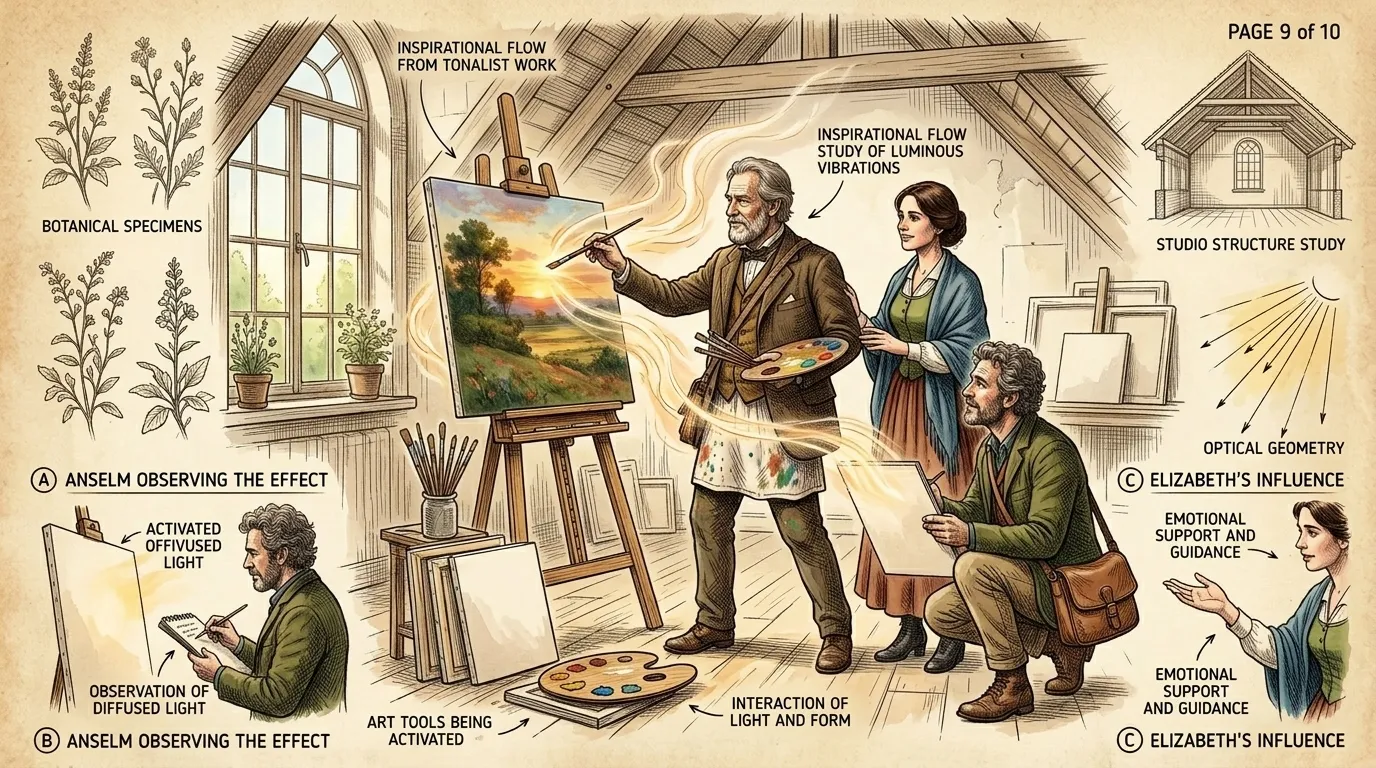
Years after his death, George Inness's influence on American landscape painting is undeniable. His Tonalist vision continues to inspire artists to seek a deeper connection with nature and to express their own emotional responses to the world around them. His paintings remain a testament to the power of art to evoke a sense of peace, beauty, and spiritual connection.
"Inness is quoted from beyond the grave, 'A work of art does not appeal to the reason. It does not need to be understood, but felt.'""
Art Fact: Inness's paintings stand as a testament to the power of art to evoke a sense of peace, beauty, and spiritual connection, continuing to inspire generations of artists.
Page 10
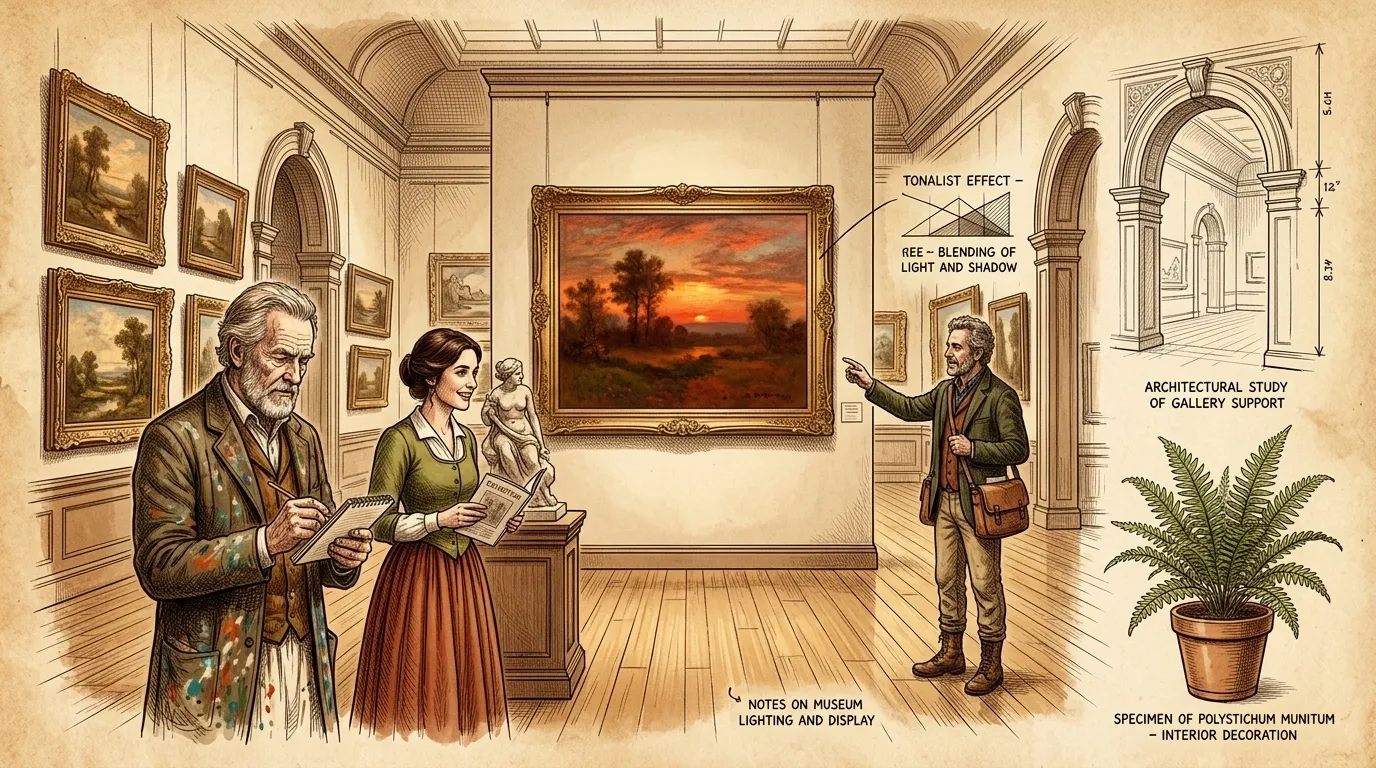
Today, George Inness's 'Sunset at Montclair' hangs in the Montclair Art Museum, a treasured masterpiece of American art. It invites viewers to pause, to reflect, and to experience the profound beauty of the natural world through the eyes of a visionary artist. The painting's enduring appeal lies in its ability to transcend time and to evoke a sense of timeless peace and tranquility.
"As the museum curator remarks, "Inness gave us something to believe in. He taught us how to see a different world through his art." "
Art Fact: Inness's legacy continues to inspire generations, his paintings echoing through time as a testament to the power of art to connect us to nature and to the divine.
About this story
- Location: United States
- Audience: general readers
Questions and answers
Questions and answers about Tonalism by George Inness (USA — c. 1880)
Read Wonder Arts on your phone
Wonder Arts is available on Android and iPhone and iPad. Get Wonder Arts on Google Play · Get Wonder Arts on the App Store.
More Wonder Arts stories
- Topkapi Palace (Istanbul, Turkey — 1478)
- Uffizi Gallery (Florence, Italy — 1581)
- Venus de Milo by Alexandros of Antioch (Paris, France — c. 130 BC)
- View of Auvers-sur-Oise by Paul Cézanne (Oxford, UK — 1879)
- Wanderer Above the Sea of Fog by Caspar David Friedrich (Hamburg, Germany — 1818)
- Water Lilies by Claude Monet (Giverny, France — 1899)