Ziggurat of Ur (Iraq — c. 2100 BC)
Ziggurat of Ur (Iraq — c. 2100 BC) — an illustrated arts story, set in United States. 10 illustrated pages, free to read on Wonder Arts.
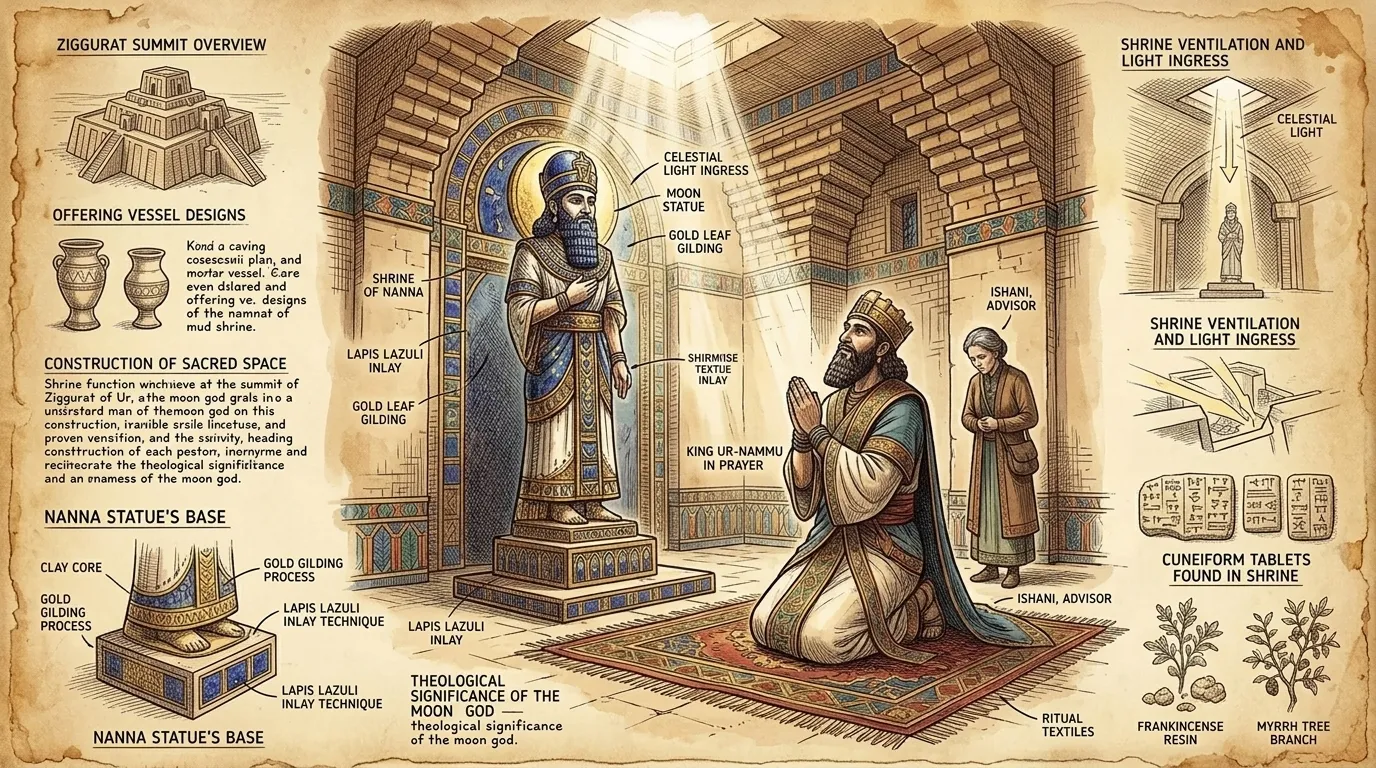
Page 1
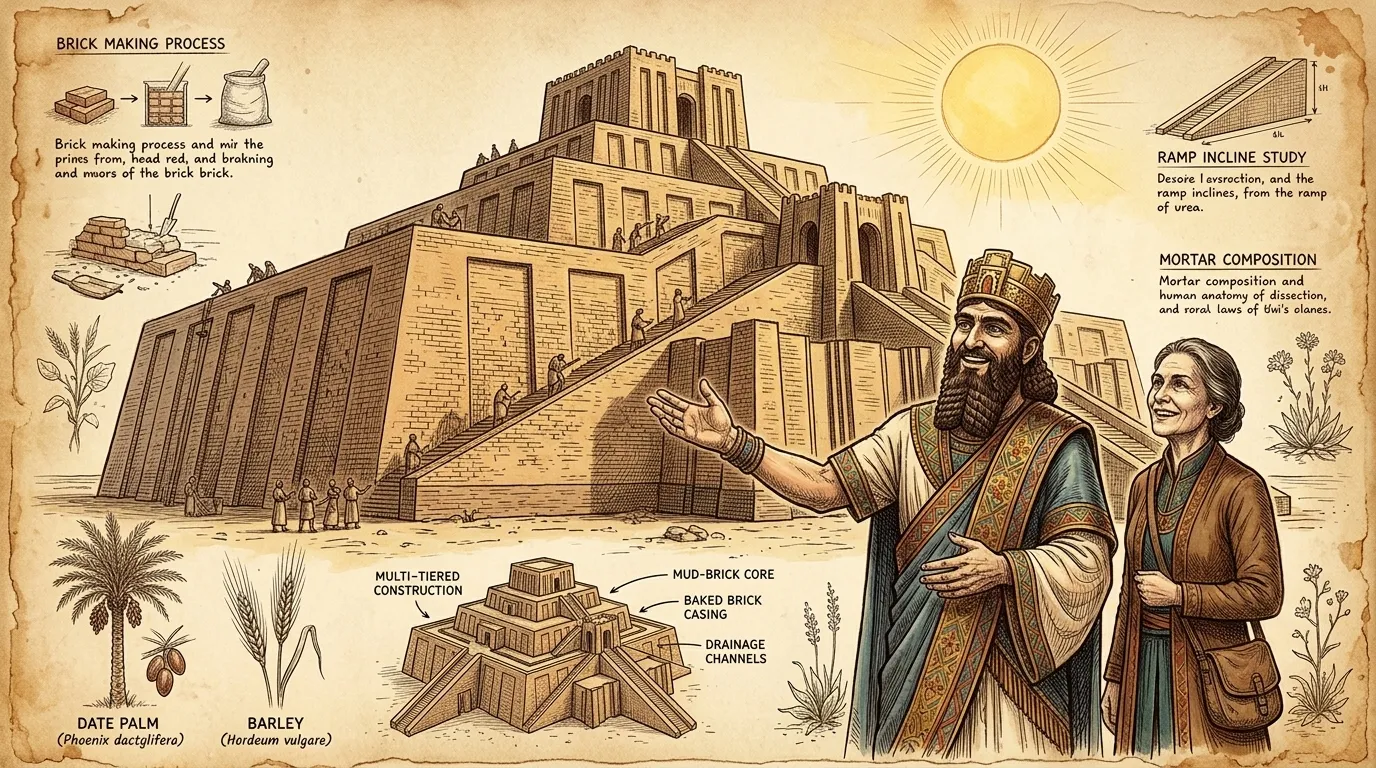
Ur-Nammu, king of Ur, surveyed the colossal ziggurat nearing completion around 2100 BC. This staged pyramid, dedicated to the moon god Nanna, stood as a testament to his power and piety. Measuring approximately 64 by 45 meters at its base and rising to a height of over 20 meters, the Ziggurat of Ur was more than a temple—it was the center of the city's spiritual and administrative life. Its mud-brick core, faced with baked bricks set in bitumen, concealed countless votive offerings, each a silent prayer from his people.
""This ziggurat," Ur-Nammu declared to his vizier, "will stand for millennia, a beacon of our devotion. It is a monument to Nanna, and to the glory of Ur!""
Art Fact: The Ziggurat of Ur, now partially restored, stands in present-day Iraq, a testament to the architectural and religious ambitions of the Sumerian civilization. It was a masterpiece of its time, and an engineering feat.
Page 2
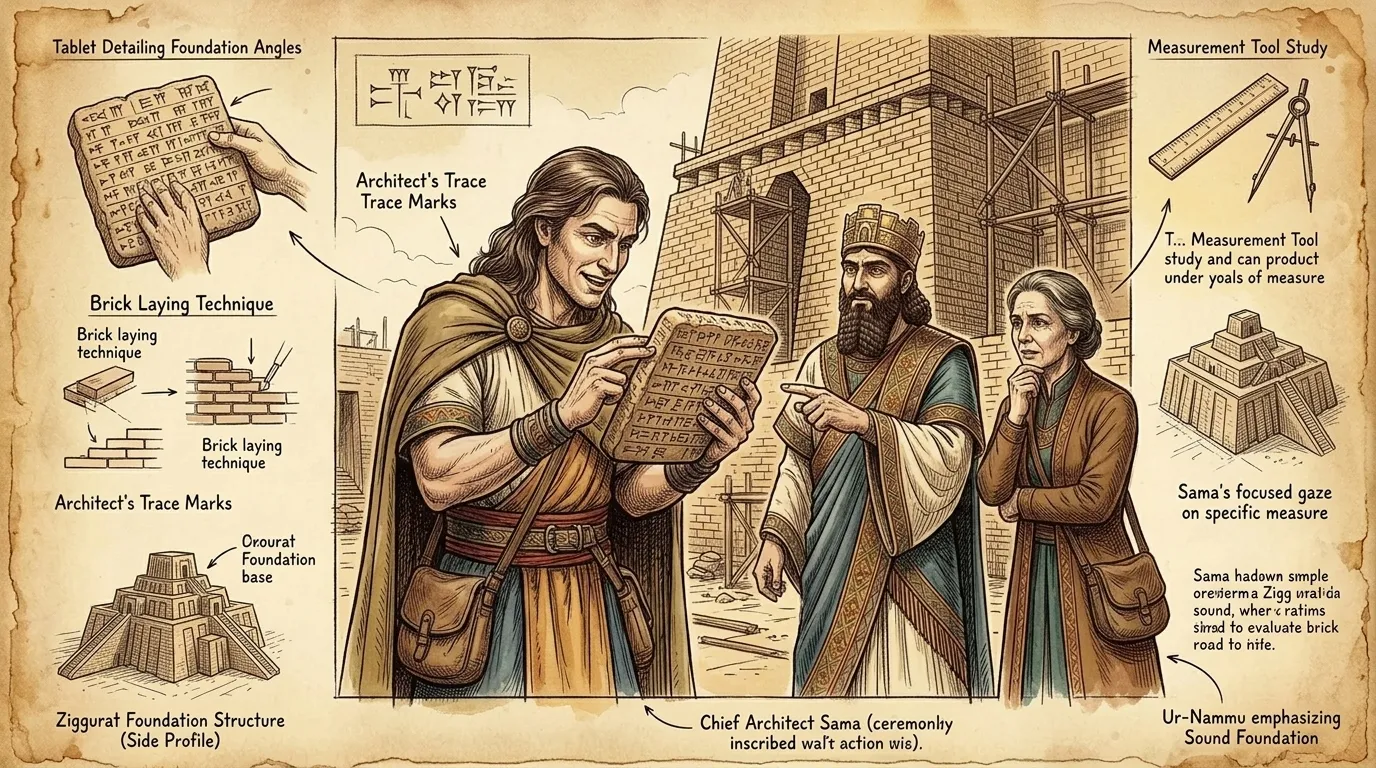
Ur-Nammu's chief architect, Sama, meticulously reviewed a clay tablet, covered in cuneiform symbols. It detailed the precise measurements and angles for each level of the ziggurat. Ishani approached, concern etched on her face. "My king, the land shifts with the seasons. Will the foundation endure the floods?"
""Sama, ensure the base is sound," Ur-Nammu commanded, pointing to the tablet. "As Aristotle said, 'The foundation of all our success starts with solid ground.' We must build on strength.""
Art Fact: The use of standardized measurements and detailed planning reflected the advanced administrative capabilities of Ur's government.
Page 3
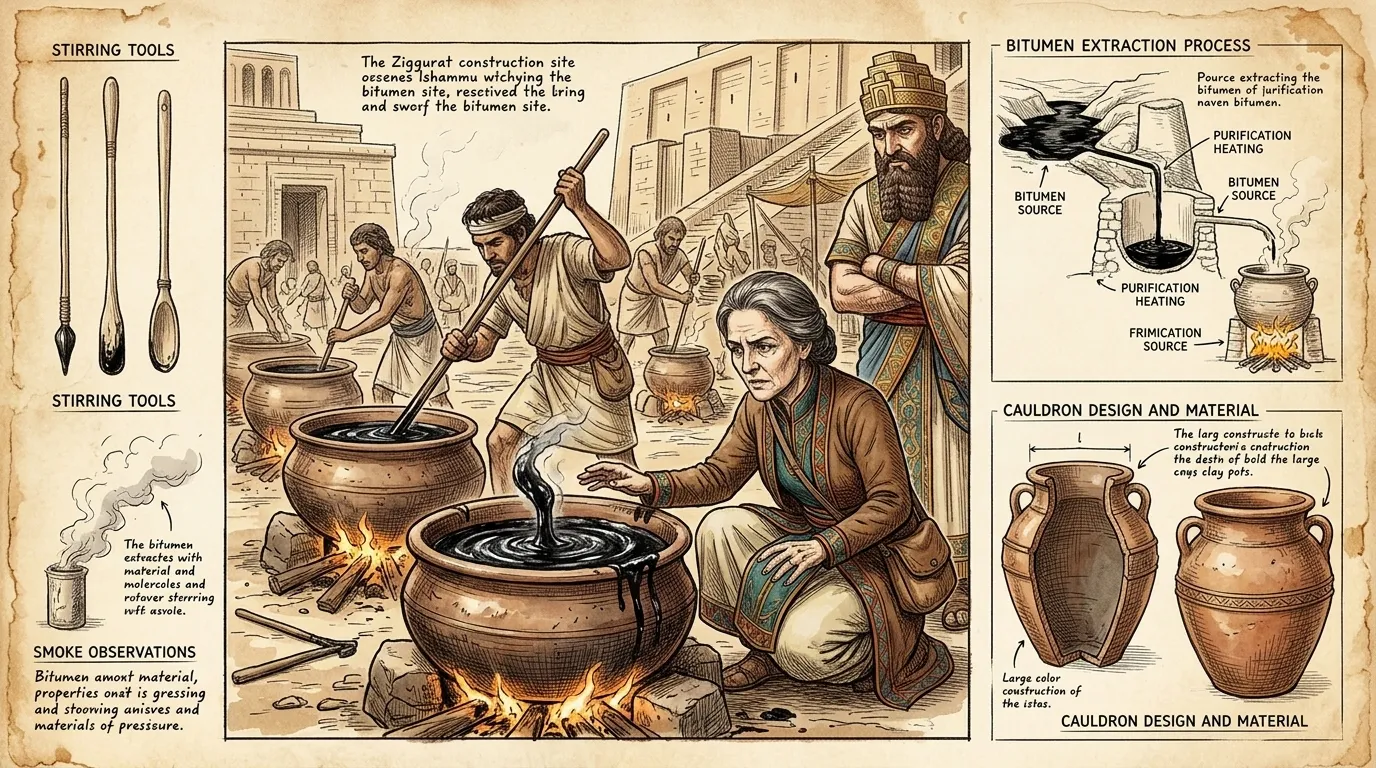
Ishani fretted over the bitumen, a naturally occurring asphalt used to bind the bricks. Sourcing it from distant deposits was costly, and its quality varied. Ur-Nammu watched as workers stirred the black substance in large cauldrons. "What troubles you, Ishani?" he asked, sensing her unease.
""My king, the bitumen must be pure, or the brickwork will crumble with the rains. We must ensure the traders do not try to use less bitumen to increase profits," Ishani warned. "We must inspect everything.""
Art Fact: Bitumen was a vital resource in Mesopotamia, used for waterproofing and binding building materials. Its quality directly affected the longevity of structures like the ziggurat.
Page 4
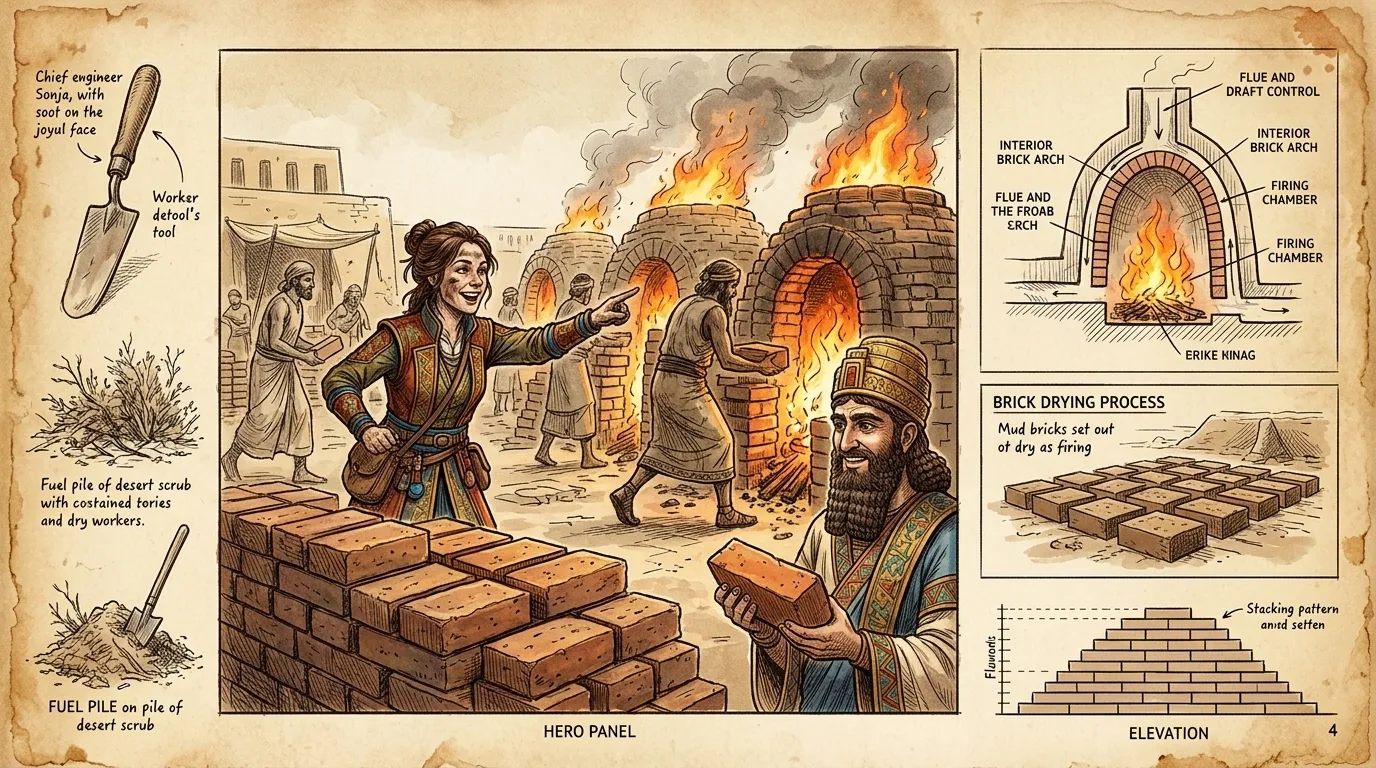
The air filled with smoke as Sonja directed the firing of thousands of mud bricks. Each brick had to withstand intense heat to ensure its durability. Ur-Nammu observed the process with keen interest. "These bricks," he mused, "are the very bones of our great temple."
""My lord, each brick must be perfect, or the entire structure will suffer. Patience and vigilance are key," Sonja said, her face smeared with soot."
Art Fact: Baked bricks provided a durable outer layer for the ziggurat, protecting the mud-brick core from erosion.
Page 5
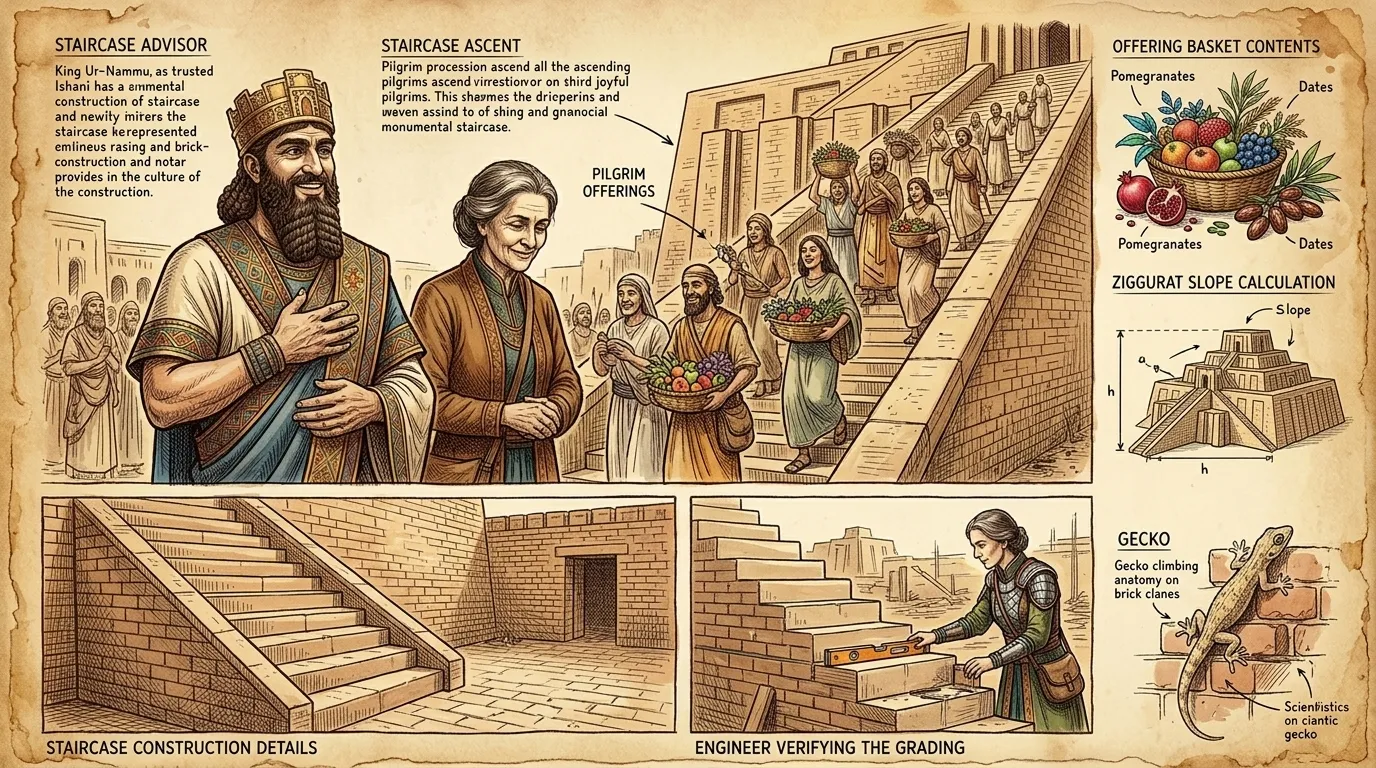
A winding staircase, constructed with precise engineering, spiraled towards the ziggurat's summit. Pilgrims from across the land prepared to ascend, carrying offerings to Nanna. Ur-Nammu watched the faithful gather. "Their devotion," he murmured, "is the true mortar that binds this ziggurat."
""My King, their faith gives our kingdom strength," Ishani said, as people were passing her."
Art Fact: The ziggurat served as a bridge between the human and divine realms, a place where offerings could be made to appease the gods.
Page 6
At the summit, a sacred shrine, adorned with lapis lazuli and gold, housed the statue of Nanna. Ur-Nammu entered the sanctuary, his heart filled with reverence. "May this ziggurat," he prayed, "bring prosperity and peace to Ur."
""Oh, Nanna, great moon god, accept our humble offerings and protect our city!" Ur-Nammu kneeled."
Art Fact: The ziggurat's summit shrine was believed to be the earthly dwelling place of the moon god Nanna.
Page 7
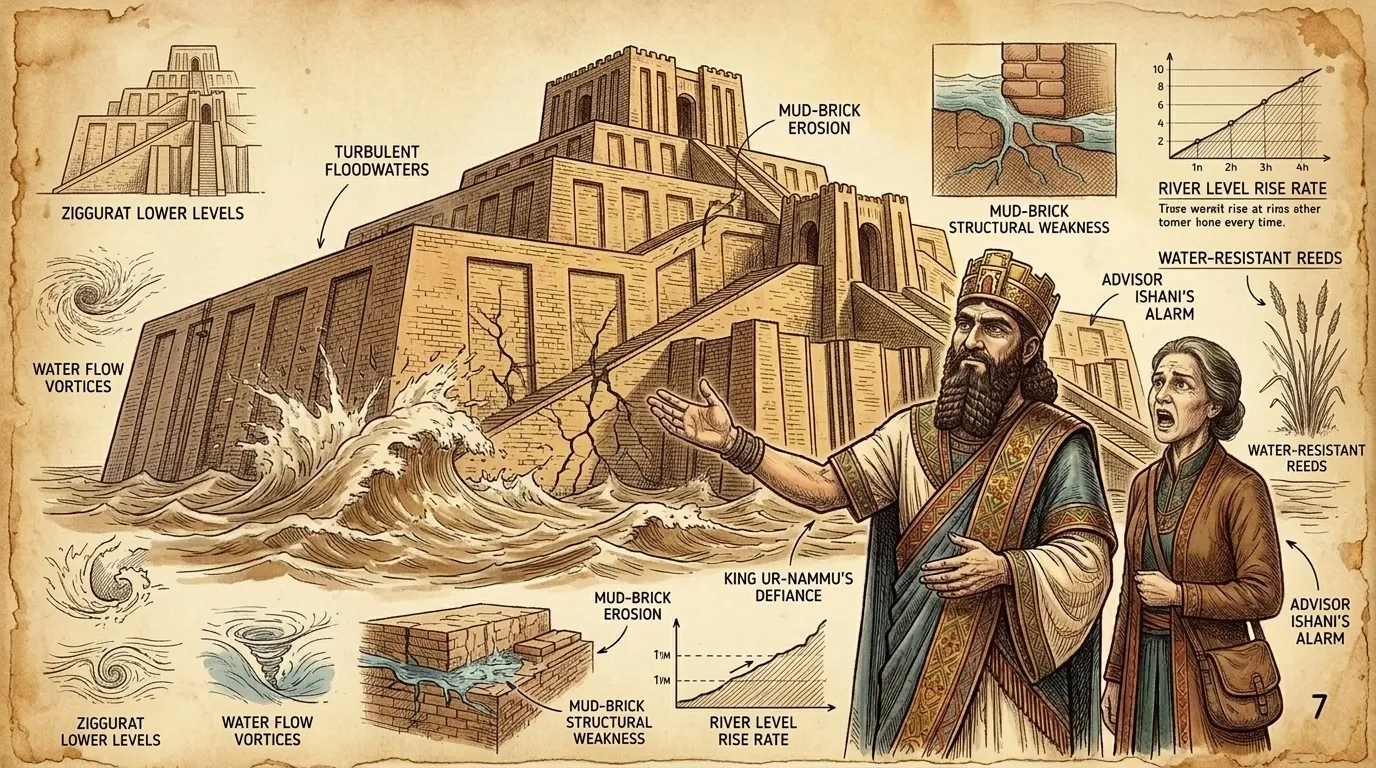
One year, the Tigris and Euphrates rivers swelled beyond their banks, threatening to engulf the ziggurat. The people of Ur feared the wrath of the gods. Ur-Nammu stood defiant against the rising waters. "We will not yield!" he declared. But the foundations were cracking and the water was seeping into the lower levels.
""The rivers rise too fast! We must reinforce the base, or all will be lost," Ishani cried out to Ur-Nammu."
Art Fact: The unpredictable nature of the Tigris and Euphrates rivers posed a constant threat to Mesopotamian cities.
Page 8
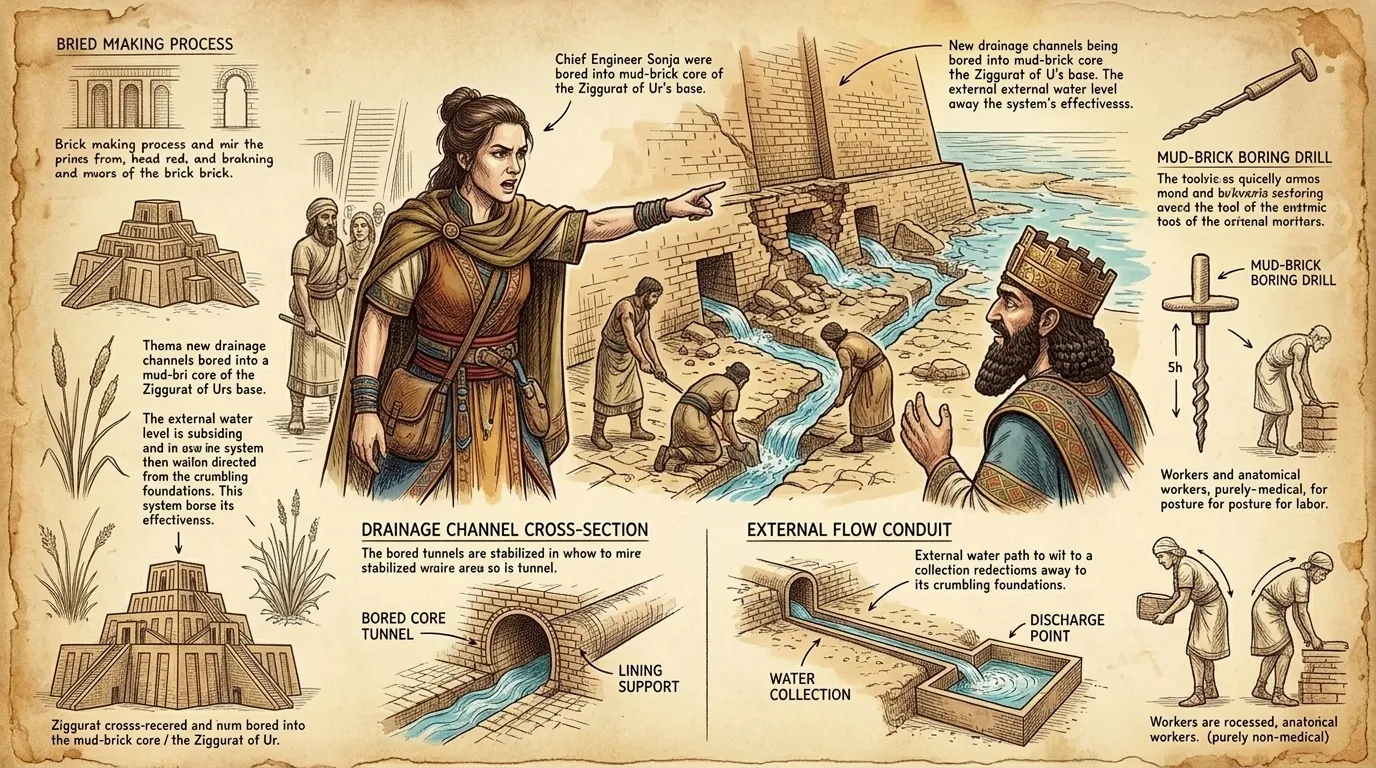
Sonja, recalling ancient methods, devised a system of internal drains to relieve the pressure on the foundations. She directed workers to bore channels through the mud brick, carefully redirecting the water. "We must fight water with water!" she exclaimed. The floodwaters, contained in the inner drains, began to subside, but it had destroyed a good portion of the bricks.
""My King! A way! Use the ancient knowledge," said Sonja. "The tablets speak of drains to fight the rivers.""
Art Fact: Ancient Mesopotamians possessed advanced engineering skills, including the construction of sophisticated drainage systems.
Page 9
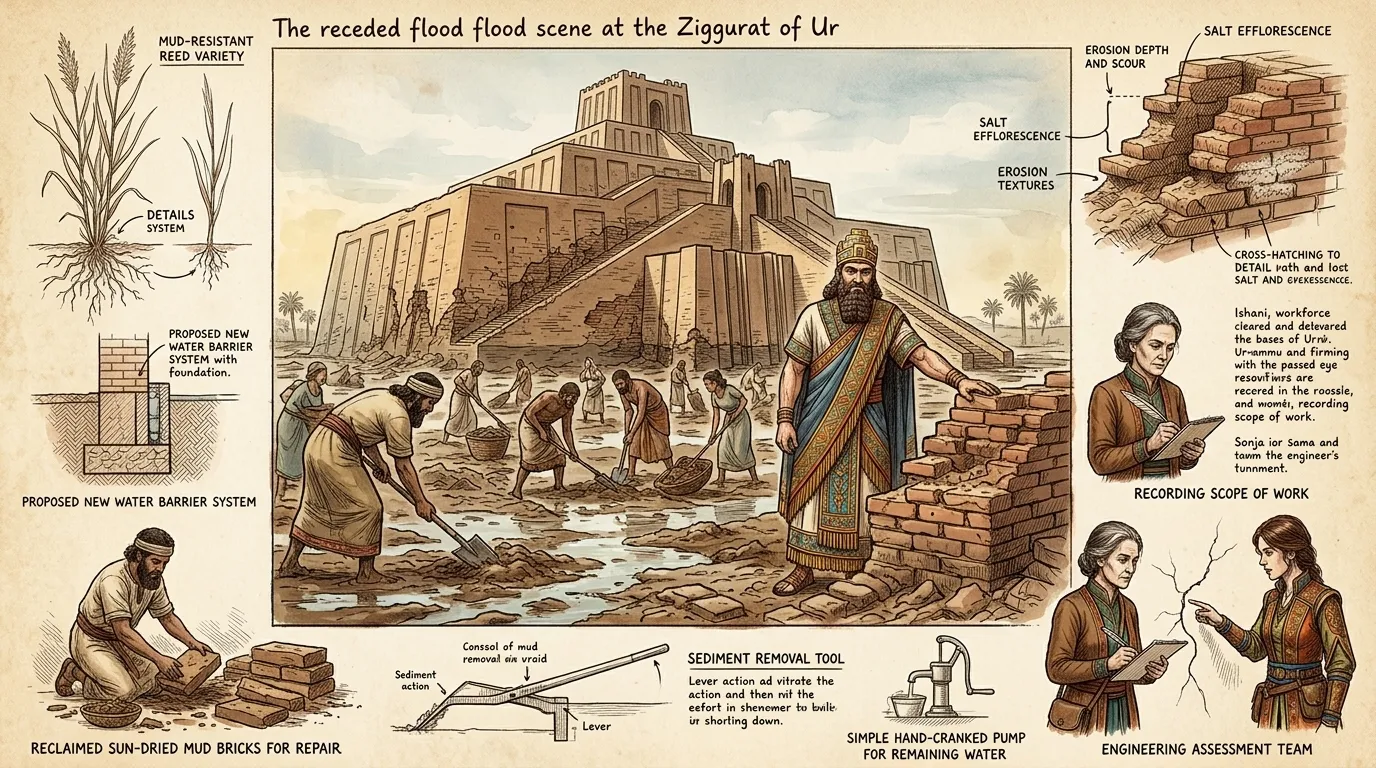
The flood receded, leaving behind mud and debris, but the ziggurat stood firm. Ur-Nammu, his face etched with relief, surveyed the damage. "We have weathered the storm," he said, his voice filled with gratitude. The construction of the base needed to be done again, but no one was going to give up.
""As Nelson Mandela once said, 'The greatest glory in living lies not in never falling, but in rising every time we fall.' We will rebuild!" Ur-Nammu declared."
Art Fact: The Ziggurat of Ur symbolizes the enduring spirit of the Sumerian civilization and its ability to overcome adversity.
Page 10
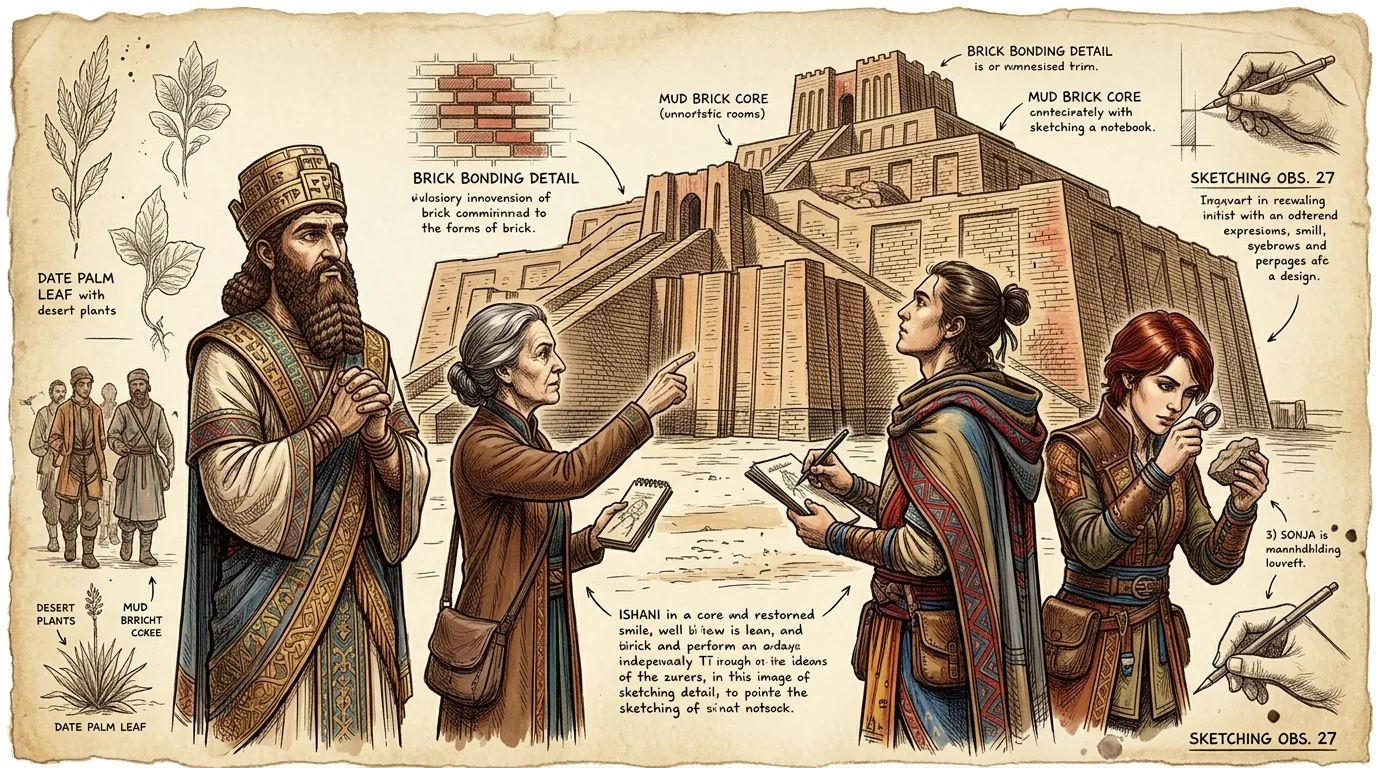
Millennia later, the Ziggurat of Ur remains a testament to human ingenuity and faith. Archaeologists, historians, and pilgrims from around the world visit its ruins, marveling at its scale and significance. Ur-Nammu's vision lives on, inspiring generations. The Ziggurat stands as a profound connection to the distant past, a symbol of what humanity can achieve when united by a common purpose. The legacy of Ur lives on, because humans will endure through the times.
Art Fact: The Ziggurat of Ur, despite centuries of erosion and conflict, continues to inspire awe and reverence, a symbol of human ambition and spiritual devotion.
About this story
- Location: United States
- Audience: general readers
Read Wonder Arts on your phone
Wonder Arts is available on Android and iPhone and iPad. Get Wonder Arts on Google Play · Get Wonder Arts on the App Store.
More Wonder Arts stories
- A Burial at Ornans by Gustave Courbet (France — 1849)
- A Cavalier by Frans Hals (Australia — 1624)
- A Sunday on La Grande Jatte by Georges Seurat (Paris, France — 1884)
- Abbey in the Oakwood by Caspar David Friedrich (Germany — 1810)
- Abstract Expressionism by Jackson Pollock (New York, USA — 1940s)
- Al-Azhar Mosque (Cairo, Egypt — 972)