How Glaciers Shape the Land

How Glaciers Shape the Land — an illustrated stories story. 10 illustrated pages, free to read on Wonder Books.
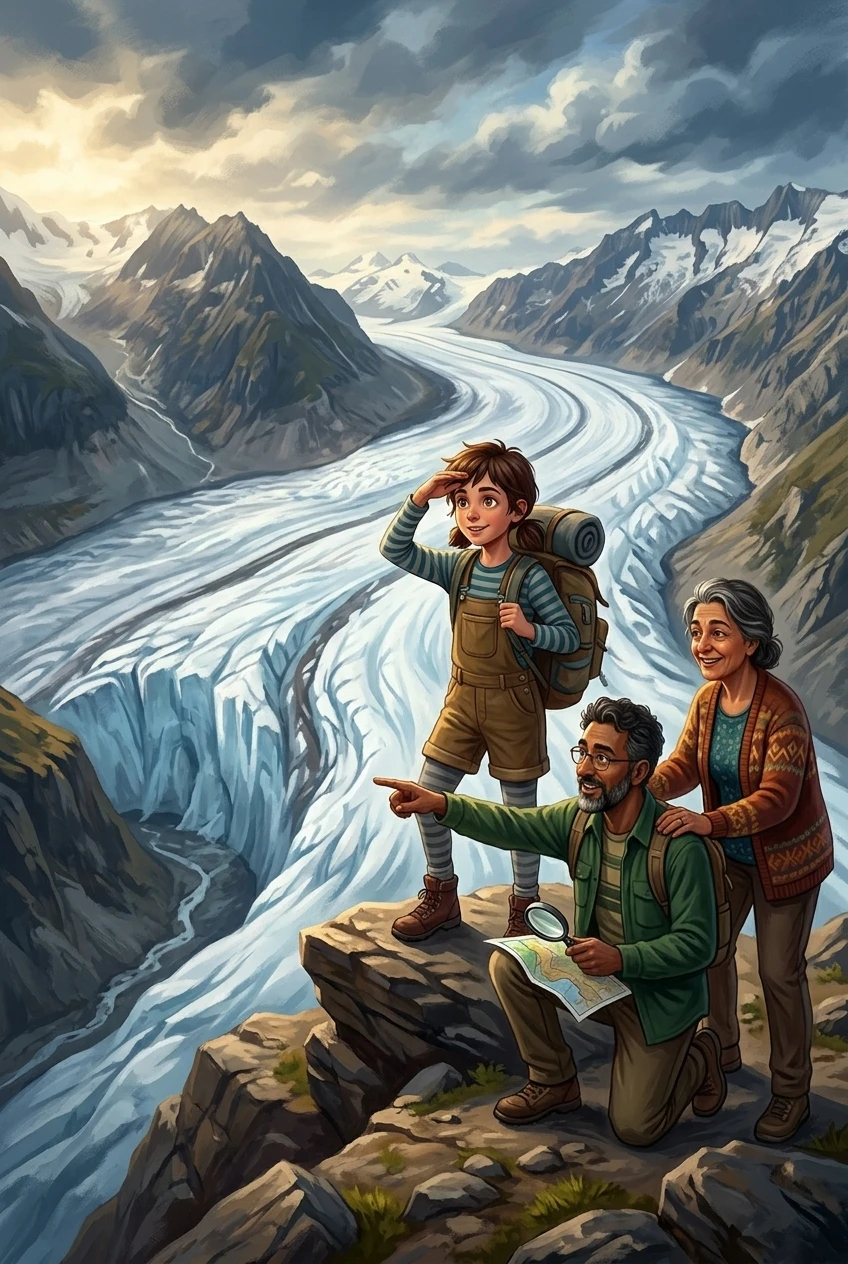
How Glaciers Shape the Land — book cover — Wonder Books
How Glaciers Shape the Land — an illustrated stories story. 10 illustrated pages, free to read on Wonder Books.

Page 1
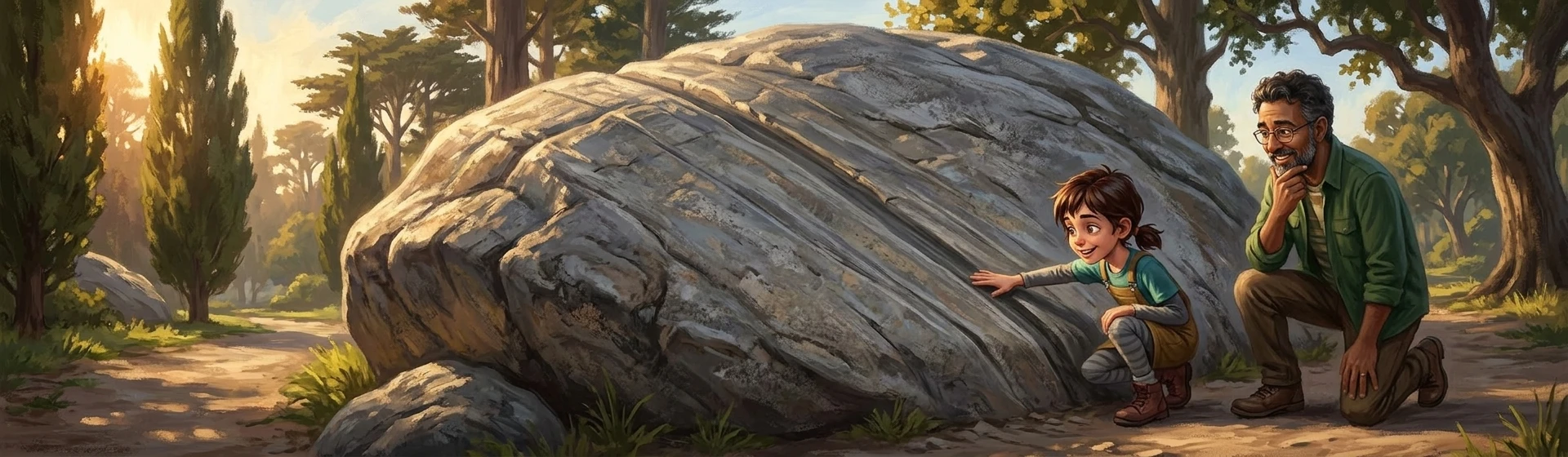
Rohan traced a long, deep scratch on a huge boulder in the middle of Golden Gate Park. "Dad, how did this rock get stripes?" she asked, looking up at her…
Rohan traced a long, deep scratch on a huge boulder in the middle of Golden Gate Park. "Dad, how did this rock get stripes?" she asked, looking up at her father. He knelt beside her, rubbing his chin thoughtfully. "That is a fantastic question, Rohan; this rock isn't even from San Francisco!"

Rohan traced a long, deep scratch on a huge boulder in the middle of Golden Gate Park. "Dad, how did this rock get stripes?" she asked, looking up at her father. He knelt beside her, rubbing his chin thoughtfully. "That is a fantastic question, Rohan; this rock isn't even from San Francisco!"

Page 2

Back home in their Noe Valley kitchen, Rohan's mother looked at the photo they took. "A rock from somewhere else is called an 'erratic,'" she explained, sipping…
Back home in their Noe Valley kitchen, Rohan's mother looked at the photo they took. "A rock from somewhere else is called an 'erratic,'" she explained, sipping her tea. "But what could possibly be strong enough to carry a rock bigger than a car for hundreds of miles?" Rohan wondered aloud, tapping the picture on the phone. Her father smiled, "Not what, but who... or more like, a very, very slow-moving giant."

Back home in their Noe Valley kitchen, Rohan's mother looked at the photo they took. "A rock from somewhere else is called an 'erratic,'" she explained, sipping her tea. "But what could possibly be strong enough to carry a rock bigger than a car for hundreds of miles?" Rohan wondered aloud, tapping the picture on the phone. Her father smiled, "Not what, but who... or more like, a very, very slow-moving giant."

Page 3
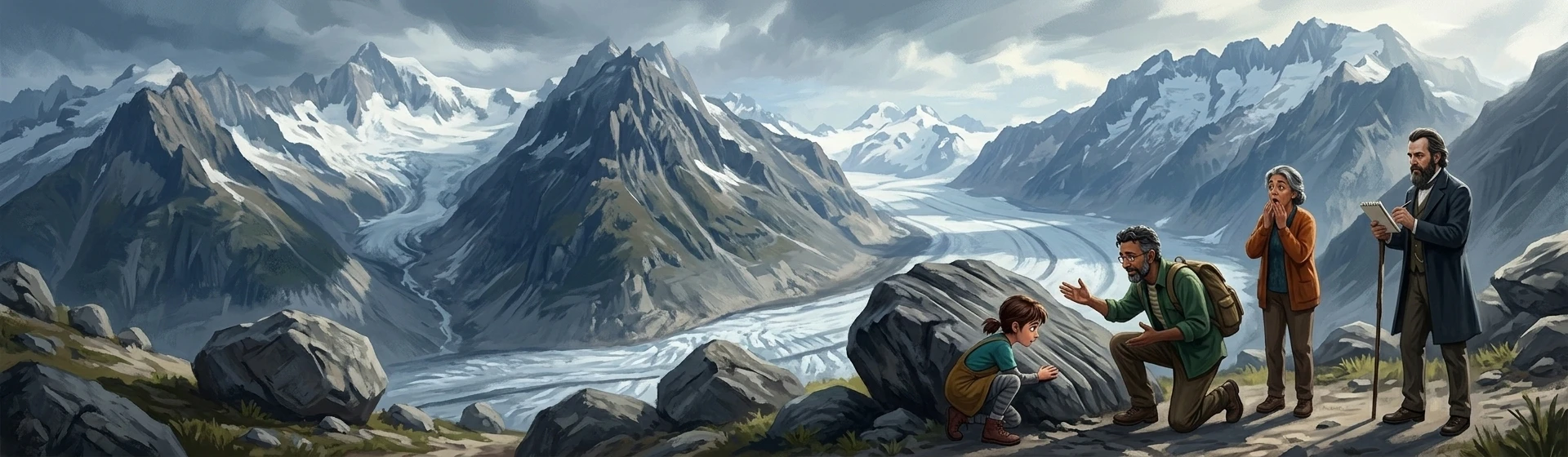
To find the answer, we have to travel back in time to the 1830s in the towering, icy mountains of Switzerland. For centuries, people who lived in the Alpine…
To find the answer, we have to travel back in time to the 1830s in the towering, icy mountains of Switzerland. For centuries, people who lived in the Alpine valleys told stories of a time when ice filled everything, a great winter that never seemed to end. They saw giant, out-of-place boulders and deeply scarred mountainsides but had no scientific way to explain them.

To find the answer, we have to travel back in time to the 1830s in the towering, icy mountains of Switzerland. For centuries, people who lived in the Alpine valleys told stories of a time when ice filled everything, a great winter that never seemed to end. They saw giant, out-of-place boulders and deeply scarred mountainsides but had no scientific way to explain them.

Page 4
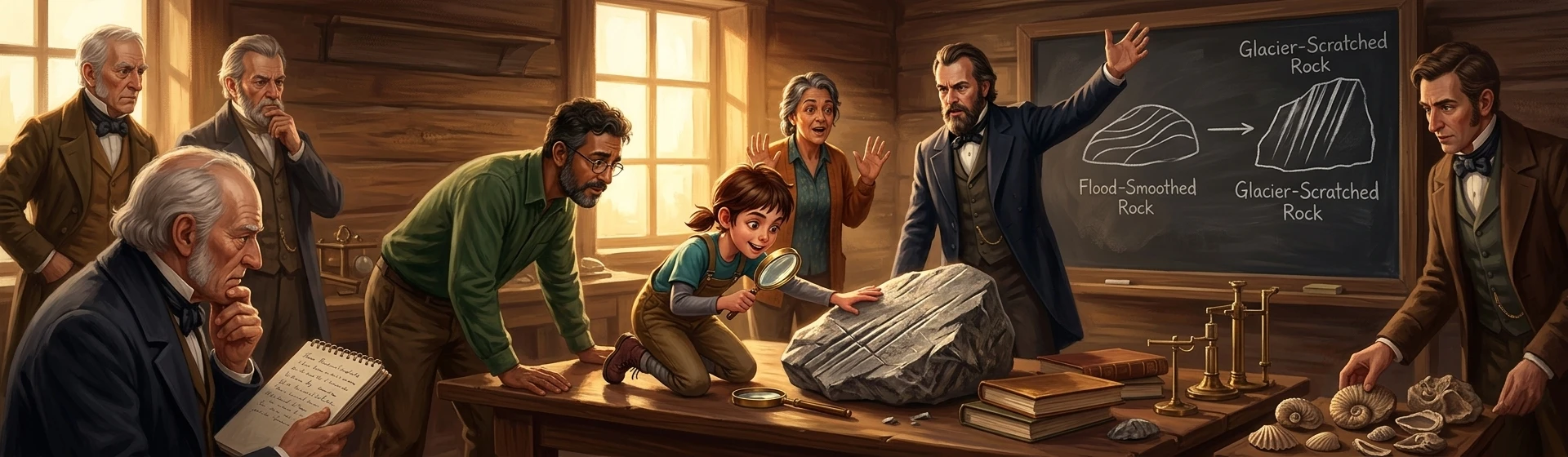
A young Swiss scientist named Louis Agassiz was fascinated by these mysteries. "Everyone thinks these boulders were carried here by a great flood!" he would…
A young Swiss scientist named Louis Agassiz was fascinated by these mysteries. "Everyone thinks these boulders were carried here by a great flood!" he would tell his colleagues, unconvinced. "But water would have smoothed the rocks, not left them with such sharp, deep scratches! Something else must be responsible."

A young Swiss scientist named Louis Agassiz was fascinated by these mysteries. "Everyone thinks these boulders were carried here by a great flood!" he would tell his colleagues, unconvinced. "But water would have smoothed the rocks, not left them with such sharp, deep scratches! Something else must be responsible."

Page 5
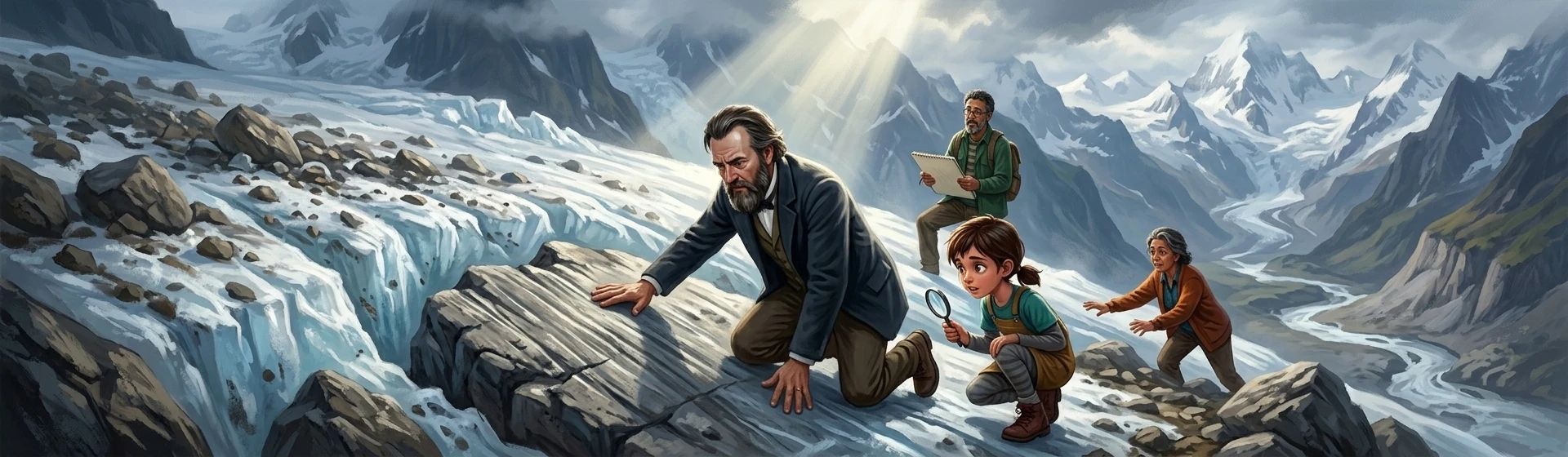
Agassiz spent years climbing high into the Alps, observing the slow, grinding movement of active glaciers. He saw how they carried rocks and debris on their…
Agassiz spent years climbing high into the Alps, observing the slow, grinding movement of active glaciers. He saw how they carried rocks and debris on their backs and how the ice, embedded with sharp stones, scoured the bedrock beneath it like giant sandpaper. "This is it!" he realized, placing his hand on the cold, grooved rock face. "The ice is the sculptor!"

Agassiz spent years climbing high into the Alps, observing the slow, grinding movement of active glaciers. He saw how they carried rocks and debris on their backs and how the ice, embedded with sharp stones, scoured the bedrock beneath it like giant sandpaper. "This is it!" he realized, placing his hand on the cold, grooved rock face. "The ice is the sculptor!"

Page 6
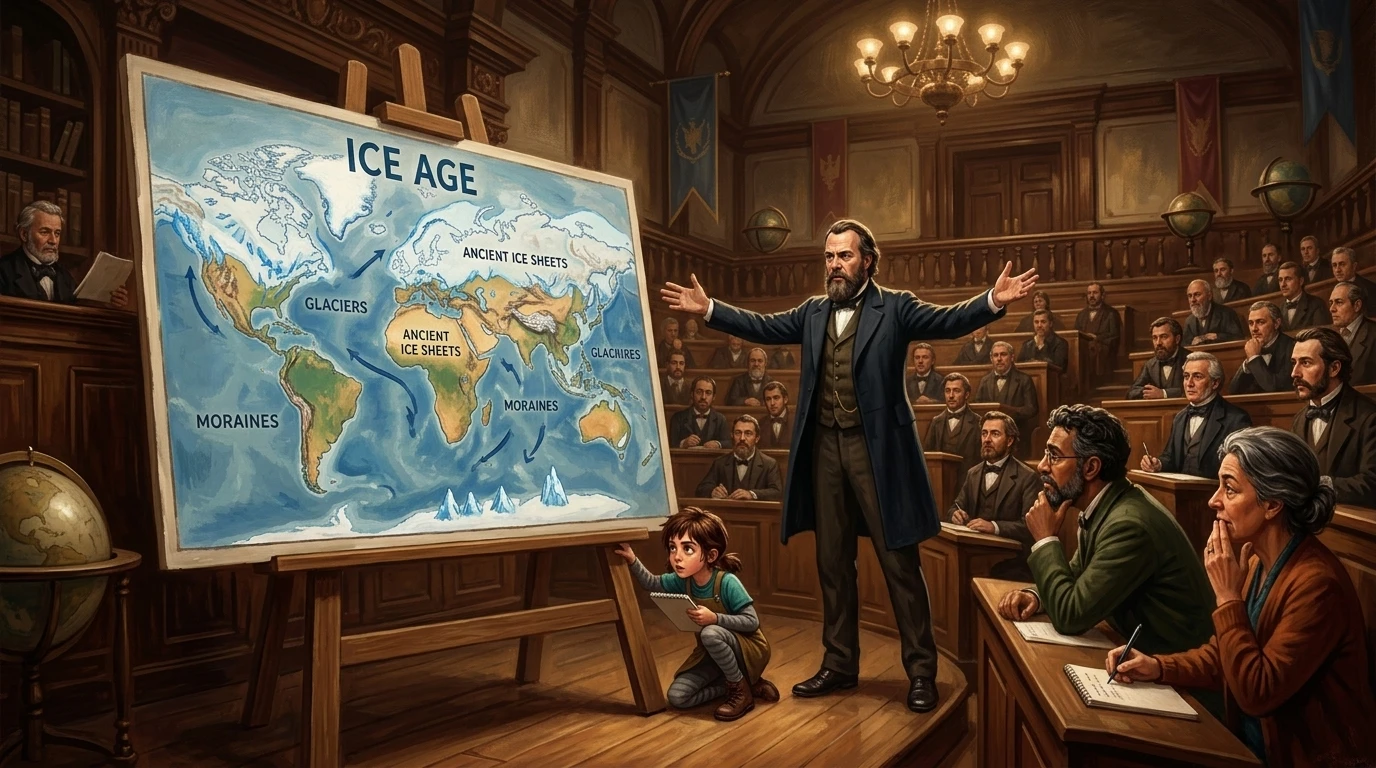
In 1837, Louis Agassiz presented his radical idea: much of the Earth had once been covered in immense sheets of ice during a great "Ice Age." He explained that…
In 1837, Louis Agassiz presented his radical idea: much of the Earth had once been covered in immense sheets of ice during a great "Ice Age." He explained that these glaciers were powerful enough to carve mountains, create lakes, and carry erratic boulders thousands of kilometers. This giant river of ice moved slower than a snail, but with unstoppable force.

In 1837, Louis Agassiz presented his radical idea: much of the Earth had once been covered in immense sheets of ice during a great "Ice Age." He explained that these glaciers were powerful enough to carve mountains, create lakes, and carry erratic boulders thousands of kilometers. This giant river of ice moved slower than a snail, but with unstoppable force.

Page 7
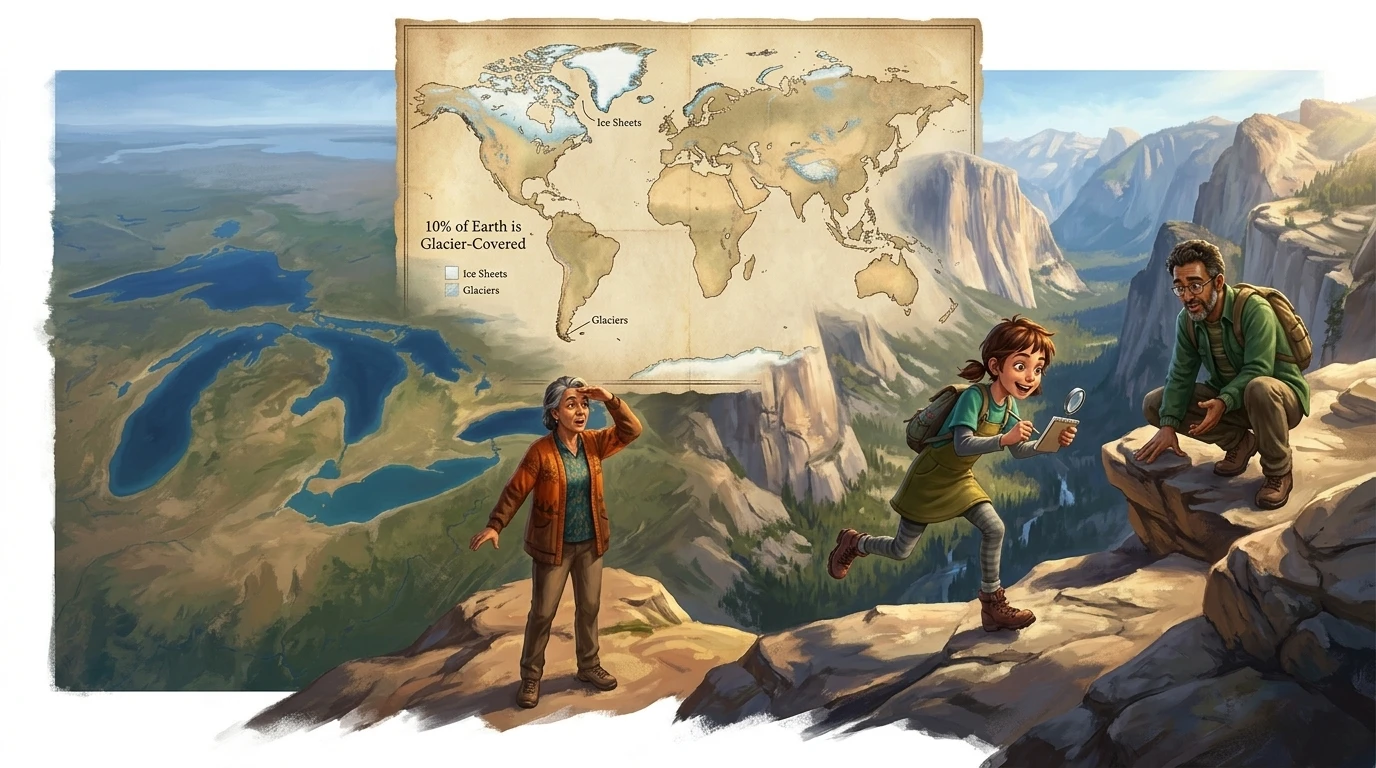
Agassiz's discovery of the Ice Age completely changed how we understand our planet's history. It explained how the Great Lakes were formed and how valleys like…
Agassiz's discovery of the Ice Age completely changed how we understand our planet's history. It explained how the Great Lakes were formed and how valleys like Yosemite were carved from solid granite. In fact, about 10% of all land on Earth is still covered by glacial ice today, a remnant of that powerful era.

Agassiz's discovery of the Ice Age completely changed how we understand our planet's history. It explained how the Great Lakes were formed and how valleys like Yosemite were carved from solid granite. In fact, about 10% of all land on Earth is still covered by glacial ice today, a remnant of that powerful era.

Page 8
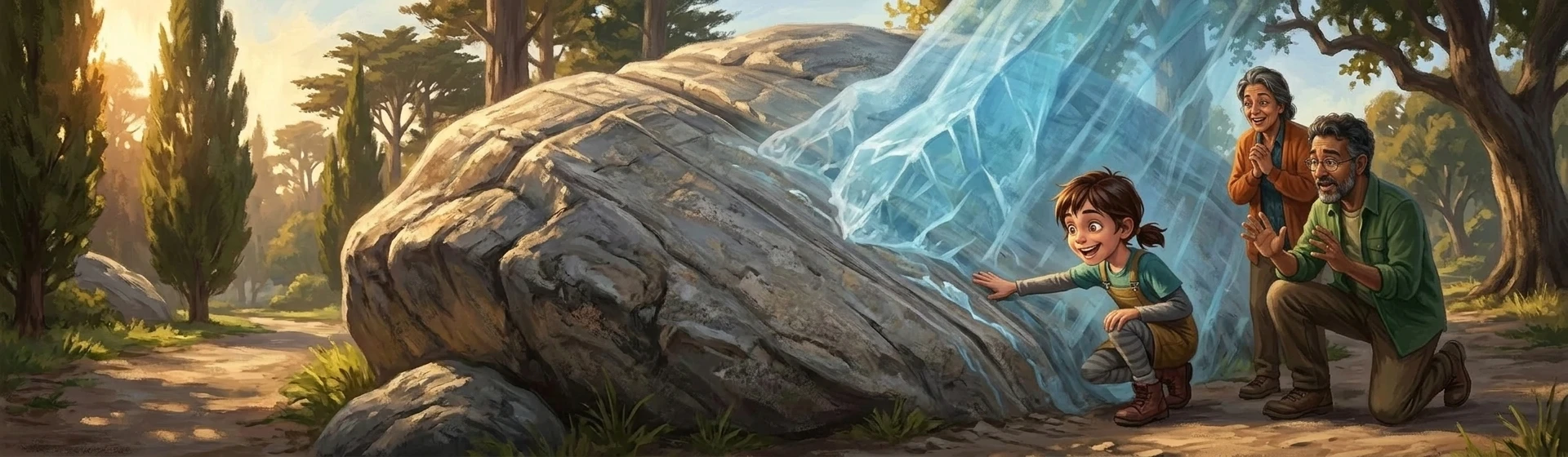
Standing once more in front of the boulder in Golden Gate Park, everything clicked for Rohan. "It's not just an erratic!" she exclaimed, her eyes wide with…
Standing once more in front of the boulder in Golden Gate Park, everything clicked for Rohan. "It's not just an erratic!" she exclaimed, her eyes wide with understanding. "These are glacial striations! This rock was scraped and carried here by a giant glacier thousands of years ago, just like Louis Agassiz figured out!"

Standing once more in front of the boulder in Golden Gate Park, everything clicked for Rohan. "It's not just an erratic!" she exclaimed, her eyes wide with understanding. "These are glacial striations! This rock was scraped and carried here by a giant glacier thousands of years ago, just like Louis Agassiz figured out!"

Page 9
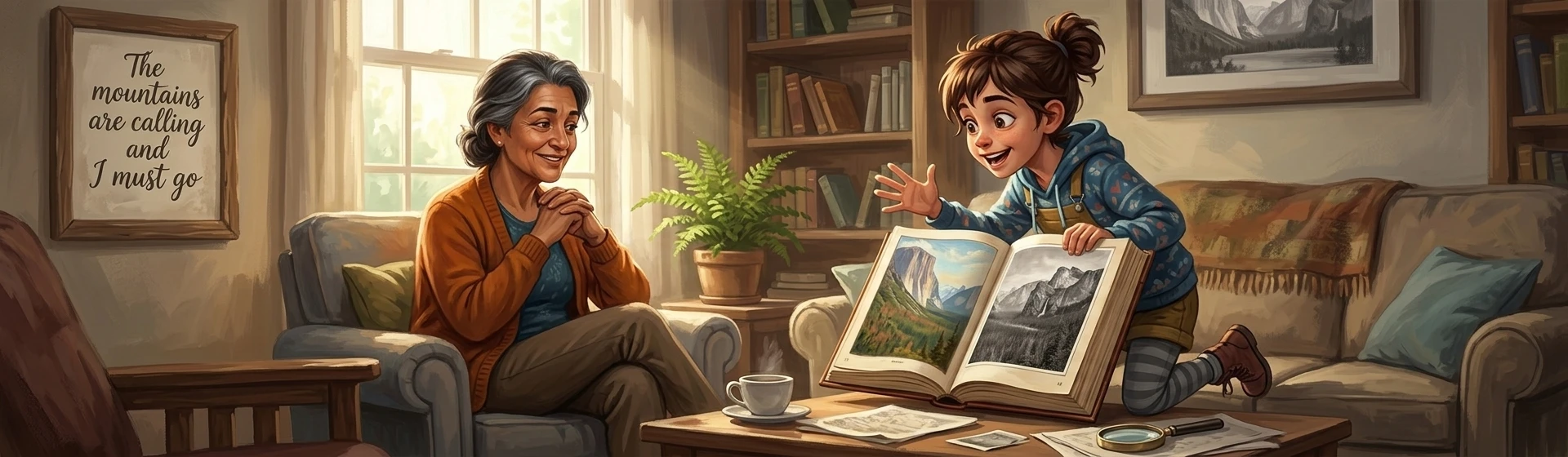
Her mother nodded. "That's right! And many of our most beautiful national parks were shaped by them." Rohan remembered a book she had read by the naturalist…
Her mother nodded. "That's right! And many of our most beautiful national parks were shaped by them." Rohan remembered a book she had read by the naturalist John Muir. "He understood! As John Muir famously said, 'The mountains are calling and I must go,' because he spent his life exploring those incredible valleys the glaciers carved!"

Her mother nodded. "That's right! And many of our most beautiful national parks were shaped by them." Rohan remembered a book she had read by the naturalist John Muir. "He understood! As John Muir famously said, 'The mountains are calling and I must go,' because he spent his life exploring those incredible valleys the glaciers carved!"

Page 10
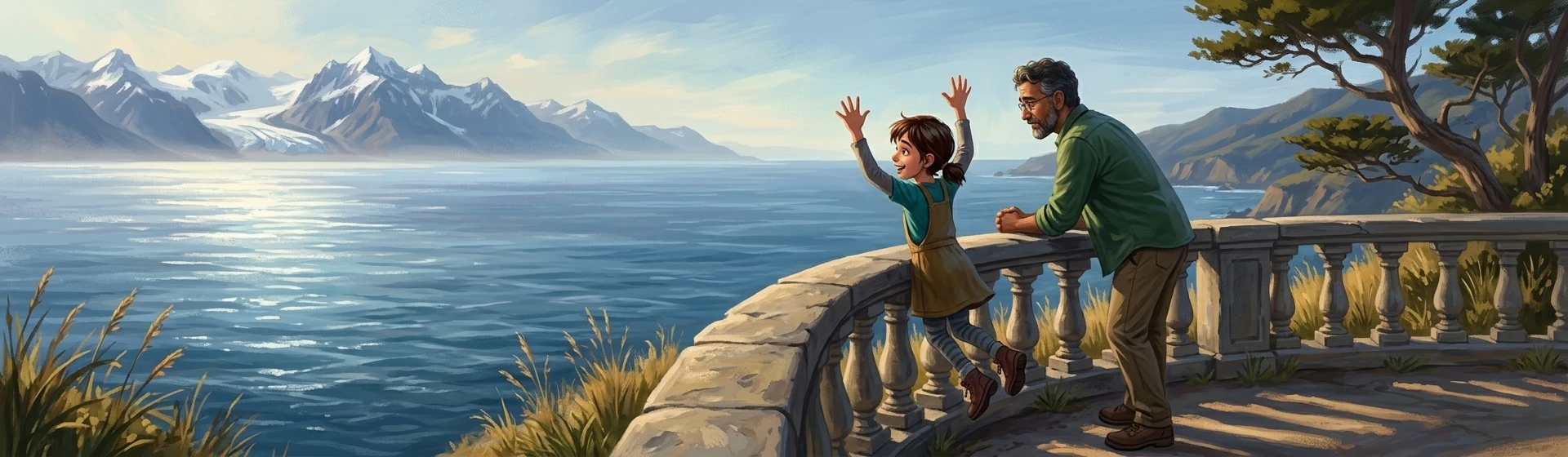
So, glaciers are like the Earth's giant, slow-motion bulldozers, powerful enough to reshape entire continents. Her father looked out toward the Pacific Ocean, a…
So, glaciers are like the Earth's giant, slow-motion bulldozers, powerful enough to reshape entire continents. Her father looked out toward the Pacific Ocean, a thoughtful look on his face. "It makes you wonder," he said, "if melting glaciers created the landscape we see today, what happens to the world's oceans when the last great ice sheets melt?"

So, glaciers are like the Earth's giant, slow-motion bulldozers, powerful enough to reshape entire continents. Her father looked out toward the Pacific Ocean, a thoughtful look on his face. "It makes you wonder," he said, "if melting glaciers created the landscape we see today, what happens to the world's oceans when the last great ice sheets melt?"

About this story

  • Audience: kids (ages 6–12)

More Wonder Books stories

All Wonder Books stories · Open the library