Menkaure
Menkaure — an illustrated history story. 10 illustrated pages, free to read on Wonder Egypt.
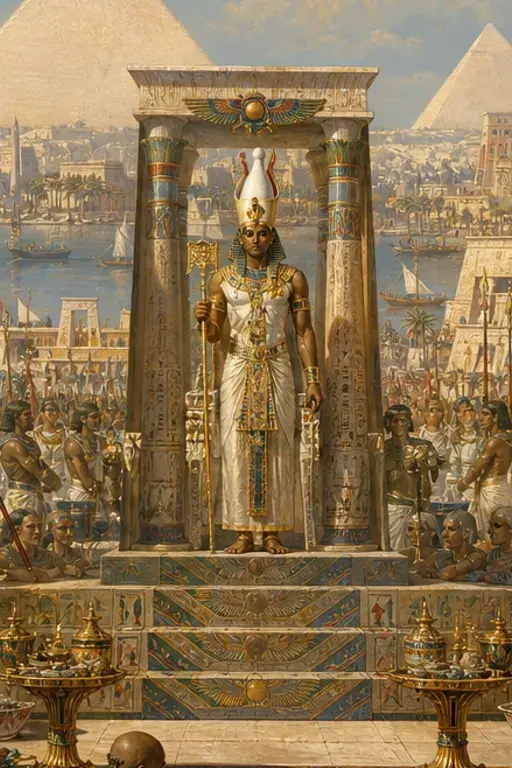
Page 1
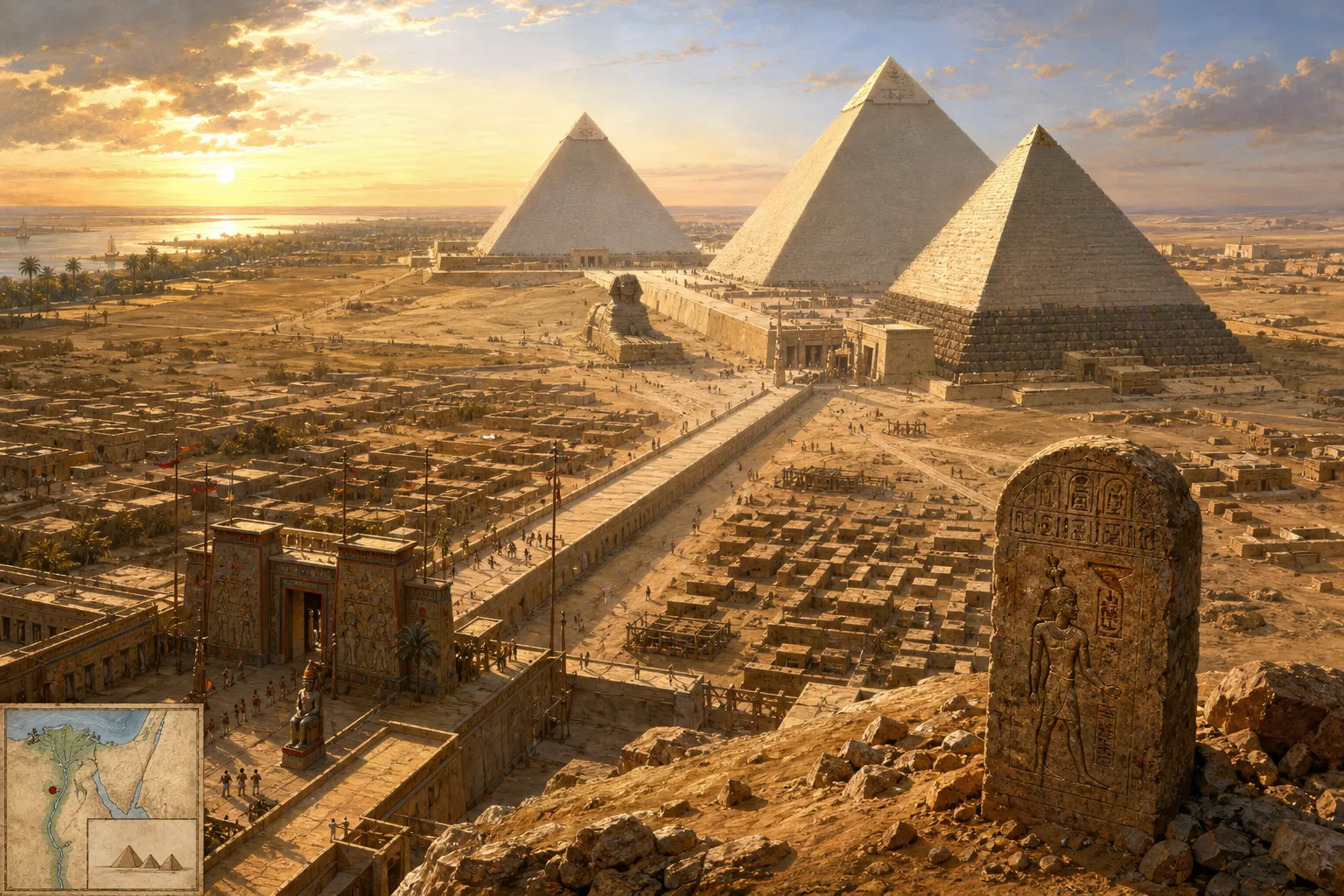
Menkaure, who ruled ancient Egypt approximately 4,550 years ago, stands as the last great pyramid builder of Giza. While his predecessors, including his father Khafre, pursued unparalleled scale, Menkaure chose a different path. He envisioned a monument of refined artistry, cladding his pyramid in the rich, deep hues of Aswan granite, prioritizing quality over sheer immensity. His reign, lasting around 29 years, would be remembered not only for this architectural distinction but also for a profound commitment to justice. Tradition holds that he reopened temples that had fallen silent and governed with fairness. He was succeeded by his son Shepseskaf, a continuity forged with his Great Royal Wife, Khamerernebty II.
Page 2
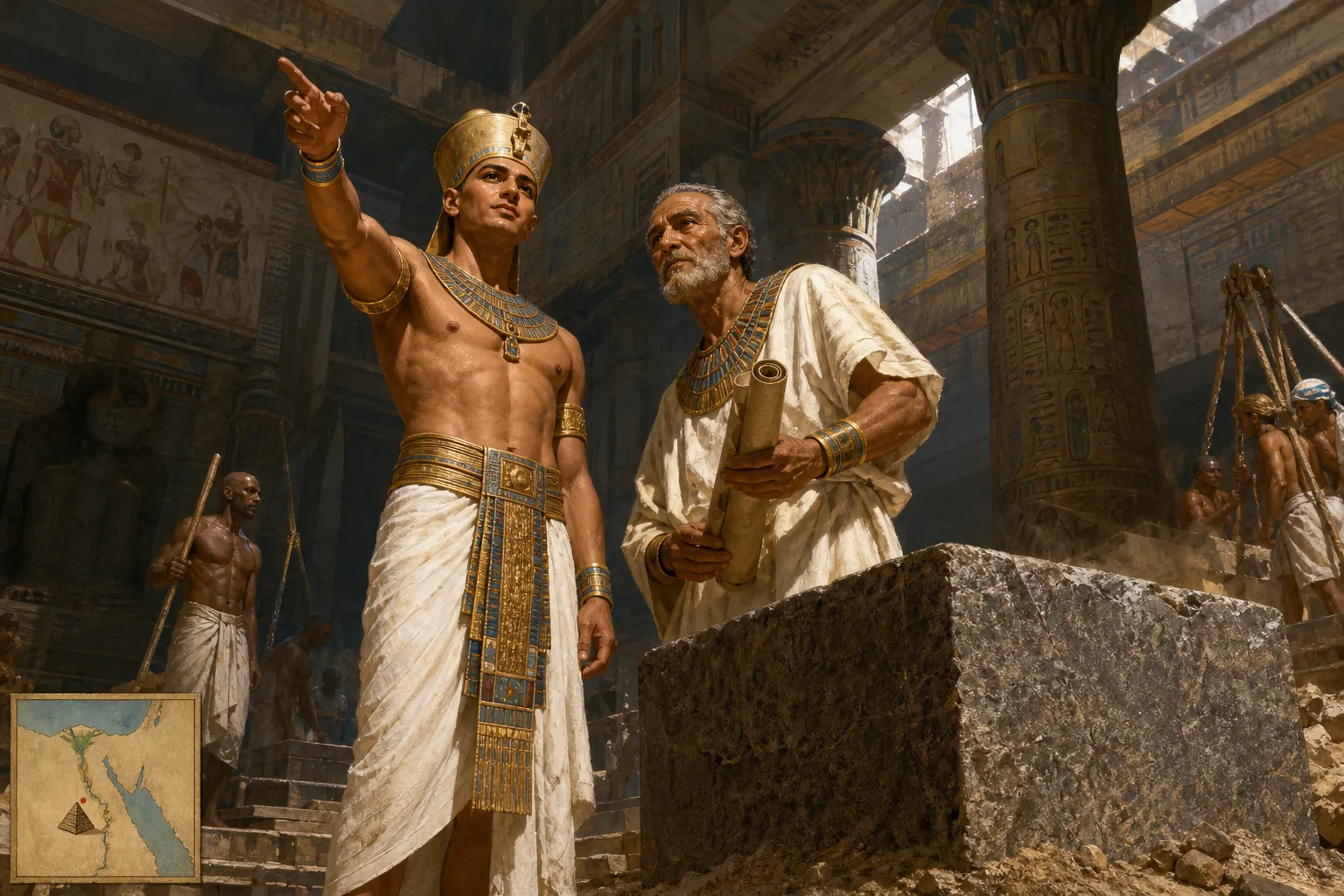
Upon ascending the throne, Menkaure, a pharaoh in his early thirties, stood within the shadowed halls of his father Khafre's mortuary temple. The colossal statues and towering walls spoke of an era of immense scale, a legacy both inspiring and daunting. He summoned his Chief Architect, a man known only as 'the Overseer of Works,' to discuss his own funerary monument. Menkaure spoke not of a larger edifice, but of one imbued with enduring beauty and a sacred purpose, expressing his resolve for quality that would distinguish his reign from the sheer bulk of his ancestors.
Page 3
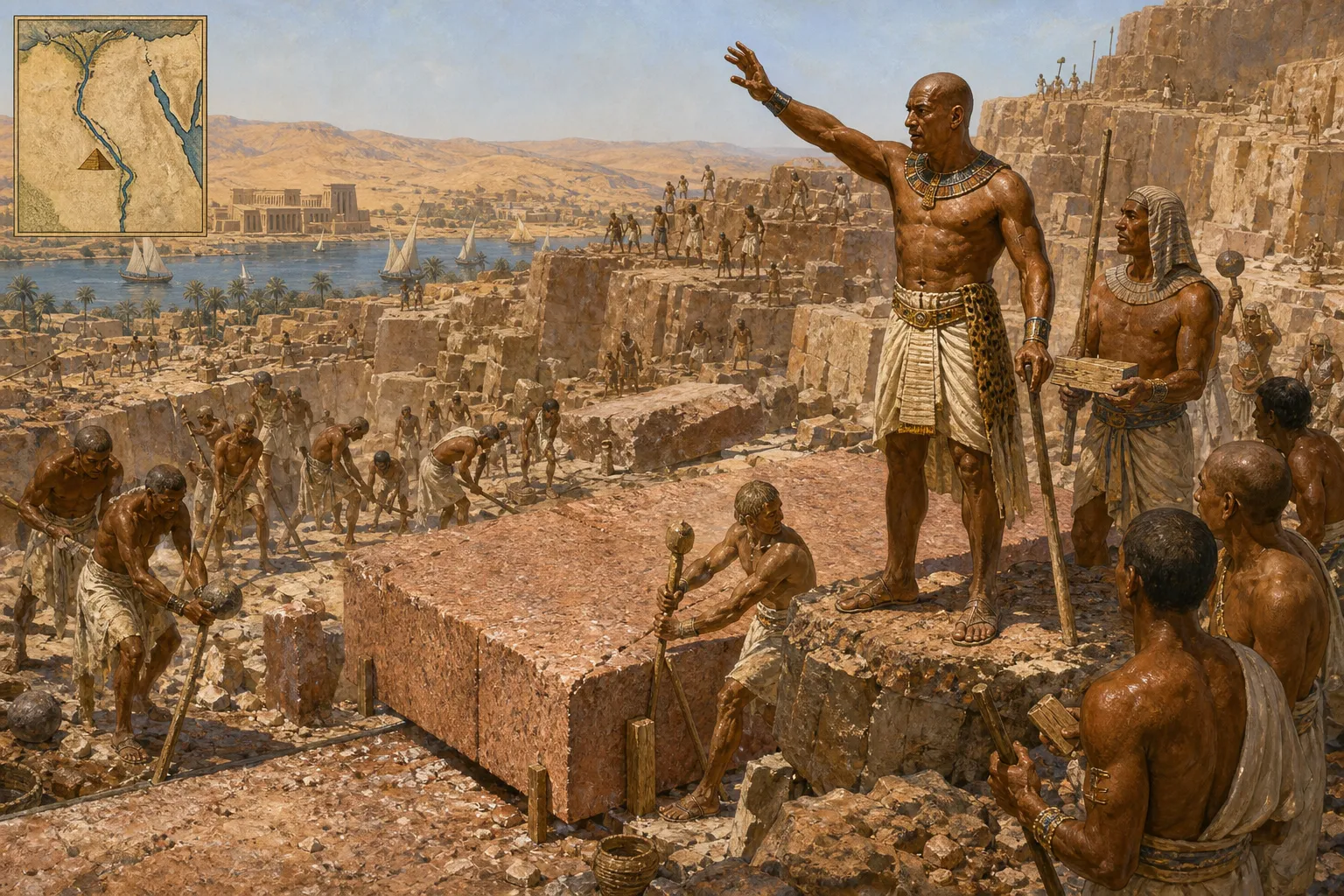
At the sun-baked quarries of Aswan, far to the south, the pharaoh's will transformed into grueling labor. Hundreds of workers, their bodies glistening with sweat, toiled under the fierce midday sun. The Chief Overseer of Quarrymen, his voice hoarse, urged them on as they meticulously cut deep channels into the vast granite outcrop. Massive red granite blocks, destined for Menkaure's pyramid, were slowly dislodged from the bedrock using dolerite pounders and wooden wedges. The air thrummed with the rhythmic thud of stone on stone and the guttural cries of men, a testament to the immense resources commanded by the pharaoh in his early forties.
Page 4
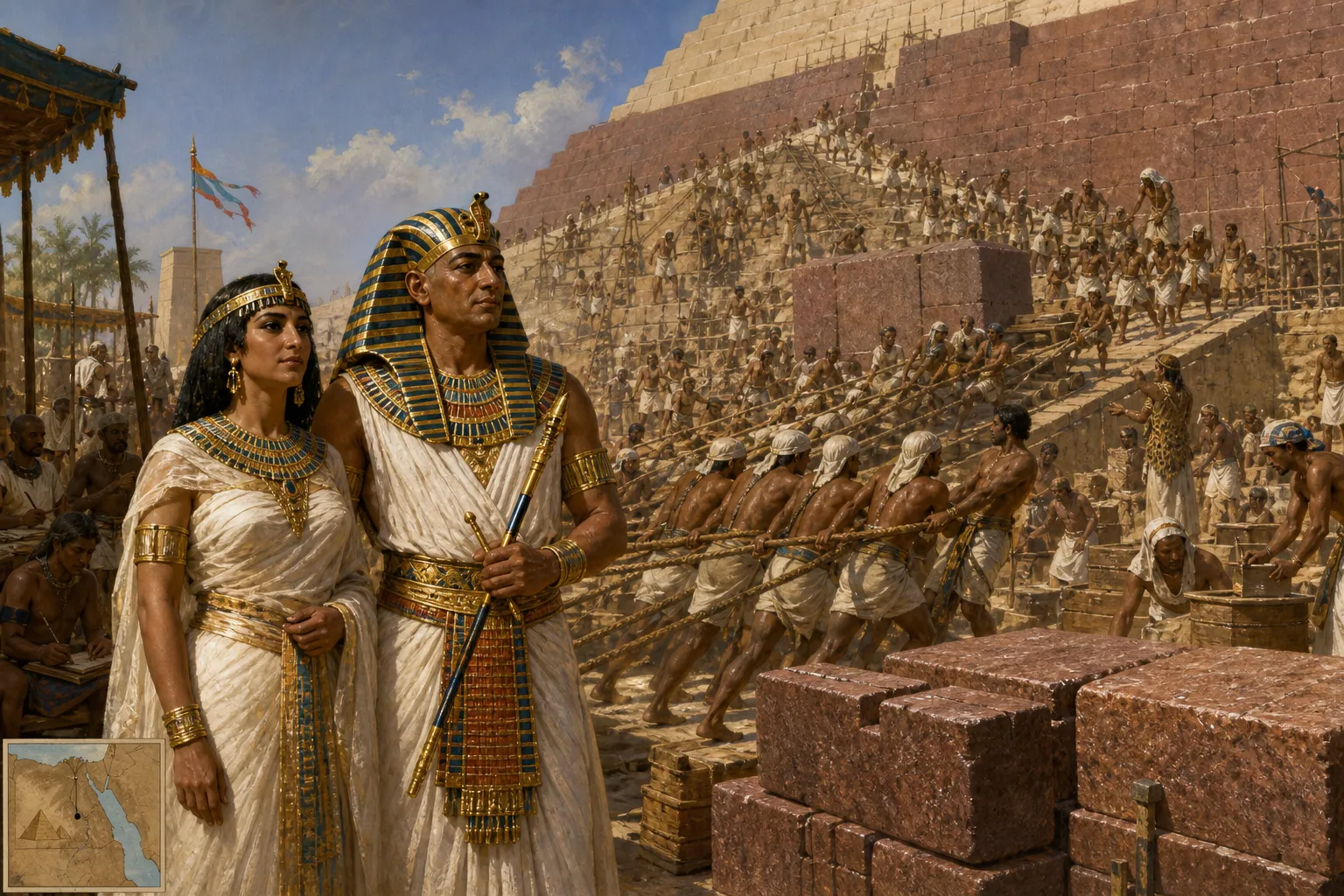
Years into the construction, the Giza plateau buzzed with ceaseless activity. Menkaure, a powerful figure in his mid-forties, stood beside his principal wife, Khamerernebty II, at the base of his rising pyramid. Her serene gaze followed the lines of the structure. Hundreds of workers strained against ropes, dragging immense granite blocks up ramps, each block a monument to collective human effort. The deep red casing stones were now visibly distinct from the pale limestone above, affirming the pharaoh's unique vision. The grinding of stone on stone, the shouts of the foremen, and the distant calls of other construction sites filled the hot air.
Page 5
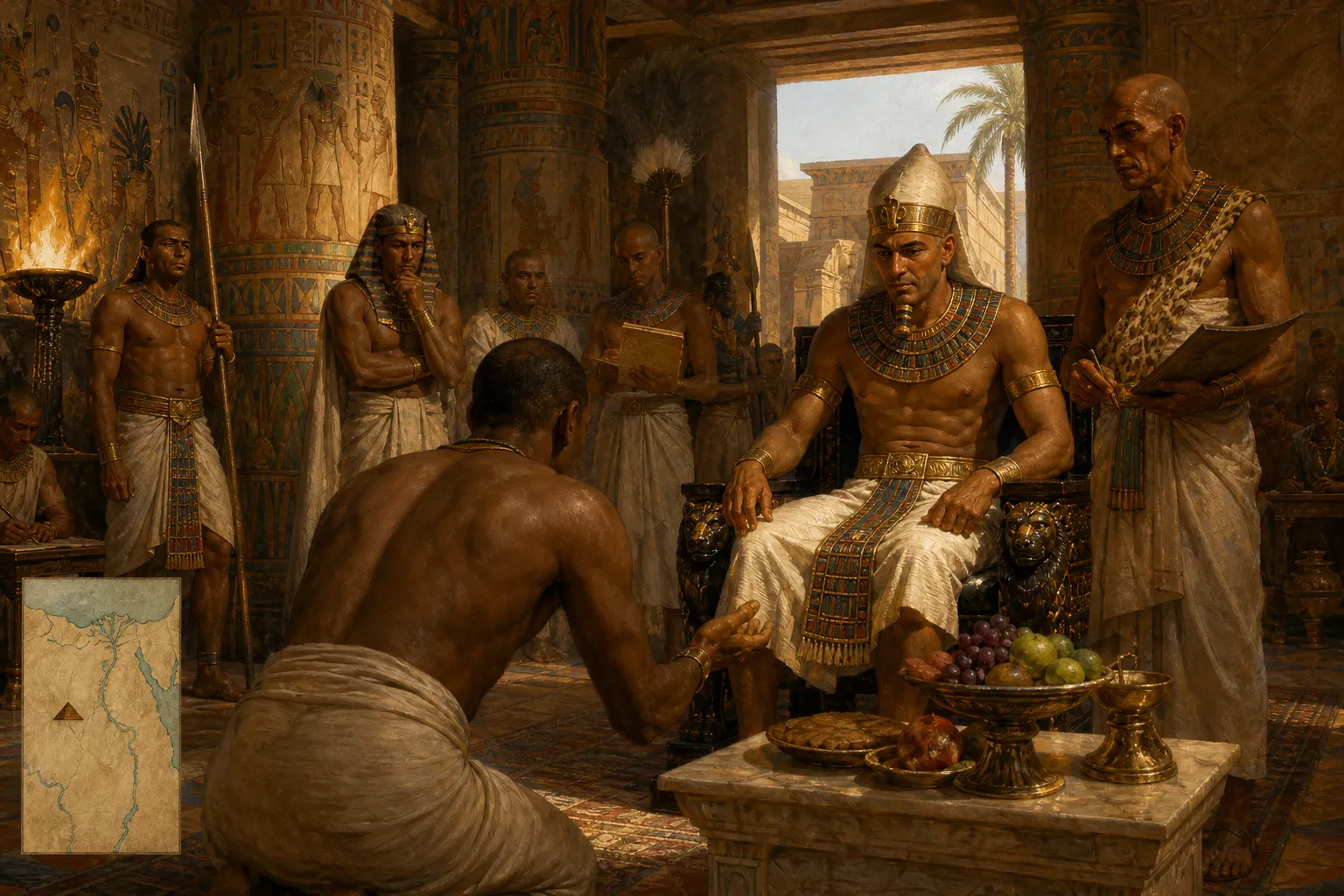
In the Great Hall of Ma'at in Memphis, Menkaure, a pharaoh in his early fifties, embodied the principle of cosmic order. Seated upon a low, ceremonial throne, his gaze was fixed upon a petitioner, a common farmer who knelt before him. The Vizier, a man of weighty scrolls and quiet counsel, stood to the pharaoh's right, ready to advise. The pharaoh listened, his expression grave and attentive, weighing the words as if balancing the very scales of justice. This adherence to Ma'at was the bedrock of his reputation, distinguishing his rule as one of fairness and careful deliberation, a stark contrast to mere monumental ambition.
Page 6
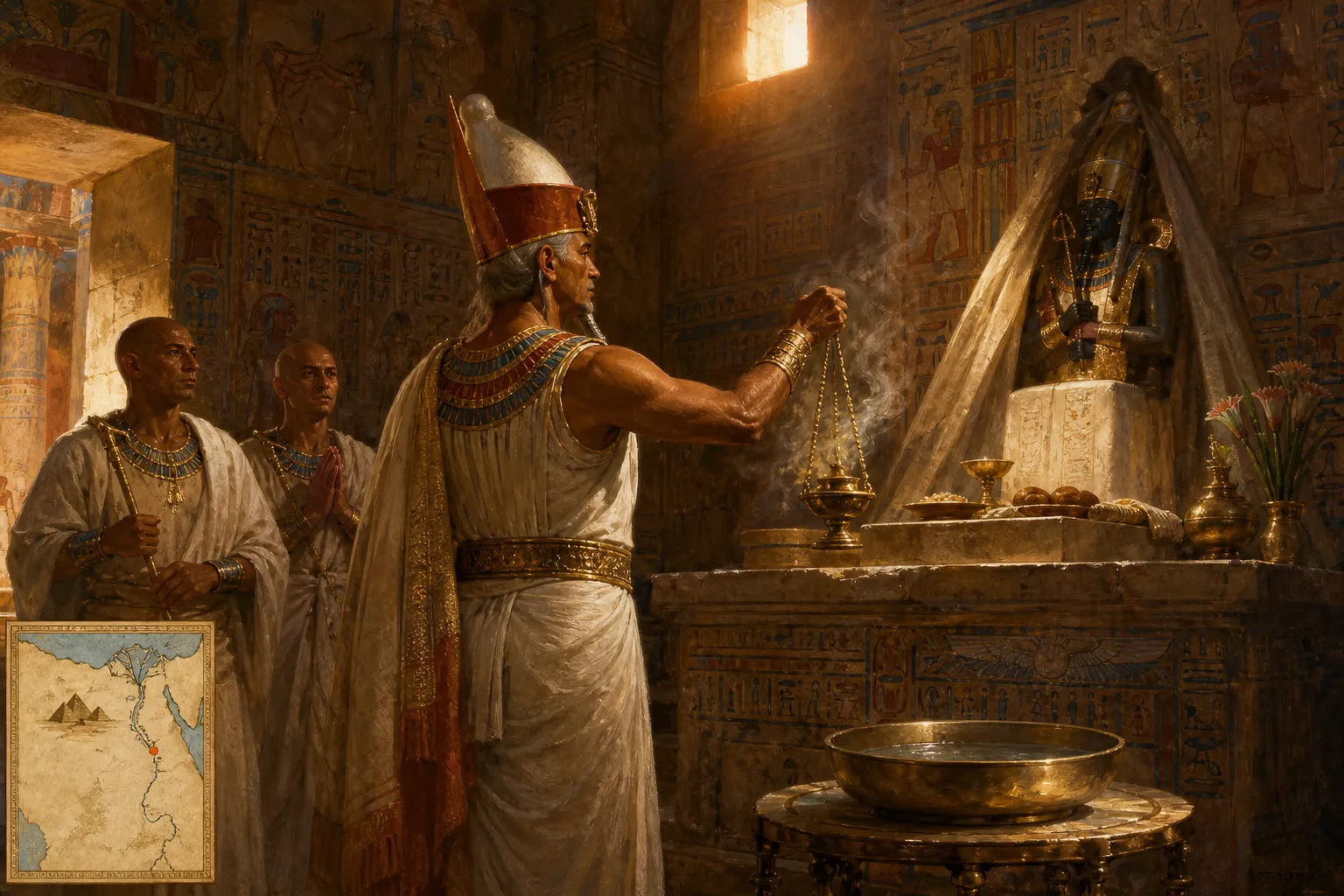
As the desert sun dipped towards the western horizon, painting the sky in fiery hues, Menkaure, in his late fifties, stood within a small, newly restored temple sanctuary. He was performing a sacred rededication, a powerful act of spiritual renewal. His hands, steady and deliberate, held a censer, releasing fragrant plumes of burning frankincense before the cult image of a local deity. Two priests, cloaked in leopard skins, chanted softly behind him. The act symbolized Menkaure's commitment to divine order, reviving the sacred sites that tradition claimed his predecessors had neglected, reaffirming his role as a pious and just ruler.
Page 7
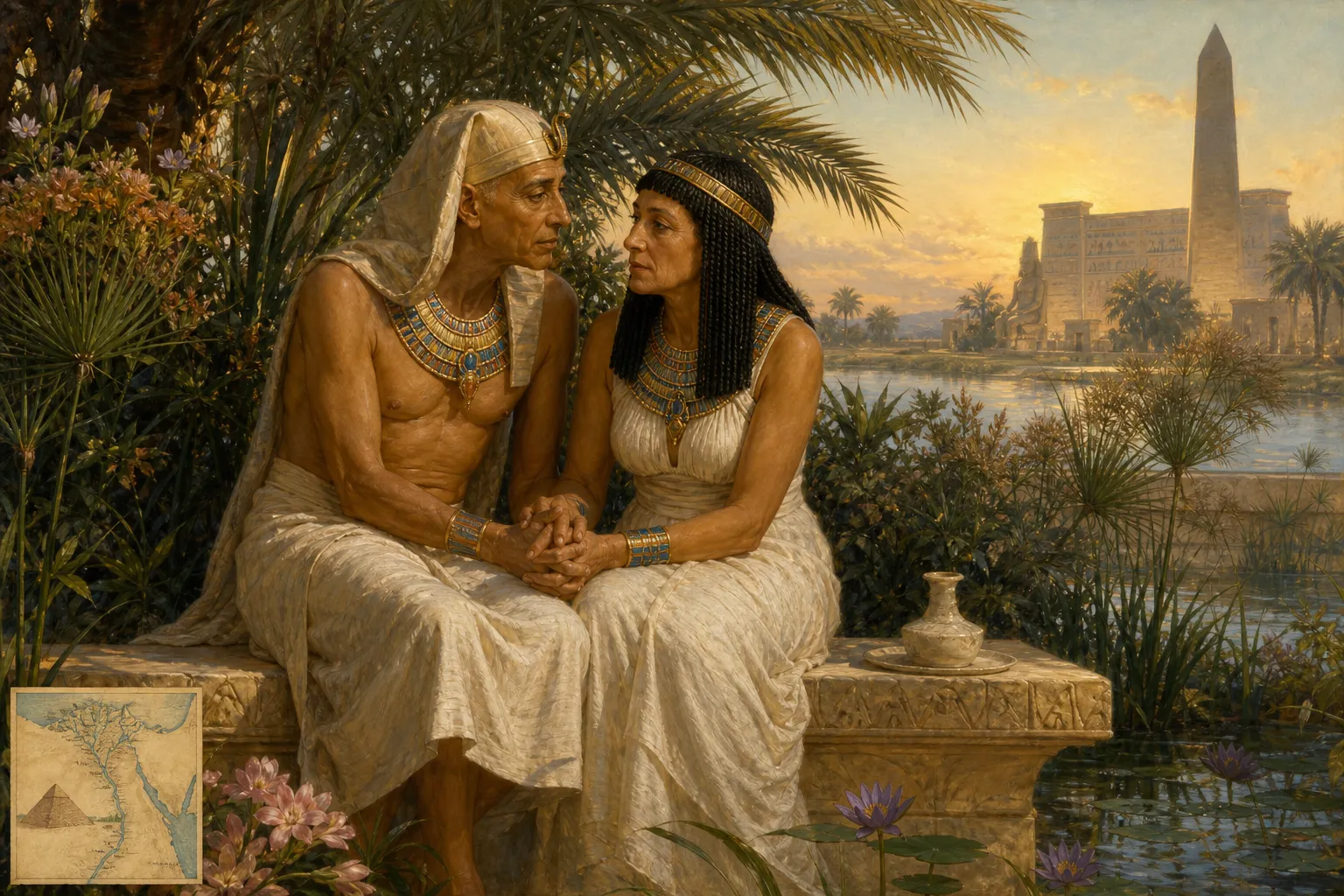
Within the serene embrace of the royal garden, amidst swaying papyrus and date palms, Menkaure, now a pharaoh in his early sixties and showing the signs of age, conversed quietly with Khamerernebty II. His beloved Great Royal Wife, her face etched with wisdom, sat beside him on a low stone bench. Their private discussion turned to the fate of their eldest son, Khuenre, whose health had begun to fail, and the precariousness of succession. The soft rustle of leaves and the gentle splash of a nearby fountain were the only sounds as they weighed matters of dynasty and destiny, underscoring the vital role of his queen.
Page 8
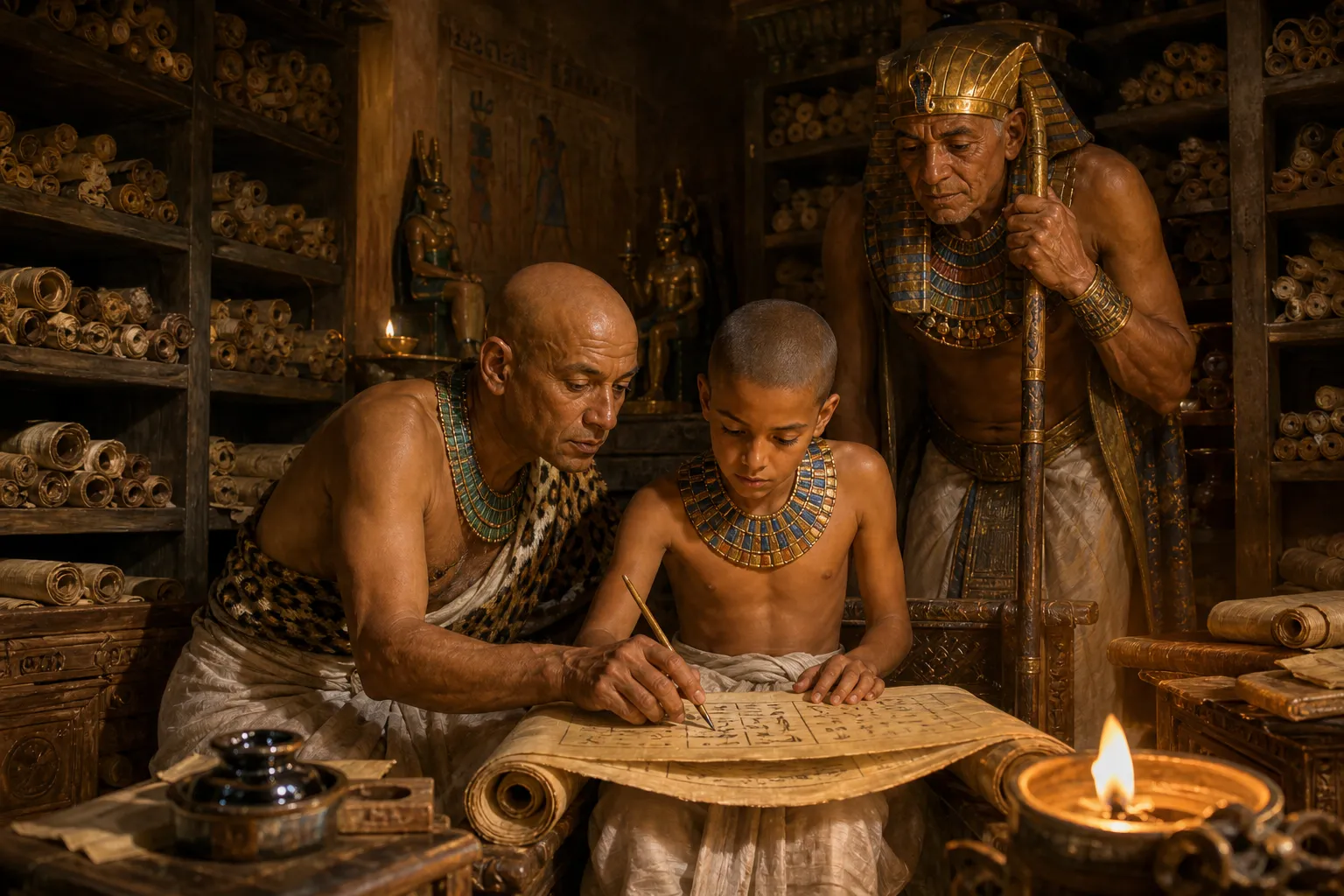
The loss of Khuenre, the beloved eldest son and intended heir, weighed heavily upon Menkaure. Now an elderly pharaoh, his steps sometimes aided by a sturdy staff, he observed his younger son, Shepseskaf, in the royal scribal chamber. The young prince, a boy of perhaps ten years, diligently copied hieroglyphs onto a papyrus scroll under the watchful eye of a seasoned Royal Scribe. Menkaure's gaze, though softened by sorrow, held a renewed determination. He understood that the future of his dynasty, the continuation of his vision, now rested upon this young, promising figure, and his education was paramount.
Page 9
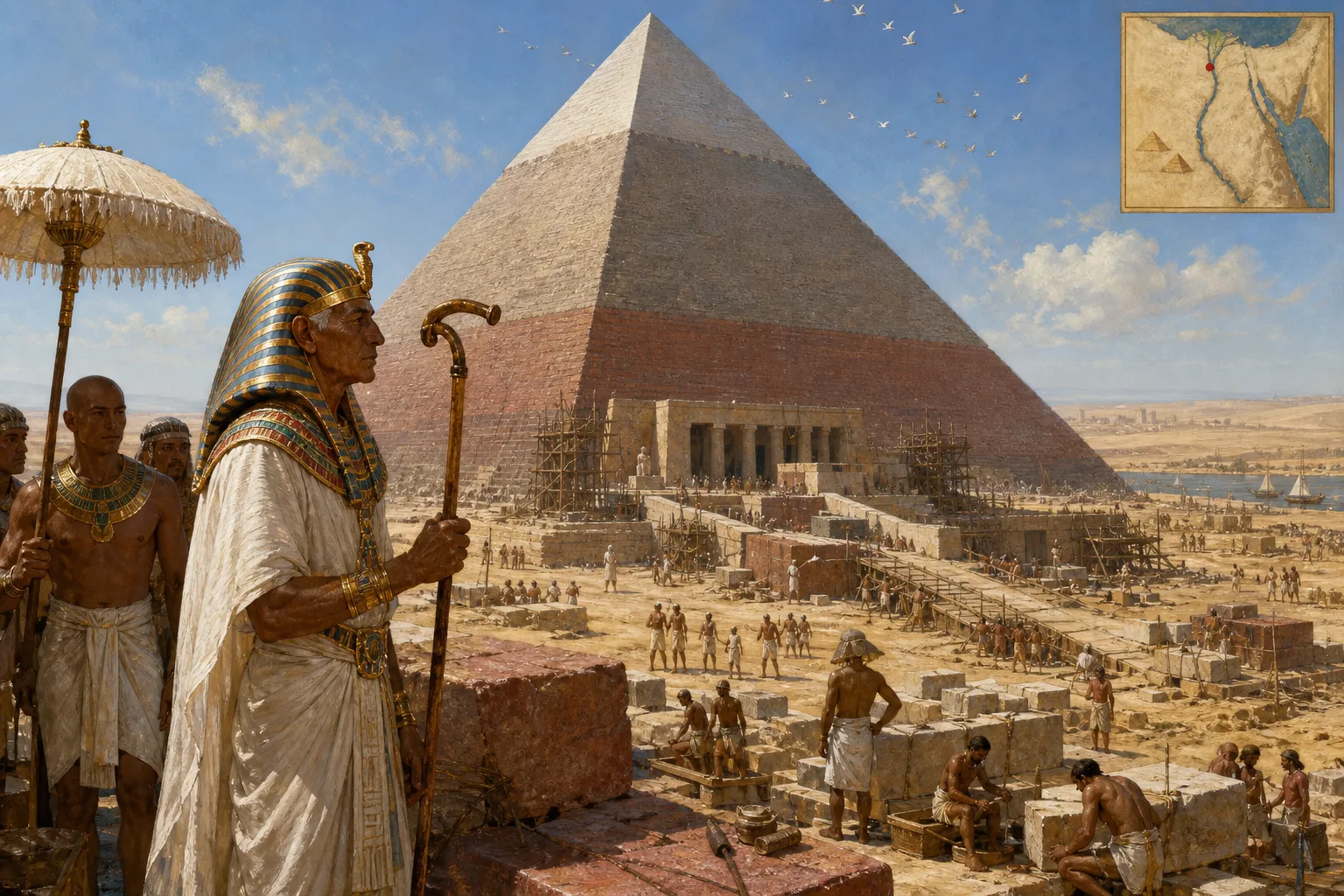
Near the close of his reign, Menkaure, a truly ancient pharaoh now, stood upon the Giza plateau. His body frail, he leaned heavily on his staff, his eyes fixed on his finished pyramid complex. Its lower courses of red Aswan granite gleamed against the white Tura limestone above, a unique and striking testament to his vision. His mortuary temple, though still under construction, began to take form. He had built not the largest, but perhaps the most beautiful of the Giza pyramids, a structure that spoke of precision and enduring quality. It stood as the culmination of his life's work, a testament to his reign's distinctive character.
Page 10
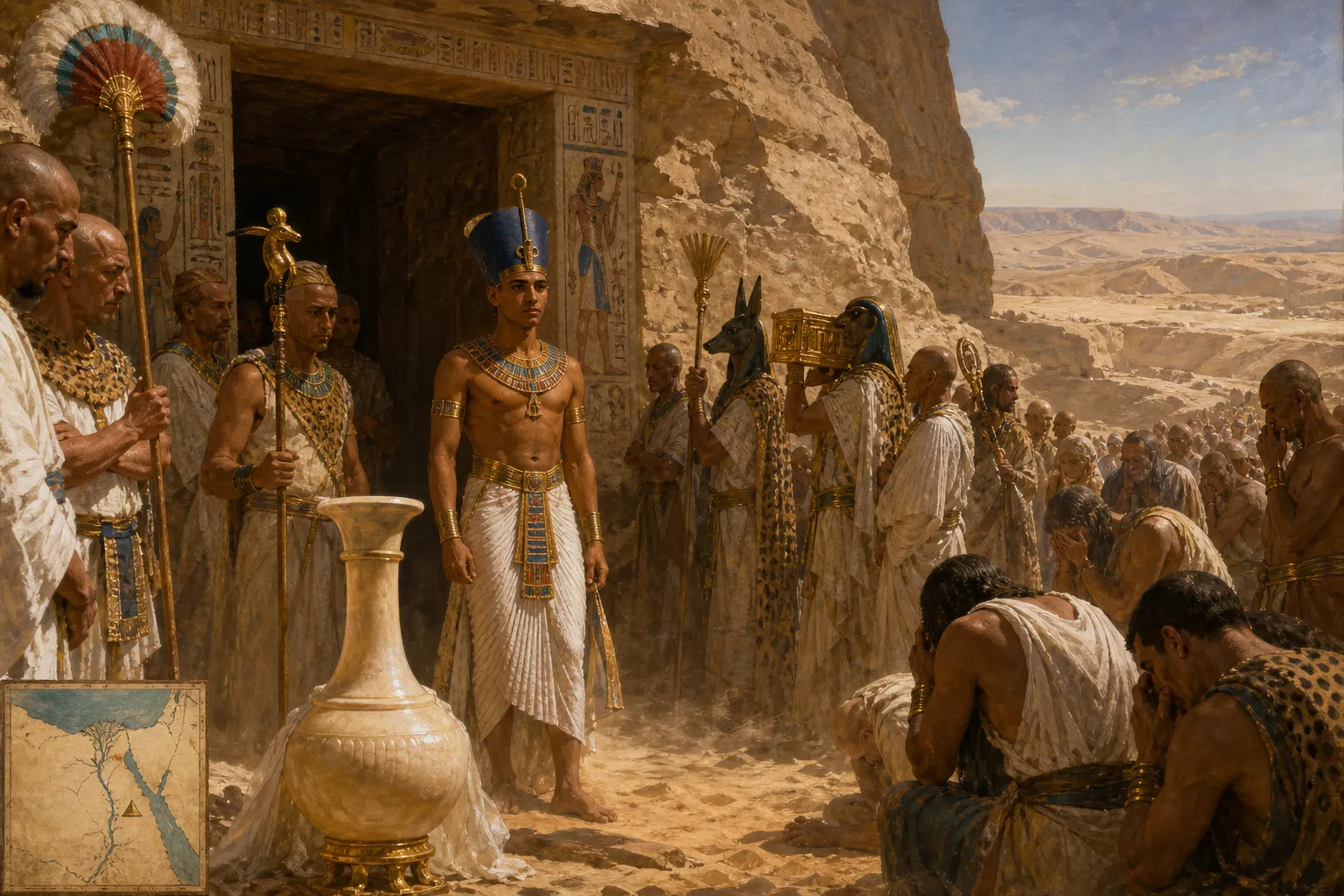
The long and just reign of Menkaure came to its end. His body, now still and silent, was prepared for its eternal journey. His son, Shepseskaf, a young pharaoh in his own right, now bore the weight of the Double Crown. He stood before the entrance of the royal tomb, overseeing the solemn funerary procession for his revered father. The great age of monumental stone pyramids at Giza had reached its zenith and was now receding. Shepseskaf would complete his father's mortuary complex but would choose a different, less monumental form for his own eternal resting place, signaling a subtle but profound shift in the royal funerary tradition.
About this story
- Audience: general readers
Read Wonder Egypt on your phone
Wonder Egypt is available on Android. Get Wonder Egypt on Google Play.