Sneferu
Sneferu — an illustrated history story. 10 illustrated pages, free to read on Wonder Egypt.
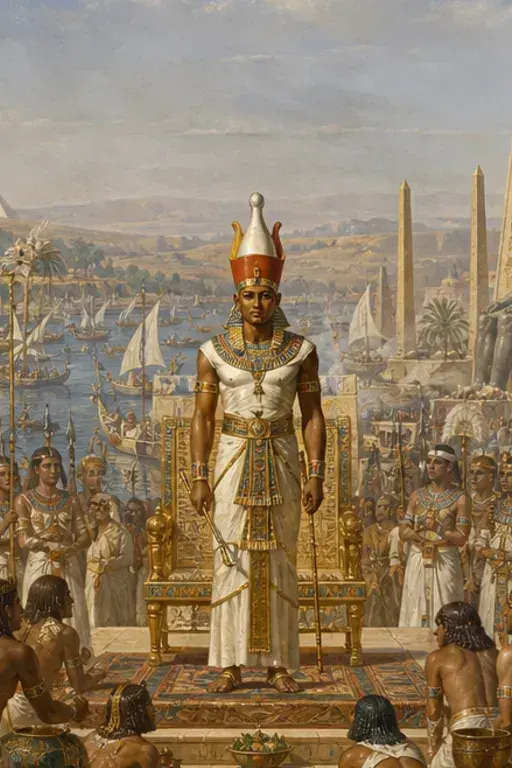
Page 1
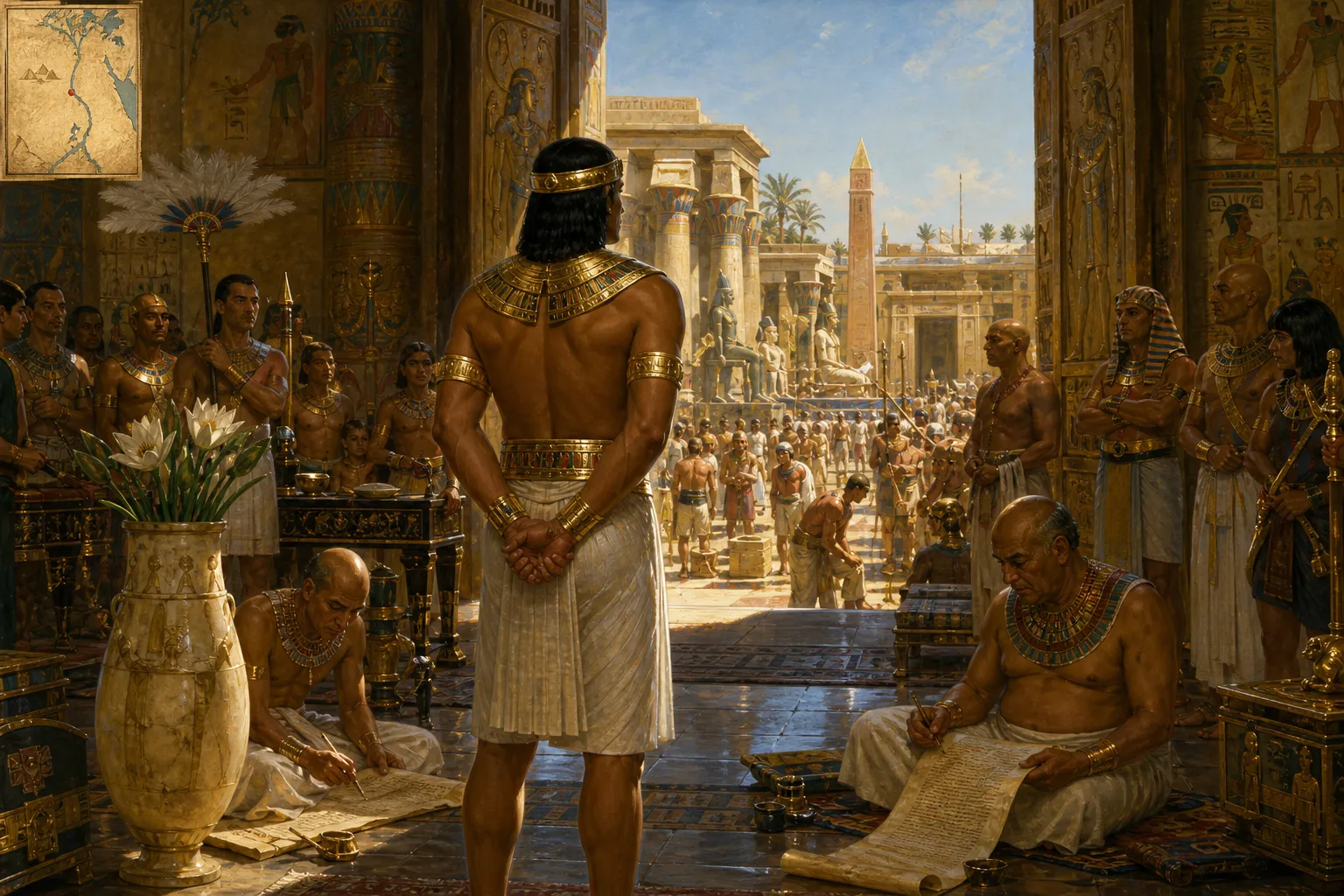
Across the vast, enduring sands of the Old Kingdom, nearly 4,600 years ago, Sneferu rose as the founding pharaoh of Egypt's Fourth Dynasty. He was the architect of an age, a king whose ambition reshaped the very landscape of the Nile Valley. Though his initial grand designs at Meidum and Dahshur met with profound structural challenges, these monumental trials ultimately forged the perfection of the true pyramid, a shape his son, Khufu, would immortalize at Giza. Sneferu was remembered by generations of Egyptians as a benevolent ruler, a stark contrast to the colossal scale of his ambition. He inherited a powerful, centralized state and left behind a kingdom transformed by unprecedented architectural innovation and far-reaching trade expeditions, defining the era of monumental construction.
Page 2
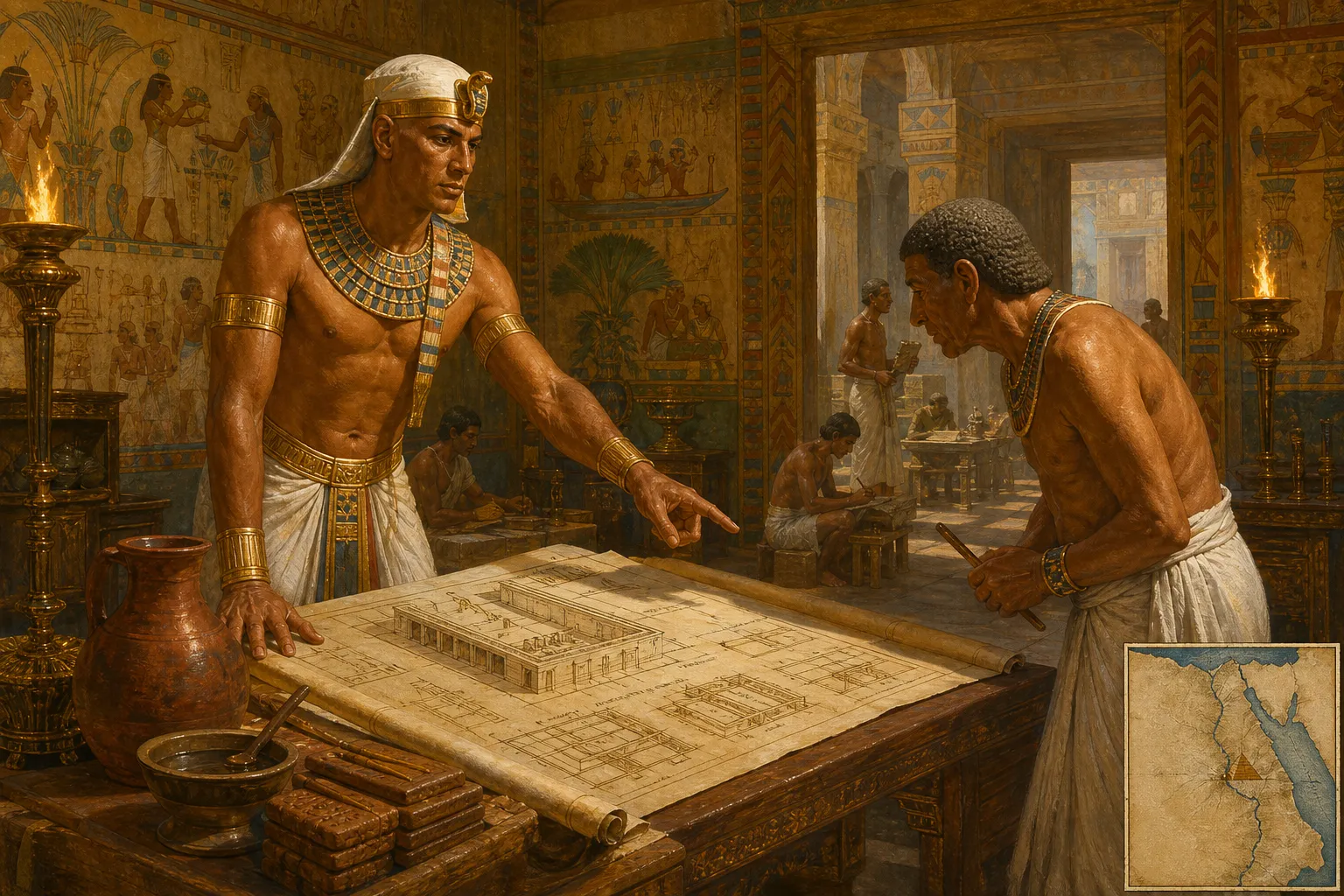
A young King Sneferu, perhaps in his early thirties, stands before his Vizier, Nefermaat, deep within the administrative heart of Memphis. The air is thick with the scent of papyrus and the hum of countless officials. The pharaoh's vision for a colossal monument, unlike any seen before, fills the chamber. Nefermaat, a man of profound experience, listens intently as the young ruler outlines his plans for a stepped pyramid that would soon transition into a smooth-sided marvel. This audacious undertaking, to be located south at Meidum, demands unprecedented resources and organization, a challenge the Vizier accepts with a grave nod, understanding the immense logistical effort required from the entire kingdom. ""Let this monument reach for the very stars, Nefermaat, a stairway for my soul to ascend among the gods." The king's voice resonates with unwavering authority."
Page 3
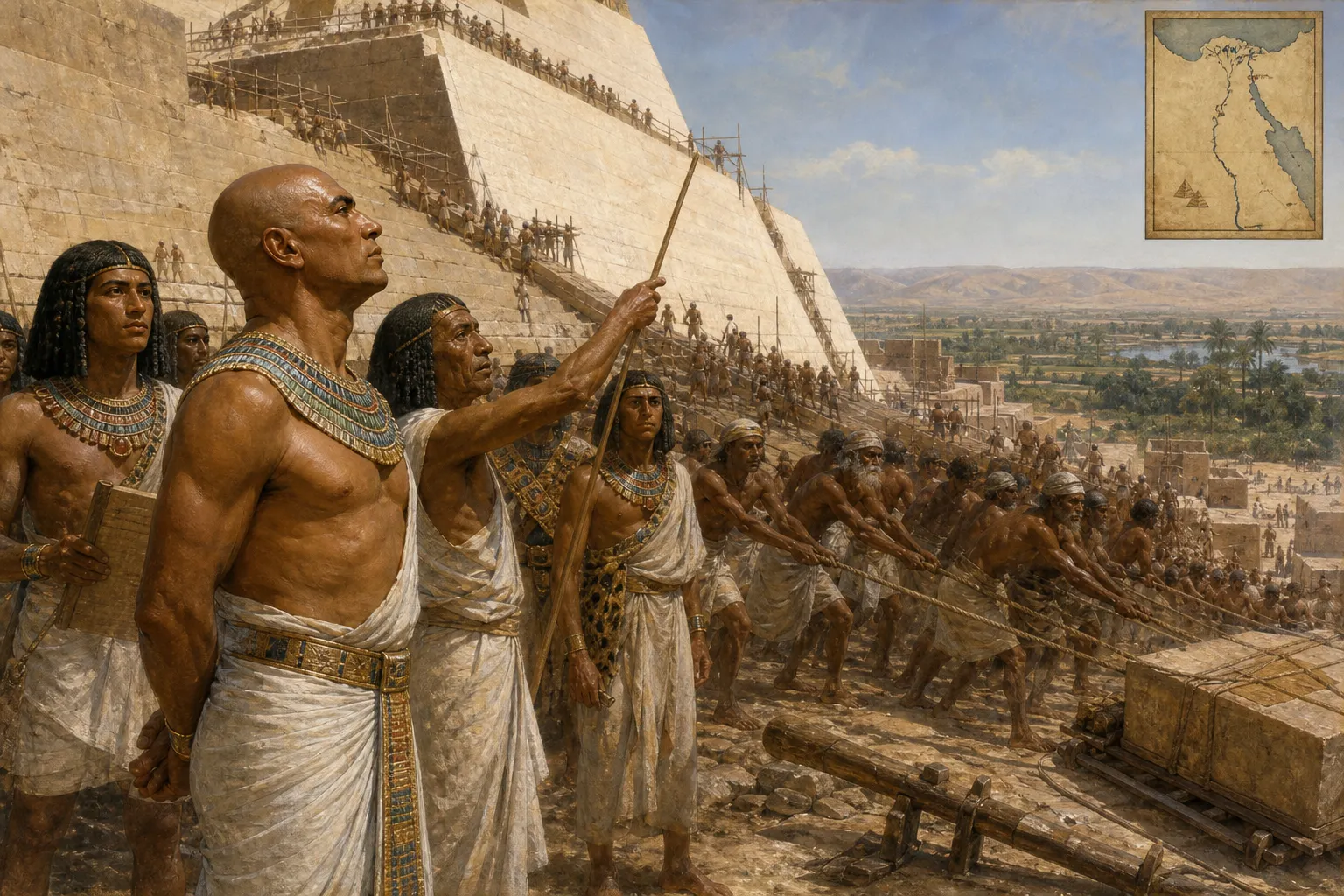
Dust devils dance across the vast construction site at Meidum, where the sun beats down relentlessly on thousands of laborers. Sneferu, now a king in his mid-forties, stands observing the work alongside his Vizier, Nefermaat. The initial stepped core of his pyramid has risen, an imposing eight-tiered structure. Now, the masons begin the ambitious task of encasing it in smooth, fine Tura limestone, transforming the stepped profile into a true pyramid. The scale of the undertaking is immense, with ramps spiraling upwards and teams of men hauling massive blocks. The pharaoh watches the precise work, a flicker of concern crossing his face as he notes the steep angle of the casing blocks, a detail Nefermaat is already observing with a calculating eye. ""The incline is bold, Nefermaat. Let the Overseers ensure the foundations bear the weight without flaw.""
Page 4
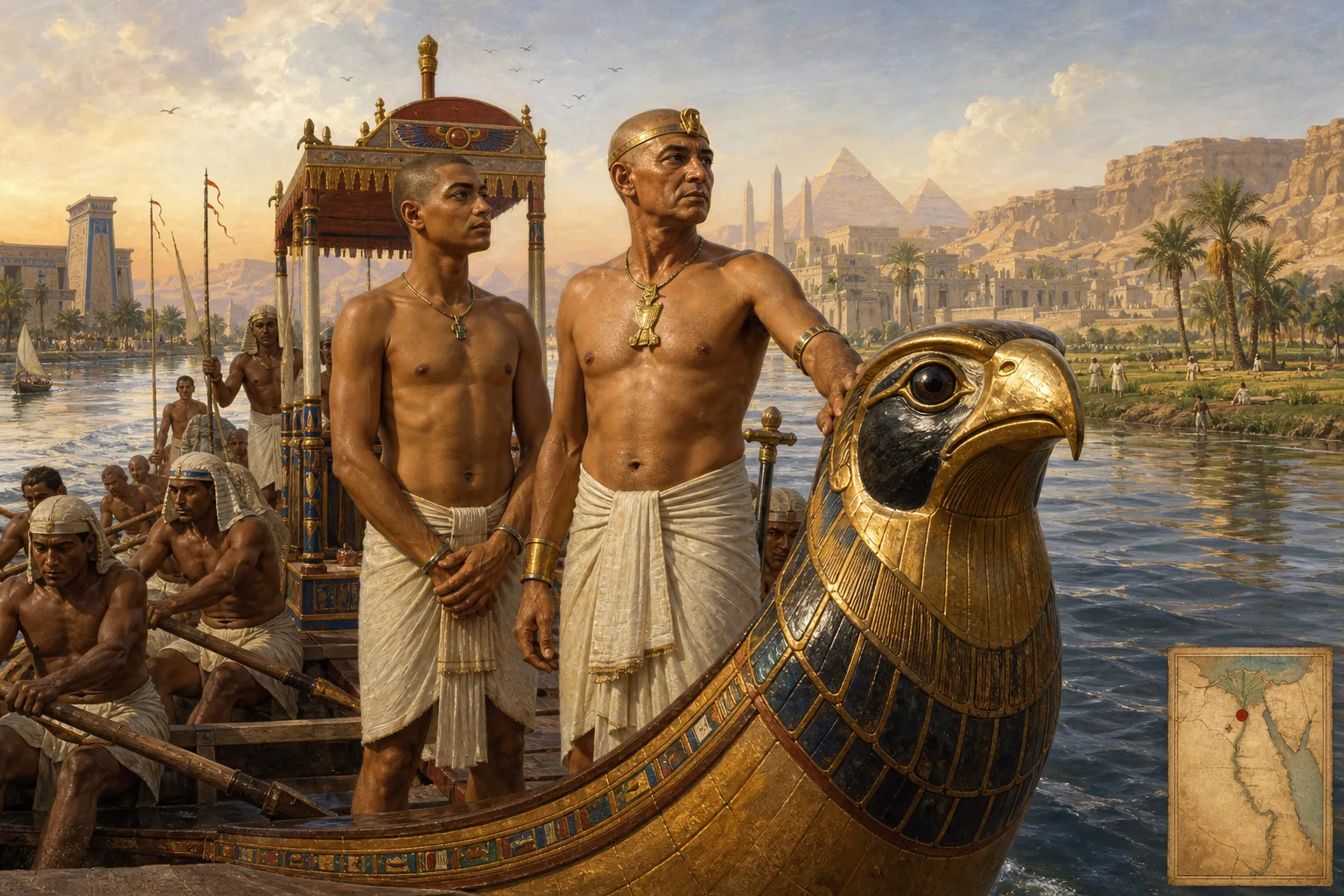
The Nile current pulls steadily against the hull of the royal barge as Sneferu, now nearing fifty, sails south from Meidum. The news of unforeseen stresses within the casing of his first pyramid has traveled swift as the wind. His eldest son, Prince Khufu, a young man observing his father's unwavering resolve, stands beside him. The pharaoh gazes towards the distant horizon, a new site selected at Dahshur, where a second monumental project must begin. This journey signifies not defeat, but a determined recalculation, a lesson hard-won from the colossal stones of Meidum. The weight of his lineage and the imperative to build an eternal dwelling presses heavily upon him. ""The lessons of Meidum are costly, my son, but invaluable. The gods permit correction, and our next endeavor shall rise with new wisdom.""
Page 5
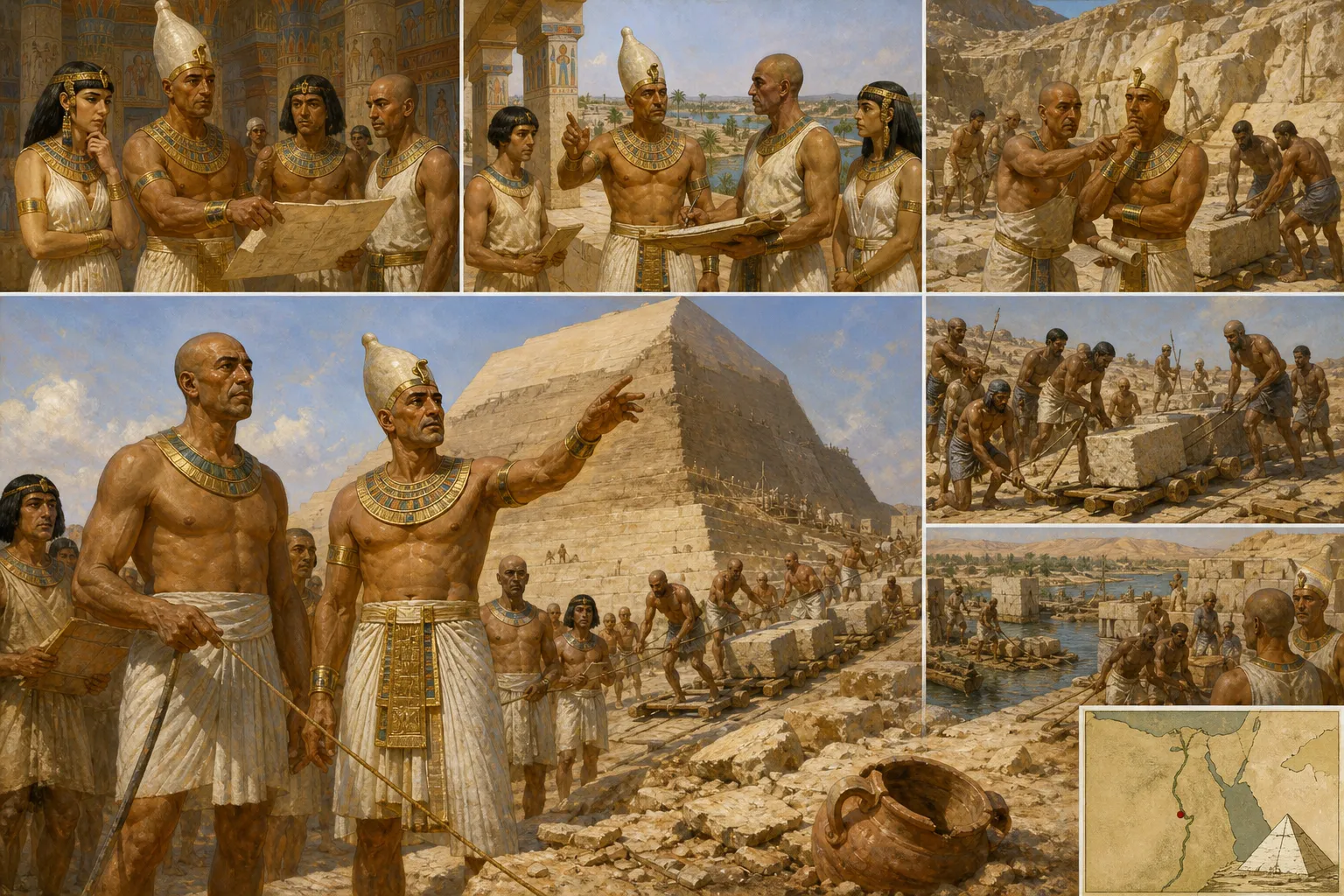
At the heart of the burgeoning complex at Dahshur, Sneferu, a king now with streaks of grey at his temples, stands beneath the immense, rising bulk of his second pyramid. This structure, the 'Bent Pyramid,' bears witness to a profound engineering crisis. As the blocks soared higher, the internal pressures and the angle of construction threatened catastrophe. Surrounded by his chief architect and a contingent of worried overseers, the pharaoh issues a decisive command: the upper section must change angle, its slope dramatically softened to save the monument. The sun beats down on the bustling site, revealing the true cost of imperial ambition, tempered by urgent necessity. ""The weight resists, the stone groans. We shall lighten the burden, and the angle shall yield. Let the upper courses begin anew, with a gentler ascent.""
Page 6
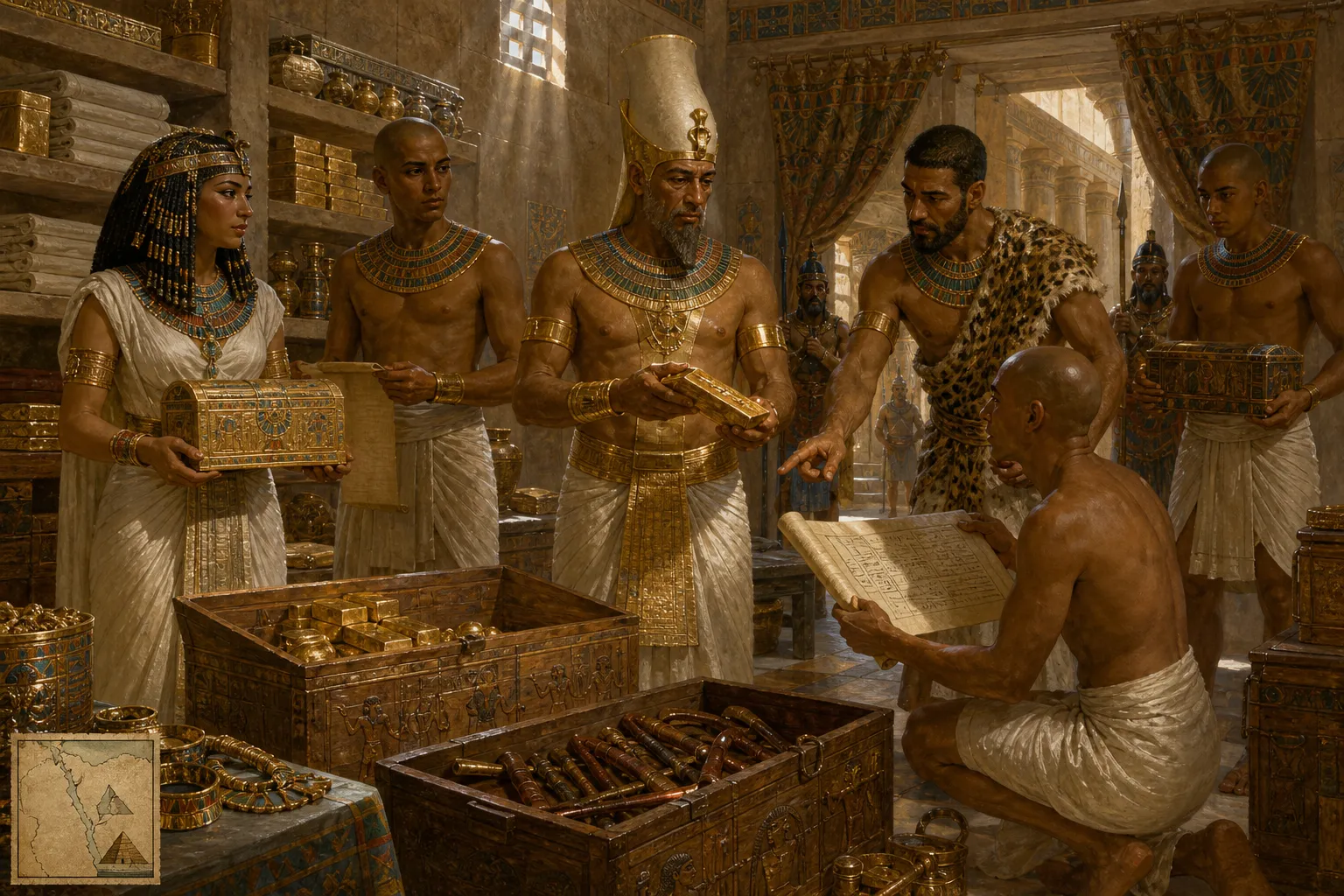
Within the bustling royal treasury at Memphis, the air is heavy with the scent of cedar and precious metals. Sneferu, a powerful man now in his mid-fifties, strides amongst piles of stored wealth. Beside him, Rahotep, his son and a revered General and High Priest, examines rolls of meticulously kept accounts. The continuous demands of two colossal pyramid projects have strained the kingdom's resources, yet the king's resolve remains unbroken. He decrees the commencement of a third pyramid at Dahshur, destined to be a 'true' pyramid from its very base, built with a perfected, shallower angle. The ambition is clear: this structure will stand as a testament to lessons learned and a legacy secured, even as the cost accumulates. ""Let the ships bring more copper from Sinai, and the quarries yield their finest stone without delay. This next monument, Rahotep, shall be flawless.""
Page 7
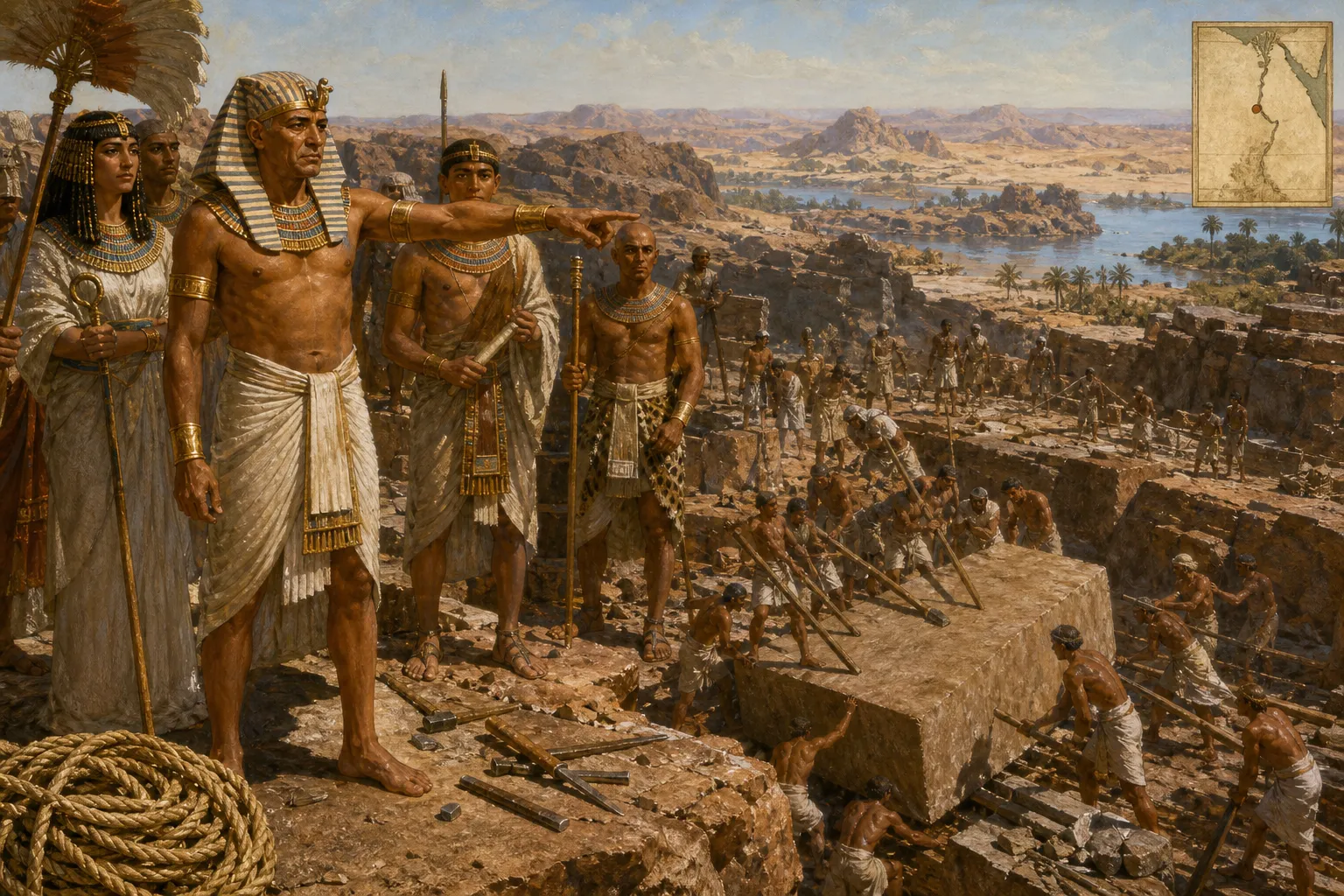
The searing heat of Aswan bakes the quarry face, where thousands of workers, overseen by shouting foremen, toil to liberate colossal blocks of red granite. This is the source of the enduring stone for Sneferu's latest, and last, monument – the 'Red Pyramid' at Dahshur. The king, now a commanding figure in his late fifties, stands on a rocky outcrop, observing the disciplined chaos. His gaze follows a massive block being wrestled from its bedrock, destined for a journey north on the Nile. The air rings with the clang of copper chisels and the grunts of straining men, a symphony of unwavering human will against the unyielding earth. ""Each cut stone, each man's effort, binds this land to my vision. Let the barges be filled without cease.""
Page 8
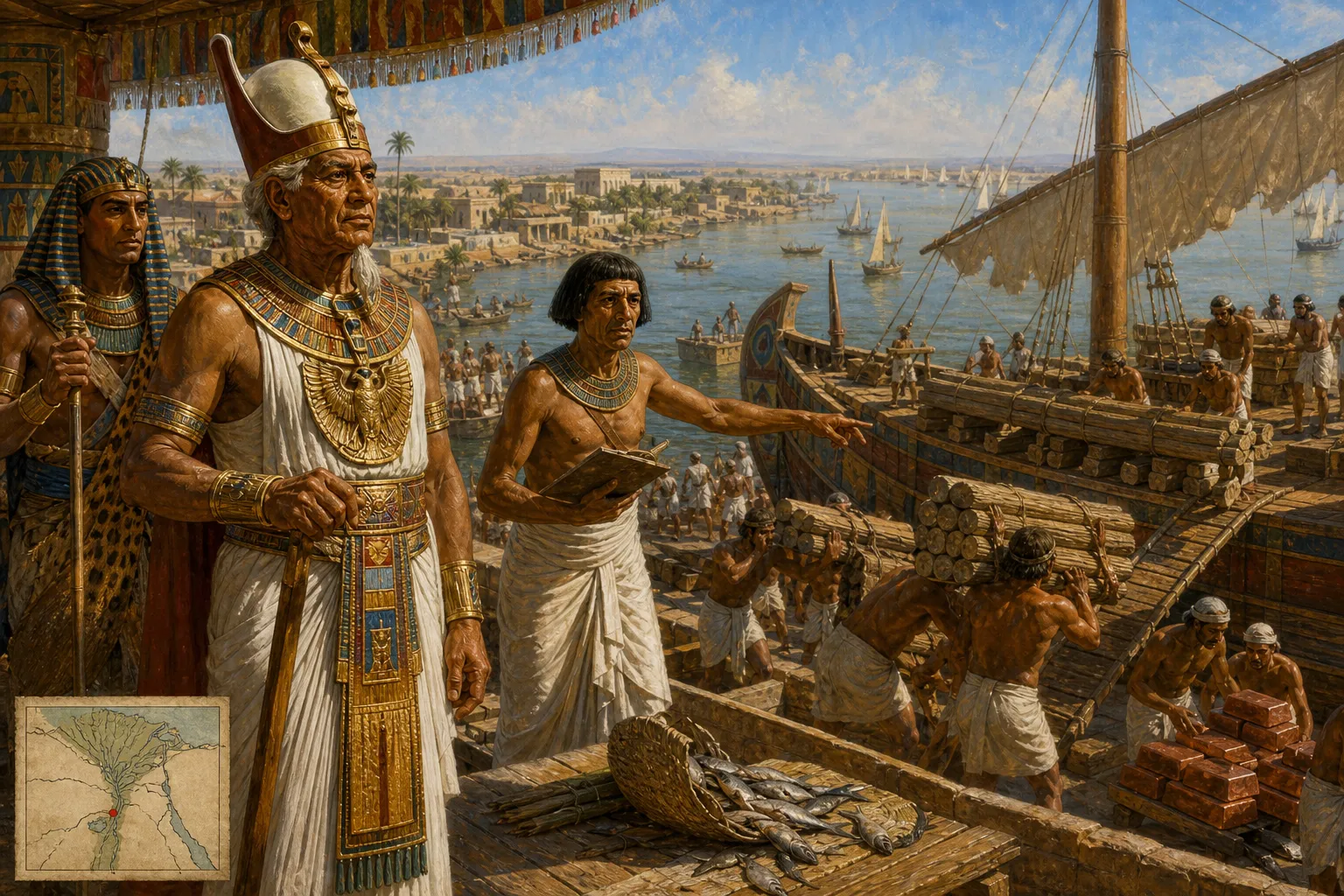
The bustling harbor of a Delta port teems with activity, the air thick with the salt spray and the cries of merchants. Sneferu, now a venerable king of sixty, observes the arrival of a fleet of ships from the Levant, laden with cedarwood from Byblos and copper from the Sinai mines. His Vizier, Nefermaat, stands dutifully by, overseeing the unloading of precious goods vital for the kingdom's prosperity and monumental building projects. The pharaoh's expeditions, launched across desert and sea, have secured valuable resources, cementing Egypt's influence and expanding its trade networks, transforming the kingdom into a mercantile power that fuels his architectural dreams. ""The breadth of the world serves our purpose, Nefermaat. Let every plank and every ingot be counted and conveyed to the royal works.""
Page 9
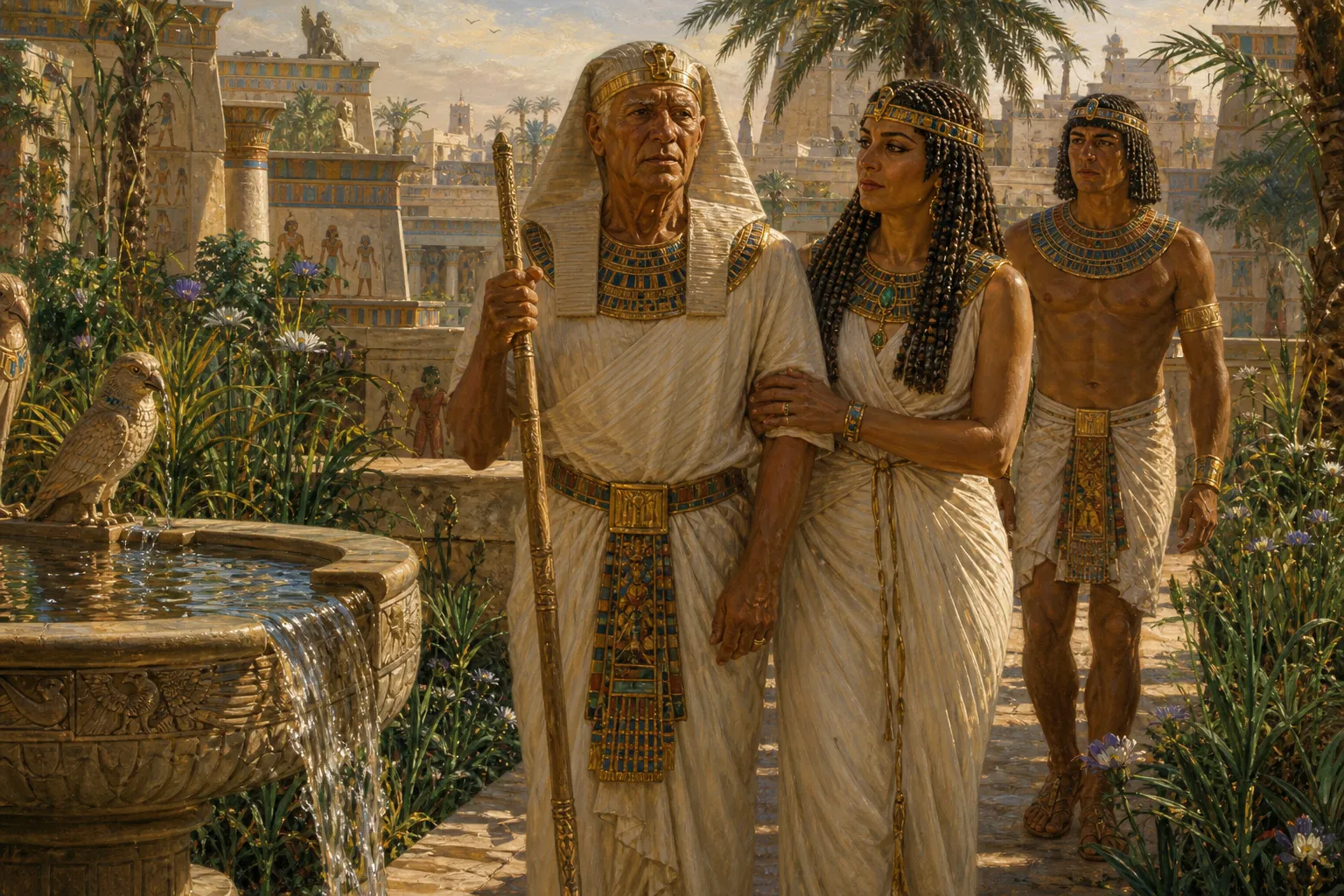
Within the serene confines of the royal gardens at Memphis, the scent of jasmine hangs heavy in the afternoon air. Sneferu, now an aged patriarch of nearly seventy, walks slowly, leaning on a polished wooden staff, his steps deliberate. Beside him, his chief queen, Hetepheres I, a regal woman with an air of quiet strength, offers her arm for support. His eldest son, Prince Khufu, a robust man in his prime, listens respectfully as the old king imparts final wisdom, speaking of the sacred duty of kingship and the future of their dynasty. The weight of his long reign, the triumphs and the trials, settles gently upon him as he prepares to pass the mantle. ""The stones speak of enduring will, my son. Yet, it is the care for the Two Lands that truly builds a lasting reign. Remember kindness.""
Page 10
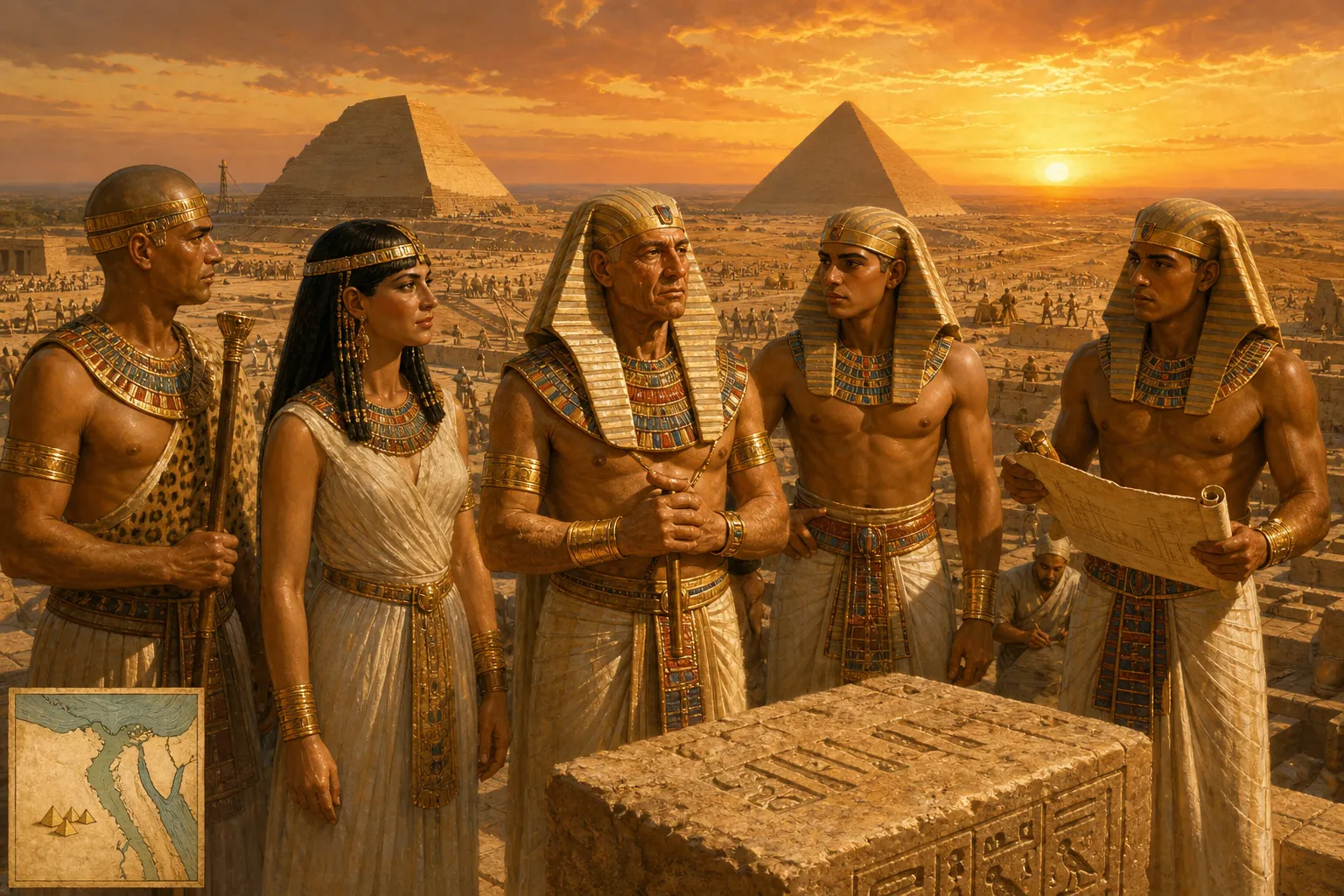
At Dahshur, the golden light of the setting sun bathes the two colossal monuments Sneferu erected: the unique 'Bent Pyramid' and the perfectly proportioned 'Red Pyramid.' Sneferu, now a venerable ruler in his early seventies, stands with Khufu, surveying his life's monumental work. The 'Red Pyramid,' his final, triumphant achievement, stands as the world's first true pyramid, its angles resolved, its form harmonious. He has navigated failure and refined ambition, leaving behind a legacy of architectural genius and a reputation for benevolence. His spirit, it is believed, ascends through these very stones, a guardian over the Two Lands he so tirelessly shaped. ""Behold, my son, the culmination of a thousand lessons. Let them stand for eternity, a testament to what we learned, and to what endures.""
About this story
- Audience: general readers
Questions and answers
Read Wonder Egypt on your phone
Wonder Egypt is available on Android. Get Wonder Egypt on Google Play.