The Cats of Bastet
The Cats of Bastet — an illustrated history story. 10 illustrated pages, free to read on Wonder Egypt.
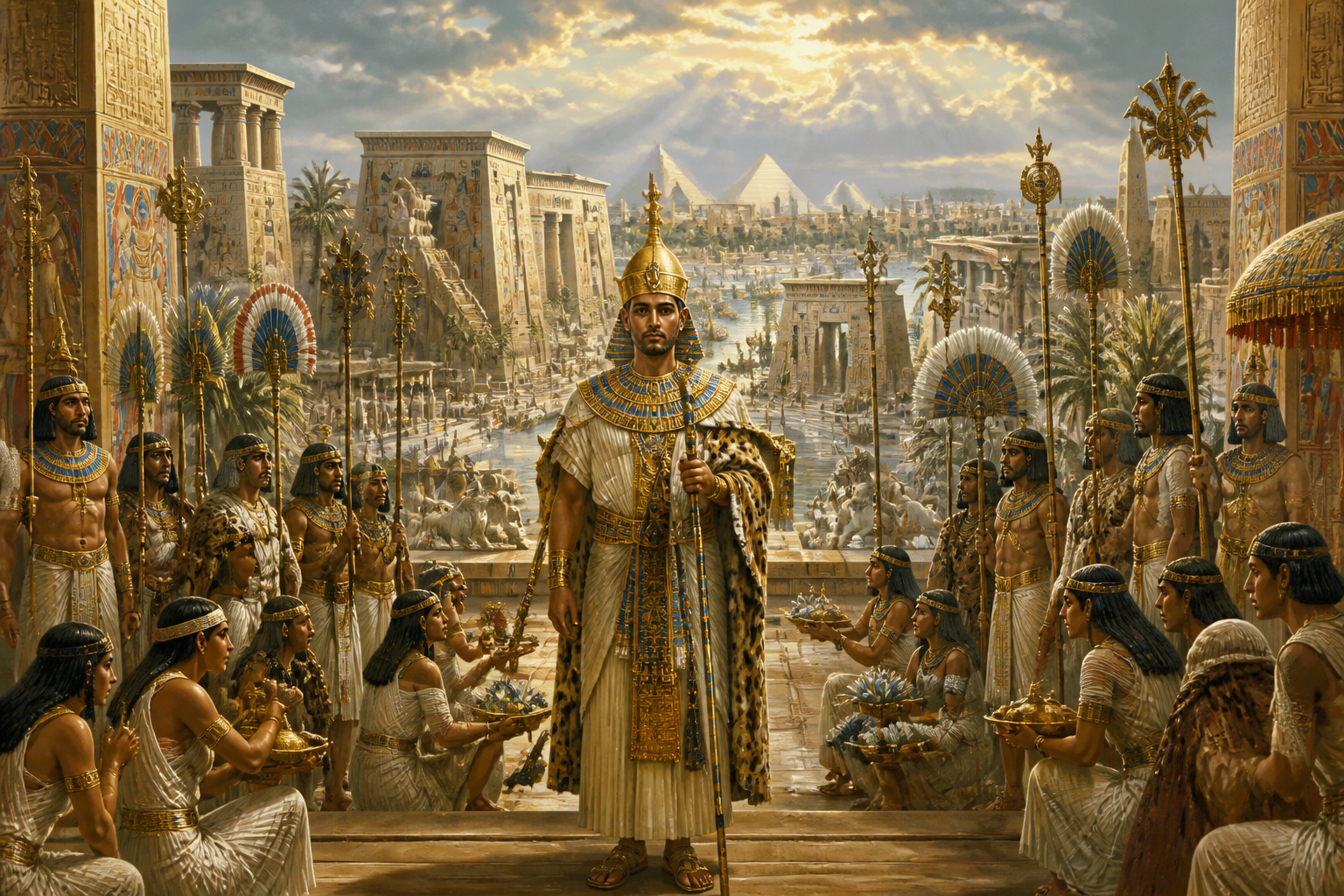
Page 1 — The Age of Bastet
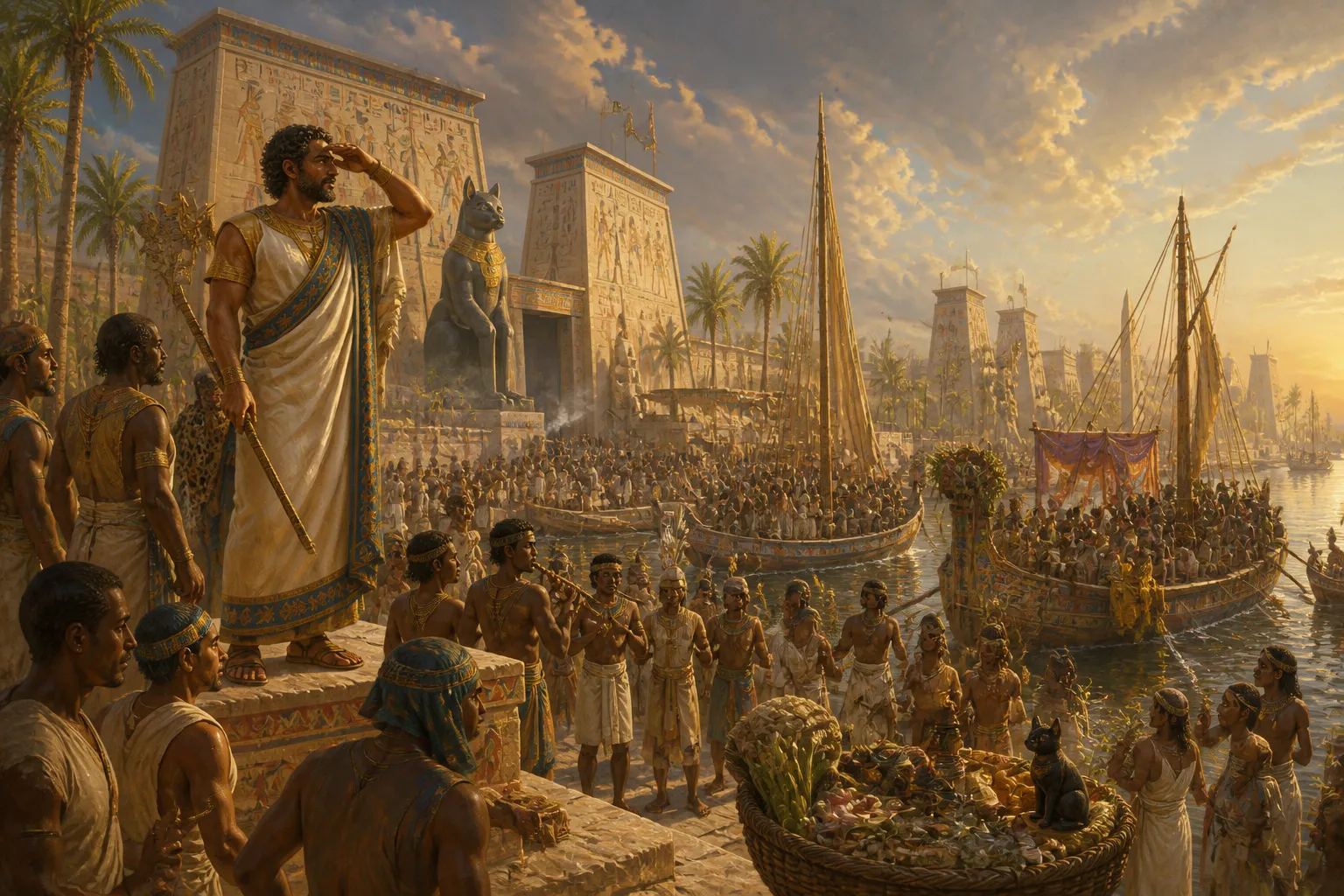
In the vast plains of the Nile Delta, the city of Bubastis rose as a beacon of devotion to the goddess Bastet. During the Late Period, spanning from the 26th to the 30th Dynasties, Egypt experienced a transformation towards the worship of animal deities. The 26th Dynasty saw the height of Bubastis, where the Temple of Bastet expanded under local rulers. Herodotus, the Greek historian, marveled at the vast gatherings of pilgrims, claiming that over seven hundred thousand arrived for the festival of Bastet. This era was marked by a unique convergence of cultures, as Egyptian traditions began to blend with influences from Greece and Persia. The cat, sacred to Bastet, became a symbol of this devotion, leading to the flourishing of cat mummification practices.
Herodotus: 'I have never seen a festival so large. Seven hundred thousand, perhaps more, all for the worship of Bastet.'
Page 2 — The Temple Catteries
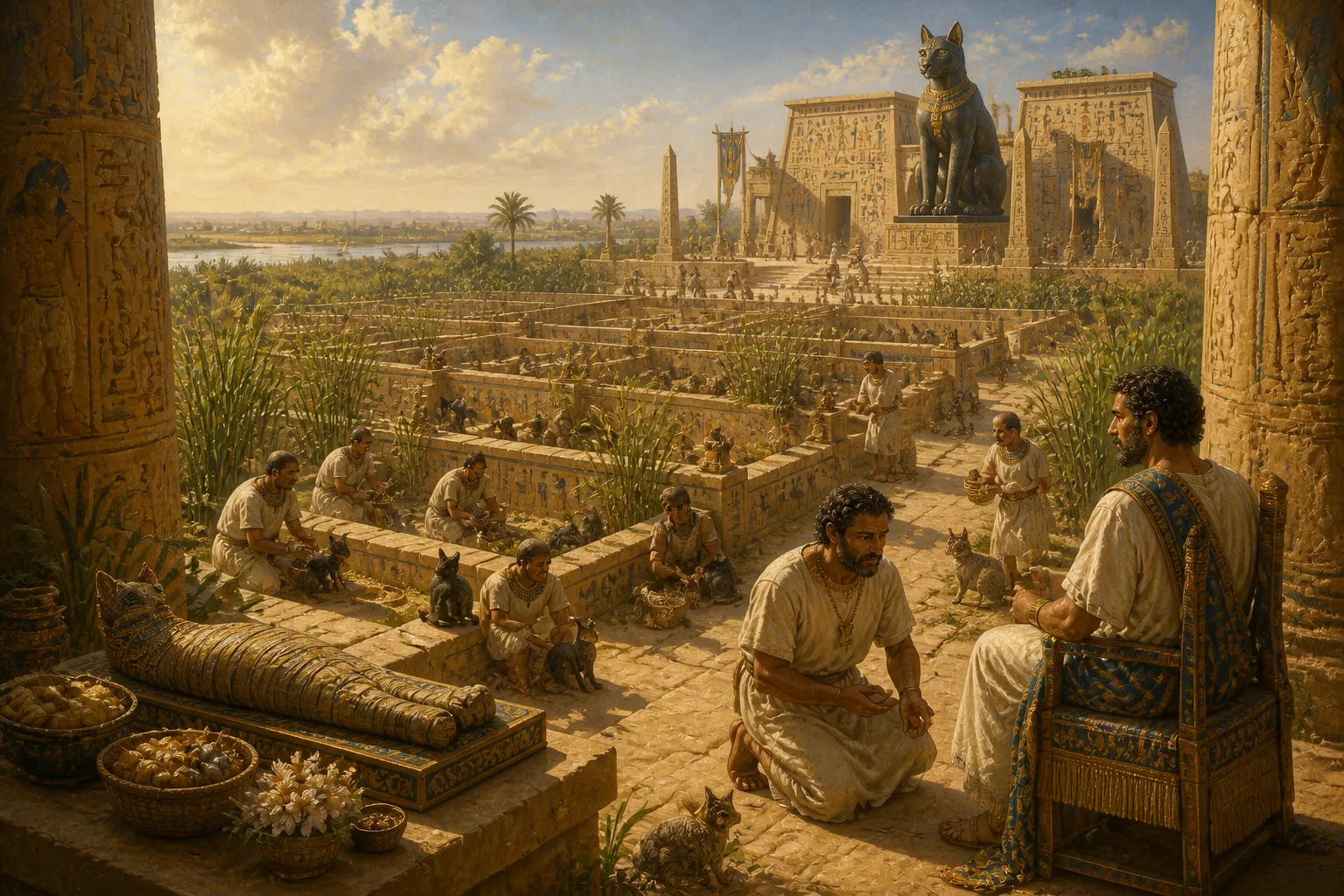
Within the sacred precincts of Bubastis, rows upon rows of cattery enclosures housed hallowed animals, primarily cats, revered as the embodiments of the goddess Bastet. These catteries, integral to the cult's function, facilitated rituals such as sacrifices, embalming, and mummification. Priests, clad in traditional linen garments, and caretakers devoted themselves to the care of these sacred animals, ensuring their sanctity and wellbeing, while artisans crafted intricate amulets bearing the likeness of cat deities. This religious fervor fostered a thriving economy centered around the temple, influencing trade routes and local agriculture, and led to a proliferation of farms dedicated to breeding cats. The production of mummies, each believed to carry the devotion of the living to Bastet, became a booming industry, occasionally prioritizing quantity over authenticity.
Caretaker: 'Each cat is a living embodiment of Bastet's will. We honor them as we honor the goddess.'
Page 3 — The Embalmer's Craft
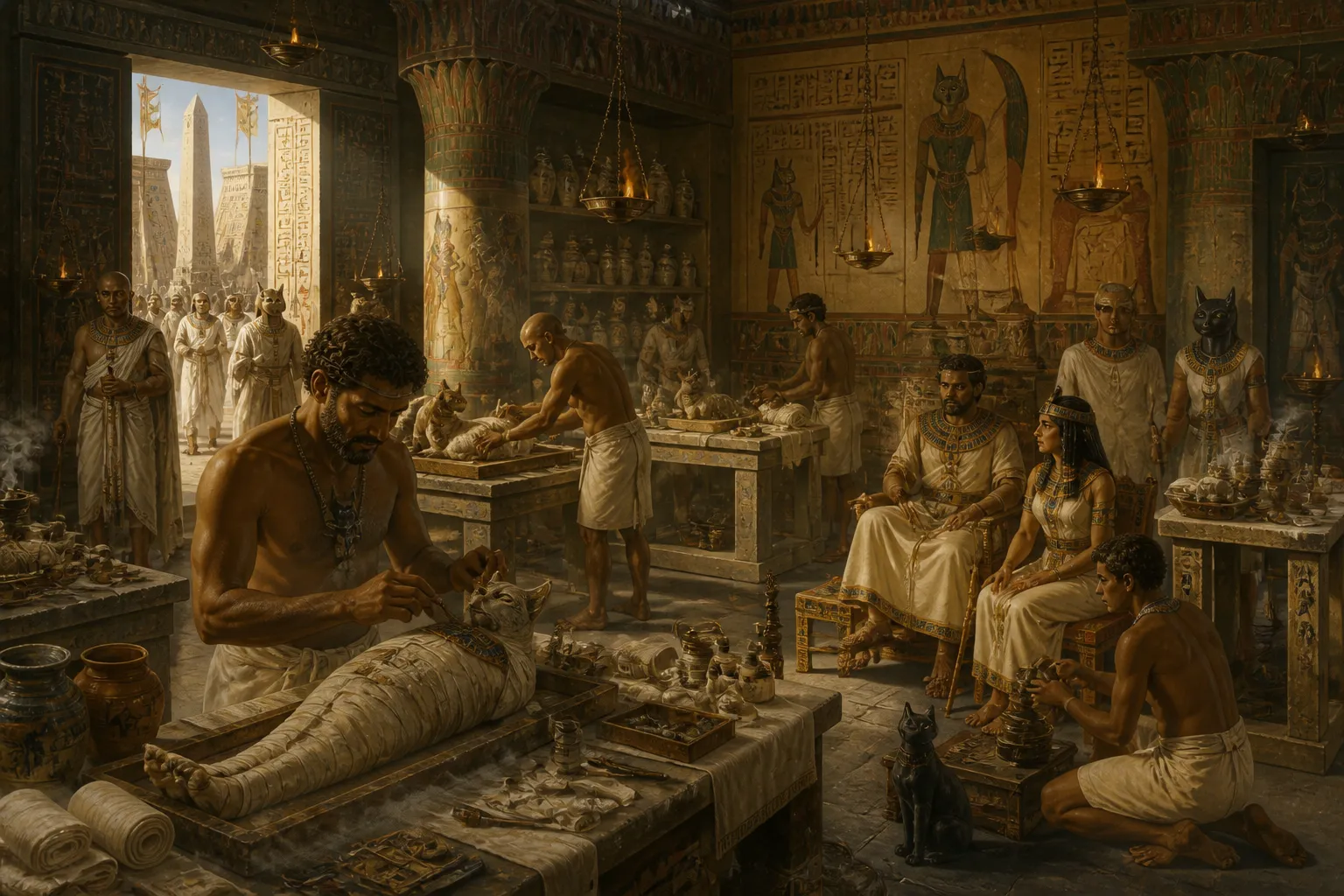
In the dimly lit chambers beneath the Temple of Bastet, embalmers practiced the sacred art of mummification, an intricate and time-consuming process that ensured the physical preservation of cats, revered as sacred beings. The air was heavy with the scent of resin and incense, a testament to the ritualistic importance of their work. Every step was deliberate, involving careful removal of organs, drying, and wrapping, all while chanting prayers to guide the souls to the goddess Bastet. Despite the meticulous efforts, the industry faced challenges, often resorting to deception due to overwhelming demand. Scans have revealed empty mummies, a stark reminder of the delicate balance between devotion to tradition and exploitation.
Embalmer: 'These hands weave eternity, giving form to the sacred ones who guide us.'
Page 4 — Pilgrims by the River
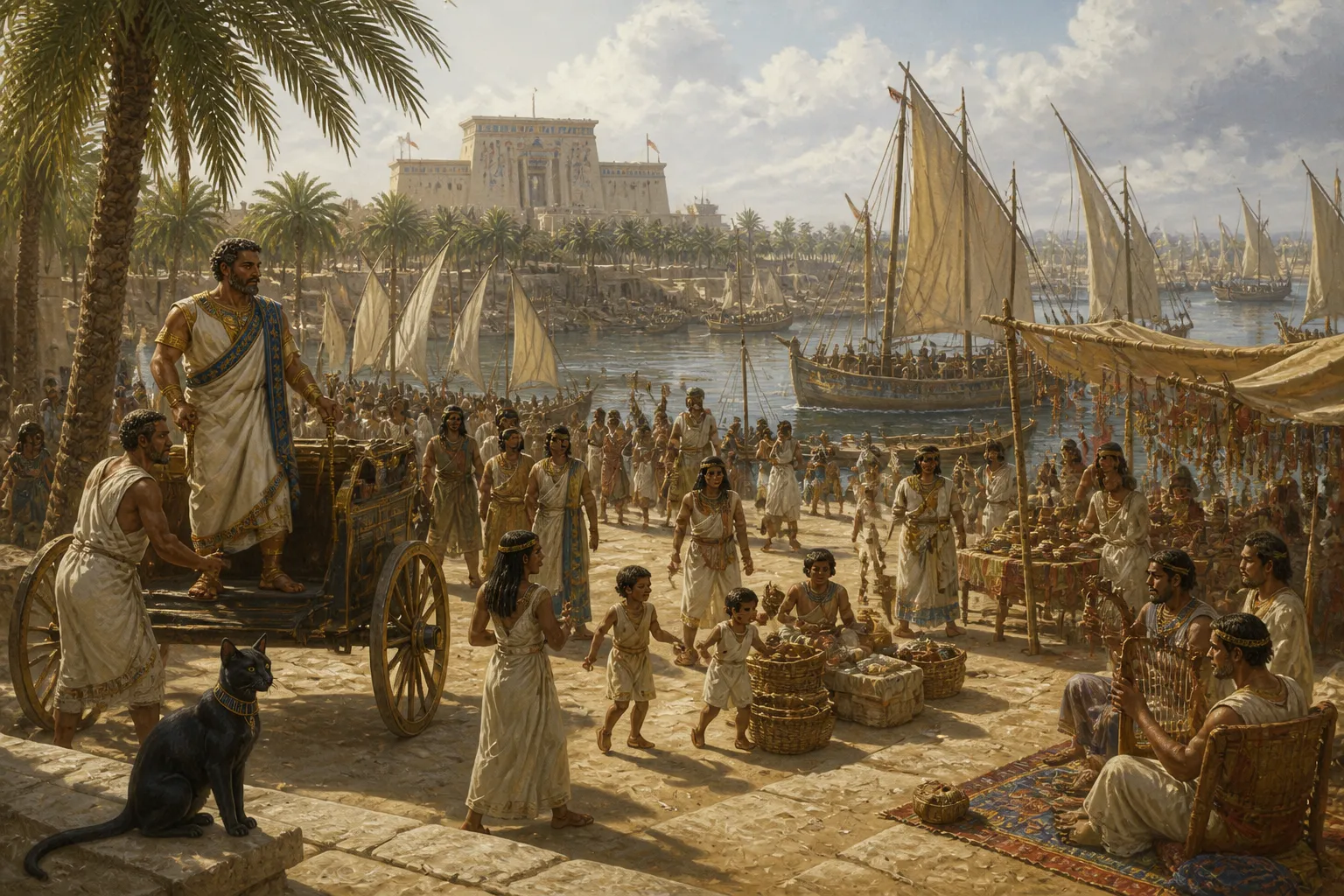
Each year, pilgrims traversed the Nile Delta to honor Bastet at Bubastis, their boats crafted from reeds and adorned with vibrant, colorful sails that caught the breeze. The pilgrimage was a multifaceted event, transcending religious devotion to become a social and economic gathering, drawing individuals from various walks of life. Markets sprouted along the riverbanks, bustling with merchants offering goods ranging from woven baskets to protective amulets. The air was alive with music and laughter, the harmonious notes blending with the rhythmic chants of priests invoking the goddess. This vibrant tapestry of humanity reflected the depth of Bastet's influence, extending beyond mere worship into a celebration of community and culture.
Merchant: 'Fine baskets for the journey! Amulets for Bastet's favor!'
Page 5 — The Festival of Bastet
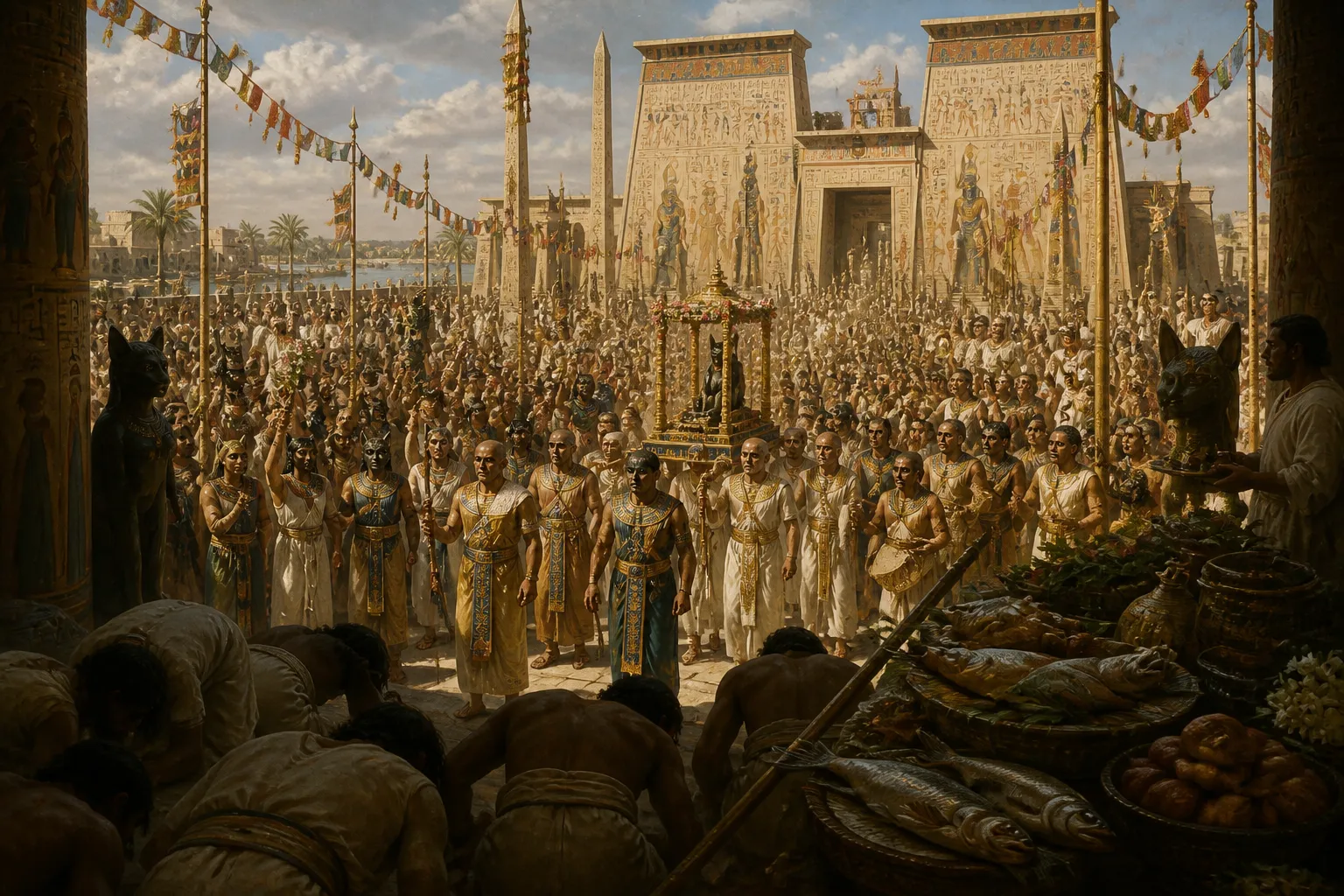
The Festival of Bastet was the most eagerly anticipated event of the year, drawing together vast crowds from every corner of Egypt. The air was laden with the sweet scent of lotus flowers mingling with the rich aroma of incense, as processions of priests, carrying statues of Bastet, meandered through the lively streets. Attendees adorned in their finest garments partook in music, dance, and feast, celebrating Bastet's multifaceted nature — a protector of households and bringer of joy. Revelers wore cat-headed masks, their laughter resonating through the festival square. This annual gathering not only reinforced community bonds but reaffirmed Bastet's divine influence as both nurturing and fierce.
Priest: 'Rejoice, for Bastet watches over us and blesses our harvests!'
Page 6 — The Persian Influence
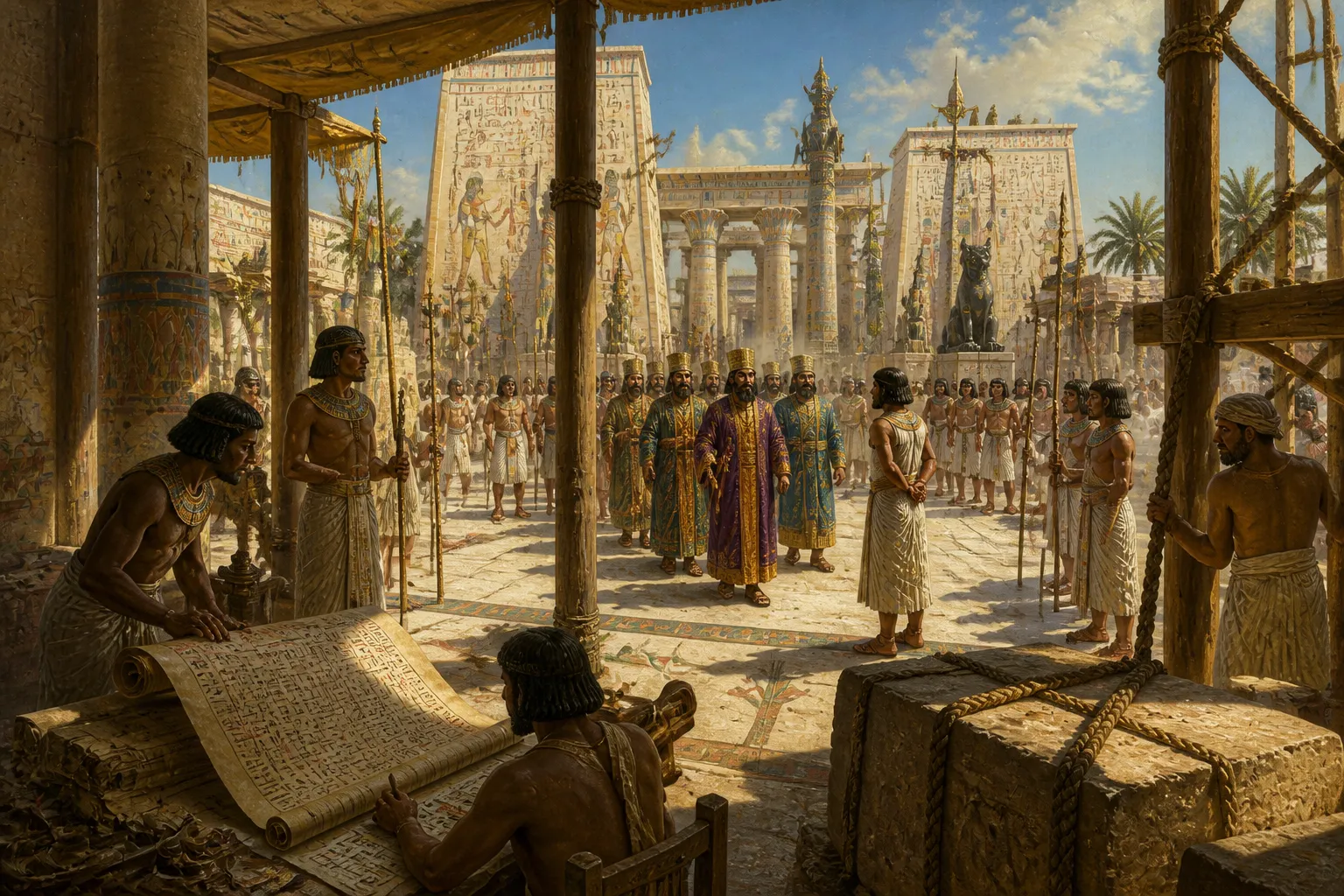
During the later years of the 26th Dynasty, Egypt fell under the shadow of Persian conquest. Cyrus the Great first claimed dominion, followed by his successor Cambyses, who made strategic changes in administration and trade. Upon entering Egypt, the Persians were met with a society rich in traditions that were both foreign yet fascinating to them. The grandiosity of the temple exteriors, lavishly adorned with hieroglyphs and motifs, was a testament to Egypt’s architectural prowess. Despite resistance, Persian influence altered the political landscape, introducing new customs and governance styles. Persian rulers respected Egyptian deities, incorporating them into their own pantheon to ease tensions. This era of foreign rule was marked by a complex interplay between suppression and assimilation, leaving a lasting impact on Egyptian society and culture.
Cambyses: 'Let the worship continue, for their gods will become ours as well.'
Page 7 — The Secret of the Mummies
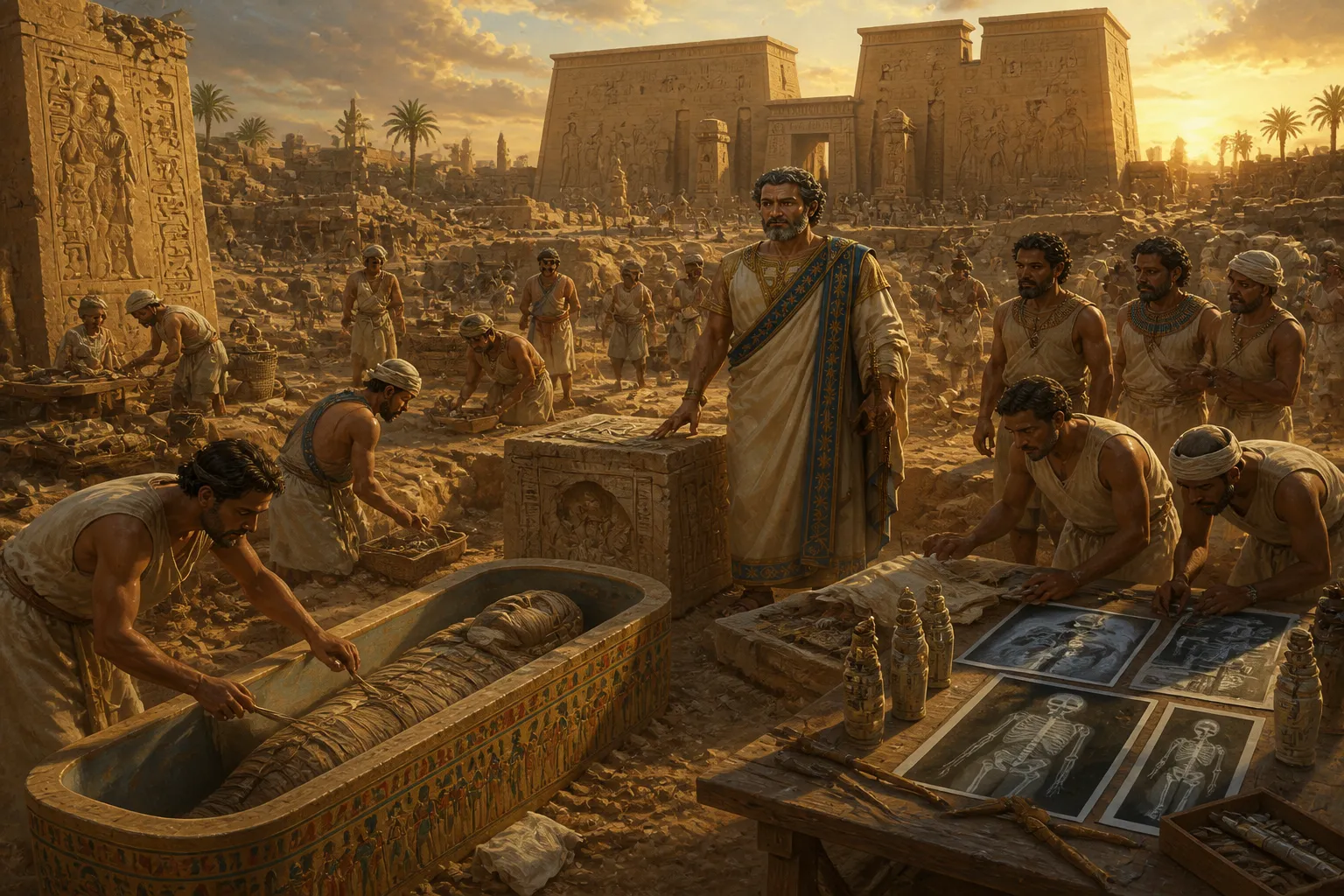
Recent archaeological discoveries have unveiled a startling truth: not all cat mummies were as they seemed. While many bundles were found to contain whole bodies, a significant number were revealed to be mere fabric and bone fragments. This discovery highlights the immense pressure on embalmers to meet the overwhelming demand of the pilgrims flocking to Bubastis. Workshops were bustling with activity, the air thick with the scent of preservative resins. Despite this, the ritual of purchasing mummies remained a deeply symbolic act for the worshipers, serving as an earthly tether to the divine. This revelation offers a poignant glimpse into the intersection of faith and commerce, where devotion sometimes compelled compromise.
Archaeologist: 'The absence of remains does not diminish the reverence these mummies commanded.'
Page 8 — The Cult of Bastet
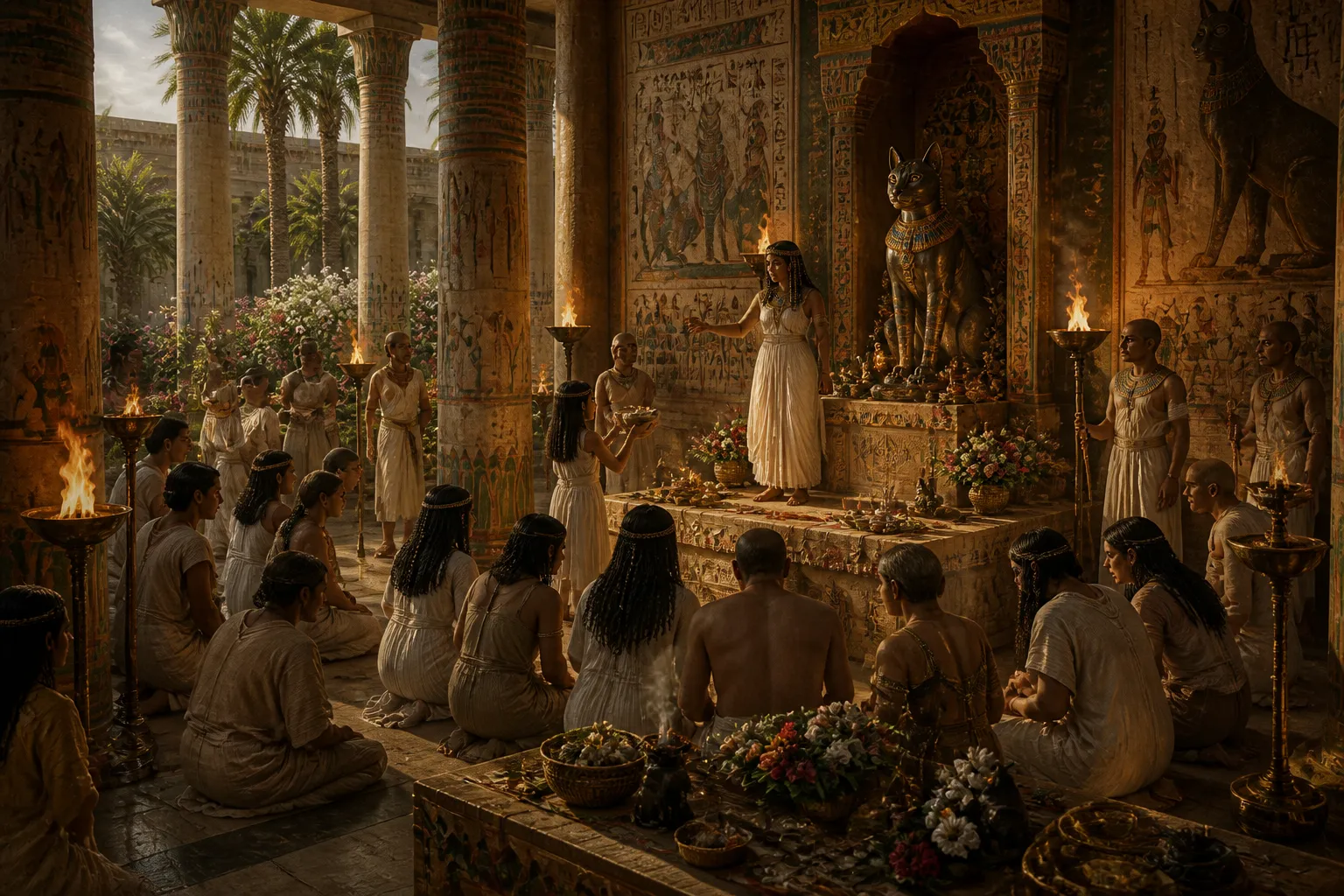
Bastet's influence extended far beyond the city of Bubastis, reaching into the hearts of devotees across Egypt. Her worship, blending the duality of protection and ferocity, resonated with many. Temples dedicated to her teachings dotted the landscape, where priests led ceremonies honoring her divine aspects, their voices mingling with the sacred chants resonating through the temple halls. The cult of Bastet promoted the care and respect of animals, particularly cats, which were kept in homes as living symbols of the goddess. This enduring legacy of compassion and care fostered a unique spiritual connection between people and their environment, echoing through the ages long after the last temple walls had crumbled.
Priestess: 'Bastet, watch over our children and our homes, for your spirit lives in all living things.'
Page 9 — A Greek's Perspective
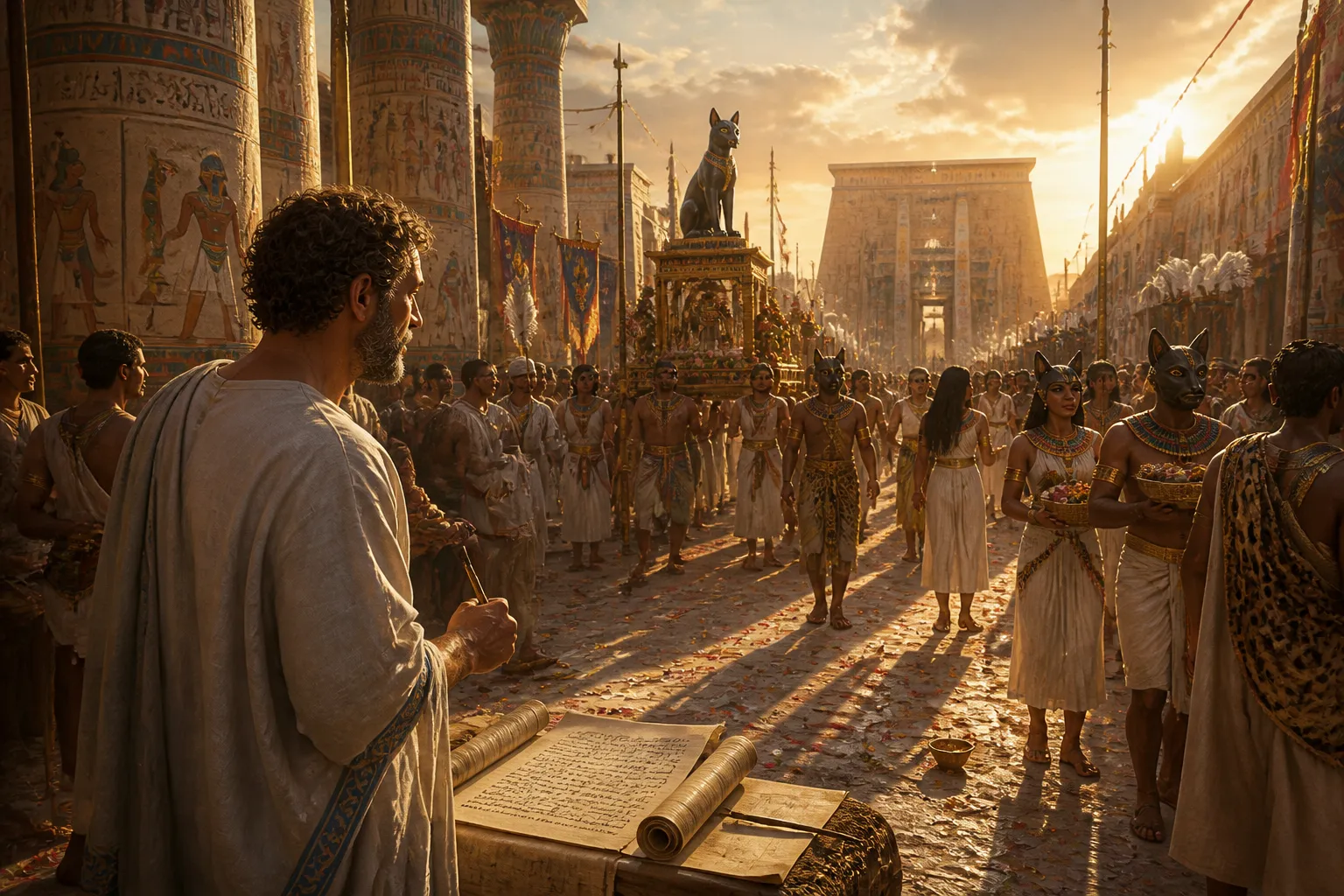
Herodotus, the eminent Greek historian, chronicled his observations of Egyptian customs with fascinated detachment. His accounts of Bubastis and its grand festivals provided valuable insight into the practices and beliefs of ancient Egypt. He observed the throngs of people, their laughter mingling with the sounds of music and the scents of myriad foods wafting through the air. Herodotus marveled at the fervent devotion displayed by the masses, noting the unique blend of joy and reverence. He described how the Egyptians honored their gods with both solemnity and celebration, a stark contrast to the more reserved customs of his homeland. His writings, though sometimes colored by his own cultural biases, remain a crucial source for understanding the complexities and nuances of ancient Egyptian life.
Herodotus: 'The Egyptians revel in their devotion, a paradox of solemnity and mirth.'
Page 10 — Legacy of Bubastis
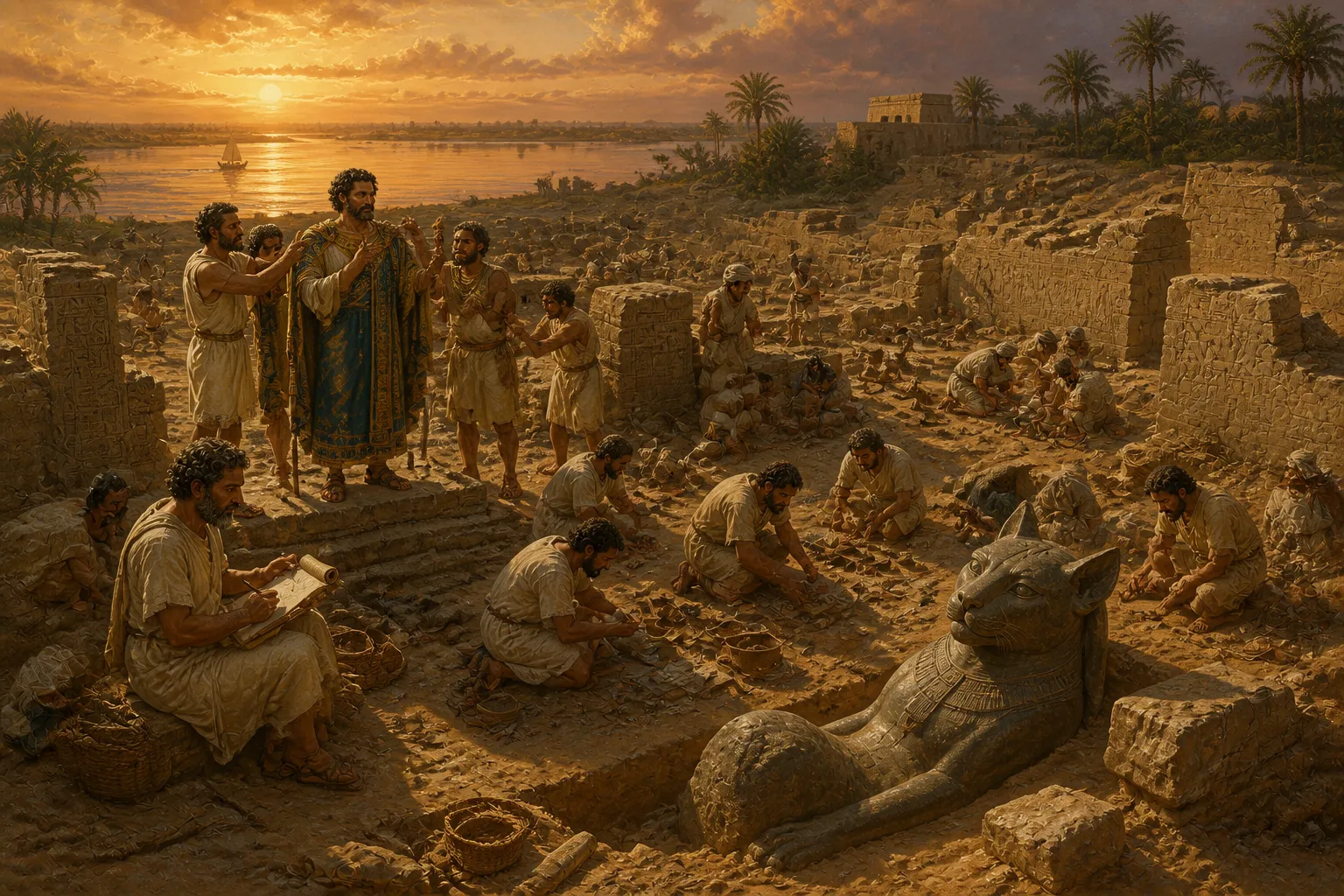
Though centuries have passed, the legacy of Bubastis endures through the ruins scattered across the Egyptian Delta. The air is often filled with the soft echoes of history, as archaeologists meticulously uncover the remnants of this once-vibrant city, piecing together the stories of its people and their profound devotion to Bastet, the feline goddess. The city was a hub of celebration; during its festivals, the streets would come alive with music, dance, and offerings. Traders and citizens adorned in vibrant linens would gather, exchanging goods and prayers, forming a lively, bustling tapestry of devotion and economy. The festival of Bubastis left a profound impact on Egyptian culture, influencing religious practices and socio-economic structures deeply rooted in the worship of Bastet. Mummified cats, once revered as vessels of prayer, serve now as poignant reminders of a complex history interwoven with faith, commerce, and survival. As the sun sets over the ancient stones of Bubastis, casting a golden hue, the spirit of this ancient city remains, whispering tales of a time when gods seemed to walk alongside mortals.
Archaeologist: 'Bubastis still speaks, through every stone and artefact, of its timeless significance.'
About this story
- Audience: general readers
Read Wonder Egypt on your phone
Wonder Egypt is available on Android. Get Wonder Egypt on Google Play.