The American Revolution (1775–1783, North America)

The American Revolution (1775–1783, North America) — an illustrated history story, featuring George Washington, Charles Cornwallis, Benjamin Franklin, set in North America. 10 illustrated pages, free to read on Wonder History.
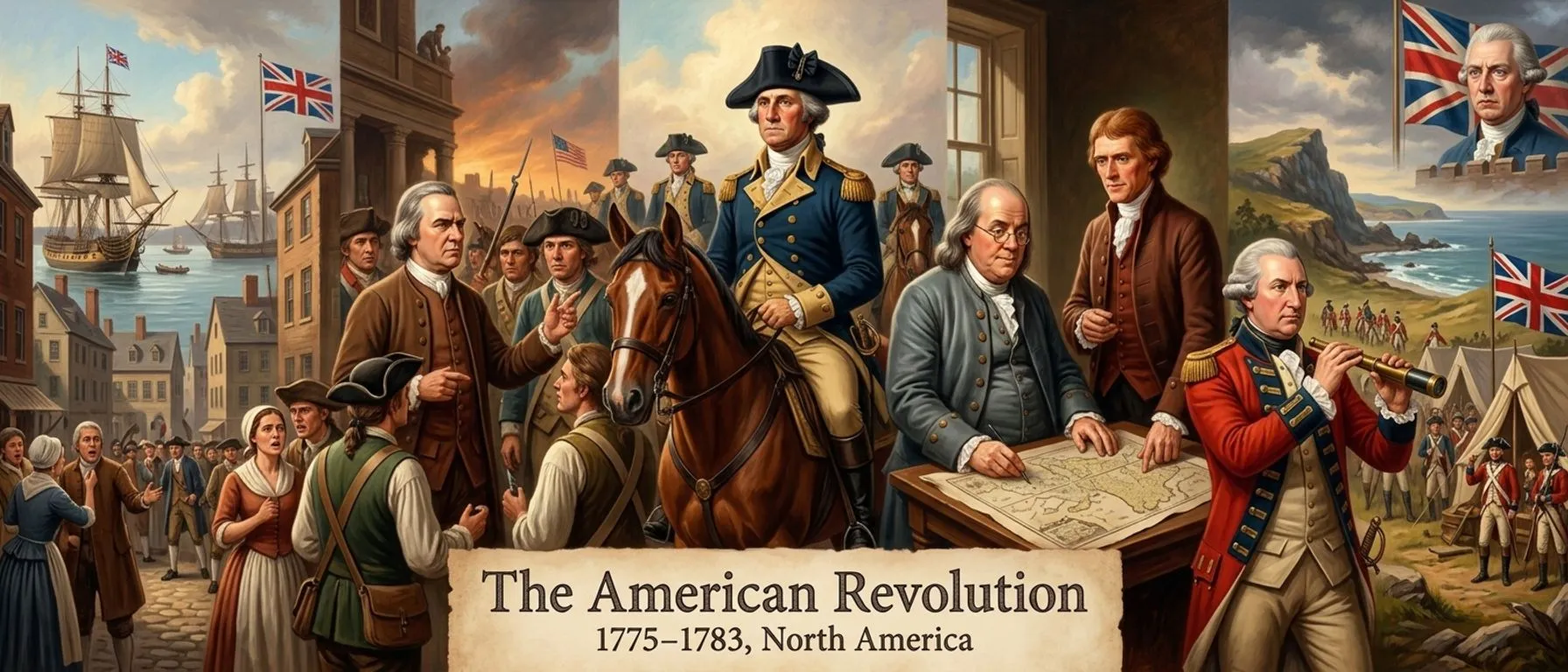
The American Revolution (1775–1783, North America) — book cover — Wonder History
The American Revolution (1775–1783, North America) — an illustrated history story, featuring George Washington, Charles Cornwallis, Benjamin Franklin, set in North America. 10 illustrated pages, free to read on Wonder History.

Page 1
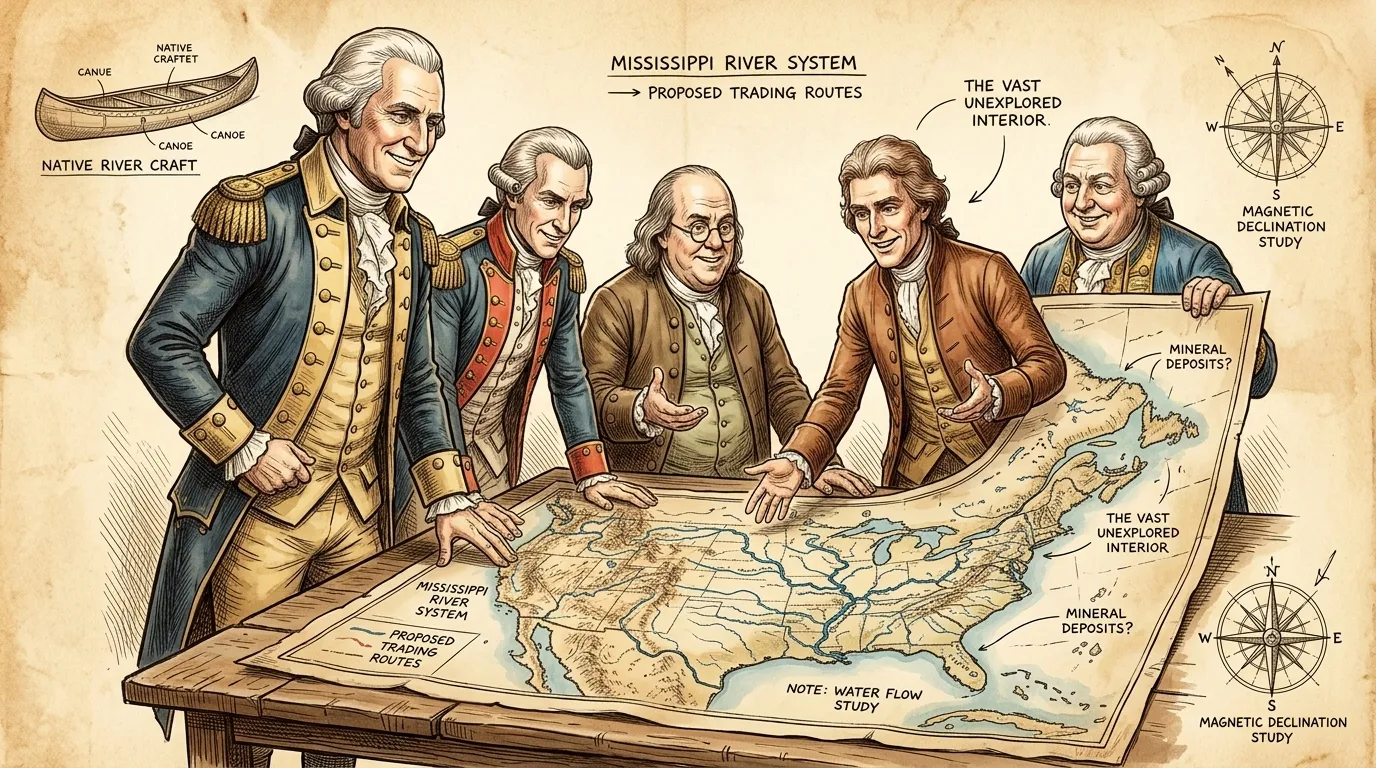
On October 19, 1781, at Yorktown, Virginia, General George Washington, commander of the Continental Army; General Charles Cornwallis, leader of the British…
On October 19, 1781, at Yorktown, Virginia, General George Washington, commander of the Continental Army; General Charles Cornwallis, leader of the British forces; Benjamin Franklin, the diplomat seeking French support; Thomas Jefferson, author of the Declaration of Independence; and King George III, the British monarch whose policies ignited the conflict—all were about to reshape North America.

On October 19, 1781, at Yorktown, Virginia, General George Washington, commander of the Continental Army; General Charles Cornwallis, leader of the British forces; Benjamin Franklin, the diplomat seeking French support; Thomas Jefferson, author of the Declaration of Independence; and King George III, the British monarch whose policies ignited the conflict—all were about to reshape North America. The siege culminated with nearly 8,000 British soldiers surrendering to a combined American and French force. How did thirteen colonies dare to challenge the most powerful empire on Earth? But where did it all begin?

Page 2
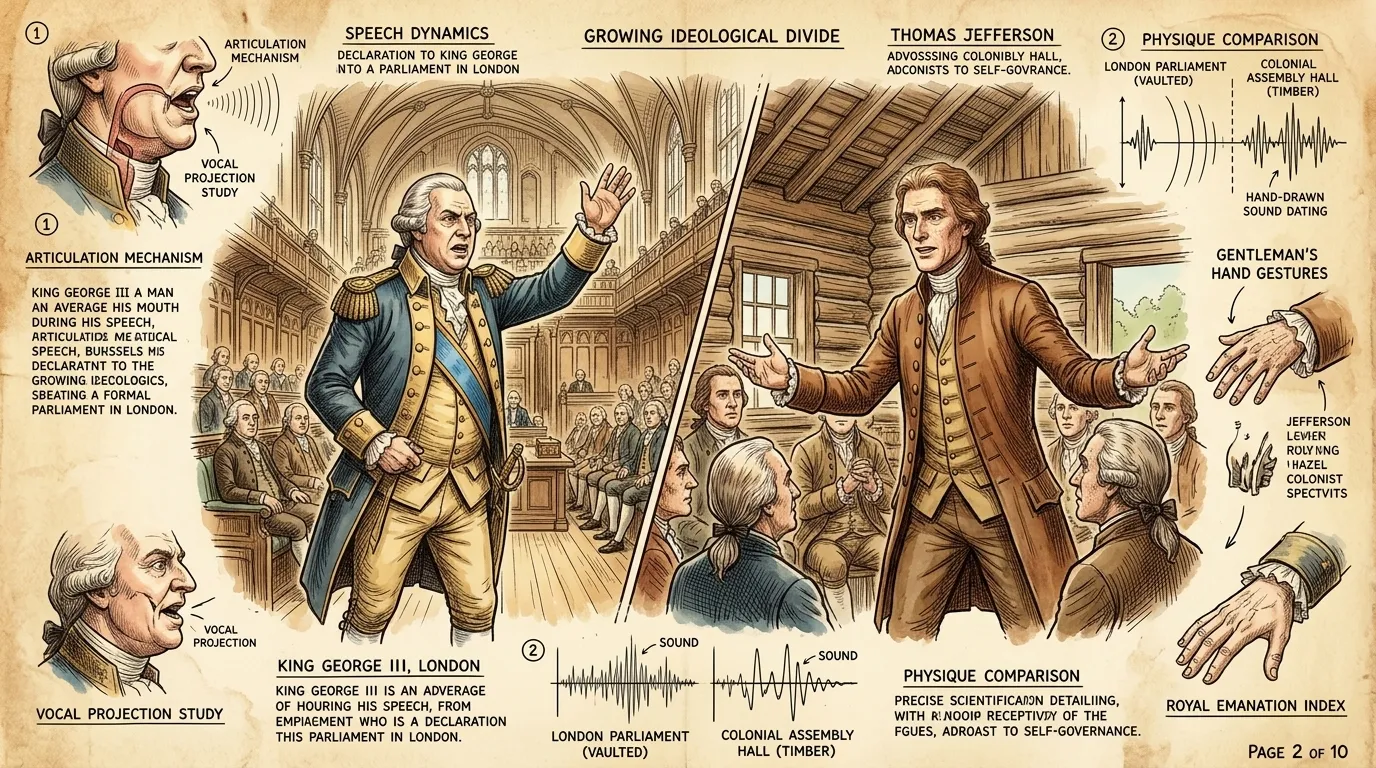
King George III, back in London, remained convinced the colonists would soon see reason. He believed the rebellion was the work of a few malcontents, easily put…
King George III, back in London, remained convinced the colonists would soon see reason. He believed the rebellion was the work of a few malcontents, easily put down. "Blows must decide whether they are to be subject to this country or independent," he declared to Parliament. Meanwhile, in the colonies, voices like that of Thomas Jefferson grew louder, advocating for self-governance.

King George III, back in London, remained convinced the colonists would soon see reason. He believed the rebellion was the work of a few malcontents, easily put down. "Blows must decide whether they are to be subject to this country or independent," he declared to Parliament. Meanwhile, in the colonies, voices like that of Thomas Jefferson grew louder, advocating for self-governance.

Page 3
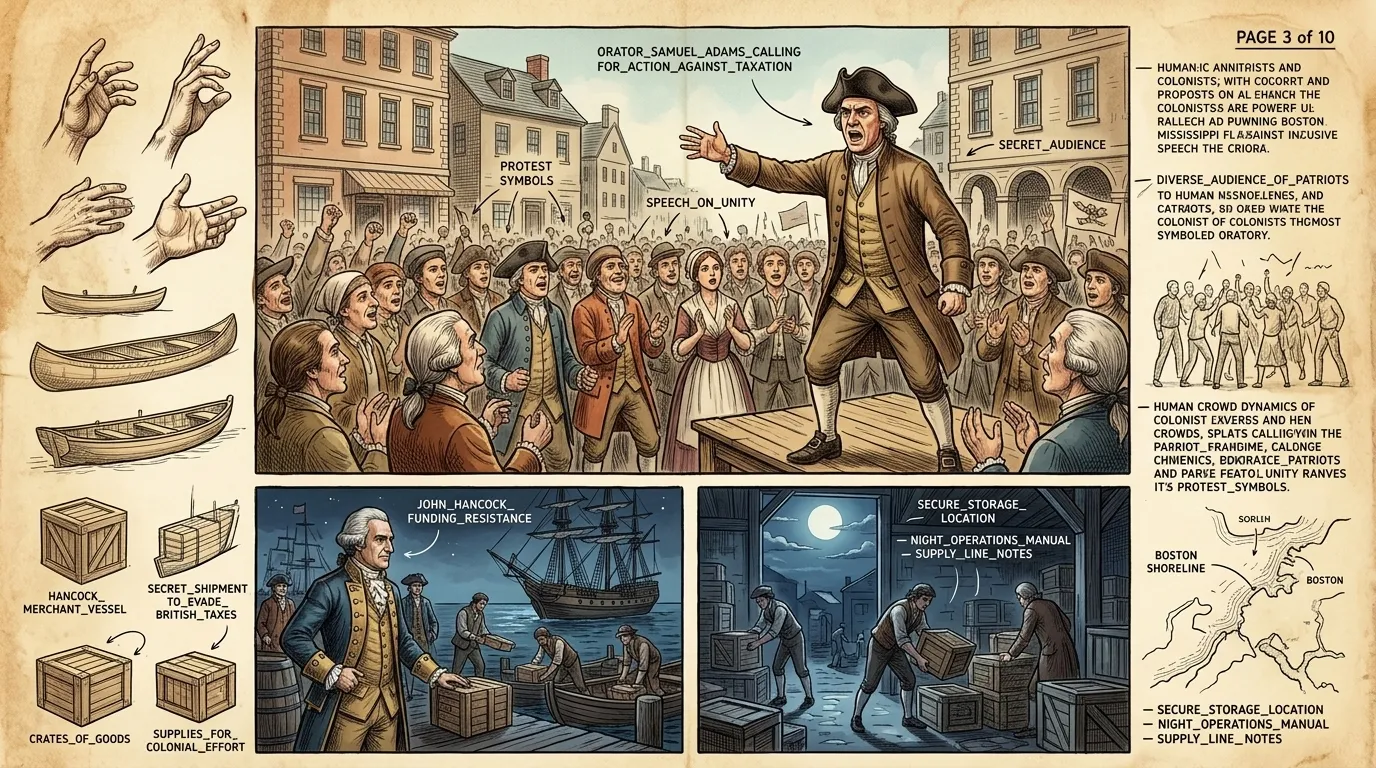
In Boston, Samuel Adams, a fiery orator and leader of the Sons of Liberty, stirred up public resentment against British policies.
In Boston, Samuel Adams, a fiery orator and leader of the Sons of Liberty, stirred up public resentment against British policies. "We cannot be free until we are free from British tyranny!" he shouted, rallying the crowd. John Hancock, a wealthy merchant, secretly funded resistance efforts, using his ships to smuggle goods and evade British taxes.

In Boston, Samuel Adams, a fiery orator and leader of the Sons of Liberty, stirred up public resentment against British policies. "We cannot be free until we are free from British tyranny!" he shouted, rallying the crowd. John Hancock, a wealthy merchant, secretly funded resistance efforts, using his ships to smuggle goods and evade British taxes.

Page 4
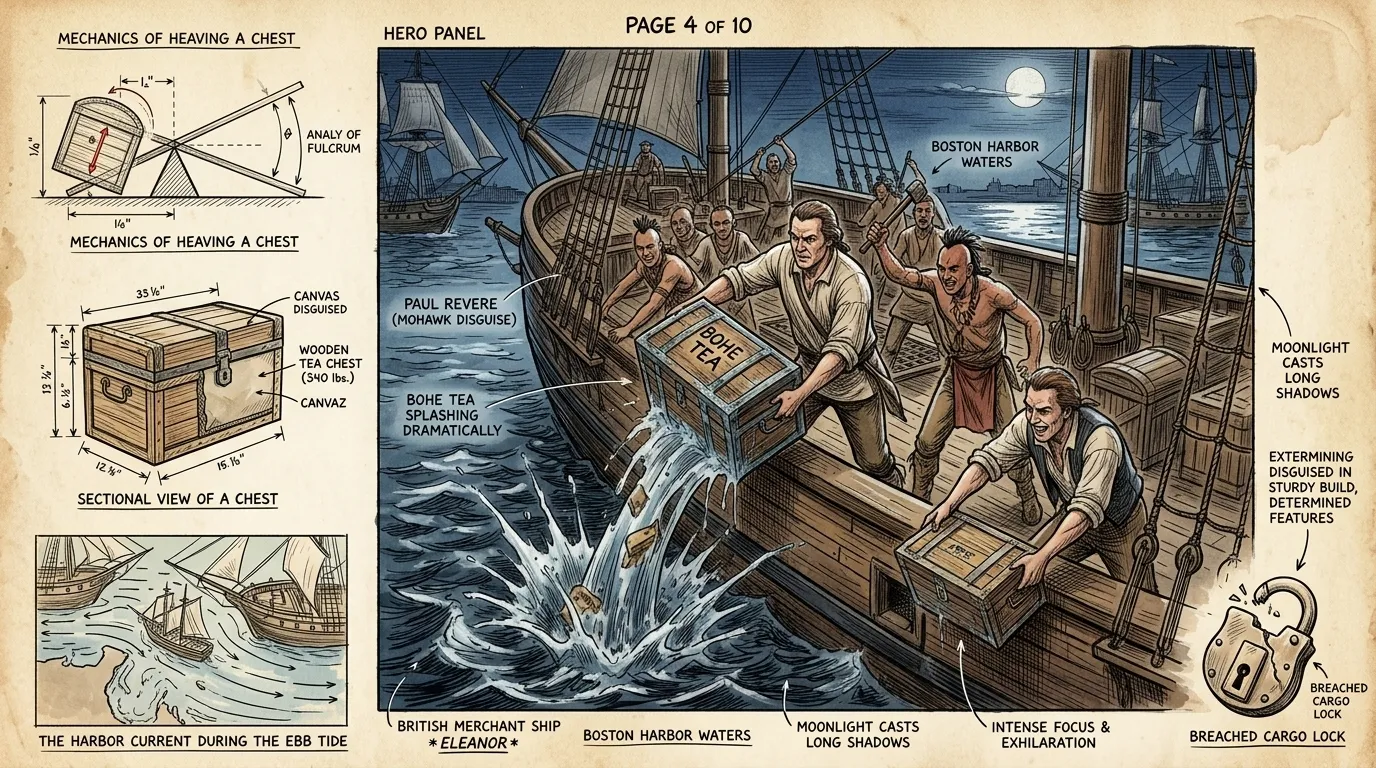
The Boston Tea Party in 1773 became a flashpoint. Disguised as Mohawk Indians, members of the Sons of Liberty, led by figures like Paul Revere, boarded British…
The Boston Tea Party in 1773 became a flashpoint. Disguised as Mohawk Indians, members of the Sons of Liberty, led by figures like Paul Revere, boarded British ships and dumped chests of tea into Boston Harbor. "No taxation without representation!" they yelled, their actions echoing across the colonies. News of the daring act quickly spread, galvanizing support for the Patriot cause.

The Boston Tea Party in 1773 became a flashpoint. Disguised as Mohawk Indians, members of the Sons of Liberty, led by figures like Paul Revere, boarded British ships and dumped chests of tea into Boston Harbor. "No taxation without representation!" they yelled, their actions echoing across the colonies. News of the daring act quickly spread, galvanizing support for the Patriot cause.

Page 5
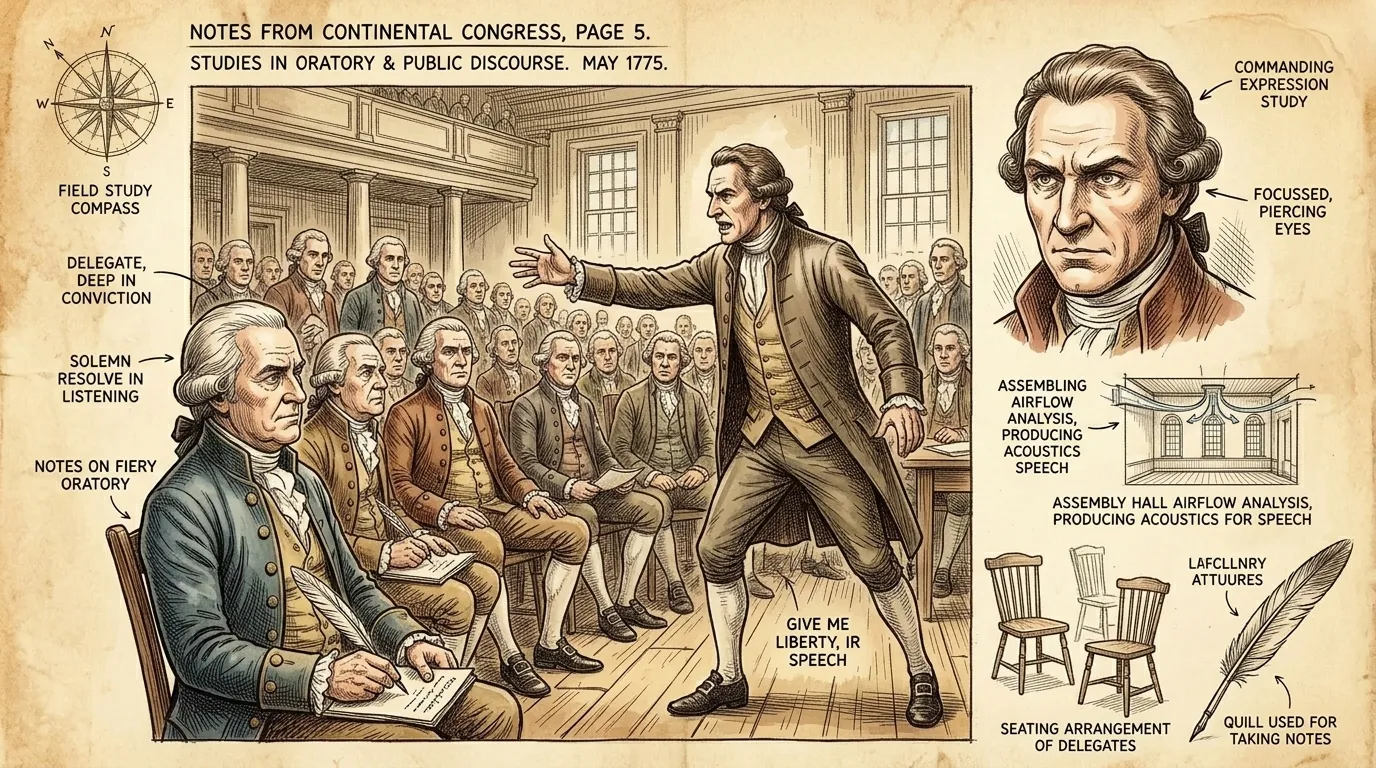
The First Continental Congress convened in Philadelphia in 1774. Representatives from twelve of the thirteen colonies, including Patrick Henry of Virginia, met…
The First Continental Congress convened in Philadelphia in 1774. Representatives from twelve of the thirteen colonies, including Patrick Henry of Virginia, met to discuss their grievances with the British Crown. "I know not what course others may take, but as for me, give me liberty, or give me death!" Henry proclaimed, galvanizing the delegates. They drafted a petition to King George III, demanding the restoration of colonial rights.

The First Continental Congress convened in Philadelphia in 1774. Representatives from twelve of the thirteen colonies, including Patrick Henry of Virginia, met to discuss their grievances with the British Crown. "I know not what course others may take, but as for me, give me liberty, or give me death!" Henry proclaimed, galvanizing the delegates. They drafted a petition to King George III, demanding the restoration of colonial rights.

Page 6
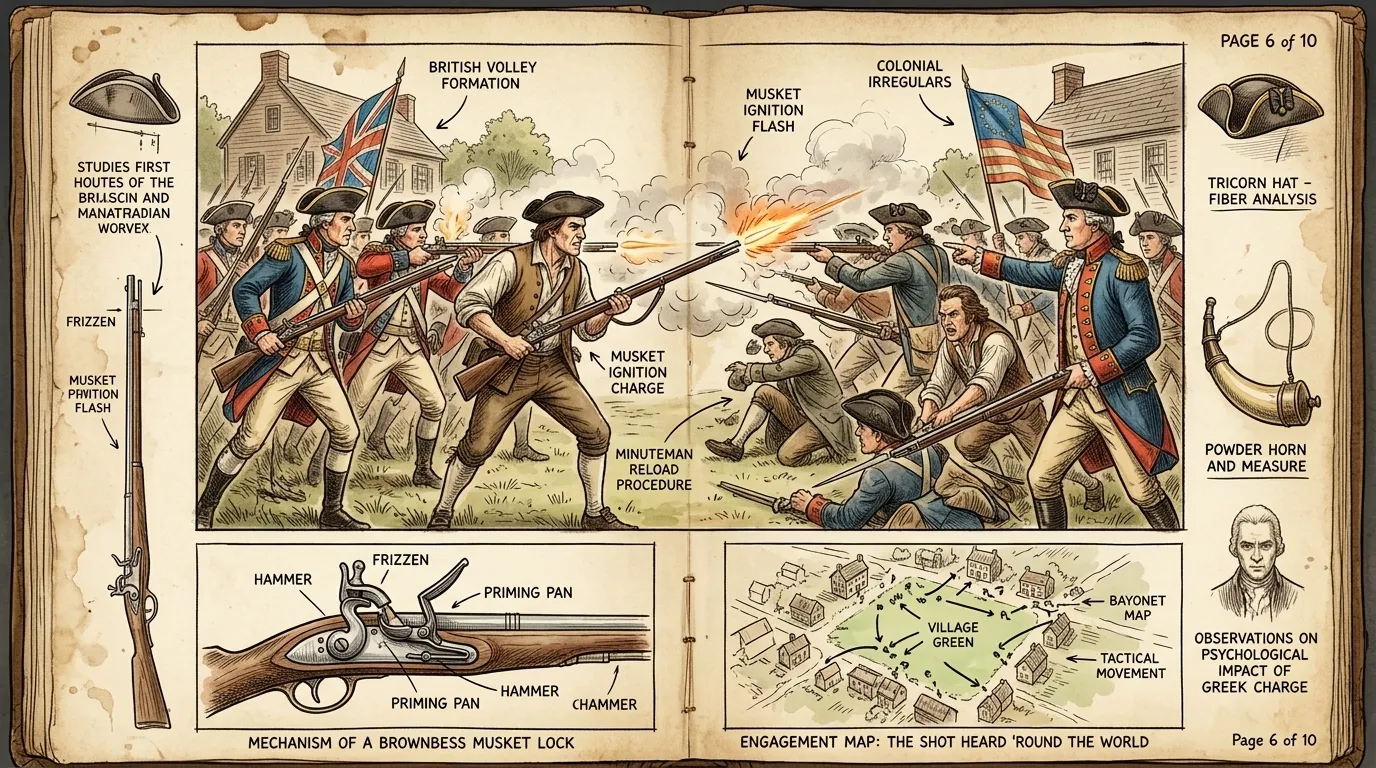
The Battles of Lexington and Concord in April 1775 marked the beginning of armed conflict. British soldiers, seeking to seize colonial arms and ammunition…
The Battles of Lexington and Concord in April 1775 marked the beginning of armed conflict. British soldiers, seeking to seize colonial arms and ammunition, clashed with local militia known as Minutemen. News of the bloodshed spread rapidly. A shot rang out, the 'shot heard 'round the world,' as Ralph Waldo Emerson would later write.

The Battles of Lexington and Concord in April 1775 marked the beginning of armed conflict. British soldiers, seeking to seize colonial arms and ammunition, clashed with local militia known as Minutemen. News of the bloodshed spread rapidly. A shot rang out, the 'shot heard 'round the world,' as Ralph Waldo Emerson would later write.

Page 7
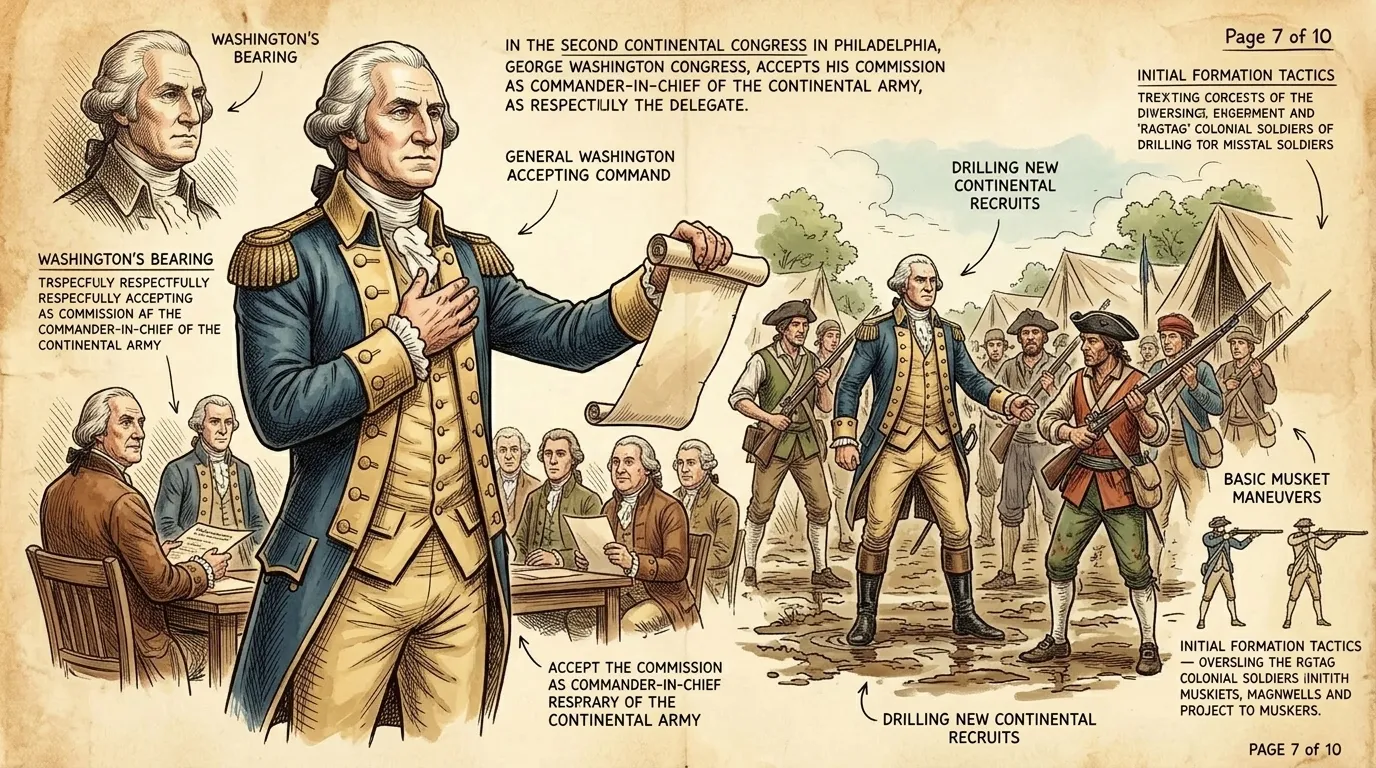
The Second Continental Congress appointed George Washington as Commander-in-Chief of the Continental Army. Accepting the role, Washington told the Congress, 'I…
The Second Continental Congress appointed George Washington as Commander-in-Chief of the Continental Army. Accepting the role, Washington told the Congress, 'I do not think myself equal to the command I am honored with.' He inherited a ragtag army, poorly equipped and lacking in training. Nevertheless, he set about the task of forging them into a disciplined fighting force.

The Second Continental Congress appointed George Washington as Commander-in-Chief of the Continental Army. Accepting the role, Washington told the Congress, 'I do not think myself equal to the command I am honored with.' He inherited a ragtag army, poorly equipped and lacking in training. Nevertheless, he set about the task of forging them into a disciplined fighting force.

Page 8
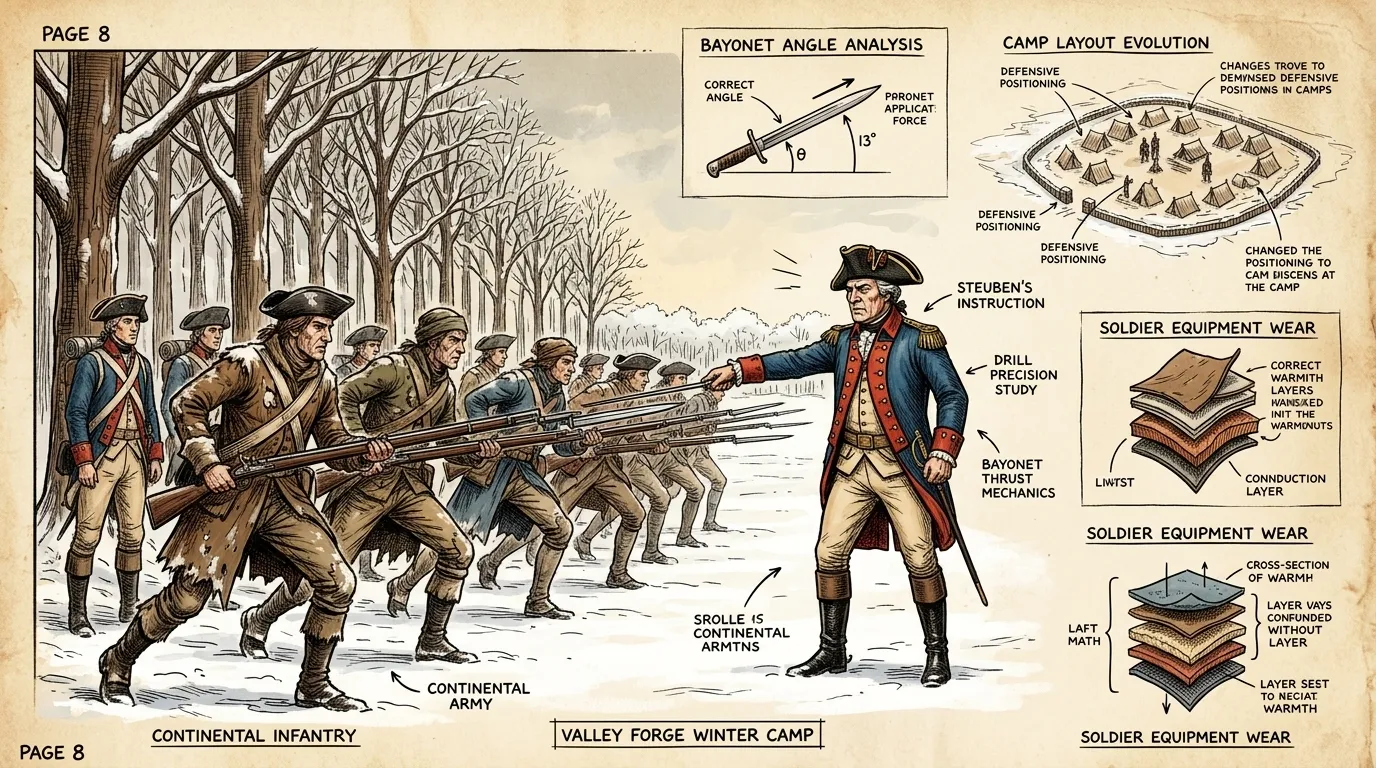
The American Revolution (1775–1783, North America) — page 8 illustration — Wonder History

At Valley Forge, during the winter of 1777-1778, the Continental Army endured immense hardship. Lack of supplies, disease, and desertion plagued the troops. Baron von Steuben, a Prussian military officer, arrived to drill and train the soldiers. He instilled discipline and transformed them into a more effective fighting unit. It was there that soldiers learned the importance of the bayonet as a crucial weapon.

Page 9
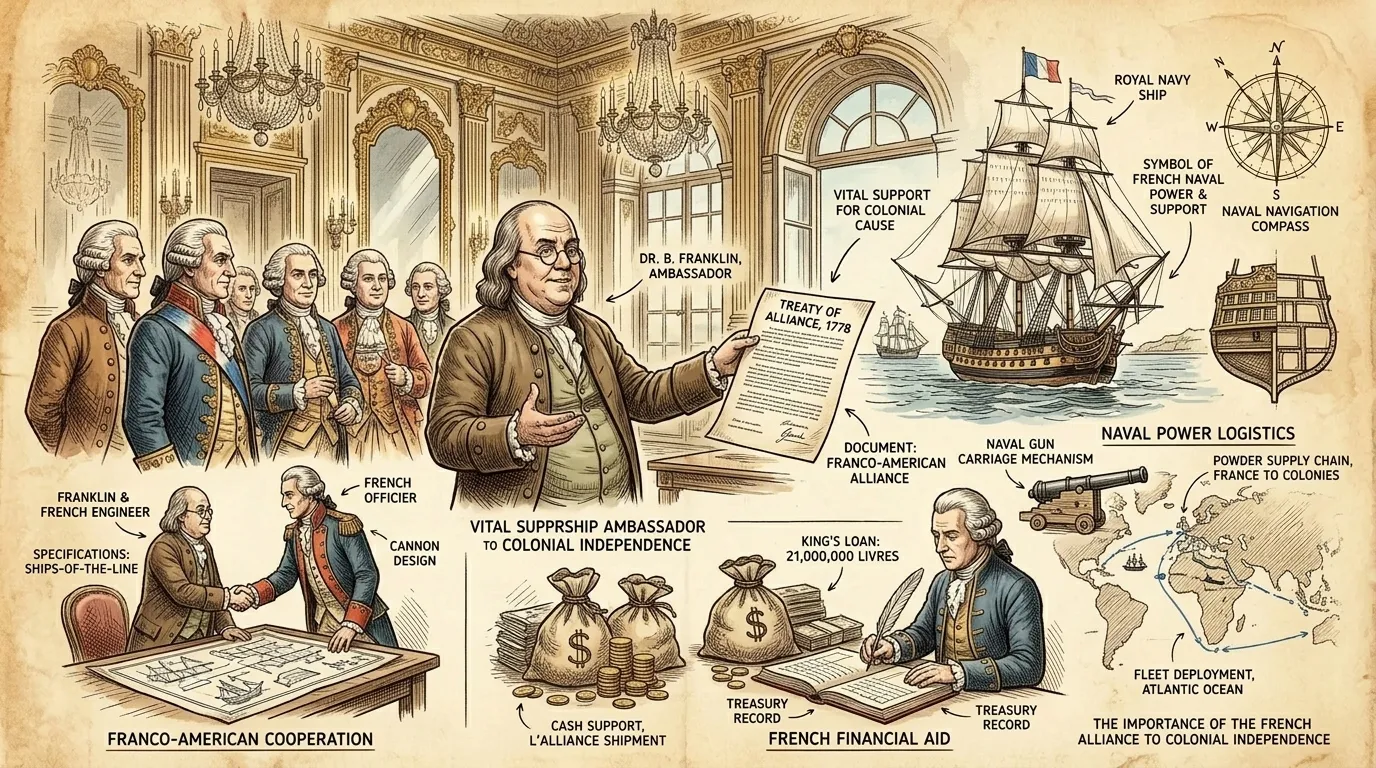
The French alliance in 1778 proved crucial. Benjamin Franklin secured French support, providing the Americans with vital supplies, troops, and naval power.
The French alliance in 1778 proved crucial. Benjamin Franklin secured French support, providing the Americans with vital supplies, troops, and naval power. This support shifted the balance of power and turned the tide of the war in favor of the Americans. 'There never was a good war or a bad peace,' Franklin declared.

The French alliance in 1778 proved crucial. Benjamin Franklin secured French support, providing the Americans with vital supplies, troops, and naval power. This support shifted the balance of power and turned the tide of the war in favor of the Americans. 'There never was a good war or a bad peace,' Franklin declared.

Page 10
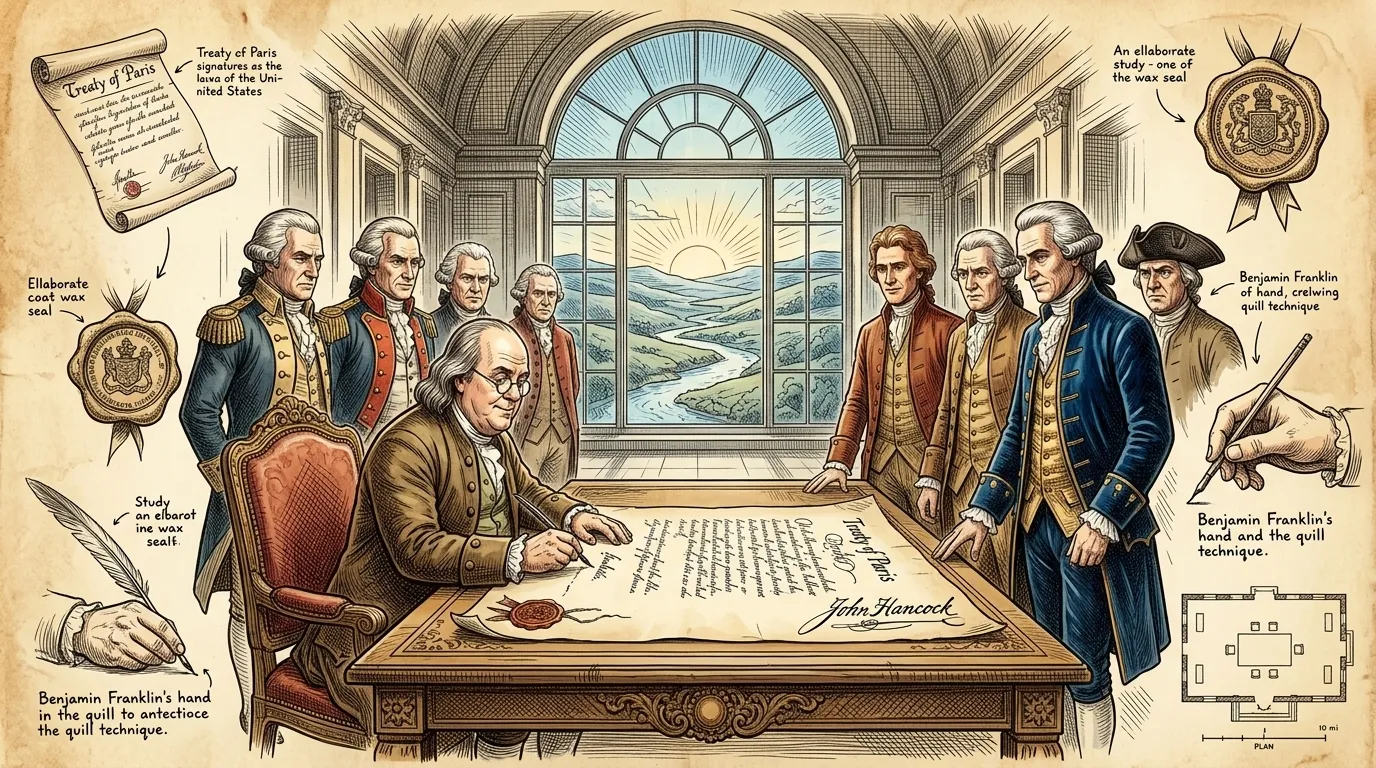
The Treaty of Paris, signed in 1783, formally recognized the independence of the United States of America. The newly formed nation embarked on a path of…
The Treaty of Paris, signed in 1783, formally recognized the independence of the United States of America. The newly formed nation embarked on a path of self-governance, establishing a republic based on the principles of liberty and equality. The American Revolution inspired revolutionary movements around the world, forever changing the course of history. But even now, the echoes of that revolution can be seen throughout our society.

The Treaty of Paris, signed in 1783, formally recognized the independence of the United States of America. The newly formed nation embarked on a path of self-governance, establishing a republic based on the principles of liberty and equality. The American Revolution inspired revolutionary movements around the world, forever changing the course of history. But even now, the echoes of that revolution can be seen throughout our society.

About this story

  • Historical figures: George Washington, Charles Cornwallis, Benjamin Franklin
  • Location: North America
  • Period: Early Modern
  • Audience: general readers

Questions and answers

Questions and answers about The American Revolution (1775–1783, North America)

Read Wonder History on your phone

Wonder History is available on Android. Get Wonder History on Google Play.

More Wonder History stories

All Wonder History stories · Open the library