The Battle of Cannae (216 BC, Italy)
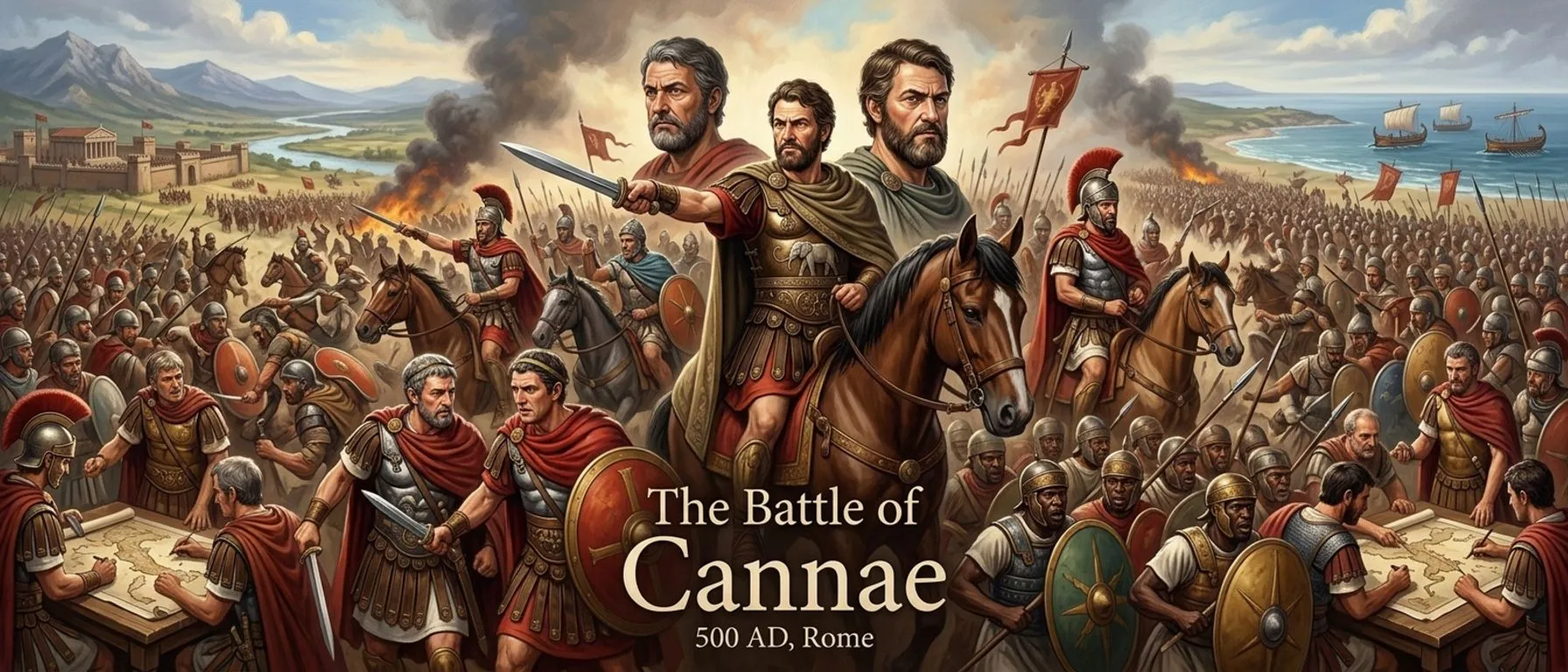
The Battle of Cannae (216 BC, Italy) — an illustrated history story, featuring Hannibal Barca, Lucius Aemilius Paullus, Gaius Terentius Varro, set in Italy. 10 illustrated pages, free to read on Wonder History.
Page 1

The carnival lights flickered, casting long shadows as panicked shouts echoed through the crowded stalls. Maharbal's cavalry charged, their horses trampling over scattered game booths and fleeing civilians. Lucius Aemilius Paullus, Roman Consul, stood defiant amidst the chaos, his sword raised high, a desperate rallying cry escaping his lips. But how did this joyous festival transform into a scene of carnage?
Page 2

It began long before the meteors rained down, back when Hamilcar Barca, Carthaginian general and father to Hannibal, instilled a burning hatred for Rome in his young son. "Swear, Hannibal," Hamilcar commanded, his voice echoing in their tent, "swear eternal hostility to Rome!" The young Hannibal, barely a man, looked up, his eyes filled with a dark resolve. The oath was taken, and the seeds of war were sown.
Page 3

"Fabius, you counsel caution when boldness is required!" Gaius Terentius Varro, the other Roman consul, roared at Quintus Fabius Maximus Verrucosus during a heated debate in the Roman Senate. Fabius, an elderly senator known for his delaying tactics, calmly replied, "It is better to win by strategy than by rashness, Varro. Rome's strength lies in endurance." Varro scoffed, itching for a direct confrontation.
Page 4

Hannibal, leading his troops through the Alps, faced treacherous conditions. "We will find a way, even where there is no path," he declared to his weary soldiers, their faces gaunt from starvation and cold. He pointed towards the distant Italian plains, a symbol of their ultimate goal. The mountains echoed with the sounds of marching feet and the occasional panicked cry of a fallen soldier.
Page 5

Publius Cornelius Scipio, Roman Consul, attempted to halt Hannibal's advance in Gaul. "We must stop him here, before he reaches Italy," Scipio commanded his legions, his voice ringing with authority. His forces clashed with Hannibal's, a brutal dance of steel and strategy upon the Gallic fields. The fate of Rome hung in the balance.
Page 6

The aggressive Tiberius Sempronius Longus, the Roman consul, eager for glory, ignored warnings and engaged Hannibal at the Trebia River. "A swift victory will break Hannibal's spirit!" he proclaimed, leading his legions into a carefully laid trap. The Carthaginian ambush decimated Longus's forces, the river turning crimson with Roman blood. The defeat at Trebia shook Rome to its core.
Page 7

Back at Cannae, Hannibal exploited Varro's impulsiveness, luring the Roman legions into a trap. As the Roman army pressed forward, their flanks were enveloped by Carthaginian cavalry. "Now!" Hannibal shouted, signaling the final stage of his strategy. The Roman legions were surrounded, a human sea crashing against the Carthaginian anvil.
Page 8

Amidst the carnage at Cannae, Lucius Aemilius Paullus, despite his valiant efforts, fell in battle, a grim end to a noble Roman. Maharbal approached Hannibal after the battle, exclaiming, "Give me the command and in five days I will be in Rome!" Hannibal, however, considered the risks of such a move, and replied, "I know how to conquer, but I do not know how to use my conquest."
Page 9

The Roman Senate, reeling from the disaster, looked to Fabius for guidance. Fabius, undeterred, declared, "'I am not so concerned with what you think of me as I am with what I think of myself,' as Cicero once said." Fabius continued that Rome needed to rebuild its strength slowly and methodically avoiding another catastrophic engagement. His cautious approach, though unpopular, ultimately proved crucial in Rome's survival.
Page 10

Though Cannae was a devastating defeat, it did not break Rome. The Roman Republic, with its resilience and strategic depth, ultimately prevailed against Hannibal's brilliance. The legend of Hannibal faded, but his innovative tactics are still studied today. He remains a testament to the fact that even the most brilliant victories can be undone by strategic endurance and unwavering resolve.
About this story
- Historical figures: Hannibal Barca, Lucius Aemilius Paullus, Gaius Terentius Varro
- Location: Italy
- Period: Ancient (Before 500 AD)
- Audience: general readers
Questions and answers
Questions and answers about The Battle of Cannae (216 BC, Italy)
Read Wonder History on your phone
Wonder History is available on Android. Get Wonder History on Google Play.