The Collapse of the Soviet Union (1991, Russia)
The Collapse of the Soviet Union (1991, Russia) — an illustrated history story, featuring Mikhail Gorbachev, Boris Yeltsin, Leonid Brezhnev, set in Russia. 10 illustrated pages, free to read on Wonder History.

Page 1
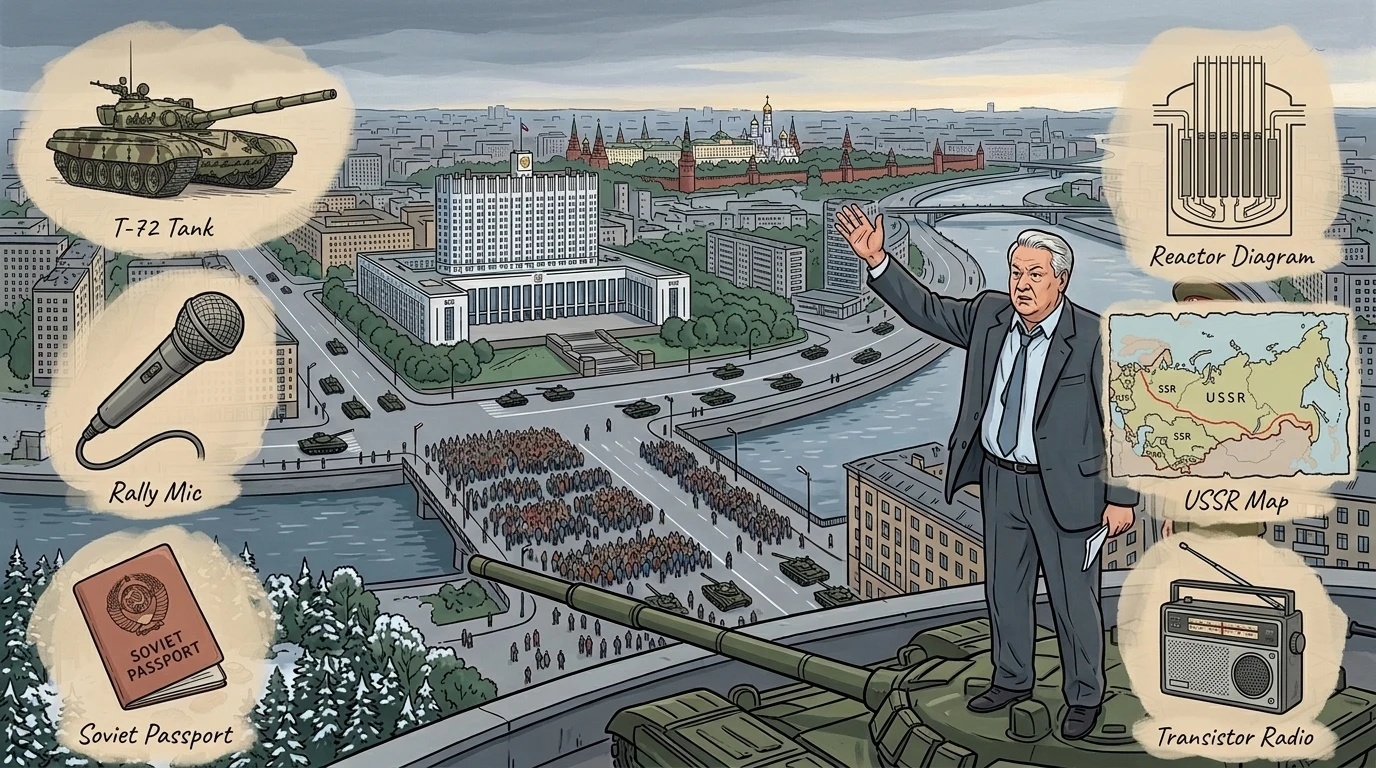
August 19, 1991. Mikhail Gorbachev, the President of the Soviet Union, was held under house arrest in Crimea. Tanks rolled through the streets of Moscow, a chilling echo of times past. But Boris Yeltsin, the President of the Russian Soviet Federative Socialist Republic, stood defiant on a tank outside the White House in Moscow, rallying the people: 'We appeal to you to support Russia!'
Page 2
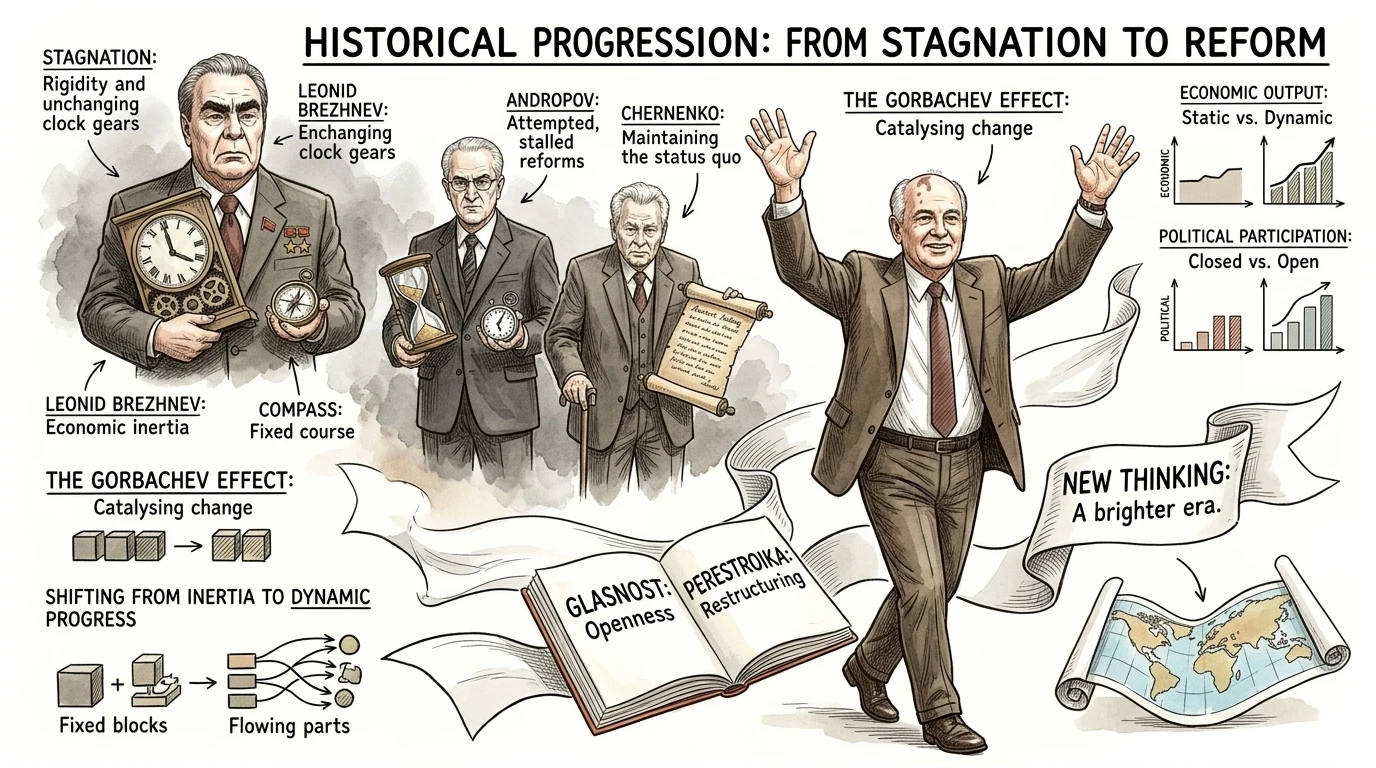
The roots of this turmoil stretched back to Leonid Brezhnev's era, marked by economic stagnation and political repression. Yuri Andropov and Konstantin Chernenko briefly followed, continuing the old ways. Then, in 1985, Mikhail Gorbachev rose to power, promising reform through Perestroika (economic restructuring) and Glasnost (openness). Could Gorbachev's vision truly transform the rigid Soviet system, or would it unravel the very fabric of the Union?
Page 3
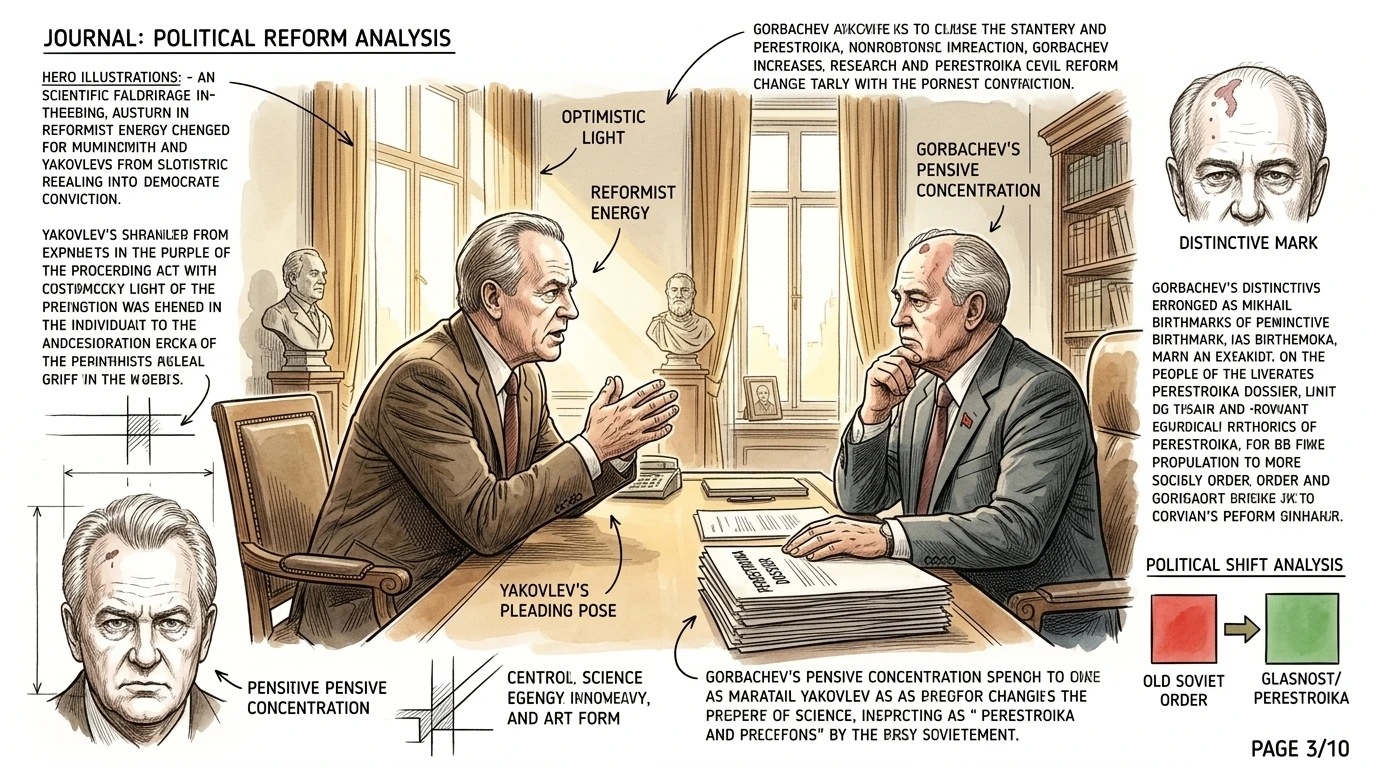
Alexander Yakovlev, Gorbachev's close advisor, leaned in, 'Mikhail Sergeyevich, we must be bold!'
Page 4
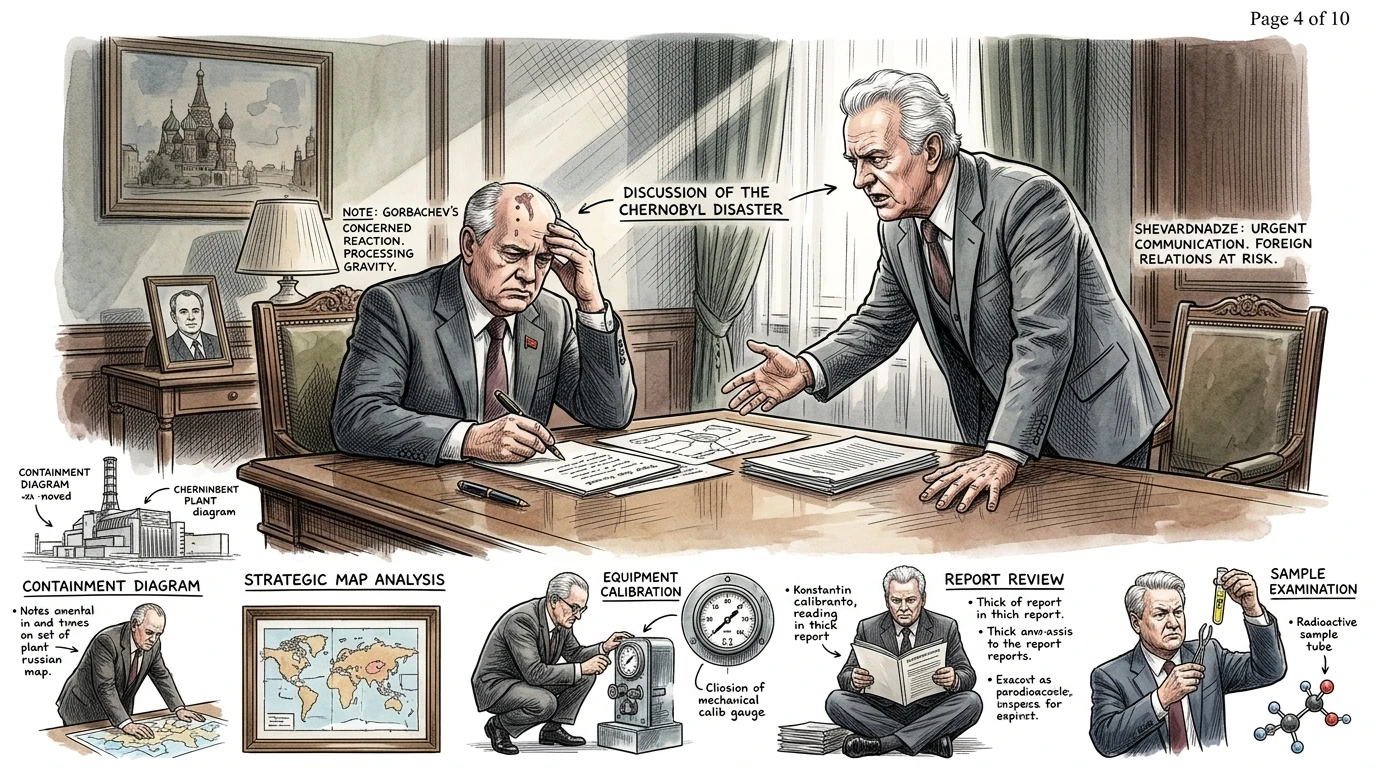
The Chernobyl disaster in April 1986 exposed the Soviet system's flaws to the world. 'The secrecy and incompetence... it's unforgivable!' Eduard Shevardnadze, the Foreign Minister, exclaimed during a meeting with Gorbachev. 'This tragedy has shaken our credibility on the world stage, Mikhail Sergeyevich! What do we do now?' Gorbachev, his face grim, weighed the gravity of the situation.
Page 5
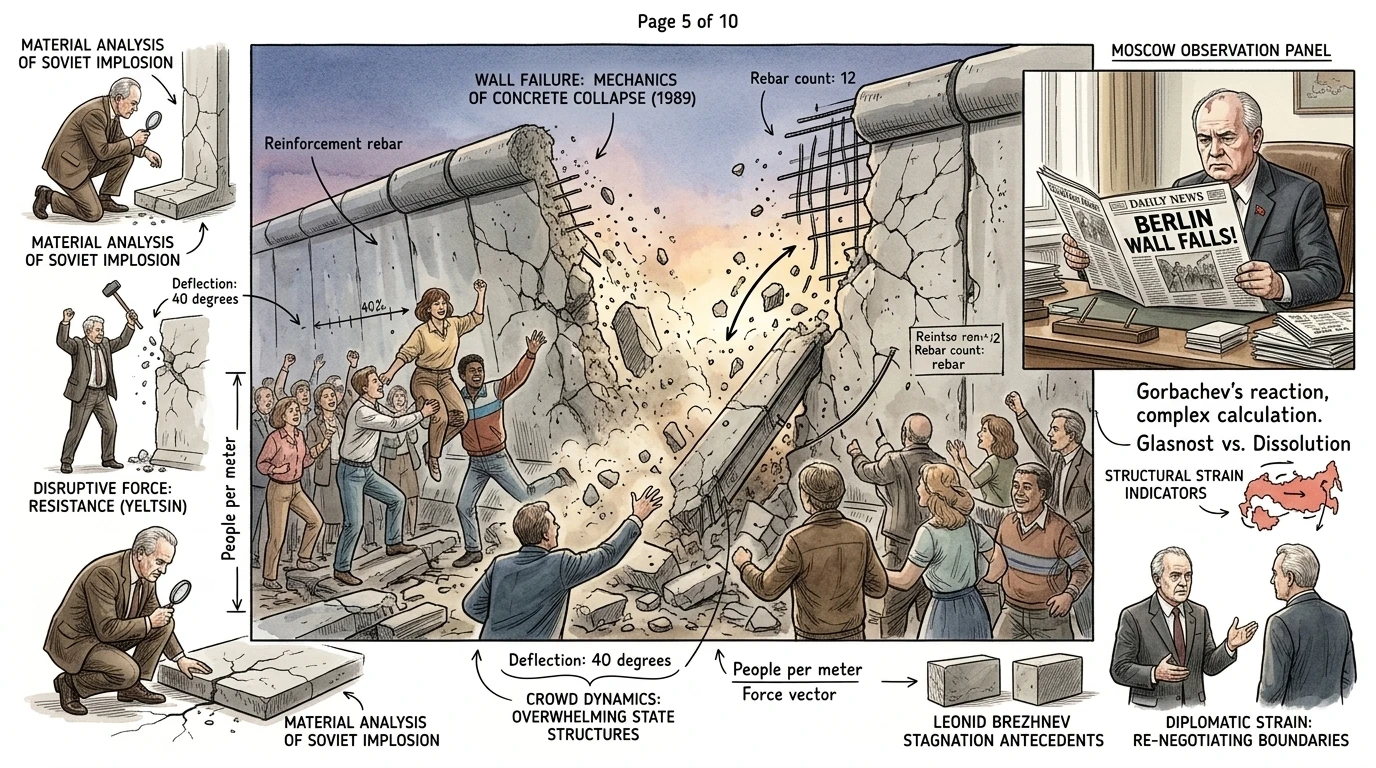
The spirit of reform ignited across the Eastern Bloc. In 1989, the Berlin Wall fell. 'Mr. Gorbachev, tear down this wall!' reverberated from Ronald Reagan's challenge. News reached Moscow quickly. Gorbachev knew the satellite states were slipping from the USSR's grasp.
Page 6
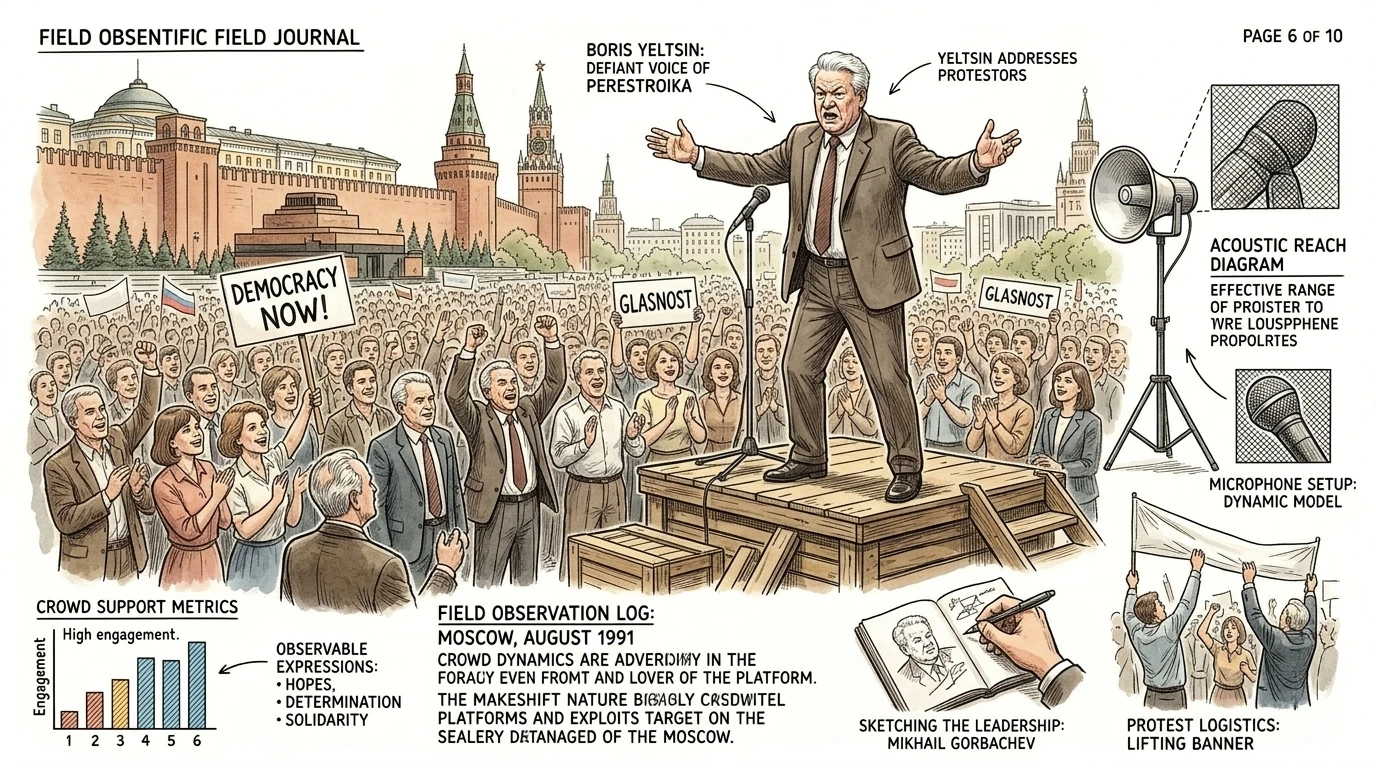
Back in Moscow, Boris Yeltsin challenged Gorbachev's authority, gaining popular support. The August Coup, orchestrated by hardliners, aimed to remove Gorbachev and restore the old order. But Yeltsin rallied the people, denouncing the coup as illegal. 'The plotters will not succeed!' Yeltsin declared.
Page 7
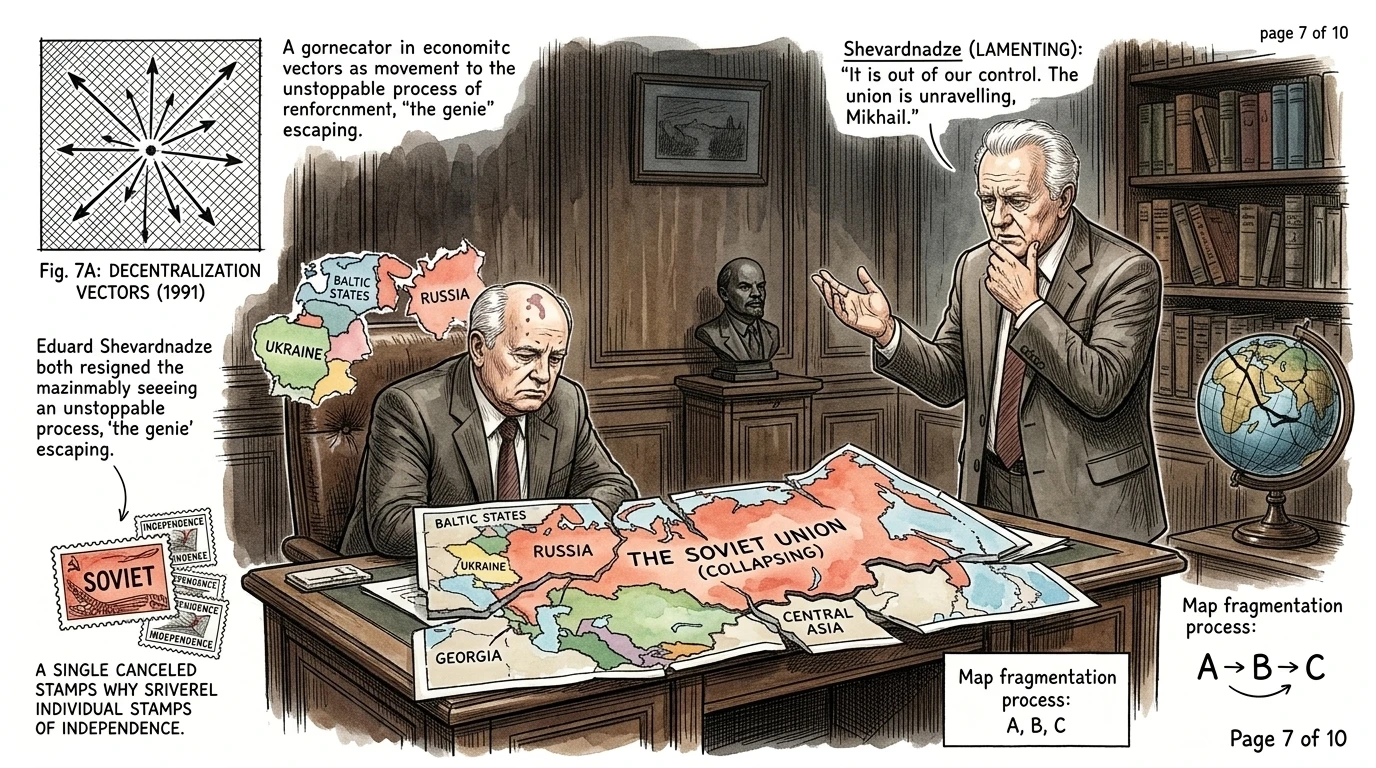
Gorbachev returned to Moscow, but his power was waning. The republics declared their independence one by one. 'The Union is crumbling,' Shevardnadze lamented. 'The genie is out of the bottle, Mikhail Sergeyevich. We cannot put it back.' Gorbachev looked defeated, the weight of the collapsing empire heavy on his shoulders.
Page 8
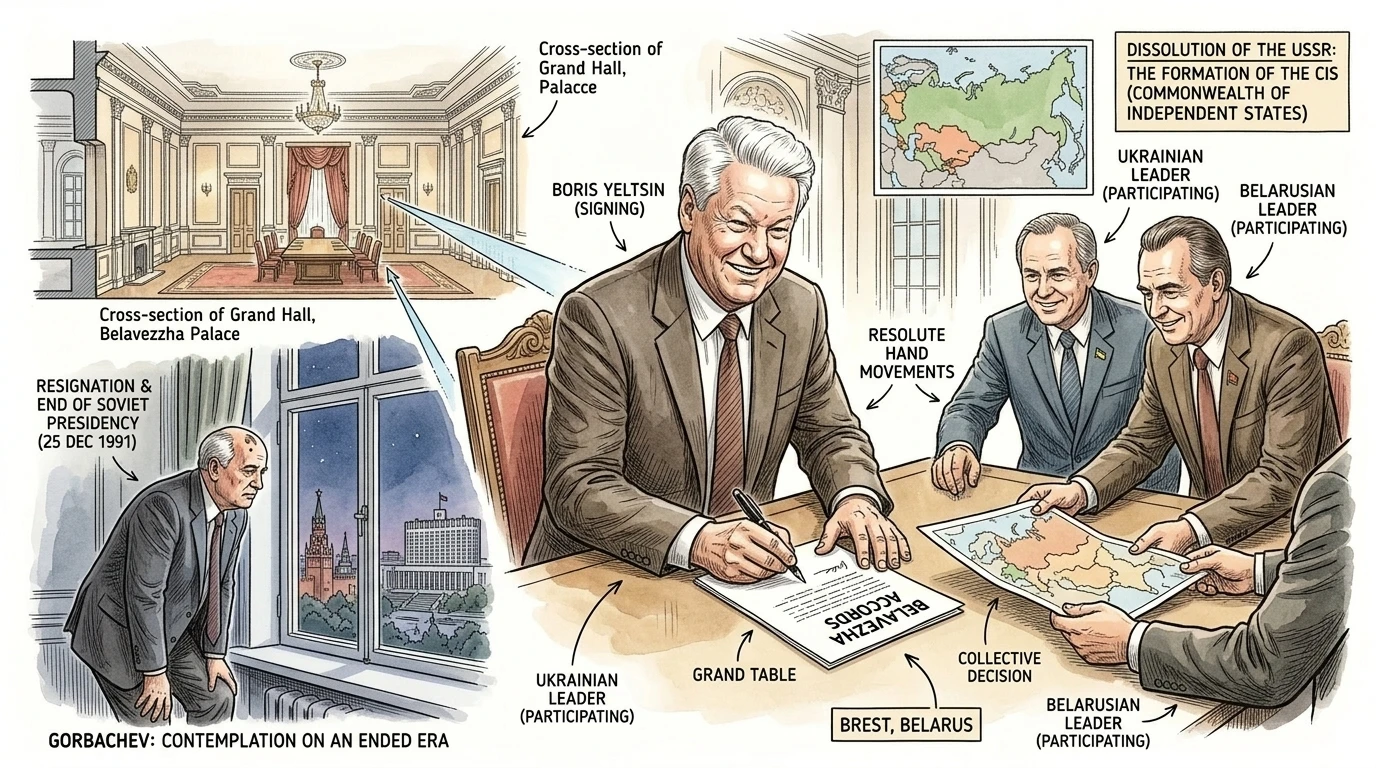
On December 8, 1991, Yeltsin and the leaders of Ukraine and Belarus met in Brest, Belarus. They signed the Belavezha Accords, declaring the Soviet Union dissolved and establishing the Commonwealth of Independent States (CIS). 'This is a new beginning!' Yeltsin proclaimed. But for Gorbachev, it was the end of an era.
Page 9
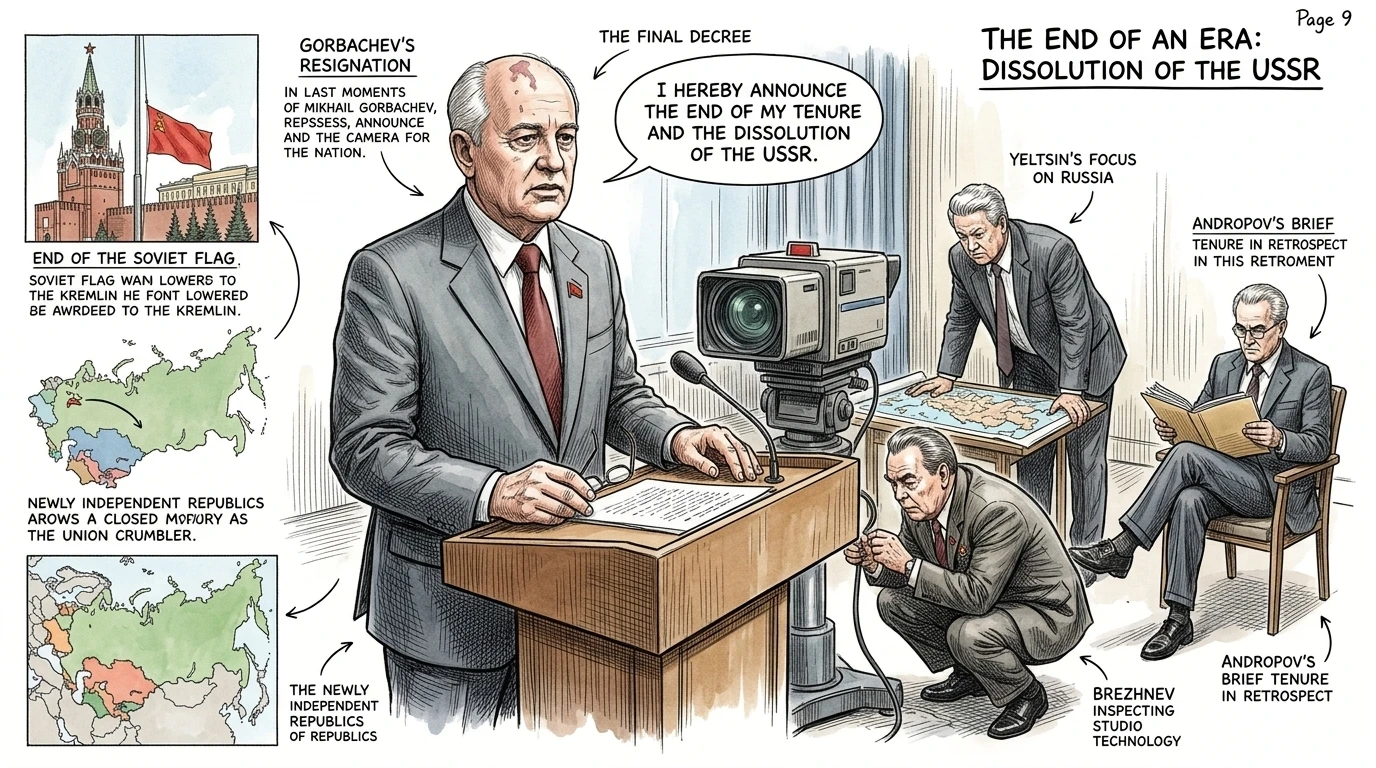
December 25, 1991. Mikhail Gorbachev addressed the nation for the last time as President of the Soviet Union. 'I am ceasing my activity as President of the Union of Soviet Socialist Republics,' he announced. 'The Soviet Union is no more.' He resigned, paving the way for a new chapter in Russian history.
Page 10
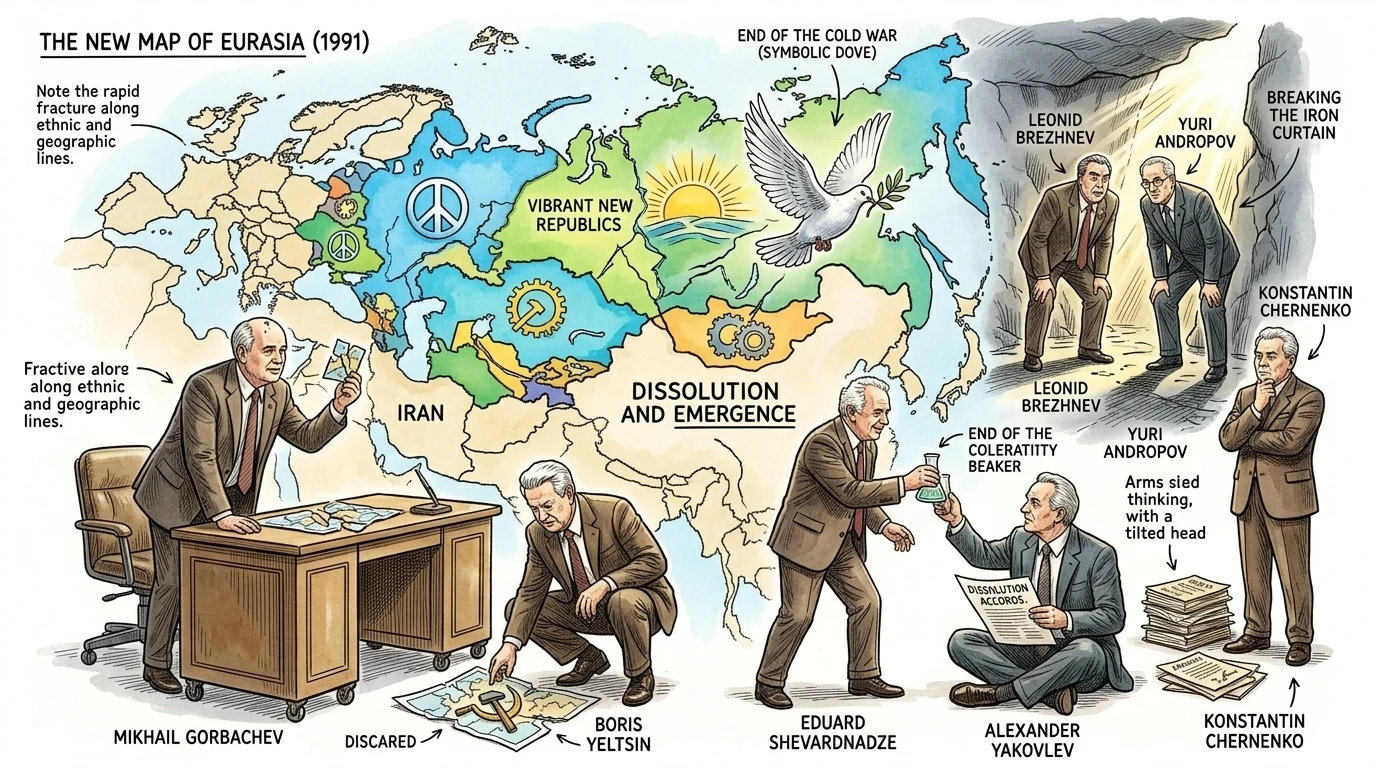
The collapse of the Soviet Union reshaped the world order. New nations emerged, and the Cold War ended. The legacy of Gorbachev's reforms remains complex and debated. But the world remembers December 25, 1991, as the day an empire vanished, ushering in an era of unprecedented change.
About this story
- Historical figures: Mikhail Gorbachev, Boris Yeltsin, Leonid Brezhnev
- Location: Russia
- Period: Contemporary
- Audience: general readers
Questions and answers
Questions and answers about The Collapse of the Soviet Union (1991, Russia)
Read Wonder History on your phone
Wonder History is available on Android. Get Wonder History on Google Play.
More Wonder History stories
- The Congress of Berlin (1878, Berlin)
- The Congress of Vienna (1814, Europe)
- The Congress of Vienna — Austria (1814, Austria)
- The Conquests of Alexander the Great — Europe, Asia, Africa (334 BC, Europe)
- The Coronation of Charlemagne (800 AD) - Italy (800 AD, Italy)
- The Crimean War — Crimea (Ukraine) (1854, Crimea)