The Conquests of Alexander the Great — Europe, Asia, Africa (334 BC, Europe)

The Conquests of Alexander the Great — Europe, Asia, Africa (334 BC, Europe) — an illustrated history story, featuring Alexander the Great, Philip II of Macedon, Darius III, set in Europe. 10 illustrated pages, free to read on Wonder History.
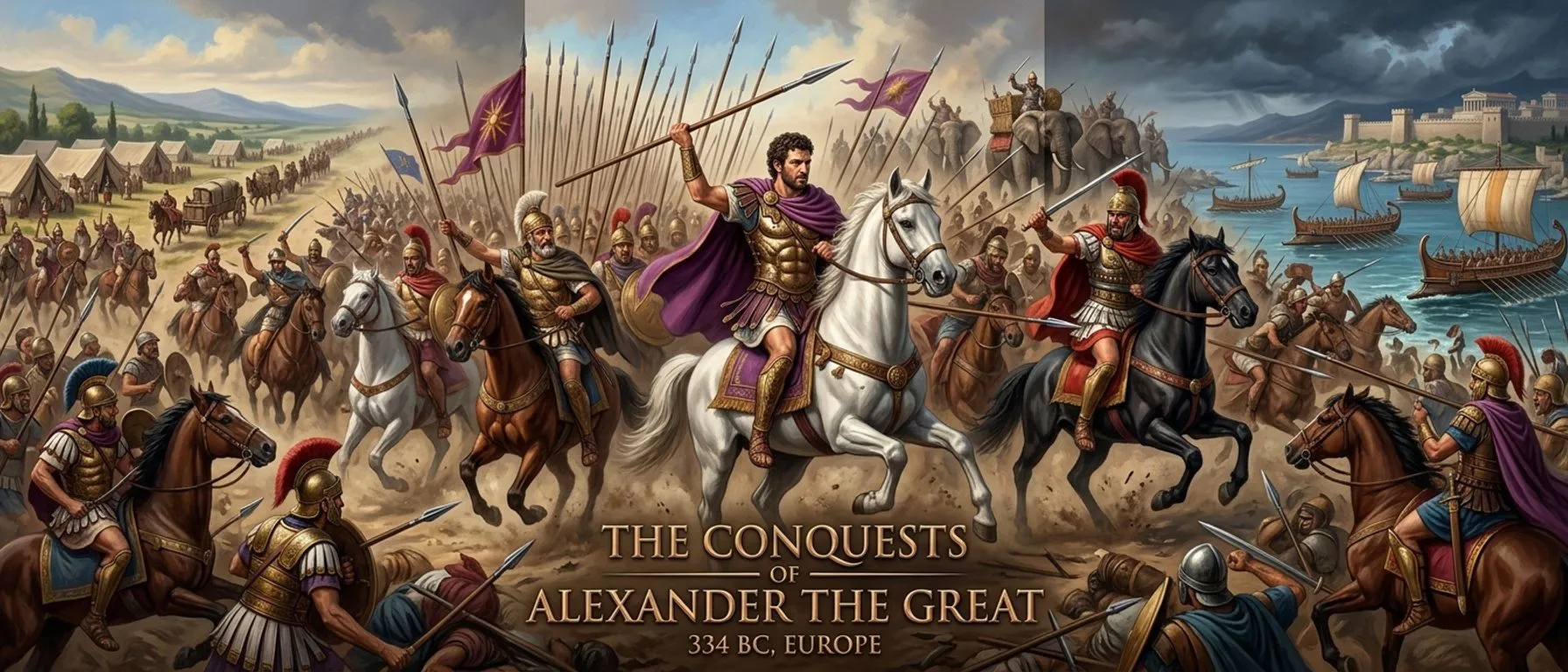
The Conquests of Alexander the Great — Europe, Asia, Africa (334 BC, Europe) — book cover — Wonder History
The Conquests of Alexander the Great — Europe, Asia, Africa (334 BC, Europe) — an illustrated history story, featuring Alexander the Great, Philip II of Macedon, Darius III, set in Europe. 10 illustrated pages, free to read on Wonder History.

Page 1
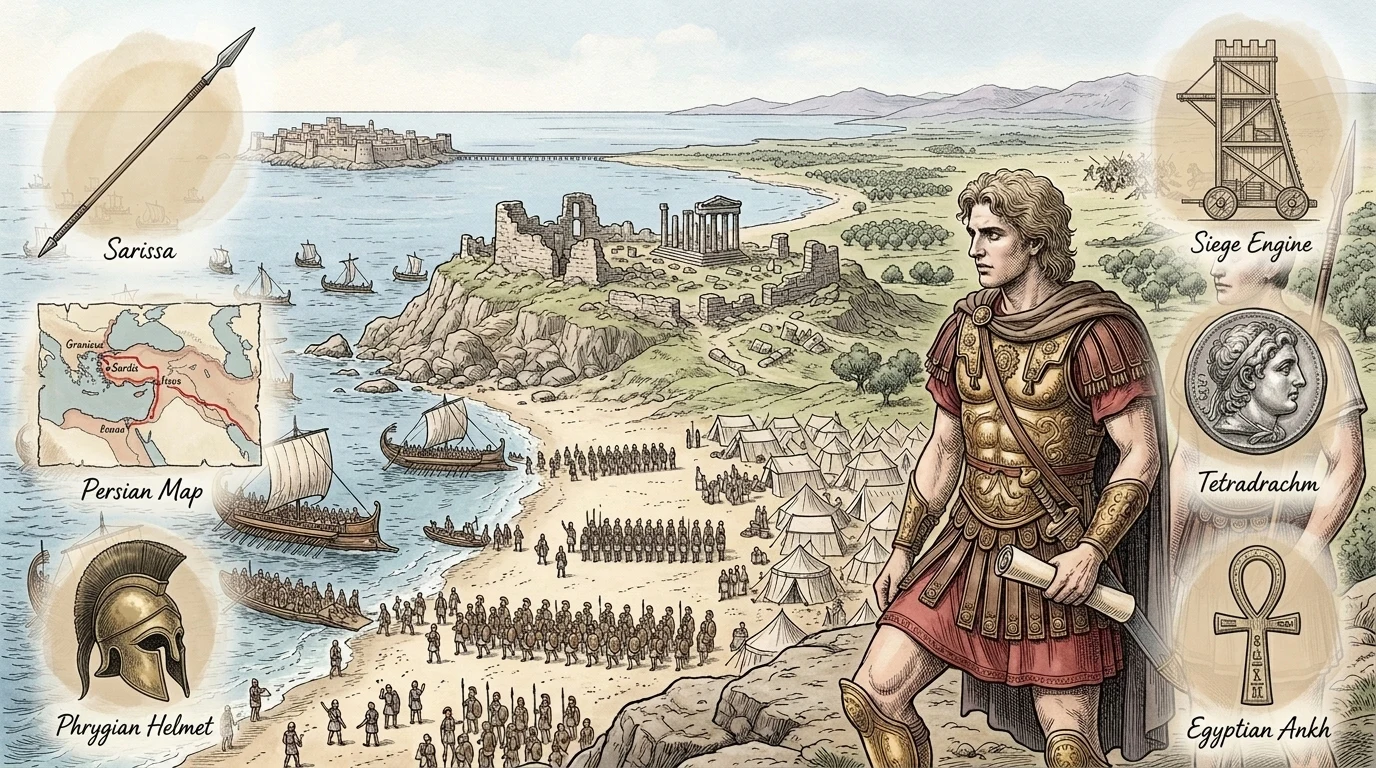
On August 334 BC, near the river Granicus, Alexander III of Macedon, known to history as Alexander the Great, clashed with the Persian forces led by…
On August 334 BC, near the river Granicus, Alexander III of Macedon, known to history as Alexander the Great, clashed with the Persian forces led by Spithridates and Memnon of Rhodes. This battle, involving approximately 40,000 Macedonian soldiers against an equal number of Persians, marked the beginning of Alexander's ambitious campaign to conquer the Achaemenid Empire. The stakes were the control of Asia Minor, and the outcome would echo through centuries.

On August 334 BC, near the river Granicus, Alexander III of Macedon, known to history as Alexander the Great, clashed with the Persian forces led by Spithridates and Memnon of Rhodes. This battle, involving approximately 40,000 Macedonian soldiers against an equal number of Persians, marked the beginning of Alexander's ambitious campaign to conquer the Achaemenid Empire. The stakes were the control of Asia Minor, and the outcome would echo through centuries. But where did this all begin for Alexander, who aimed to rule the known world?

Page 2
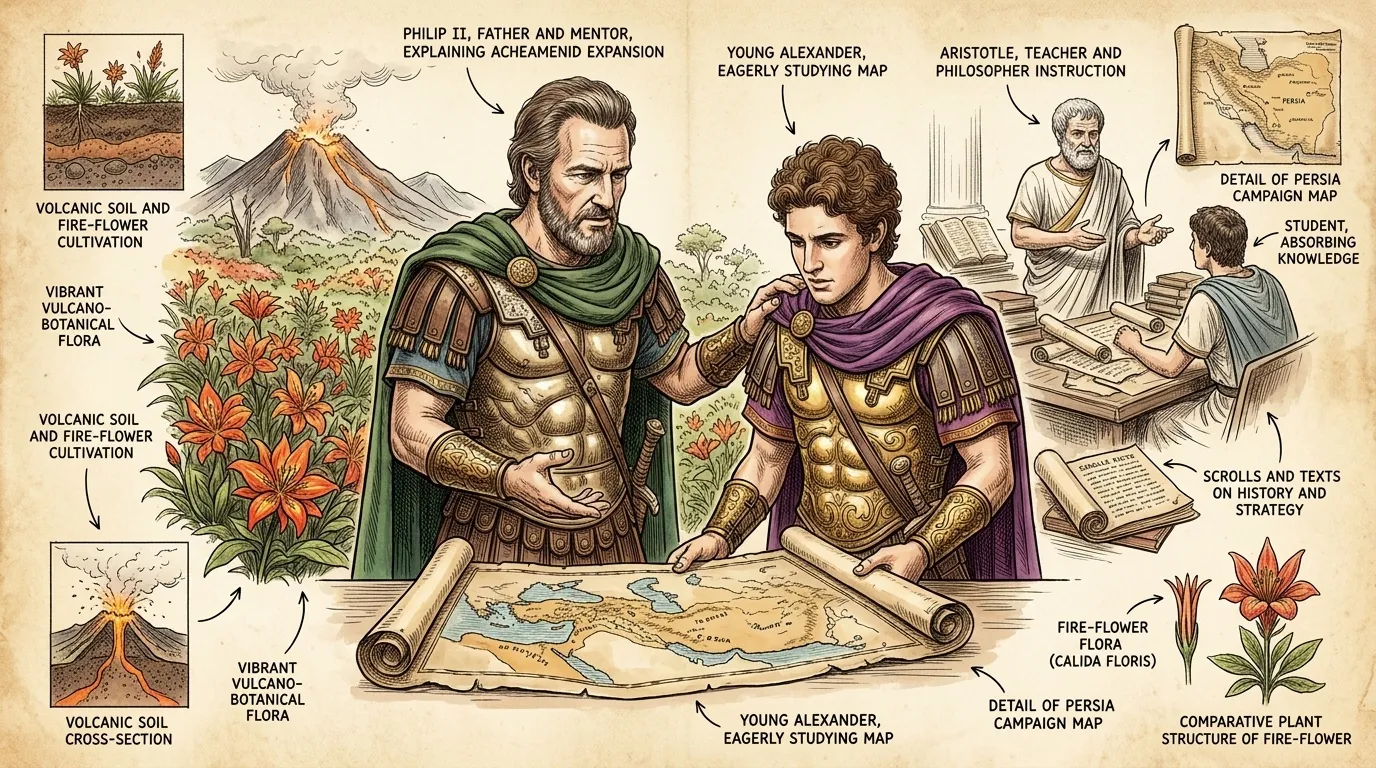
Philip II of Macedon, Alexander's father, meticulously trained Alexander from childhood in military tactics and diplomacy.
Philip II of Macedon, Alexander's father, meticulously trained Alexander from childhood in military tactics and diplomacy. Aristotle himself tutored Alexander, instilling in him a love for knowledge and strategy. 'Remember, son,' Philip once told him, showing a map of Persia, 'a kingdom is not inherited, but earned.' Pella, in the lowlands of Macedonia, was the royal capital.

Philip II of Macedon, Alexander's father, meticulously trained Alexander from childhood in military tactics and diplomacy. Aristotle himself tutored Alexander, instilling in him a love for knowledge and strategy. 'Remember, son,' Philip once told him, showing a map of Persia, 'a kingdom is not inherited, but earned.' Pella, in the lowlands of Macedonia, was the royal capital.

Page 3
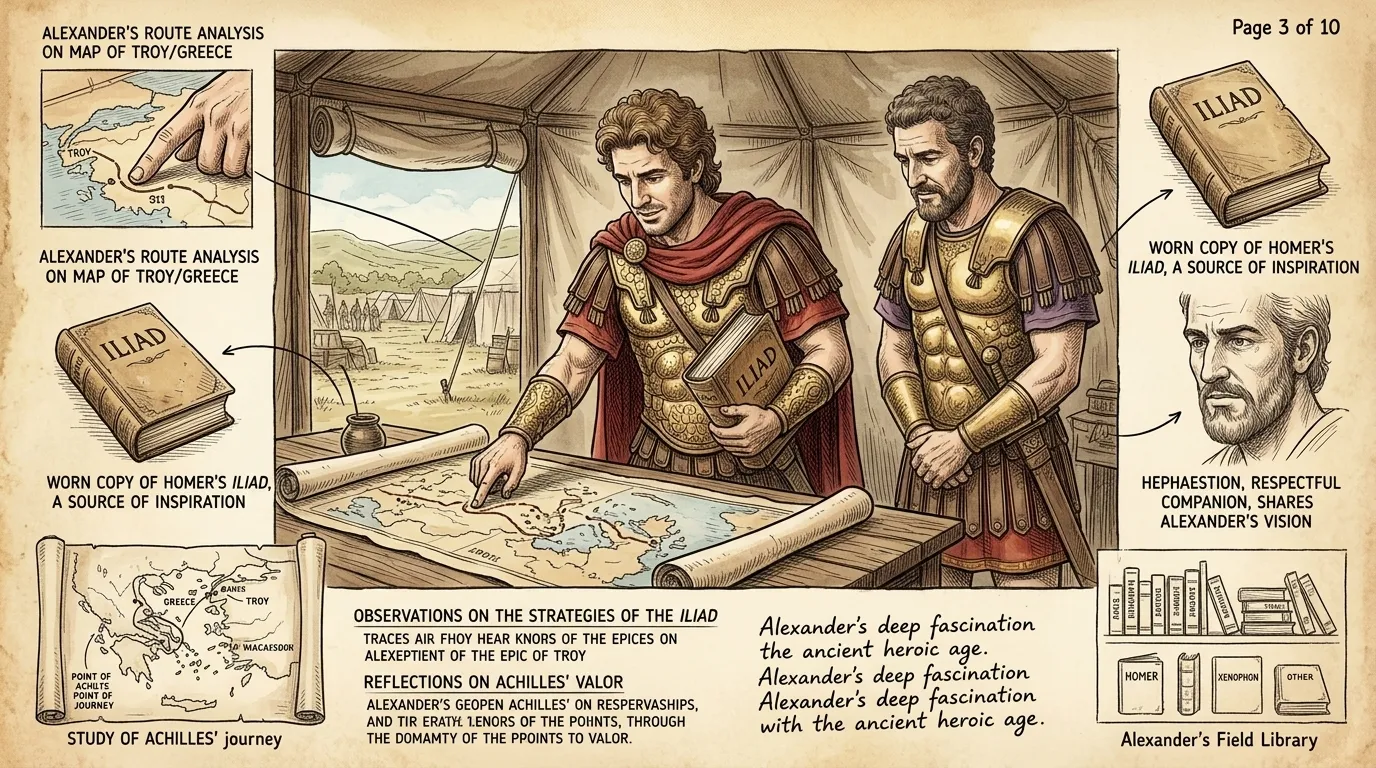
Alexander showed Hephaestion a worn copy of Homer's Iliad. 'Remember what Aristotle taught us,' Alexander said, his voice low, 'Homer shows that glory is won…
Alexander showed Hephaestion a worn copy of Homer's Iliad. 'Remember what Aristotle taught us,' Alexander said, his voice low, 'Homer shows that glory is won through courage and skill.' Alexander carefully traced the route of Achilles, hero of the Iliad, on the map with his finger, a thoughtful expression on his face. Hephaestion nodded, acknowledging Alexander's admiration for the ancient hero.

Alexander showed Hephaestion a worn copy of Homer's Iliad. 'Remember what Aristotle taught us,' Alexander said, his voice low, 'Homer shows that glory is won through courage and skill.' Alexander carefully traced the route of Achilles, hero of the Iliad, on the map with his finger, a thoughtful expression on his face. Hephaestion nodded, acknowledging Alexander's admiration for the ancient hero.

Page 4
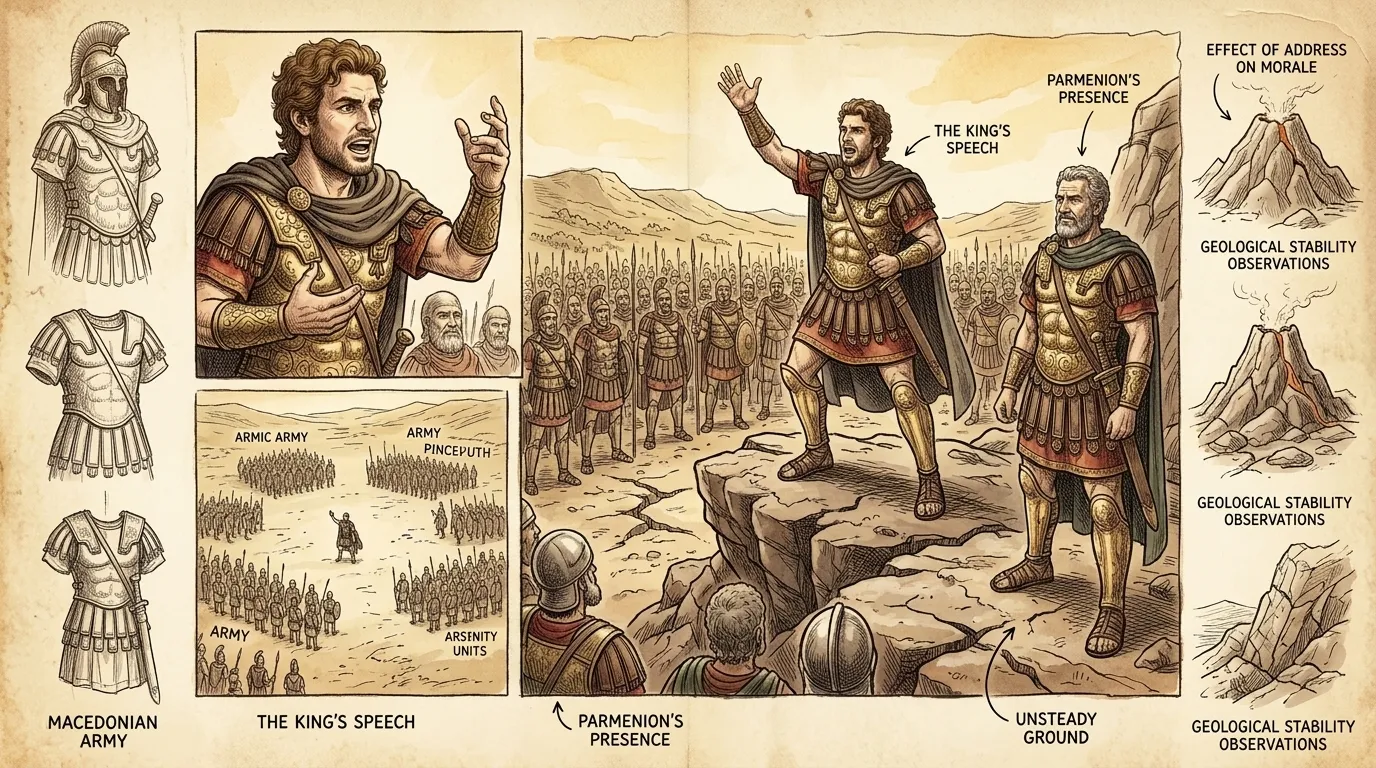
In 336 BC, news reached Pella: Philip II had been assassinated. 'Macedonia needs a strong leader,' Parmenion, a seasoned general, declared to Alexander.
In 336 BC, news reached Pella: Philip II had been assassinated. 'Macedonia needs a strong leader,' Parmenion, a seasoned general, declared to Alexander. 'The army is loyal, but they need direction.' Alexander, now king at age 20, addressed the Macedonian army, promising to continue his father's vision for a unified Greece and a campaign against the Persian Empire.

In 336 BC, news reached Pella: Philip II had been assassinated. 'Macedonia needs a strong leader,' Parmenion, a seasoned general, declared to Alexander. 'The army is loyal, but they need direction.' Alexander, now king at age 20, addressed the Macedonian army, promising to continue his father's vision for a unified Greece and a campaign against the Persian Empire.

Page 5
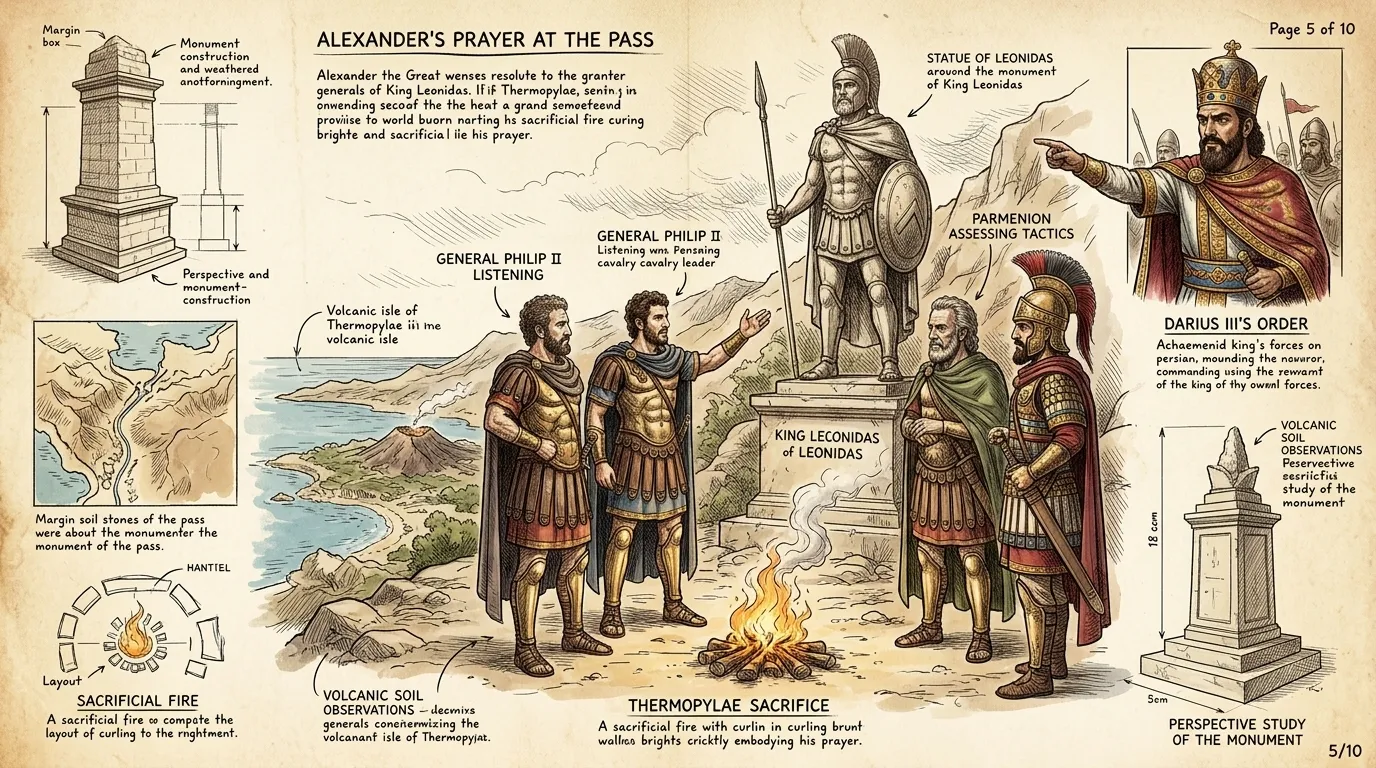
At the volcanic isle of Thermopylae, Alexander visited the monument of King Leonidas, the Spartan hero who died defending Greece against the Persians.
At the volcanic isle of Thermopylae, Alexander visited the monument of King Leonidas, the Spartan hero who died defending Greece against the Persians. 'They showed true bravery,' Alexander said to his generals. 'Now, we will show them ours.' He ordered sacrifices to the gods, praying for victory in the upcoming campaign against the Achaemenid Empire. The air felt charged with destiny.

At the volcanic isle of Thermopylae, Alexander visited the monument of King Leonidas, the Spartan hero who died defending Greece against the Persians. 'They showed true bravery,' Alexander said to his generals. 'Now, we will show them ours.' He ordered sacrifices to the gods, praying for victory in the upcoming campaign against the Achaemenid Empire. The air felt charged with destiny.

Page 6
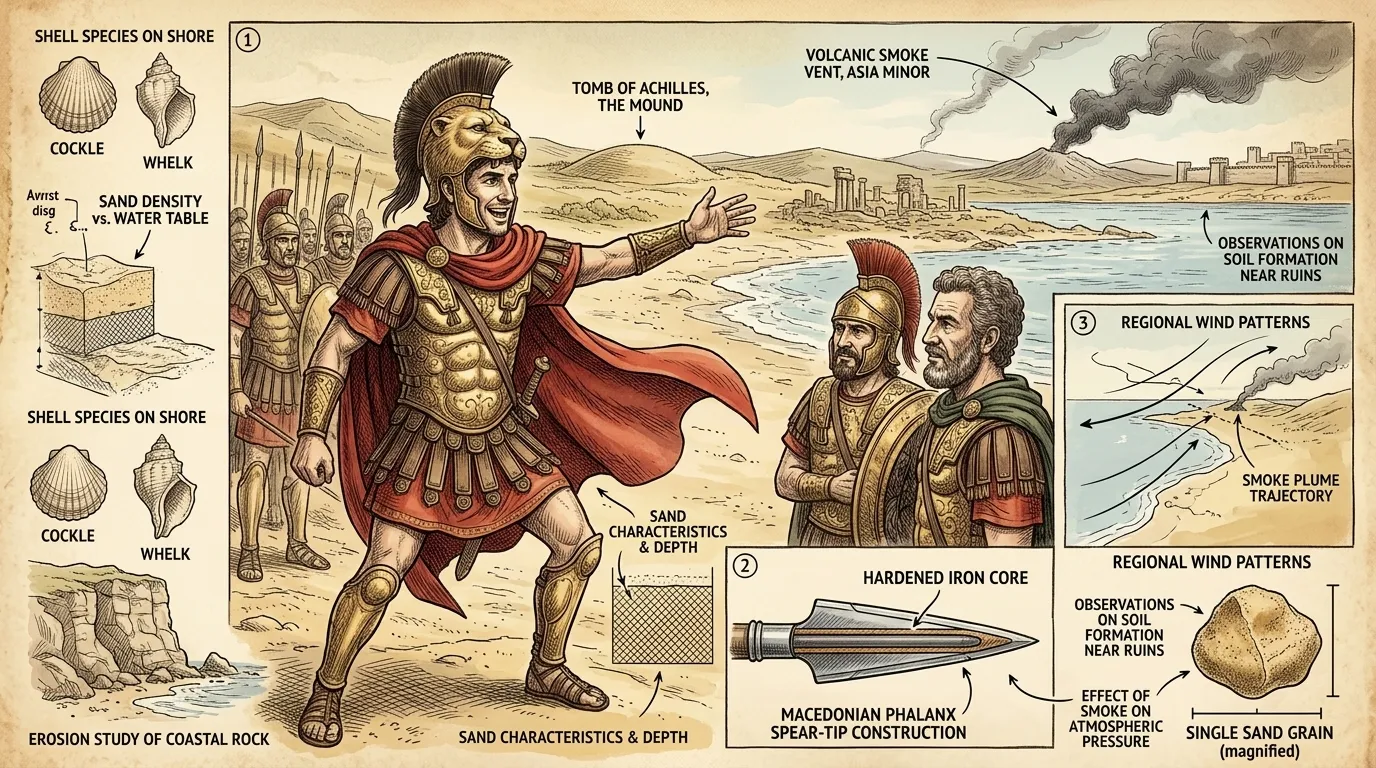
The Macedonian army landed on the shores of Asia Minor, near the ancient city of Troy. 'This land is rich with history,' Alexander exclaimed, pointing towards…
The Macedonian army landed on the shores of Asia Minor, near the ancient city of Troy. 'This land is rich with history,' Alexander exclaimed, pointing towards the ruins. 'We will make our own history here.' He visited the tomb of Achilles, paying tribute to his legendary hero, further inspiring his troops before engaging with the Persian forces. Black smoke billowed over the volcanic land.

The Macedonian army landed on the shores of Asia Minor, near the ancient city of Troy. 'This land is rich with history,' Alexander exclaimed, pointing towards the ruins. 'We will make our own history here.' He visited the tomb of Achilles, paying tribute to his legendary hero, further inspiring his troops before engaging with the Persian forces. Black smoke billowed over the volcanic land.

Page 7
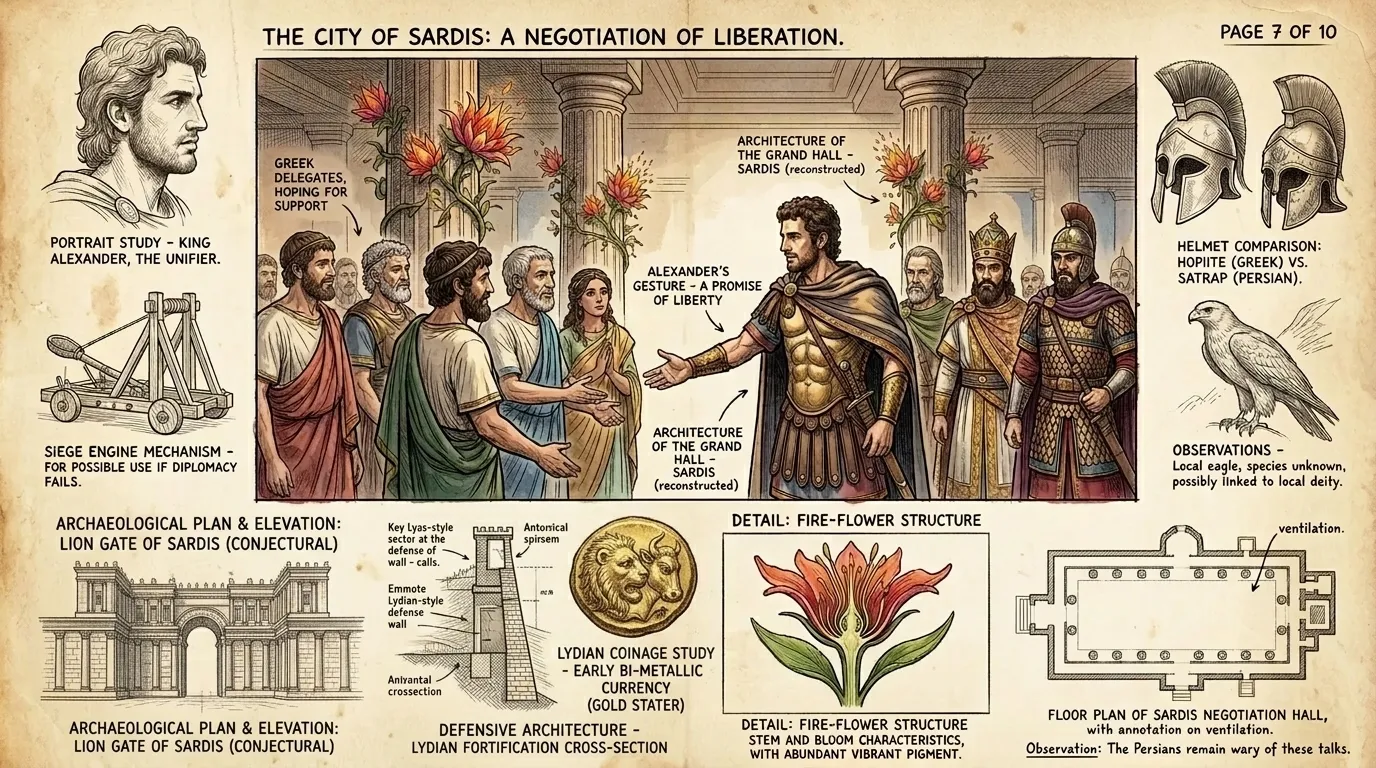
After the victory at Granicus, Alexander marched through Asia Minor, liberating Greek cities from Persian rule. In Sardis, he met with representatives from…
After the victory at Granicus, Alexander marched through Asia Minor, liberating Greek cities from Persian rule. In Sardis, he met with representatives from various cities. 'We offer freedom and self-governance,' Alexander declared. He promised to respect local customs and traditions, winning the support of many Greek communities along the coast. The fire-flowers bloomed.

After the victory at Granicus, Alexander marched through Asia Minor, liberating Greek cities from Persian rule. In Sardis, he met with representatives from various cities. 'We offer freedom and self-governance,' Alexander declared. He promised to respect local customs and traditions, winning the support of many Greek communities along the coast. The fire-flowers bloomed.

Page 8
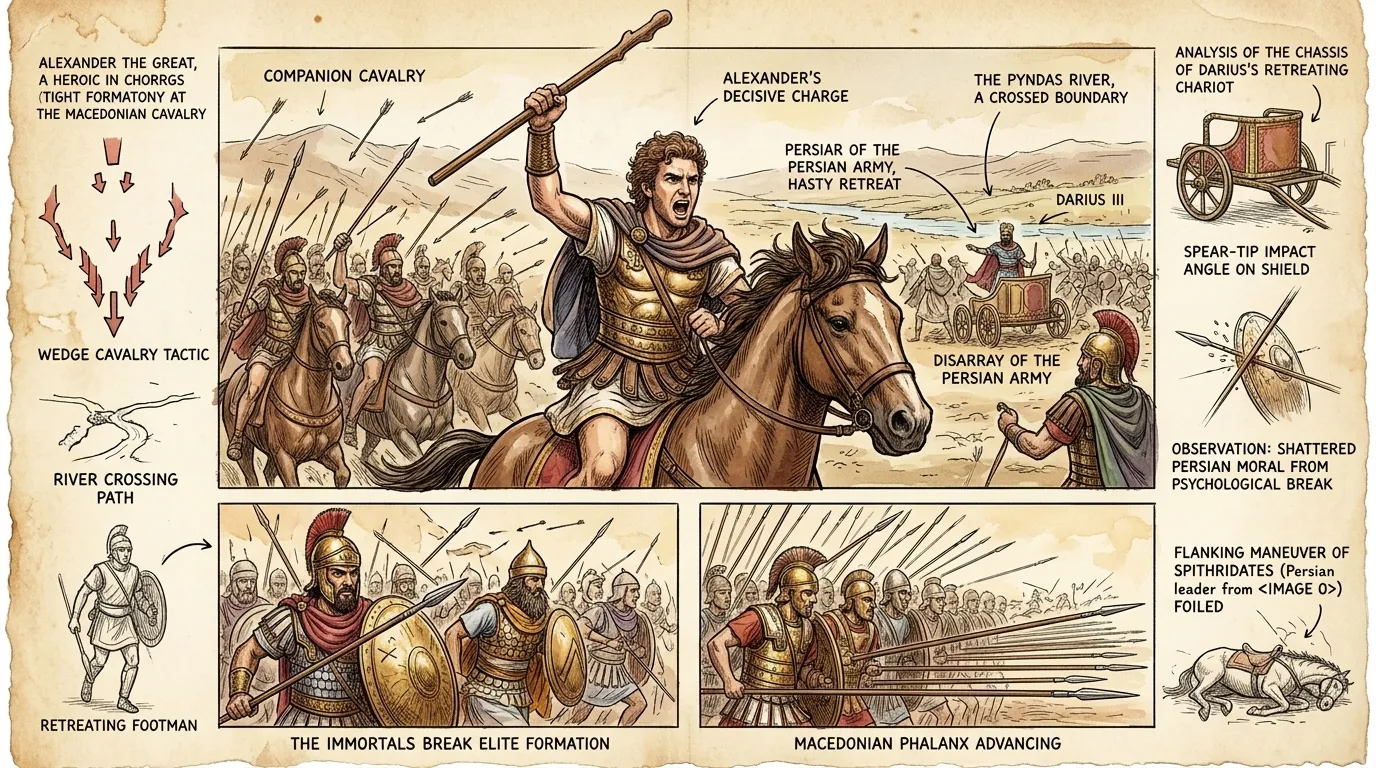
The Battle of Issus in 333 BC saw Alexander confront Darius III, the King of Persia, directly. Despite being outnumbered, Alexander's tactical brilliance led to…
The Battle of Issus in 333 BC saw Alexander confront Darius III, the King of Persia, directly. Despite being outnumbered, Alexander's tactical brilliance led to a decisive Macedonian victory. Darius fled the battlefield, leaving behind his family and treasures. This defeat shattered Persian morale and opened the path to the heart of the empire. Alexander shouted, 'The path to glory is paved with courage!'

The Battle of Issus in 333 BC saw Alexander confront Darius III, the King of Persia, directly. Despite being outnumbered, Alexander's tactical brilliance led to a decisive Macedonian victory. Darius fled the battlefield, leaving behind his family and treasures. This defeat shattered Persian morale and opened the path to the heart of the empire. Alexander shouted, 'The path to glory is paved with courage!'

Page 9
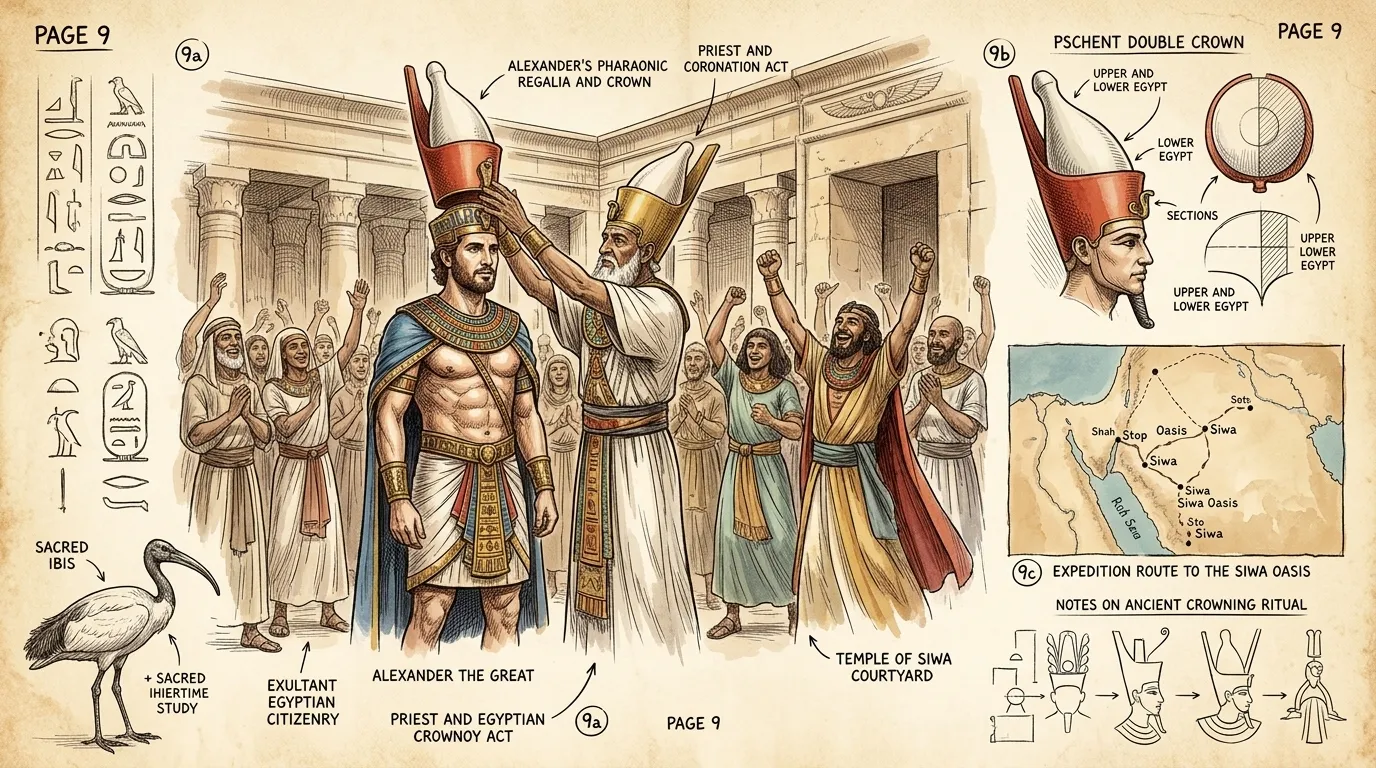
After Issus, Alexander marched south into Phoenicia and Egypt. The siege of Tyre proved long and difficult, but Alexander's determination never wavered.
After Issus, Alexander marched south into Phoenicia and Egypt. The siege of Tyre proved long and difficult, but Alexander's determination never wavered. In Egypt, he was welcomed as a liberator and crowned Pharaoh. The people celebrated his arrival. 'He's a divine ruler,' one Egyptian priest whispered. 'Our land is finally free.'

After Issus, Alexander marched south into Phoenicia and Egypt. The siege of Tyre proved long and difficult, but Alexander's determination never wavered. In Egypt, he was welcomed as a liberator and crowned Pharaoh. The people celebrated his arrival. 'He's a divine ruler,' one Egyptian priest whispered. 'Our land is finally free.'

Page 10
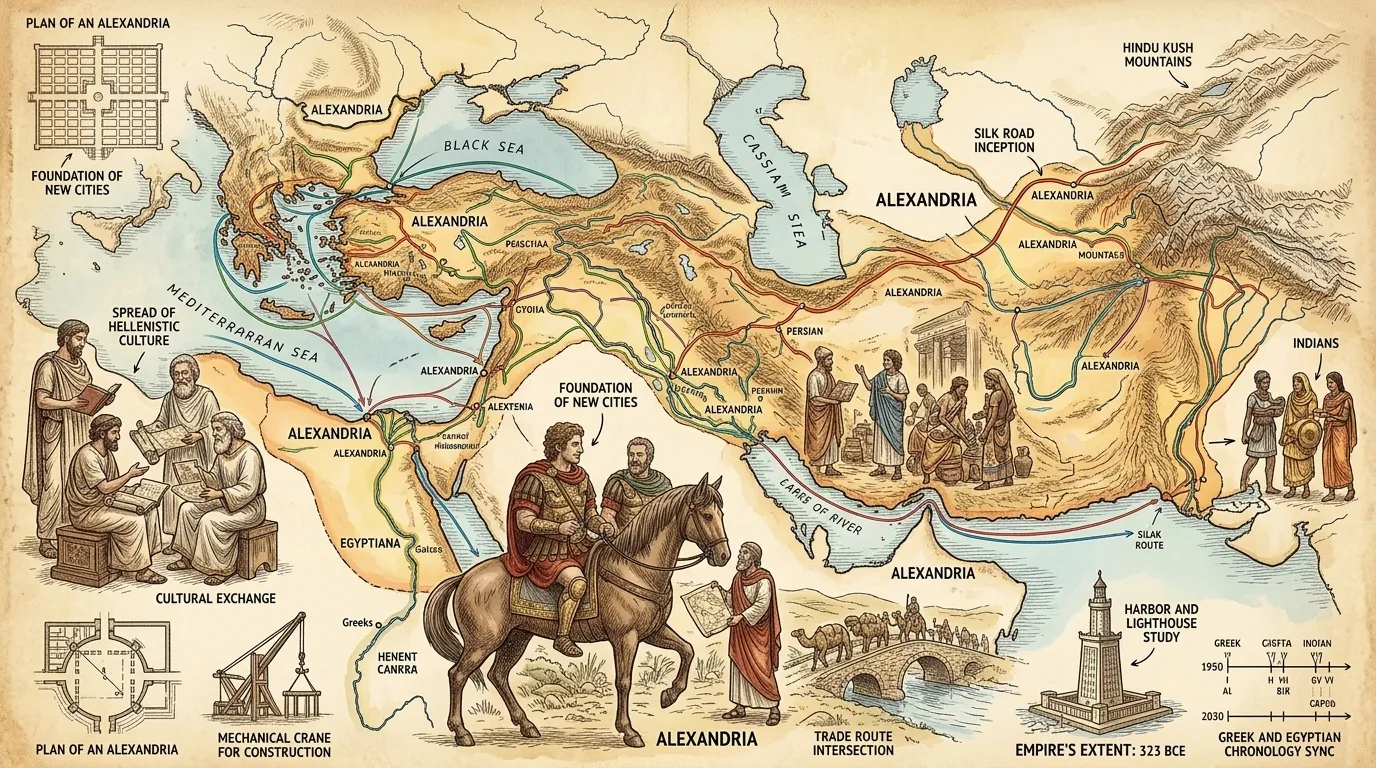
Alexander's conquests stretched from Greece to India, spreading Hellenistic culture and trade. New cities were founded, named Alexandria in his honor, becoming…
Alexander's conquests stretched from Greece to India, spreading Hellenistic culture and trade. New cities were founded, named Alexandria in his honor, becoming centers of learning and commerce. Though his empire fragmented after his death in 323 BC, his legacy as a military genius and cultural ambassador endured for centuries. His actions continue to shape the modern world.

Alexander's conquests stretched from Greece to India, spreading Hellenistic culture and trade. New cities were founded, named Alexandria in his honor, becoming centers of learning and commerce. Though his empire fragmented after his death in 323 BC, his legacy as a military genius and cultural ambassador endured for centuries. His actions continue to shape the modern world.

About this story

  • Historical figures: Alexander the Great, Philip II of Macedon, Darius III
  • Location: Europe
  • Period: Ancient
  • Audience: general readers

Questions and answers

Questions and answers about The Conquests of Alexander the Great — Europe, Asia, Africa (334 BC, Europe)

Read Wonder History on your phone

Wonder History is available on Android. Get Wonder History on Google Play.

More Wonder History stories

All Wonder History stories · Open the library