The Coronation of Charlemagne (800 AD) - Italy (800 AD, Italy)
The Coronation of Charlemagne (800 AD) - Italy (800 AD, Italy) — an illustrated history story, featuring Charlemagne, Pope Leo III, Alcuin of York, set in Italy. 10 illustrated pages, free to read on Wonder History.
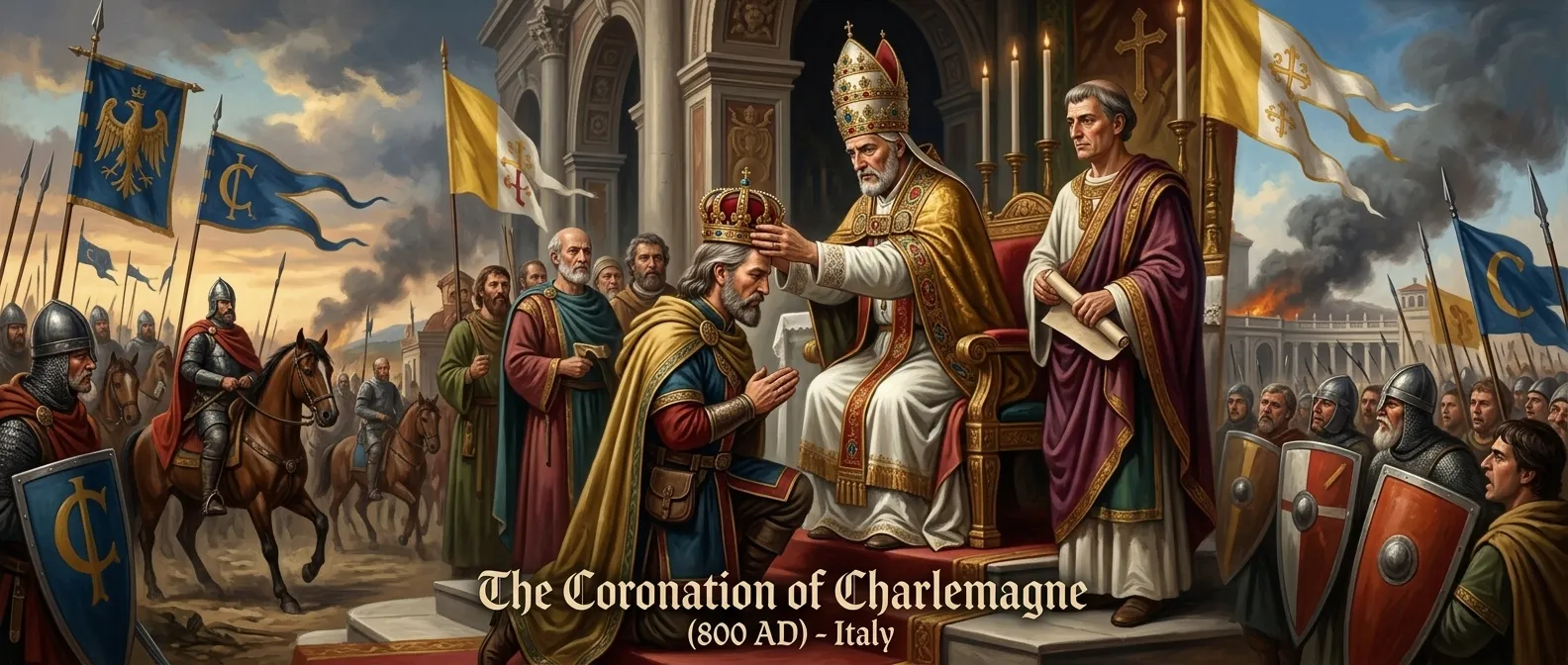
Page 1
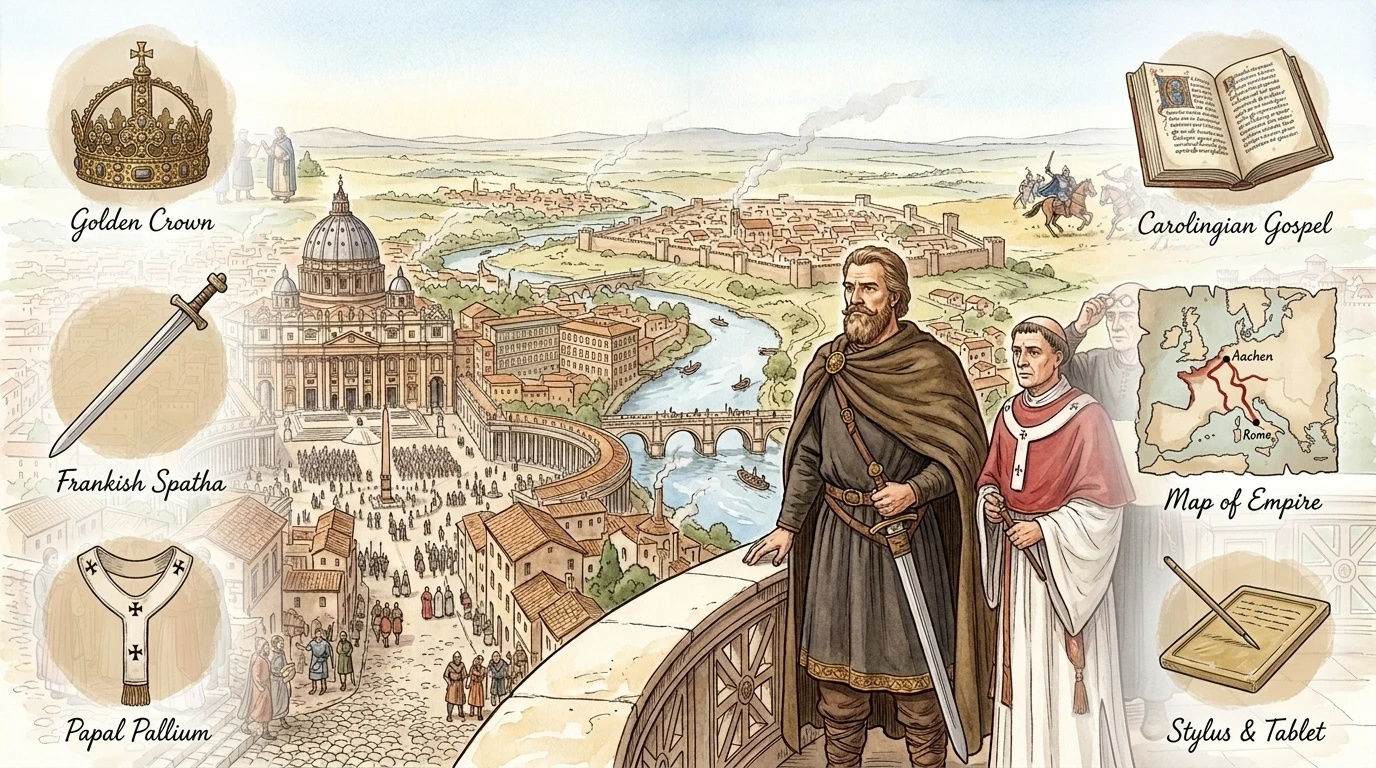
On Christmas Day, 800 AD, inside St. Peter's Basilica in Rome, Pope Leo III, a figure of immense spiritual power, placed a golden crown upon the head of Charlemagne, the King of the Franks and a towering figure of military and political strength. Alcuin of York, Charlemagne's chief advisor and a renowned scholar, watched with keen interest, knowing this moment would reshape the political landscape of Europe. But how did a Frankish king come to be crowned Emperor by the Pope?
Historical Fact: Charlemagne's coronation marked the revival of the Roman Empire in the West and established the precedent of papal authority in crowning emperors.
Page 2
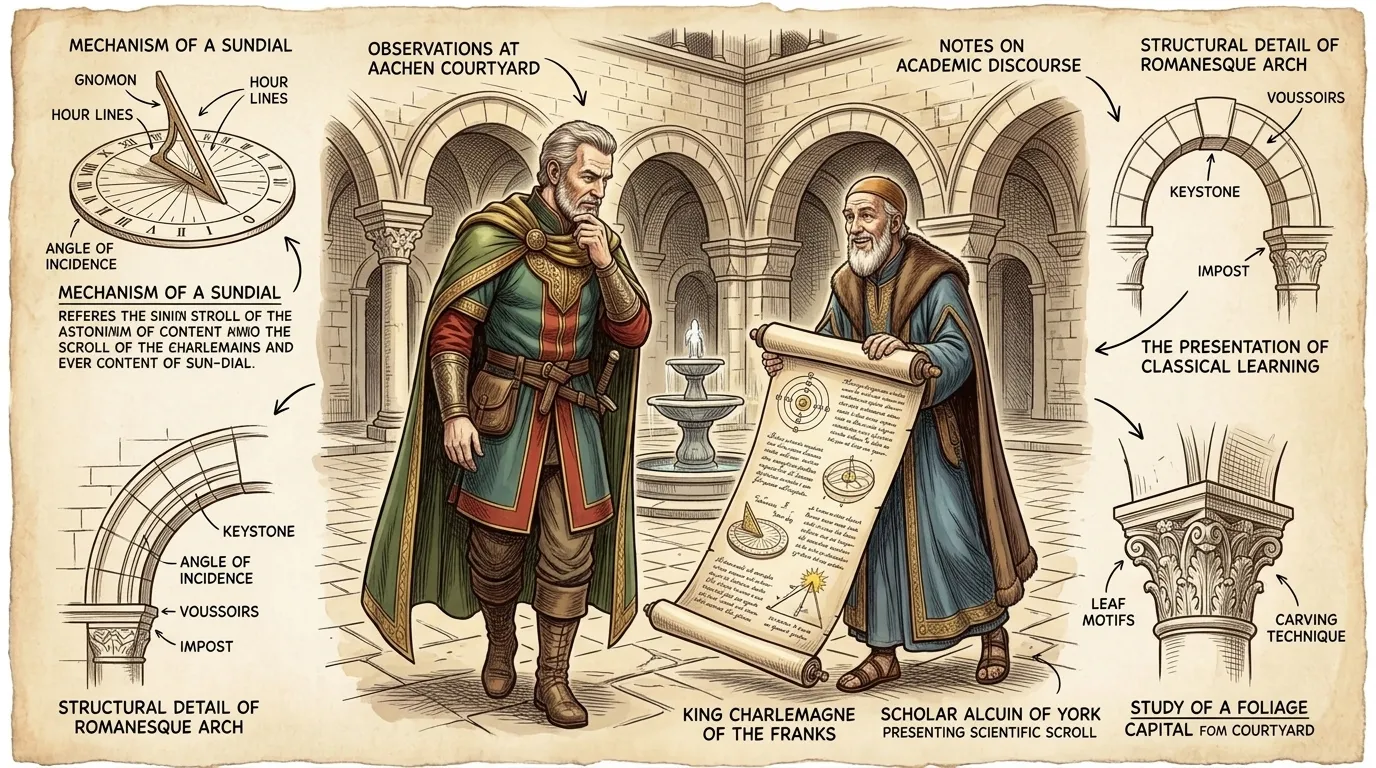
Years before the coronation, Charlemagne had established his court at Aachen, a center of power and learning. Alcuin of York, a Northumbrian scholar invited to Aachen, diligently worked to revive classical learning within the Frankish kingdom. Charlemagne, ever the pragmatist, saw value in this knowledge. As Charlemagne paced the courtyard, Alcuin approached him with a scroll.
""Your Majesty," Alcuin began, unrolling the scroll, "the preservation of knowledge is key to a strong and lasting realm. As Cicero, the great Roman orator, said, 'The life of the dead is placed in the memory of the living.' We must not let the wisdom of the past be lost.""
Historical Fact: Aachen, now Aachen in Germany, served as Charlemagne's capital and a center for the Carolingian Renaissance.
Page 3
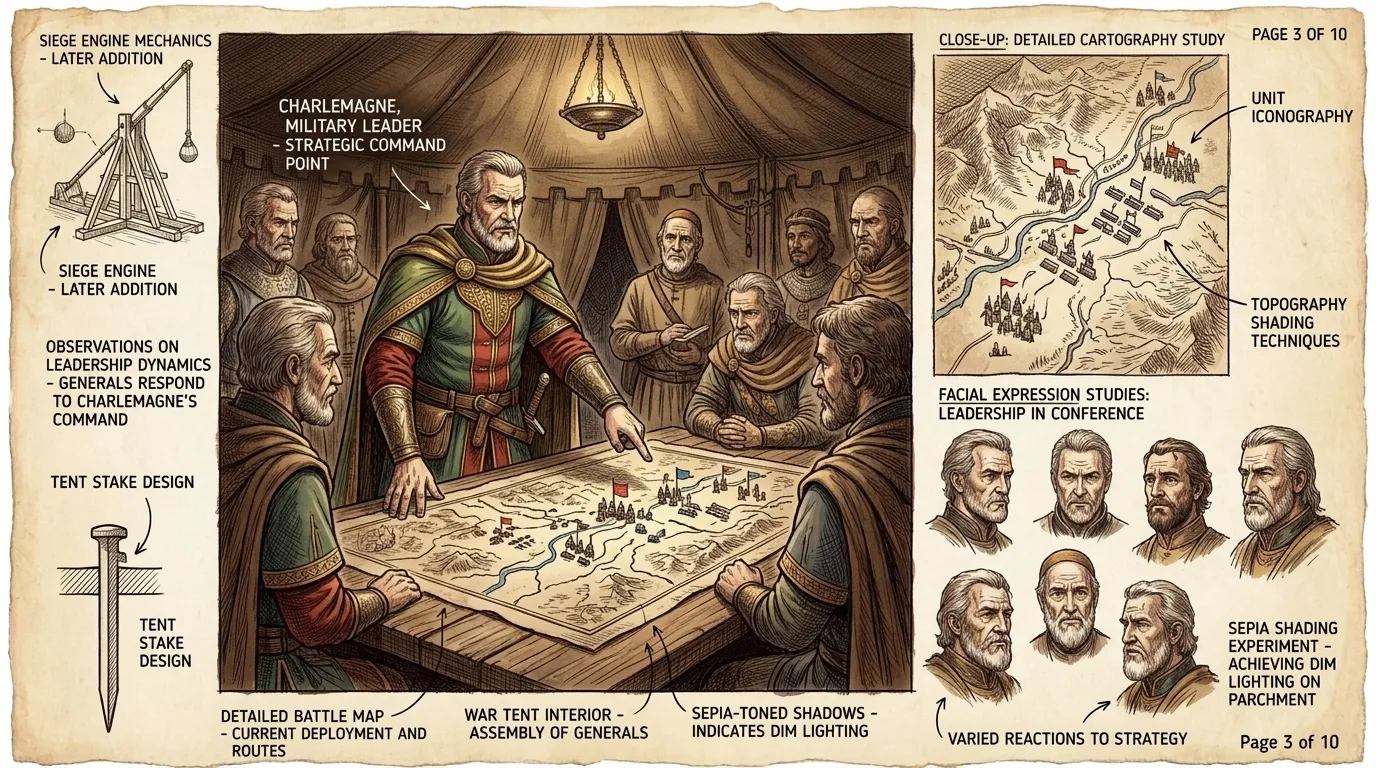
Charlemagne's reign was defined by constant warfare. To the east, the pagan Saxons resisted Frankish rule and conversion to Christianity. Charlemagne, a seasoned commander, led his armies in a series of brutal campaigns. Facing his generals, Charlemagne reviewed the battle maps, knowing lives hung in the balance.
""These Saxon rebellions must be crushed," Charlemagne declared, pointing to the map with a thick finger. "Their defiance threatens the stability of our kingdom. Show no mercy.""
Historical Fact: The Saxon Wars lasted over thirty years and resulted in the forced conversion of the Saxons to Christianity.
Page 4
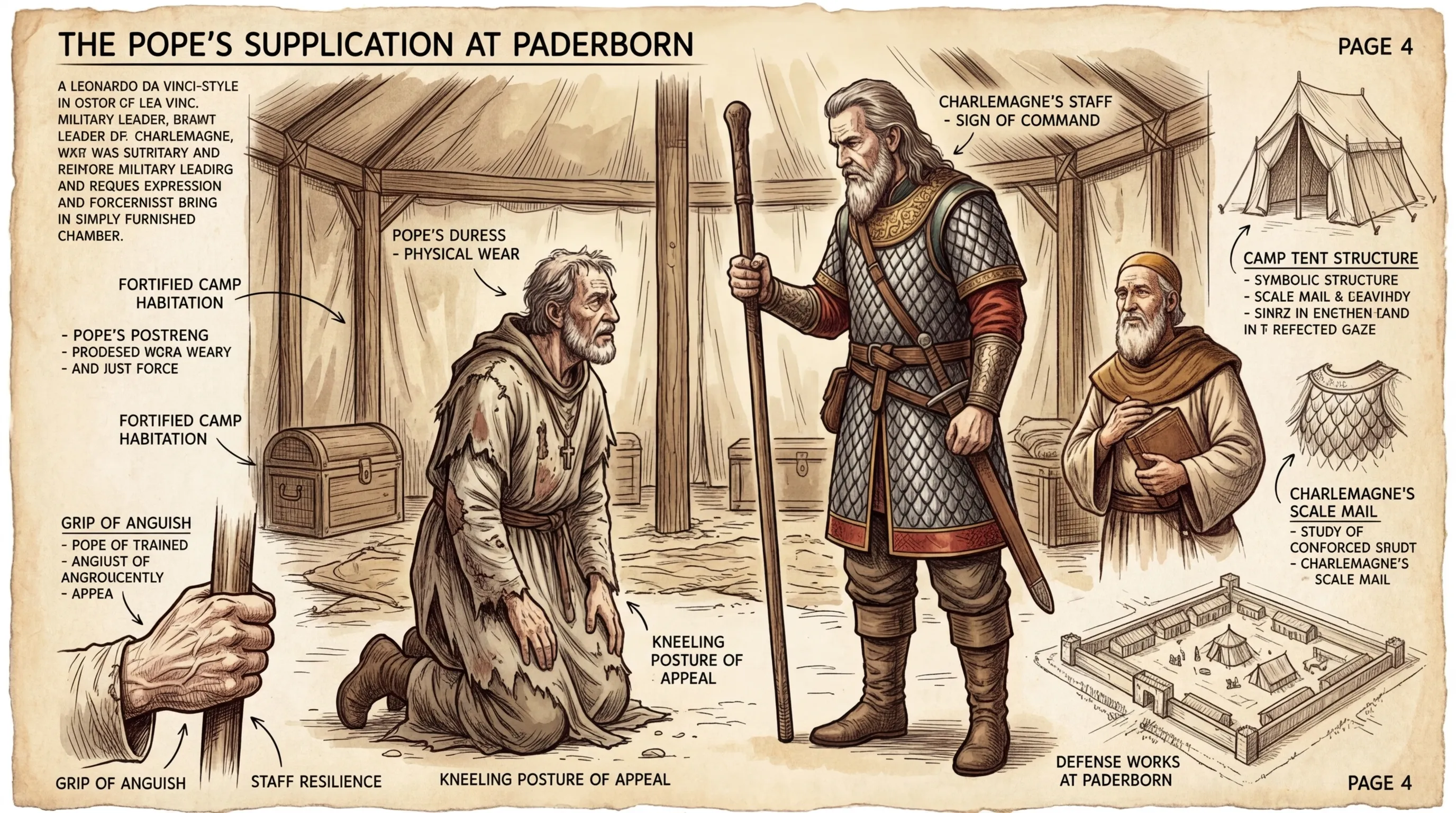
In Rome, Pope Leo III faced challenges of his own. Accused of corruption by Roman nobles, he was attacked and imprisoned. He escaped and fled north, seeking Charlemagne's protection. Reaching Charlemagne, Leo begged for aid. "Protect me," he pleaded, "and restore order to Rome."
""Your Majesty, I have been wronged and driven from my See. My enemies seek to depose me from the papacy. I come to you in dire need, seeking justice and protection.""
Historical Fact: The political instability in Rome provided Charlemagne with an opportunity to intervene in papal affairs.
Page 5
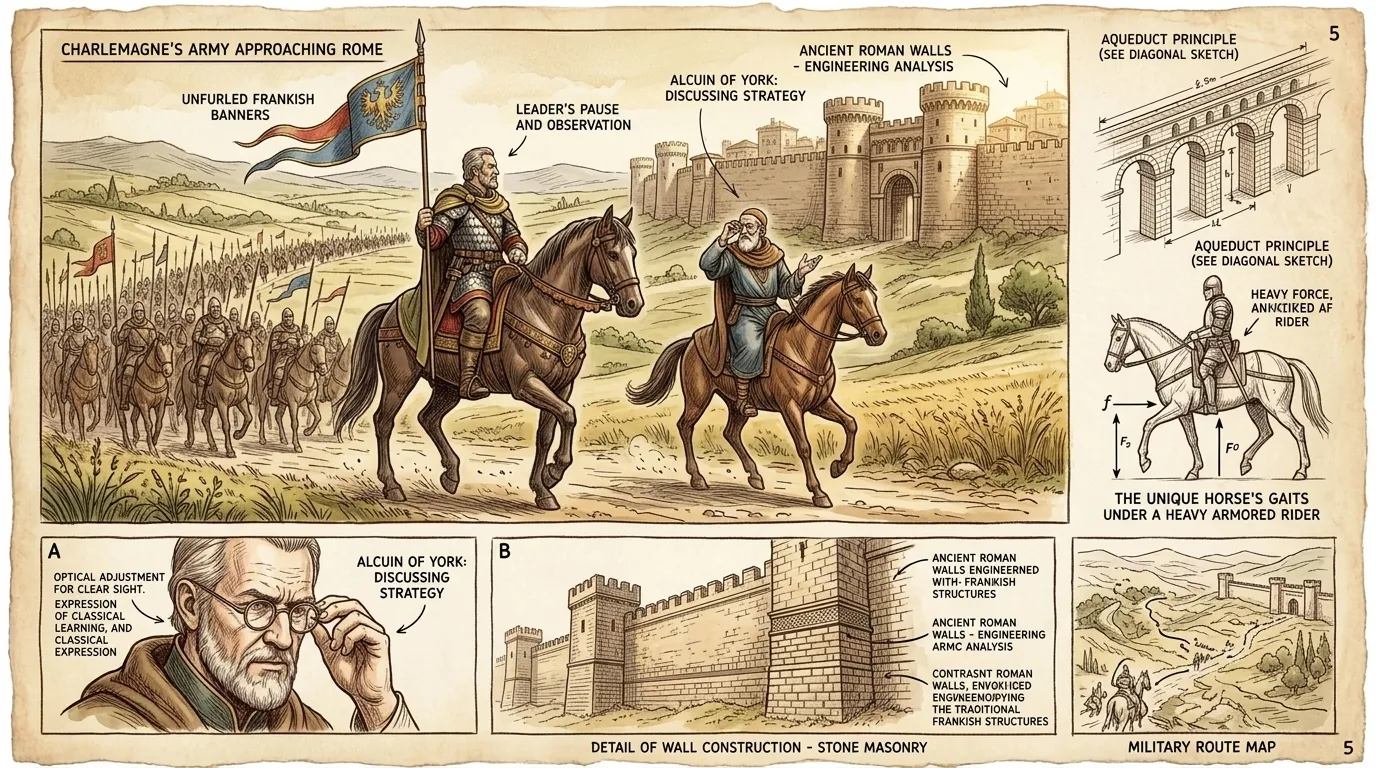
Charlemagne, seeing an opportunity to assert his authority and protect the Church, agreed to intervene. Leading his army south, he marched towards Rome. Alcuin, at his side, discussed the implications of this journey. Approaching the city walls, Charlemagne paused to assess the situation.
""This journey to Rome is more than just protecting the Pope, isn't it?" Alcuin asked, adjusting his spectacles. "It's a statement of your power, your influence over Christendom.""
Historical Fact: Charlemagne's intervention in Rome solidified his role as protector of the papacy.
Page 6
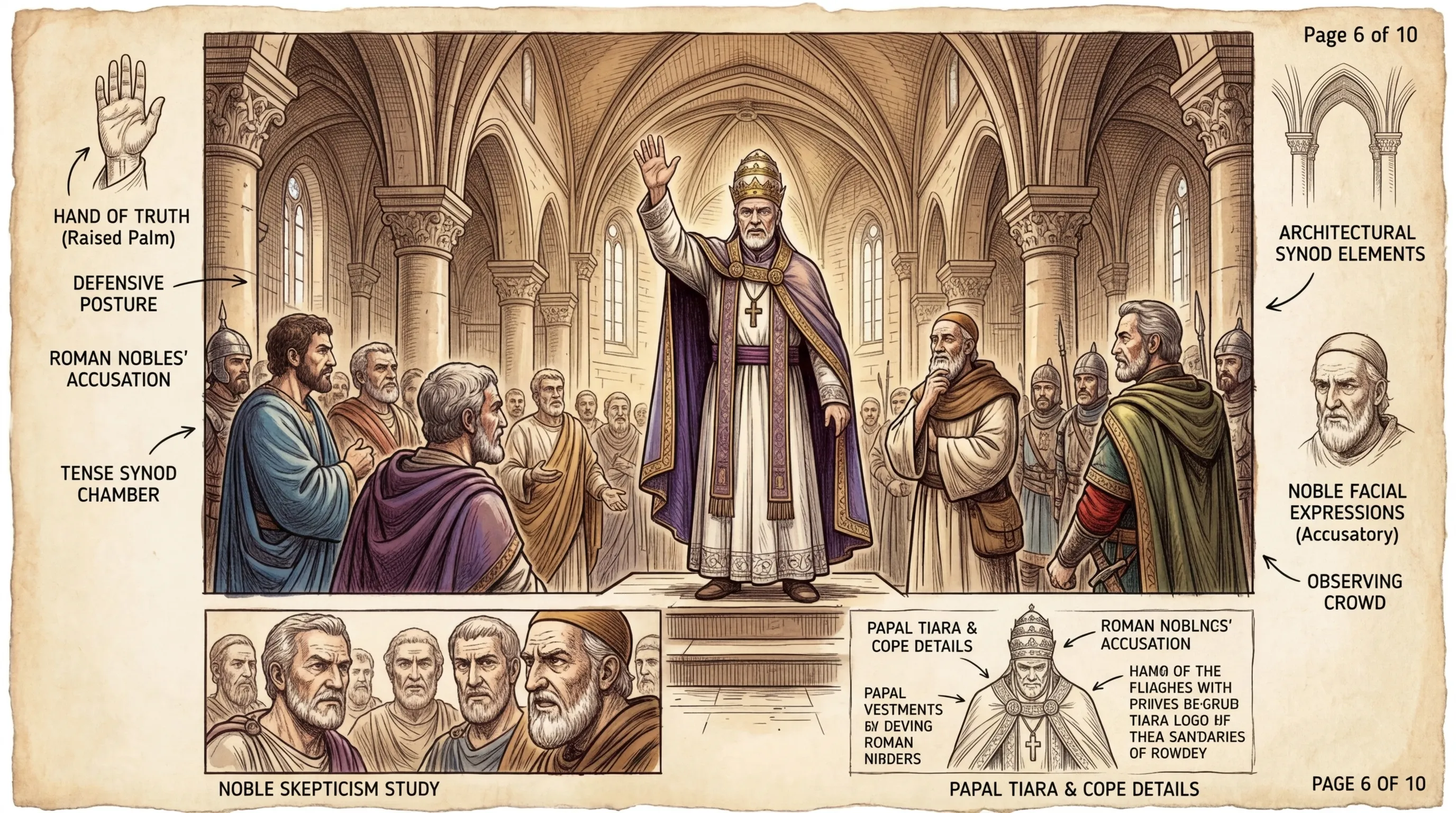
Upon arriving in Rome, Charlemagne convened a synod to investigate the accusations against Pope Leo III. Leo, however, declared that as Pope, he could only be judged by God. He swore an oath of innocence. Facing his accusers, Leo defended his position.
""I am answerable only to God," Pope Leo declared, raising his hand. "My authority is divinely ordained. I swear before you all that I am innocent of these charges.""
Historical Fact: Pope Leo III's oath of innocence cleared the way for Charlemagne's coronation.
Page 7
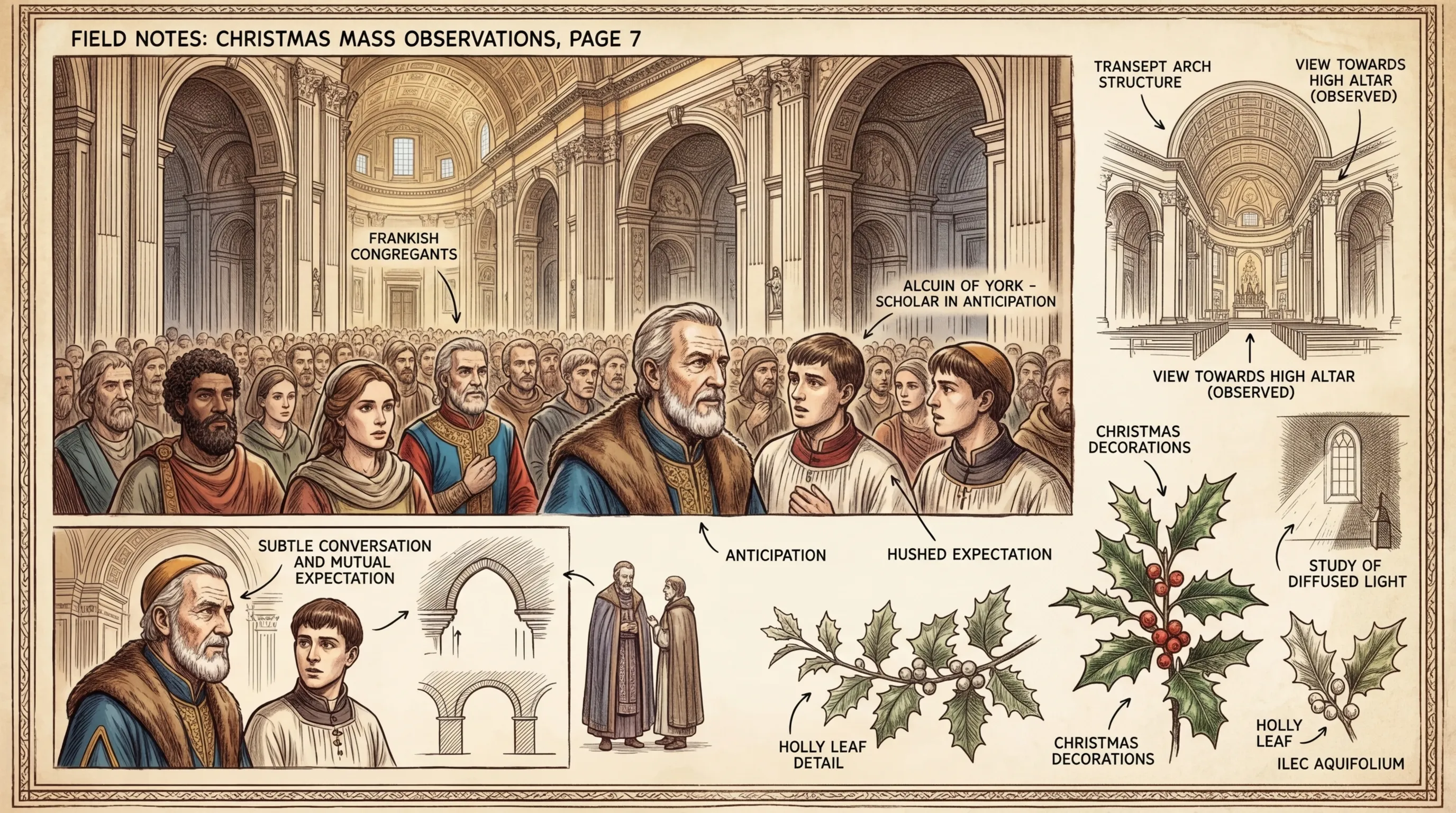
On Christmas Day, the Franks gathered in St. Peter's Basilica for mass. Unbeknownst to many, Pope Leo III had a surprise in store. Alcuin watched the service, knowing the significance of what was about to occur.
""This Christmas mass is different," Alcuin remarked to a nearby cleric. "There is a palpable sense of anticipation in the air.""
Historical Fact: The atmosphere in St. Peter's Basilica on Christmas Day was charged with anticipation.
Page 8
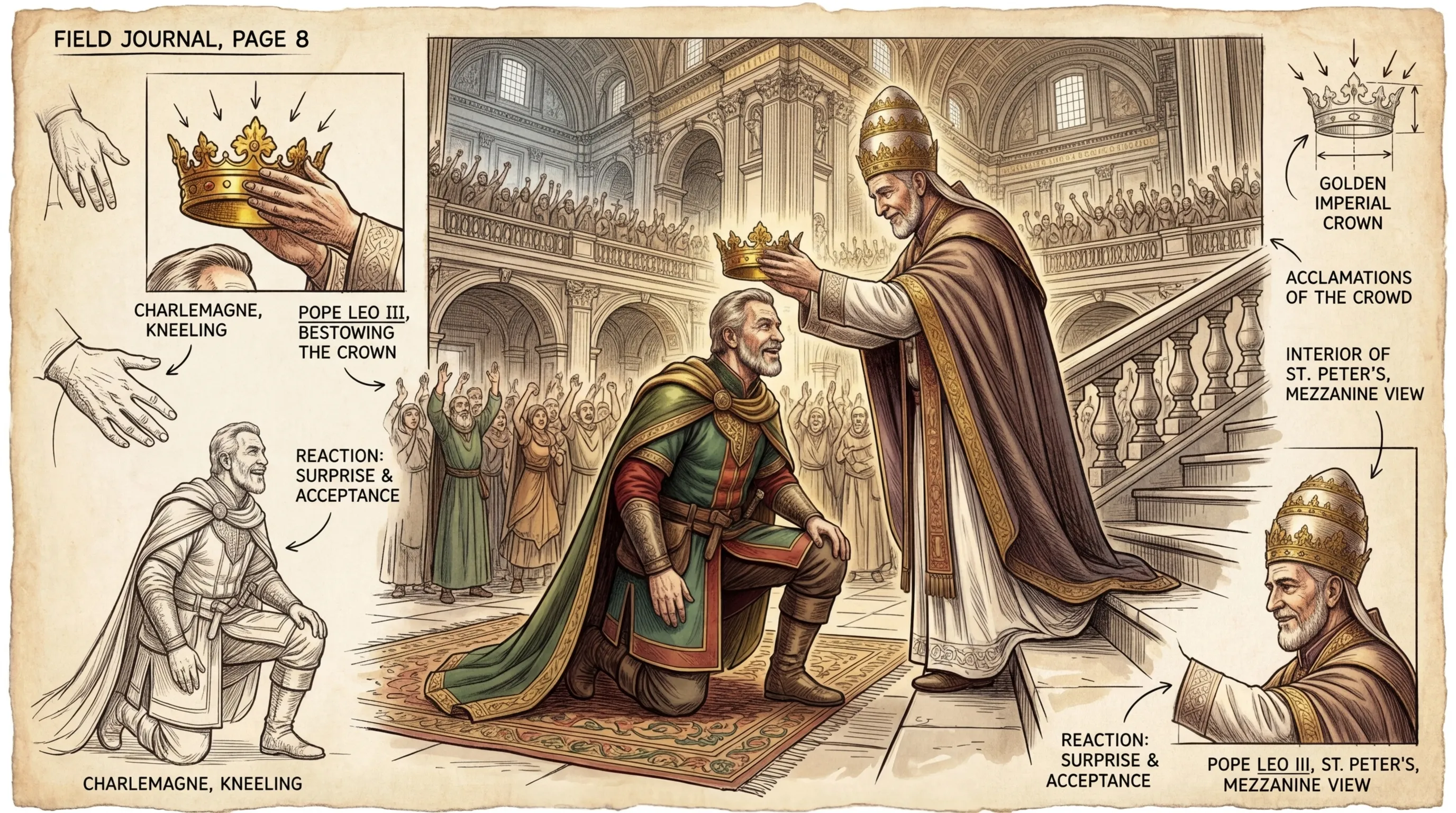
As Charlemagne knelt in prayer, Pope Leo III placed the golden crown upon his head. The basilica erupted in cheers, hailing Charlemagne as Emperor of the Romans. Charlemagne was caught by surprise. But was it? He may well have expected the deed to be done.
"The crowd erupted, "Carolo Augusto a Deo coronato magno et pacifico imperatori Romanorum, vita et victoria!" [To Charles Augustus, crowned by God, great and peaceful emperor of the Romans, life and victory!]"
Historical Fact: Charlemagne's coronation as Emperor of the Romans revived the title in the West for the first time in over three centuries.
Page 9
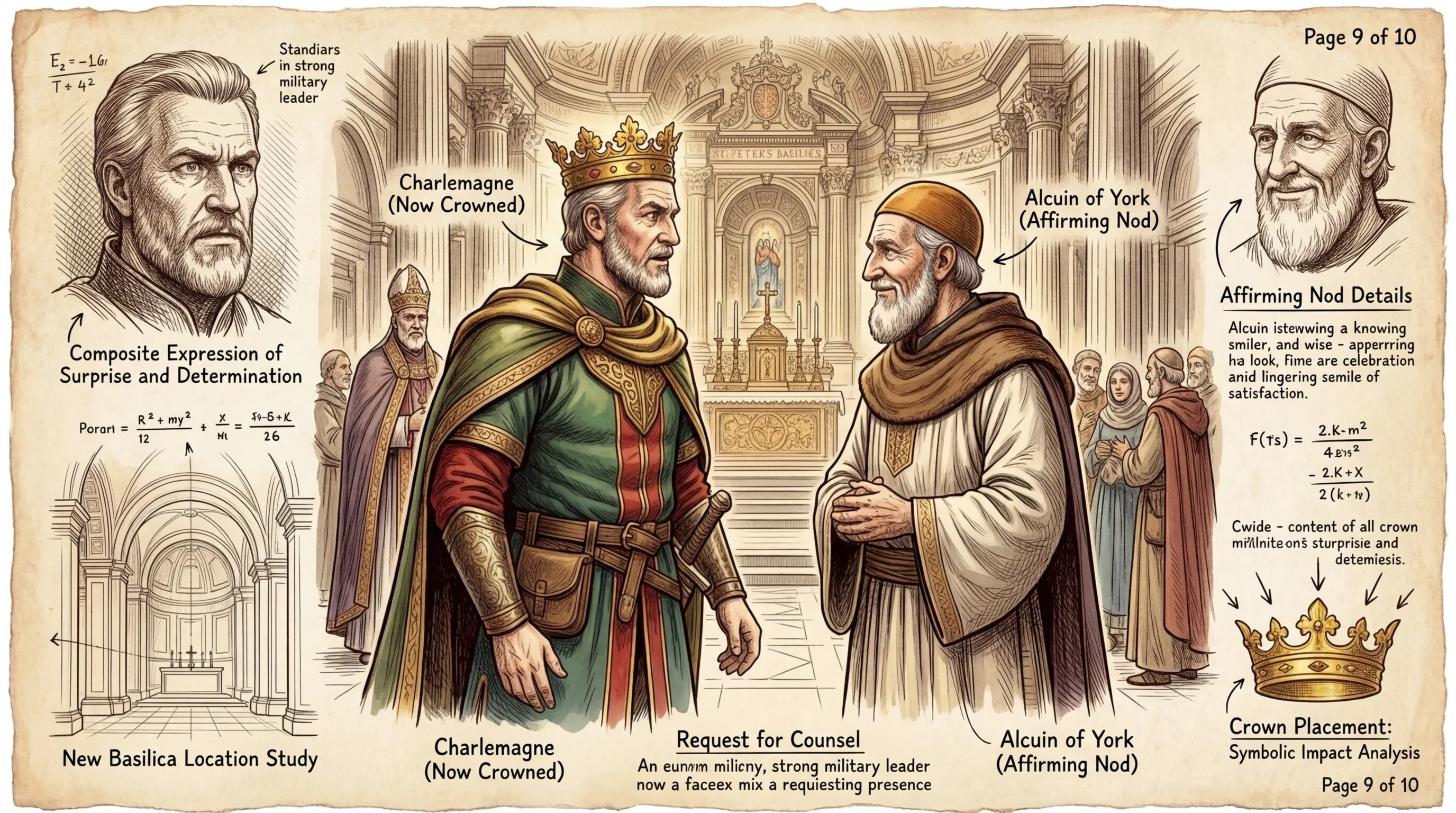
Charlemagne, now Emperor, stood tall, his expression a mixture of surprise and determination. He understood the weight of the title and the responsibilities it entailed. He gazed at Alcuin, who nodded in acknowledgement. What was the true meaning of this event?
Historical Fact: Charlemagne now needed to balance his role as protector of the papacy with his imperial ambitions.
Page 10
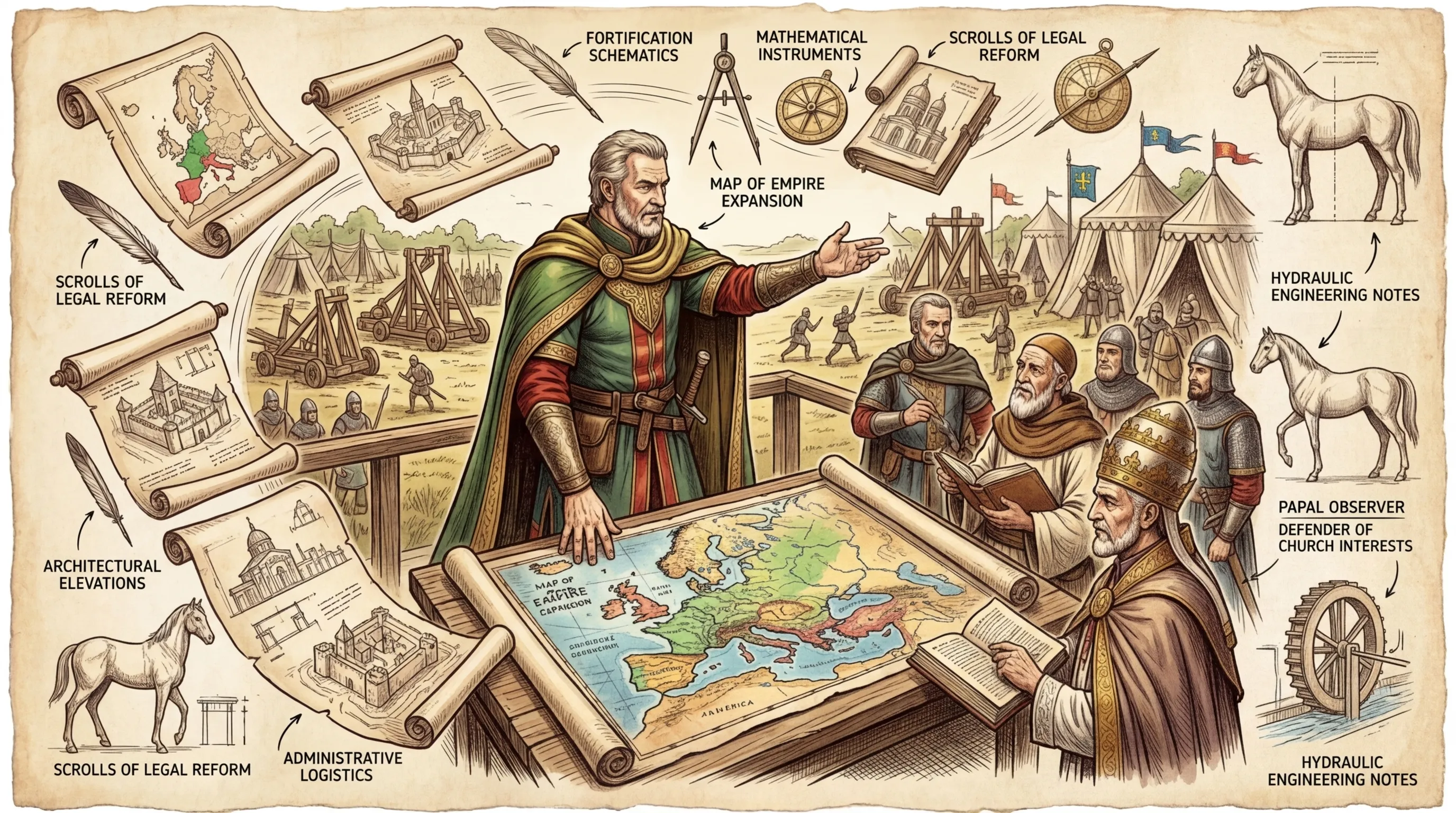
Charlemagne's empire did not endure in its entirety. Yet, his reign laid the foundations for modern Europe. The Carolingian Renaissance fostered a revival of learning, and his legal and administrative reforms shaped the continent for centuries. People recall the coronation, even to this day.
Historical Fact: Charlemagne's legacy includes the Carolingian Renaissance, legal reforms, and the concept of a unified Christian Europe.
About this story
- Historical figures: Charlemagne, Pope Leo III, Alcuin of York
- Location: Italy
- Period: Middle Ages
- Audience: general readers
Questions and answers
Questions and answers about The Coronation of Charlemagne (800 AD) - Italy (800 AD, Italy)
Read Wonder History on your phone
Wonder History is available on Android. Get Wonder History on Google Play.
More Wonder History stories
- The Crimean War — Crimea (Ukraine) (1854, Crimea)
- The Crusades — Middle East & Europe (1099, Middle East & Europe)
- The Decision to Drop the Atomic Bomb (1945, United States)
- The Defeat of the Spanish Armada (1588, English Channel)
- The Defeat of the Spanish Armada (1588) - United Kingdom (1588, United Kingdom)
- The Delano Grape Strike (1965, Delano)