The Crusades — Middle East & Europe (1099, Middle East & Europe)

The Crusades — Middle East & Europe (1099, Middle East & Europe) — an illustrated history story, featuring Godfrey of Bouillon, Raymond of Saint-Gilles, Bohemond of Taranto, set in Middle East & Europe. 10 illustrated pages, free to read on Wonder History.
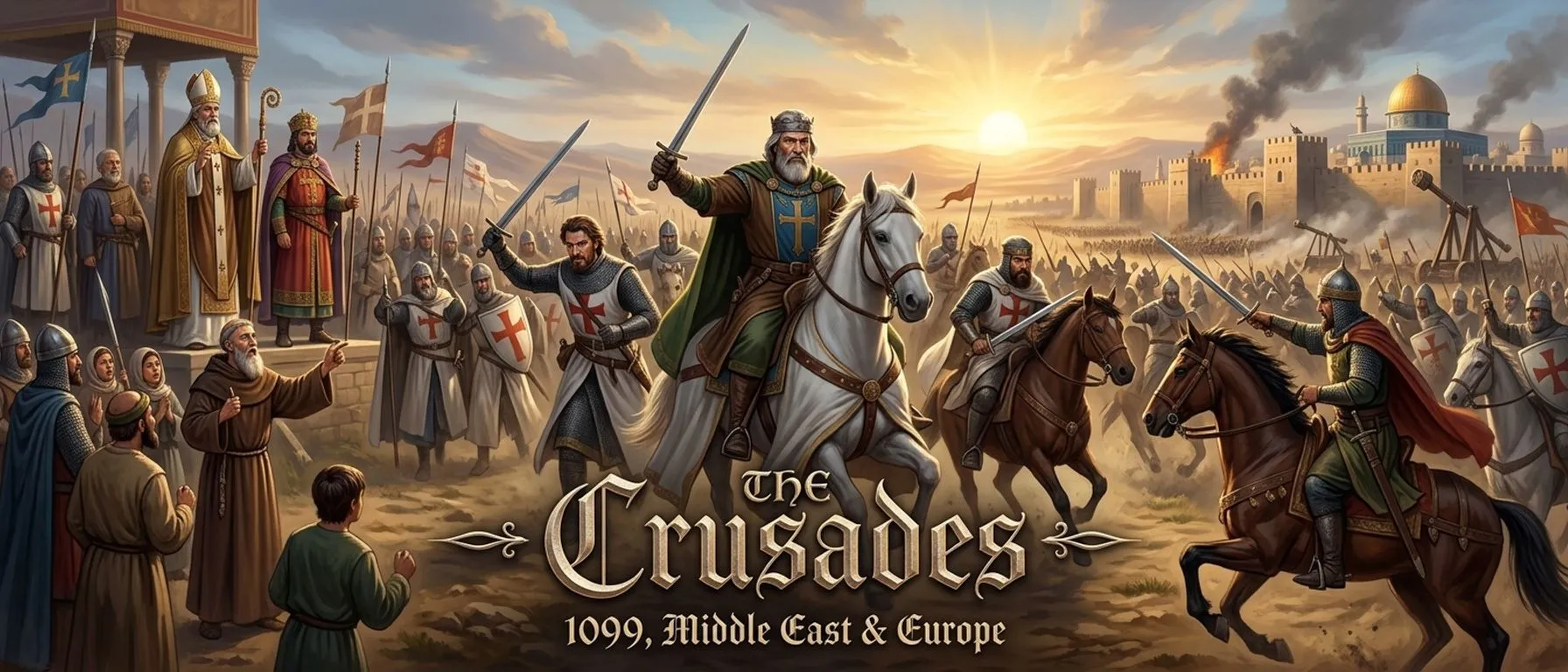
The Crusades — Middle East & Europe (1099, Middle East & Europe) — book cover — Wonder History
The Crusades — Middle East & Europe (1099, Middle East & Europe) — an illustrated history story, featuring Godfrey of Bouillon, Raymond of Saint-Gilles, Bohemond of Taranto, set in Middle East & Europe. 10 illustrated pages, free to read on Wonder History.

Page 1

On July 15, 1099, after years of arduous travel and brutal battles, Godfrey of Bouillon, the pious noble; Raymond of Saint-Gilles, the ambitious count; Bohemond…
On July 15, 1099, after years of arduous travel and brutal battles, Godfrey of Bouillon, the pious noble; Raymond of Saint-Gilles, the ambitious count; Bohemond of Taranto, the cunning prince; and their crusader armies stormed into Jerusalem. Over 10,000 people were massacred in the city. But how did Pope Urban II's call to arms lead to such bloodshed so far from Europe? The First Crusade had reached its peak, but where did this holy war begin?

On July 15, 1099, after years of arduous travel and brutal battles, Godfrey of Bouillon, the pious noble; Raymond of Saint-Gilles, the ambitious count; Bohemond of Taranto, the cunning prince; and their crusader armies stormed into Jerusalem. Over 10,000 people were massacred in the city. But how did Pope Urban II's call to arms lead to such bloodshed so far from Europe? The First Crusade had reached its peak, but where did this holy war begin?

Page 2

In 1095, Pope Urban II addressed a massive crowd in Clermont, France. "Deus vult!" he cried out, meaning "God wills it!" He urged Christians to reclaim the Holy…
In 1095, Pope Urban II addressed a massive crowd in Clermont, France. "Deus vult!" he cried out, meaning "God wills it!" He urged Christians to reclaim the Holy Land from Muslim control, promising forgiveness of sins for those who took up the cross. People listened, deeply moved by his call to liberate Jerusalem.

In 1095, Pope Urban II addressed a massive crowd in Clermont, France. "Deus vult!" he cried out, meaning "God wills it!" He urged Christians to reclaim the Holy Land from Muslim control, promising forgiveness of sins for those who took up the cross. People listened, deeply moved by his call to liberate Jerusalem.

Page 3

Before the organized armies, Peter the Hermit, a charismatic but erratic preacher, gathered a large group of peasants. He proclaimed that God wanted them to…
Before the organized armies, Peter the Hermit, a charismatic but erratic preacher, gathered a large group of peasants. He proclaimed that God wanted them to take back Jerusalem. "God will provide," Peter assured them, despite the lack of supplies.

Before the organized armies, Peter the Hermit, a charismatic but erratic preacher, gathered a large group of peasants. He proclaimed that God wanted them to take back Jerusalem. "God will provide," Peter assured them, despite the lack of supplies.

Page 4

In Constantinople, Alexios I Komnenos, the Byzantine Emperor, watched the arrival of the crusader armies with apprehension.
In Constantinople, Alexios I Komnenos, the Byzantine Emperor, watched the arrival of the crusader armies with apprehension. "I requested mercenaries, not a migration!" Alexios complained to his advisors. He needed their military assistance against the Seljuk Turks, but feared their ambitions and potential betrayal.

In Constantinople, Alexios I Komnenos, the Byzantine Emperor, watched the arrival of the crusader armies with apprehension. "I requested mercenaries, not a migration!" Alexios complained to his advisors. He needed their military assistance against the Seljuk Turks, but feared their ambitions and potential betrayal.

Page 5
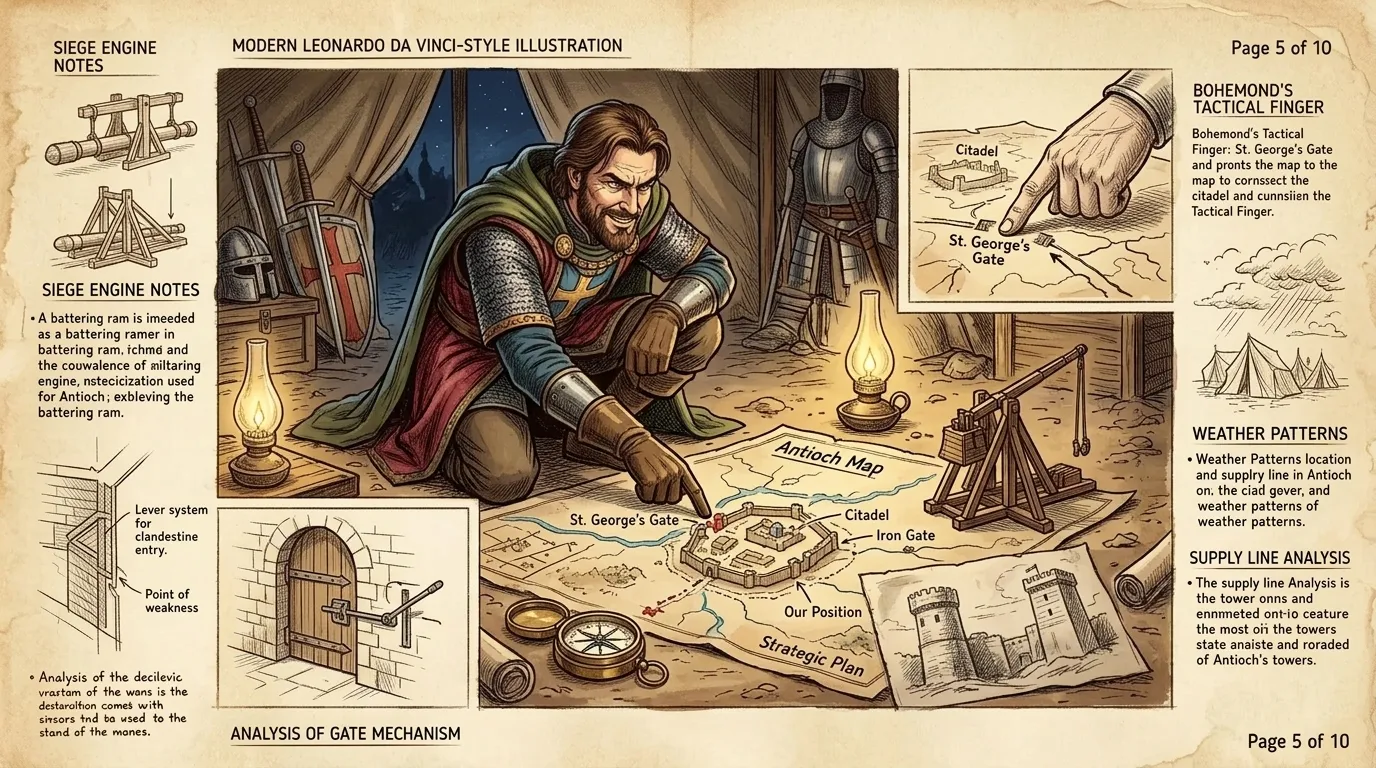
Bohemond of Taranto, a cunning Norman prince, saw Antioch as his prize. The siege of Antioch was brutal, lasting many months in 1098.
Bohemond of Taranto, a cunning Norman prince, saw Antioch as his prize. The siege of Antioch was brutal, lasting many months in 1098. Starvation and disease ravaged both the crusader and the defending forces. "Fortune favors the bold," Bohemond declared, as he planned his strategy.

Bohemond of Taranto, a cunning Norman prince, saw Antioch as his prize. The siege of Antioch was brutal, lasting many months in 1098. Starvation and disease ravaged both the crusader and the defending forces. "Fortune favors the bold," Bohemond declared, as he planned his strategy.

Page 6

During the siege of Antioch, a peasant named Peter Bartholomew claimed to have found the Holy Lance that pierced Christ's side.
During the siege of Antioch, a peasant named Peter Bartholomew claimed to have found the Holy Lance that pierced Christ's side. Raymond of Saint-Gilles, the powerful count, believed it was a sign from God. "This relic will grant us victory," Raymond proclaimed, holding the rusty spear aloft.

During the siege of Antioch, a peasant named Peter Bartholomew claimed to have found the Holy Lance that pierced Christ's side. Raymond of Saint-Gilles, the powerful count, believed it was a sign from God. "This relic will grant us victory," Raymond proclaimed, holding the rusty spear aloft.

Page 7
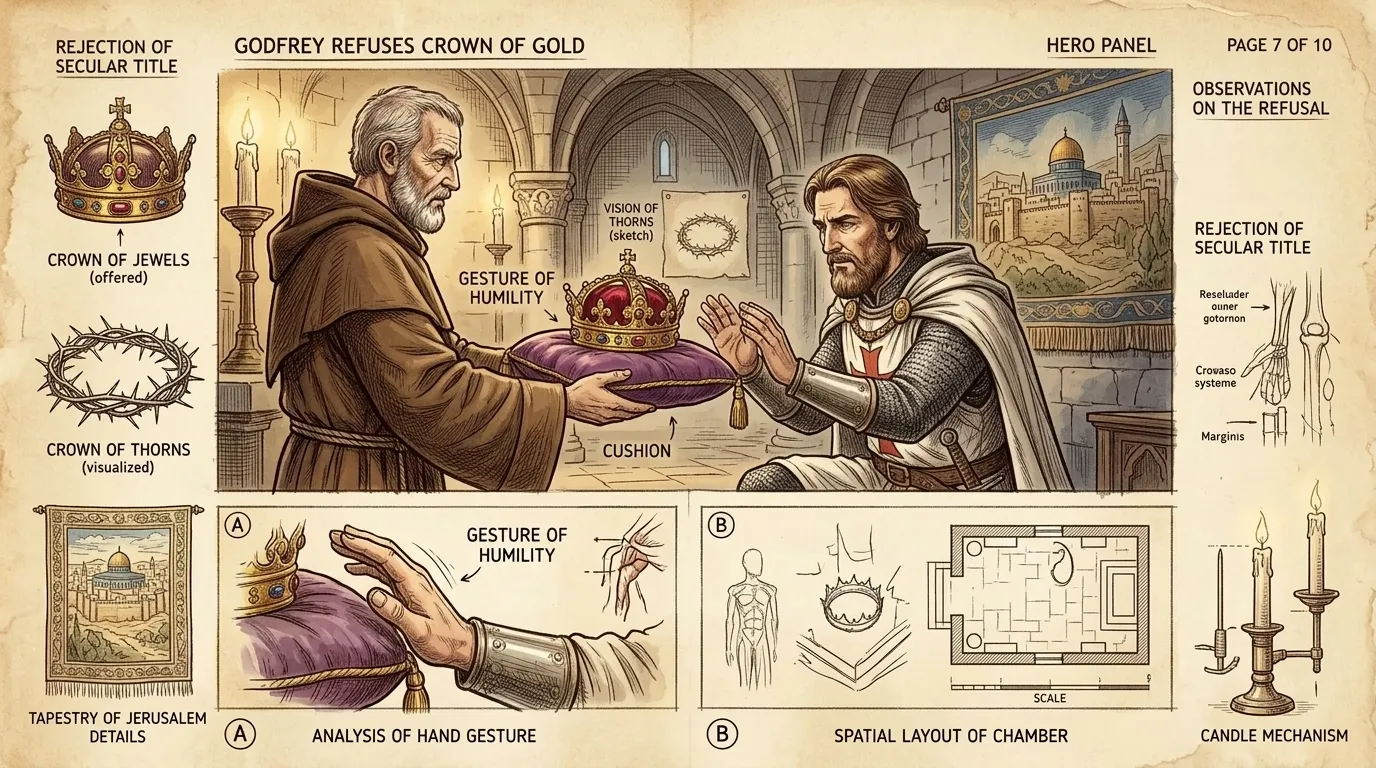
Godfrey of Bouillon, known for his immense piety, refused to be crowned king of Jerusalem. "I will not wear a crown of gold where Christ wore a crown of…
Godfrey of Bouillon, known for his immense piety, refused to be crowned king of Jerusalem. "I will not wear a crown of gold where Christ wore a crown of thorns," he insisted. He chose instead the title of Defender of the Holy Sepulchre, showing his devotion.

Godfrey of Bouillon, known for his immense piety, refused to be crowned king of Jerusalem. "I will not wear a crown of gold where Christ wore a crown of thorns," he insisted. He chose instead the title of Defender of the Holy Sepulchre, showing his devotion.

Page 8

On July 15, 1099, the crusaders finally breached Jerusalem's walls. The fighting was fierce and merciless. The crusaders, driven by religious zeal, massacred…
On July 15, 1099, the crusaders finally breached Jerusalem's walls. The fighting was fierce and merciless. The crusaders, driven by religious zeal, massacred much of the population. "This is God's vengeance!" they cried.

On July 15, 1099, the crusaders finally breached Jerusalem's walls. The fighting was fierce and merciless. The crusaders, driven by religious zeal, massacred much of the population. "This is God's vengeance!" they cried.

Page 9

The Crusades — Middle East & Europe (1099, Middle East & Europe) — page 9 illustration — Wonder History

The victory at Jerusalem came at a great cost. The streets ran red with blood. Yet many crusaders wept with joy, believing they had fulfilled God's will. One knight, exhausted and covered in blood, muttered, "As Machiavelli said, 'The ends justify the means.' We have secured the Holy Land, no matter the price."

Page 10

The Crusades established a long-lasting European presence in the Middle East. Trade routes between East and West expanded, and new ideas flowed in both…
The Crusades established a long-lasting European presence in the Middle East. Trade routes between East and West expanded, and new ideas flowed in both directions. Though the Crusader states eventually fell, the memory of these holy wars shaped relations between Christians and Muslims for centuries to come. The cultural and political landscape of the Middle East was forever altered.

The Crusades established a long-lasting European presence in the Middle East. Trade routes between East and West expanded, and new ideas flowed in both directions. Though the Crusader states eventually fell, the memory of these holy wars shaped relations between Christians and Muslims for centuries to come. The cultural and political landscape of the Middle East was forever altered.

About this story

  • Historical figures: Godfrey of Bouillon, Raymond of Saint-Gilles, Bohemond of Taranto
  • Location: Middle East & Europe
  • Period: Middle Ages
  • Audience: general readers

Questions and answers

Questions and answers about The Crusades — Middle East & Europe (1099, Middle East & Europe)

Read Wonder History on your phone

Wonder History is available on Android. Get Wonder History on Google Play.

More Wonder History stories

All Wonder History stories · Open the library