The Defeat of the Spanish Armada (1588) - United Kingdom (1588, United Kingdom)
The Defeat of the Spanish Armada (1588) - United Kingdom (1588, United Kingdom) — an illustrated history story, featuring Queen Elizabeth I, Lord Howard of Effingham, Sir Francis Drake, set in United Kingdom. 10 illustrated pages, free to read on Wonder History.
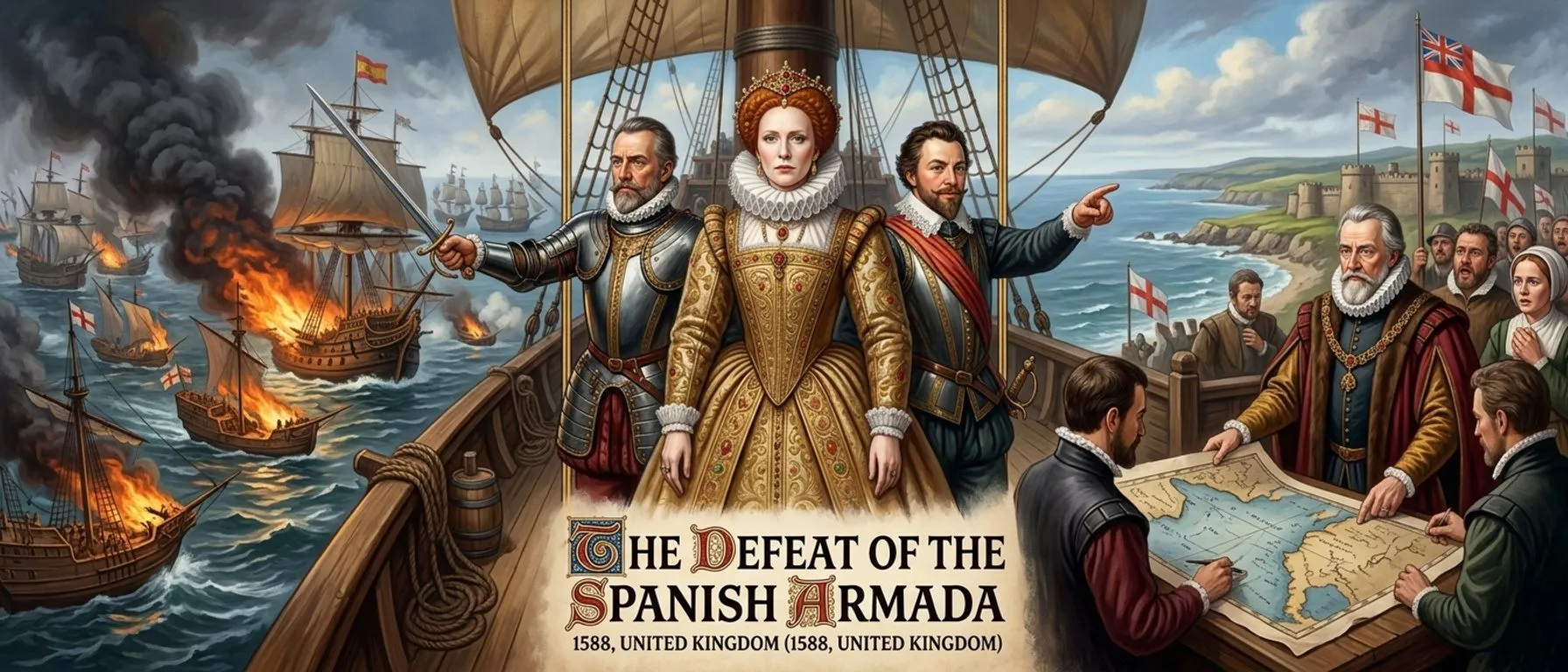
Page 1

July 29th, 1588. The English fleet, led by Lord Howard of Effingham, faced the seemingly invincible Spanish Armada in the English Channel. Sir Francis Drake, the notorious privateer, prepared his ship, the Revenge, for battle. Queen Elizabeth I, ever the symbol of defiance, addressed her troops, steeling them for the fight that would determine England's fate. The mighty Spanish galleons, commanded by the Duke of Medina Sidonia, sailed relentlessly towards the small but nimble English ships, ready to invade.
Historical Fact: The Spanish Armada consisted of approximately 130 ships and 20,000 soldiers. The English fleet, though smaller, was more maneuverable and heavily armed.
Page 2

Months before the clash, Queen Elizabeth I visited Tilbury, where English soldiers were training. Dressed in a silver breastplate over a white gown, she addressed her troops. "I know I have the body of a weak and feeble woman," she declared, "but I have the heart and stomach of a king, and of a king of England too!" Her words resonated with the soldiers, preparing them for the trials ahead.
""I know I have the body of a weak and feeble woman, but I have the heart and stomach of a king, and of a king of England too!""
Historical Fact: Elizabeth's speech at Tilbury is one of the most famous examples of royal oratory in English history, bolstering the morale of the English forces.
Page 3
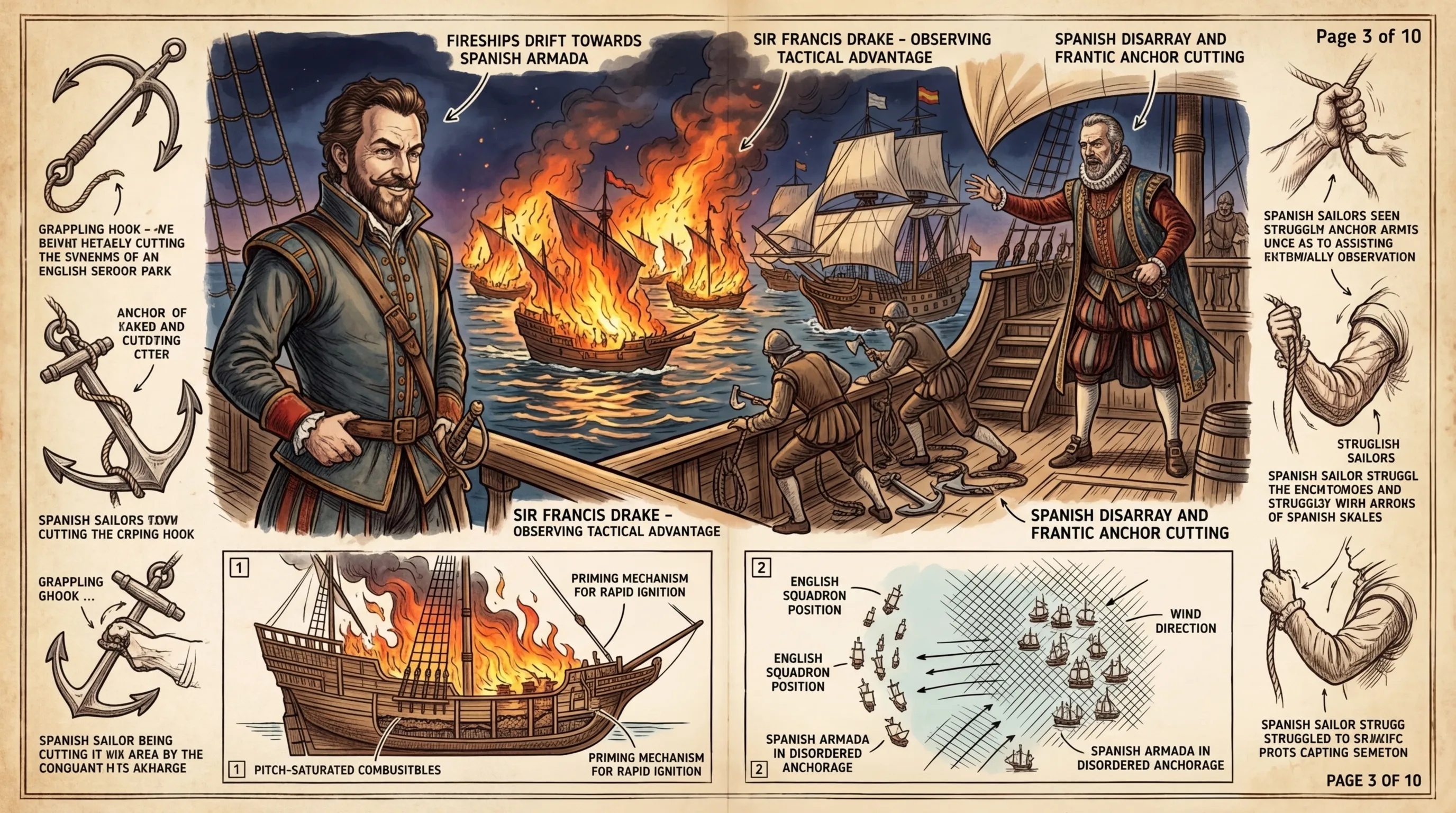
As the Armada anchored off Calais, Sir Francis Drake devised a daring plan. He filled eight old ships with pitch, brimstone, and gunpowder, setting them ablaze and sending them towards the anchored Spanish fleet. The fireships spread panic and chaos. The Spanish captains, fearing the inferno, cut their anchor cables and scattered into the North Sea.
Historical Fact: Drake's fireship tactic was a crucial turning point, breaking the Armada's formation and disrupting their planned invasion.
Page 4

On August 8th, 1588, the English and Spanish fleets clashed off Gravelines. The smaller, more agile English ships, commanded by Lord Howard and Drake, unleashed devastating broadsides upon the larger Spanish galleons. English cannon fire wreaked havoc on the Spanish ships. Their high decks and close quarters proved vulnerable.
Historical Fact: The Battle of Gravelines was a decisive victory for the English, but many Spanish ships remained afloat, fleeing north.
Page 5
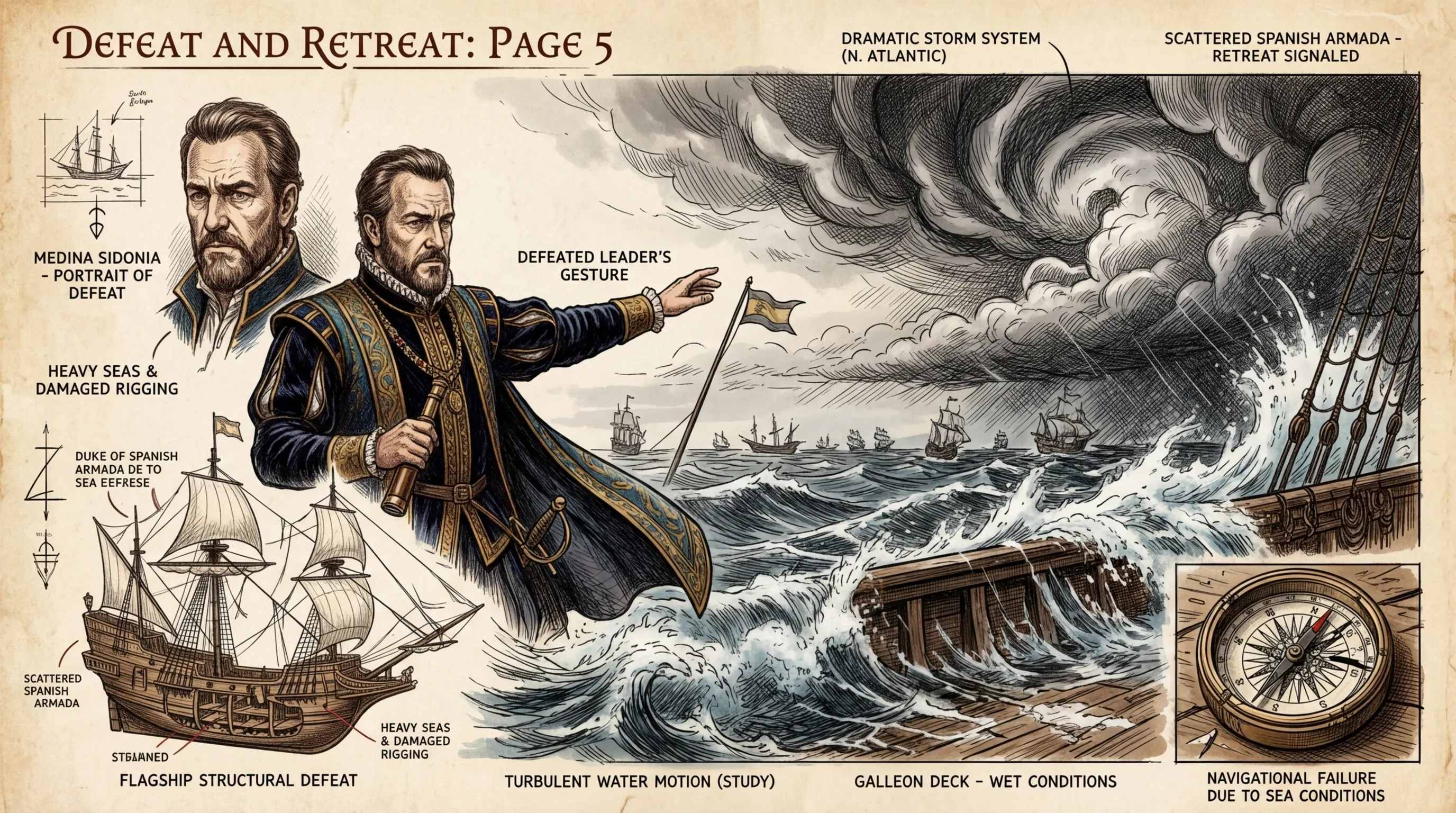
The Duke of Medina Sidonia, commander of the Armada, knew his invasion was doomed. He ordered the remnants of his fleet to retreat north, around Scotland and Ireland, hoping to return to Spain. But the relentless storms of the North Atlantic proved to be an even greater foe.
Historical Fact: The Duke of Medina Sidonia was an experienced administrator but lacked naval command experience. He took over command of the Armada after the death of Álvaro de Bazán, 1st Marquis of Santa Cruz.
Page 6
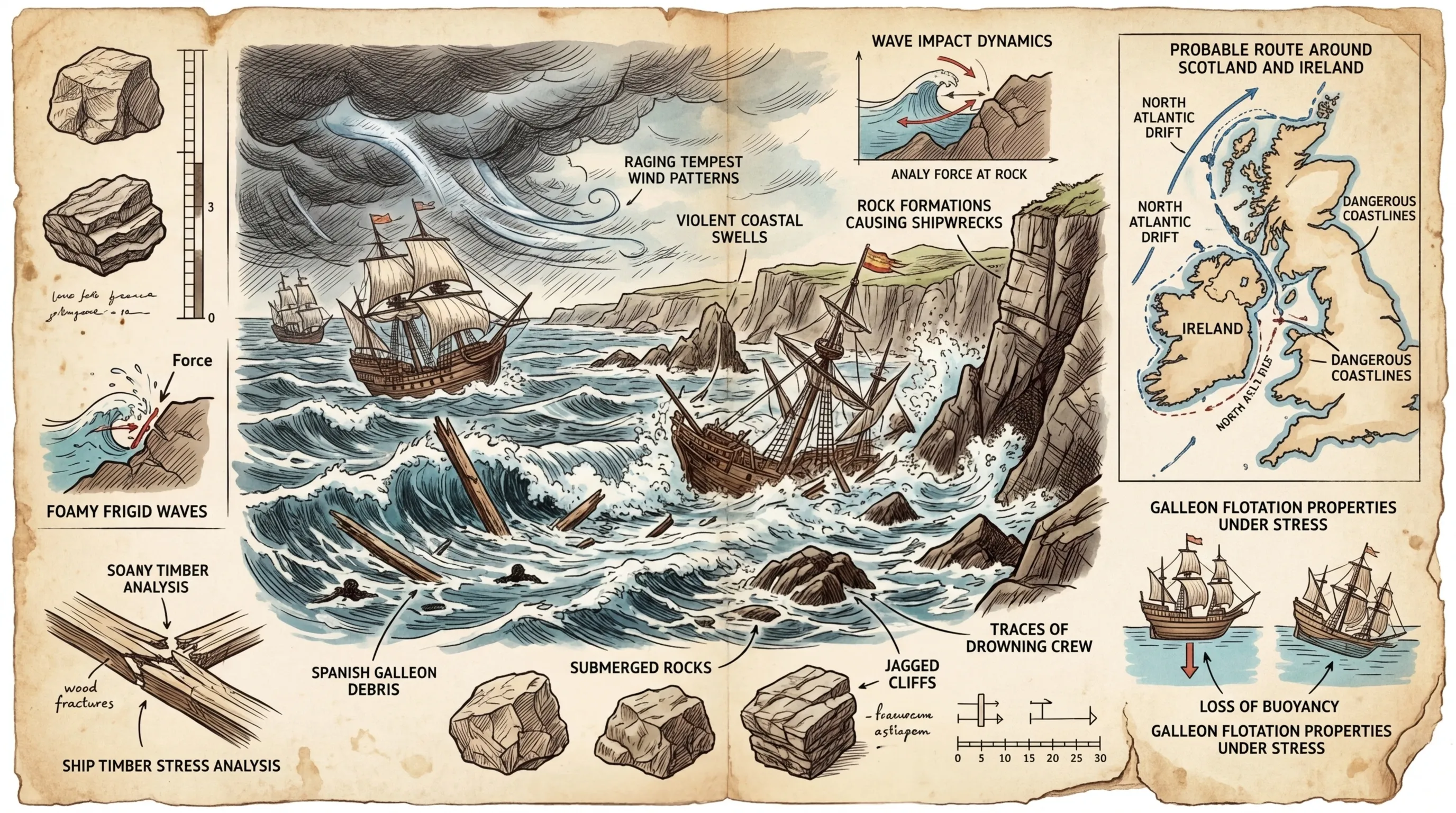
As the Armada sailed north, violent storms scattered and wrecked many ships along the coasts of Scotland and Ireland. Thousands of Spanish sailors drowned in the frigid waters. Their bodies washed ashore on the rocky coastlines. The English fleet, low on supplies, could not effectively pursue the retreating Armada.
Historical Fact: More Spanish ships were lost to storms and shipwrecks than to battle. It is estimated that over 5,000 Spanish sailors perished on the Irish coast.
Page 7
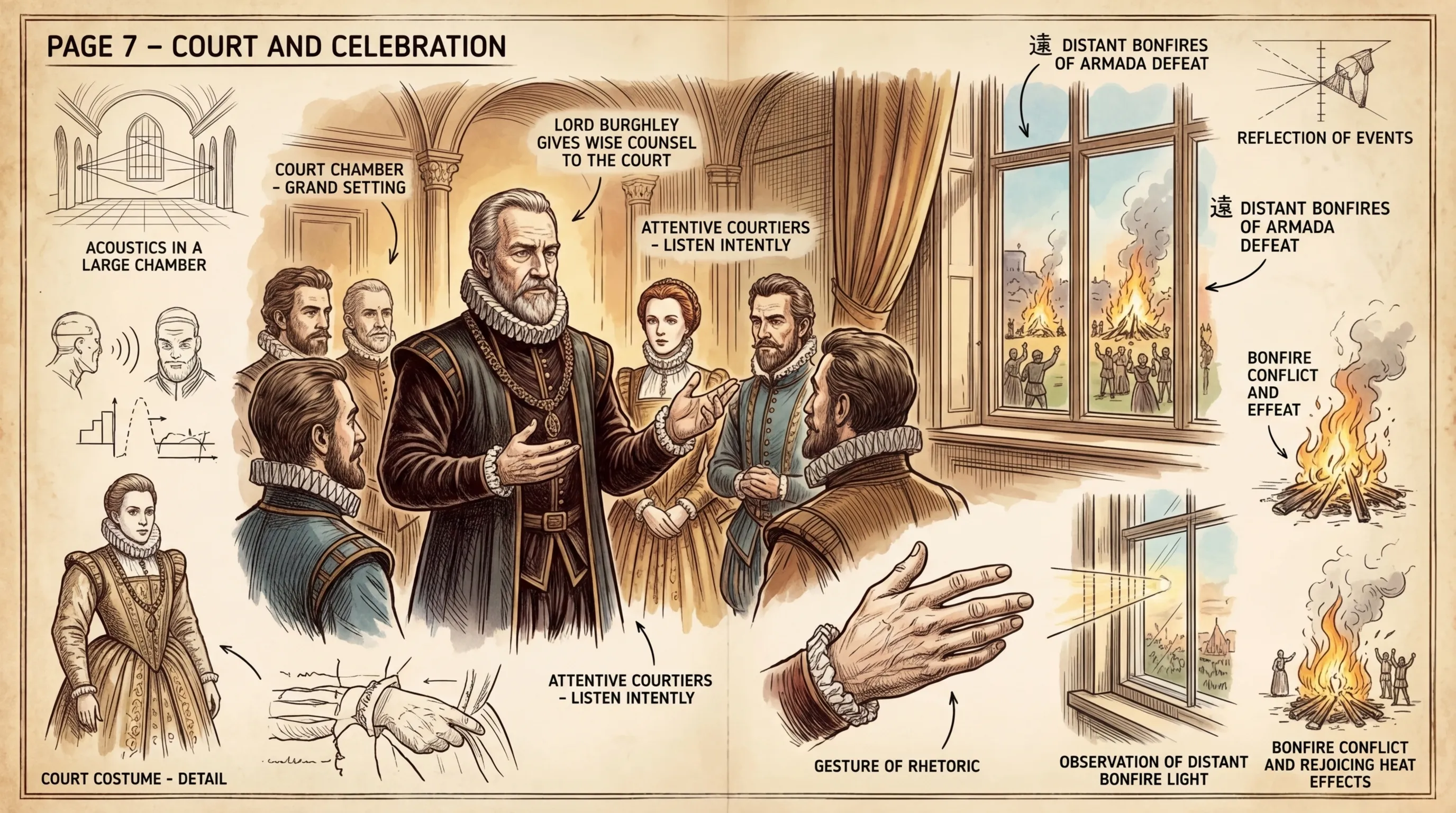
News of the Armada's defeat spread throughout England, igniting celebrations. Bonfires blazed, church bells rang, and people rejoiced. Yet, as Lord Burghley, Elizabeth's chief advisor, remarked, remembering the words of the Roman philosopher Seneca, "Every new beginning comes from some other beginning's end." He reminded the court that vigilance was still necessary.
""Every new beginning comes from some other beginning's end.""
Historical Fact: Lord Burghley served as Elizabeth's chief advisor for most of her reign, guiding England through many challenges.
Page 8
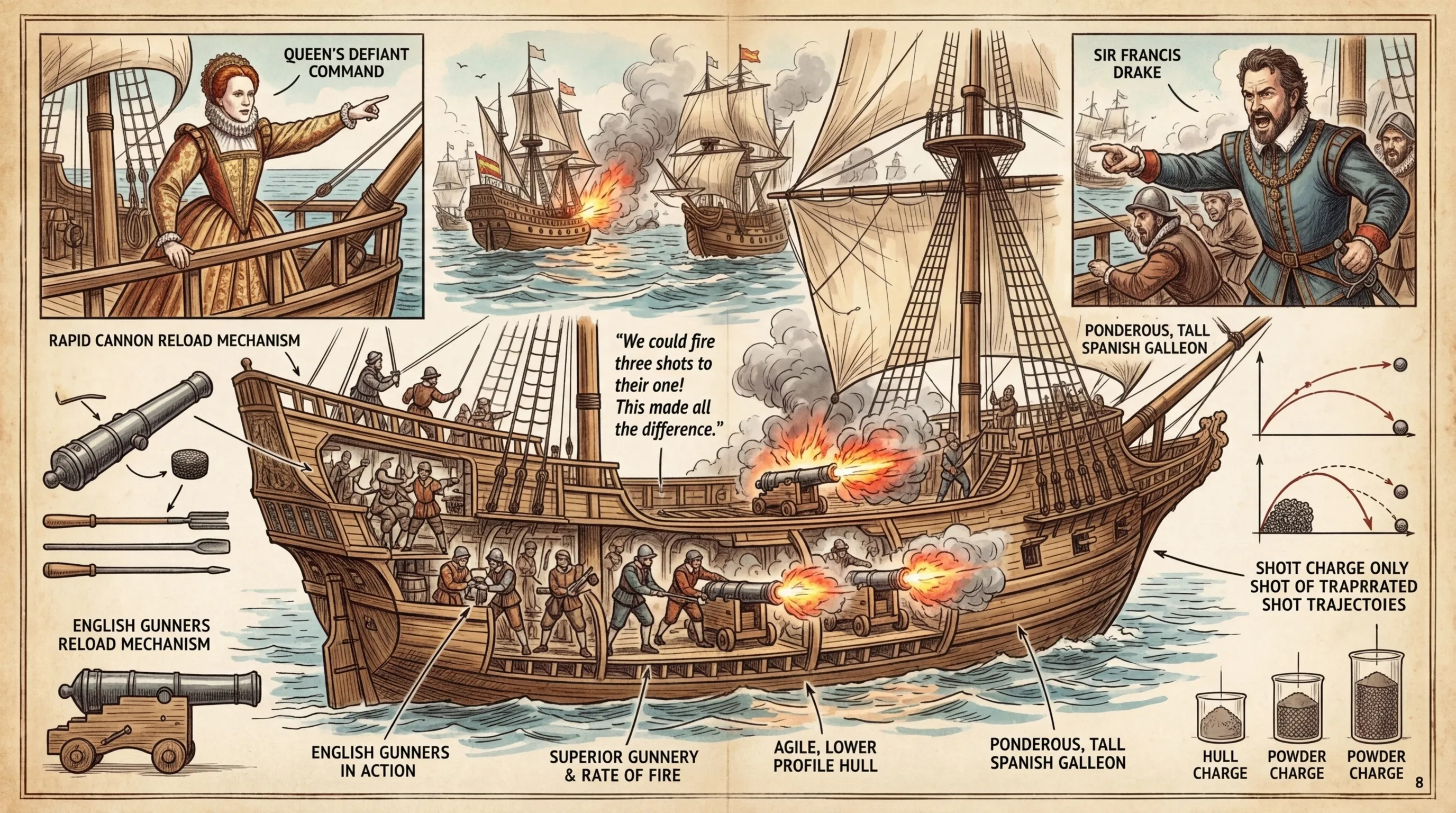
One key advantage the English had was better ship design and gunnery. English ships were smaller, faster, and easier to maneuver. English gunners were more skilled at reloading and firing their cannons quickly. One English sailor recalls: "We could fire three shots to their one! This made all the difference."
""We could fire three shots to their one! This made all the difference.""
Historical Fact: English ships were designed with lower profiles and were equipped with longer-range cannons, giving them a tactical advantage.
Page 9
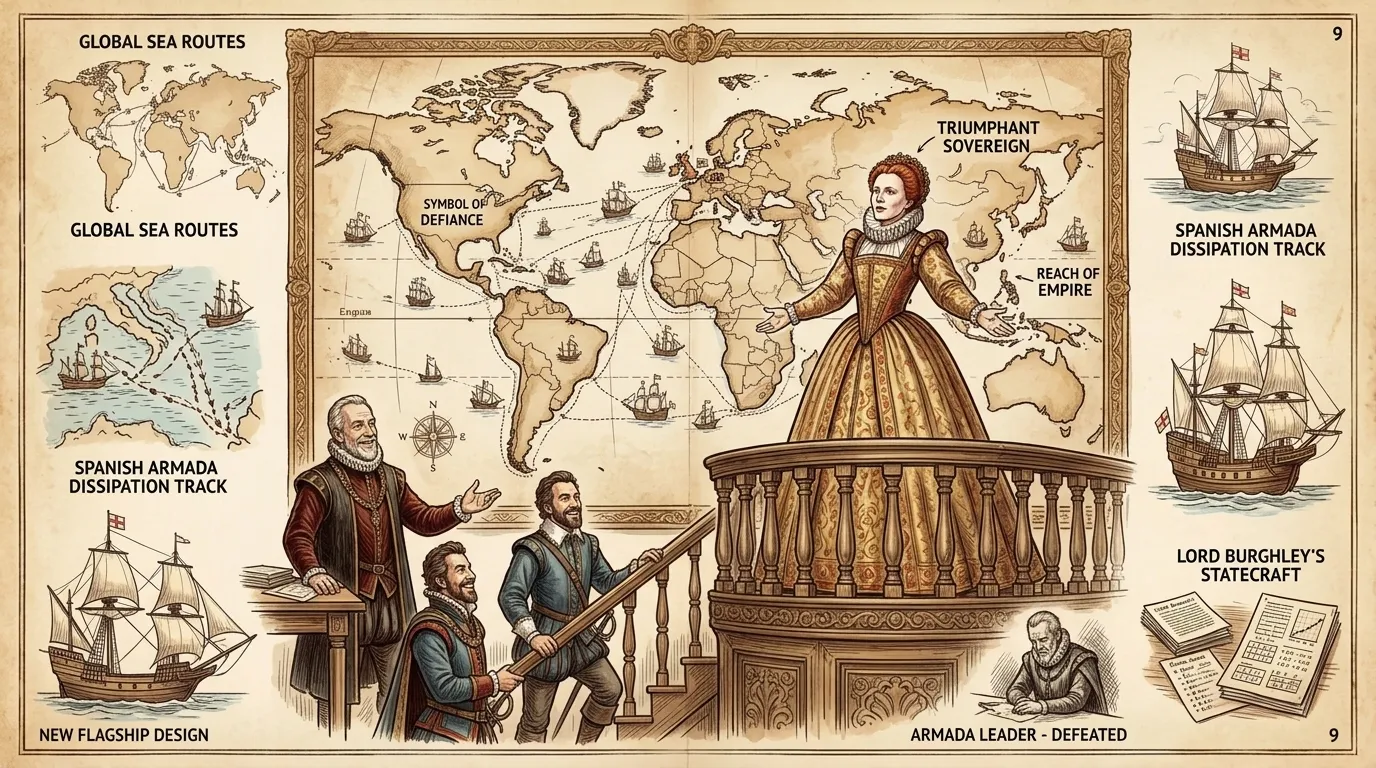
For Queen Elizabeth I, the defeat of the Spanish Armada was a triumph of Protestant England over Catholic Spain. She became a symbol of strength and resilience. England's naval power began to grow, eventually laying the foundation for a vast empire.
Historical Fact: The victory over the Armada marked the beginning of England's rise as a major naval power, paving the way for its global expansion.
Page 10
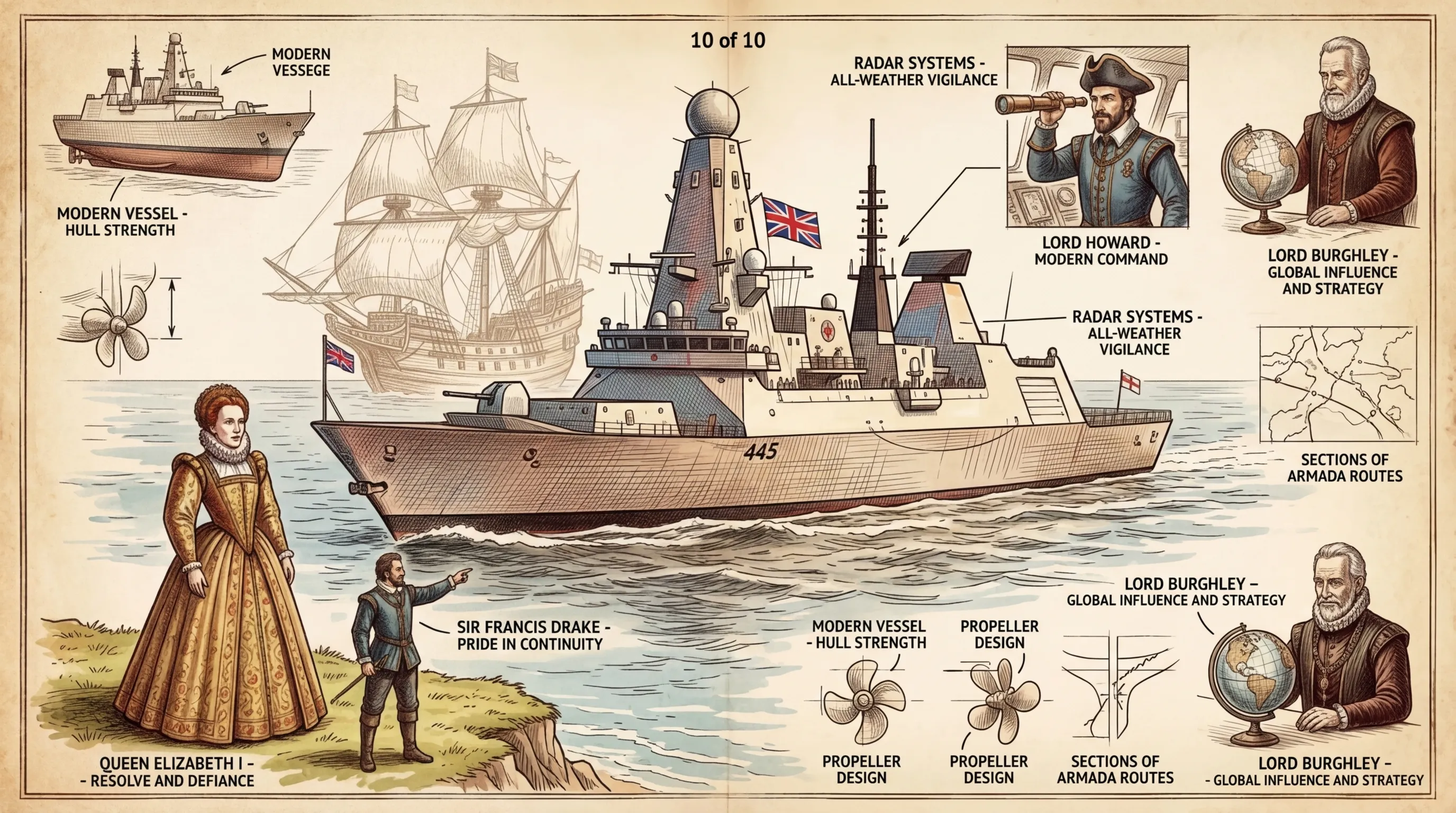
Centuries later, the defeat of the Spanish Armada remains a pivotal moment in English history. It solidified England's independence, promoted maritime innovation, and shaped the course of global power. Its legacy is reflected in the maritime traditions and enduring spirit of England. Today England is a very strong country.
Historical Fact: The defeat of the Spanish Armada is still remembered today as a symbol of English resilience and naval prowess.
About this story
- Historical figures: Queen Elizabeth I, Lord Howard of Effingham, Sir Francis Drake
- Location: United Kingdom
- Period: Early Modern
- Audience: general readers
Questions and answers
Read Wonder History on your phone
Wonder History is available on Android. Get Wonder History on Google Play.
More Wonder History stories
- The Delano Grape Strike (1965, Delano)
- The Discovery of the New World (1492, Europe)
- The Edict of Milan (313 AD) - Italy (313 AD, Italy)
- The End of the Atlantic Slave Trade (1829, USA)
- The End of the Polish-Lithuanian Commonwealth (1773, Russia)
- The English Civil War — United Kingdom (1649, United Kingdom)