The Congress of Vienna (1814, Europe)
The Congress of Vienna (1814, Europe) — an illustrated history story, featuring Tsar Alexander I, Klemens von Metternich, Charles Maurice de Talleyrand-Périgord, set in Europe. 10 illustrated pages, free to read on Wonder History.
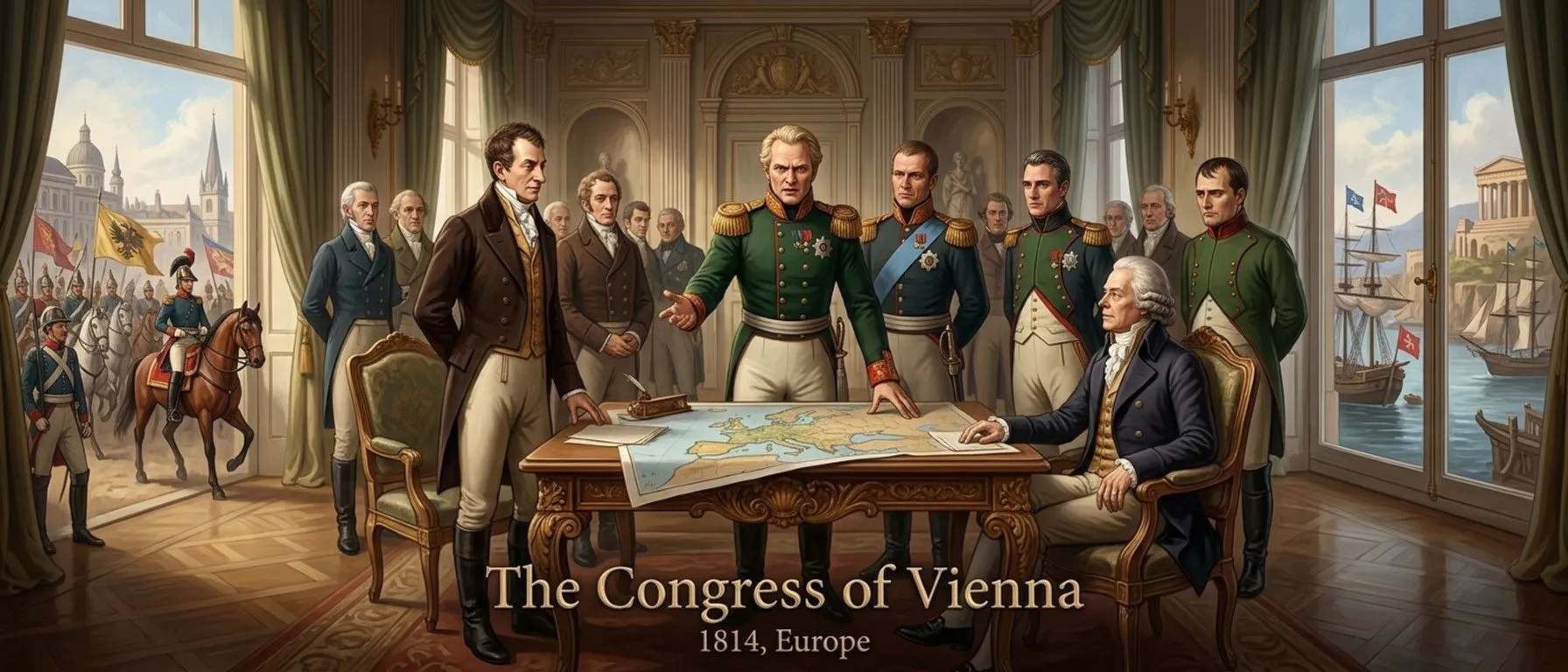
Page 1

Vienna erupted in a whirlwind of dignitaries, each vying for influence after Napoleon's fall. Tsar Alexander I of Russia strode through the grand ballroom, his eyes scanning the assembly, while Klemens von Metternich, the Austrian Foreign Minister, orchestrated events with calculated precision. Talleyrand, the wily French diplomat, observed from a distance, already plotting France's resurgence. But how could a shattered Europe be pieced back together?
Page 2

The year is 1814. Europe lay exhausted after decades of war, fueled by Napoleon Bonaparte's ambition. From his exile on Elba, Napoleon still loomed large in everyone's minds. Robert Stewart, Viscount Castlereagh, the British Foreign Secretary, reminded the assembled diplomats that lasting peace could only be achieved through a balance of power. "We must ensure," Castlereagh declared, "that no single nation can again dominate the continent."
Page 3
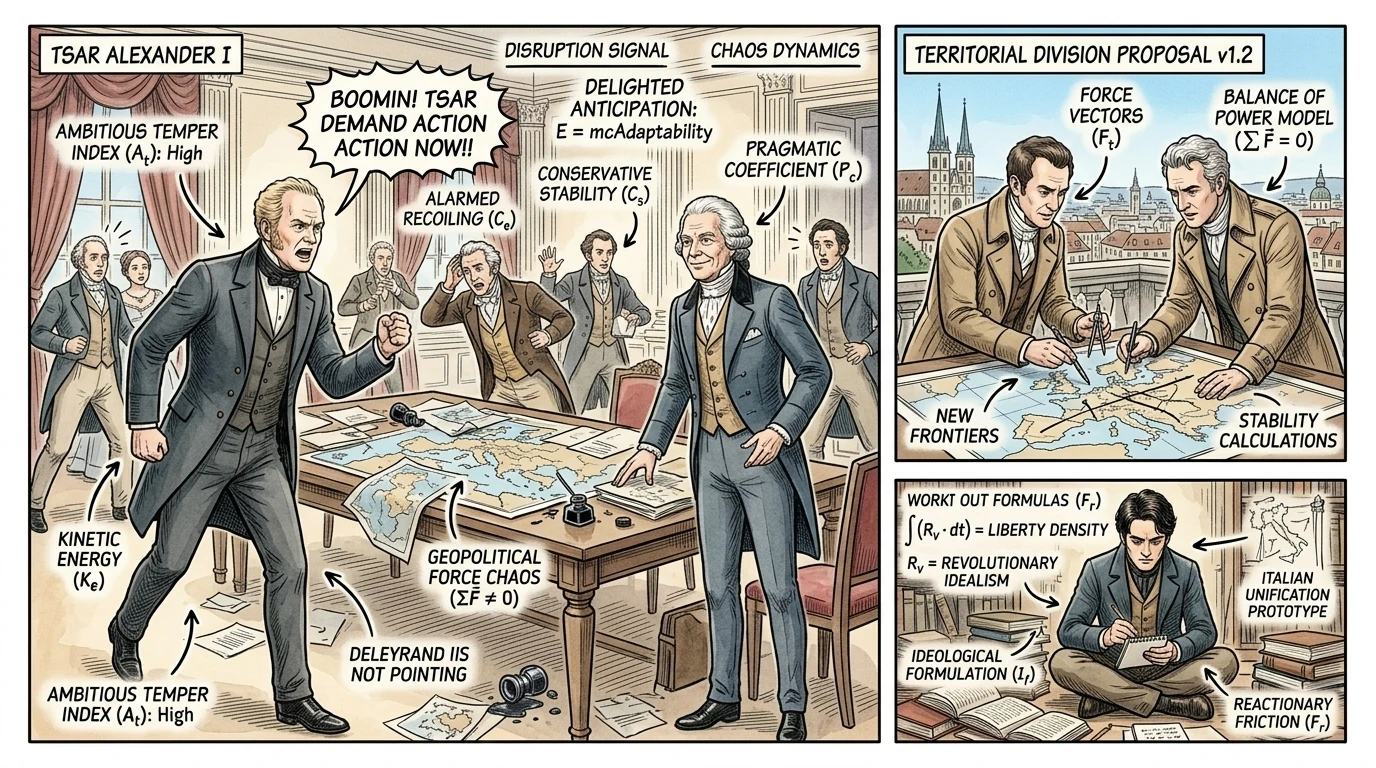
News arrived that Napoleon had escaped Elba! "He is back!" Talleyrand exclaimed, a hint of something like delighted anticipation in his voice. The Congress was thrown into chaos, old rivalries momentarily forgotten as the threat of Bonaparte united them. Alexander, pacing anxiously, demanded immediate action. "We must crush him once and for all!" he boomed.
Page 4
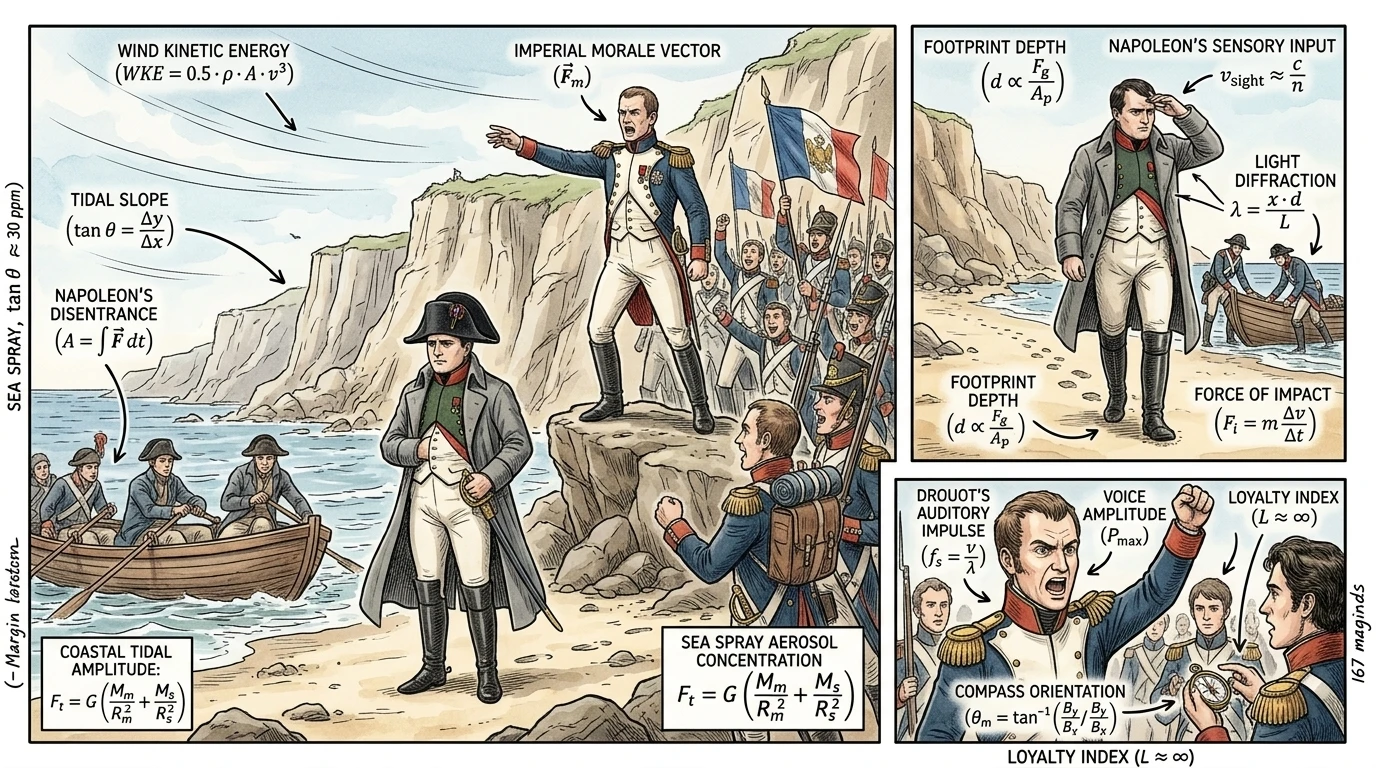
Antoine Drouot, Napoleon's loyal general, rallied the remaining Imperial Guard as Bonaparte landed in France. 'The Eagle will fly again!'
Page 5

As the armies marched towards Waterloo, Metternich, ever the pragmatist, sought to salvage the Congress. He pressed the other powers to finalize the agreements, reminding them that Napoleon's return was a temporary setback. "We must," Metternich insisted, "sign what we have written, and sign it now. Bonaparte is weather. Treaties are stone. If we adjourn to watch a battle, we will have nothing to show whichever man wins it." The delegates went back to their maps.
Page 6

The Battle of Waterloo raged. Napoleon, astride his white horse, ordered his troops forward against the Duke of Wellington's lines. Cannon fire shook the earth, and smoke filled the air. Drouot fought valiantly, but the Allied forces held firm. News of the battle's tide, though delayed, started arriving in Vienna.
Page 7

News of Napoleon's defeat at Waterloo reached Vienna. "It is done," Castlereagh announced. "Bonaparte is finished!" The Congress erupted in celebration. Metternich quickly capitalized on the victory, pushing through the final agreements. Europe would be reshaped according to the principles of legitimacy and balance of power.
Page 8
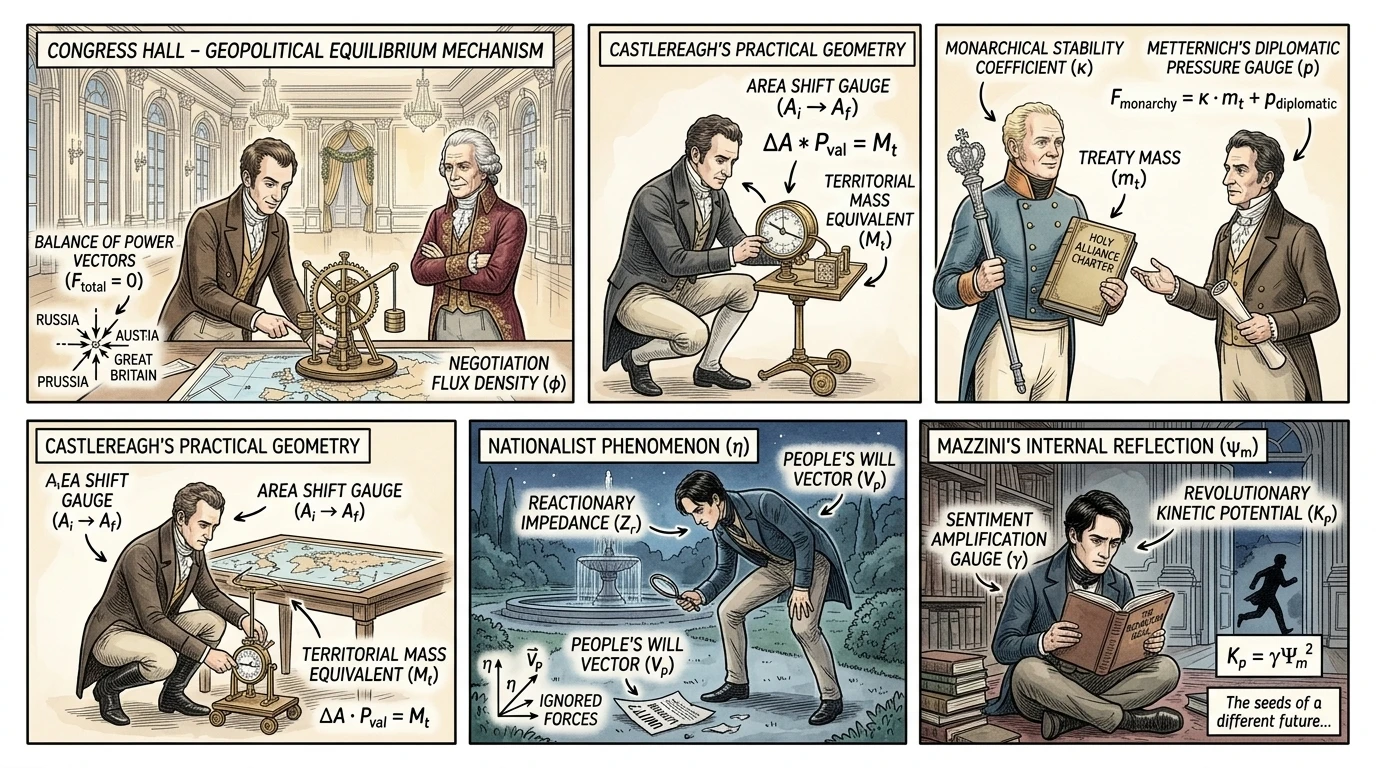
The Congress of Vienna redrew the map of Europe. France was contained, monarchies were restored, and a new era of relative peace began. But the seeds of future conflict were also sown. The Congress largely ignored the rising tide of nationalism. As the Italian revolutionary, Giuseppe Mazzini, later said, quoting Dante Alighieri, 'The darkest places in hell are reserved for those who maintain their neutrality in times of moral crisis.' He believed the Congress had failed to address the true desires of the people.
Page 9

Giuseppe Mazzini, a young and ardent nationalist, watched the proceedings with growing frustration. He saw the Congress as a betrayal of the people's desire for self-determination. "The map of Europe," Mazzini lamented, "has been redrawn by kings and princes, not by the will of the nations."
Page 10

Though the Congress of Vienna achieved a century of relative peace, its failure to address the forces of nationalism and liberalism ultimately led to further conflict. The seeds planted by Mazzini and others would sprout into revolutions across Europe, reshaping the continent once more. The balance of power was, ultimately, an illusion.
About this story
- Historical figures: Tsar Alexander I, Klemens von Metternich, Charles Maurice de Talleyrand-Périgord
- Location: Europe
- Period: Modern
- Audience: general readers
Questions and answers
Questions and answers about The Congress of Vienna (1814, Europe)
Read Wonder History on your phone
Wonder History is available on Android. Get Wonder History on Google Play.
More Wonder History stories
- The Congress of Vienna — Austria (1814, Austria)
- The Conquests of Alexander the Great — Europe, Asia, Africa (334 BC, Europe)
- The Coronation of Charlemagne (800 AD) - Italy (800 AD, Italy)
- The Crimean War — Crimea (Ukraine) (1854, Crimea)
- The Crusades — Middle East & Europe (1099, Middle East & Europe)
- The Decision to Drop the Atomic Bomb (1945, United States)