Hospital Bed
Hospital Bed — an illustrated inventions story, set in Global. 10 illustrated pages, free to read on Wonder Inventions.
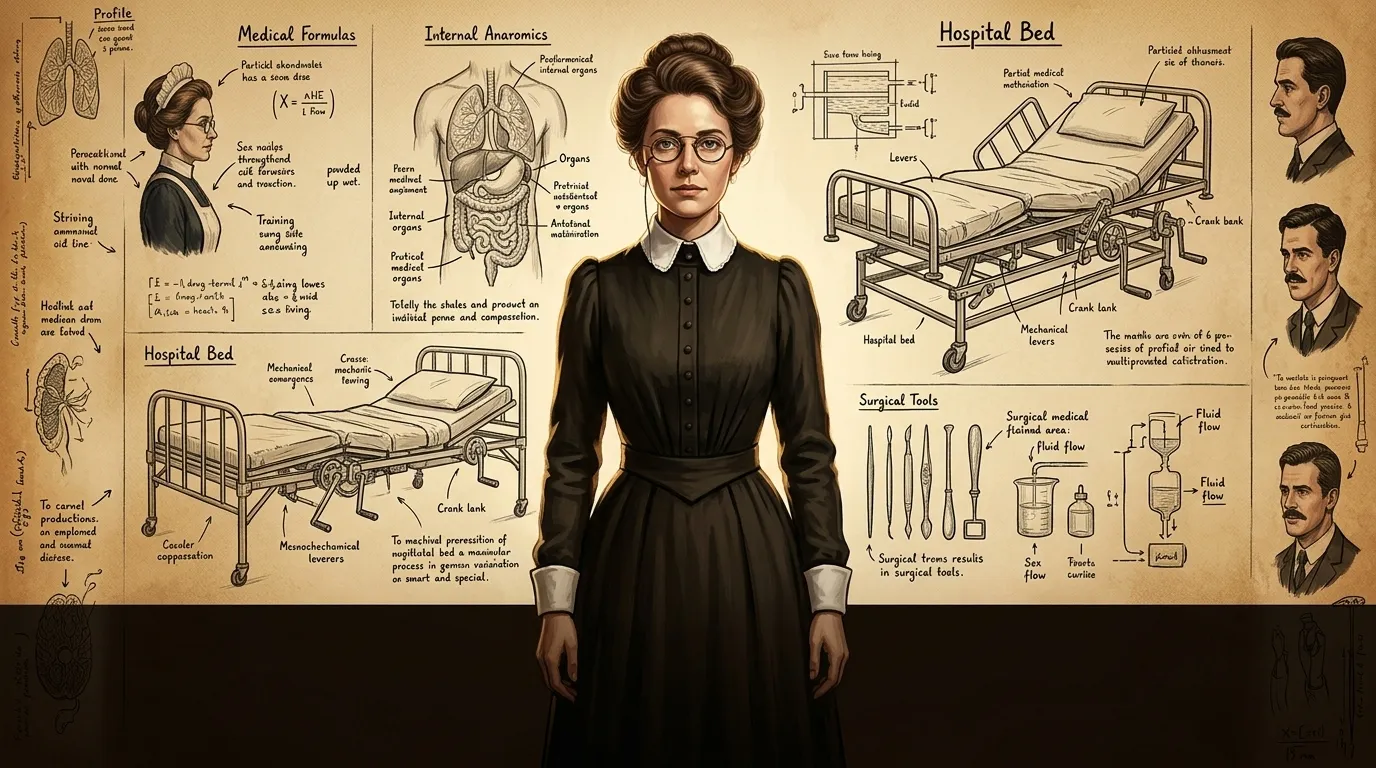
Page 1
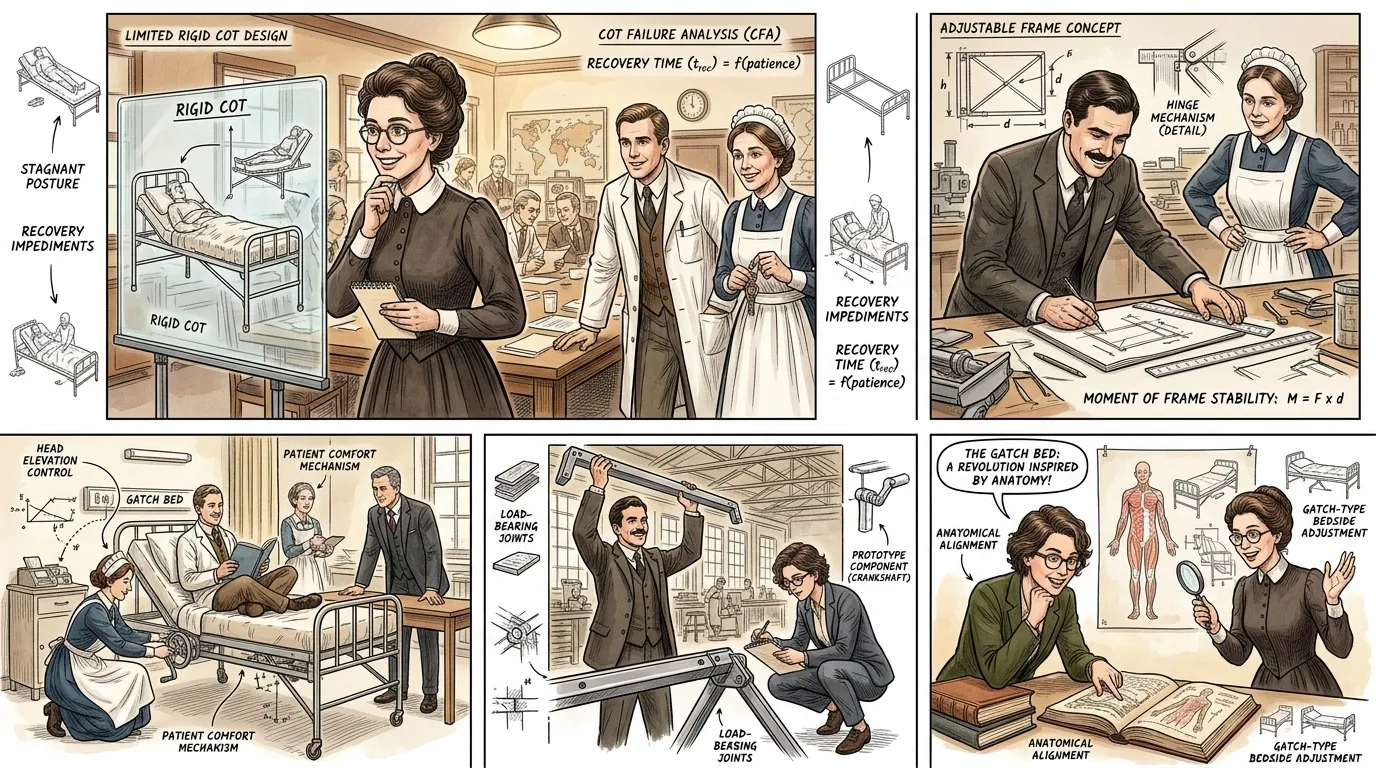
For centuries, patient care was fundamentally limited by the static nature of the bed. Recovery was hampered, and immense physical strain placed on caregivers trying to alleviate discomfort.
"Dr. Eleanor Vance, an early 20th-century physician, once remarked during a medical conference, 'We can treat the disease, but without proper support for the body, we are fighting a losing battle against the very bed meant to aid recovery.' She gestured to an illustration of a rigid cot."
Page 2
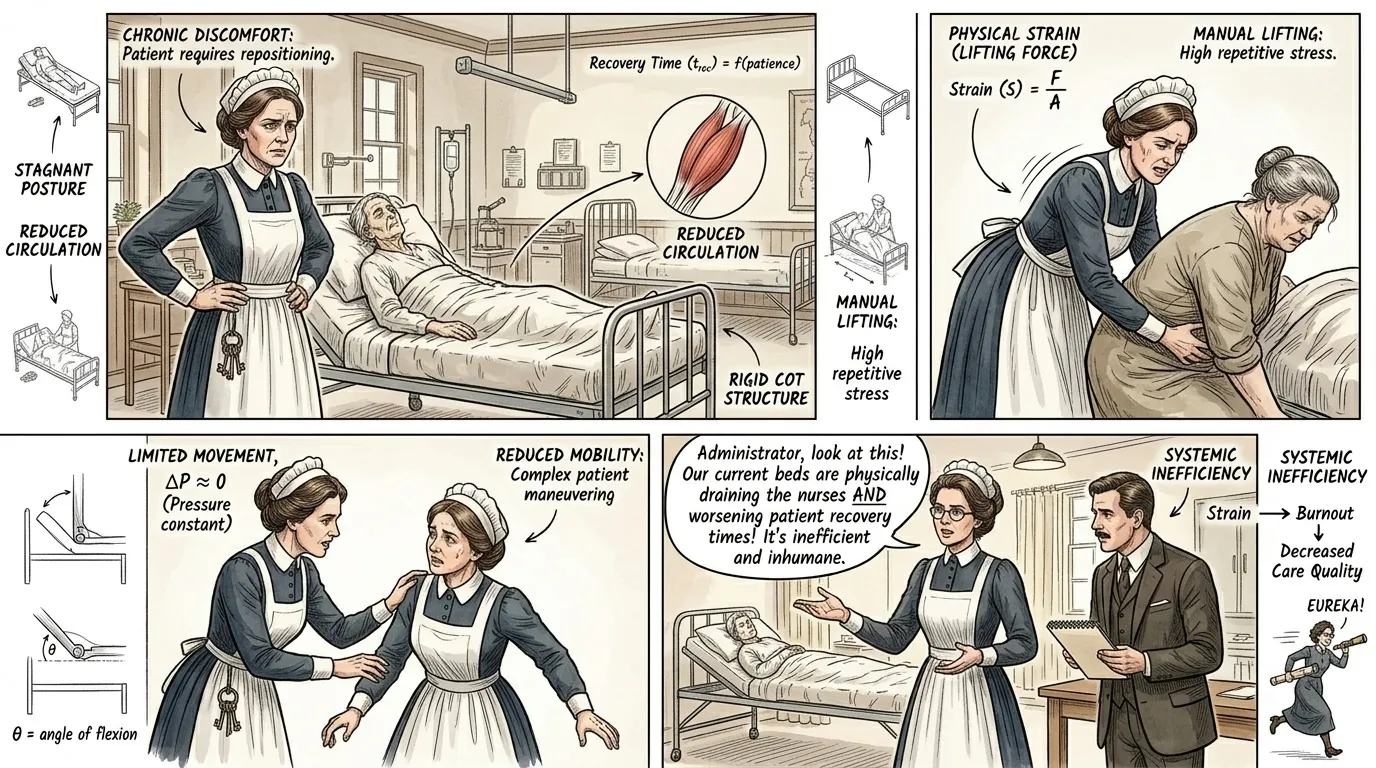
The limitations of a flat bed led to severe complications: bedsores developed from constant pressure, aspiration risks increased, and basic acts like eating or breathing deeply became agonizing struggles. Caregivers, predominantly nurses, faced relentless physical exertion.
"A seasoned hospital matron, observing a patient's discomfort, once noted with frustration, 'As Florence Nightingale famously wrote, 'The very first requirement in a hospital is that it should do the sick no harm.' Yet, these unyielding beds often inflict more misery than they prevent, forcing us to constantly lift and turn.'"
Page 3
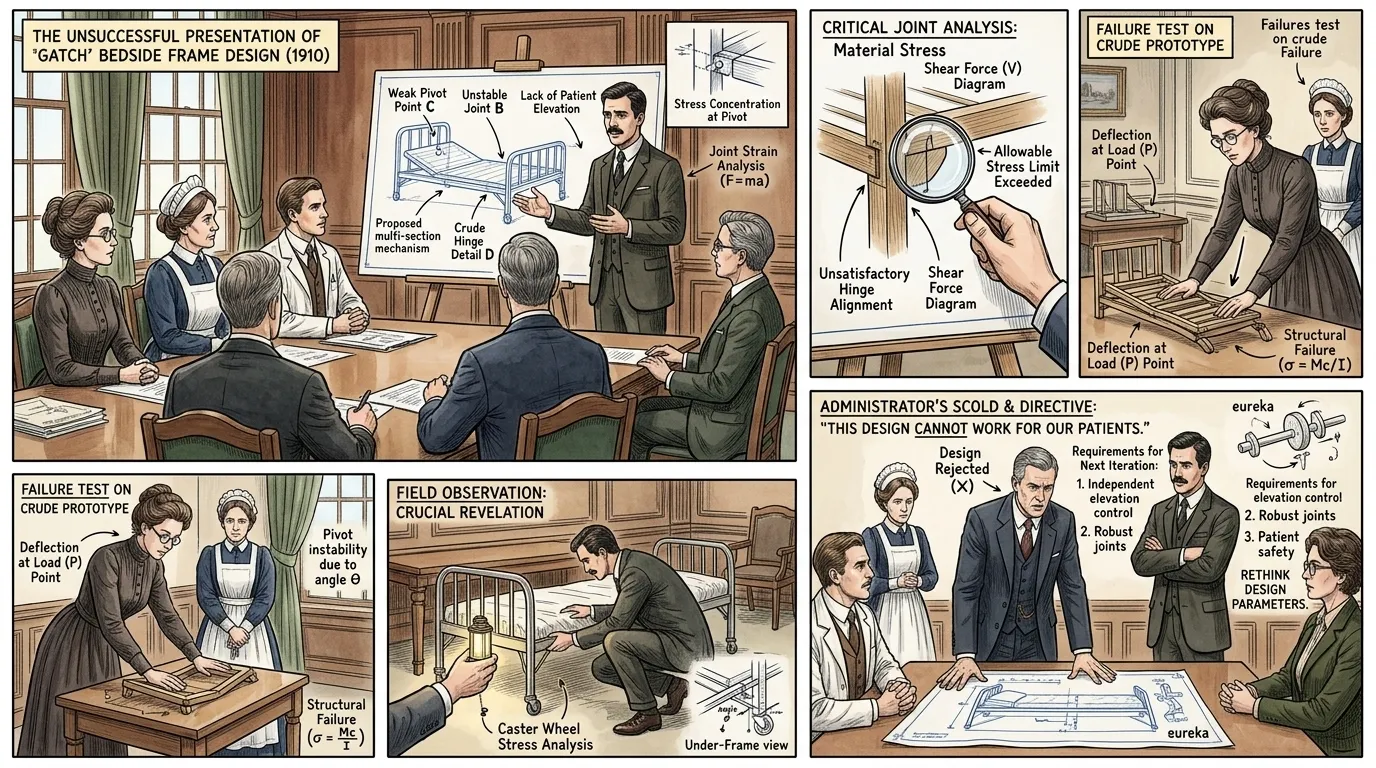
Before a true breakthrough, rudimentary attempts to alleviate patient discomfort included stacking numerous pillows or crude hinged wooden frames, but these solutions were unstable, uncomfortable, and offered minimal practical adjustment. They often shifted, collapsed, or required immense physical effort to reposition.
"An early 20th-century engineer, presenting to a hospital board, confessed, 'We tried hinged wooden frames, gentlemen, as a means to elevate, but they proved unstable, cumbersome, and offered very limited, awkward positions. The mechanisms were too fragile, the support inadequate.' He points to a blueprint depicting a simple, multi-section wooden bedframe with exposed, weak pivot points."
Page 4
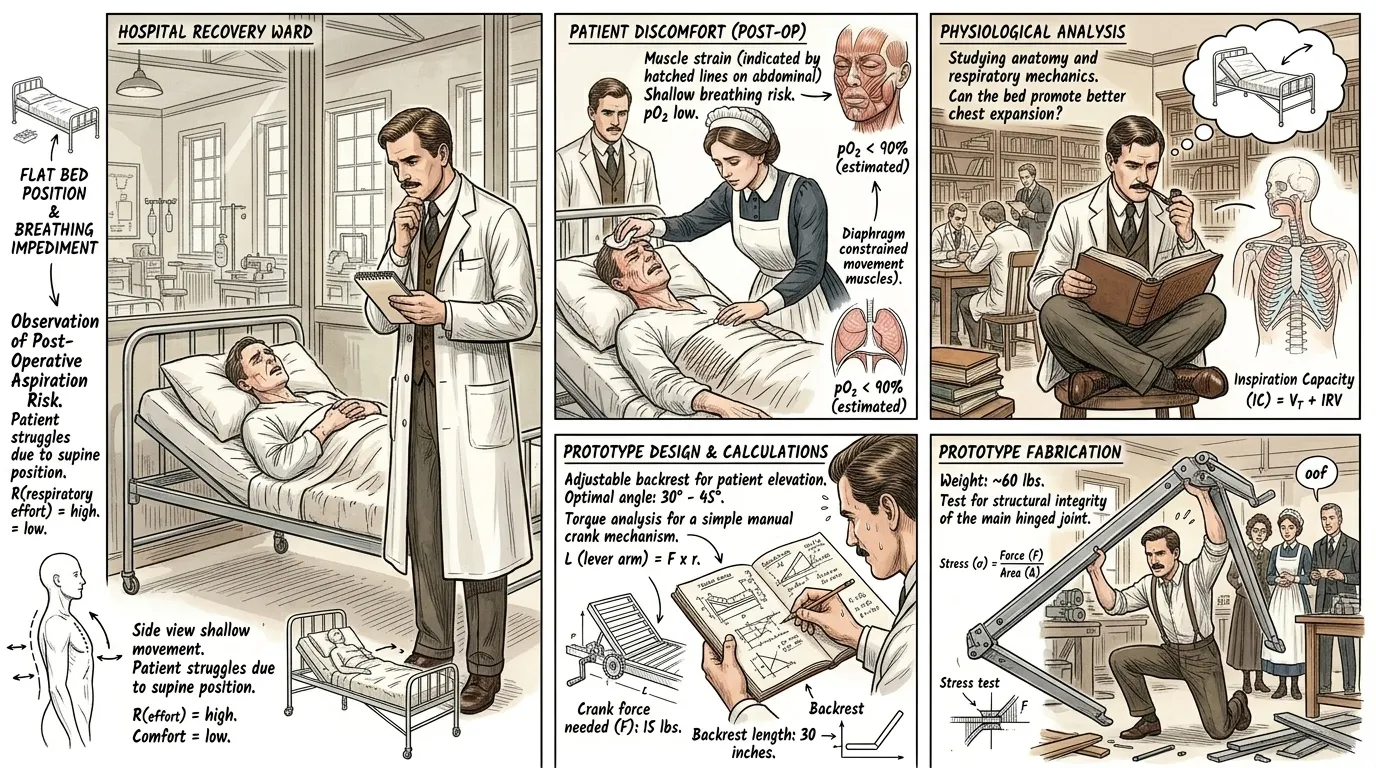
Dr. Willis D. Gatch, a distinguished surgeon at Johns Hopkins and later Indiana University, brought a unique perspective to the problem. Witnessing postoperative recovery firsthand, he understood the critical need for better patient positioning, not just for comfort, but for therapeutic benefit.
"In an archival interview, Dr. Gatch articulated his driving philosophy: 'After every operation, I observed the profound struggle of patients unable to breathe deeply, unable to eat comfortably, their recovery often hindered by the very beds meant to aid them. I knew we could do better; we had to.'"
Page 5
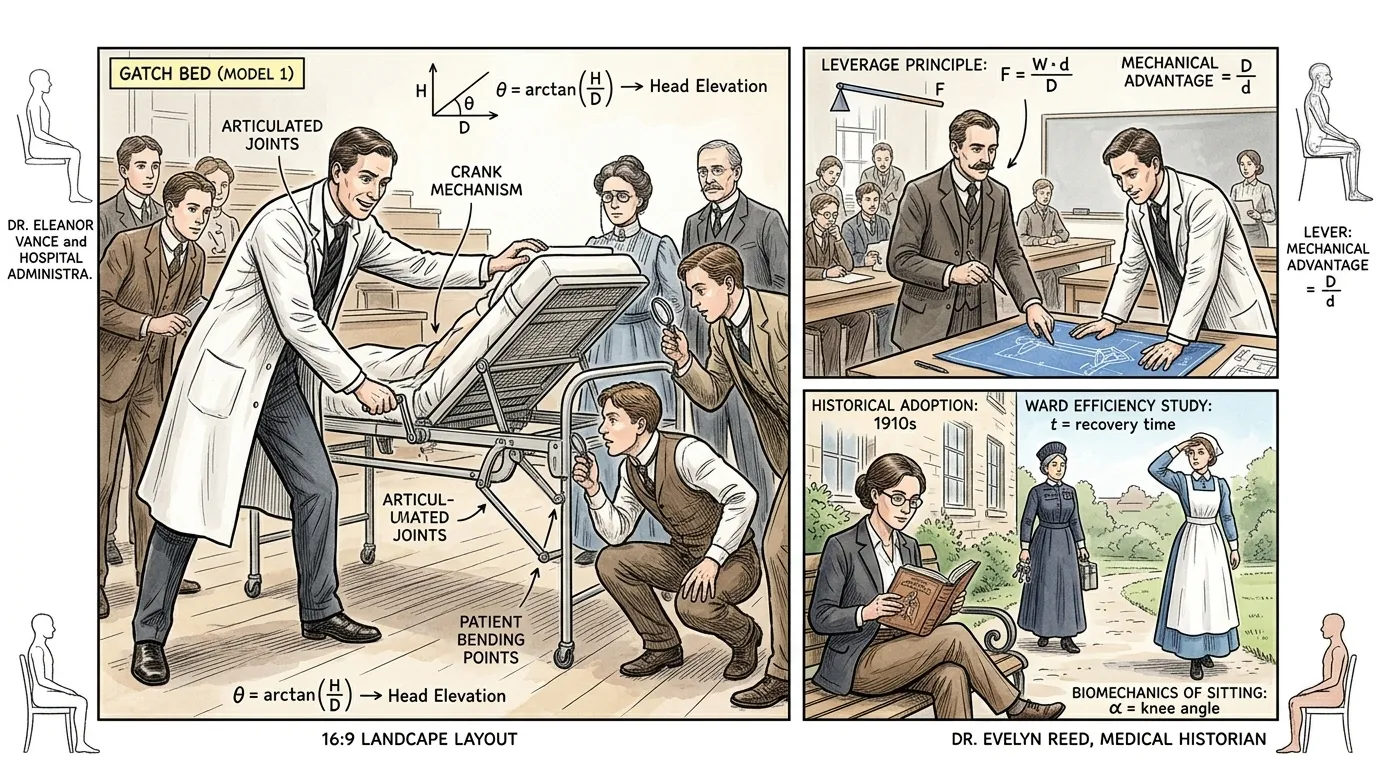
Gatch's genius lay in recognizing that merely raising the head was insufficient. The body needed specific, simultaneous articulation at multiple points to prevent sliding, improve circulation, and reduce pressure on the abdomen and lower back. This led him to experiment with hinged sections that bent the patient, rather than just tilting them.
"While demonstrating an early, simple bed model, Dr. Gatch explained to a group of medical students, 'The fundamental error of past designs was simple elevation. The true solution, you see, is proper articulation at both the knees and the head simultaneously, to maintain a stable posture and prevent the patient from sliding down, thereby avoiding new complications.'"
Page 6
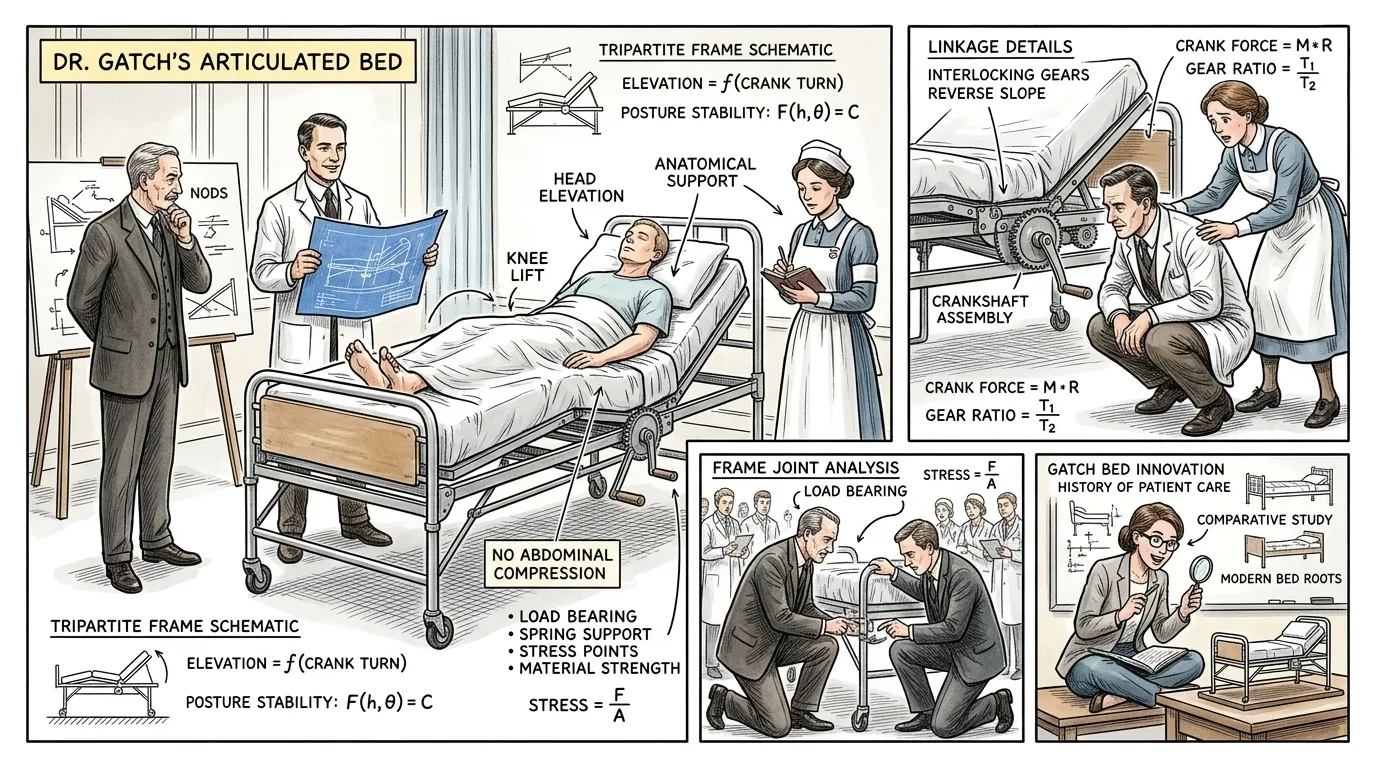
The cornerstone of Gatch's innovation was the three-segment articulated bed. His design allowed the head and foot sections to be raised independently, but crucially, the middle section remained fixed, creating a bend at the knees that prevented the patient from sliding down and significantly eased abdominal pressure.
"Presenting his fully functional prototype to an assembly of hospital administrators, Dr. Gatch declared, 'This bed, with its precise three-section articulation, provides a revolutionary stability. It lifts the head and the knees in concert, allowing patients to sit upright comfortably without compressing the abdomen or, critically, sliding down, a common and dangerous problem with earlier designs.'"
Page 7
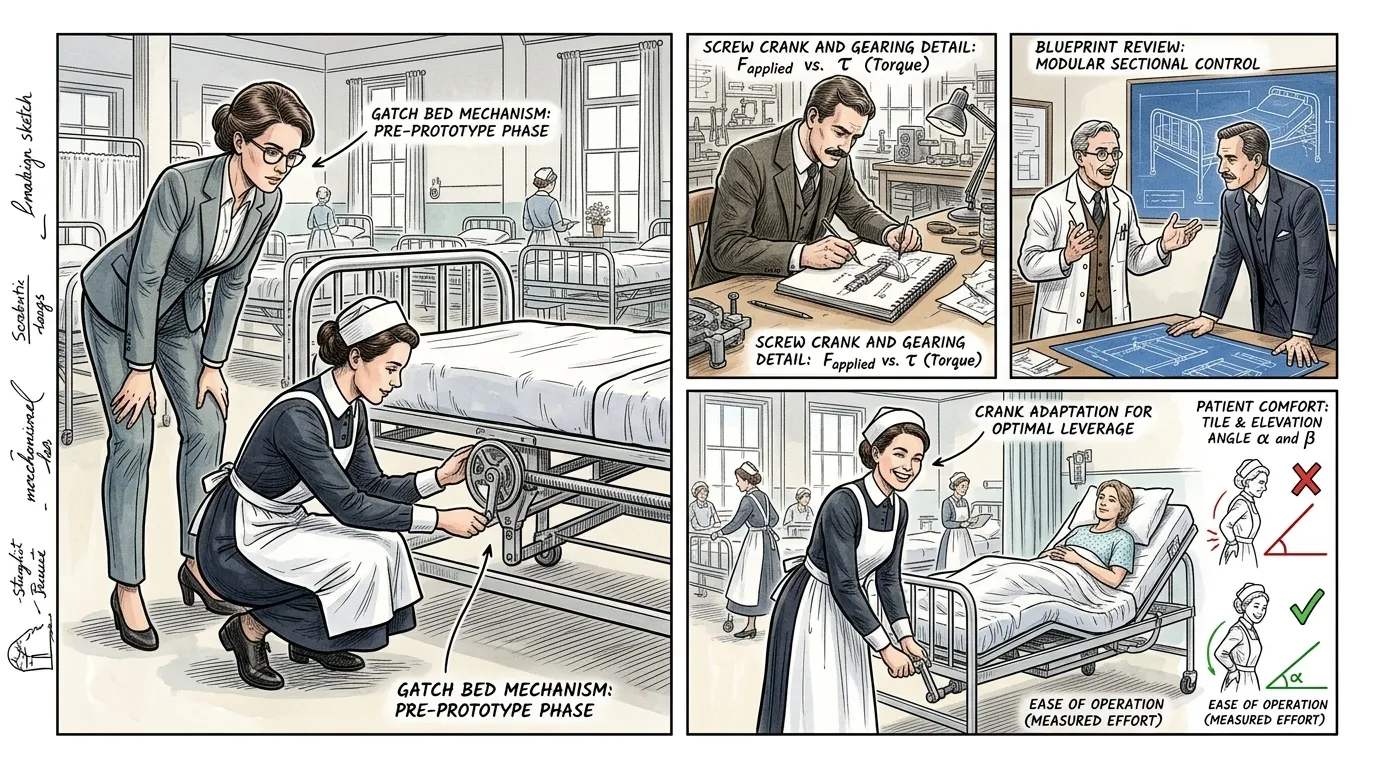
The Gatch bed's mechanical brilliance was not just in its articulation, but in its ease of operation. Cranks positioned at the foot of the bed engaged a system of gears and levers, allowing nurses to smoothly and effortlessly adjust patient positions with minimal physical strain. This empowered caregivers while vastly improving patient comfort.
"A nurse, her back no longer strained, exclaimed with relief to a colleague while easily adjusting a patient with the new cranks, 'Finally, we can reposition patients with dignity and without exhausting ourselves! The ease of these cranks is a true marvel, liberating us to provide better care.'"
Page 8
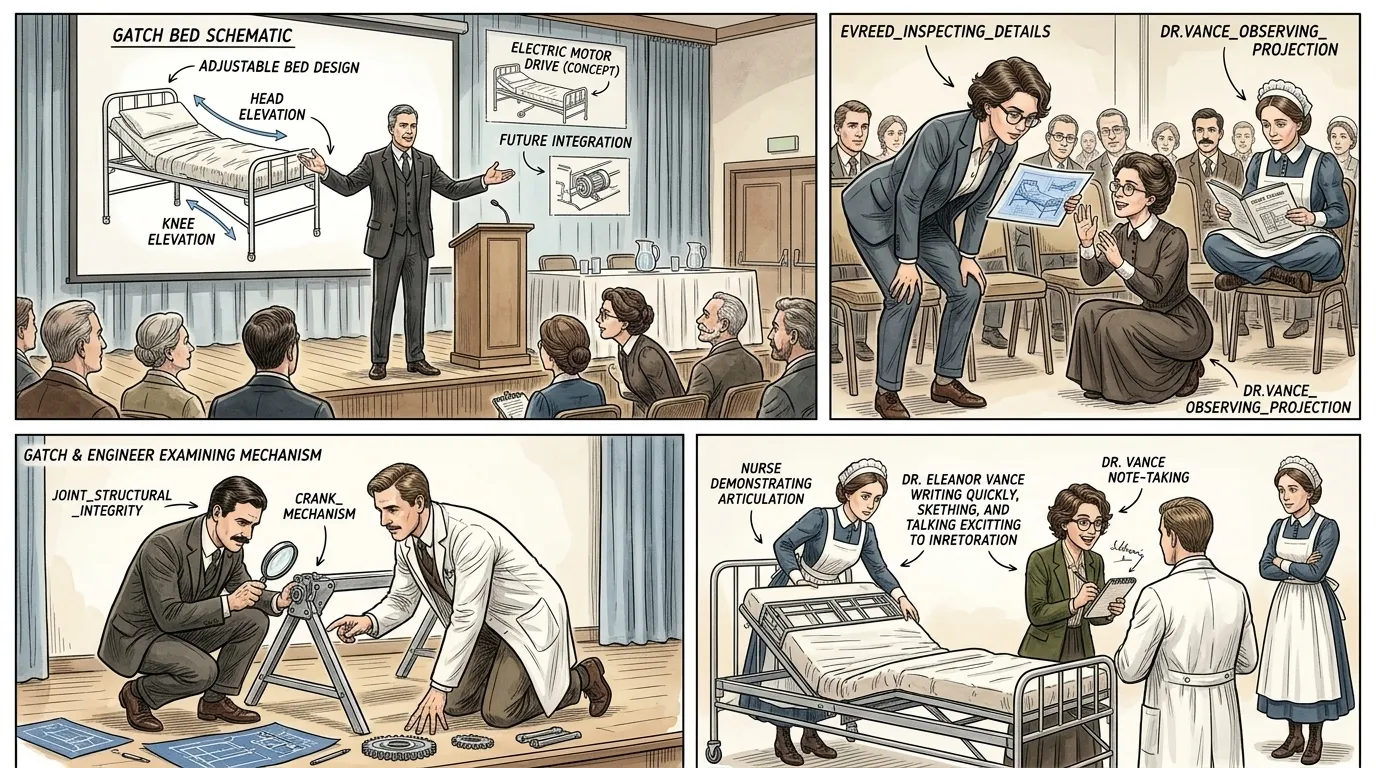
The Gatch bed's undeniable effectiveness led to its rapid adoption across hospitals worldwide, establishing it as a foundational piece of medical equipment. Its success paved the way for further innovations, notably the introduction of electric motors that replaced manual cranks, making adjustments even easier for patients and staff.
"A prominent hospital administrator, addressing a medical symposium in the 1940s, proudly stated, 'Our institutions have seen a tangible improvement in patient recovery rates and, just as importantly, a significant reduction in caregiver injuries, directly attributable to the widespread implementation of Dr. Gatch's revolutionary design.'"
Page 9

The adjustable hospital bed transcended mere comfort, becoming an indispensable tool for improved patient hygiene, reduced incidence of pneumonia and pressure ulcers, and facilitated better communication. It allowed patients to sit upright for conversations, meals, and examinations, fundamentally enhancing their experience and care.
"During a contemporary medical history lecture, Dr. Evelyn Reed, a renowned medical historian, articulated, 'The principles embedded in Gatch's initial design continue to underpin every modern hospital bed. It's a testament to how simple mechanical ingenuity can deliver profound, lasting consequences for patient health and dignity.'"
Page 10
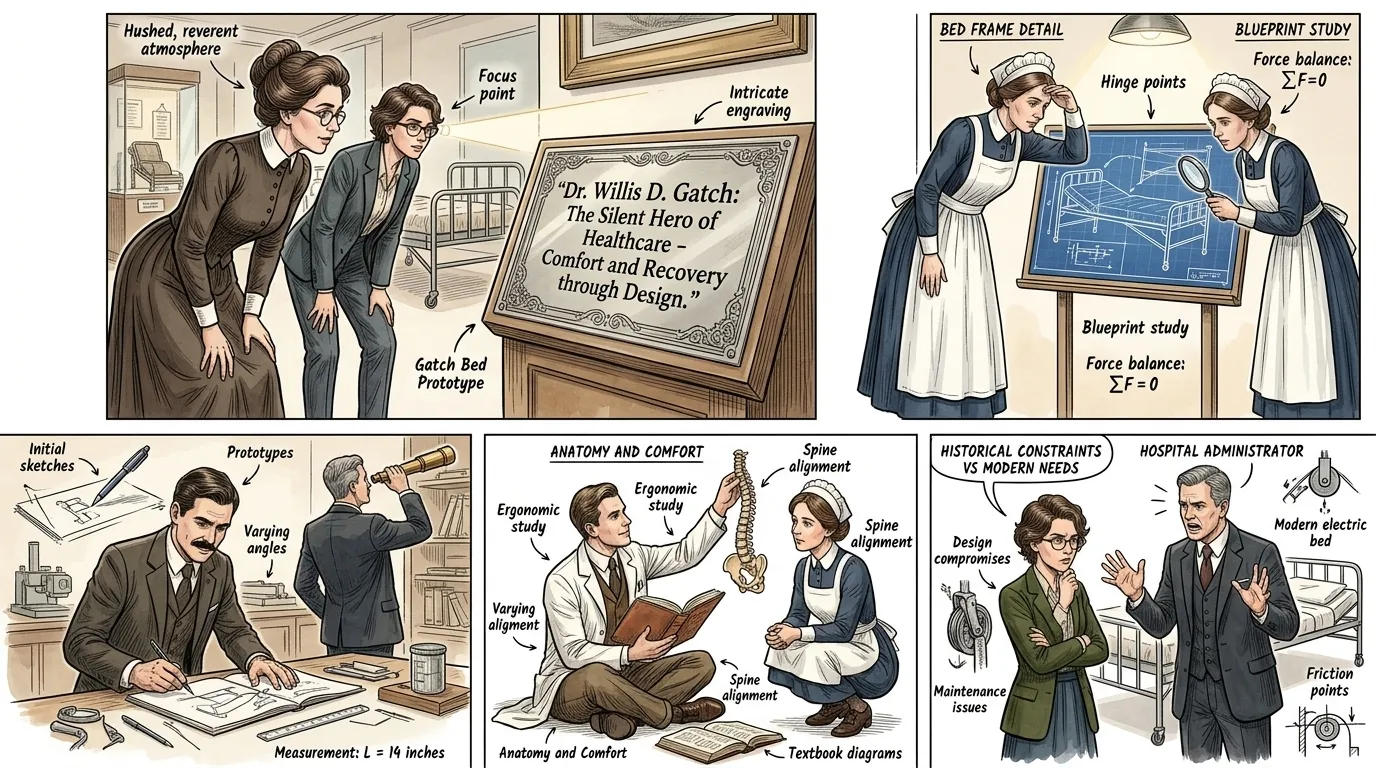
From its humble beginnings as a solution to immediate suffering, the hospital bed has evolved into a sophisticated, quiet hero of healthcare. Its journey reflects humanity's continuous pursuit of patient well-being and caregiver efficiency, transforming the very architecture of healing.
"An elegantly engraved plaque within a medical history exhibit reads, 'This silent hero of healthcare, often overlooked, stands as a profound testament to the power of thoughtful design in alleviating suffering and fostering recovery.' This quote, attributed to a leading medical ethicist, underscores its enduring significance."
About this story
- Location: Global
- Audience: general readers
Questions and answers
Read Wonder Inventions on your phone
Wonder Inventions is available on Android. Get Wonder Inventions on Google Play.