Hot Air Balloon
Hot Air Balloon — an illustrated inventions story, set in Global. 10 illustrated pages, free to read on Wonder Inventions.
Page 1
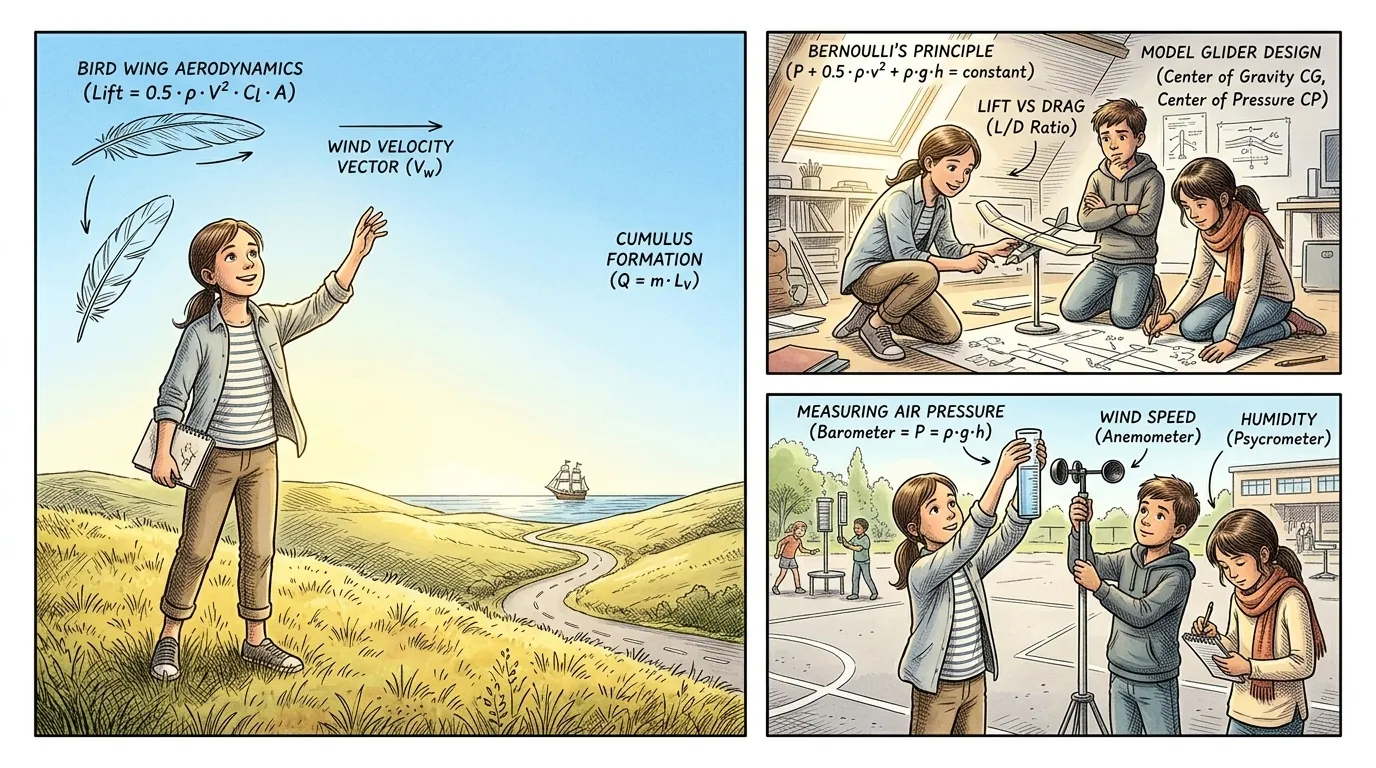
For millennia, human aspiration was bound to the earth. The sky, domain of birds and clouds, remained an unreachable frontier, a canvas for dreams and mythology, but never a path. Travel was confined to land and sea, limiting perspective, reconnaissance, and the very concept of human mobility. The yearning for flight persisted, a fundamental challenge to the perceived limits of existence.
Page 2
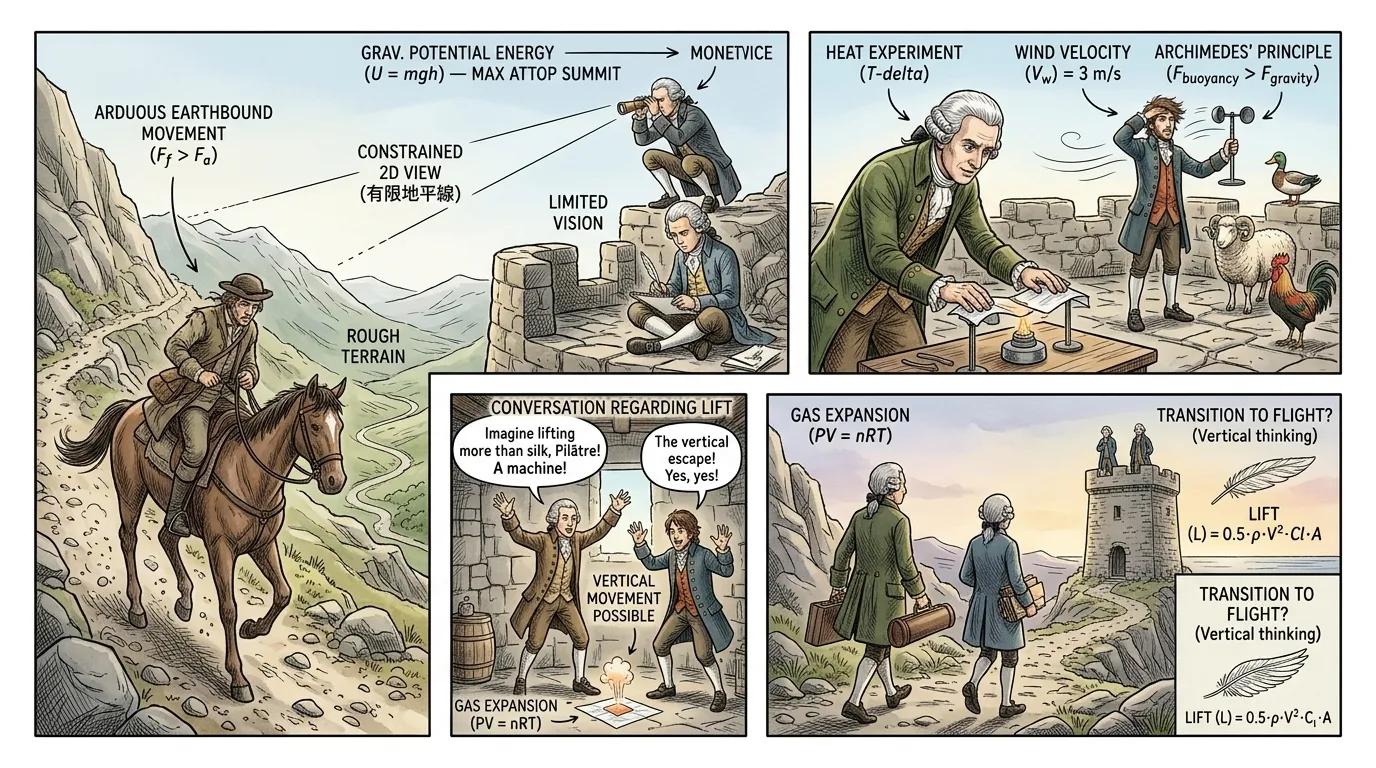
Before the advent of the Hot Air Balloon, human movement was intrinsically tied to the earth's surface. Overland journeys were arduous and slow, reliant on animal power or arduous foot travel across unpredictable terrain. Reconnaissance was limited to hilltops or tall structures, providing only a constrained, two-dimensional view of the world. The strategic advantages of an aerial perspective, for military, scientific, or cartographic purposes, remained purely theoretical, a distant, almost magical concept.
Page 3
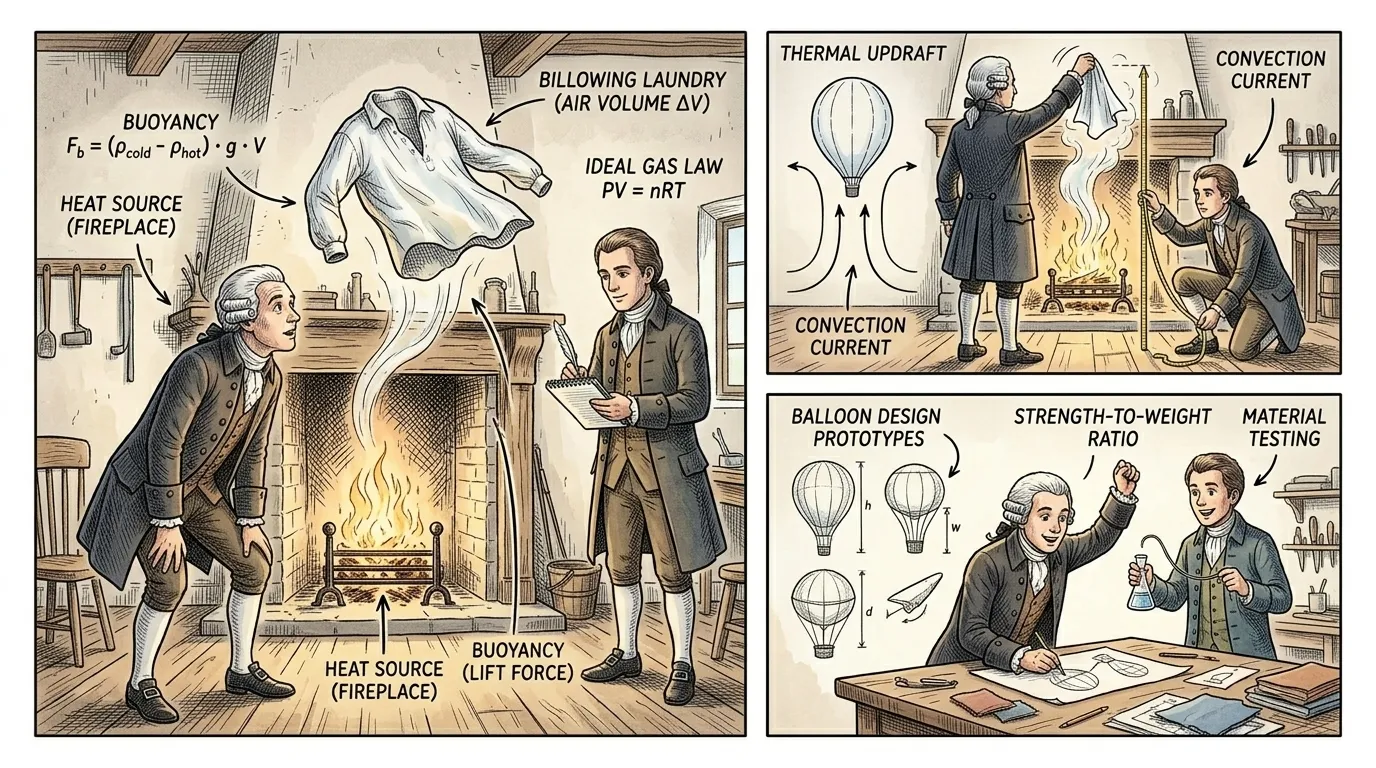
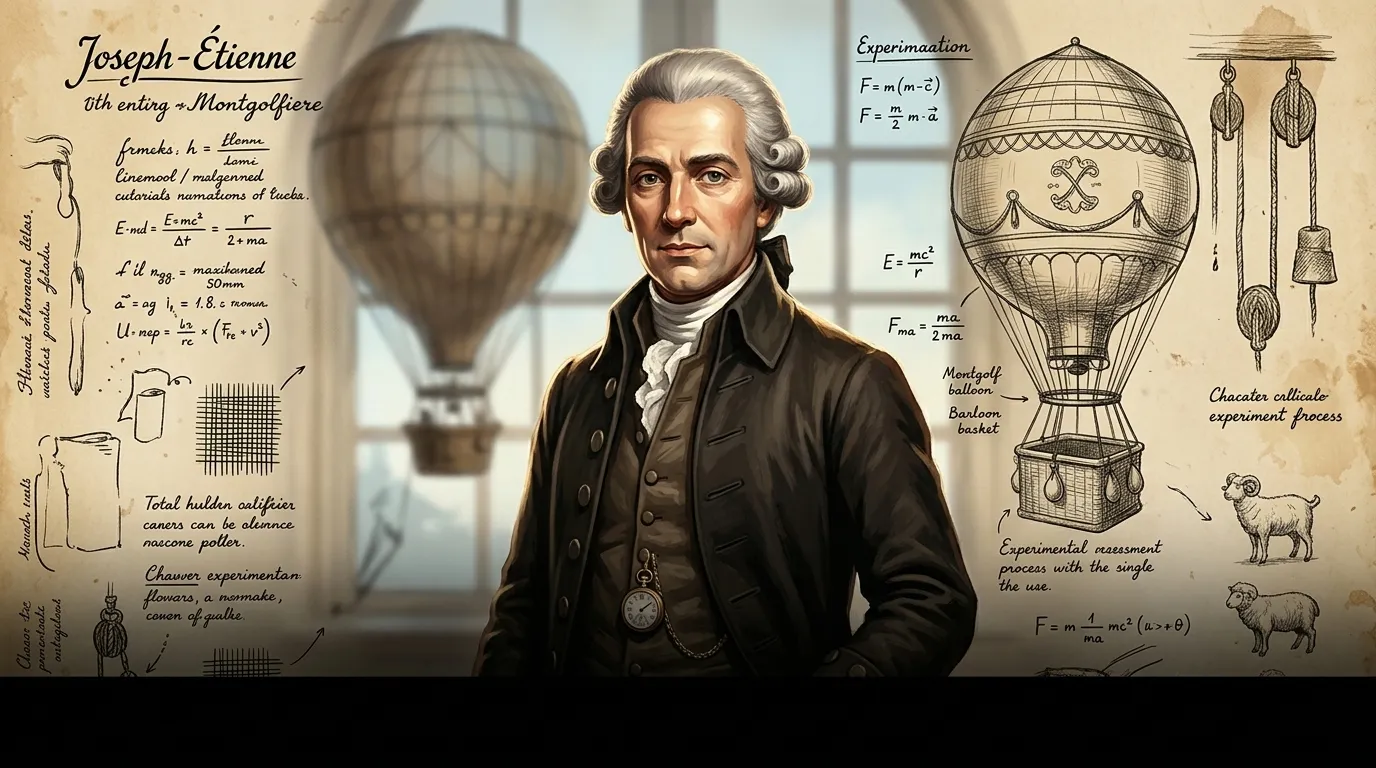
Joseph-Michel and Jacques-Étienne Montgolfier, brothers and prosperous papermakers in Annonay, France, were keen observers of natural phenomena. Their inspiration reputedly struck Joseph-Michel while watching laundry dry over a fire; he noticed that heated air, trapped within fabric, caused it to billow and rise. This simple observation ignited a profound inquiry into the principles of buoyancy and lighter-than-air flight, suggesting that the lifting power was not smoke itself, but the heated air within it.
Page 4
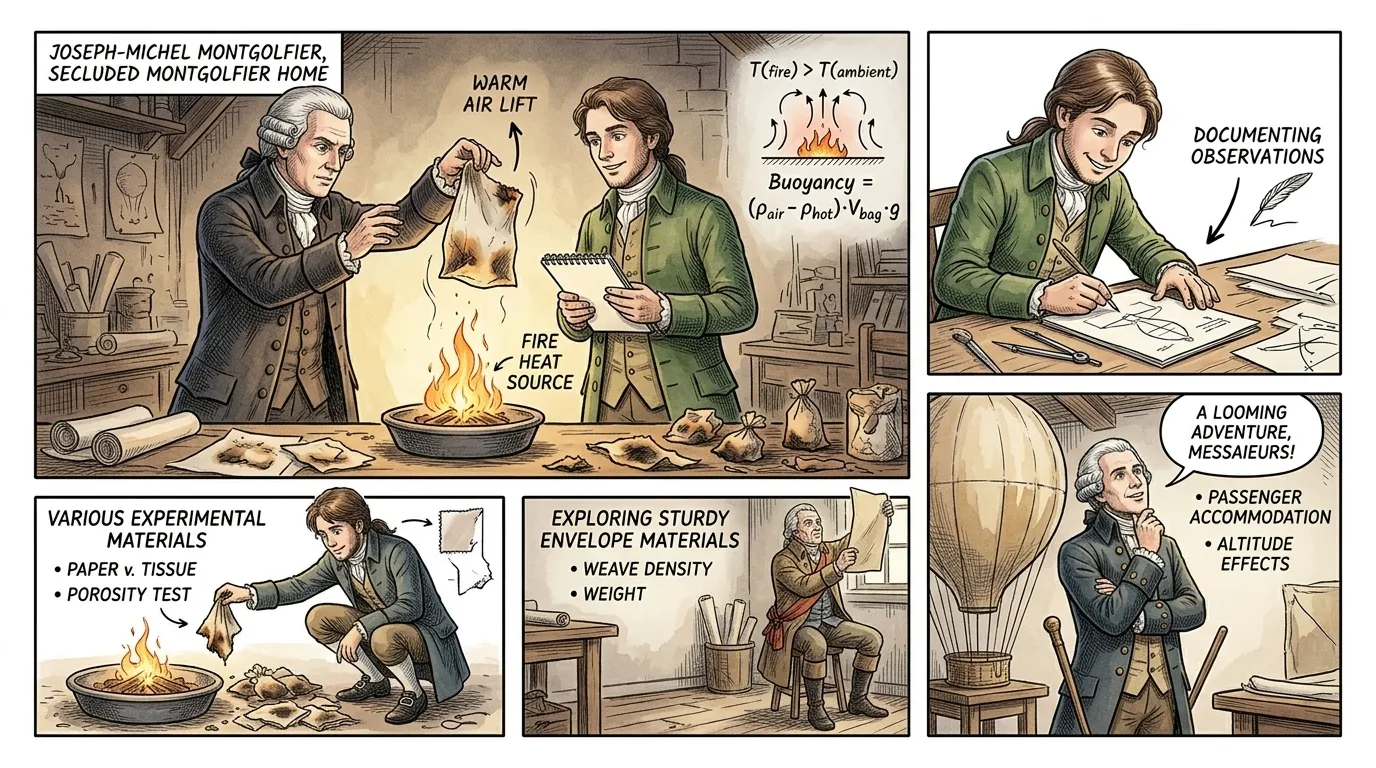
Initial experiments by the Montgolfier brothers were conducted in secrecy, often in their own homes. Their first attempts involved small paper or fabric bags held over fires. These early prototypes, though modest, confirmed their hypothesis: heated air indeed possessed lifting capabilities. However, the challenge lay in scaling this principle to a size capable of lifting substantial weight, requiring careful consideration of materials, containment, and sustained heat generation, often leading to scorched or failed envelopes.
Page 5
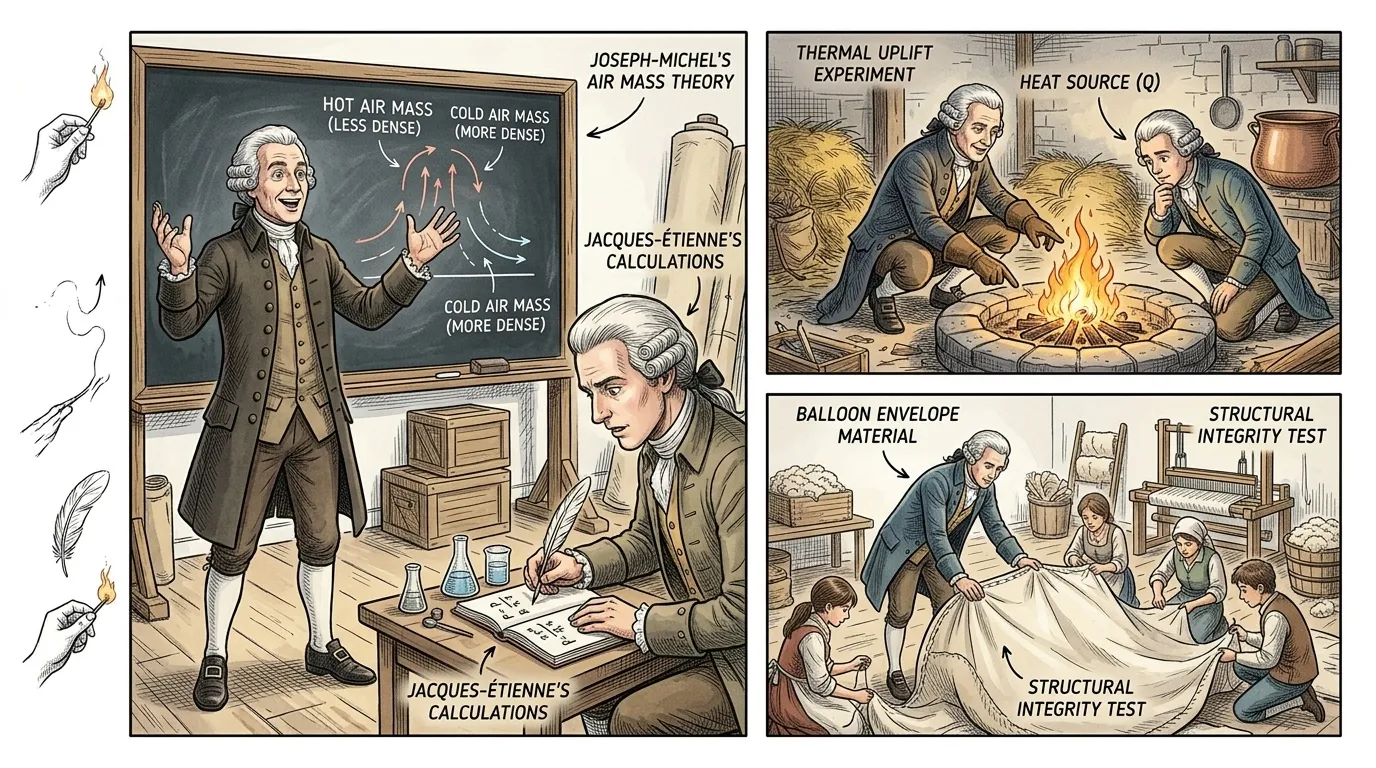
The crucial breakthrough came as the brothers refined their understanding of air density. They realized the 'gas' they observed was simply heated air, which, being less dense than the cooler ambient air, naturally rose. This fundamental principle of thermodynamics meant that any large volume of air, sufficiently heated and contained, could generate lift. This revelation shifted their focus from mysterious 'Montgolfier gas' to the engineering challenge of creating a lightweight, voluminous envelope and a stable heat source.
Page 6
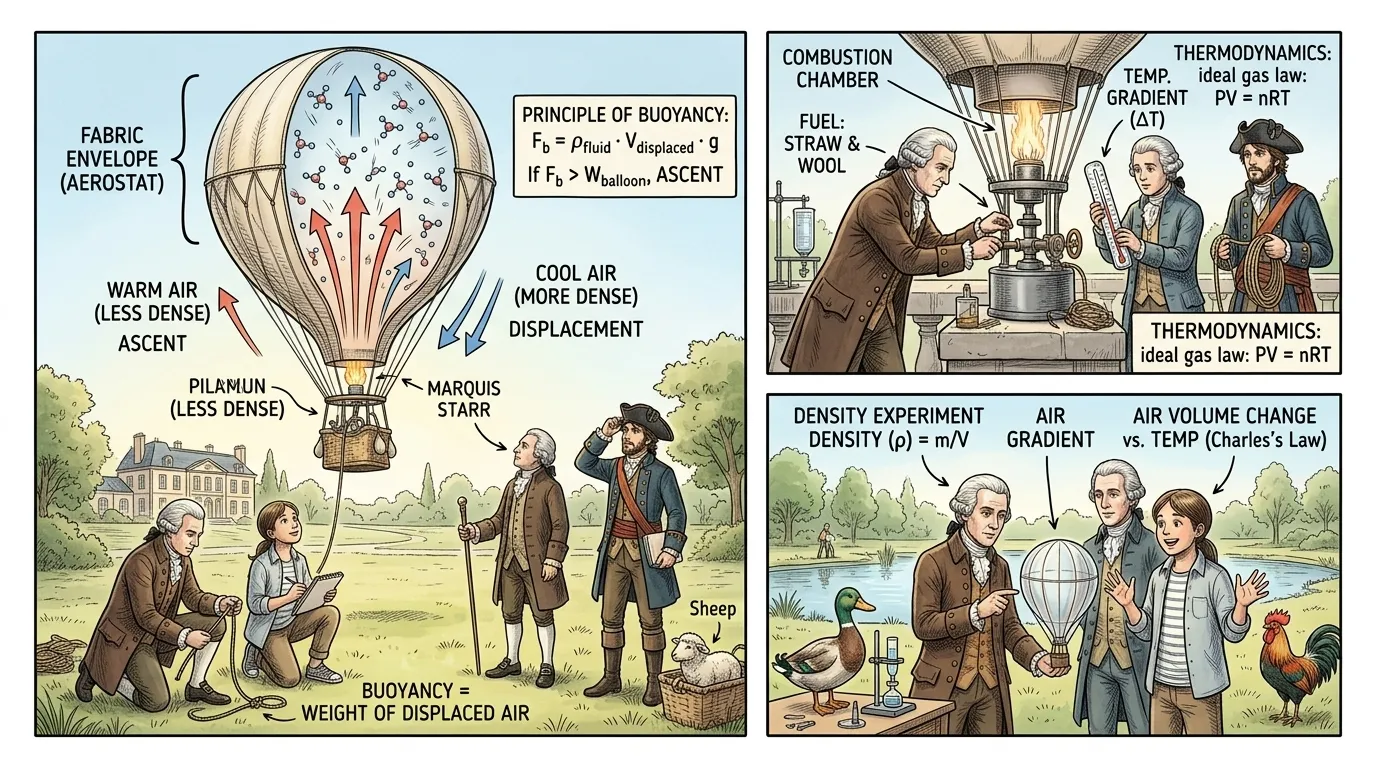
The hot air balloon operates on a simple yet powerful principle: buoyancy. A large fabric envelope, or 'aerostat,' is filled with air heated by a burner located beneath its opening. As air within the envelope heats, its molecules move faster and spread out, making it less dense than the cooler air outside. This lighter, warmer air rises, displacing the heavier, cooler air. The upward force, known as lift, becomes sufficient to overcome the total weight of the balloon, its occupants, and its equipment, allowing the craft to ascend.
Page 7
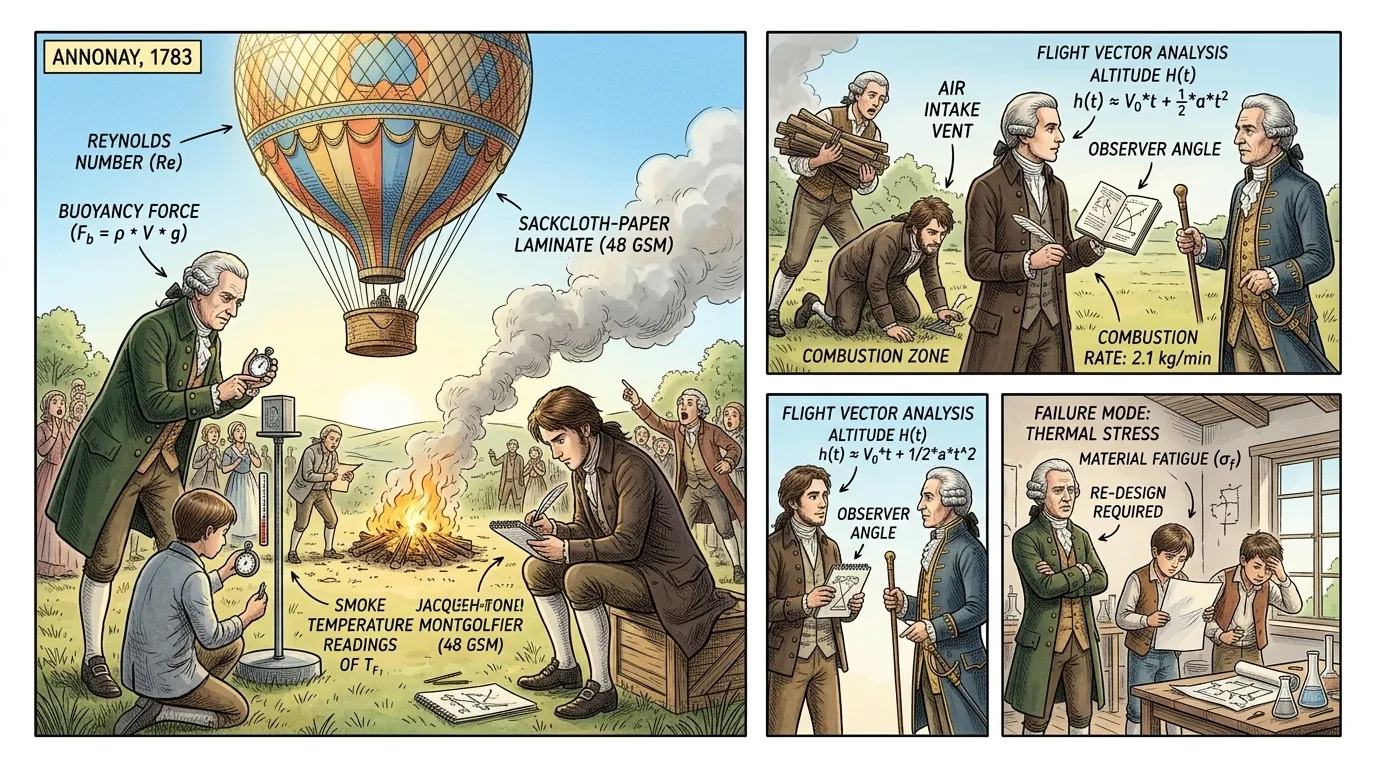
On June 4, 1783, the Montgolfier brothers staged their first public demonstration in Annonay. Their enormous balloon, crafted from sackcloth lined with paper, was inflated over a fire of wool and straw. Before an astonished crowd, the unmanned aerostat rose into the sky, soaring to an estimated altitude of 1,600 to 2,000 meters and traveling approximately 2 kilometers before slowly descending. This monumental event unequivocally proved the feasibility of sustained lighter-than-air flight, captivating the scientific community and the general public alike.
Page 8
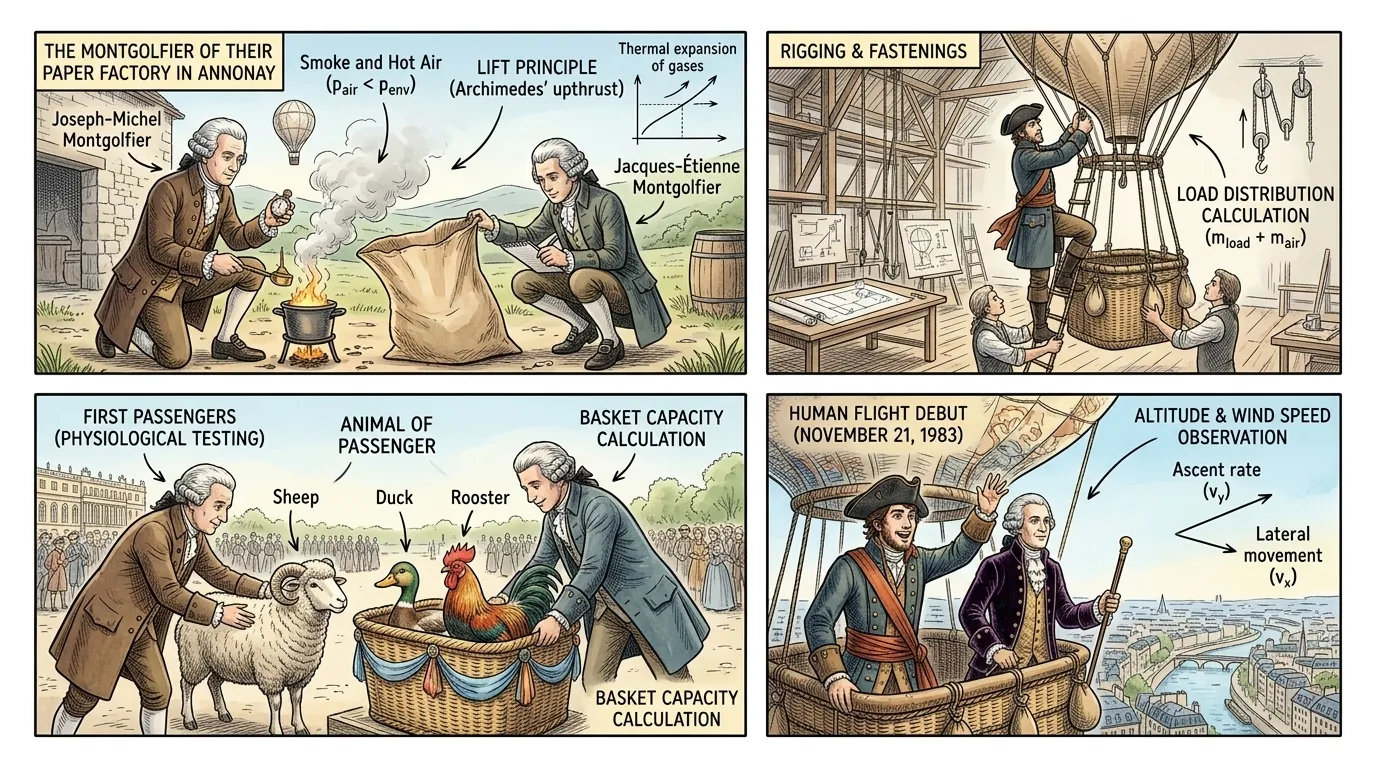
The success at Annonay quickly led to more ambitious projects. On September 19, 1783, a Montgolfier balloon carrying a sheep, a duck, and a rooster completed an 8-minute flight, proving the safety of high-altitude exposure. Less than two months later, on October 15, Pilâtre de Rozier became the first human to ascend in a tethered balloon. Finally, on November 21, 1783, de Rozier, accompanied by the Marquis d'Arlandes, made history with the first untethered, free flight, soaring over Paris for approximately 25 minutes. This marked the true dawn of human aviation.
Page 9
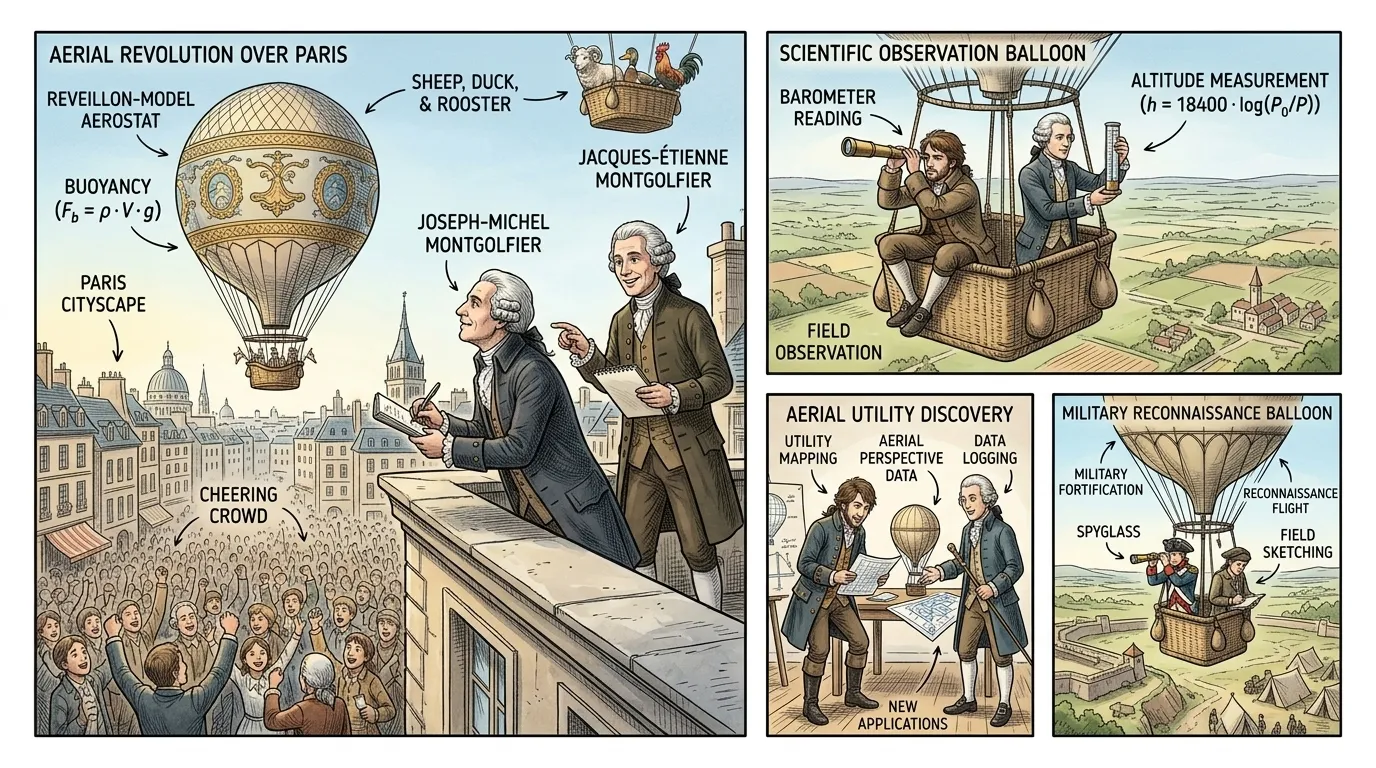
Following the Montgolfiers' groundbreaking flights, hot air balloons rapidly captured the imagination of Europe. Their novelty made them instant sensations for public demonstrations and spectacles, drawing massive crowds. Beyond entertainment, their potential for scientific exploration was quickly recognized, enabling early meteorological studies and atmospheric observations. Militarily, balloons offered an unprecedented vantage point for reconnaissance, though their operational limitations in navigation were soon apparent. The era of aerial perspective had begun.
Page 10
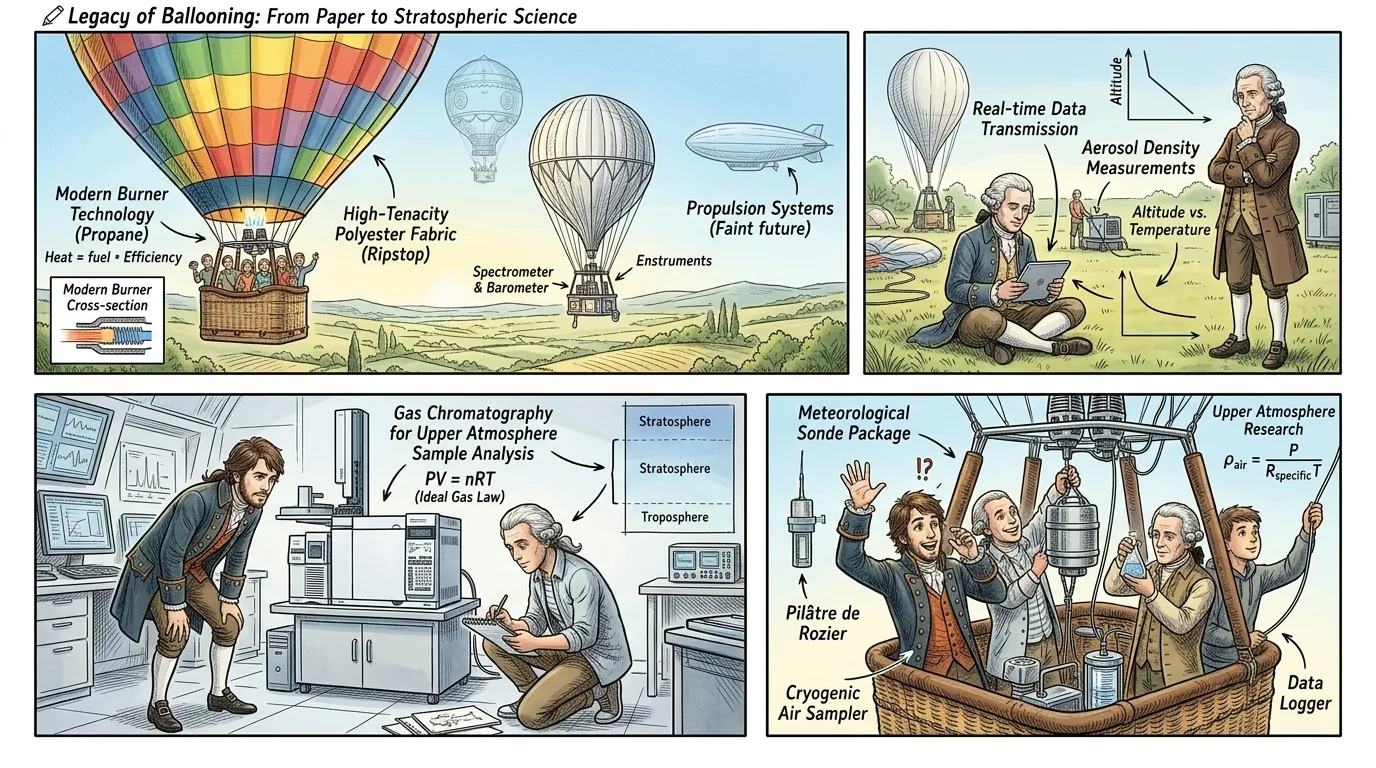
The hot air balloon, born from simple observation and audacious experimentation, forever changed humanity's relationship with the sky. While overshadowed by heavier-than-air aircraft for practical transport, its fundamental principle continues to inspire. Modern hot air balloons serve diverse roles, from popular recreational and tourism vehicles offering unparalleled s, to platforms for scientific research in the upper atmosphere, and even as record-breaking endurance craft. The Montgolfier brothers' innovation paved the way for all future aerial endeavors, a testament to the power of human curiosity and ingenuity.
About this story
- Location: Global
- Audience: general readers
Questions and answers
Read Wonder Inventions on your phone
Wonder Inventions is available on Android. Get Wonder Inventions on Google Play.