Madame Bovary
A doctor's wife in a small Norman town, and the life she wanted instead of the one she had
Page 1
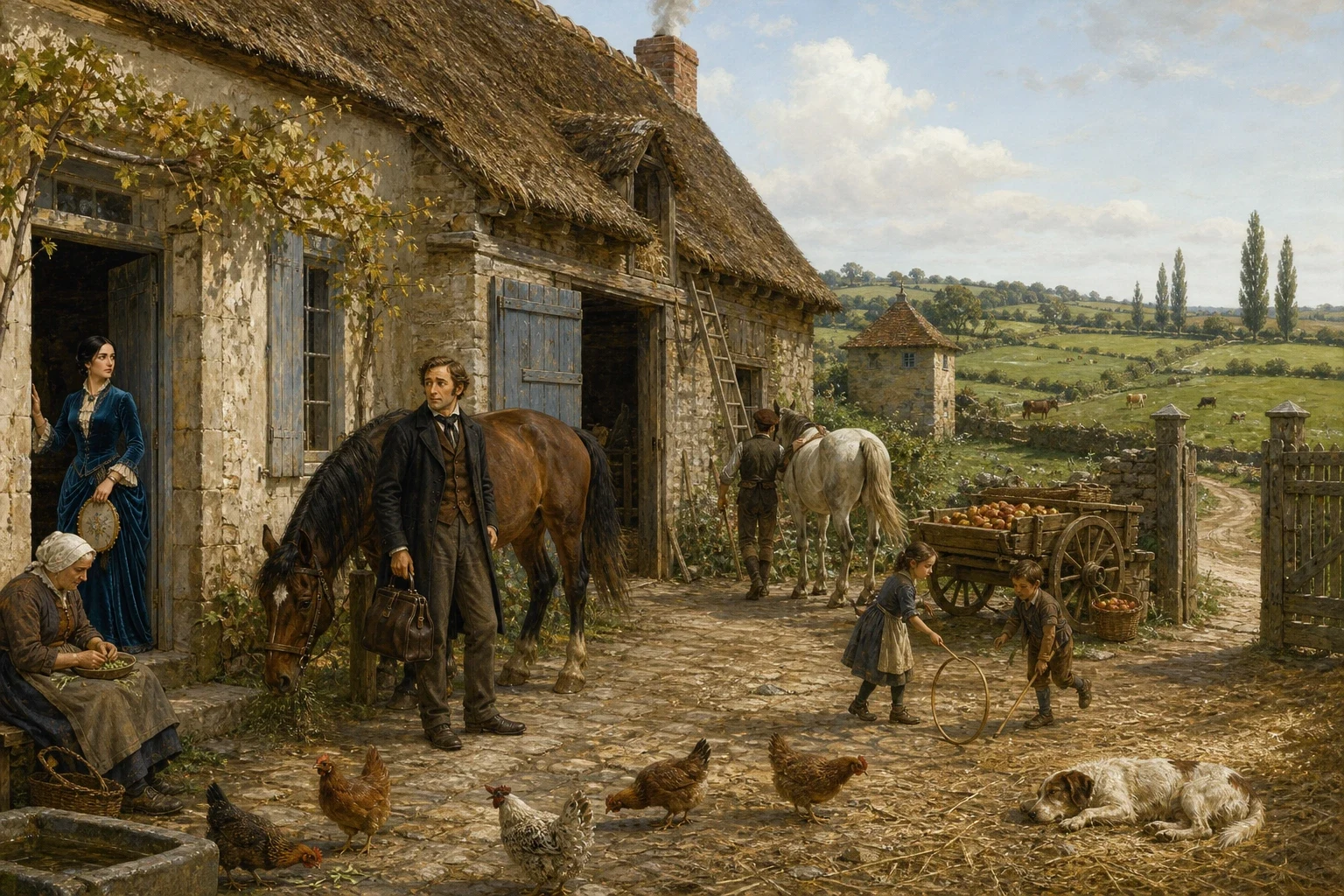
In the flat green country of Normandy, there was a young doctor named Charles Bovary who had just become a widower; his first wife, a widow older than himself whom his mother had chosen for him, had died suddenly, leaving him more relieved than sad. One morning he was called out to Les Bertaux, a prosperous farm, to set the broken leg of old Monsieur Rouault. There he met the farmer's only daughter, Emma, a quick, elegant young woman who had been educated at a convent and had come home dreaming of a different kind of life than farm work could give her. Charles rode out to Les Bertaux again and again after that, telling himself it was for the patient, though the leg was mending well. He watched Emma's white hands and her way of biting her lip over her sewing, and found he could think of nothing else. Before the year was out, old Rouault gave his blessing, and Charles Bovary married Emma Rouault.
Page 2
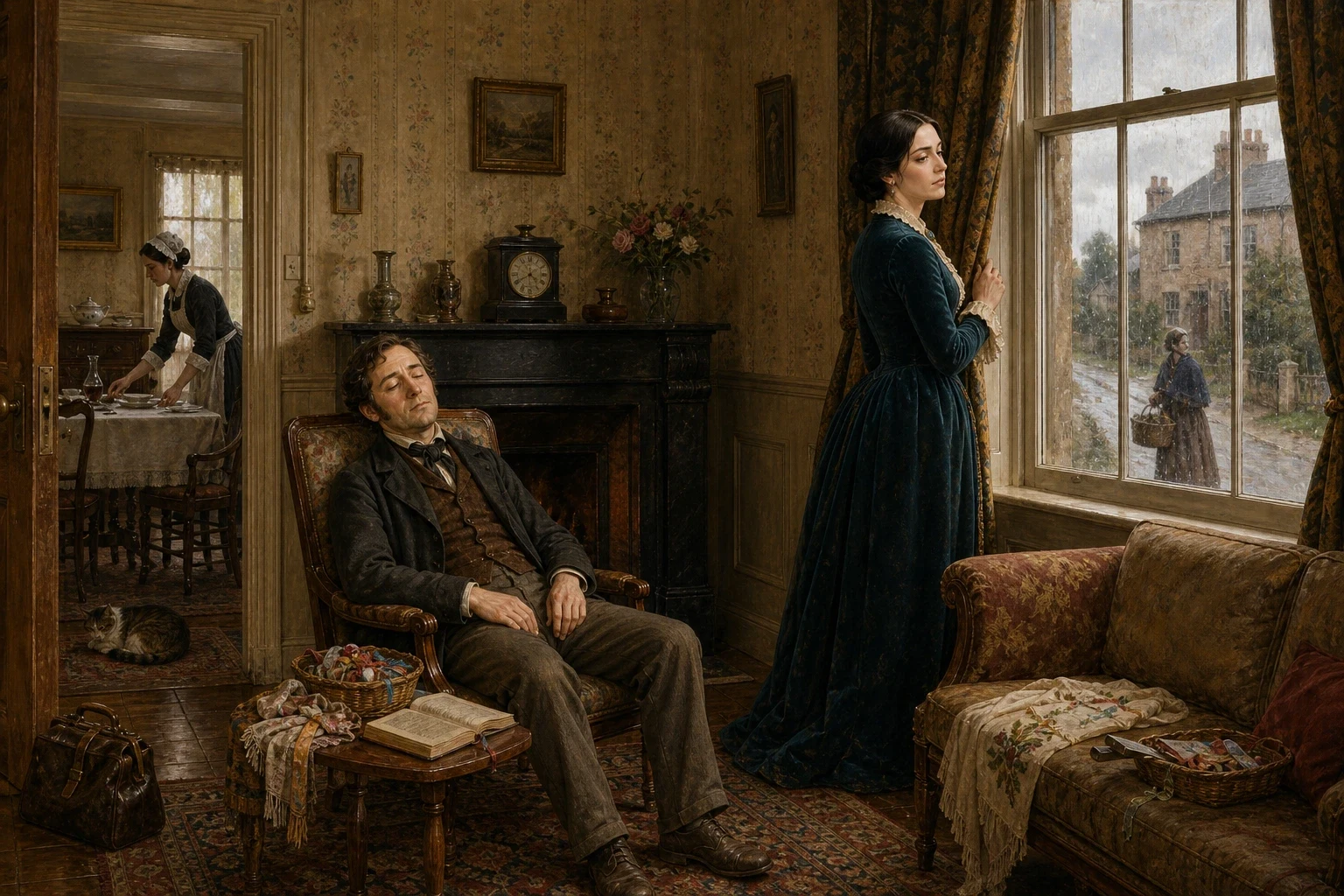
Charles brought Emma home to Tostes, the small town where he had his practice, and for a while she tried to be the wife he wanted. But Charles was a dull, contented man who fell asleep after dinner and noticed nothing, and Tostes was a flat little town where nothing ever happened. Emma had grown up reading novels at her convent school, stories full of moonlit castles, handsome strangers and grand passions, and she had expected her own life to feel like that. Instead the days in Tostes were all alike: the same clock ticking, the same neighbors, the same dull round of Charles's patients. She reread her old books, bought ribbons and curtains she could not really afford, and stood at the window for hours watching the empty road, waiting for something she could not have named to come and change everything. Charles only saw that his wife was quiet, and loved her more for it, never once guessing how unhappy she had become.
Page 3
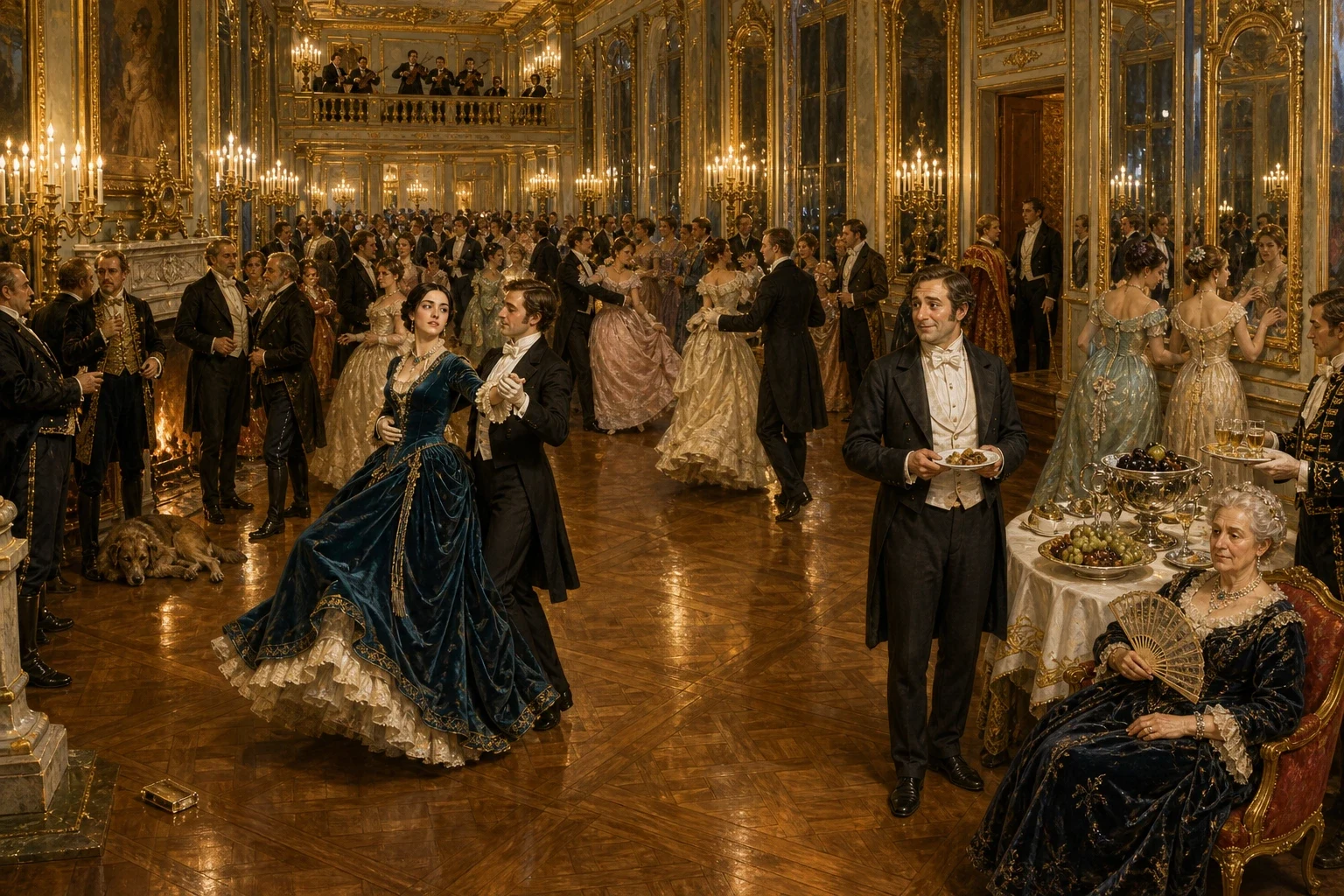
An invitation came one autumn to a grand ball at the Château de Vaubyessard, given by a marquis whose land bordered Charles's practice. Emma had a new gown made and arrived at the château half in a dream, dazzled by the candlelight, the mirrors, the servants and the smell of truffles and old wine. She danced that night with a young viscount, her hand resting light on his shoulder, and for the first time in her life felt she was living the kind of story she had always imagined for herself. Charles, who could not dance, stood at the edge of the room all evening, pleased simply to watch her and eat the good supper, understanding nothing of what the night had stirred in her. On the way home at dawn Emma found a dropped silk cigar case in the château's courtyard and kept it, a small, secret relic of a world she could not enter again. Tostes, when they returned to it, felt smaller and greyer than ever before.
Page 4
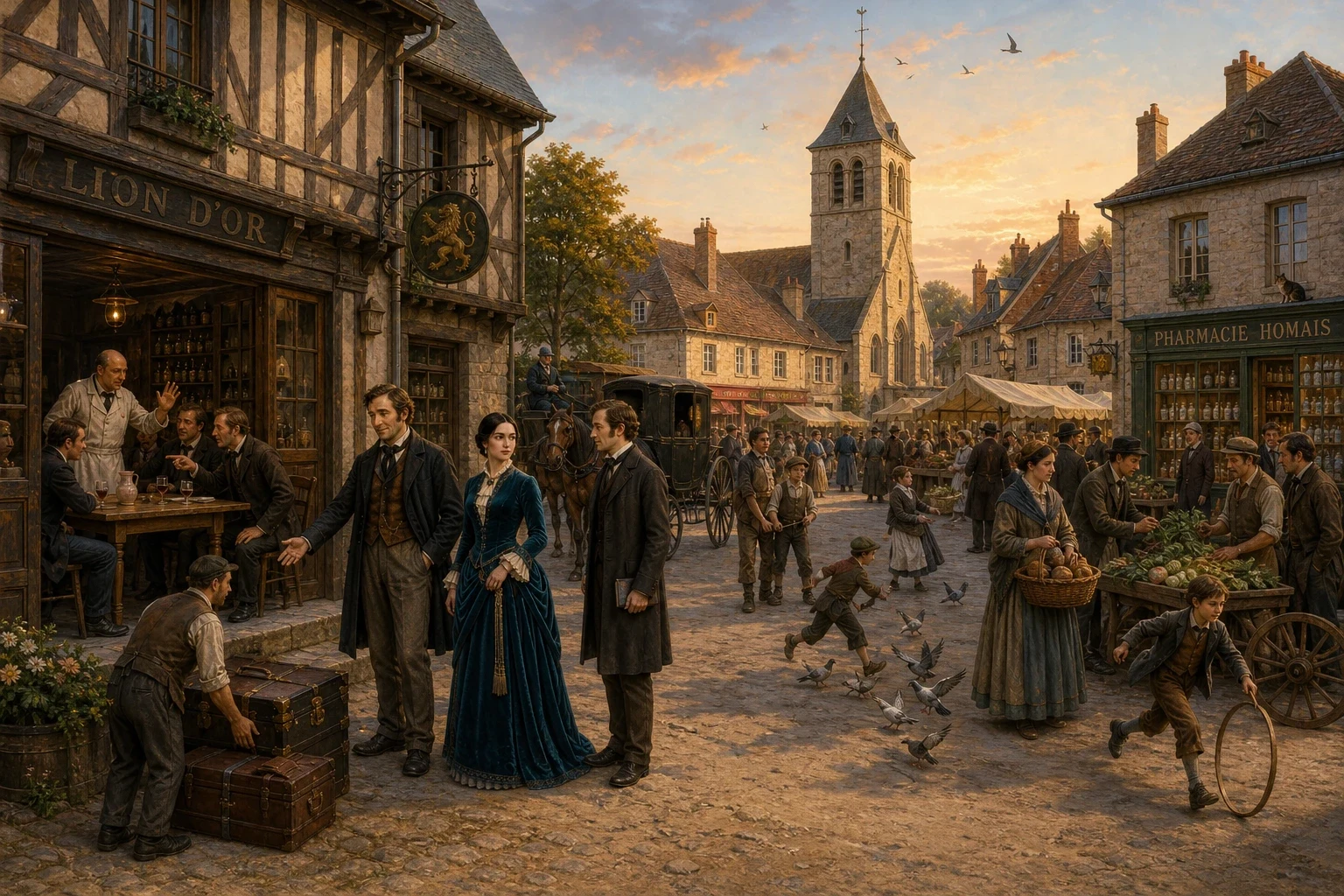
Unable to settle after Vaubyessard, and with a child soon coming, the Bovarys left Tostes for a bigger town called Yonville-l'Abbaye, where Charles could build a larger practice. They arrived by carriage on a market day and took rooms at the Lion d'Or inn while their new house was readied. At supper that first evening Emma met two men who would matter a great deal to her: Monsieur Homais, the town's talkative, know-it-all pharmacist, who lectured the table on chemistry and politics without being asked; and Léon Dupuis, a shy young law clerk boarding at the inn, who turned out to love the same sad, romantic novels and music that Emma did. Emma and Léon talked for hours that evening about books and Paris and things neither of them had really seen, each delighted to have found someone who understood. Charles ate his supper happily and noticed nothing, as he had noticed nothing at Vaubyessard.
Page 5
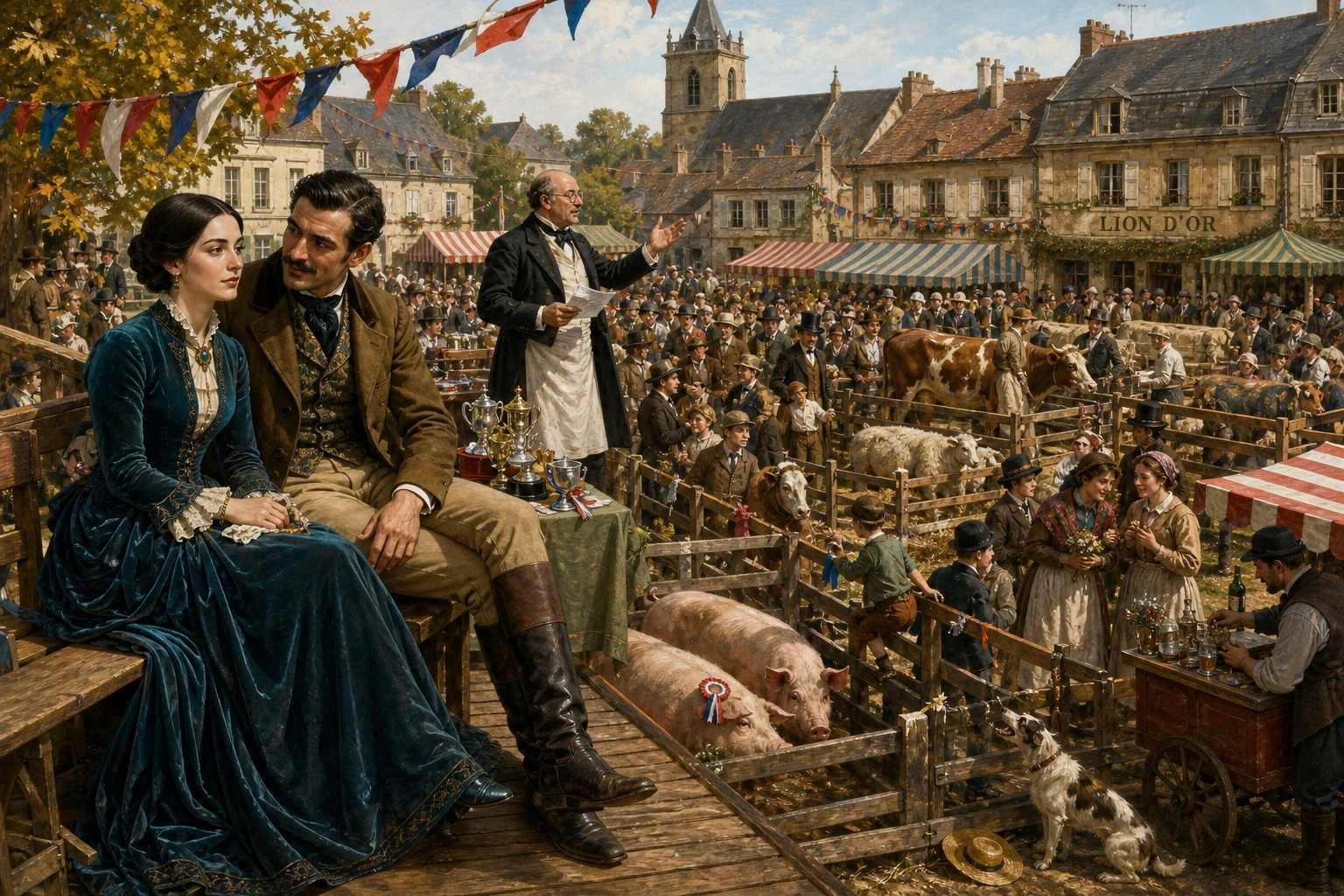
The next autumn, Yonville held its yearly agricultural show, with prizes for the best pigs and the finest manure, and a stand built in the square where officials gave long speeches over the noise of the crowd and the animals in their pens. Rodolphe Boulanger, a wealthy landowner from a nearby estate called La Huchette, had brought a tenant's horse to be judged, and found himself seated beside Emma at the edge of the fairground, half listening to the speeches below. He was a practiced, confident man who had noticed at once how unhappy and bored Emma seemed, and he talked to her all afternoon in a low, flattering voice about fate, unhappiness and souls that deserved better than the lives they had been given. Emma, starved for exactly this kind of attention, listened as if he were reading her own thoughts aloud. By the time the prizes were given out and the crowd began to disperse, Rodolphe had already decided he would have her, and Emma had already half agreed.
Page 6

Rodolphe began sending Emma a horse so she could ride out to La Huchette, his estate, telling Charles it was good for her health, and Charles, delighted to see his wife looking happier, agreed at once. On a soft morning in the woods near La Huchette, Rodolphe helped Emma down from her horse, and in a mossy clearing among the beech trees he finally said plainly what he had only hinted before. Emma did not refuse him. For months afterward she rode out to meet him in secret, feeling for the first time in her life that she was truly living, truly loved, the heroine of her own romance at last. She wrote Rodolphe letters full of passion, gave him little gifts she could not afford, and began to dream of leaving Charles and Yonville altogether, of running away with him to some new life. Rodolphe enjoyed her completely and loved her exactly as much as it cost him nothing to love her, which was not very much at all.
Page 7
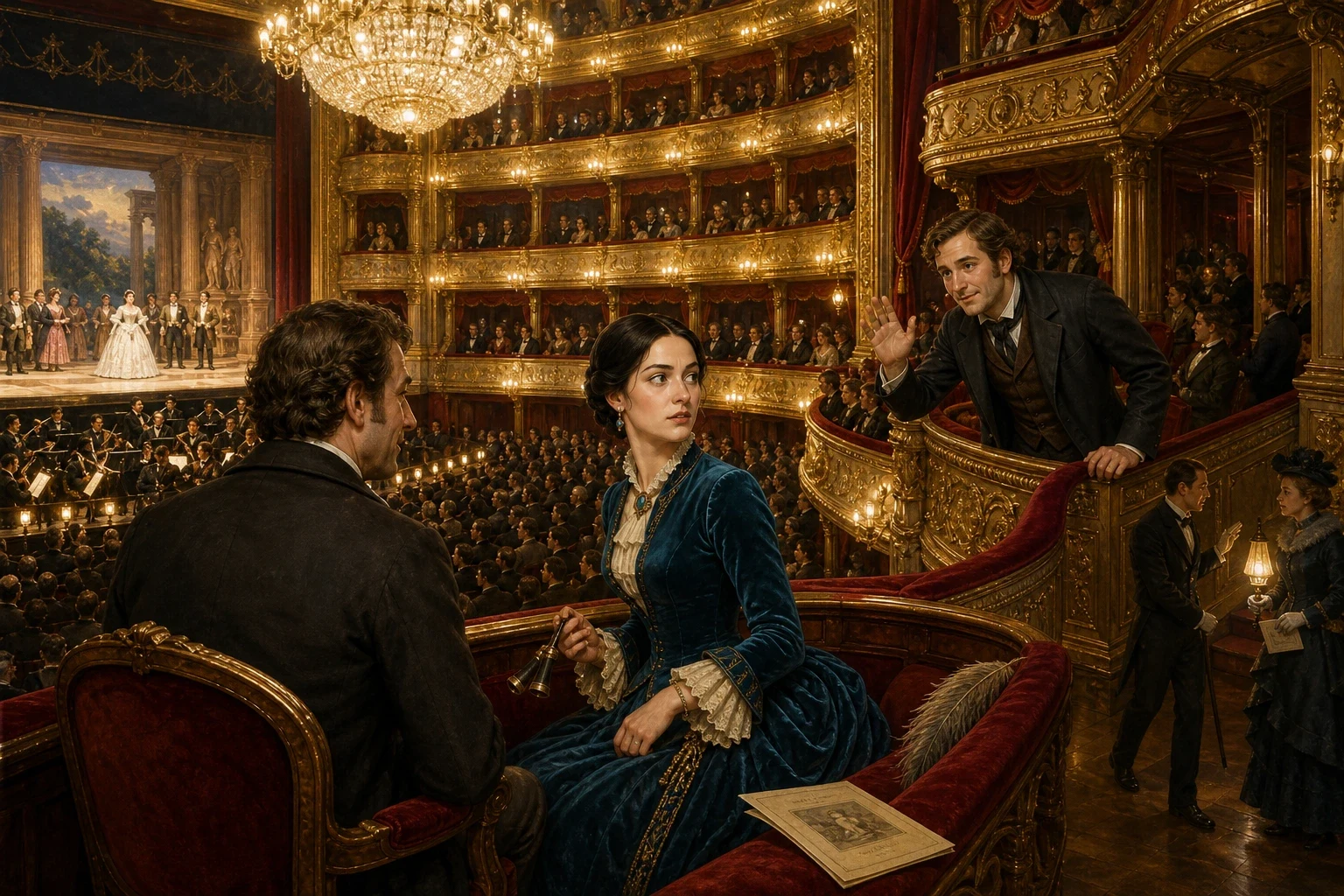
Rodolphe, when the moment came, had no real intention of running away with another man's wife; he sent Emma a long, cowardly letter breaking it off and left that very night, and the shock of it made her desperately ill for weeks. When she had recovered enough to go out again, Charles took her to the opera in the city of Rouen, hoping music might lift her spirits, and there, by chance, they ran into Léon, now living in Rouen and working at a law firm. Léon was no longer the shy boy from the Lion d'Or; seeing Emma again, still beautiful and now clearly unhappy, he found his old feelings had grown bolder. He began inventing reasons to see her alone whenever she came into the city, and before long Emma was carrying on a second affair with him, meeting him in a hired room at a hotel whenever she could invent an excuse to travel to Rouen.
Page 8
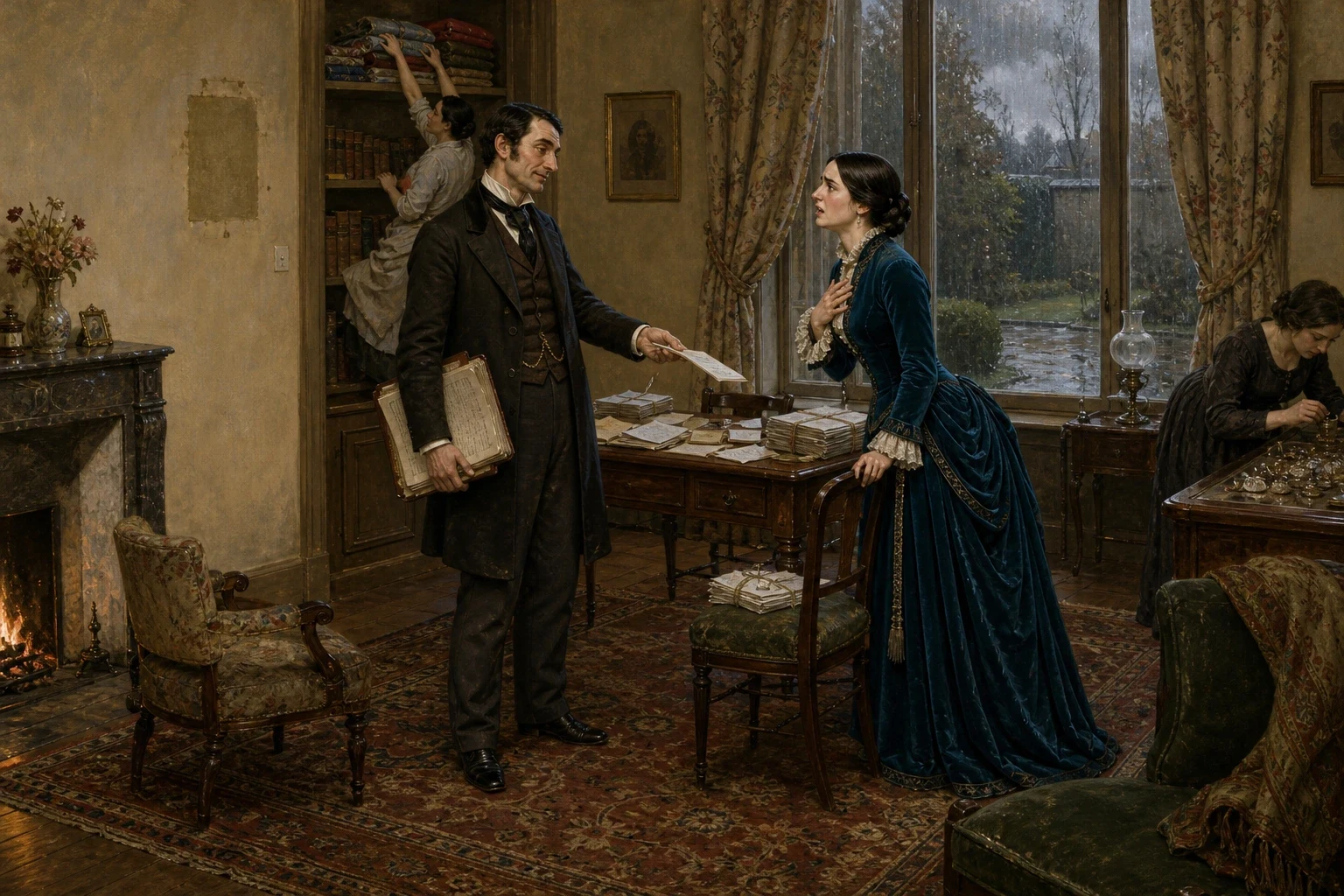
To pay for her trips to Rouen, her gifts to Léon, and the fine things she had always wanted, Emma had been borrowing for years from Monsieur Lheureux, the Yonville merchant, signing paper after paper without really understanding how much she owed. He had been patient and smiling the whole time, extending credit, selling her silk and trinkets on account, quietly letting the debt grow far beyond anything Charles earned. Now, all at once, Lheureux called the debts due, demanding a vast sum within days or he would have the Bovarys' house and furniture seized by the court. Emma went from person to person begging for the money — to Léon, who had none and no will to find any; to Rodolphe, whom she had not seen in years, who turned her away at his own door without even pretending sorrow. There was no one left, no money anywhere, and Charles still knew nothing at all of what she had done.
Page 9
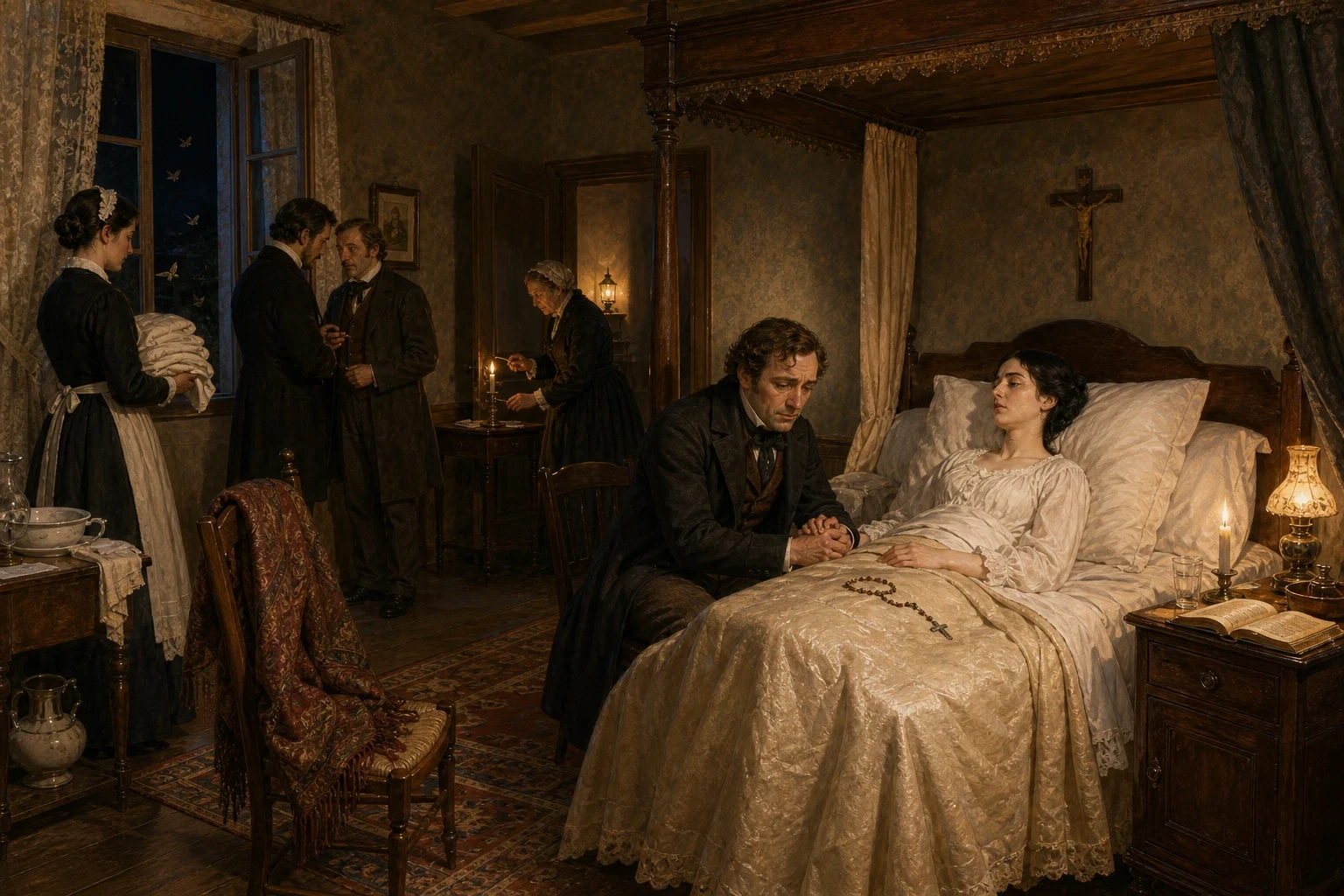
With no money and no way out, and nowhere left to turn, Emma walked to Homais's pharmacy, took a handful of arsenic from the jar kept for poisoning rats, and swallowed it before anyone could stop her. She told Charles only after it was already done. He sent at once for other doctors from Rouen, but nothing could be done for her by then, and over the next day Emma grew steadily weaker, sinking quietly, surrounded at the last by Charles and the priest who had been called to her bedside. Charles sat holding her hand the whole time, refusing to believe she was really going until it was over. Emma Bovary died that evening in her own bed, the same house where she had kept her secret letters, her debts and her dreams of another life, with Charles broken beside her and little Berthe asleep in the next room, too young to understand what the house had just lost.
Page 10
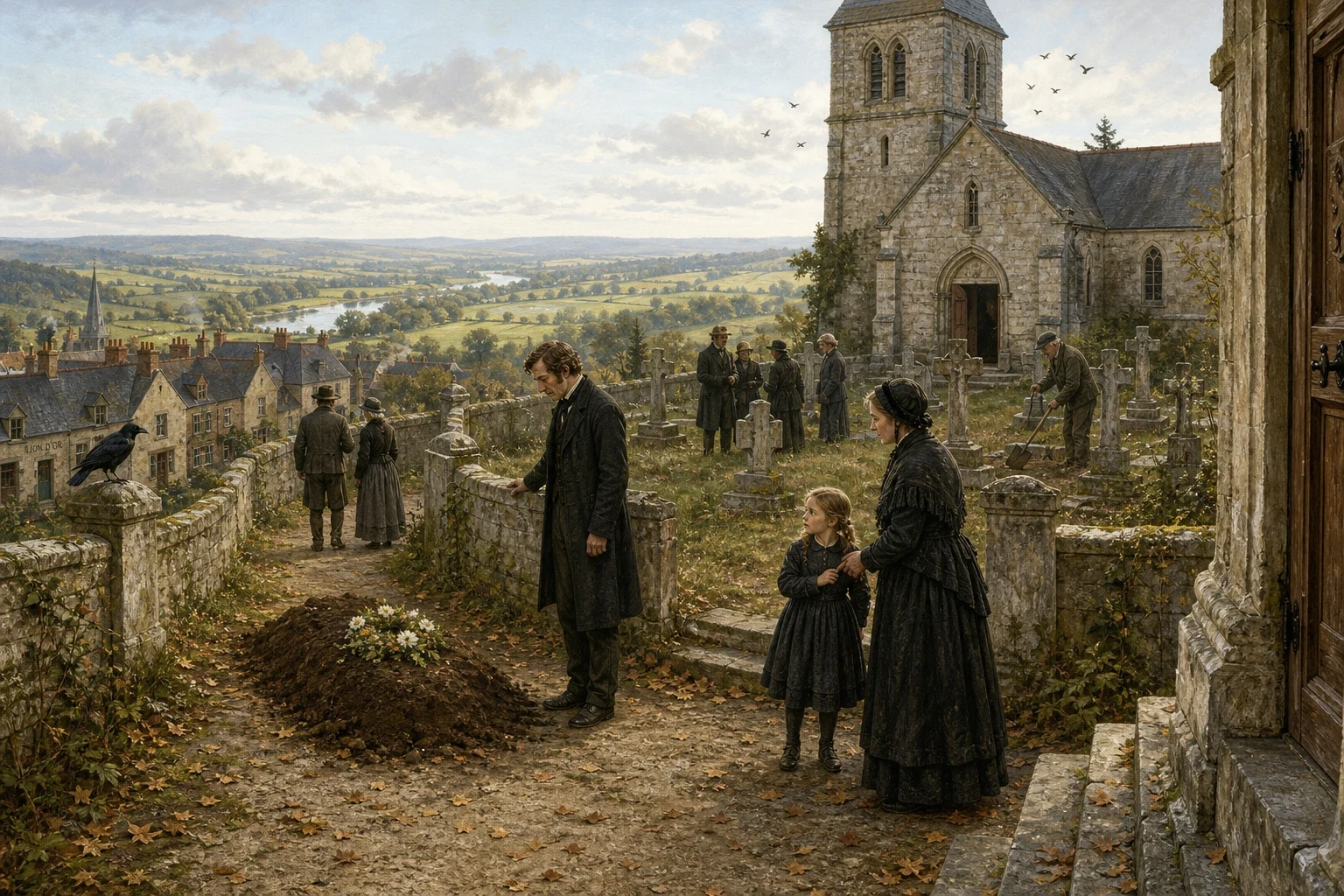
Emma was buried in the churchyard at Yonville on a grey morning, with Charles so undone by grief that he could barely stand through the service. In the months after her death he found her old letters from Rodolphe and Léon hidden away, and understood everything at last — yet he found, strangely, that he could not hate her for it, only grieve for her more. He stopped seeing patients, let his small savings run out, and one day the following year was found dead in his garden, sitting with a lock of Emma's hair still in his hand, a broken man in every sense the word allows. Little Berthe, left with almost nothing, was passed first to her grandmother and then, when she too died, to a poor aunt, who sent the child out to work in a cotton mill to earn her own bread. The green hillsides of Normandy went on exactly as they always had, indifferent to all of it.
About this story
- Audience: general readers
Read Wonder Novels on your phone
Wonder Novels is available on Android. Get Wonder Novels on Google Play.