My Ántonia
A boy from Virginia, a Bohemian farm girl, and the Nebraska prairie that raised them both
Page 1
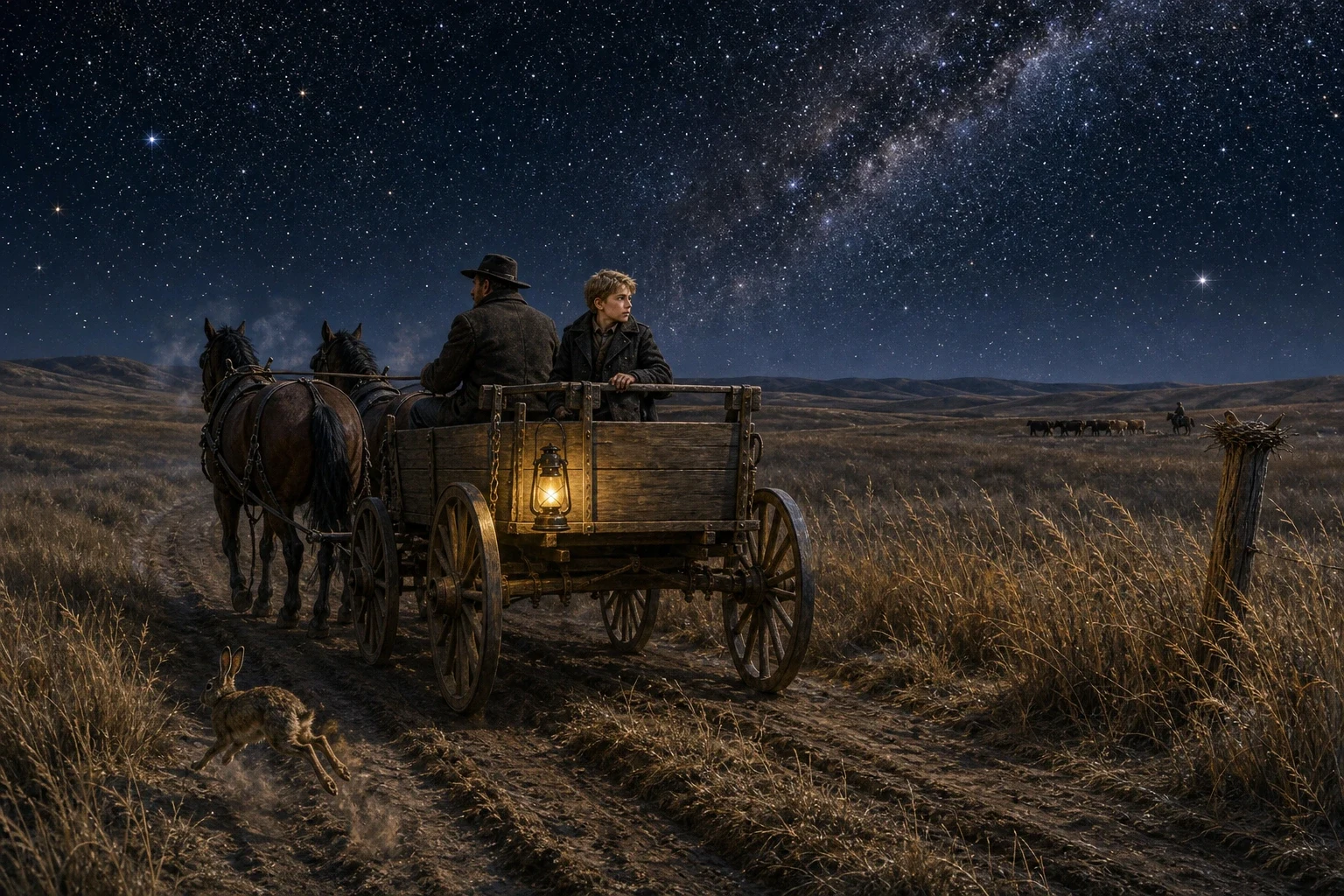
Jim Burden, ten years old and newly orphaned, left his home in Virginia and rode the train west alone. At the end of the line in Nebraska a wagon was waiting. Now, wrapped against the cold, he rode behind a stranger's team along a dirt road with no fences and no trees, under a sky that seemed to go down to the ground on every side. There was no moon, but the stars were so many and so bright that the whole prairie seemed to lie open under them. Jim had never seen country like it — not a single lit window, not a bird, nothing but the land itself, running away in every direction until it met the sky. He felt, he said afterward, as if he had come to the edge of the world, and he did not know yet whether that frightened him or not.
Page 2
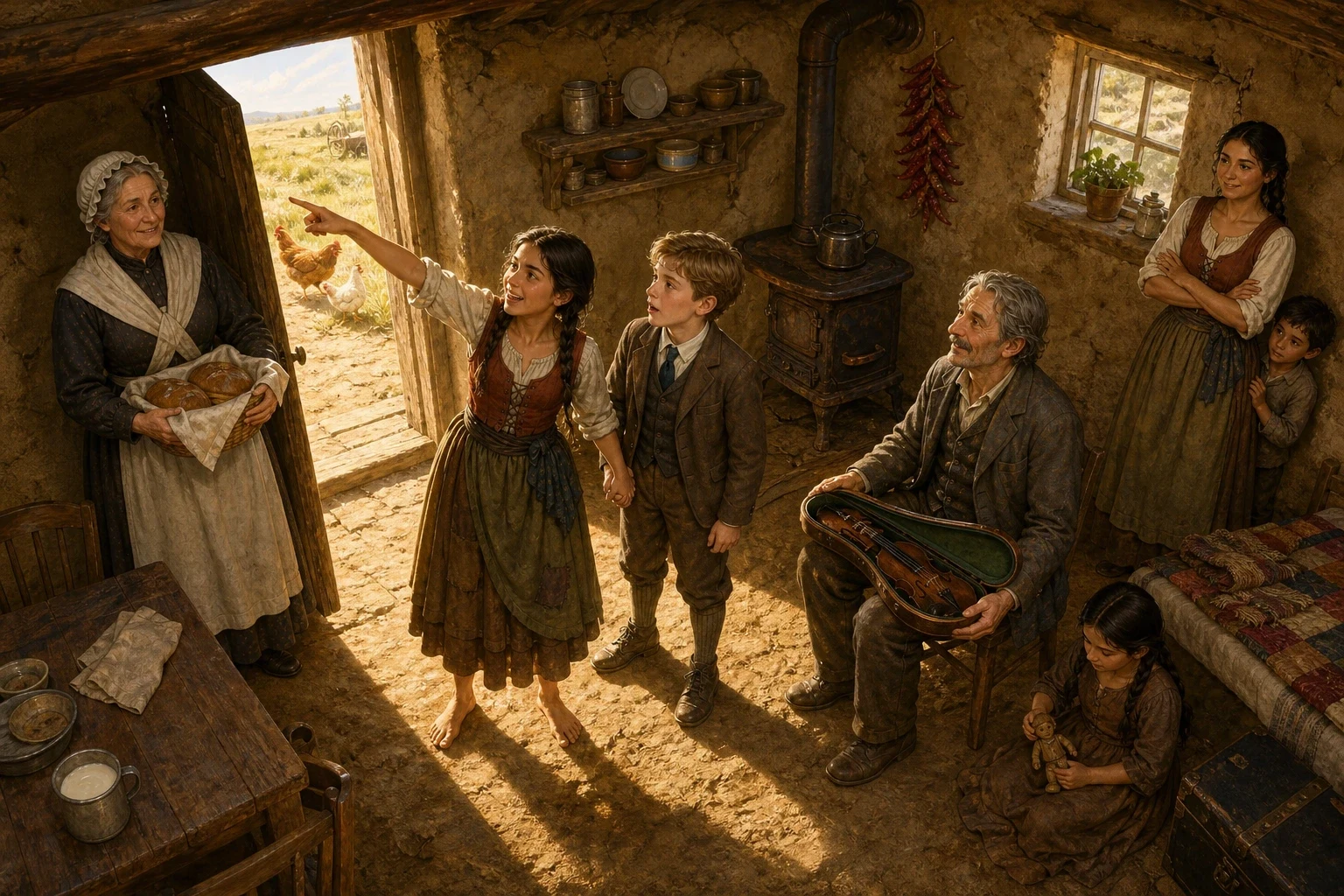
On a bright autumn afternoon Jim's grandmother took him across the fields to call on the new neighbors, a Bohemian family named Shimerda who had just come from the old country. They were living, for now, in a dugout cut into the side of a bank, with a stovepipe sticking up through the sod roof. Inside, Mr. Shimerda, a thin, sad-faced man, bowed over his violin case and shook Jim's grandmother's hand gravely. His daughter Ántonia, a quick, dark-eyed girl of fourteen, caught Jim by both hands at once, laughing, and pointed to the sky, the grass, her own eyes, wanting the English word for each one. Jim told her, and she repeated every word after him, delighted, until her mother called her away to help with supper. Jim had never met anyone so eager to learn, or so glad simply to be talking to him.
Page 3
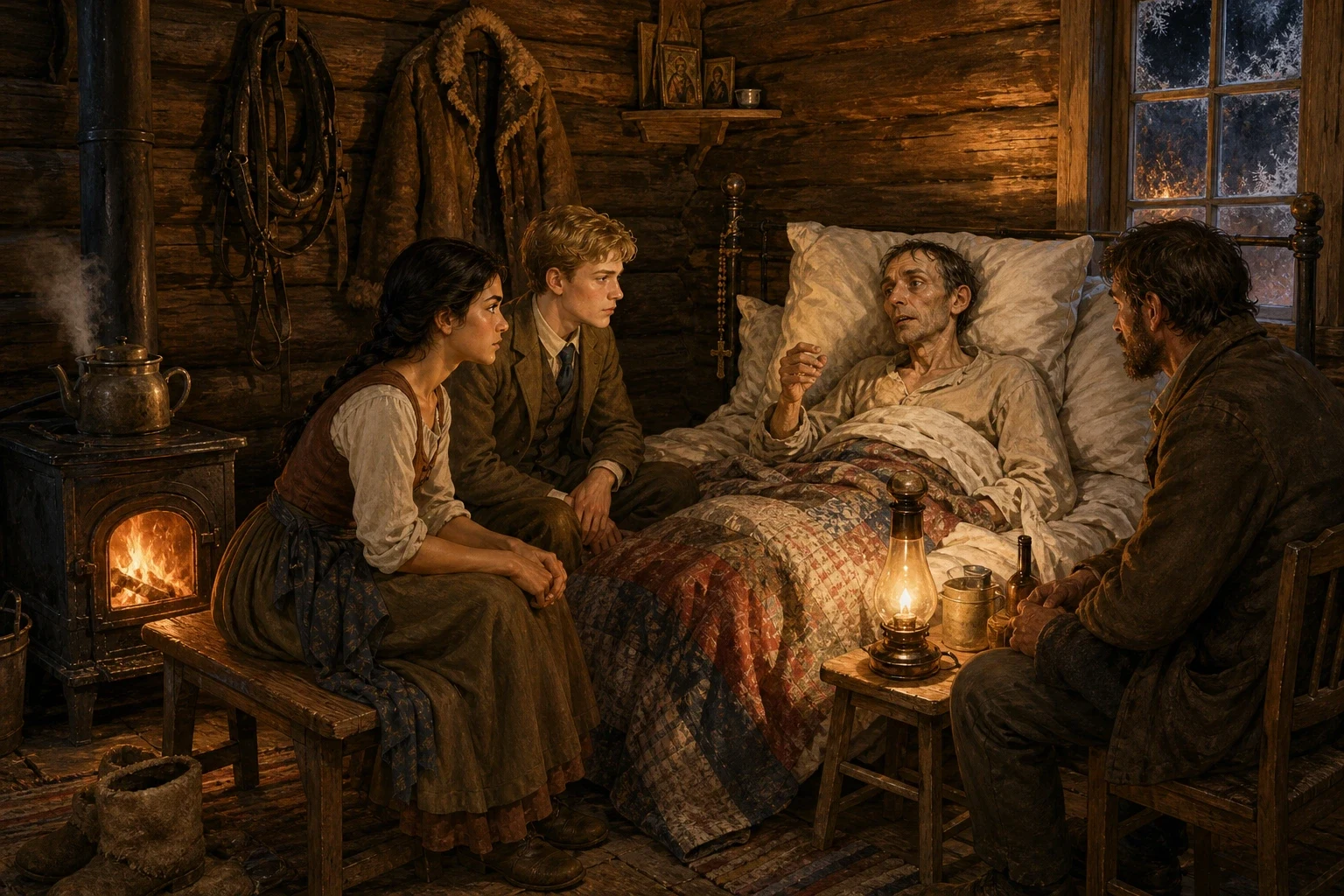
Among the Burdens' other neighbors were two Russian men, Peter and Pavel, who lived alone and were thought a little strange. One winter evening word came that Pavel was dying, and Jim and Ántonia went with others to his bedside. Pavel was burning with fever, and in his own language, between long silences, he told the story that had followed him and his brother out of Russia. Years before, driving a wedding party home across the open steppe by sledge, they had been chased for miles by a great pack of wolves. Sledge after sledge went down behind them in the snow, and at last, to save their own sledge and themselves, Pavel and Peter had done something so terrible that no village in Russia would have them afterward. He never said the last part plainly. He did not need to. Not long after telling it, Pavel died, and Peter sold the farm and went away for good.
Page 4
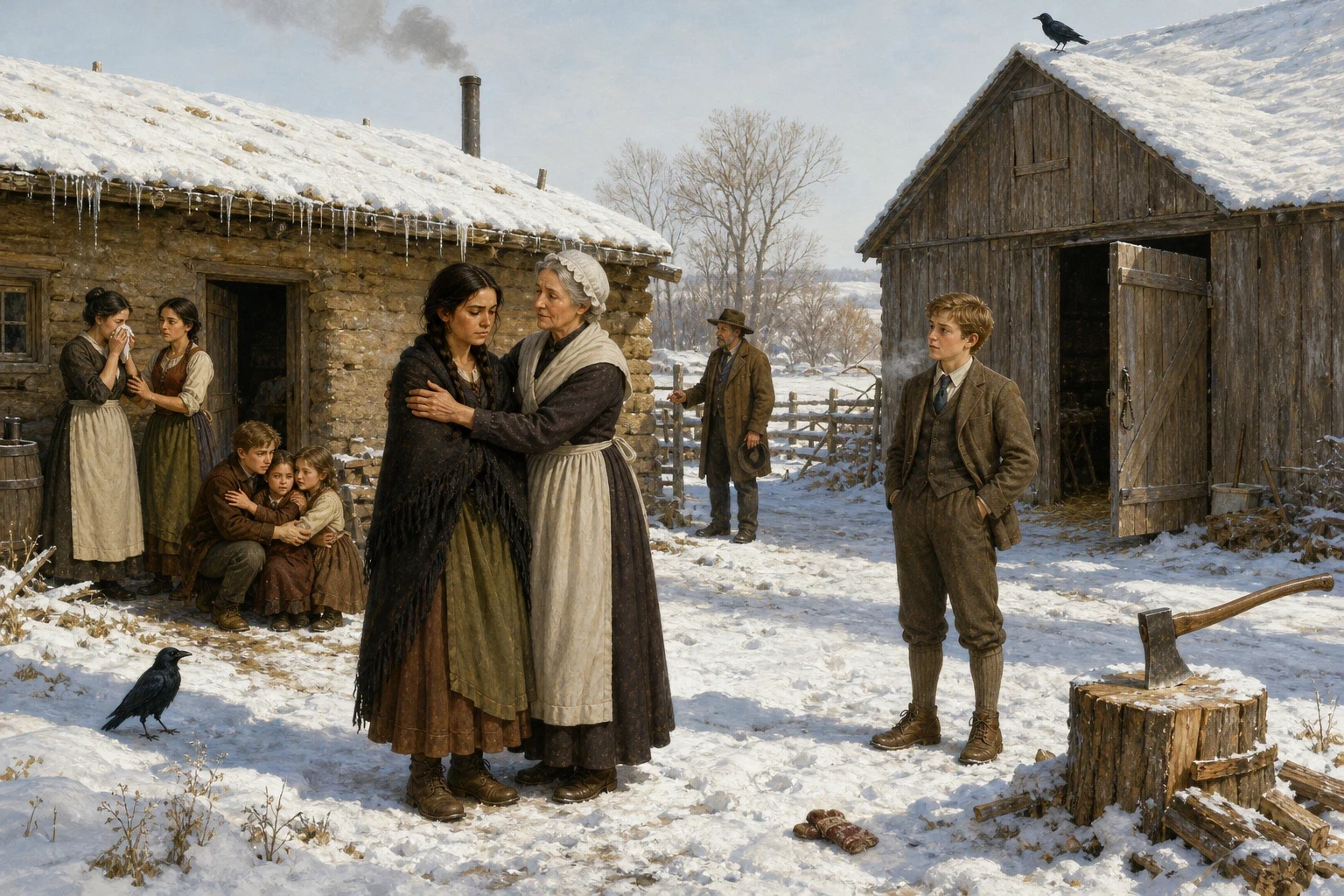
That winter was long and bitter, and Mr. Shimerda grew quieter and sadder with every week of it, homesick for the old country he could never afford to go back to. One freezing morning, word ran across the fields that something terrible had happened in the Shimerda barn, and Jim's grandmother hurried over with Jim close behind her. By the time they arrived the family already knew: Mr. Shimerda, worn down by grief for his old home, had died in the barn that morning, and no one in the little dugout could stop crying. Ántonia stood out in the snow in her shawl, white-faced, while her mother and Ambrosch kept the younger children away from the barn door. Jim's grandmother put her arms around Ántonia without a word. There was nothing to say that would make it smaller. The whole valley felt the cold more sharply after that.
Page 5
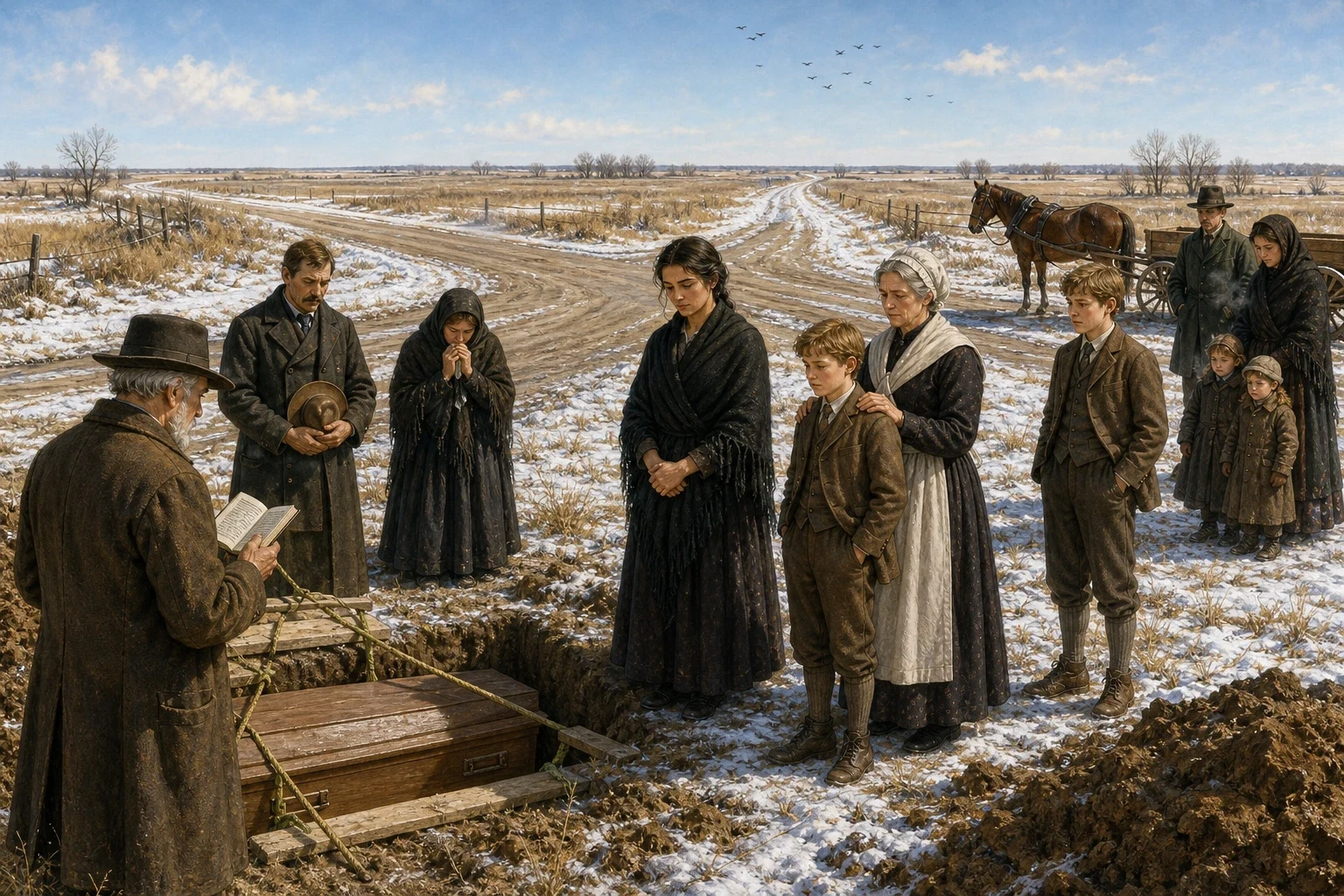
Because of how he had died, the churchyard would not take Mr. Shimerda, so his neighbors buried him instead at the corner where two prairie roads crossed, on a little patch of his own land. Jim stood with his grandmother among the small crowd of neighbors who had come out in the cold to see it done properly, Ántonia and her family close by the plain wooden coffin. No priest would come that far, so an old neighbor read what prayers he knew. In the years afterward, when the roads were straightened and graded for wagons and then for motor cars, every road-building crew that came along quietly bent the road a little rather than drive straight over the grave, so that to this day the two roads still curve gently around that one corner of ground, and anyone who knows the story can find it without being told.
Page 6
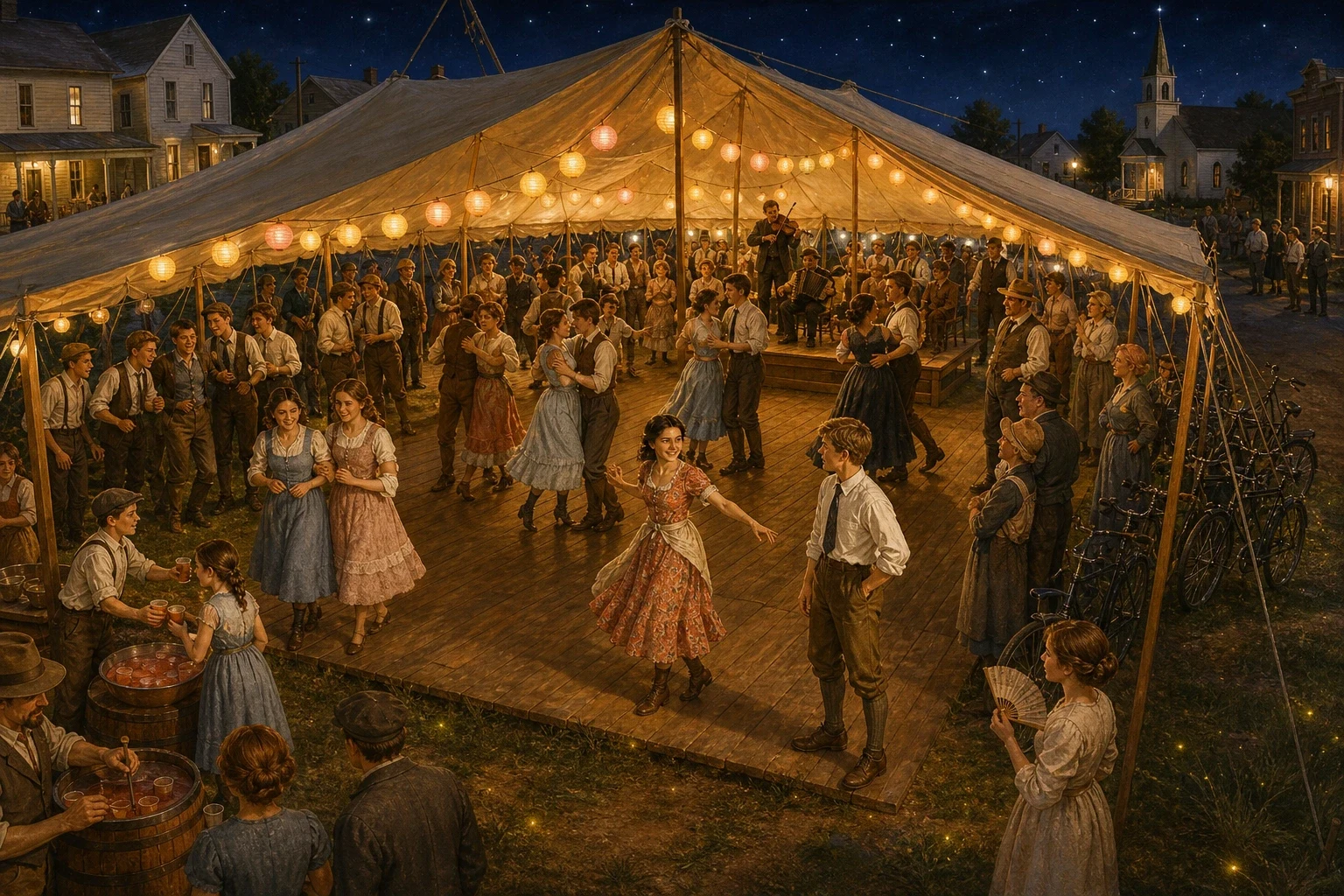
In time the Burdens moved into the town of Black Hawk, and Ántonia came too, working now as a hired girl for a good family called the Harlings. Every summer a dancing pavilion went up in a tent at the edge of town, strung with lanterns, and all the young hired girls and the town boys came to dance there on warm nights. Ántonia, free of farm work for an evening, danced better and laughed louder than any girl in Black Hawk, and soon half the young men in town were finding reasons to walk her home. Jim, growing into a young man himself, watched her twirl under the lanterns with a strange mixture of pride and jealousy, for she was still, to him, the same girl who had once pointed at the sun and begged him for the word for it. Black Hawk's respectable mothers disapproved of the hired girls' dancing, but it never stopped.
Page 7
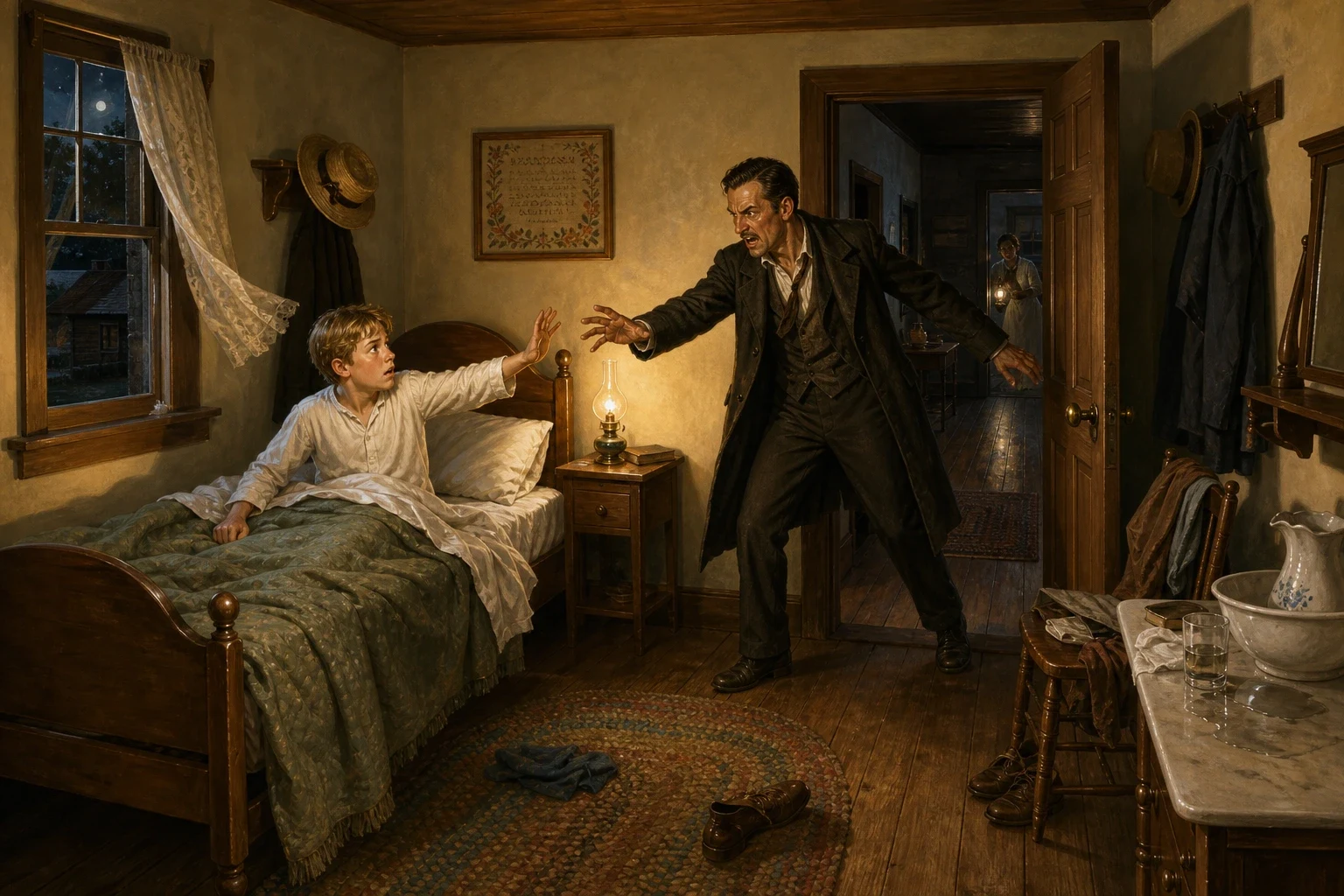
Ántonia later went to work for a Black Hawk moneylender named Wick Cutter, against everyone's advice, for he had a bad reputation with hired girls. One week Cutter sent his wife away and told Ántonia he would be gone too, but Jim's grandmother, suspicious of him, arranged for Jim to sleep in Ántonia's room in her place that one night, with Ántonia safe elsewhere. Jim woke in the dark to the sound of someone creeping up the stairs and the door bursting open. A man's hands seized him in the darkness before he even understood what was happening. The moment Cutter realized, by Jim's voice, that he had grabbed the wrong person, he let go in a rage and began shouting, furious that his plan had failed. Jim scrambled out a window, shaken and a little bruised, but safe, and ran the whole way home through the dark streets.
Page 8
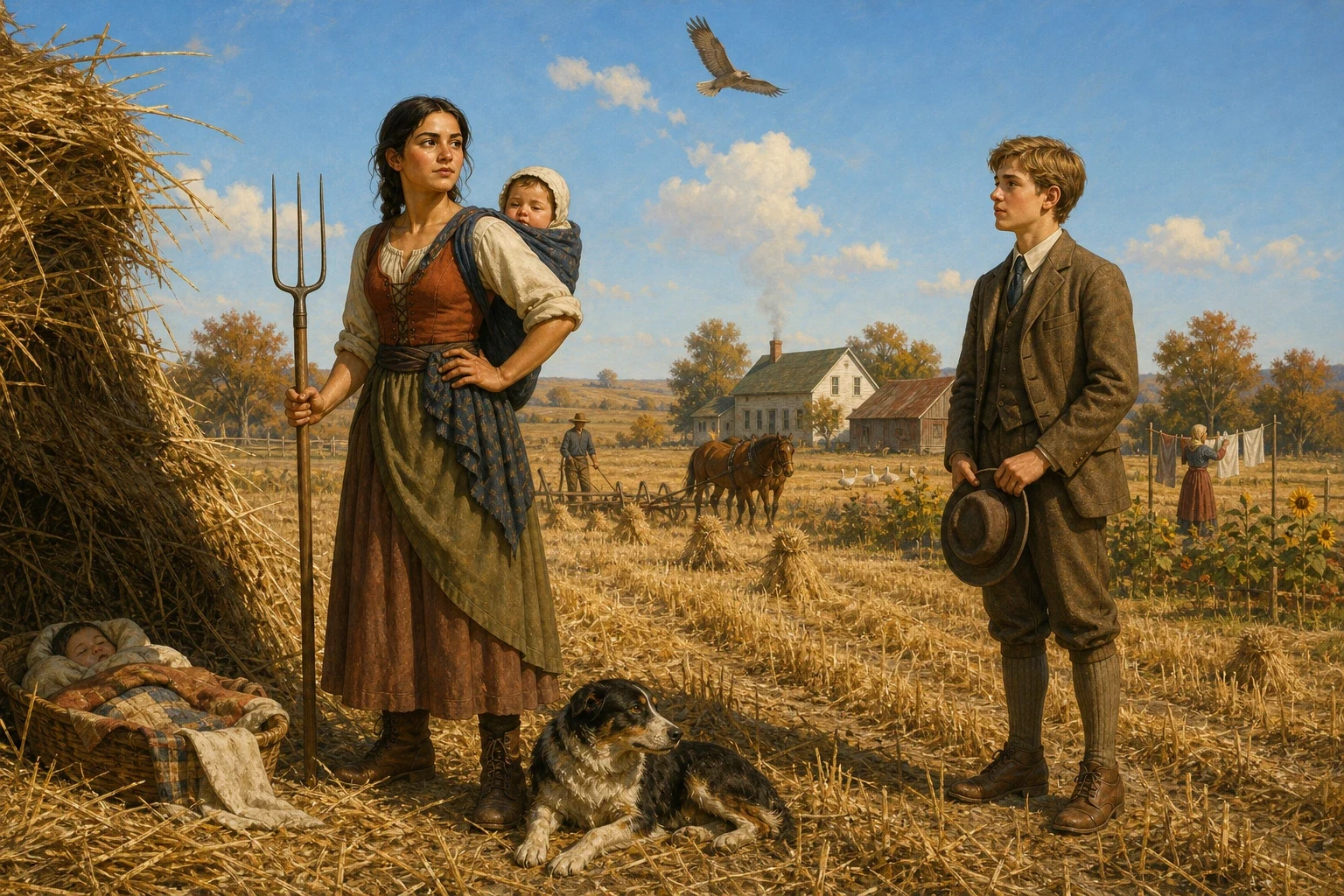
Ántonia left Black Hawk to marry a railway conductor named Larry Donovan, who had promised to make a home with her in Denver. He never married her at all, and left her alone there, far from everyone she knew. She came home to the family farm with nothing but her baby daughter, whom she loved completely, and she went straight back to working the land herself, plowing and harvesting like any hired man, while the neighbors whispered about her disgrace. Jim, now a young lawyer visiting from the city, found her out in the field one autumn afternoon, sunburned and strong, with the baby set down safely in the shade of a haystack nearby. Whatever shame the town wanted her to feel, Ántonia did not feel it; she held her head up, worked hard, and raised her daughter without apology, and Jim admired her for it more than he had ever admired anyone.
Page 9
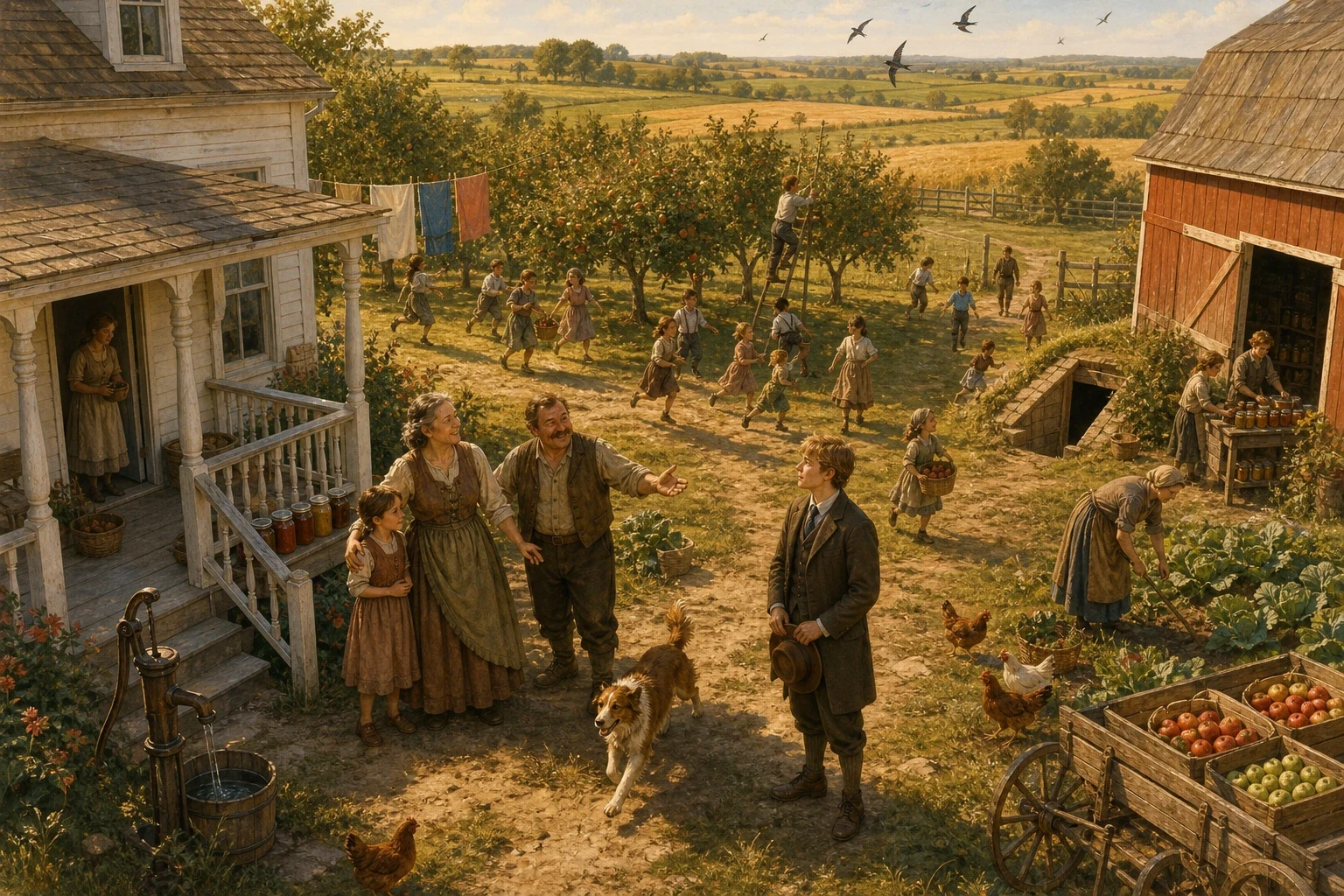
Twenty years passed before Jim came back to that part of Nebraska, now a grown man with a life and a career far away. He found Ántonia at last on a prosperous farm, married to a cheerful Bohemian man named Anton Cuzak, surrounded by a whole houseful of children who came pouring out of the barn and the orchard to see who had come visiting. There was a fruit cave dug into the hillside, shelves of preserves, an orchard Ántonia had planted herself, and a table that filled up with more food than Jim could believe. She was no longer young, her hands rough and her face lined, but she was exactly the Ántonia he remembered underneath it all, and seeing her surrounded by the life she had built, Jim understood that whatever had been hard in her story, she had still, in the end, made something good and whole out of it.
Page 10
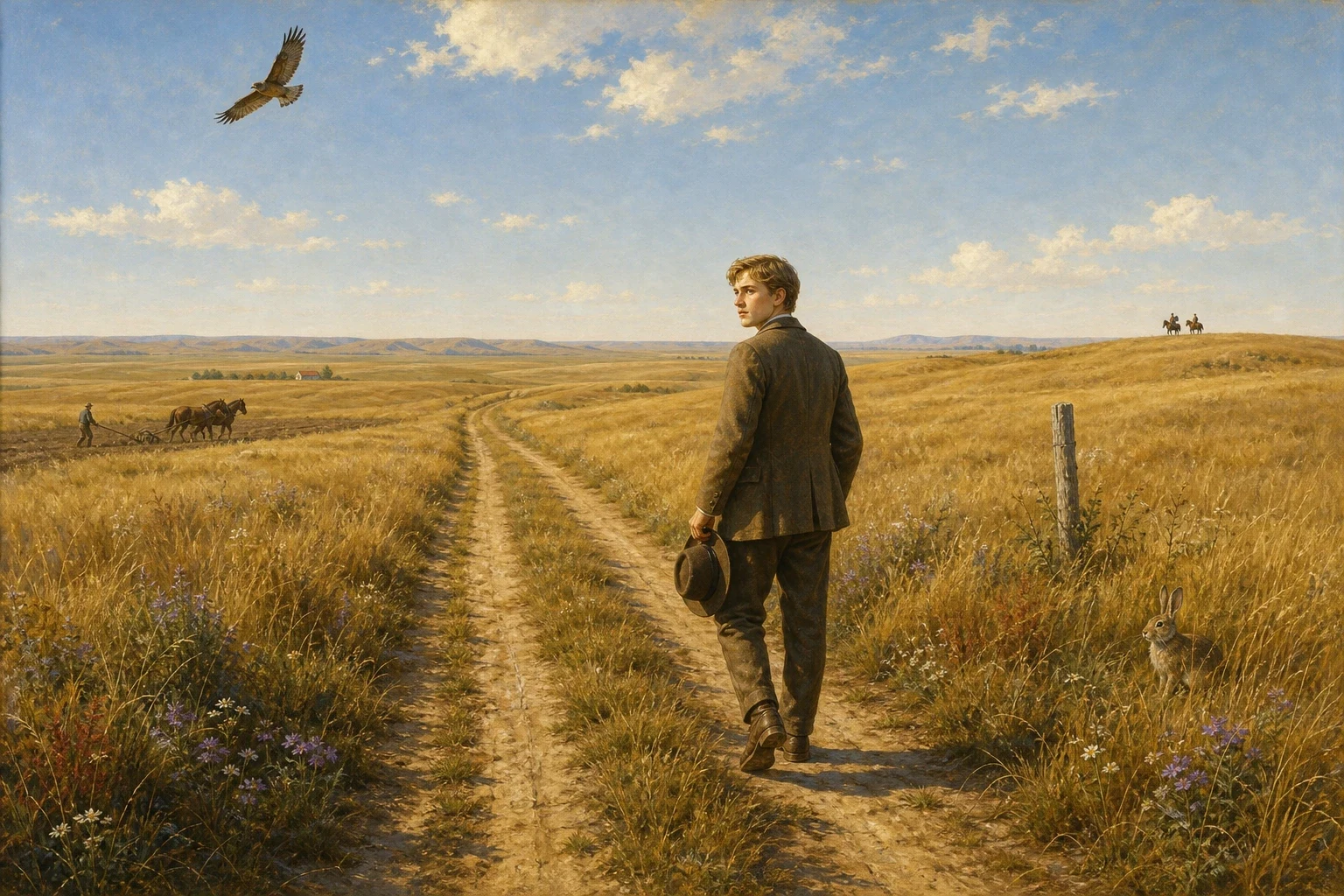
Before he went back east, Jim walked out alone to find the old road, the very one that had carried him, a frightened orphan of ten, out to his grandfather's farm so many years before. It was daylight now, not night, and the road was grown over and little used, but it was unmistakably the same road, running through the same grass under the same enormous sky. Jim stood on it for a long while, thinking of Ántonia as she had been that first autumn, pointing at the sun and asking him for the word, and of everything that had happened to both of them since. Whatever else their lives had become, apart and separate, this road belonged to both of them, and always would. He walked back along it slowly, in no hurry at all, knowing he was walking through the one part of his life that nothing could ever take away from him.
About this story
- Audience: kids (ages 6–12)
Read Wonder Novels on your phone
Wonder Novels is available on Android. Get Wonder Novels on Google Play.