Robinson Crusoe
A castaway, an island, and twenty-eight years alone — until a single footprint in the sand changes everything
Page 1
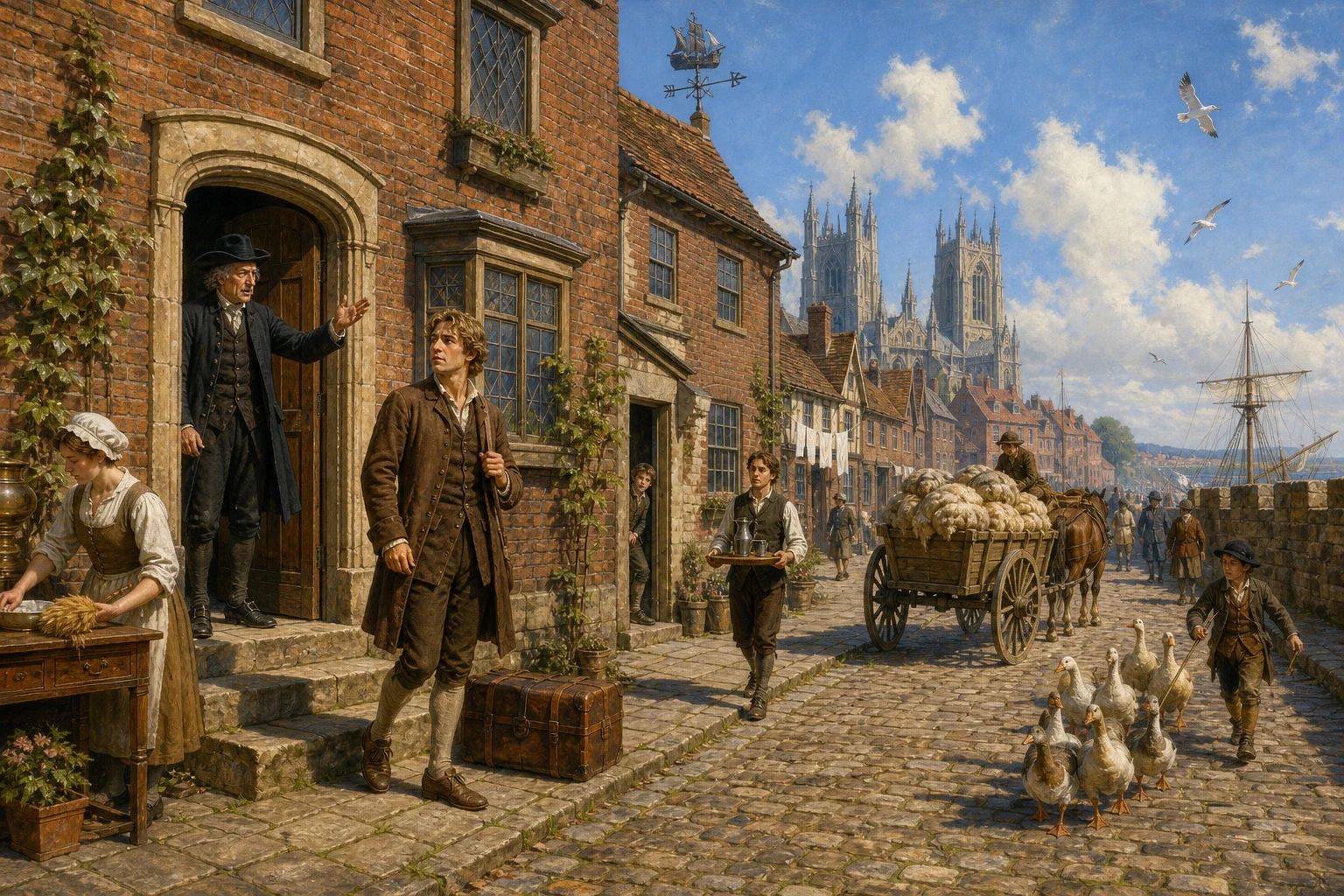
Robinson Crusoe was born in the city of York, the third son of a good and comfortable family. His father had settled there as a merchant and wanted nothing more than for Robinson to study the law and live a quiet, steady life at home. But from the time he was a boy, Robinson had thought of nothing but the sea. One morning his father called him in and spoke to him seriously. He said that men in the middle station of life, neither poor nor great, lived the easiest and the best of all, free from hardship and pride alike, and he begged Robinson to be satisfied with that station and go no further. Robinson listened, and even cried as he listened, and for a little while he meant to stay. But the wish to wander was stronger than any promise, and before many weeks had passed, he had made up his mind to go down to Hull and find a ship.
Page 2
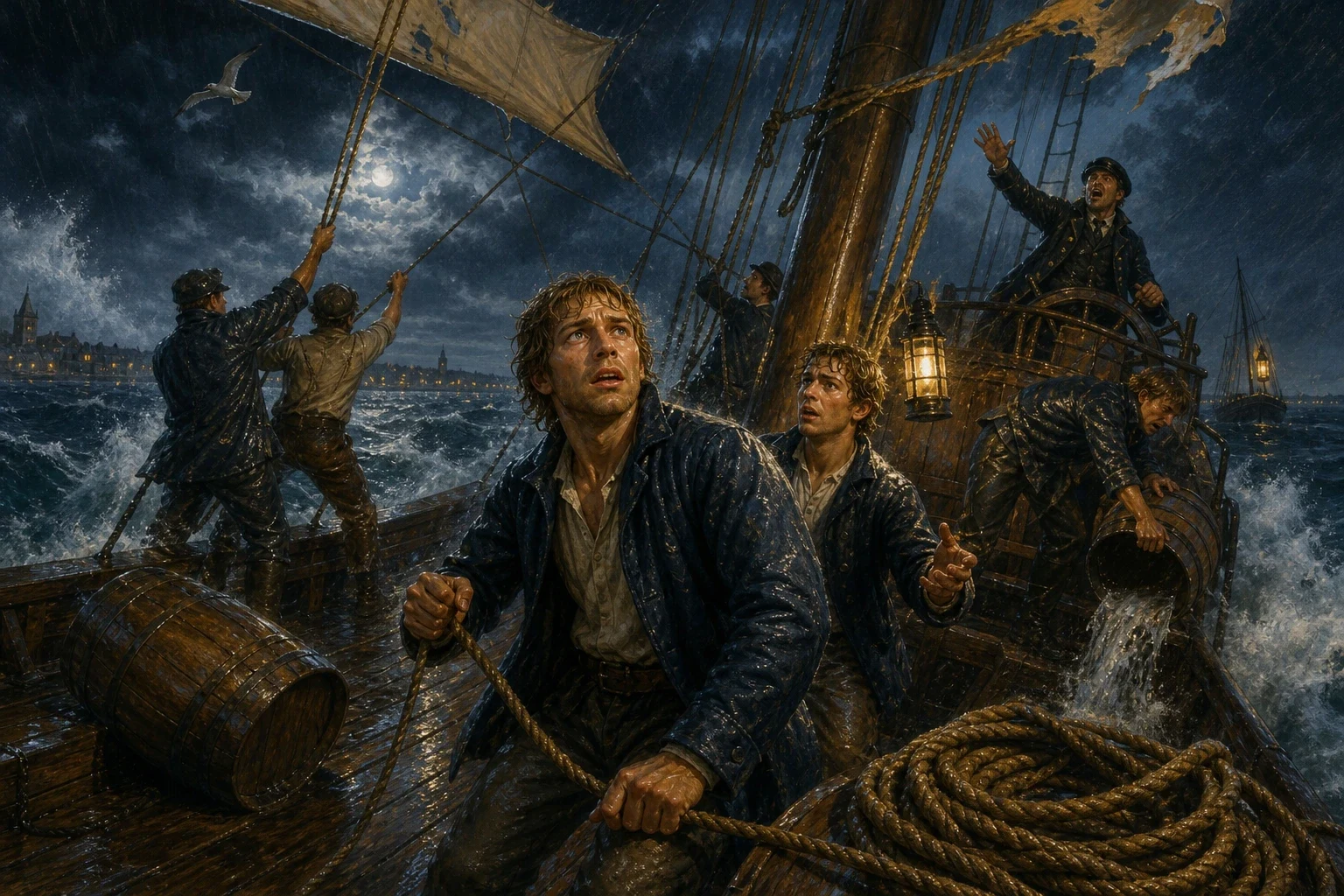
Robinson's ship had sailed only a little way out of Hull when a hard wind got up, and by the time they lay at anchor in Yarmouth Roads, a true storm was on them. The ship rolled and pitched so badly that Robinson, sick with fear, was sure they would all be drowned. He prayed as he had never prayed before, and promised that if he were only spared, he would go straight home to his father and never set foot on a ship again. Toward morning the wind dropped, the sea grew calm, and the danger passed. But the moment the fear left him, so did the promise. His companion, the young man who had talked him into coming, laughed the whole fright off over a bowl of punch, and within a day or two Robinson had agreed to sail on with him again — not home, but onward, from one voyage to the next, further from York with every one.
Page 3
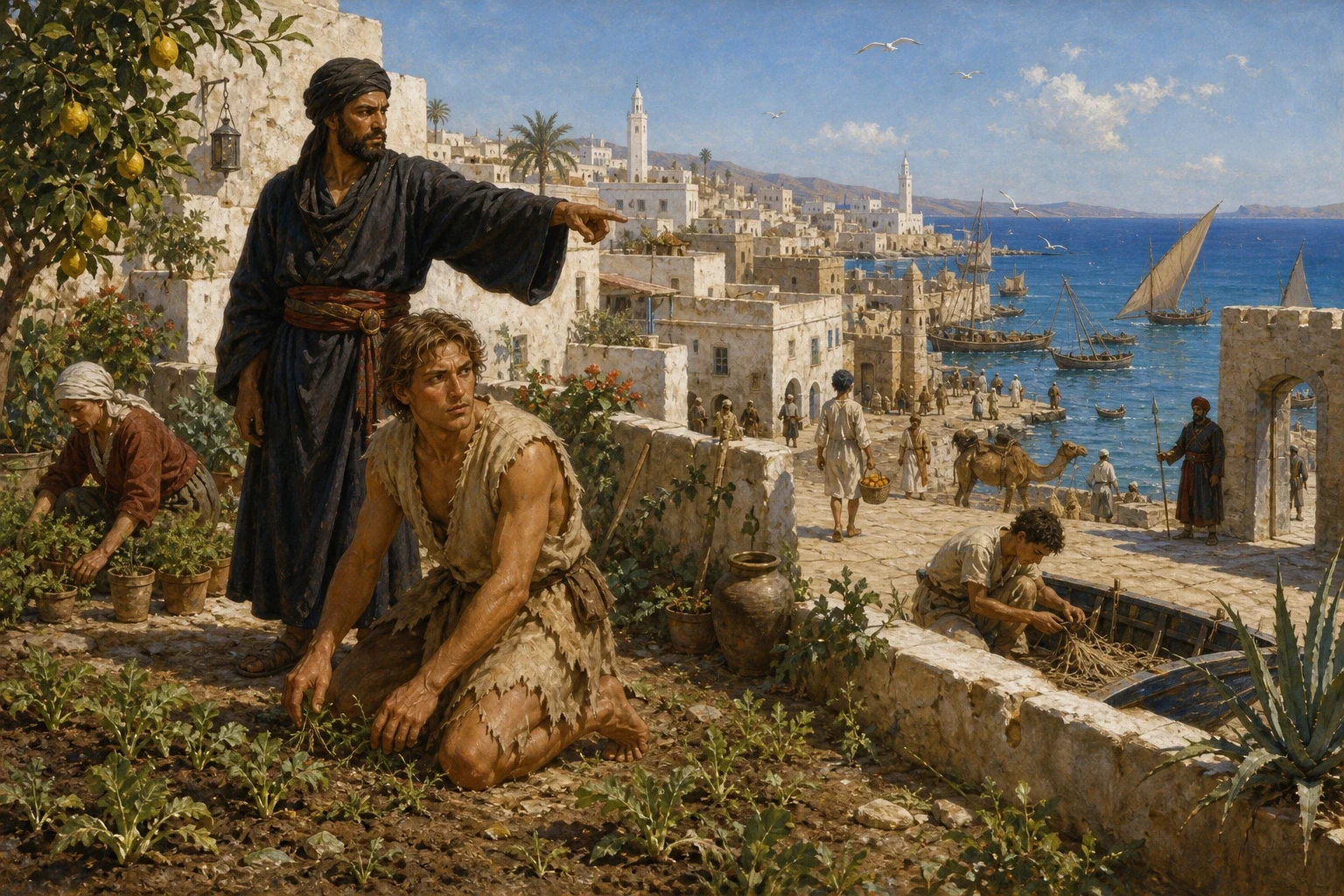
Some years later, sailing again for the coast of Guinea, Robinson's ship was taken by a Moorish rover out of the port of Sallee. The whole crew were carried ashore as prisoners, and most were sold on to work in the fields. But the captain of the rover kept Robinson for himself, to work as a house slave in his own garden, because he judged the young Englishman strong and quick. For two long years Robinson lived this way in Sallee, fed well enough, treated no worse than any slave, but watched, with no way to send word home and no way to escape, since his master never once trusted him with a boat beyond calling distance of the shore — except, sometimes, to go out fishing close in, with another young slave to help him.
Page 4
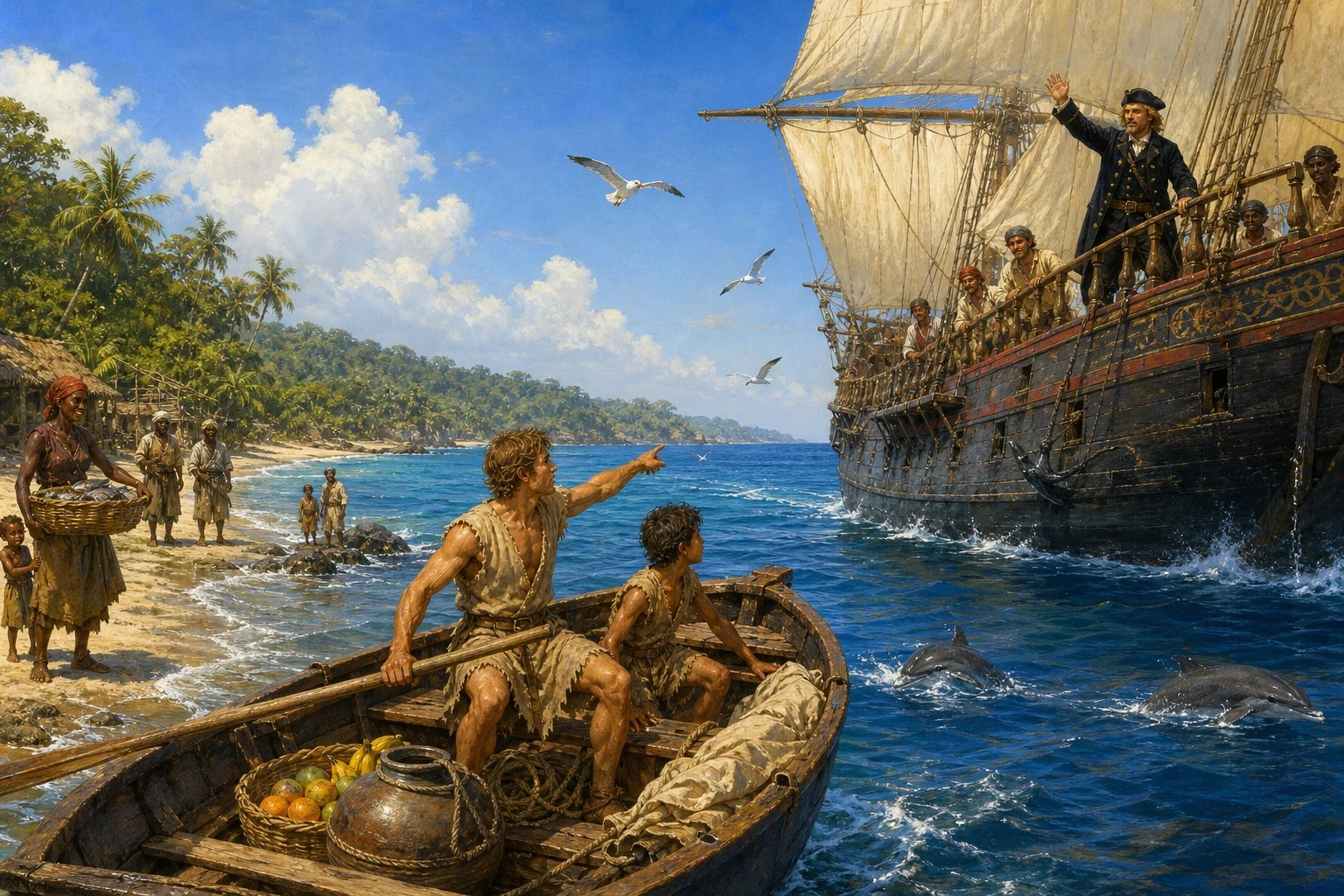
One day, sent out fishing as always with the slave boy Xury, Robinson saw his chance. Instead of turning back toward Sallee, he kept the boat's head out to sea, and when Xury understood what he meant to do, the boy swore he would stay with him wherever he went. Together they sailed on down the African coast for many days, landing now and then for fresh water, trading cloth for food with the people they met, and once driving off a lion that came down to the shore at night. At last, far south of Sallee, a large ship was sighted standing in toward the coast. It was a Portuguese trading vessel, and her captain, seeing the small boat, took Robinson and Xury aboard, fed them, and heard their whole story. He was an honest man. He paid Robinson a fair price for the boat and all it carried, and he carried them both onward, safe, toward Brazil.
Page 5
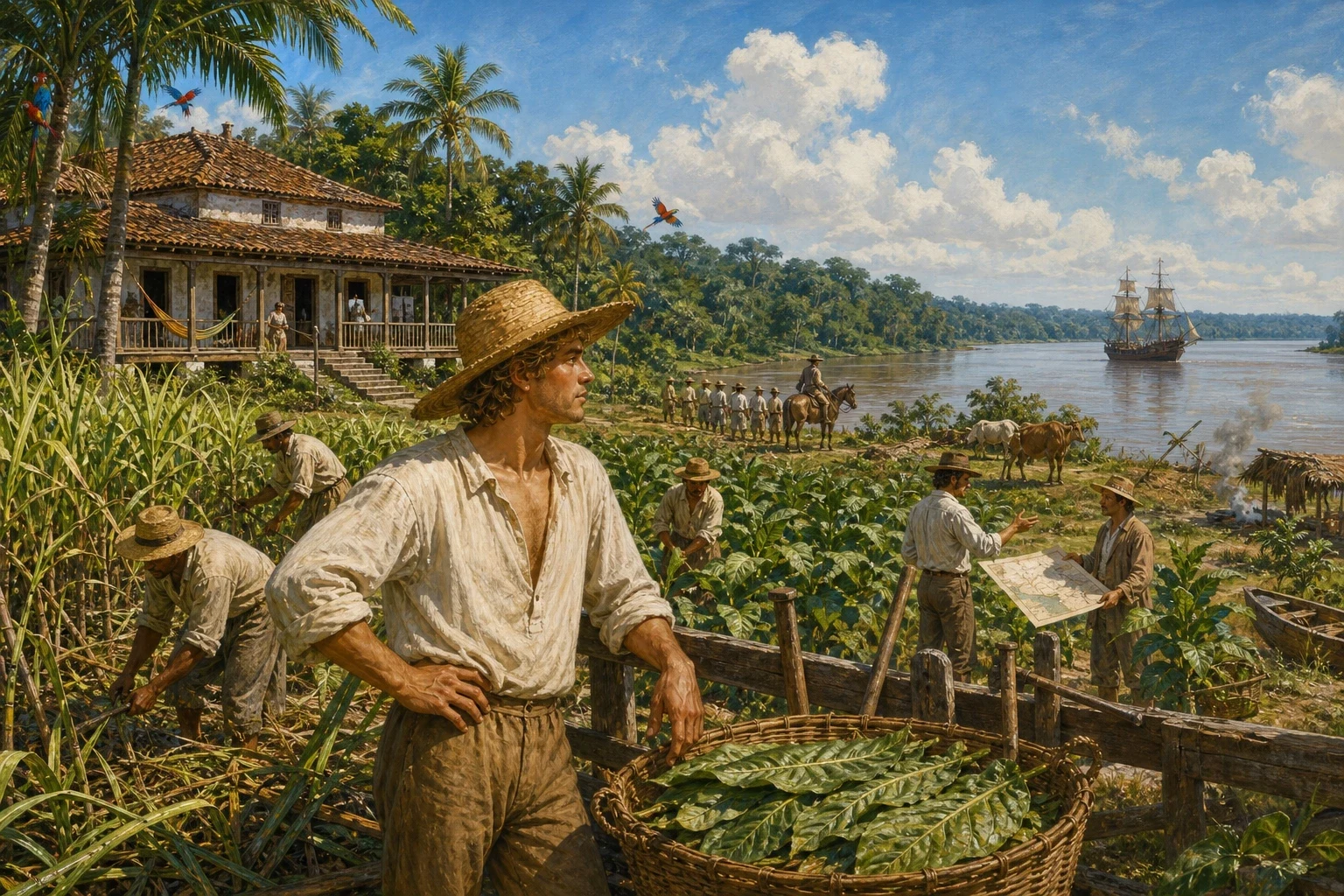
In Brazil, Robinson used the money the Portuguese captain had fairly paid him to buy land, and in time he became a planter, growing tobacco and sugar cane on a growing estate. For some years he did well, and might have lived out a comfortable, settled life there, just as his father had once wished for him in York. But the old restlessness had never left him. When some of the other planters asked him to sail to Guinea and bring back a cargo of slaves to share among them, he agreed at once, though his friends warned him against it and reminded him how well he was already doing. Against all good advice, in September, he went aboard a ship bound once more for the African coast — and it was this one voyage, of all the voyages he had made, that was to change his whole life.
Page 6
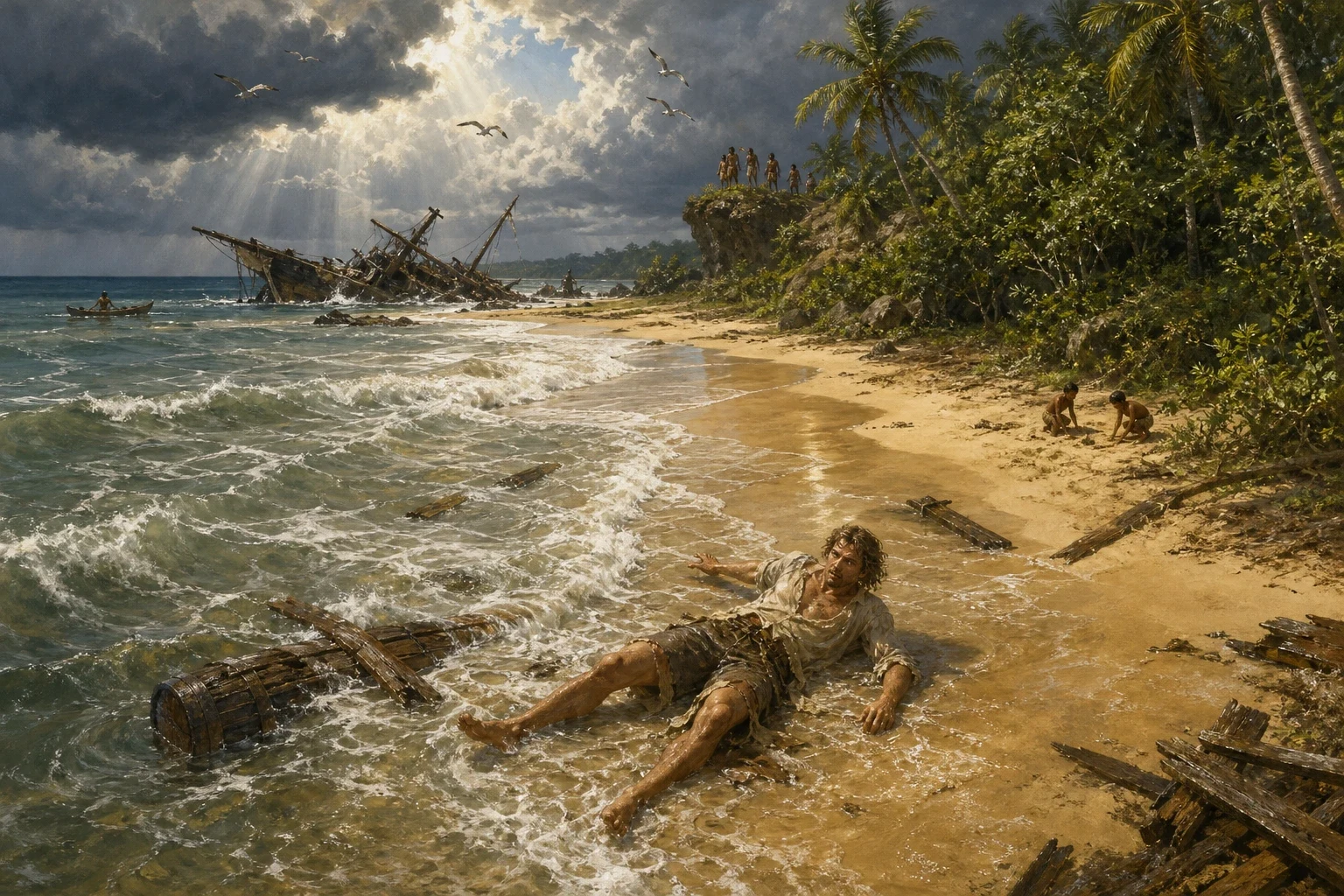
Many days out from Brazil, the ship ran into a storm far worse than any Robinson had known, and for nearly two weeks it was driven off course, battered and leaking, until at last, near the mouth of a great river on an unknown coast, it struck fast on a sandbank. The crew got a boat into the water and pulled for the shore, but a huge wave overturned it in the surf, and every man but Robinson was drowned within sight of the beach. He himself was carried under, tumbled over and over by the sea, and thrown up at last onto the sand, half-drowned, with hardly the strength left to crawl above the waterline before he fell down exhausted — alone, without a single other living soul, on a shore he did not know at all.
Page 7
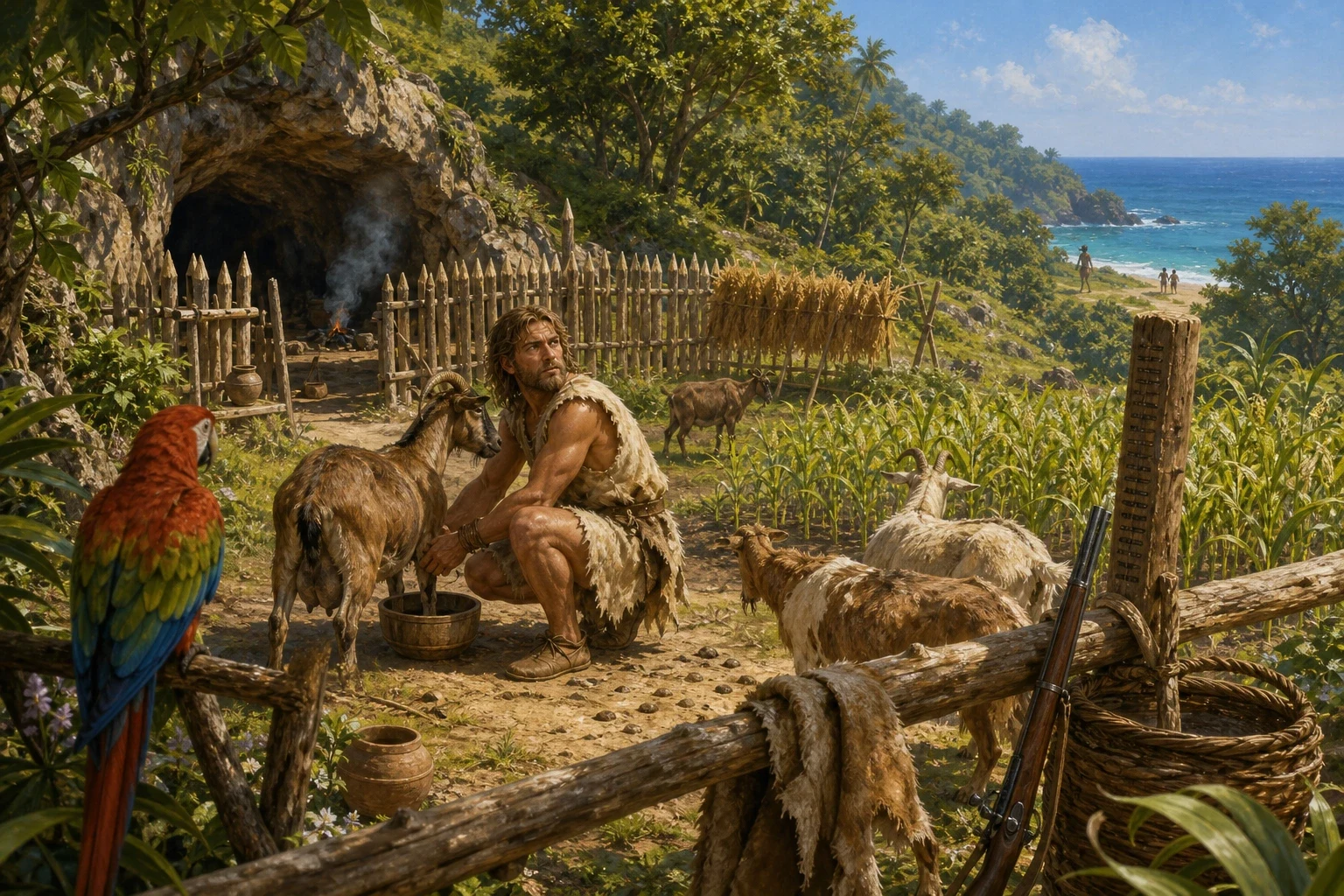
In the months that followed, Robinson swam out to the wreck again and again before it broke apart completely, and brought ashore tools, guns, powder, and whatever food and cloth he could carry. He built himself a strong shelter dug into the side of a hill and fenced round with a stout palisade of stakes, half cave and half tent, and called it his castle. Bit by bit he learned to do everything for himself: he grew barley and rice from a few grains he found by chance in an old bag, he made rough pottery and baked his own bread, he tamed a flock of wild goats for milk and meat, and he kept a careful journal, cutting a notch in a post for every day that passed. The seasons turned around him one after another. His clothes wore out, so he made new ones from goatskins, and his hair and beard grew long, until, without a single other person to speak to, years had quietly gone by.
Page 8
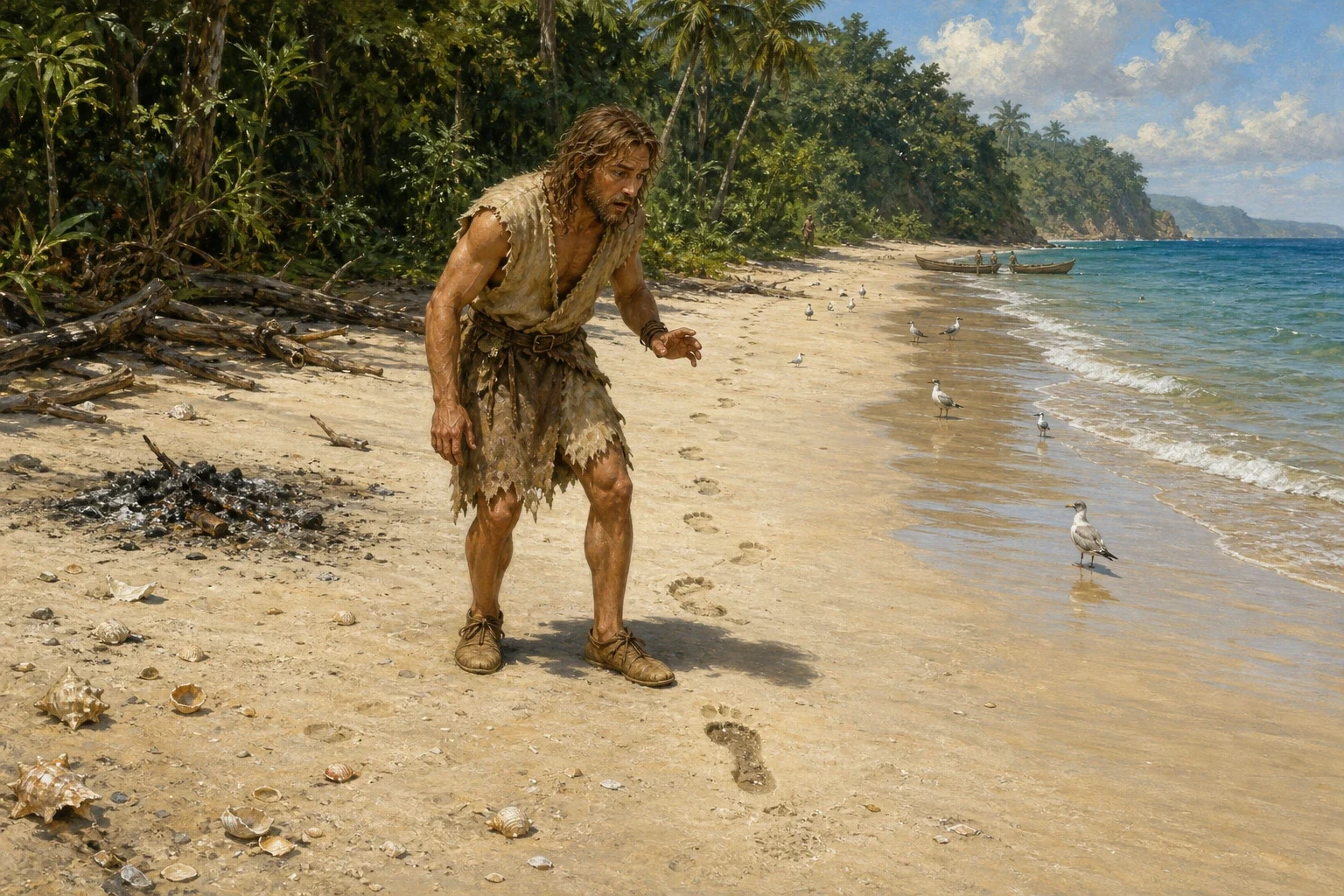
One afternoon, walking along a stretch of shore on the far side of the island where he rarely went, Robinson stopped as if he had been struck by lightning. There, clear in the sand, was the print of a bare human foot — toes, heel, every part plain to see — and it was not his own. He looked all around, saw and heard nothing, and yet he hurried home to his fort in real terror, hardly sleeping for several nights, certain that savages from the mainland had somehow found his island. For a long time after, he strengthened his fences and kept close to his cave. Only much later, venturing back to that same shore, did he find the cold ashes of a fire on the sand, and understood that people did indeed sometimes land there — though, for now, he never saw them, and only waited, watchful, for what might come.
Page 9
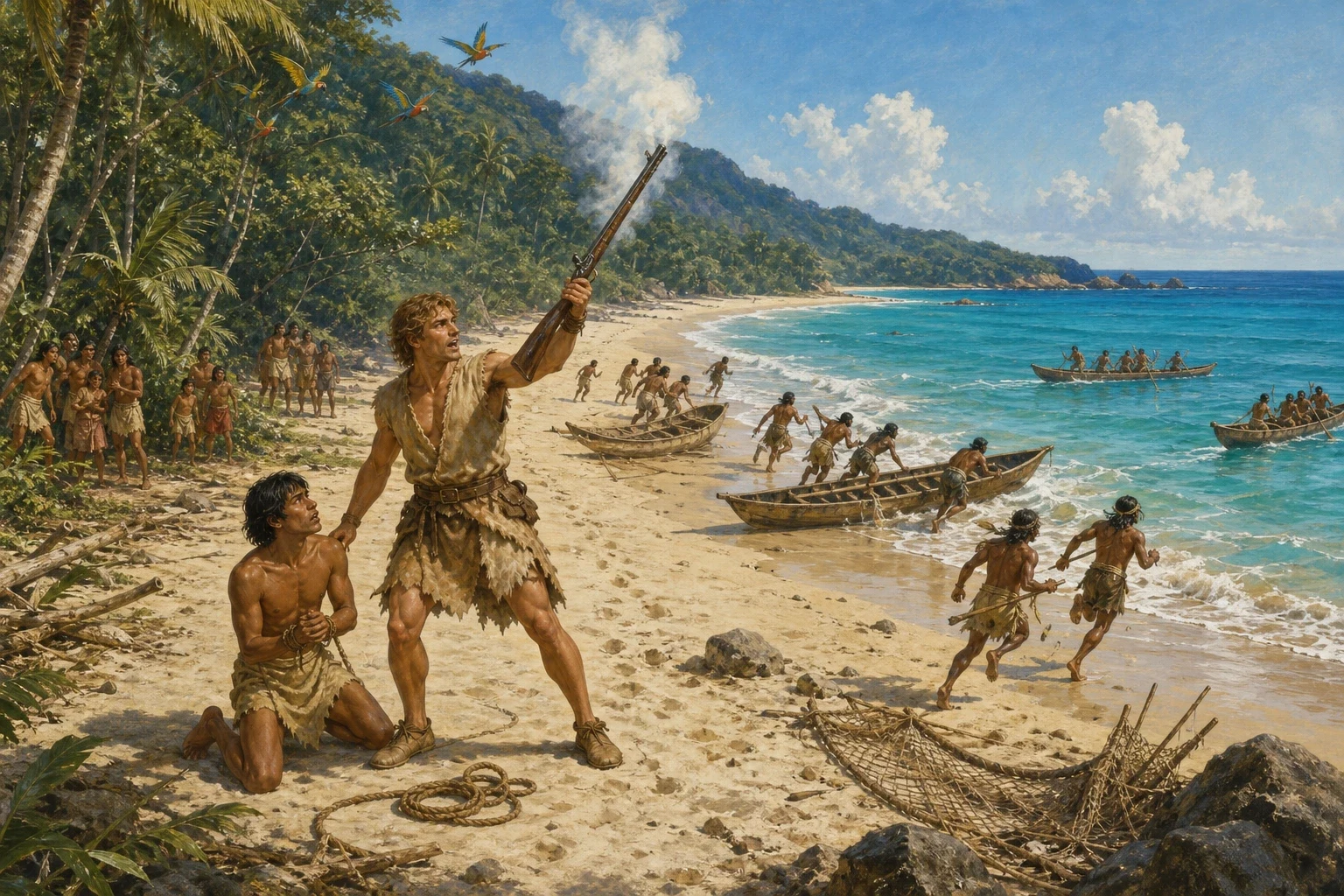
Some time after that, hidden among the trees above the shore, Robinson watched a group of men land from canoes with a prisoner they meant to kill. Just as they moved to strike him down, Robinson ran out from his hiding place, firing his gun into the air and shouting. The sudden crack and smoke threw the whole party into terror, and they fled to their canoes and paddled away, leaving the prisoner behind on the sand. Robinson cut the man free, and the stranger, understanding he had been saved, knelt before him in gratitude, placing Robinson's foot upon his own head as a sign of lasting service. Since it was a Friday, Robinson gave him that name. He brought the man home to his cave, taught him some English, and found in him, after so many solitary years, the first true companion he had had on the island.
Page 10
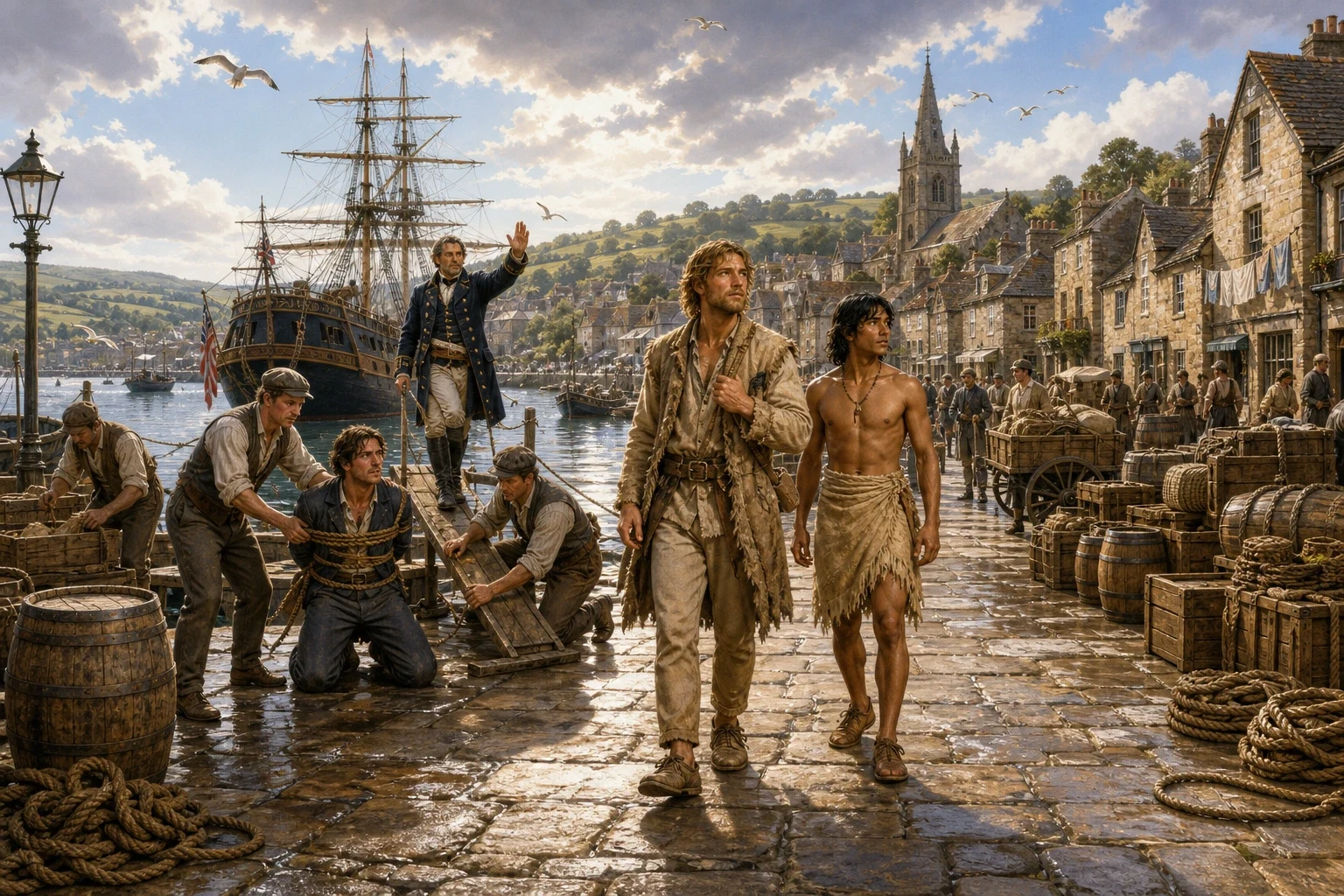
Not long after, an English ship anchored in the bay below the island, and Robinson learned her crew had mutinied and put their own captain ashore to die. With Friday beside him, he helped arm the loyal men and surprise the mutineers in the dark; faced with guns they had not expected, the mutineers surrendered without a fight, and the captain was given back his ship. In gratitude, he carried Robinson home to England at last, after eight and twenty years away. Robinson found his father had long since died, but with the help of the honest Portuguese captain who had once rescued him, he learned that his old plantation in Brazil had quietly grown rich while he was gone. He came home at last not a poor wandering sailor but a man of some fortune — standing, as his father had once wished for him, in the same steady, middle station of life the old man had begged him long ago to be content with.
About this story
- Audience: kids (ages 6–12)
Read Wonder Novels on your phone
Wonder Novels is available on Android. Get Wonder Novels on Google Play.