The Metamorphosis
A faithful retelling of Franz Kafka’s classic novel about a man transformed into an insect
Page 1
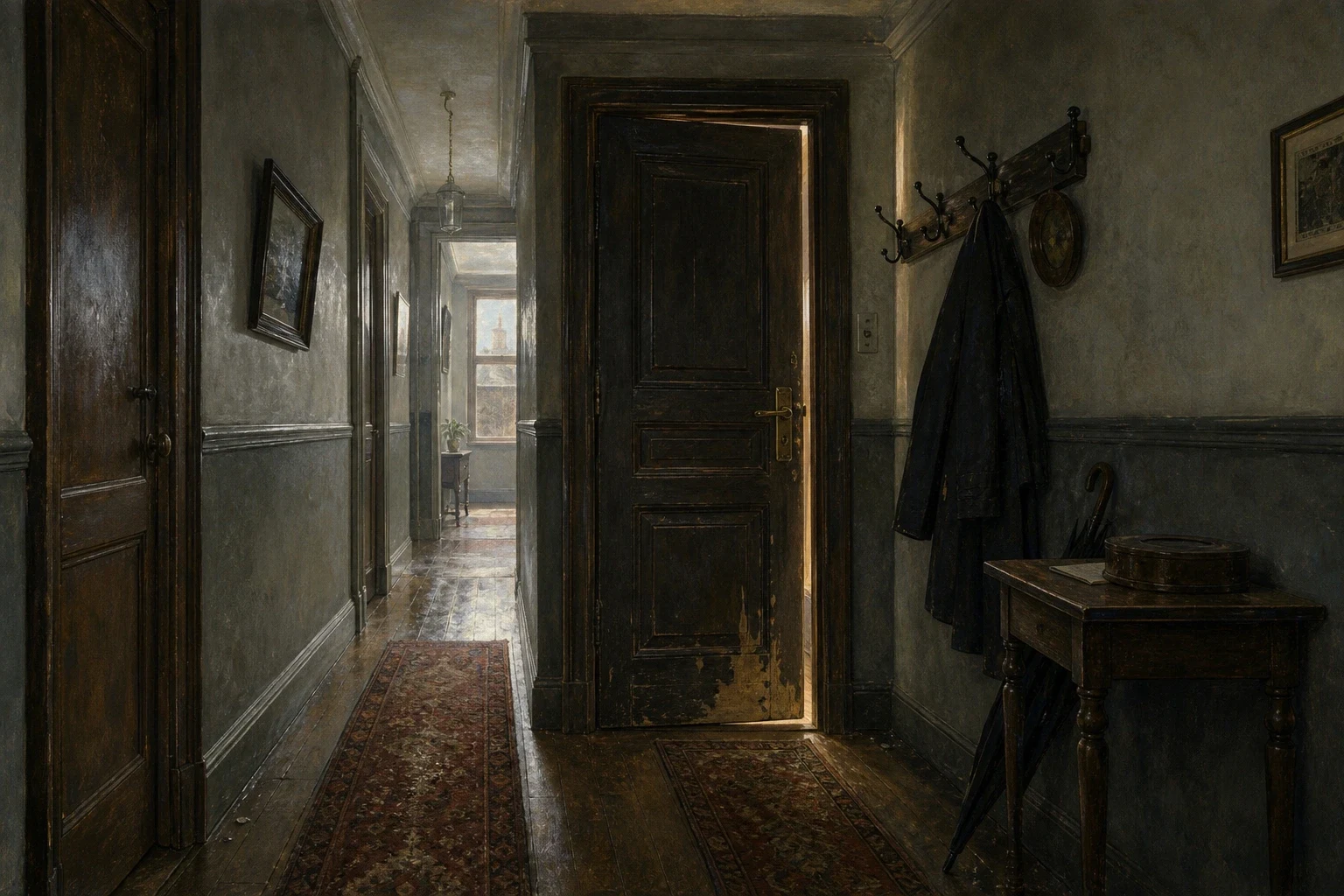
Gregor Samsa woke one morning from unsettling dreams to find himself changed into a large insect in his bed. He lay on his hard, segmented back, and when he lifted his head a little, he saw his dome-shaped brown belly, divided into rigid arch-like segments. His numerous thin legs, pitifully thin in comparison to the rest of him, waved helplessly. “What has happened to me?” he wondered. He tried to turn onto his side, but fell back with a soft thud. He tried again, and again. He could not manage it. The rain was pattering against the window. He was a traveling salesman, and his train left very early. He had to get up. The clock showed half past six. He worked hard to support his family, and being late was unthinkable. He was trapped, utterly helpless in his transformed state, facing the demands of the day from a body he no longer recognized as his own. A profound sense of dread began to settle over him as he contemplated his predicament.
Page 2
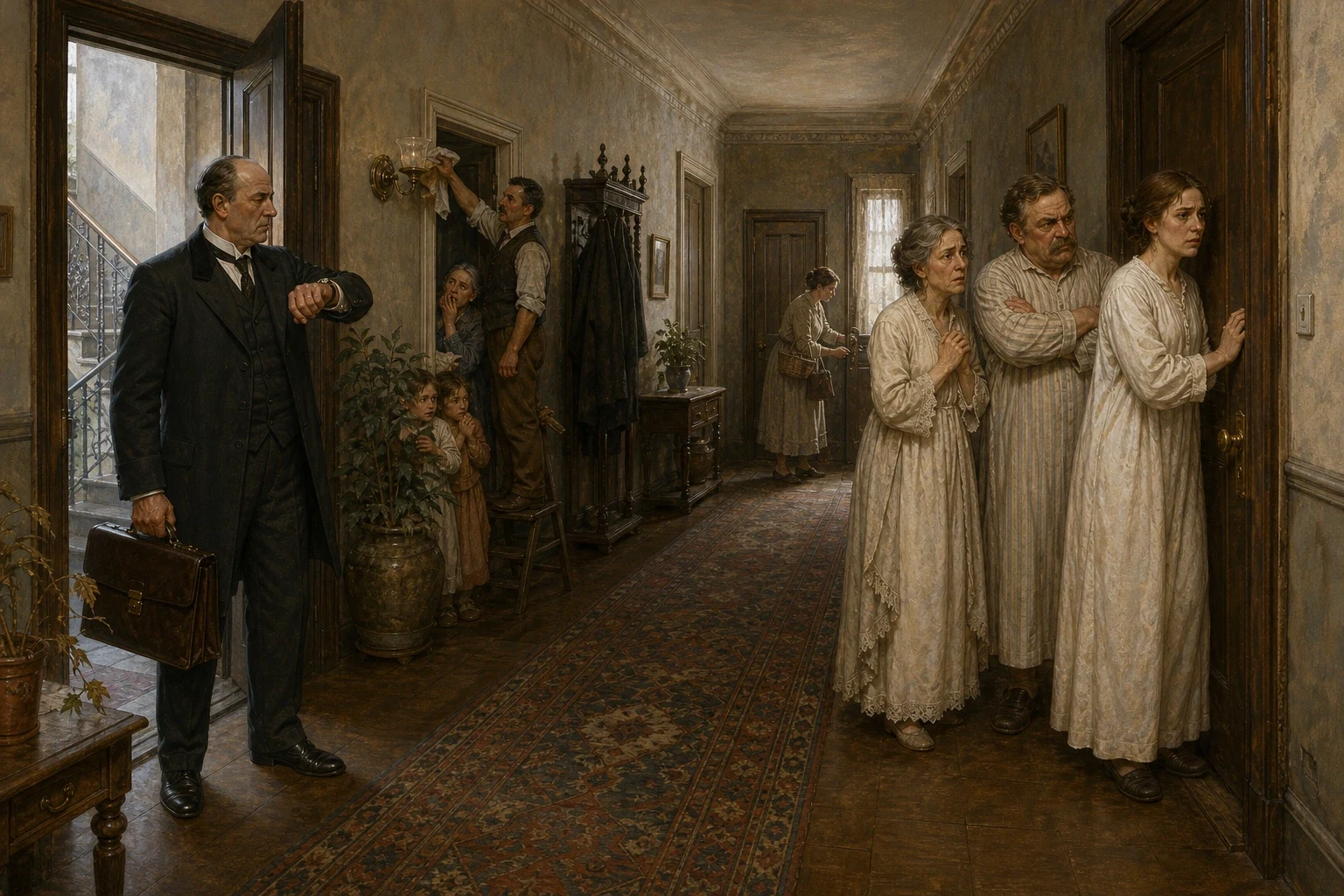
The door to Gregor’s room was locked from the inside. His mother called through the door, her voice laced with anxiety, asking if he was well and why he hadn't left for work. Then his sister, Grete, gently asked if he needed anything, her tone still caring, though tinged with impatience. Finally, his father’s voice, stern and demanding, echoed through the quiet apartment, urging him to hurry, his patience clearly wearing thin. A sharp knock then came at the front door. It was the Chief Clerk, a punctual and formal man, come to find out why Gregor, usually so reliable, was late for work. The Chief Clerk spoke through the door, reminding Gregor of his duties, and hinting at severe consequences for his absence. Gregor tried desperately to answer, to explain, but his voice was now a high-pitched, unintelligible squeaking. The family and the Chief Clerk listened, confused and alarmed, their faces growing increasingly worried, while Gregor struggled in vain to turn the key with his many small, clumsy legs.
Page 3
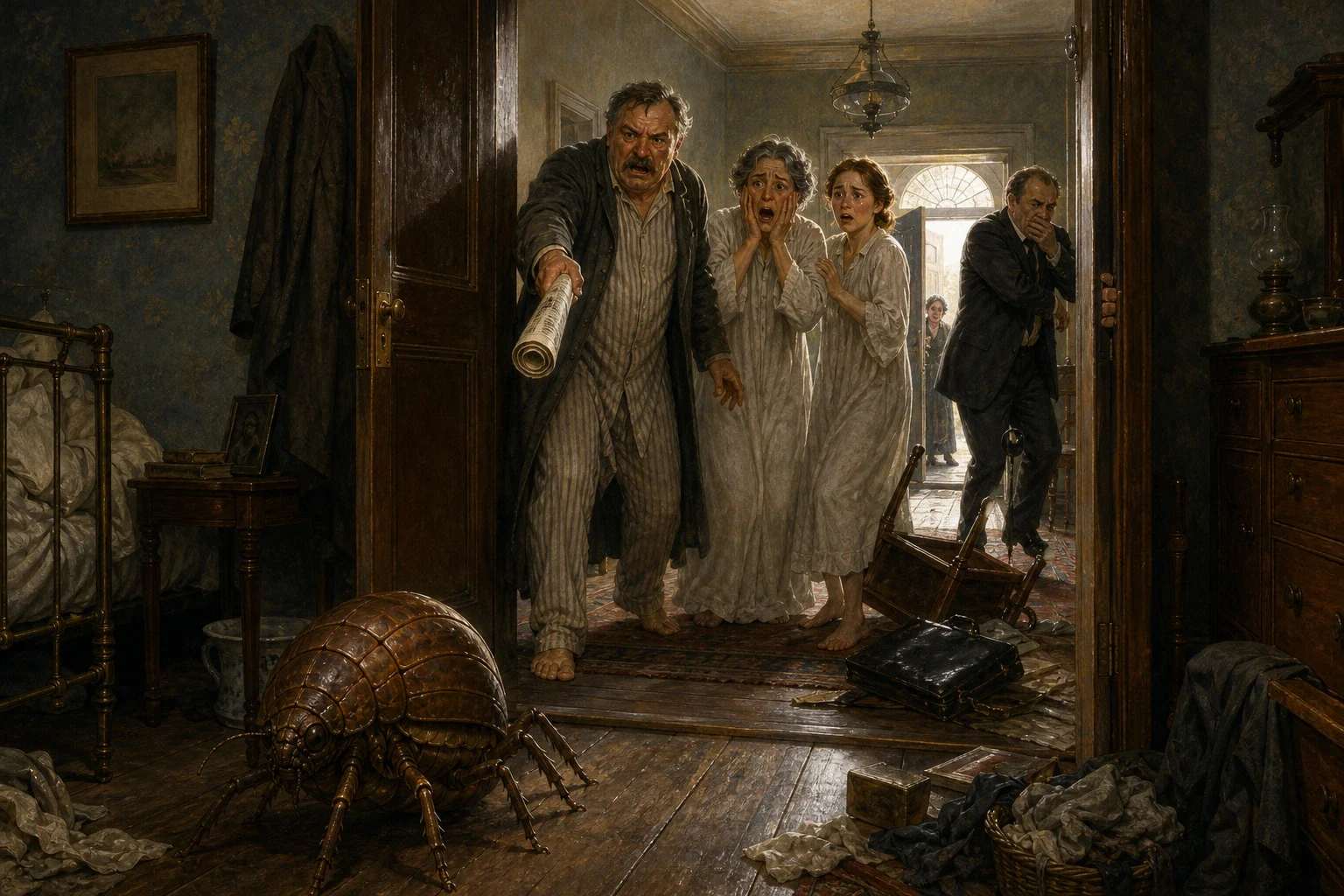
With a final, desperate effort, Gregor managed to turn the key and push the door open. He stood fully revealed in the doorway, a large, brown insect, his many legs scrabbling awkwardly on the floor. The Chief Clerk, upon seeing him, let out a choked sound of utter horror, covering his mouth with a gloved hand and backing away rapidly, his briefcase clattering against the wall. Mrs. Samsa cried out, a piercing sound of terror, pressing her hands to her face as if to ward off the sight. Grete stared, shocked and frozen, her eyes wide with disbelief, while Mr. Samsa clenched his fists, his face reddening with a surge of anger and disgust. The Chief Clerk, without another word, quickly turned and fled down the hallway, leaving the family alone with the terrifying sight. Mr. Samsa, regaining his composure with a renewed burst of rage, grabbed a rolled-up newspaper from the nearby table. He urged Gregor back into the room, shoving him with the newspaper, forcing him to retreat. Gregor, unable to resist, slowly backed into the shadows of his room, the door slamming shut behind him.
Page 4
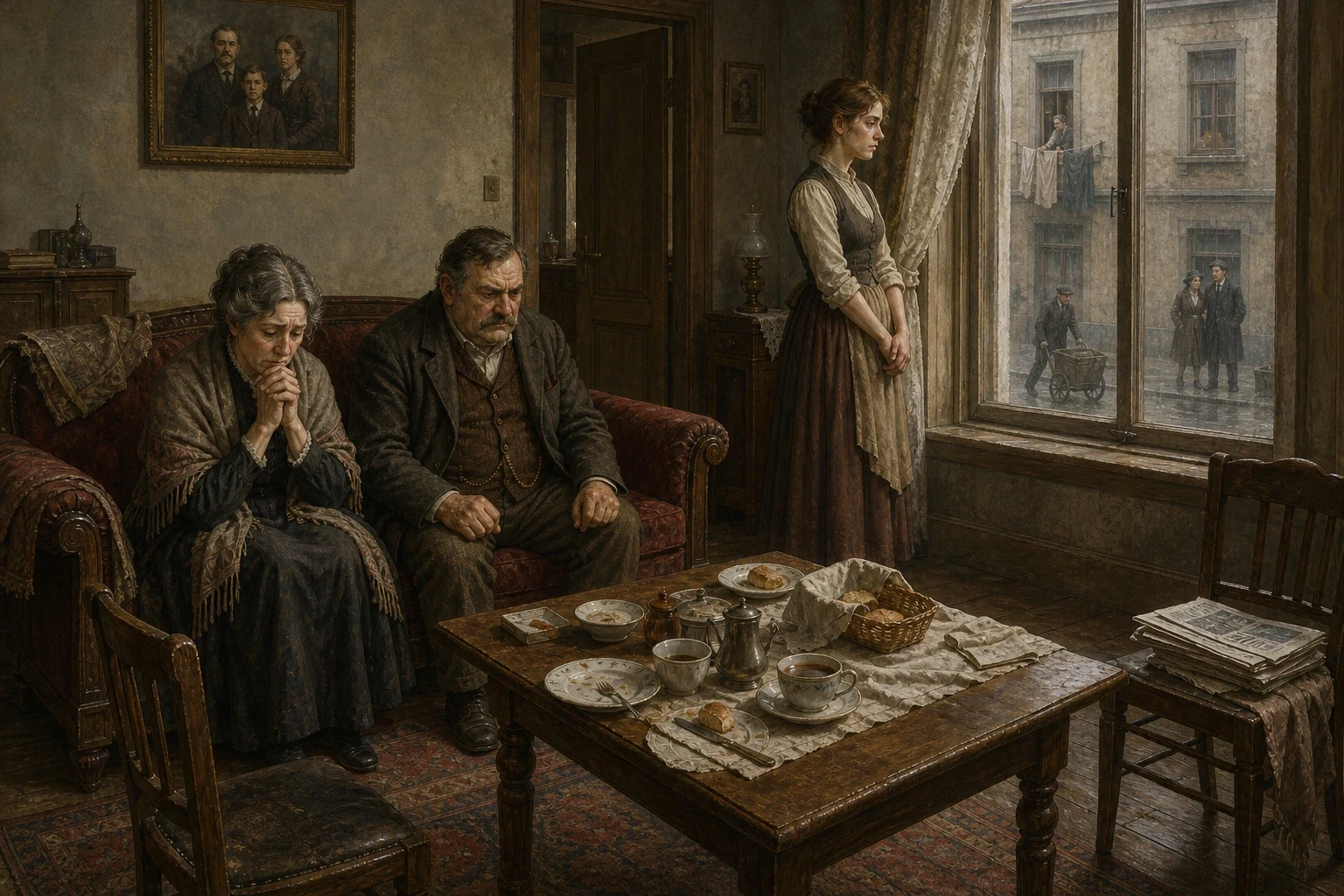
After Gregor was driven back into his room, the family retreated to the living room, a space usually reserved for peace and family gatherings, now filled with palpable despair. Mrs. Samsa sat trembling on the sofa, her gaze vacant, unable to truly grasp what had happened, her eyes darting nervously towards Gregor's closed door. Mr. Samsa, usually defeated and tired by his own advancing age, paced the room with a surprising energy, his face red with anger and humiliation. He spoke loudly of their ruined lives, their lost income, and the unbearable burden Gregor had become, his voice laced with bitterness. Grete, though young, tried to take charge, suggesting practical ways they might cope with their new reality, her youthful face set in a determined frown. They discussed their dwindling savings and the desperate need for them all to find work to survive. The future, which had once seemed secure because of Gregor's steady employment, now stretched before them, dark and uncertain, laden with fear and despair, a heavy cloud hanging over their small apartment.
Page 5
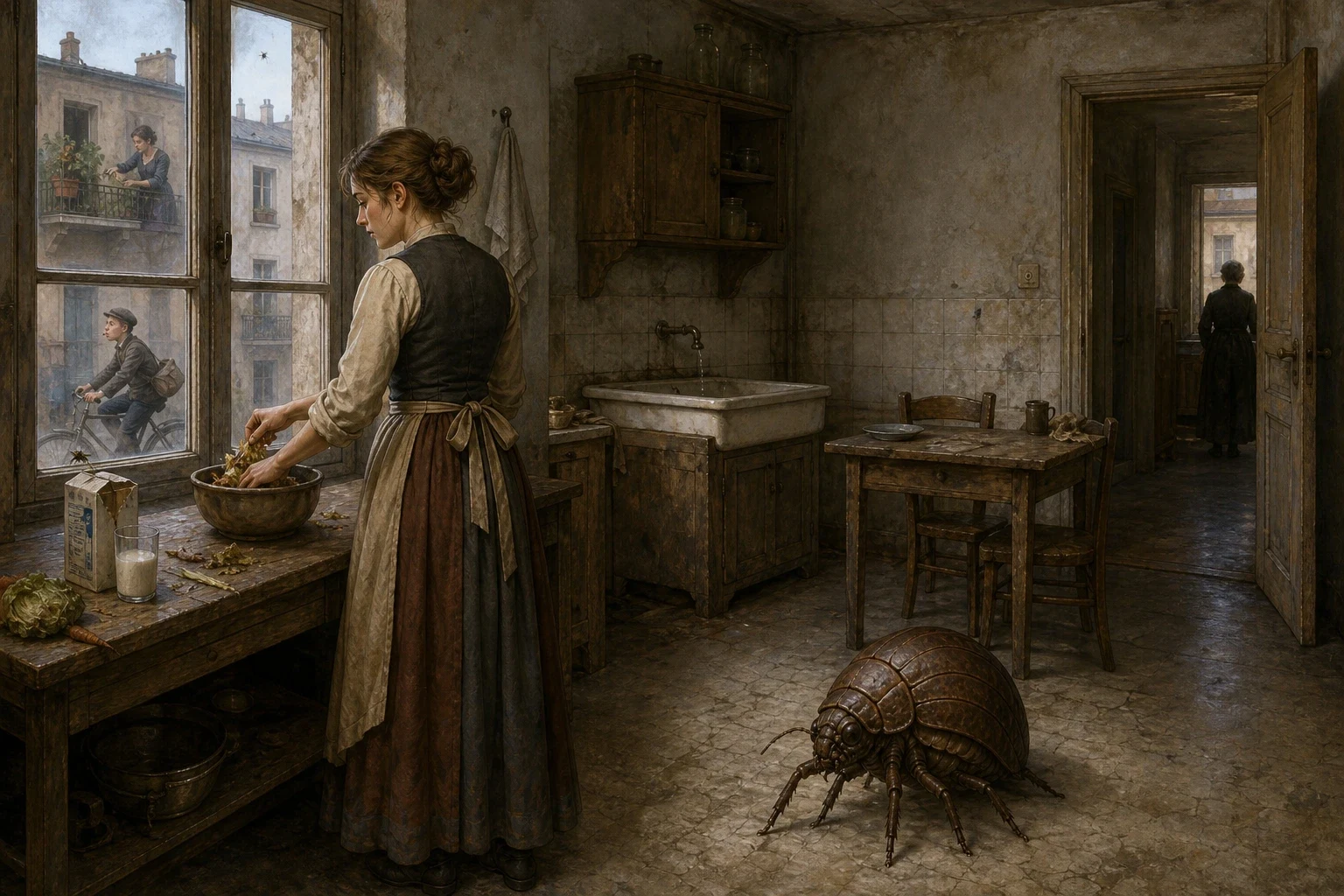
Grete, despite her initial shock and repulsion, reluctantly took on the task of caring for Gregor, a duty that fell solely to her. She would enter his room, holding her breath to avoid the strange new smells, and leave him various foods to see what he might eat, always keeping a safe distance. Gregor, hiding beneath the sofa, watched her every move from the shadows. He soon discovered he preferred rotting vegetables and decaying bits of food to fresh offerings, much to Grete's obvious disgust as she cleared his uneaten plates. He sensed her distaste, her hurried movements, and the way she pointedly avoided looking directly at him. She was the only one who would even enter his room, but her visits were brief, her touch absent, her words few. He longed for understanding, for a sign that she still saw him as her brother, a human connection, but her face showed only pity mixed with revulsion, a constant, painful reminder of his transformed state. His isolation deepened with each passing day, the chasm between them growing wider and more insurmountable.
Page 6
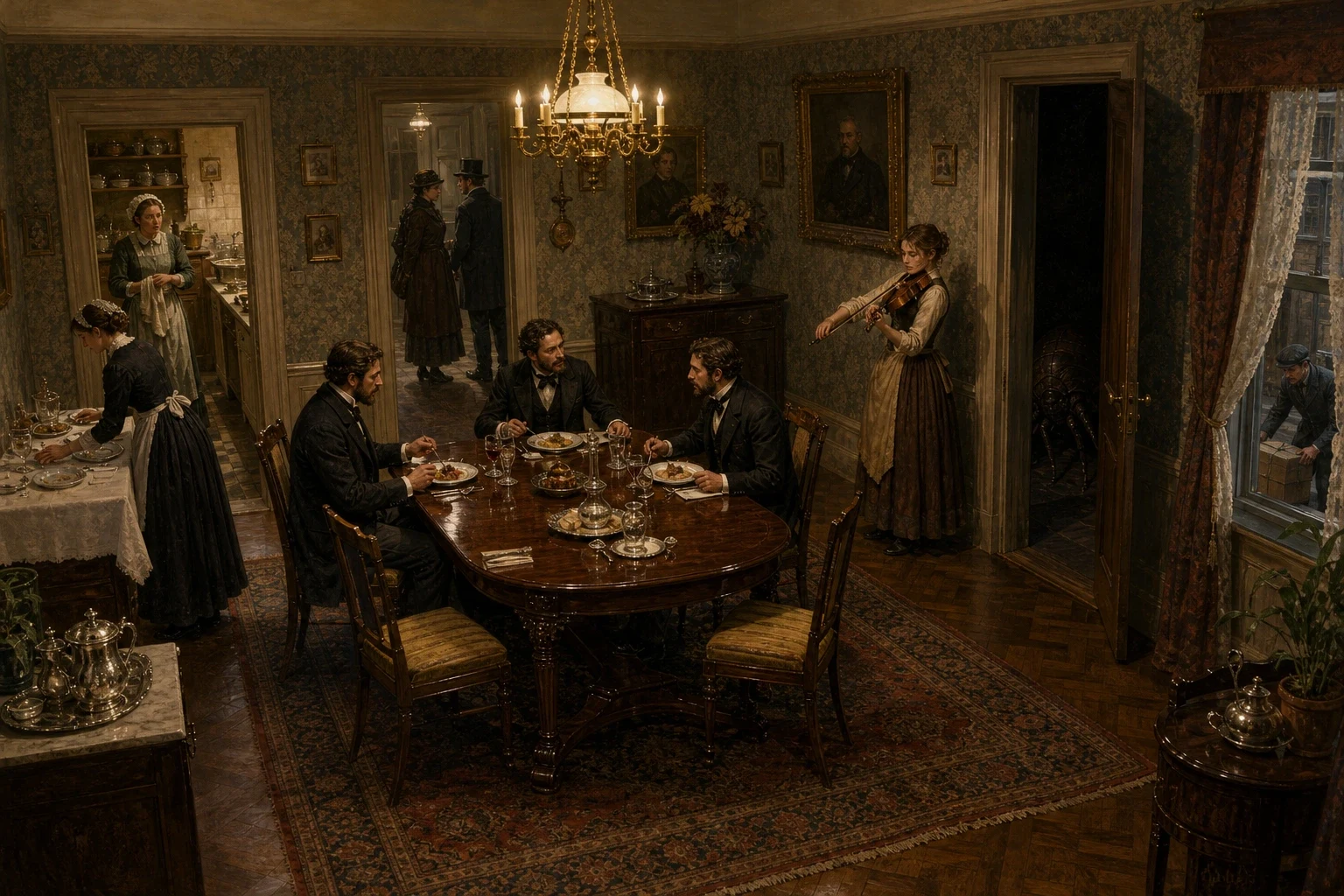
To make ends meet and alleviate their desperate financial situation, the Samsa family took in three male lodgers. These serious, demanding gentlemen quickly took over the dining room, treating it as their own private domain, disrupting the family's established routines and quiet life. They insisted on cleanliness and absolute order, making Gregor’s very presence in the apartment a constant source of tension and fear for the family. One evening, Grete, asked by the lodgers, played her violin for them. Her music, once a source of deep joy and comfort for Gregor, now sounded melancholic and distant, a somber echo in the formal room. Gregor, drawn irresistibly by the familiar notes, crept slowly to his doorway, a large, dark shape in the shadows, carefully watching the lodgers. They seemed entirely unimpressed by Grete’s playing, conversing quietly among themselves, barely acknowledging her. But Grete played on, her eyes closed, lost in the melody, seemingly unaware of their indifference. Gregor felt a strange longing, a profound sense of loss for the human connections he once shared, now irrevocably broken and replaced by a cold, calculating distance.
Page 7
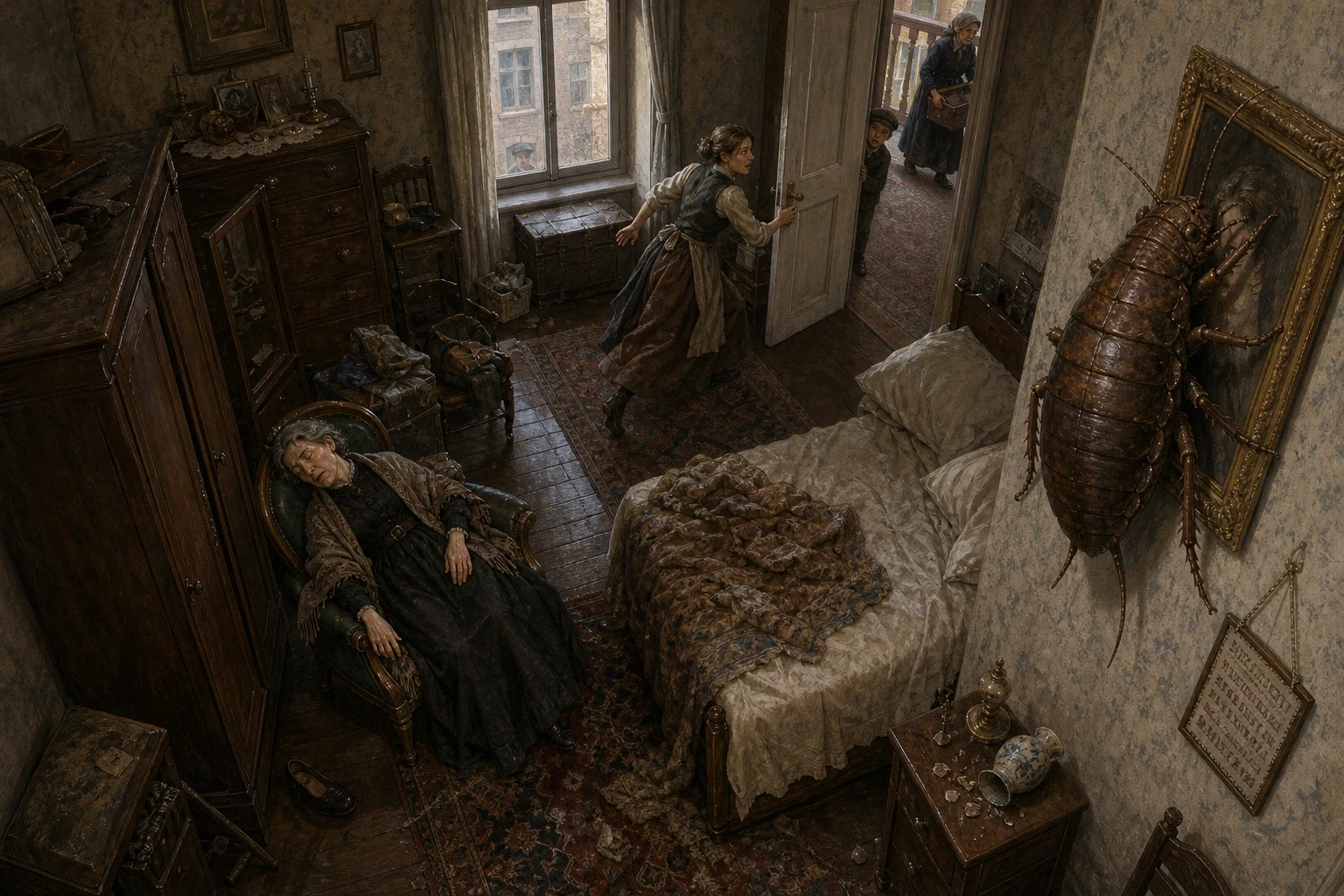
Mrs. Samsa and Grete decided to clear Gregor’s room, believing the empty space would allow him more freedom to move, a misguided attempt to make his new existence easier. They began to remove furniture, piece by heavy piece, dragging it into the parents' already crowded bedroom, which now became a storage space. Gregor watched them from the shadows of his room, feeling his last connections to his human past being stripped away with each item, a profound sense of loss washing over him. When they tried to move a cherished picture of a woman in furs, a final, precious link to his former life and human identity, Gregor, in a burst of desperate energy, clutched it with all his might, his large body covering the frame, refusing to let it go. Seeing him, and his unexpected, fervent resistance, Mrs. Samsa cried out in shock and fainted, collapsing onto a nearby chair, overwhelmed by the sight of her monstrous son. Grete, horrified and frantic, immediately ran for medicine and water, leaving Gregor clutching the picture, an unwelcome, clinging obstacle in their desperate, futile effort to forget him and erase his past.
Page 8
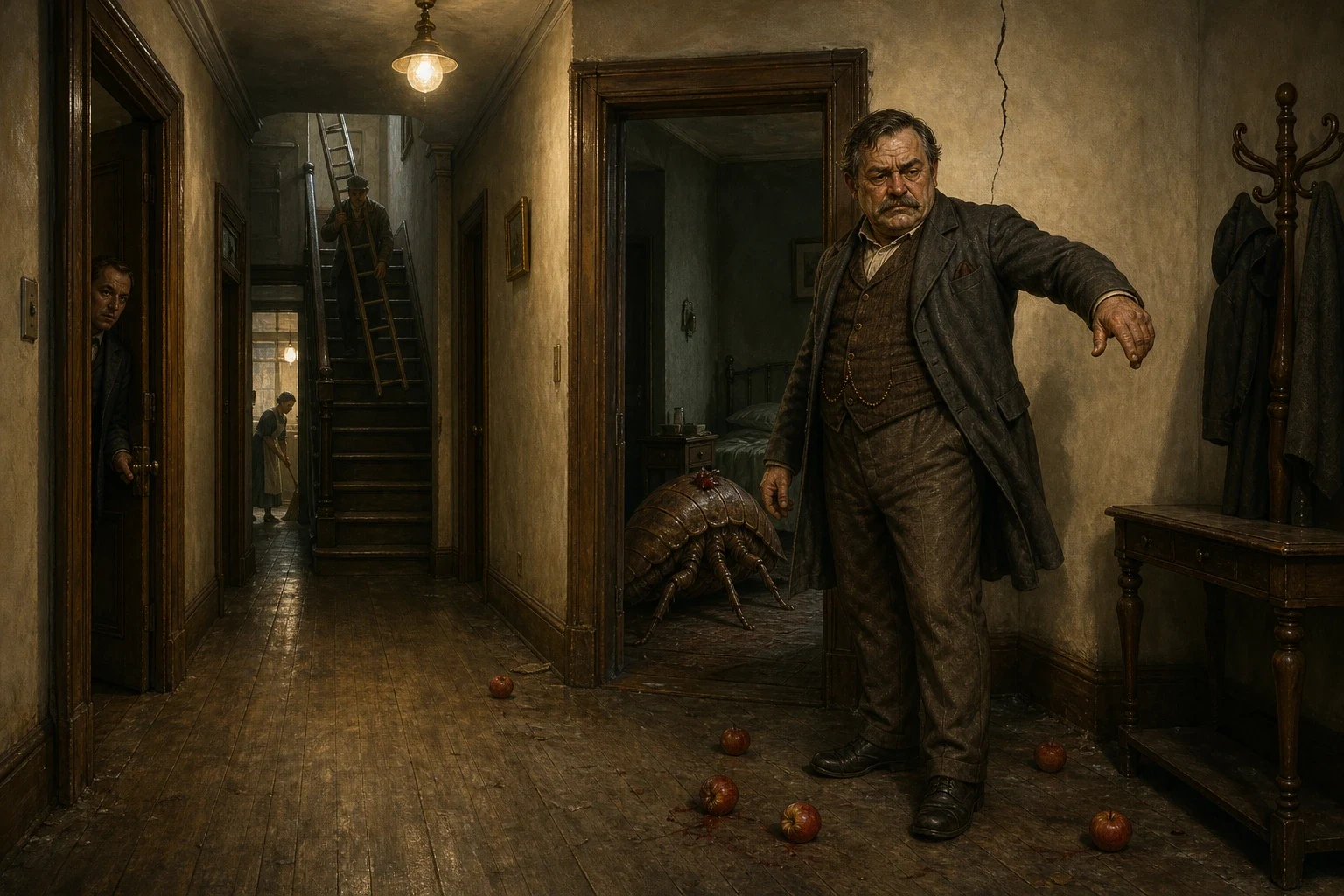
Mr. Samsa returned home from his new job that evening to find his wife unconscious and Gregor exposed, clinging to the picture in the doorway. Enraged and distraught by the chaos and the sight of his transformed son, he began to throw apples, which he had brought home, at Gregor. One apple, thrown with particular force and precision, hit Gregor squarely in the back and became stuck there, lodged firmly in his segmented body. The injury was significant, causing Gregor great discomfort and pain, and severely hindering his movement, making every motion an agony. He crawled away, weak and utterly defeated, retreating into the darkest corner of his room. The apple remained a constant, festering reminder of his father’s profound rage and his own helpless, agonizing state, a perpetual burden. From that day on, Gregor moved even more slowly, his strength visibly draining with each passing hour, a slow, inevitable decline setting in.
Page 9
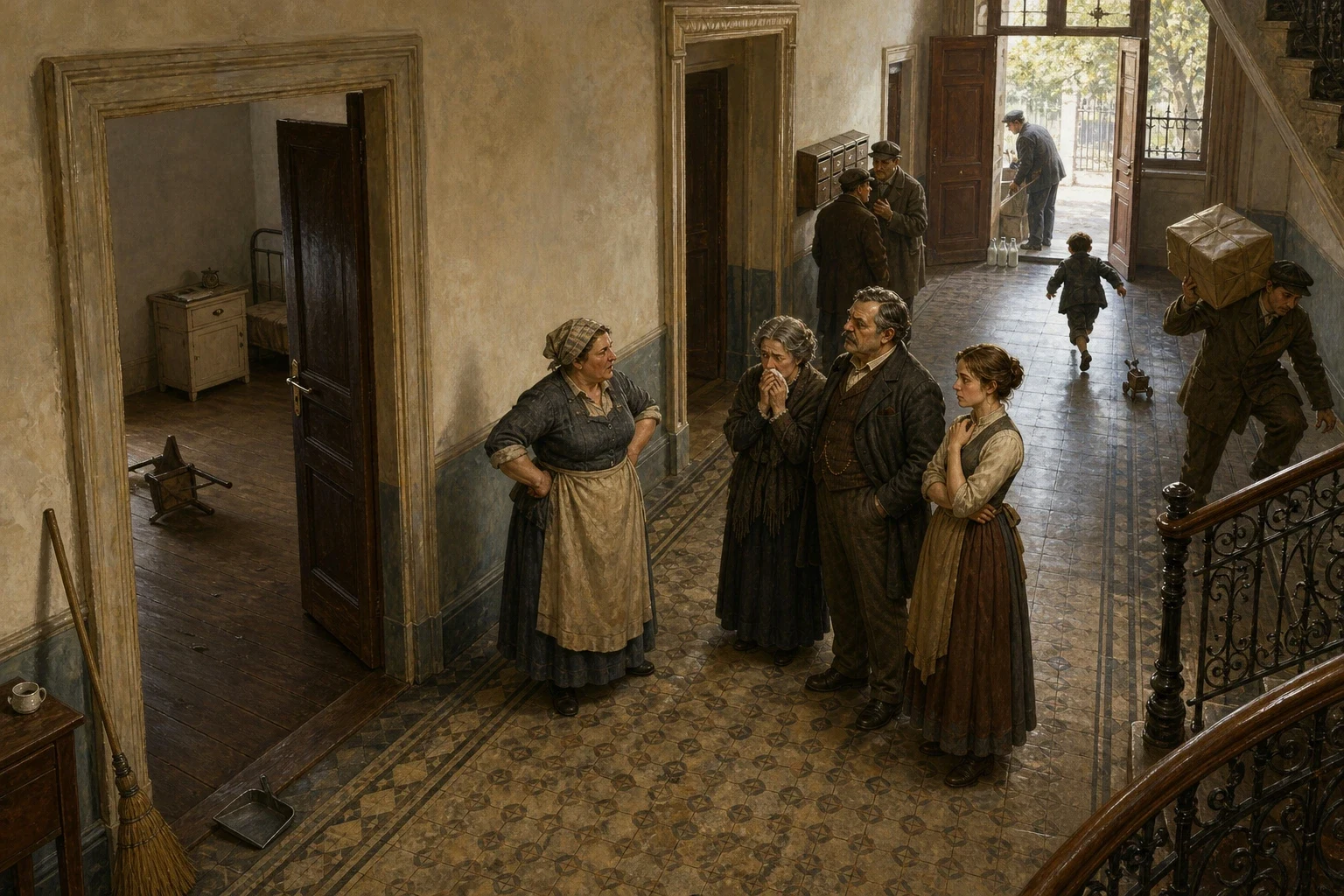
Gregor’s health declined steadily after the apple incident. He ate less and less, moved little, and lay mostly still, listening with detached indifference to the sounds of the household from his dark corner. One morning, the Charwoman, a robust, no-nonsense woman who was never afraid of Gregor, came to clean the apartment. She noticed the unusual, profound silence from Gregor's room, a silence more complete than usual. Peering in, she found him lying motionless, his small body thin and withered. She poked him with her broom, a pragmatic test. He did not stir, confirming her suspicion. She then calmly walked into the hallway, where the family was just stirring, their faces still etched with worry. “Well,” she announced plainly, her voice cutting through the morning stillness, “he’s gone.” Mr. and Mrs. Samsa and Grete came to look, a mixture of shock and quiet relief washing over their faces. Gregor was indeed gone, his small, frail body having finally given out, bringing an end to their long, shared ordeal.
Page 10

With Gregor’s death, a heavy, unspoken weight lifted from the Samsa household, a suffocating presence finally gone. The Charwoman, true to her practical nature, disposed of his body without fuss or ceremony. Mr. and Mrs. Samsa, along with Grete, spent the day feeling a strange, unfamiliar relief, a quiet joy they dared not fully express. The apartment, once a prison of despair, now felt light and open, filled with new possibilities. That afternoon, they decided to take a streetcar ride out into the country, a spontaneous outing to mark their new freedom. As they stood on the platform, bathed in the warm, late afternoon sunlight, they talked openly of their plans: Mr. Samsa’s stable new job, Mrs. Samsa’s profitable sewing work, and Grete’s promising future. Grete stretched her young body, full of life and burgeoning possibilities, a vibrant image of youth. They realized, with a sense of wonder and dawning hope, that their daughter had blossomed into a beautiful and desirable young woman, ready for a new life, finally unburdened and free.
About this story
- Audience: general readers
Read Wonder Novels on your phone
Wonder Novels is available on Android. Get Wonder Novels on Google Play.