The Posthumous Memoirs of Brás Cubas
A dead man's life, his loves, his failings, and his curious philosophical legacy in 19th-century Rio
Page 1
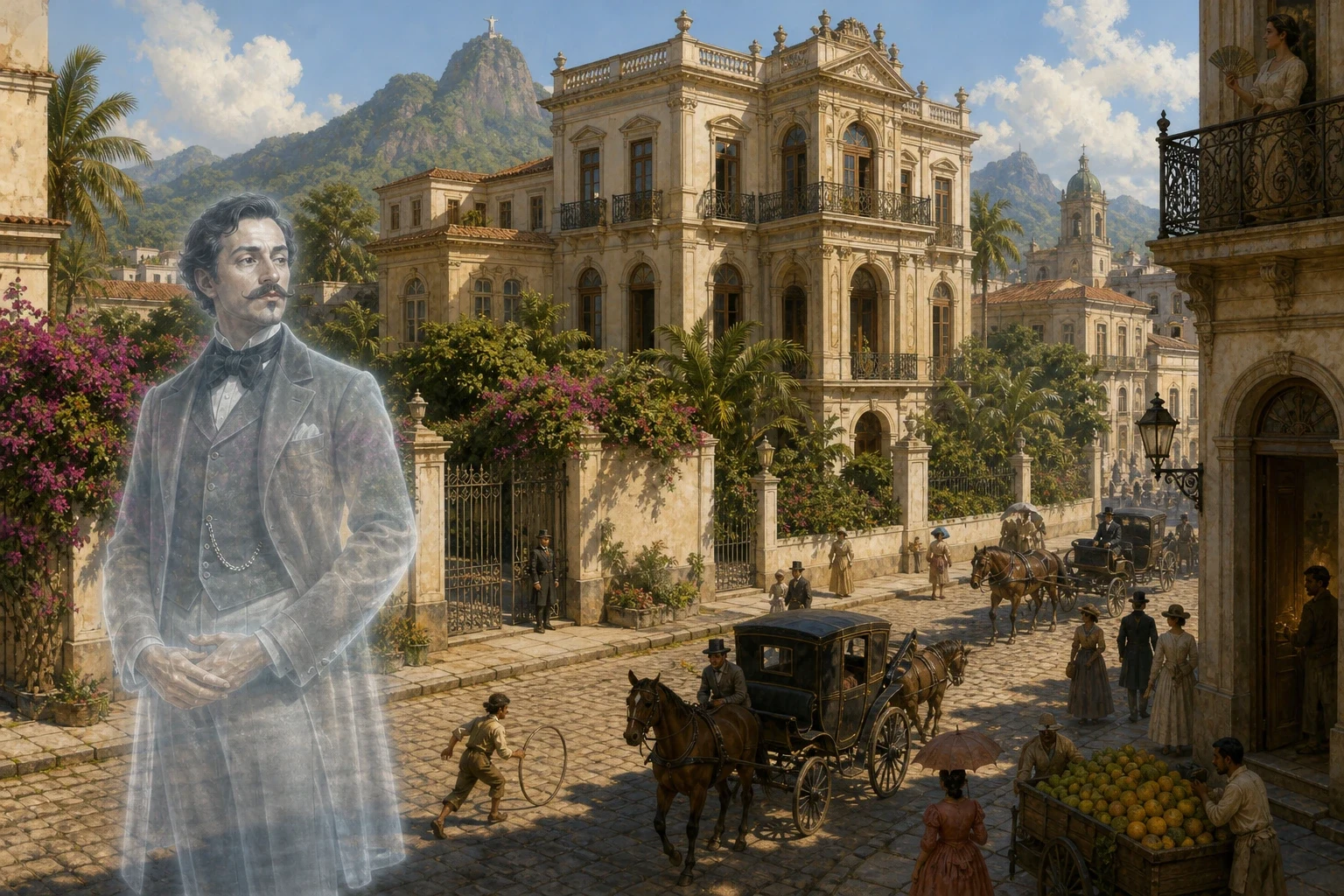
I died, a few months ago, of pneumonia. A great funeral with forty-seven carriages followed, though I confess, my friends, that the procession's true purpose was more to celebrate the fine carriages than to mourn my passing. And so, from the other side of life, I decided to write these memoirs. Why, you ask? Perhaps to amuse myself, perhaps to chronicle a life that, in its peculiar way, was truly mine. My pen, though made of air, strives for truth, even if it must be a truth seen through the veil of memory and death. I was born into a wealthy Rio family, and my days were largely spent in the pursuit of pleasure and the avoidance of effort, a life typical of my station and my time. It was a life of privilege, of idleness, and of fleeting passions, all of which I shall now unfold before you, my dear reader, from this curious vantage point.
Page 2
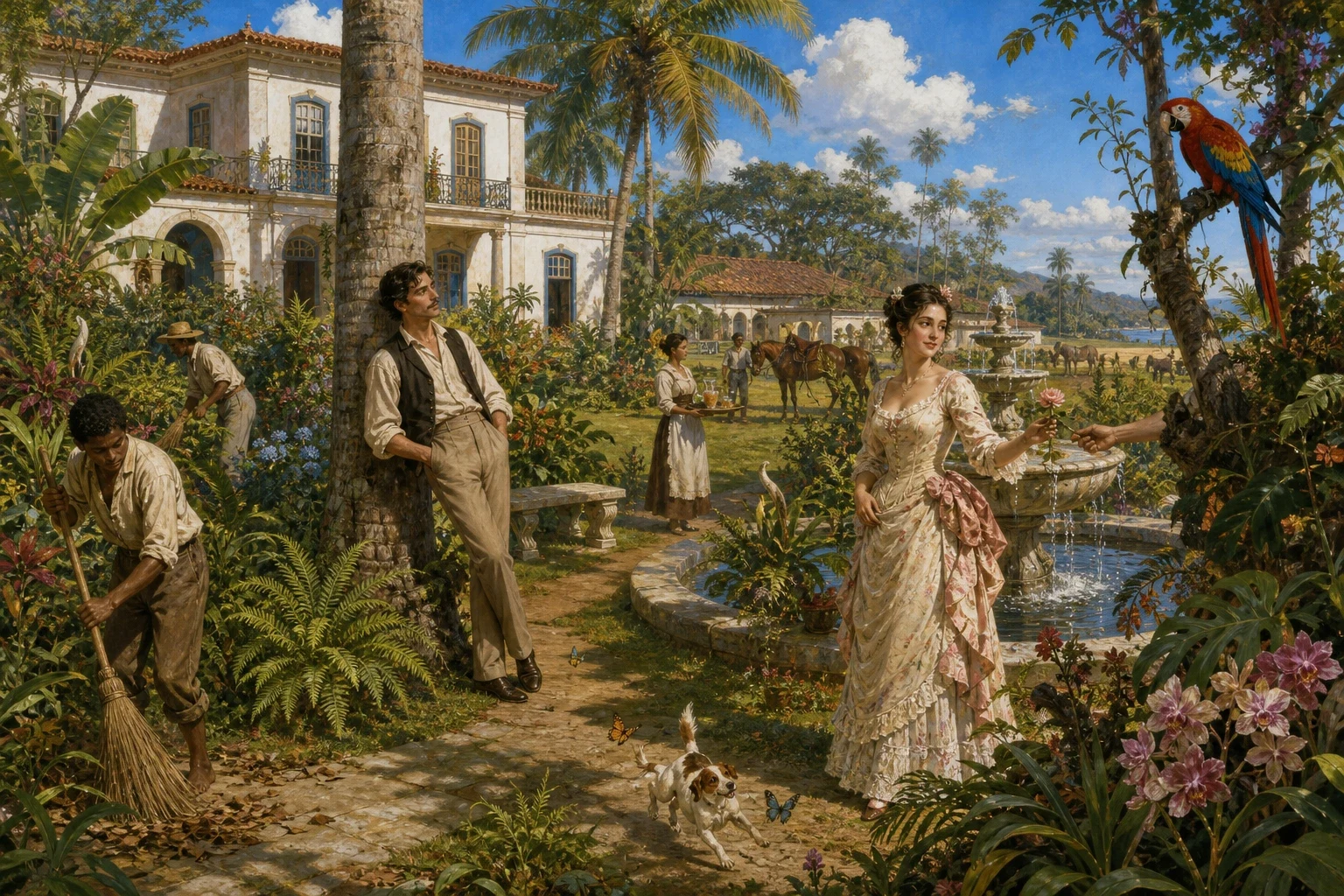
My childhood at our country estate in Engenho Novo was marked by a certain unrestrained spirit. Young Brás was a wild boy, sometimes amusing himself at the expense of others, like the young slave Prudêncio, who served him. My mother, God rest her soul, passed away when I was but seventeen, leaving a void that was soon filled, or rather, delightfully complicated, by the arrival of Marcela. She was a Spanish lady of captivating beauty and formidable charm, who, with an almost scientific precision, managed to extract every last conto de réis from my father and, more importantly, every ounce of youthful infatuation from me. She taught me the intoxicating lessons of desire, though at a considerable cost. My father, ever practical, decided it was time to remove me from her influence and send me abroad to Coimbra.
Page 3
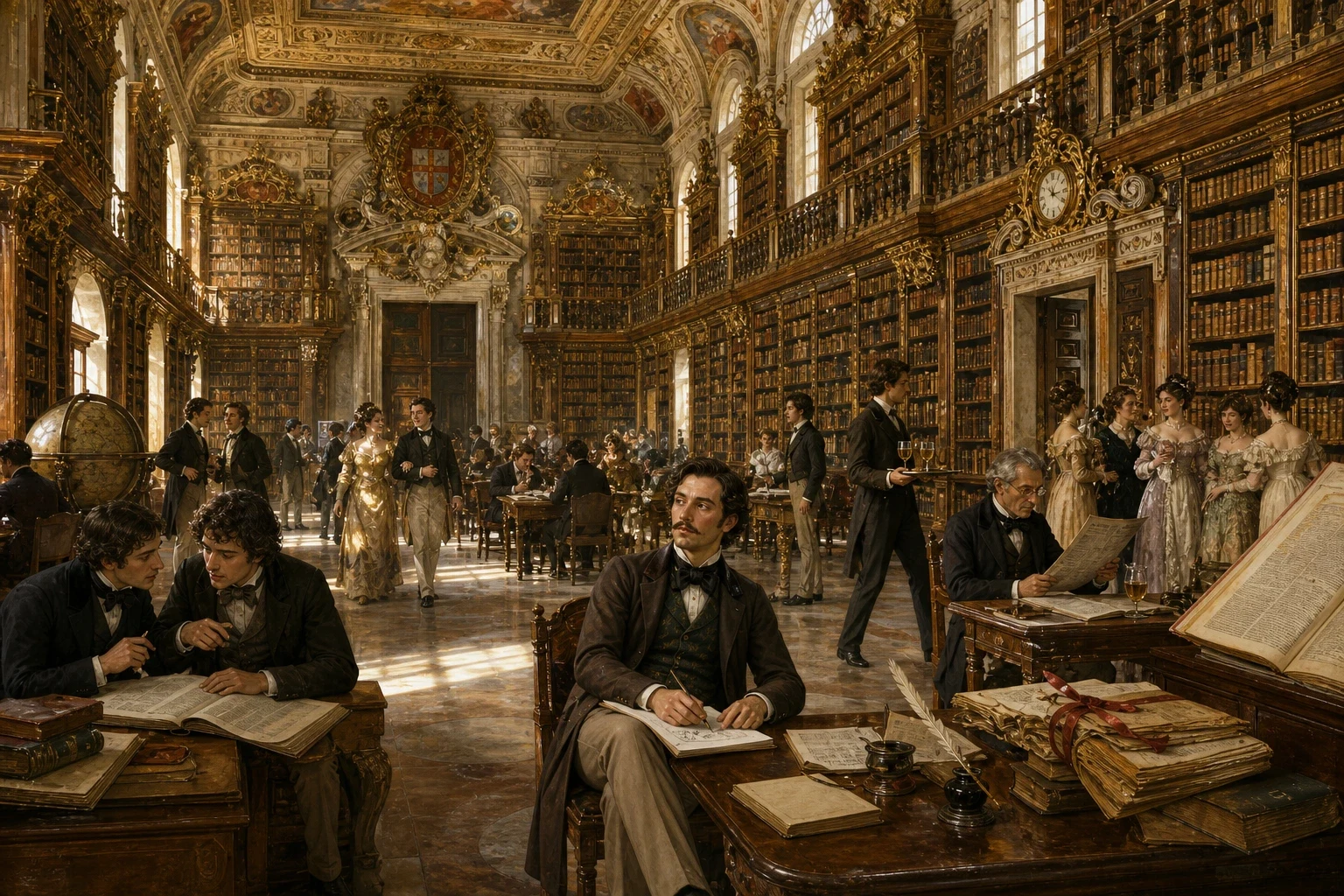
Coimbra, Portugal, was meant to be my crucible, the place where I forged myself into a man of law. Instead, it became another arena for my indolence and a stage for social conquests. I acquired a degree, yes, but not through diligent study of Justinian's Institutes. Rather, it was through a talent for memorization and an even greater talent for mingling with the right crowd. The libraries held less appeal than the salons, and the legal texts less charm than the local beauties. My father, with his grand plans for my return to Brazil and a politically advantageous marriage, was quite unaware of the true nature of my academic pursuits. His letters, filled with exhortations to diligence and promises of a bright future, served mostly as gentle reminders of the world I had temporarily escaped.
Page 4
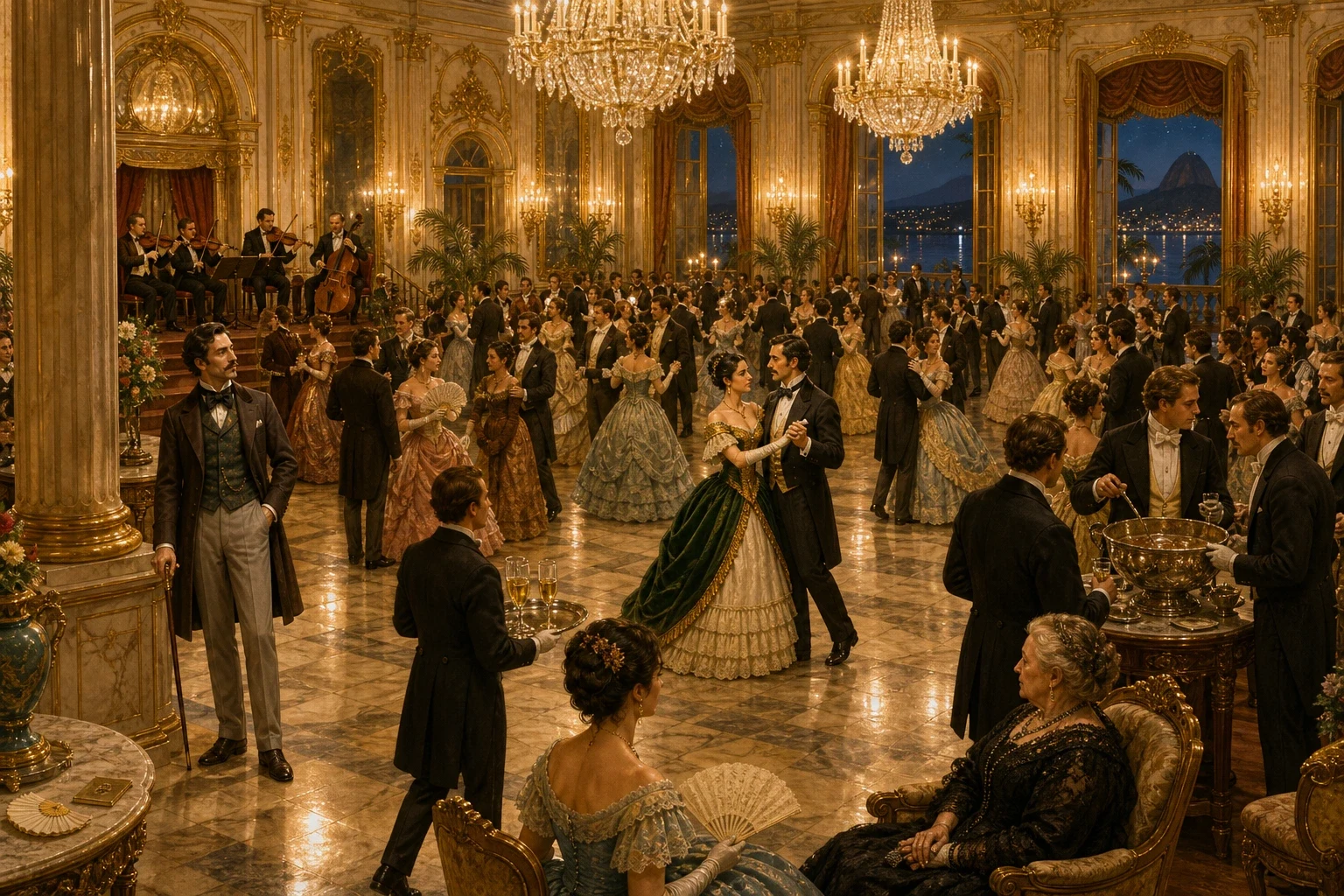
Upon my return to Rio, my father, eager to see me settled, had arranged a marriage with Virgília. She was the daughter of a prominent politician, a match both socially and politically advantageous. I had known Virgília as a child, but now, seeing her grown, she was breathtaking. My heart, which I thought immune after Marcela, stirred. Alas, fate, or perhaps my own tardiness, intervened: Virgília was now promised to Lobo Neves, a man of rising political star, precisely the sort of ambitious figure my father admired. The ballroom, where I first saw her again, was a tableau of what might have been. Soon after this disappointment, my father, whose life had been dedicated to securing my future, suffered a sudden, fatal illness. His dreams for me, political and marital, died with him, leaving me adrift and surprisingly free.
Page 5
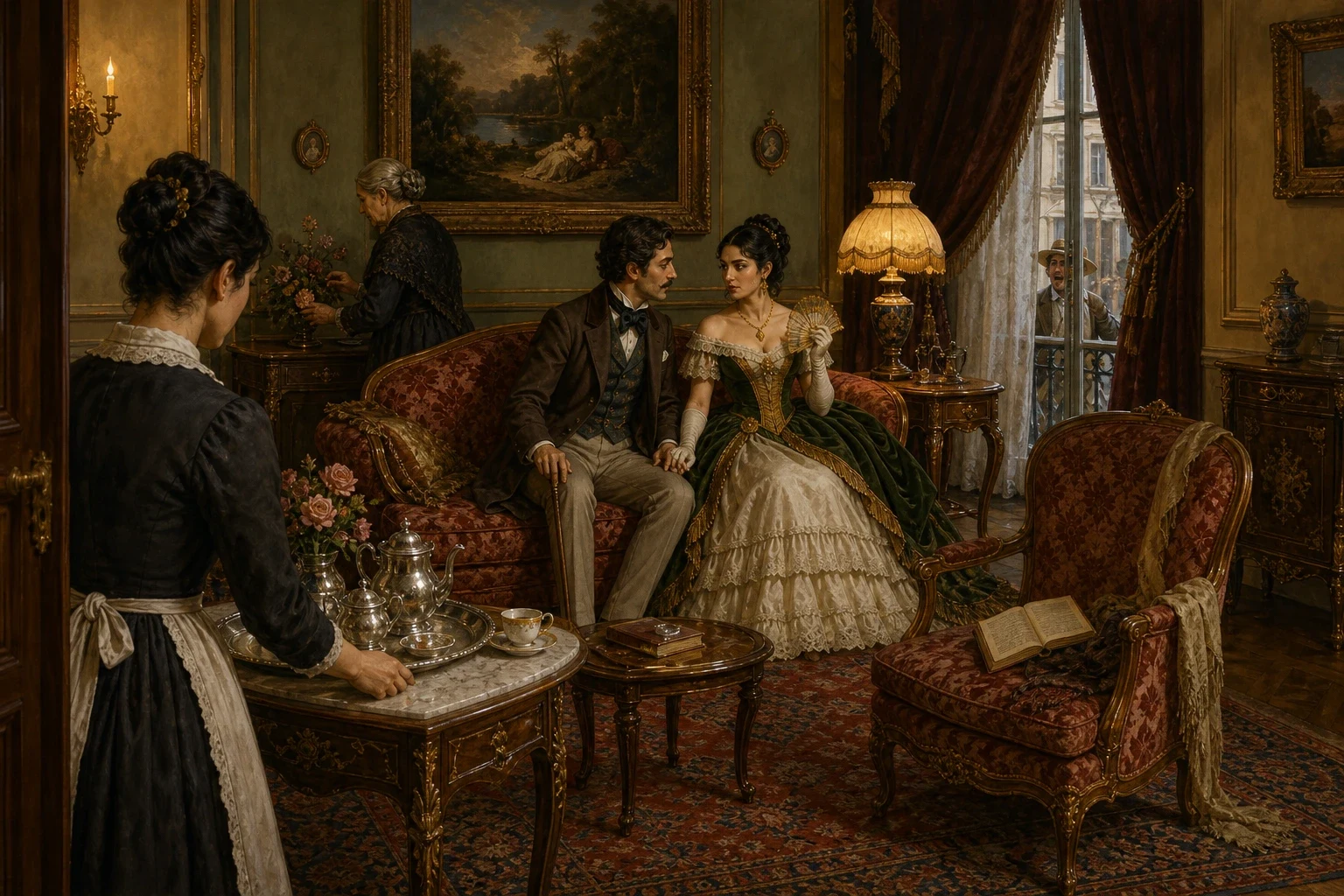
My father's death left me free, but Virgília remained bound. Despite her marriage to Lobo Neves, the spark between us proved undeniable. What began as stolen glances soon blossomed into a passionate, clandestine affair. Our sanctuary was a small, rented parlor, overseen by the discreet and sympathetic Dona Plácida, an elderly woman whose humble circumstances led her to facilitate our secret meetings. In this hidden room, away from the prying eyes of society and the demands of political life, we found an intoxicating freedom. Our conversations were hushed, our touches fleeting but charged, and the air thrummed with the delicious danger of our shared secret. This affair, more than any other event, defined a significant portion of my adult life, a rebellion against the conventions that sought to contain us.
Page 6
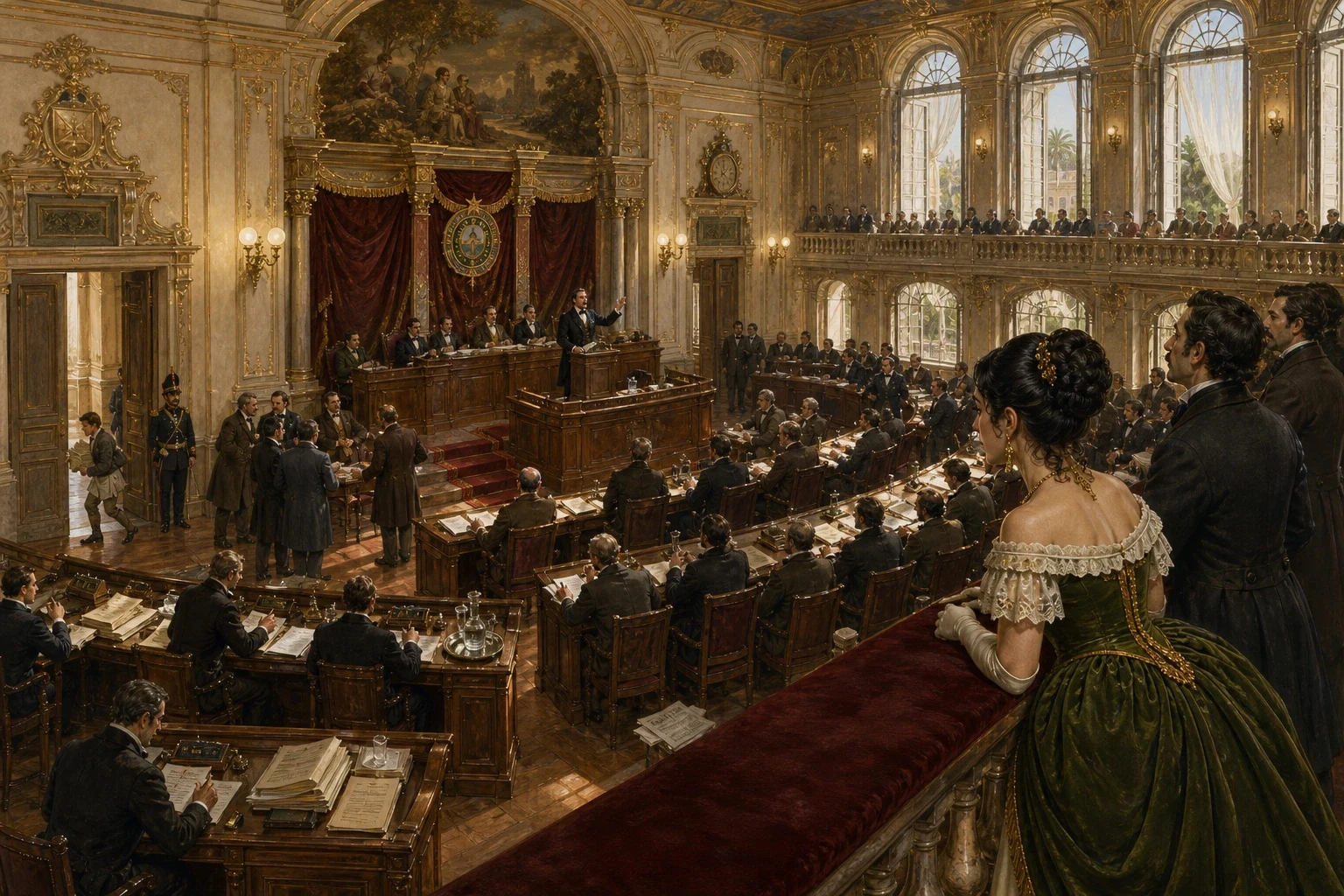
With my father gone, I attempted to fulfill his political aspirations, yet my heart was never truly in it. I held a minor post, gave a few uninspired speeches, but the genuine ambition that drove men like Lobo Neves eluded me. He, meanwhile, flourished in the political arena, his career steadily ascending, while I remained largely on the sidelines, more observer than participant. All the while, the clandestine affair with Virgília continued, a potent counterpoint to the tedious realities of my public life. Our stolen moments were more vivid, more real, than any debate or decree. It was a secret source of pride, a quiet triumph over the man who, by all accounts, was her rightful husband, and my rival in both love and ambition.
Page 7
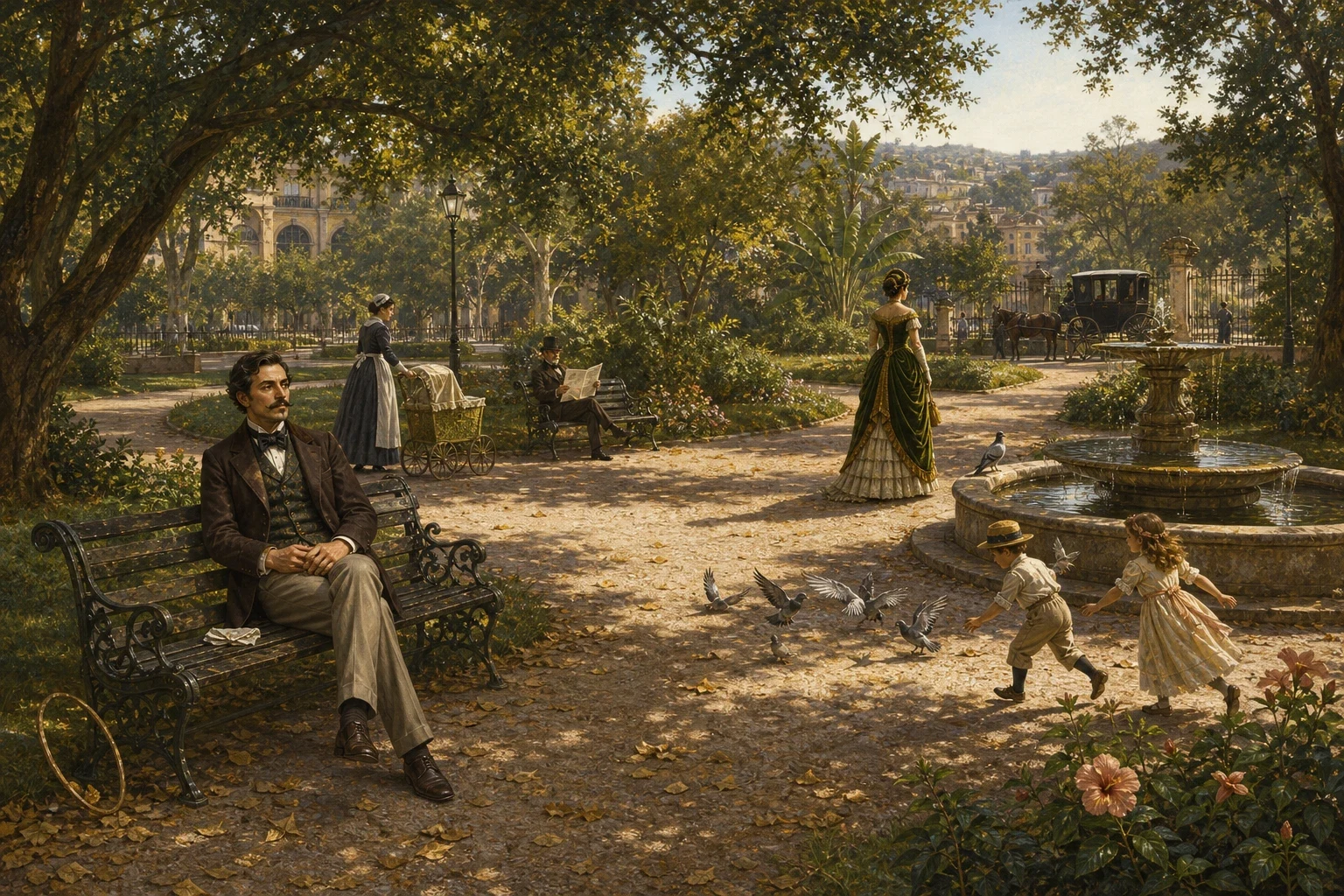
All clandestine pleasures, however intense, eventually run their course. The affair with Virgília, after years of passionate secrecy, began to wane. Time and the pressures of their public life took their toll. Lobo Neves received a prestigious provincial appointment, necessitating their departure from Rio. The day Virgília left, a quiet farewell in this very garden, marked the true end of that chapter. There was no dramatic confrontation, no tearful scene, just a quiet resignation. After her, my romantic life became a series of less intense, less significant attachments – women who filled a space but never truly captured my soul as she had. The great love of my life had departed, leaving me to contemplate the transient nature of all affections and the peculiar emptiness that followed such a profound, secret connection.
Page 8
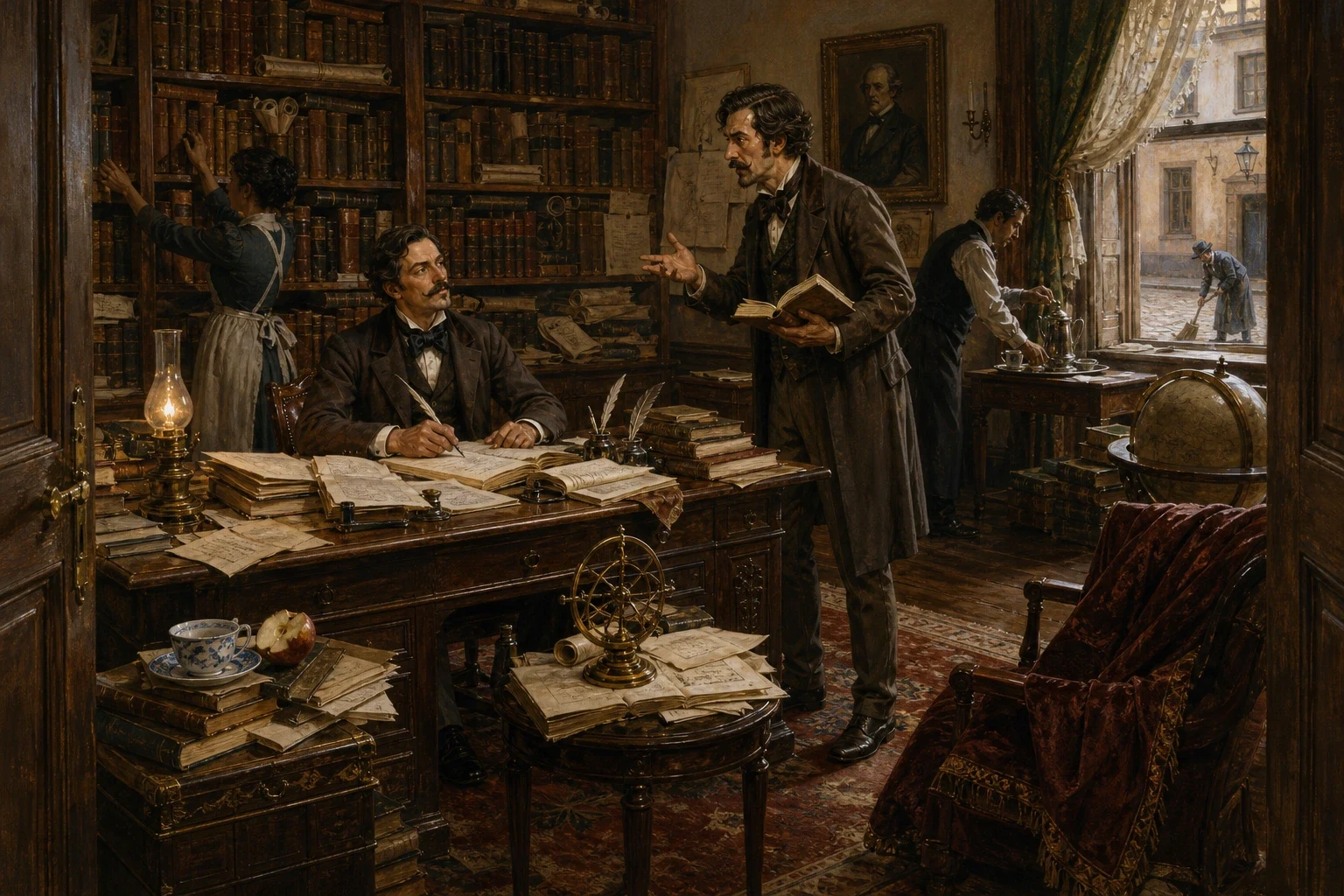
With love's grand drama concluded, I turned my energies to a new pursuit: intellectual fame. My mind, ever restless, conceived of a philosophical system I grandly named 'Humanitismo.' It was a theory, as I understood it, that would unlock the very essence of human misery and joy, a grand explanation for everything. My friend, the eccentric philosopher Quincas Borba, became an ardent, if sometimes maddening, disciple and promoter of my ideas. My study became my world, filled with books, scribbled notes, and the heady scent of intellectual creation. I envisioned myself as a great thinker, a benefactor of mankind, though my theories, when examined closely, contained more than a touch of self-serving absurdity. This was my legacy, I thought, a system of thought that would immortalize my name.
Page 9
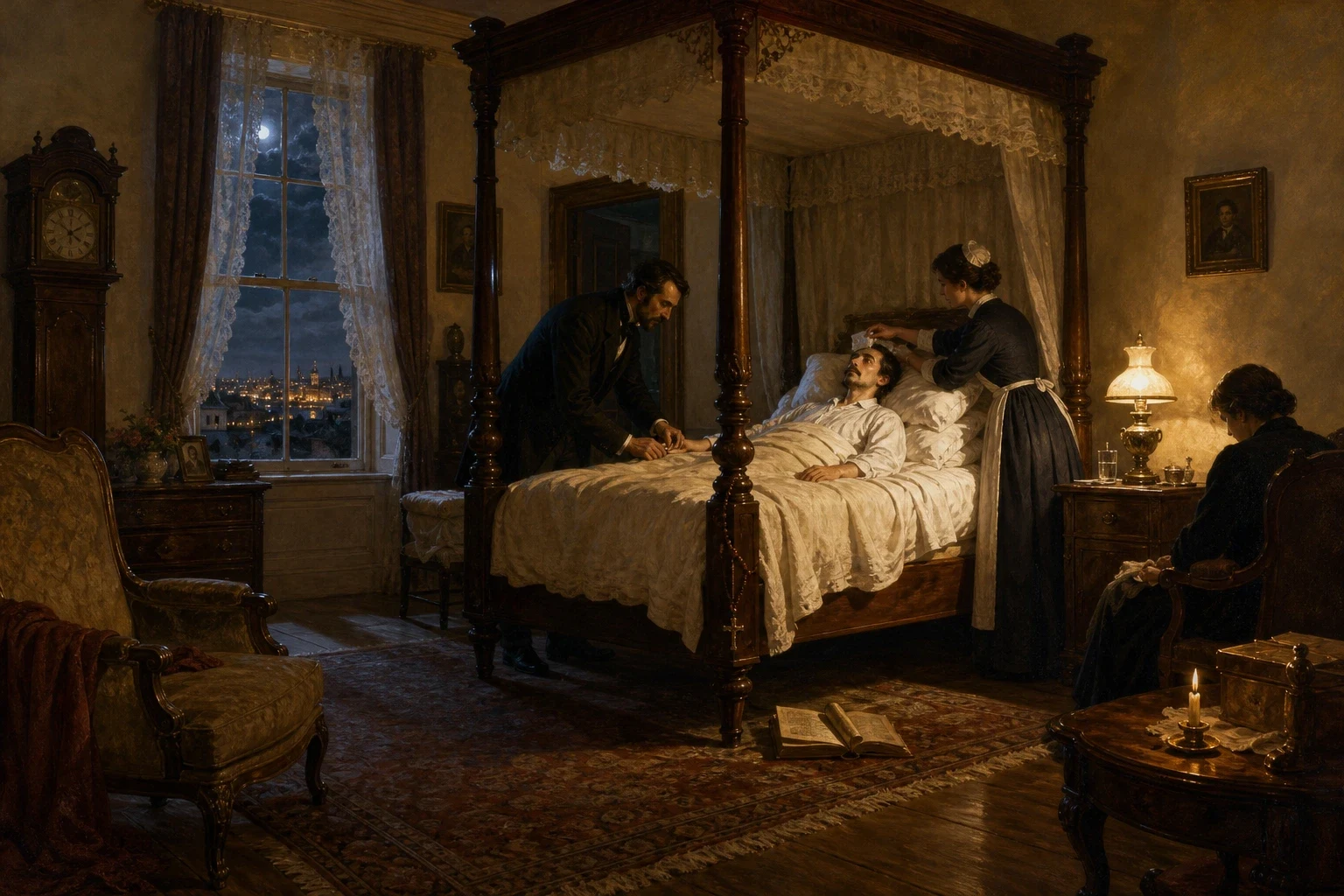
The pneumonia came, slowly, and took me to my bed, a bed from which I would not rise. As my body weakened, my mind, strangely, became clearer, or perhaps simply more vivid in its wanderings. I saw visions, absurd and profound, reflecting on the trivialities and grand illusions of my life. My unfinished 'Humanitismo' seemed a flimsy thing against the approach of eternity. I thought of Virgília, of Marcela, of my father and the empty ambitions he had for me. There was no great panic, no final revelation, just a fading awareness, a slow dissolution of self. I was returning to the nothingness from which I had emerged, a final, unceremonious exit from the stage of the living. My last breath was a sigh, a final surrender to the inevitable, leaving behind a world that would continue, indifferent to my absence.
Page 10
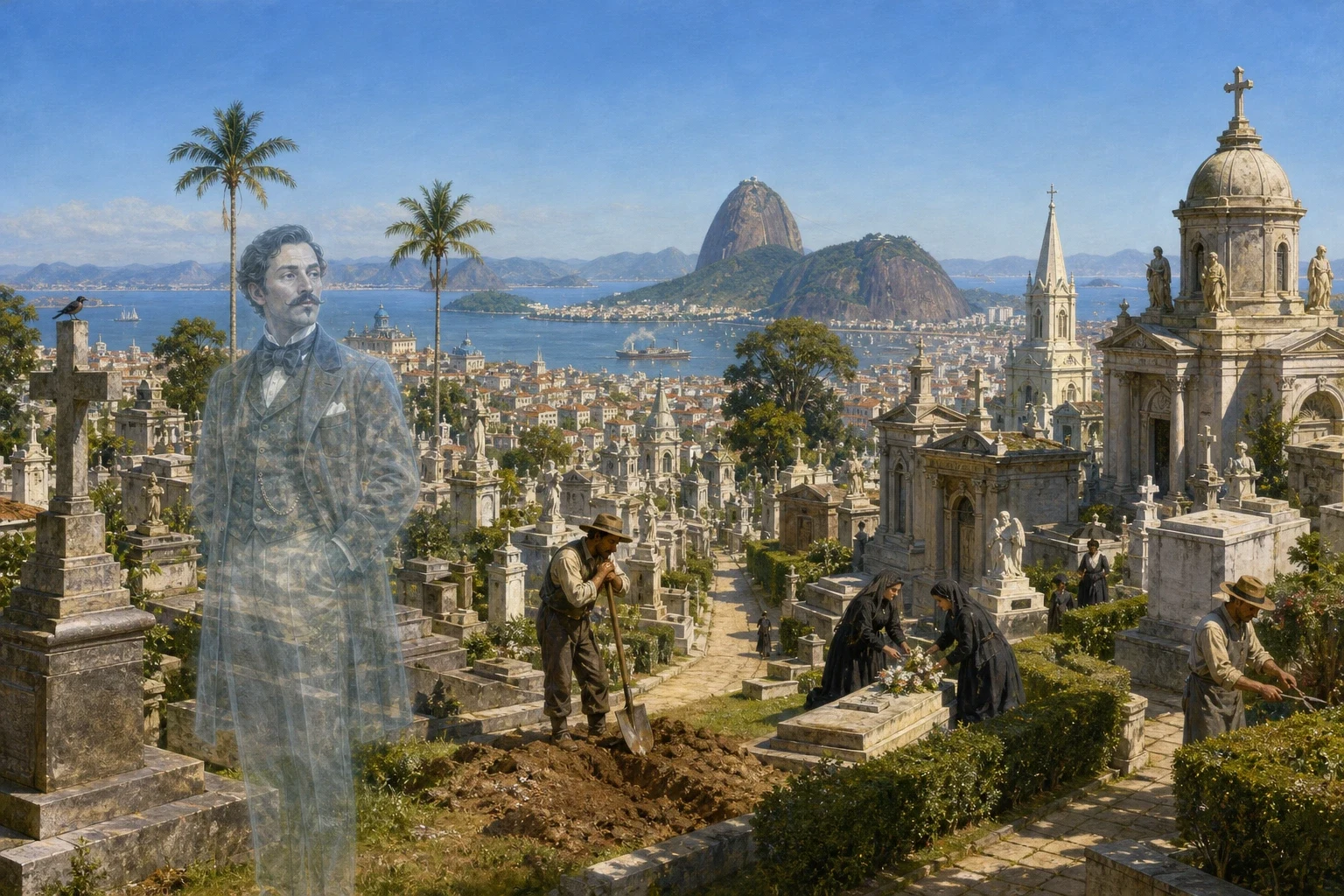
And so, here I lie, in this earth, my body having returned to dust. I reflect, from this peculiar state, on the balance sheet of my life. I had no children, no direct heirs to my name or fortune. I never achieved political prominence, nor did my grand philosophical theory, Humanitismo, truly capture the world's imagination. I accumulated no debts of sorrow from children, no burdens of legacy to future generations. In the end, I concluded, my life, though seemingly empty of great achievement, was not entirely without 'profit.' I carried nothing of lasting importance, passed on no grand legacy, and therefore, I owe nothing. I had spent my time, loved my loves, failed my failures, and now, I am simply gone. This, then, is the ultimate 'profit' of Brás Cubas: the absence of a negative balance. A quiet, unburdened farewell.
About this story
- Audience: general readers
Read Wonder Novels on your phone
Wonder Novels is available on Android. Get Wonder Novels on Google Play.