The Phantom of the Opera
An angel, a genius, a beautiful voice, and a terrible face in the Paris Opéra
Page 1
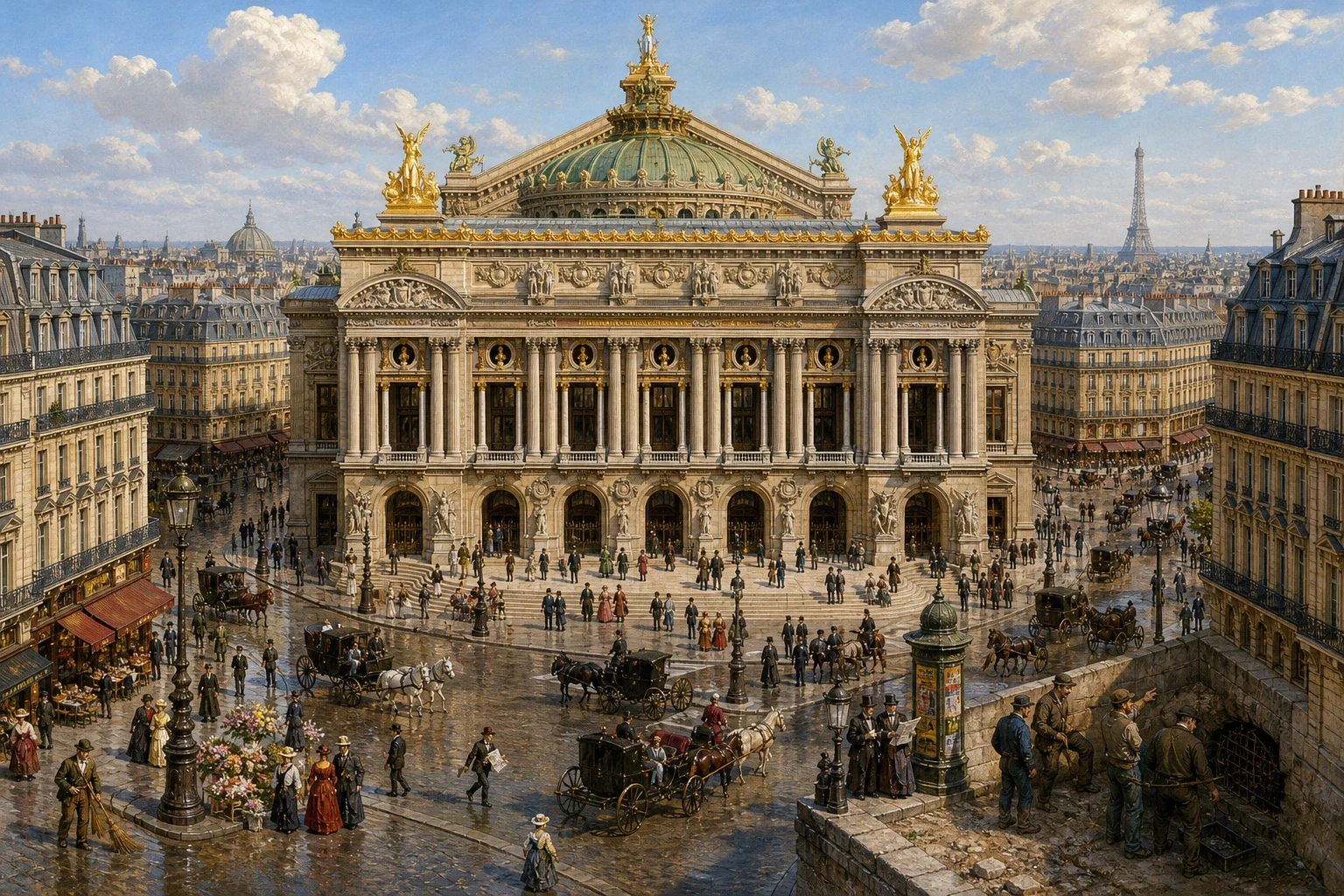
In Paris, the magnificent Opéra Garnier stood as a jewel of architecture and art, its grand facade a testament to beauty and ambition. Yet, beneath its surface, strange stories had begun to circulate among the company. The previous managers had departed, citing mysterious financial losses and peculiar occurrences, leaving the grand theatre to new, optimistic owners. Whispers of a ghostly presence, a 'Phantom of the Opera,' followed them, a legend often dismissed as mere superstition. But the incidents were real: objects moved, costumes vanished, and a stagehand named Joseph Buquet, who dared to speak openly of the Phantom, was soon after found incapacitated and deeply shaken in the cellars, having suffered a terrifying ordeal. The new managers, Monsieur Richard and Monsieur Moncharmin, arrived full of plans, but a chilling sense of unease settled over the performers and staff, a feeling that something unseen held sway over their grand house.
Page 2
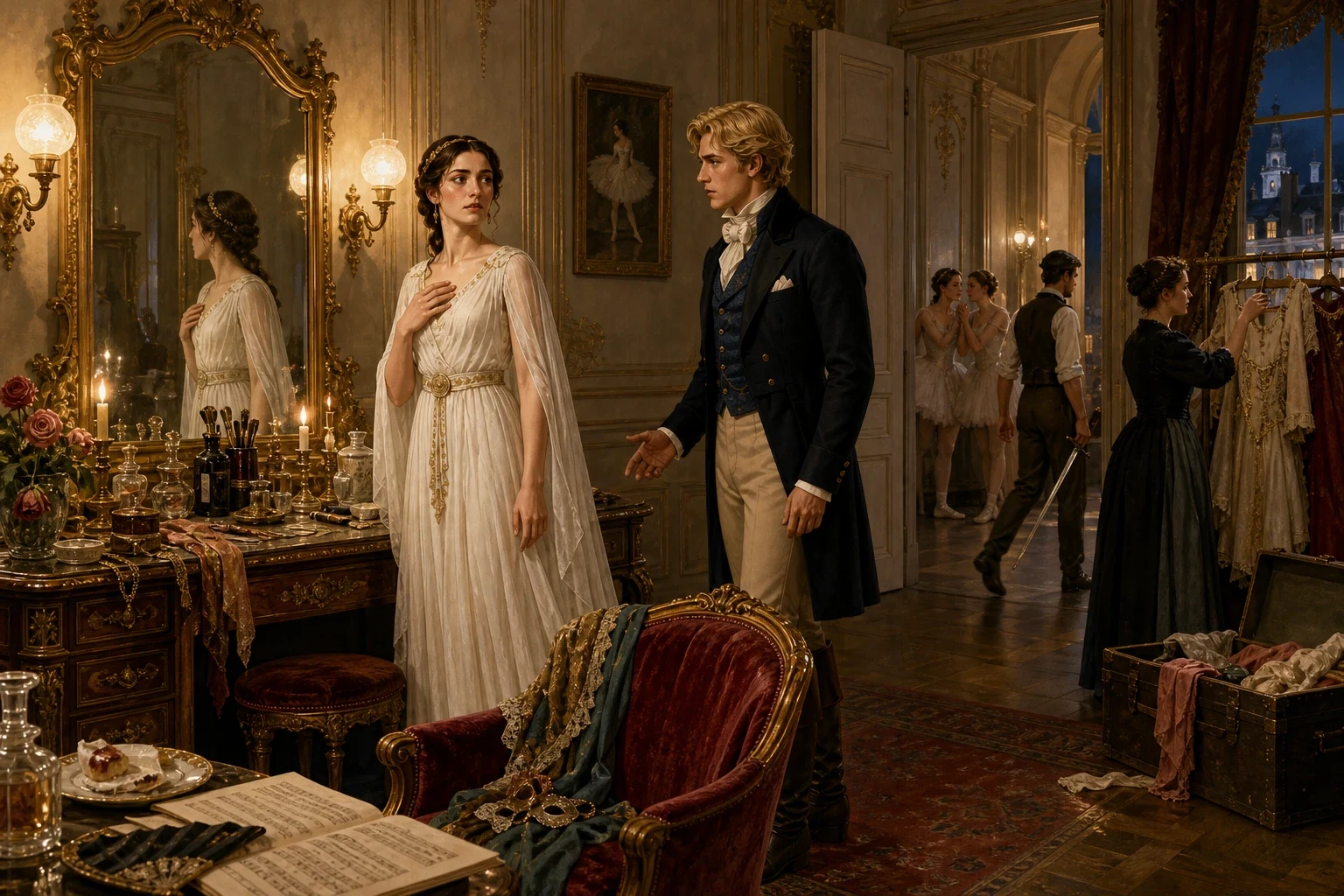
Christine Daaé, a young singer, had been a quiet presence in the chorus, but after the departure of the opera's lead soprano, she took the stage and sang with a voice of breathtaking beauty and power. Her friends, amazed, attributed her sudden talent to an 'Angel of Music,' a mysterious tutor who spoke to her from behind her dressing room mirror. Among those captivated was Raoul, Vicomte de Chagny, a childhood friend who recognized Christine's unique gift. After her stunning performance, Raoul rushed to her dressing room, his heart full of tender admiration. He found Christine deeply moved, yet also strangely agitated, speaking of her 'Angel' with a mixture of reverence and growing fear. She seemed to exist in two worlds: one of earthly love and friendship, the other of an unseen, powerful mentor.
Page 3
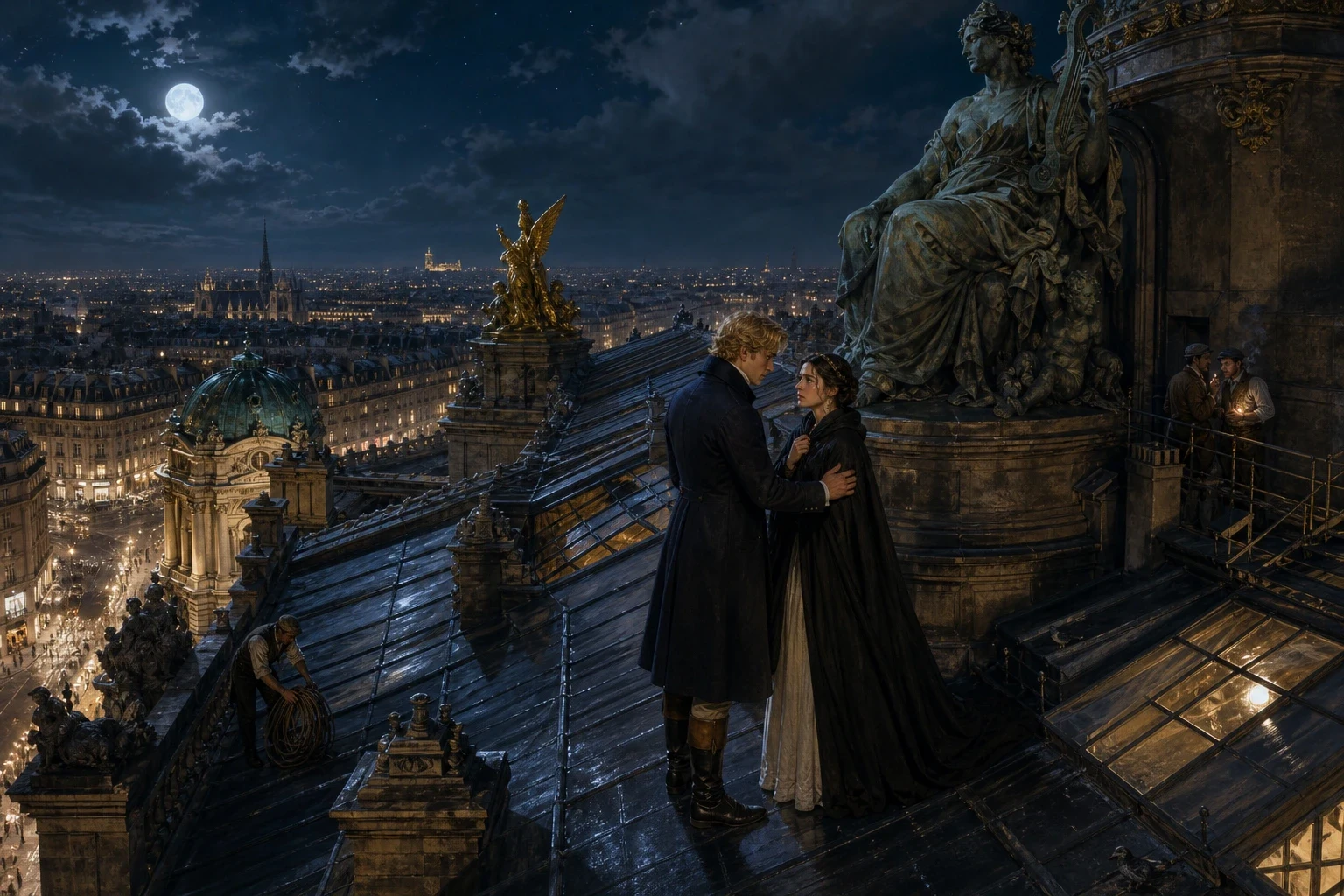
Driven by a desperate need to speak freely, Christine led Raoul to the highest point of the Opéra, the vast, moonlit roof. Here, far from prying ears, she poured out her deepest fears. The 'Angel of Music' was no mere inspiration; he was a spectral presence, a voice that filled her mind, drawing her under his spell. She described his demands, his jealous rages, and the growing sense of dread she felt at his power over her. Raoul, though still skeptical of a literal ghost, was deeply shaken by Christine's terror and the palpable sorrow in her voice. He vowed to protect her, to rescue her from this unseen force that held her captive. He could not yet understand the true nature of her tormentor, but he felt the weight of her fear as a tangible thing, a shadow falling over their shared past and uncertain future.
Page 4
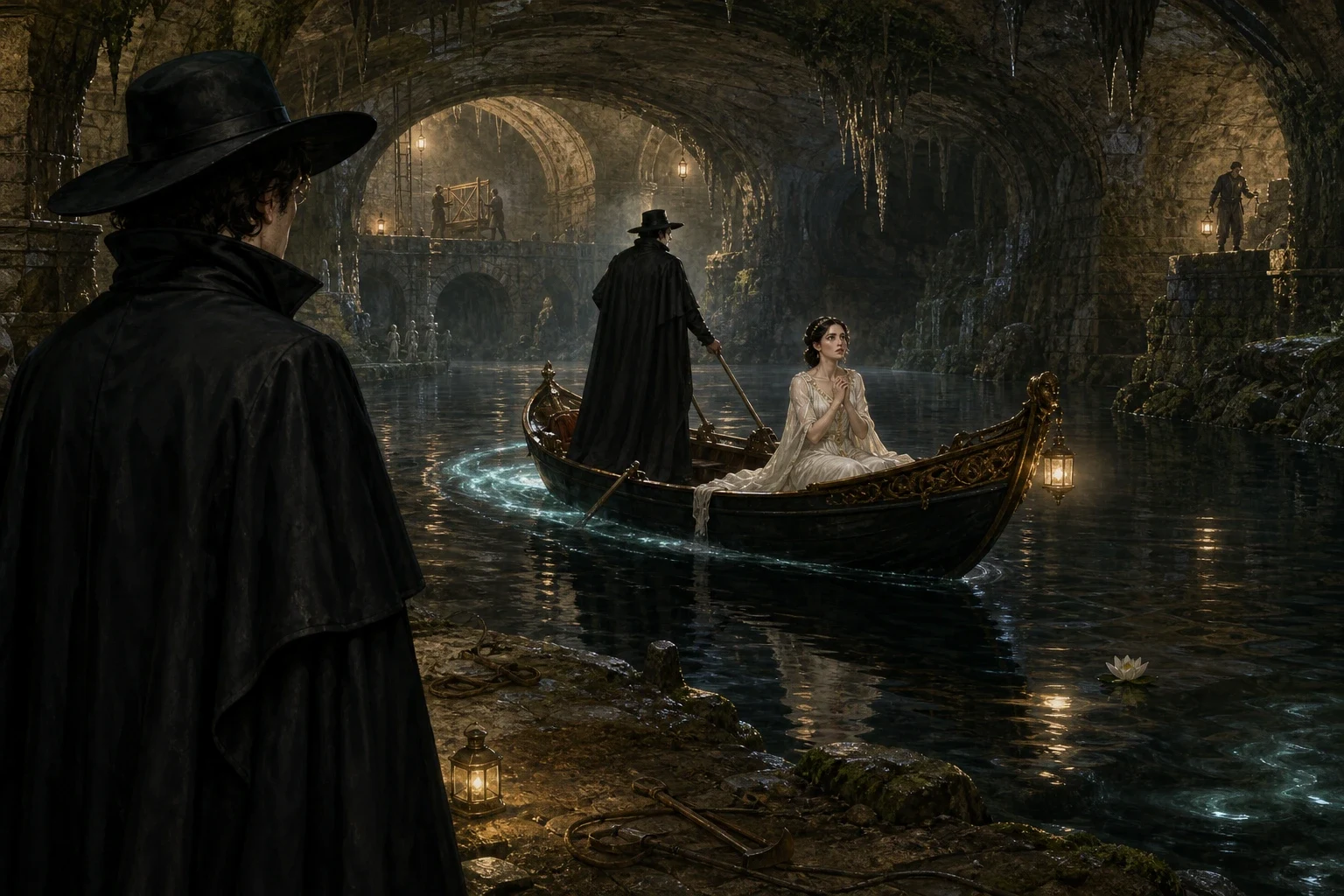
During a performance, the Phantom made his move. As Christine sang her heart out, a sudden darkness enveloped the stage, and she was swept away into the depths of the Opéra. Down, down they went, through secret passages and hidden staircases, until they reached a vast, black underground lake. The Phantom, shrouded in his cloak, rowed her across the still, eerie waters in a small boat, its prow cutting through the silent gloom. Christine, terrified yet mesmerized by the sheer audacity and power of her captor, could only watch as they journeyed deeper into the earth. The air was cold, the silence profound, broken only by the gentle lapping of the water against the boat and the distant, echoing sound of her own heartbeat. This was his domain, a hidden world far beneath the splendor of Paris.
Page 5
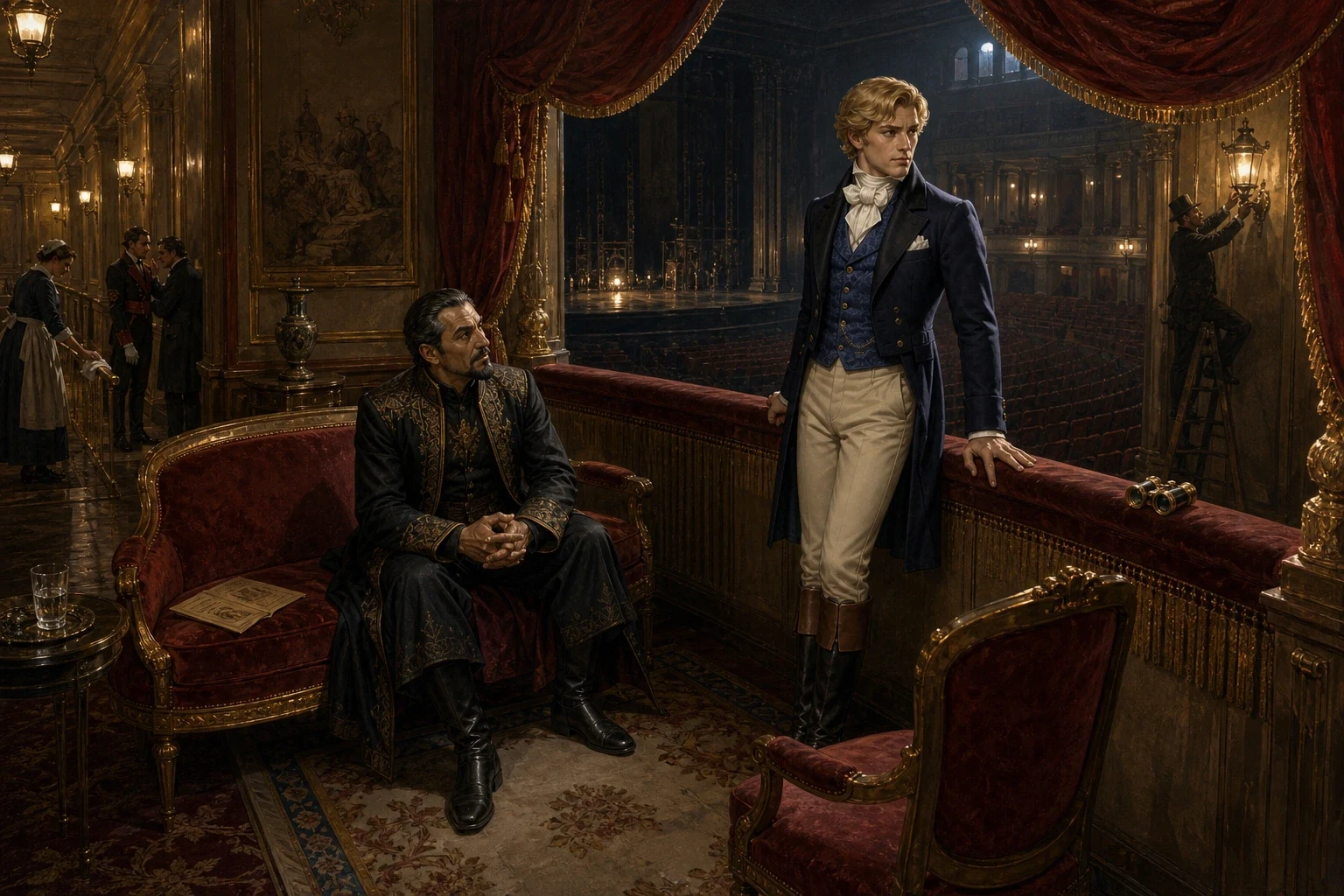
Raoul, desperate to find Christine, launched a frantic search throughout the Opéra. His investigation led him to the mysterious Box 5, the very box the 'Opera Ghost' demanded be kept empty for his exclusive use. There, Raoul encountered a peculiar, older gentleman known only as the Persian, a former chief of police from a distant land. The Persian, with his knowing eyes and hushed voice, revealed he possessed dark knowledge about the Opera Ghost, a man he called Erik. He spoke of Erik's genius, his madness, and his terrible disfigurement, hinting at a past filled with cruelty and a thirst for unchallenged power. The Persian warned Raoul in grave tones about challenging the Phantom, explaining the dangers of his lair beneath the opera house. His words painted a chilling picture, confirming Raoul's worst fears and adding a layer of terrifying reality to the legend.
Page 6
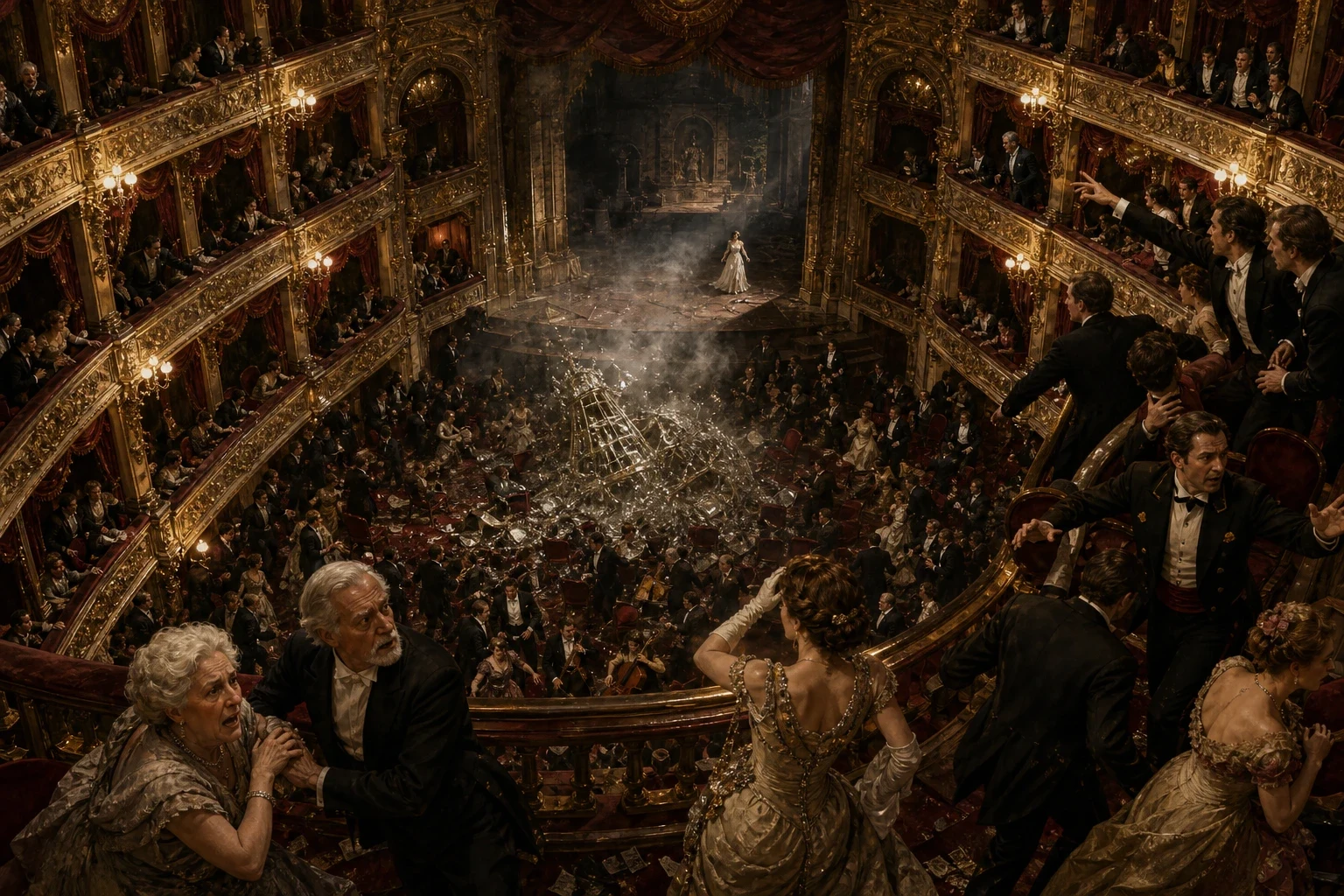
Ignoring the Phantom's increasingly menacing notes and demands, the managers foolishly proceeded with their planned performance. The grand auditorium was packed with a glittering audience, unaware of the lurking danger. As the opera reached a dramatic crescendo, a chilling, disembodied voice echoed through the vast space, proclaiming the Phantom's fury. Then, with a deafening crash, the colossal chandelier, a masterpiece of crystal and light, tore from its moorings and plummeted towards the audience below. A collective gasp of horror turned into screams of terror as the massive fixture shattered upon the main floor. Panic erupted as people scrambled to escape, tripping over each other in the darkened aisles. The Opéra, a place of beauty, was instantly transformed into a scene of terrifying chaos, a stark demonstration of the Phantom's terrible power and vengeful wrath.
Page 7
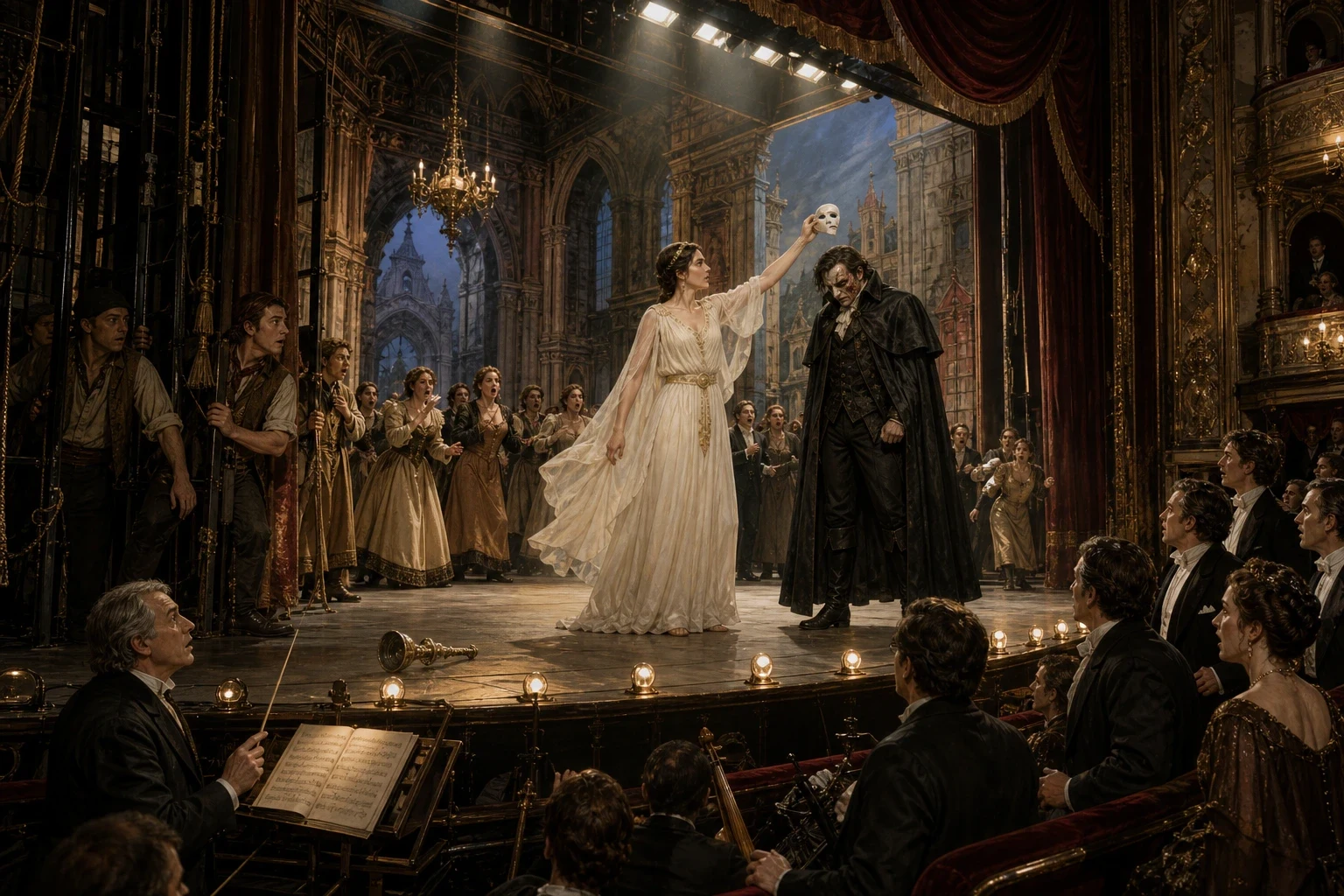
After the chandelier incident, the Opéra managers were forced to compromise with the Phantom, agreeing to his demands for Christine to star in his opera, *Don Juan Triumphant*. On the night of the premiere, as Christine sang the haunting melodies of the Phantom's score, she became aware of his presence beside her, disguised among the chorus. Fueled by a desperate resolve, and knowing Raoul was near, she seized her moment. With a swift, defiant movement, Christine reached out and tore the mask from the Phantom's face. The stage lights, bright and merciless, illuminated a visage so profoundly disfigured, so unsettling and shocking, that a gasp of horror rippled through the few people in the wings. Erik's face was a sight of utter tragedy and grotesque deformity, a living testament to his isolation and suffering, now laid bare for all to see.
Page 8
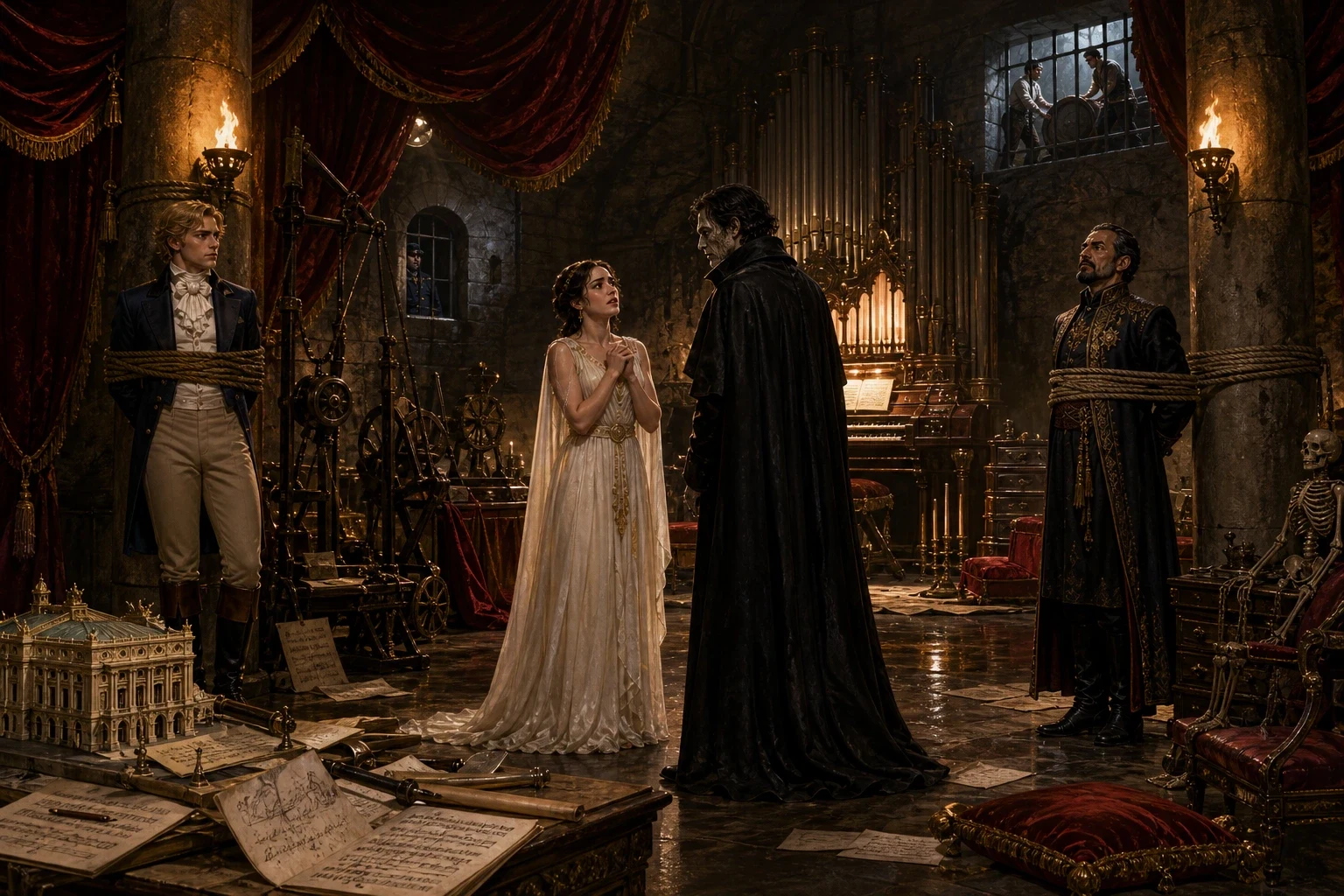
Raoul and the Persian, following a hidden path, eventually found themselves deep within the Phantom's subterranean lair, a chamber filled with bizarre and menacing mechanical devices. They were quickly trapped, the temperature in the room rising uncomfortably, the strange devices around them clearly portending a terrifying and cruel fate. At this dire moment, Christine, having fled the stage, returned to the lair, drawn by an irresistible pull. The Phantom, his face now fully revealed and twisted by anguish, presented her with a terrible ultimatum: marry him and save her friends, or refuse and doom them all to the tortures of his chamber. Christine, faced with this agonizing choice, felt her heart break. The Phantom, watching her, was a figure of both monstrous cruelty and profound, desperate love, a paradox of suffering and vengeance.
Page 9
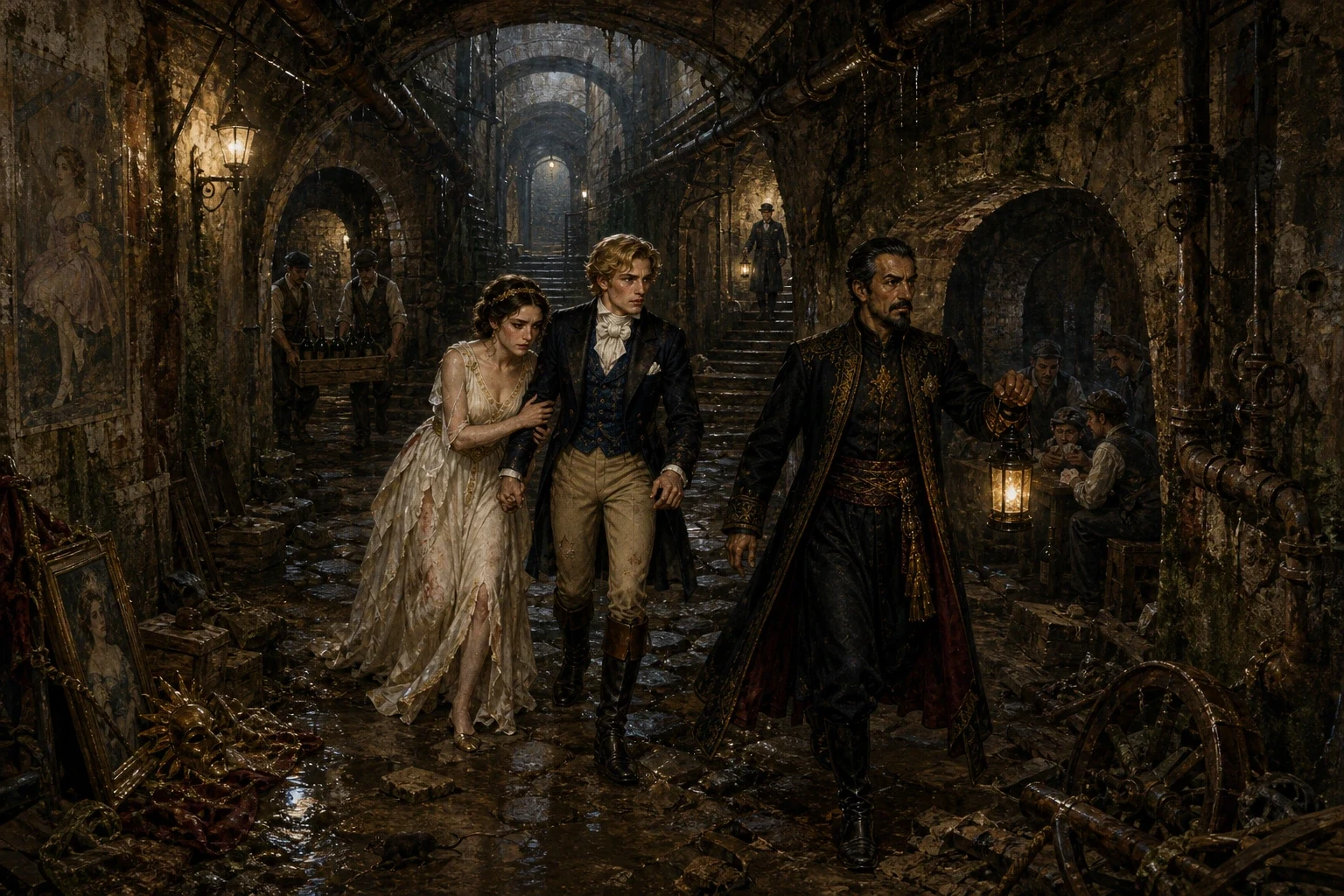
In an act of profound compassion, Christine made her choice, and for a fleeting moment, the Phantom released his hold. As he succumbed to a wave of despair, Christine, Raoul, and the Persian seized their chance, stumbling through the labyrinthine cellars of the Opéra. They navigated twisting corridors, clambered over debris, and pushed through hidden doors, their escape a desperate, silent scramble. Exhaustion weighed on them, but the terror of the Phantom's lair spurred them on. They knew his genius for traps, his intimate knowledge of every secret passage, and the danger of his swift vengeance. As they finally saw a distant glimmer of light, they could almost feel the Phantom's sorrowful, enraged presence behind them, his dream of love shattered, his hold on Christine irrevocably broken. Their journey out of the darkness was a race against a broken heart.
Page 10
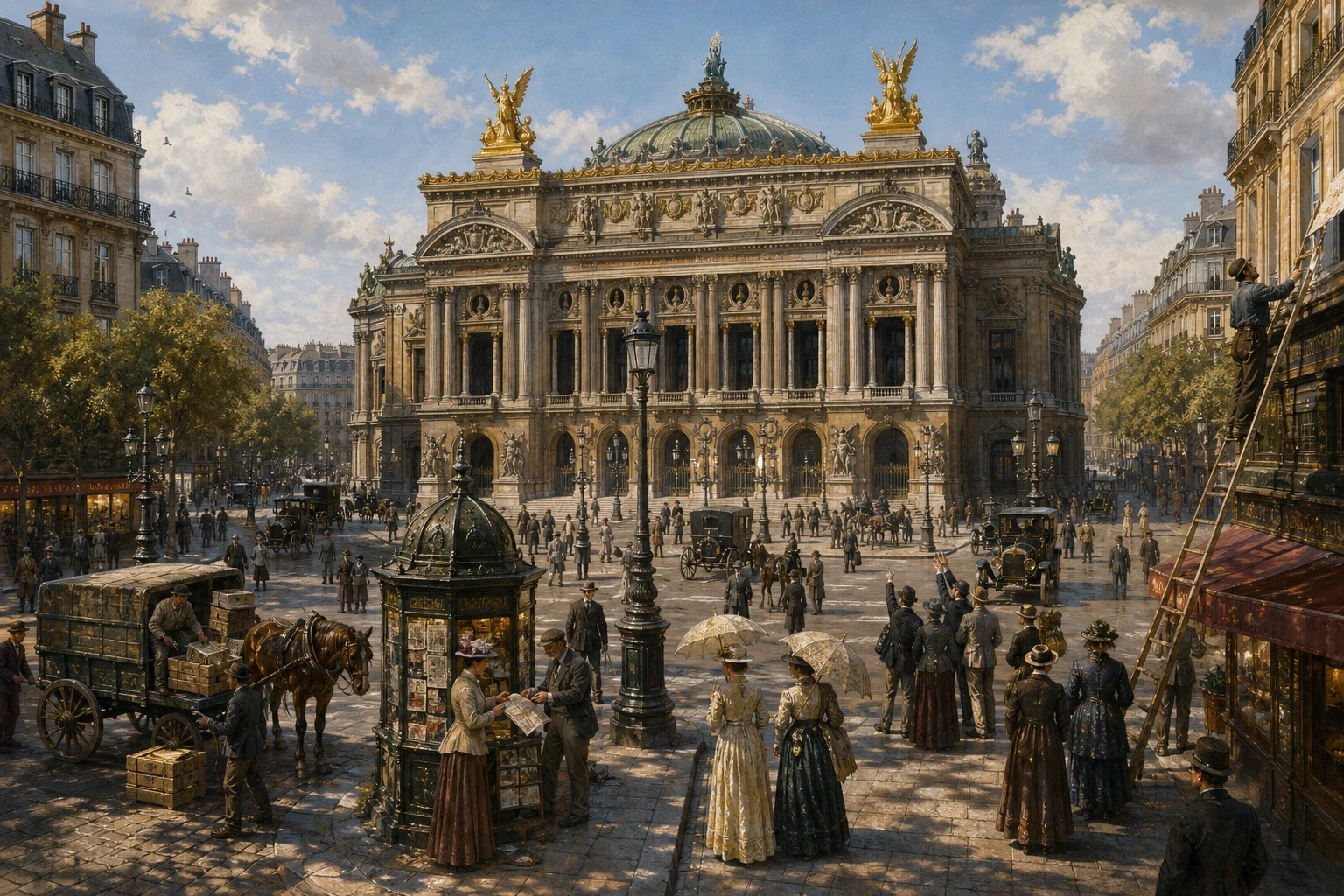
After Christine's escape, the Opéra Garnier gradually settled back into a semblance of normalcy, but the shadow of the Phantom never truly lifted. Erik, the Angel of Music, the Opera Ghost, vanished without a trace. His lair was eventually discovered, but he was gone, leaving behind only his white mask and a simple gold ring. Rumors persisted for years: some said he had died of a broken heart, others that he still roamed the deepest cellars, a forlorn spirit haunting his beloved opera house. But no one ever saw him again. The legend of the Phantom of the Opera became etched into the very stones of the building, a timeless tale of beauty, terror, and unrequited love, whispered through generations. The Opéra Garnier stood, grand and enduring, a monument to both art and the profound, terrible mystery it housed.
About this story
- Audience: general readers
Read Wonder Novels on your phone
Wonder Novels is available on Android. Get Wonder Novels on Google Play.