Dusty Lantern Reveals Pollen's Secrets
Dusty Lantern Reveals Pollen's Secrets — an illustrated science story. 10 illustrated pages, free to read on Wonder Science.
Page 1
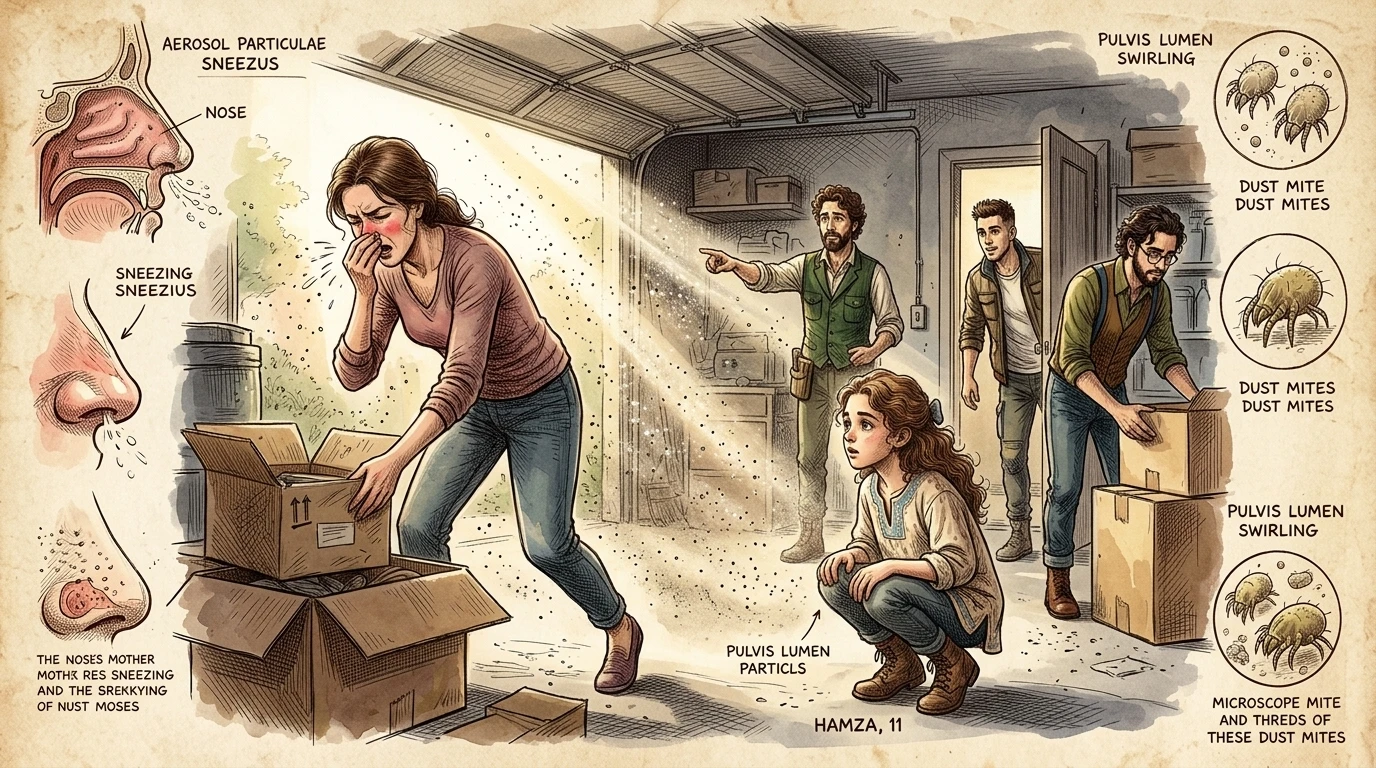
Sunlight streamed into the garage in their Noe Valley home, illuminating a galaxy of floating dust motes. Hamza's mother let out a giant sneeze while sorting through old boxes. "Achoo! This dust is everywhere," she said, rubbing her nose. Hamza watched the swirling particles dance in the light beam. "Dad, what is dust actually made of?"
Page 2
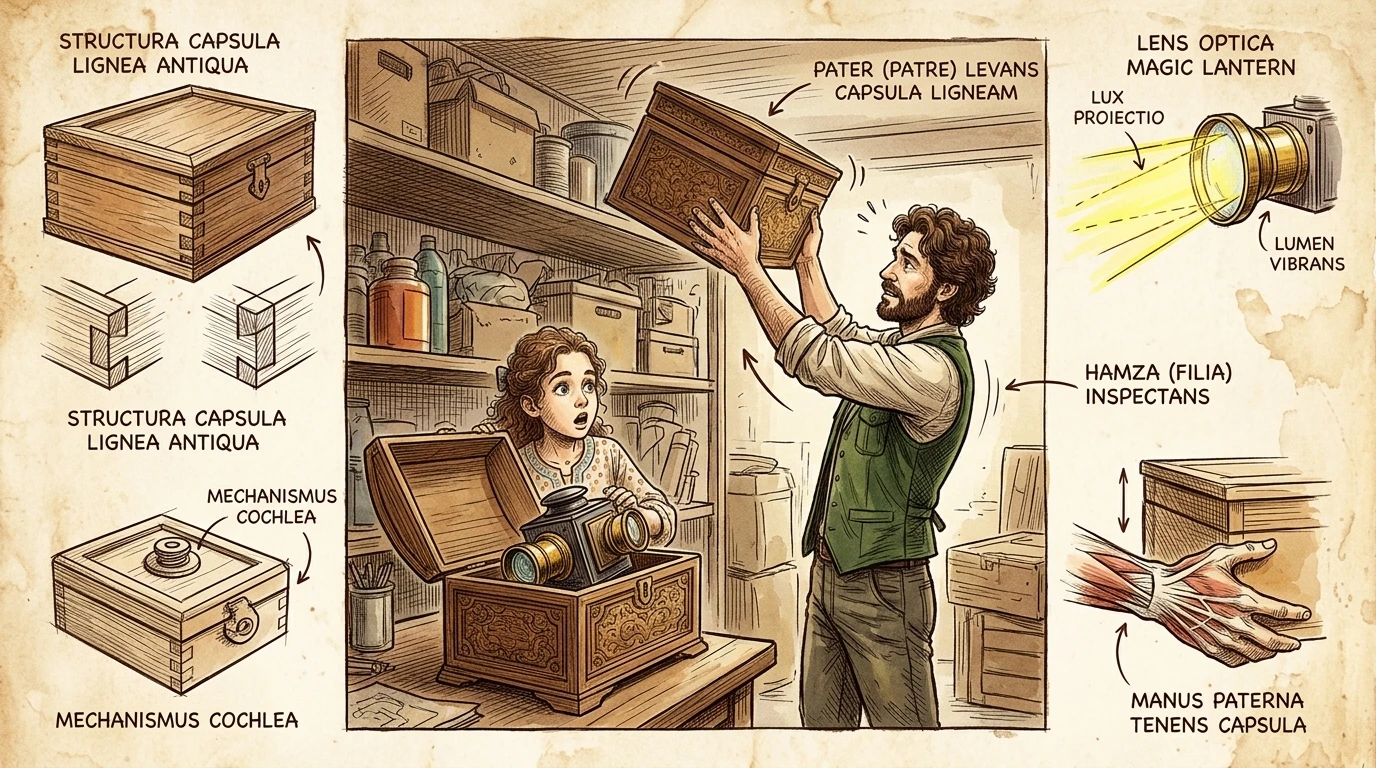
"Well, it's lots of things, but a big part of it is pollen from all the plants outside," her father explained, pulling a heavy wooden box from a high shelf. He set it down and opened the lid, revealing a strange metal object with a lens. "I have an idea. This is an old magic lantern, like a slide projector from a hundred years ago!"
Page 3
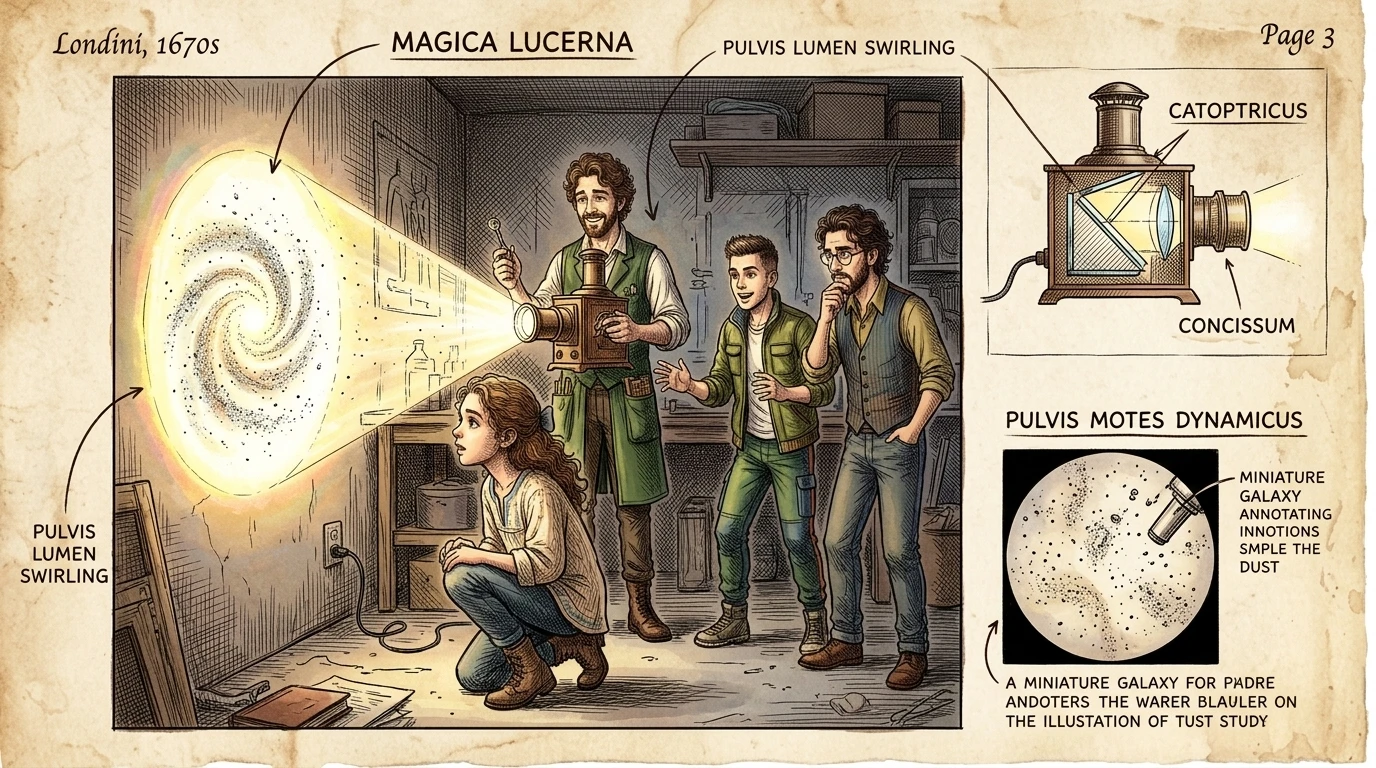
As her father plugged in the lantern, a bright circle of light hit the garage wall, the dust motes inside it swirling like tiny stars. "To understand what's hiding in that dust, we have to go back in time," her father said softly. "Back to London, in the 1670s, when scientists were just getting their first glimpse into the microscopic world."
Page 4
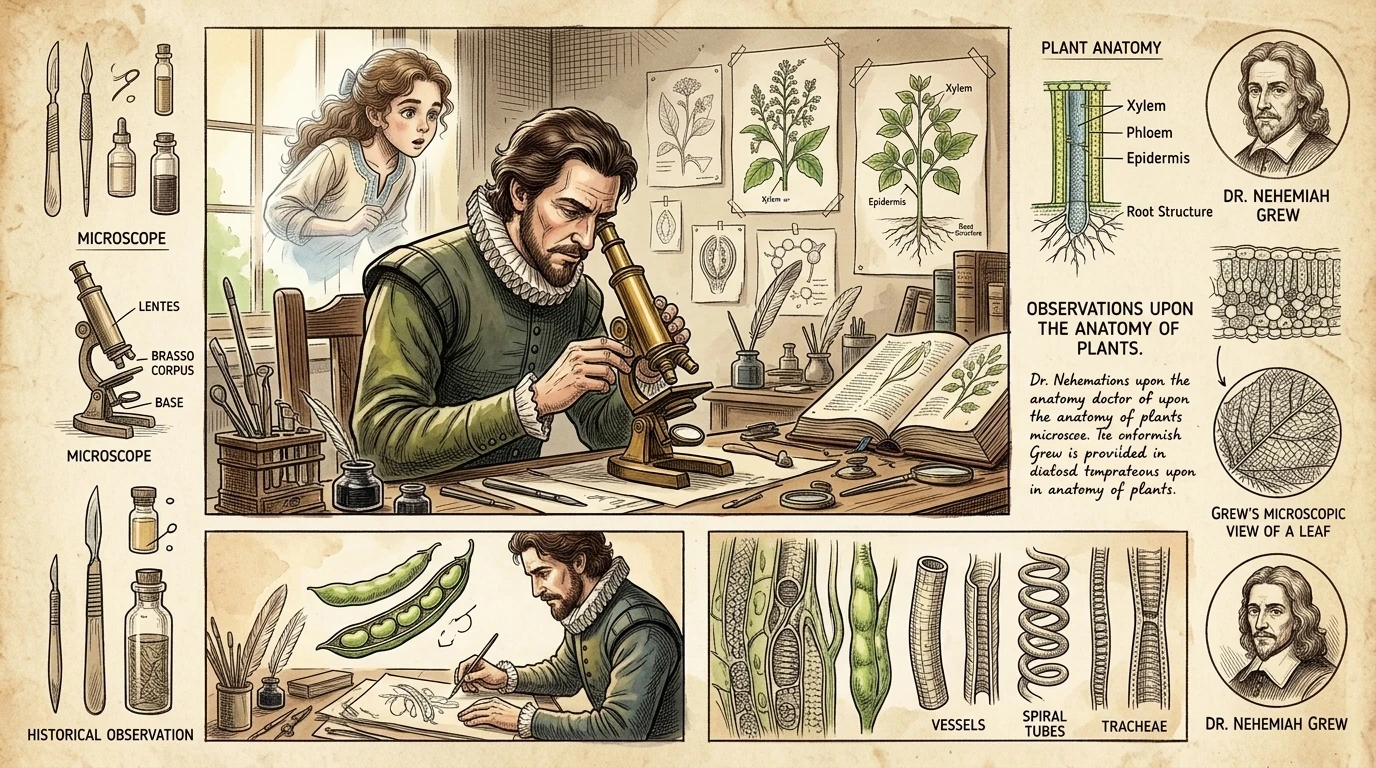
"A doctor named Nehemiah Grew was one of the first," her father's voice continued. "He wasn't just a doctor for people; he was a doctor for plants! He used one of the world's first microscopes to explore their hidden structures." Hamza imagined the doctor in his study, surrounded by strange tools and botanical drawings.
Page 5
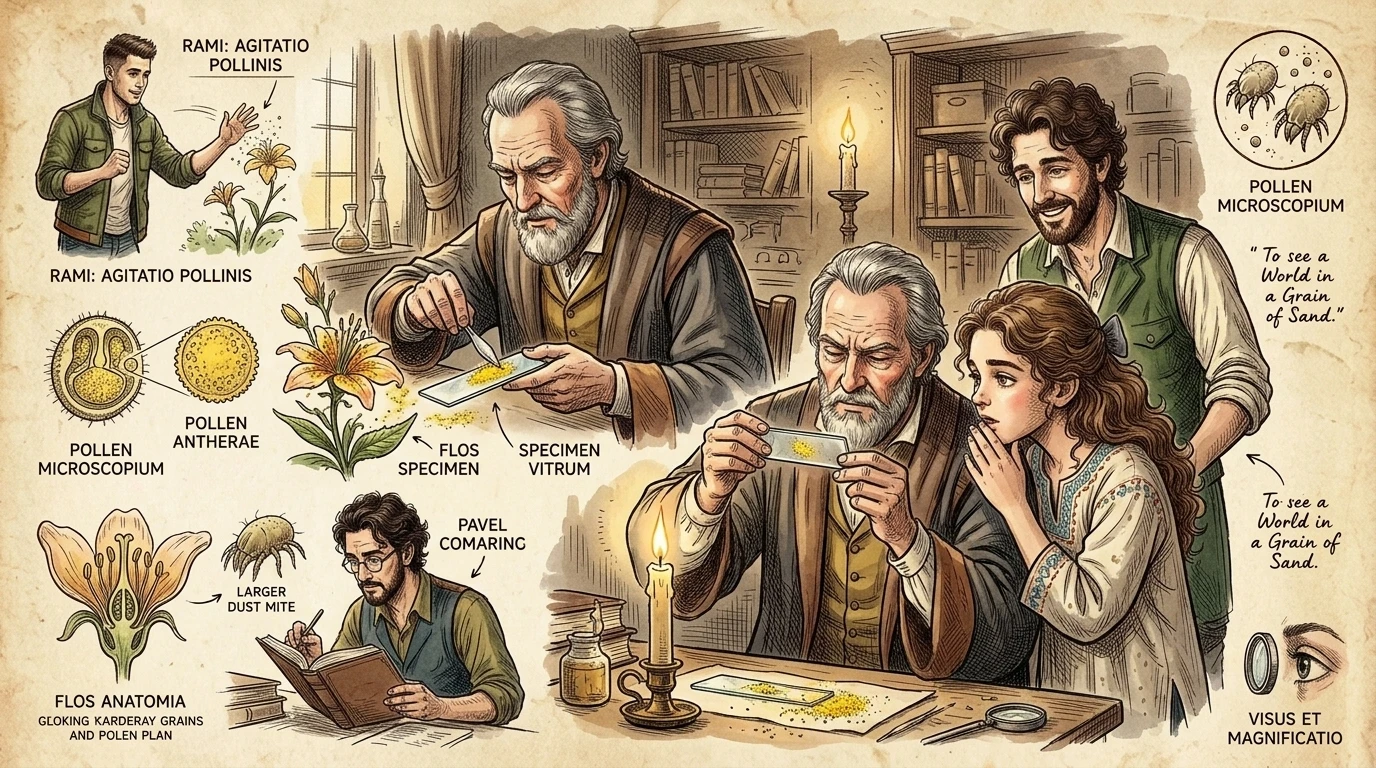
Dr. Grew carefully scraped yellow powder from a flower onto a piece of glass. He held it up to the candlelight, squinting at the tiny specks. Hamza thought of what the poet William Blake once said, whispering, "'To see a World in a Grain of Sand.' He's about to see a whole new universe in a grain of pollen!"
Page 6
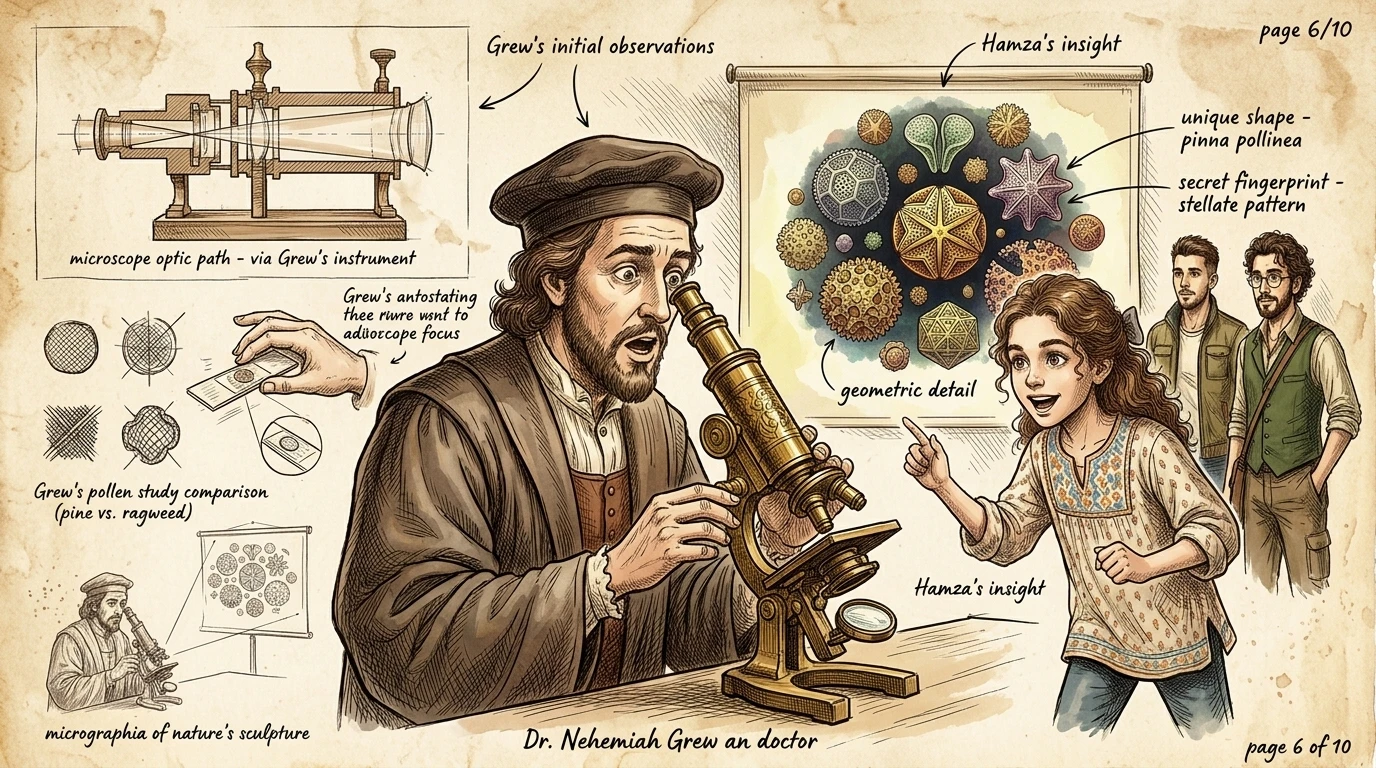
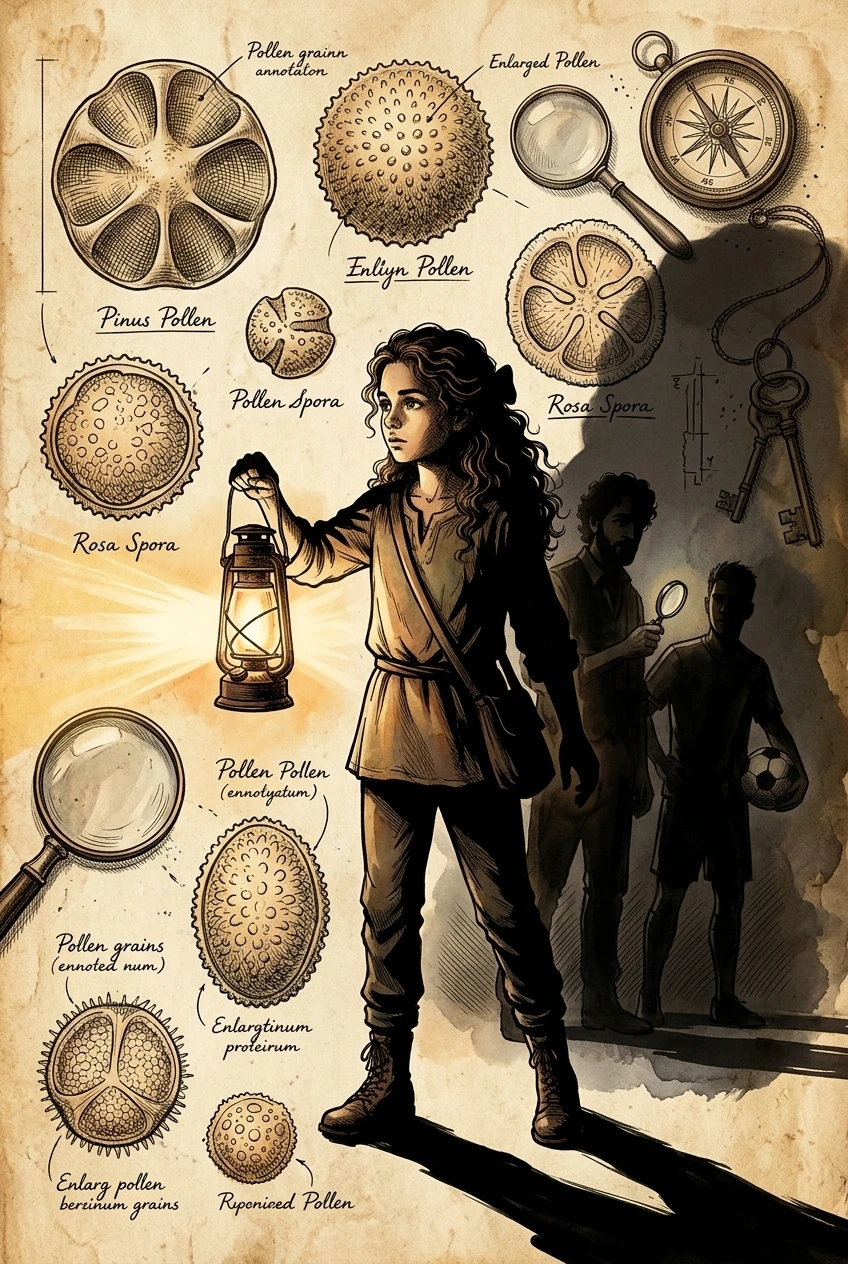
When he finally looked through the eyepiece, his jaw dropped. The pollen wasn't just yellow dust; it was a collection of incredible, geometric sculptures! "He saw that pollen from different plants had its own unique shape," Hamza realized aloud. "Like a secret fingerprint for every flower!"
Page 7
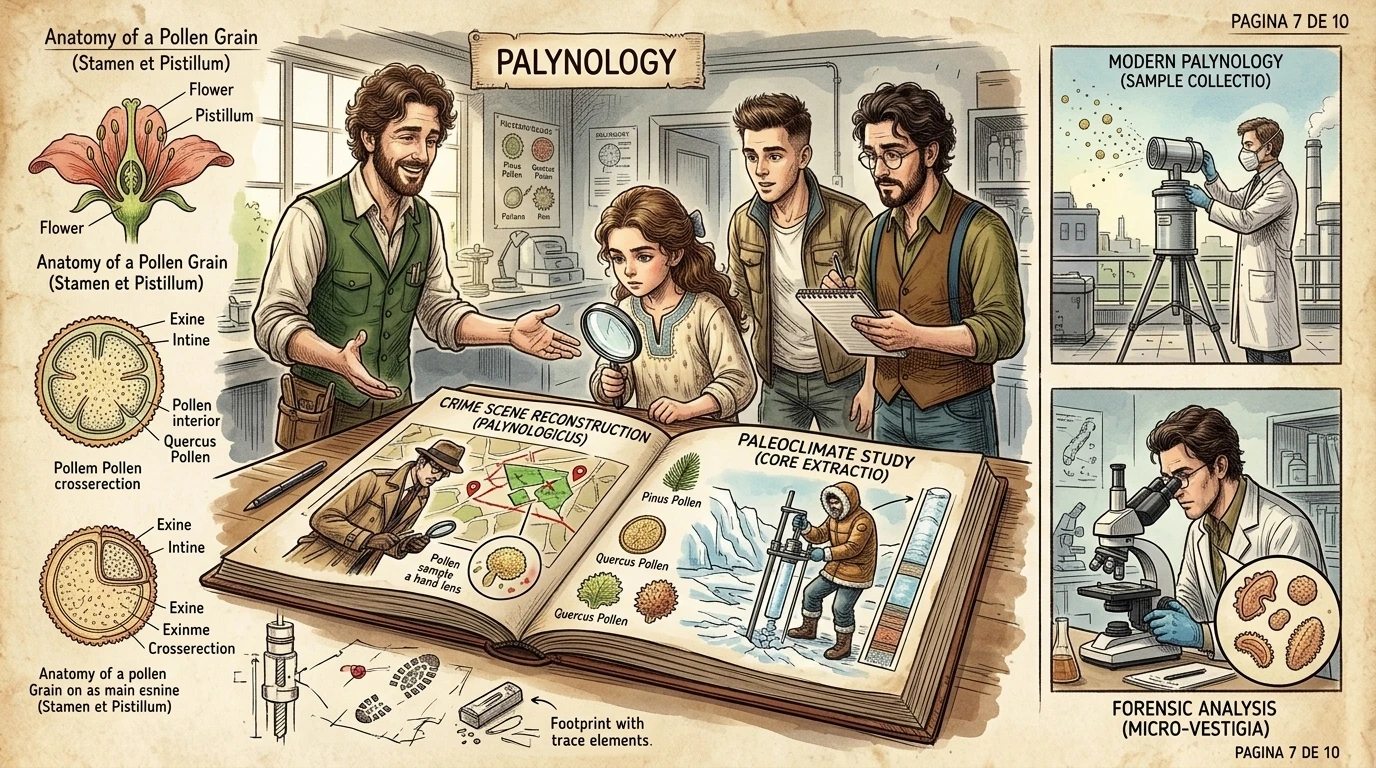
"Exactly! His discovery started a whole new science called palynology," said her father. "Today, scientists use pollen to solve crimes by tracking where a suspect has been. Geologists even study ancient pollen trapped in ice to learn what the world was like millions of years ago!"
Page 8
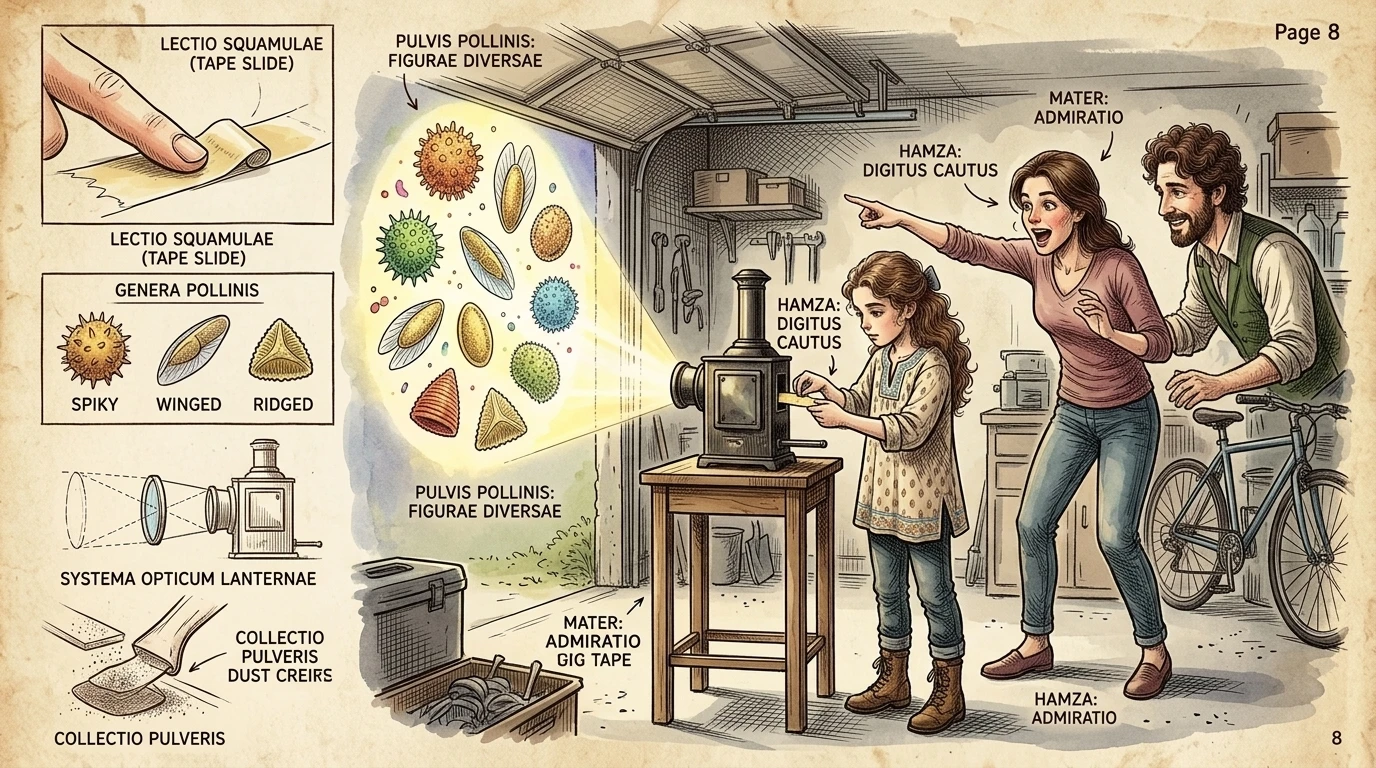
Back in the garage, Hamza slid a piece of tape that had collected dust into the magic lantern. Suddenly, giant shapes appeared on the wall: spiky spheres, winged ovals, and ridged triangles, all mixed together. "Whoa!" her mother exclaimed, pointing. "So that's what's making me sneeze! It looks like tiny, floating sculptures!"
Page 9
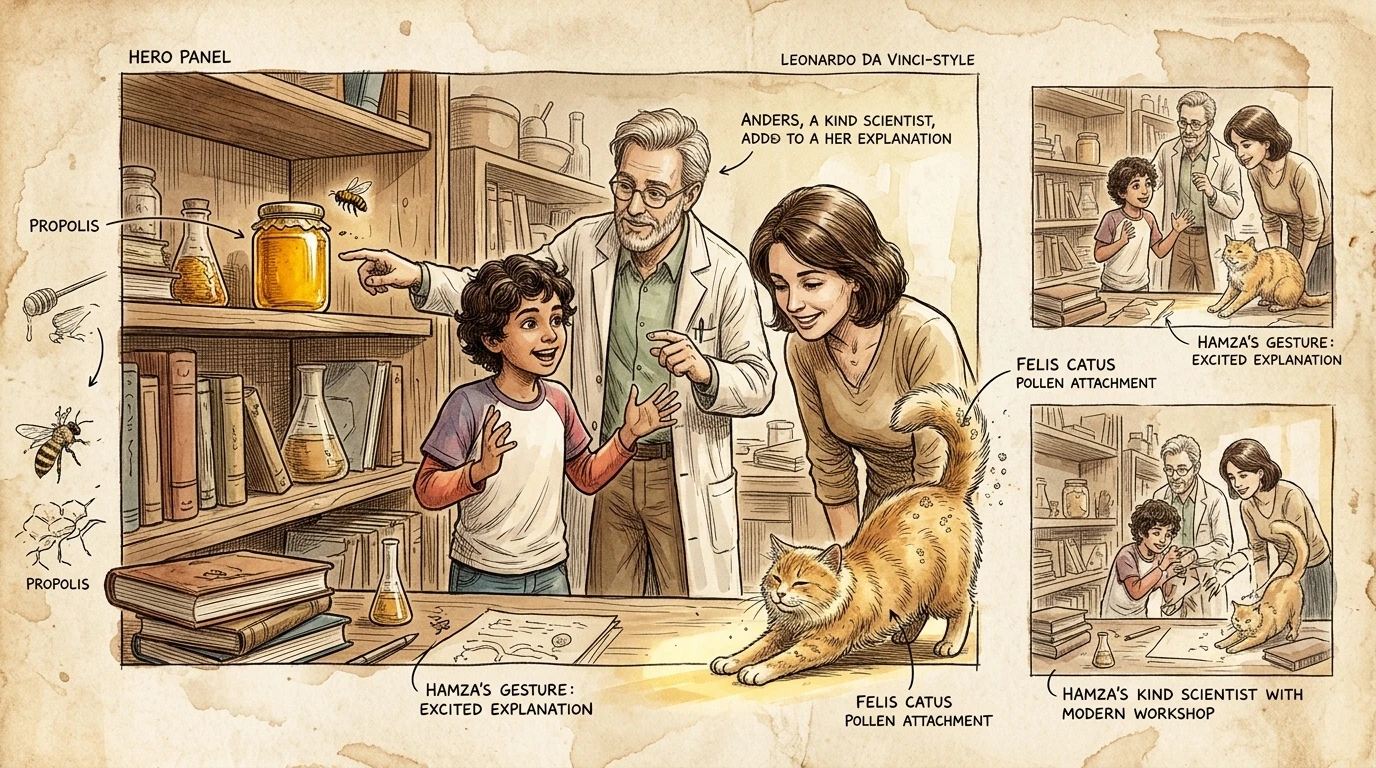
"And they come from everywhere," Hamza said excitedly. Her dad added, "The honey we had on toast this morning is full of pollen that bees collected." Her mom smiled, looking at their cat stretching nearby. "Even Mittens brings pollen inside on her fur after rolling in the garden!"
Page 10
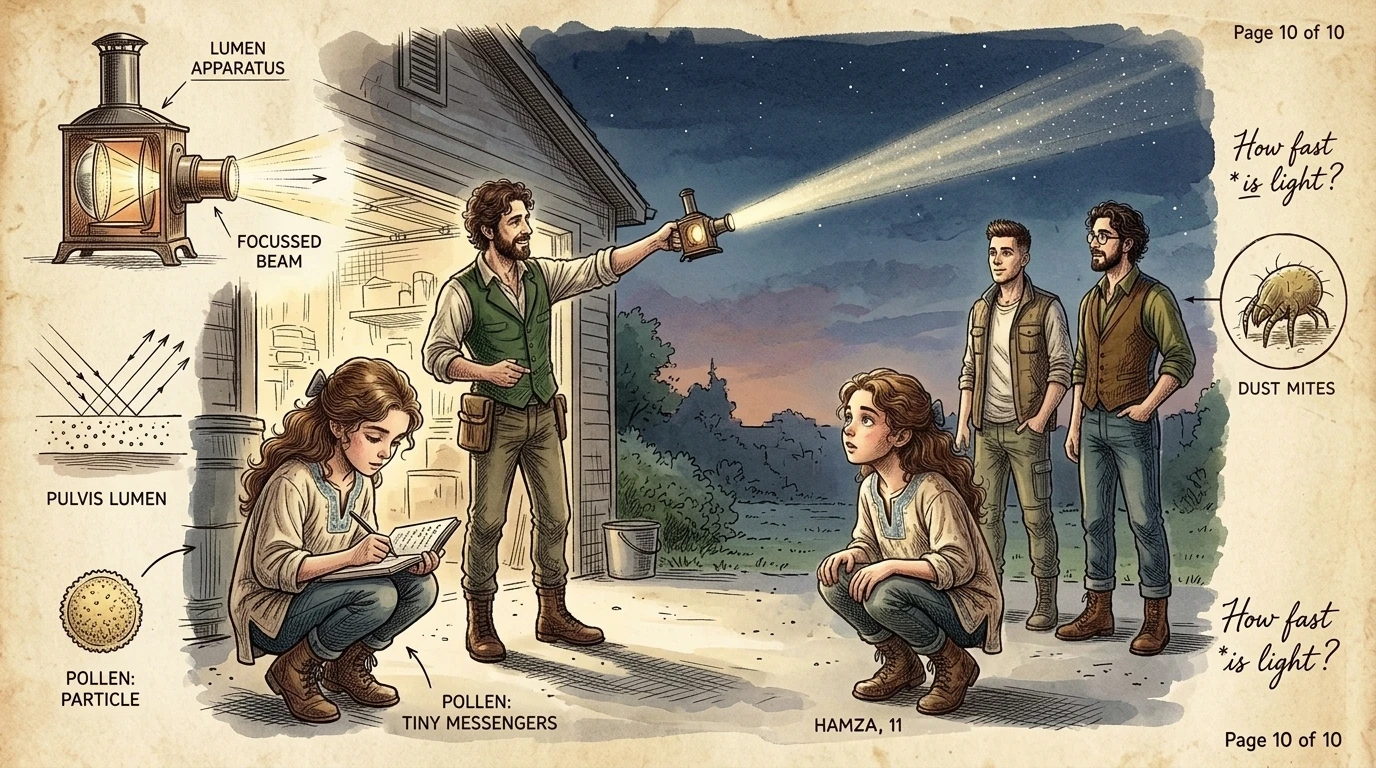
"So pollen grains are like tiny messengers carrying secret codes about the plants around us," Hamza summarized, scribbling in her small notebook. Her dad pointed the lantern's bright beam toward the evening sky. "Those pollen messengers ride the wind, but that beam of light is way faster." Hamza looked at the ray of light and asked, "How fast is light, anyway?"
About this story
- Audience: kids (ages 6–12)
Questions and answers
Questions and answers about Dusty Lantern Reveals Pollen's Secrets
Read Wonder Science on your phone
Wonder Science is available on Android. Get Wonder Science on Google Play.