Earth's Labyrinth: Finding Precious Gems
Earth's Labyrinth: Finding Precious Gems — an illustrated science story. 10 illustrated pages, free to read on Wonder Science.
Page 1

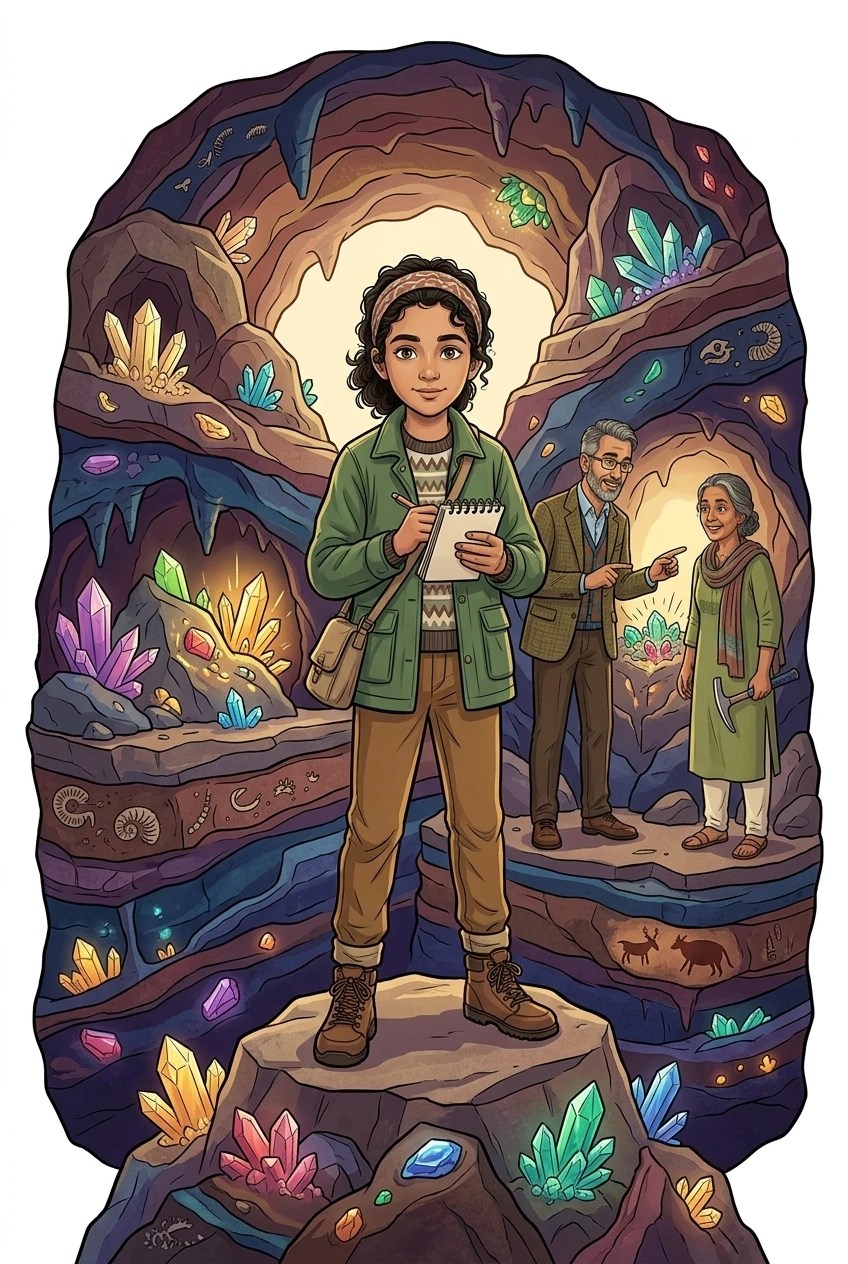
In their cozy Noe Valley living room, Mariam watched her mother gently polishing a small, sparkling ring. "What makes it shine so much, Mama?" Mariam asked, leaning over the arm of the sofa. Her mother held it up to the lamp, and it threw a tiny rainbow onto the wall. "It's a diamond, sweetie," she said, her voice soft. "It's one of the hardest things on Earth."
Page 2
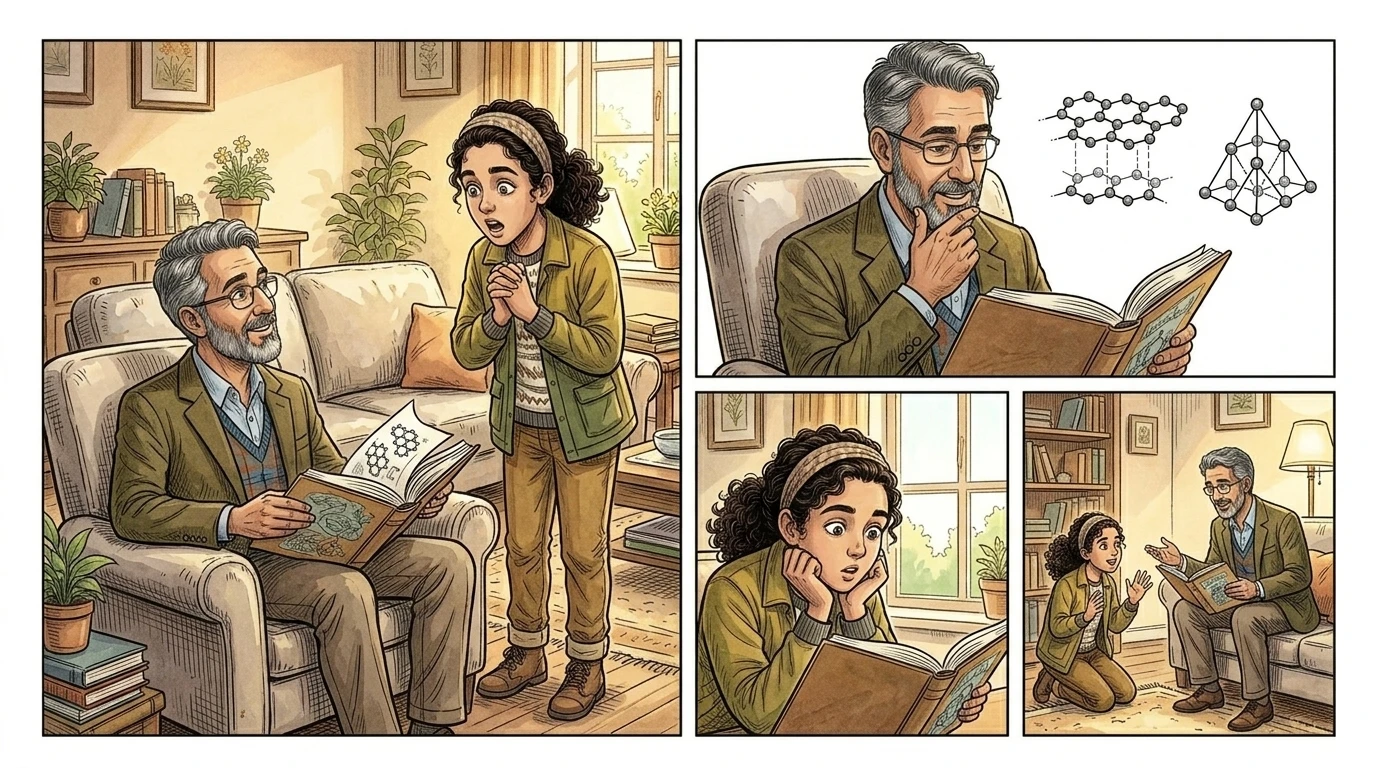
Mariam's father looked up from his book. "Did you know that diamond is made of the exact same thing as the lead in your pencil?" Mariam's eyes went wide in disbelief. "No way! My pencil is grey and smudgy." He chuckled, "It's true. They're both made of carbon atoms, but they are arranged in a completely different way because of incredible pressure."
Page 3
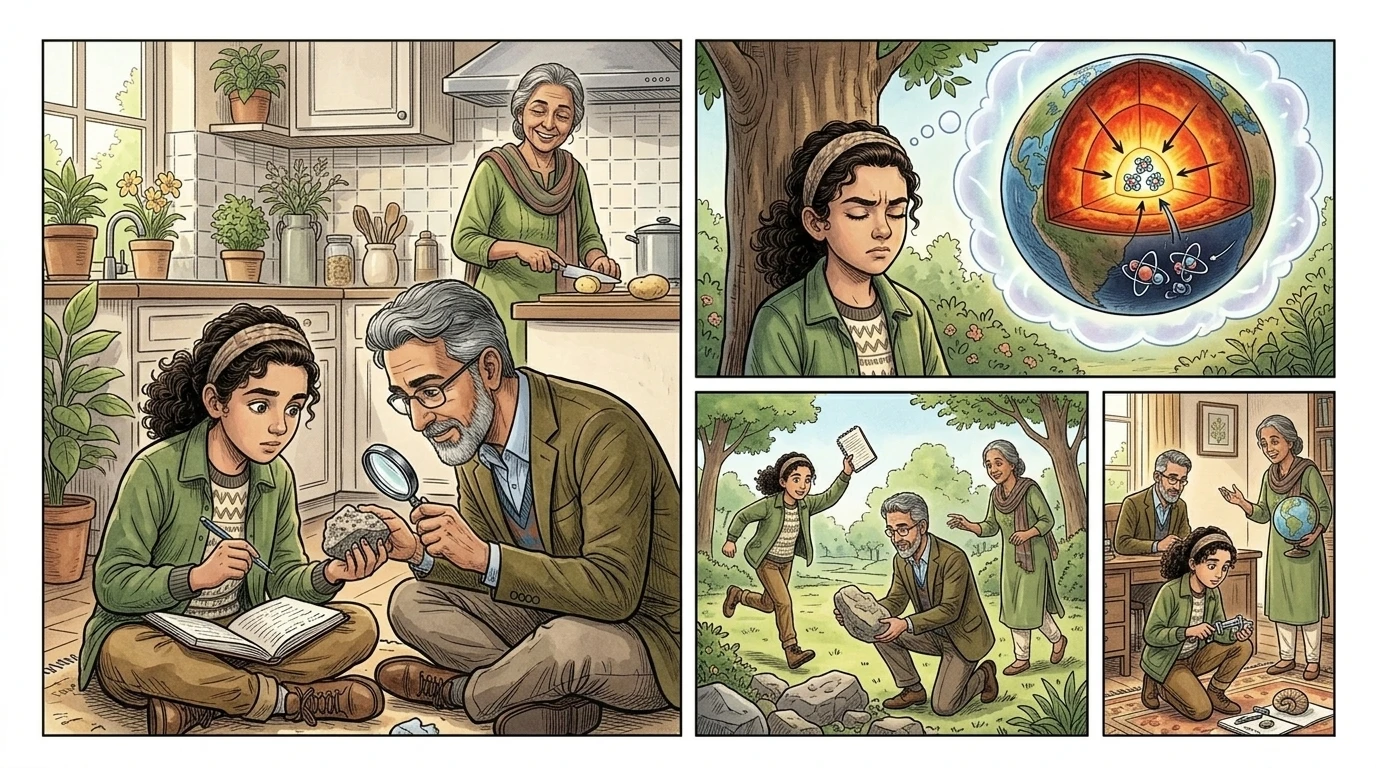
Mariam closed her eyes, trying to picture it. She imagined journeying deep into the Earth, past layers of rock and soil. The world around her grew hotter and the weight felt immense, like a mountain pressing down from all sides. In this crushing darkness, tiny atoms were being squeezed together with unbelievable force.
Page 4
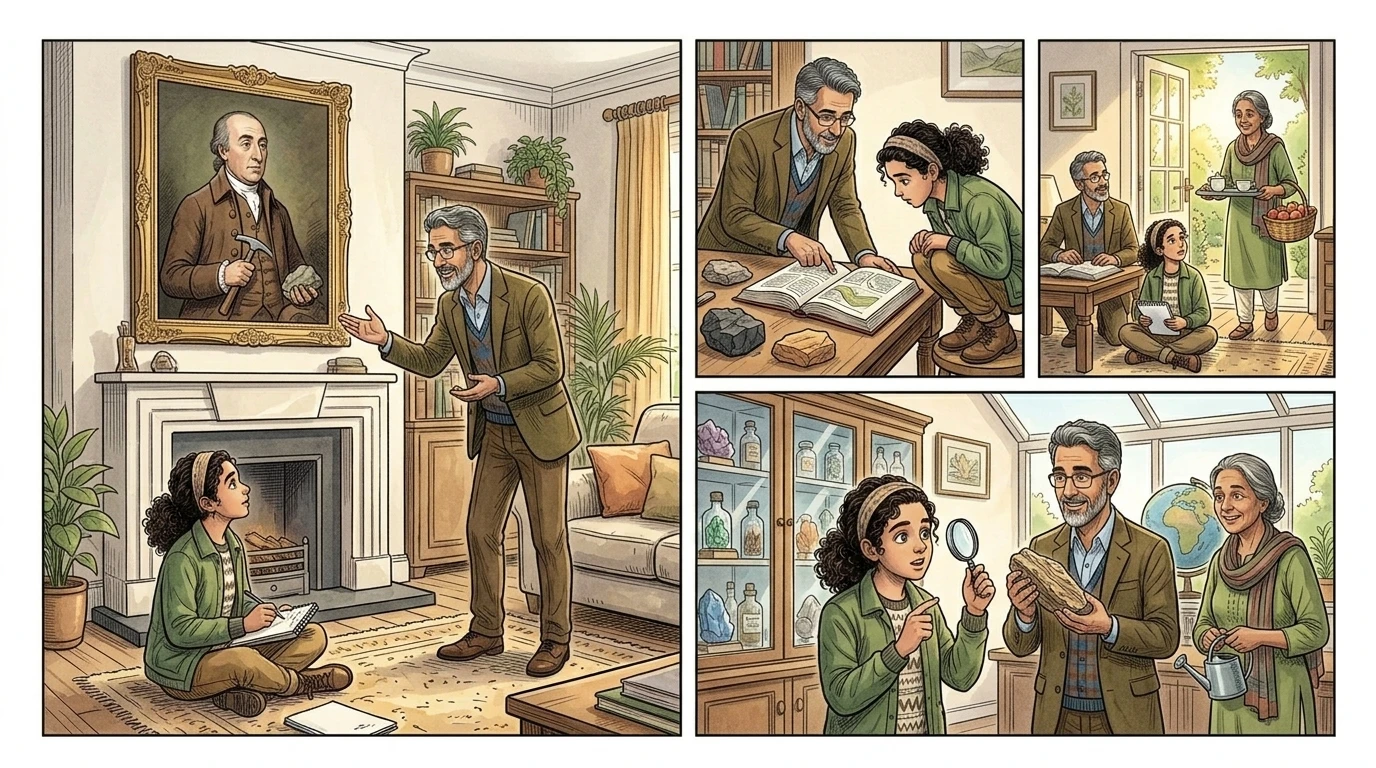
"This idea of the Earth being ancient and powerful took a long time for us to figure out," her father's voice seemed to narrate. "It took a curious farmer and doctor from Scotland named James Hutton in the late 1700s. He didn't just look at his farm; he looked at the bones of the world—the rocks themselves—and saw a story no one had read before."
Page 5

Hutton stood at a place called Siccar Point, looking at layers of rock tilted in impossible ways. He realized one set of rocks must be vastly older than the other. Remembering what Hutton once told a friend, Mariam whispered the words to herself: "'We find no vestige of a beginning, no prospect of an end.' He meant the Earth's story is so, so long."
Page 6

Hutton's idea of 'deep time' was the key. He understood that for rocks to form, fold, and erode like this, the Earth had to be millions upon millions of years old. That same immense timescale, combined with heat and pressure 100 miles deep in the mantle, is what rearranges carbon atoms. It slowly, patiently, forges them into the perfect, unbreakable crystal structure of a diamond.
Page 7
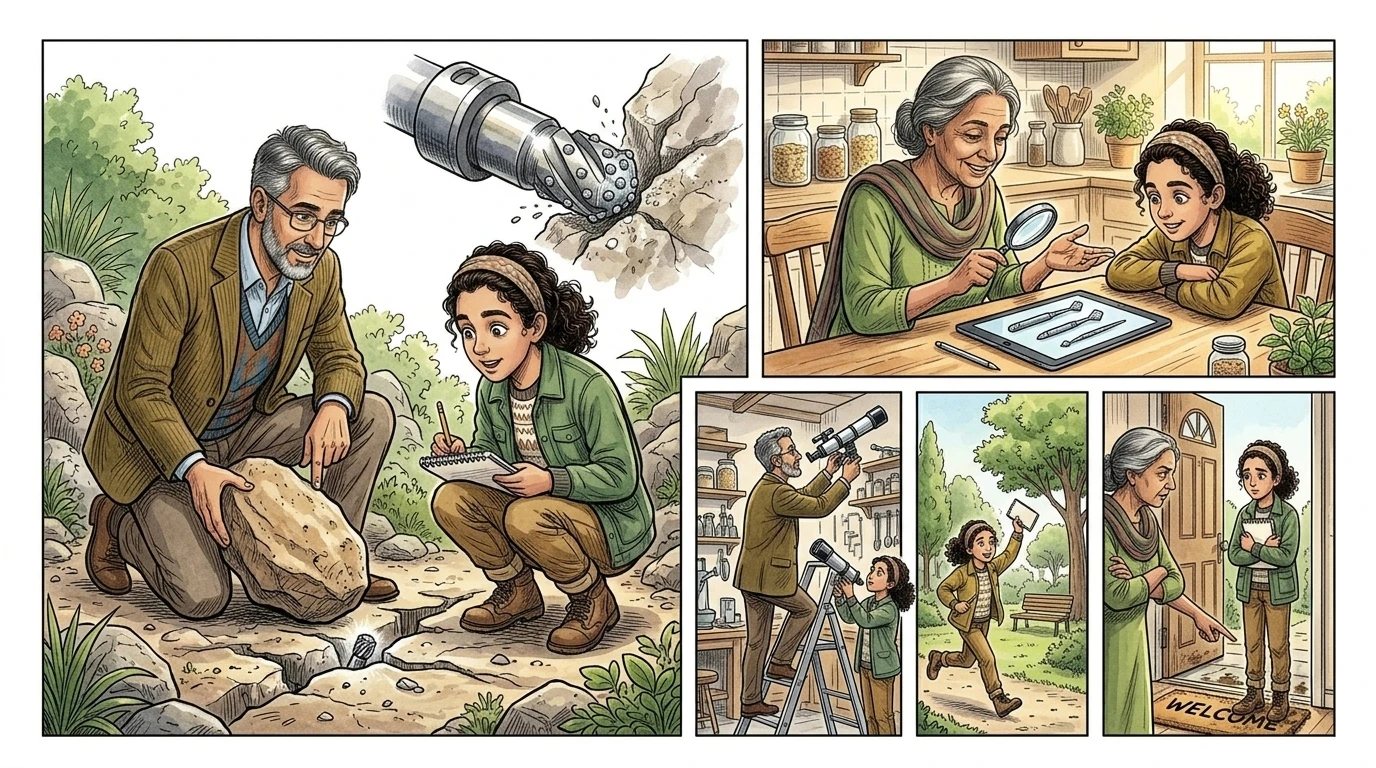
"And that incredible hardness makes diamonds more than just pretty!" exclaimed Mariam's mother. "Did you know that over 75% of all diamonds aren't used in jewelry at all? They're used on the tips of powerful drills that cut through rock and on precise surgical tools that save lives!" Mariam imagined a giant drill bit, tipped with tiny, powerful diamonds, grinding through solid stone.
Page 8
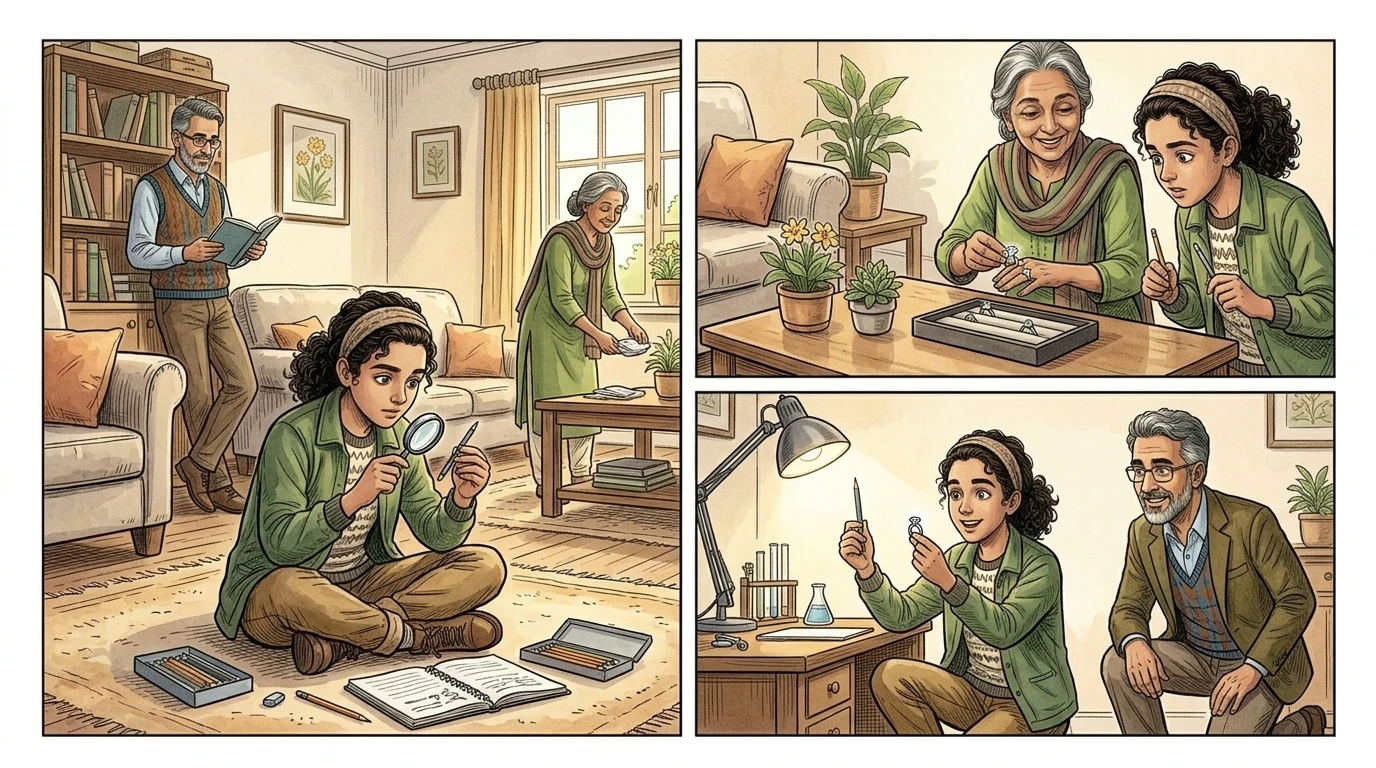
Back in the living room, Mariam picked up her pencil, then looked at the sparkle from her mother's ring. "Wow," she breathed, finally understanding. "So, this soft pencil point and that super-hard diamond are like long-lost cousins! It's all about how much of a squeeze they got deep inside the Earth for millions of years." Her father smiled, nodding proudly.
Page 9
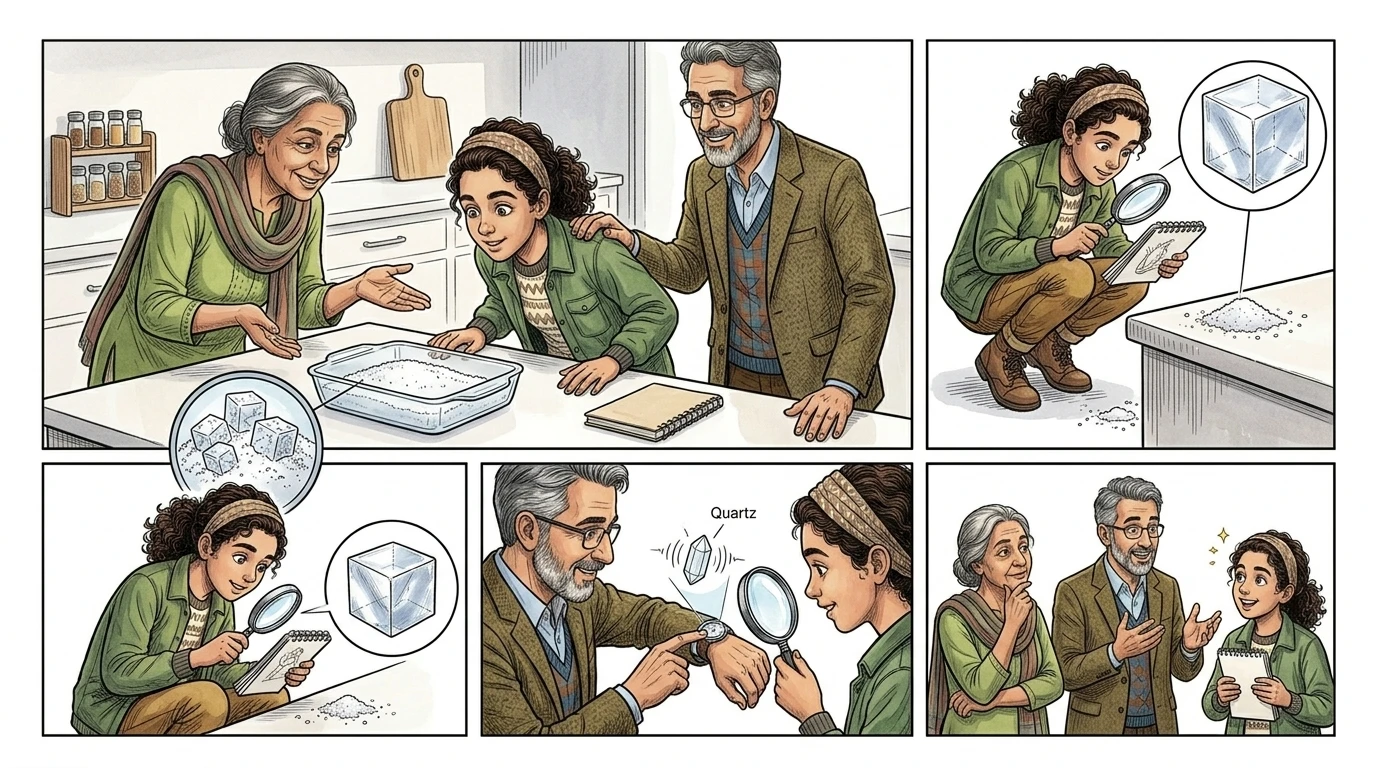
"What other gems are hiding in plain sight?" Mariam wondered aloud, grabbing her notebook. "The salt we put on our food!" her mother said, pointing to the kitchen. "Those are crystals of halite." Her father tapped his watch glass. "And the tiny quartz crystal inside here keeps perfect time, vibrating over 32,000 times per second!"
Page 10
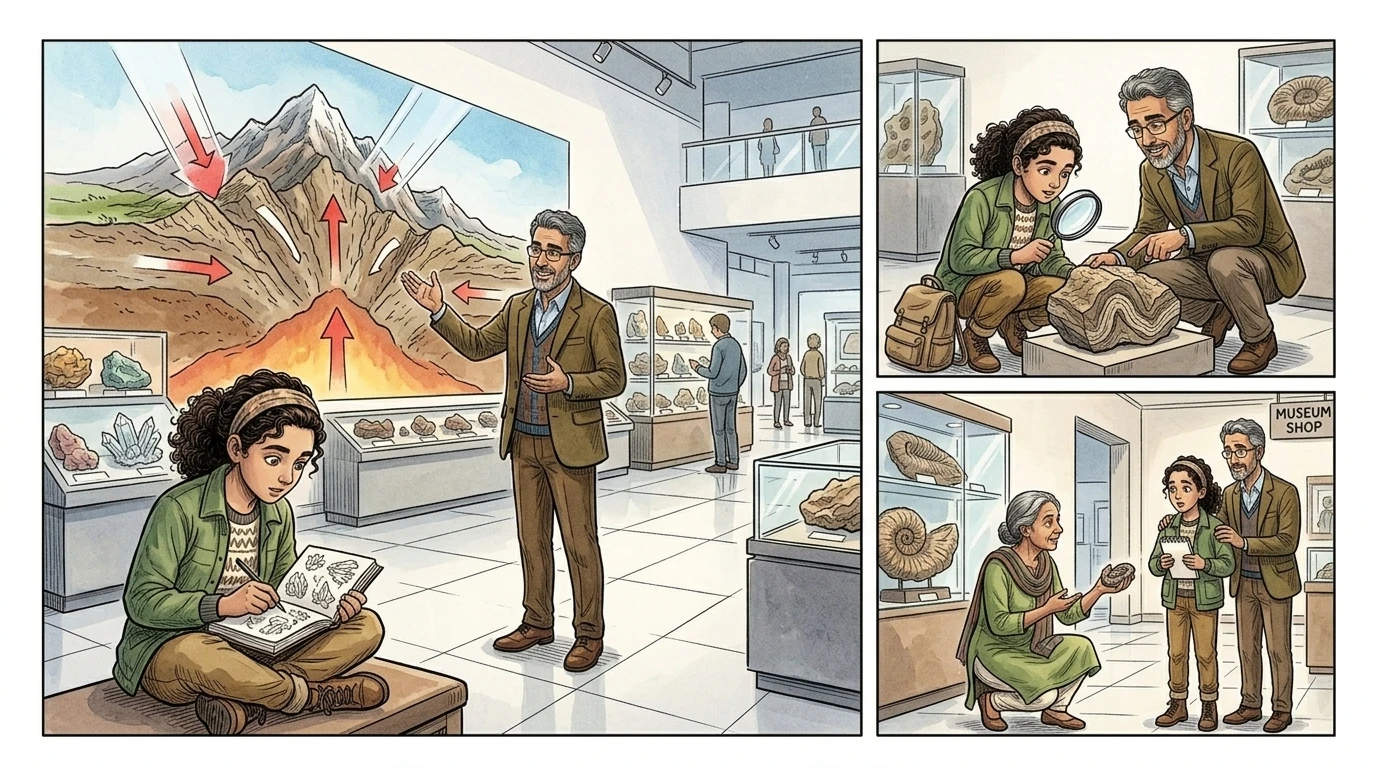
"So the whole planet is like a giant treasure chest," Mariam concluded, scribbling in her notebook. "Incredible pressure and a whole lot of time can create the most beautiful things." Her father smiled and added, "It makes you wonder... if that pressure happens deep underground, what incredible force pushes entire mountains up into the sky?"
About this story
- Audience: kids (ages 6–12)
Questions and answers
Questions and answers about Earth's Labyrinth: Finding Precious Gems
Read Wonder Science on your phone
Wonder Science is available on Android. Get Wonder Science on Google Play.