How Glass is Made from Sand

How Glass is Made from Sand — an illustrated science story, set in United States. 10 illustrated pages, free to read on Wonder Science.
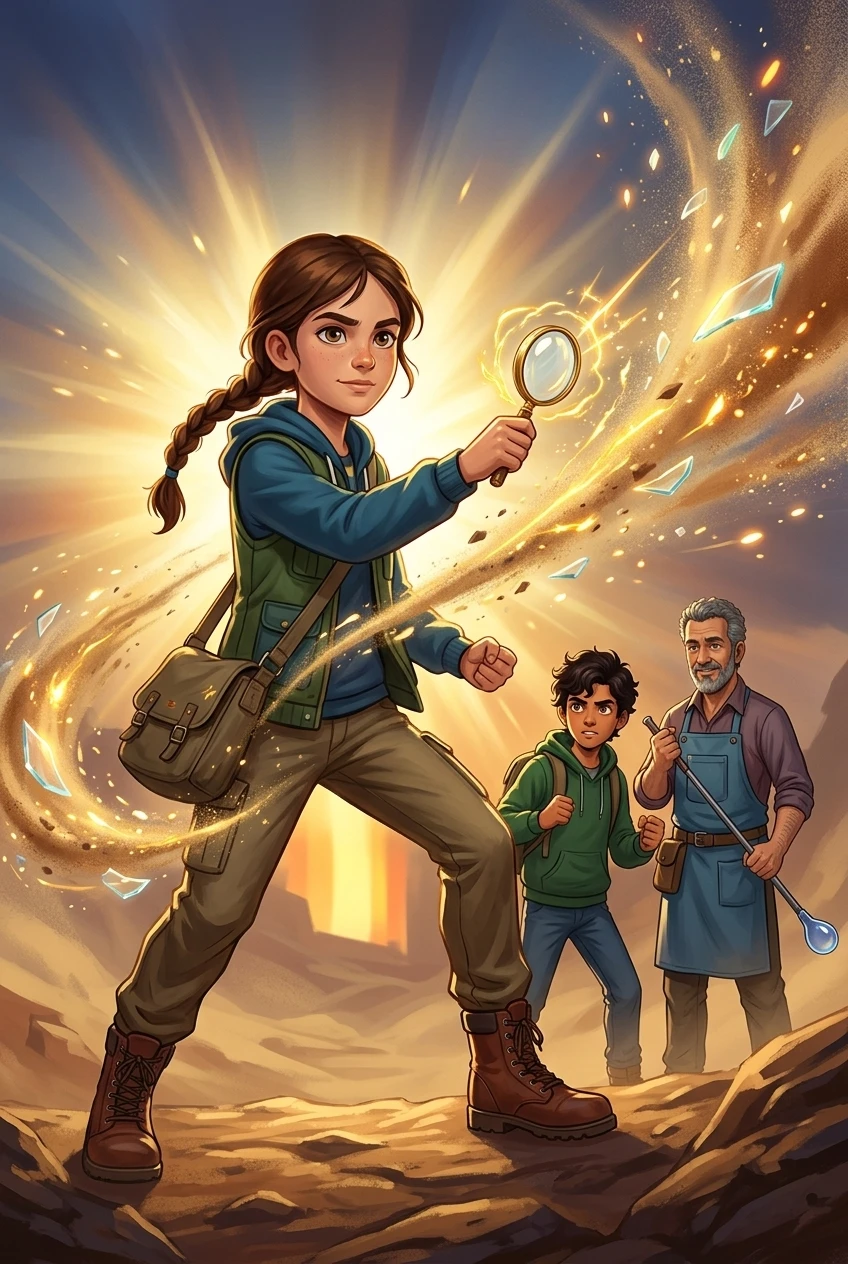
How Glass is Made from Sand — book cover — Wonder Science
How Glass is Made from Sand — an illustrated science story, set in United States. 10 illustrated pages, free to read on Wonder Science.

Page 1
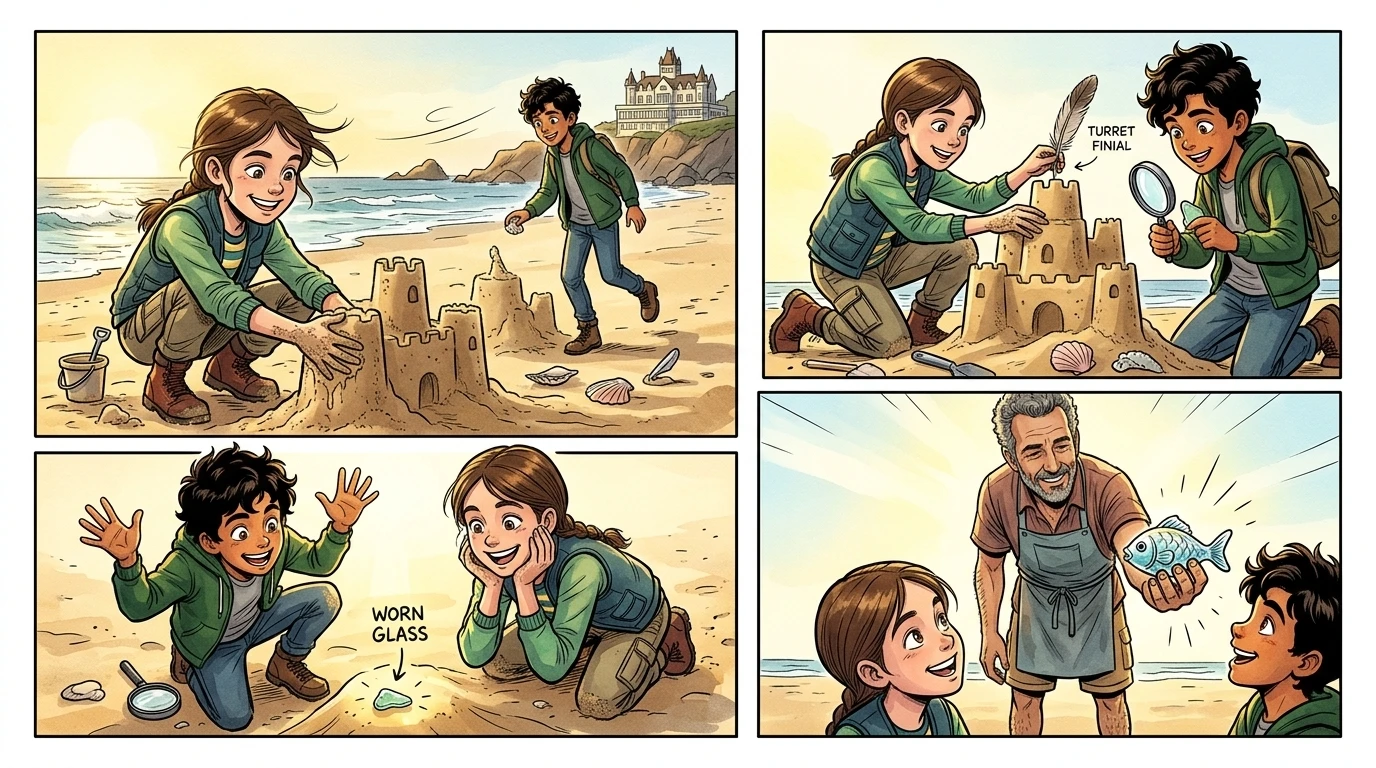
Katya scooped up a handful of wet sand, pressing it onto their castle turret at San Francisco's Ocean Beach. "Almost done!" she called out, the salty wind…
Katya scooped up a handful of wet sand, pressing it onto their castle turret at San Francisco's Ocean Beach. "Almost done!" she called out, the salty wind whipping her hair. Omar squinted towards the Cliff House restaurant perched on the rocks above. "It's amazing how that whole building is covered in shiny windows, but down here we just have... this gritty stuff."

Katya scooped up a handful of wet sand, pressing it onto their castle turret at San Francisco's Ocean Beach. "Almost done!" she called out, the salty wind whipping her hair. Omar squinted towards the Cliff House restaurant perched on the rocks above. "It's amazing how that whole building is covered in shiny windows, but down here we just have... this gritty stuff."

Page 2

They wandered over to a market stall where a man was selling colorful glassware. "Is it true glass is made from sand?" Katya asked, pointing from the beach to a…
They wandered over to a market stall where a man was selling colorful glassware. "Is it true glass is made from sand?" Katya asked, pointing from the beach to a swirling blue vase. The artisan, Karim, smiled and picked up a jar of shimmering quartz sand. "Absolutely! It's all about chemistry and a whole lot of heat, a secret the ancients discovered by adding things like ash from burnt plants to make it melt just right."

They wandered over to a market stall where a man was selling colorful glassware. "Is it true glass is made from sand?" Katya asked, pointing from the beach to a swirling blue vase. The artisan, Karim, smiled and picked up a jar of shimmering quartz sand. "Absolutely! It's all about chemistry and a whole lot of heat, a secret the ancients discovered by adding things like ash from burnt plants to make it melt just right."

Page 3

Katya imagined what that first discovery must have been like, thousands of years ago. The world would have felt so different, a place of clay, wood, and stone.
Katya imagined what that first discovery must have been like, thousands of years ago. The world would have felt so different, a place of clay, wood, and stone. Then, in the blistering heat of a simple kiln, someone would have seen something entirely new sparkle in the firelight. It must have felt like pure magic.

Katya imagined what that first discovery must have been like, thousands of years ago. The world would have felt so different, a place of clay, wood, and stone. Then, in the blistering heat of a simple kiln, someone would have seen something entirely new sparkle in the firelight. It must have felt like pure magic.

Page 4
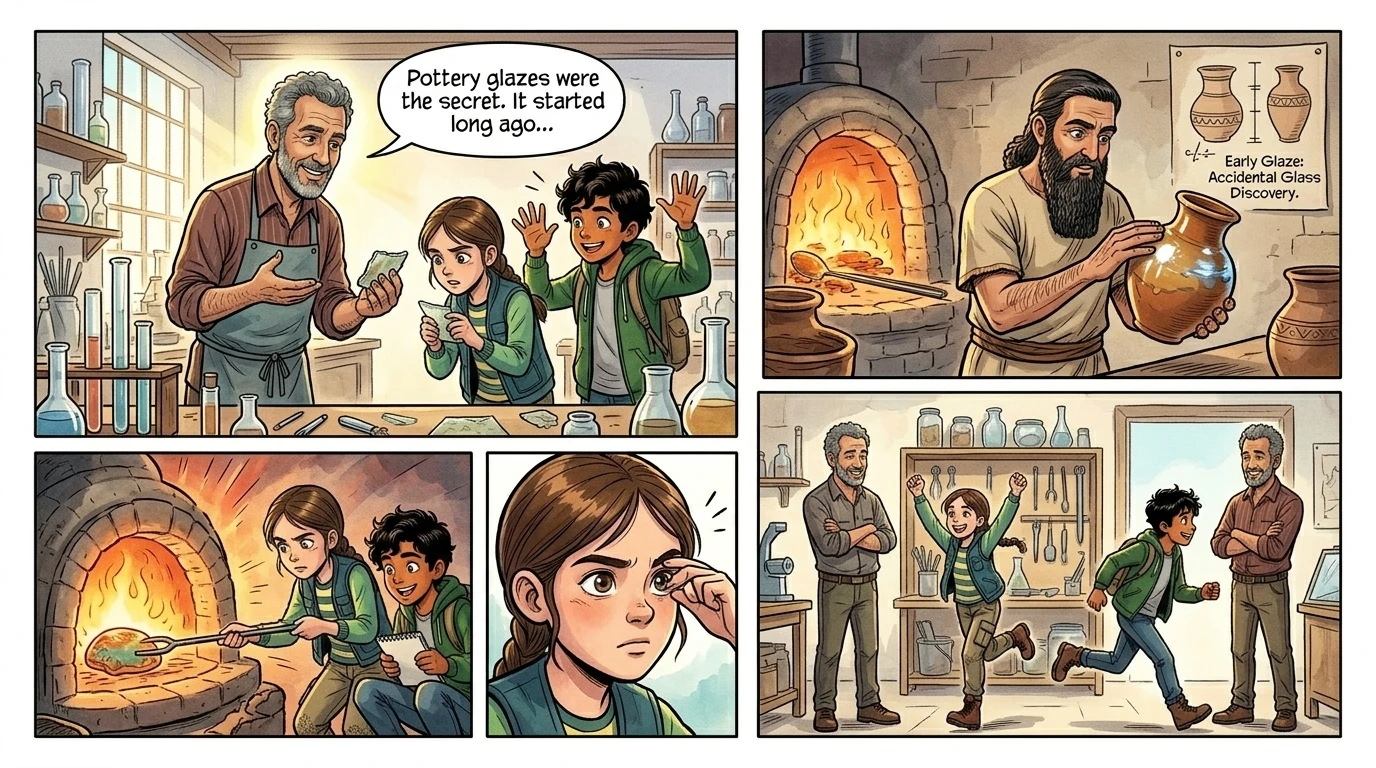
"Those first glassmakers in Mesopotamia weren't scientists like we think of them today," Karim's voice seemed to echo in her thoughts.
"Those first glassmakers in Mesopotamia weren't scientists like we think of them today," Karim's voice seemed to echo in her thoughts. "They were curious potters, experimenting with fire and earth. They found that on super-hot days, the right sand could create a shiny glaze on their clay pots."

"Those first glassmakers in Mesopotamia weren't scientists like we think of them today," Karim's voice seemed to echo in her thoughts. "They were curious potters, experimenting with fire and earth. They found that on super-hot days, the right sand could create a shiny glaze on their clay pots."

Page 5
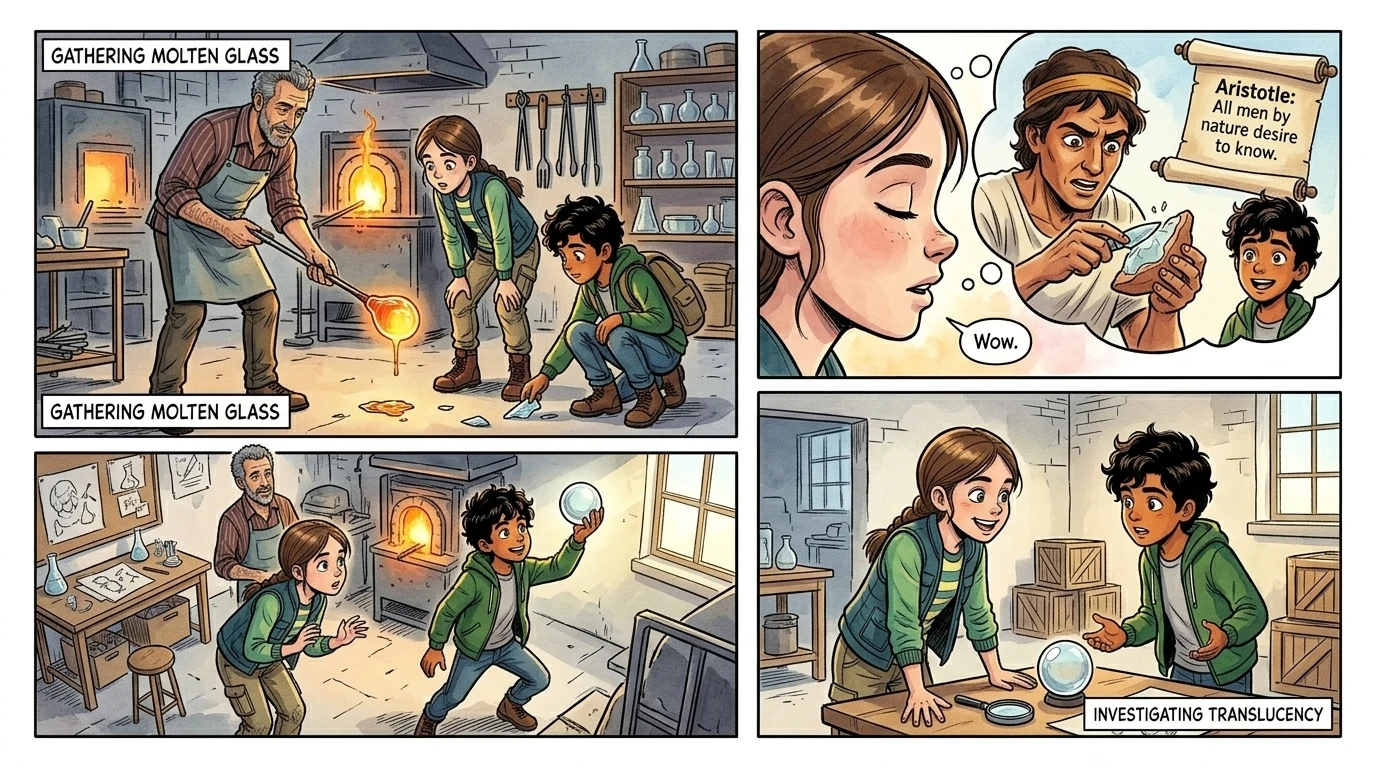
Katya pictured one of them chipping off that first piece of accidental glass. "Wow," she whispered to Omar in her imagination.
Katya pictured one of them chipping off that first piece of accidental glass. "Wow," she whispered to Omar in her imagination. "As the philosopher Aristotle once said, 'All men by nature desire to know.' They must have been so desperate to figure out how they did that!"

Katya pictured one of them chipping off that first piece of accidental glass. "Wow," she whispered to Omar in her imagination. "As the philosopher Aristotle once said, 'All men by nature desire to know.' They must have been so desperate to figure out how they did that!"

Page 6
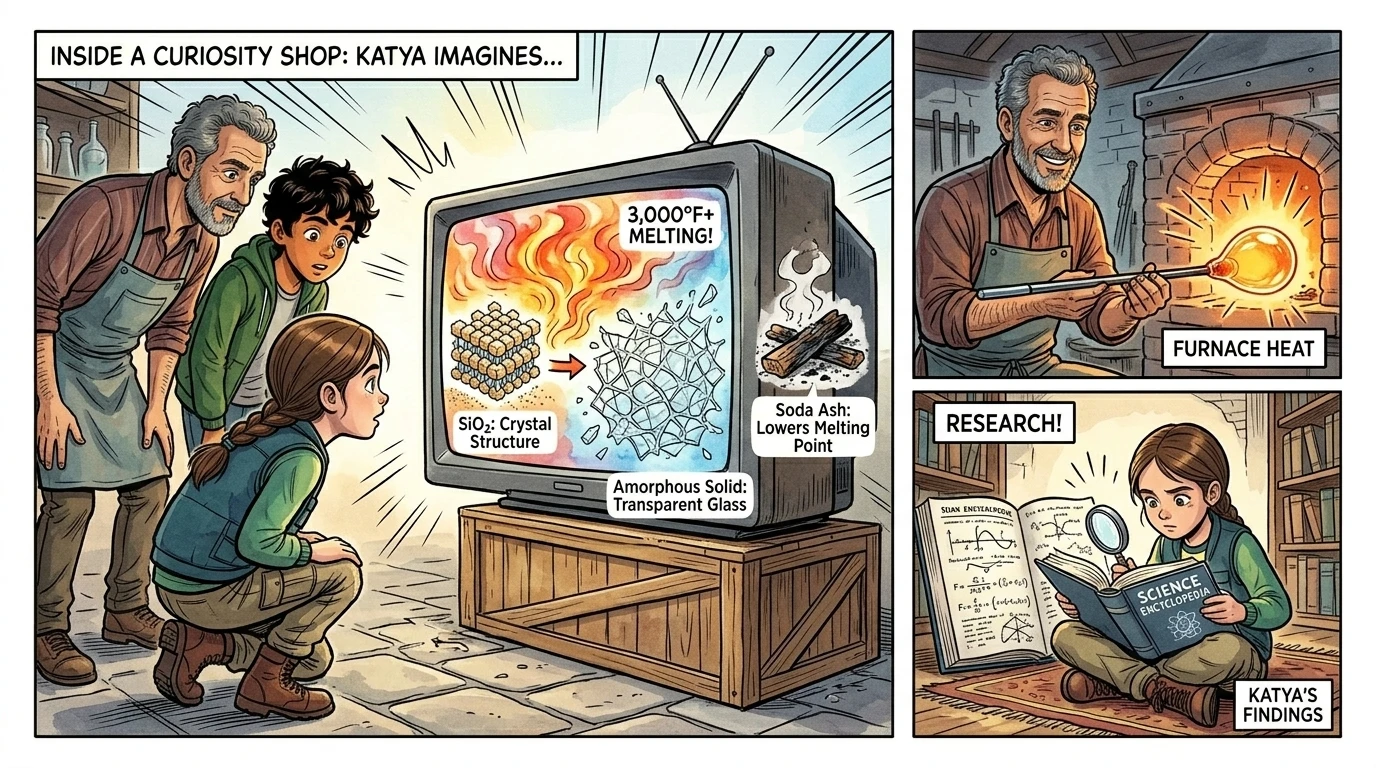
The secret was immense heat, over 3,000 degrees Fahrenheit, enough to shatter sand's crystal structure. "The sand particles, which are called silicon dioxide…
The secret was immense heat, over 3,000 degrees Fahrenheit, enough to shatter sand's crystal structure. "The sand particles, which are called silicon dioxide, unlock from their neat pattern," Katya imagined a science show explaining. "When it cools, it's a mixed-up solid called an amorphous solid—which is what makes it transparent! And adding soda ash, like from those plants, lets you melt it at a lower temperature."

The secret was immense heat, over 3,000 degrees Fahrenheit, enough to shatter sand's crystal structure. "The sand particles, which are called silicon dioxide, unlock from their neat pattern," Katya imagined a science show explaining. "When it cools, it's a mixed-up solid called an amorphous solid—which is what makes it transparent! And adding soda ash, like from those plants, lets you melt it at a lower temperature."

Page 7

That discovery changed everything, from Roman vases to the stained-glass windows of great cathedrals. "Today, it's in everything!" Omar exclaimed.
That discovery changed everything, from Roman vases to the stained-glass windows of great cathedrals. "Today, it's in everything!" Omar exclaimed. "Skyscrapers, telescopes, and even the fiber optic cables that carry the internet! Light takes 8 minutes and 20 seconds to get here from the sun, but it zips through these glass fibers almost instantly!"

That discovery changed everything, from Roman vases to the stained-glass windows of great cathedrals. "Today, it's in everything!" Omar exclaimed. "Skyscrapers, telescopes, and even the fiber optic cables that carry the internet! Light takes 8 minutes and 20 seconds to get here from the sun, but it zips through these glass fibers almost instantly!"

Page 8

Back at the beach, Katya held a piece of Karim's blue glass, feeling its impossible smoothness. "So the sand gets cooked so hot it forgets how to be a crystal,"…
Back at the beach, Katya held a piece of Karim's blue glass, feeling its impossible smoothness. "So the sand gets cooked so hot it forgets how to be a crystal," she explained to Omar. "And that plant ash Karim mentioned is the trick that helps it all melt together!" Omar stared from the glass in her hand to the billions of grains of sand on the beach. "That is officially mind-blowing."

Back at the beach, Katya held a piece of Karim's blue glass, feeling its impossible smoothness. "So the sand gets cooked so hot it forgets how to be a crystal," she explained to Omar. "And that plant ash Karim mentioned is the trick that helps it all melt together!" Omar stared from the glass in her hand to the billions of grains of sand on the beach. "That is officially mind-blowing."

Page 9

"Once you know, you see it everywhere," Karim said, gesturing to the city behind them. "The windshield on that bus, the screen on your phone, even the…
"Once you know, you see it everywhere," Karim said, gesturing to the city behind them. "The windshield on that bus, the screen on your phone, even the lightbulbs that will light up the pier tonight." Omar suddenly gasped, pointing to Katya's face. "Even the lenses in my glasses! I'm looking at you through melted sand right now!"

"Once you know, you see it everywhere," Karim said, gesturing to the city behind them. "The windshield on that bus, the screen on your phone, even the lightbulbs that will light up the pier tonight." Omar suddenly gasped, pointing to Katya's face. "Even the lenses in my glasses! I'm looking at you through melted sand right now!"

Page 10

"So glass is just super-hot, melted sand that cools down too fast to turn back into crystals," Katya said, summing it all up.
"So glass is just super-hot, melted sand that cools down too fast to turn back into crystals," Katya said, summing it all up. Omar stared out at the crashing waves, a new question already forming. "If heat changes sand this much," he wondered aloud, "what does the cold, deep ocean do to things... and how does sound even travel all the way down there?"

"So glass is just super-hot, melted sand that cools down too fast to turn back into crystals," Katya said, summing it all up. Omar stared out at the crashing waves, a new question already forming. "If heat changes sand this much," he wondered aloud, "what does the cold, deep ocean do to things... and how does sound even travel all the way down there?"

About this story

  • Location: United States
  • Audience: kids (ages 6–12)

Questions and answers

Questions and answers about How Glass is Made from Sand

Read Wonder Science on your phone

Wonder Science is available on Android. Get Wonder Science on Google Play.

More Wonder Science stories

All Wonder Science stories · Open the library