How Stars Are Born

How Stars Are Born — an illustrated science story, set in United States. 10 illustrated pages, free to read on Wonder Science.
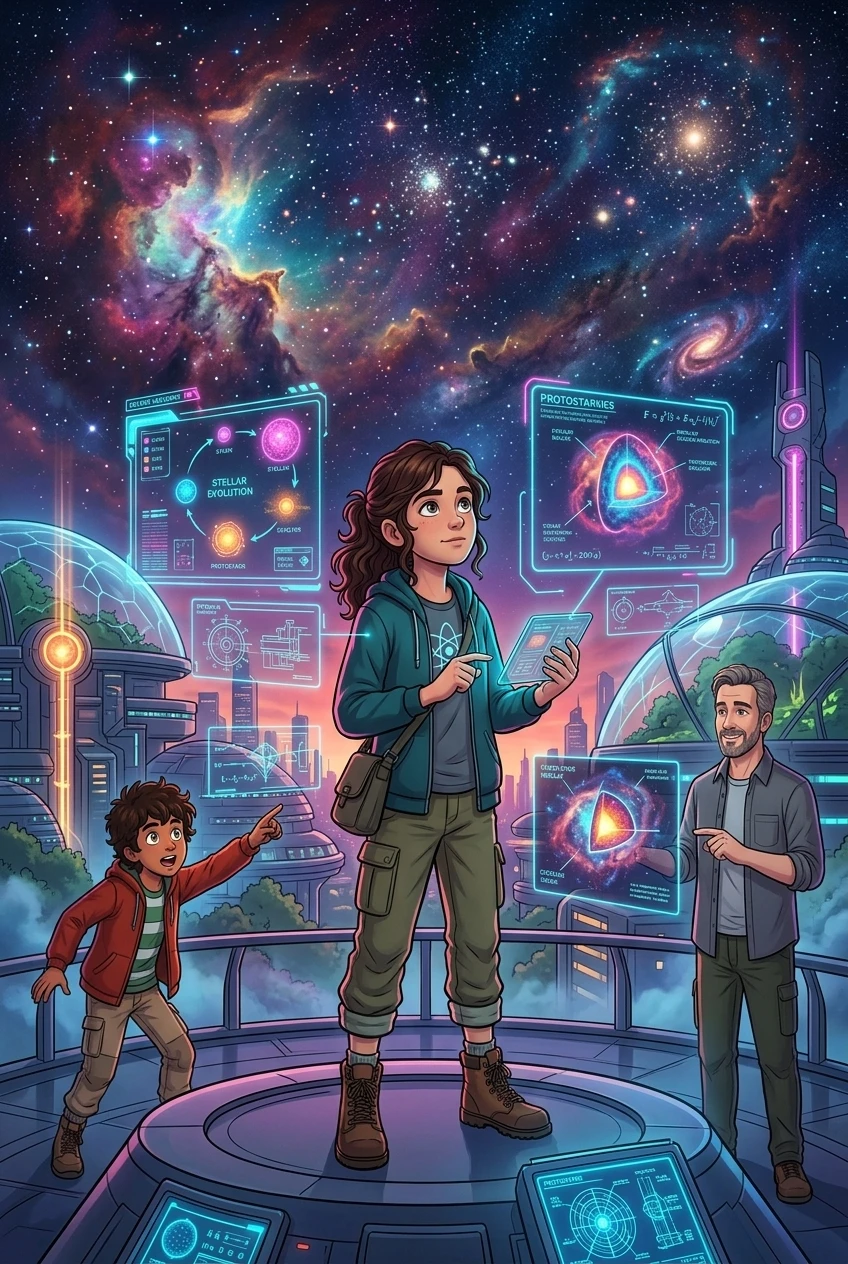
How Stars Are Born — book cover — Wonder Science
How Stars Are Born — an illustrated science story, set in United States. 10 illustrated pages, free to read on Wonder Science.

Page 1
In the city of Melodia, great brass gears turned to the rhythm of a thousand chiming clocks. "We have to hurry!" shouted Aya, pulling her father's hand as dark…
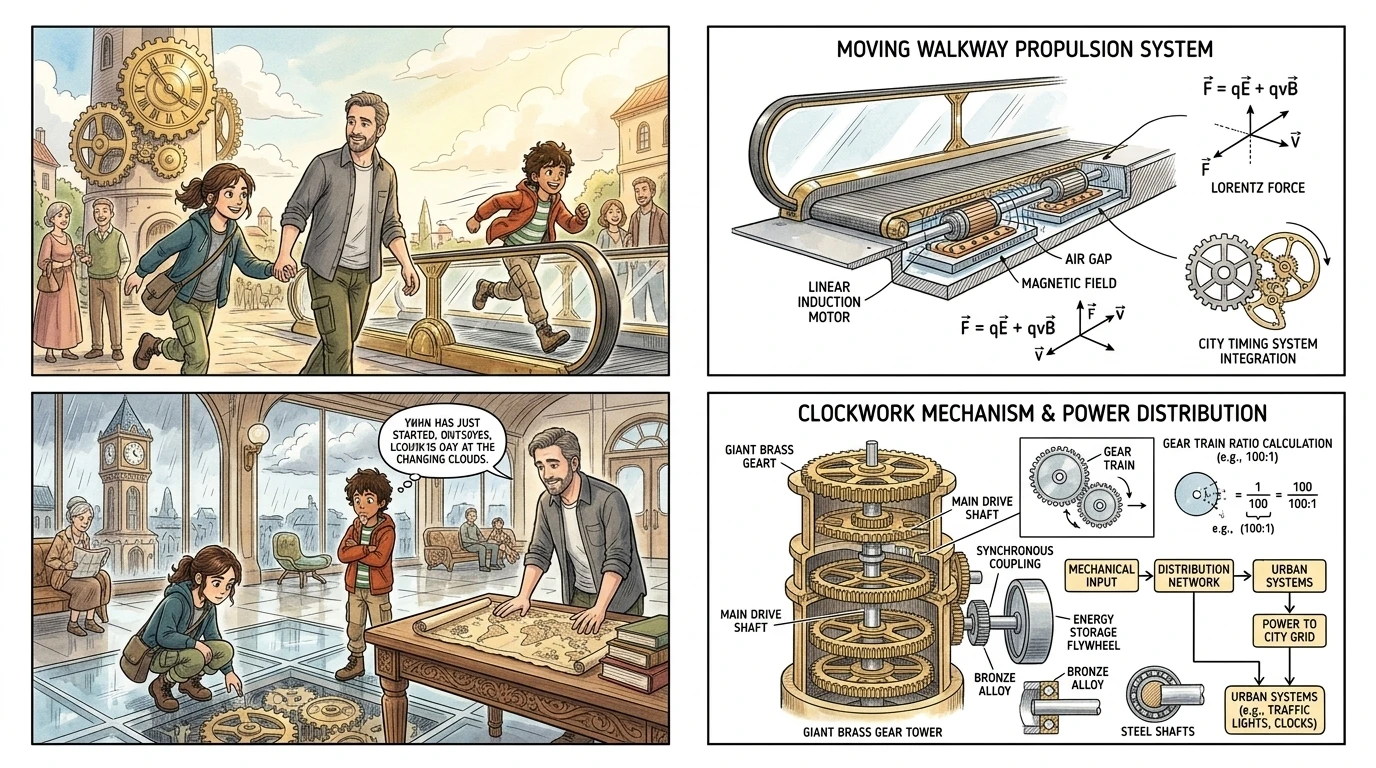
In the city of Melodia, great brass gears turned to the rhythm of a thousand chiming clocks. "We have to hurry!" shouted Aya, pulling her father's hand as dark clouds gathered above the gleaming rooftops. Her friend Vivaan zipped ahead on the moving walkway, laughing as the wind whipped his jacket. "The storm is coming faster than the city's music!"

In the city of Melodia, great brass gears turned to the rhythm of a thousand chiming clocks. "We have to hurry!" shouted Aya, pulling her father's hand as dark clouds gathered above the gleaming rooftops. Her friend Vivaan zipped ahead on the moving walkway, laughing as the wind whipped his jacket. "The storm is coming faster than the city's music!"

Page 2
The great dome of the observatory clicked shut just as the first drops of rain hit the glass. "Phew, we made it!" Vivaan said, pressing his face against a…
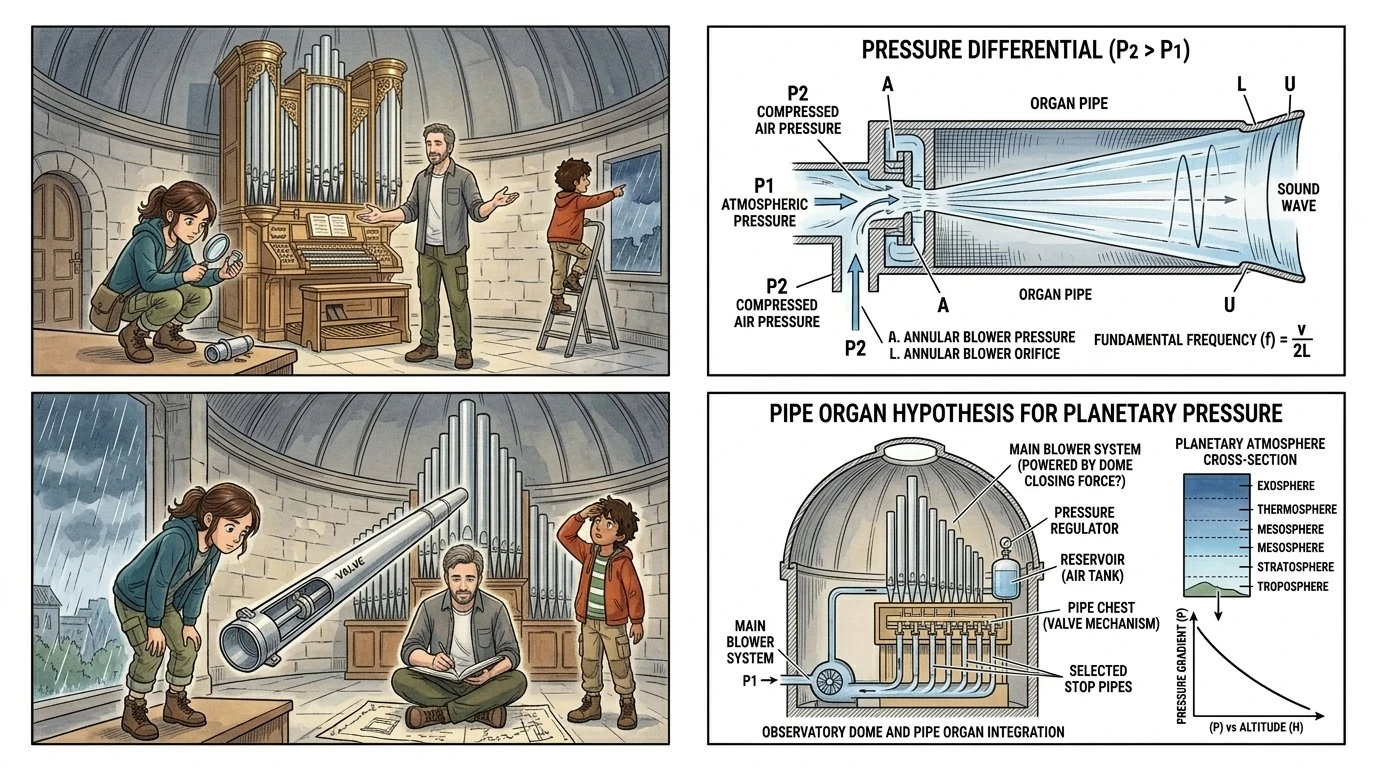
The great dome of the observatory clicked shut just as the first drops of rain hit the glass. "Phew, we made it!" Vivaan said, pressing his face against a window. "The clouds are hiding all the stars. Father, where do new stars even come from?" Aya's father smiled and pointed to a giant, intricate pipe organ built into the observatory wall. "It's a bit like how this instrument makes music, Vivaan. It all starts with putting things under pressure."

The great dome of the observatory clicked shut just as the first drops of rain hit the glass. "Phew, we made it!" Vivaan said, pressing his face against a window. "The clouds are hiding all the stars. Father, where do new stars even come from?" Aya's father smiled and pointed to a giant, intricate pipe organ built into the observatory wall. "It's a bit like how this instrument makes music, Vivaan. It all starts with putting things under pressure."

Page 3
Father brought up a shimmering image on the main star-viewer, a swirling cloud of pink and purple gas. "Out in space, there are colossal clouds called nebulae…
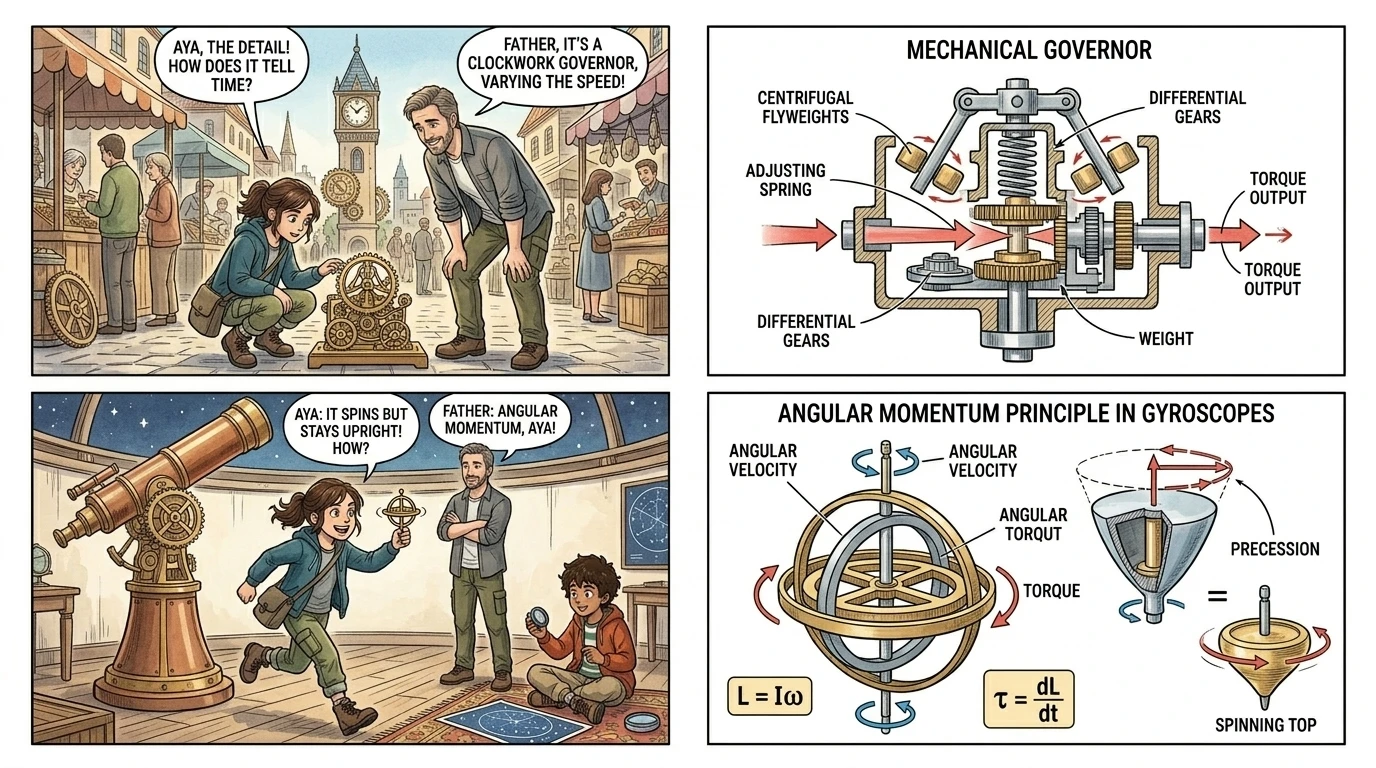
Father brought up a shimmering image on the main star-viewer, a swirling cloud of pink and purple gas. "Out in space, there are colossal clouds called nebulae, far bigger than any storm on Earth," he explained. Aya leaned closer, her eyes wide with fascination. "It looks like cosmic cotton candy!" she whispered.

Father brought up a shimmering image on the main star-viewer, a swirling cloud of pink and purple gas. "Out in space, there are colossal clouds called nebulae, far bigger than any storm on Earth," he explained. Aya leaned closer, her eyes wide with fascination. "It looks like cosmic cotton candy!" she whispered.

Page 4
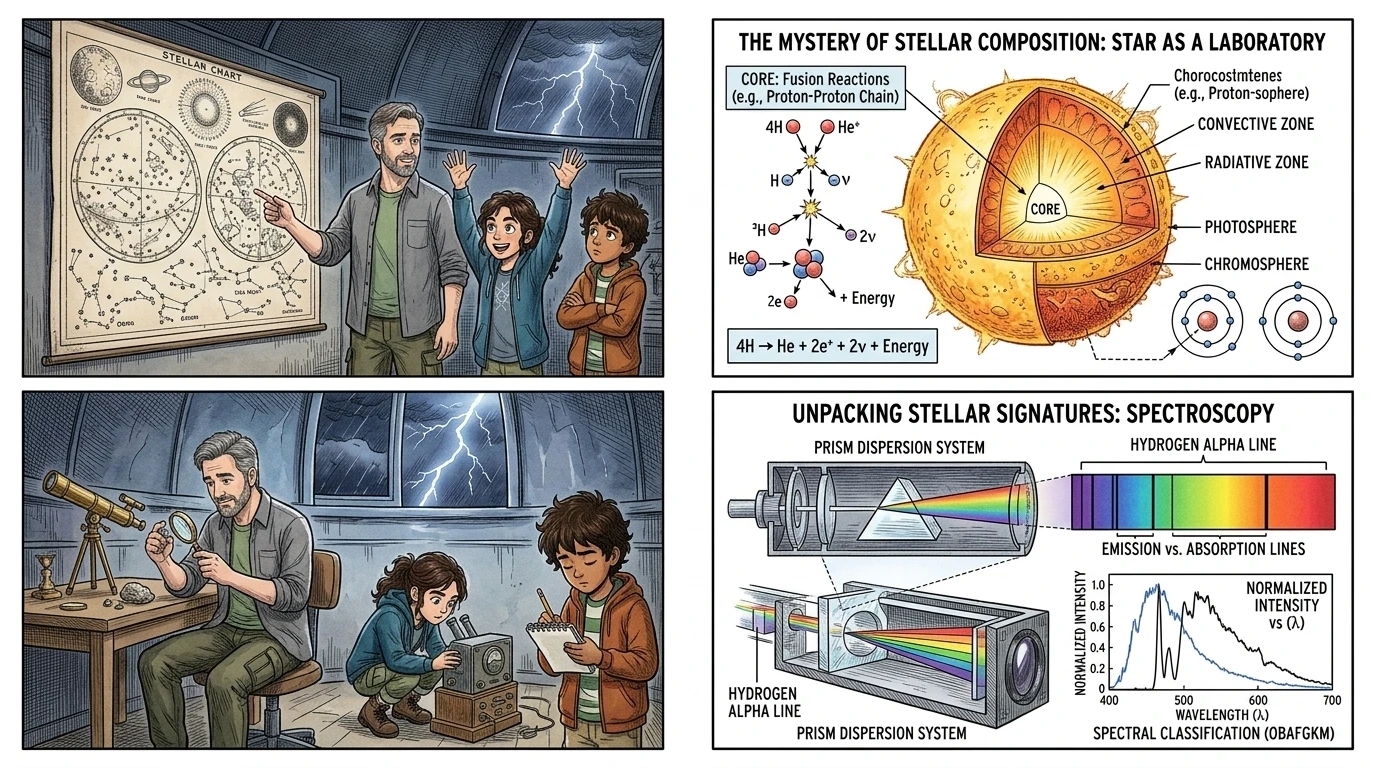
Thunder rumbled outside, shaking the observatory floor. "For centuries, solving the mystery of what stars are made of seemed impossible," Father said, his voice…
Thunder rumbled outside, shaking the observatory floor. "For centuries, solving the mystery of what stars are made of seemed impossible," Father said, his voice calm. "Scientists could see them, but they couldn't touch them. They needed a new way to understand the light itself."

Thunder rumbled outside, shaking the observatory floor. "For centuries, solving the mystery of what stars are made of seemed impossible," Father said, his voice calm. "Scientists could see them, but they couldn't touch them. They needed a new way to understand the light itself."

Page 5
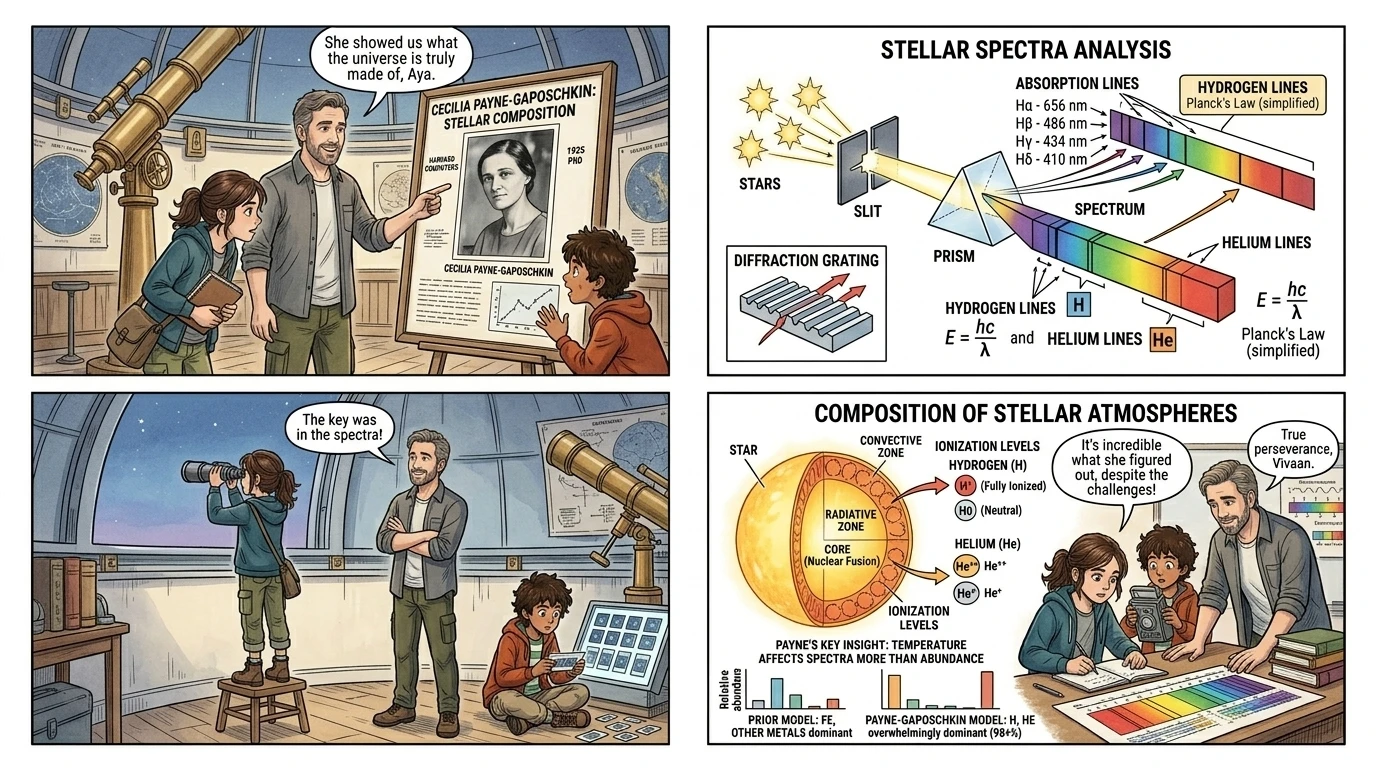
"Then came a brilliant astronomer named Cecilia Payne-Gaposchkin in the 1920s," Father continued, pulling up her photograph.
"Then came a brilliant astronomer named Cecilia Payne-Gaposchkin in the 1920s," Father continued, pulling up her photograph. "She faced a huge challenge, as many didn't believe a woman could make such a discovery. But she was persistent and proved that the same elements exist in stars as on Earth, just in very different amounts."

"Then came a brilliant astronomer named Cecilia Payne-Gaposchkin in the 1920s," Father continued, pulling up her photograph. "She faced a huge challenge, as many didn't believe a woman could make such a discovery. But she was persistent and proved that the same elements exist in stars as on Earth, just in very different amounts."

Page 6
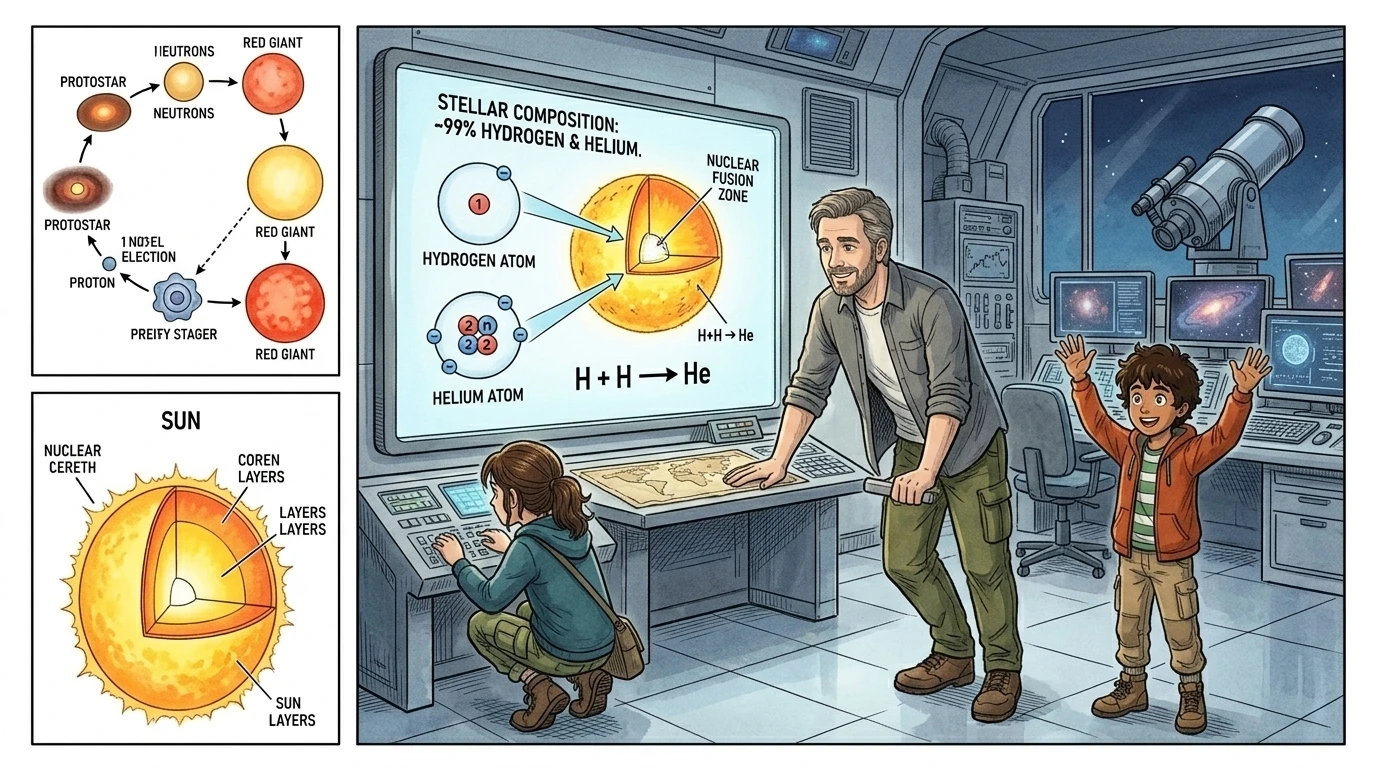
"Cecilia Payne proved that stars are almost entirely made of two simple gases: hydrogen and helium!" Father declared, showing a diagram of atoms.
"Cecilia Payne proved that stars are almost entirely made of two simple gases: hydrogen and helium!" Father declared, showing a diagram of atoms. "This was the key that unlocked everything. It meant those giant nebulae were not just pretty clouds; they were gigantic fuel tanks waiting to ignite."

"Cecilia Payne proved that stars are almost entirely made of two simple gases: hydrogen and helium!" Father declared, showing a diagram of atoms. "This was the key that unlocked everything. It meant those giant nebulae were not just pretty clouds; they were gigantic fuel tanks waiting to ignite."

Page 7
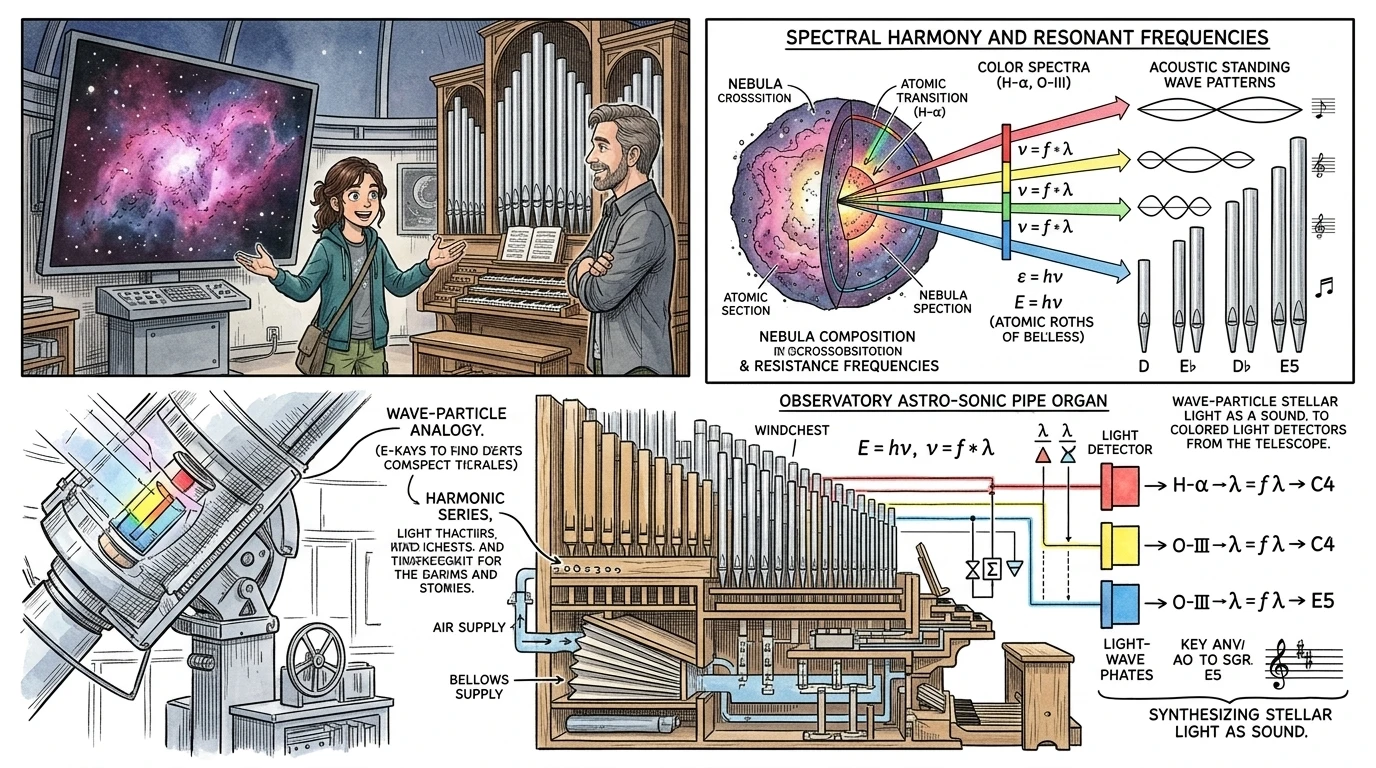
Aya's eyes lit up as she made the connection. "Wait! So the gas in a nebula is like the air in the pipe organ?" she asked excitedly.
Aya's eyes lit up as she made the connection. "Wait! So the gas in a nebula is like the air in the pipe organ?" she asked excitedly. "Does something squeeze the gas together to make a star, just like the organ squeezes air to make a sound?"

Aya's eyes lit up as she made the connection. "Wait! So the gas in a nebula is like the air in the pipe organ?" she asked excitedly. "Does something squeeze the gas together to make a star, just like the organ squeezes air to make a sound?"

Page 8
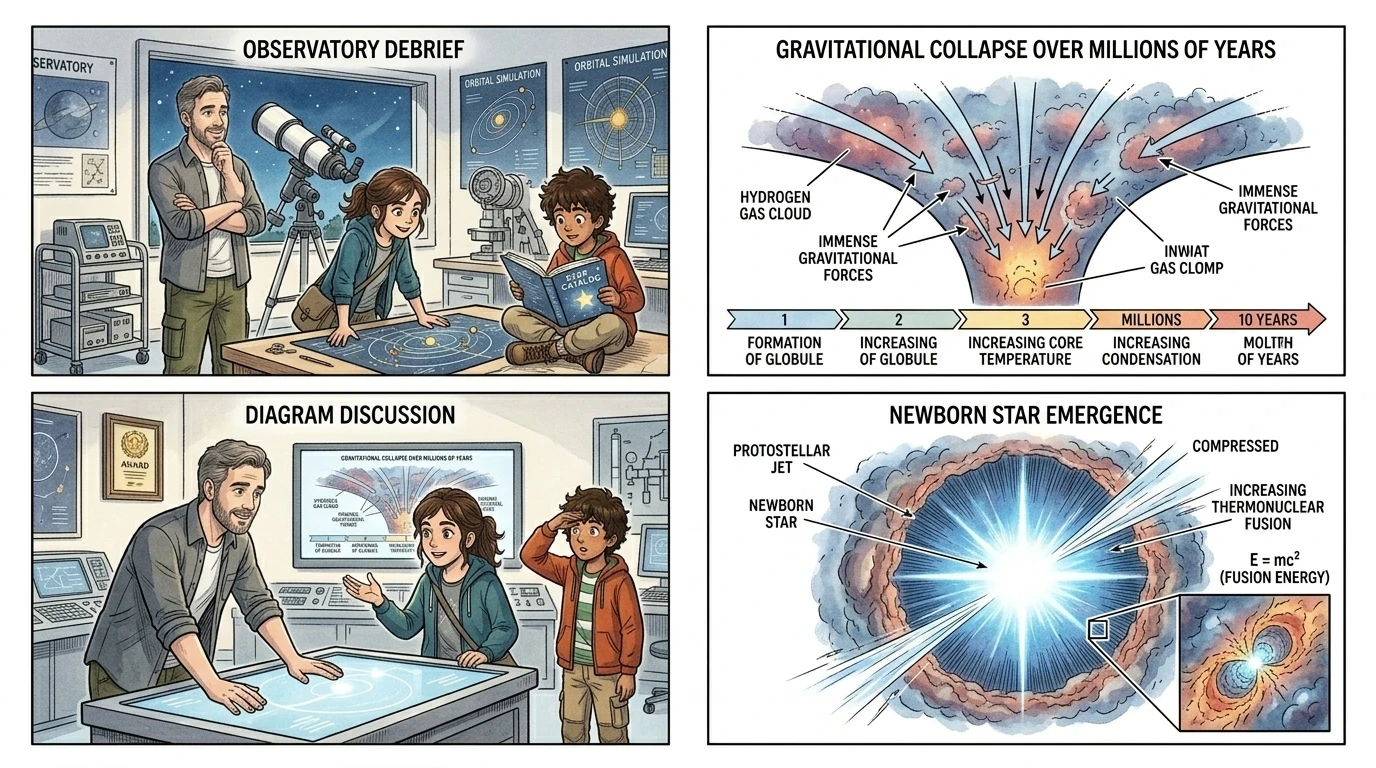
"Exactly!" her father beamed. "The musician for the stars is gravity. It pulls clumps of hydrogen gas together, squeezing them tighter and tighter for millions…
"Exactly!" her father beamed. "The musician for the stars is gravity. It pulls clumps of hydrogen gas together, squeezing them tighter and tighter for millions of years. Eventually, the pressure and heat become so immense that a new star flares to life!"

"Exactly!" her father beamed. "The musician for the stars is gravity. It pulls clumps of hydrogen gas together, squeezing them tighter and tighter for millions of years. Eventually, the pressure and heat become so immense that a new star flares to life!"

Page 9
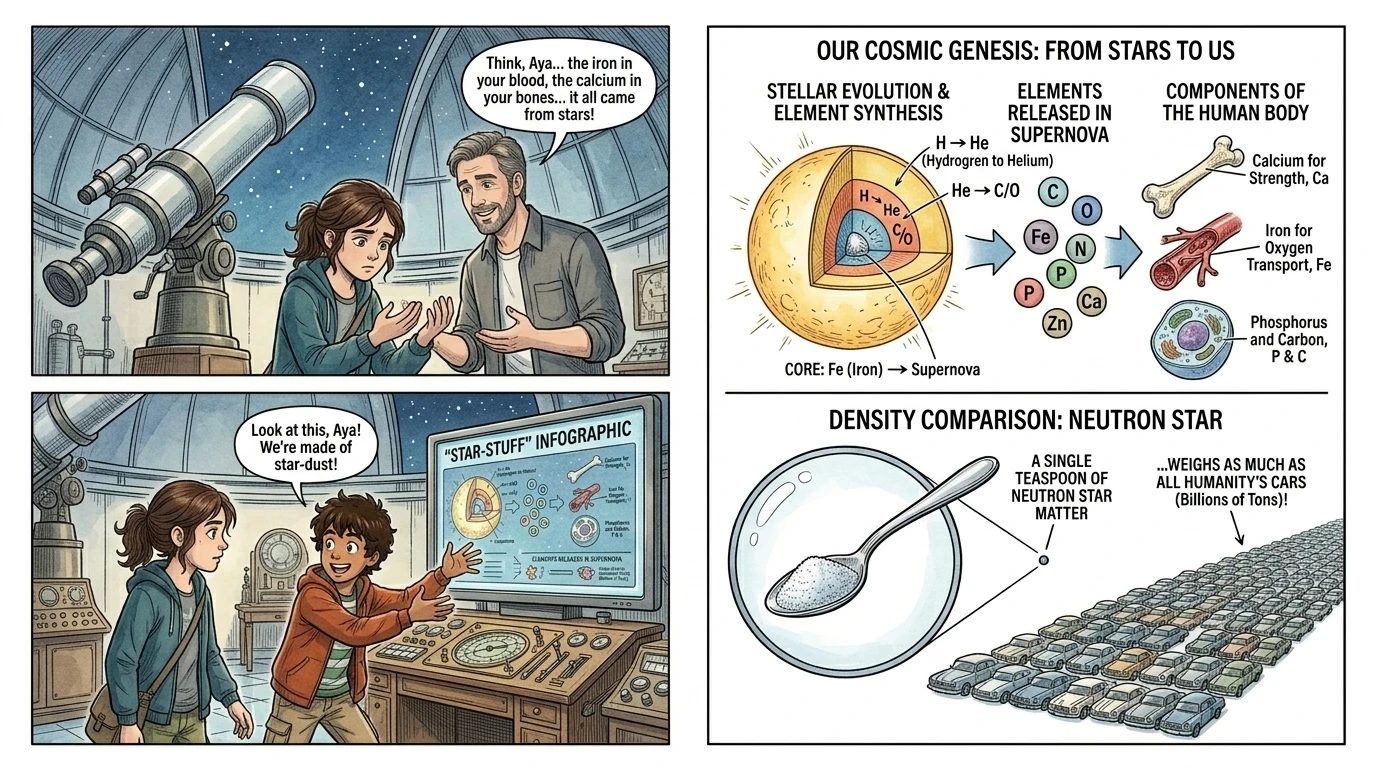
"So that's what the astronomer Carl Sagan meant," Aya mused, looking at her hands. "When he said, 'We are made of star-stuff,' he meant the elements created…
"So that's what the astronomer Carl Sagan meant," Aya mused, looking at her hands. "When he said, 'We are made of star-stuff,' he meant the elements created inside stars eventually formed everything, including us!" Vivaan jumped in, "And when those stars get old, a teaspoon of one, a neutron star, would weigh six billion tons! That's heavier than every car on Earth!"

"So that's what the astronomer Carl Sagan meant," Aya mused, looking at her hands. "When he said, 'We are made of star-stuff,' he meant the elements created inside stars eventually formed everything, including us!" Vivaan jumped in, "And when those stars get old, a teaspoon of one, a neutron star, would weigh six billion tons! That's heavier than every car on Earth!"

Page 10
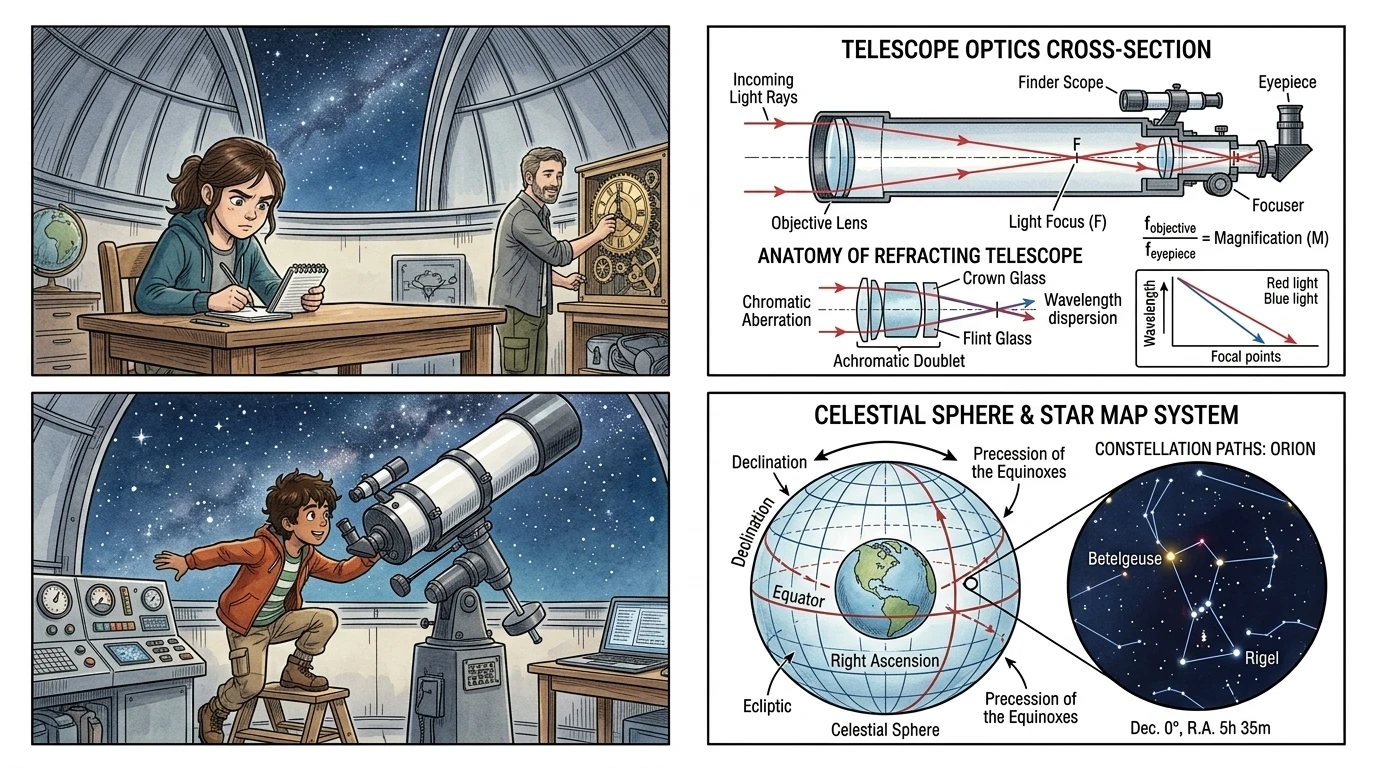
The storm finally passed, and the observatory dome began to open, revealing a sky washed clean and filled with twinkling lights.
The storm finally passed, and the observatory dome began to open, revealing a sky washed clean and filled with twinkling lights. "So, stars are born when gravity squeezes giant clouds of gas together," Aya summarized, writing it down. Vivaan, already gazing through a telescope, called out, "If that's how they're born, what happens when the biggest stars run out of gas?"

The storm finally passed, and the observatory dome began to open, revealing a sky washed clean and filled with twinkling lights. "So, stars are born when gravity squeezes giant clouds of gas together," Aya summarized, writing it down. Vivaan, already gazing through a telescope, called out, "If that's how they're born, what happens when the biggest stars run out of gas?"

About this story

  • Location: United States
  • Audience: kids (ages 6–12)

Questions and answers

Questions and answers about How Stars Are Born

Read Wonder Science on your phone

Wonder Science is available on Android. Get Wonder Science on Google Play.

More Wonder Science stories

All Wonder Science stories · Open the library