Ignaz Semmelweis
Ignaz Semmelweis — an illustrated science story, set in Global. 10 illustrated pages, free to read on Wonder Science.
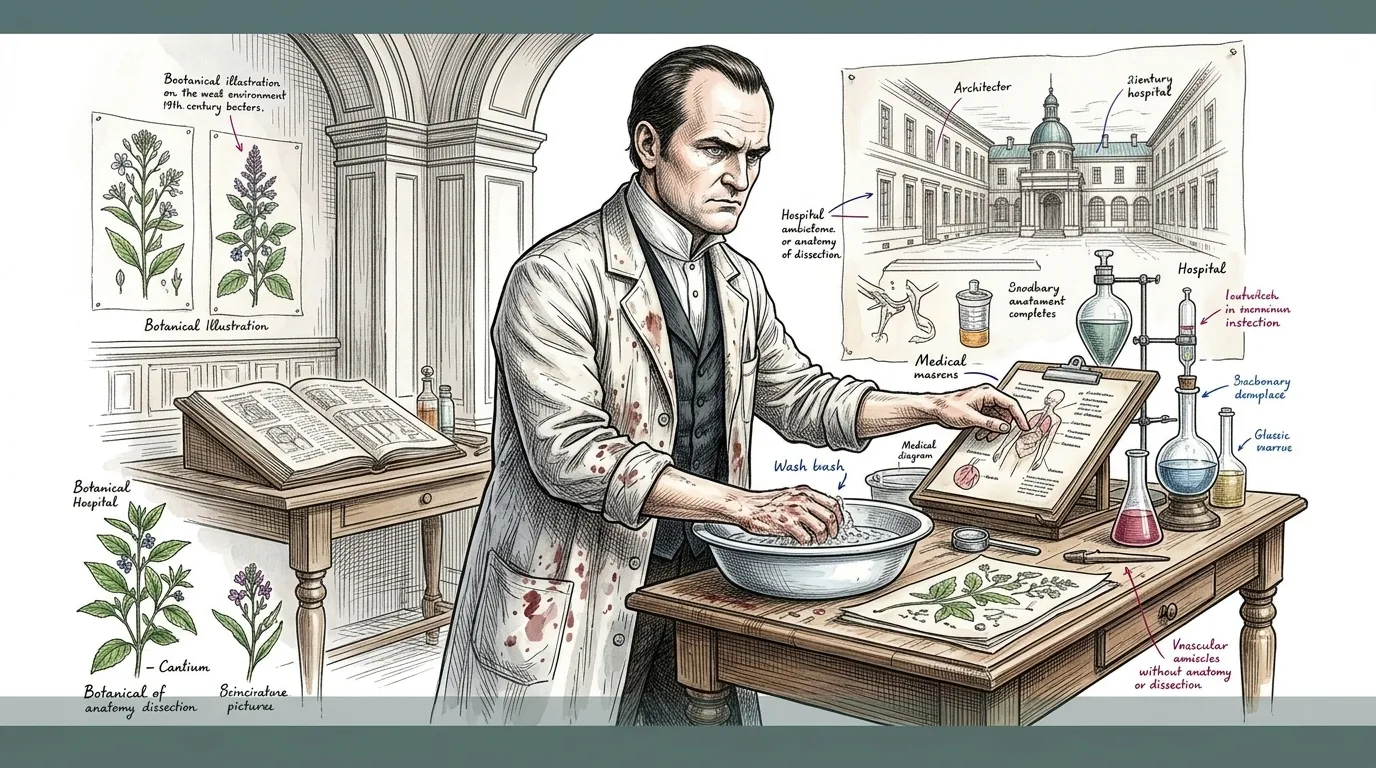
Page 1
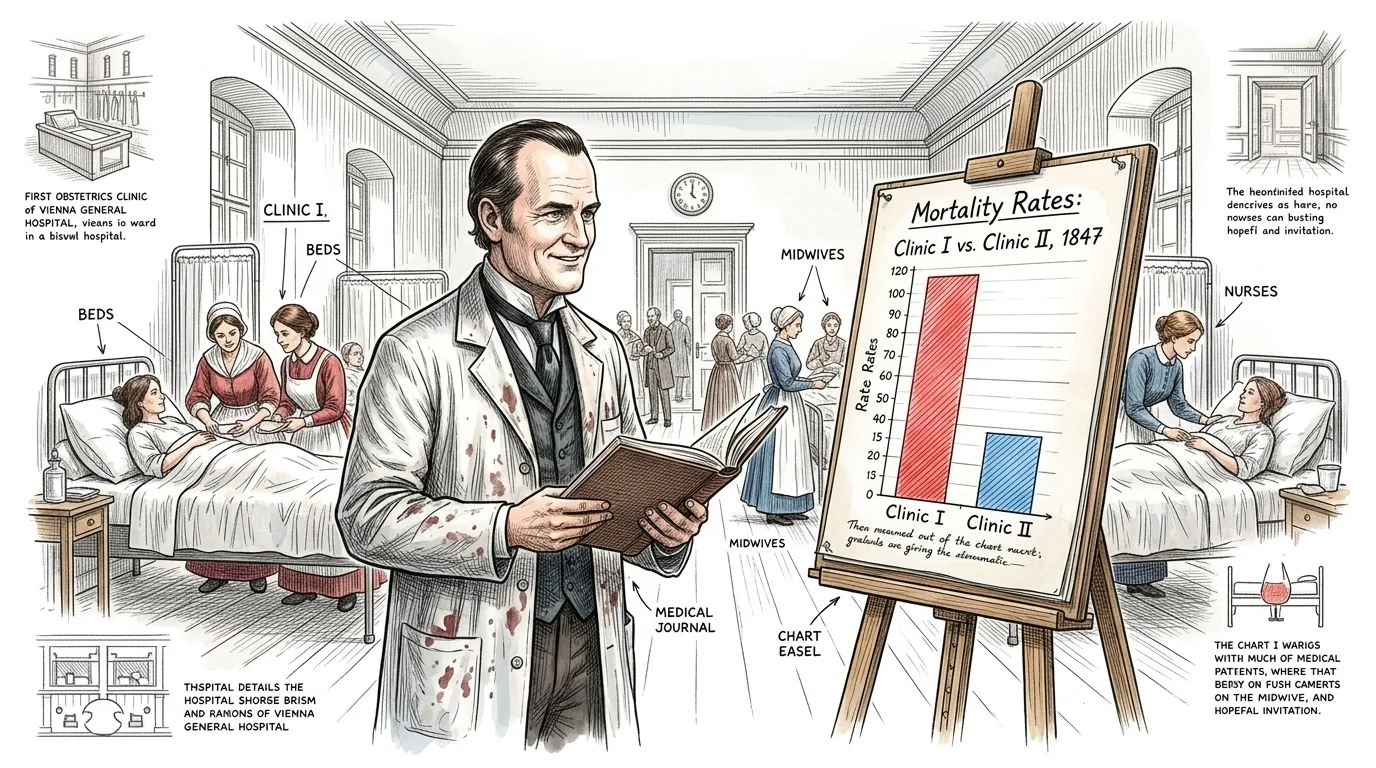
In the bustling, grim realities of mid-19th century Vienna, a silent, pervasive terror stalked the maternity wards. Puerperal fever, or childbed fever, claimed the lives of countless new mothers, leaving families shattered and medical professionals bewildered. At Vienna General Hospital, mortality rates in the First Obstetrics Clinic soared, often exceeding ten percent, a stark and horrifying contrast to the comparatively safer Second Clinic.\n\n Fact: Vienna General Hospital, 1847. Dr. Ignaz Semmelweis confronts the deadly mystery of puerperal fever.
Page 2
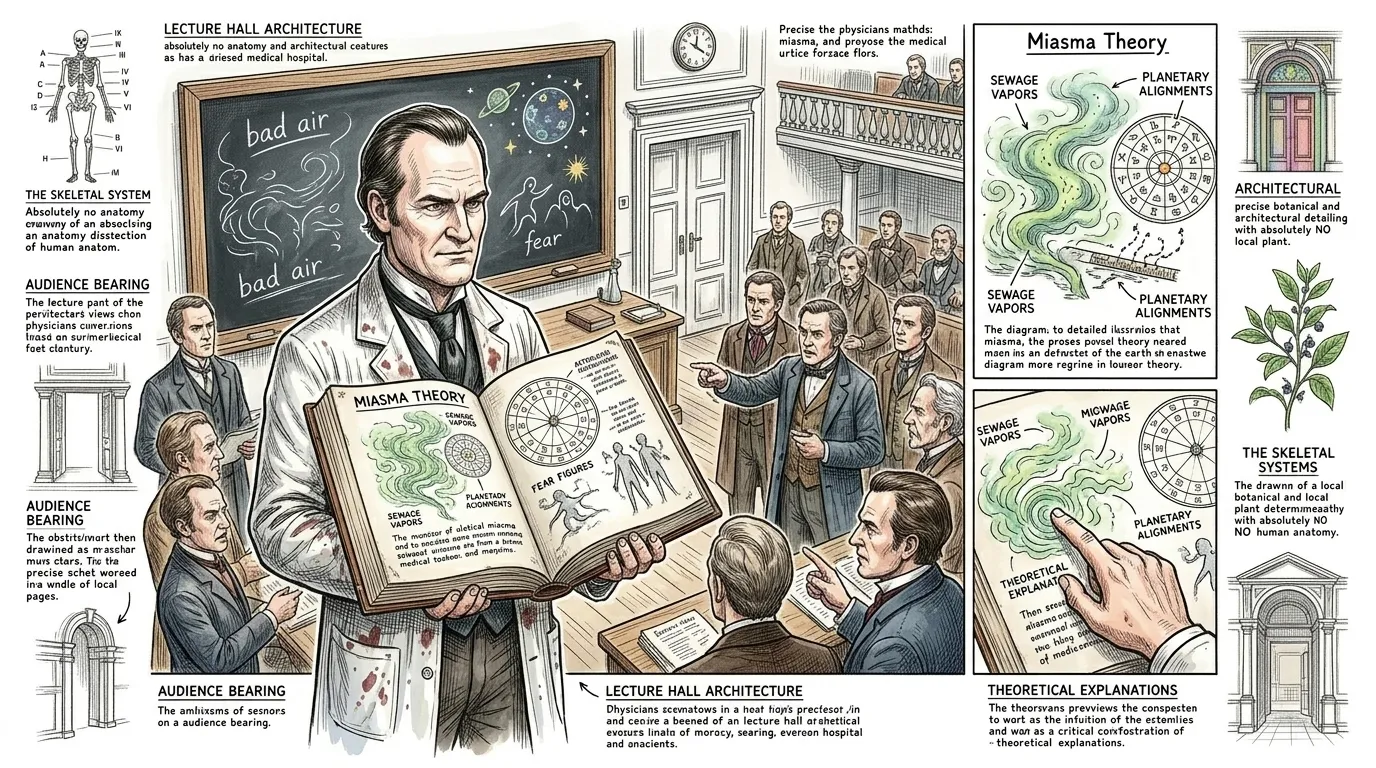
Puerperal fever was not merely a disease; it was a devastating epidemic that swept through maternity institutions across Europe. Its symptoms — high fever, severe abdominal pain, and rapid progression to death — were terrifyingly consistent. For centuries, its cause remained elusive, attributed to everything from miasmas or 'bad air' to atmospheric-telluric influences, or even the fear and shame of the patients themselves. This lack of understanding fueled helplessness and fear, locking medicine in a cycle of speculation and despair.\n\n Fact: Prevailing theories: Miasma, cosmic influences, and fatalistic resignation.
Page 3
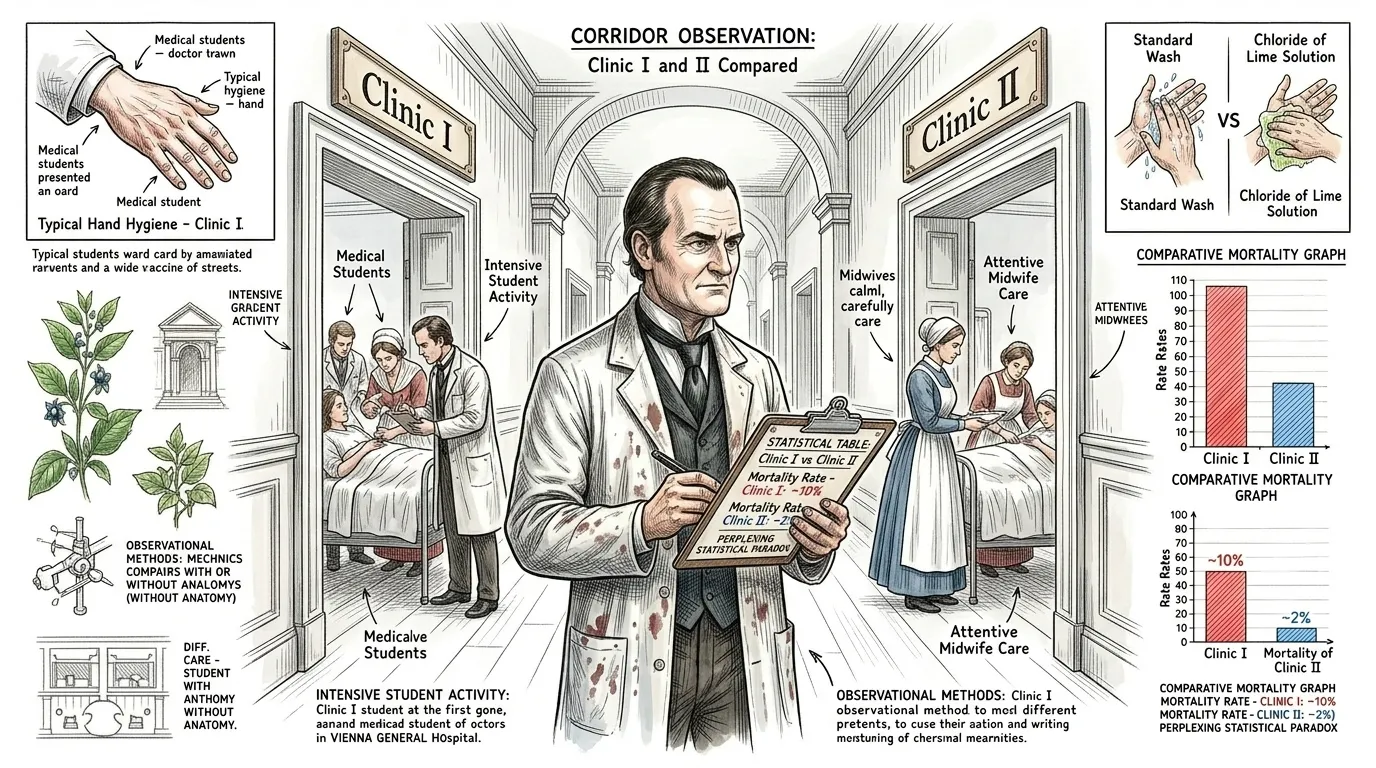
Semmelweis, appointed to the First Obstetrics Clinic at Vienna General, was confronted daily with this horrific reality. He meticulously observed the procedures in both clinics. The First Clinic, where medical students received training alongside doctors, consistently reported far higher mortality rates than the Second Clinic, staffed primarily by midwives. This stark, statistically significant difference was a profound anomaly, a puzzle that defied all current medical explanations. Why would two clinics, operating in the same hospital, under similar conditions, yield such divergent outcomes?\n\n Fact: Clinic I vs. Clinic II: A perplexing statistical paradox.
Page 4
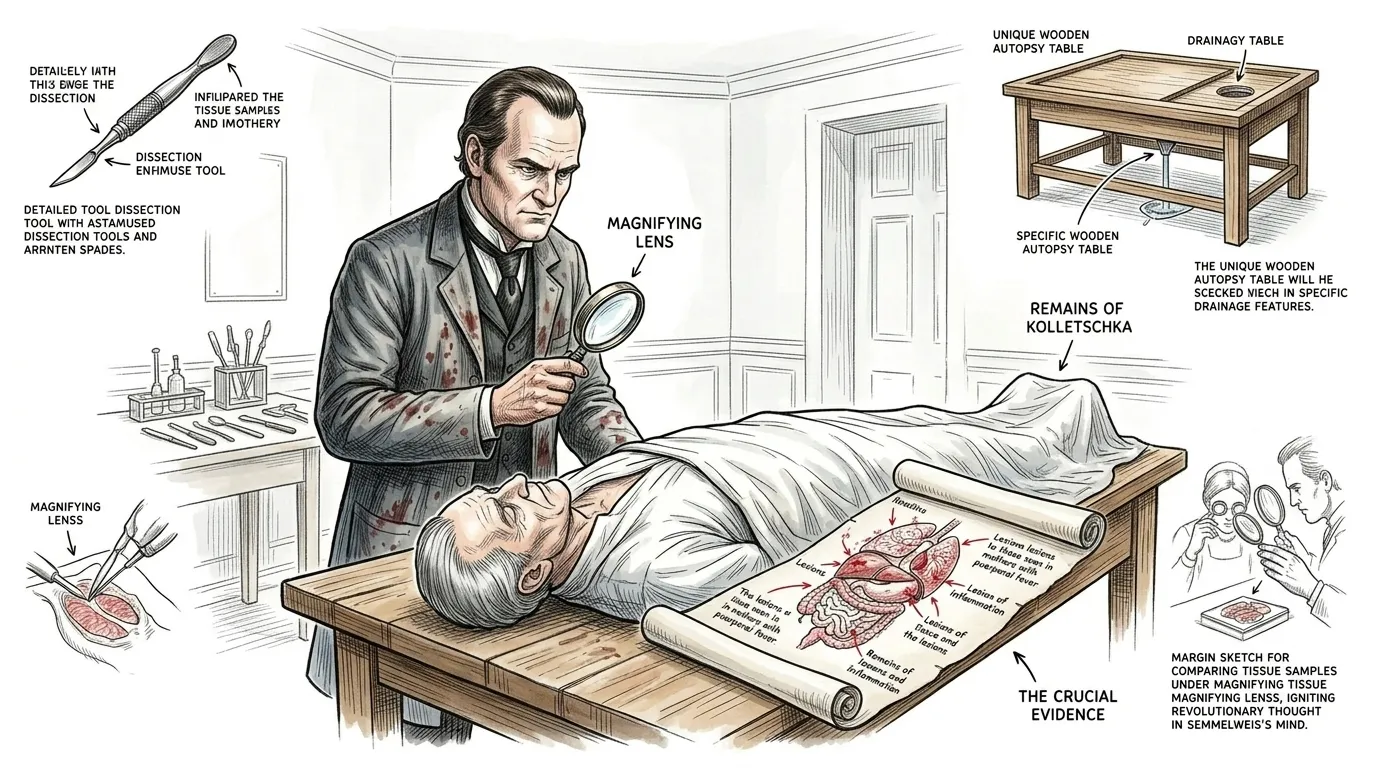
The turning point arrived with a tragedy that struck close to home. In 1847, Jakob Kolletschka, a professor of forensic medicine and a colleague of Semmelweis, died after sustaining a wound during an autopsy. Semmelweis observed Kolletschka's autopsy findings: inflammation, fever, and lesions strikingly similar to those found in mothers who succumbed to puerperal fever. This direct, tangible link ignited a revolutionary thought: could something from the autopsy room, an unseen, insidious agent, be transferred to the patients?\n\n Fact: Kolletschka's death: A critical link between autopsy and disease.
Page 5
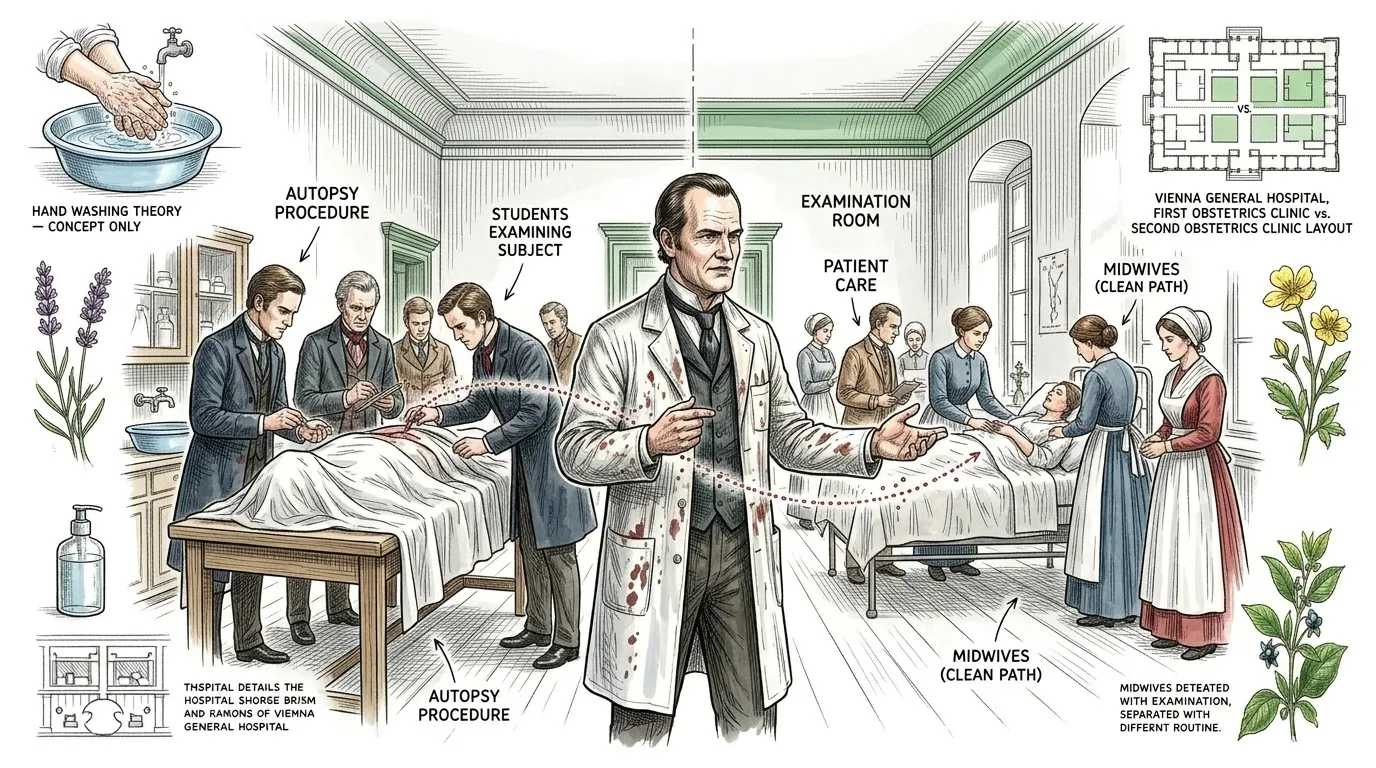
Semmelweis theorized that 'cadaveric particles' — microscopic fragments or substances from cadavers — were being transferred on the unwashed hands of doctors and medical students. These students frequently moved directly from performing autopsies in the morgue to examining expectant mothers in the First Clinic, often without any form of hand cleansing. Midwives, however, did not participate in autopsies. This stark difference in routine perfectly explained the disparity in mortality rates. The unseen killer wasn't miasma; it was contamination.\n\n Fact: The unseen enemy: Contamination carried by unwashed hands.
Page 6
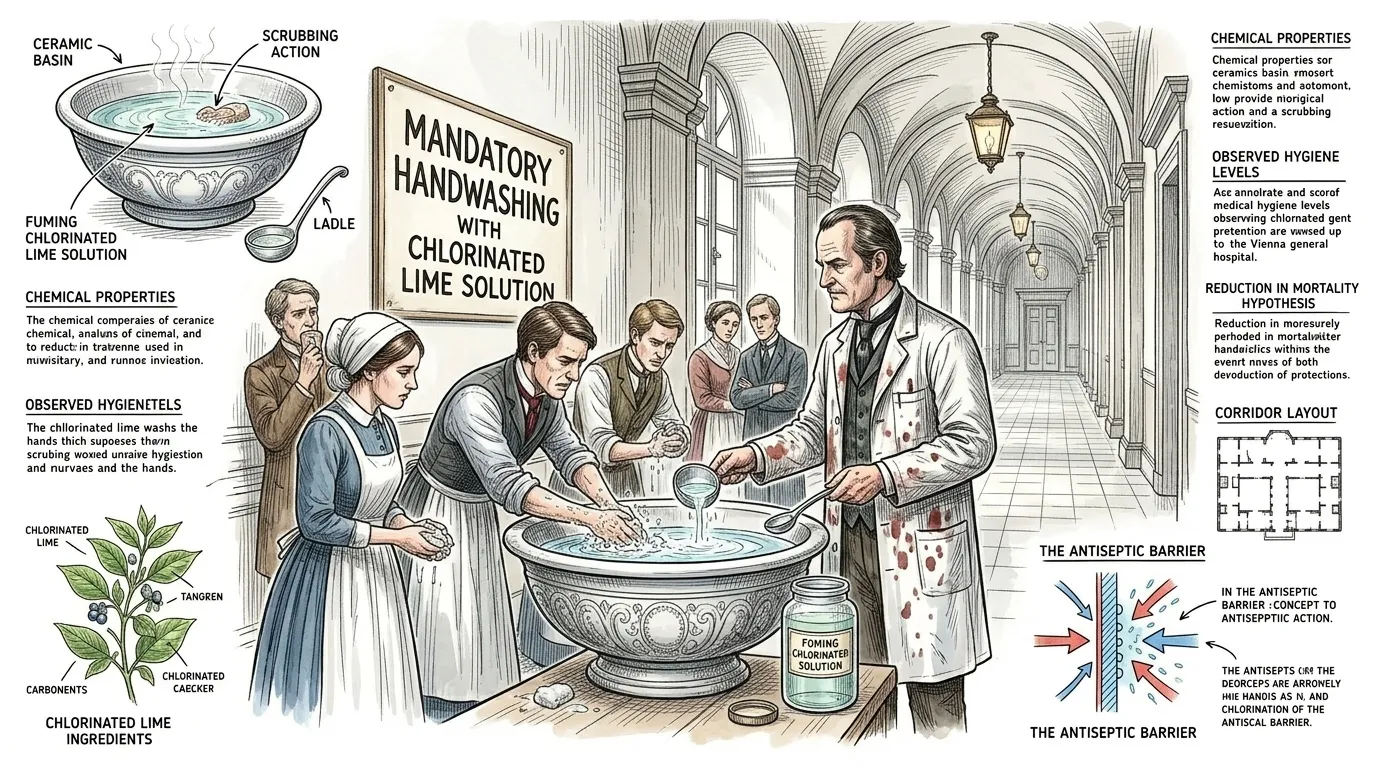
With his hypothesis formulated, Semmelweis introduced a radical mandate: mandatory handwashing with chlorinated lime solution for all medical personnel before examining patients. This was not a pleasant ritual; chlorinated lime was harsh and caustic. Yet, Semmelweis insisted. He believed the chemical's strong antiseptic properties could effectively neutralize the 'cadaveric particles.' It was a simple, yet profoundly disruptive intervention that challenged centuries of medical custom and personal comfort.\n\n Fact: Chlorinated lime: A harsh, but effective, antiseptic intervention.
Page 7
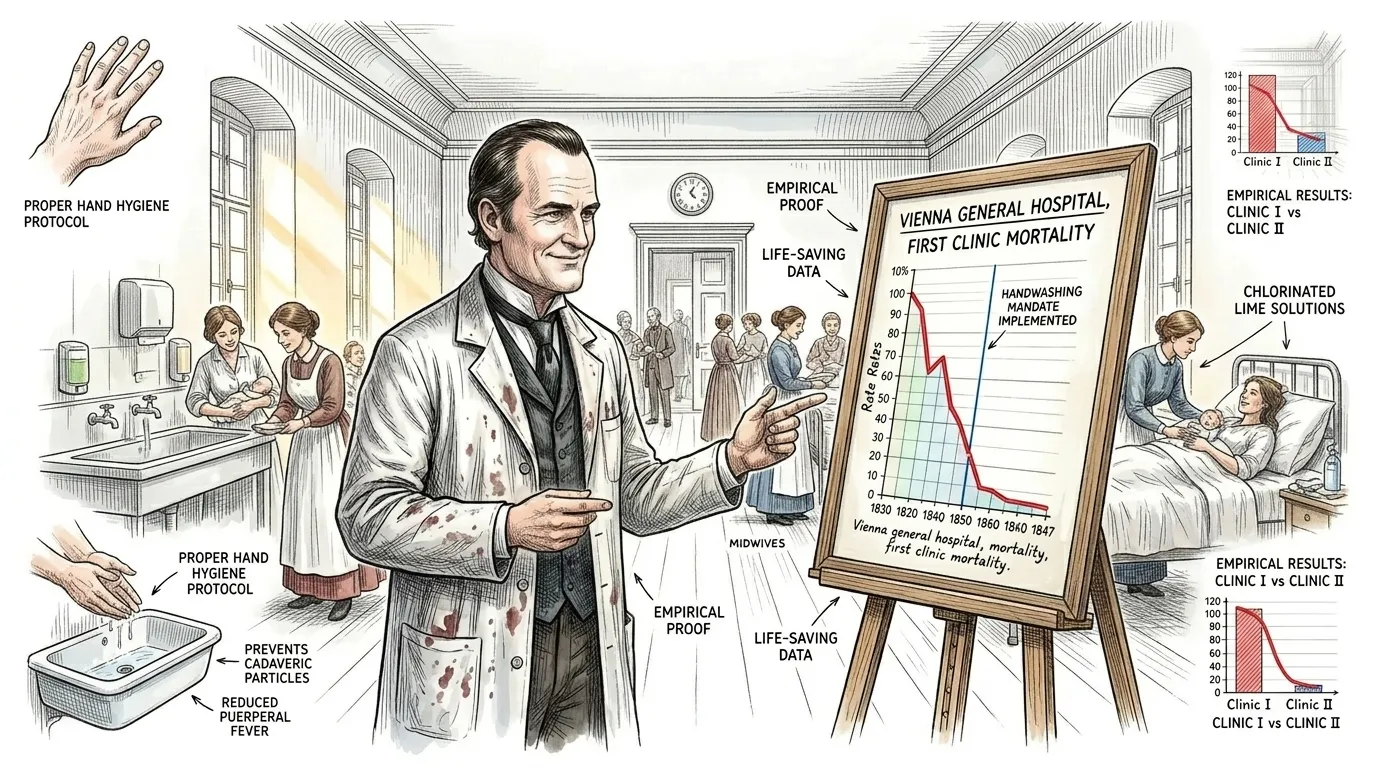
The results were immediate and astounding. Within months of implementing mandatory handwashing, the mortality rate in the First Obstetrics Clinic plummeted. From a horrifying peak often exceeding 10%, it dropped to levels below 1%, effectively mirroring the rates in the Second Clinic. This statistical evidence was undeniable, a clear and dramatic demonstration of cause and effect. Semmelweis had not just proposed a theory; he had proven it with verifiable, life-saving data, long before the comprehensive understanding of germ theory emerged.\n\n Fact: Empirical proof: Mortality rates plunge after handwashing implementation.
Page 8
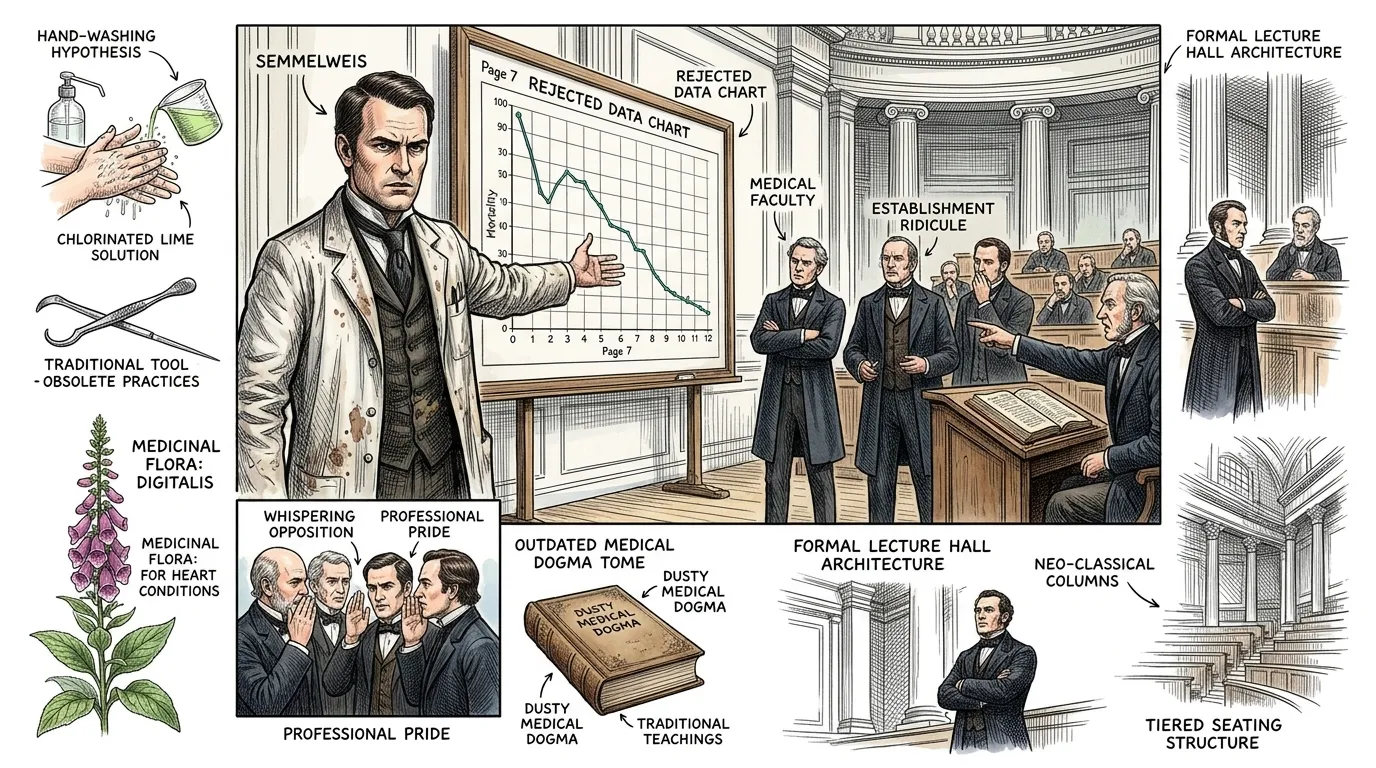
Despite the irrefutable evidence, Semmelweis's findings met with formidable resistance. His theory, though proven by data, lacked a clear biological explanation for how the 'particles' worked, making it difficult for the medical establishment to accept. His insistence on handwashing was seen as an accusation, implying that doctors themselves were responsible for the deaths. This challenged deeply ingrained beliefs, professional pride, and the established understanding of disease, leading to his ideas being largely dismissed and even ridiculed. Semmelweis, often described as brusque and unwavering, found himself increasingly isolated and frustrated.\n\n Fact: Challenging dogma: The medical establishment's rejection of Semmelweis's findings.
Page 9
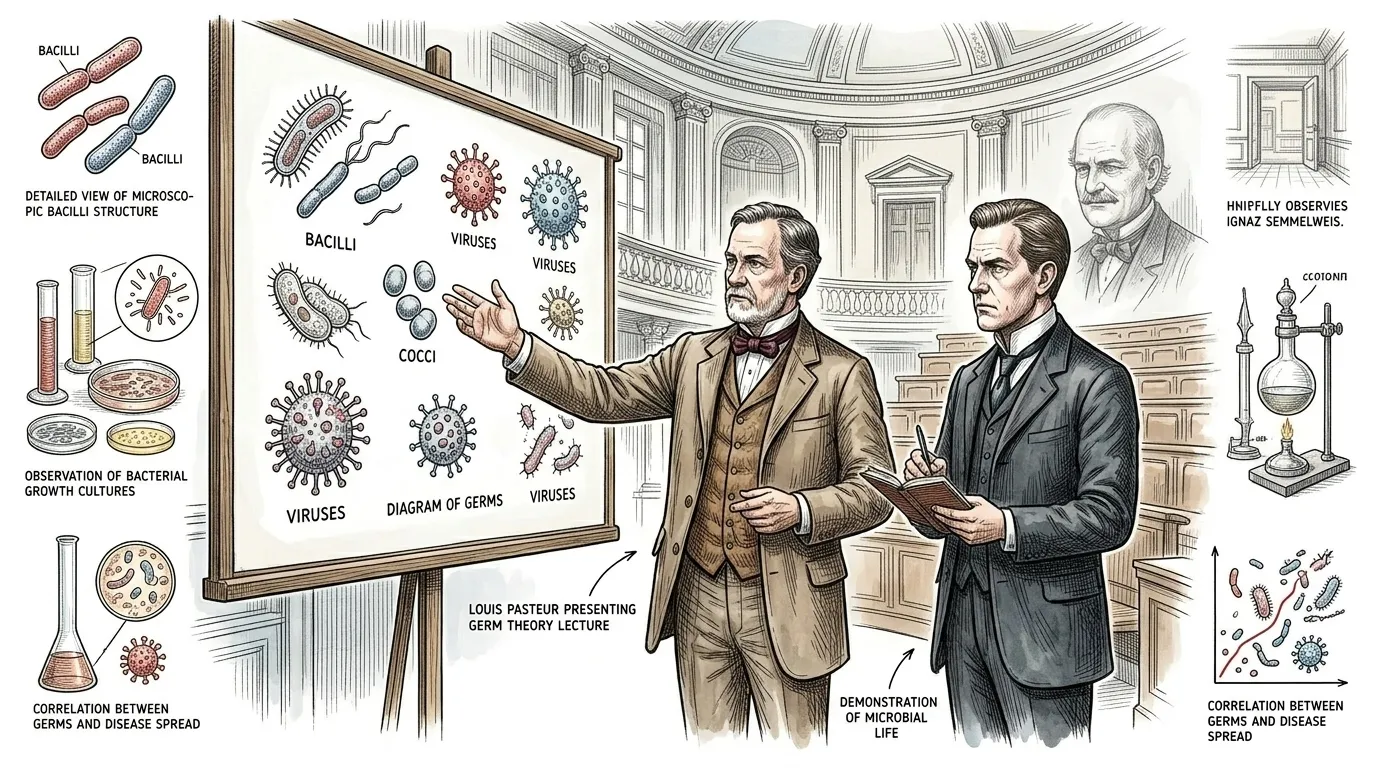
Semmelweis's work was years ahead of its time. It would take decades for the medical community to fully embrace his insights. The eventual widespread acceptance of germ theory, championed by figures like Louis Pasteur and Robert Koch, finally provided the scientific framework that validated Semmelweis's 'cadaveric particles' as pathogenic microorganisms. His tragic story underscores the often-arduous journey of scientific discovery, where paradigm-shifting truths can face fierce opposition before ultimately transforming human understanding and practice.\n\n Fact: A prophet unheeded: Validation through the dawn of germ theory.
Page 10
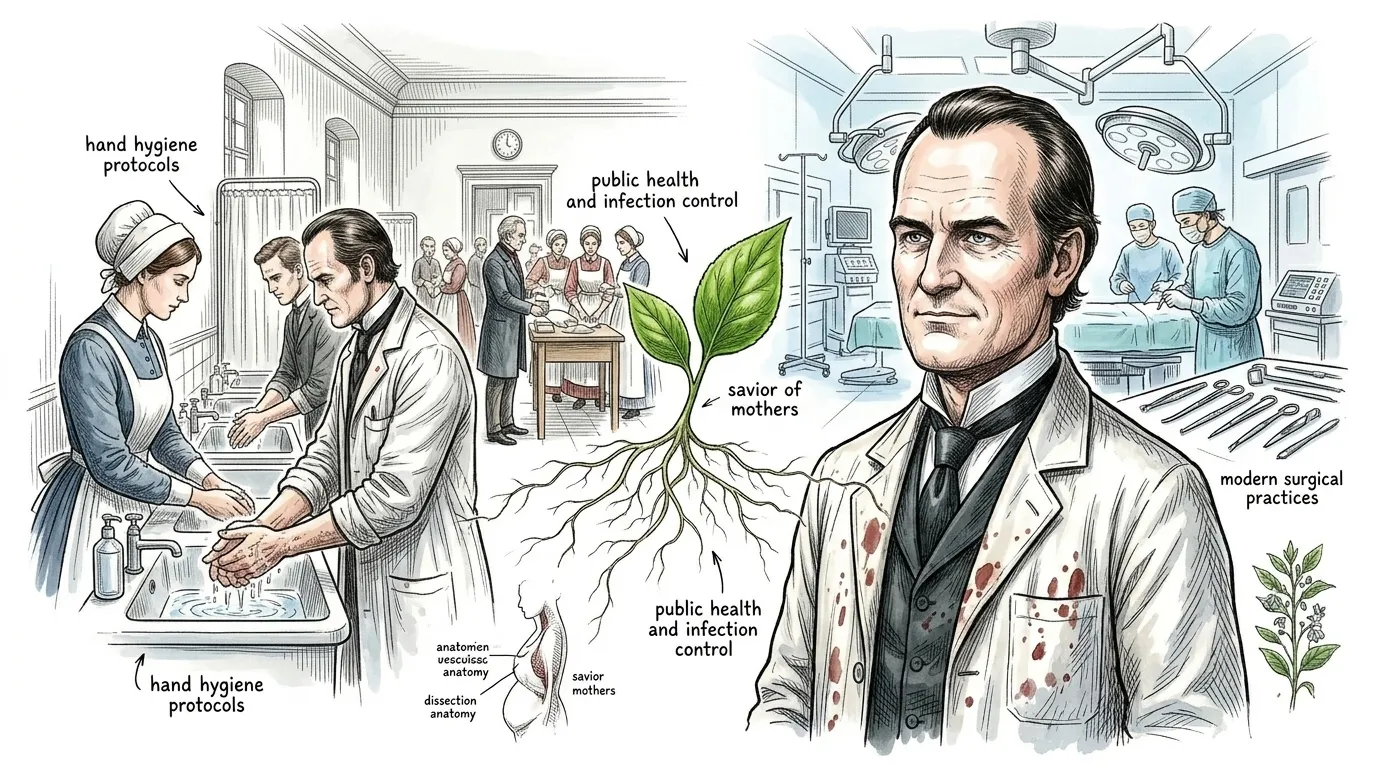
Ignaz Semmelweis's enduring legacy is profound. He is remembered as the 'savior of mothers' and a foundational figure in the development of antiseptic procedures, public health, and infection control. His empirical demonstration of the link between hygiene and disease transmission paved the way for modern surgical practices, hand hygiene protocols, and the very concept of preventing hospital-acquired infections. His pioneering work, born from meticulous observation and statistical analysis, continues to underpin countless lives saved daily in hospitals worldwide, a testament to the power of scientific inquiry, even in the face of initial resistance.\n\n Fact: Semmelweis's enduring impact: From childbed fever to modern infection control.
About this story
- Location: Global
- Audience: general readers
Questions and answers
Read Wonder Science on your phone
Wonder Science is available on Android. Get Wonder Science on Google Play.