Is There Life on Other Planets?
Is There Life on Other Planets? — an illustrated science story. 10 illustrated pages, free to read on Wonder Science.
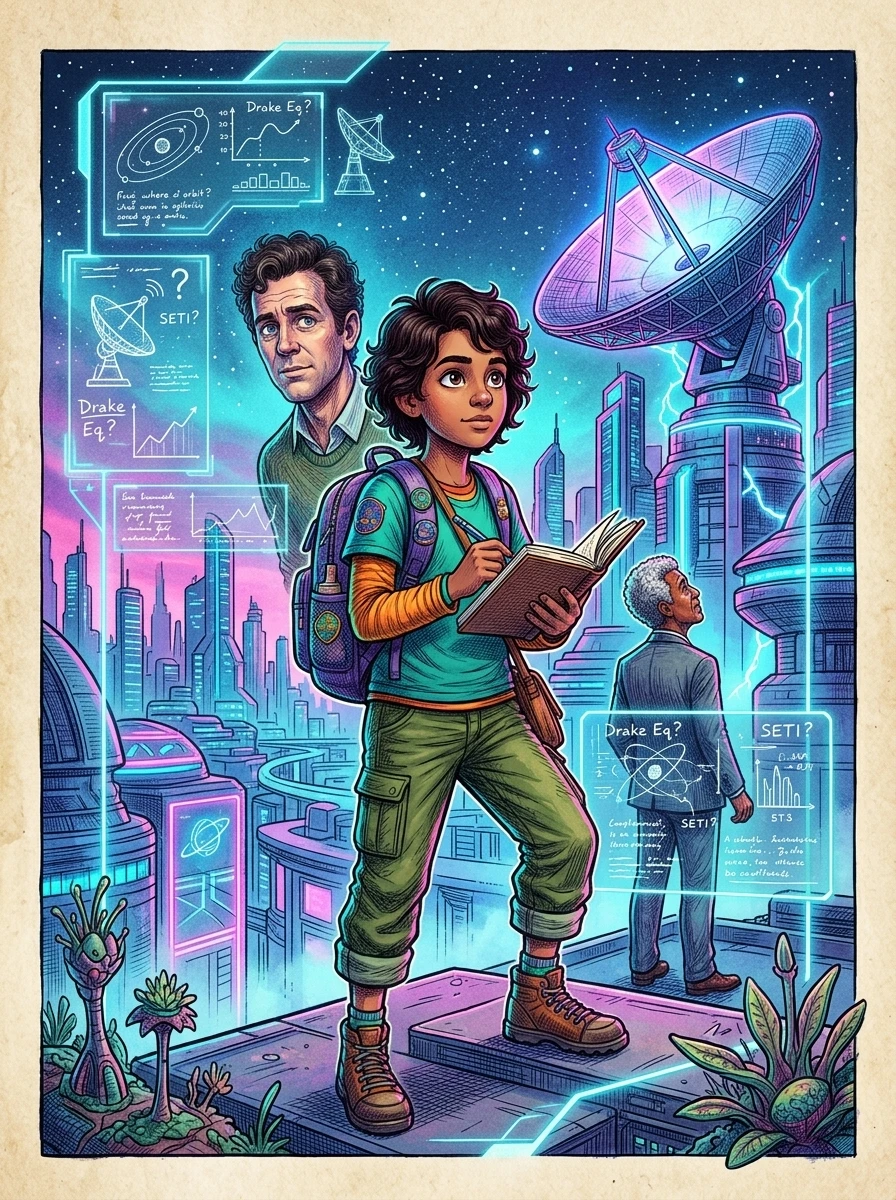
Page 1
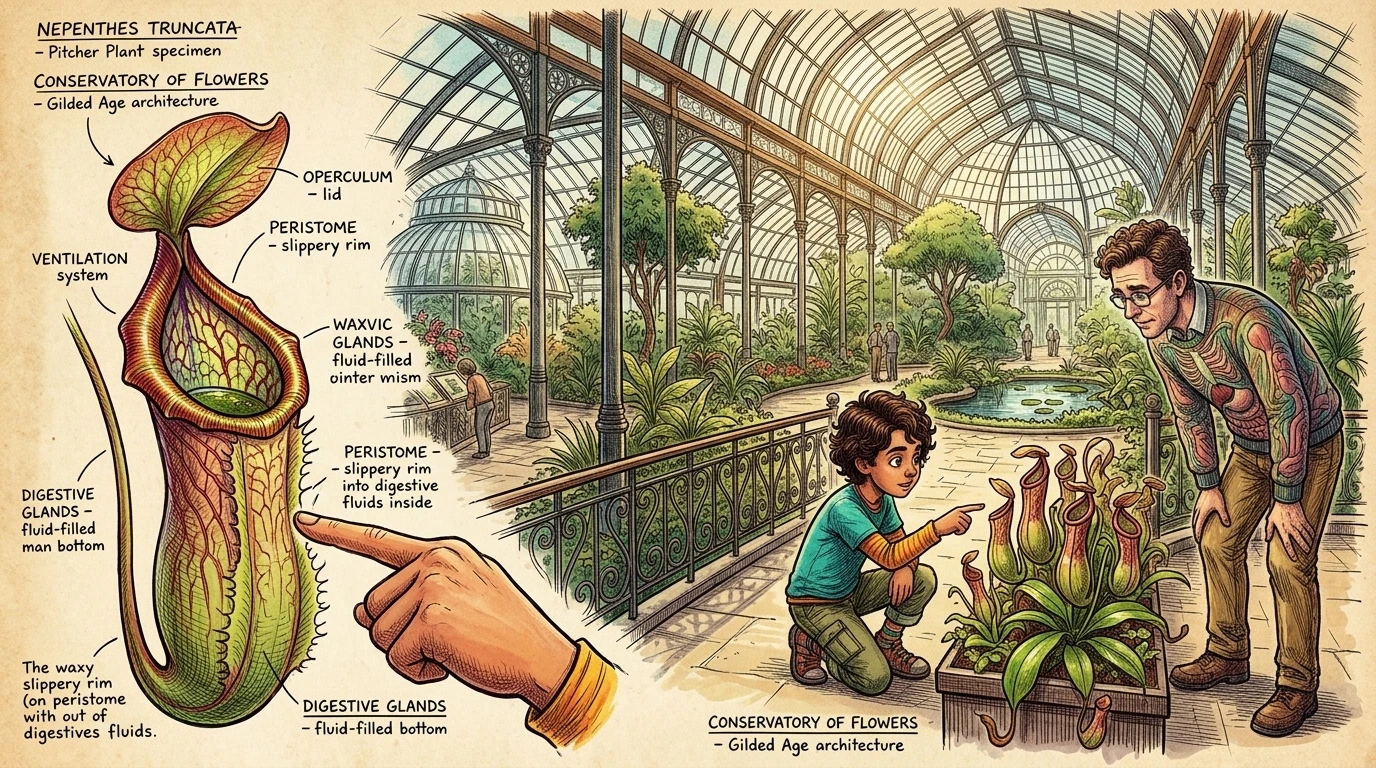
Inside the humid glass dome of the San Francisco Conservatory of Flowers, Mateo pointed at a strange, hooded plant. "Dad, what is that? It looks like it's from another planet!" Her father, David, leaned in, adjusting his glasses to get a better look. "That's a Pitcher Plant. It actually eats insects."
Page 2

"It eats bugs? Whoa!" Mateo scribbled in her notebook. "If life on Earth can be this weird, could there be life on other planets, too?" Her father smiled. "That's the biggest question in all of science, Mateo. It's a field called astrobiology, and it all starts with understanding life in the most extreme places right here."
Page 3

To even begin to answer that, scientists in the 1960s had to create a new way of thinking. At a quiet observatory in Green Bank, West Virginia, a group of the world's smartest people gathered in a small room. They were there to discuss the biggest 'what if' in history.
Page 4
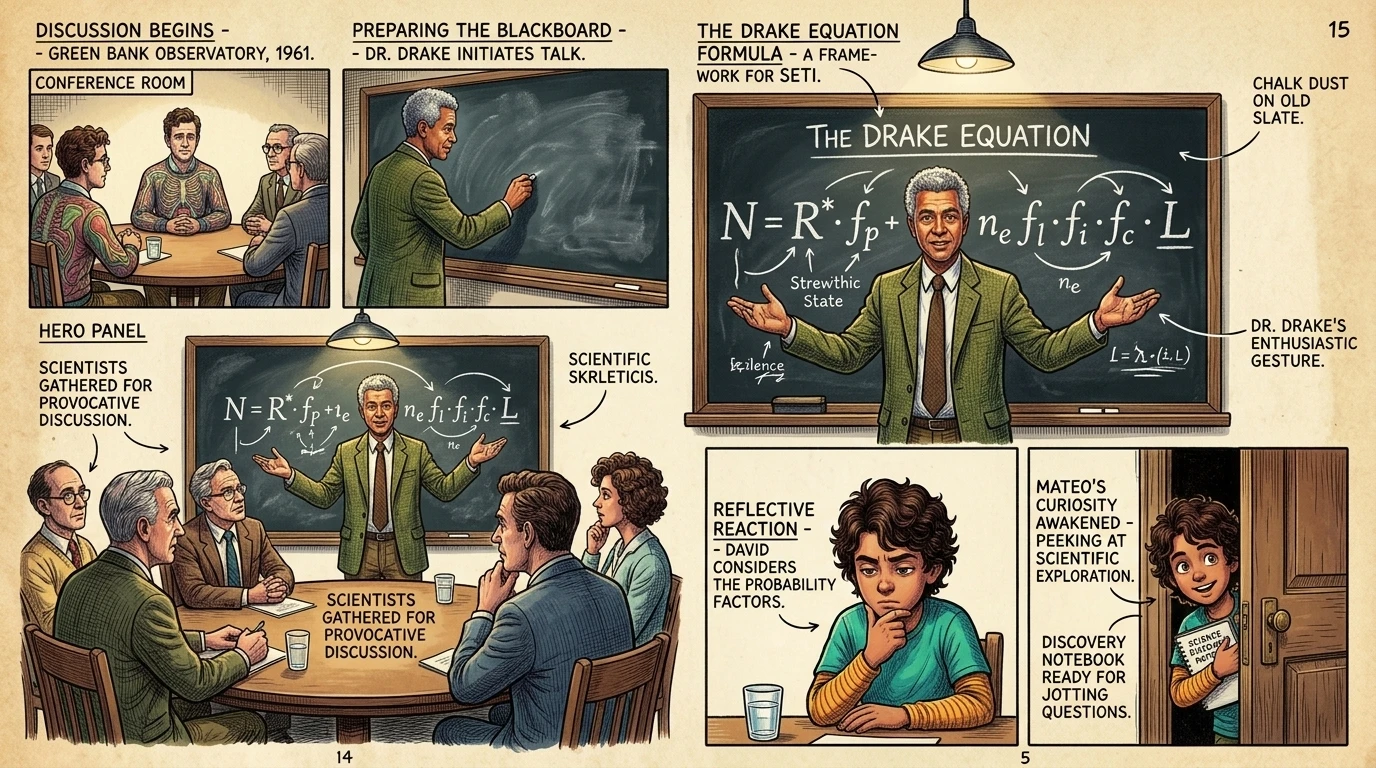
"One young radio astronomer, Dr. Frank Drake, had an idea," her father's voice narrated. Drake stood up and walked to a large blackboard, chalk in hand. "Okay, everyone," he announced, "let's try to estimate the number of civilizations we might be able to contact. Let's break the problem down."
Page 5
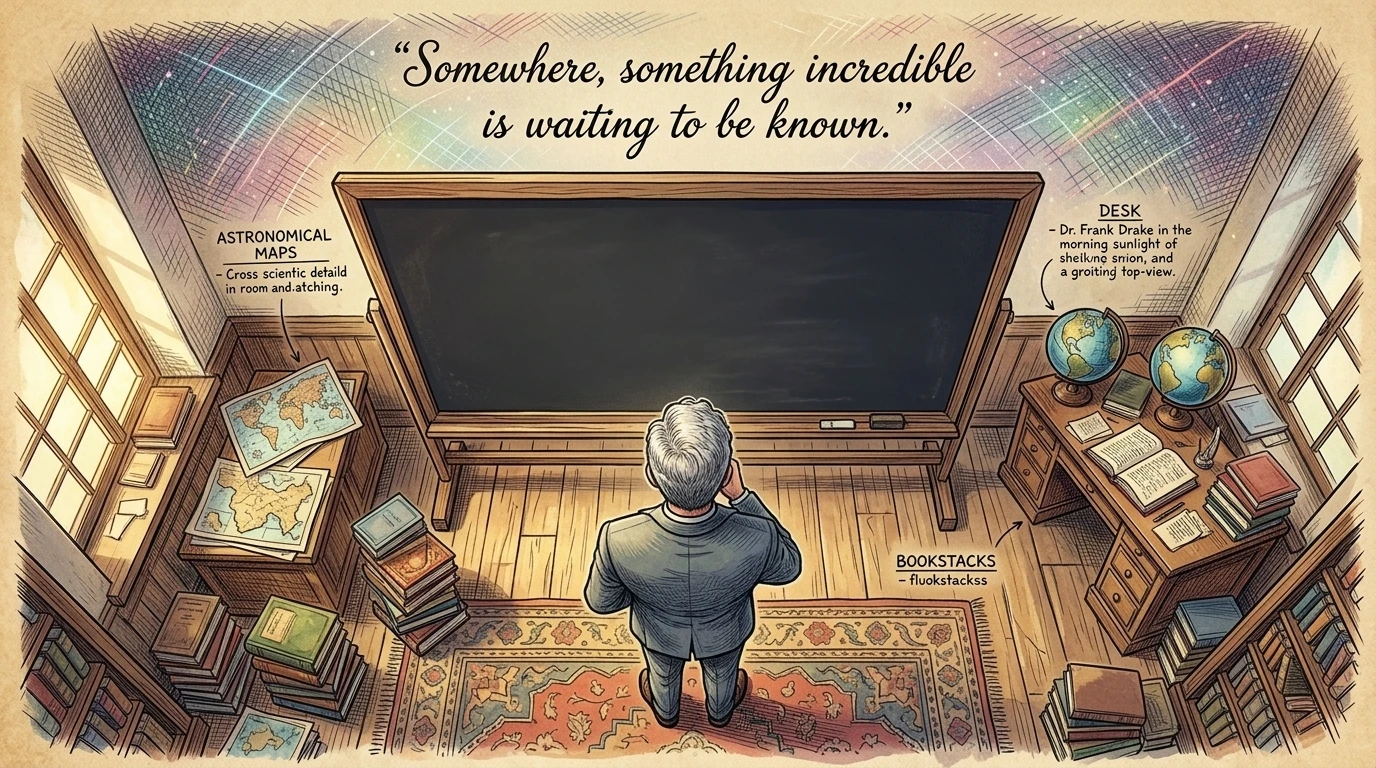
He knew the odds were overwhelming, but the possibility was too important to ignore. "It reminds me of what the scientist Carl Sagan said," Mateo imagined him thinking, "'Somewhere, something incredible is waiting to be known.'" Drake felt that 'something' could be hidden in the static between the stars.
Page 6
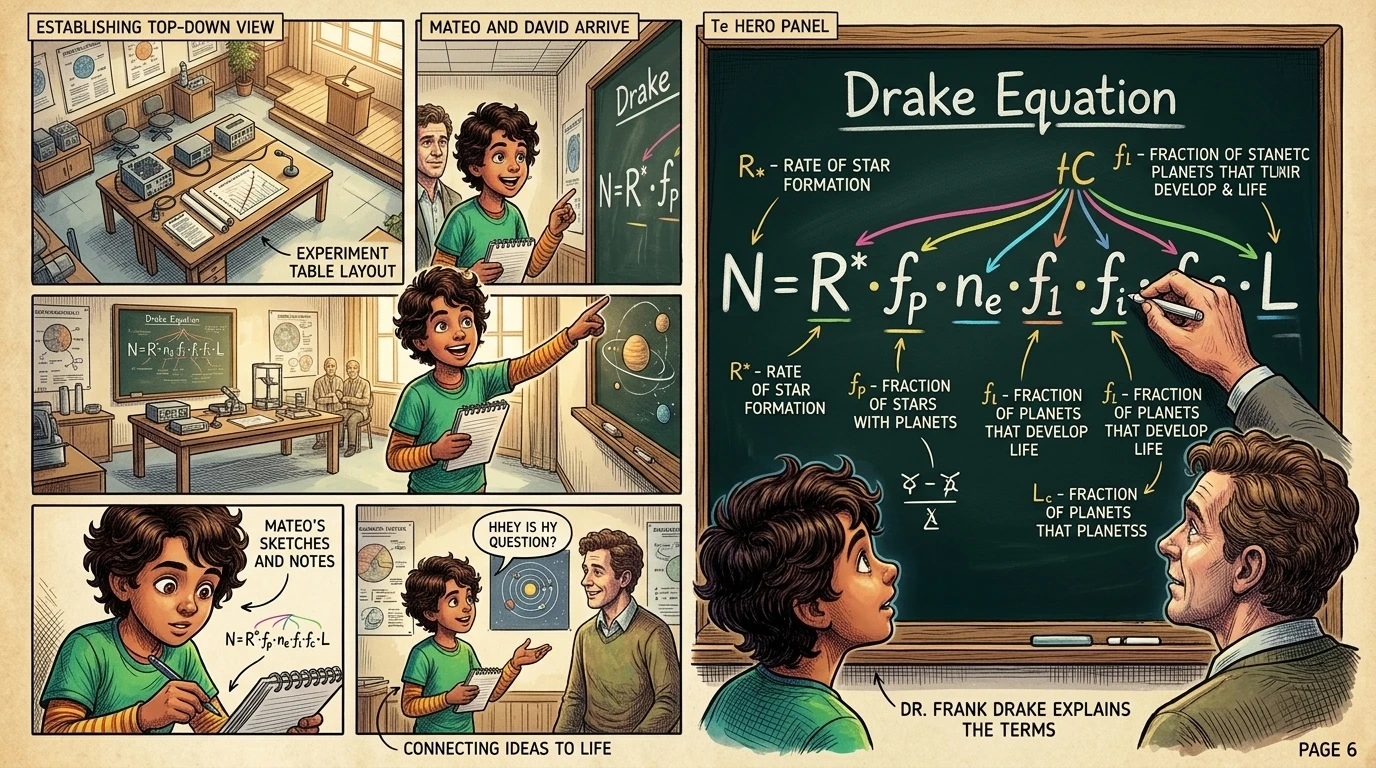
On the blackboard, Drake wrote out a chain of factors: the rate of star formation, the fraction of stars with planets, the number of those that could support life. "Each term multiplies the last," he explained, drawing arrows, "turning a huge mystery into a series of smaller, answerable questions!" This became the famous Drake Equation.
Page 7
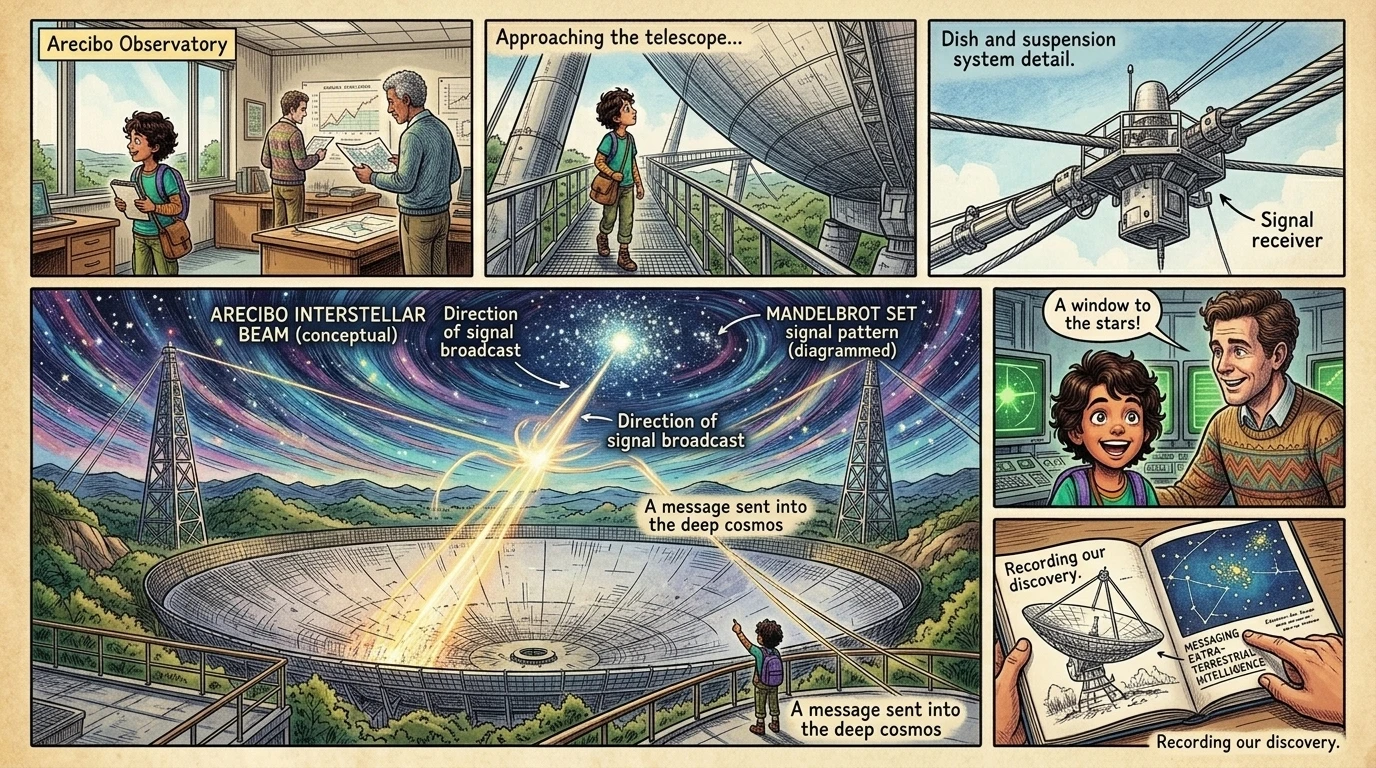
Drake's equation gave scientists a roadmap, sparking the global search for extraterrestrial intelligence, or SETI. It inspired us to build giant radio telescopes to listen to the cosmos and even to send messages of our own. In 1974, the Arecibo telescope beamed a message toward a star cluster 25,000 light-years away.
Page 8
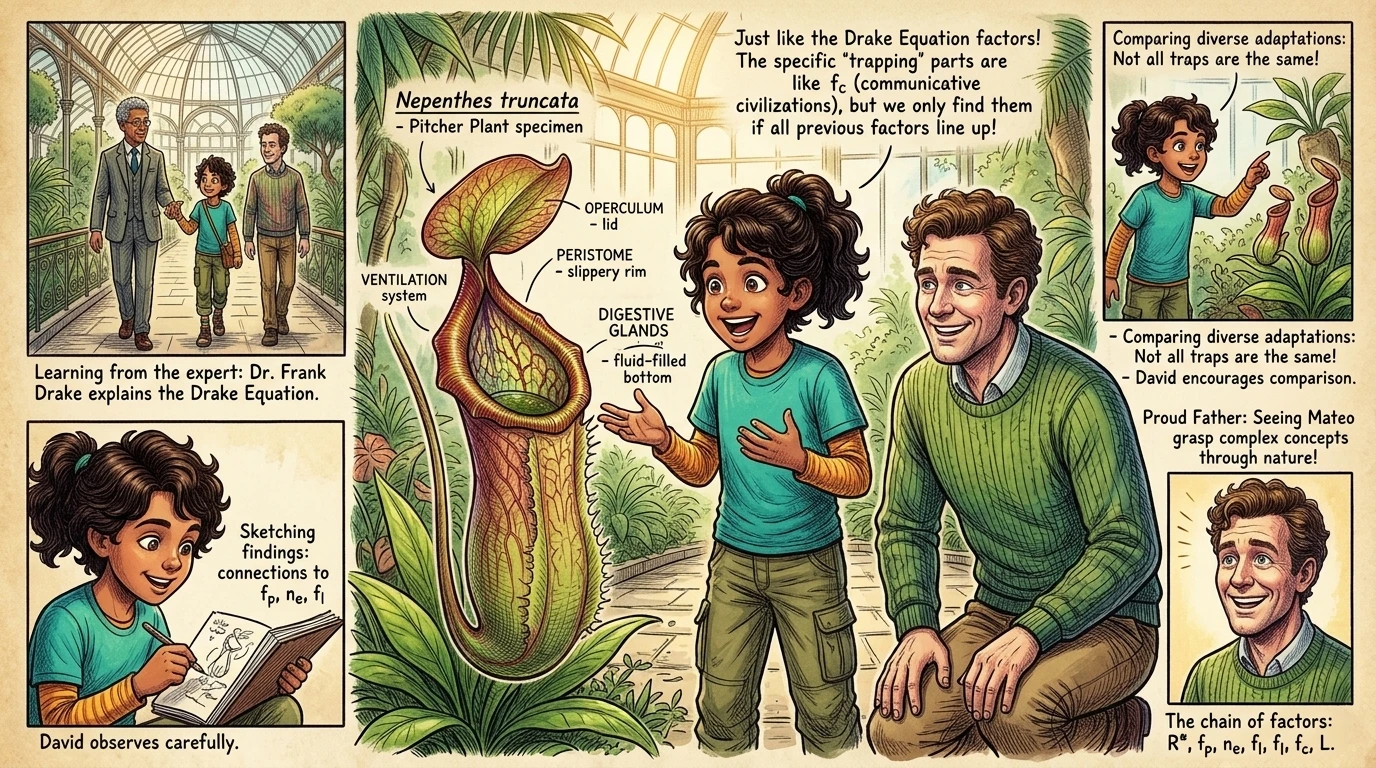
Back in the conservatory, Mateo's eyes lit up. "I get it! It's like finding this pitcher plant!" she explained to her father. "First you need the number of greenhouses, then times the ones with plants, times the ones with weird plants!" David knelt beside her, beaming with pride. "You've got it exactly, Mateo!"
Page 9
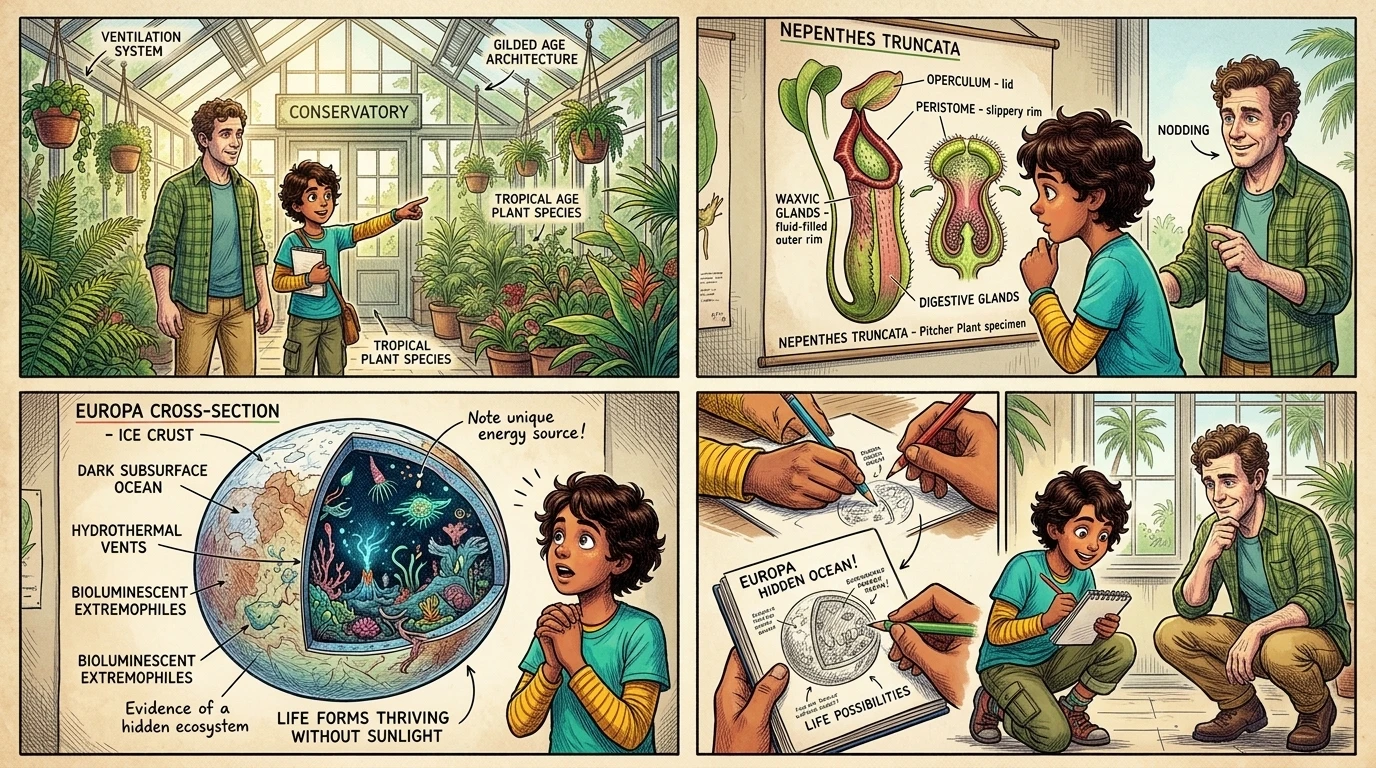
"But the equation assumes life needs a sun, like these plants," Mateo realized. "What about those extremophiles you mentioned?" "Exactly!" her father said. "That's why scientists are so excited about moons like Jupiter's Europa. It might have a dark ocean warmed by volcanoes, where life could exist without any sunlight at all!"
Page 10
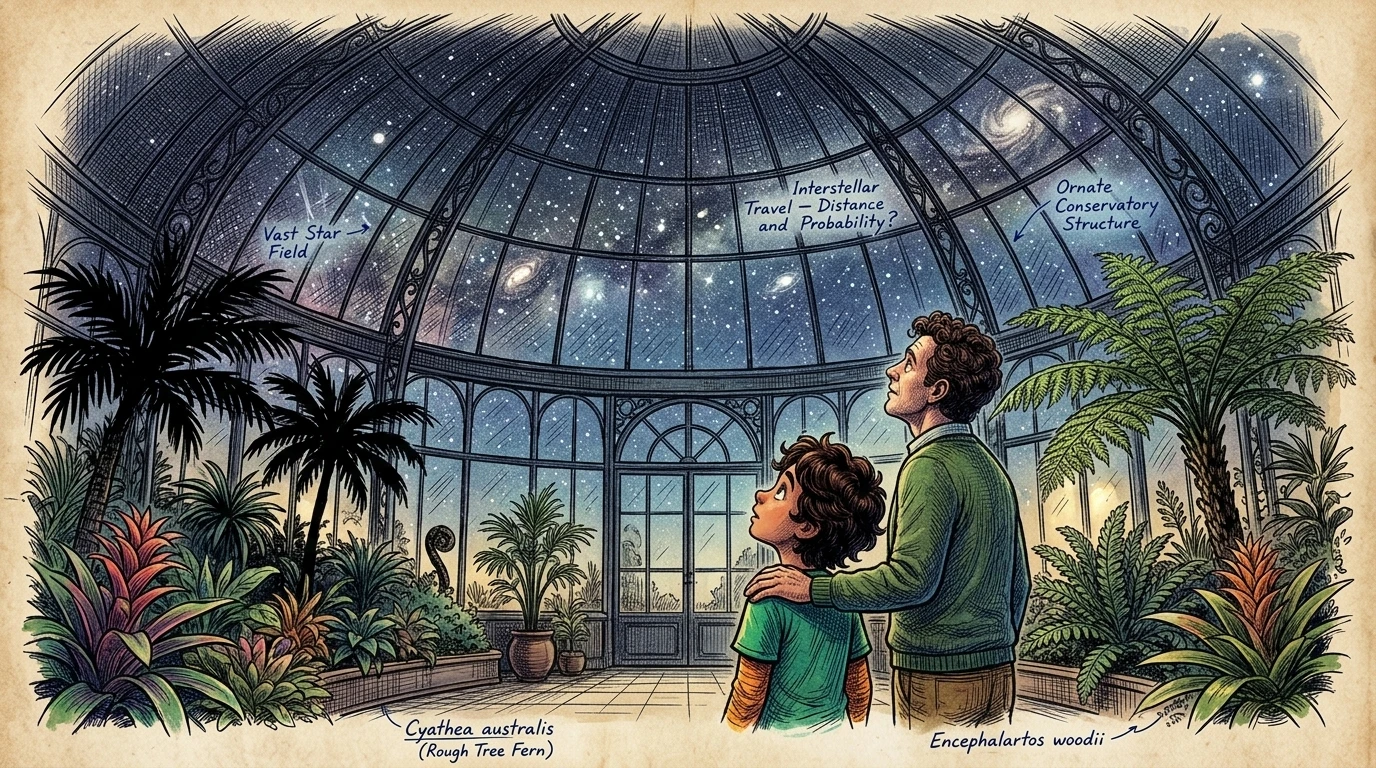
Mateo stared up through the glass dome at the sky. "So the Drake Equation is our best guess, but we're still discovering new ways life could exist." Her father put an arm around her. "That's the beauty of science. Now, if we ever did find life out there, how do you think we would get there to say hello?"
About this story
- Audience: kids (ages 6–12)
Questions and answers
Read Wonder Science on your phone
Wonder Science is available on Android. Get Wonder Science on Google Play.