Jane Goodall

Jane Goodall — an illustrated science story, set in Global. 10 illustrated pages, free to read on Wonder Science.
Jane Goodall — book cover — Wonder Science
Jane Goodall — an illustrated science story, set in Global. 10 illustrated pages, free to read on Wonder Science.

Page 1
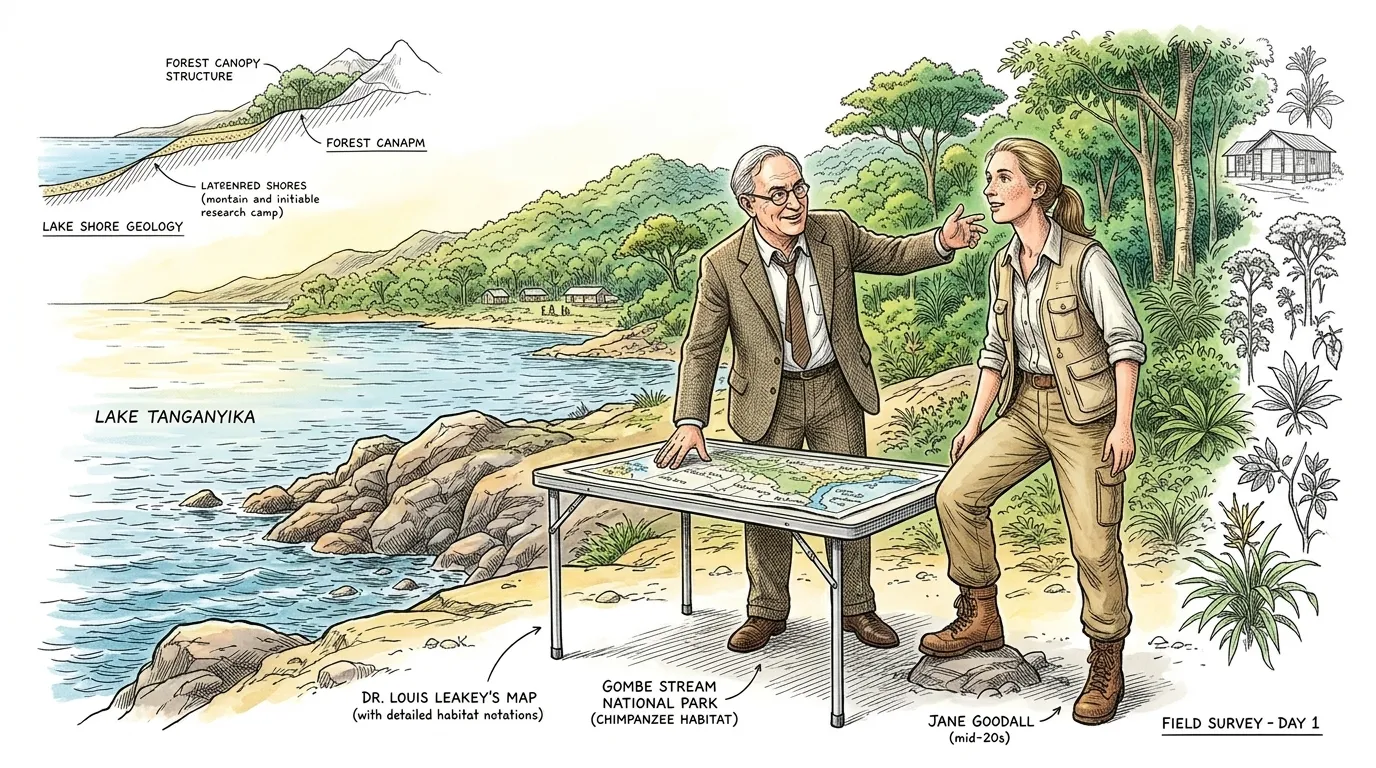
The year is 1960. On the rugged shores of Lake Tanganyika, within the dense emerald canopy of what would become Tanzania's Gombe Stream National Park, a young…
The year is 1960. On the rugged shores of Lake Tanganyika, within the dense emerald canopy of what would become Tanzania's Gombe Stream National Park, a young woman named Jane Goodall began an unprecedented journey. Sent by paleoanthropologist Dr. Louis Leakey, her mission was deceptively simple: observe chimpanzees in their natural habitat.

The year is 1960. On the rugged shores of Lake Tanganyika, within the dense emerald canopy of what would become Tanzania's Gombe Stream National Park, a young woman named Jane Goodall began an unprecedented journey. Sent by paleoanthropologist Dr. Louis Leakey, her mission was deceptively simple: observe chimpanzees in their natural habitat. With no formal scientific training, she plunged into an unknown world, challenging prevailing scientific dogma and laying the foundation for modern primatology.

Page 2
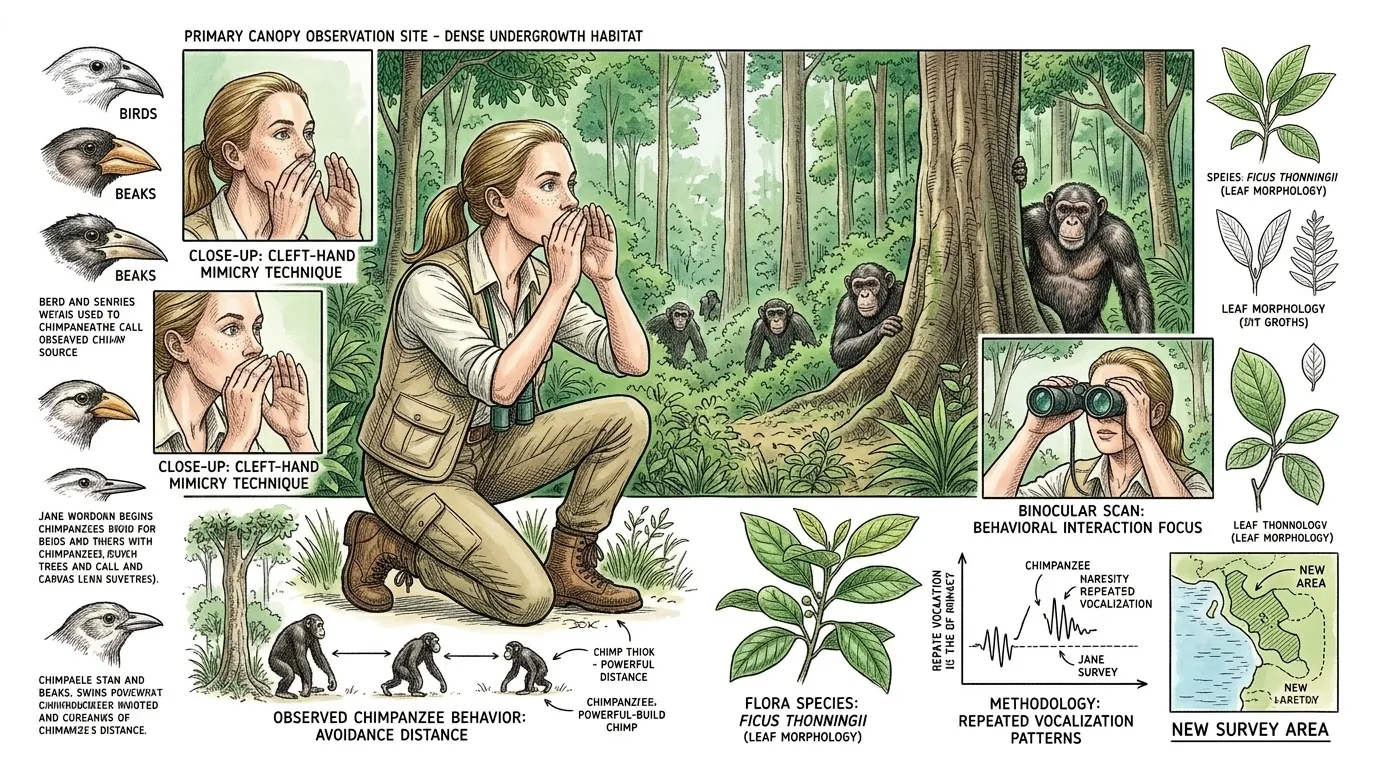
For months, Jane Goodall faced relentless challenges. The chimpanzees, wary of human presence, kept their distance, making observation nearly impossible.
For months, Jane Goodall faced relentless challenges. The chimpanzees, wary of human presence, kept their distance, making observation nearly impossible. Traditional scientific methods demanded detachment, yet Goodall, driven by empathy, eschewed convention. She immersed herself, learning individual personalities, foraging paths, and even mimicking chimp calls, slowly, painstakingly, breaking down barriers between species.

For months, Jane Goodall faced relentless challenges. The chimpanzees, wary of human presence, kept their distance, making observation nearly impossible. Traditional scientific methods demanded detachment, yet Goodall, driven by empathy, eschewed convention. She immersed herself, learning individual personalities, foraging paths, and even mimicking chimp calls, slowly, painstakingly, breaking down barriers between species.

Page 3
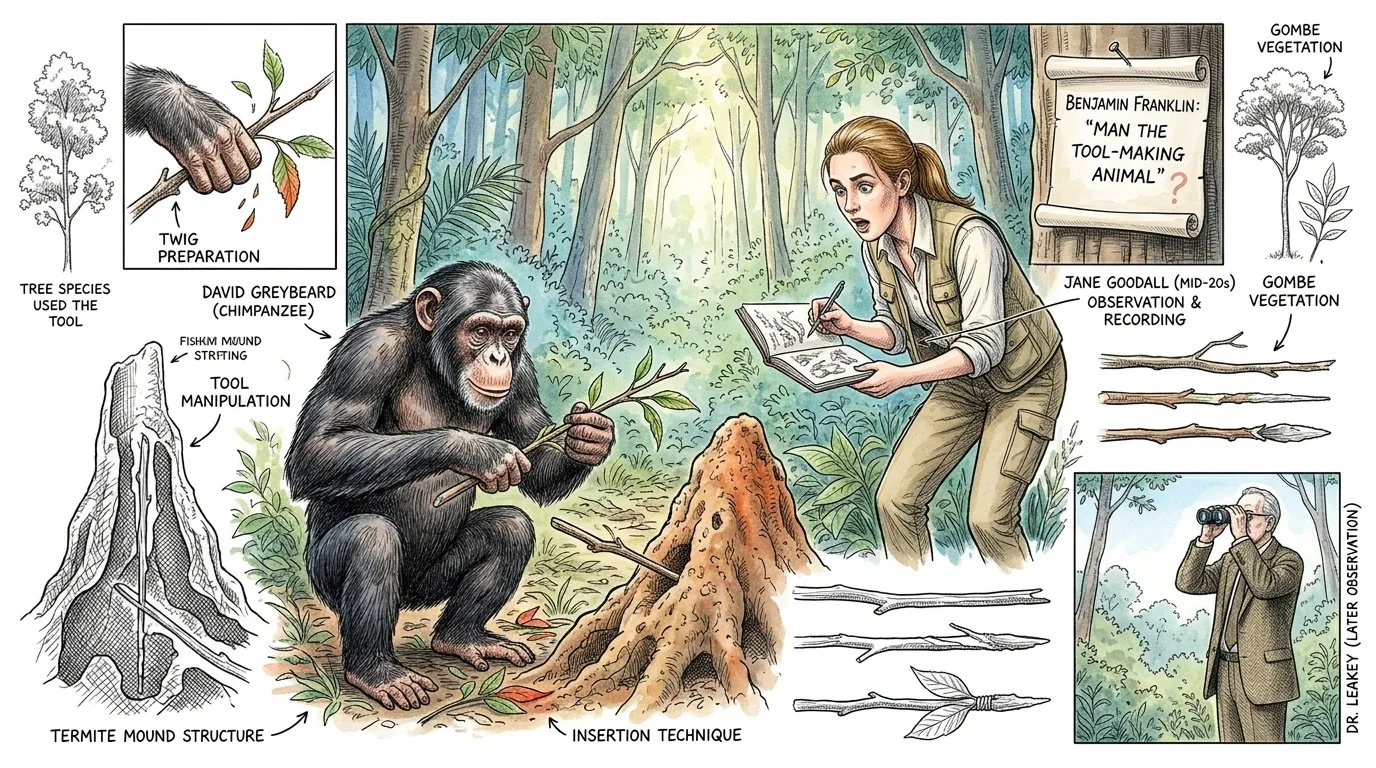
Then, a moment that shattered established scientific understanding. In October 1960, Jane observed a chimpanzee she named David Greybeard carefully stripping…
Then, a moment that shattered established scientific understanding. In October 1960, Jane observed a chimpanzee she named David Greybeard carefully stripping leaves from a twig, fashioning it into a tool, then using it to 'fish' for termites from a mound. This singular act disproved the long-held belief, famously articulated by Benjamin Franklin, that only humans were 'tool-making animals.' Goodall's meticulous observation immediately reshaped anthropology and primatology…

Then, a moment that shattered established scientific understanding. In October 1960, Jane observed a chimpanzee she named David Greybeard carefully stripping leaves from a twig, fashioning it into a tool, then using it to 'fish' for termites from a mound. This singular act disproved the long-held belief, famously articulated by Benjamin Franklin, that only humans were 'tool-making animals.' Goodall's meticulous observation immediately reshaped anthropology and primatology, bridging a perceived chasm between humans and the animal kingdom.

Page 4
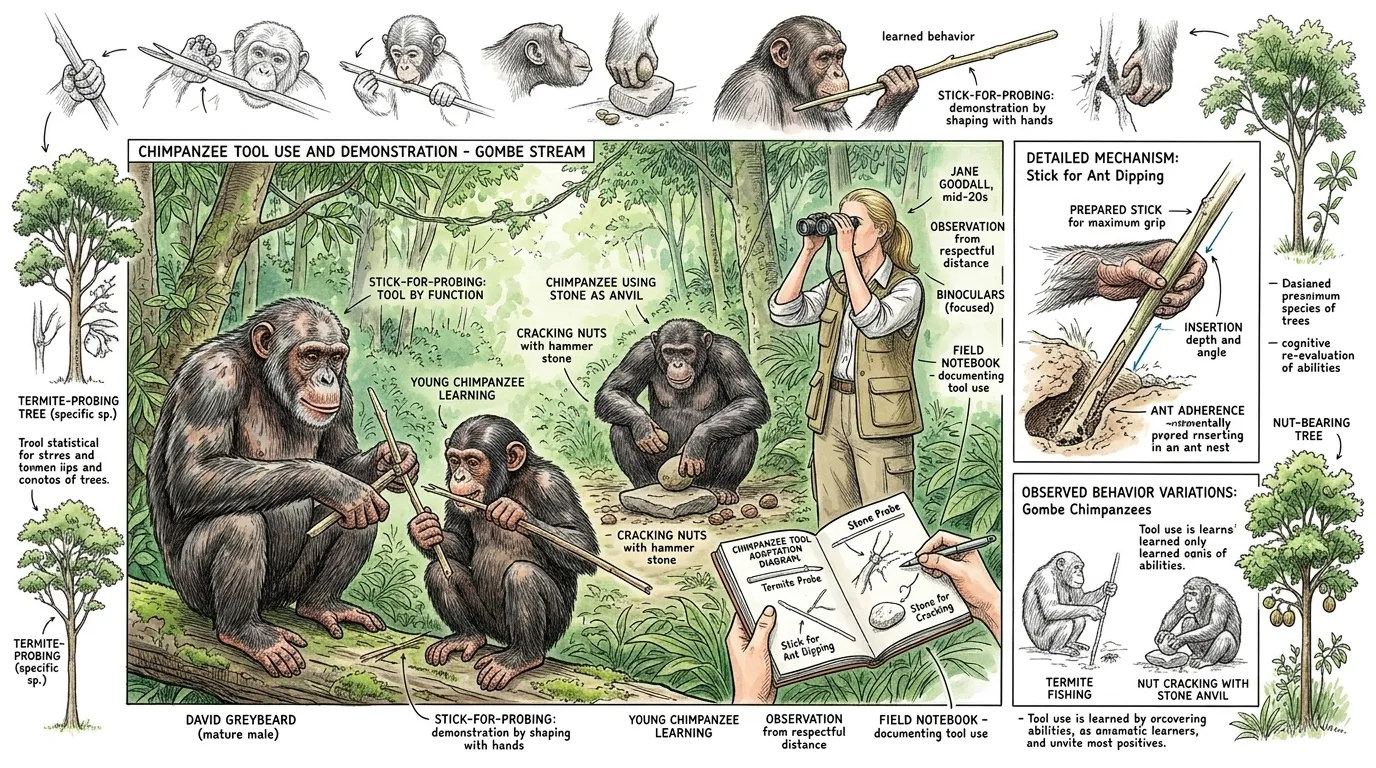
David Greybeard's ingenuity was no anomaly. Subsequent observations revealed chimpanzees not only used tools but also taught these skills, adapted them to new…
David Greybeard's ingenuity was no anomaly. Subsequent observations revealed chimpanzees not only used tools but also taught these skills, adapted them to new situations, and even manufactured them from raw materials. This discovery challenged the very definition of intelligence and complex problem-solving, traditionally attributed solely to Homo sapiens.

David Greybeard's ingenuity was no anomaly. Subsequent observations revealed chimpanzees not only used tools but also taught these skills, adapted them to new situations, and even manufactured them from raw materials. This discovery challenged the very definition of intelligence and complex problem-solving, traditionally attributed solely to Homo sapiens. It forced the scientific community to re-evaluate the cognitive capacities of other species and reconsider the linearity of human evolution.

Page 5
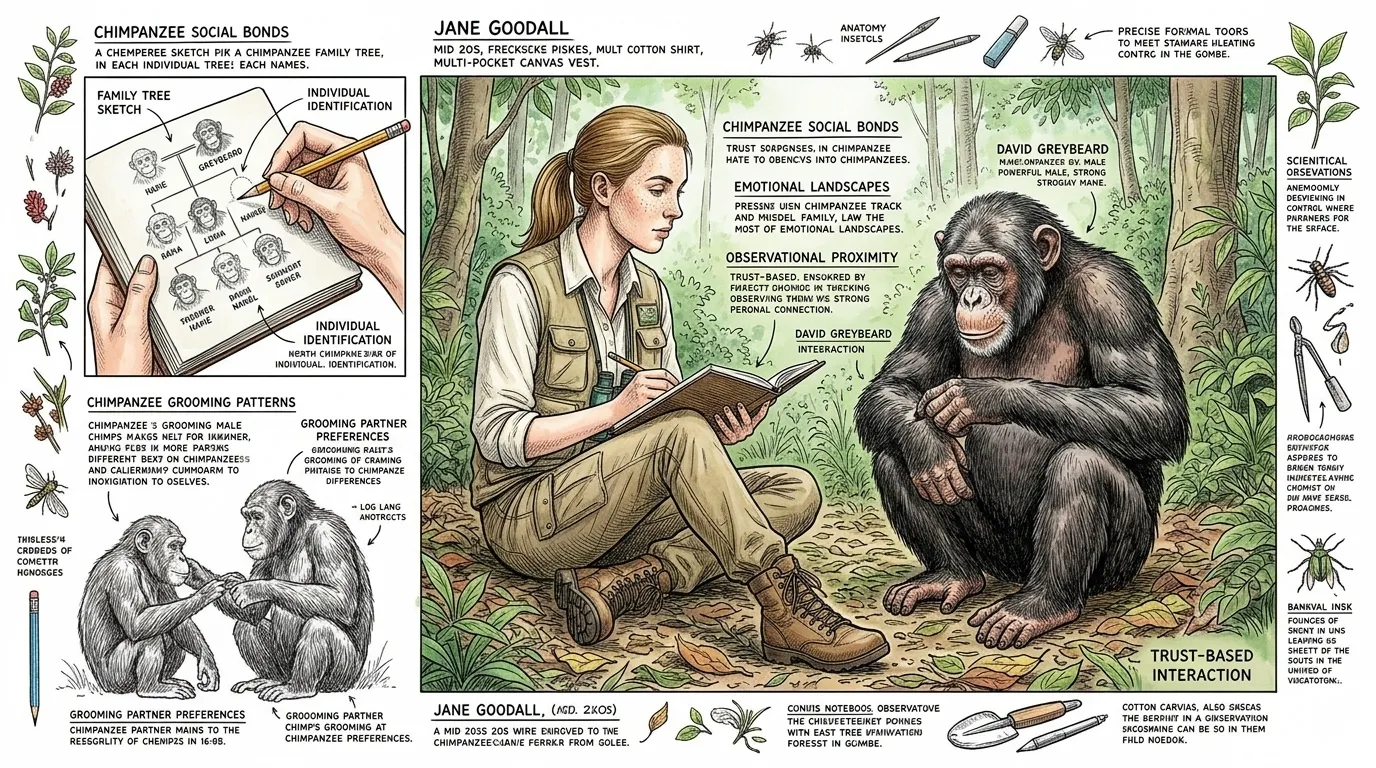
Goodall's methodological revolution extended beyond witnessing groundbreaking behaviors. Unlike conventional ethologists who numbered their subjects, she named…
Goodall's methodological revolution extended beyond witnessing groundbreaking behaviors. Unlike conventional ethologists who numbered their subjects, she named each chimpanzee, fostering deep, individual relationships that spanned decades. This profound personal connection, dismissed as unscientific at first, allowed for an unprecedented understanding of chimpanzee societies—their complex family bonds, communication methods, and emotional landscapes—far beyond what detached…

Goodall's methodological revolution extended beyond witnessing groundbreaking behaviors. Unlike conventional ethologists who numbered their subjects, she named each chimpanzee, fostering deep, individual relationships that spanned decades. This profound personal connection, dismissed as unscientific at first, allowed for an unprecedented understanding of chimpanzee societies—their complex family bonds, communication methods, and emotional landscapes—far beyond what detached observation could ever yield.

Page 6
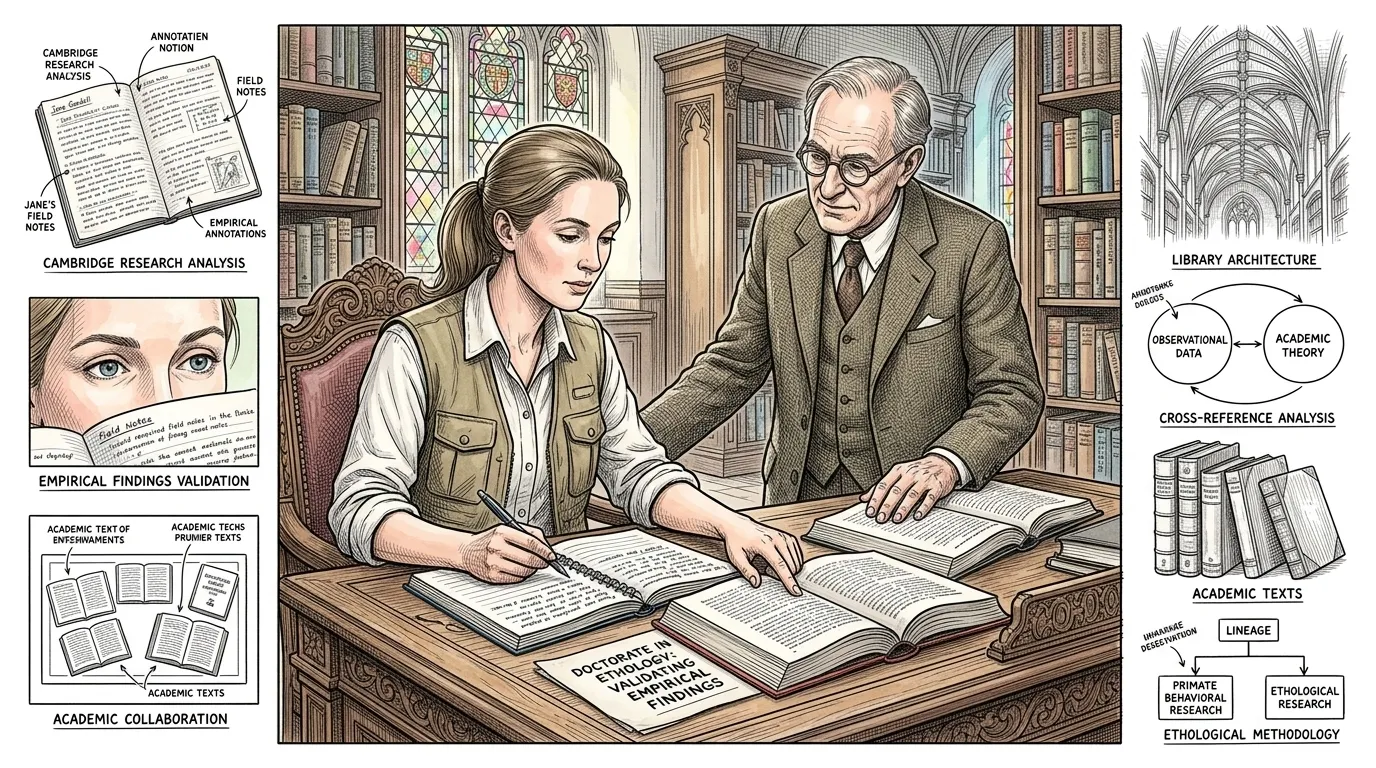
Despite her undeniable discoveries, Goodall faced significant skepticism from the academic establishment. Her lack of a formal degree, her gender, and her…
Despite her undeniable discoveries, Goodall faced significant skepticism from the academic establishment. Her lack of a formal degree, her gender, and her 'unorthodox' methods of naming animals and observing intimately were met with resistance. Critics argued her emotional attachment compromised objectivity. Yet, supported by Dr.

Despite her undeniable discoveries, Goodall faced significant skepticism from the academic establishment. Her lack of a formal degree, her gender, and her 'unorthodox' methods of naming animals and observing intimately were met with resistance. Critics argued her emotional attachment compromised objectivity. Yet, supported by Dr. Leakey, she pursued her doctorate at Cambridge, validating her empirical findings within the rigorous framework of scientific academia, turning doubt into enduring recognition.

Page 7
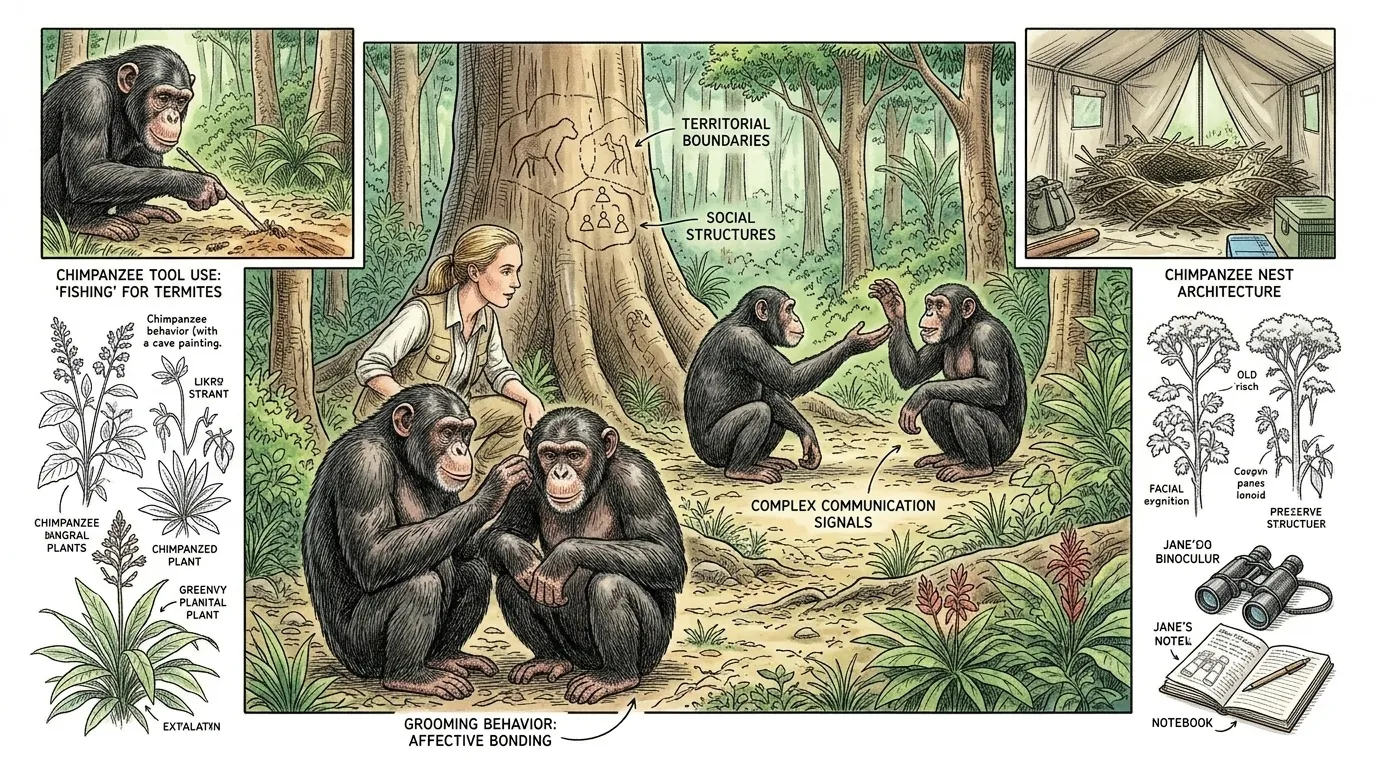
As years turned into decades, Goodall's unwavering dedication uncovered the astonishing complexity of chimpanzee society.
As years turned into decades, Goodall's unwavering dedication uncovered the astonishing complexity of chimpanzee society. She documented fierce territorial wars, profound acts of compassion, sophisticated communication signals, and even the adoption of orphans. These revelations demonstrated that chimpanzees possessed not only tool-making capabilities but also a rich tapestry of culture, morality, and even darkness, challenging simplistic notions of 'animal' behavior and…

As years turned into decades, Goodall's unwavering dedication uncovered the astonishing complexity of chimpanzee society. She documented fierce territorial wars, profound acts of compassion, sophisticated communication signals, and even the adoption of orphans. These revelations demonstrated that chimpanzees possessed not only tool-making capabilities but also a rich tapestry of culture, morality, and even darkness, challenging simplistic notions of 'animal' behavior and blurring the line between species further.

Page 8

The initial observation of tool use, combined with decades of immersive study, fundamentally transformed primatology. Goodall's work provided irrefutable…
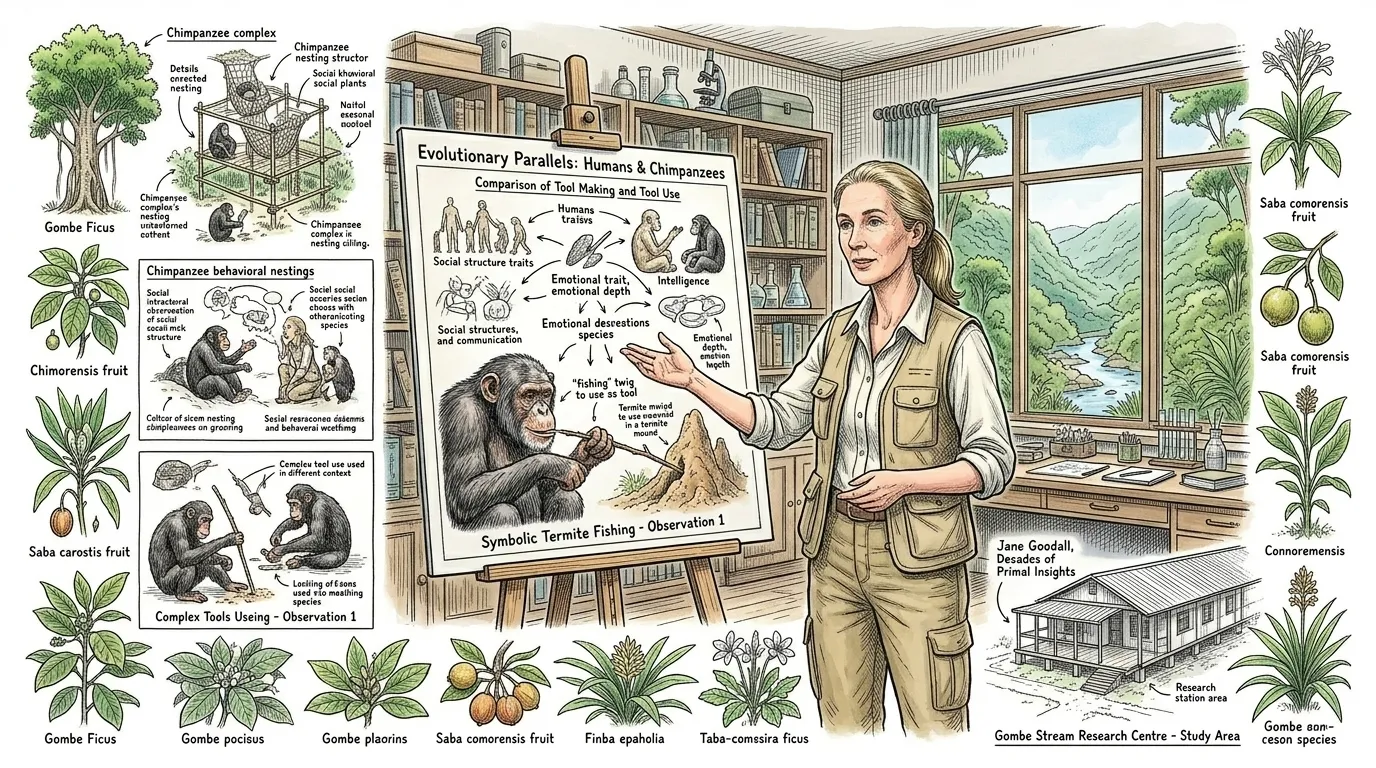
The initial observation of tool use, combined with decades of immersive study, fundamentally transformed primatology. Goodall's work provided irrefutable evidence of chimpanzee intelligence, emotional depth, and complex social structures, forcing a re-evaluation of human uniqueness. It laid the groundwork for countless studies into primate cognition and conservation.

The initial observation of tool use, combined with decades of immersive study, fundamentally transformed primatology. Goodall's work provided irrefutable evidence of chimpanzee intelligence, emotional depth, and complex social structures, forcing a re-evaluation of human uniqueness. It laid the groundwork for countless studies into primate cognition and conservation. Her meticulous documentation illuminated the profound interconnectedness of all life, emphasizing shared ancestry and behavioral parallels that continue to inform evolutionary biology and anthropology.

Page 9
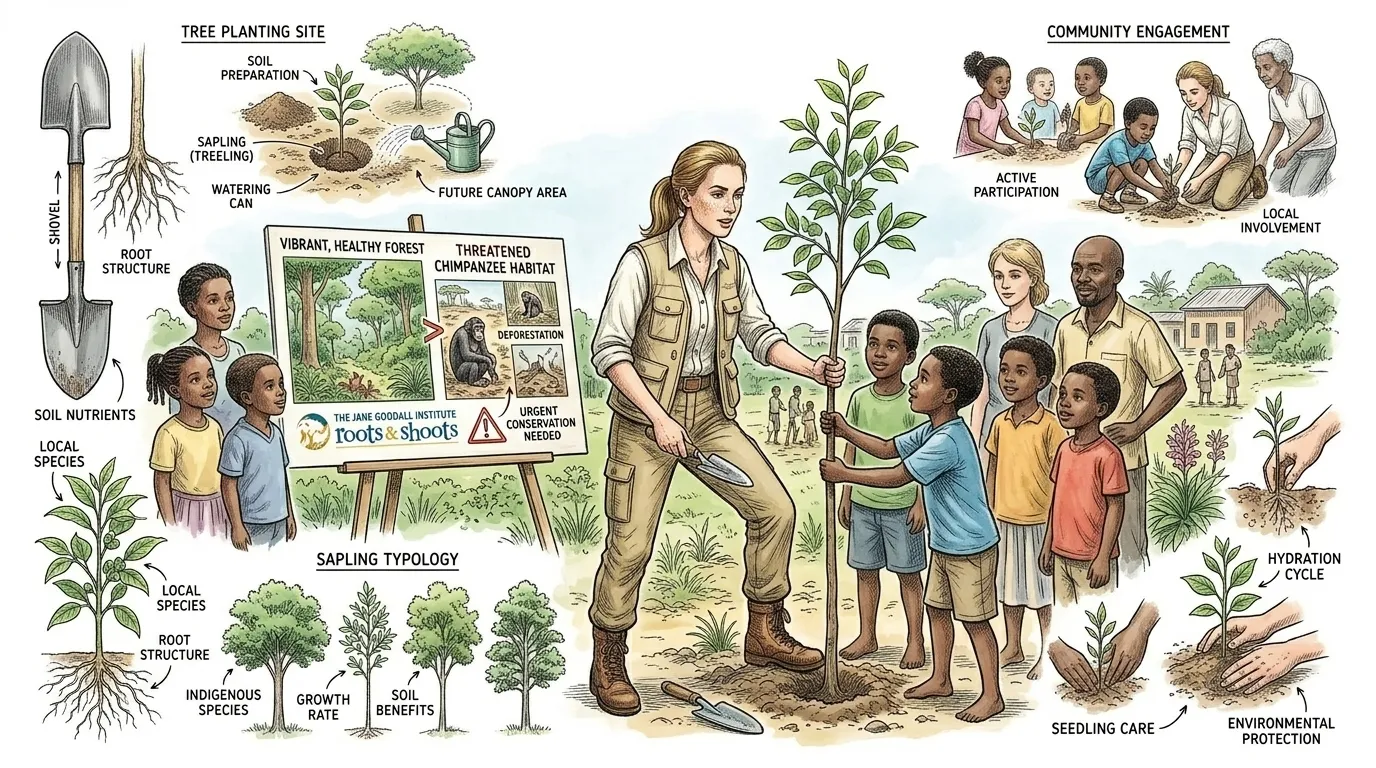
By the late 1980s, Goodall recognized that her research findings demanded action. The destruction of chimpanzee habitats and the plight of captive chimps…
By the late 1980s, Goodall recognized that her research findings demanded action. The destruction of chimpanzee habitats and the plight of captive chimps prompted her to transition from field researcher to global conservation activist. She founded the Jane Goodall Institute and the Roots & Shoots program, dedicating her life to educating the world about environmental protection and animal welfare.

By the late 1980s, Goodall recognized that her research findings demanded action. The destruction of chimpanzee habitats and the plight of captive chimps prompted her to transition from field researcher to global conservation activist. She founded the Jane Goodall Institute and the Roots & Shoots program, dedicating her life to educating the world about environmental protection and animal welfare. Her tireless advocacy transformed scientific observation into a powerful call for change, demonstrating that understanding must lead to responsibility.

Page 10
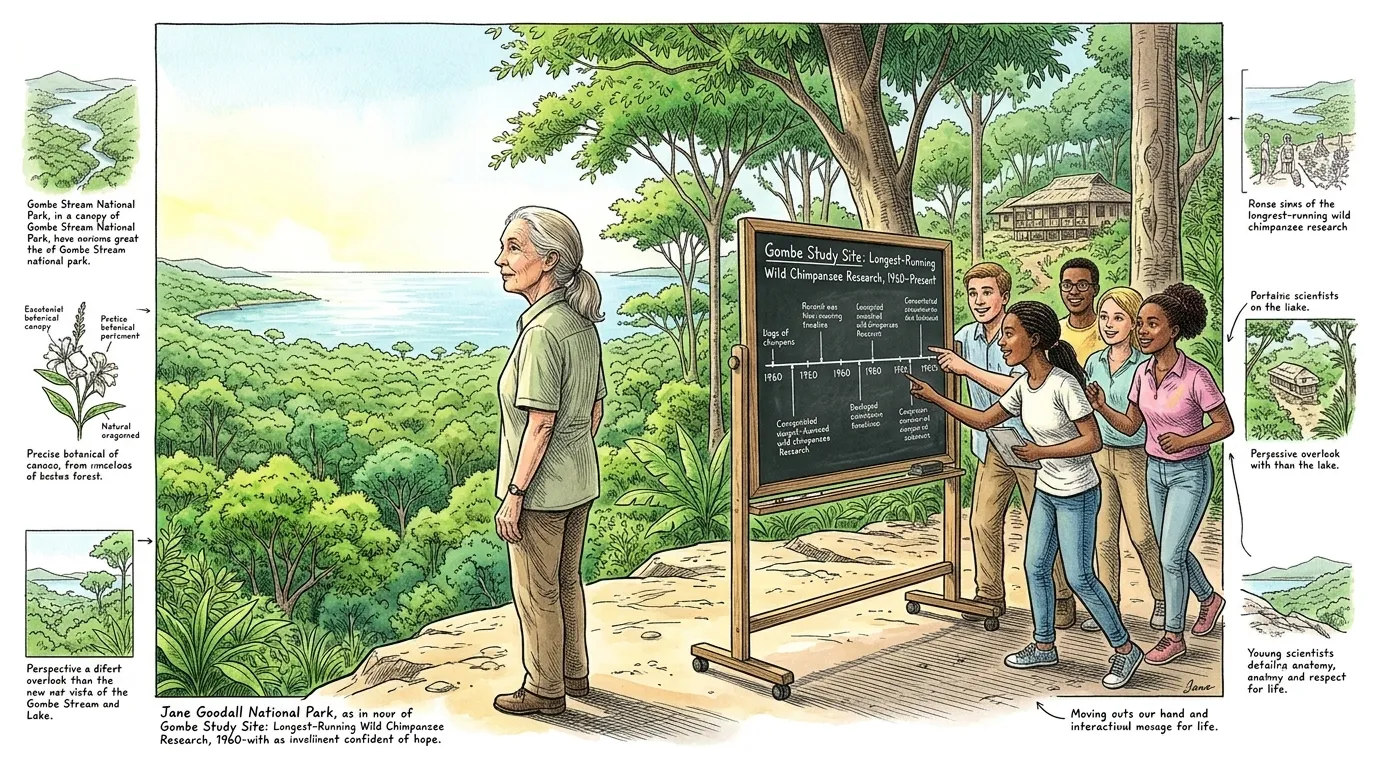
Today, Gombe Stream National Park remains the longest-running wild chimpanzee study site in the world, a living testament to Jane Goodall's pioneering spirit.
Today, Gombe Stream National Park remains the longest-running wild chimpanzee study site in the world, a living testament to Jane Goodall's pioneering spirit. Her work continues to inspire generations of scientists, conservationists, and advocates, redefining humanity's place within the natural world.

Today, Gombe Stream National Park remains the longest-running wild chimpanzee study site in the world, a living testament to Jane Goodall's pioneering spirit. Her work continues to inspire generations of scientists, conservationists, and advocates, redefining humanity's place within the natural world. Goodall's enduring message is one of hope and action: that every individual has the power to make a difference, urging humanity to treat all life with respect and empathy, a direct echo of the lessons learned in the Gombe forests.

About this story

  • Location: Global
  • Audience: general readers

Questions and answers

Questions and answers about Jane Goodall

Read Wonder Science on your phone

Wonder Science is available on Android. Get Wonder Science on Google Play.

More Wonder Science stories

All Wonder Science stories · Open the library