Johannes Kepler
Johannes Kepler — an illustrated science story, set in Global. 10 illustrated pages, free to read on Wonder Science.
Page 1
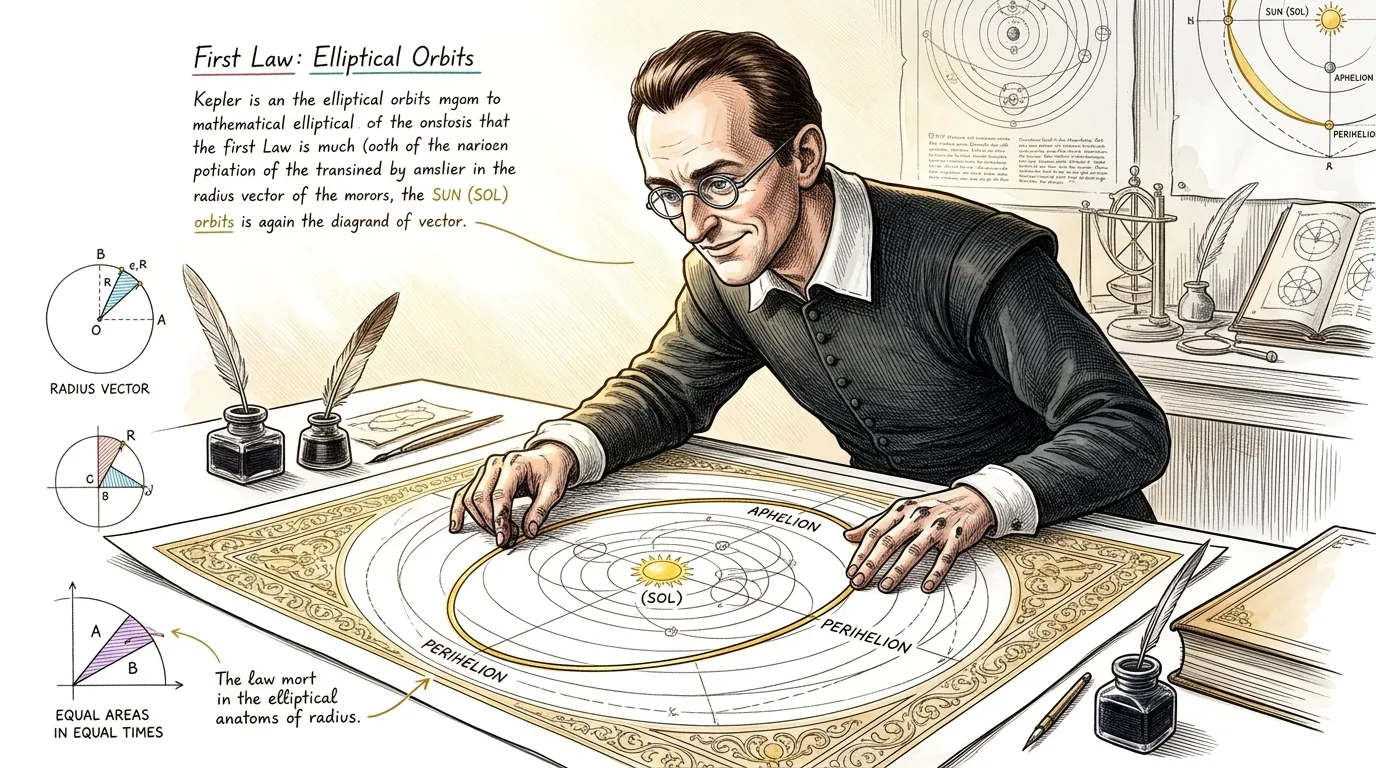
For millennia, humanity gazed at the stars, attempting to decipher the intricate dance of the planets with models that grew ever more complex. But it was in the early 17th century, amidst profound personal and societal turmoil, that Johannes Kepler, a German mathematician and astronomer, unlocked the true geometry of the cosmos. His relentless pursuit of precision, fueled by meticulous observational data, shattered ancient dogma and revealed the elegant, elliptical paths planets truly follow. This breakthrough, encapsulated in his groundbreaking First Law of Planetary Motion, permanently shifted our understanding of the universe.
Page 2
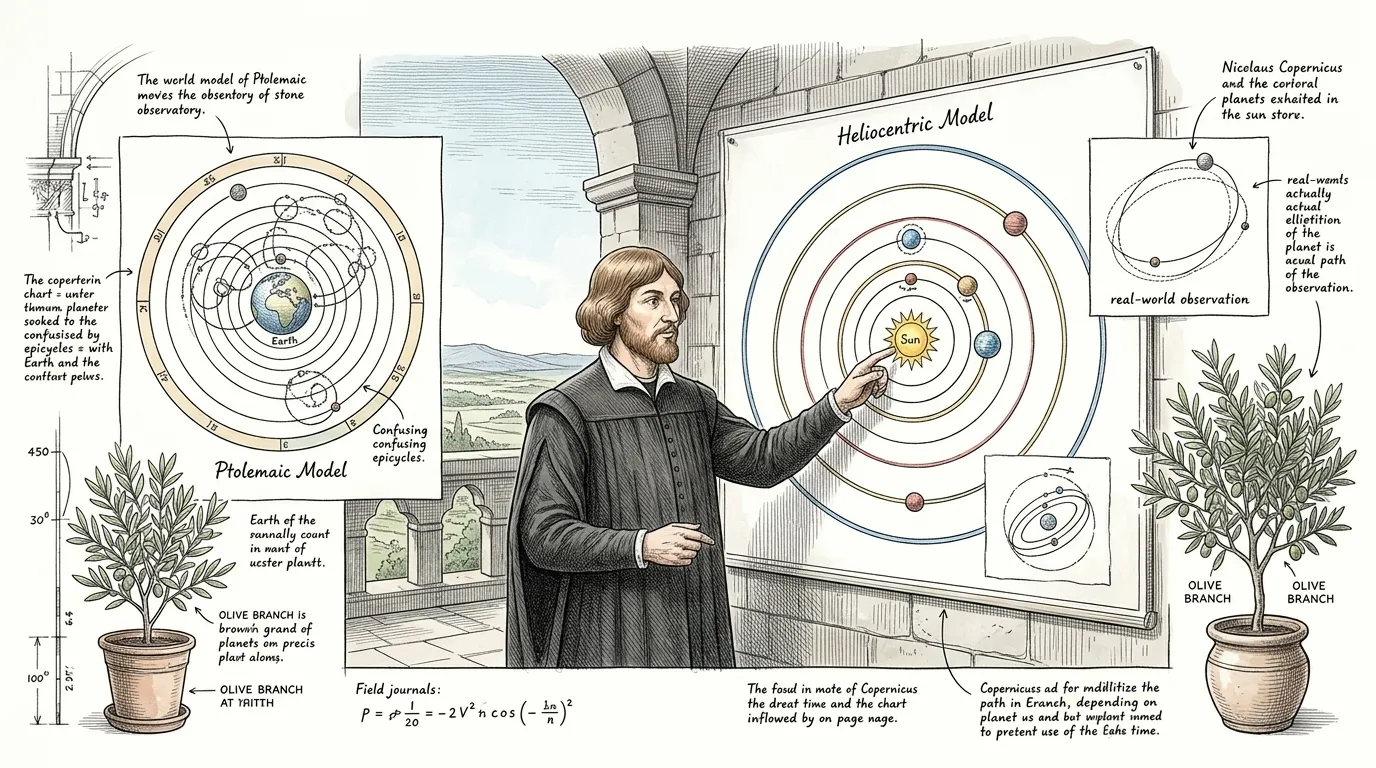
Before Kepler, the prevailing cosmic view, rooted in ancient Greek philosophy and solidified by Ptolemy, posited Earth at the center of the universe, with all celestial bodies moving in perfect circles or combinations of circles called epicycles. Even Nicolaus Copernicus, who bravely shifted the Earth from the cosmic center to orbit the Sun in the 16th century, maintained the deeply ingrained belief in perfectly circular planetary paths. However, real-world observations stubbornly refused to fit this elegant, yet fundamentally flawed, circular framework, leaving astronomers with increasingly unwieldy models.
Page 3
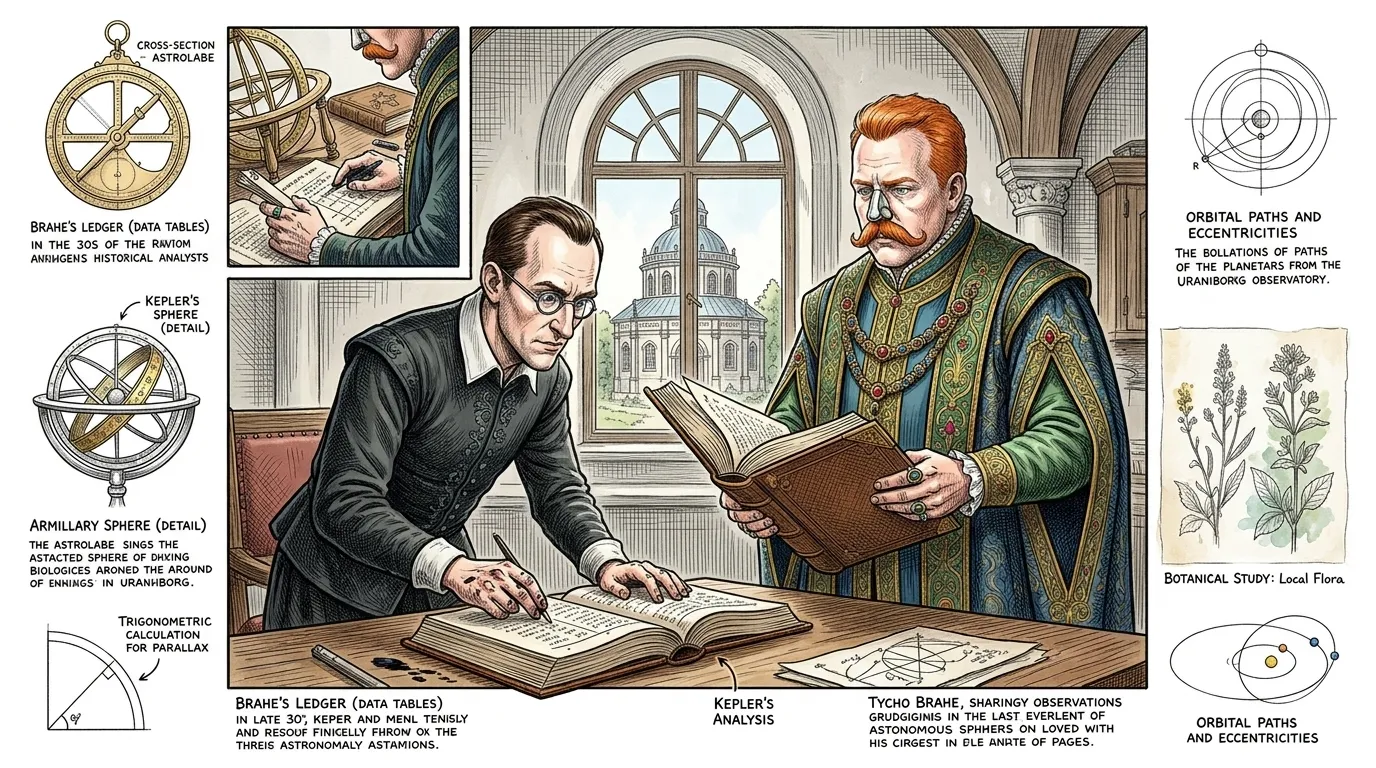
Kepler's opportunity arose from a chance, yet tumultuous, collaboration with the eccentric Danish nobleman and unparalleled observational astronomer, Tycho Brahe. Brahe, operating from his sophisticated Uraniborg observatory, had amassed decades of astronomical data with unprecedented precision, long before the invention of the telescope. Though fiercely protective of his life's work, Brahe grudgingly shared his records with Kepler, providing the empirical bedrock necessary to challenge millennia of theoretical assumptions and unravel the true nature of planetary motion.
Page 4
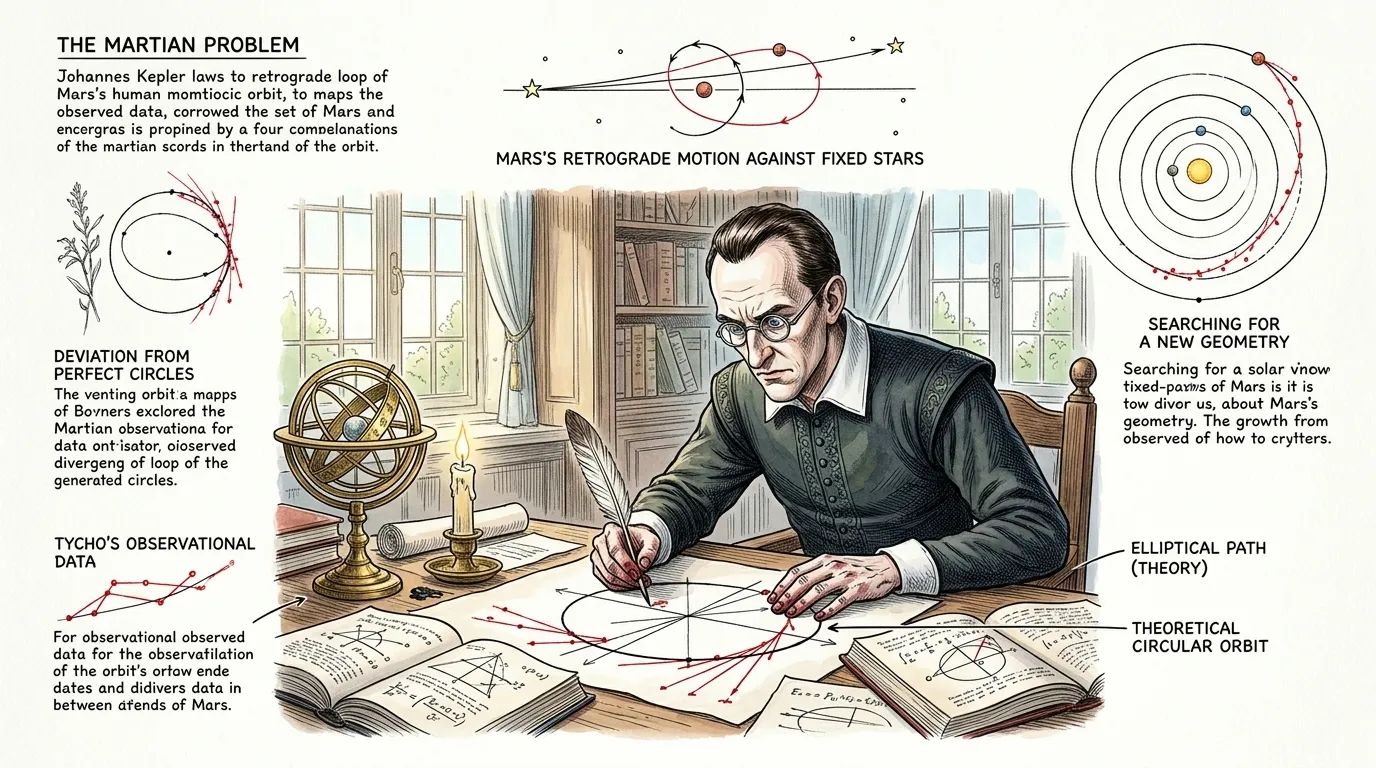
The planet Mars became Kepler's ultimate adversary and muse. Its seemingly erratic 'retrograde' motion—appearing to stop, reverse direction, and then resume its forward path—had long vexed astronomers. Kepler spent eight agonizing years wrestling with Tycho's meticulous Mars data, attempting to fit its observed positions into a circular orbit around the Sun. Each failed attempt, each minute deviation from a perfect circle, pushed him to the brink of despair, yet also closer to a profound realization that would redefine celestial mechanics.
Page 5
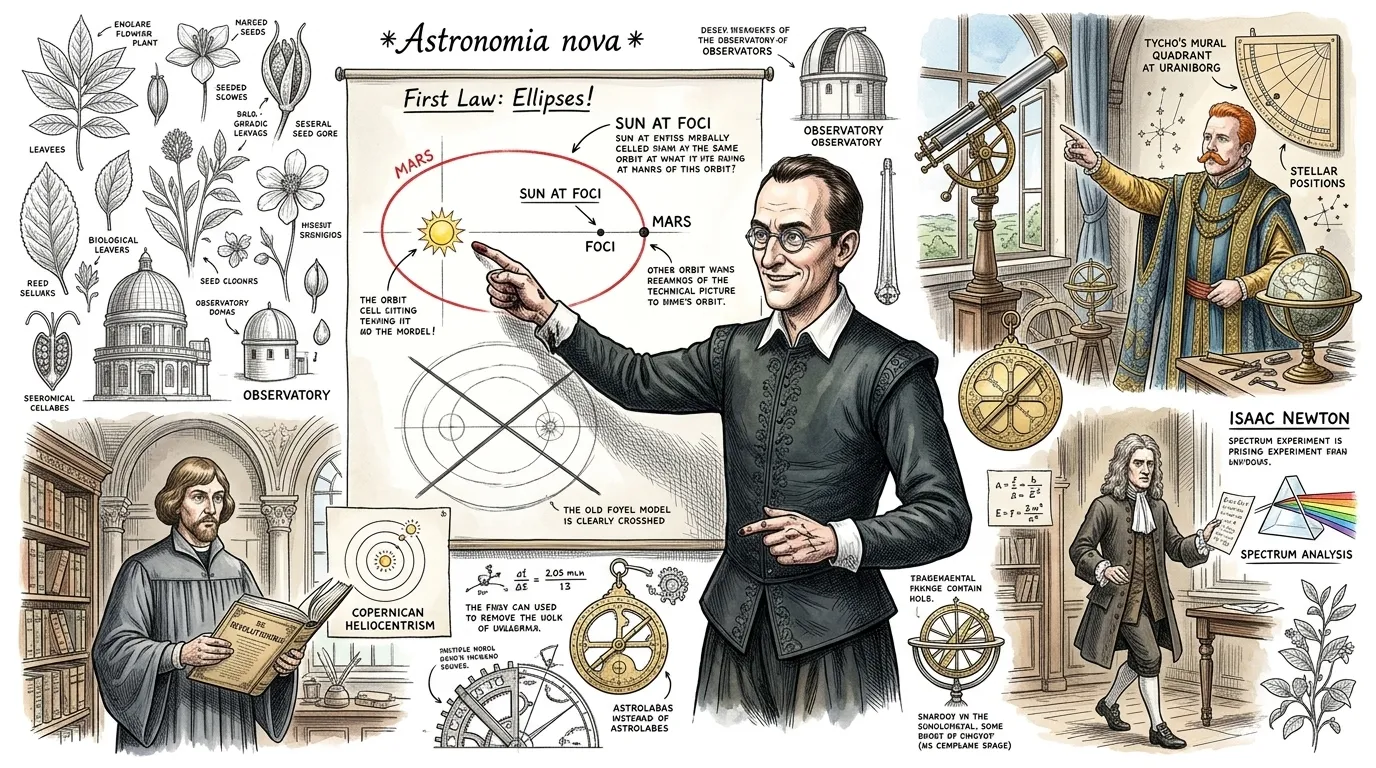
After countless calculations and relentless scrutiny, Kepler finally made a revolutionary leap: he abandoned the millennia-old prejudice for perfect circles. He discovered that Mars's orbit, and indeed all planetary orbits, were not circles, but ellipses, with the Sun situated not at the center, but at one of the two foci. This bold insight, first published in his 1609 work, Astronomia nova, was a monumental break from Aristotelian and Copernican tradition, profoundly simplifying the cosmic model while accurately matching Tycho's data.
Page 6
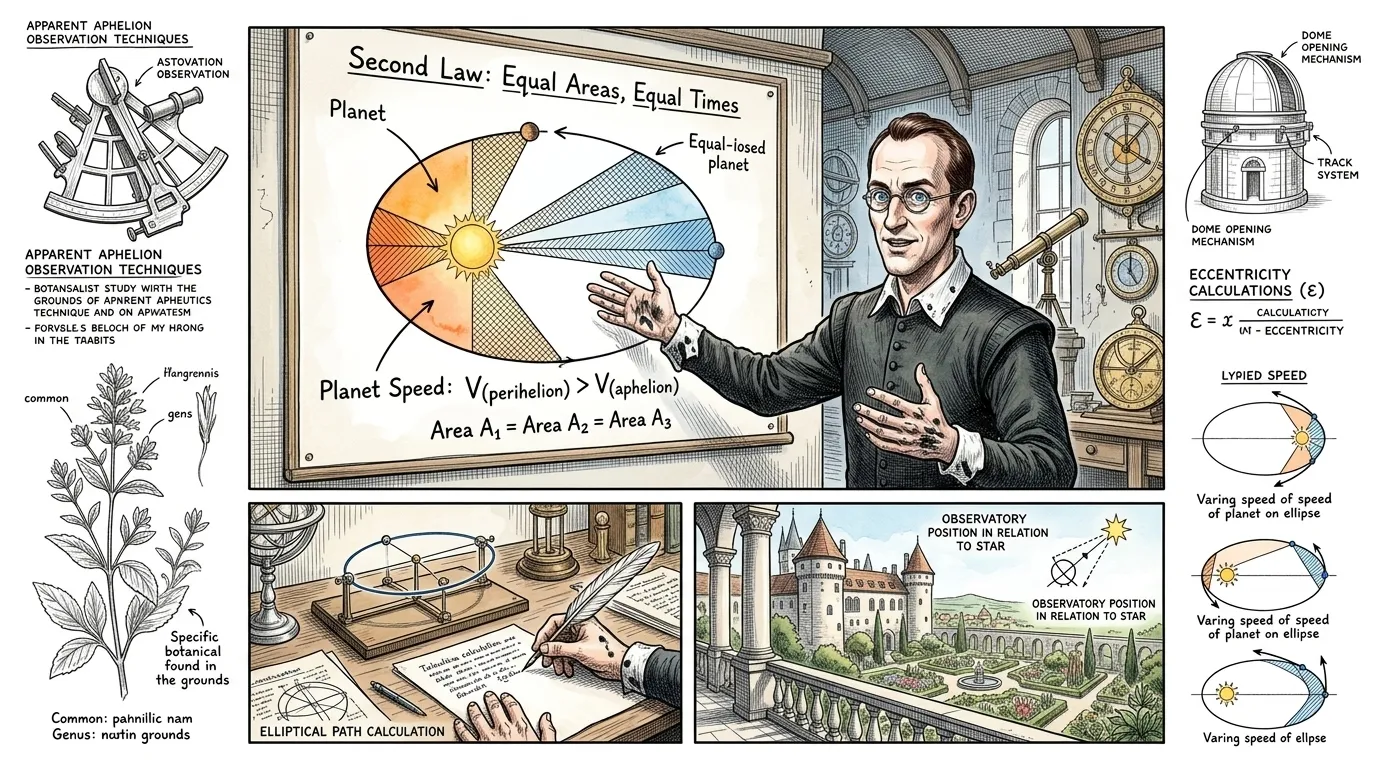
Kepler's Second Law, also from Astronomia nova, described the varying speed of planets in their elliptical journeys. It states that a line segment joining a planet and the Sun sweeps out equal areas during equal intervals of time. This implied a profound shift: planets do not move at a constant speed, but accelerate as they approach the Sun (perihelion) and decelerate as they move farther away (aphelion). This elegant principle explained why planets appear to speed up and slow down throughout their year, all while maintaining a consistent mathematical relationship.
Page 7
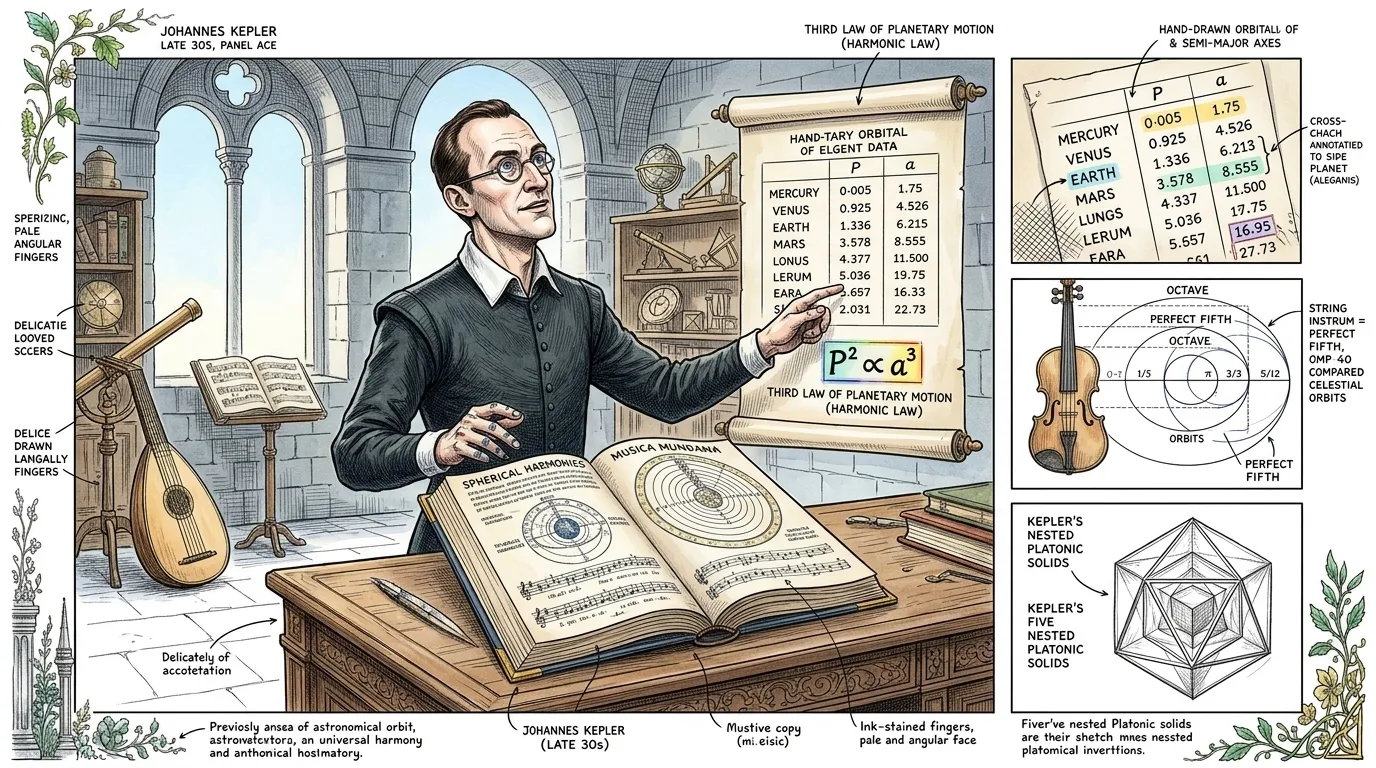
A decade later, in his Harmonice Mundi (1619), Kepler published his Third Law: the square of a planet's orbital period is directly proportional to the cube of the semi-major axis of its orbit (P2 a3). This 'Harmonic Law' provided a universal mathematical relationship linking the motion of all planets to the size of their orbits. It revealed an underlying, quantifiable harmony within the solar system, moving beyond mere description to a predictive framework, and setting the stage for a deeper understanding of cosmic forces.
Page 8
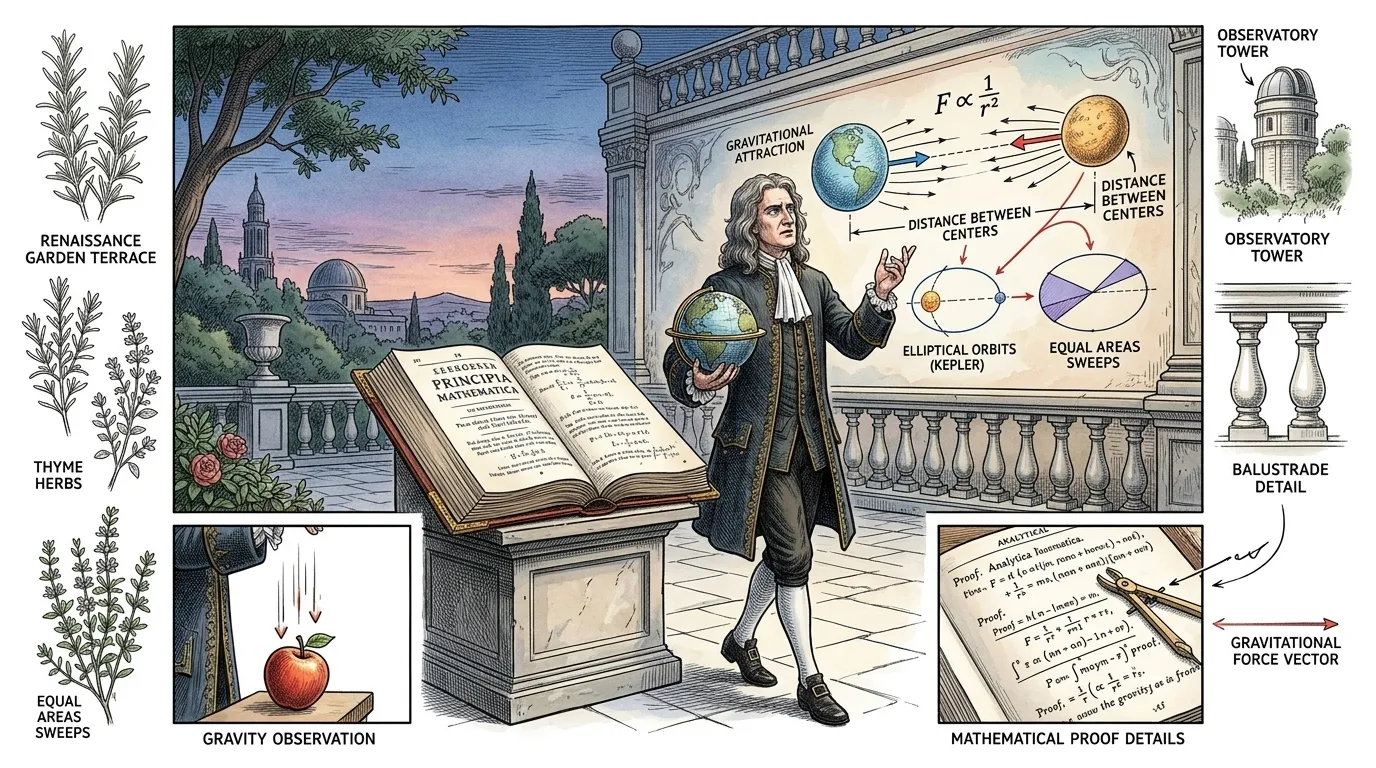
Kepler's empirical laws were monumental, but they described how planets moved, not why. Decades later, Isaac Newton synthesized these observations with his own groundbreaking insights, formulating the universal law of gravitation. Newton demonstrated that Kepler's three laws were direct consequences of a single, unifying force: gravity, acting inversely with the square of the distance between two objects. This monumental synthesis, detailed in Newton's Principia Mathematica (1687), completed the grand celestial tapestry woven by Copernicus, Brahe, and Kepler.
Page 9
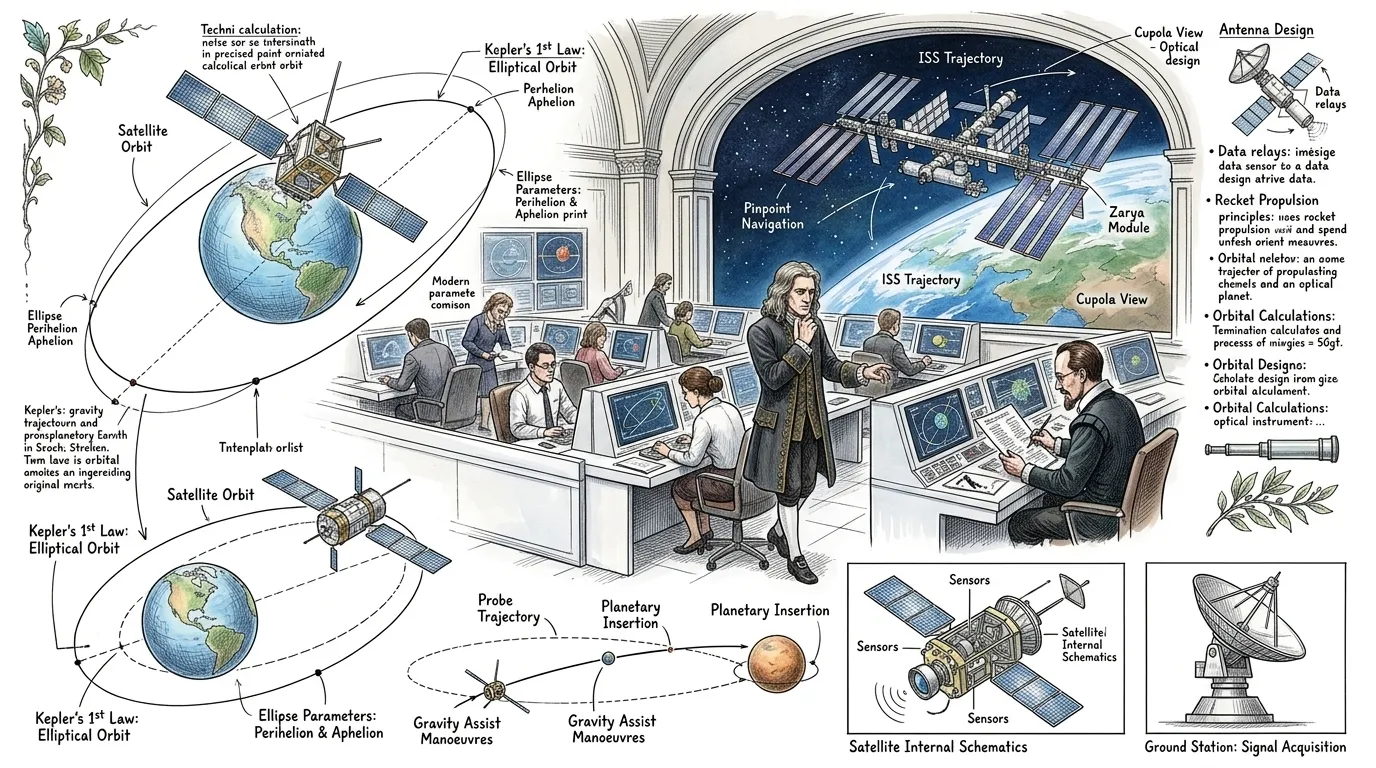
Today, Kepler's laws remain indispensable, forming the bedrock of spaceflight. Every satellite orbit, every interplanetary probe trajectory, every crewed mission to the International Space Station or beyond, is meticulously calculated using principles derived directly from Kepler's pioneering work. From planning the precise launch windows to navigating distant planets with pinpoint accuracy, Kepler's celestial mechanics are the unseen engine that makes modern space exploration possible, a testament to his enduring genius.
Page 10
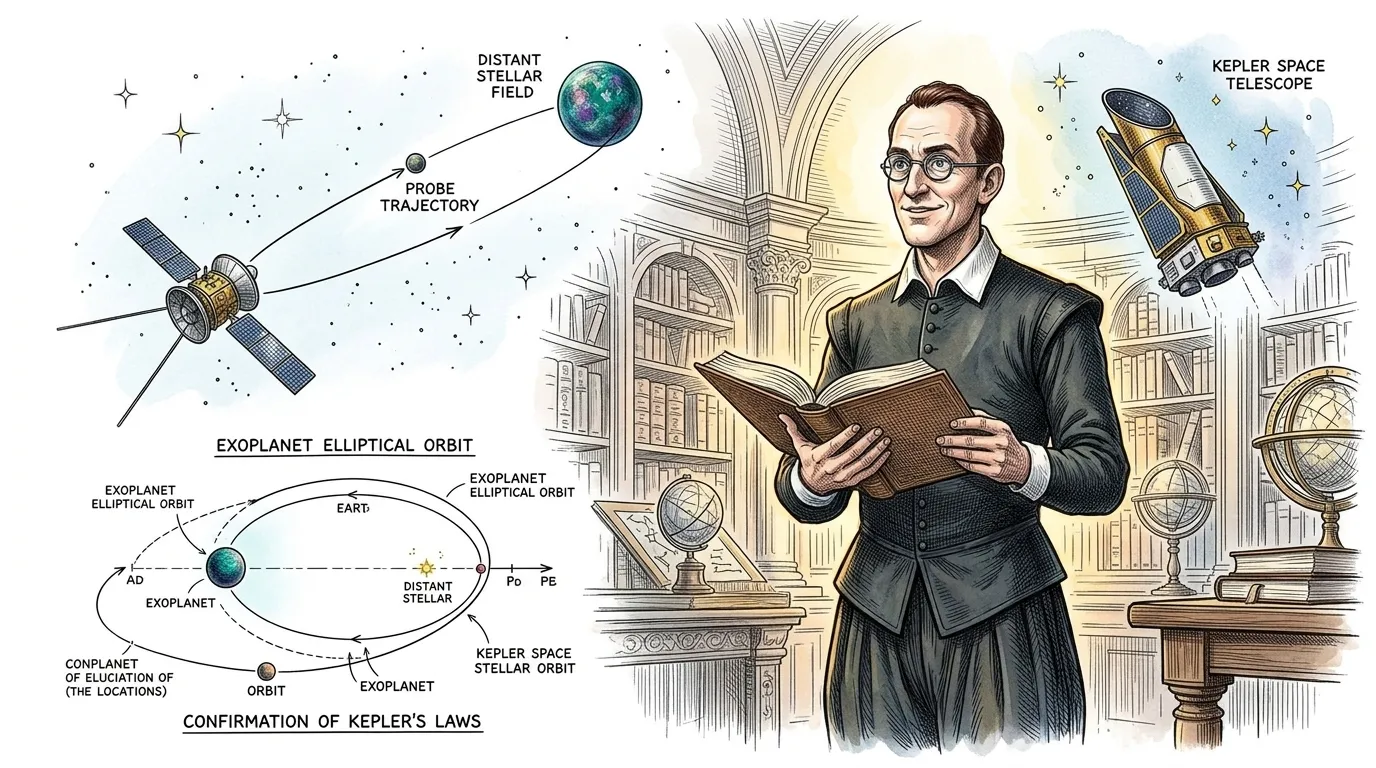
Johannes Kepler's legacy transcends mere historical curiosity; it is a living foundation of astronomy and physics. His courage to abandon long-held assumptions for empirical truth, meticulously derived from Tycho Brahe's data, permanently transformed humanity's place in the cosmos. From predicting planetary positions with unprecedented accuracy to enabling the design of complex orbital maneuvers for deep-space probes and the study of distant exoplanets by missions like the Kepler Space Telescope, his laws continue to unravel the universe's grand design, inspiring wonder and further exploration.
About this story
- Location: Global
- Audience: general readers
Questions and answers
Read Wonder Science on your phone
Wonder Science is available on Android. Get Wonder Science on Google Play.