Katherine Freese
Katherine Freese — an illustrated science story, set in Global. 10 illustrated pages, free to read on Wonder Science.
Page 1
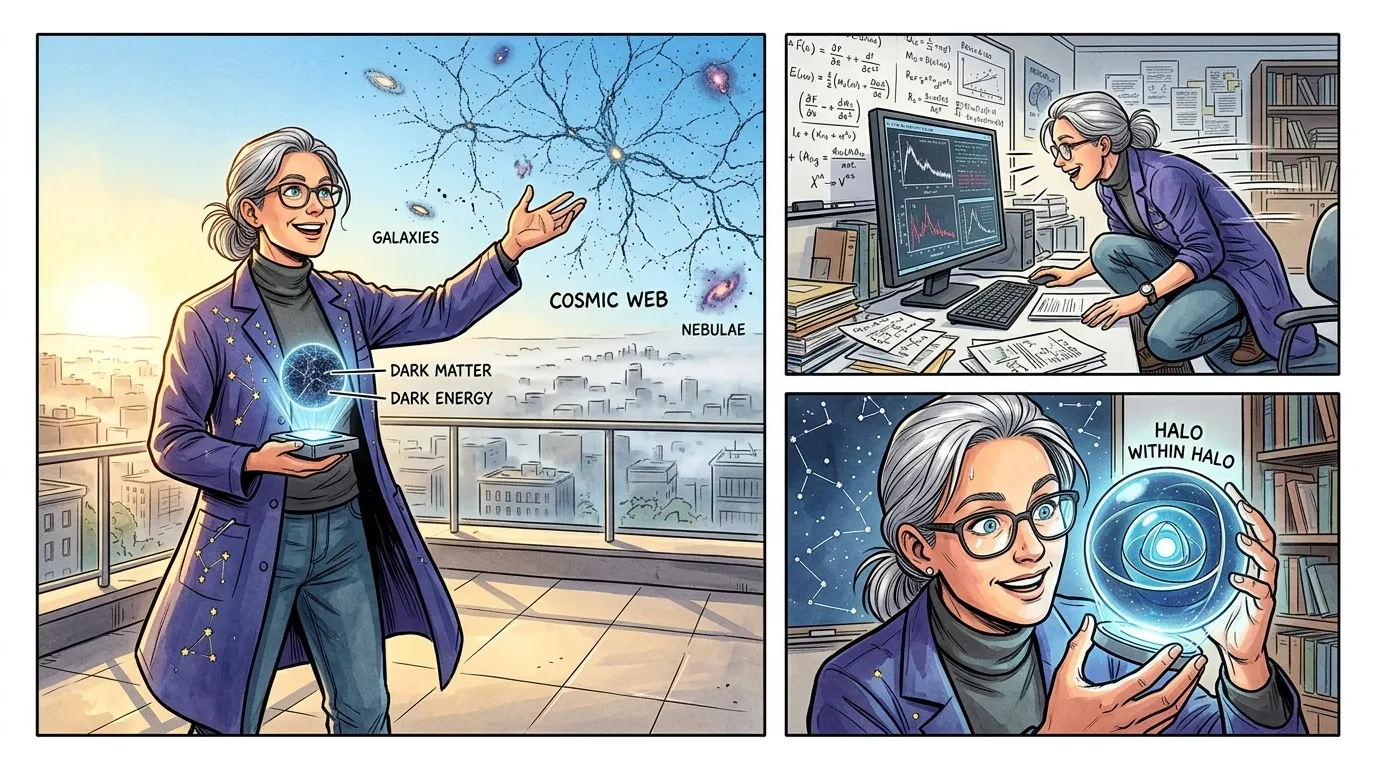
Across the vast cosmic canvas, galaxies drift and cluster, forming a grand tapestry known as the cosmic web. Yet, what we observe through the most powerful telescopes accounts for only a fraction of the universe's true mass. This profound discrepancy, a puzzle that has challenged physicists for decades, points to the existence of unseen forces and substances: dark matter and dark energy. At the forefront of unraveling these cosmic enigmas stands Katherine Freese, a theoretical astrophysicist whose pioneering work has profoundly shaped our understanding of the universe's invisible architecture and its very genesis.
Page 2
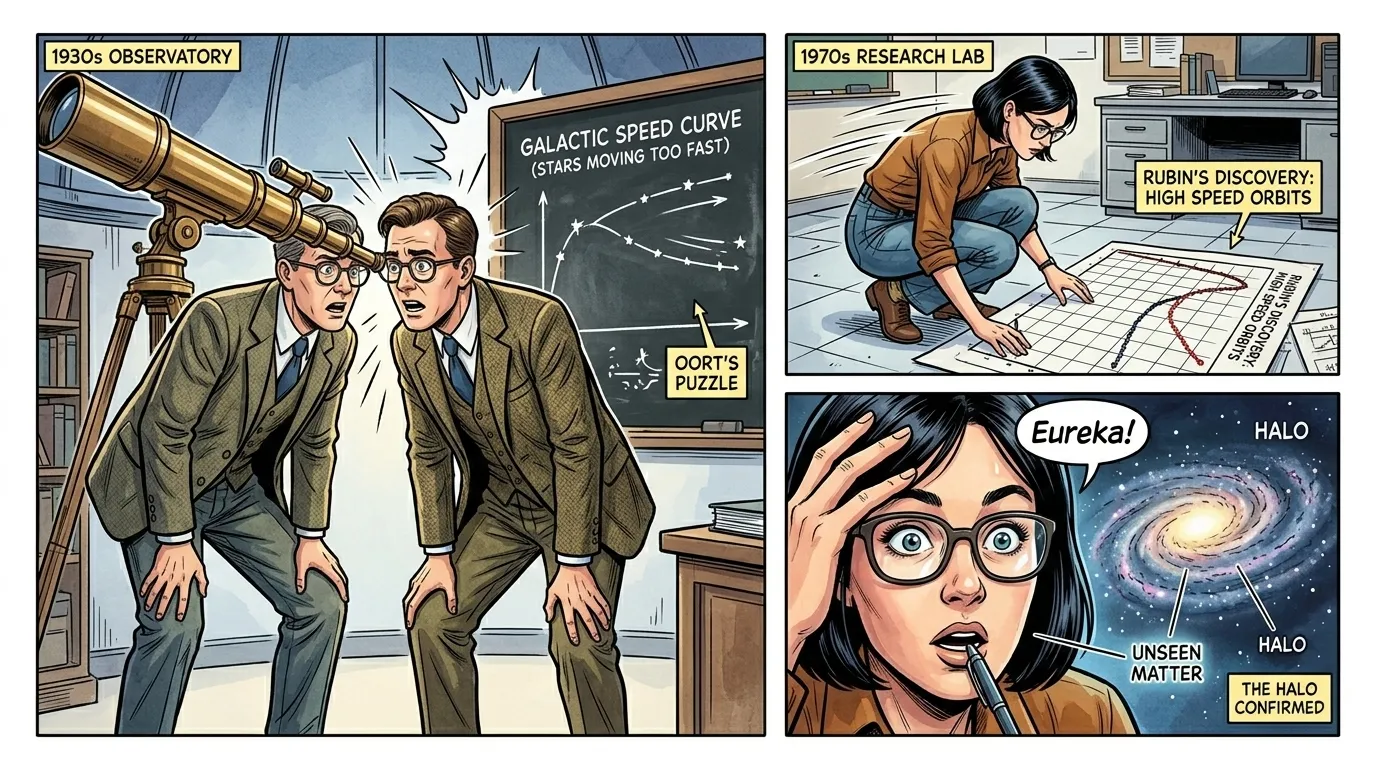
The first significant clues to dark matter emerged not from distant supernovas, but from the seemingly ordinary rotation of galaxies. As early as the 1930s, Dutch astronomer Jan Oort observed that stars in our Milky Way moved faster than expected based on the visible matter. Decades later, in the 1970s, American astronomer Vera Rubin meticulously measured the rotation curves of spiral galaxies. Her groundbreaking data definitively showed that stars at the outer edges of galaxies were orbiting at speeds far too high to be gravitationally bound by the visible stars and gas alone. This anomalous rotation implied that a vast, unseen 'halo' of matter must be exerting additional gravitational pull, keeping these swiftly moving stars from flying off into space. The visible universe, it seemed, was merely the tip of a much larger, invisible iceberg.
Page 3
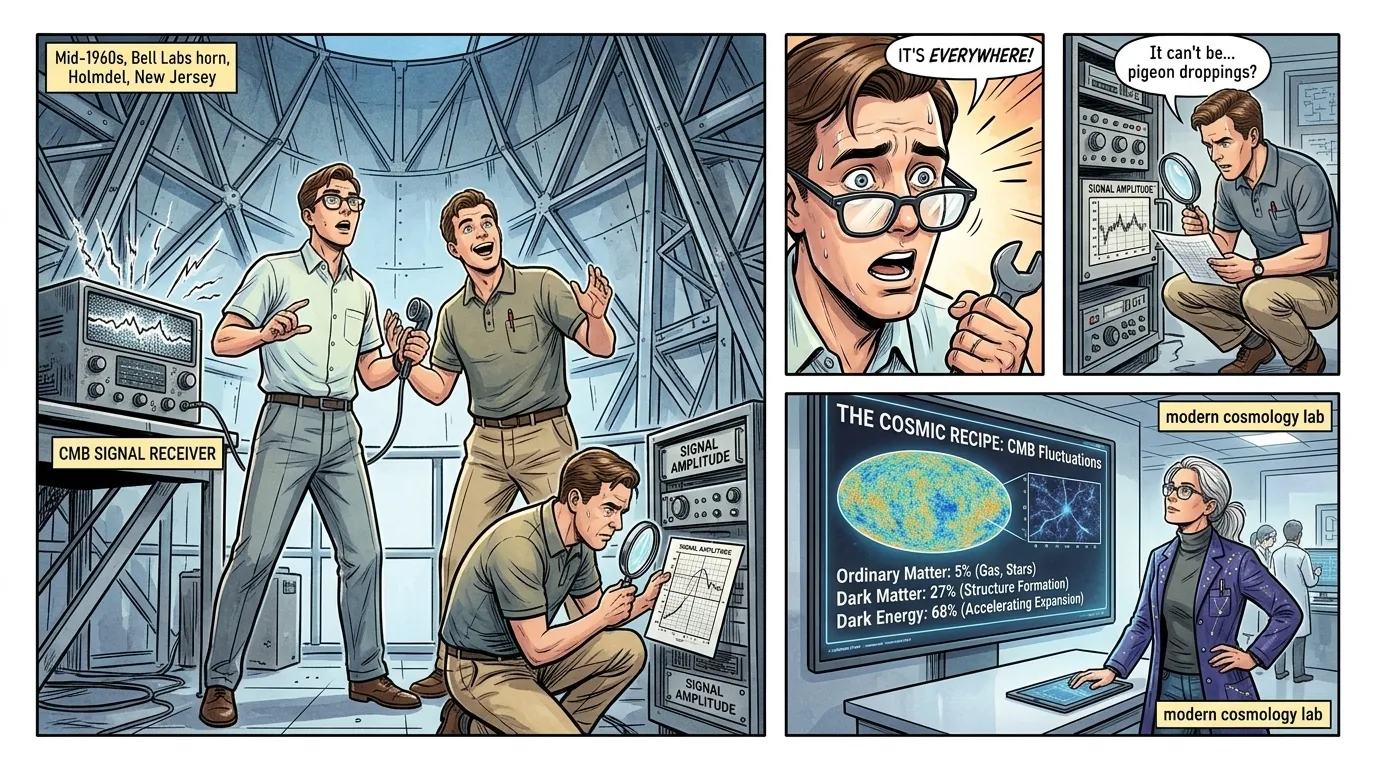
Further, compelling evidence for the universe's invisible components materialized from the faint afterglow of the Big Bang itself: the Cosmic Microwave Background (CMB) radiation. Discovered serendipitously by Arno Penzias and Robert Wilson in 1964, the CMB provided a snapshot of the universe when it was just 380,000 years old. Subsequent missions like COBE, WMAP, and Planck precisely mapped tiny temperature fluctuations within this radiation. Katherine Freese, alongside countless cosmologists, leveraged these intricate patterns to confirm the universe's composition. The acoustic peaks and troughs in the CMB power spectrum revealed that ordinary matter accounts for a mere 5% of the universe, with dark matter comprising 27% and a mysterious dark energy making up the remaining 68%. This precise cosmic inventory painted a picture far stranger than previously imagined, solidifying the need for a theoretical understanding of these dominant, unseen constituents.
Page 4
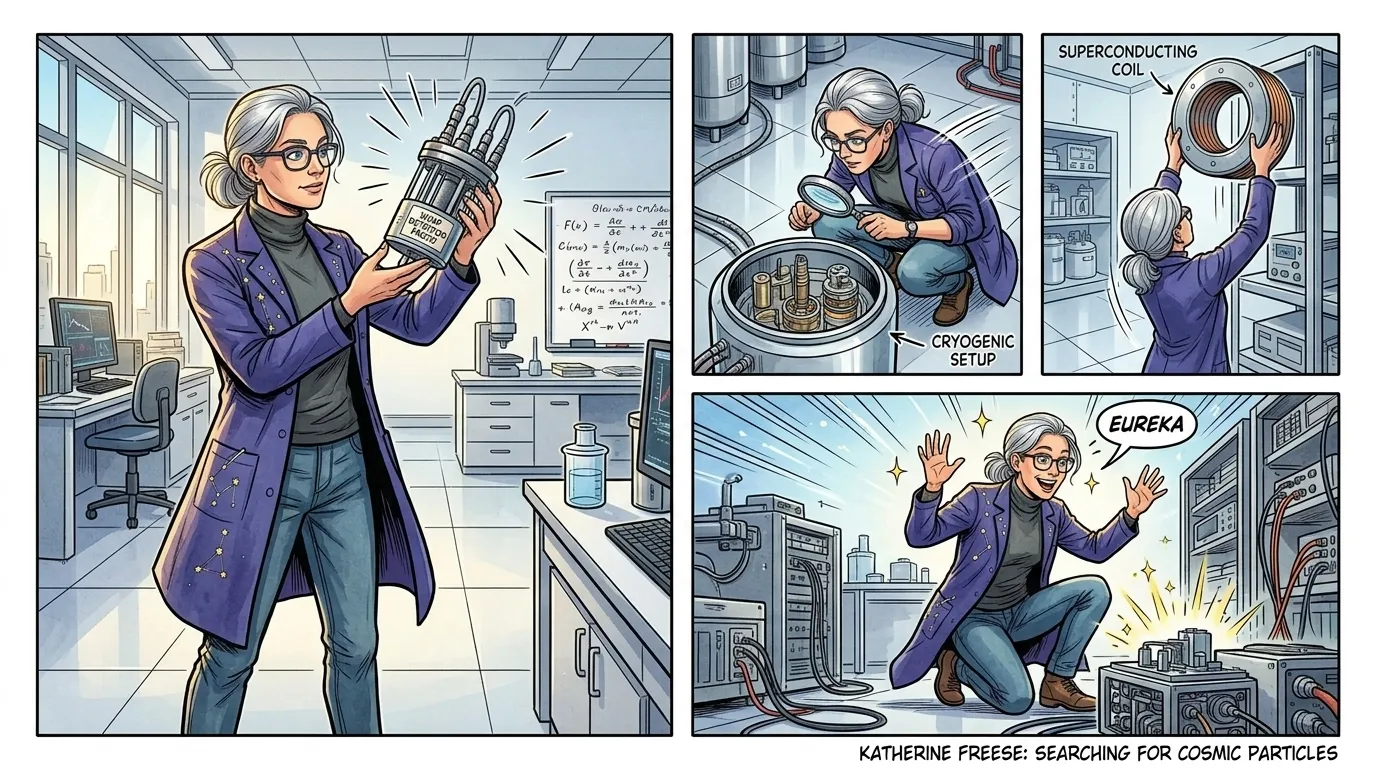
With overwhelming observational evidence for dark matter, the focus shifted to its identity. Katherine Freese emerged as a leading voice in developing theoretical models for potential dark matter candidates. Two primary categories dominated early discussions: Weakly Interacting Massive Particles (WIMPs) and Massive Astrophysical Compact Halo Objects (MACHOs). Freese contributed significantly to the WIMP paradigm, theorizing particles that would interact only via gravity and the weak nuclear force, making them incredibly elusive yet detectable through rare collisions. She also explored MACHOs, suggesting they could be faint, compact objects like primordial black holes, brown dwarfs, or rogue planets. Her rigorous theoretical work laid the groundwork for experimental physicists, providing crucial guidance on where and how to search for these invisible constituents.
Page 5
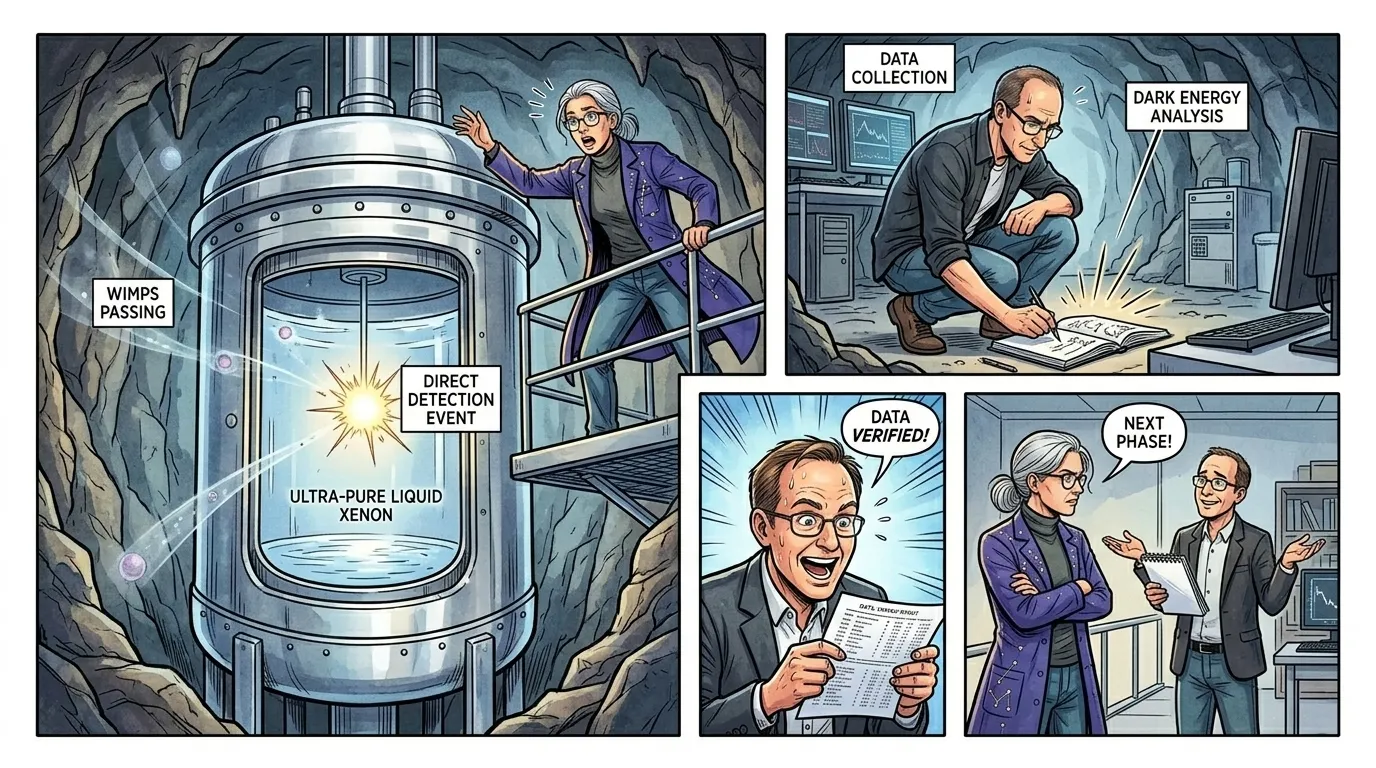
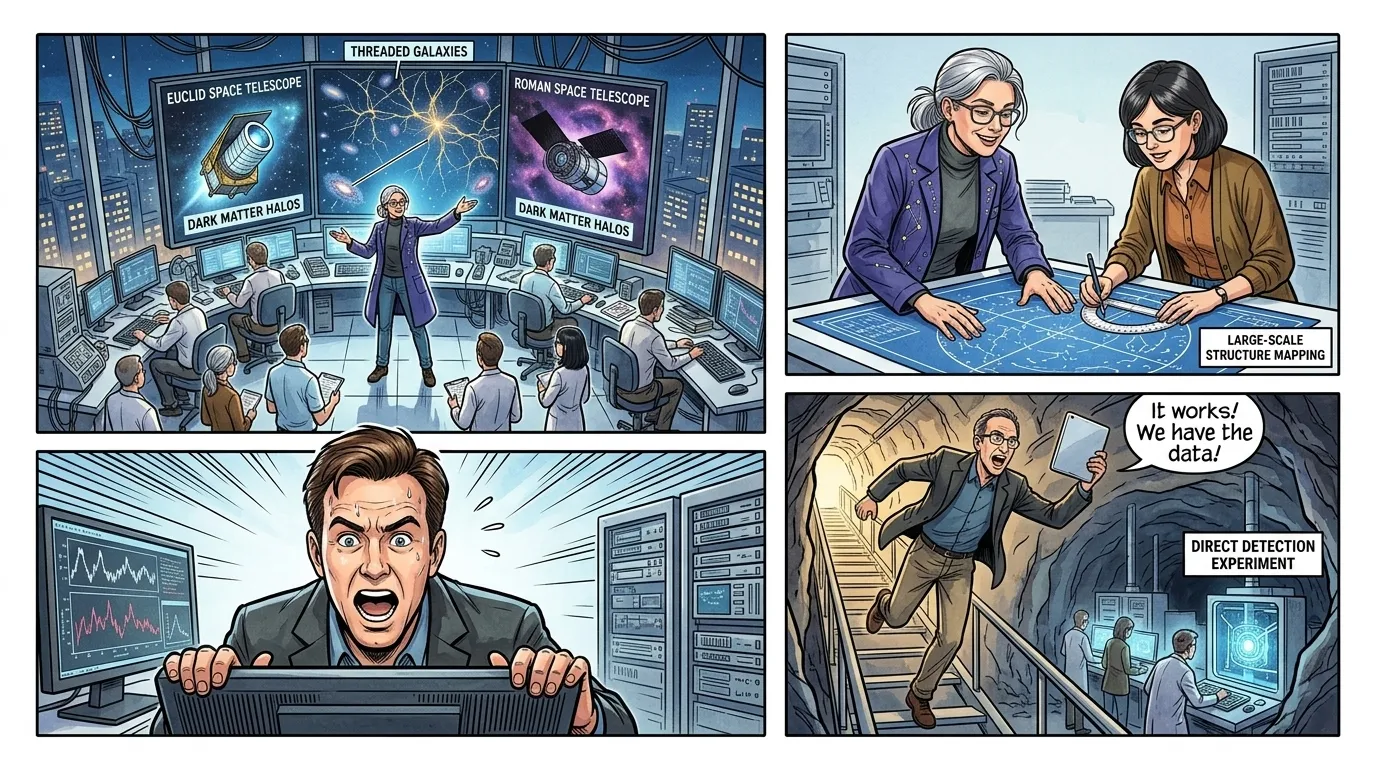
If dark matter consists of WIMPs, then billions of these particles are streaming through Earth every second. The challenge lies in their 'weakly interacting' nature, making them incredibly difficult to detect. Katherine Freese's work on WIMP theory helped inform the design of 'direct detection' experiments. These colossal detectors, filled with ultra-pure materials like liquid xenon or germanium, are buried deep underground in former mines. This subterranean placement shields them from cosmic rays and other background radiation, isolating the faint signals of a potential WIMP collision with an atomic nucleus. The hope is that a rare, glancing blow would produce a minuscule flash of light or ionization, providing the first direct proof of dark matter's existence.
Page 6
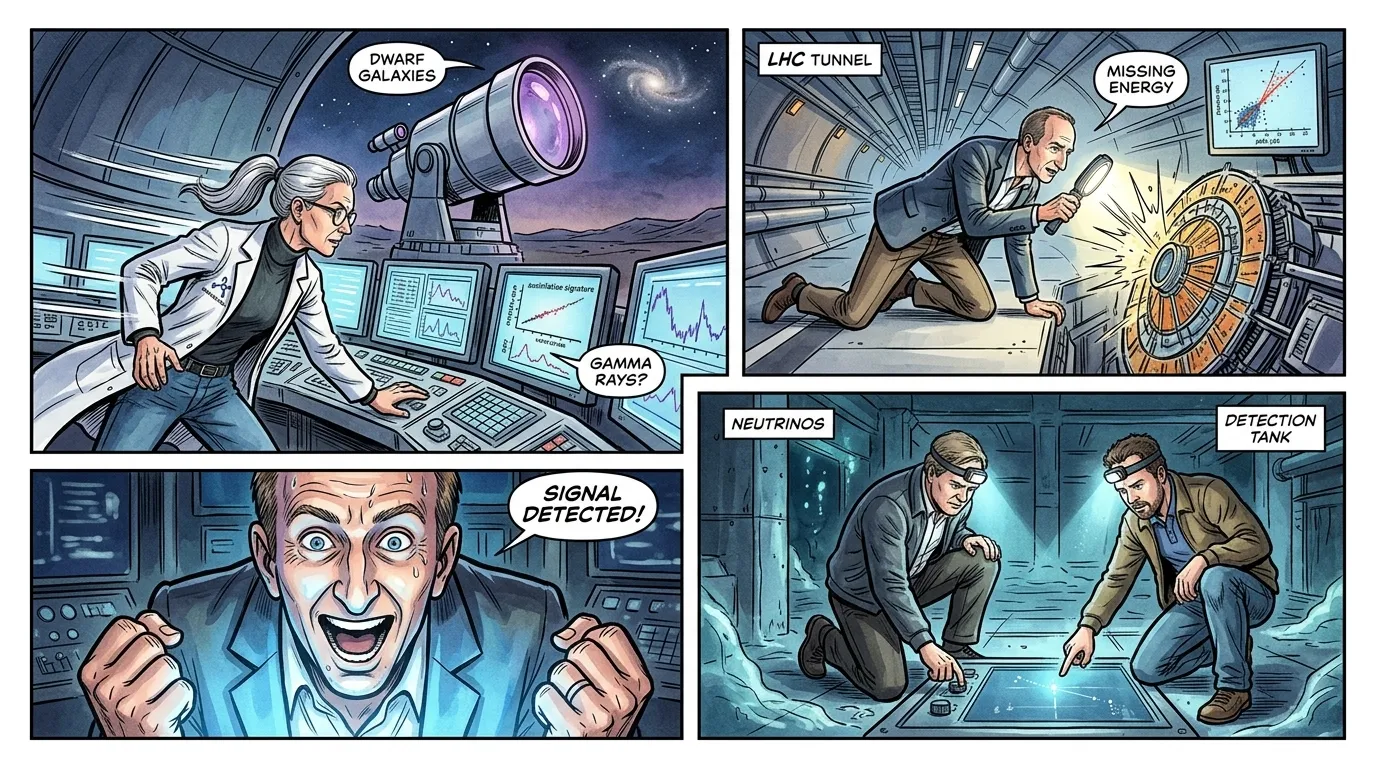
Beyond direct detection, other ambitious avenues are pursued in the quest for dark matter. 'Indirect detection' experiments search for the byproducts of dark matter annihilation. If WIMPs collide and destroy each other in dense regions like the galactic center or dwarf galaxies, they could produce detectable gamma rays, neutrinos, or antimatter particles. High-energy telescopes and neutrino observatories tirelessly scan the cosmos for these unique signatures. Simultaneously, particle accelerators such as the Large Hadron Collider (LHC) attempt to create dark matter particles. By smashing ordinary protons together at nearly the speed of light, physicists hope to generate new, heavy particles that escape the detectors, leaving behind tell-tale 'missing energy' signatures, fulfilling another aspect of Katherine Freese's theoretical predictions for novel particle physics.
Page 7
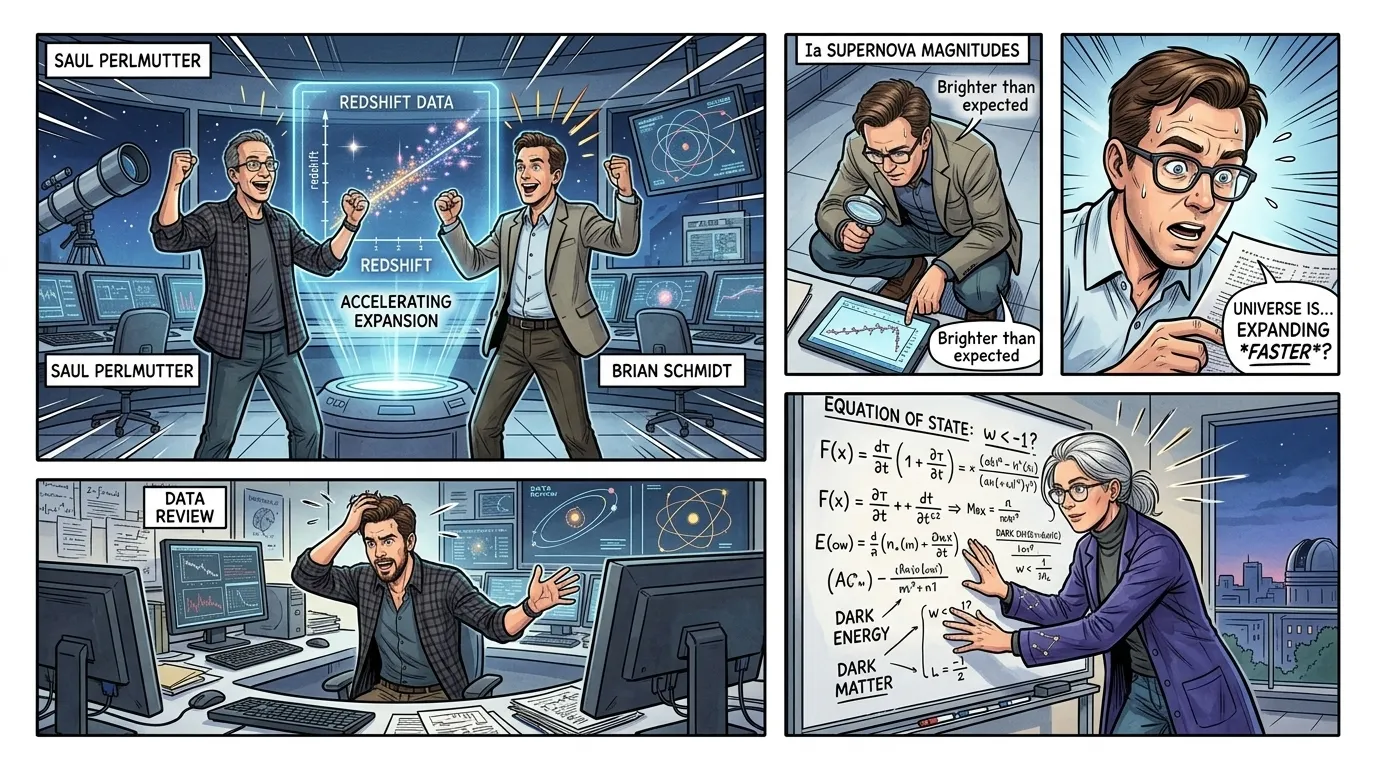
As if dark matter weren't enough, the late 1990s brought another profound shock to cosmology: the discovery of dark energy. Observations of distant Type Ia supernovae by two independent teams, led by Saul Perlmutter, Brian Schmidt, and Adam Riess, revealed that the universe's expansion was not merely continuing, but was accelerating. This monumental finding implied the existence of a mysterious, pervasive force that actively pushes space apart, counteracting gravity's pull. This repulsive force was dubbed 'dark energy,' comprising nearly 70% of the universe's energy density. Katherine Freese swiftly extended her theoretical work, exploring how dark matter models could be intertwined with or provide insights into this even more enigmatic component. The universe, it turned out, was dominated by two invisible entities, one pulling, the other pushing.
Page 8
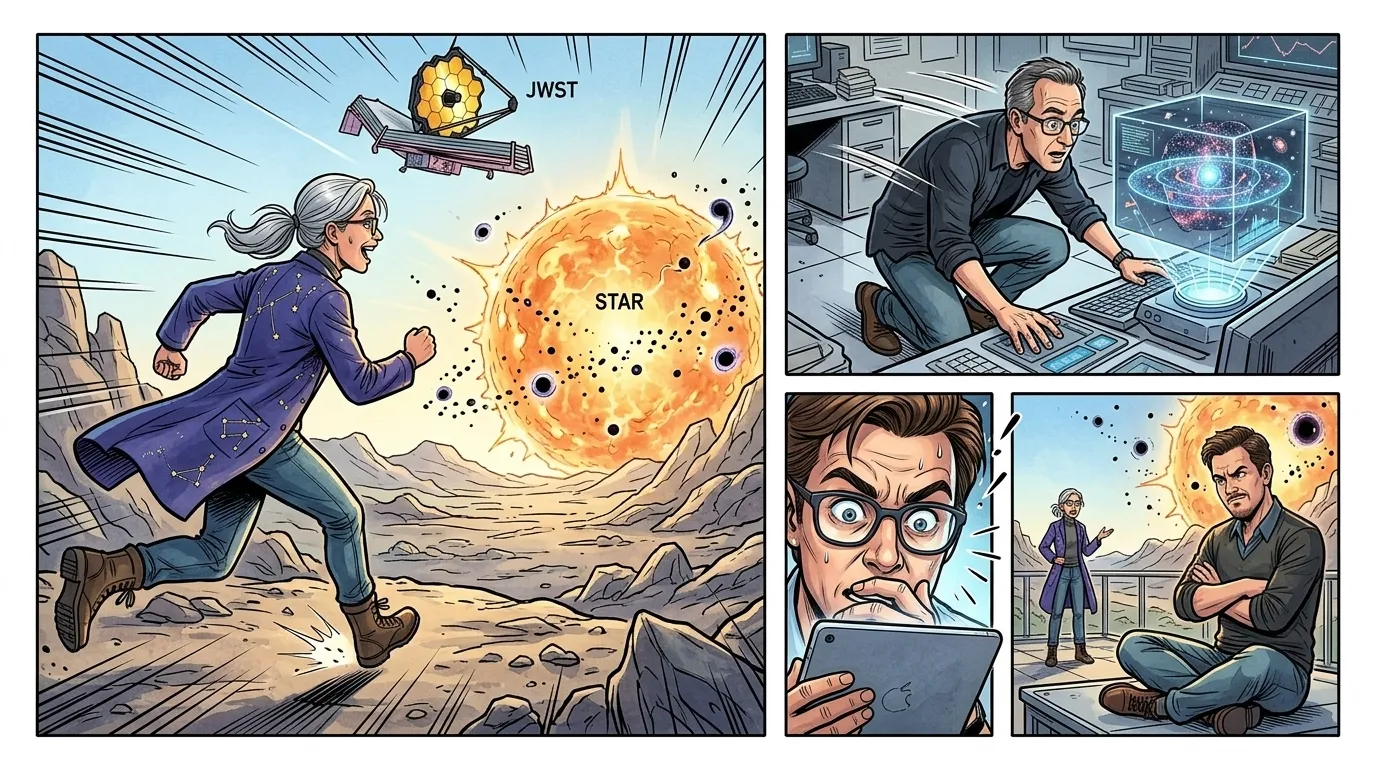
Katherine Freese's ingenuity extends to some of the most exotic and unexpected consequences of dark matter. She proposed the revolutionary concept of 'dark stars,' theoretical objects that might have formed in the early universe, powered not by nuclear fusion but by the annihilation of dark matter particles within their cores. These massive, cool, and exceptionally luminous stars, if they existed, could be prime targets for detection by next-generation telescopes like the James Webb Space Telescope (JWST). Her work also revisited primordial black holes as a possible dark matter candidate, theorizing that tiny black holes formed in the universe's infancy could constitute a significant portion of the unseen mass. Such audacious theories push the boundaries of cosmology, offering testable predictions for current and future observatories.
Page 9
The theories pioneered by Katherine Freese and her contemporaries have directly informed the design and objectives of the next generation of space and ground-based observatories. Missions like the Euclid space telescope, NASA's Roman Space Telescope, and the Dark Energy Spectroscopic Instrument (DESI) are meticulously mapping the large-scale structure of the universe, probing the distribution of galaxies and galaxy clusters to reveal the elusive fingerprints of dark matter and dark energy. Simultaneously, more sensitive direct detection experiments continue to push the boundaries of technology deep underground, while advanced particle colliders and gamma-ray observatories refine their search strategies. These ambitious endeavors stand on the shoulders of theoretical frameworks that Freese helped construct, aiming to finally identify the universe's dominant, invisible components.
Page 10
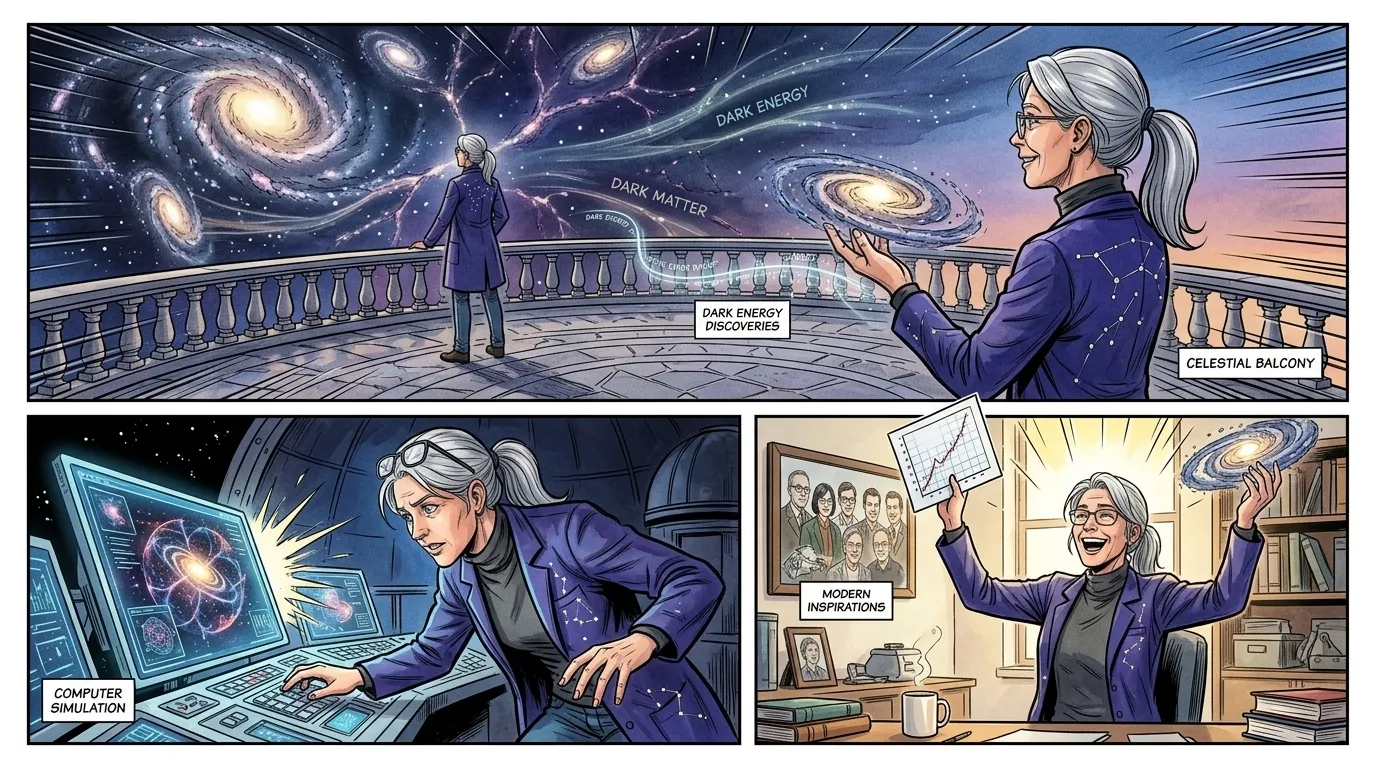
Katherine Freese's journey through the cosmos, from the mysteries of galactic rotation to the accelerating expansion of the universe, exemplifies a career defined by intellectual courage and groundbreaking theoretical insight. Her work has not only illuminated the profound questions surrounding dark matter and dark energy but has also guided the experimental efforts of an entire generation of astrophysicists. As we stand on the cusp of new discoveries, driven by ever more powerful instruments and ingenious theoretical models, the invisible universe continues to yield its secrets. Freese's legacy is one of perpetual curiosity, challenging established paradigms, and pushing the boundaries of human knowledge, ensuring that the quest to understand the fundamental nature of reality remains one of science's most compelling adventures. Her contributions ensure the generation pipeline has a culturally legible, educationally strong subject with clear cross-linking potential in space science.
About this story
- Location: Global
- Audience: general readers
Questions and answers
Read Wonder Science on your phone
Wonder Science is available on Android. Get Wonder Science on Google Play.