Kip Thorne

Kip Thorne — an illustrated science story, set in Global. 10 illustrated pages, free to read on Wonder Science.
Kip Thorne — book cover — Wonder Science
Kip Thorne — an illustrated science story, set in Global. 10 illustrated pages, free to read on Wonder Science.

Page 1
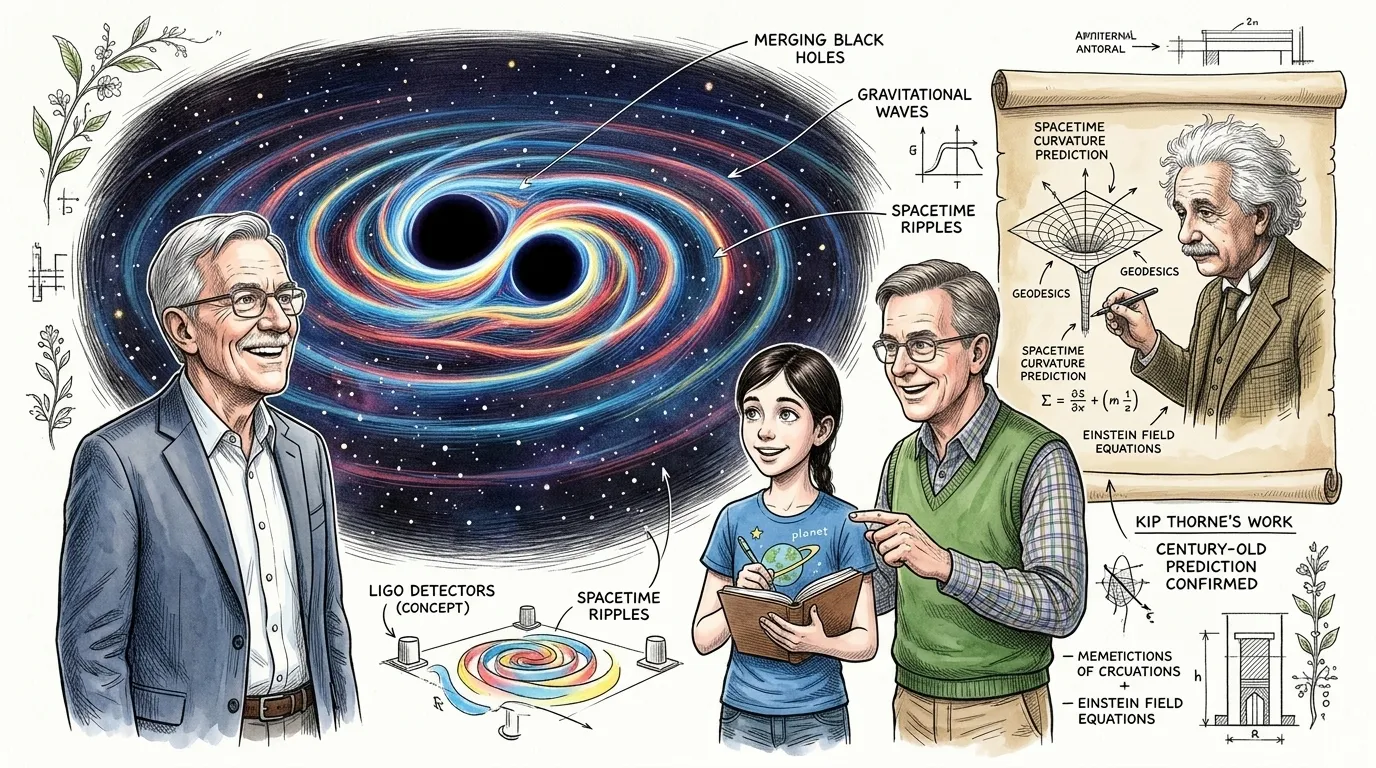
Imagine a black hole merger, two colossal entities colliding billions of light-years away. This cataclysmic event sends ripples through the fabric of…
Imagine a black hole merger, two colossal entities colliding billions of light-years away. This cataclysmic event sends ripples through the fabric of spacetime—gravitational waves. Kip Thorne, along with Rainer Weiss and Barry Barish, made it possible to detect these waves, confirming a century-old prediction by Albert Einstein.

Imagine a black hole merger, two colossal entities colliding billions of light-years away. This cataclysmic event sends ripples through the fabric of spacetime—gravitational waves. Kip Thorne, along with Rainer Weiss and Barry Barish, made it possible to detect these waves, confirming a century-old prediction by Albert Einstein.

Page 2

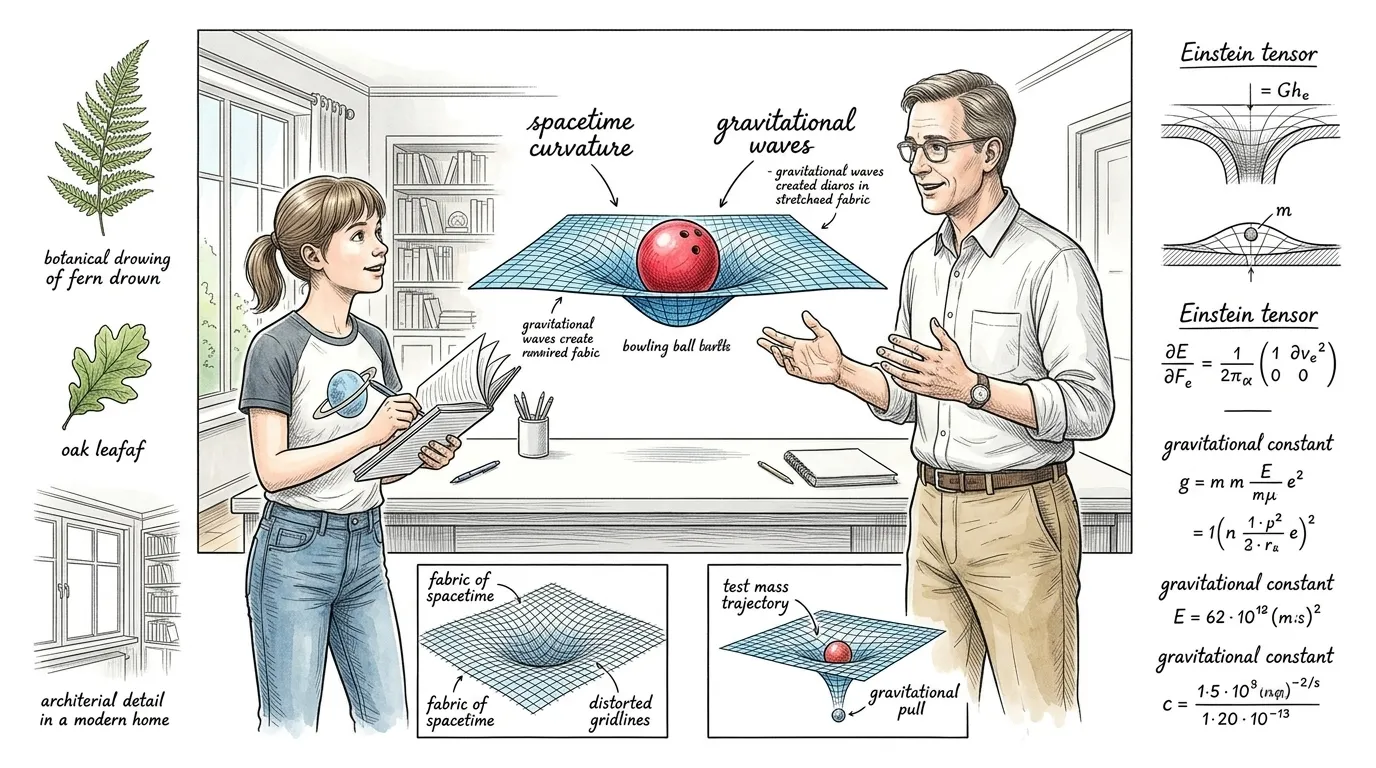
Stella flipped through her notebook, looking up at her father. "Dad, what exactly are gravitational waves?" Her father replied, "Well, Stella, Einstein's theory…
Stella flipped through her notebook, looking up at her father. "Dad, what exactly are gravitational waves?" Her father replied, "Well, Stella, Einstein's theory of general relativity describes gravity not as a force, but as a curvature of spacetime caused by mass and energy. Imagine a bowling ball on a trampoline; it creates a dip.

Stella flipped through her notebook, looking up at her father. "Dad, what exactly are gravitational waves?" Her father replied, "Well, Stella, Einstein's theory of general relativity describes gravity not as a force, but as a curvature of spacetime caused by mass and energy. Imagine a bowling ball on a trampoline; it creates a dip. Gravitational waves are like ripples in that trampoline."

""Dad, what exactly are gravitational waves?""

Fact: Use an everyday analogy to explain spacetime curvature.

Page 3
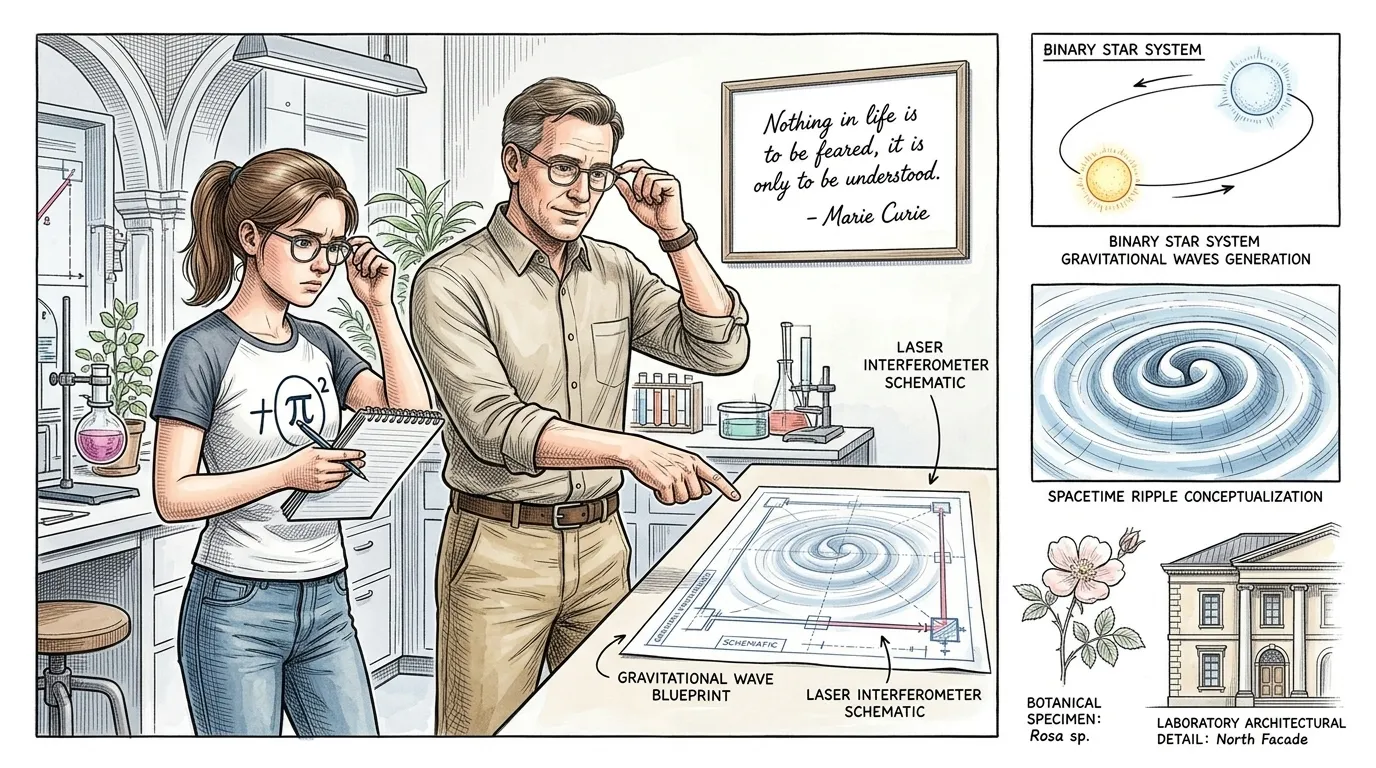
Stella frowned, "But Einstein predicted these waves a century ago, right? Why did it take so long to find them?" Her dad adjusted his glasses.
Stella frowned, "But Einstein predicted these waves a century ago, right? Why did it take so long to find them?" Her dad adjusted his glasses. "Detecting these waves is incredibly challenging. They are minuscule distortions. As Marie Curie once said, 'Nothing in life is to be feared, it is only to be understood.' Kip Thorne dedicated his career to understanding and finding a way to detect them." ""But Einstein predicted these waves a century ago, right?

Stella frowned, "But Einstein predicted these waves a century ago, right? Why did it take so long to find them?" Her dad adjusted his glasses. "Detecting these waves is incredibly challenging. They are minuscule distortions. As Marie Curie once said, 'Nothing in life is to be feared, it is only to be understood.' Kip Thorne dedicated his career to understanding and finding a way to detect them."

""But Einstein predicted these waves a century ago, right? Why did it take so long to find them?""

Fact: Link the detection challenge to Einstein and highlight the difficulty in finding them.

Page 4
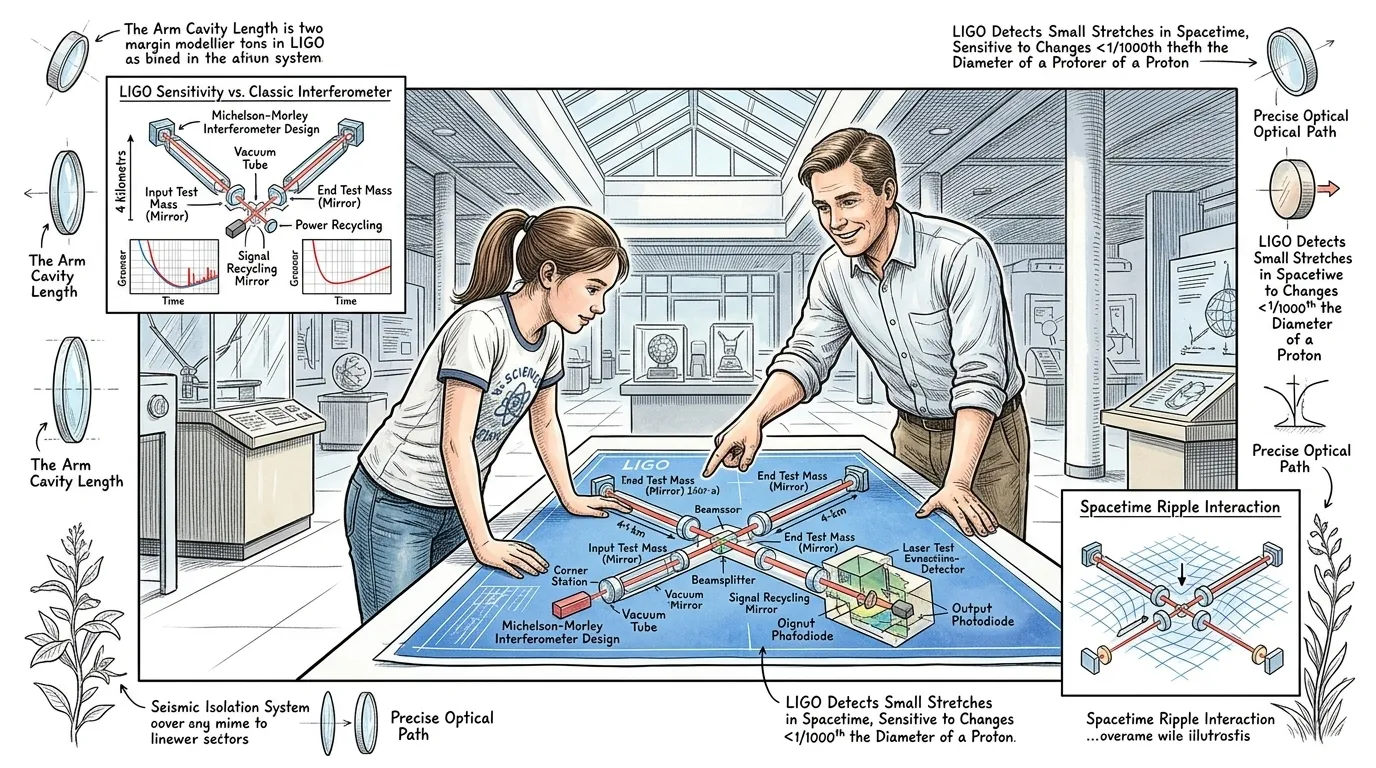
Her father explained, "Thorne realized that to detect these tiny ripples, you'd need an incredibly sensitive instrument." He showed Stella a diagram of LIGO…
Her father explained, "Thorne realized that to detect these tiny ripples, you'd need an incredibly sensitive instrument." He showed Stella a diagram of LIGO, the Laser Interferometer Gravitational-Wave Observatory. "LIGO uses lasers to measure changes in the length of two 4-kilometer-long arms. When a gravitational wave passes, it very slightly stretches one arm and squeezes the other."

Her father explained, "Thorne realized that to detect these tiny ripples, you'd need an incredibly sensitive instrument." He showed Stella a diagram of LIGO, the Laser Interferometer Gravitational-Wave Observatory. "LIGO uses lasers to measure changes in the length of two 4-kilometer-long arms. When a gravitational wave passes, it very slightly stretches one arm and squeezes the other."

Page 5
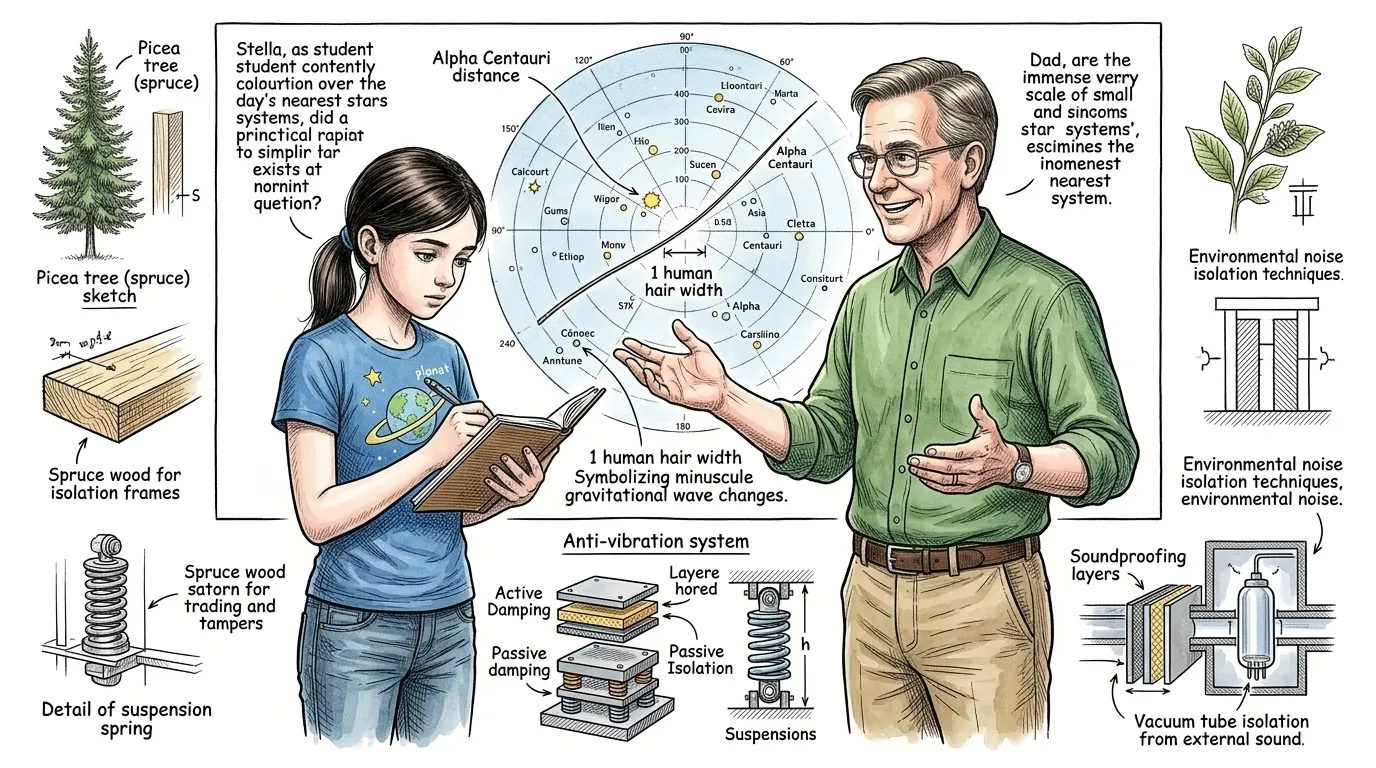
"But how tiny are these changes?" Stella asked, scribbling in her notebook. Her dad smiled. "Imagine measuring the distance to the nearest star to within the…
"But how tiny are these changes?" Stella asked, scribbling in her notebook. Her dad smiled. "Imagine measuring the distance to the nearest star to within the width of a human hair! Thorne and his colleagues had to overcome incredible engineering challenges to isolate LIGO from every possible source of noise, from earthquakes to passing trucks." ""But how tiny are these changes?""

"But how tiny are these changes?" Stella asked, scribbling in her notebook. Her dad smiled. "Imagine measuring the distance to the nearest star to within the width of a human hair! Thorne and his colleagues had to overcome incredible engineering challenges to isolate LIGO from every possible source of noise, from earthquakes to passing trucks."

""But how tiny are these changes?""

Page 6
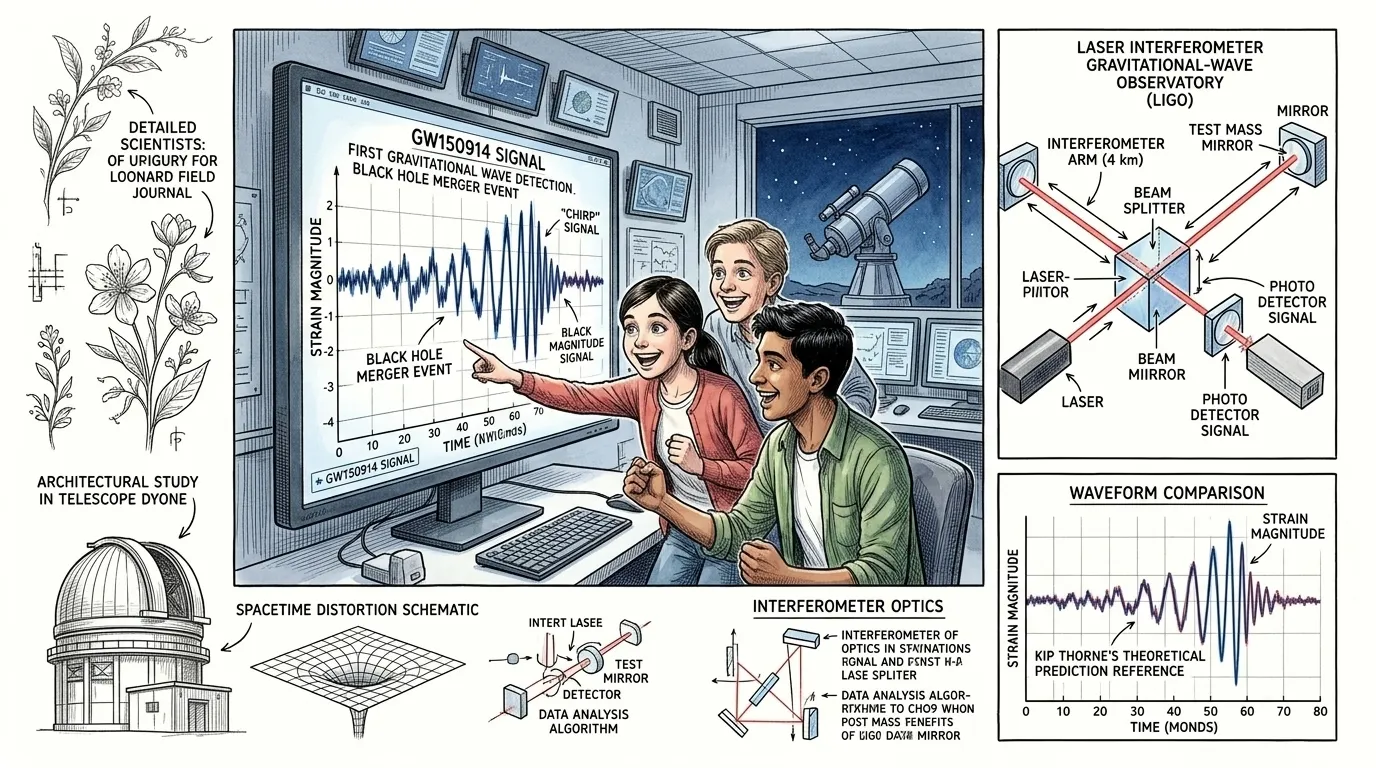
In September 2015, after decades of work, LIGO detected the unmistakable signal of two black holes merging. The scientists were ecstatic.
In September 2015, after decades of work, LIGO detected the unmistakable signal of two black holes merging. The scientists were ecstatic. The signal, lasting only a fraction of a second, matched perfectly with Thorne's theoretical predictions. Zola, Nia, and Arjun huddled around a computer screen, watching the signal display. "This is history!" Nia exclaimed. The display showed the waveform with spikes indicating the signal's strength. ""This is history!""

In September 2015, after decades of work, LIGO detected the unmistakable signal of two black holes merging. The scientists were ecstatic. The signal, lasting only a fraction of a second, matched perfectly with Thorne's theoretical predictions. Zola, Nia, and Arjun huddled around a computer screen, watching the signal display. "This is history!" Nia exclaimed. The display showed the waveform with spikes indicating the signal's strength.

""This is history!""

Page 7
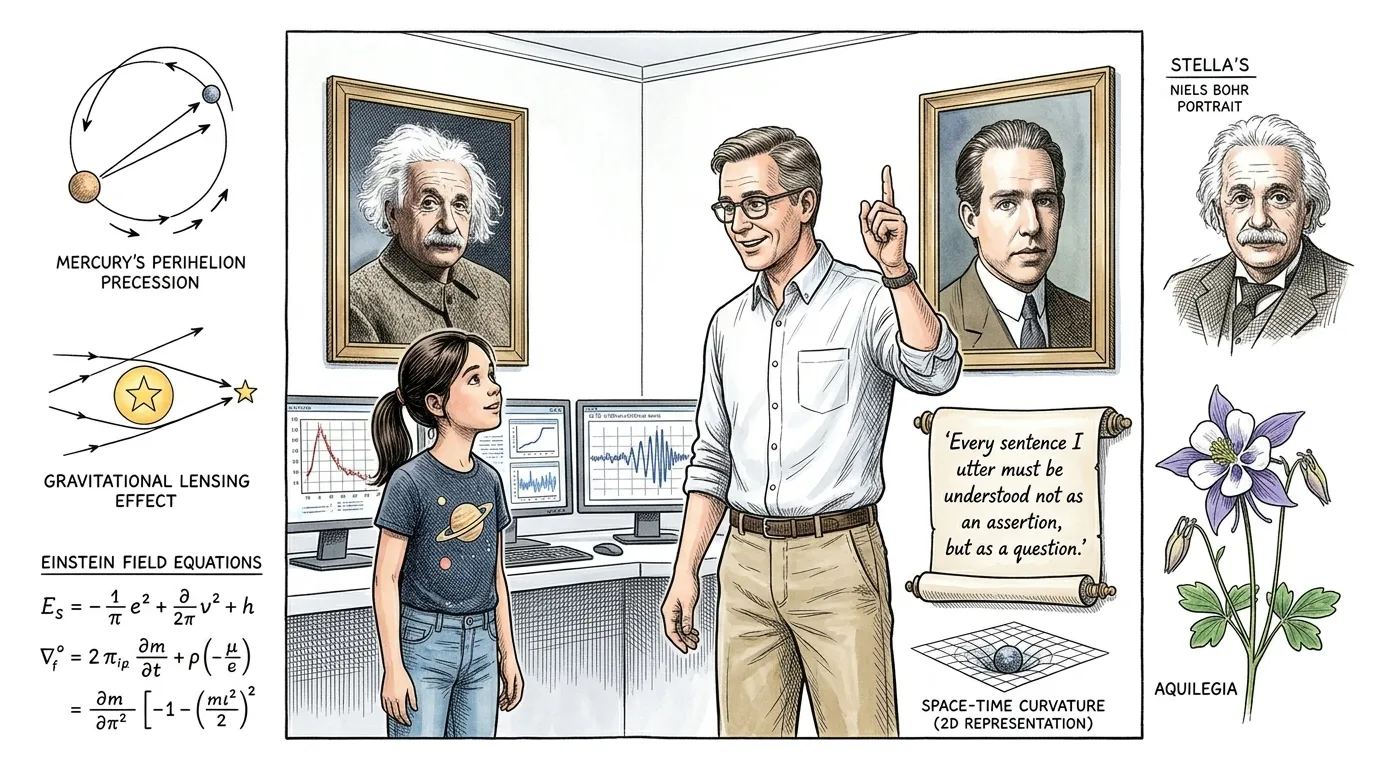
"So, it confirmed Einstein's theory?" Stella asked. Her father nodded. "Absolutely. It was direct evidence of gravitational waves and a validation of general…
"So, it confirmed Einstein's theory?" Stella asked. Her father nodded. "Absolutely. It was direct evidence of gravitational waves and a validation of general relativity. It also opened a new window on the universe. As Niels Bohr said, 'Every sentence I utter must be understood not as an assertion, but as a question.' The detection of gravitational waves confirmed Einstein, but also opened countless new questions." ""So, it confirmed Einstein's theory?""

"So, it confirmed Einstein's theory?" Stella asked. Her father nodded. "Absolutely. It was direct evidence of gravitational waves and a validation of general relativity. It also opened a new window on the universe. As Niels Bohr said, 'Every sentence I utter must be understood not as an assertion, but as a question.' The detection of gravitational waves confirmed Einstein, but also opened countless new questions."

""So, it confirmed Einstein's theory?""

Page 8
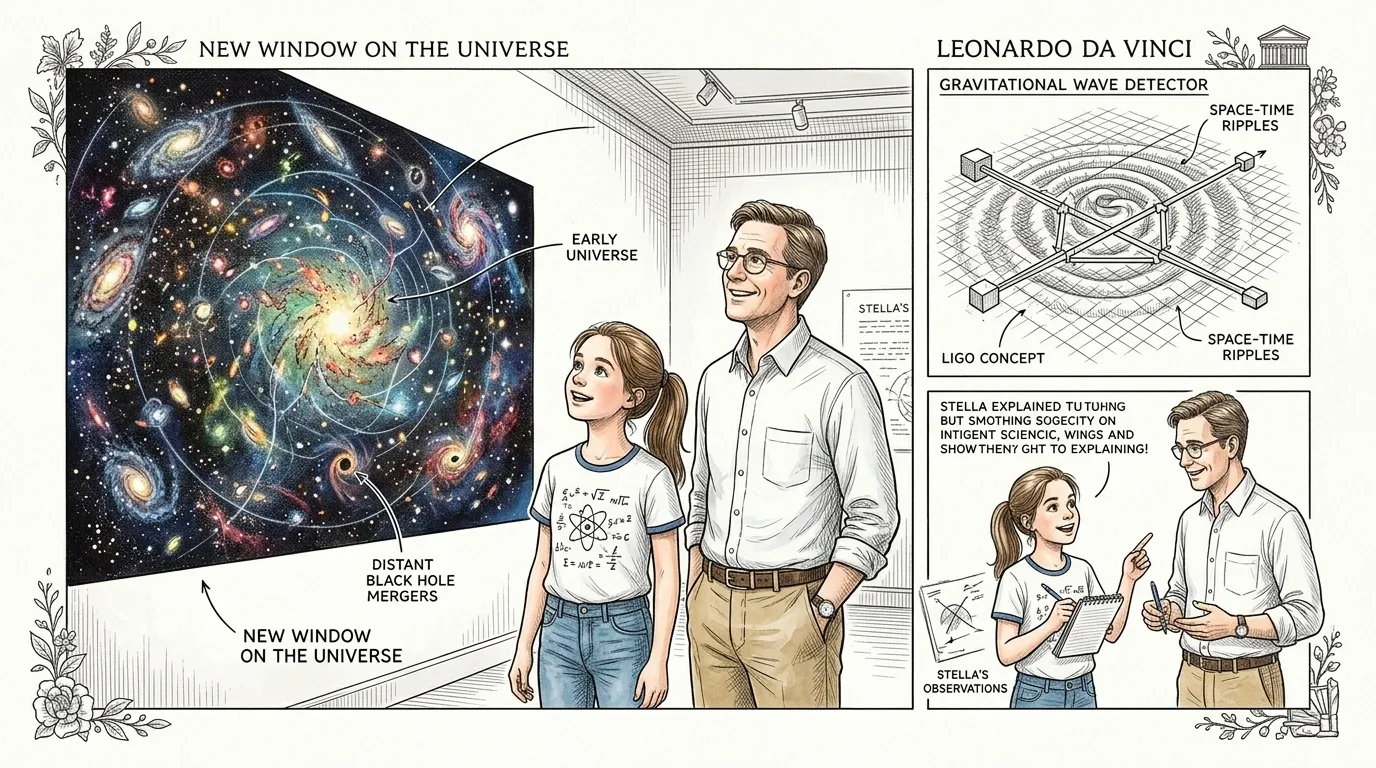
“But how did they *hear* them?” Stella pressed, tilting her head. “I mean, waves aren’t sounds.” Dad chuckled. “That’s a great question!
“But how did they *hear* them?” Stella pressed, tilting her head. “I mean, waves aren’t sounds.” Dad chuckled. “That’s a great question! They didn't ‘hear’ them with their ears. The LIGO detectors are enormous – kilometers long! – and incredibly sensitive. When a gravitational wave passes through Earth, it slightly stretches and squeezes space itself. These detectors measure those tiny changes with lasers.” Kip Thorne smiled warmly.

“But how did they *hear* them?” Stella pressed, tilting her head. “I mean, waves aren’t sounds.”

Dad chuckled. “That’s a great question! They didn't ‘hear’ them with their ears. The LIGO detectors are enormous – kilometers long! – and incredibly sensitive. When a gravitational wave passes through Earth, it slightly stretches and squeezes space itself. These detectors measure those tiny changes with lasers.”

Kip Thorne smiled warmly. “It’s like feeling a ripple in a pond, only the pond is the universe, and you're feeling distortions in spacetime."

Page 9
Kip Thorne — page 9 illustration — Wonder Science

Page 10

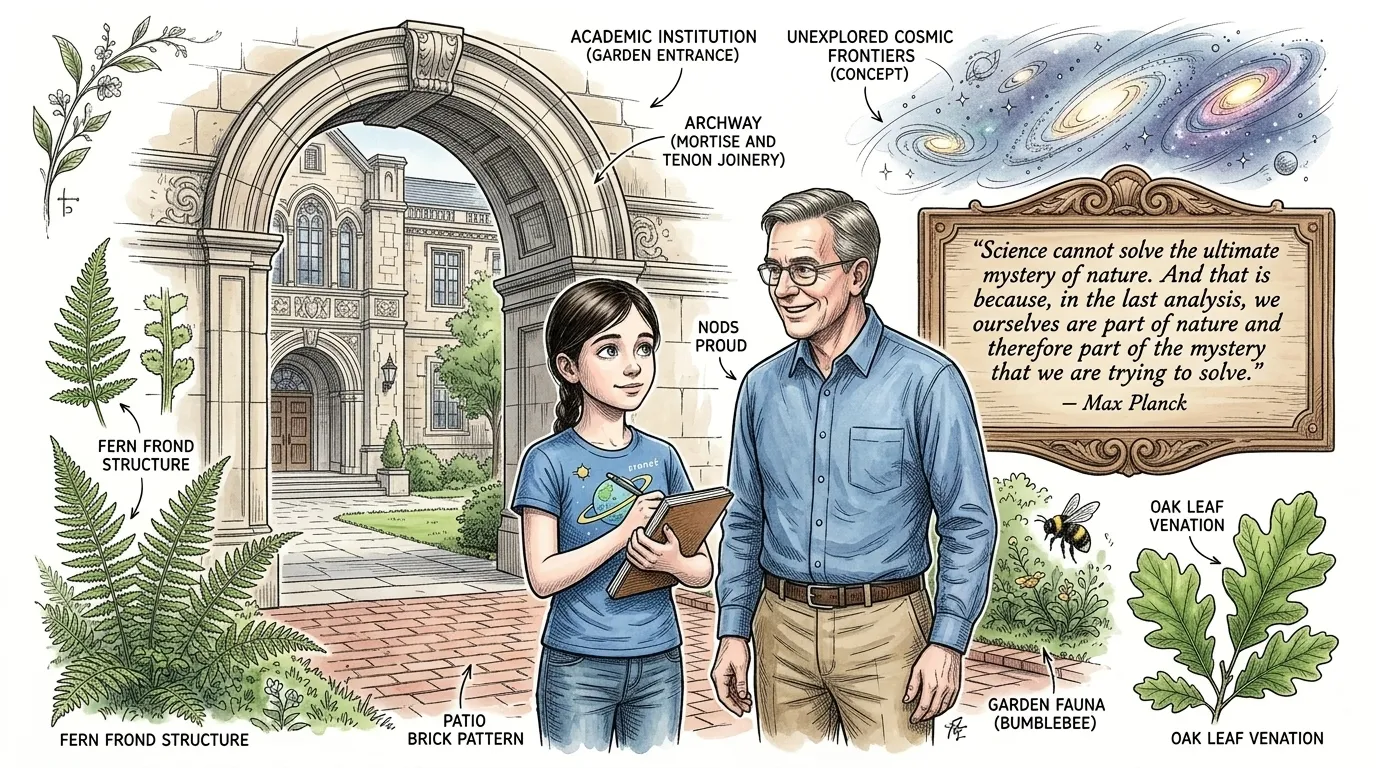
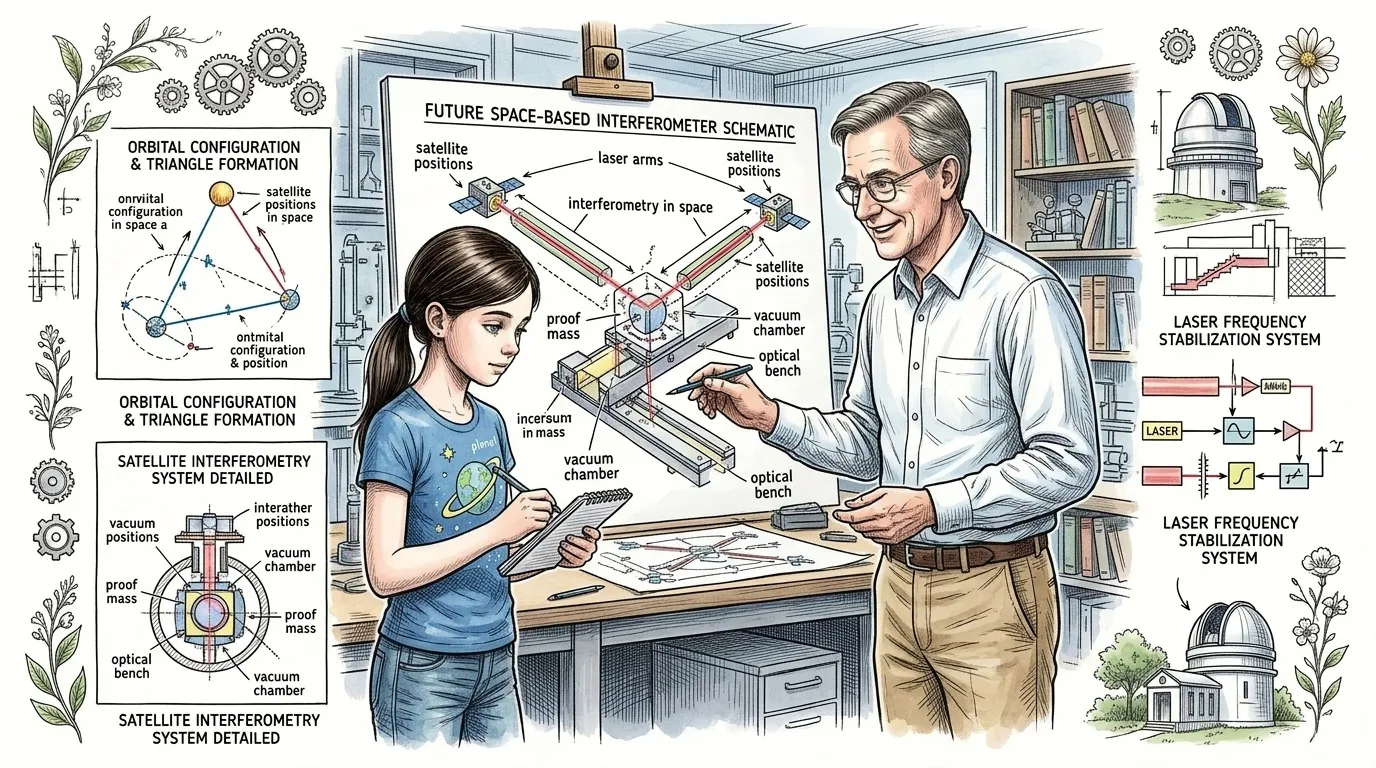
Stella closed her notebook, a thoughtful expression on her face. "So, by listening to the echoes of these events, we can learn about the early universe and the…
Stella closed her notebook, a thoughtful expression on her face. "So, by listening to the echoes of these events, we can learn about the early universe and the fundamental laws of physics." Her dad nodded. "Exactly! Kip Thorne's work opened a door to the unknown. As Max Planck said, 'Science cannot solve the ultimate mystery of nature.

Stella closed her notebook, a thoughtful expression on her face. "So, by listening to the echoes of these events, we can learn about the early universe and the fundamental laws of physics." Her dad nodded. "Exactly! Kip Thorne's work opened a door to the unknown. As Max Planck said, 'Science cannot solve the ultimate mystery of nature. And that is because, in the last analysis, we ourselves are part of nature and therefore part of the mystery that we are trying to solve.'"

""So, by listening to the echoes of these events, we can learn about the early universe and the fundamental laws of physics.""

About this story

  • Location: Global
  • Audience: general readers

Read Wonder Science on your phone

Wonder Science is available on Android. Get Wonder Science on Google Play.

More Wonder Science stories

All Wonder Science stories · Open the library